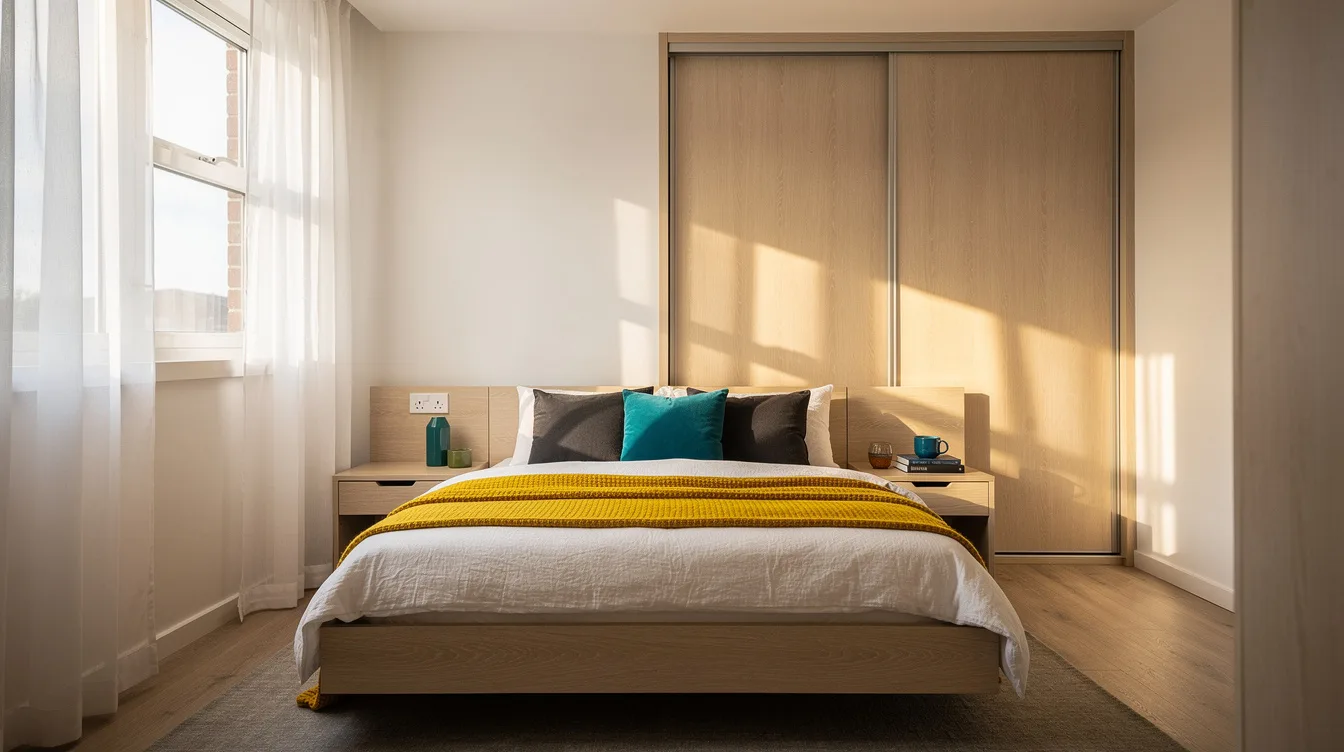
The frustrating part of a small bedroom is that a queen can fit, yet opening the wardrobe can still feel like moving furniture. A typical 60-by-80-inch queen mattress already takes up five feet of width before the frame, bedding, and walking space enter the picture.
Designers tend to start with circulation instead of symmetry. The reliable plan is a low bed, a protected route to storage, and furniture that earns every inch it occupies.
Measure the Frame, Not the Mattress
A typical queen mattress measures 60 by 80 inches, but the bed frame is the footprint that decides whether the room works. The IKEA MALM queen frame, for example, is about 66 1/8 by 83 1/8 inches.
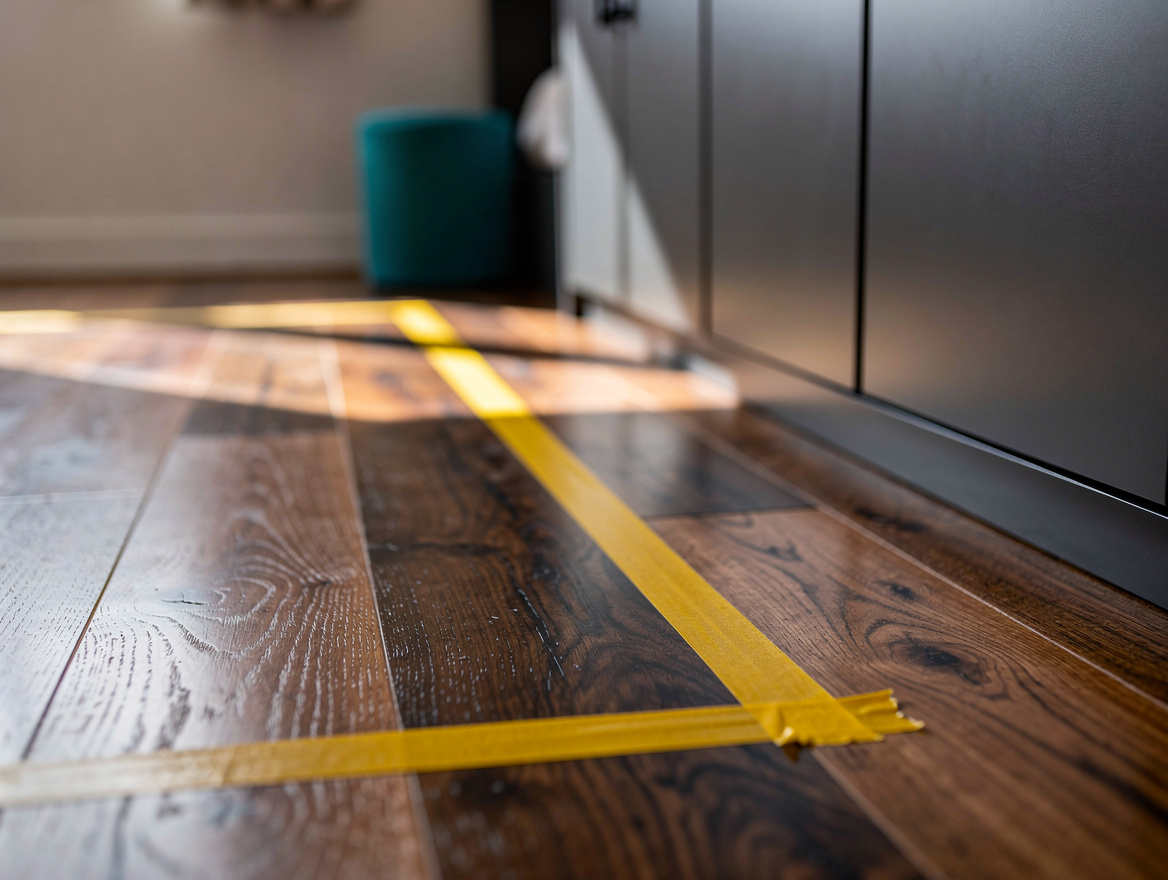
Mark that larger rectangle on the floor with painter’s tape before ordering anything. A bed that looks compact online can steal the only path to the closet once its rails and headboard are in place.
Anchor the Bed on the Shortest Sensible Wall
Put a low-profile queen bed on the shortest sensible wall when the room is roughly 10 by 11 or 10 by 12 feet. This leaves the longer dimension available for a wardrobe aisle, which matters more than a perfectly centered photo.
Skip a deep upholstered headboard with wide wings or a thick footboard. Those extra inches make a small room feel pinched every day, especially when the wardrobe sits opposite the bed.
Protect the Wardrobe Route First
Give the daily bed-side route around 24 inches at minimum, with about 30 inches feeling far more comfortable. The side you use to get dressed deserves the generous lane, even if the other side gets a slim table or no table at all.
A full-depth wardrobe typically needs about 22 to 26 inches, then roughly 36 inches of clear space for hinged doors and a person standing there. That math is why a wardrobe can be the real layout problem, not the bed.
Choose Sliding Doors When the Bed Faces Storage
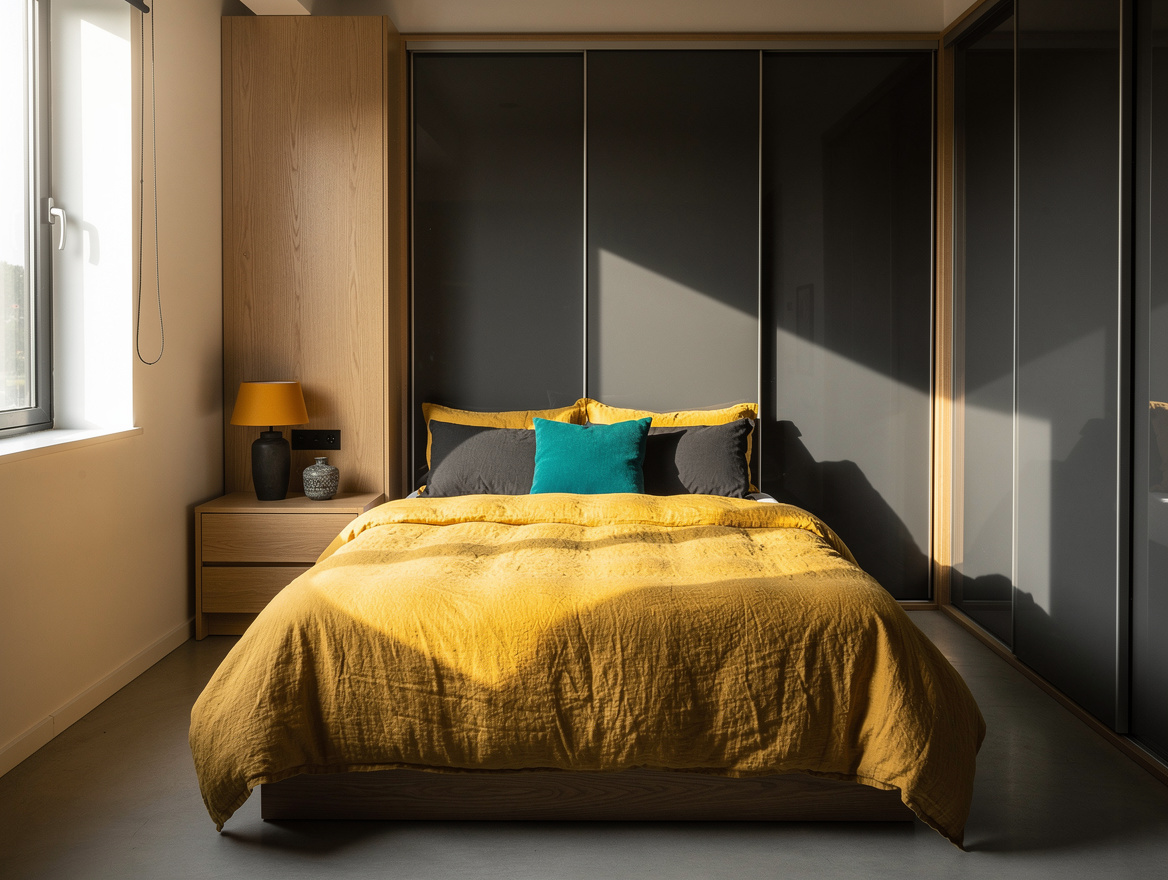
A sliding-door wardrobe needs only about 18 to 24 inches of access in front, making it the sensible choice across from a queen. Hinged doors look classic, but their swing can turn the foot-of-bed passage into a daily traffic jam.
A 59-inch-wide IKEA PAX with sliding doors is a useful real-world reference, with a typical 26-inch depth and listed configurations around $1,325 to $1,425. It is a serious investment, so draw its depth and door clearance before committing.
Use Shallow Storage Where Hanging Space Is Optional
Reserve full-depth closet storage for clothes on standard hangers, then use a 14- to 16-inch-deep shallow cabinet for folded tees, shoes, bags, and accessories. A narrow storage wall can free up enough floor space for a proper bedroom route.
Add an oak wall shelf above or beside that cabinet for books and a charging spot. Closed fronts keep the room calmer than exposed bins, which quickly become visual clutter at bed height.
Shrink the Bedside Pieces Before Shrinking the Bed
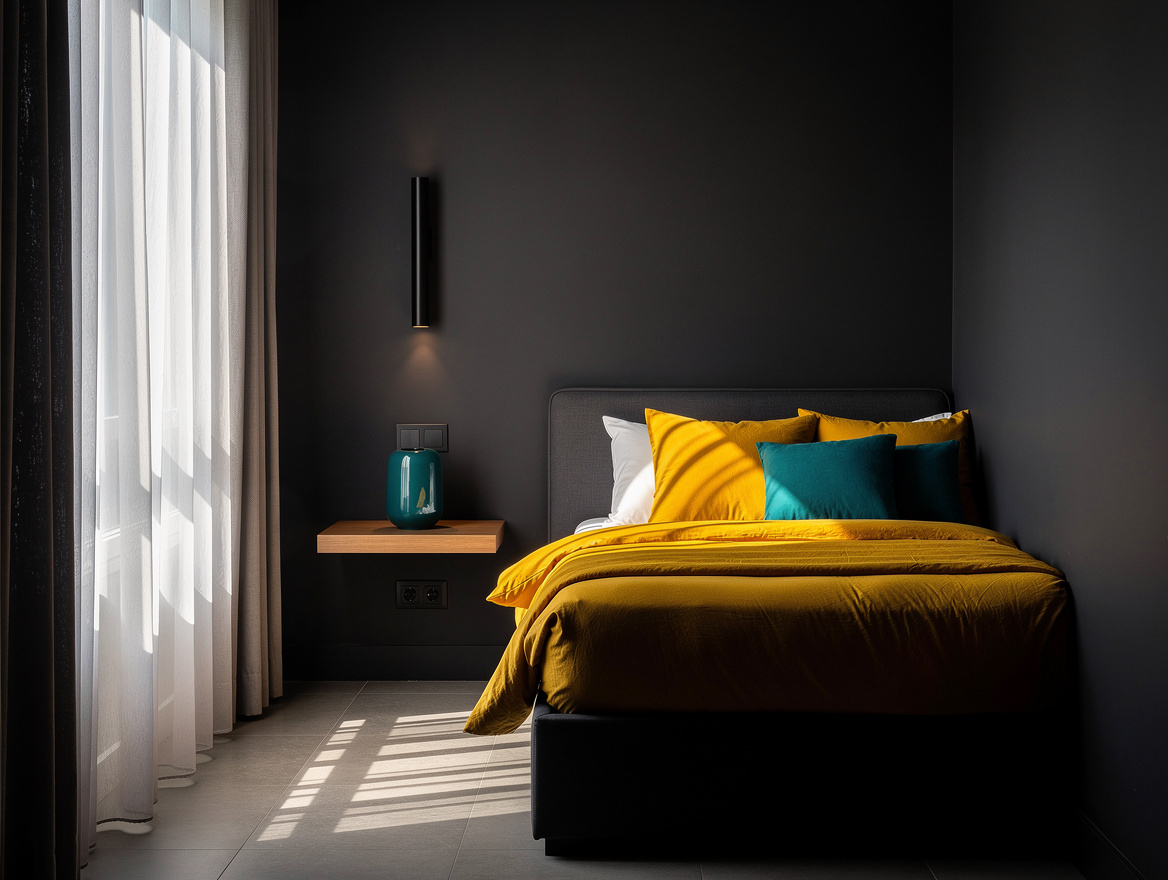
Conventional nightstands are often too bulky beside a queen in a compact room. Use 10- to 14-inch floating ledges, or place one small table only on the open side of the bed.
Mount a wall-mounted sconce instead of claiming tabletop space with lamps. One brass reading light, a glass of water, and a book are enough, and the clear floor makes the bedroom feel intentionally planned.
Start by taping out the bed and wardrobe on the floor, then walk the route while pretending to open every door and drawer. Keep the layout only if that morning path feels easy before a single under-bed drawer or decorative pillow arrives.
Mia Carter writes about small-space living and budget home makeovers. She has restyled three rentals and tests most ideas in her own 45 sqm flat.