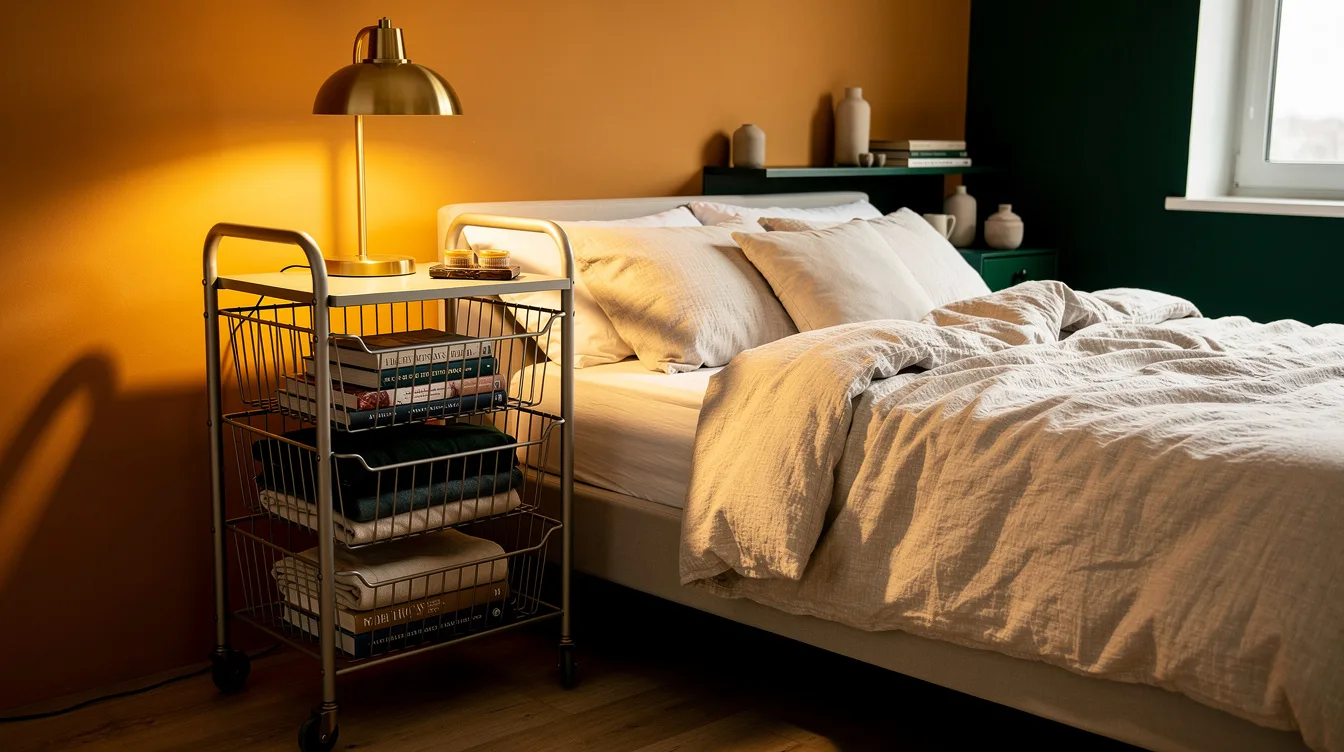
Small-bedroom overflow rarely needs another full-size dresser. A cart with a footprint under roughly 18 by 14 inches can hold the chargers, clothes, toiletries, and books that collect beside a 54-inch bed, but only if its shape matches the mess.
The strongest choices are narrow, vertical, and category-specific. I would spend about $40 on a compact open cart before paying premium prices for a slim specialty model, unless the room has one awkward gap that demands it.
Measure the Gap Before Choosing the Cart
A bedroom cart should disappear into the room’s leftover space, not compete with the bed. For most small bedrooms, a footprint under roughly 18 by 14 inches keeps the cart useful beside a nightstand, desk, or wardrobe.
The IKEA RÅSKOG measures about 17 3/4 by 13 3/4 by 30 3/8 inches, giving it a strong balance of capacity and width. Its powder-coated steel frame and three open bins work especially well when the cart needs to hold chargers, books, skincare, and accessories.
Measure baseboards, door swings, and drawer pulls before ordering. A cart that technically fits may still block the only comfortable path around the bed.
Use Vertical Shelves for Daily Bedroom Clutter
Overflow storage earns its place when it uses height instead of spreading across the floor. Open basket shelves are best for items you reach for every day, including water bottles, reading glasses, hair products, and folded pajamas.
The SunnyPoint 3-Tier Rolling Utility Cart is typically priced around $30 to $50 and measures about 16.93 by 12.01 by 31.1 inches. Its metal basket shelves are listed at about 15 pounds per shelf, which is enough for ordinary bedroom supplies without turning it into a heavy equipment stand.
Keep the top tier light and visually calm. One tray, one lamp, or a small stack of books looks intentional; a pile of loose packages makes the entire room feel unfinished.
Add a Worktop When the Bedside Table Is Crowded
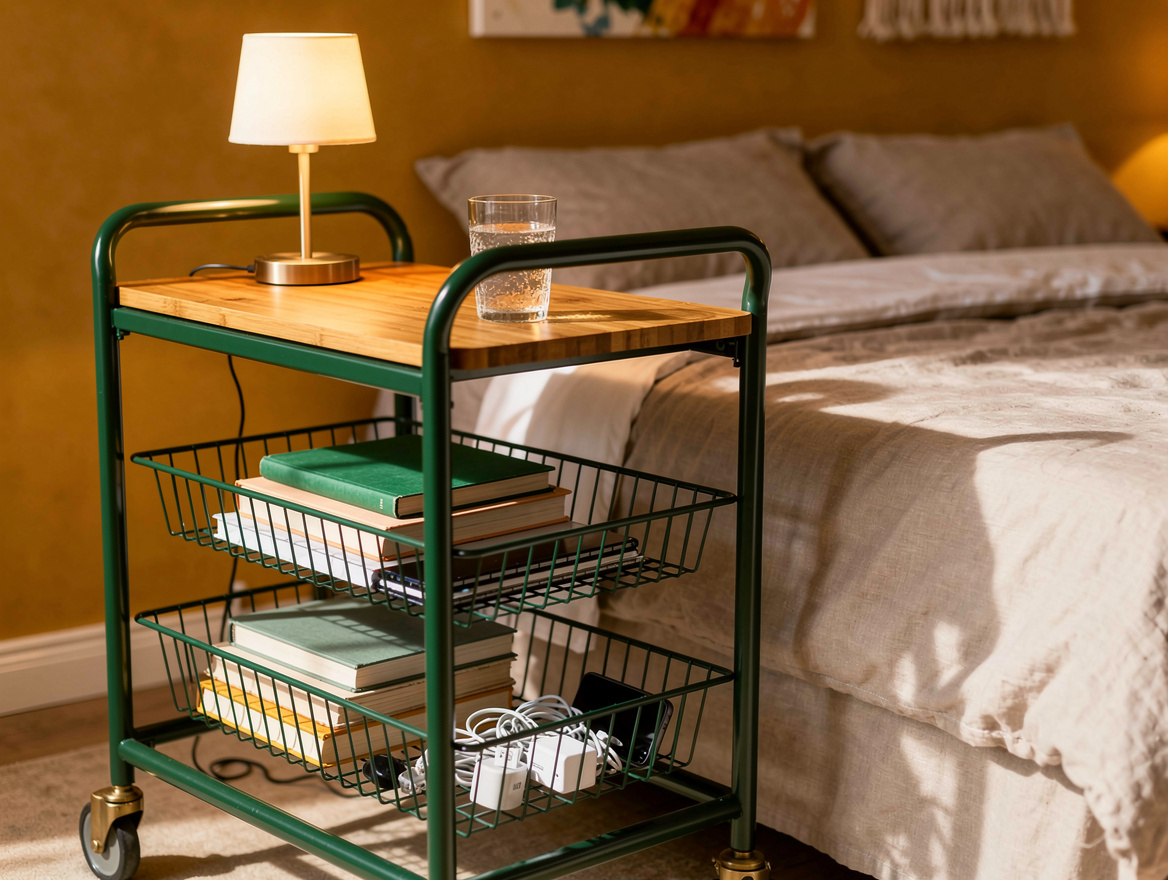
A rolling cart can replace a bulky nightstand when its top becomes a stable landing zone. You need room for a lamp, phone, water glass, and one current book, while the lower levels absorb everything that usually gathers on the floor.
The IKEA RÅSKOG with NORRÅVA bamboo lid is listed at about $49.98. The removable bamboo surface gives the steel cart a cleaner bedside profile, while the lower baskets keep chargers, hand cream, sleep accessories, and spare tissues within reach.
Lock the casters before using the top as a nightstand. The cart is rated by IKEA at about 13 pounds per tier and roughly 40 pounds total, so it can handle ordinary bedside storage but should not become a packed bookshelf.
Hide Cables and Toiletries Behind a Panel
Open storage is convenient until every small object remains visible. If the cart will sit beside a wardrobe or face the bed, concealed storage usually creates a calmer view than another set of exposed baskets.
The Yamazaki Two-Tier Hideaway Storage Cart uses a steel body, an adjustable shelf, and a front panel to cover cables, toiletries, hair tools, spare linens, or cleaning supplies. At about 12.6 by 16.54 by 23.62 inches, its lower height may slide beneath many desks, although the premium price is harder to justify when you need maximum volume.
Choose this style for messy categories, not everyday clothing. A hidden panel is most valuable when it removes visual noise that would otherwise remain on display from the bed.
Reserve Narrow Carts for True Dead Space
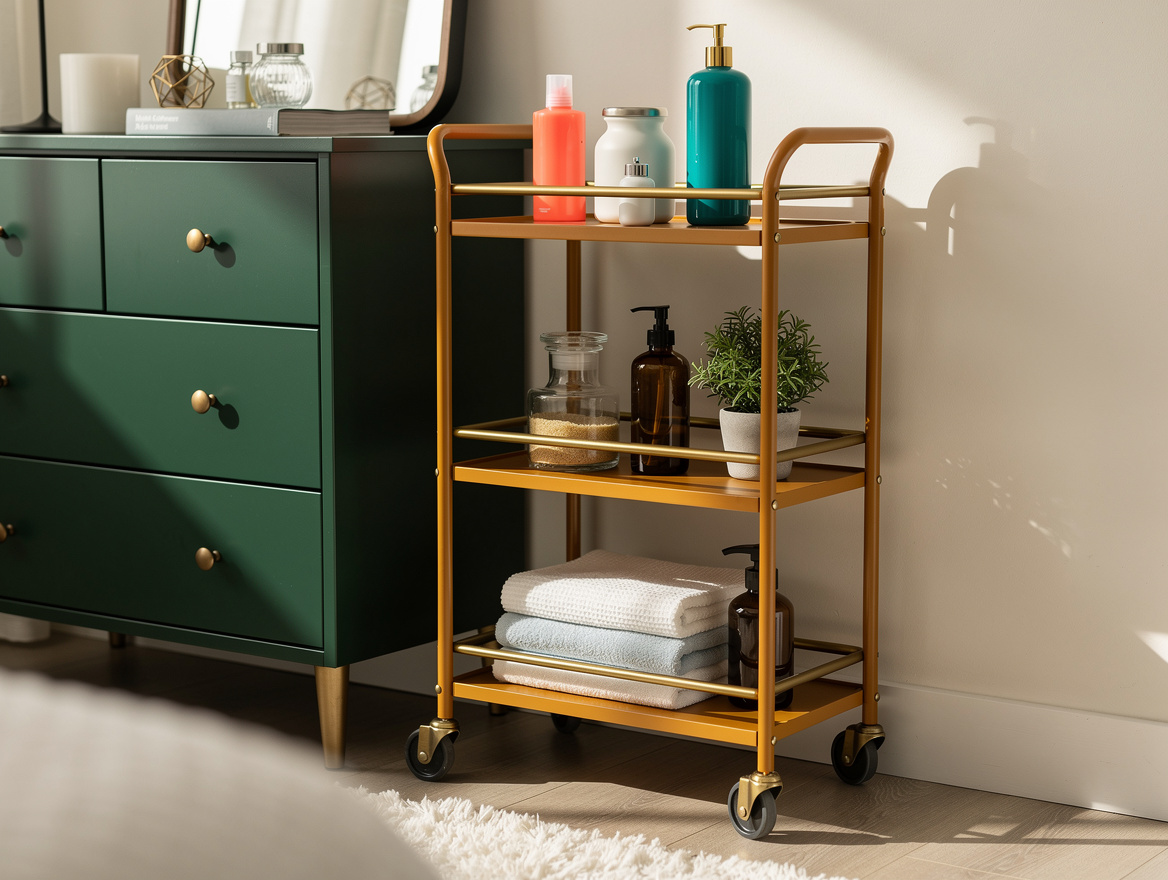
A five-inch-wide cart solves a very specific problem: the useless strip between a dresser and the wall, beside a wardrobe, or next to a desk. It should fill a gap that cannot hold a regular shelf, rather than replace a more capable cart in open floor space.
The Yamazaki Tower Rolling Storage Cart measures about 5 by 18.7 by 27 inches and typically costs around $140 to $165. Its staggered shelves and painted steel construction make the narrow profile practical, but that price is steep for the amount of storage it provides.
Use it for hair products, small accessories, notebooks, or backup toiletries. The slim shape is the feature, so buying it for bulky clothing defeats the reason to choose it.
Match Drawer Depth to the Items You Own
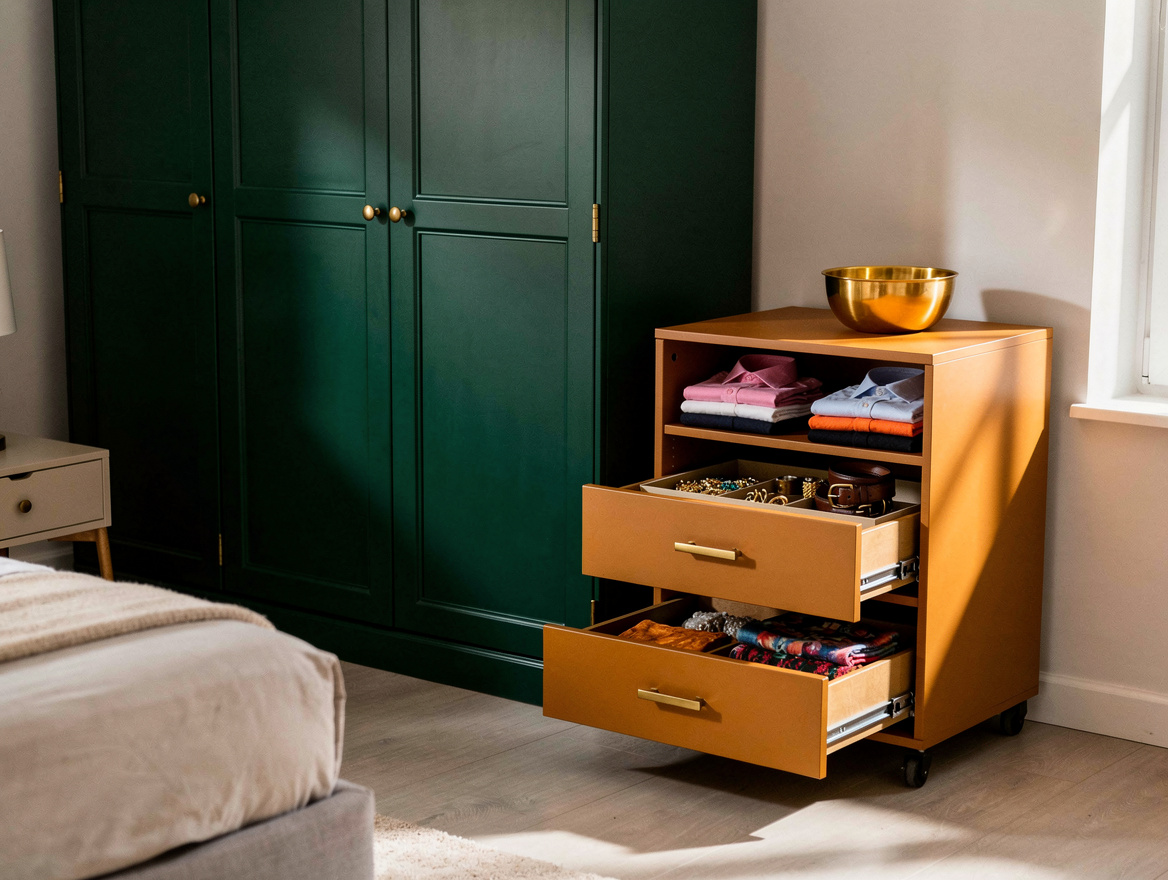
Drawers are better than open shelves when clothing and accessories need a visual boundary. Before choosing a drawer cart, sort the actual overflow into categories, because shallow compartments cannot replace a deep bin for sweaters or bedding.
The Sterilite 3-Drawer Wide Cart is typically priced around $30 to $45 and measures about 21 7/8 by 15 3/8 by 26 1/8 inches with casters. Its clear plastic drawers suit T-shirts, socks, underwear, workout gear, beauty products, and seasonal accessories, although the roughly 22-inch width takes more floor space than a narrow basket cart.
For many smaller objects, the Honey-Can-Do 12-Drawer Cart usually costs around $70 to $85 and measures about 25.25 by 15.25 by 31.75 inches. Its small drawers work for cables, stationery, cosmetics, and accessories, while the larger drawers are better for compact clothing than bulky fabric.
Style the Top Like Furniture, Not a Supply Station
The best bedroom cart has one visible purpose and a controlled top surface. A wood top, a catch-all tray, or a single lamp can make a storage cart read as part of the room instead of a temporary utility piece.
The Honey-Can-Do 3-Tier Cart often costs around $50 to $80 and measures about 15.75 by 14.9 by 33.9 inches. Its metal frame, natural wood top, and basket drawers give it a more furniture-like appearance, with space below for folded items or fabric bins.
Use locking casters whenever the cart will hold a lamp, printer, or frequently handled supplies. A stationary cart feels safer beside the bed, and the small pause before moving it discourages casual clutter migration.
Start by measuring the emptiest strip beside the bed or wardrobe, then choose either open baskets for daily items or drawers for visual clutter. Lock the casters, limit the top to one useful object, and let the cart solve one storage problem completely.
Mia Carter writes about small-space living and budget home makeovers. She has restyled three rentals and tests most ideas in her own 45 sqm flat.