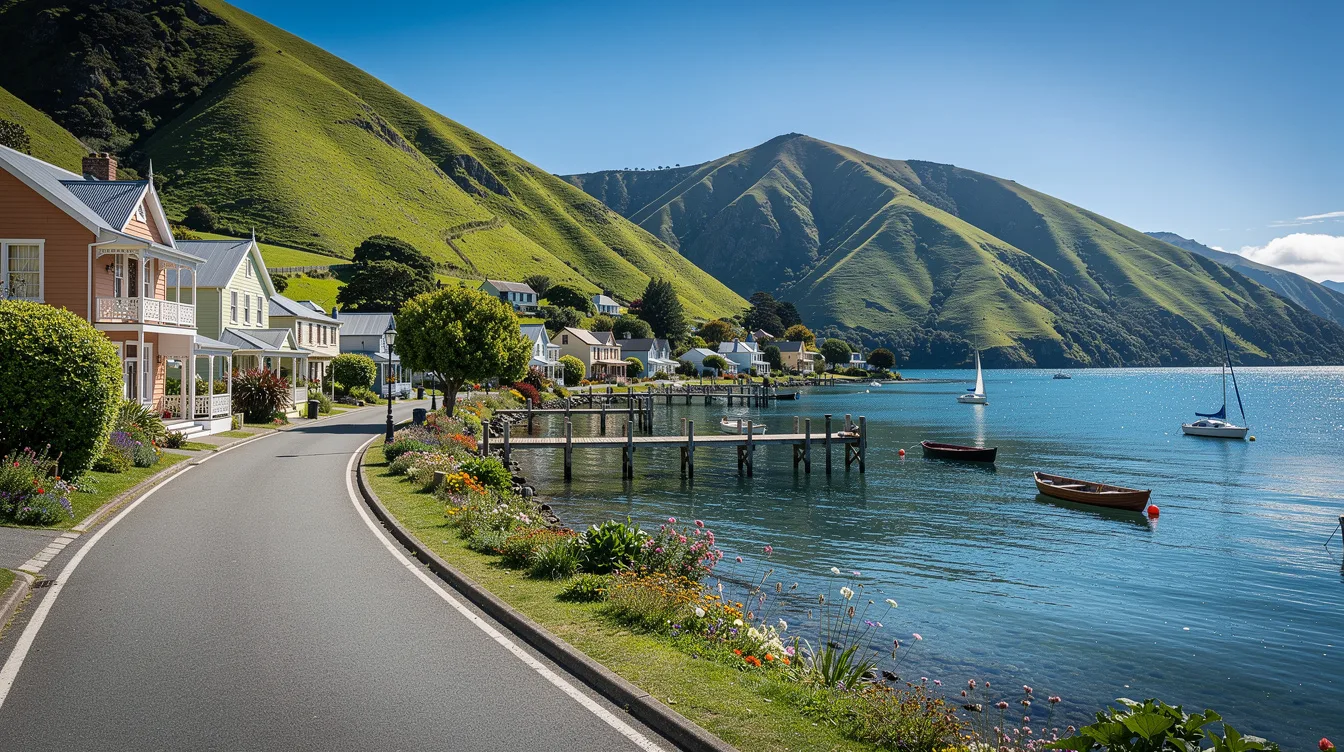
Akaroa still reads like an argument between maps. In 1840, a French colony arrived in this New Zealand harbor, and its street names never quite left.
On August 18, 1840, 57 colonists began their settlement here. You can still walk past Rue Lavaud, Rue Jolie, and Rue Balguerie, then look up at the volcanic hills enclosing the water.
But Akaroa isn’t a French village dropped into the South Pacific. It’s a small harbor town on Banks Peninsula, shaped by Kāi Tahu history, a complicated colonial past, and a bay that was once part of a volcano.
French names, New Zealand harbor
The French settlers initially called the place Port Louis-Philippe. Their plan arrived at an awkward moment, because British sovereignty had already been proclaimed over New Zealand before the colony took hold.
And that tension is part of why the French legacy feels so visible. It remained in street signs, food, architecture, and the compact waterfront rather than becoming a separate French enclave.
Akaroa’s Māori name means “Long Harbour” in the Kāi Tahu dialect. You feel that description from the shore, because the water reaches far into the folds of Banks Peninsula.
For visitors, the best approach is simply to walk. The village is easy on foot, and you can move from French-named streets to cafes and the waterfront without treating the place like a history exhibit.
Akaroa Harbour makes the detour worthwhile
Akaroa Harbour fills an old volcanic caldera, so the town has curved shorelines instead of a broad, open coast. The land blocks much of the exposure, which gives the harbor a calmer feel.
But don’t come expecting city energy. Akaroa’s appeal is its small scale, and the waterfront can feel more like a pause in the day than a destination built around constant activity.
You should take a harbor cruise if the weather cooperates. Trips commonly run two to three hours, and they put the volcanic cliffs, bays, seals, and marine life in the same frame.
And the harbor’s headline wildlife is the Hector’s dolphin, a rare species endemic to New Zealand. Choose an operator with a conservation focus, especially if you’re considering an excursion that includes swimming conditions.
Sea kayaking offers a quieter version of the same shoreline. Allow two to four hours, because the point isn’t to race across the water, it’s to let the coves slow the pace.
How to reach Banks Peninsula from Christchurch
Akaroa sits 52.2 miles by road from Christchurch at the end of State Highway 75. You can make it a day trip, though the rolling peninsula road deserves more attention than a rushed drive allows.
And that road is part of the case for going. The route trades urban edges for hills and broad views, so the destination begins before you reach the harbor.
If you don’t want to drive, a daily Christchurch-Akaroa connection is available through Akaroa French Connection. Schedules can change with the season, so check before you build the rest of your day around it.
You can see the center in one to two hours, then settle in for lunch and a cruise. My opinion: Akaroa works best when you resist trying to fill every minute.
But stay one or two nights if kayaking, hiking, and dolphin viewing matter to you. Morning and evening bring a quieter waterfront, after the day visitors have moved on.
December to February brings water time and crowds
December through February is the austral summer, when water activities are at their most appealing. It’s also the busiest stretch, so you’ll share the village with a much larger temporary population.
That said, summer demand doesn’t make Akaroa loud in the way a resort town can be. It makes advance planning sensible, especially if you want a cruise or guided outing on a particular day.
You can also hike around Banks Peninsula for harbor views, with options ranging from an hour to a full day. The hills are the payoff, but they also mean the route may ask more of you than the gentle village streets do.
And make time for Ōnuku if you want a fuller understanding of the area’s Māori presence and history. The French story is compelling, but it isn’t the only story held by this harbor.
By the late afternoon, the waterfront light softens against the hills, boats sit low in the sheltered water, and Rue Balguerie feels less like a curiosity than a small surviving clue.