Langley had an active artists’ colony by 1915, a fact that changes how you read this small Washington town. The creative pull came early, and it still explains why galleries, performance spaces, and independent shops feel so natural here.
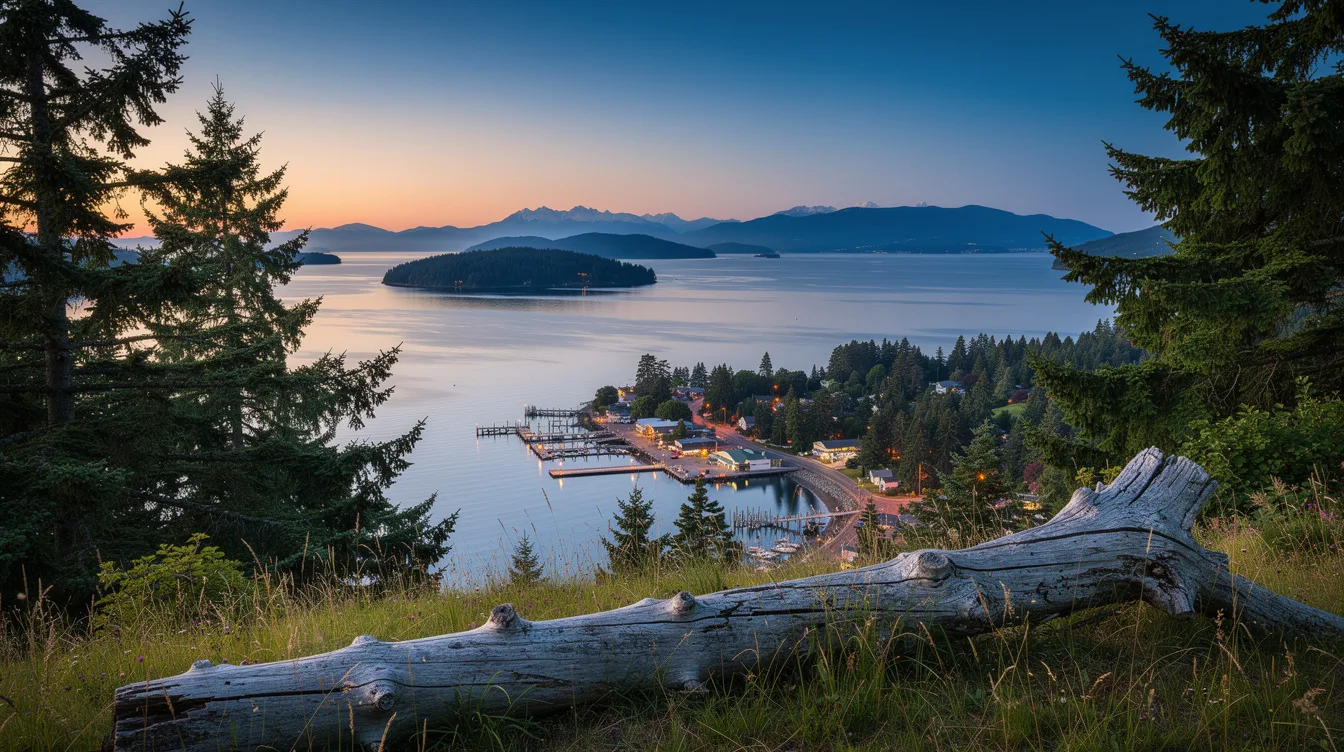
At the south end of Whidbey Island, Langley faces Saratoga Passage and looks toward Camano Island and the Cascade Mountains. Salt air reaches the compact downtown, so even an ordinary coffee stop can turn into a long look at the water.
You come for the artistic history, but the setting does much of the persuasion. Langley is quiet rather than sleepy, and its cliffside position gives the town a sense of separation without making it feel remote.
1915 is the reason this town feels creative
An artists’ colony was already active here in 1915. That is the important detail: Langley’s arts identity is not a recent layer added for visitors, but part of the town’s long-running social life.
And you can still follow that thread through visual arts, music, and theater. The Whidbey Island Center for the Arts gives the town a real cultural anchor, while galleries and small storefronts keep the experience close to the street.
Langley incorporated on February 26, 1913. But the date matters less as civic trivia than as a marker of how quickly a distinct town life took shape beside Saratoga Passage.
If you prefer destinations where art happens behind formal museum doors, this may feel informal. That is precisely its appeal: you can move from a gallery window to a café table without changing the pace of your day.
A compact waterfront town with room to linger
The municipal area is about 1.08 square miles, which keeps the center intimate. You are never far from a shop, a restaurant, or a view that pulls your attention downhill toward the passage.
And that compact scale makes wandering the right strategy. The streets are made for pauses, especially when the marine light shifts and the water turns into the main event.
Langley’s population was 1,147 residents in the 2020 census. It is small, but it has more cultural texture than its size suggests, with venues and local businesses sharing a walkable core.
You should not expect the constant motion of a large waterfront city. Instead, Langley rewards travelers who are happy to browse slowly, take a seat, and let the harbor views set the afternoon’s agenda.
Saratoga Passage gives the town its edge
Beyond downtown, the waterfront looks across Saratoga Passage toward Camano Island and the Cascades. The view is broad, but the town stays close around you, which is a better combination than a grand overlook that feels detached from daily life.
Whales, bald eagles, and other Puget Sound wildlife are part of the draw. You may see them from this coastal perch, though wildlife never follows a visitor’s schedule, and that uncertainty is worth accepting.
But the water is not merely background scenery. It shapes the town’s mood, from the harbor at South Whidbey/Langley to the gull sounds and cool air that make spring and summer feel especially inviting.
If you are choosing between another indoor stop and time by the shore, take the shore. The artistic story makes more sense once you see the passage that has held Langley’s attention for generations.
Getting there is part of the reset
From Seattle, the usual route goes north to Mukilteo, crosses on the Mukilteo-Clinton ferry, then continues to Langley. The ferry breaks the trip into two distinct parts, and that shift is one reason the town feels farther away than it is.
After reaching Clinton, Langley is about 15 to 20 minutes by car. You will want a car for that final stretch, so plan the outing around the crossing rather than treating it like a simple city errand.
Spring and summer are the seasons most associated with a Langley weekend. The brighter days suit waterfront walks and browsing, but the town’s appeal is less about a packed itinerary than a deliberately loose one.
And there are enough nearby stops to extend the day, including Whidbey Island Distillery, Chocolate Flower Farm, Spoiled Dog Winery, and Earth Sanctuary. Pick one or two, because trying to collect them all would miss Langley’s point.
Stay for the last look across the water
Langley works best when you give its small scale permission to slow you down. Spend time in the galleries, step into the arts center, then return to the bluff and see what the passage is doing before you leave.
But do not come expecting a resort town built around nonstop activity. Come because the town’s art history is still visible in its everyday rhythm, from a storefront gallery to the harbor below.
By late afternoon, the air off Saratoga Passage turns cool, the storefronts glow softly, and the water keeps moving beyond the bluff.