Modern music room ideas for a sleek studio work best when sound treatment, cable control, and storage belong to the design from the start. A bare room can feel harsh, while too much equipment quickly looks chaotic. These 13 setups balance acoustics, texture, and warm visual structure. The result can feel polished, inviting, and ready to play!
- ✓ Integrate Vertical Oak Acoustic Panels
- ✓ How Should Guitars Hang on a Slatted Wall?
- ✓ Pattern Meets Pulse Under the Drum Kit
- Integrate Vertical Oak Acoustic Panels
- How Should Guitars Hang on a Slatted Wall?
- Pattern Meets Pulse Under the Drum Kit
- Hide Cables Inside a Flush Raceway
- Let a Floating Console Clear the Horizon
- Build the Black-Box Record Corner
- Let the Window Frame the Digital Piano
- Layer Light in Three Clear Levels
- Why Does the Synth Need a Sculptural Seat?
- Arrange Small Instruments on a Pegboard
- Above the Listening Zone: Acoustic Clouds
- Mineral Blue, Warm Equipment
- Add a Built-In Listening Ledge
1Integrate Vertical Oak Acoustic Panels
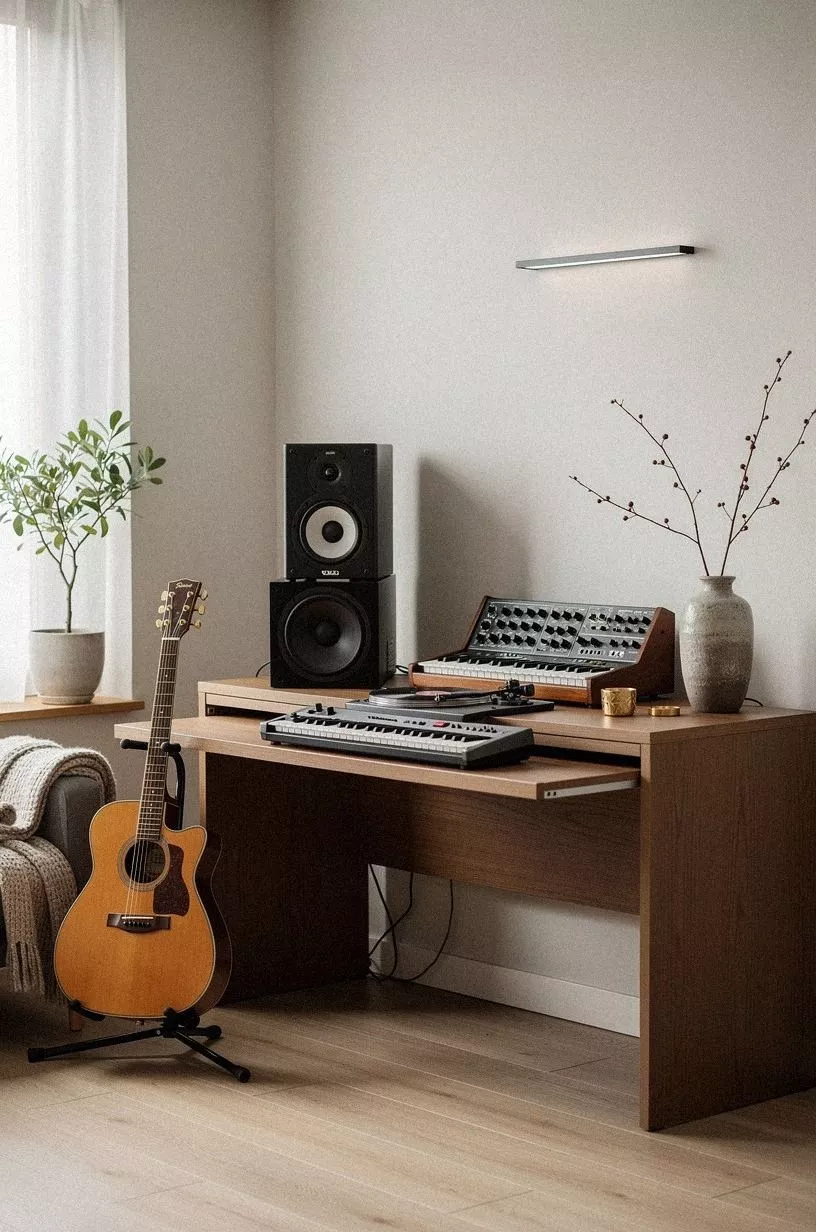
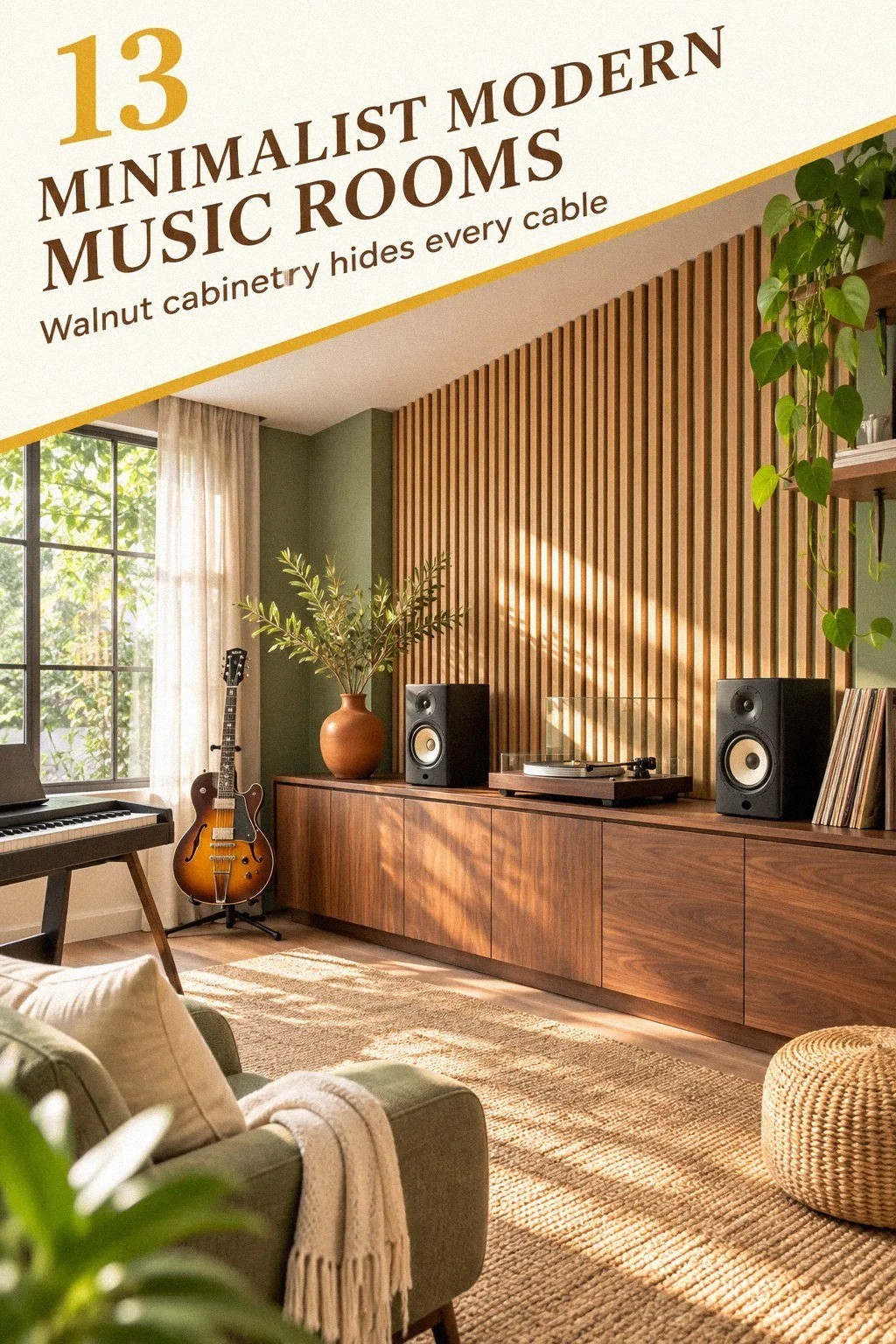
Vertical oak panels give a modern music room a strong architectural backdrop without making the space feel busy. The cerused grain catches light between each slat, while terracotta upholstery, honed stone, and olive accents keep the palette earthy. If you’re treating a recording corner, cover the wall behind the main listening position first.
That placement may soften harsh reflections without covering every surface.
Choose cerused white oak acoustic slats with a dark backing so the gaps read as shadow rather than decoration. A low console, compact speakers, and one wool rug will keep the floor line open. You don’t need a wall full of instruments here, because the timber already supplies rhythm and repetition.
If you’re planning the room before materials arrive, browse these music studio room layout ideas for ways to position seating, speakers, and storage. Skip glossy orange oak. It can fight the terracotta and make the setup feel dated.
2How Should Guitars Hang on a Slatted Wall?
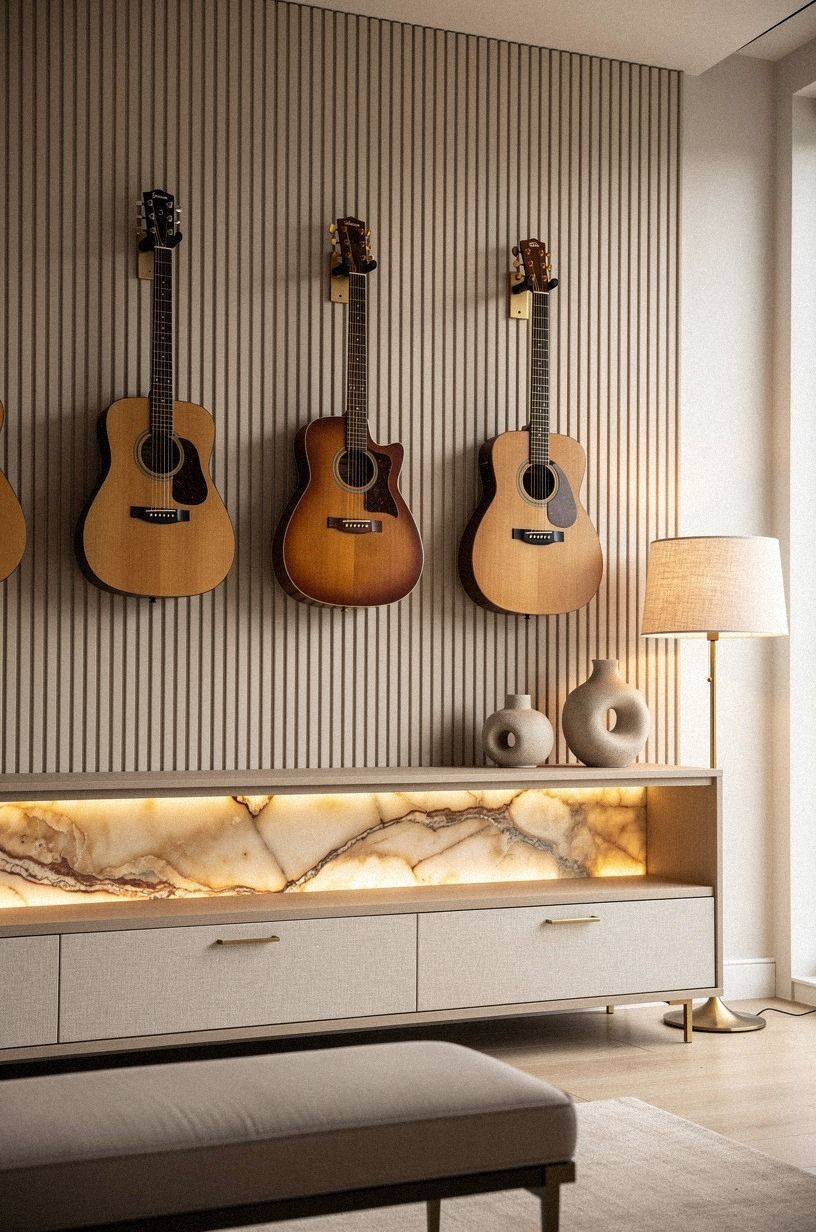
A slatted wall turns guitars into a tidy composition, especially when instruments hang at three different heights instead of one rigid row. Clay-colored plaster, linen seating, and aged brass hardware create a soft setting. If you’re working with a narrow wall, keep the lowest instrument high enough for easy cleaning beneath it.
Use aged brass guitar hooks against backlit translucent onyx. The glow should sit behind the instruments, not directly above them, so the strings and curved bodies receive a gentle outline. You can keep the rest of the equipment low, which gives the room a calmer skyline.
Don’t hang every instrument in the home on one wall. Two or three guitars with visible breathing room will look more refined than a crowded display. A compact music corner can work without a separate room, and these living room music corner layouts show how to keep the arrangement practical.
3Pattern Meets Pulse Under the Drum Kit
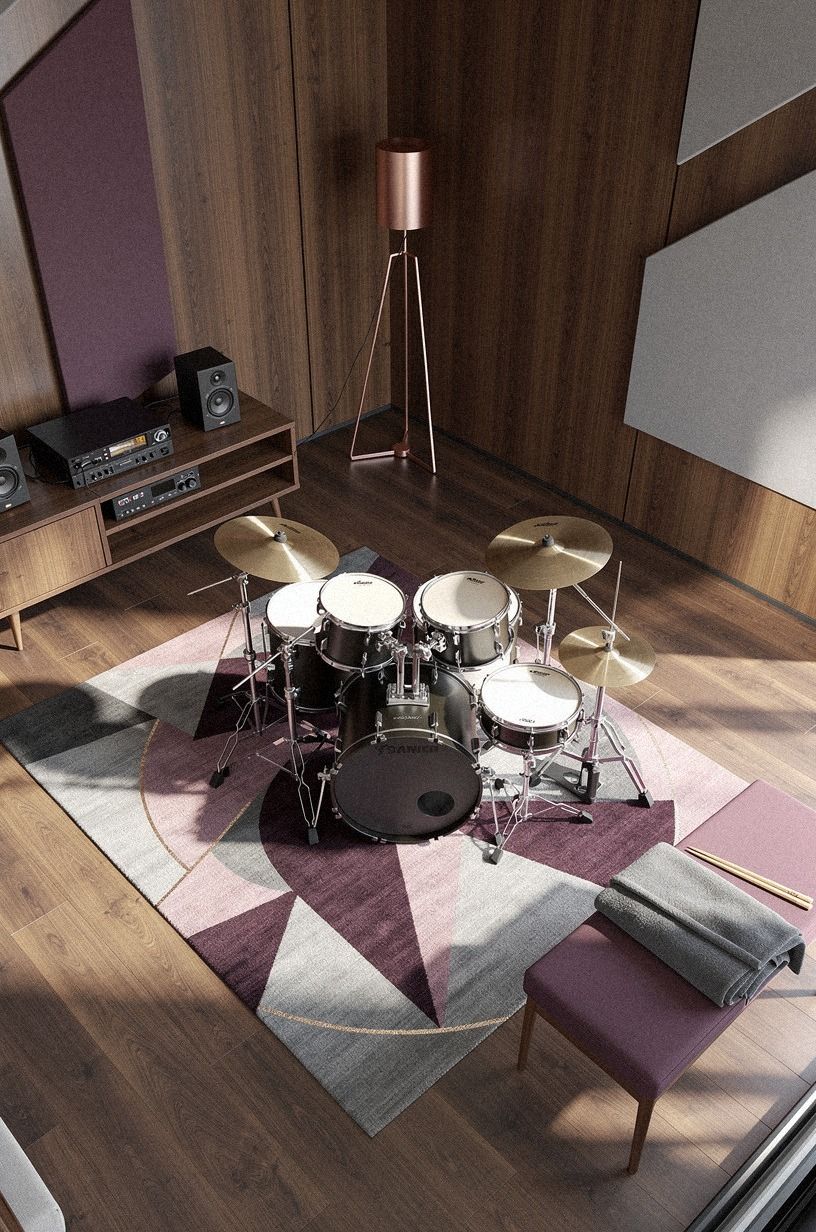
A graphic rug gives a drum kit a visual boundary, which helps a large instrument feel intentional instead of stranded in the center of the room.
4Hide Cables Inside a Flush Raceway
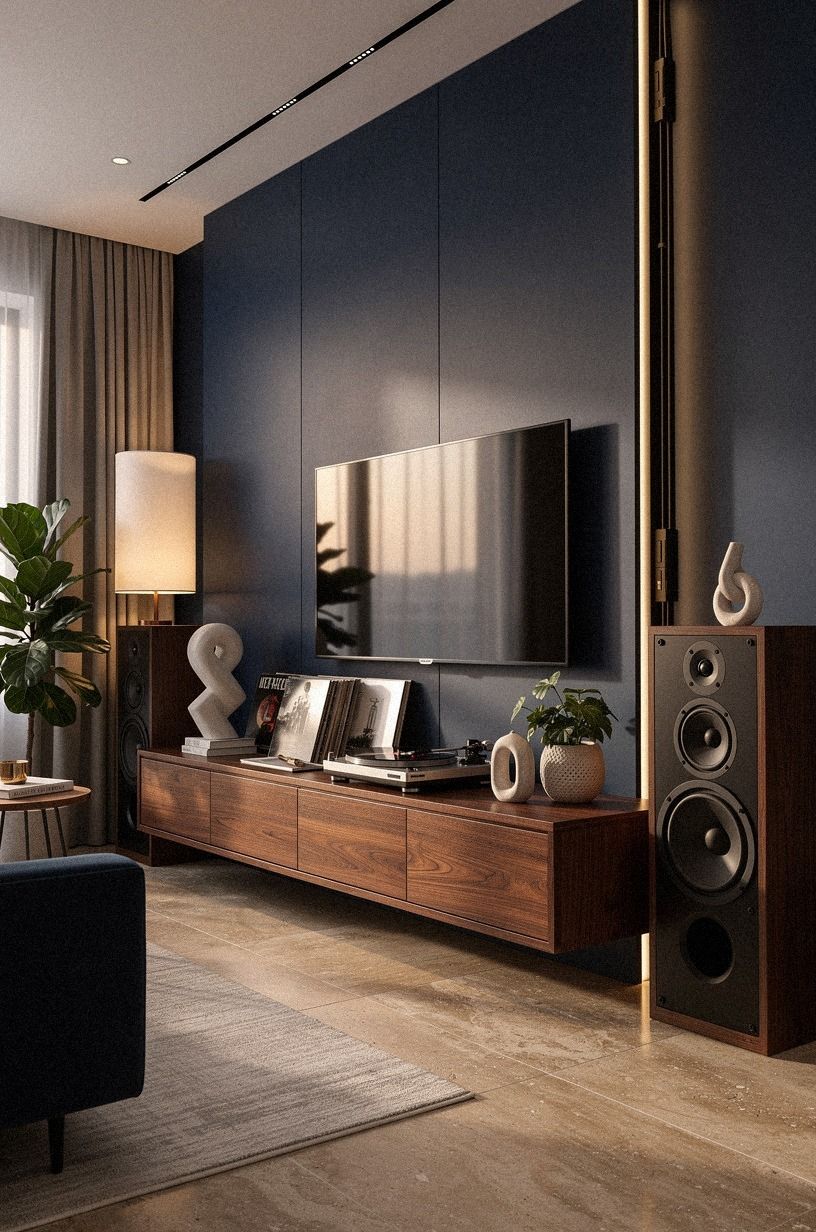
A flush cable channel keeps a navy, white, and walnut studio looking clean from the doorway. Warm travertine adds a tactile counterpoint to the straight cable route, especially when the channel follows the baseboard or drops vertically behind a console. If you’re renting, choose a paintable surface raceway with removable mounting strips.
Use paintable cable raceway in the same color as the wall, then reserve walnut for furniture rather than the wiring cover. Group power leads separately from audio cables when possible, and leave a small service loop behind the console so future changes won’t require opening the wall.
Don’t force every cable into one narrow bundle. A little separation can prevent tangles and make troubleshooting easier. For rooms with concealed storage, these hidden door interior ideas offer useful inspiration for keeping technical zones out of sight without adding visual noise.
5Let a Floating Console Clear the Horizon
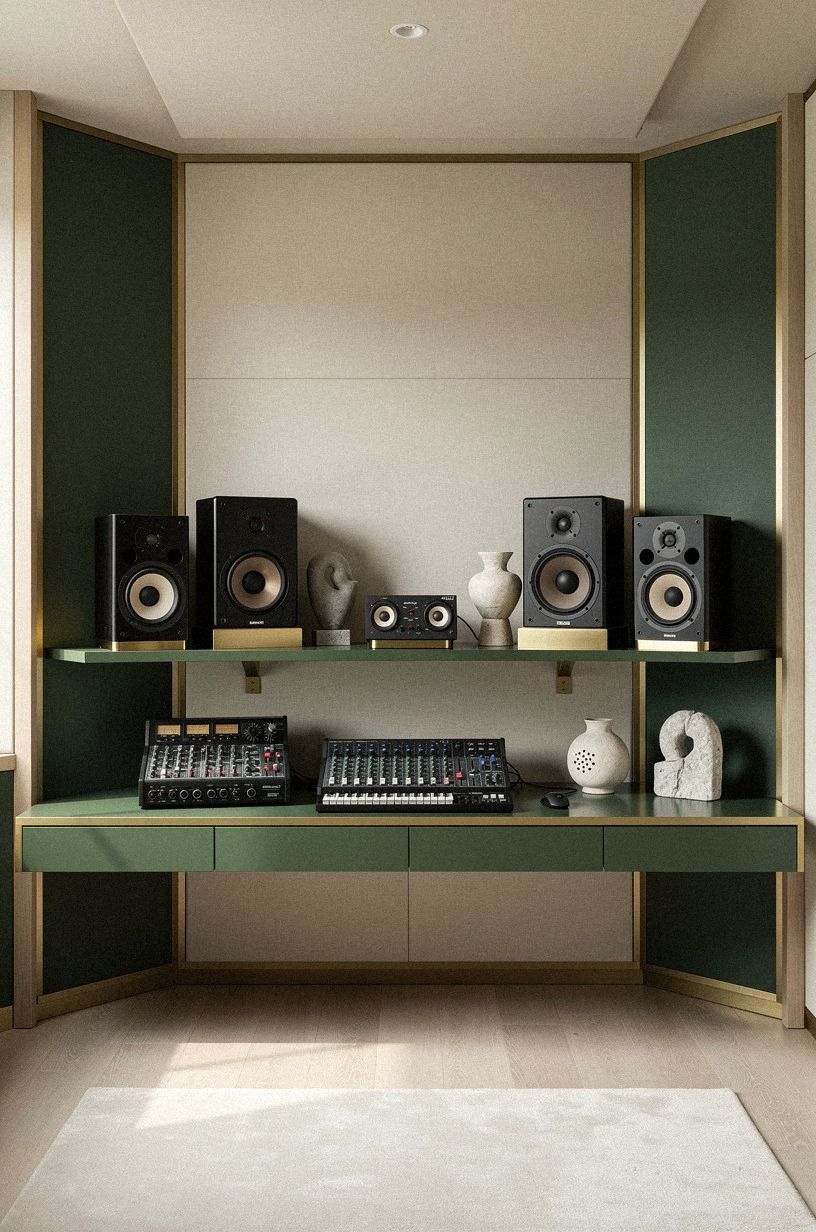
A floating console creates a clear horizontal line for studio monitors, a keyboard, and a few carefully selected controls. Emerald green, soft gold, and cream make the setup feel rich without becoming heavy, while unlacquered brass introduces a warm point of reflection. If you’re mounting the console, confirm the wall structure before loading it with equipment.
Choose unlacquered brass cable grommets and a console with a durable matte surface. Keep monitor stands symmetrical, but don’t push the speakers tightly into the corners. A small gap around each unit gives the composition air and makes the arrangement feel intentional.
The best floating console isn’t the widest one. It should hold the equipment used most often, while less-used hardware belongs in a drawer or cabinet below. You won’t need decorative objects on every inch of the surface.
One ceramic vessel and one small lamp can be enough.
The open floor is what keeps this studio airy. A home music studio sound setup can also help refine the distance between the console, speakers, and listening chair.
6Build the Black-Box Record Corner
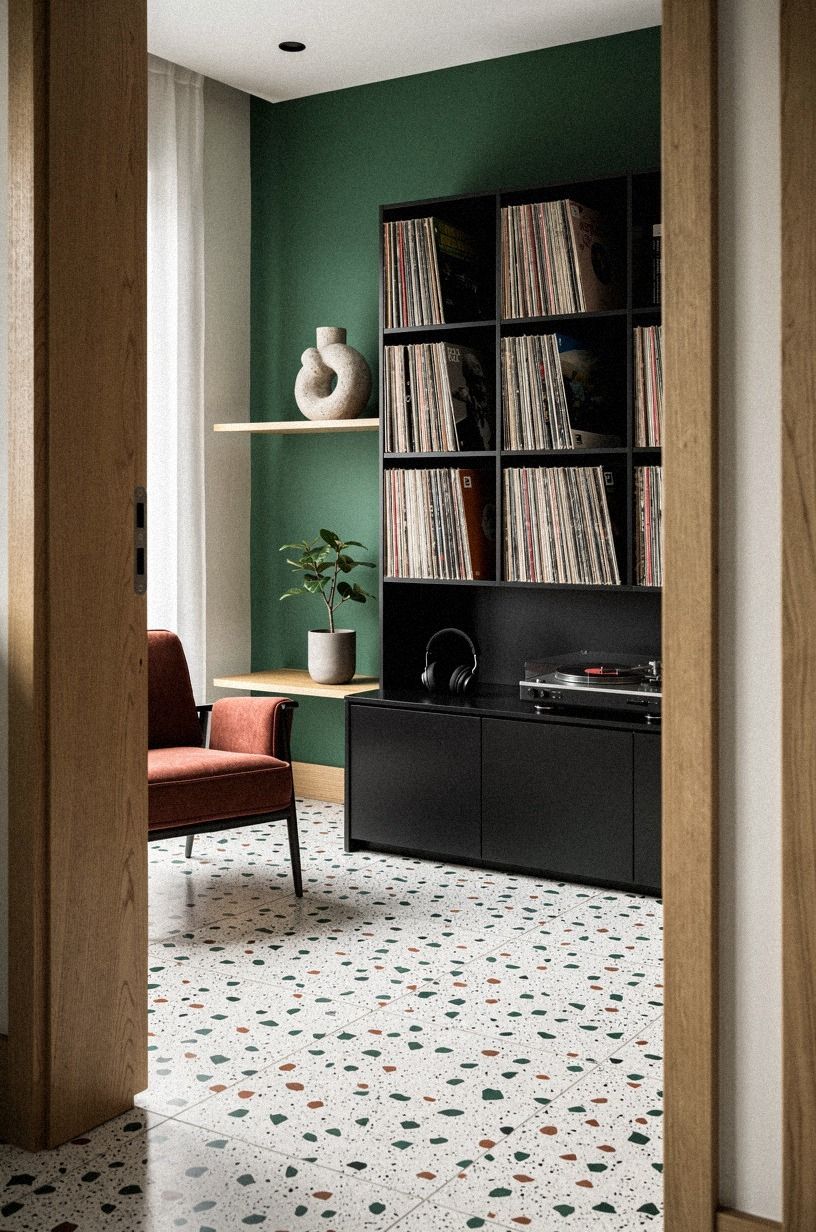
A record corner works best when black storage gives the collection a visual edge. Forest green walls, rust textiles, and natural oak soften the contrast, while oversized-chip terrazzo adds an architectural surface. If you’re storing vinyl, keep the shelves low enough for easy browsing and sturdy enough to prevent sagging.
Use matte-black record storage cubes with natural oak fronts or an oversized-chip terrazzo top. A small listening chair, a turntable, and one warm lamp can create a complete station without filling the room. Keep album covers visible in a limited section, then store the rest behind doors so the display doesn’t become visual static.
A home music studio storage plan can help when deciding where records, cables, and headphones should live. Don’t mix too many storage finishes. Black, oak, and one rust-colored textile will look more polished than five unrelated materials.
7Let the Window Frame the Digital Piano
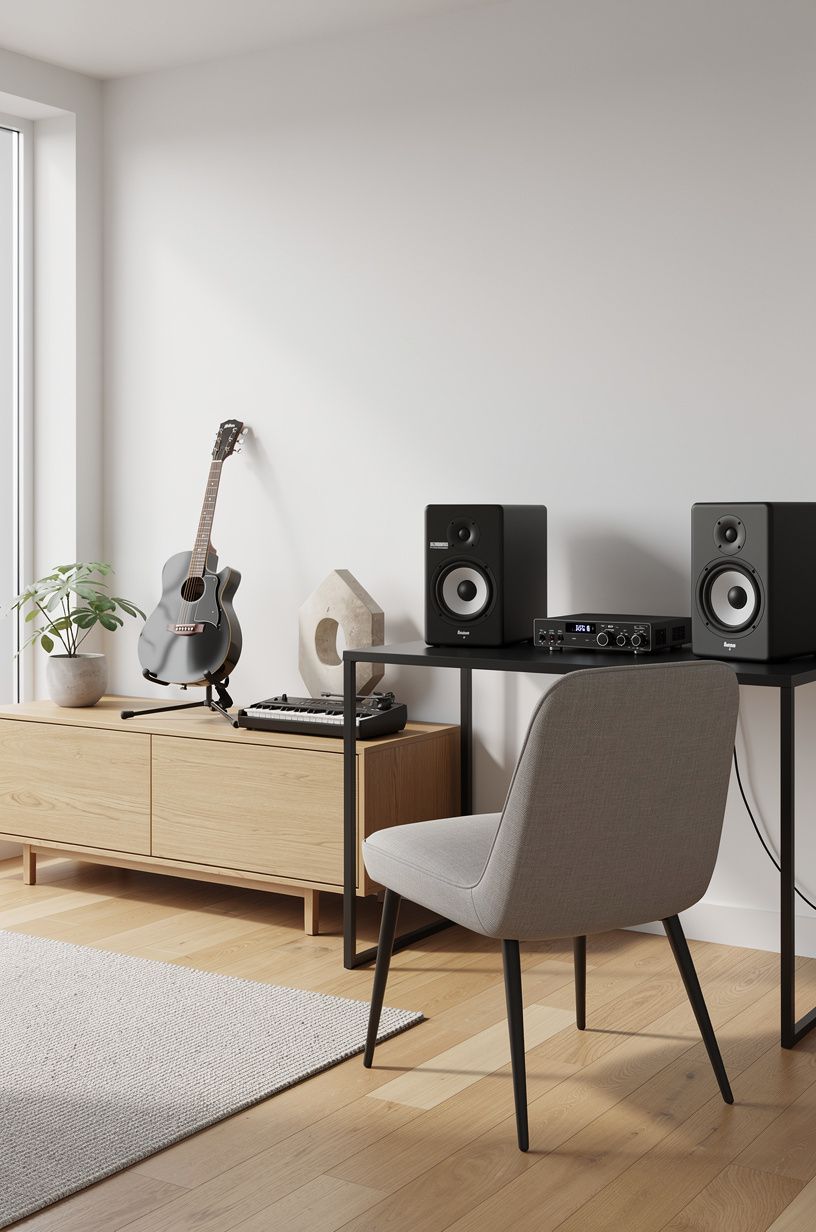
A piano placed in front of a window needs framing, not competition. Dusty rose walls, charcoal trim, and brass hardware can make the instrument feel grounded, while hand-applied Venetian plaster adds subtle variation around the opening. If you’re arranging a digital piano here, leave enough clearance for the bench to move without striking the wall.
Choose hand-applied Venetian plaster in a muted rose tone, then repeat the charcoal color in the bench or a slim picture frame. Curtains should sit 4 to 6 inches, or 10 to 15 cm, above the window frame and fall to the floor. That keeps the vertical view uninterrupted.
Hang art with its center about 57 to 60 inches, or 145 to 152 cm, from the floor. That height keeps the wall balanced when the piano is already low and wide. Heavy drapes can swallow daylight, so choose loose-weave linen when the room should stay bright and peaceful.
8Layer Light in Three Clear Levels
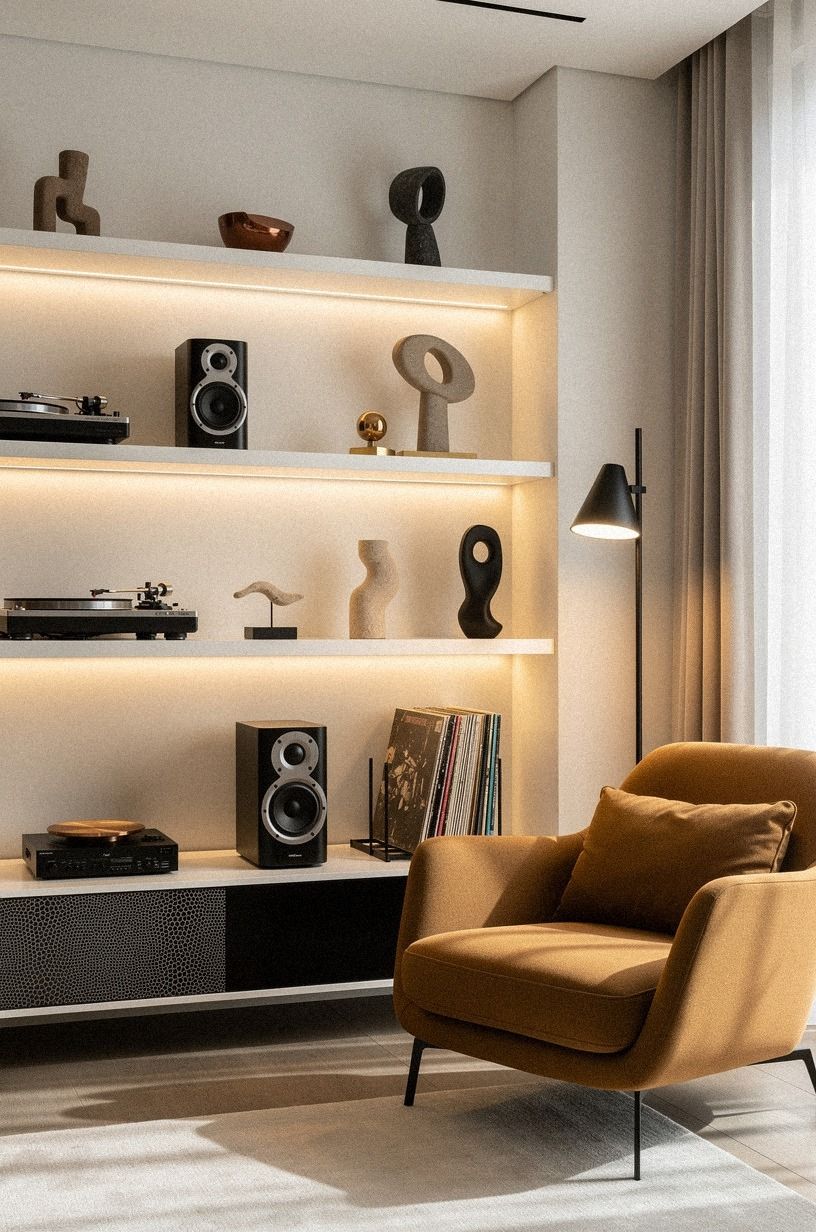
Under-shelf lighting gives a warm white studio enough glow for late practice without flooding the room with one harsh ceiling fixture. Camel upholstery and black accents keep the palette grounded, while shelving with shagreen accents adds a refined surface that catches light softly. If you’re adding LEDs, hide the diode points behind a front lip or diffuser.
Use shelving with shagreen accents alongside warm white strips, then layer a ceiling source and a task lamp nearby. Three sources per room, overhead, task, and ambient, will create better depth than one bright fixture. You’ll notice the difference when instrument surfaces stop looking flat after sunset.
Here is a useful cost reference for a sleek room refresh. These figures describe typical US ranges, not a fixed quote.
A budget setup can still feel inviting when the light is layered carefully. You don’t need expensive fixtures if the placement is right!
9Why Does the Synth Need a Sculptural Seat?
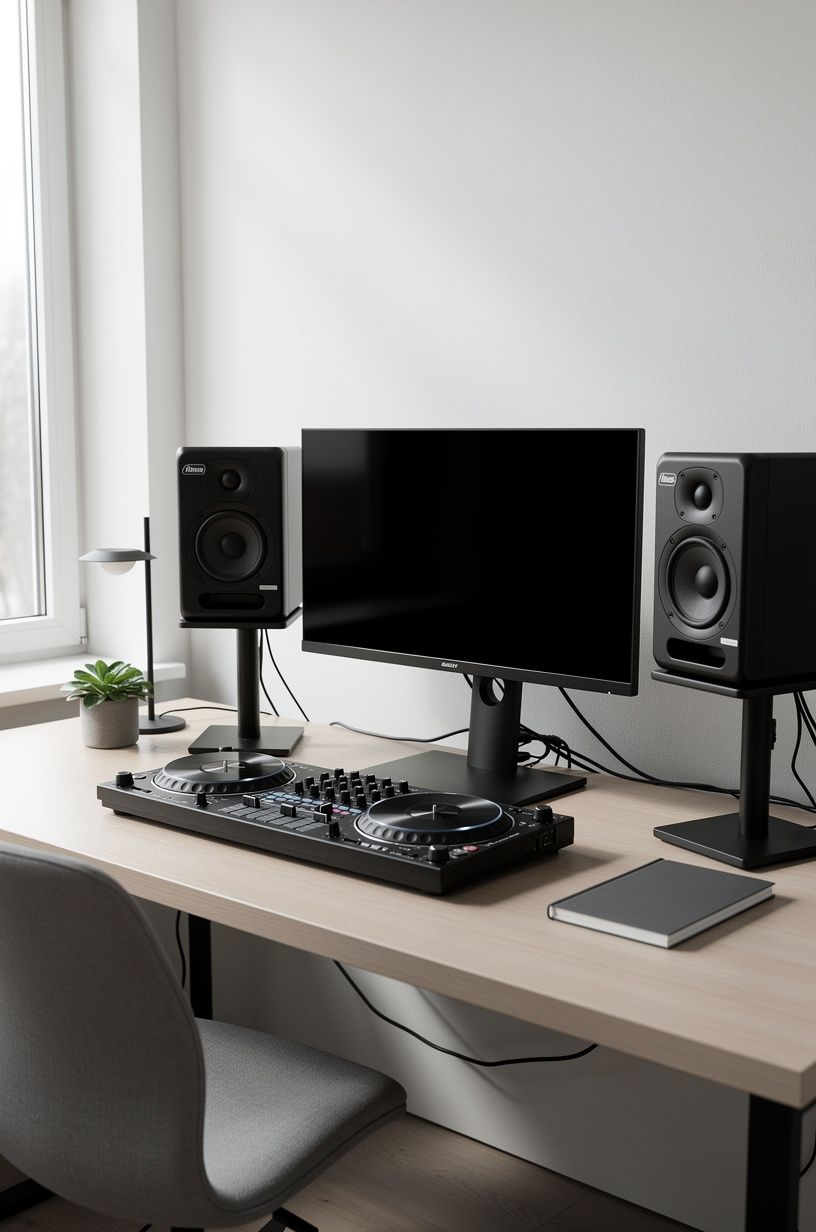
A sculptural chair near a synthesizer creates a place to pause without turning the studio into a lounge. Choose washed Belgian linen with a lived-in texture, then add midnight blue, copper, or ivory through the chair, wall, or nearby accessories.
Keep the chair slightly outside the main playing zone. That small offset protects circulation and gives the synthesizer a clear visual role. If you’re working with limited floor space, choose a compact slipper chair rather than a deep lounge design.
A small side table can hold headphones, a notebook, or a cup, but it shouldn’t become another storage pile. One stone side table and a focused lamp are enough. For a shared living area, music corner without a spare room offers practical ways to separate music from everyday circulation.
10Arrange Small Instruments on a Pegboard
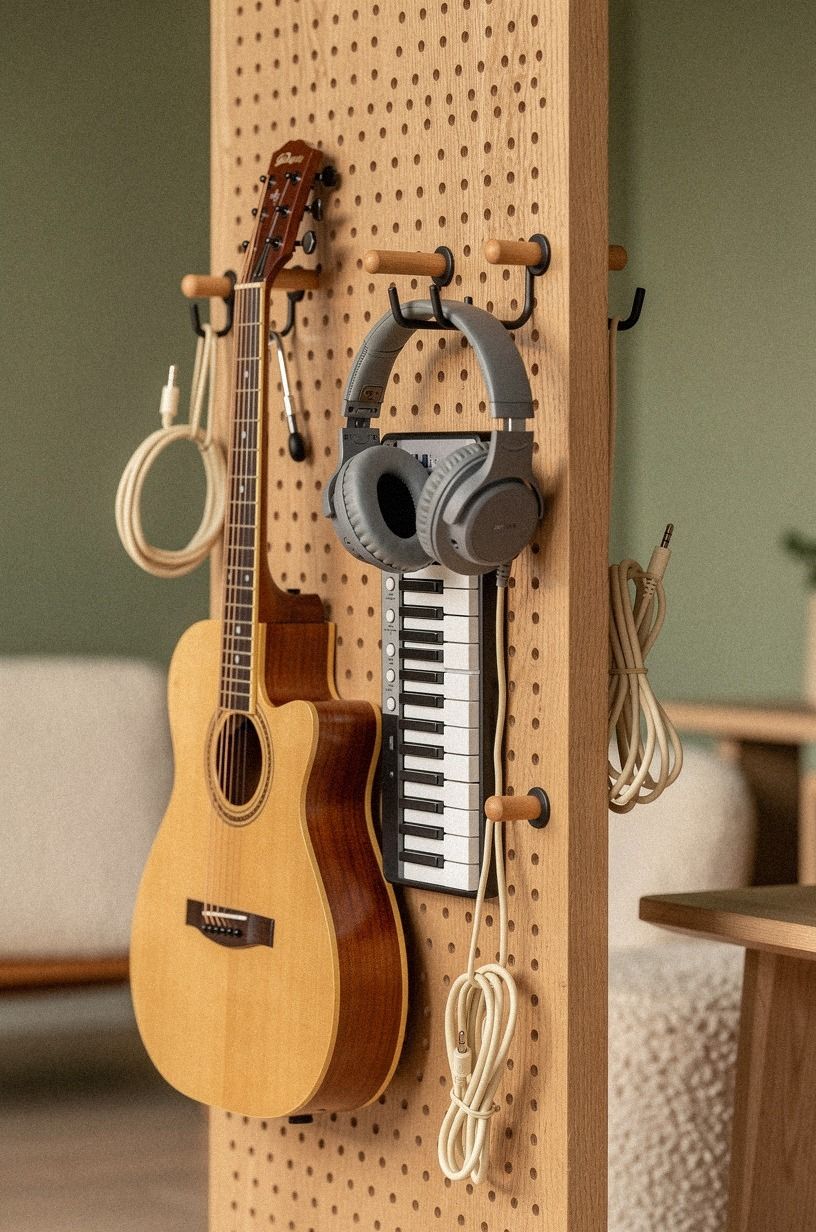
A pegboard gives smaller instruments a home while keeping the wall composition flexible.
11Above the Listening Zone: Acoustic Clouds
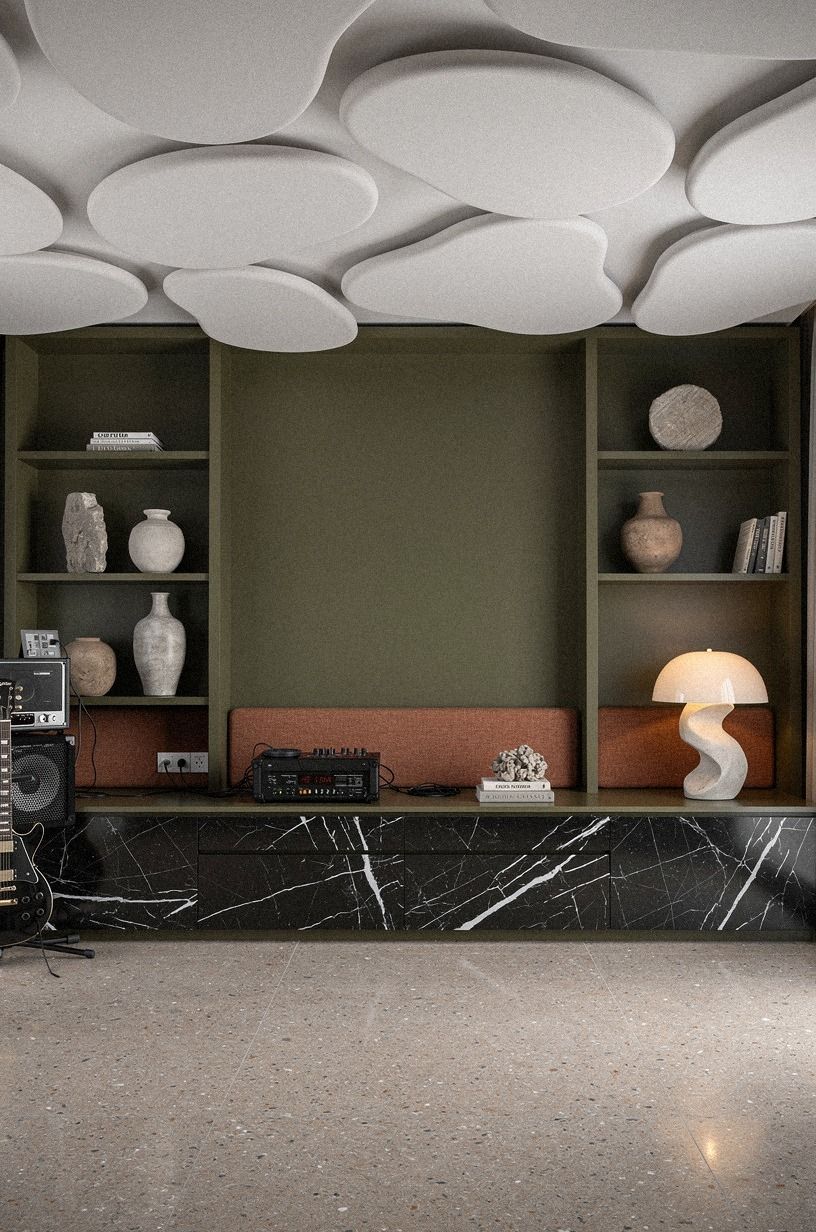
Acoustic clouds make the ceiling part of the sound strategy while adding a strong visual layer above the listening zone. Terracotta, stone, and olive create an earthy palette, while Nero Marquina black marble with white veins introduces a dramatic accent without making the ceiling feel crowded.
Suspend the clouds above the main listening area, leaving enough space for airflow and lighting. A slim Nero Marquina black marble ledge or console below can connect the ceiling treatment to the furniture. Long rectangular panels suit a floating console, while rounded forms can soften a room with many straight instrument cases.
Don’t cover the entire ceiling by default. A measured arrangement can provide visual calm and leave the lighting plan clear. If you’re unsure where reflection points gather, the music studio room layout ideas can help map the relationship between seating, speakers, and overhead treatment.
12Mineral Blue, Warm Equipment
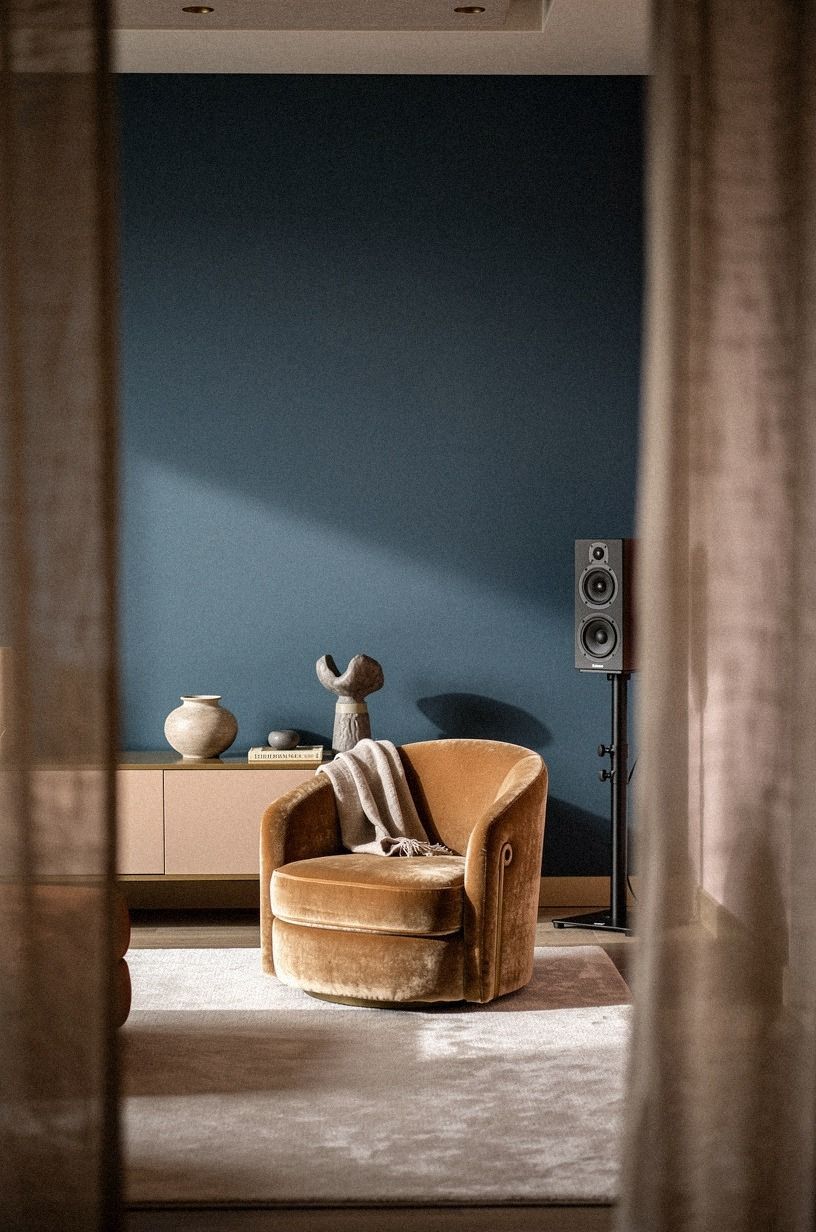
A mineral blue wall gives a studio a calm visual anchor without the flatness of a basic navy. Clay, linen, and aged brass bring warmth to the cooler paint, while deep-pile mohair velvet adds a tactile note near the seating area. If you’re testing color, place samples beside monitor screens and natural wood before committing.
Farrow & Ball Pigeon No. 25 offers a muted blue-grey direction, while Benjamin Moore White Dove OC-17 works well on the ceiling and trim. For a slightly cooler alternative, Sherwin-Williams Agreeable Gray SW 7029 can balance darker equipment without making the room stark.
Which color works best for a studio with little daylight? A mineral blue with a grey base usually feels steadier than a bright saturated blue, especially when the room has black equipment. You won’t need many wall decorations, because the paint already gives the instruments a quiet backdrop.
For a darker, more enclosed palette, repeat the same blue on a cabinet or door. A hidden door interior ideas collection can also spark ways to conceal storage while keeping the color story continuous.
13Add a Built-In Listening Ledge
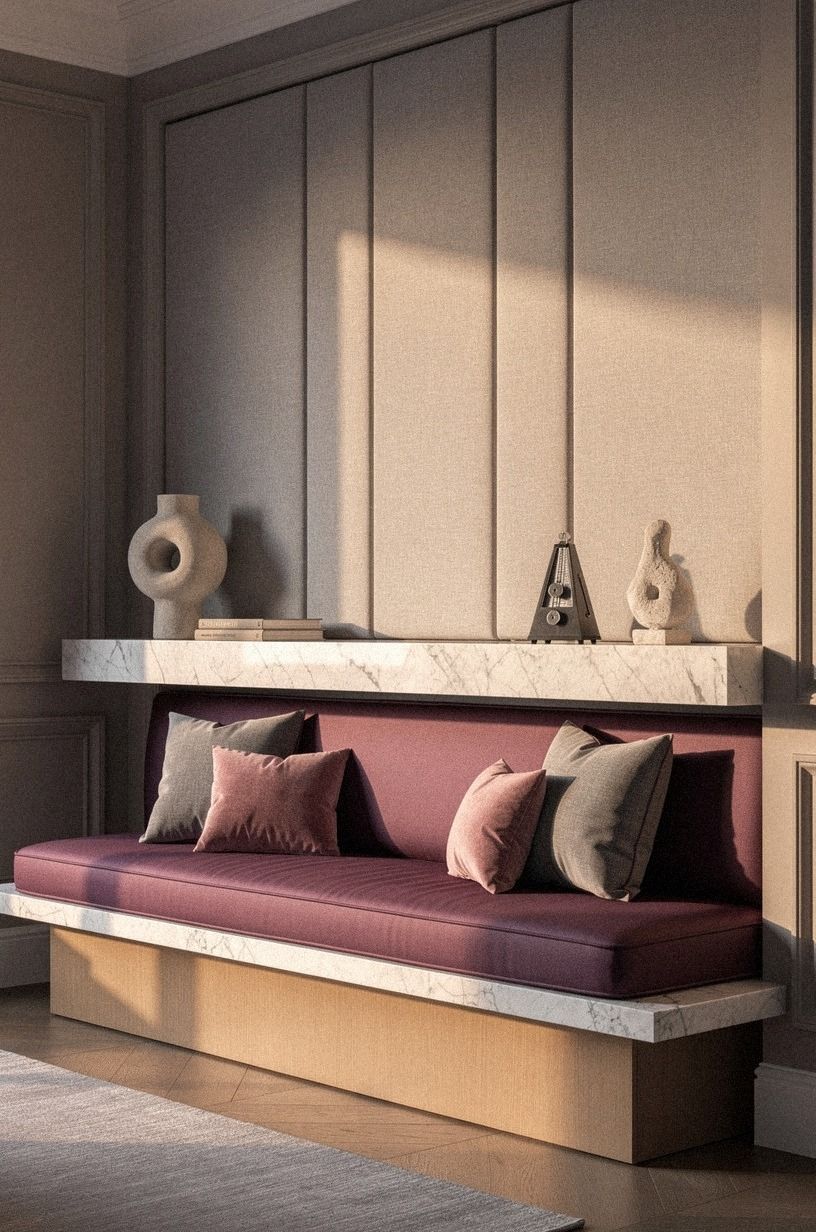
A built-in bench under acoustic absorbers combines seating, storage, and sound treatment in one continuous wall. Plum upholstery, grey surfaces, and rose-gold details can make the structure feel architectural, while Carrara marble with subtle grey veining adds a refined ledge.
Keep the bench depth comfortable but restrained. A lift-up seat can store cables, sheet music, and headphones, while open cubbies below can hold records or small cases. If you’re planning custom work, leave ventilation around amplifiers and avoid sealing heat-producing equipment inside closed compartments.
Use one long cushion instead of several unrelated pillows. The simpler line will support a minimal room, especially when the wall already includes acoustic panels. A small reading lamp or brass wall sconce can define the listening zone without adding floor clutter.
Why a Minimal Studio Still Needs Texture
A sleek music room isn’t an empty room with equipment pushed against the wall. It needs contrast, because hard monitors, keyboards, cables, and instrument cases can make a space feel sharp.
Timber, linen, wool, plaster, and brushed metal soften those edges while keeping the palette controlled. The goal isn’t decoration for its own sake.
It’s a room where every visible material supports sound, storage, or atmosphere.
The strongest setups usually repeat two or three materials instead of introducing a new finish for every object. Cerused oak can appear on a console and a shelf.
Aged brass can connect the lighting to guitar hardware. Linen can soften the chair while echoing curtain texture.
That repetition makes the room feel harmonious without forcing every item into a matching set.
A minimal studio also needs a little visual interruption. One graphic rug, one painted wall, or one sculptural chair gives the eye a place to rest. Without that focal point, even an organized room can feel anonymous.
With too many focal points, the equipment disappears into noise. The best balance is practical, personal, and restrained.
When choosing between a new cabinet and better cable control, choose cable control first. A clean route changes the whole room from the doorway.
When choosing between extra decor and acoustic treatment, choose the treatment if reflections are harsh. You don’t need to hide the purpose of the room.
You need to let the purpose look intentional.
The Questions Worth Answering First
What is the best modern music room idea for a small studio?
A floating console with vertical acoustic panels makes a strong small-room choice. Open floor space keeps movement easy, while cube-style storage can hold records below the visual line. Use one chair, one rug, and one focused light source so equipment doesn’t compete for attention.
Where can you buy modern music room pieces on a budget?
IKEA, Wayfair, and Target offer practical consoles, shelving, lamps, and textiles. Second-hand savings can come from Facebook Marketplace or local thrift shops, especially for solid wood cabinets.
You don’t need a matching collection. Consistent color and hardware will make mixed pieces feel connected.
How much does a sleek music room makeover cost?
A typical US refresh ranges from $200-$800 for paint, textiles, art, and organization. A mid-range update with accent furniture, lighting, and a rug can run $1,500-$5,000. Custom millwork and main furniture may reach $8,000-$25,000 or more.
Can you create a modern music room on a budget?
Yes, and the first low-cost moves are free cable sorting, furniture rearrangement, and a smaller visible equipment zone. Budget control improves when paint, textiles, and organization come first. A second-hand oak cabinet, warm LED strips, and one used rug can change the room without a full renovation.
Is a sleek music room worth it in a small space?
Yes, because a small room rewards clear zones and limited furniture. Better circulation comes from floating storage, vertical instruments, and a rug that connects the listening area. Keep the main route open, then place the largest instrument against the longest uninterrupted wall.
Is a modern music room a good idea for a rental?
Yes. Removable hooks, tension rods, paint-safe cable channels, and peel-and-stick acoustic surfaces can create a low-damage setup. Use freestanding shelving instead of built-ins, and choose a rug plus curtains to soften sound without permanent construction.
Check the lease before mounting heavy panels.
Where to Start First
Start with the vertical oak acoustic panels. They may soften reflections while giving the room a material spine. Build the rest around their warm grain, controlled texture, and clean lines.