Low-maintenance bedroom habits may support a calmer cortisol rhythm by reducing bright light, visual noise, and bedtime decisions. The biggest changes don’t require a remodel. A shaded lamp, breathable bedding, and one clear walking path can make your room feel quieter before the night begins. Small shifts count!
- Banish Bright Screens From the Nightstand
- Why Floor-Length Blackout Curtains Matter
- Set an Amber Lamp for the Last Hour
- Can a Dim Alarm Clock Leave the Sightline?
- Choose Breathable Bedding in Muted Tones
- Clear the Route Around the Bed
- Red Light, Low and Indirect
- Hide Chargers Inside a Closed Box
- Reserve a Chair for Decompression
- Air the Room Before Bed
- Farrow & Ball Setting Plaster and Other Matte Walls
- Closed Baskets Versus Open Surfaces
- Position the Bed Toward a Calm View
1Banish Bright Screens From the Nightstand

Bright screens near the bed can keep your attention switched on when your body is ready to slow down. Give your phone a home outside arm’s reach, then keep the nightstand for objects that don’t flash, buzz, or invite scrolling. A cerused white oak table works well with terracotta, stone, and olive because pale grain catches low light without looking sterile.
You don’t need an expensive charging station. A lidded tray, a cord channel, and one warm reading lamp can handle the basics.
Keep one clear section of tabletop so your eye has somewhere to rest. When every device stays beside the pillow, the bed becomes a command center rather than a place for winding down.
A quiet analog alarm and a closed book can support a simpler nighttime routine. If you’re using a phone alarm, place the device across the room or inside a drawer that still allows the alarm to sound. You won’t need to check notifications during every nighttime wake-up.
The best setup is easy to repeat. A cerused oak tray can collect glasses, jewelry, or a sleep mask without turning into another crowded surface.
If the tray fills up, remove half its contents the next morning. That small reset keeps the evening routine from becoming another task.
2Why Floor-Length Blackout Curtains Matter
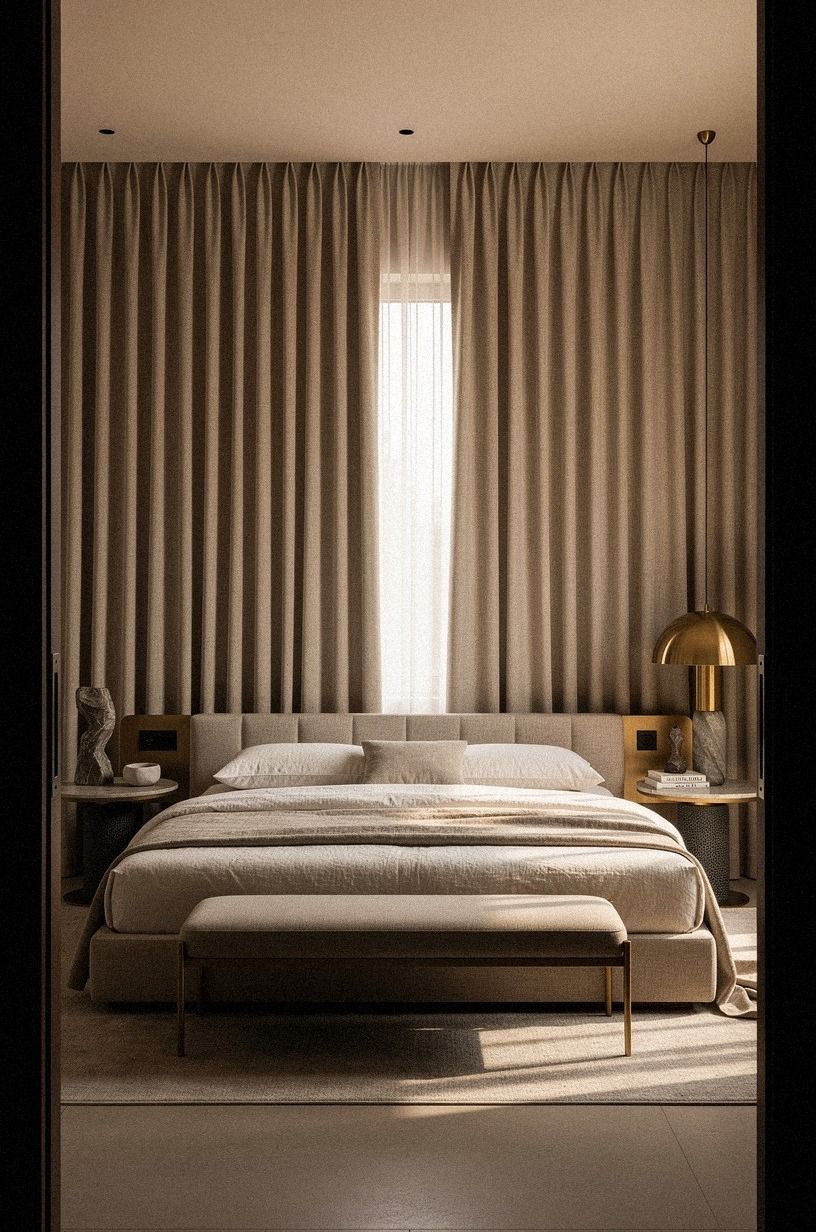
Full-length blackout curtains create a darker surround around the bed and block stray light that can make a room feel unsettled.
3Set an Amber Lamp for the Last Hour
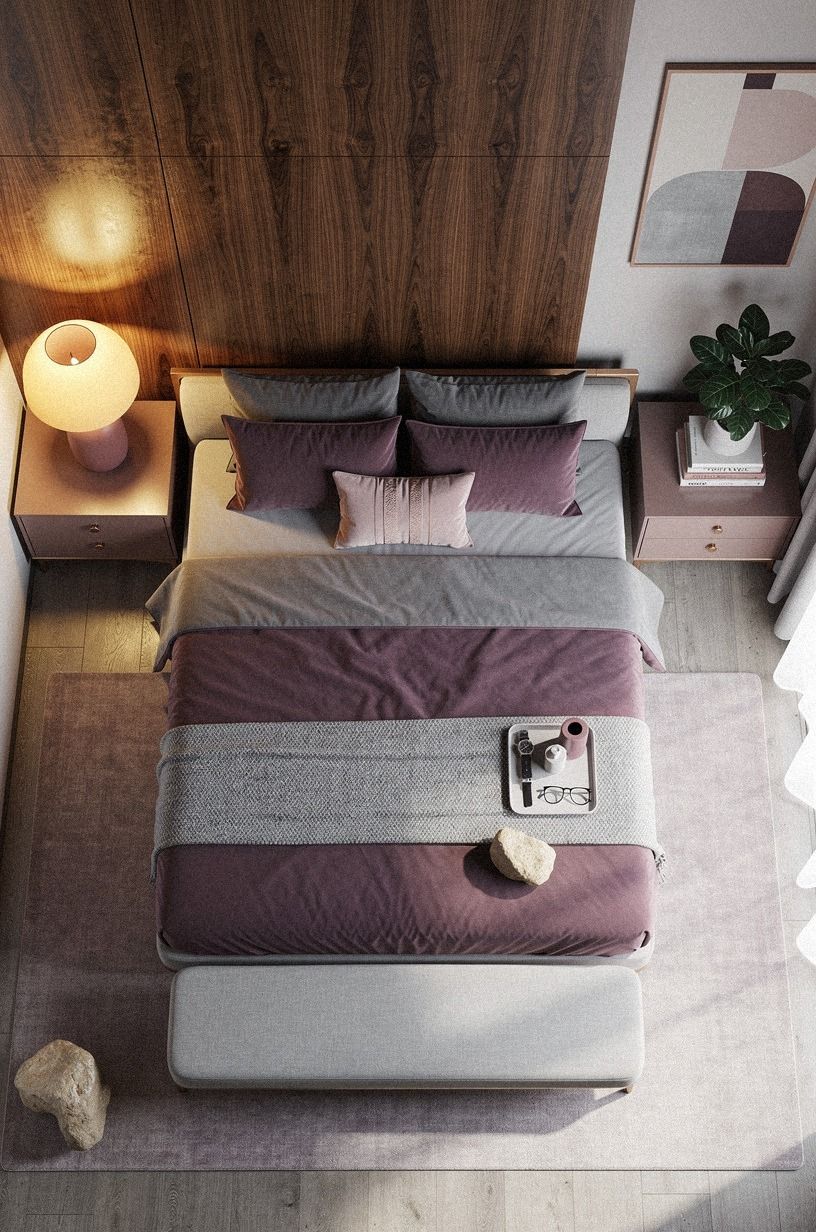
An amber lamp gives the last hour of the evening a softer visual temperature than a bright ceiling fixture. Choose a shade that throws light downward and keep the bulb low enough that plum, grey, and rose-gold accents stay moody instead of glaring.
Book-matched walnut adds a polished surface, but it still feels warm when soft light lands across the grain. A ceramic base, linen shade, or aged metal arm can create the same feeling at a lower cost. The useful feature is control, not a particular design label.
You can make this habit automatic with a plug-in timer or dimmer. Set the lamp before your evening routine begins, so you won’t need to make another decision when you’re tired. A bedside fixture should illuminate the page, not the entire room.
If you’re using a rose-gold finish, don’t pair it with a cool white bulb. The metal can look pink and harsh under blue-toned light. The better combination is amber light, soft fabric, and one visible surface without clutter.
A linen drum shade spreads the glow more evenly than a bare bulb. If the fixture feels too bright, lower the wattage or move it farther from the bed.
You don’t need several lamps to create a calm transition. One dependable source can be enough!
4Can a Dim Alarm Clock Leave the Sightline?
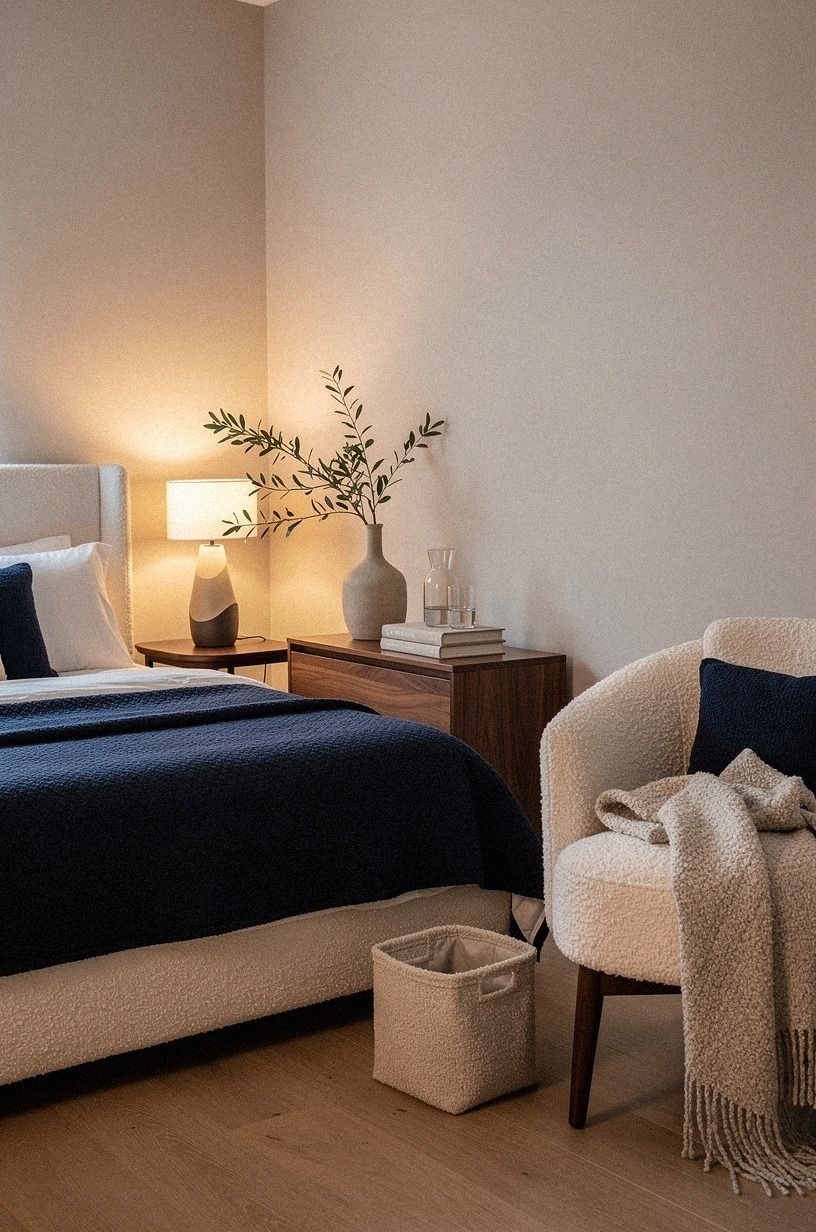
A bright alarm clock can become the object your eyes search for during every nighttime wake-up.
5Choose Breathable Bedding in Muted Tones
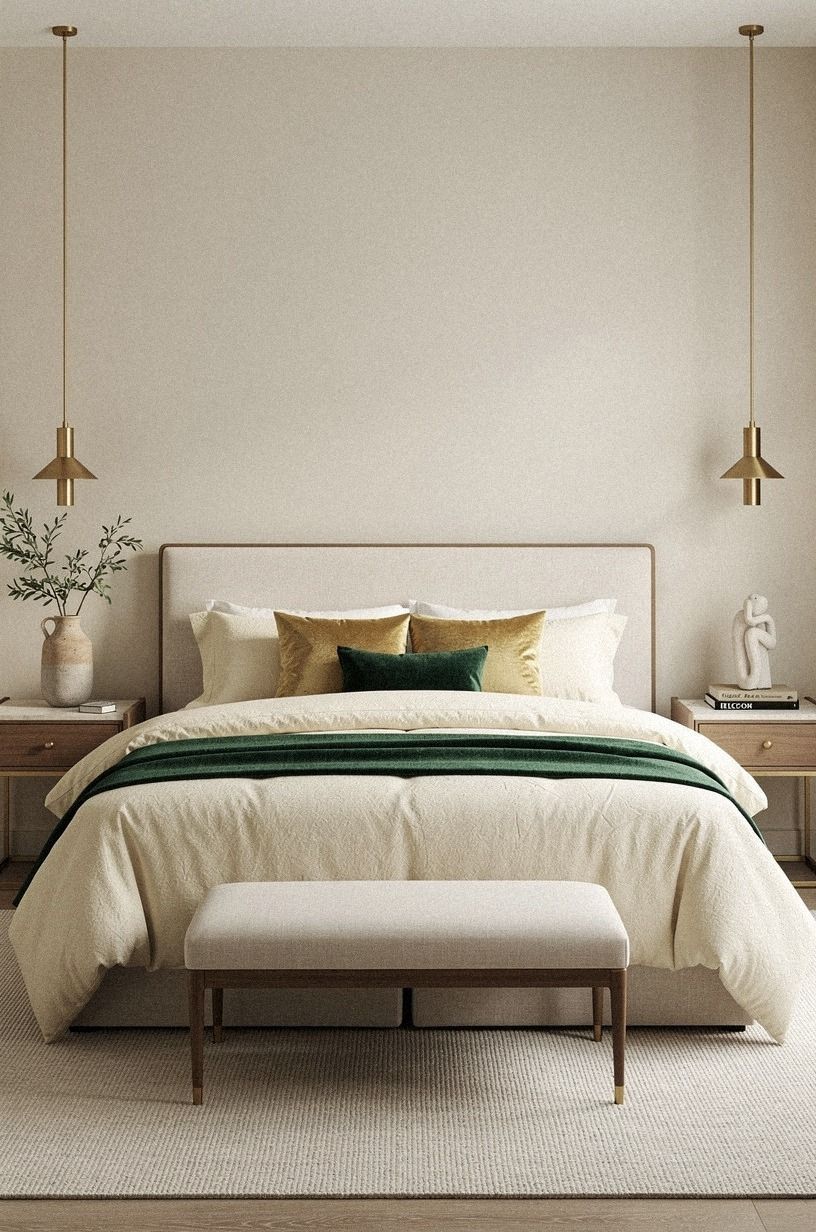
Breathable bedding can make the bed feel less heavy, especially when layered in cream, muted green, and soft gold. Look for washed linen, cotton percale, or another fabric with an open hand rather than dense synthetic filling.
600gsm Turkish cotton works well for towels and throws, but bedding usually feels more comfortable when the weave allows air to move through the layers. Check the care label before buying. A fabric that requires complicated maintenance may not suit a low-effort bedroom.
You can keep an emerald, gold, and cream palette refined by limiting the number of patterns. One solid duvet, one textured coverlet, and two different pillow sizes are enough. If you’re dressing a queen bed, oversized layers can quickly crowd a narrow room.
You don’t need seven decorative pillows that must be removed every night. A calm bed is easier to reset when the final layer folds over the foot in one motion. A washed linen duvet can look relaxed without appearing unfinished.
Choose colors that remain comfortable in both daylight and lamplight. Green may feel fresh in the morning and deep at night, while cream can keep a compact room from feeling enclosed. If the palette feels too flat, add texture before adding another print.
Temperature matters as much as appearance. Use a lighter layer during warmer months and keep a washable blanket nearby for cooler evenings. You won’t need to rebuild the bed each night when the layers are easy to adjust.
6Clear the Route Around the Bed
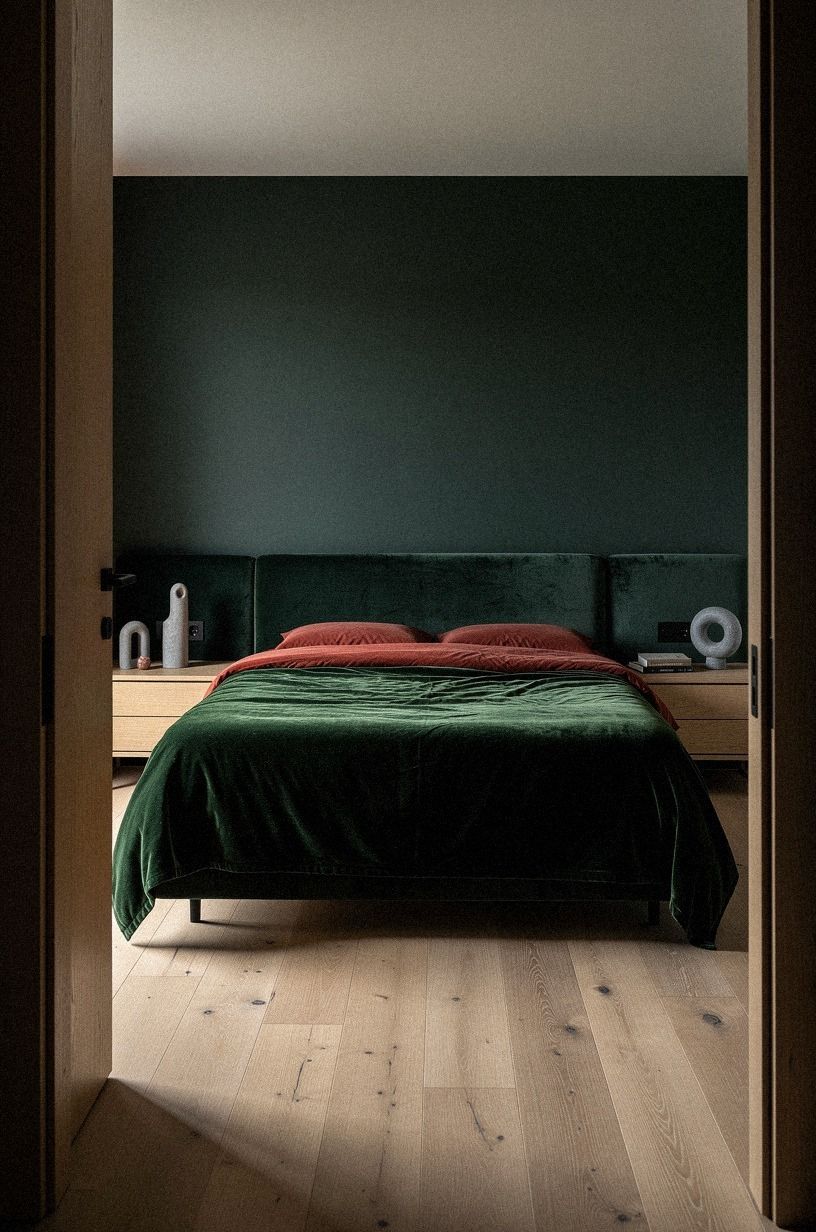
A clear path around the bed removes one more obstacle from the nighttime routine. Keep baskets, shoes, benches, and charging cables outside the main walking route, especially near the side used most often.
The forest green, rust, and natural oak palette feels grounded with deep-pile mohair velvet, but the floor still needs open space for the room to breathe. A beautiful bench isn’t useful if it becomes a laundry landing zone.
For a queen bed, start by protecting the route from the door to the mattress. For a king bed, which measures 76 by 80 inches, allow the same practical thinking on both sides when the layout permits. You don’t need matching nightstands if one side is tight.
A narrow oak shelf can replace a bulky table and still hold a lamp and water glass. If you’re using a shelf, leave enough room below for cleaning and avoid placing cords across the walking line. Natural oak shelving adds warmth without taking much floor area.
Move rarely used furniture out of the room for several nights. If the passage immediately feels easier, the piece may not earn its space. A smaller room often benefits more from open circulation than from another decorative surface.
A soft runner can define the route, but it shouldn’t curl at the edges or slide underfoot. Choose a low-pile style with a stable backing. The right floor covering makes the path feel intentional without adding another maintenance problem.
7Red Light, Low and Indirect
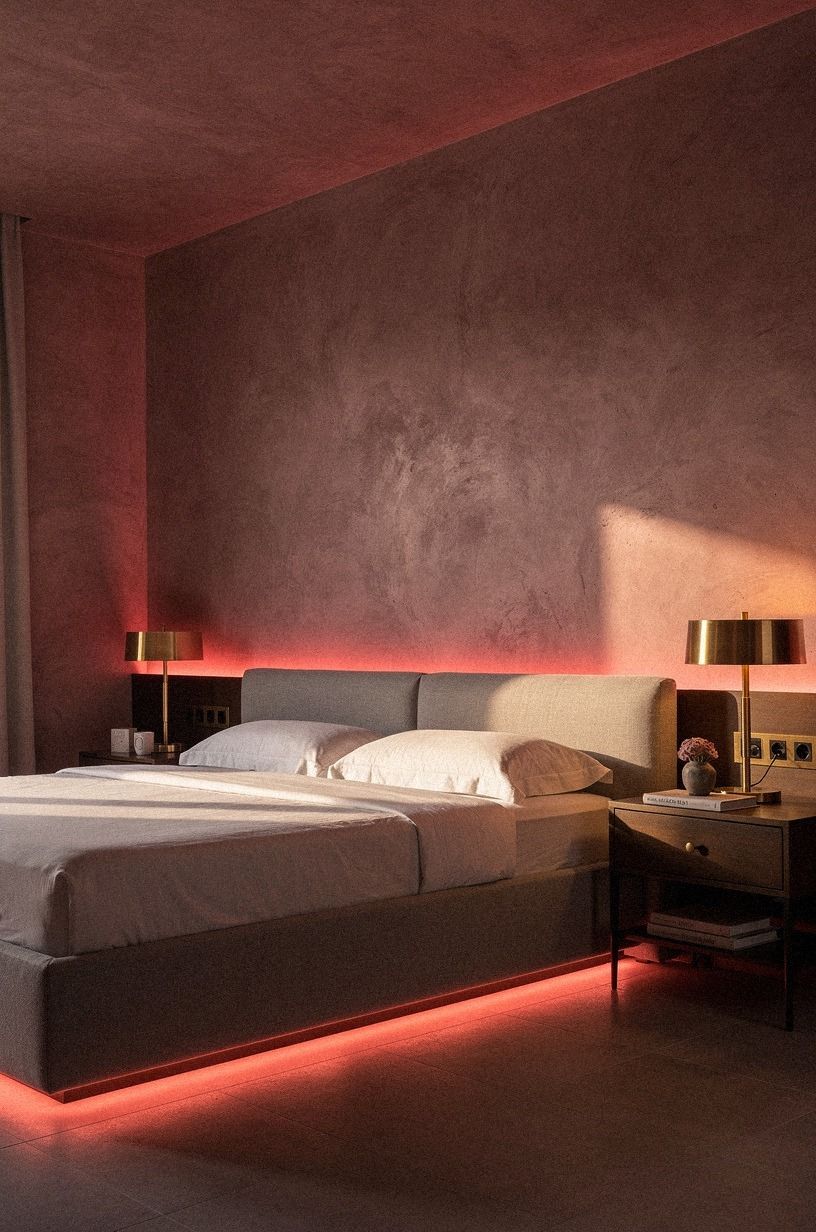
A low red or deep amber light can create a gentle transition between a bright evening and a dark room. Keep it close to the floor, behind a nightstand, or beneath a low cabinet so the glow stays indirect.
In a dusty rose, charcoal, and brass bedroom, hand-applied Venetian plaster gives the walls a softly irregular surface that catches low light without reflecting it sharply. A painted wall can offer a similar effect at a much lower cost.
You don’t need red bulbs throughout the room. One small source is enough for a bathroom route or late reading break. Choose a fixture with a covered bulb because a bare point of light can feel more stimulating than soothing.
If you’re using brass, look for an aged finish rather than a mirror polish. The warm metal will echo the glow without creating another bright spot. If the light feels theatrical, lower it or move it farther from the bed.
A covered amber night-light can work well near a doorway. Keep it low enough to illuminate the floor rather than the walls. This lets you move safely without turning the entire room back into an active daytime environment.
Test the color from the pillow before deciding. A light that looks gentle from across the room may feel too intense at close range. You won’t know the right placement until the fixture has been viewed from the exact position where the evening ends.
8Hide Chargers Inside a Closed Box
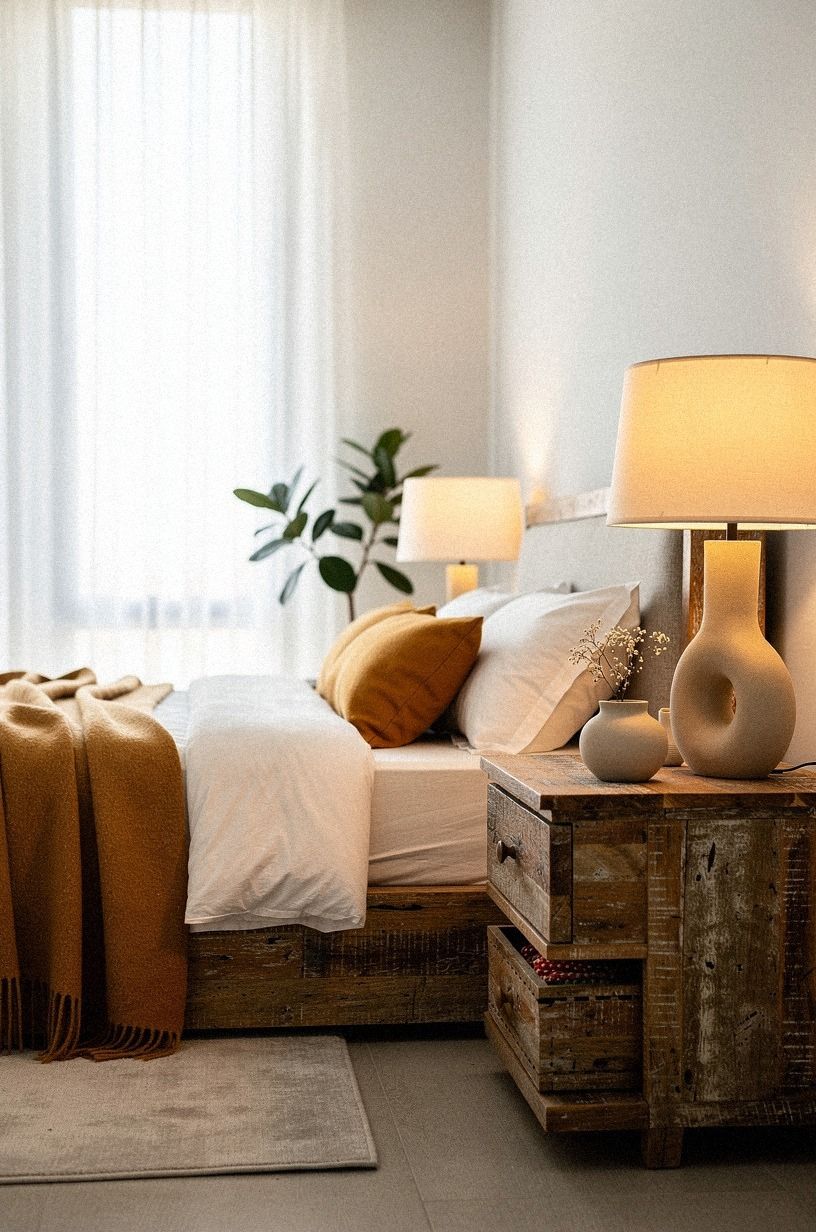
Loose cables create visual noise even when the bedroom is otherwise tidy.
9Reserve a Chair for Decompression
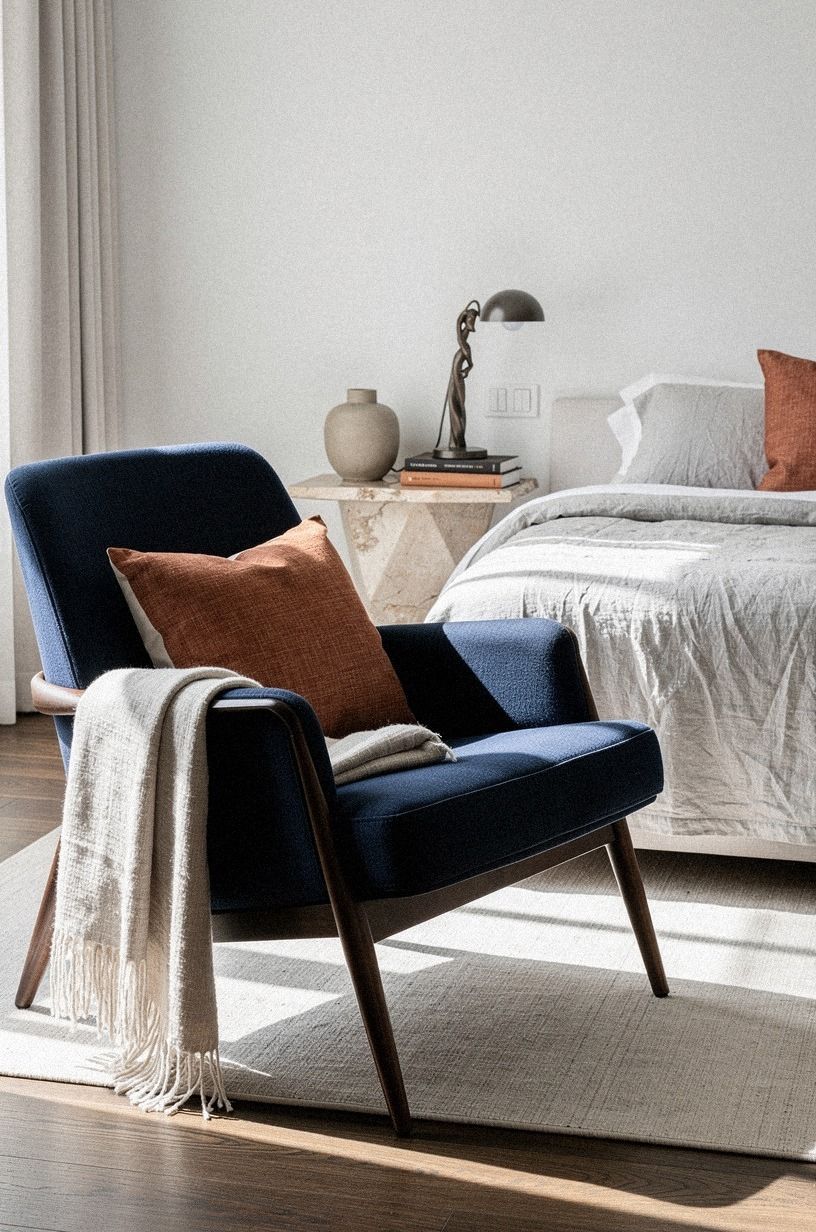
A single chair can give your bedroom a place for reading, stretching, or folding tomorrow’s clothes without turning the bed into a work zone. Keep the chair angled toward a lamp rather than pointed directly at the mattress.
The midnight blue, copper, and ivory palette gains a lived-in quality from washed Belgian linen, especially when the fabric has a few relaxed creases. A compact chair can bring softness without requiring a full seating area.
You don’t need a large lounge chair. A compact frame with a seat wide enough for one person can fit beside a dresser or near a window. Add one firm cushion, a small footstool, and a basket for a book or blanket.
If you’re tempted to use the chair as a permanent clothing pile, give clothing a separate hook or hamper. The chair should support a clear transition into rest, not become another surface that asks for sorting. A small ritual works best when the room makes the next step obvious.
Choose upholstery that can handle ordinary use. Performance linen or washable cotton may be more practical than delicate velvet in a busy household. A removable cover gives you another layer of flexibility.
Keep the chair close enough to the lamp but far enough from the bed to preserve circulation. If it blocks a drawer or door, move it. Good placement should make the evening easier, not require a new workaround.
10Air the Room Before Bed
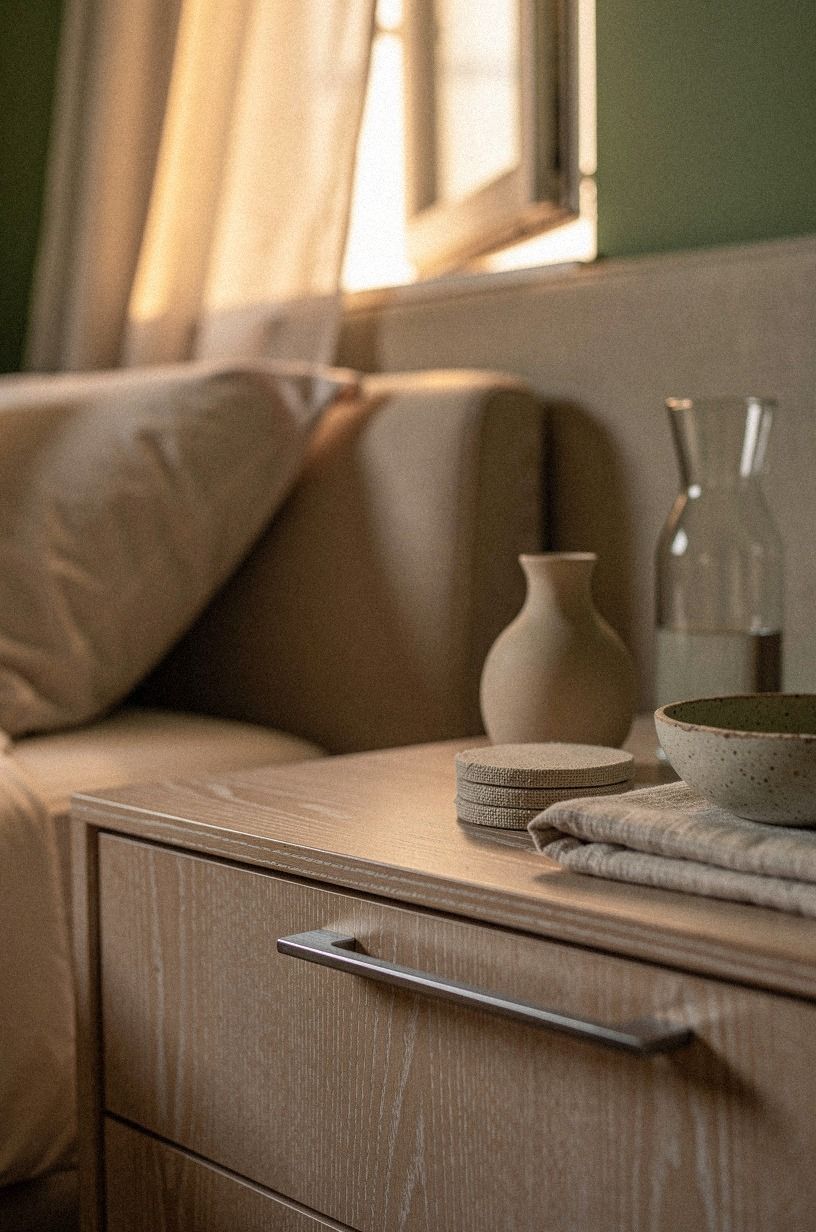
Fresh air can make the room feel less stale and may help the evening routine feel distinct from the rest of the day. Open the window briefly when weather and safety allow, then close it before the room becomes uncomfortable.
The sage green, warm cream, and natural wood palette feels gentle beside cerused white oak, whose pale pores echo an outdoor view. A small change in air movement can make the room feel refreshed even when the furnishings stay exactly where they are.
You don’t need to rearrange the entire bedroom for ventilation. Keep curtains clear of the opening, move tall furniture away from the window, and leave a small gap around the radiator if one is present.
If you’re sensitive to outdoor noise or pollen, use a shorter airing period or rely on a quiet fan placed away from the bed. The aim is a room that feels refreshed, not chilly. A sealed, stuffy room can make the bedtime routine feel heavier than necessary.
A quiet pedestal fan can support air circulation without becoming the room’s visual focus. Choose a model with simple controls and a stable base. You’ll be more likely to use it when the switch is easy to reach.
Check the room after closing the window. If the air feels too cold, too dry, or too noisy, adjust the duration rather than abandoning the habit. A short, repeatable routine works better than an ambitious one that disrupts comfort.
11Farrow & Ball Setting Plaster and Other Matte Walls
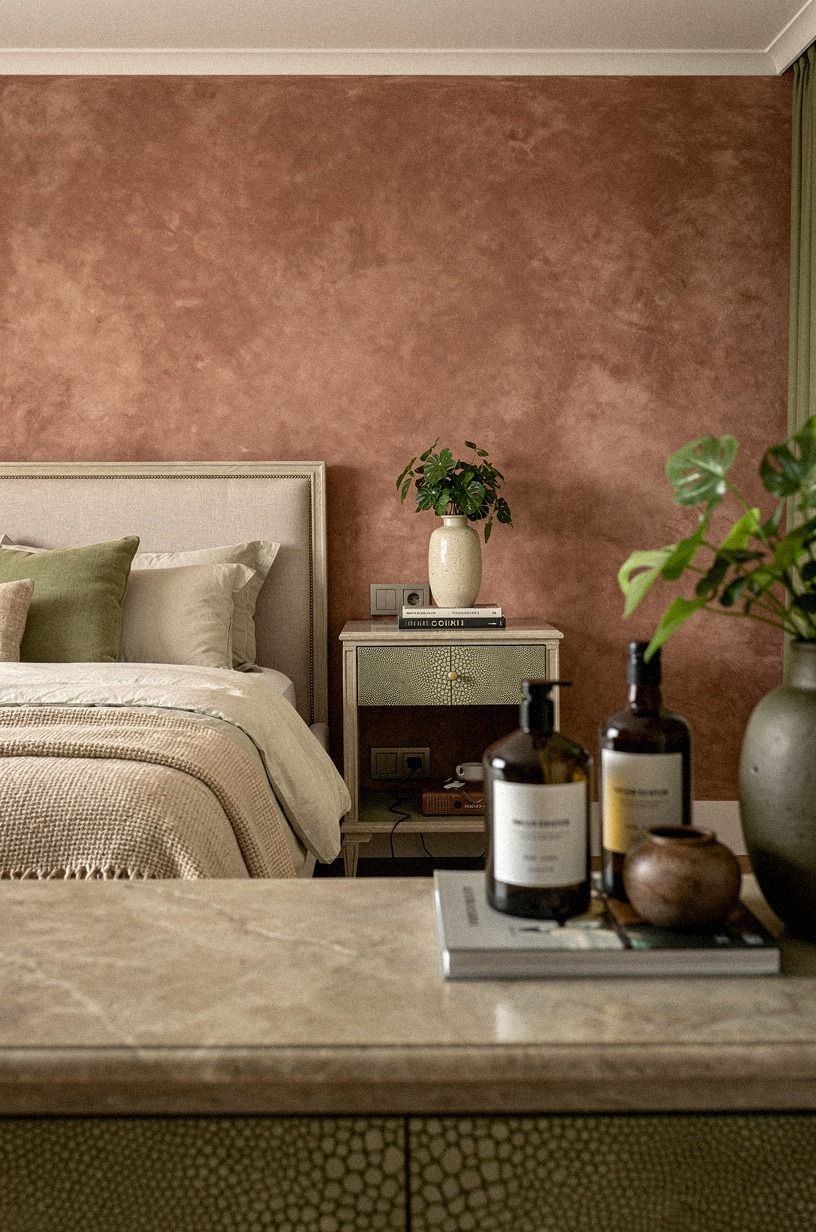
Matte paint reduces sharp reflections from lamps, windows, and street light. For a terracotta, stone, and olive room, Farrow & Ball Setting Plaster No. 231 offers muted warmth that won’t compete with wood grain or textured accents.
A low-sheen wall also makes small imperfections less noticeable, which matters in a rental or an older home. You don’t have to repaint every wall to test the idea. A single wall behind the bed can create a calmer backdrop.
Benjamin Moore Pale Oak OC-20 is another useful option when you want a pale room without a stark white finish. If you’re comparing samples, view them in morning, afternoon, and lamplight. A shade that looks serene at noon may turn grey after sunset.
Paint color should support the room’s actual light. North-facing rooms may need warmer neutrals, while strong afternoon sun can make warm shades feel more intense. You’ll get a more reliable result by observing the sample for several days.
Use large sample boards rather than tiny swatches. Sherwin-Williams Accessible Beige SW 7036 can create a gentle backdrop, but it won’t solve a crowded walkway or a glowing alarm by itself. Color works best when the room’s habits support it.
If painting isn’t practical, use a matte textile behind the bed or a large fabric wall hanging with safe installation. A matte clay wall color is only one path toward softer reflections. The larger principle is controlling glare.
12Closed Baskets Versus Open Surfaces
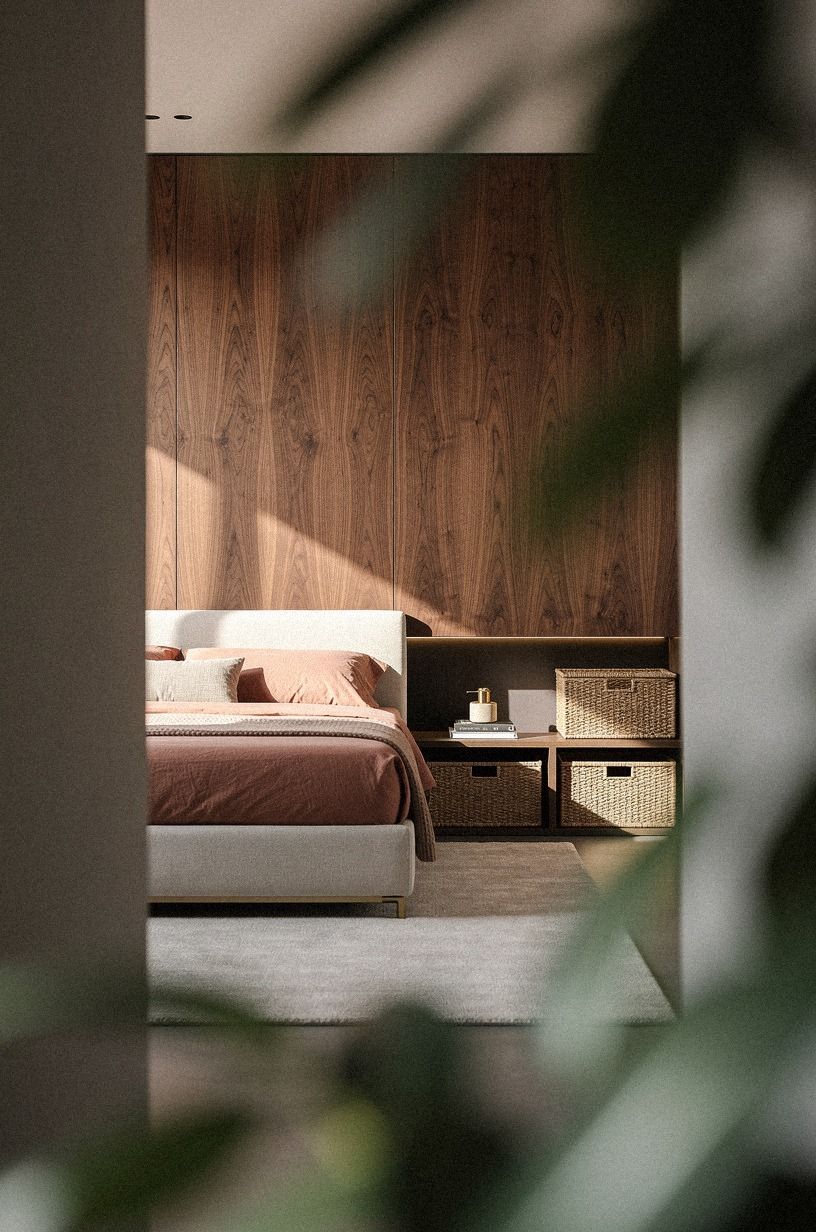
Closed baskets give everyday objects a place to disappear without demanding a complicated storage system. Use them for spare bedding, sleep masks, slippers, or small items that collect near the bed.
In a clay, linen, and aged brass room, book-matched walnut adds visual richness, so woven baskets keep the composition from becoming too polished. Choose containers that match the scale of the room rather than filling every empty corner.
You can place one basket under a console and another beside the closet, but avoid scattering them across every corner. A small bedroom needs fewer containers with clearer jobs. If you’re using a woven basket for laundry, choose one with a washable liner.
Soft cotton rope looks inviting but can collapse into a heap when overfilled. Structured seagrass storage usually holds its shape better and can handle blankets or spare pillows. The best container is the one your hand can reach in the dark and reset in under a minute.
Label baskets only when labels genuinely help. Too many categories can make a simple room feel like a filing system. A broad purpose such as bedding, laundry, or accessories is usually enough.
Keep the top of each basket clear. If you can’t close the lid or lift the liner easily, the container has become too full. You don’t need more storage until the current storage has been edited.
13Position the Bed Toward a Calm View
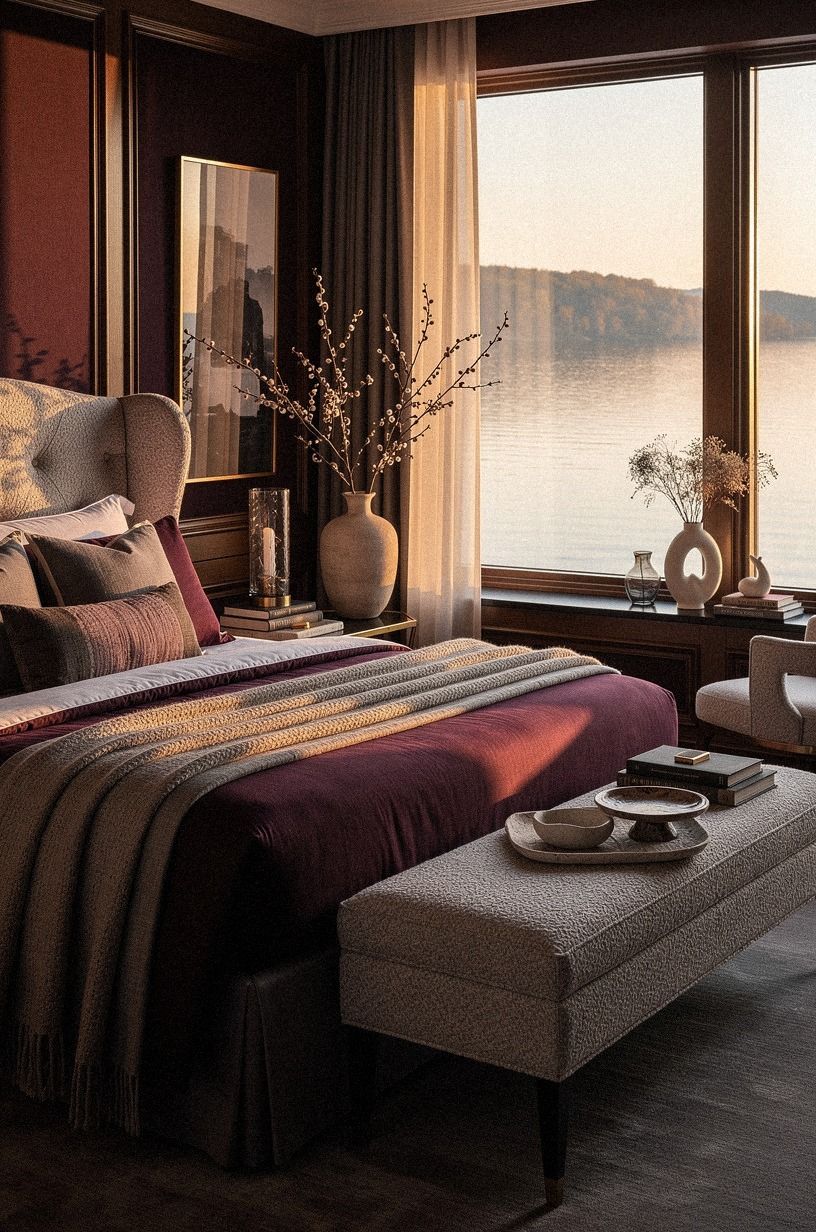
The bed’s sightline matters because it often becomes the last visual impression before the lights go out. Aim it toward a quiet window, a simple art print, or a low dresser with one restrained object.
The plum, grey, and rose-gold palette works with organic bouclé, which adds softness without introducing a busy pattern. A calm view doesn’t need to be dramatic. It only needs to remain easy to read.
You don’t need to place the bed directly in front of the window. A diagonal angle can preserve daylight, circulation, and privacy while still giving your eyes a calm destination.
If the only view is a television or a crowded storage wall, turn the bed slightly or create a softer foreground with a plant, curtain, or painted surface. Your bedroom doesn’t need a dramatic focal point. It needs one view that doesn’t ask you to solve anything before sleep.
A low oak dresser can create a quiet endpoint without blocking light. Keep its top nearly empty and choose one object with useful scale, such as a ceramic bowl or small lamp. You’ll get more visual calm from restraint than from a collection of accessories.
Check the sightline while lying down, not while standing in the doorway. The room’s most important view begins at pillow level. If a shelf edge, bright screen, or pile of clothing enters that view, change the object before changing the furniture.
What the Three-Decision Bedroom Filter Changes
A calmer bedroom usually comes from fewer decisions, not more decoration. The useful filter is simple: remove one bright source, contain one category of clutter, and soften one hard surface. That sequence gives your attention less to process at the exact point when the day is winding down.
It also keeps the project realistic for a renter, a small room, or a household without a large renovation budget. The strongest choices aren’t necessarily the most expensive. A closed charging box can matter more than a new headboard when cables are the first visual cue at night.
A matte sample can matter more than a full paint job when reflected light is the real problem. Sherwin-Williams Accessible Beige SW 7036 can create a gentle backdrop, but it doesn’t solve a crowded walkway or a glowing alarm by itself. Design works best when the habit and the object support each other.
Cost deserves an honest look. Typical US ranges vary widely by scope, and a simple reset can stay below the price of a full furnishing plan.
If you’re working with less, start with free moves: turn screens away, clear the walking path, open the window when practical, and relocate the chair from the bed zone. Then choose one purchase that removes friction every night.
A warm bedside lamp or closed basket often earns its place faster than another decorative object. The point isn’t to make the room look staged.
It’s to make the room easier for you to leave alone. Start there!
The Questions Worth Answering First
What is the best low-maintenance bedroom habit for a small bedroom?
The best starting point is removing bright screens and clearing the route around the bed. A compact modular storage cube can contain devices or folded bedding without taking much floor area.
Keep one surface open, choose a dim lamp, and let the room breathe. You don’t need a full redesign.
Where can affordable low-maintenance bedroom pieces be found?
IKEA, Wayfair, and Target offer practical lamps, baskets, bedding, and blackout panels at different price points. Facebook Marketplace and thrift stores can also provide solid wood nightstands or chairs.
Look for intact frames, washable fabrics, and working hardware. An affiliate purchase isn’t required to create a calmer setup.
How much does a low-maintenance bedroom makeover cost?
A small reset can cost nothing when the layout changes and devices move away from the bed. A broader budget refresh often falls within $200 to $800 for bedding, paint, shades, and art. Your final amount depends on what already exists, so start with free changes before buying replacements.
Can a low-maintenance bedroom work on a budget?
Yes, and the first steps are free: turn the alarm away, clear the floor, and move the charger outside arm’s reach. A thrifted basket, warm bulb, or tension-rod curtain can extend the plan for less. Farrow & Ball Setting Plaster is attractive, but a single sampled wall can wait.
Is a low-maintenance bedroom worthwhile in a small space?
Yes, because small rooms expose every bright screen, crowded surface, and blocked walkway. Choose a 24- to 28-inch nightstand, keep baskets closed, and position the bed toward the calmest available view. You won’t need symmetry if the layout gives your body an easy route.
Is a low-maintenance bedroom suitable for a rental?
Yes. Use a tension rod, removable hooks, peel-and-stick blackout film, and freestanding baskets instead of permanent changes.
A landlord won’t need to approve a lamp, a layout shift, or a closed storage box. If you’re painting, confirm the lease first and test a removable option when possible.
Where to Start First
Start with the bright screens beside the bed. They cost nothing to move, and removing them clears one of the strongest visual cues that the day is still active. Pin these calmer bedroom reset ideas for later, then give the room one quiet surface tonight.
A simple room can support a simpler evening!