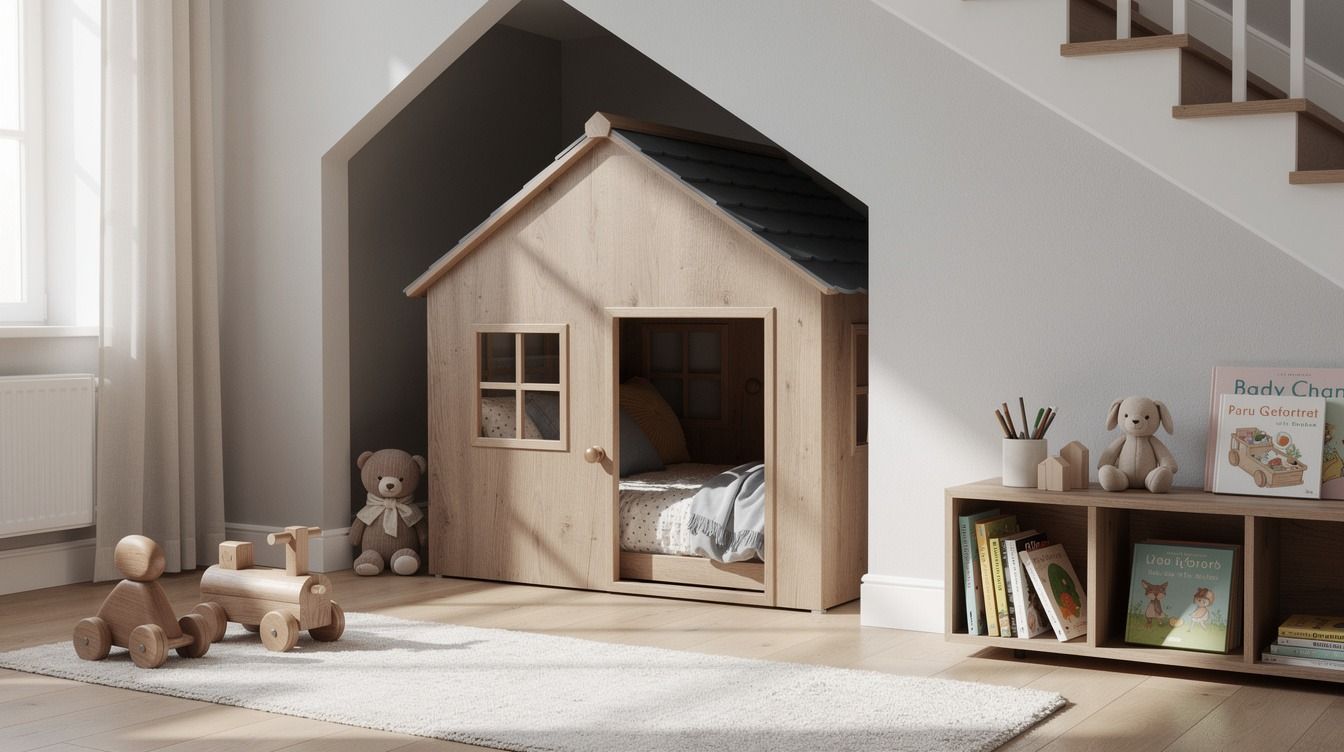
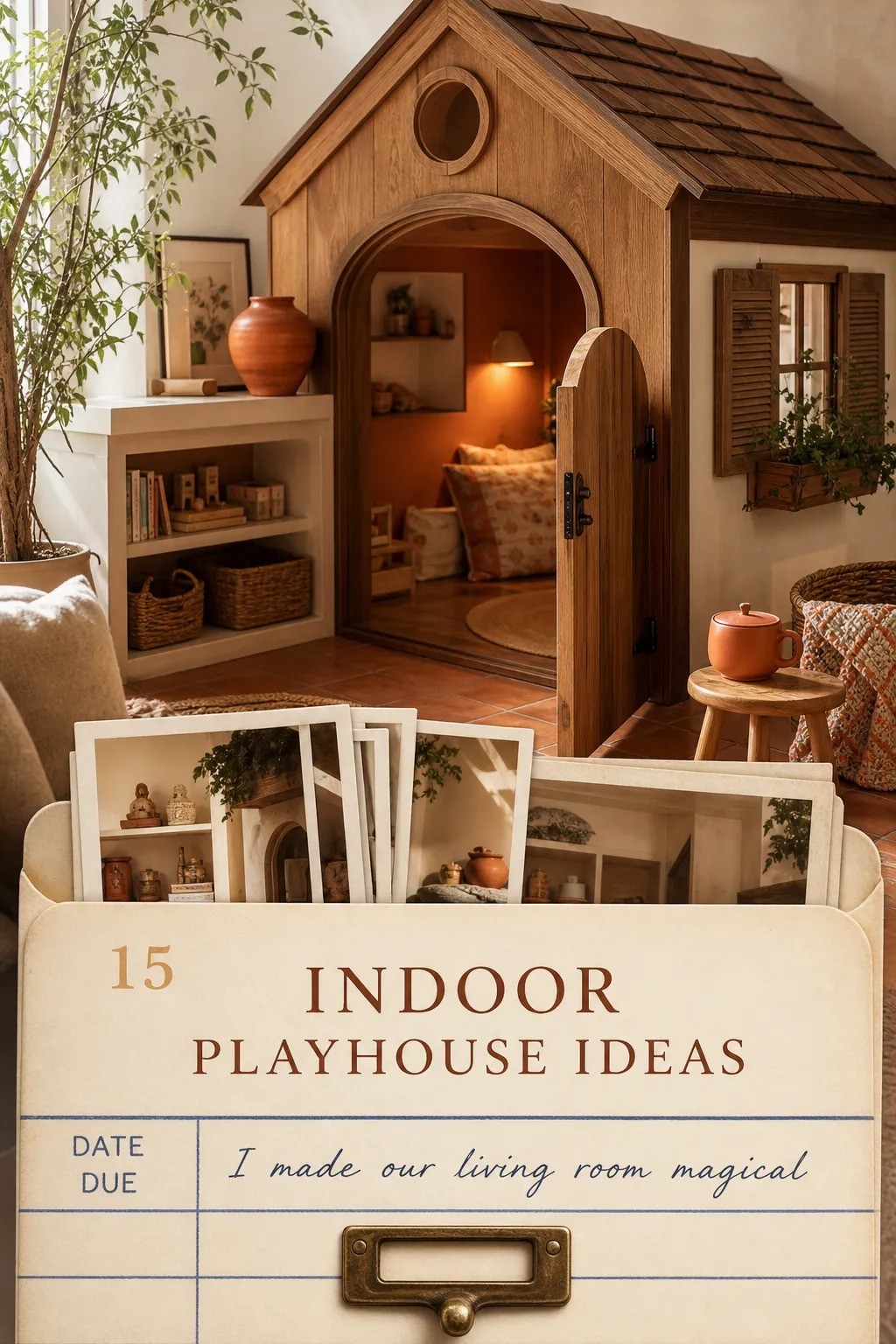
Indoor playhouse ideas for a hidden play nook can work in a living room without swallowing it whole. I built mine during a rainy week when the toy pile had claimed every soft surface, and the result gave my kid a real little world while our grown-up room stayed calm.
Here’s what it looked like before
Before, this corner was the full starter-home package: a narrow patch of wall, a stray basket, and toys migrating toward the sofa by lunchtime. I’d tried a plastic tent, but it slumped after two days and made the room feel smaller. You could see everything from the entry.
The emotional breaking point was stepping on a wooden block while carrying coffee. Not dramatic.
Still decisive. I wanted you to be able to walk in, notice the warm living room first, and discover the play space second.
- Build the Two-Wood Rule into your kids playhouse indoor
- Paint the back wall in Farrow & Ball Hague Blue
- Frame the doorway with a soft linen curtain
- Float a book rail at kid height
- Give the floor a 8×10 rug boundary
- Skip the plastic kitchen and add a real play counter
- Can your indoor playhouse ideas include grown-up storage?
- Hang the Three-Height Light Stack
- Anchor the play wall with Sherwin-Williams Evergreen Fog
- Layer a reading perch instead of adding more furniture
- Use the Quiet-Corner Contrast over bright primary colors
- Make a tiny mantel for rotating treasures
- Set the sofa back 35 to 40 inches
- Let the coffee table do double duty
- Finish the Hidden Nook Reset before bedtime
1Build the Two-Wood Rule into your kids playhouse indoor
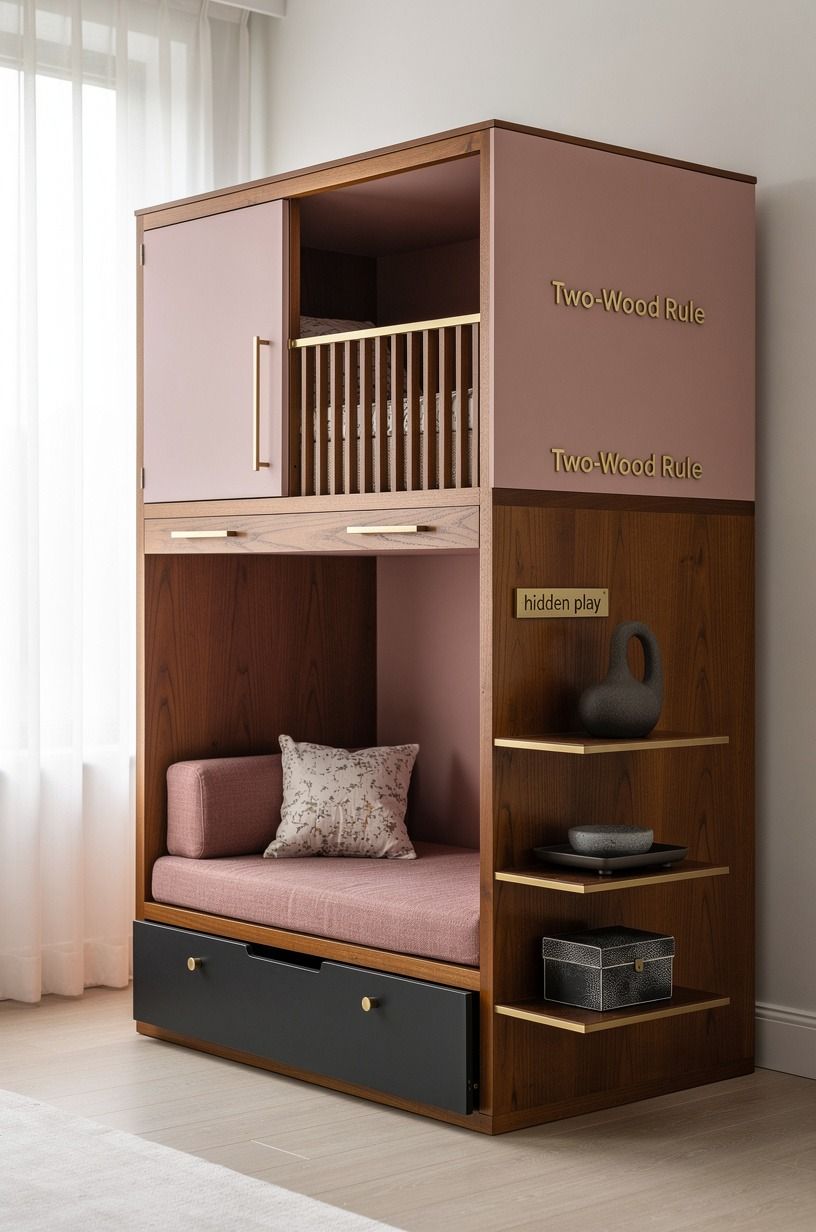
I started with two woods only: charcoal-stained oak for the little ledge and a softer dusty-rose finish for the playhouse face. You don’t need five finishes competing in your corner. I’d keep the brass details restrained and use shagreen only as a small accent, because too much shine turns a quiet nook into a toy-store display.
The charcoal grounding made the softer color feel intentional, while the brass gave the structure a little warmth. Your eye reads that restraint as furniture, not clutter. I made the opening wide enough for a child to crawl through without making the room feel like a stage set.
2Paint the back wall in Farrow & Ball Hague Blue
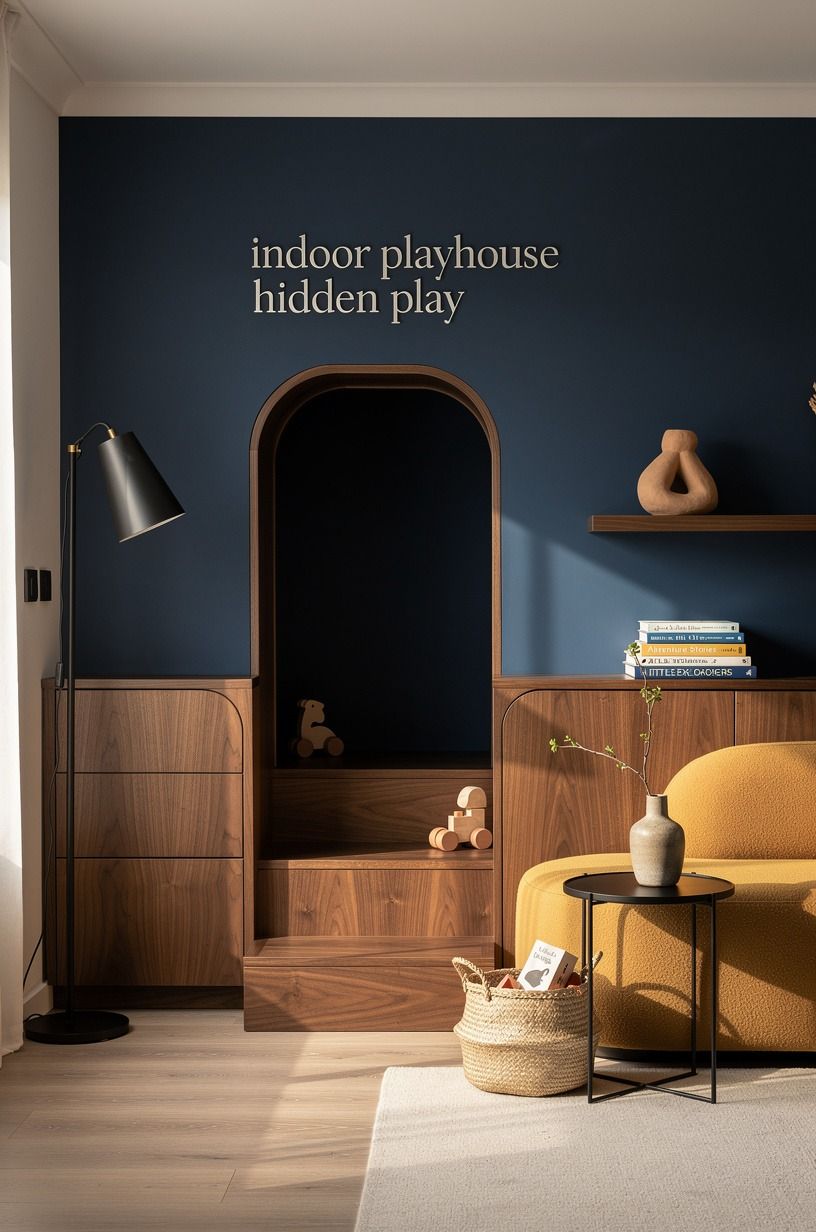
A dark back wall gave the indoor playhouse its hiding place. I tested Farrow & Ball Hague Blue No. 30, but warm white worked better with the camel upholstery, black accents, and book-matched walnut nearby. If you’re nervous, don’t paint every surrounding wall.
Let the color stop at the playhouse boundary.
You’ll get a cozy little cave in the daylight, then a calm background for books and paper lanterns at night. I went back and forth with Benjamin Moore Revere Pewter HC-172, but gray would’ve made the tiny house disappear in the dullest possible way. Warm white won.
3Frame the doorway with a soft linen curtain
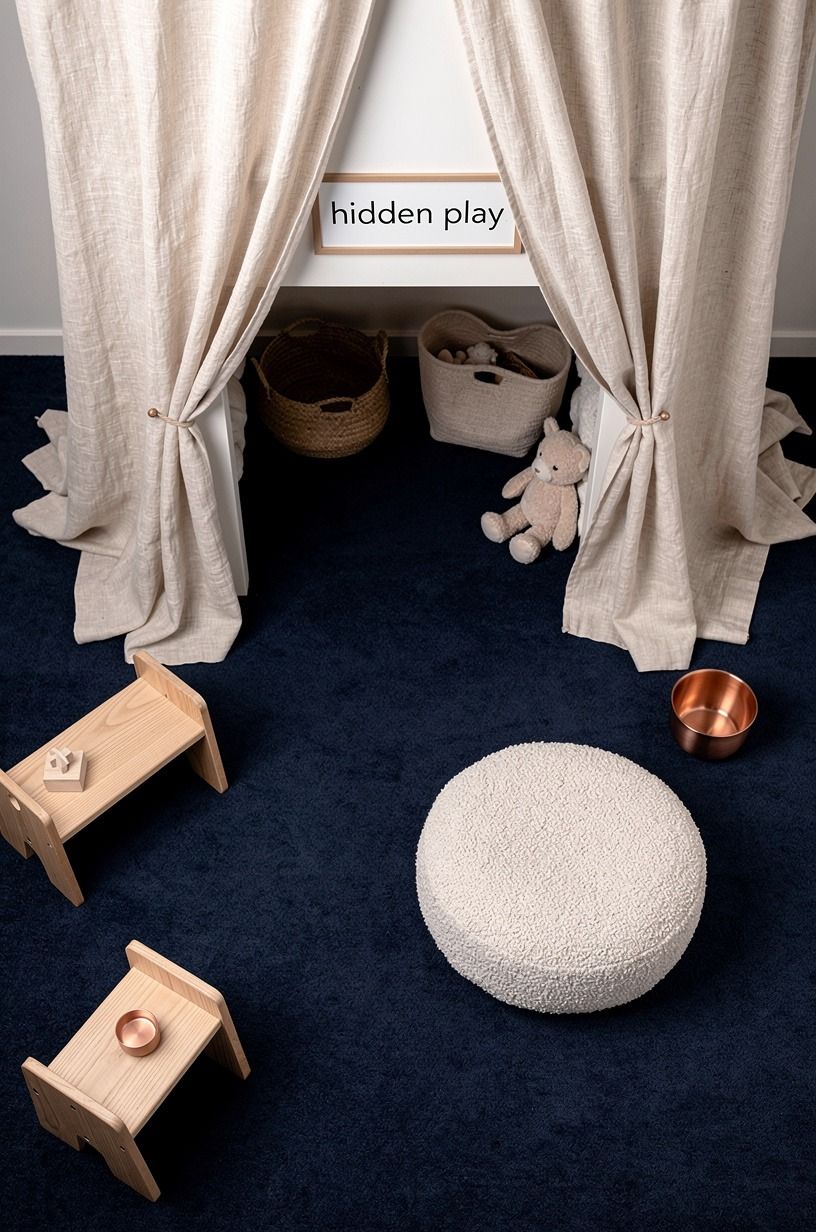
Instead of a swinging door, I hung an ivory bouclé panel on a tension rod, with a midnight-blue wall and copper details behind it. It cost less than adding hardware, and you can push it aside with one hand when your child wants the room open.
The fabric moves gently when someone runs past. That’s the part I love.
For your rental, this is the easy answer. No holes.
No bulky frame. And if you’re already thinking about a more disguised opening, these wood hidden door ideas for warm seamless walls are a better direction than a novelty play tent.
4Float a book rail at kid height
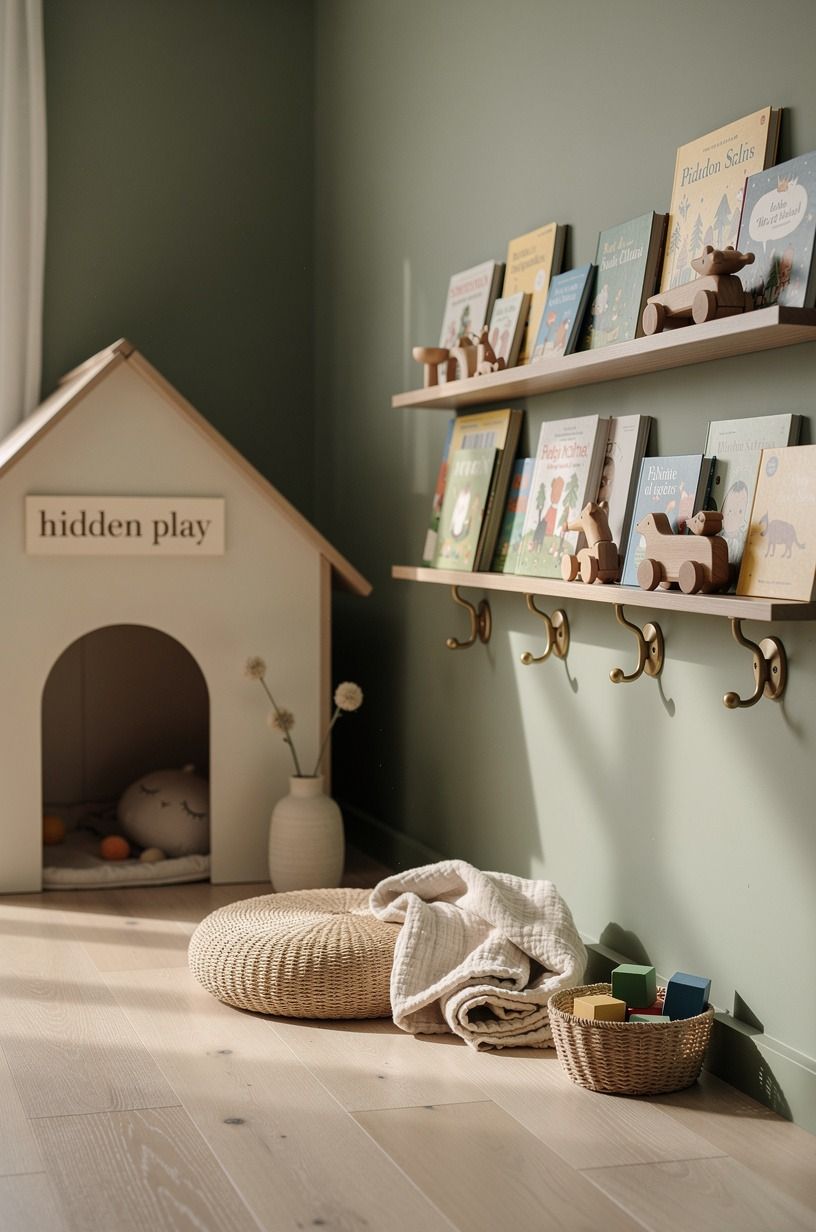
The first shelf sat low, with book covers facing out.
5Give the floor a 8×10 rug boundary
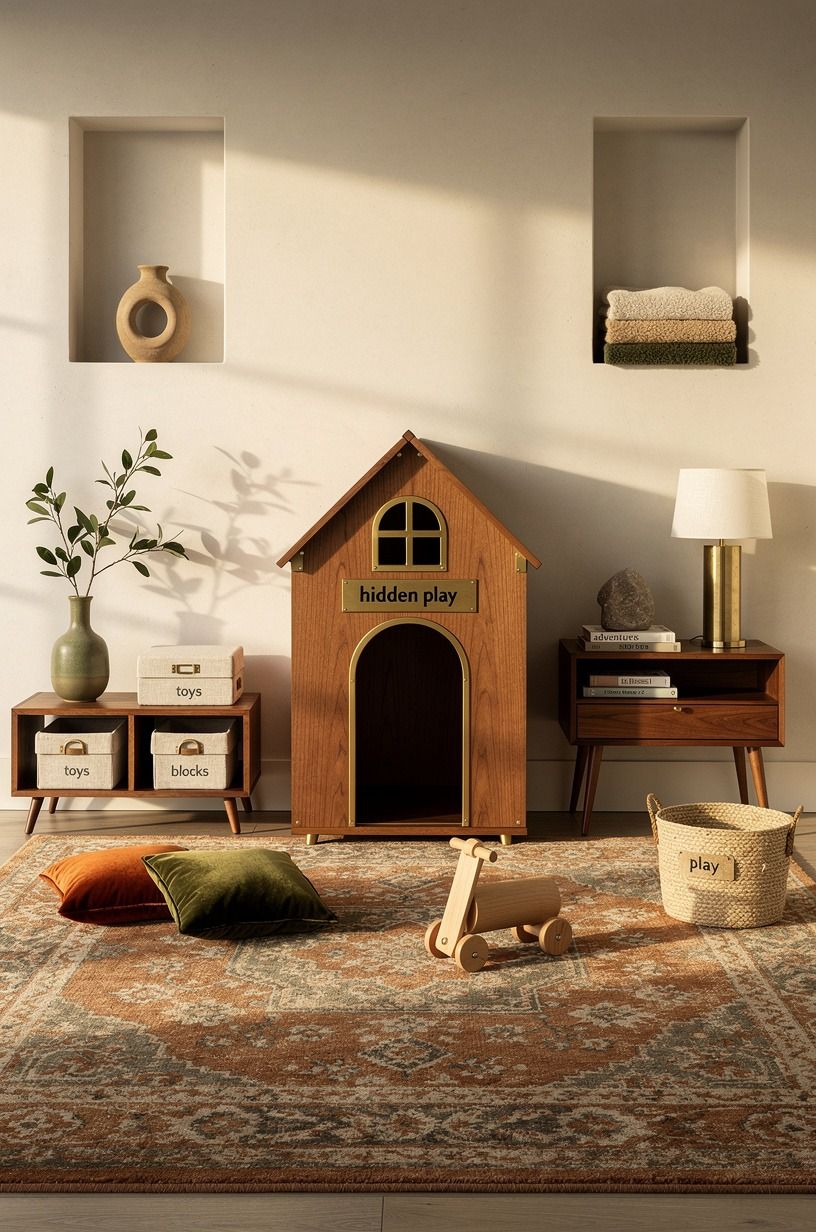
A rug is what told everyone where play started and where the living room returned. I used an 8×10 mohair-velvet rug in terracotta, stone, and olive, with the front legs of the seating resting on it, then tucked the playhouse edge onto the same field. You don’t want a separate tiny rug stranded in the corner.
The texture under bare feet mattered more than I expected. Deep pile has that dense, slightly springy feel that makes floor play comfortable.
A 9×12 wool rug typically costs $600-$2,500, so I’d use what you own before buying one for this project. Your rug has to serve the whole room.
6Skip the plastic kitchen and add a real play counter
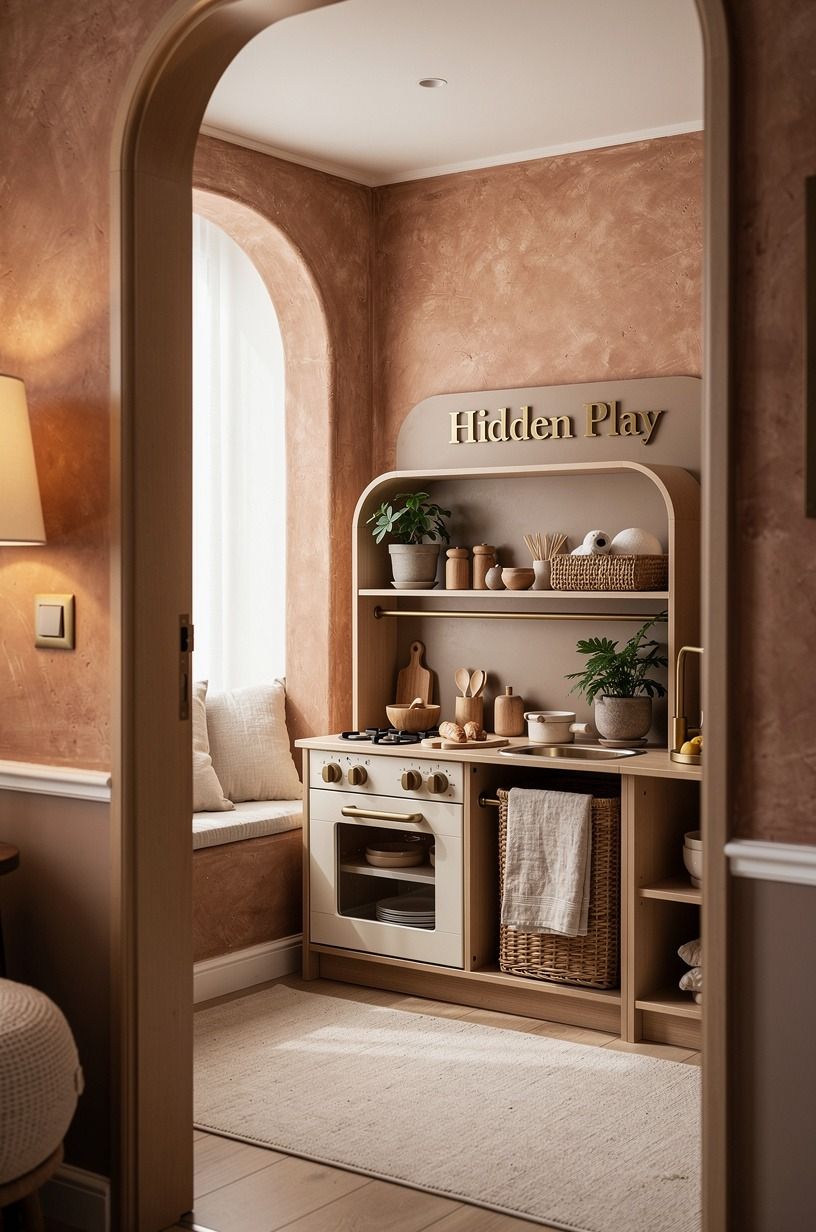
I made a low counter with a clay-toned top, linen storage below, and a few aged-brass pulls. The hand-applied Venetian plaster finish gave it enough texture to sit comfortably beside adult furniture, while the baskets still held everything a kid needs for pretend bakery games.
Plastic kitchens are charming for about five minutes, then they become visual confetti. A simple counter looks more organic beside adult furniture and gives your child room to change the game. Bakery one day.
Vet clinic the next. You aren’t locking the nook into one theme.
7Can your indoor playhouse ideas include grown-up storage?
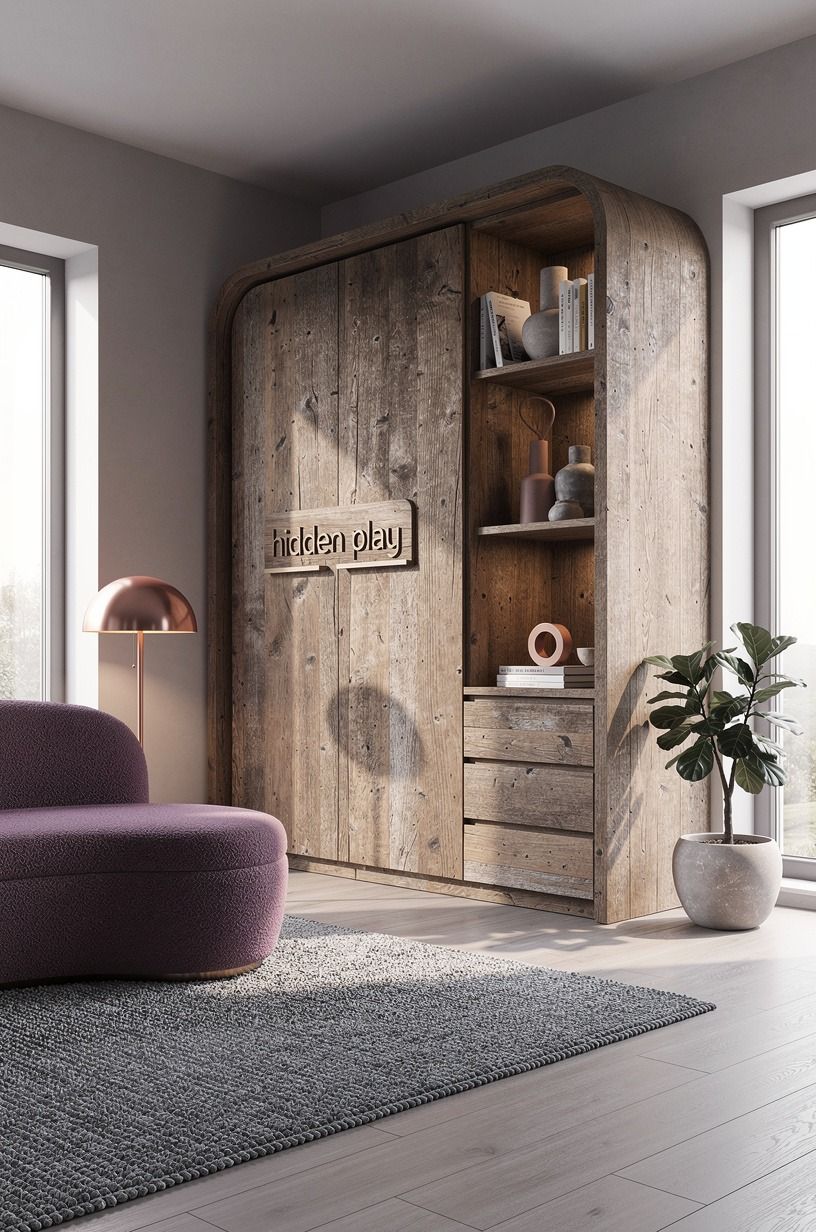
Yes, and they should. I chose lidded storage beneath the counter in weathered teak, with plum, gray, and rose-gold details keeping it from feeling too childlike. You can close it in ten seconds before company arrives, and your kid can still recognize where everything belongs.
The best hidden storage is boring in the good way. It doesn’t announce itself.
I labeled the basket bottoms instead of the fronts, because I didn’t want lettering breaking up the peaceful view from the sofa. And honestly, your future self will care more about that than matching labels.
8Hang the Three-Height Light Stack
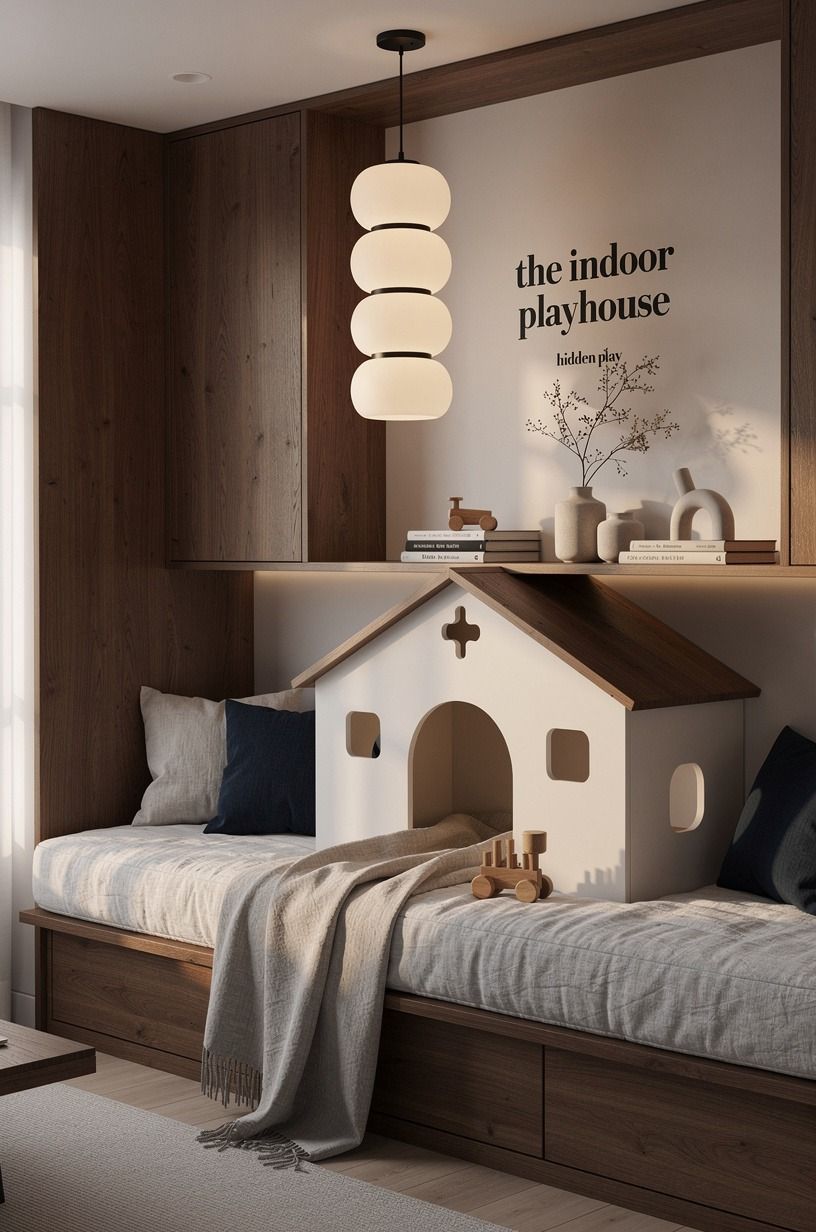
The nook needed three kinds of light: a low reading lamp, a small wall glow, and a Belgian-linen pendant above. I used warm bulbs only, then placed the pendant high enough that nobody could grab it. You’ll want the light to feel gentle, not like a dentist’s office.
That layered amber pool made the playhouse feel enchanting after dinner. I’d skip battery puck lights as the main source, since their blue-white cast can look harsh against navy, white, and walnut. The little lamp is the move.
It turns a plain cardboard drawing into a whole evening.
9Anchor the play wall with Sherwin-Williams Evergreen Fog
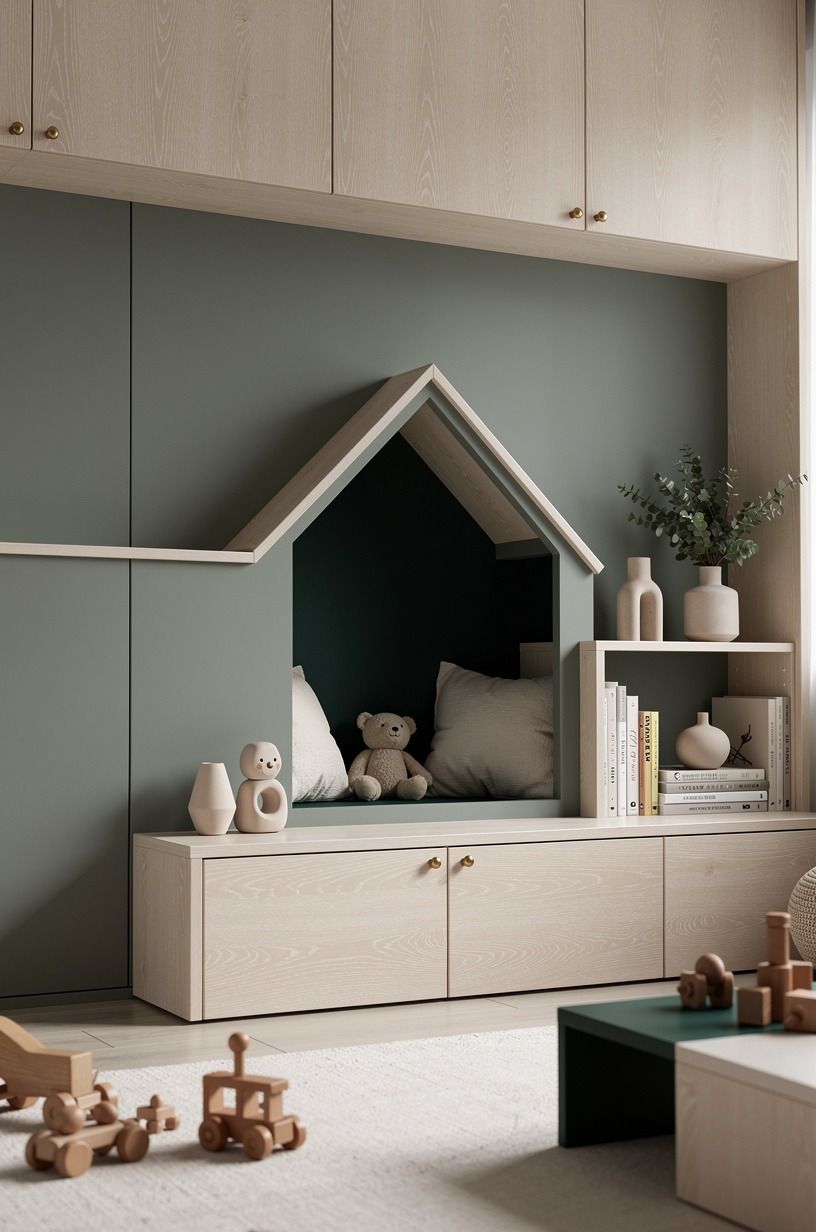
For the opposite side, I painted a removable plywood panel in Sherwin-Williams Evergreen Fog SW 9130. The green worked beautifully with cream, gold, and cerused white oak, keeping the nook earthy and refined without trying too hard. You can lean the panel behind furniture if your landlord won’t allow paint.
I added a few clips for drawings, but not a gallery-wall grid. Your child’s art looks better when it has breathing room, and you won’t feel pressured to preserve every scribble.
One bright sun, one crooked house, one family portrait. Enough.
10Layer a reading perch instead of adding more furniture
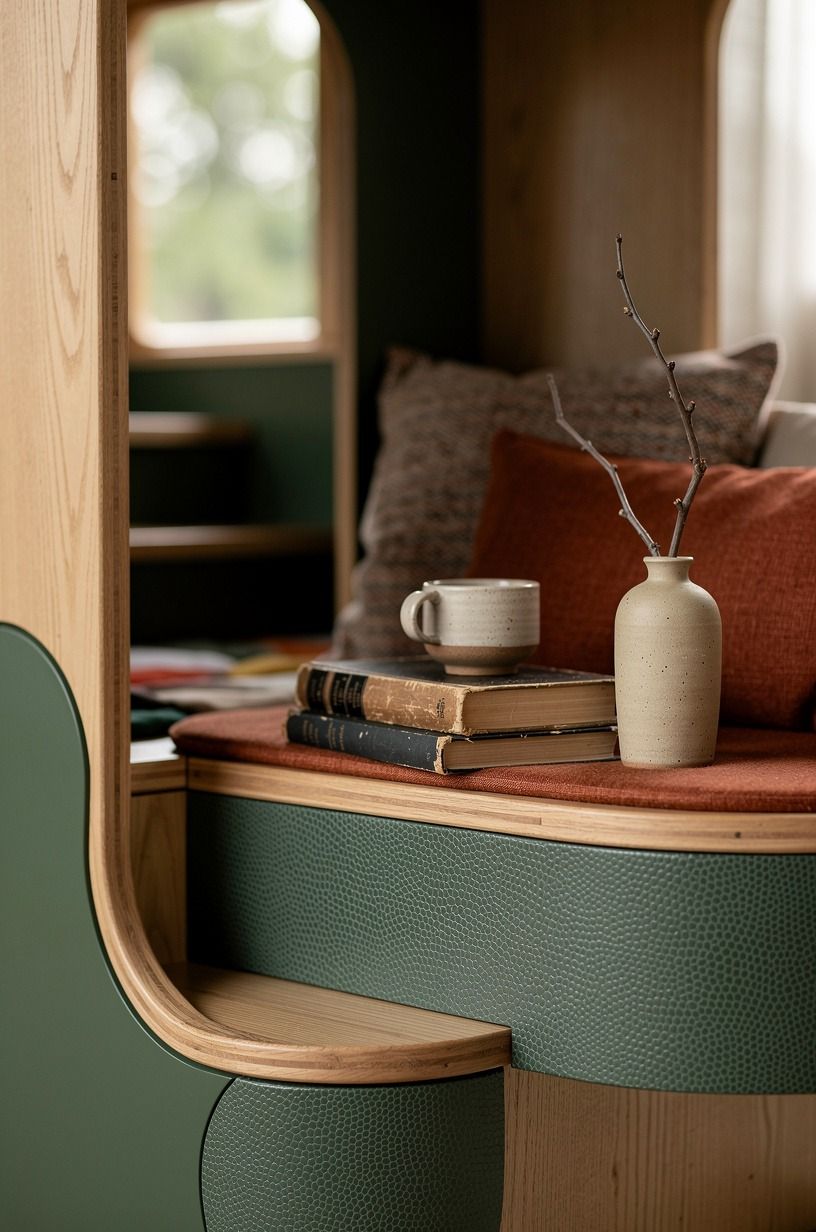
A forest-green floor cushion became our reading perch, paired with one rust-colored washable cotton quilt and natural oak nearby. A small shagreen accent gave the nook a grown-up finish without forcing in another chair. You can pull the cushion out for movie night, too.
I made the mistake of trying a miniature upholstered chair first. It looked sweet but ate up floor space and collected crumbs in every seam.
A floor cushion is softer, cheaper, and easier to move when your kid decides the playhouse is now a spaceship. Naturally.
11Use the Quiet-Corner Contrast over bright primary colors
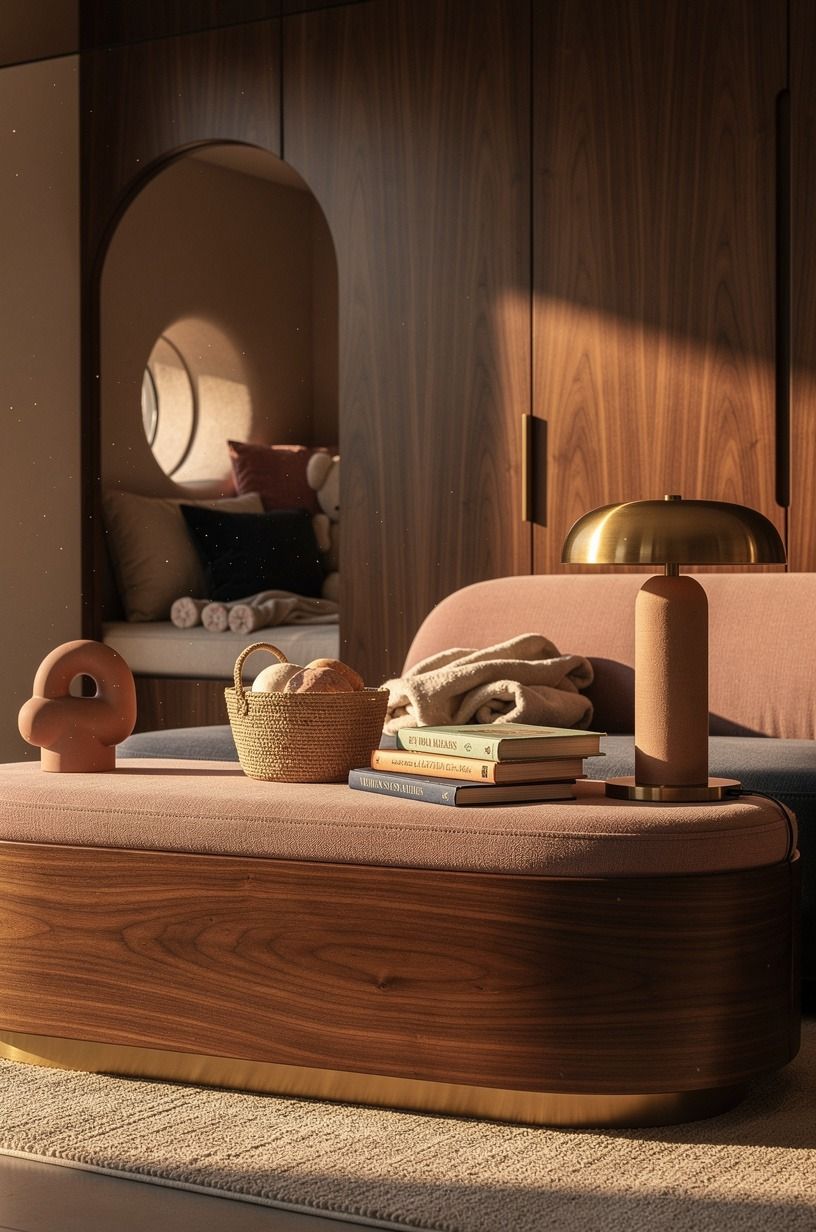
Bright primary colors aren’t wrong, but I didn’t want the play nook shouting across the room. Dusty rose, charcoal, and small brass details gave it a quieter contrast, while the walnut kept it connected to the rest of the living room.
12Make a tiny mantel for rotating treasures
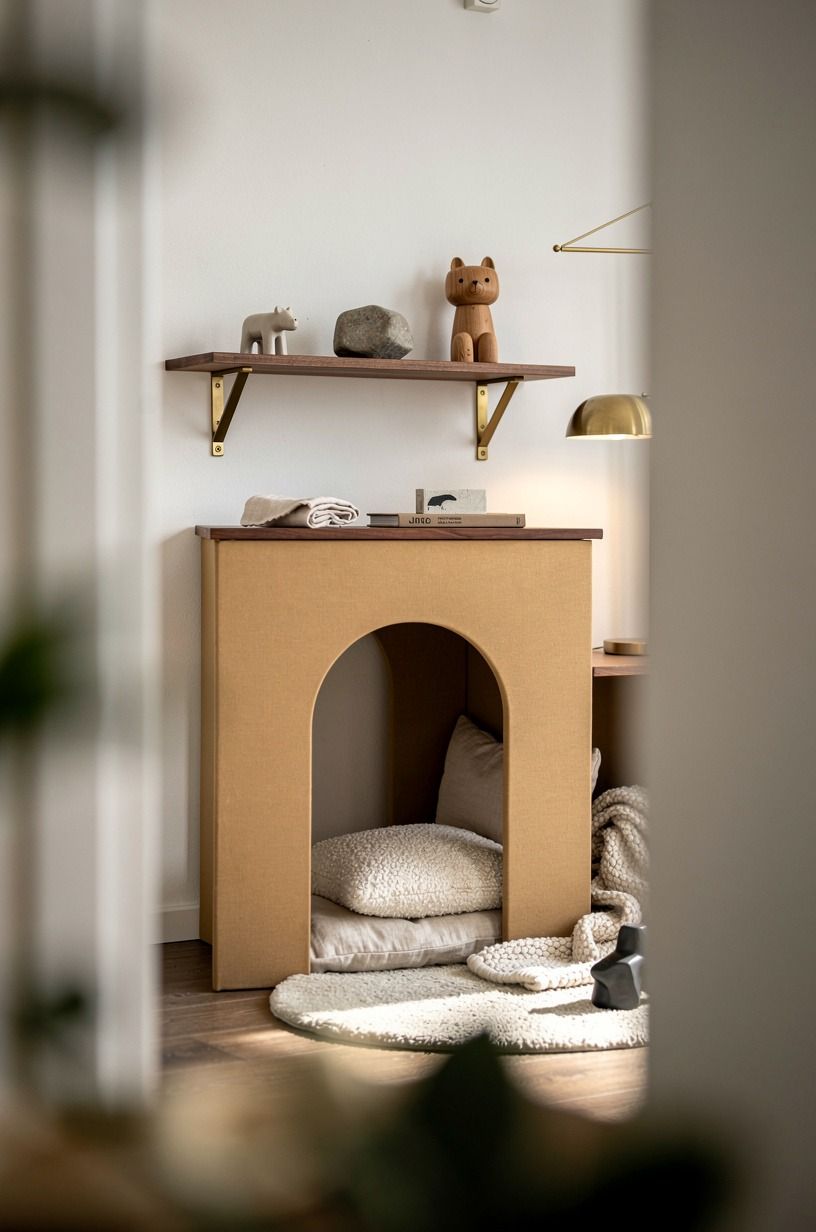
I added a shallow ledge above the opening, like a miniature mantel. It held a small framed photo, one clay mushroom, and a soft organic-bouclé detail against warm white, camel, and black. Your child can help choose the objects, but you should keep the number low.
Too many tiny decorations make a kids playhouse indoor feel fussy. Three objects let the shelf breathe, and they give your child a chance to notice change. One week it’s a toy fox.
Next week, a feather found on a walk. That small ritual made the nook feel lived-in.
13Set the sofa back 35 to 40 inches
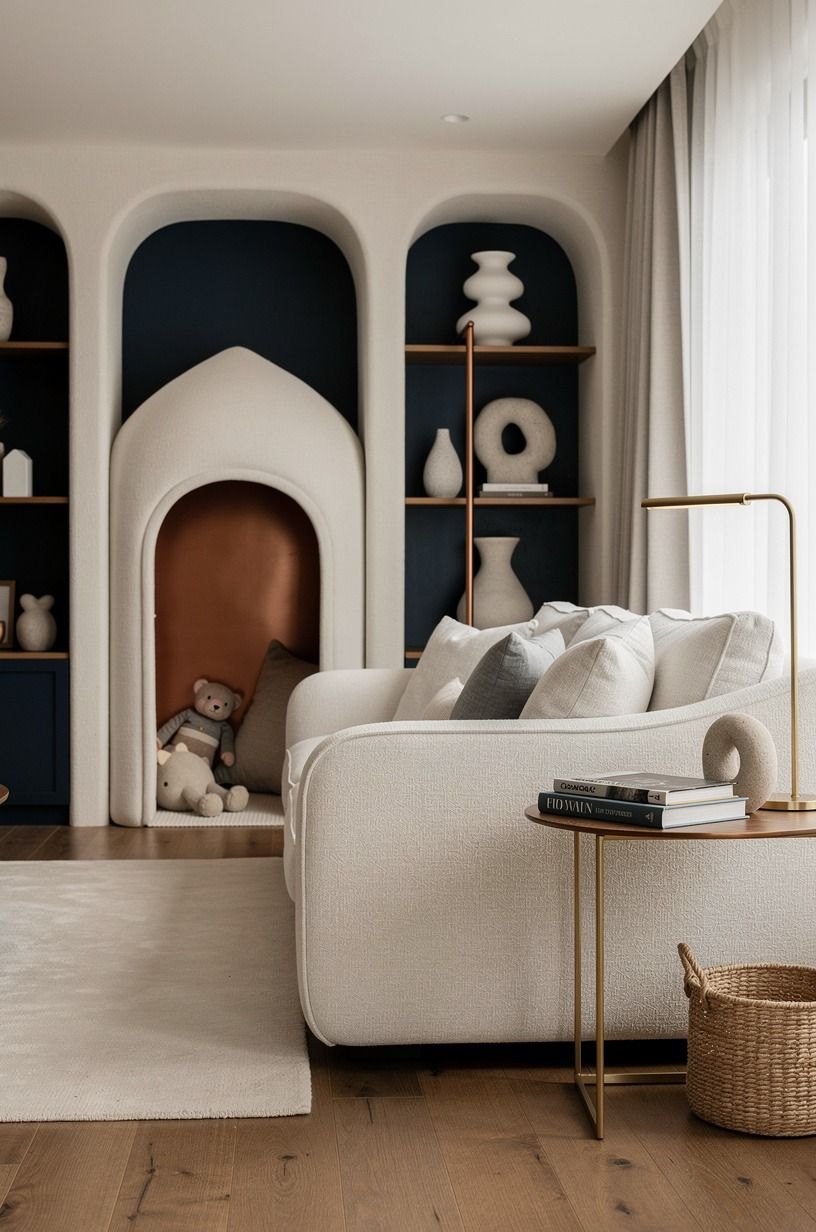
The playhouse only worked because I respected the circulation around it. Our sofa is 35-40 inches deep, so I left a clear path between its arm and the nook instead of squeezing in a side table. You need a route that doesn’t ask adults to sidestep toys all day.
Measure with painter’s tape first. It’s not glamorous, but it will show you whether the nook steals your walking space before you buy anything.
But don’t overcorrect into a huge empty gap. A play corner should feel intimate, not abandoned.
14Let the coffee table do double duty
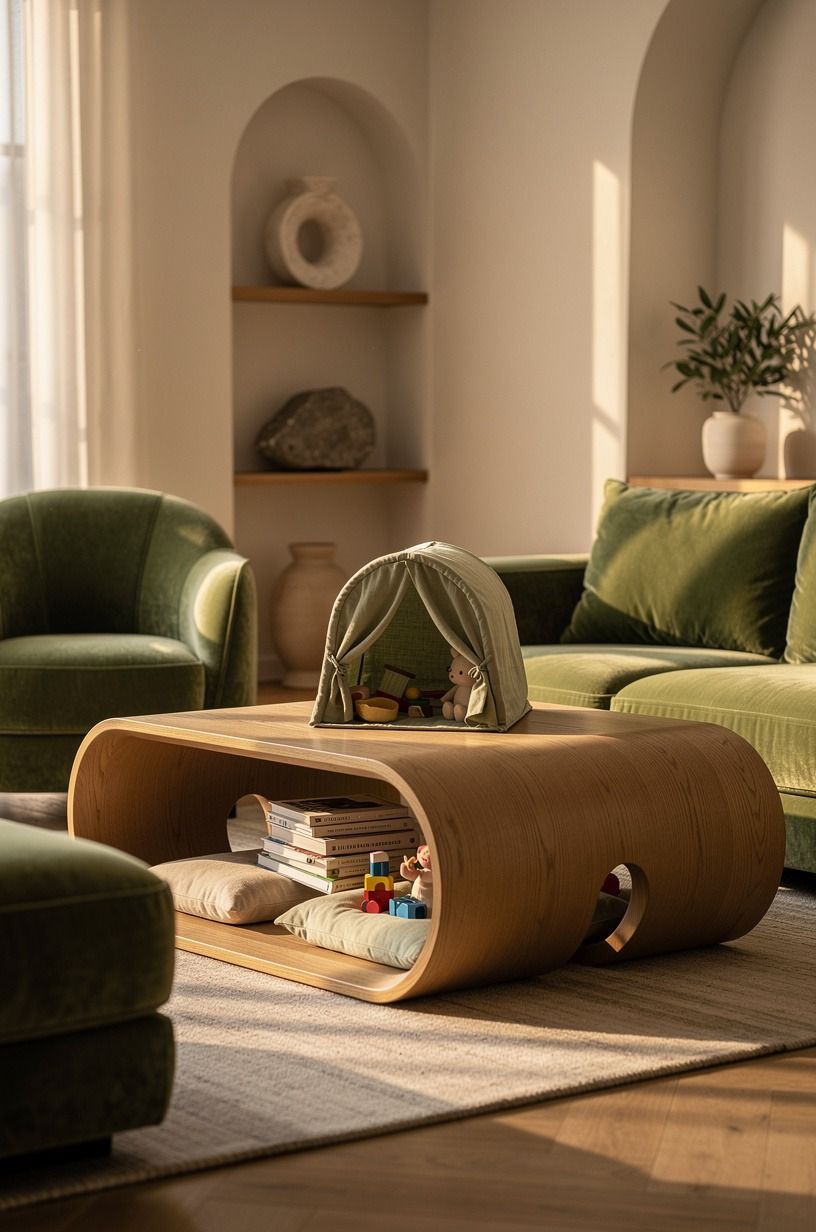
I kept the existing coffee table because it was 16-18 inches tall and about two-thirds the sofa length. Sage green, warm cream, and natural wood kept it connected to the nook, while a deep-pile mohair velvet tray gave crayons somewhere to spread out during the day and disappear before bedtime. You don’t need a separate craft desk if your living room table already earns its keep.
An oak coffee table typically runs $300-$1,200, so I wasn’t replacing a good one for a matching “kids” version. The worn grain and pencil marks tell the story better.
A little imperfect. Very real.
15Finish the Hidden Nook Reset before bedtime
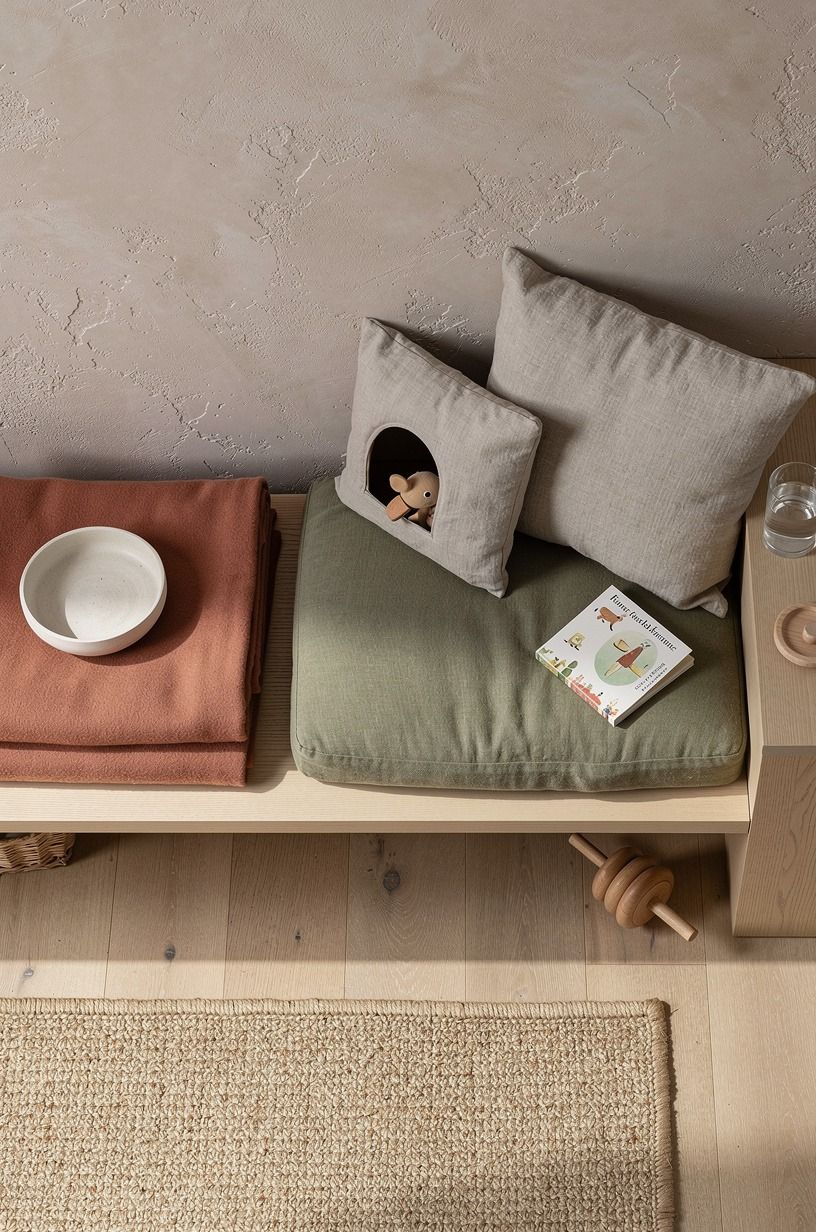
My last move was a five-minute reset: books forward, cushions fluffed, baskets closed, curtain half drawn.
How much it cost
My exact nook cost was $287 and one weekend, because I used our existing rug and coffee table. Your total may land higher if you’re furnishing a full living room, so these are typical US ranges rather than a promise.
The money I’d spend first is paint, a washable floor layer, and storage you can shut. I wouldn’t spend on a custom façade unless your home has a truly awkward recess. Your child needs a place to play, not a tiny movie set.
Why I think hidden play spaces are having a moment
I think families are tired of choosing between a composed living room and a home that admits children live there. For years, playrooms got pushed behind closed doors, then the living room became the office, classroom, and everything else. A hidden play nook is a more honest middle ground.
I’ve learned that children don’t need a gigantic room to play deeply. They need a boundary, a few materials with good texture, and permission to return to the same little world tomorrow. The curtain does more than hide toys.
It signals that their imagination has a place in the house too.
What I learned after living with this nook
I used to think a play space had to be either practical or charming. That was my mistake.
I bought the plastic tent because it was fast, then spent weeks annoyed by how it collapsed, how it caught every stray sock, and how it made our living room feel like a waiting room at a pediatric office. You can’t build calm on top of something that irritates you every time you look at it.
What changed my mind was watching my child use the low shelf. Not the painted wall. Not the lantern.
The shelf. They’d choose a book, crawl inside, and arrange the same three toys on the ledge with complete seriousness.
That’s when I understood that the best design decisions leave room for a child’s own rituals. Your job isn’t to produce a perfect miniature house.
Your job is to make a small, durable invitation.
I’d choose materials that can take a scuff and still look better for it. Cotton, wool, oak.
I’d avoid anything too themed, too precious, or too difficult to put away. If you’re stuck, start with the curtain and one basket.
You’ll see the boundary appear before you’ve built much at all.
And that’s the lovely part. The nook doesn’t have to be finished to begin working.
What People Always Want to Know
What is the best indoor playhouse idea for a small hidden play nook?
A low shelf, curtain, and floor cushion are the best small-space combination because they create a defined play zone without taking over your room. Try an IKEA KALLAX turned sideways, soft linen, and one washable cushion. Your child gets a hideaway; you keep the walkway.
Where can I buy indoor playhouse pieces on a budget?
Start with IKEA, Target, and Wayfair, then check Facebook Marketplace for wood shelves and baskets. You’ll save most by buying the structure secondhand and adding fresh fabric yourself.
– Secondhand birch shelving – Target cotton cushions – Marketplace wicker baskets
How much does an indoor playhouse makeover cost?
A simple hidden nook costs about $100 to $300 if you reuse your rug and furniture. The lowest-cost changes are paint, a tension-rod curtain, and baskets you already own. Your biggest expense is usually new storage, not the little house itself.
Can I create an indoor playhouse on a budget?
Yes, and you can begin with items already in your living room. The budget-friendly route is a blanket curtain, a book basket, and a lamp moved into the corner.
– Existing throw blanket – Painter’s-tape floor plan – Reused pillows and books
Is an indoor playhouse worth it in a small space?
Yes, a small space can make it feel more intimate and easier to reset. The worth-it part is containment: your child knows where play belongs, and you don’t lose every room to toys. Keep one clear path around the nook.
Is an indoor playhouse a good idea for a rental?
Yes, as long as you choose removable pieces. A renter-friendly nook can use a tension rod, peel-and-stick wallpaper on a panel, and freestanding shelves.
– Removable wall panel – No-drill curtain rod – Freestanding book ledge
Where I’d Start First
If I had to pick one, I’d start with the linen curtain. It hides the toy spill without pretending children aren’t here. Pin the curtain idea for later, then give your kid one small corner that feels entirely theirs.