Thirteen brunch board spreads can make a simple dining room feel abundant with one board, a few strong textures, and smart spacing. The mistake is treating food as decoration instead of a low centerpiece. A cerused white oak table, warm light, and repeatable color do the heavy lifting. Keep the spread generous, not crowded.
- Layer a brunch board on a cerused white oak pedestal
- Why pastries work best in a spiral around fresh berries
- The Croissant Curve
- Style a breakfast charcuterie board on tiered stands
- Can edible flowers make a honeycomb cheese board feel finished?
- Waffles against syrup jars and linen napkins
- Build a color-blocked board with seasonal fruit
- The Long Board Spine
- Could yogurt cups organize a relaxed brunch table?
- Dark slate against pale brunch ingredients
- Create individual boards beside each dining chair
- The Pancake Stack and Aged-Brass Triangle
- Can symmetrical ceramic ramekins balance savory bites?
1Layer a brunch board on a cerused white oak pedestal
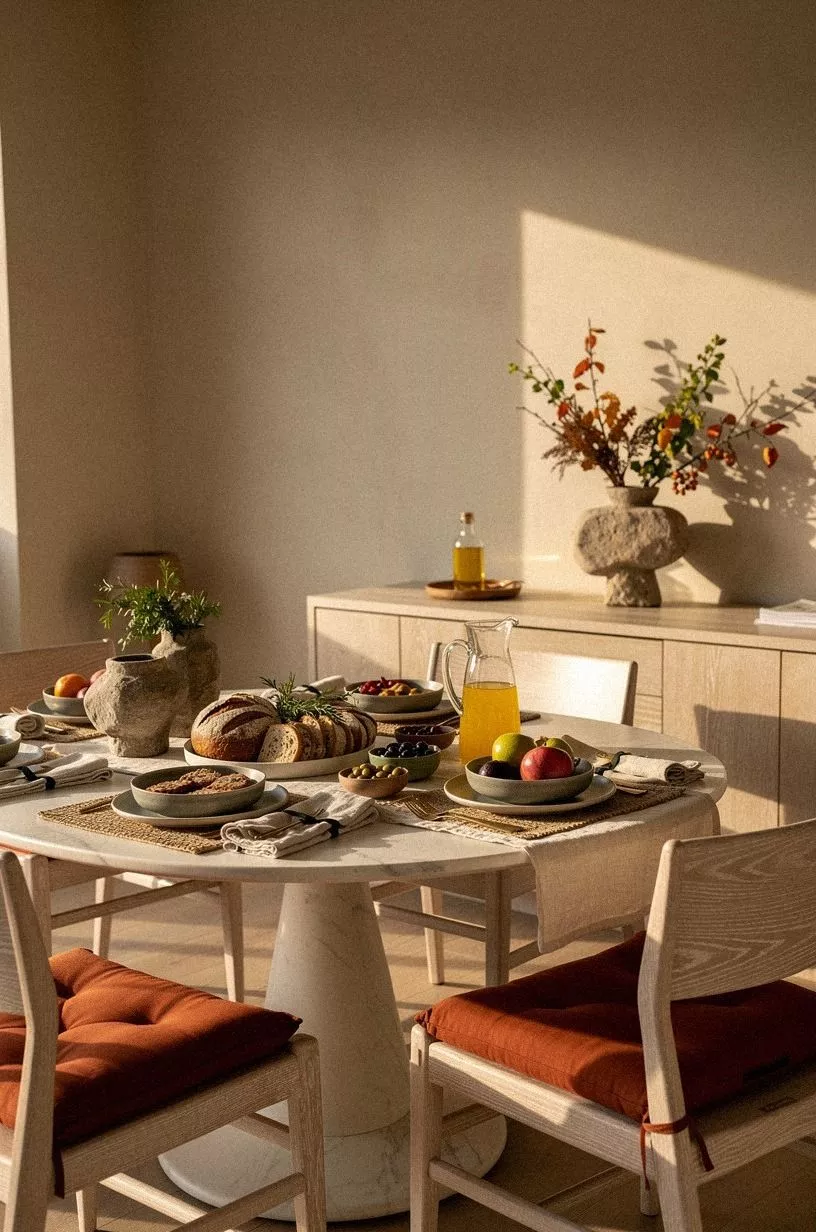
A raised board gives your brunch table a focal point without filling the whole surface. Set a round cerused white oak pedestal beneath a long wooden board, then let terracotta napkins, olive-toned fruit, and pale stoneware carry the palette. Keep the pedestal slightly off-center so the arrangement feels gathered rather than rigid.
The Two-Wood Rule keeps this look from becoming visually muddy. Pair one clear wood finish, such as cerused white oak, with a smaller accent in darker walnut or olive-stained ash. More than two competing grains can make your dining room feel busy.
A low cerused oak board works better than a tall tray because guests can still see across the table.
Your board doesn’t need identical pieces on both sides. Place figs, grapes, and sliced pears in loose clusters, then leave visible gaps around the edges. That breathing room makes the spread feel inviting.
If your table is narrow, keep the pedestal near the center and reserve at least one clear path for serving dishes. The value comes from proportion, not from buying every matching accessory!
2Why pastries work best in a spiral around fresh berries
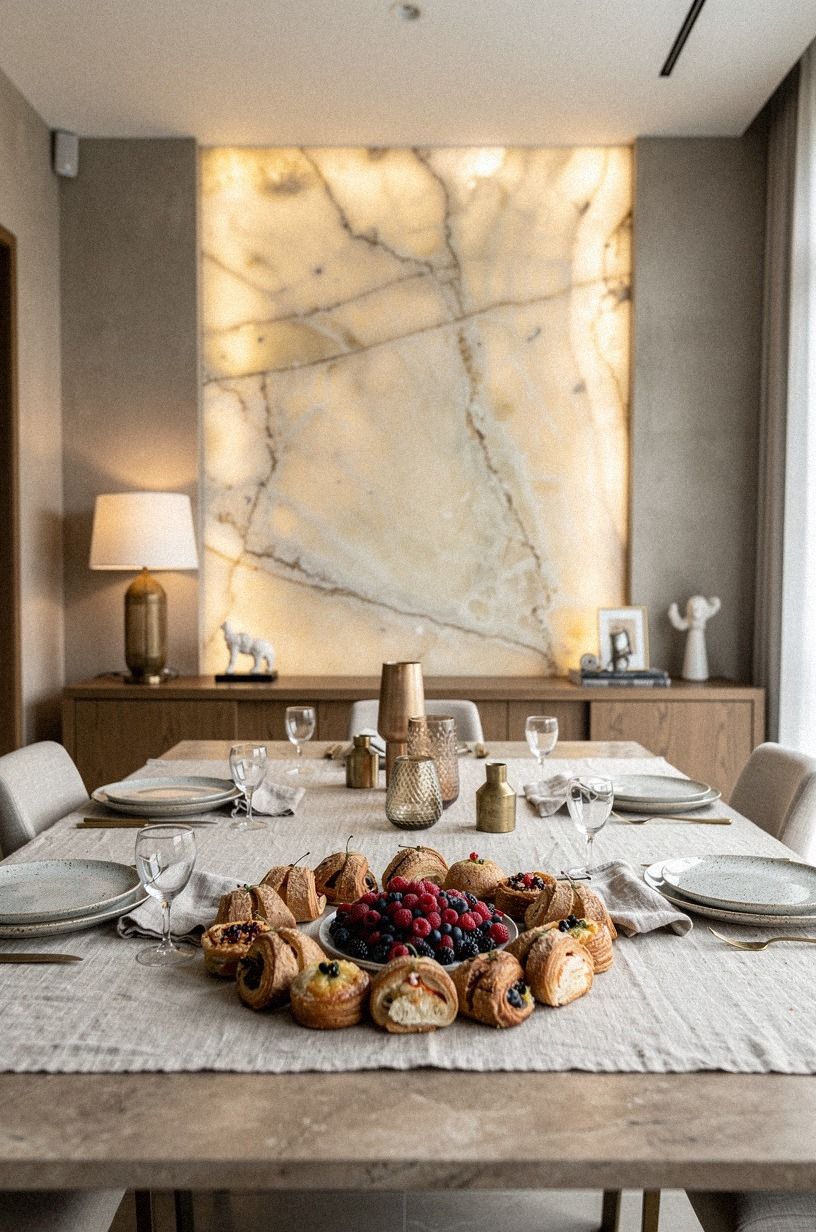
A spiral arrangement turns ordinary pastries into the center of the room. Start with a shallow aged-brass platter, then place berries in the middle and curve mini danishes, sugared twists, and sliced brioche around them. You’ll create movement without needing extra decorations, and guests won’t have to reach across a crowded tower.
The Three-Texture Rule works especially well here: crisp pastry, soft washed linen, and translucent stone. A backlit translucent onyx accent behind the table can echo glossy berries while keeping the room’s clay and linen palette gentle.
Don’t pair the arrangement with shiny plastic serving pieces. They’ll flatten the soft, earthy mood.
Your runner should extend beyond the platter but shouldn’t touch every chair. Choose natural clay linen, then add one small bowl of berries near the edge.
That repeated color makes the room feel coordinated. If your dining chairs are dark, berry tones will keep the setting from looking too pale.
A spiral is worth the small amount of arranging because the pattern remains attractive as guests serve themselves!
3The Croissant Curve
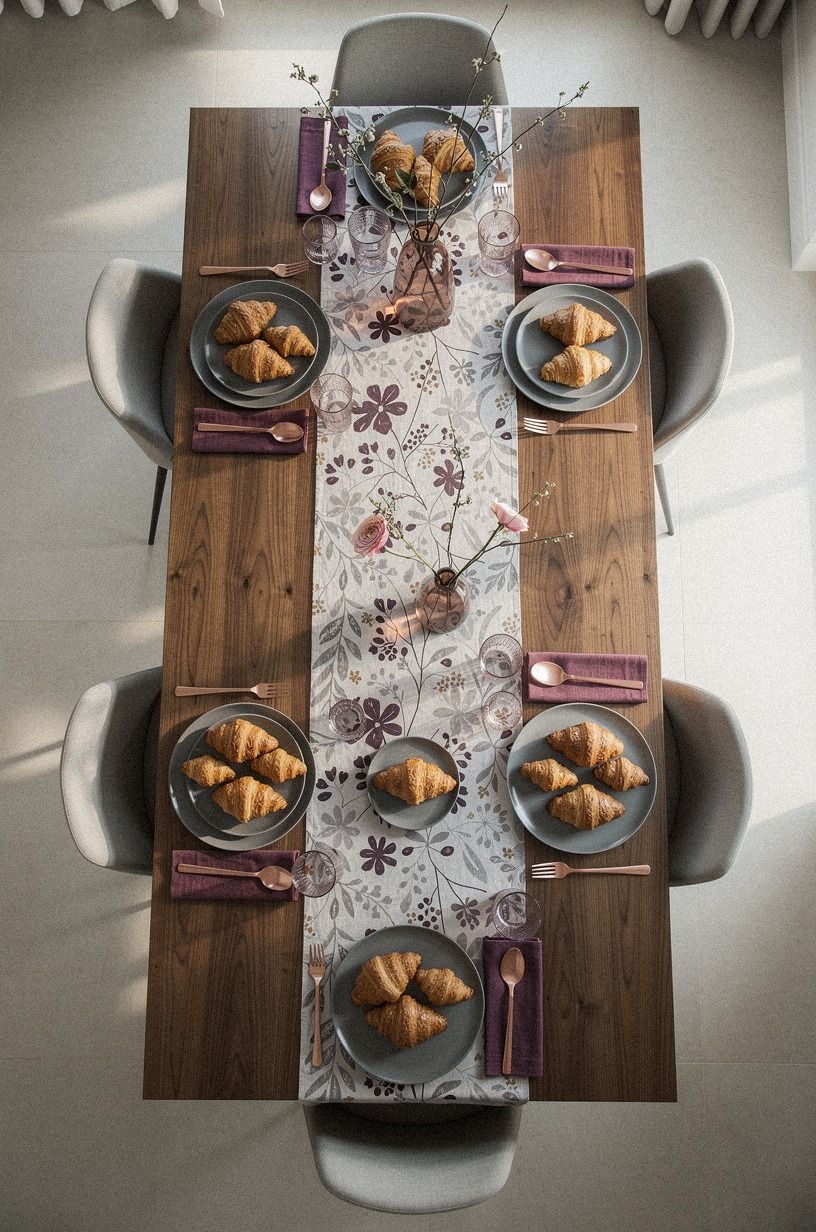
Mini croissants look more abundant when their shape echoes the pattern beneath them. Arrange them in a crescent around a shallow bowl of raspberry jam, leaving the open side pointed toward the main seating area. A plum stoneware plate, book-matched walnut, and grey linen create a relaxed palette with a little rose-gold warmth.
You can use the curve on a round or rectangular table. On a narrow surface, keep the croissants in one line and place jam at the center; on a wider table, add small pats of butter at both ends. The arrangement doesn’t need a tall centerpiece because the pastry shape already provides movement.
A low hand-thrown ceramic bowl adds useful texture, while a rose-gold knife gives the spread a little contrast. Don’t buy a specialty platter if an existing dinner plate has the right proportions. The best budget choice is often the piece already sized for your table.
4Style a breakfast charcuterie board on tiered stands
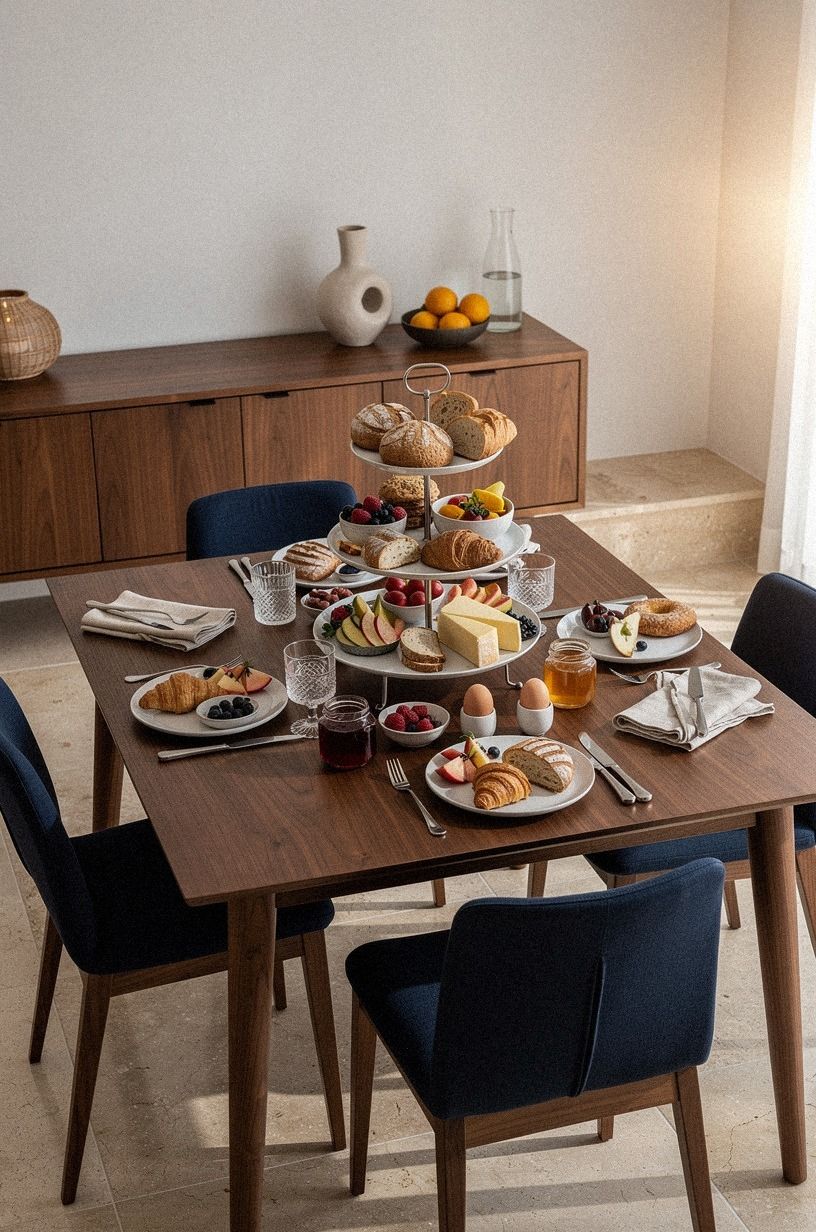
Tiered stands give a breakfast charcuterie spread height without taking over the table. Place fruit and pastries on the lower level, then reserve the upper stand for small bowls of olives, soft cheese, or preserves. Navy ceramics, white dishes, and walnut accents suit a dining room anchored by warm travertine.
The Three-Level Rule keeps the arrangement easy to serve: one low board, one medium stand, and one smaller bowl or plate. Vary the heights without stacking every ingredient. Guests should be able to reach the lower tier without moving the upper pieces.
Keep the runner close to the board and leave open space near each chair. A warm travertine serving piece can add weight beside the walnut, while white napkins keep the setting light. For more compact planning, browse these cozy small-space brunch layouts.
5Can edible flowers make a honeycomb cheese board feel finished?
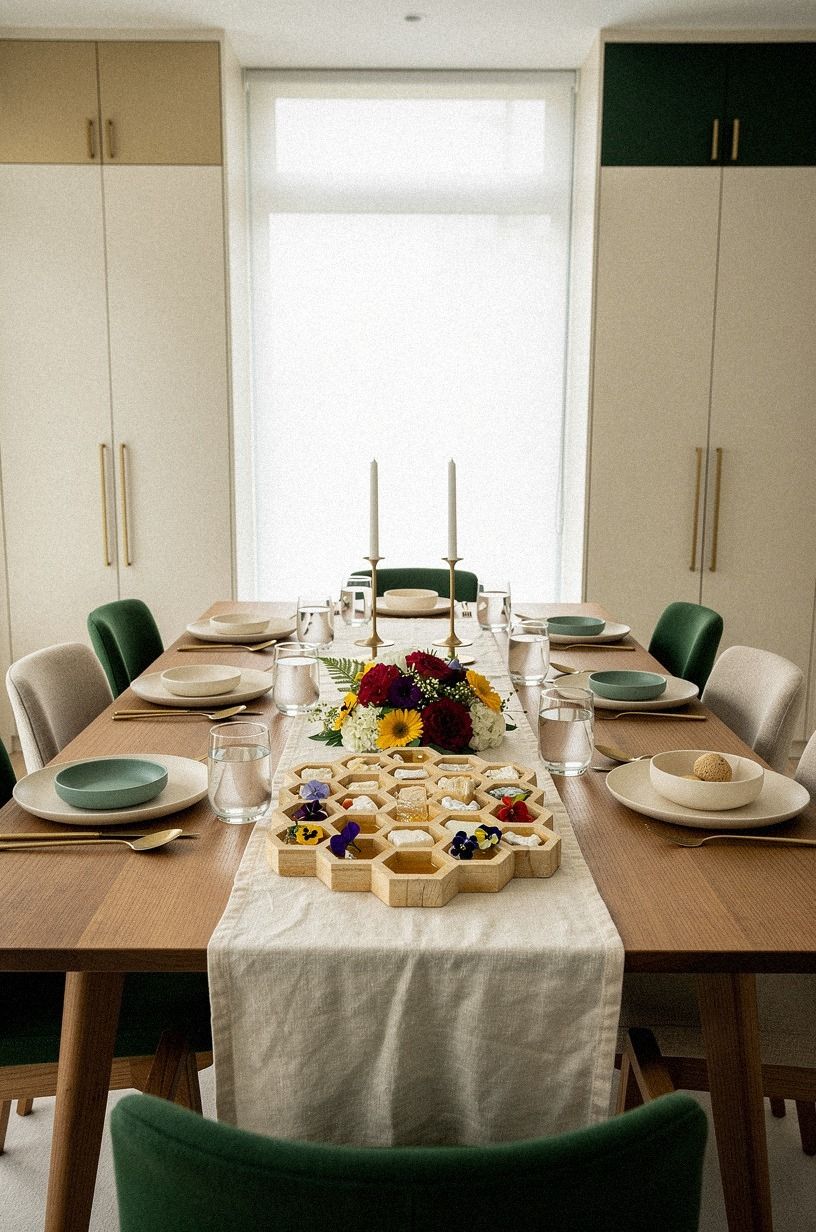
Edible flowers work best when they look scattered by hand, not measured into a pattern. Place them around cubes of cheese, sliced pears, and seeded crackers on a honeycomb board with unlacquered brass developing a soft patina. Choose cream blossoms, emerald grapes, and gold-toned accents so the arrangement feels composed rather than ornamental.
Your cheese should remain the main event. Use a small cream linen cocktail napkin beneath the knife and keep the flowers away from wet ingredients. A cream stoneware bowl can hold grapes or olives without competing with the board’s geometric surface.
Don’t cover every open patch with petals. The aged brass gives the display warmth and contrast while making serving easier. This approach offers strong visual value at a modest cost because one seasonal bunch can replace several decorative purchases.
6Waffles against syrup jars and linen napkins
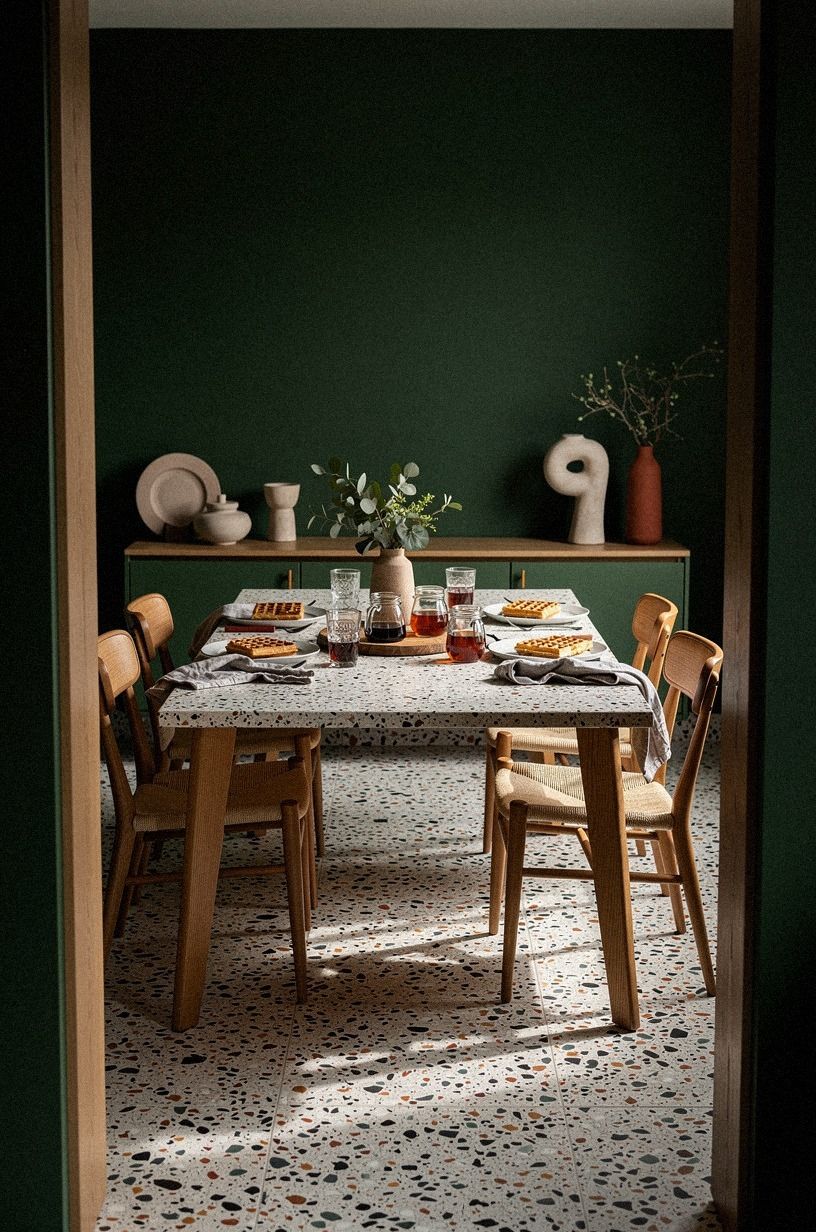
Waffles need visual boundaries because their grid pattern can look repetitive when they cover the entire table. Stack them in a low pile, then flank the stack with syrup jars, butter dishes, and folded natural linen napkins. An oversized-chip terrazzo platter adds texture to the forest green, rust, and natural oak palette.
The Frame-and-Repeat method works through paired details. Put one syrup jar on each side, repeat rust in the napkins, and use oak utensils to connect the food with the table.
You’ll get a warm arrangement that feels relaxed instead of themed. Don’t hide the waffles beneath an oversized cake stand; the crisp edges are part of the visual appeal.
Your table can handle a generous spread if the center stays open around the board. Leave room for coffee cups and a small pitcher, then keep butter in a shallow dish so guests can reach it.
A 600gsm linen napkin adds weight and softness without looking fussy. And yes, a waffle board can feel sophisticated when the supporting pieces stay quiet!
7Build a color-blocked board with seasonal fruit
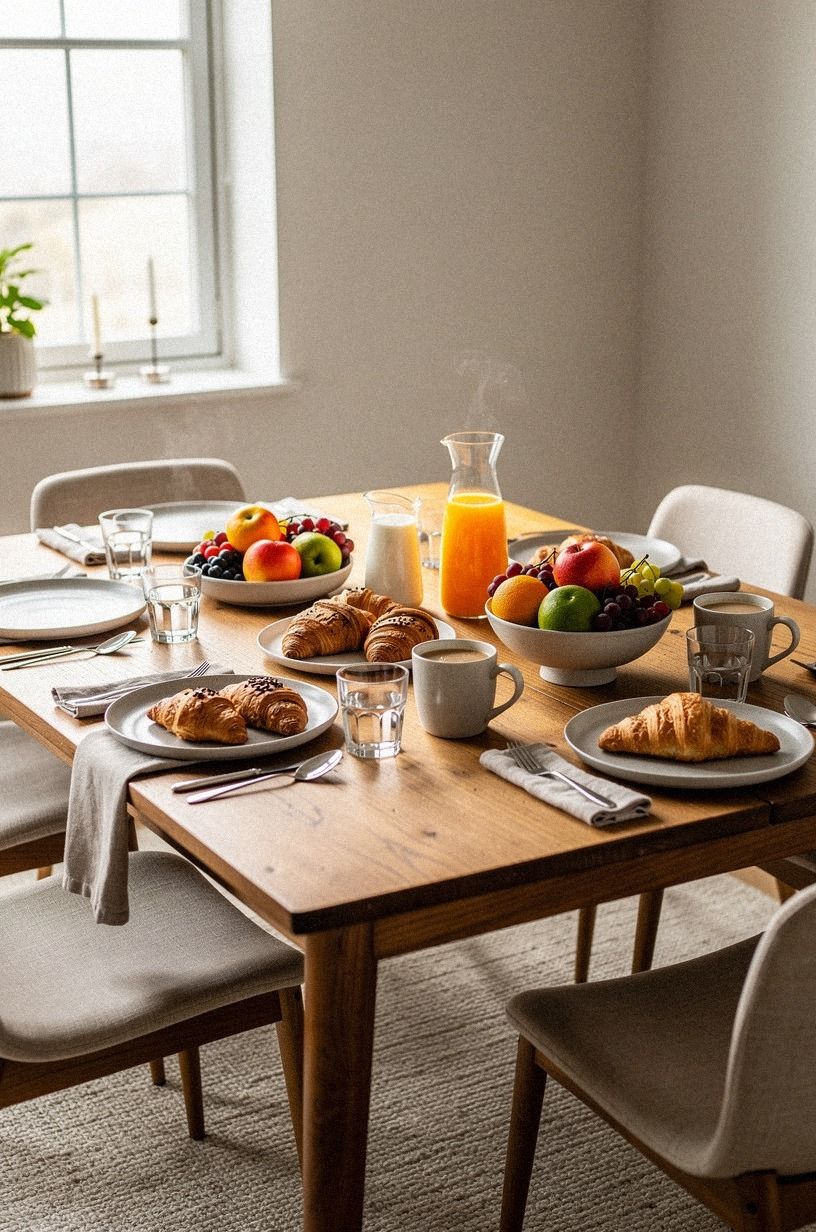
Color-blocking makes a large board easier to read. Divide the surface into sections for pale cheese, dark grapes, golden crackers, and dusty rose fruit, then leave narrow strips of board visible between each group. A hand-applied Venetian plaster wall behind the table can echo the layered finish without competing with the food.
The Four-Quadrant Rule gives your eye a clean route across the display. It doesn’t require perfect symmetry; each quadrant simply needs a distinct color or texture.
Your charcoal napkins can sit at the corners, while brass flatware adds a thin reflective line. Don’t mix every fruit together, because the colors will turn muddy as guests serve themselves.
Your board should be large enough for separation but not so large that it overwhelms the dining room. A round dusty rose bowl can hold berries, while sliced stone fruit fills a longer section. The palette feels modern, calming, and slightly dramatic when the fruit remains in recognizable clusters.
If you’re styling a smaller table, use one compact board and let the room’s wall color do more of the work.
A budget board can deliver excellent value when its surface is stable, washable, and easy to carry. There’s no need to pay more for carved handles if the proportions already suit your table.
8The Long Board Spine
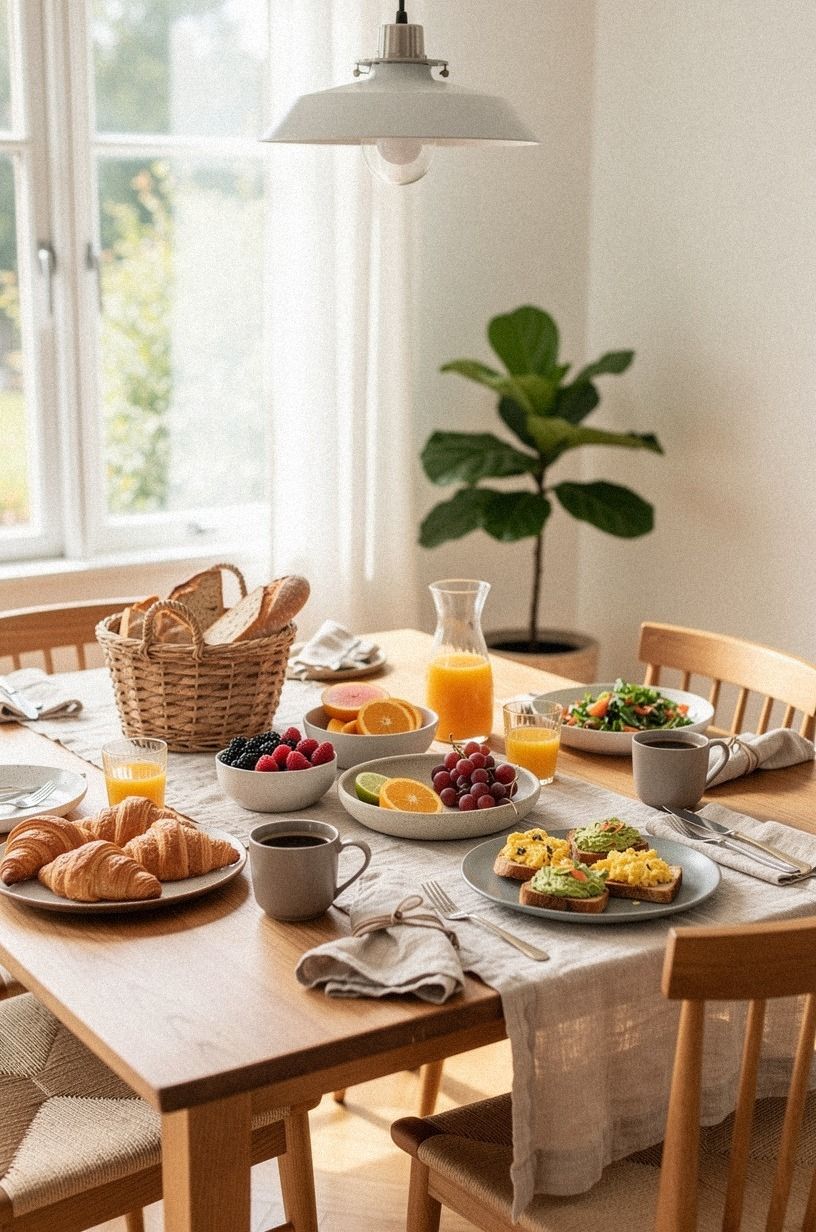
A long board gives a rectangular table a strong visual spine. Place it parallel to the table’s longest edge, then divide the food into three loose groups: fruit, pastries, and savory bites. Warm white ceramics, camel linens, and black accents create enough contrast without making the center feel busy.
Small shagreen details add tactile interest.
You’ll want the board to stop several inches before the table ends. That margin protects the sightline and leaves space for cups or small plates. Don’t push every ingredient into a continuous row; empty wood between groups makes the spread feel more generous.
For a narrow dining room, a board between 24 and 30 inches long can offer better value than several small platters. It’s easier to move, easier to wash, and less likely to obstruct conversation. Your table will look finished without requiring a major furniture purchase.
9Could yogurt cups organize a relaxed brunch table?
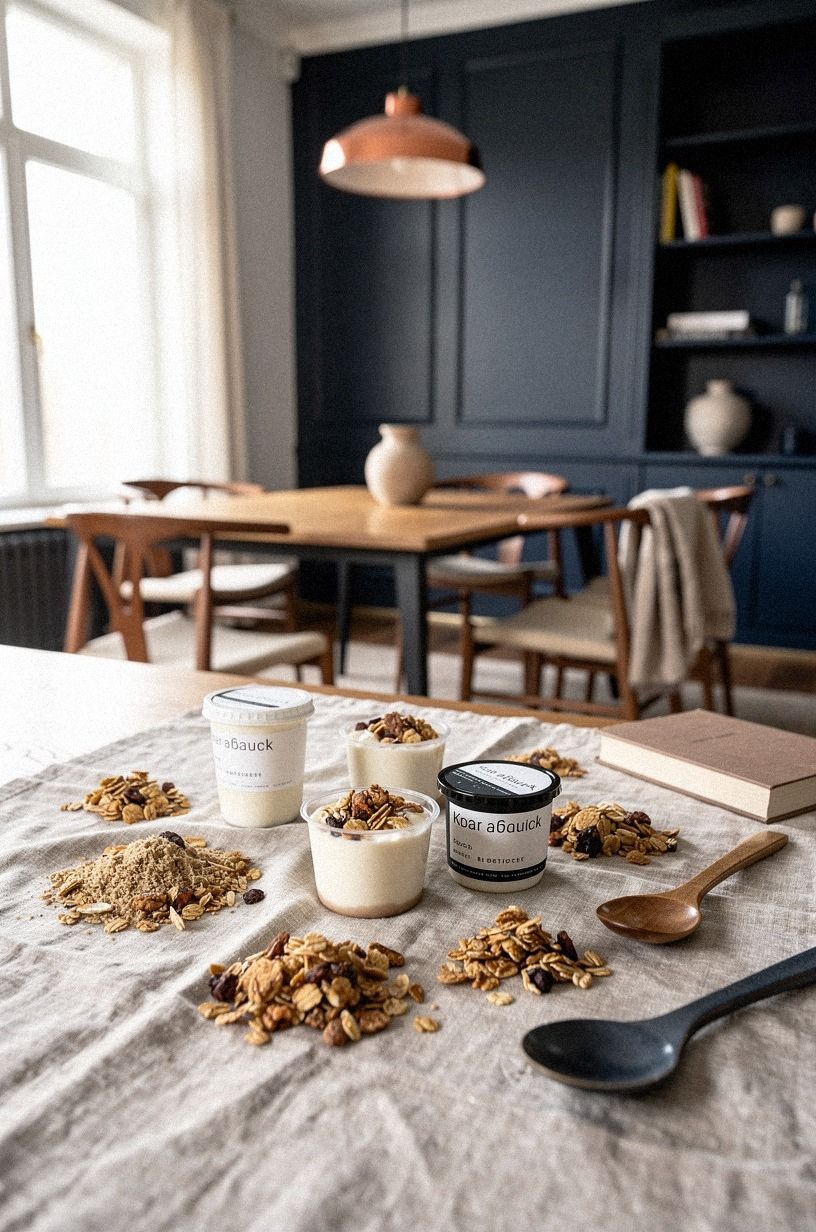
Individual yogurt cups make brunch feel organized without making it formal. Set them among granola bowls and stoneware spoons on a washed Belgian linen runner. Midnight blue, copper, and ivory create a layered palette, while the lived-in texture keeps the setting relaxed.
10Dark slate against pale brunch ingredients
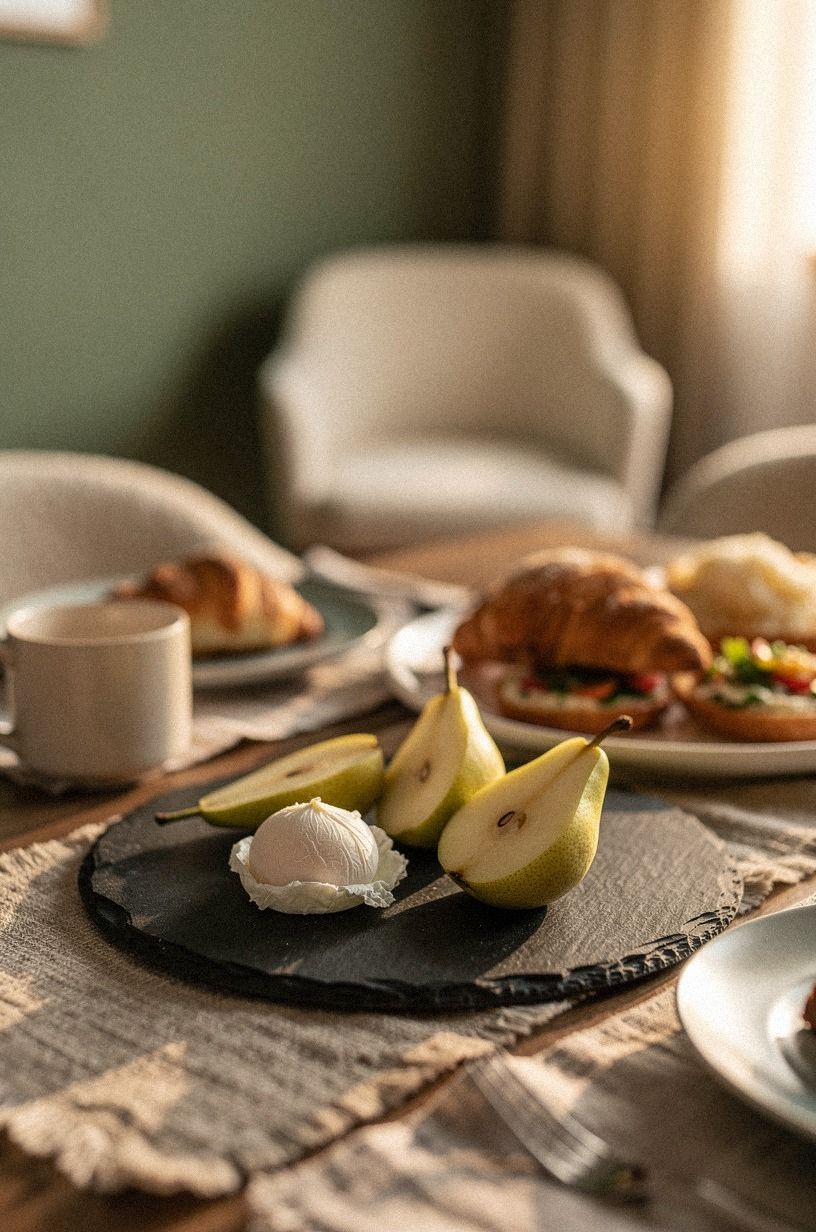
Dark slate creates instant contrast against pale eggs, sliced pears, whipped ricotta, and cream-colored bread. Set the board on a natural wood table, then add sage napkins and a few warm cream plates. An organic bouclé chair nearby will bring softness to the sage green, warm cream, and wood palette.
The Pale-Against-Charcoal Rule works because the food becomes the light source. You’ll want ingredients with clear edges, not beige items that disappear into the slate.
Soft eggs, white cheese, and pale fruit will read clearly from across the room. Don’t add black bowls on top of the slate; the layers will merge and make serving awkward.
Your board should be wiped clean before the food arrives because slate shows crumbs quickly. Use a wood-handled knife for cheese and keep a cream napkin beside the board.
The dining room can stay visually quiet while the spread carries the contrast. If your table already has dark legs, pale ingredients will keep the whole room from feeling heavy.
Slate is worth considering when the budget allows one durable serving piece. Its value comes from versatility: the same board can support cheese, fruit, pastries, or a simple evening snack.
11Create individual boards beside each dining chair
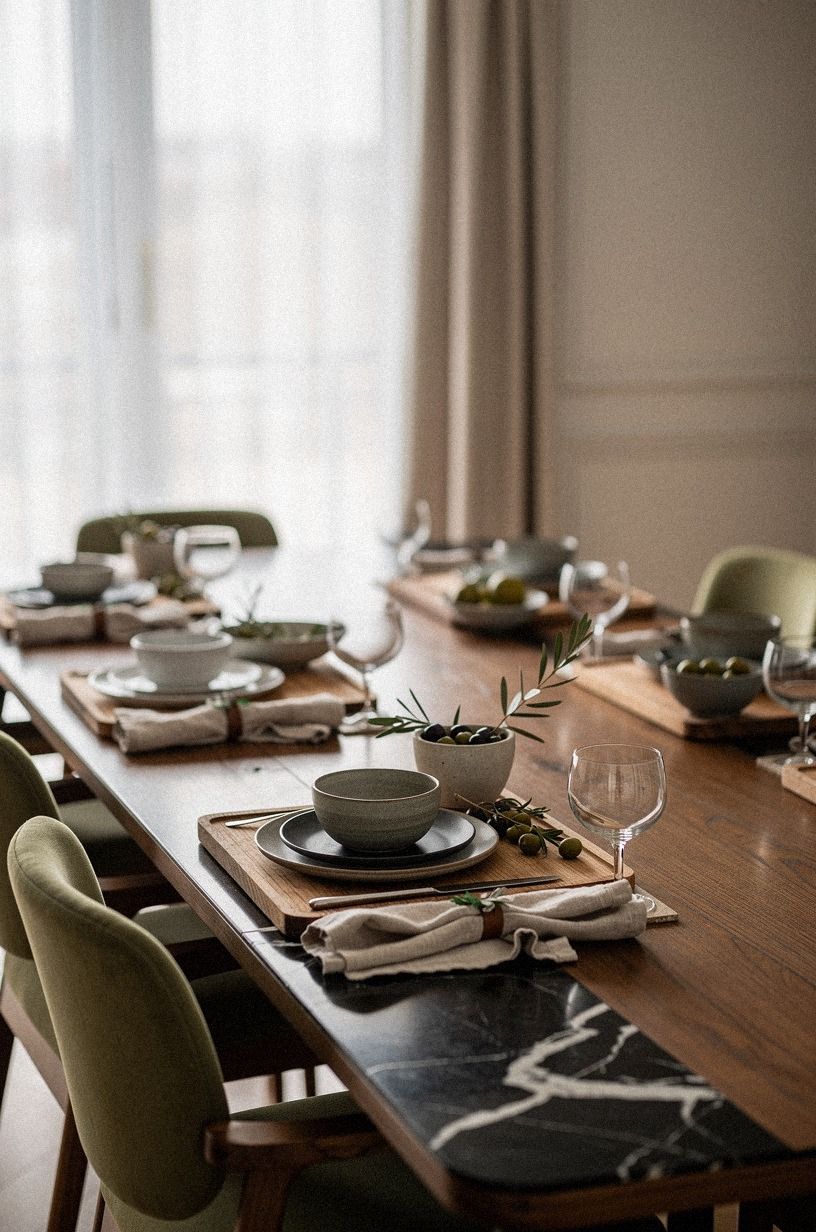
Individual boards make a shared brunch feel personal while keeping the main table open. Place a small board beside each chair with one pastry, fruit, cheese, and folded napkin. A Nero Marquina black marble accent can echo the terracotta, stone, and olive palette while giving each place setting a defined edge.
The Seat-Side Serving Rule is simple: every guest gets a compact starting point, while larger bowls remain in the center. You’ll reduce reaching and create a calm rhythm around the table.
Don’t overload the individual boards with too many ingredients. A few generous bites feel more welcoming than a crowded miniature buffet.
Your place settings should repeat one detail, such as olive napkins or terracotta cups, but the boards don’t need to match exactly. Natural wood beside black marble can look collected rather than coordinated.
Leave 36 inches of clearance behind each chair so guests can sit and move comfortably. A dining room spread should support conversation, not turn every chair into a storage problem.
This setup can be a smart budget choice when a large central platter would require a new table. Smaller boards are often easier to store, and each one can double as a breakfast tray.
12The Pancake Stack and Aged-Brass Triangle
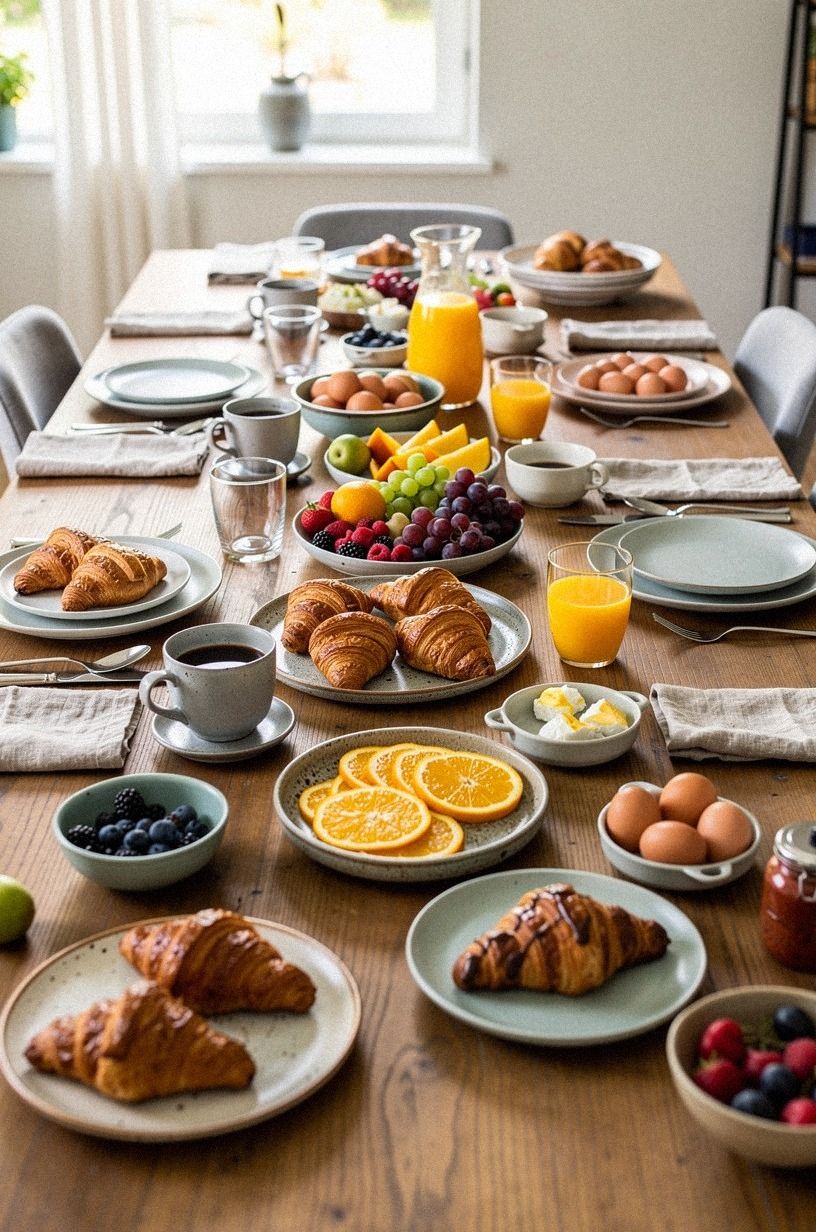
Pancakes bring height, but the stack should remain broad enough to feel stable. Place it near two aged-brass pitchers or serving pieces, then soften the arrangement with clay-toned dishes, linen napkins, and a deep-pile mohair velvet accent nearby.
Keep the tallest item slightly behind the pancakes so guests can reach the stack easily. A small copper-colored bowl can repeat the warmth without competing with the aged brass. The clay and linen palette keeps the arrangement generous rather than overly polished.
13Can symmetrical ceramic ramekins balance savory bites?
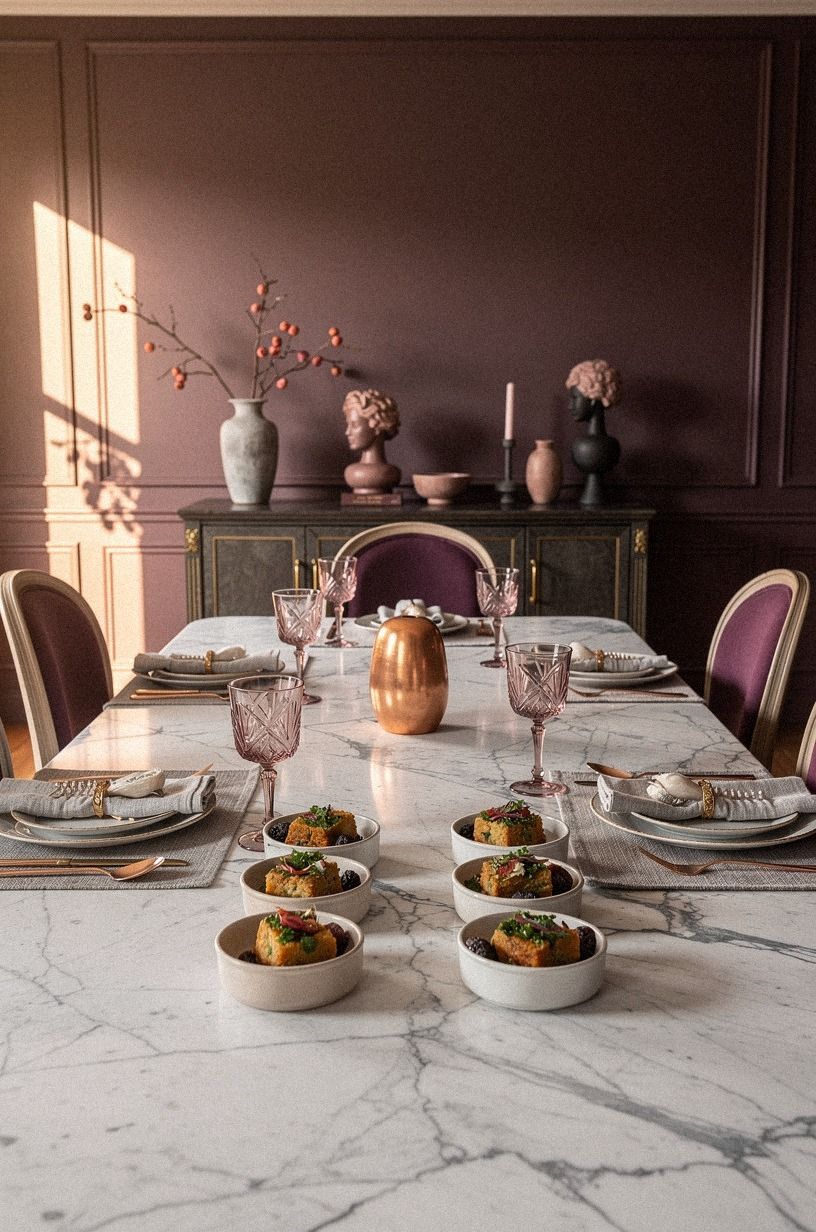
Symmetry gives savory food a sharper, more composed setting. Place ceramic ramekins in pairs around a board of eggs, toast, roasted vegetables, and sliced cheese. A Carrara marble surface with subtle grey veining will suit the plum, grey, and rose-gold palette while keeping the room’s dining furniture visible.
The Mirror Pair Rule doesn’t mean every ingredient must match. Repeat the ramekin shapes, then vary the contents so the board feels abundant.
One side might hold olives and soft cheese, while the other carries herbs and roasted peppers. Don’t mirror messy piles exactly; the food should still look natural and easy to serve.
A table height of 30 inches works well for seated dining, and each guest needs about 24 inches of table width for comfortable elbow room. If you’re adding a pendant, keep it 30 to 36 inches above the table. These measurements protect the flow of the dining room while the board provides visual drama.
A budget version needs only matching bowls, one cutting board, and ingredients with varied color. The value is in the repeated shapes, not in costly servingware.
The Editorial Choice Behind a Better Brunch Board
A brunch board works because it gives a dining room a temporary center of gravity. The food arrives, the table gathers people, and the room feels useful rather than staged.
That difference matters. A display that looks attractive on an empty table can become frustrating when guests can’t reach the coffee or see across the table.
The strongest arrangements begin with the table itself. Farrow & Ball De Nimes No. 299 can support terracotta, olive, and natural wood without making the room feel dark.
Benjamin Moore Hale Navy HC-154 brings structure to white dishes and pale food. Sherwin-Williams Urbane Bronze SW 7048 works when the room needs a warmer anchor.
Paint should support the food, not compete with it.
A board also needs a clear serving logic. Sweet ingredients can sit together, savory ingredients can sit together, and shared utensils should remain visible.
The most inviting tables leave small areas of open surface between groups. That pause lets the eye rest and gives guests somewhere to place a cup or plate. More ingredients won’t automatically make the setting feel abundant.
For a modest budget, spend on the pieces guests touch first: a stable board, useful spoons, washable linen, and one serving bowl with enough depth. A thrifted wooden board can feel more natural than a glossy matching set.
If you’re choosing between extra decoration and better spacing, choose spacing every time. There’s more value in a well-proportioned board than in a crowded collection of accessories.
The cost of a brunch refresh can stay low when the table, chairs, and lighting already work. A new runner, seasonal fruit, and one dependable board may be enough. If the room needs a larger change, paint usually offers stronger visual return than several small decorative purchases.
The Questions Worth Answering First
What is the best brunch board idea for a small dining room?
A long wooden board or individual boards beside each chair usually work best because they preserve the center sightline. Birch-effect storage can hold extra linens nearby without taking table space. Low boards, shallow bowls, and one repeated color keep your spread inviting without making the room feel crowded.
Where can you buy brunch board pieces on a budget?
Practical boards, ceramic bowls, linen napkins, and small stands are widely available from home retailers, resale shops, and local marketplaces. Camel-toned leather seating can inspire a warm palette, while secondhand shops may provide solid wood boards for less. Look for stable construction, washable textiles, and surfaces without deep cracks.
How much does a brunch board dining room makeover cost?
A simple refresh can cost about $100 to $300 when the table and chairs already work. Natural linen napkins and thrifted serving pieces can keep the total lower, while paint or a new light may raise it. The larger dining-room ranges above apply when furniture, wallpaper, or paneling enters the project.
Can you create a brunch board spread on a budget?
Yes, and the easiest savings come from using existing dishes, folding napkins from household fabric, and arranging seasonal fruit in low bowls. Ceramic ramekins can replace specialty serving cups, while a clean cutting board can replace a decorative platter. Your table will feel intentional when color and height repeat.
Is a brunch board spread worth it in a small space?
Yes, because a small table naturally limits excess. Choose one long board, keep serving pieces low, and leave clear space near every chair. Benjamin Moore White Dove OC-17 on nearby walls can reflect light around the display, while a darker runner adds depth without using more furniture.
Is a brunch board spread a good idea for a rental?
Yes. Use removable hooks for textiles, a tension rod for a temporary curtain, and peel-and-stick wallpaper only where the lease allows it. Farrow & Ball Joa’s White can guide a neutral palette without requiring paint, while portable boards and freestanding lamps travel easily to a future dining room.
Where to Start First
If choosing one upgrade, start with the long wooden board. It gives your table a clear center without blocking conversation, and every other detail can stay simple around it. Pair it with these cozy small-space brunch layouts when the table needs a fresh arrangement!