The short answer: 15 Friendsgiving hosting layouts can make a small dining room feel twice as big when the table, light, and traffic lanes do the heavy lifting. I once pushed every chair against the wall and called it practical. It felt cramped. Now I plan the room around movement first, then add the warm details.
- Clear the Center With the Open-Lane Rule
- Why a Round Table Beats a Long One
- Layer the Three-Height Light Stack
- Farrow & Ball De Nimes Sets the Mood
- Build the Two-Wood Rule
- Could a Slim Serving Shelf Replace the Sideboard?
- Anchor the Friendsgiving Table With the Chair Test
- Hang a Mirror Where the Room Needs Air
- Paint the Ceiling for the Color-Wash Effect
- Mix One Bench With Individual Chairs
- Create the Candle Cluster Instead of a Centerpiece
- Let Sherwin-Williams Urbane Bronze Frame the Table
- Arrange a Three-Source Serving Station
- Choose the Empty-Corner Principle
- Layer the Table With Soft, Washable Textiles
1Clear the Center With the Open-Lane Rule
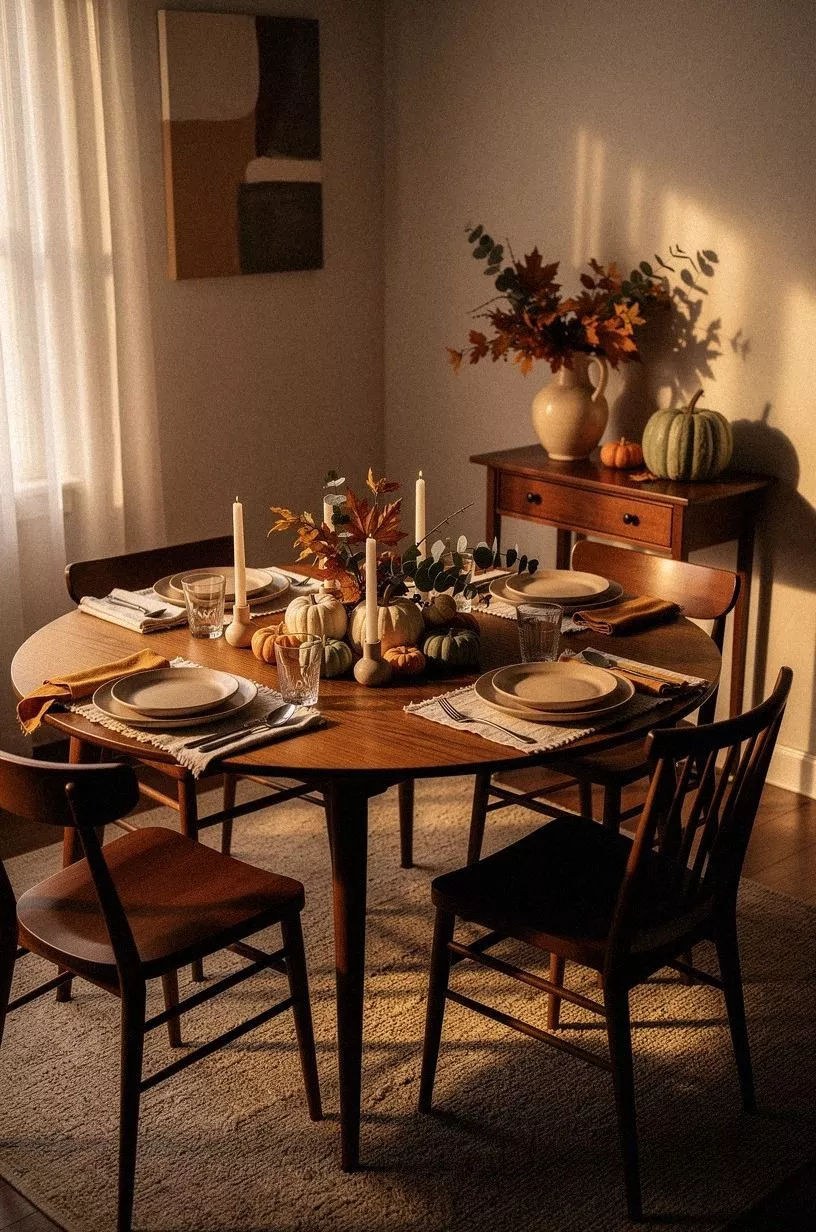
Start by pulling unnecessary pieces away from the table so your dining room has one clear path from the kitchen to the seats. You’ll want at least 36 inches of chair clearance behind each occupied chair, and you’ll notice the difference before the first guest arrives. An airy walkway makes even a tight room feel calmer.
I like a 30-inch table height paired with chairs that slide completely underneath. A narrow table with a backlit translucent onyx surface feels inviting without looking bulky, while aged-brass details keep the floor visually open. If your table has four legs at every corner, you’re losing useful knee space.
Measure the room with the chairs pulled out, not tucked in. That’s the position that matters during dinner. Leave a little extra room near the kitchen entrance because one person will always stand there holding a hot dish, asking where it should go.
But don’t remove every surface. Your guests still need somewhere for glasses, napkins, and a serving dish.
A slim unit against the shortest wall can hold linen napkins below and aged brass candleholders above. For more small dining room planning, use these small dining room banquette mistakes designers want gone as a quick reality check.
A narrow console can also work if it has open legs and a shallow profile. Keep the top edited: one tray, one bowl, and the drinks you want people to reach without crossing the table. A clay-toned bowl, pale linen, and aged brass give the room a polished, breathable feeling.
You can compare it with these small dining room entertaining ideas before choosing the final surface.
Typical cost by tier (US averages):
2Why a Round Table Beats a Long One
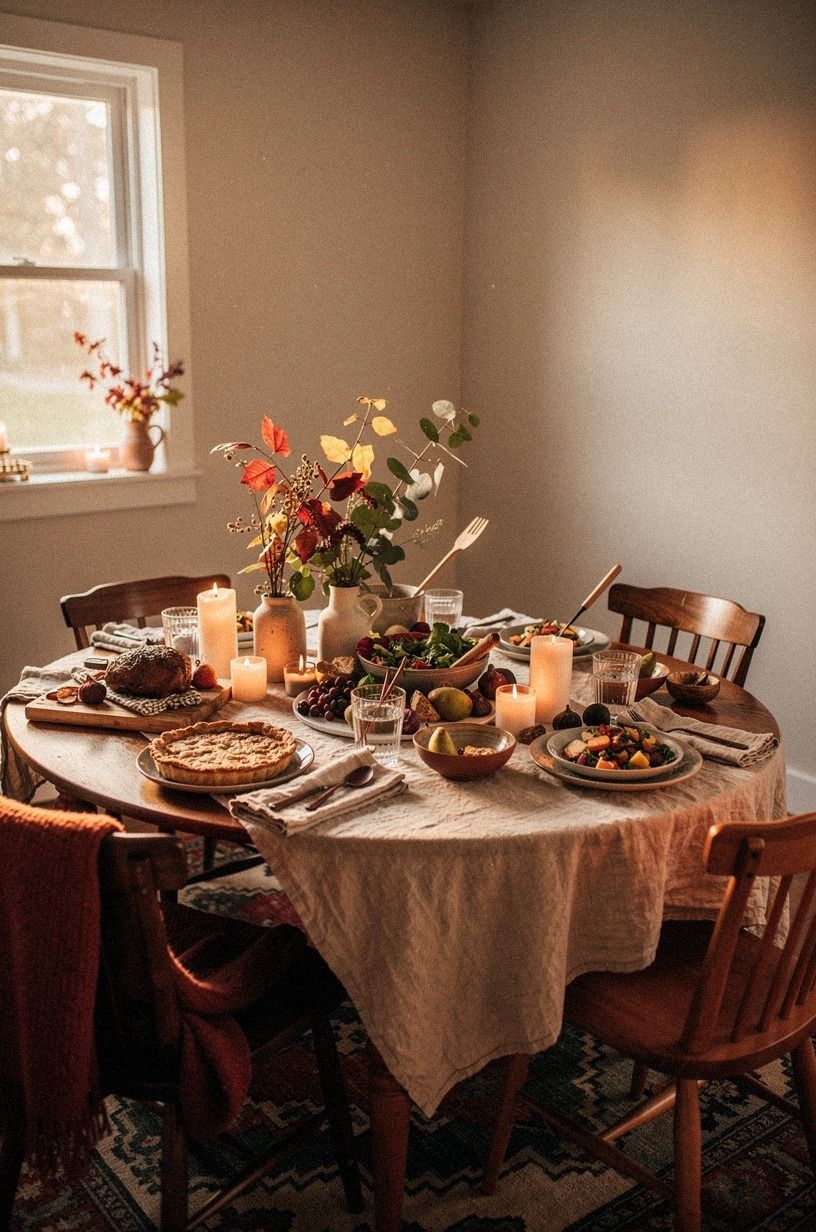
A round table is often the friendliest choice for small-space Friendsgiving hosting because nobody gets stranded at the far end. A book-matched walnut top with plum upholstery, gray walls, and restrained rose-gold accents can make the arrangement feel collected without adding visual weight.
3Layer the Three-Height Light Stack
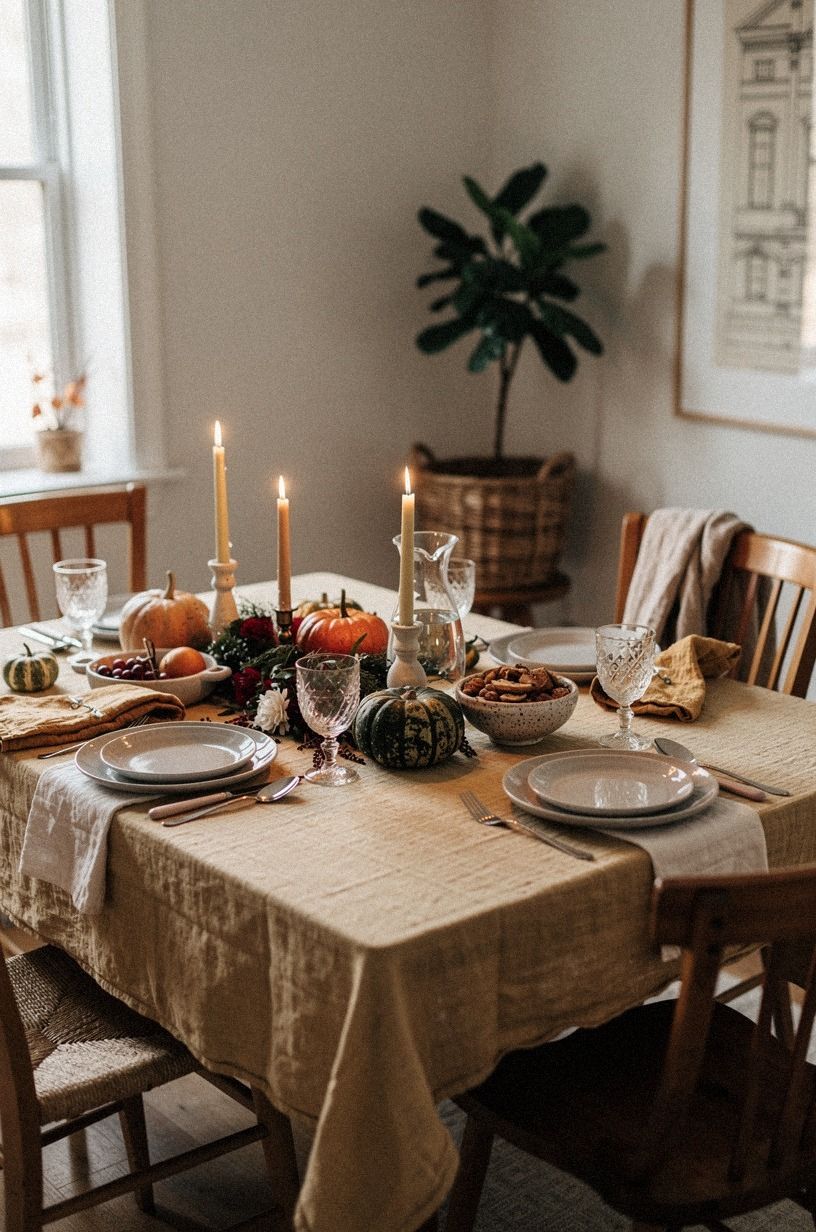
Use three light levels so your dining room doesn’t depend on one harsh ceiling fixture. Start with a pendant above the table, add a low lamp on a sideboard, and finish with candlelight at eye level. The layered glow is calming, sophisticated, and much more flattering once dinner begins.
Hang the bottom of your pendant 30 to 36 inches above the table. I prefer a pendant with a warm travertine-toned shade and an opaque finish because it throws a soft pool onto plates without shining straight into your guests’ eyes. You’ll want 2700K warm bulbs, and you won’t need a complicated fixture to make this work.
A dimmer matters more than an expensive fixture. Set the overhead light bright enough for arrival, then lower it once everyone is seated. The side lamp should fill the darker wall rather than compete with the pendant, while the candles bring a flickering, intimate note close to the table.
And if your rental has an ugly ceiling light, turn it off and rely on portable sources instead. A rechargeable walnut table lamp on a buffet can make the room feel intentional in minutes.
I once used only overhead light for a holiday dinner, and everyone looked washed out in the photos. Never again!
If you’re considering a more dramatic evening setup, these speakeasy dining room ideas for supper club vibes can help you think beyond the single-fixture approach. The small whiskey room ideas for a big vibe also show how low light can create atmosphere without adding furniture.
4Farrow & Ball De Nimes Sets the Mood
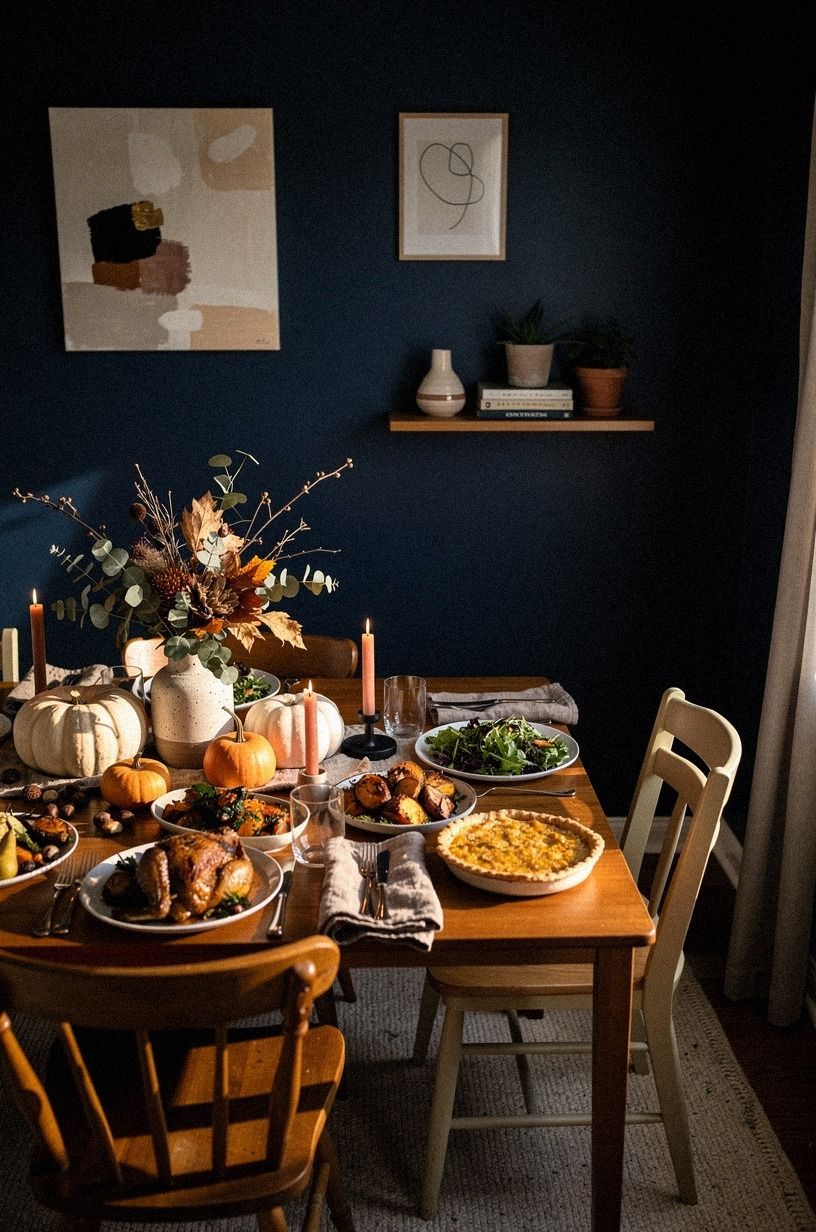
Paint the walls and trim in one enveloping emerald color when you want your small dining room to feel intimate rather than chopped into sections. Pair it with cream textiles and gold details, especially unlacquered brass that can develop a gentle patina over time.
5Build the Two-Wood Rule
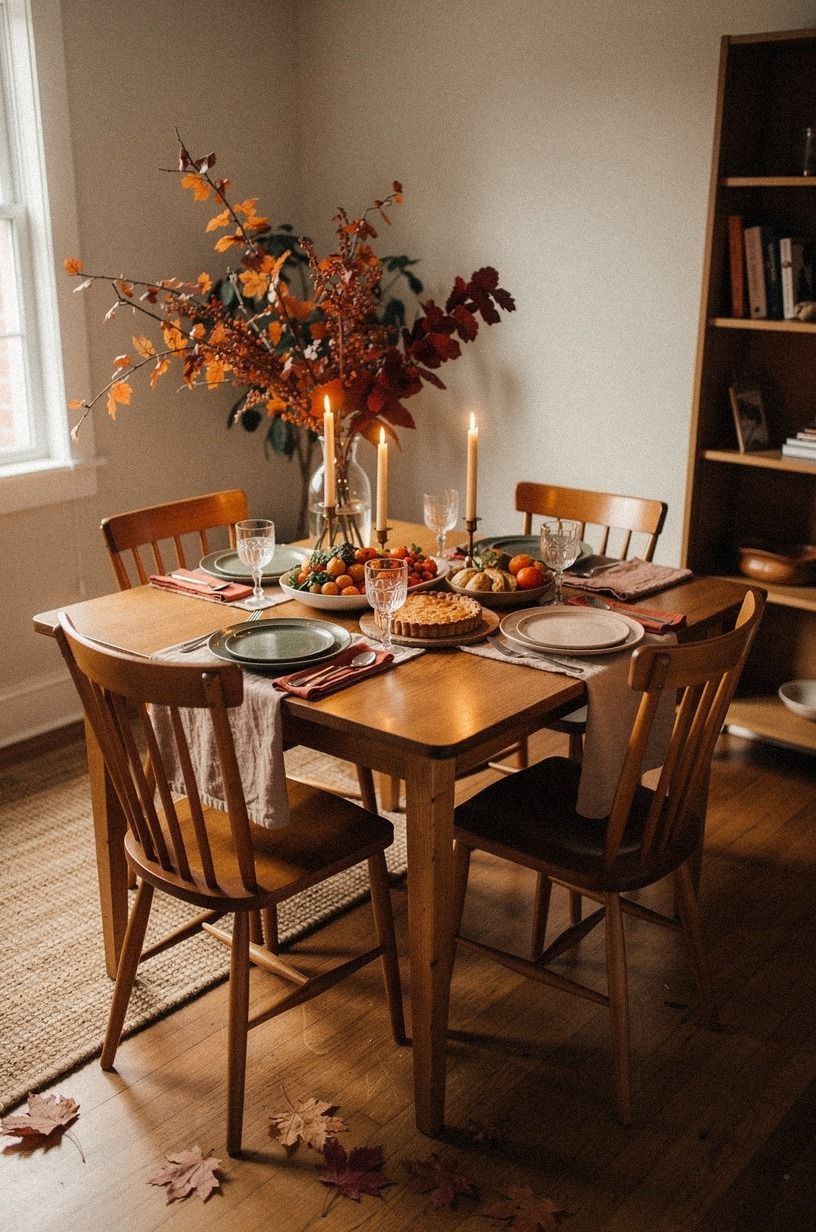
Mix two wood tones, not five, so your Friendsgiving table feels gathered without becoming visually noisy. I like one natural-oak surface with forest-green or rust accents in the chairs, picture frames, or sideboard. The contrast feels organic and quietly elegant.
Your goal isn’t to match every grain. It’s to repeat each tone at least twice so the room has a rhythm. A natural-oak table with rust-colored seating can work beautifully if your picture frames or serving boards echo the warmer note.
I’d avoid buying a matching table-and-chair set for a small room. It can look heavy, and you’ll lose the relaxed character that makes Friendsgiving different from a formal holiday meal. If you’re working with pieces you already own, move your table near natural light and let the wood carry the warmest note.
You can bring in a third material without creating a third wood tone. Oversized-chip terrazzo, matte ceramic, and simple textiles add tactile variety while keeping the palette disciplined. That small distinction makes the room feel collected instead of showroom-staged.
For another perspective on keeping a compact room from feeling crowded, revisit these small dining room banquette mistakes before buying matching furniture.
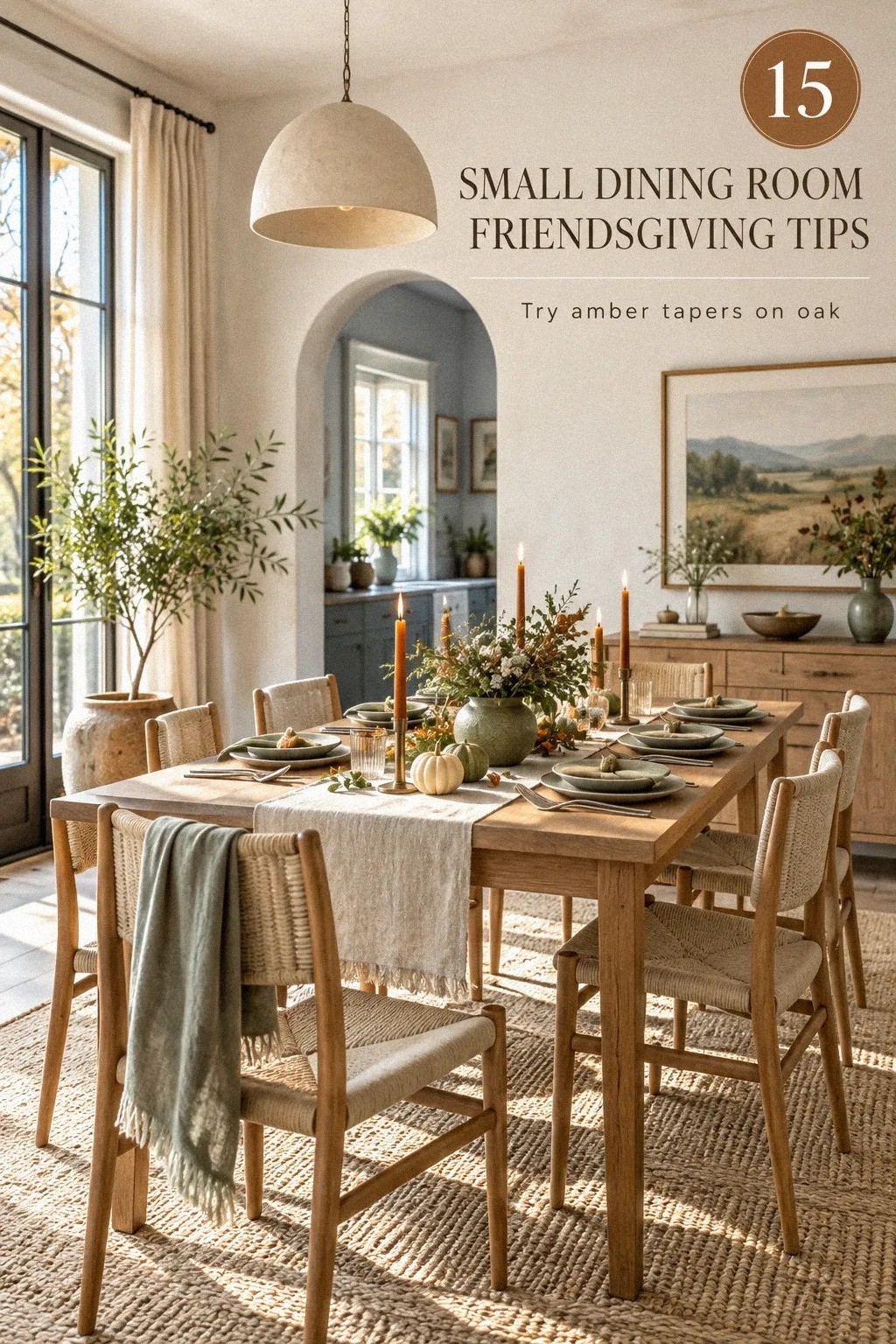
6Could a Slim Serving Shelf Replace the Sideboard?
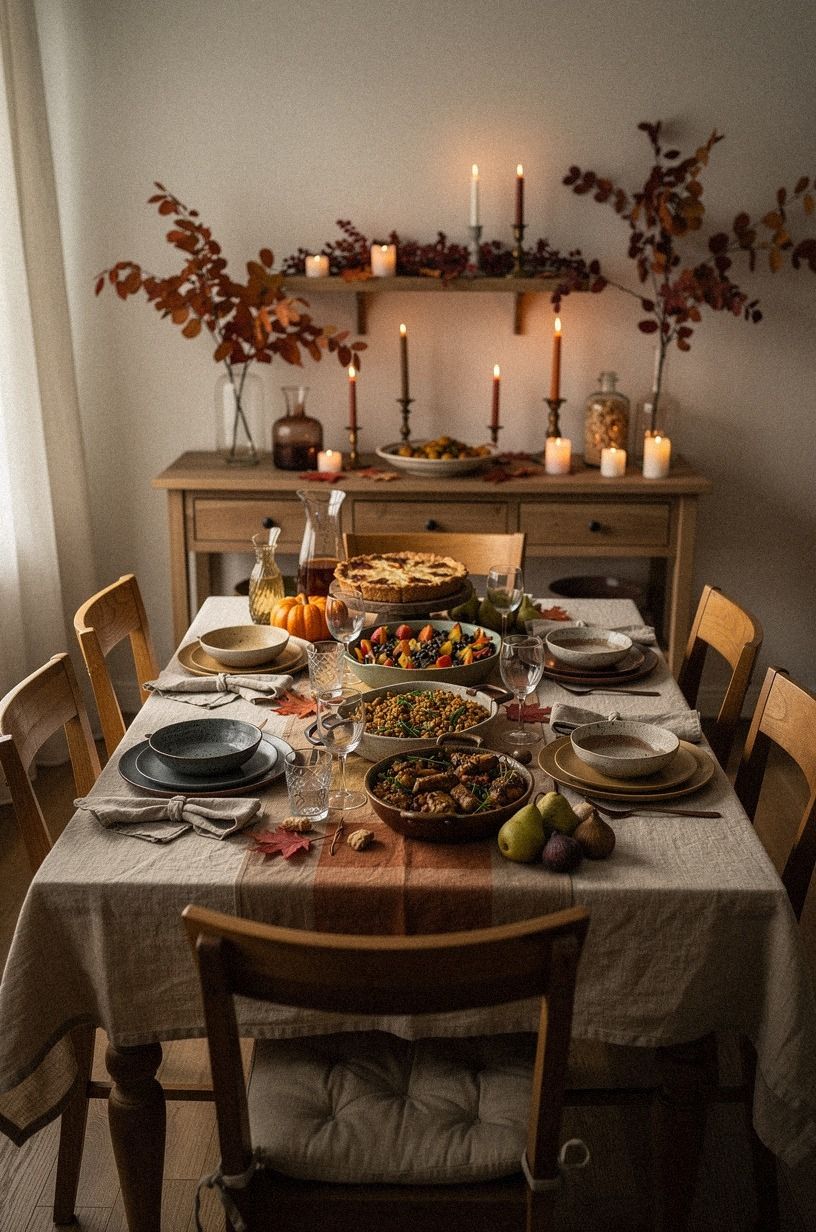
Replace a deep sideboard with a narrow wall shelf when floor space is precious. A dusty-rose wall, charcoal accessories, and a slim brass shelf can give you the same serving function with much less visual weight.
7Anchor the Friendsgiving Table With the Chair Test
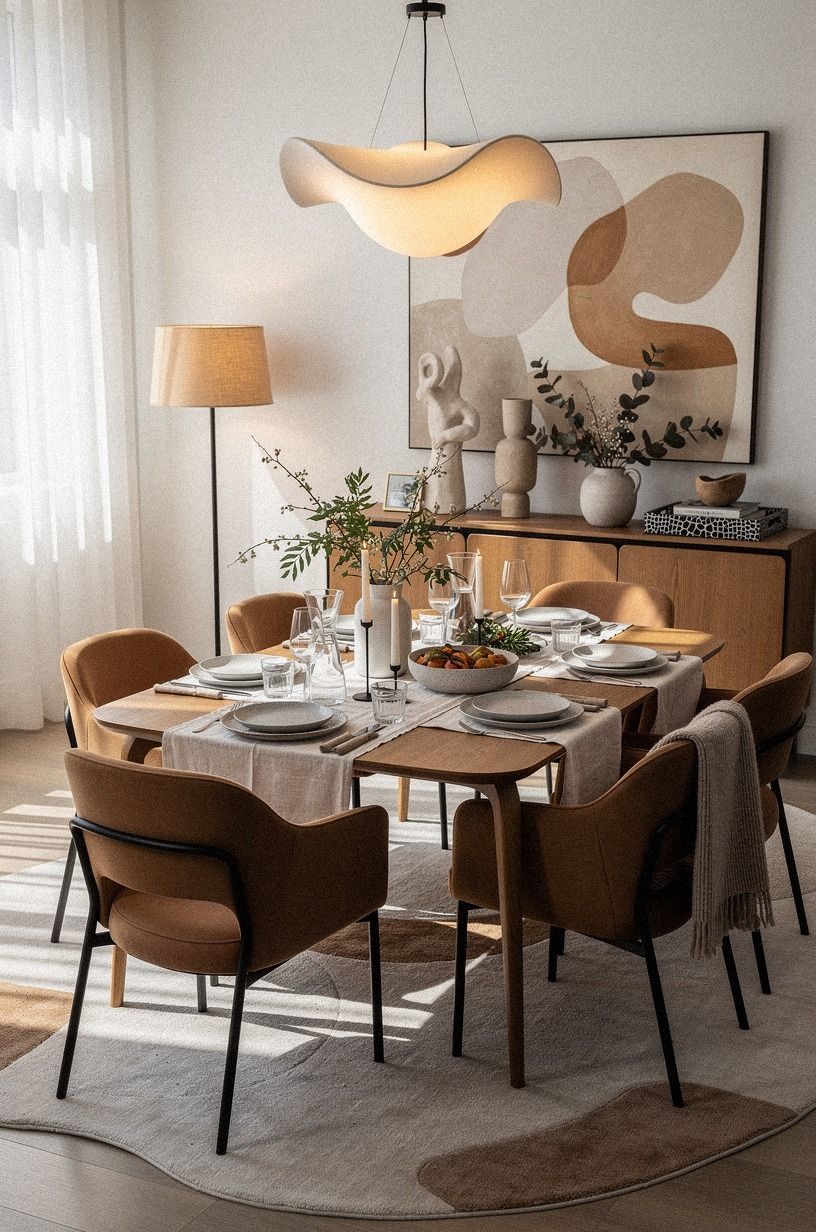
Put down your rug before you finalize the table position, then pull every chair out as if you’re sitting down. The rug should extend far enough that chair legs stay on it when you move. This simple test keeps your table from drifting into a cramped corner.
A 9-by-12-foot rug can work in a larger dining area, but your room may need a smaller proportion that still leaves a clear walking lane. Choose a flat weave in warm white or camel with black accents, or a low-pile geometric pattern so chair legs don’t catch. You’ll want texture, but you won’t want a thick edge under every foot.
I’d skip a high-pile shag here. It feels soft underfoot, but it makes chairs harder to pull and catches crumbs after dinner. Before hosting, try this dining room chair test for fixing your rug and you’ll save yourself a frustrating rearrangement.
Use blue painter’s tape to mark the table footprint before ordering anything. Leave enough room for the chair backs, then check the route between the table, kitchen, and front door. If one corner feels tight, it will feel tighter once guests arrive with coats and serving bowls.
A rug doesn’t have to be perfectly centered under the table. It needs to support the chairs and establish a comfortable zone.
That distinction can save you from buying an oversized rug that makes every other measurement harder. A small shagreen tray or accent nearby can add texture without changing the rug’s practical role.
The same chair-clearance guide can help if your table is unusually narrow.
8Hang a Mirror Where the Room Needs Air
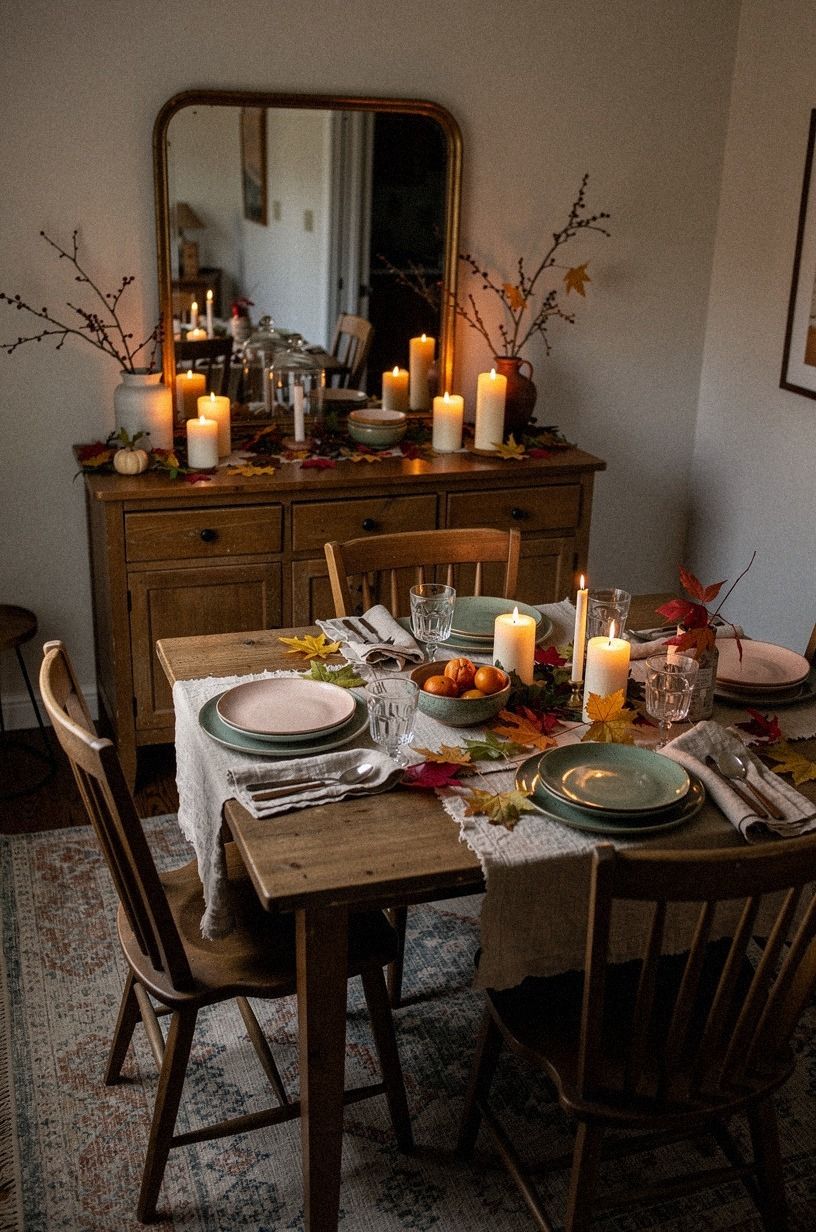
Place one large mirror across from a window or beside the table to bounce light through the dining room. A midnight-blue wall, copper detail, and ivory textiles will keep the reflection dramatic without making the room feel cold. Washed Belgian linen softens the arrangement.
9Paint the Ceiling for the Color-Wash Effect
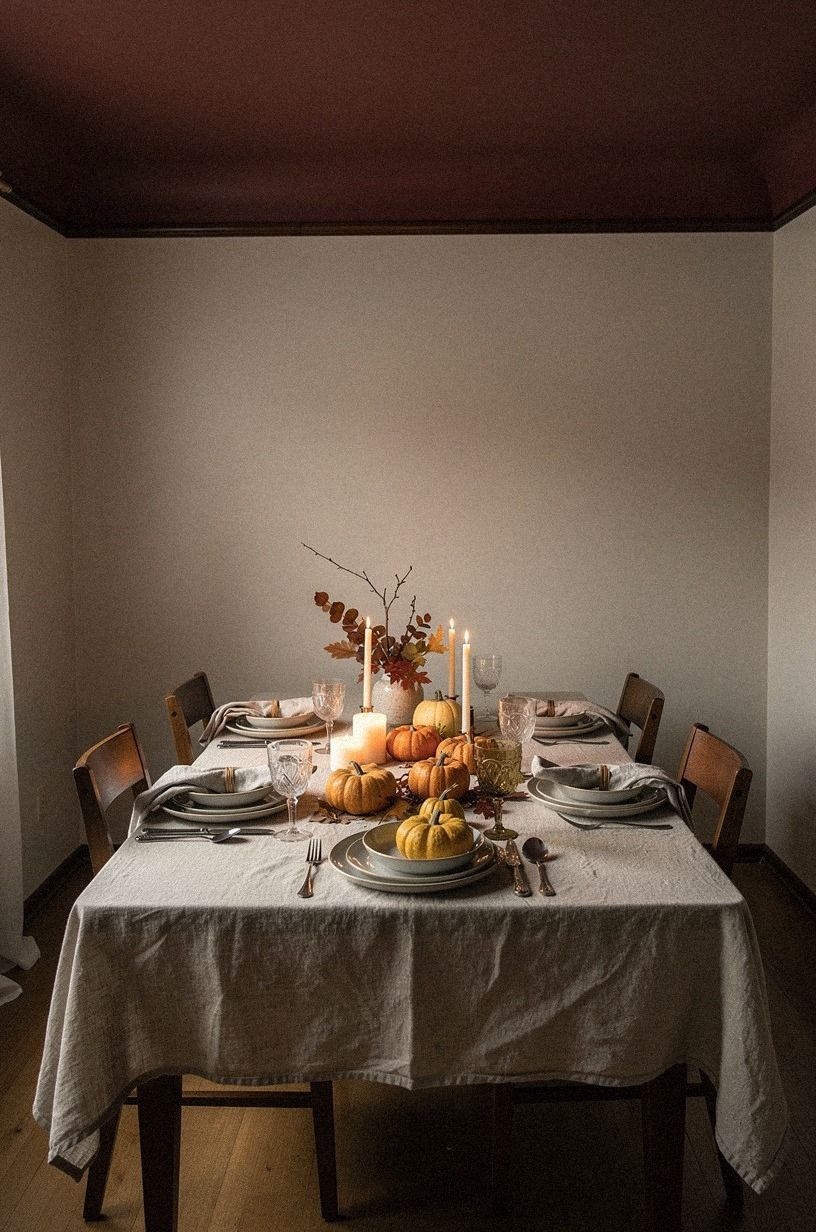
Carry a soft sage-green wall color slightly onto the ceiling when you want the room to feel taller and more enveloping. Warm cream and natural wood keep the effect gentle rather than heavy, while a touch of organic bouclé adds softness.
You’ll want to use a lower-sheen finish overhead so the light doesn’t bounce harshly during dinner. Pair the paint with warm cream bouclé curtains and a natural-wood table to keep the mood welcoming. I’d choose this approach for evening gatherings, not for a room that needs to feel bright at breakfast.
If a full ceiling paint feels like too much, paint only the trim in the same family. That small move gives your room a more intentional envelope without committing to a dark overhead plane. It’s calm, intimate, and surprisingly forgiving of uneven walls.
A ceiling color also helps when the room has a shallow architectural flaw. Instead of drawing attention to a slightly low or irregular ceiling, the color connects the upper edge to the walls. Use large samples first, because the same sage can feel refined in one room and washed out in another.
These speakeasy dining room ideas are useful if you want to see how darker color and lighting can work together.
10Mix One Bench With Individual Chairs
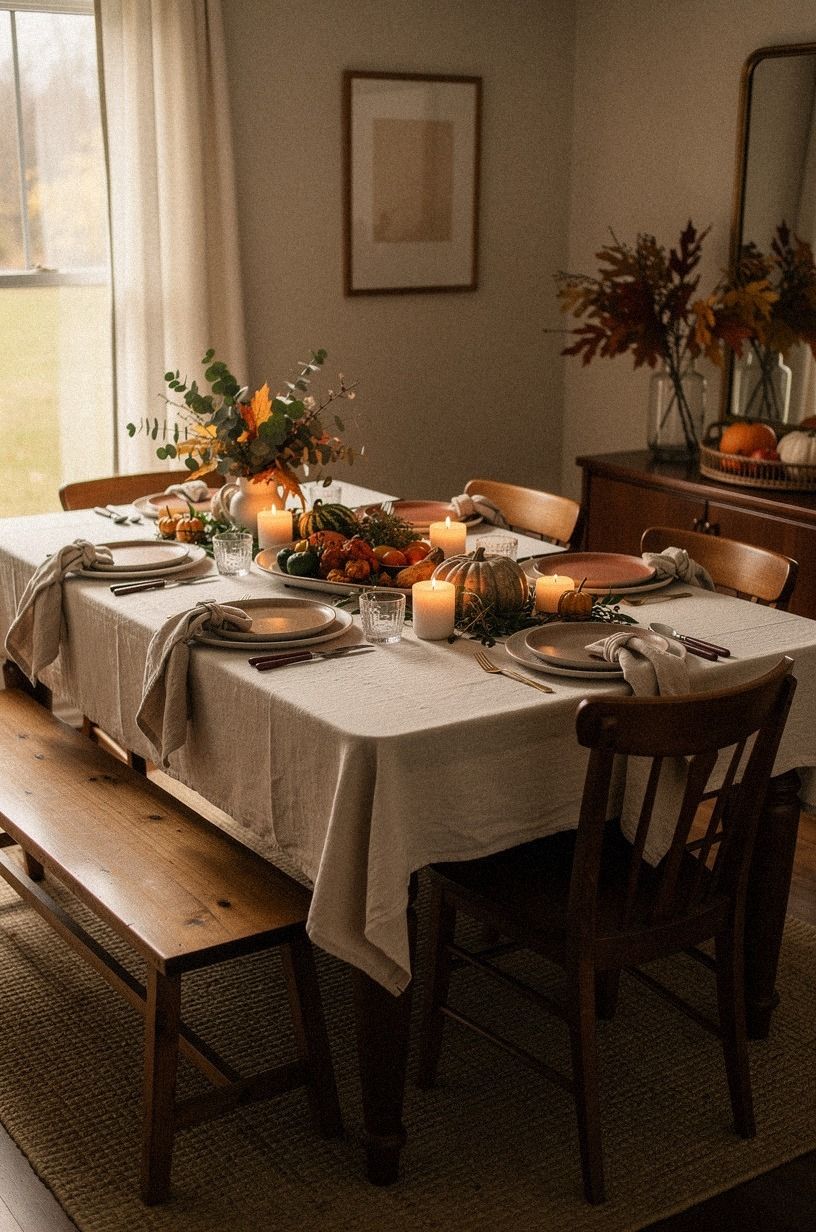
Use one bench on the wall side and individual chairs on the open side to gain seating without crowding the room. A bench slides neatly underneath when you need more floor space, and it lets several guests sit close together without adding extra chair backs.
Choose a stone-colored bench with a firm cushion rather than a deep lounge seat. You’ll want people to sit upright enough to eat comfortably, and you’ll need the bench to clear the table apron. An olive cushion or terracotta throw can bring warmth without overwhelming the room.
But don’t force a bench into a room where guests must climb around it. Your traffic lane still matters more than the number of seats.
I once squeezed a bench against a doorway because it looked efficient, and everyone had to twist sideways to leave. The layout failed before the food arrived.
If the bench sits against a wall, leave enough clearance for coats and elbows. A shallow seat cushion is usually more useful than an oversized upholstered seat. For a smaller gathering, remove one chair and let the bench handle two people comfortably.
Before committing, compare the setup with these banquette layout mistakes. The useful question is simple: can someone leave their seat without making everyone else stand?
11Create the Candle Cluster Instead of a Centerpiece
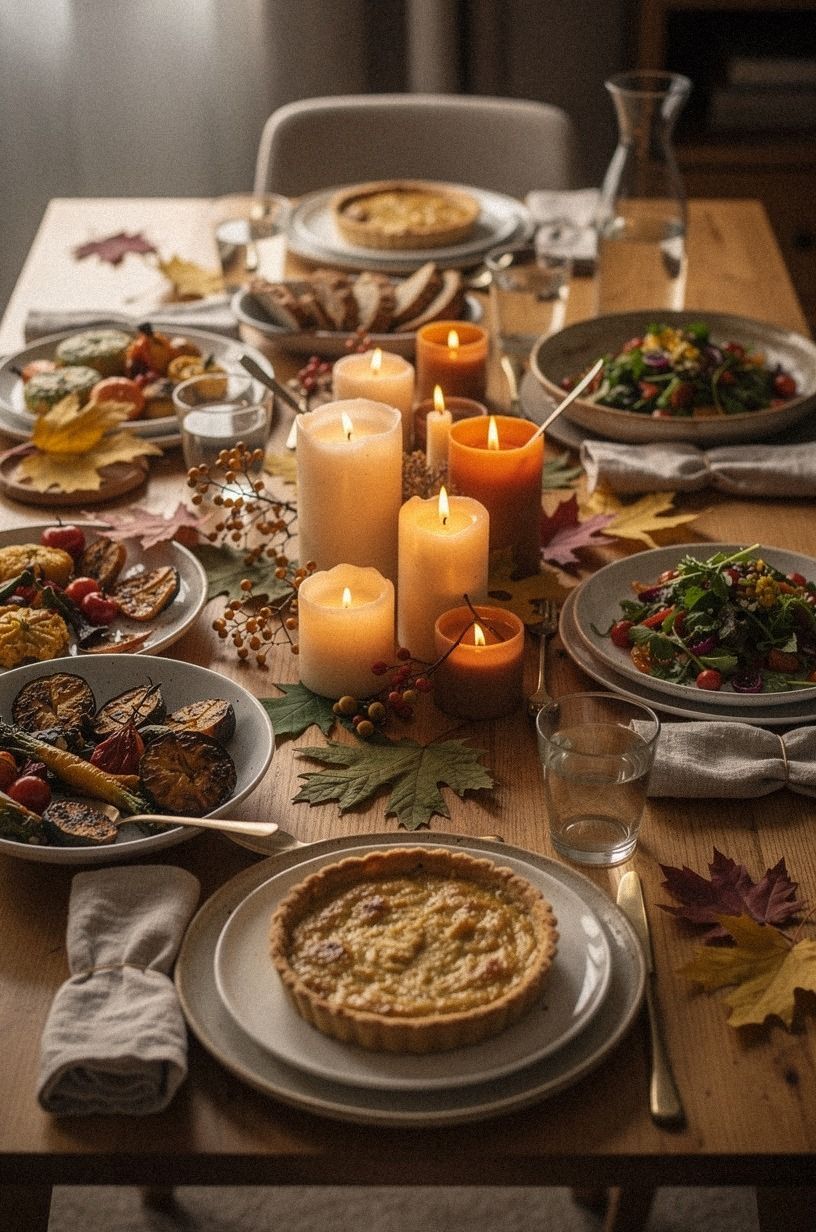
Skip a tall floral arrangement and build a low candle cluster that leaves sightlines open. Pair clay vessels with linen and aged-brass details, then add one small deep-pile mohair velvet accent for softness.
12Let Sherwin-Williams Urbane Bronze Frame the Table
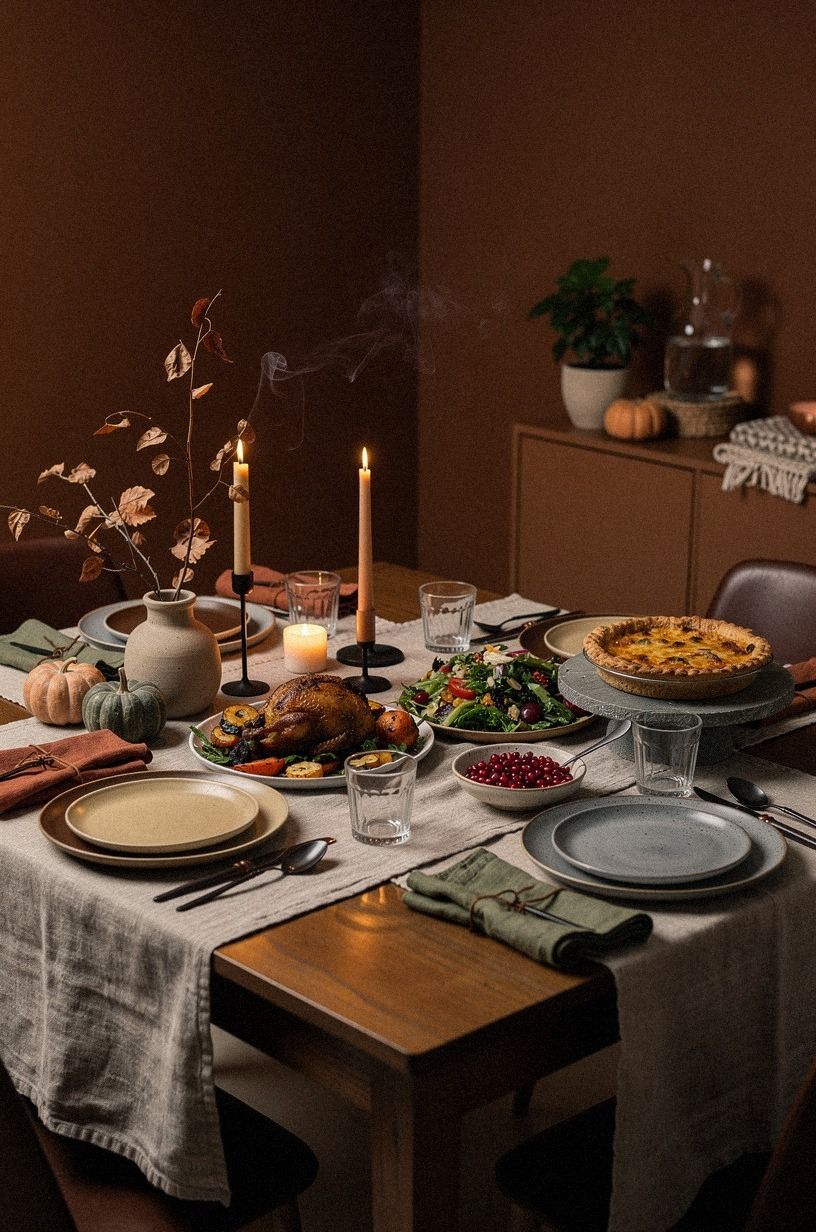
Paint the wall behind your table in a muted plum tone to create a strong backdrop without adding furniture. The color makes gray upholstery and rose-gold details feel richer, while a small piece of Carrara marble gives the table a clear visual anchor.
Your dining room will feel more polished if the surrounding walls stay quiet. Use rose-gold picture frames, a pale runner, and one framed print with soft mineral colors. I’d keep the artwork simple because a small room can’t handle a gallery wall that competes with the table.
And if your room opens into a hallway, use the plum color only on the dining wall. That boundary gives the hosting zone its own identity while keeping the rest of your home bright. The result feels sophisticated, not formal, especially when candlelight catches the pale gray and metallic accents.
The color also works beautifully with Carrara marble, gray upholstery, and creamy stoneware. If your existing furniture is mostly warm brown, test a cooler sample first. The plum has enough depth to make pale surfaces look unexpectedly sharp.
If you want to compare darker dining-room moods, these supper club dining room ideas offer useful direction without requiring a full renovation.
13Arrange a Three-Source Serving Station
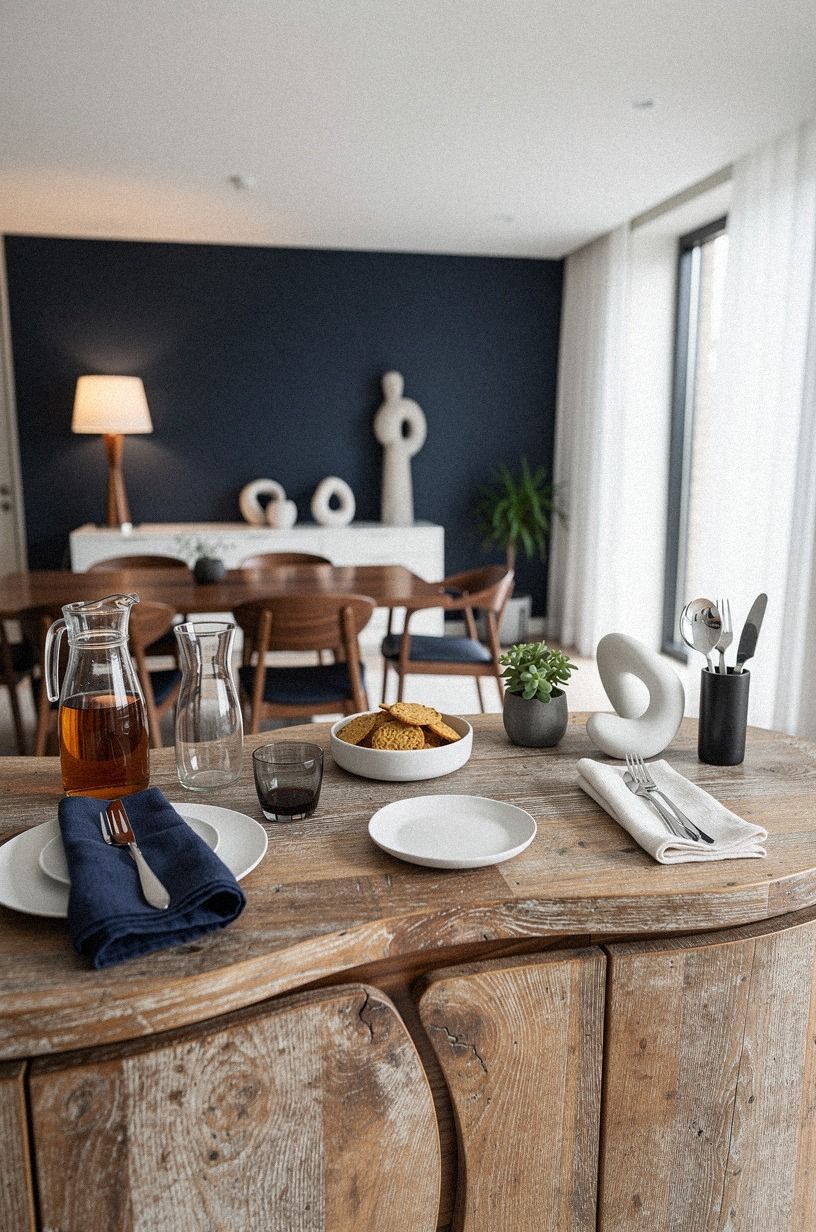
Set up three serving zones so guests don’t gather around one crowded corner. Keep the main dishes on the table, drinks on a slim shelf, and dessert on a separate surface in the kitchen or adjacent room. This keeps your small dining room moving.
A reclaimed weathered-teak bar cart can hold glasses and a water pitcher if you have the floor space. Otherwise, use a tray on a narrow console with white cotton napkins folded underneath. You’ll want the station close enough to reach, but not so close that guests block the doorway.
I’d keep drinks away from the table if your group tends to linger over dinner. It reduces elbow traffic and gives you a chance to refresh the room without interrupting conversation. For a stronger evening atmosphere, borrow ideas from these speakeasy dining room ideas for supper club vibes.
Put dessert somewhere guests can visit without crossing behind seated diners. A kitchen island, entry console, or rolling cart can all work. Add a second tray for used glasses so the serving area doesn’t become a pileup halfway through the evening.
If you’re working with a very compact layout, use vertical storage for the pieces that aren’t needed until later. Plates can stay on a lower shelf, while napkins, serving spoons, and water glasses remain within easy reach. These small dining room planning ideas can help you edit the station further.
14Choose the Empty-Corner Principle
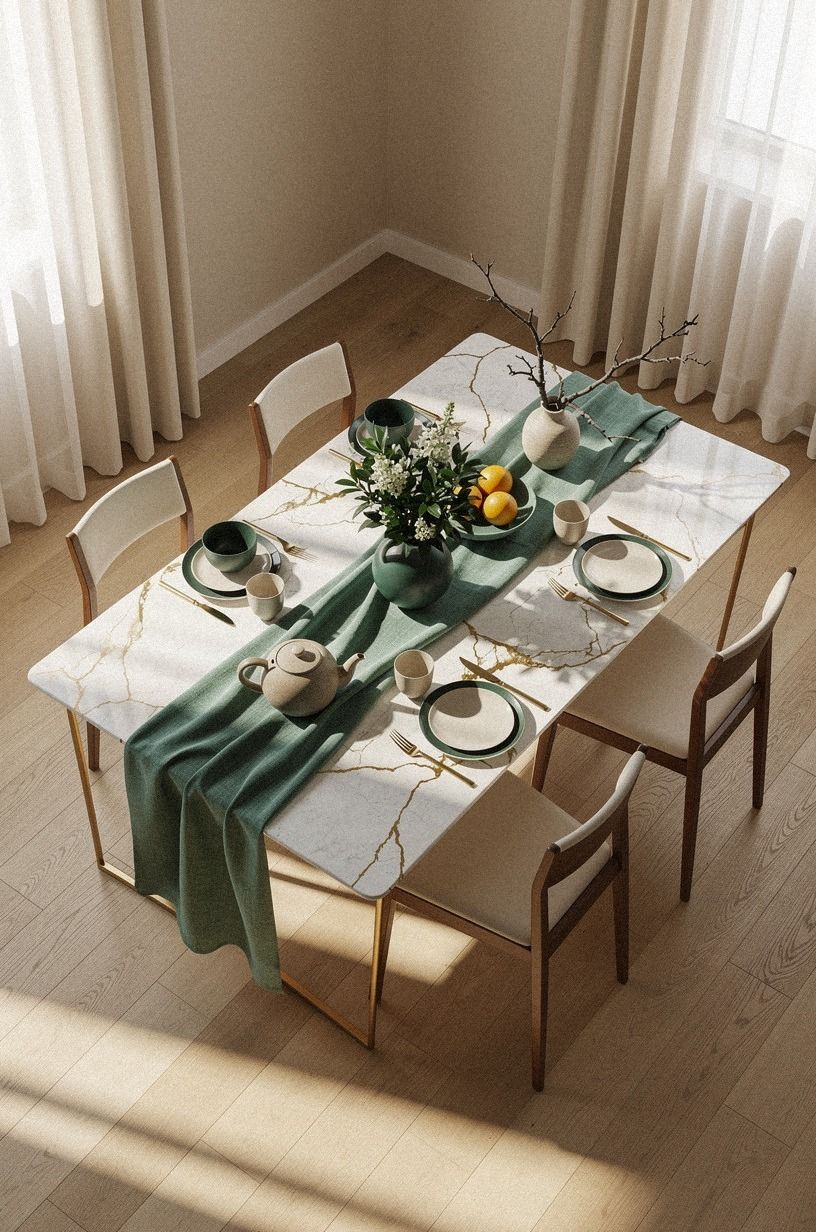
Leave one corner deliberately open instead of filling every inch with a plant, cabinet, or basket. The empty space gives your eye somewhere to rest, and it makes the occupied parts of the room feel more intentional. A small dining room doesn’t need decoration in every direction.
Use one tall olive tree or one sculptural floor lamp only if the corner stays outside the chair path. You’ll want the object to add height without becoming another obstacle. A quiet corner can also hold extra coats during dinner, which is far more useful than a crowded display.
This is where I’d resist the urge to add a bar cabinet. It sounds practical, but a bulky cabinet can make the room feel narrow and block your warmest light. If you want a moody entertaining zone elsewhere, these small whiskey room ideas for a big vibe in a tiny space offer better inspiration.
Try living with the empty corner for a week before deciding it needs something. You may discover that the open floor improves the room more than another decorative object could. Guests need somewhere to stand, turn, and pause.
If you do add a piece, choose something visually light. A Calacatta marble pedestal with subtle gold veining has less impact than a deep cabinet, especially when the corner sits near a doorway. The small-room entertaining guide is a useful final check before you fill the space.
15Layer the Table With Soft, Washable Textiles
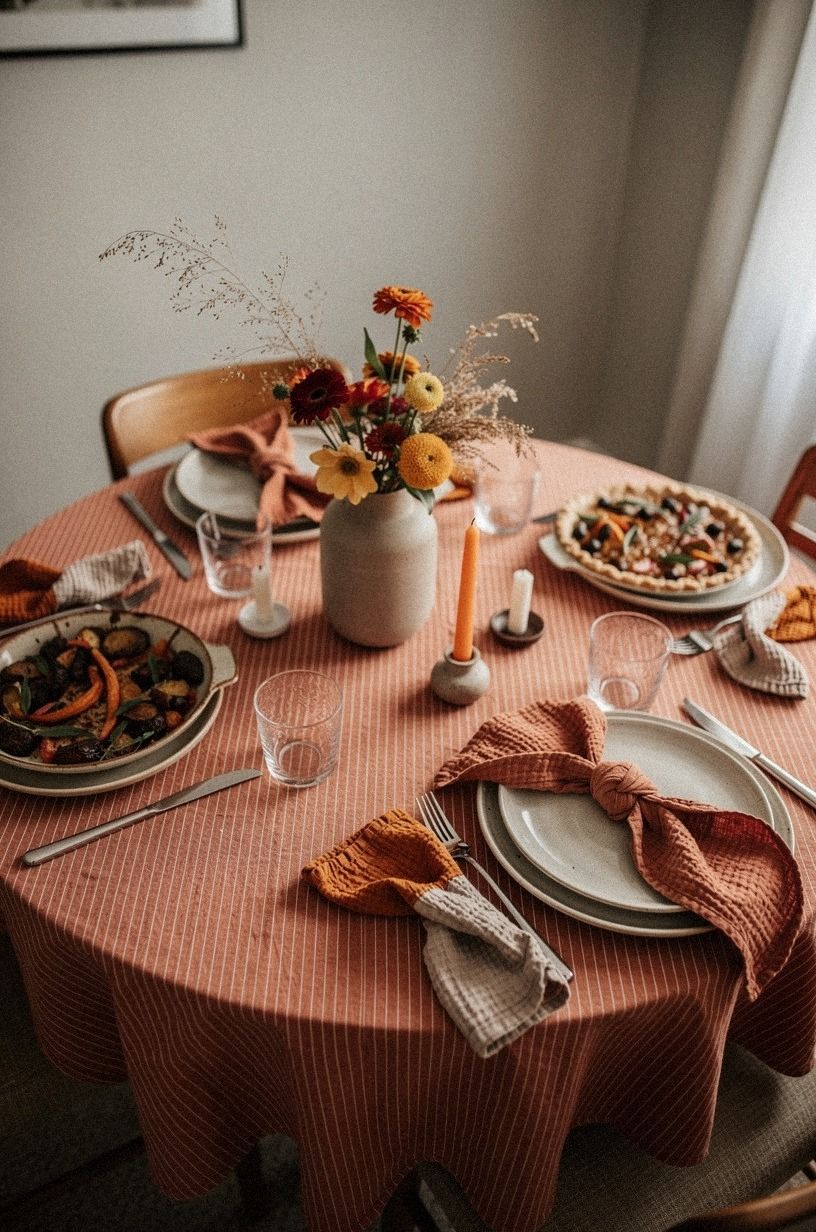
Finish your Friendsgiving table with washable textiles that add comfort without taking up space. Forest green, rust, and natural oak create a grounded palette, while cerused white oak adds texture without crowding the table.
What These Small-Room Choices Get Right
A small dining room doesn’t need to imitate a restaurant or pretend it can seat twenty people. It needs to make the people who are there feel close, comfortable, and unhurried. That’s the design goal I keep coming back to, especially for Friendsgiving, because the gathering matters more than the room’s square footage.
I’ve made the classic mistake of treating every empty corner as a styling emergency. I added a cabinet, a plant, and a basket, then wondered why the room felt tight. The fix wasn’t another clever object.
It was removing two of them and letting the table breathe.
Your best layout will probably have fewer pieces than you expect. A round table, a clear path, a low centerpiece, and one source of soft light can carry the whole evening.
If you’re deciding between a larger table and better circulation, choose circulation. Nobody remembers whether the table filled the wall, but everyone remembers whether they could sit down comfortably.
The same rule applies to color. Emerald green may feel bold beside a small window, while a sage ceiling may become too heavy if your room already lacks daylight.
Test both, then choose the one that makes your existing wood and upholstery look richer. You’re not decorating for a catalog.
You’re building a room where people will lean back, reach for another serving, and stay longer than planned.
For a second opinion on a tight seating arrangement, revisit these small dining room banquette mistakes before moving heavy furniture. If the table passes the five-minute chair test, you’re already solving the most important problem.
I’d spend first on circulation, then lighting, then the table surface. Paint and textiles can shift the mood dramatically, but they can’t rescue a chair that blocks the doorway.
A room feels generous when the practical decisions are generous too. And when the door opens and everyone can move easily, the layout has done its job!
The Questions I Get Asked Most
What is the best Friendsgiving hosting layout for a small dining room?
A round table with one clear walking lane is usually the best choice because it keeps conversation open and makes the room feel intimate. A slim serving unit or a simple upholstered chair can add function without crowding your floor. You’ll want every seat to have easy access.
Where can I buy Friendsgiving hosting pieces on a budget?
Look at IKEA, Wayfair, and Target first, then check Facebook Marketplace or a local thrift shop for solid wood tables and cane chairs. You can save more by using your own glasses, linens, and serving bowls. I’d spend on the table or lighting before decorative extras.
For more inspiration before shopping, compare the relaxed proportions in these small dining room entertaining ideas. The best purchase is usually the piece that improves movement, storage, or light.
How much does a Friendsgiving hosting makeover cost?
A small refresh typically costs about $100 to $300 if you already own the table and chairs. Paint, candles, textiles, and thrifted serving pieces can change the mood without replacing furniture. A larger project can cost much more, depending on whether you add a table, pendant, or sideboard.
Before buying a rug, use this dining room chair measurement guide to confirm the size. An inexpensive rug that fits properly will serve you better than a beautiful one that catches every chair leg.
Can I create a Friendsgiving hosting layout on a budget?
Yes, and you can start with three free changes: clear the traffic lane, remove unnecessary furniture, and group your serving pieces before guests arrive. Add affordable linen napkins, candles, or a thrifted bowl only after the layout works. Your room’s circulation matters more than new purchases.
If your current room still feels flat, adjust the lighting before replacing furniture. A portable lamp, warmer bulbs, and a few candles can create the welcoming mood you were trying to buy with decorative accessories.
Is a Friendsgiving hosting layout worth it in a small space?
Yes, because a small room can make conversation easier when the table and chairs are arranged well. Keep about 36 inches of chair clearance behind occupied seats and use a low centerpiece. You’ll create a warmer gathering because nobody is shouting across a long table.
If you want a more dramatic mood, these small whiskey room ideas for a big vibe show how contrast, low light, and restraint can make a compact room feel memorable.
Is Friendsgiving hosting a good idea for a rental?
Yes. Use removable hooks, a tension rod for Belgian flax linen curtains, peel-and-stick wallpaper on one small wall, and portable lamps instead of hardwired fixtures. You can create a welcoming room without permanent changes, and you’ll be able to take the best pieces with you later.
A narrow shelf, freestanding mirror, or small bar cart can also give you the function of built-ins without a construction project. Keep every piece easy to move when the lease ends.
Where I’d Start First
If I had to pick one, I’d start with the clear walking lane. You can’t make a small room feel generous while chairs block the door and serving traffic.
Move the furniture first, then add light, paint, and textiles. Pin this layout for later, and let the empty floor do some of the decorating.