Easy dining room centerpieces work for every gathering when scale, sightlines, and one repeated material do the heavy lifting. A vase, candle, bowl, or branch can carry the table without crowding plates or conversation. It’s less about buying more and more about choosing pieces that keep the table warm, useful, and ready for company.
- Anchor the table with an oversized ceramic vase
- Layer taper candles across a mirrored tray
- Arrange citrus in a sculptural wooden bowl
- Float seasonal branches in a low glass vessel
- Cluster bud vases along the table’s center
- Can art books carry a centerpiece?
- Repeat one color through flowers and linens
- Carve a moss runner beneath the place settings
Quick answer: Start with one anchor, repeat one color, and leave enough open space for serving dishes. You don’t need a matched collection. A thoughtful vessel, fresh branches, and flattering candlelight can make an ordinary meal feel special!
- Anchor the table with an oversized ceramic vase
- Layer taper candles across a mirrored tray
- Arrange citrus in a sculptural wooden bowl
- Float seasonal branches in a low glass vessel
- Cluster bud vases along the table’s center
- Can art books carry a centerpiece?
- Repeat one color through flowers and linens
- Carve a moss runner beneath the place settings
- Display sculptural candlesticks at staggered heights
- Fill a dough bowl with dried seed pods
- Weave eucalyptus through brass candleholders
- What can matching table lamps add?
- Build height with a tiered fruit stand
- Pair smoked glass vessels with white blooms
- A lantern and painted stones make an easy focal point
1Anchor the table with an oversized ceramic vase
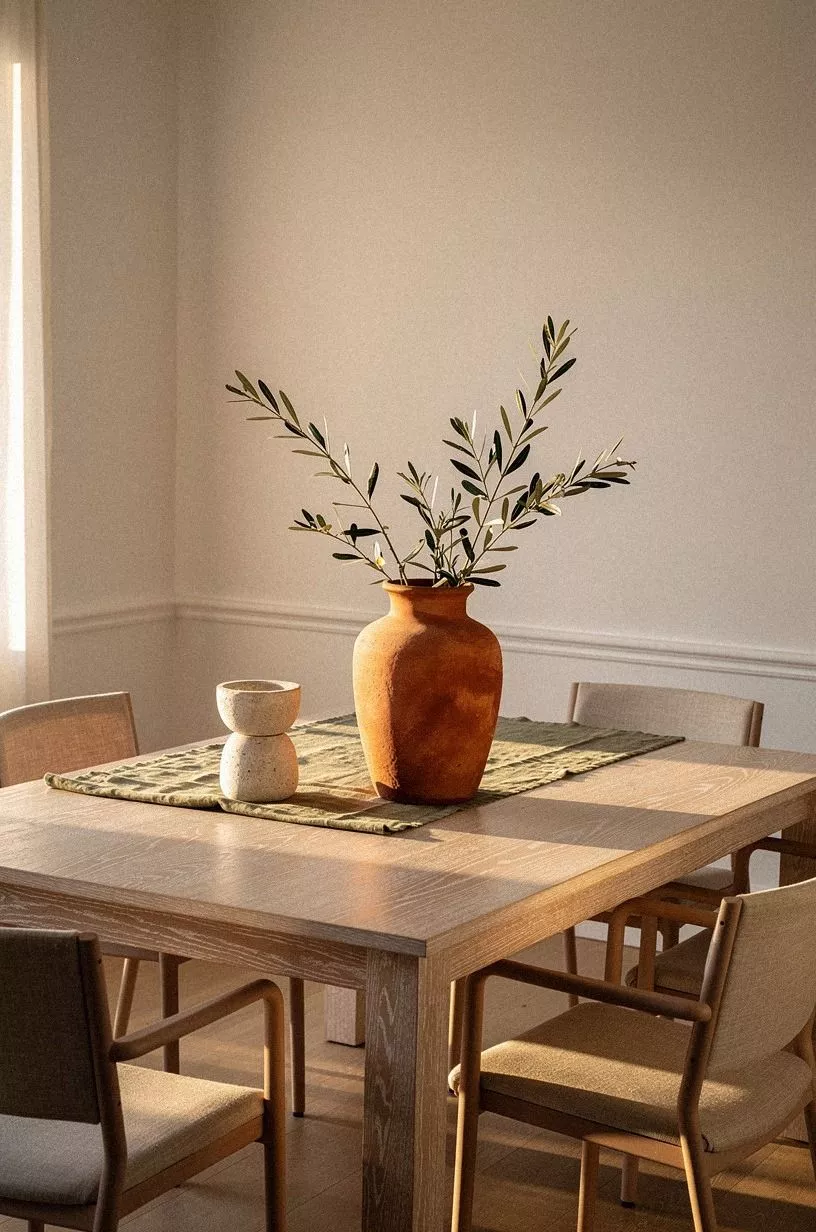
An oversized ceramic vase gives a dining room a clear center, especially when the table feels visually scattered. Choose a rounded vessel in terracotta, chalk, or warm stone, then keep the opening wide enough for olive branches or loose stems. It’s a confident choice for casual breakfasts and formal dinners because the shape holds attention without feeling fussy.
Keep the vase below eye level while seated, or choose a low arrangement inside a taller form. You’ll preserve conversation across the table while still giving the room a dramatic focal point. A vase with a softly irregular rim feels more collected than a perfectly uniform cylinder.
For the surrounding palette, pair cerused white oak with terracotta pottery, muted greenery, and pale stone accents. You don’t need matching pieces. A rough ceramic surface beside smooth wood grain gives the table texture without adding clutter.
Leave one clear lane for serving dishes. The centerpiece will feel intentional rather than staged, and guests won’t need to move it every time food arrives.
2Layer taper candles across a mirrored tray
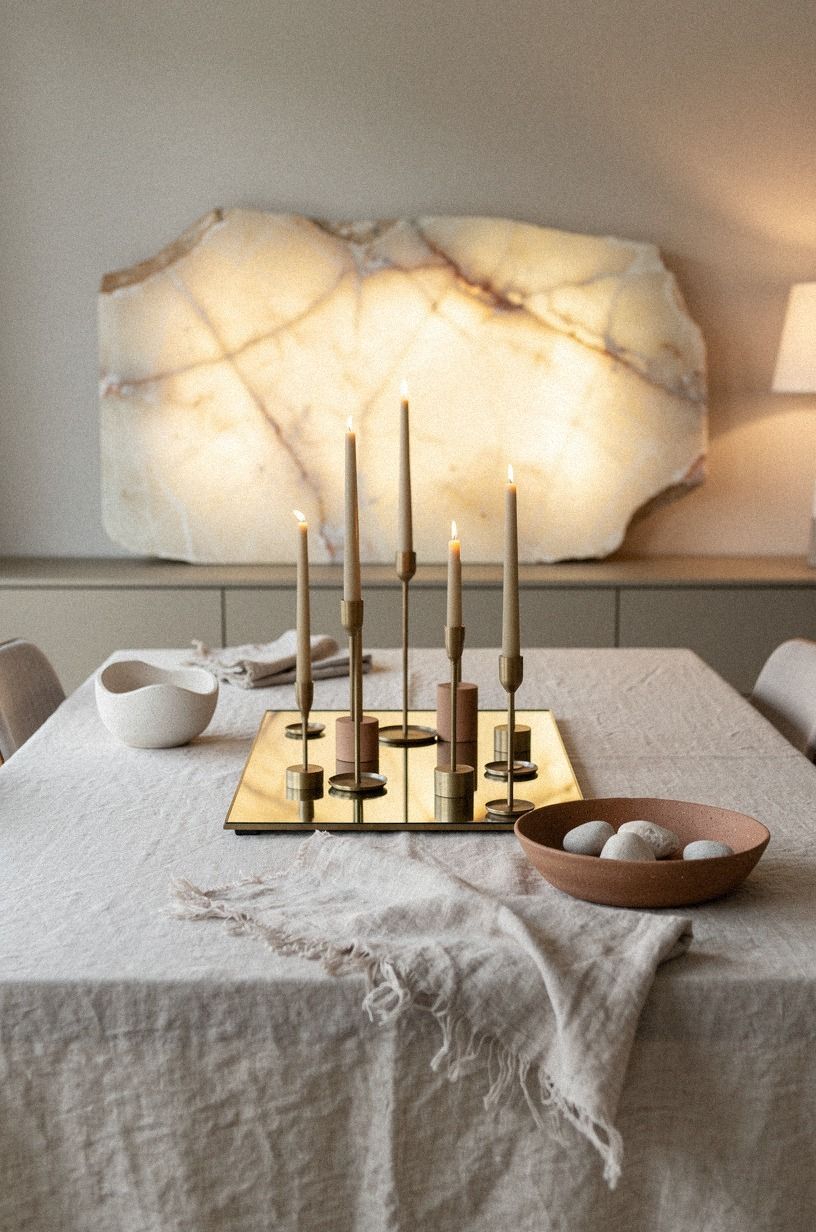
A mirrored tray turns several taper candles into one polished arrangement instead of a collection of loose objects. For a warmer interpretation, choose a tray or low base with backlit translucent onyx, then repeat clay, linen, and aged brass around it.
3Arrange citrus in a sculptural wooden bowl
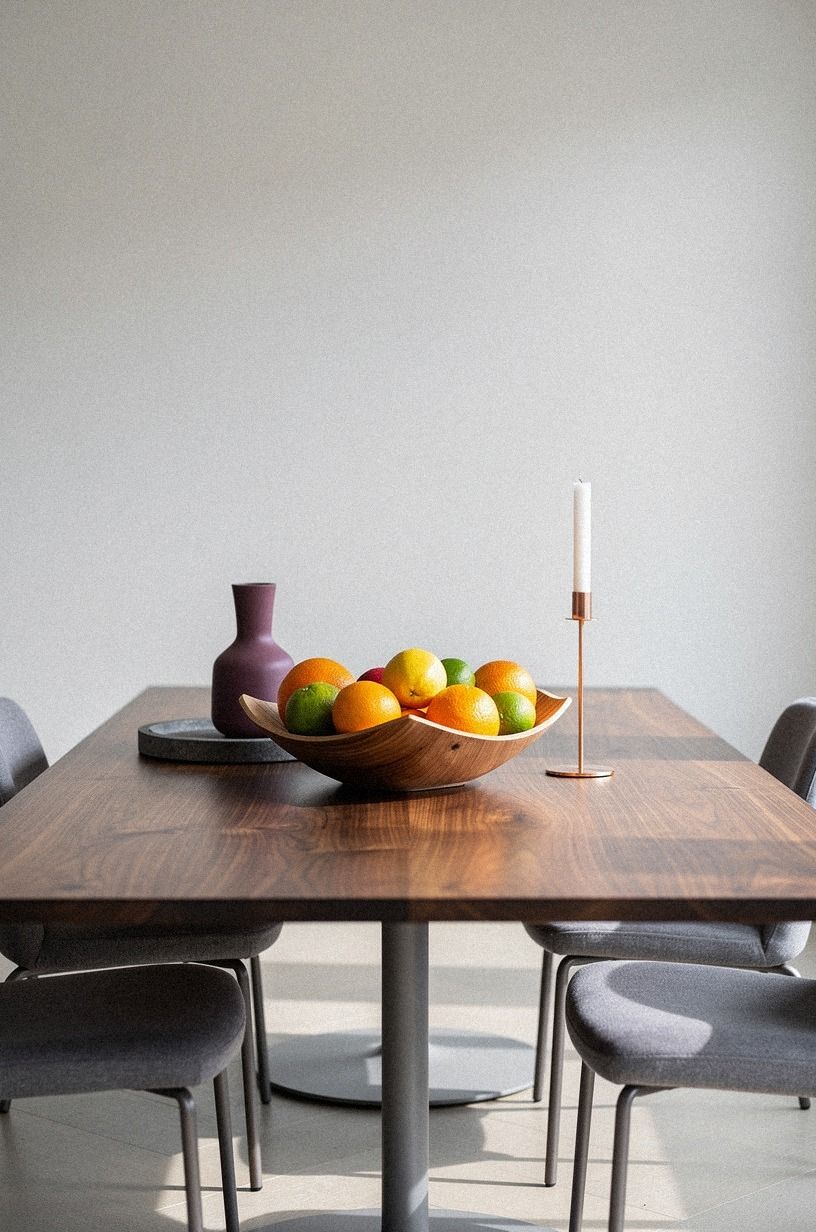
Citrus brings color, scent, and an easy seasonal rhythm to dining room decorating. A sculptural wooden bowl filled with lemons, blood oranges, or green pears creates a relaxed focal point, while a plum, gray, and rose-gold palette keeps the look more refined than a standard fruit bowl.
The display feels cheerful without becoming childish, and you’ll be able to refresh it in minutes. Choose fruit with varied shapes rather than identical pieces. A few leaves attached to stems can make grocery-store produce feel remarkably abundant.
The bowl should have enough visual weight to hold the center of the table. Choose book-matched walnut with a carved rim, then add folded linen napkins or one small rose-gold object beside it. Avoid filling the bowl to the top because overflowing fruit can block sightlines.
If you’re serving a large meal, move some fruit to a sideboard and keep the centerpiece low. A little negative space around the bowl makes the arrangement feel generous rather than crowded.
4Float seasonal branches in a low glass vessel
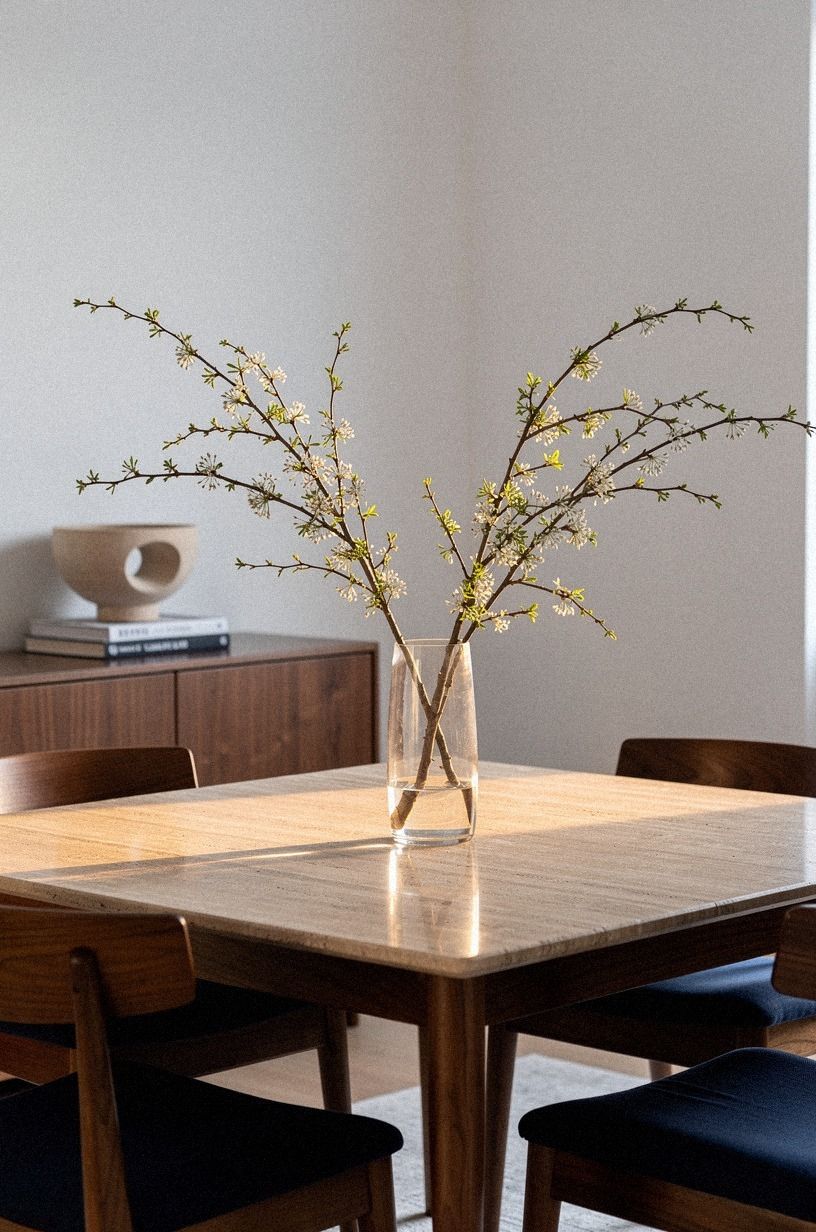
Seasonal branches create an airy centerpiece when you want height without a heavy arrangement. Use a low glass vessel with navy, white, and walnut accents, then let the branches spread sideways rather than straight upward. You’ll get movement from every seat, and the table won’t feel closed in by a dense bouquet.
Bare twigs can look more elegant than an overfilled vase. Try flowering quince in spring, leafy branches in summer, copper-toned foliage in autumn, or delicate evergreen stems during winter. The arrangement can change while the vessel stays constant.
Choose warm travertine nearby for a grounded finish, especially if the room already includes pale walls or dark furniture. The waterline should stay quiet, with only a few stems crossing it.
Don’t hide the vessel beneath greenery. The eye needs to see the glass, branches, and open space between them.
For another seasonal direction, browse these centerpieces for a long dining table.
5Cluster bud vases along the table’s center
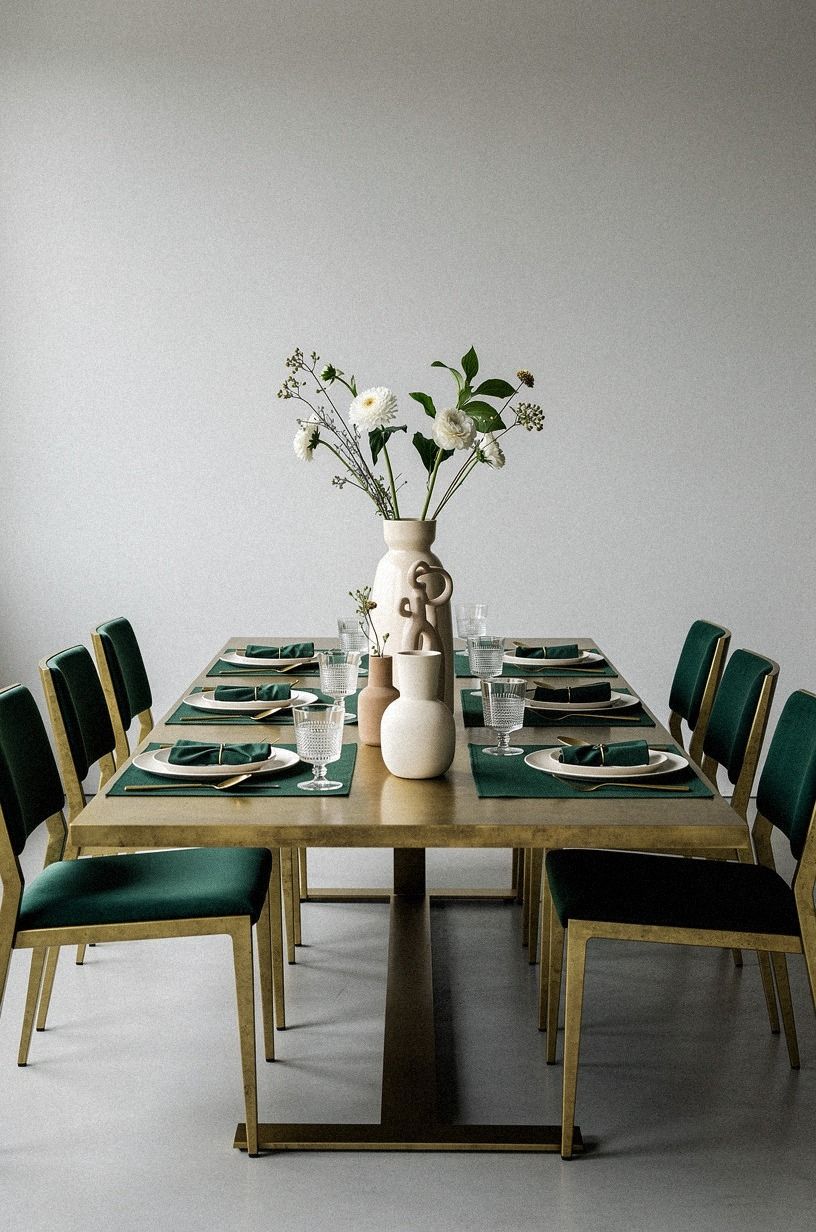
Small bud vases distribute flowers across the entire table without creating one bulky obstruction. Choose three, five, or seven vessels in varied heights, then repeat emerald through the flowers, napkins, or glassware.
This setup is flexible because each vase can shift when place settings change. You can’t easily make the arrangement feel too formal, especially when each vessel holds only one or two stems. Use clear glass for an airy effect, colored glass for richness, or ceramic miniatures for a more handcrafted mood.
Use unlacquered brass as the connecting detail between glass, greenery, and tableware. Your flowers can stay simple: one stem per vessel, a few leaves, and one deeper accent.
Don’t line the vases with mathematical precision. Stagger them gently so the table feels gathered rather than arranged by ruler.
A few inches between vessels will keep the display breathable. If the table is narrow, cluster the vases down the center rather than spreading them toward the place settings.
6Can art books carry a centerpiece?
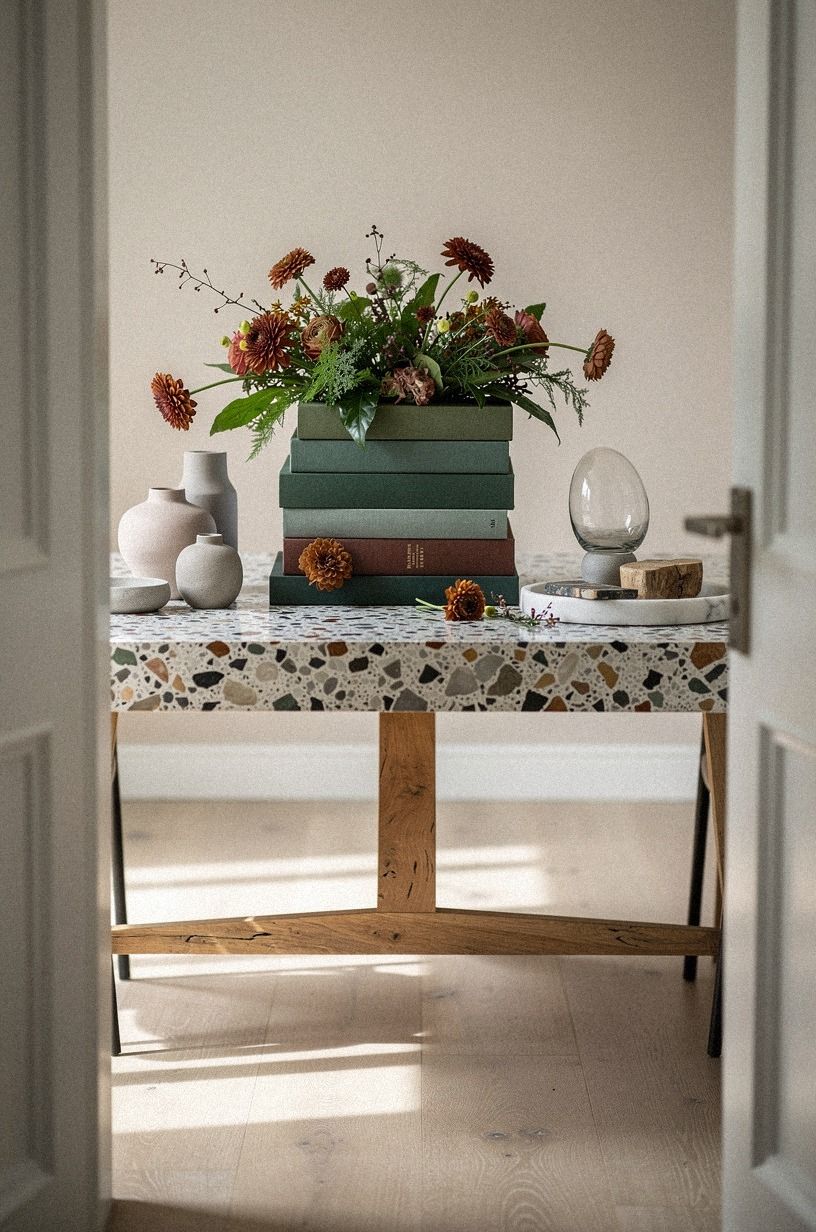
Yes, a stack of art books gives a table height, color, and a useful platform for a small vase. Forest green, rust, and natural oak create a grounded palette, while oversized-chip terrazzo can add a lively surface nearby.
7Repeat one color through flowers and linens
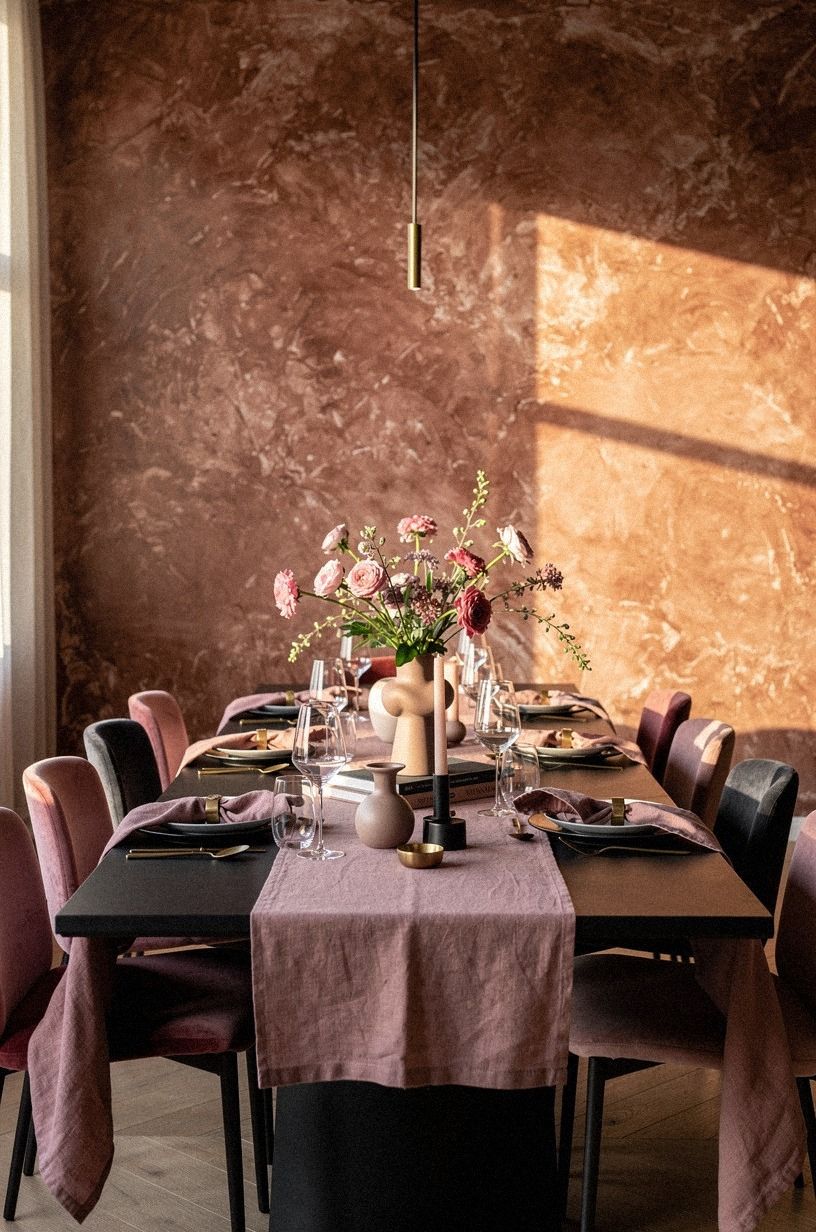
Repeating one color creates a harmonious centerpiece without requiring identical objects. Choose dusty rose, charcoal, or brass as the thread, then carry that shade through flowers, napkins, glassware, or one painted vessel.
It’s a quiet way to make separate pieces look related, and you’ll have more freedom to shop from different collections. The repeated tone can be subtle. A few dusty-rose petals, charcoal candleholders, and a brass rim may be enough.
Your repeated color doesn’t need to dominate the room. A restrained palette allows the accent to register clearly, especially beside hand-applied Venetian plaster or pale wood. Keep the remaining shades calm so the arrangement doesn’t become visually noisy.
Don’t match every item exactly. The table will look more sophisticated when the color shifts slightly from fabric to ceramic. A faded version beside a saturated version creates depth, contrast, and a more collected mood.
8Carve a moss runner beneath the place settings
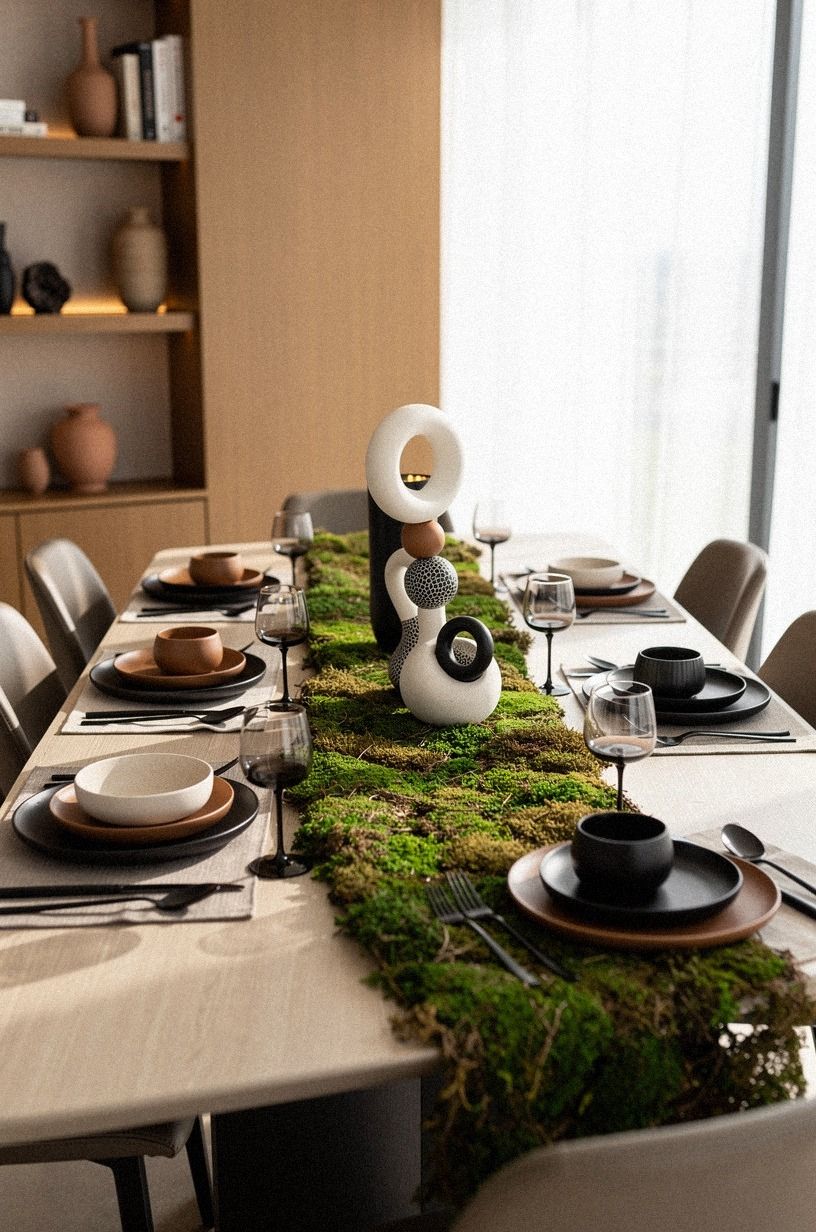
A moss runner creates a soft, organic line down the center of the table, especially when the palette includes warm white, camel, and black accents. Small shagreen accents on a tray or placemat can add a tactile finish without competing with the greenery.
9Display sculptural candlesticks at staggered heights
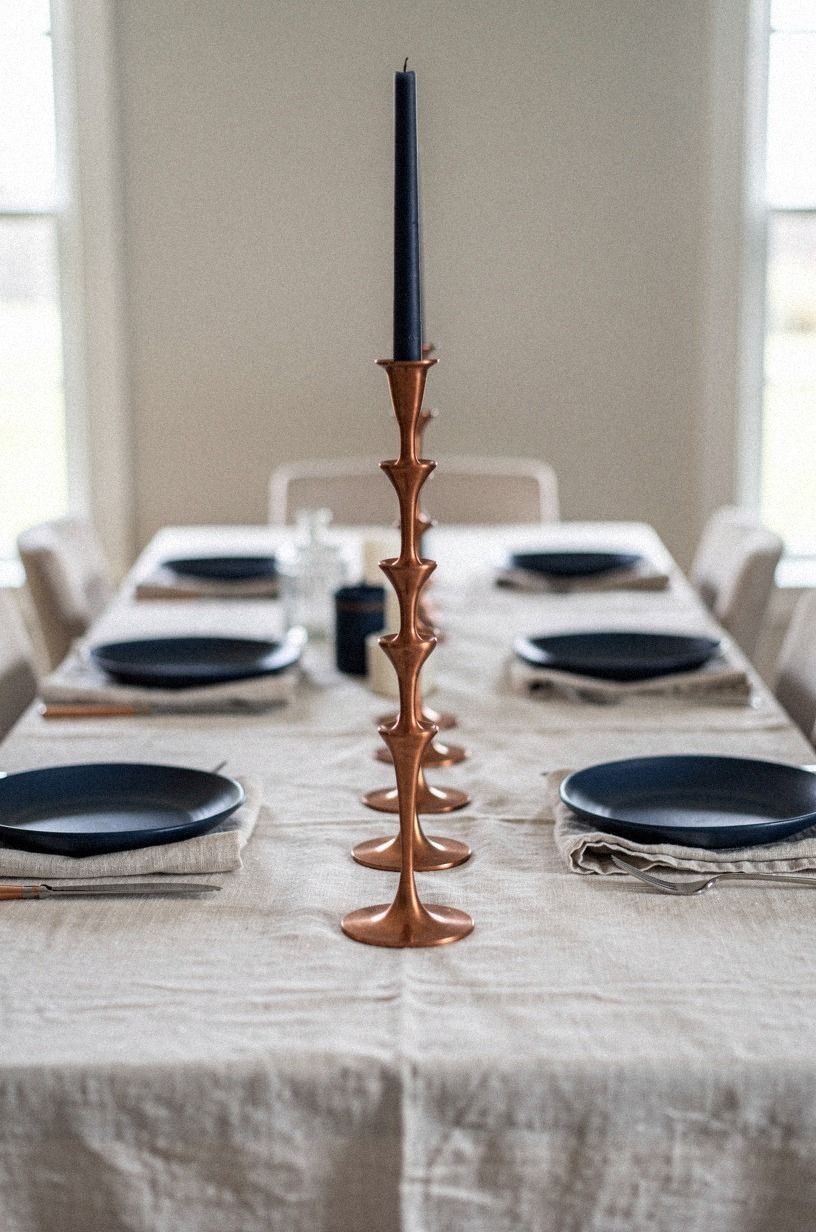
Staggered sculptural candlesticks make a centerpiece feel dramatic without requiring flowers. Choose midnight blue, copper, and ivory, then group holders in three different heights across a narrow tray.
You’ll create a strong silhouette when the lights are low, and the table will still feel open during daylight. The arrangement works best when every holder has a different profile but shares one finish or visual weight.
Use washed Belgian linen napkins to soften the copper and keep the ivory from feeling stark. The tallest candlestick should sit slightly off center, while shorter pieces create a visual path toward it.
Can a centerpiece feel dramatic without becoming difficult? Yes, if the shapes stay simple and the spacing remains generous. You can also use battery candles when open flames don’t suit the gathering.
Keep flames away from foliage, loose fabric, and passing sleeves. A stable tray makes the display easier to move, while wide bases help prevent accidental tipping.
10Fill a dough bowl with dried seed pods
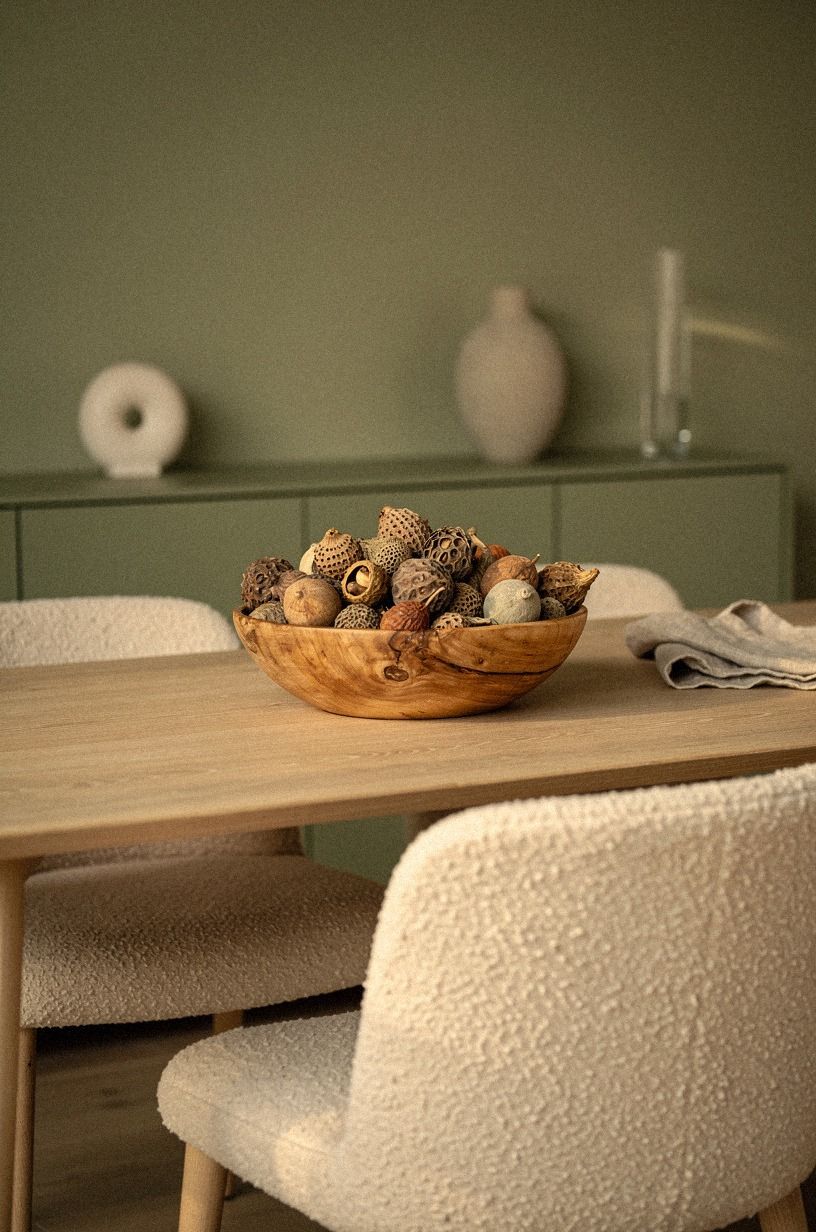
A dough bowl filled with dried seed pods gives the table an earthy centerpiece with very little upkeep. Choose sage green, warm cream, and natural wood, then let the pods rise loosely rather than forming a tight mound.
You’ll get dry texture, soft shadows, and a display that can remain in place between gatherings. It’s especially useful when fresh flowers feel too demanding or when the room already has plenty of color.
Look for organic bouclé on nearby chairs or a bench to connect the rough pods with a softer surface. The bowl should have a stable, flattened base, and its contents should stay below the seated eye line.
Don’t overfill it. Open wood around the pods gives the display a more refined finish, while a packed bowl can look heavy and dusty. A light shake outdoors keeps the arrangement fresh, and a shallow liner can protect the bowl from debris.
11Weave eucalyptus through brass candleholders
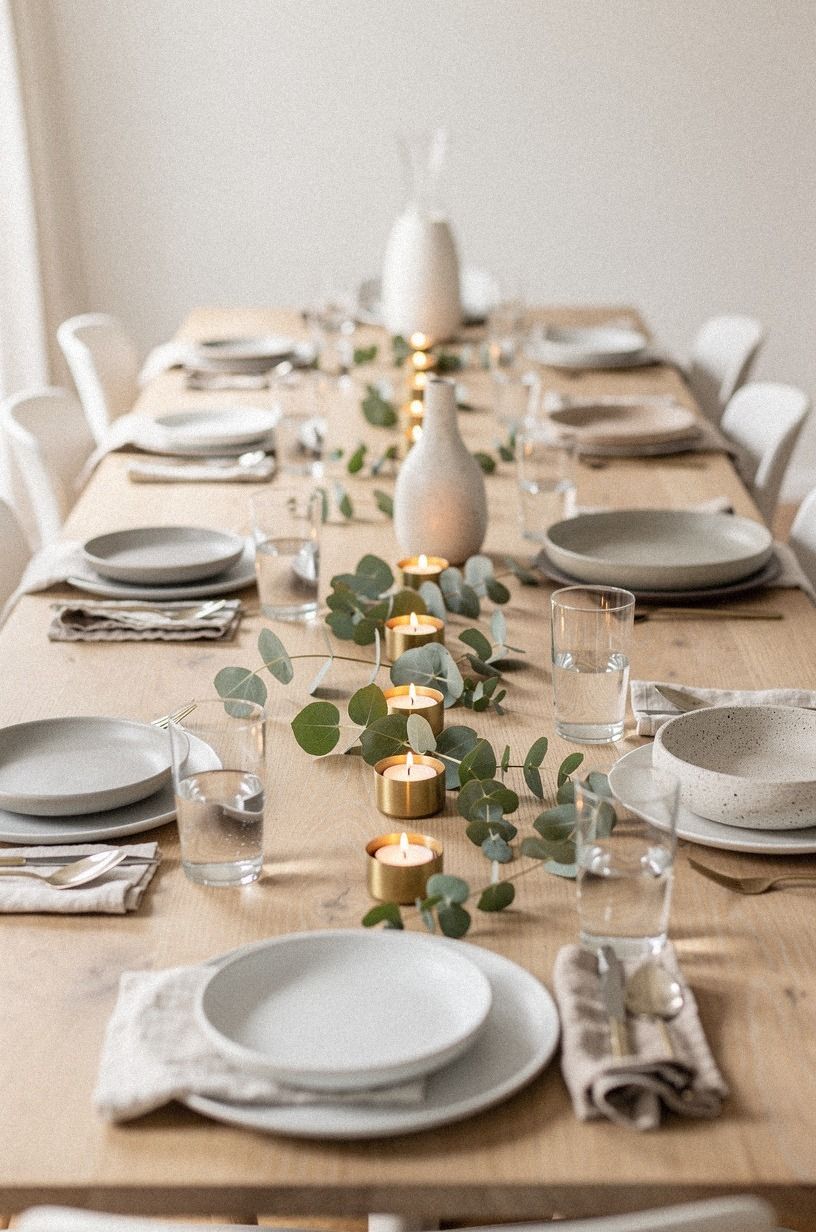
Eucalyptus and brass create a relaxed centerpiece with a gentle fragrance and a warm metallic edge. Lay the stems horizontally through candleholders instead of placing them upright, so the table remains open and guests can see one another.
You’ll get a long, flowing shape that works for dinner parties, brunch, and everyday meals. Fresh stems create a livelier effect, while preserved eucalyptus offers a longer-lasting option with a softer gray-green tone.
Use Nero Marquina black marble as a small tray or base, then repeat terracotta, stone, and olive tones through napkins and ceramics. The stems should stay clear of every flame. Trim branches so they don’t reach across plates or serving areas.
Don’t let the greenery become a solid hedge. Leave gaps where candlelight can move through the leaves. The negative space is what keeps this arrangement feeling relaxed instead of overgrown.
12What can matching table lamps add?
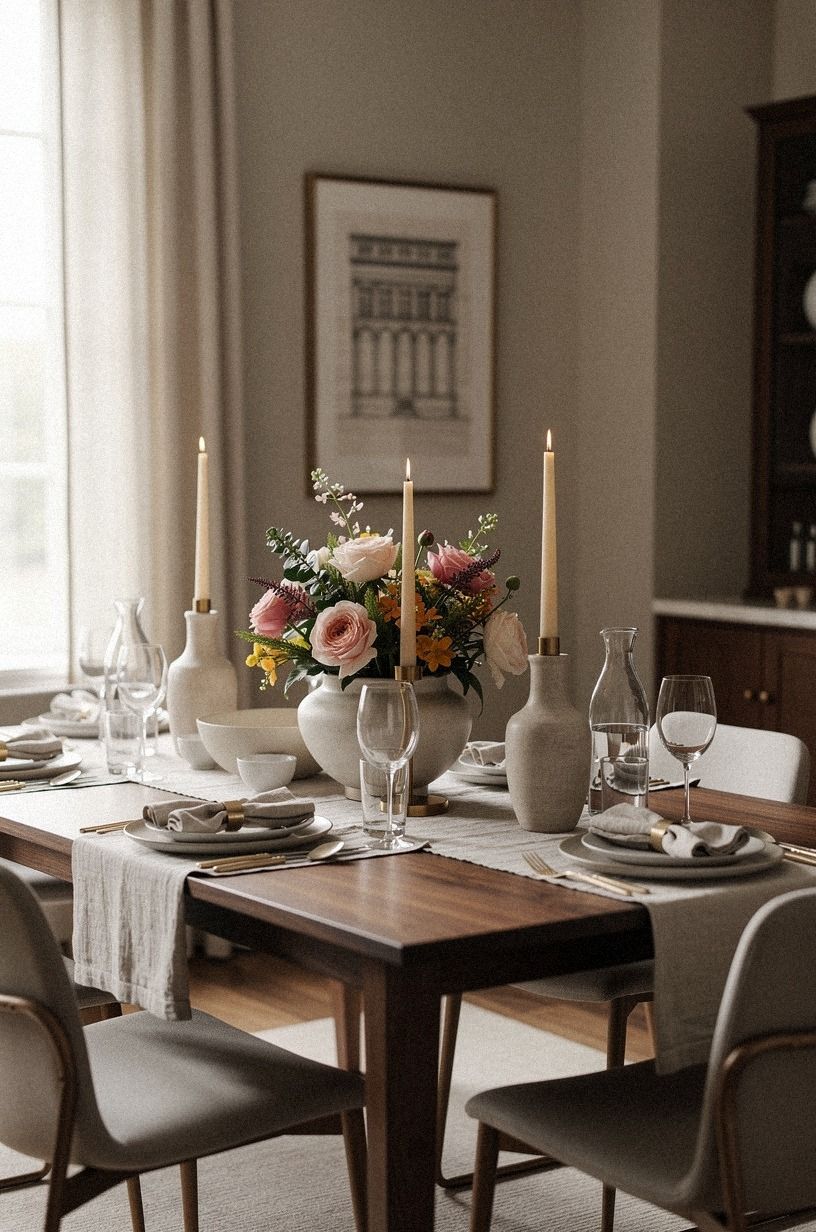
Matching table lamps can frame a centerpiece when a dining room has a broad sideboard or a large table that needs vertical balance. Clay, linen, and aged brass create a soft palette, while deep-pile mohair velvet adds depth through nearby seating or upholstery.
13Build height with a tiered fruit stand
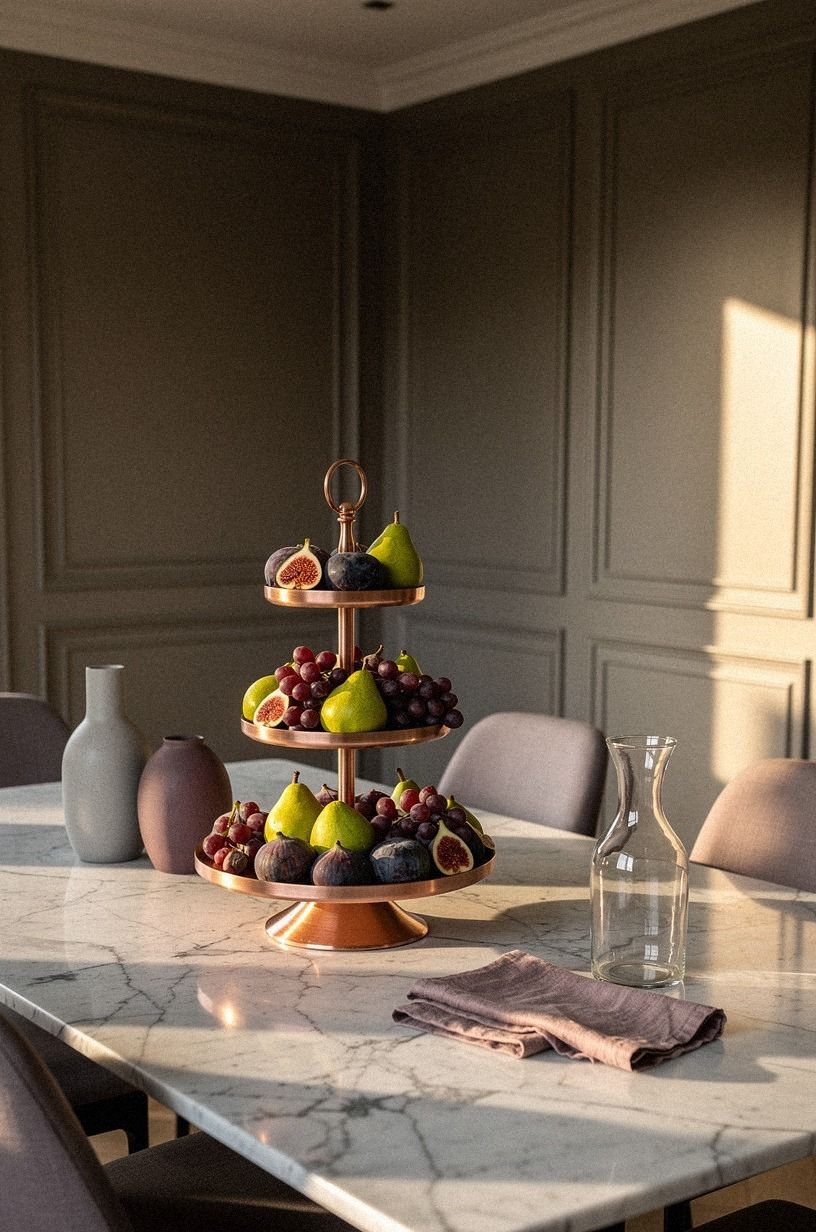
A tiered fruit stand gives the table height while keeping the footprint compact. Use plum, gray, and rose-gold tones, then place larger fruit on the bottom level and smaller pieces above.
You’ll create a sculptural display that feels generous without spreading across the entire table. It’s a practical option when the centerpiece needs to serve a purpose. Guests can reach the fruit easily, and the stand can move to a sideboard when dinner begins.
Choose Carrara marble with subtle gray veining for a nearby board or serving piece, then keep the fruit colors limited to two or three shades. A small branch or a few leaves can soften the geometry of the stand.
The stand should be stable before guests arrive, and each tier should remain easy to reach. Don’t stack fruit so high that it becomes the only thing the eye sees. Negative space around the base will make the whole table feel more polished.
14Pair smoked glass vessels with white blooms
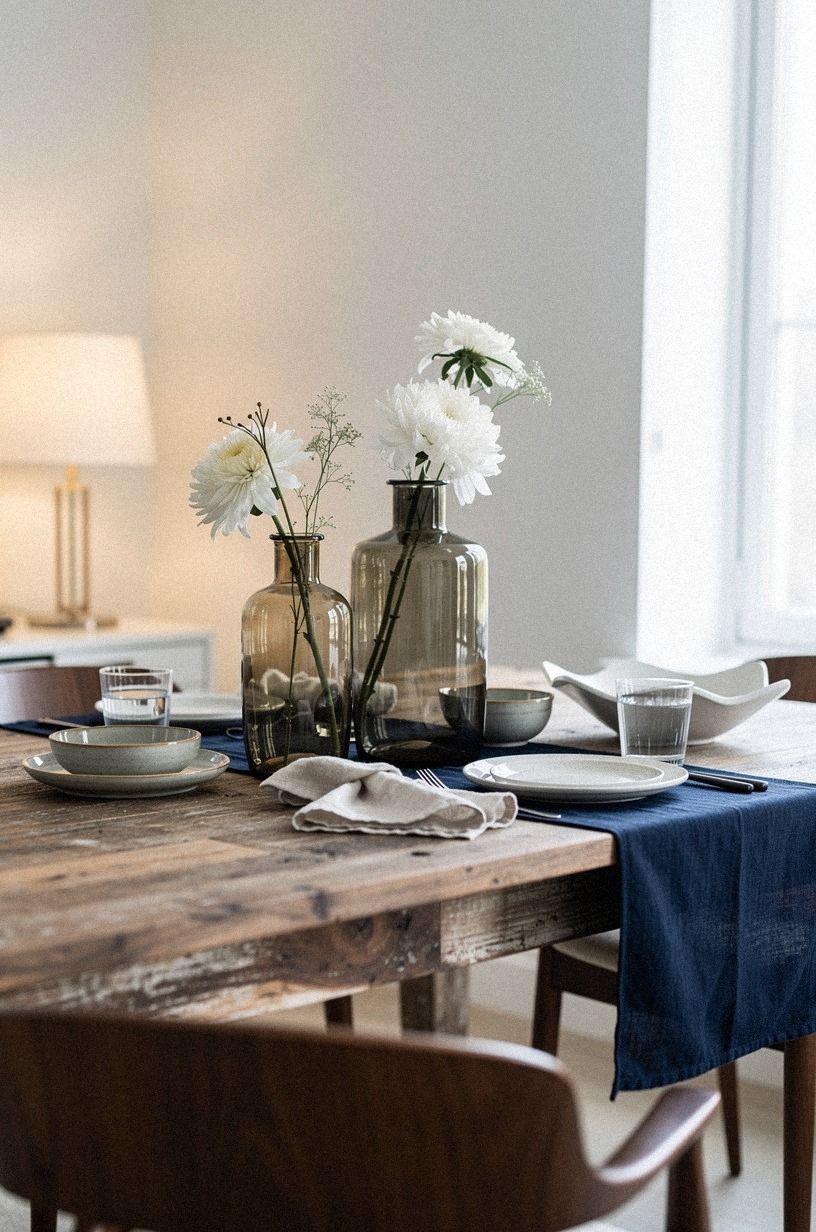
Smoked glass vessels give white blooms a moody backdrop, especially when navy, white, and walnut already appear in the room. Use two or three vessels with slightly different heights, then fill each with white flowers and a small amount of greenery.
You’ll get contrast without a loud color story, and the table will look refined in both daylight and candlelight. Ranunculus, tulips, anemones, and simple garden roses can all work, depending on the season.
Add reclaimed weathered teak through a tray, serving board, or nearby furniture to keep the glass from feeling too formal. The blooms can stay loose and slightly uneven, which makes the arrangement feel more welcoming.
Don’t use too many stems in each vessel. Transparency is part of the design, so leave enough room for water, stems, and visible shadow. Place the tallest vessel slightly away from the exact center for a more relaxed composition.
For an additional seasonal direction, browse these seasonal table centerpiece ideas.
15A lantern and painted stones make an easy focal point
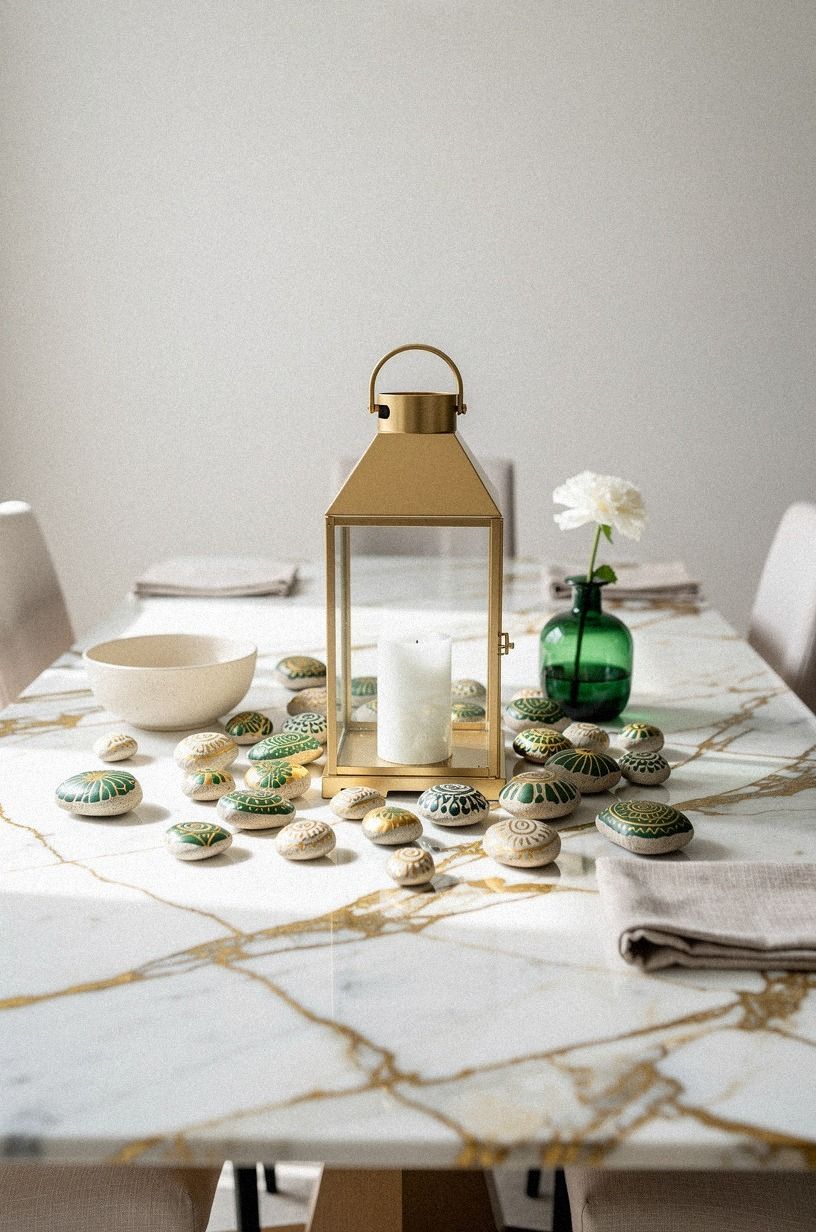
A single lantern creates a clear focal point, while painted stones keep the arrangement grounded and informal. Emerald, gold, and cream create a rich palette, and Calacatta marble with gold veining can echo the warm stone detail on a nearby tray or serving board.
The Single-Focal-Point Rule
The strongest dining table decorating usually begins with one object that deserves attention. That object might be a vase, lantern, bowl, or branch arrangement, but it shouldn’t compete with three other focal points. When one anchor leads the composition, every supporting detail has a clear job.
Scale matters just as much as color. A dining table is typically about 30 inches high, and each guest needs roughly 24 inches of table width. The centerpiece should respect those measurements so the arrangement supports conversation instead of interrupting it.
If a pendant hangs above the table, keep it around 30 to 36 inches above the surface. Chairs also need about 36 inches of clearance behind them, so a centerpiece shouldn’t force guests to pull furniture into a tight path. These practical measurements make the room feel comfortable before decorative details even enter the picture.
A restrained palette often feels more polished than a crowded one. Terracotta with olive, navy with walnut, or cream with brass gives the eye a repeated rhythm.
You don’t need every item to match. A rough vessel, smooth tray, and soft linen napkin can belong together when the colors repeat.
That’s why the single-focal-point rule works for both a casual weeknight meal and a formal gathering. The table stays useful, and the design still has a clear point of view.
The Questions Worth Answering First
What works best as a dining room centerpiece for a small dining room?
A low ceramic bowl, a narrow bud-vase cluster, or a compact tray arrangement works well because each keeps the center contained. You’ll preserve sightlines and serving space while adding visual warmth. Choose one strong shape, and don’t let the centerpiece spread wider than the place settings.
Where can dining room centerpiece pieces be found on a budget?
Thrift shops, home-goods retailers, local markets, and resale platforms offer useful vessels, trays, candlesticks, and bowls. You can often find budget-friendly texture in secondhand wood or ceramic pieces. If a finish feels dated, check the surface first, then pair it with fresh linen or branches instead of replacing everything.
How much does a dining room centerpiece refresh cost?
A centerpiece refresh can cost about $30 to $300, although free branches, existing books, fruit, and borrowed candleholders can lower the total. You’ll spend more when adding premium marble, handmade ceramics, or several new vessels. A full dining room makeover isn’t necessary for a memorable table.
Can a dining room centerpiece work on a budget?
Yes, and free branches, grocery-store citrus, thrifted bowls, and reused glassware can create a strong arrangement. You don’t need a matching collection.
Choose one color, one material, and one focal shape, then use items already available at home. A modest linen runner can change the setting more than several small decorations.
Is a dining room centerpiece worthwhile in a small space?
Yes, because a small table benefits from one clear focal point rather than many scattered accessories. You’ll make the room feel considered without using floor area. Choose a low vase or compact lantern, then keep about 24 inches of width available for each guest so the setting stays comfortable.
Is a dining room centerpiece a good idea for a rental?
Yes, especially when you choose removable and surface-safe pieces. A smoked glass vessel, thrifted bowl, battery lantern, or portable lamp can add character without permanent changes.
You won’t need adhesive materials for the table itself. Focus on objects that can move with the household when the lease ends.
Where to Start First
If one choice comes first, start with the oversized ceramic vase. Its broad shape anchors the table without blocking faces, and the terracotta tone works with fall greens or summer citrus. Keep the rest of the table open, then add only one supporting detail that earns its place.