
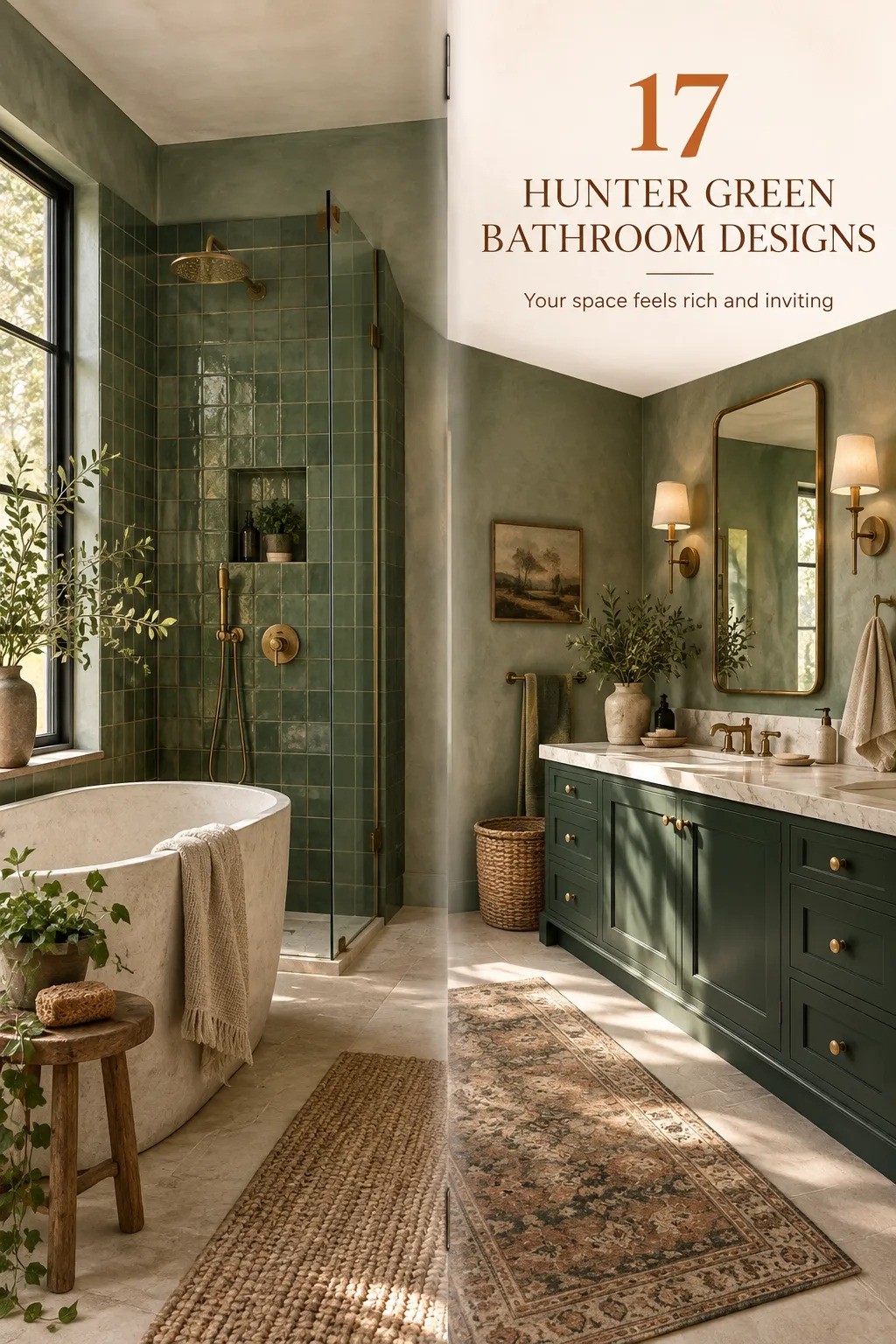
Hunter green bathroom ideas can add timeless depth with paint, lighting, and hardware, without a full renovation. I once painted every wall dark green before testing the daylight, and the room felt like a cave by noon. Now I use contrast, reflective surfaces, and one warm material. The difference is immediate!
- Paint one wall with the Depth Anchor
- Layer the Hunter Green Paint Band
- Use the Two-Wood Rule for Warmth
- Which Hunter Green Bathroom Paint Works Best in Low Light?
- Swap Chrome for Aged Brass
- Build the Three-Height Light Stack
- Frame the Mirror With Hunter Green Bathroom Ideas Decor
- Float a Vanity Instead of Filling the Floor
- Hang Linen Above the Tub
- Mix Green Tile With Pale Grout
- Can a Small Bathroom Handle a Dark Green Theme?
- Pair Hunter Green With Soft Stone
- Paint the Ceiling for a Cocoon Effect
- Layer Towels Like a Boutique Hotel
- Price the Hunter Green Bathroom Paint Refresh
- Should You Choose Hunter Green Over Forest Green?
- Finish With One Living Detail
1Paint one wall with the Depth Anchor
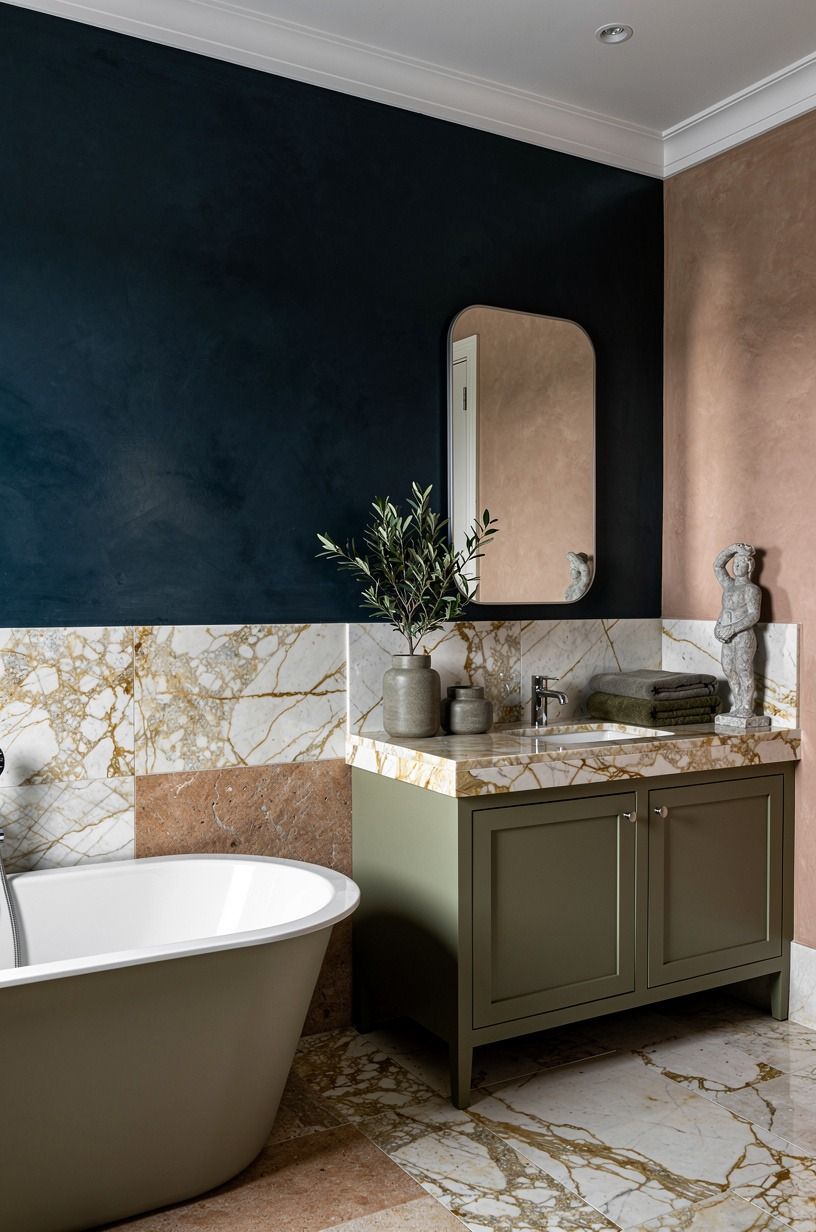
A single hunter green wall gives your bathroom a focal point without making the whole room feel heavy. Choose the wall behind the vanity or tub, then leave the remaining walls in a warm white. Farrow & Ball Studio Green creates the same moody, earthy depth when paired with Calacatta marble with gold veining and small terracotta or olive accents.
You’ll want to sample it beside the floor before committing.
Your eye needs a stopping point, especially in a narrow bathroom. A green wall behind the mirror makes the vanity feel intentional, while pale stone keeps the room airy.
I’d skip painting the smallest wall unless it holds the main fixture. That choice can make your proportions look chopped up.
Use a sample board rather than a tiny paint square. Watch it in morning light, afternoon light, and under the fixture you’ll use at night. If you’re comparing more deep-green rooms, this moody deep green bathroom shows how one dark plane can carry the whole scheme.
2Layer the Hunter Green Paint Band
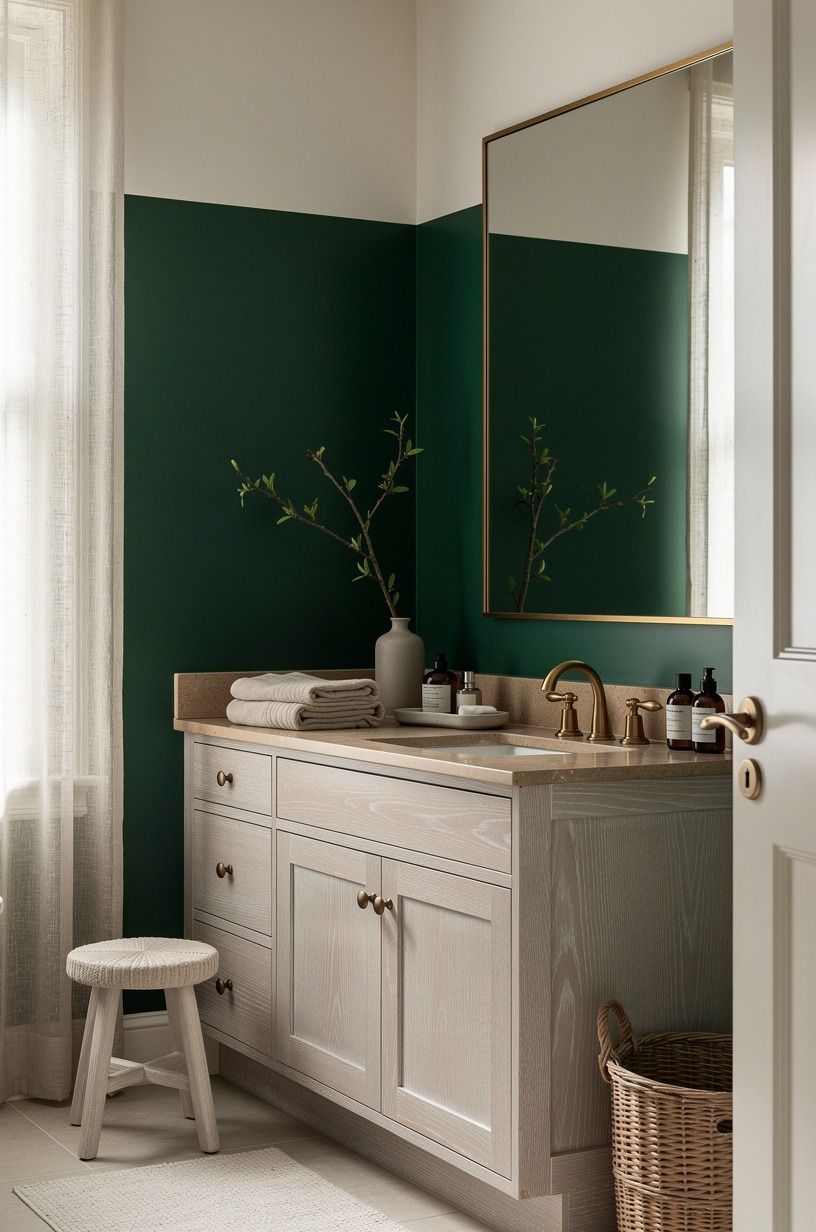
A painted band around the room gives you hunter green bathroom paint without covering every inch of wall.
3Use the Two-Wood Rule for Warmth
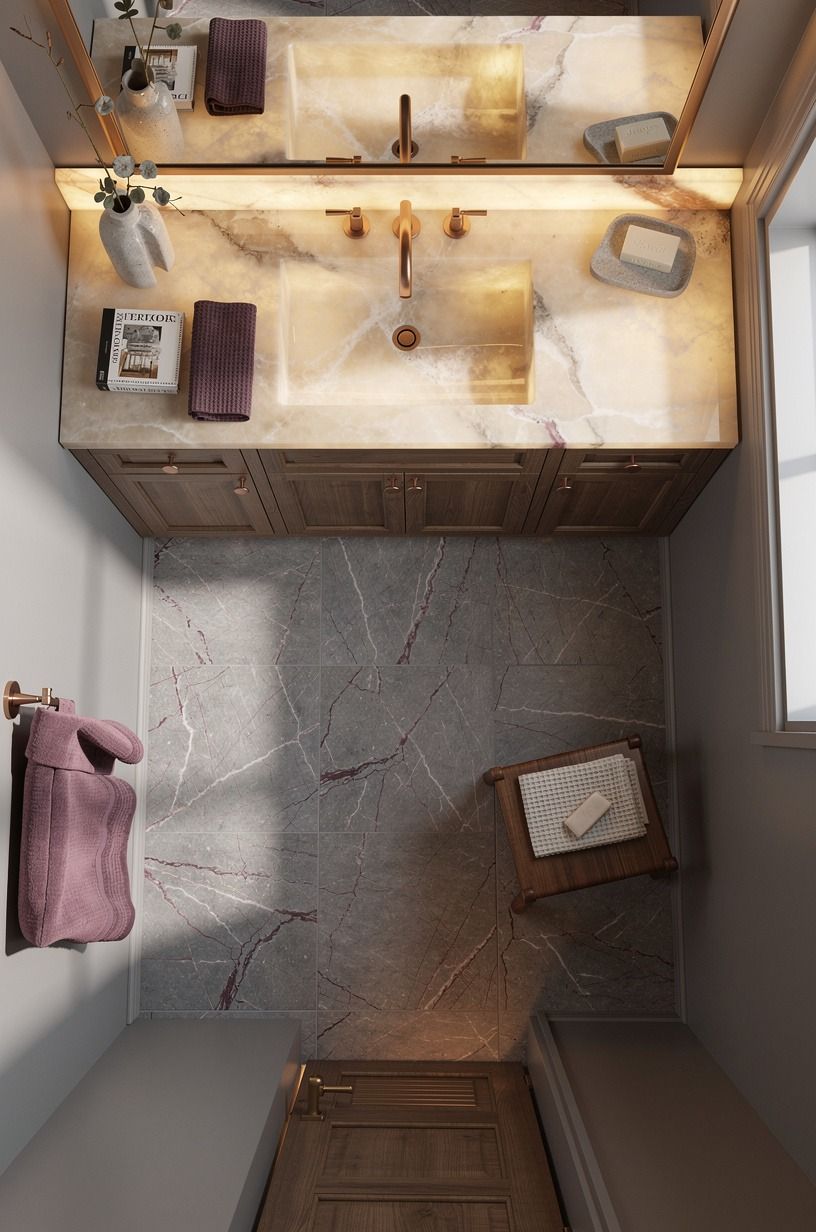
Hunter green needs a warm counterpoint, and wood is the easiest answer. The Two-Wood Rule keeps your bathroom from looking like a showroom: use one pale grain and one deeper accent, then let backlit translucent onyx supply a luminous counterpoint. You’ll get texture without adding another loud color.
Try a light oak vanity with a darker wood stool or framed mirror. IKEA HEMNES can work as a practical starting point if you prefer a painted vanity, though I’d avoid matching every wood object. Plum accents, grey textiles, and a rose-gold detail keep the room from feeling staged.
Your room doesn’t need a full wood makeover. A teak bath mat, an oak frame, and one small stool may be enough. I made the mistake of adding three dark baskets beside a green vanity, and the corner swallowed light.
Keep the floor area open, then let the grain catch the soft glow.
4Which Hunter Green Bathroom Paint Works Best in Low Light?
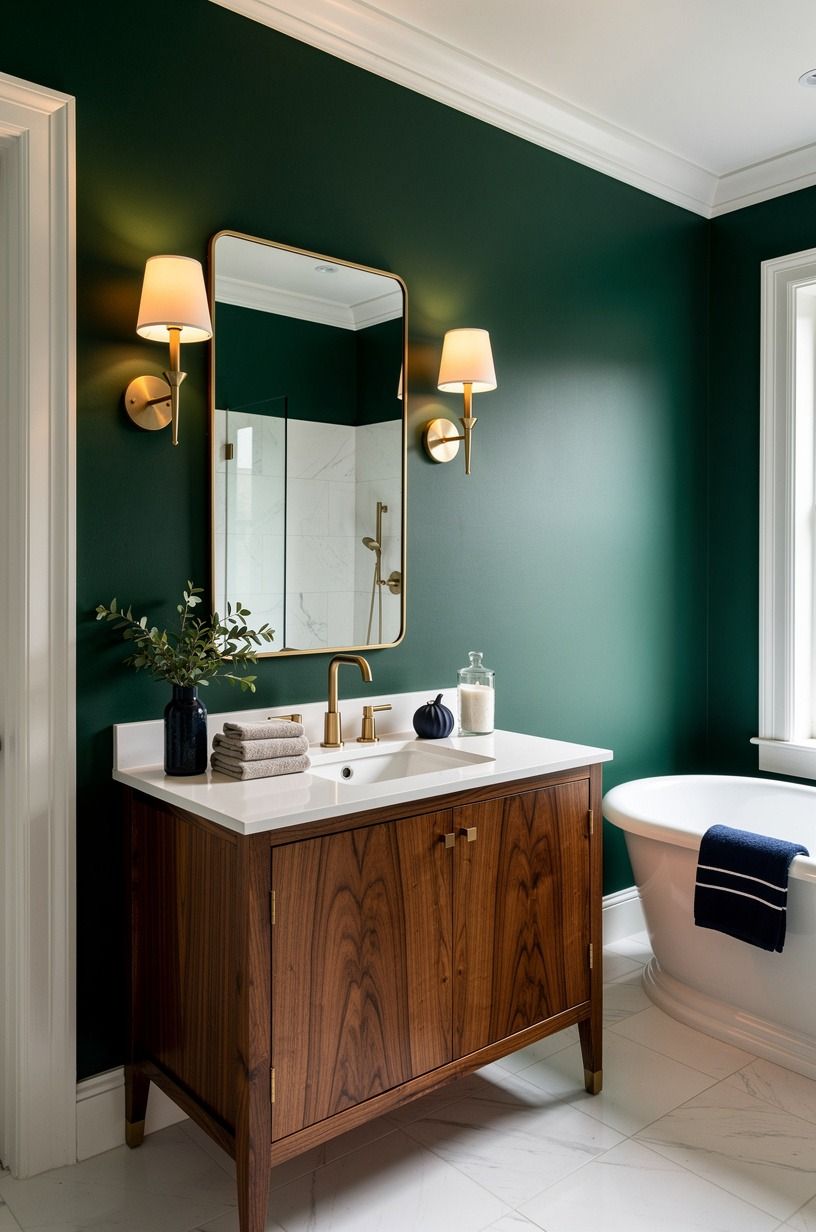
In a low-light bathroom, the best hunter green bathroom paint is one with enough blue or gray to avoid looking flat. Pair it with book-matched walnut on the vanity or storage wall, then keep white nearby to reflect what little light you have.
Why make the whole room fight for brightness? Your ceiling should stay warm white, and your trim should avoid a cold, bright blue-white.
I’d skip a flat black ceiling here. It may look dramatic in a dark scheme, but it can press down on a small room.
Use a satin or washable eggshell finish on painted walls, following the product’s bathroom guidance. A soft sheen catches light across the wall without creating glare. If you want another dark comparison, this forest green bathroom guide shows how earthy color can stay relaxing rather than gloomy.
5Swap Chrome for Aged Brass
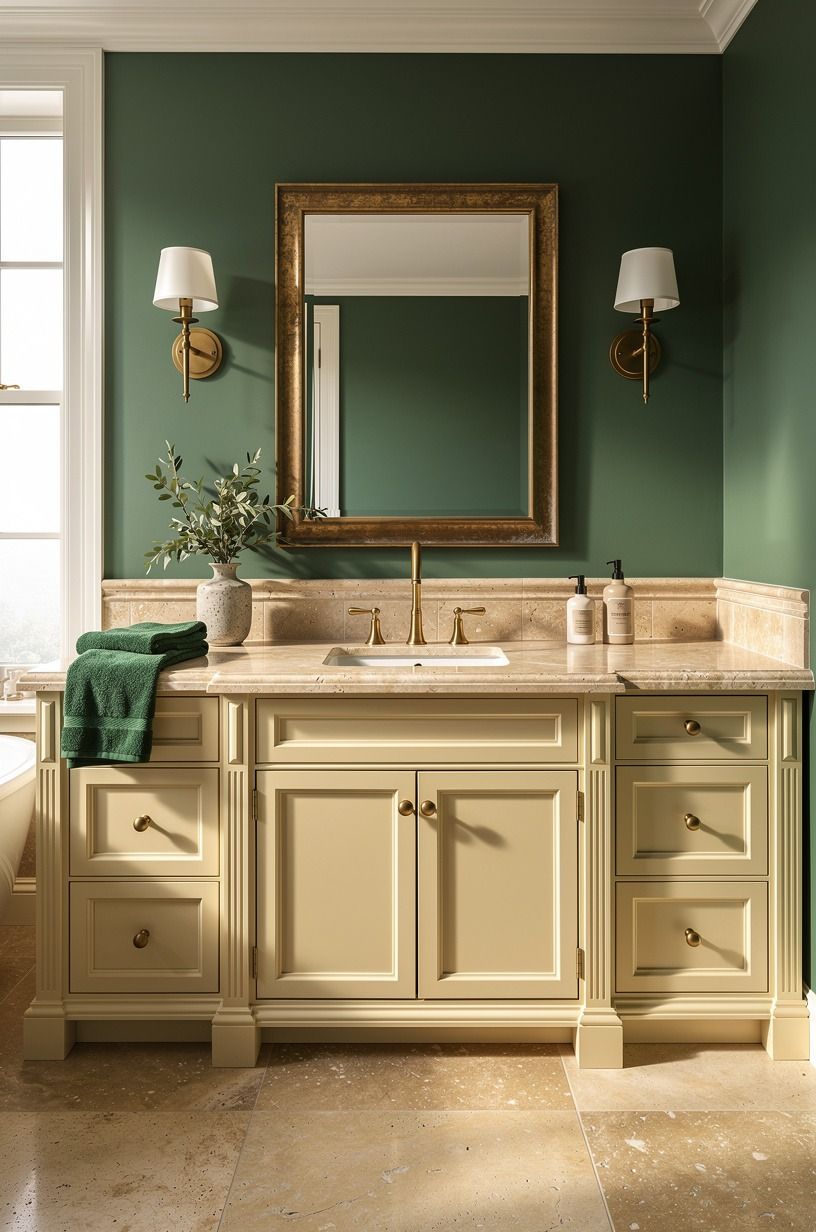
Aged brass gives hunter green a warm, collected edge, especially when your existing fixtures are cool chrome. Pair the gold tone with cream surfaces or emerald accents so the metal feels intentional rather than overly shiny.
6Build the Three-Height Light Stack
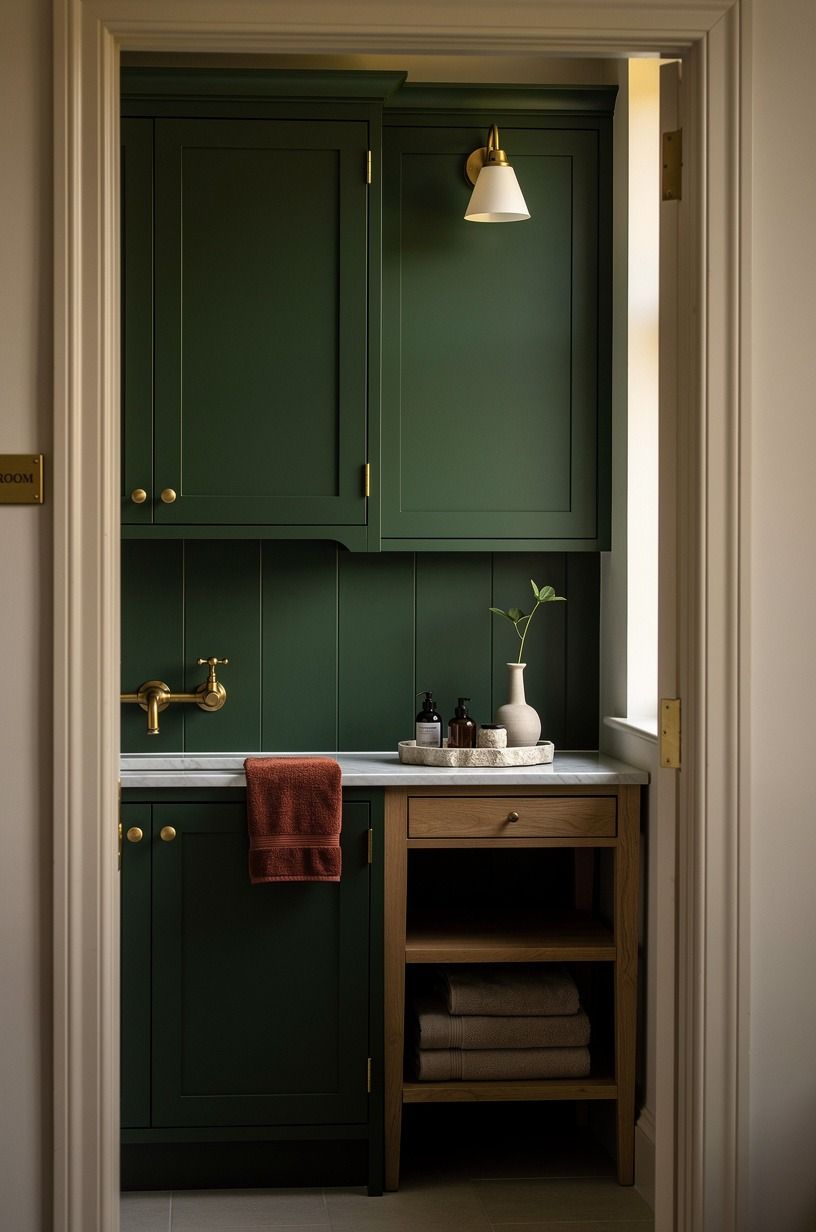
The Three-Height Light Stack uses ceiling light, eye-level light, and low-level glow. Your ceiling fixture handles routine tasks, sconces brighten your face, and a small lamp or candle adds a gentle pool near the floor. Warm dimmable bulbs and unlacquered brass developing a natural patina keep forest green, rust, and natural oak feeling warm.
Place sconces beside the mirror when possible instead of directly above it. You’ll see fewer shadows under your eyes, and the wall color will look richer around the glass. I tested a single overhead fixture in a green bathroom, and every corner looked muddy after sunset.
A plug-in wall light can work in a rental, while hardwired sconces make sense during a larger update. Your mirror should still have enough clear viewing area, and your vanity should remain practical. If you’re reworking the room’s glow, this black and green bathroom pairing has useful contrast ideas.
7Frame the Mirror With Hunter Green Bathroom Ideas Decor
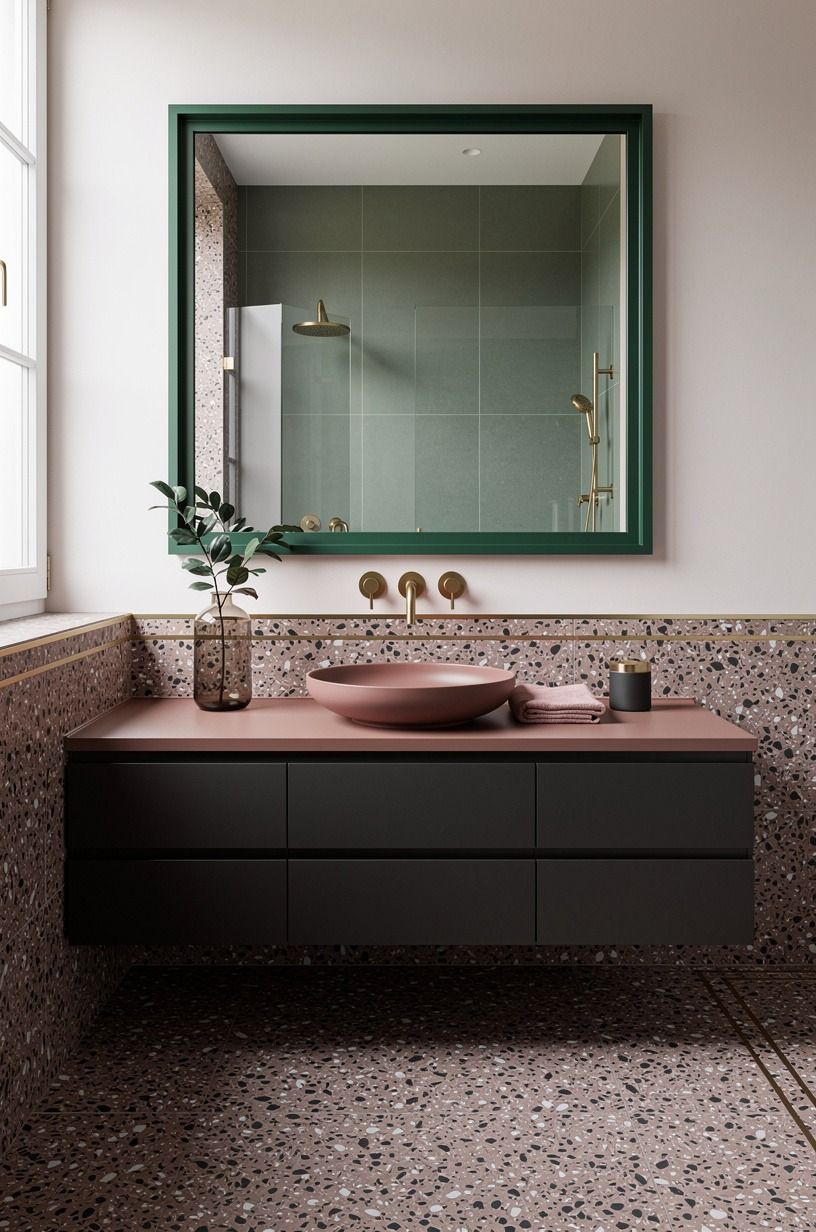
A framed mirror can make a painted bathroom feel finished in one afternoon. Try charcoal, aged brass, or a dusty-rose accent around the mirror to soften the green without losing contrast.
8Float a Vanity Instead of Filling the Floor
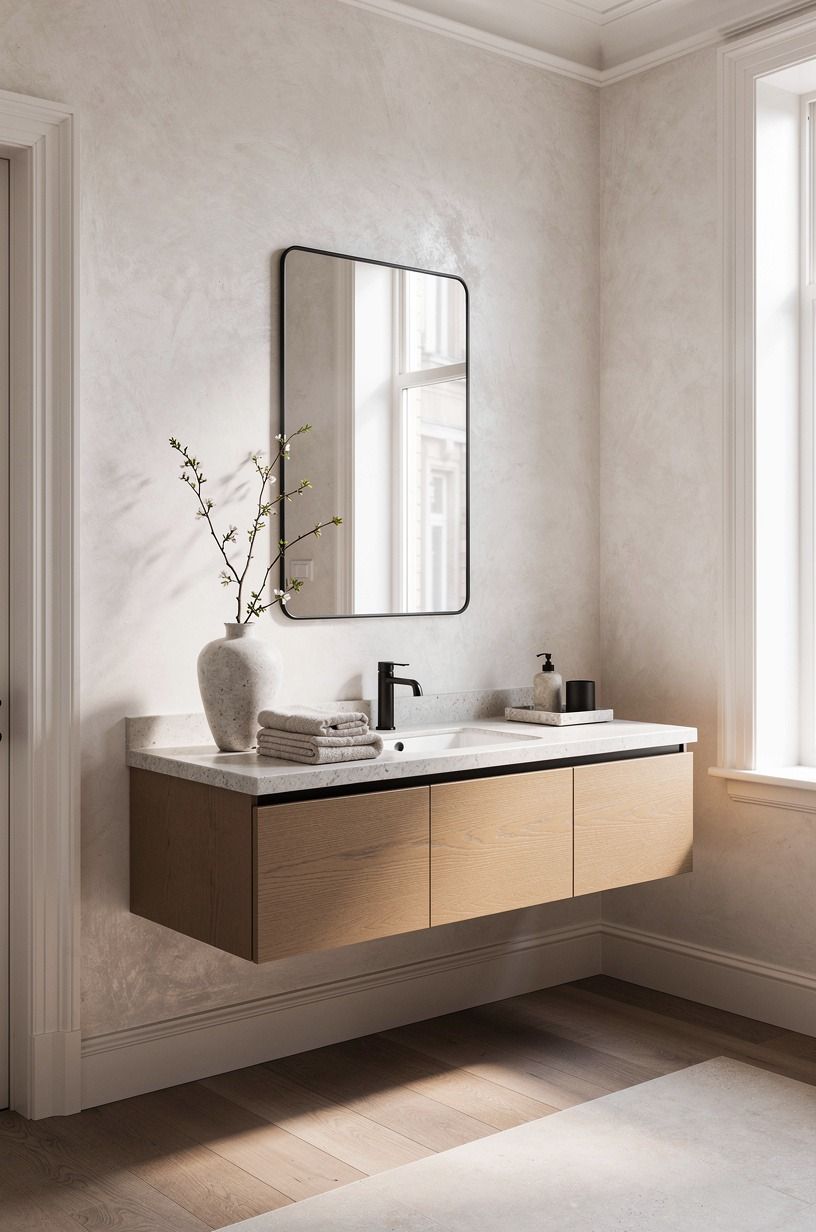
A floating vanity lets the floor continue underneath, which can make a compact bathroom feel larger. Pair hunter green cabinetry with hand-applied Venetian plaster on the wall, then use warm-white surfaces, camel textiles, and black hardware to keep the contrast clear.
Standard vanity height is 32 to 36 inches, or 81 to 91 centimeters. You’ll want the finished height to suit your household, especially if the basin sits on top. I’d avoid a deep vanity in a narrow room.
Extra storage sounds useful until your knees meet the opposite wall.
A floating design also gives you room for a woven basket or a low stool, but restraint matters. Your best storage may be drawers rather than open shelving. The green should frame the useful parts of the room, not compete with a pile of towels.
9Hang Linen Above the Tub
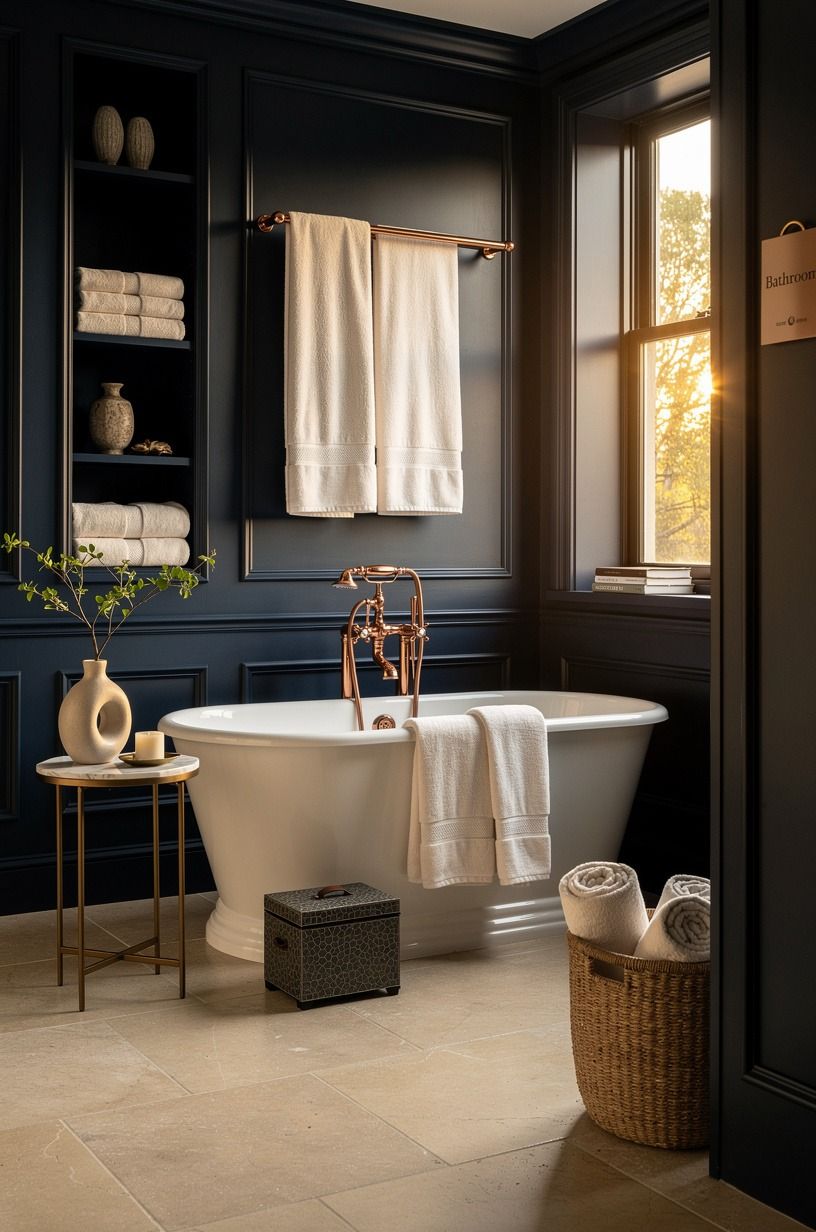
A linen shower curtain softens hunter green without adding another heavy pattern. Choose Belgian flax linen in ivory, then bring in a copper rod or tieback and a small shagreen accent. The fabric’s uneven weave catches the light, which keeps the dark color from feeling too polished.
Your standard tub may measure 60 by 30 inches, or 152 by 76 centimeters, so measure the rod and curtain width before buying. A curtain that barely reaches the sides will make the tub look undersized.
I’d skip a glossy synthetic curtain in this palette. It reflects light in a harsh way.
Look for a gentle stripe or narrow check if your walls are plain. Keep the pattern quiet, then repeat its color in one bath mat or frame. The room will feel inviting without becoming themed.
And if you’re working with a shower rather than a tub, a weighted hem keeps the fabric from clinging.
10Mix Green Tile With Pale Grout
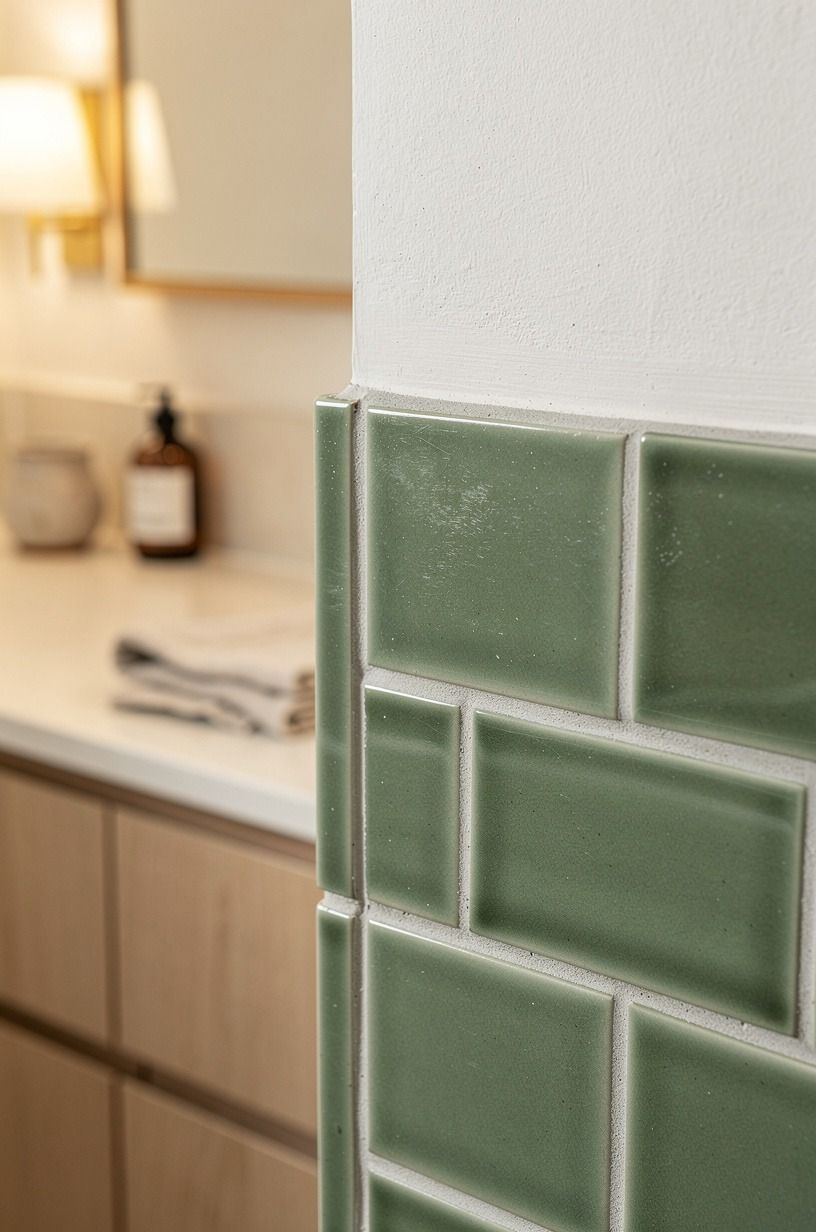
Green tile works best when the grout supports its shape. Sage-green tile with warm cream grout gives you gentle variation without overwhelming the room, while natural wood and washed Belgian linen add softness. Use it behind the sink or across a short backsplash instead of wrapping every wall.
Your tile choice should follow the room’s scale. Small handmade pieces add movement, but they can feel busy beside patterned flooring.
I’d choose a calmer floor if your wall tile has visible variation. A plain surface gives your eye somewhere to rest.
For a retro direction, compare the proportions in these mid-century green tile bathroom ideas. You’ll notice that the strongest rooms don’t pile on every vintage detail. One green tile field, one simple light, and one warm metal can carry the mood.
11Can a Small Bathroom Handle a Dark Green Theme?
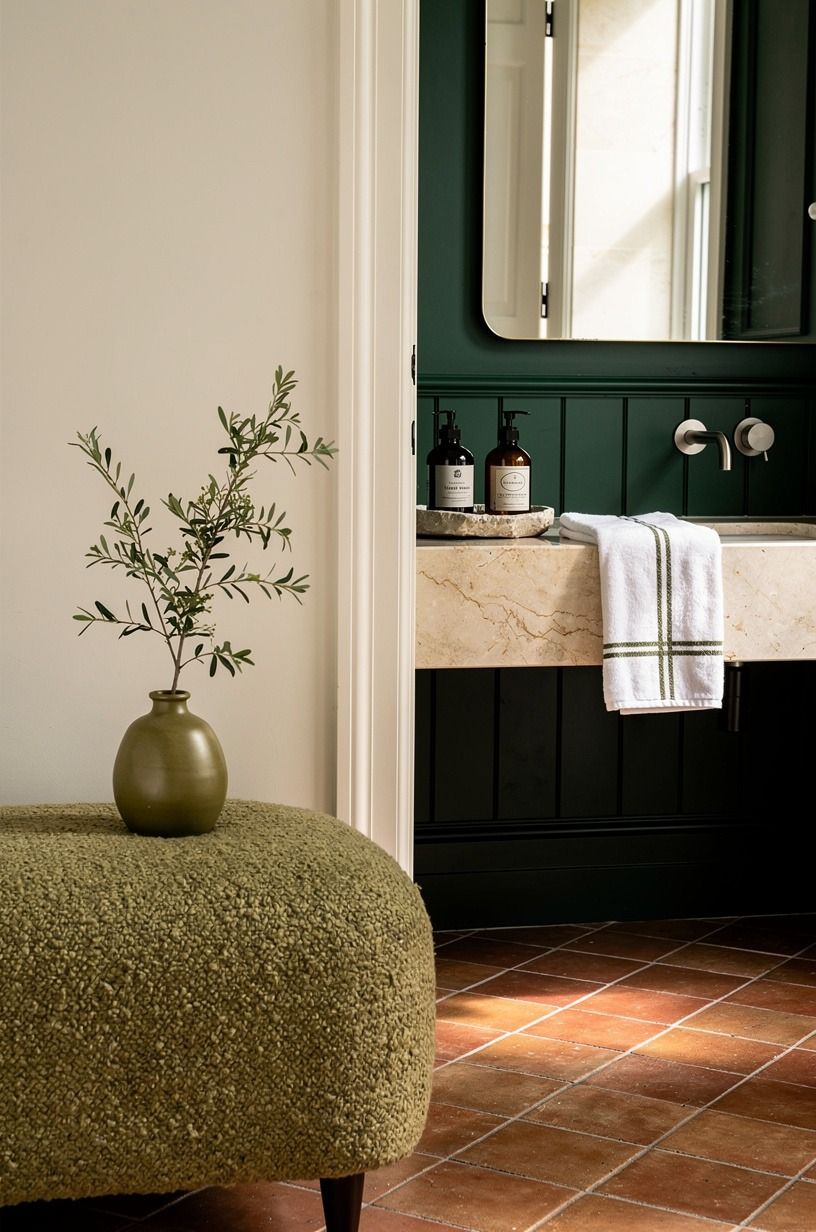
Yes, a small bathroom can handle a dark green theme when terracotta, stone, and olive accents keep it grounded.
12Pair Hunter Green With Soft Stone
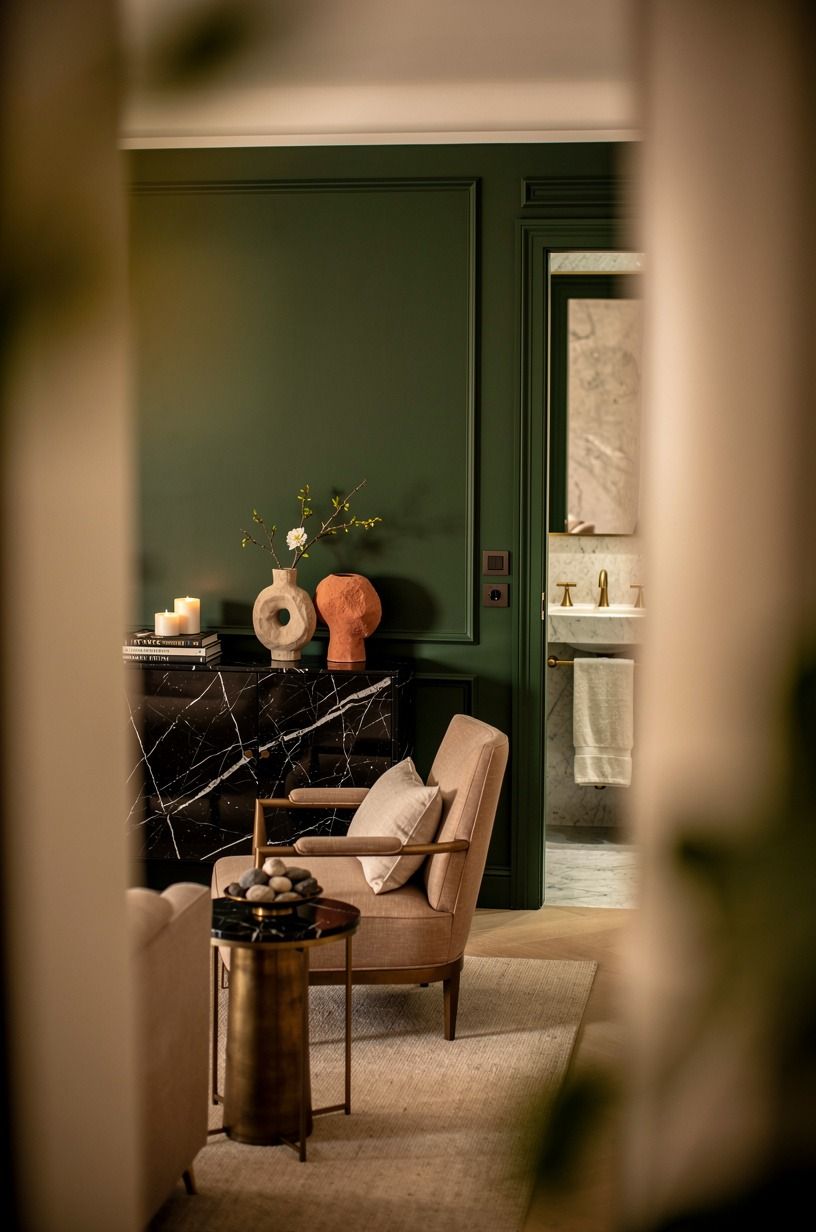
Stone balances the moodiness of hunter green, but the finish matters. Choose Nero Marquina marble with white veining for crisp contrast, then soften it with clay tones, linen, and aged brass. Your goal is contrast in texture, not a collection of unrelated luxury materials.
A stone shelf, countertop, or soap ledge may be enough. You don’t need a full slab installation to make the room feel considered. I’d skip highly polished stone beside glossy tile because the surfaces compete for attention and show every splash.
Keep towels in a warm neutral, then repeat the stone’s undertone in your accessories. A soft ivory towel, a wood brush, and an aged-brass hook can make the green feel peaceful. If you’re drawn to deeper organic rooms, these dark green wood bathroom ideas show the value of restrained material mixing.
13Paint the Ceiling for a Cocoon Effect
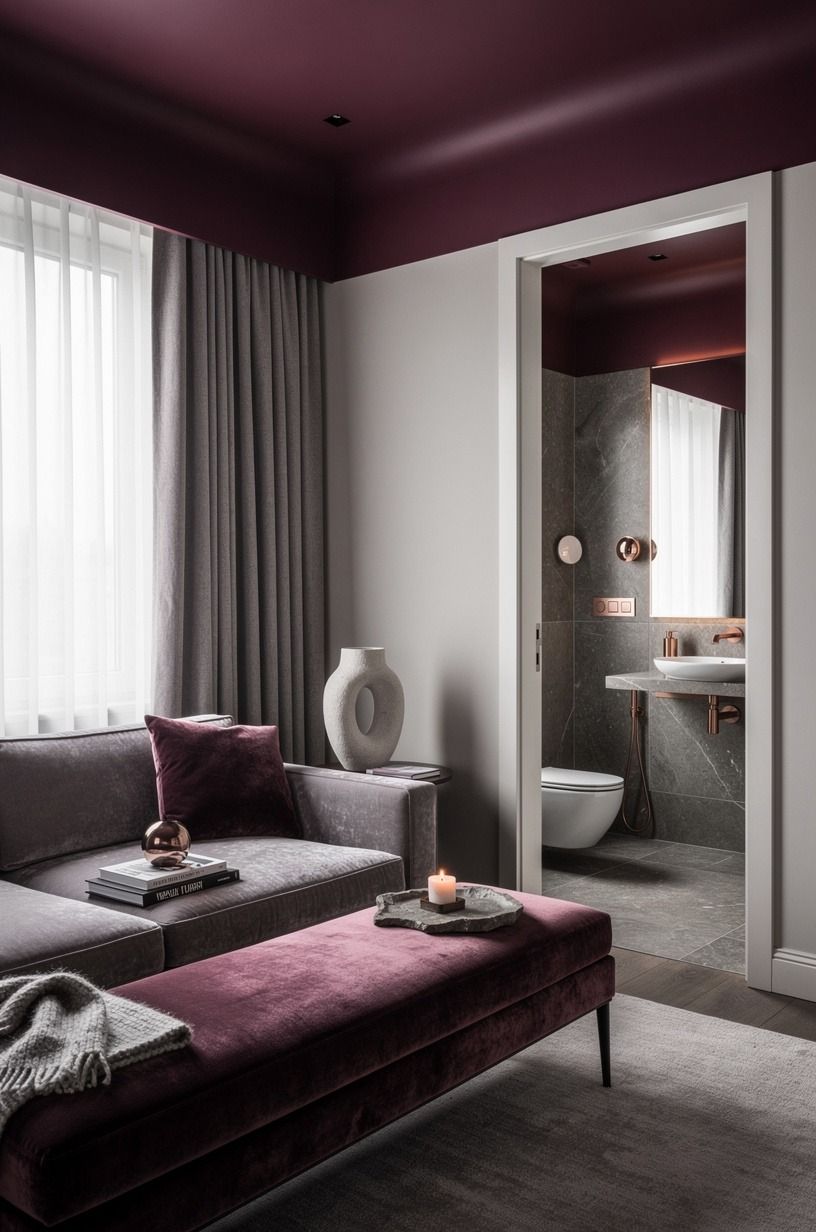
A green ceiling can make a bathroom feel intimate, especially when the walls are a lighter companion shade. Use a muted hunter green above soft grey walls, then bring in plum and rose gold for warmth. Sherwin-Williams Evergreen Fog SW 9130 is a softer alternative when you want color without full drama.
Your ceiling needs a finish suitable for the room’s moisture and ventilation conditions. Don’t choose the darkest paint just because the room is small. A slightly softened tone can feel more relaxing and still give you the same visual depth.
I’d use this idea in a powder room before a busy family bathroom. The smaller space lets you take a stronger position, and your guests notice the color immediately.
Add a simple globe fixture and a deep-pile mohair velvet stool, then let the ceiling do the talking. It’s an elegant move with a surprisingly small paint footprint.
14Layer Towels Like a Boutique Hotel
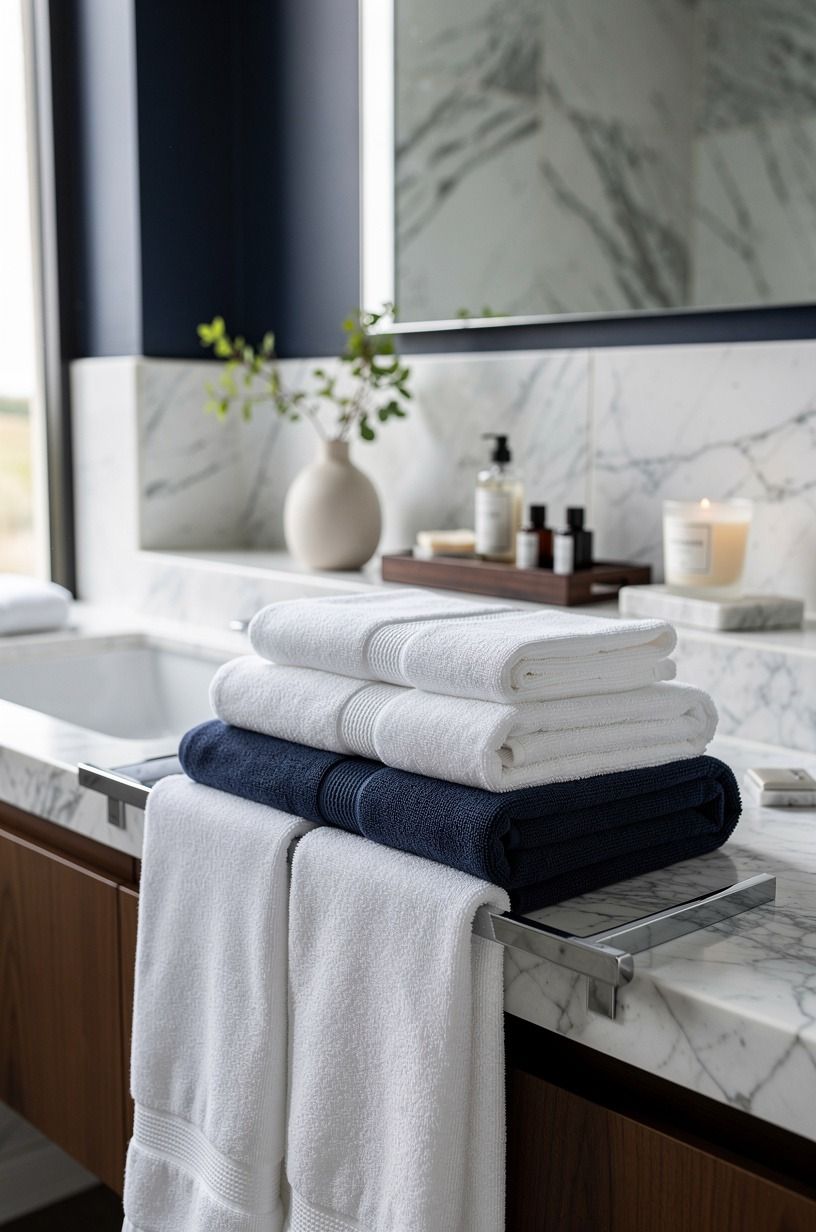
Towels can make hunter green bathroom ideas feel warm instead of severe. Layer navy and white towels beside a walnut stool or a Carrara marble tray with subtle grey veining.
15Price the Hunter Green Bathroom Paint Refresh
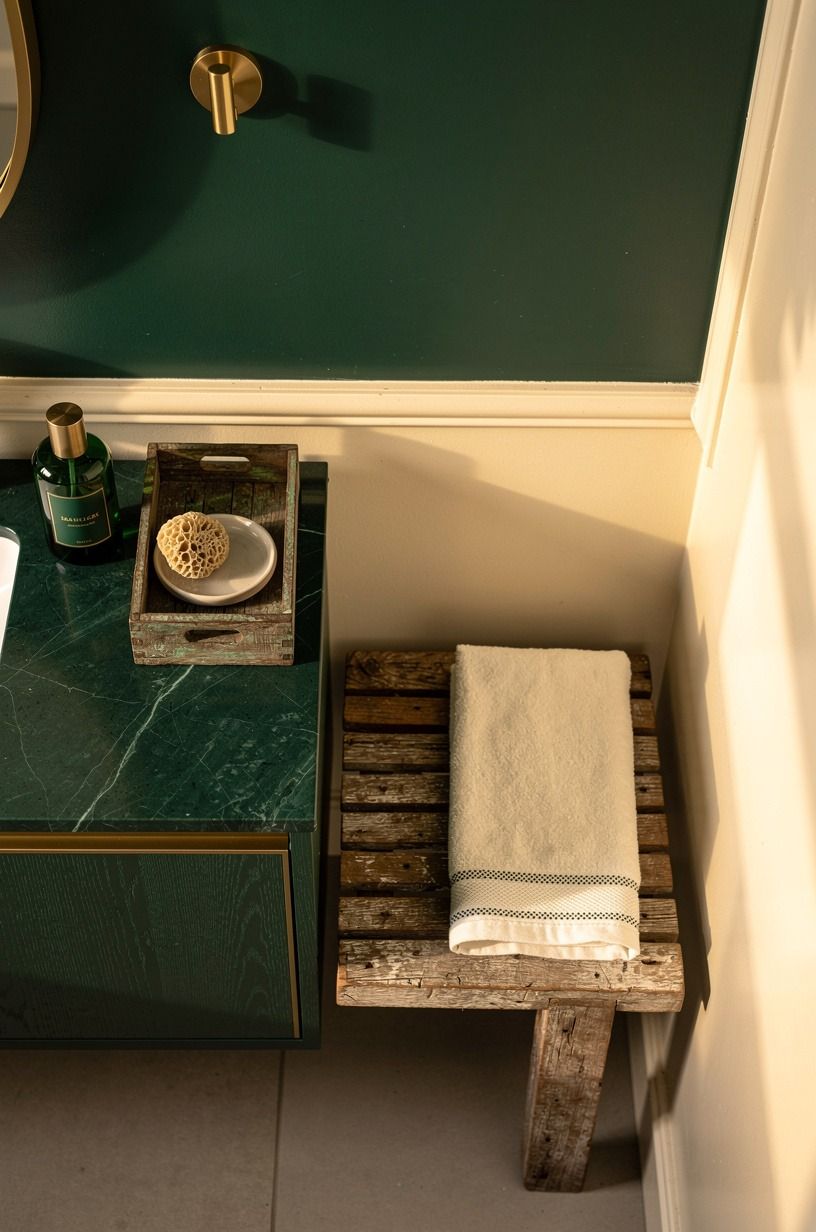
A hunter green paint refresh can stay below a full renovation when you focus on paint, a mirror, a faucet, textiles, and one reclaimed weathered teak accent. The table below uses typical US cost ranges, so your labor, room size, and existing plumbing will affect the final number. Paint and textiles are the easiest places to control spending.
For material planning, zellige tile typically runs $15-$35 per square foot, subway tile $2-$10 per square foot, a marble top $50-$100 per square foot, and a brushed brass faucet $120-$450. You’ll want to decide whether the visual improvement justifies the installation work.
I’d start with paint and lighting before touching plumbing. Your room may need only a stronger focal wall, a better mirror, and warmer bulbs. If you want a renovation comparison, this green bathroom design collection helps show where deeper investment changes the room and where styling does enough.
16Should You Choose Hunter Green Over Forest Green?
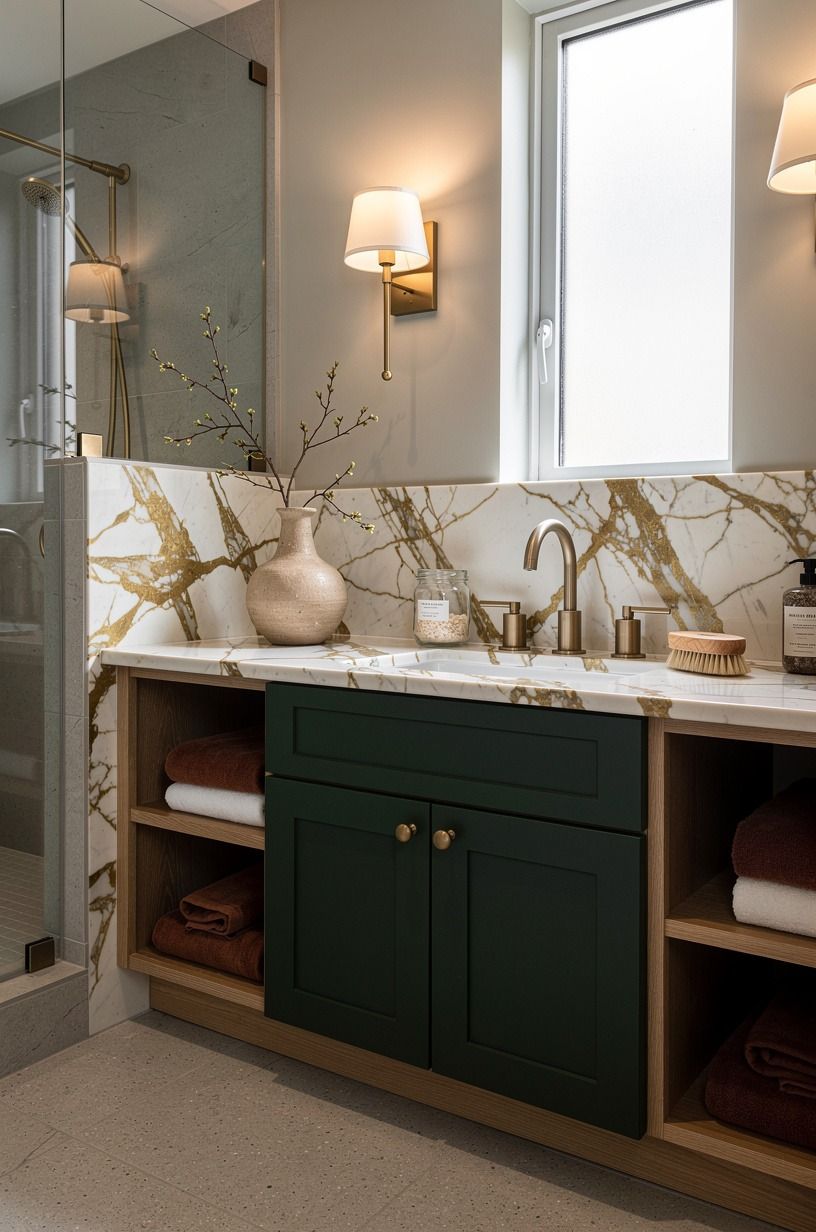
Hunter green usually feels more grounded and traditional than forest green, while forest green can lean brighter, bluer, or more botanical depending on the formula. Benjamin Moore White Dove OC-17 beside either shade creates a clean backdrop, but the contrast will look softer than it would with stark white.
Your choice should follow the room’s light and the materials already present. I’d choose hunter green over forest green when you want rust textiles, natural oak, and Calacatta marble with gold veining to feel settled. Choose forest green if your room has pale oak, natural stone, and plenty of daylight.
Don’t compare paint names alone. Put both samples beside your tile, floor, and metal finish. I’ve seen two greens with nearly identical names look completely different after sunset.
If you’re weighing the deeper direction, this earthy green bathroom reference gives you a calmer middle ground.
17Finish With One Living Detail
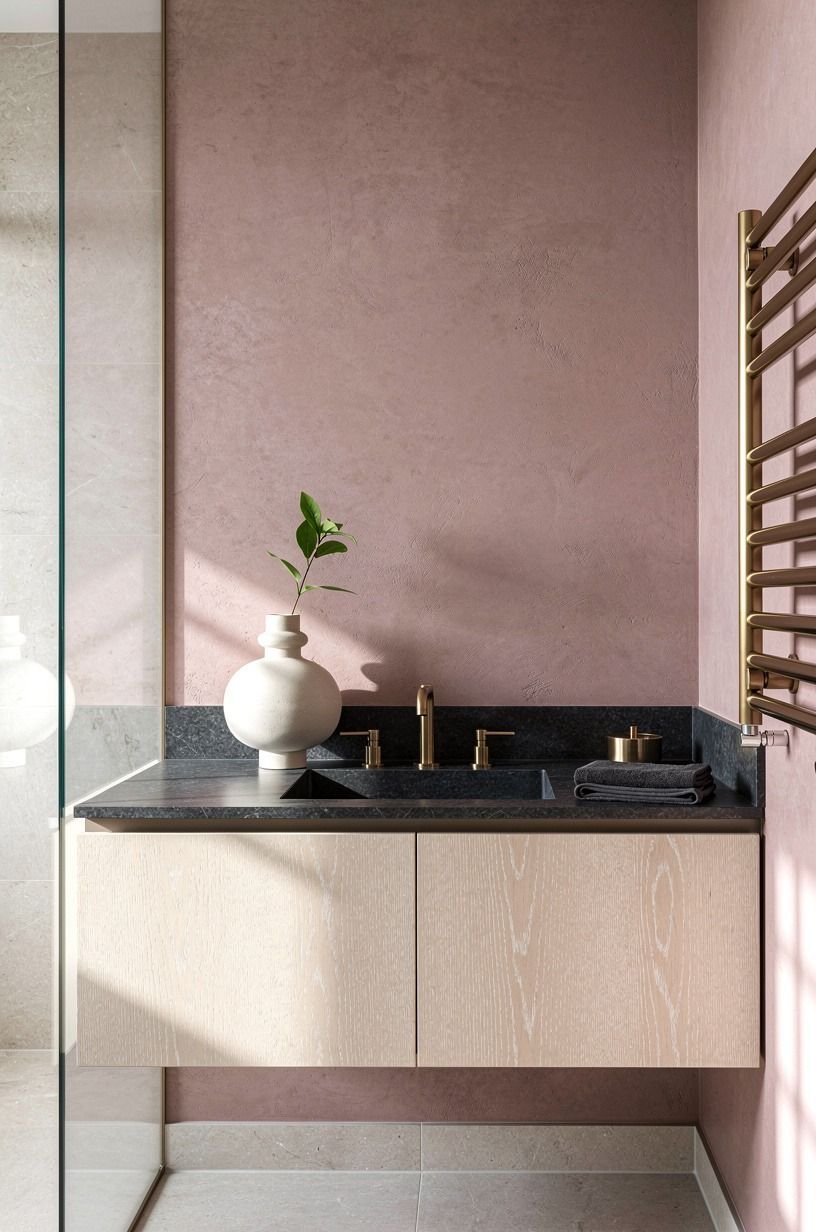
A living detail keeps your hunter green bathroom from feeling overly designed. Add a small plant suited to your light, a branch in a narrow vase, or a woven basket with visible texture. Cerused white oak on a cabinet door brings a gentle organic note, while dusty-rose textiles, charcoal details, and one brass hook stop the green from reading as purely formal.
Your bathroom still needs clear surfaces, so choose one display zone rather than decorating every ledge. A ceramic cup, a natural brush, and a small framed print can be enough.
I’d skip artificial greenery beside glossy accessories. The texture rarely convinces you in person.
Use your final detail to connect the room to the rest of your home. A terracotta pot, a warm wood frame, or an oatmeal linen can repeat a color from the hallway. That small bridge makes the bathroom feel welcoming, and you won’t need another renovation to keep it relevant.
What I Learned From Choosing Dark Green for a Bathroom
I used to think a dark bathroom needed a large window, expensive tile, and a custom vanity. That belief kept me from trying the color in smaller rooms.
The first time I tested green properly, I painted a board and moved it around the bathroom for three days. The shade changed beside the mirror, the floor, and the ceiling.
That little test saved me from choosing a blue-green that looked cold after sunset.
The mistake was treating paint as the entire design. Hunter green has weight, so your room needs something that pushes back: pale grout, warm light, reflective glass, or a light wood grain.
I’d rather spend money on one good mirror and two useful sconces than cover every surface in expensive tile. The room needs contrast to breathe.
I also learned that the most memorable bathrooms aren’t the ones with the most objects. They’re the ones where every material has a job.
Your green gives depth, the brass adds warmth, the stone catches water, and the linen softens the hard edges. If one material isn’t helping the room work, I’d remove it.
There’s a practical limit, too. Your toilet needs at least 21 inches, or 53 centimeters, of clearance in front, and no color choice can fix a cramped layout. Start with the measurements, then make the emotional choice.
A warm, moody bathroom can be highly functional when you respect the space you have.
What People Always Want to Know
What is the best Hunter Green Bathroom Ideas for Timeless Depth for a small bathroom?
The best choice is a hunter green vanity or one focal wall paired with IKEA HEMNES storage and a large mirror. You’ll keep the floor visible, reflect more light, and still get deep color without visual clutter. Choose pale towels and warm bulbs to keep the room welcoming.
Where can I buy Hunter Green Bathroom Ideas for Timeless Depth pieces on a budget?
Look at IKEA, Wayfair, and Target for accessible bathroom basics, then check Facebook Marketplace or local thrift stores for mirrors and wood stools. This site uses display advertising, not affiliate commissions, so there are no affiliate links or required purchase disclosures.
How much does a Hunter Green Bathroom Ideas for Timeless Depth makeover cost?
A typical refresh can cost about $100 to $300 when you keep your vanity and plumbing, though the brief’s broader budget tier runs from $200 to $1,200. Free changes include rearranging towels, editing accessories, and testing existing frames in a new position.
Can I create a Hunter Green Bathroom Ideas for Timeless Depth on a budget?
Yes, and you can start with three low-cost changes: paint one wall, replace the shower curtain, and warm the lighting. Reuse your mirror, shop second-hand for a frame, and choose one aged-brass detail instead of replacing every fixture.
Is a Hunter Green Bathroom Ideas for Timeless Depth worth it in a small space?
Yes, because a small room lets one confident color do more work. A single dark focal surface can make the layout feel intentional, especially beside a large mirror and pale flooring. Keep storage shallow and maintain at least 21 inches of clearance in front of the toilet.
Is Hunter Green Bathroom Ideas for Timeless Depth a good idea for a rental?
Yes. Use a removable color layer with a green shower curtain, peel-and-stick artwork, a tension rod, and renter-safe hooks. A framed mirror leaned on a vanity can add weight without drilling, while removable cabinet pulls let you introduce warm metal temporarily.
Where I’d Start First
If I had to pick one, I’d start with the single hunter green focal wall. It gives your bathroom depth without tying you to new plumbing, tile, or a full vanity.
Paint the wall, warm the bulbs, and let the mirror do the reflecting. Pin this idea for later and build around it slowly.