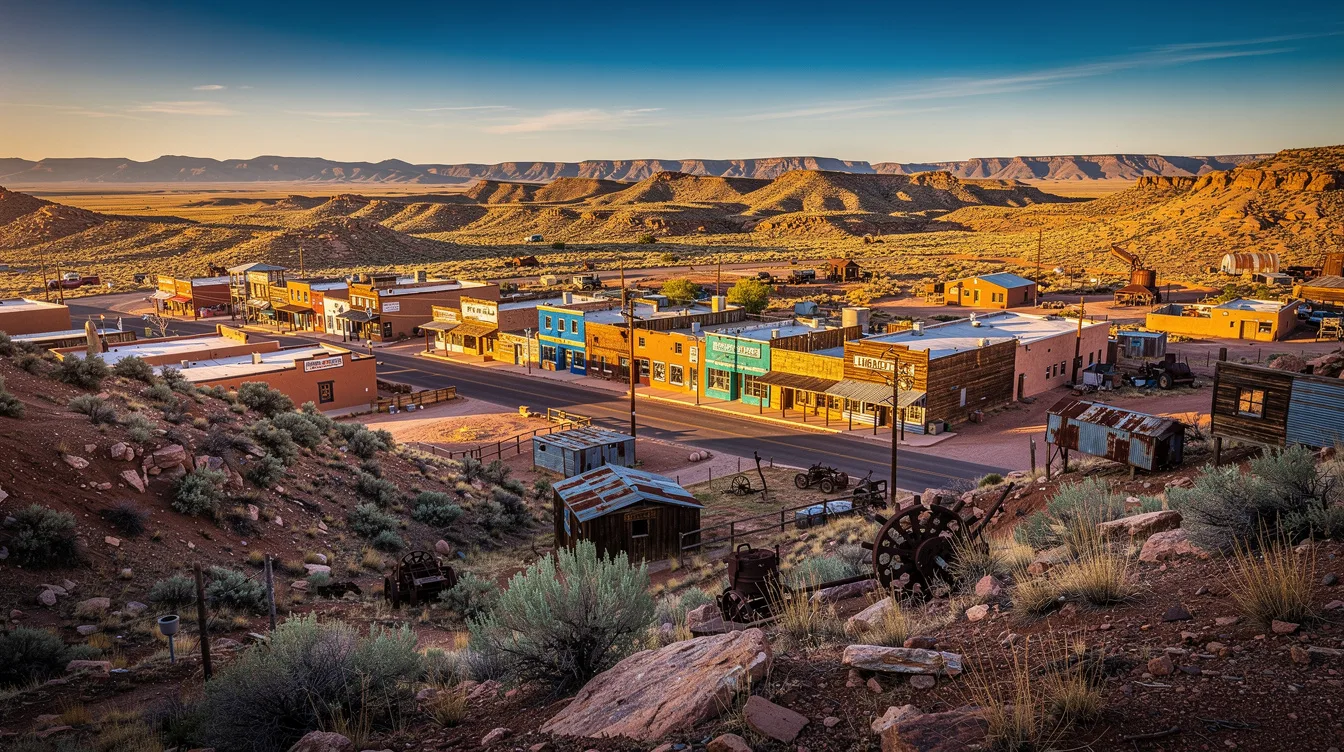
Madrid, New Mexico, was once a coal town that emptied out. From the 1970s onward, it came back as an artists’ community with more than 40 shops and galleries, all along a road between Santa Fe and Albuquerque. That’s the reason to stop here: the town’s past is still visible, but it no longer defines the whole visit.
And you can reach it without turning the trip into an expedition. Madrid sits on the Turquoise Trail, about 30 minutes south of Santa Fe and one hour north of Albuquerque. The drive gives you a useful contrast, too: city museums at either end, then a small former mining settlement where storefronts and old buildings carry the afternoon.
Madrid traded coal dust for working studios
Madrid grew as a significant coal-mining town during the 19th and 20th centuries. When mining declined, the community was largely abandoned, which makes its later revival feel earned rather than carefully staged.
But the town didn’t return as a polished historic district. The result is still pleasantly mixed. You may see a gallery in a former miner’s house, a shop selling handmade work, or a cafe occupying a building that once belonged to a harder industry.
And if you prefer places with some friction, you’ll like Madrid. The sidewalks and buildings retain a western mining character, while the art scene keeps the town active. It isn’t a ghost town, but it isn’t a conventional art destination either.
More than 40 shops make this a real stop
Today, Madrid has more than 40 businesses and galleries, along with restaurants, a spa, and a museum. That number matters because you can spend several hours browsing without exhausting the town in one quick walk. You won’t need a packed itinerary, and that’s part of its appeal.
And the best way to explore is to move slowly along State Road 14. Look into the galleries and artist workshops, then step back outside for the dry air and broad high-desert light. Some shops will hold your attention for minutes, while others may simply give you a reason to keep walking.
But don’t expect a major shopping district with every convenience open on demand. Madrid remains a small community, and the experience depends on which businesses are operating when you arrive. You should leave room for wandering, since the town works better as an unhurried stop than a timed checklist.
What should you see first?
Can you understand Madrid’s mining past?
Yes. Start at the Coal Mine Museum, which provides the clearest context for the town’s earlier life. Without that background, the galleries and converted buildings can seem like a charming roadside collection; with it, the art community feels like a second chapter.
And you can continue that history at the Mineshaft Tavern, an emblematic local spot installed in the former mining town. The name gives away the atmosphere, but the point isn’t nostalgia alone. You are seeing how Madrid uses its old identity without letting the coal era turn the entire place into a display case.
But the museum won’t explain every corner, and Madrid doesn’t pretend to be a fully reconstructed mining settlement. Some of the pleasure comes from the gaps, where you notice weathered buildings, painted signs, and newer creative work sharing the same narrow stretch.
The Turquoise Trail is part of the experience
Madrid makes the most sense as a stop on the Turquoise Trail Scenic Byway, not as an isolated destination. The route links Santa Fe and Albuquerque, so you can fold the town into a day of driving rather than plan an entire trip around it. That access makes Madrid remote in mood, but easy in practice.
And if you’re coming from Santa Fe, the short drive leaves time for a long lunch and gallery browsing. From Albuquerque, the town breaks up the trip north with a change of pace. You trade traffic and larger attractions for quieter streets, old mining references, and the sound of a road carrying through town.
There is no season specified in the available information, so you shouldn’t build your plans around a particular month. Go when Madrid fits your route and when you can give it a few unhurried hours. The town rewards attention more than speed.
A small place with a second life
Madrid has only 247 residents, which helps explain its unusual balance. The visitor economy is visible, but the community still feels smaller than its gallery count suggests. You can browse art and then remember that people live behind the storefronts.
And that’s my reason to choose Madrid over a more polished day-trip stop. Its revival hasn’t erased the coal town underneath, so the place feels layered without becoming solemn. Before you leave, pause along State Road 14 and let the dust, old buildings, and painted windows hold the frame.
By the time you return to the highway, Madrid feels less like an attraction than a town that found another use for itself.