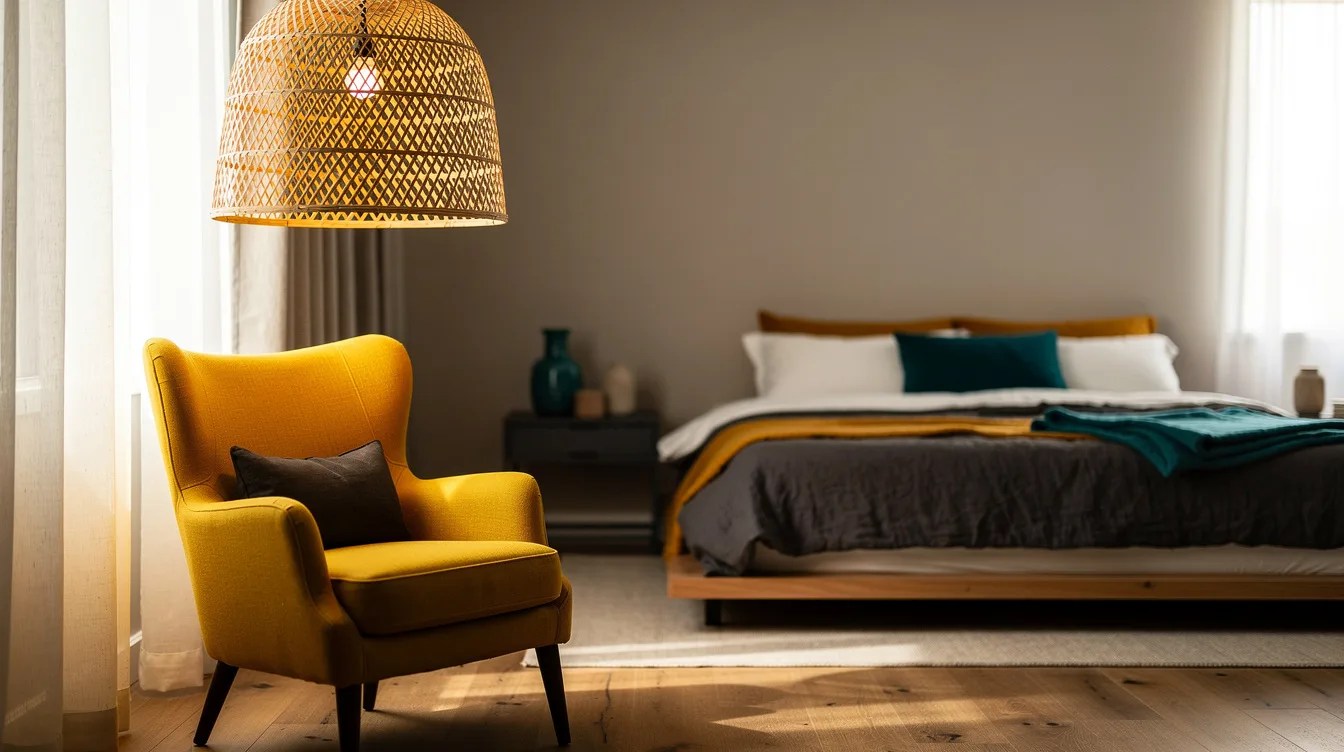
Here’s the thing nobody tells you: the pendant that makes a primary bedroom look architect-designed usually isn’t the one centered over the bed.
It’s an overscaled fixture, typically 50 to 70 cm across, hung in the secondary zone instead. Above the reading chair. Over the bench.
Off to one side.
The bed keeps its practical bedside lighting. The pendant does the architectural work somewhere else entirely, and that division is the whole trick to it.
Hang It Above the Reading Chair First
If you only try one spot, make it the corner chair. A wide pendant over a chaise or a window-side armchair builds a little room inside the room.
Aim for roughly 45 to 65 cm across, or 70 to 90 cm if your primary suite is generous. Keep the lowest point about 150 to 175 cm off the floor so nobody clips it standing up.
I did this in my second rental with a woven IKEA SINNERLIG shade and the whole corner started reading like a hotel suite. The eye finally had somewhere to go besides the mattress.
Center One Over the Foot-of-Bed Bench
This is the most composed option, and it’s my default recommendation. A bench, trunk, or pair of ottomans at the foot of the bed gives the pendant a reason to exist.
Go 50 to 75 cm wide for a queen, 60 to 90 cm for a king. The bottom edge wants to sit around 205 to 215 cm above the floor, since people walk right underneath.
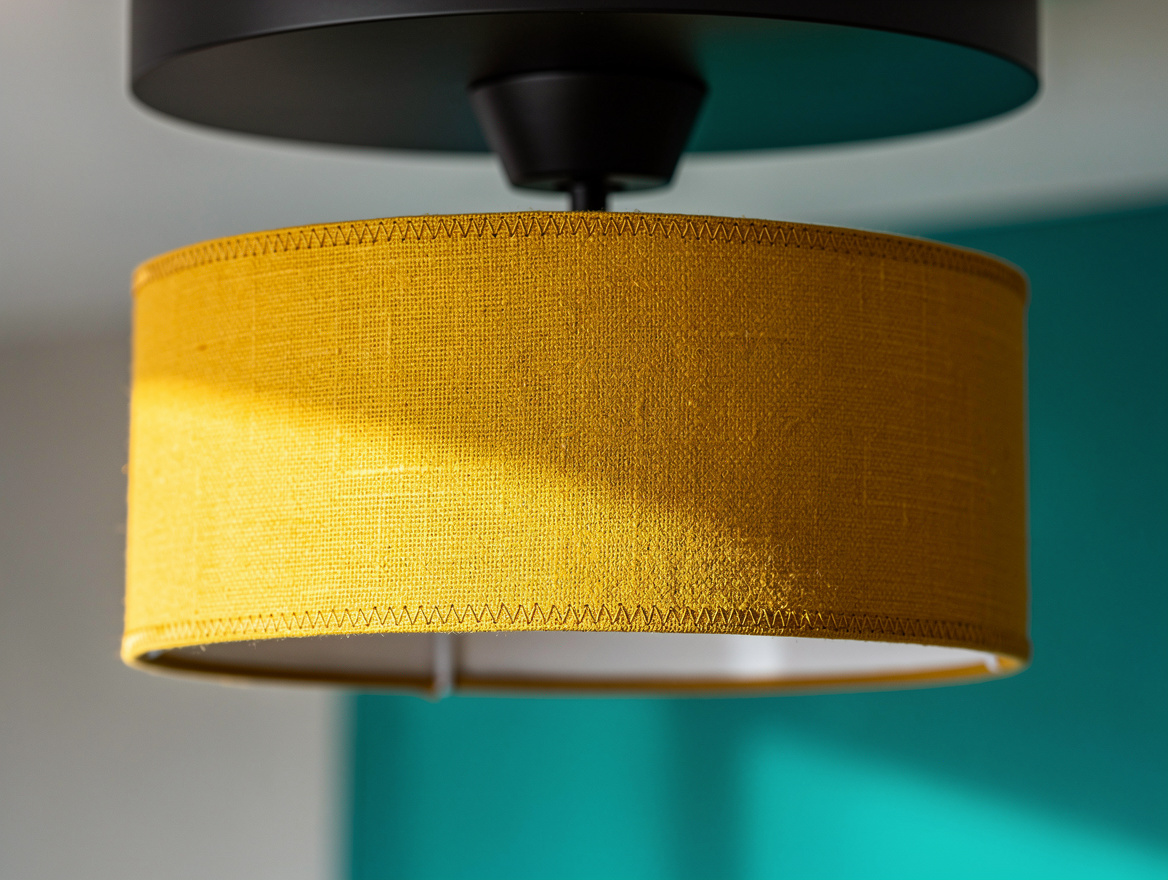
A soft linen drum works better here than anything glossy. It stretches the bed’s axis and the room suddenly feels longer than it measures.
Drop a Single Big One Beside the Bed
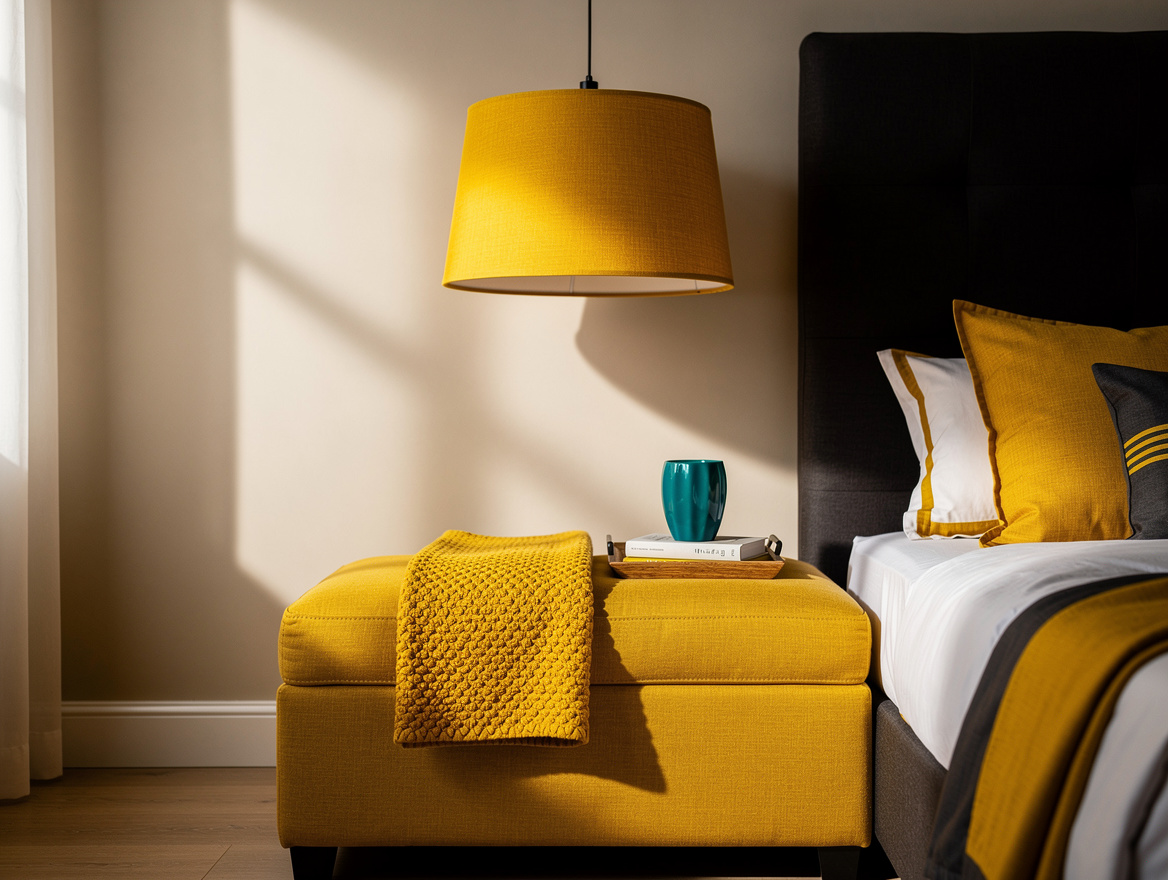
Asymmetry reads expensive when it looks decided rather than accidental. Put one substantial pendant on the open side of the bed, skip the matching partner, and let the imbalance stand.
Keep it 35 to 55 cm across, narrow if the walkway is tight. As a bedside light, the bottom of the shade should land roughly 35 to 50 cm above the nightstand surface.
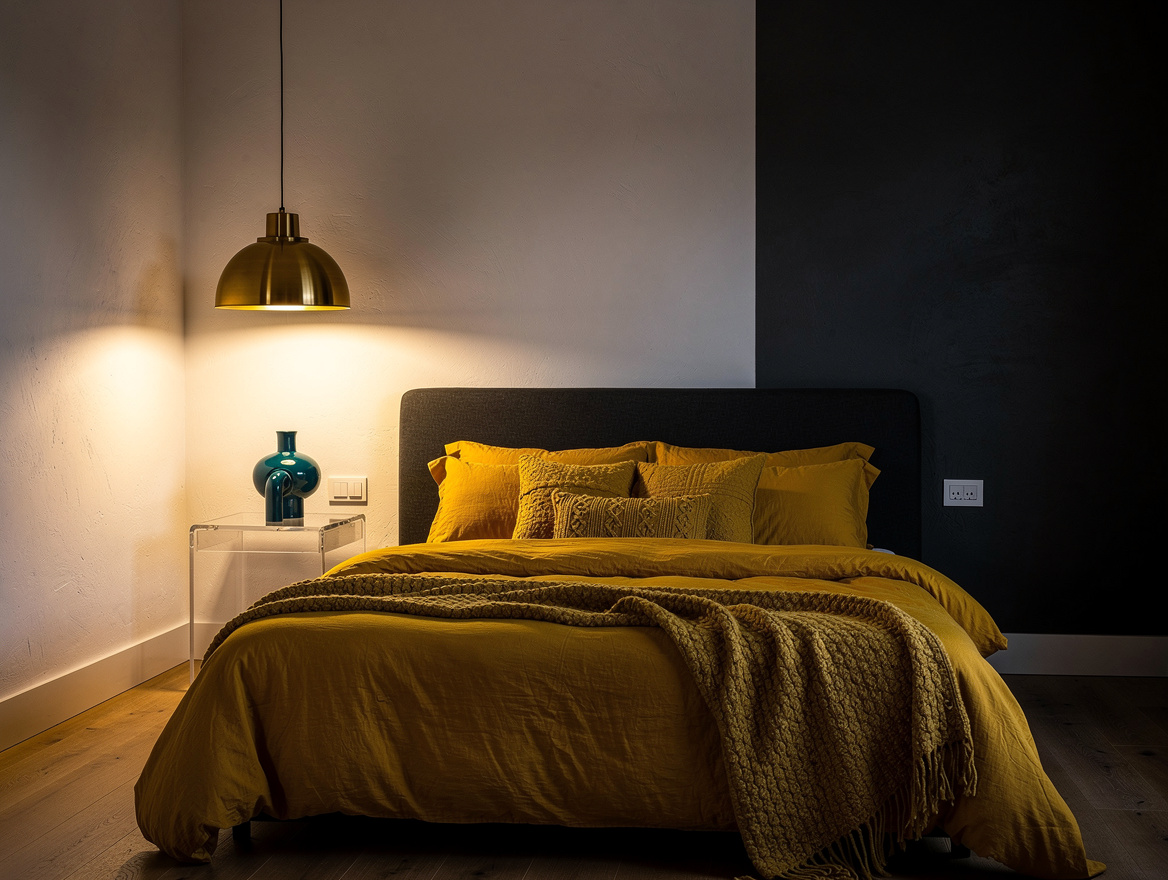
The real payoff is a clear tabletop. My brass pendant cleared a lamp, a cord, and the pile of junk that collects around both.
Frame the Bed With a Matched Pair
Two nightstands plus a wide upholstered headboard? Hang a pendant over each one and retire the table lamps.
Each shade should stay modest at 25 to 40 cm, though a tall silhouette carries more visual bulk than its diameter suggests. Bottom edge 35 to 50 cm above the nightstand, well clear of pillows and the headboard.
Wayfair and Amazon both carry plug-in versions with a cord you hook along the ceiling, typically around $60 to $120 each. Renters, this is your loophole.
Center It Over the Bed, but Only if It’s Shallow
Everyone wants this one. It gives the biggest reaction from the doorway, and it’s also the placement most likely to go wrong.
Restrict yourself to shallow discs, saucers, or open woven shades at 50 to 75 cm. Anything deep or dark hovering over your pillows feels oppressive the second you lie down.
You need real ceiling height, at least 210 cm to the fixture in any walking zone. A rattan saucer filters light instead of blocking it, which is exactly the quality you want above a sleeping body.
Offset One Near the Headboard Corner
For rooms that shouldn’t look formal, push the pendant off-axis into the upper corner of the bed wall.
Something 40 to 60 cm wide, with the lower edge usually 170 to 200 cm up depending on what sits below. Park a tall fiddle-leaf fig or a leaning canvas underneath so the light has a subject.
The composition turns gallery-like and that broad expanse of wall stops feeling predictable. Perfect symmetry is the thing that makes bedrooms look like showrooms.
Know When Your Pendant Is Actually Oversized
In a bedroom, large starts around 50 cm in diameter. Oversized generally means 70 cm and up.
But density counts as much as width. A dark metal cage, an opaque drum shade, or a multi-arm chandelier will read oversized at just 50 to 60 cm.
Fixtures over about 51 cm are built as focal points, so treat them that way. Circulation and visual weight matter far more in a bedroom than they ever do over a dining table.
One warning before you order anything: measure your ceiling height and your walking paths before you fall for a shade. A 70 cm pendant in a room with 240 cm ceilings turns into a hazard instead of a feature.
Get the clearance right and almost any material will look deliberate.
Mia Carter writes about small-space living and budget home makeovers. She has restyled three rentals and tests most ideas in her own 45 sqm flat.