Dark & moody music room ideas for dramatic vibes stay warm when texture, layered light, and natural wood share the palette. The fix isn’t more lamps or brighter paint; it’s controlled contrast, tactile fabric, and furniture that leaves breathing room. These 12 moves work for renters, small rooms, and full listening spaces alike.
- Wrap the listening nook in charcoal velvet curtains (The Curtain Cocoon)
- Layer smoked glass panels behind the record console (The Smoked-Glass Halo)
- Install picture lights above framed concert posters (The Three-Height Light Stack)
- Float walnut shelves around the turntable (Which shelf depth keeps the ambient room calm?)
- Carve a brass-lit niche for vinyl storage (The Brass Recess Rule)
- Anchor the room with a faded Persian rug (The Rug Overlap Test)
- Paint the ceiling ink black for enveloping depth (The Ink-Ceiling Envelope)
- Upholster a low bench in oxblood leather (Leather over boucle for a recording room aesthetic)
- Cluster sculptural lamps beside the amplifier (The Three-Source Glow)
- Line the walls with acoustic wood slats (The Slat-and-Softness Balance)
- Style a sculptural piano against saturated walls (The Saturation Anchor)
- Build a cocktail station beside the speaker cabinet (The Two-Station Rule)
1Wrap the listening nook in charcoal velvet curtains (The Curtain Cocoon)
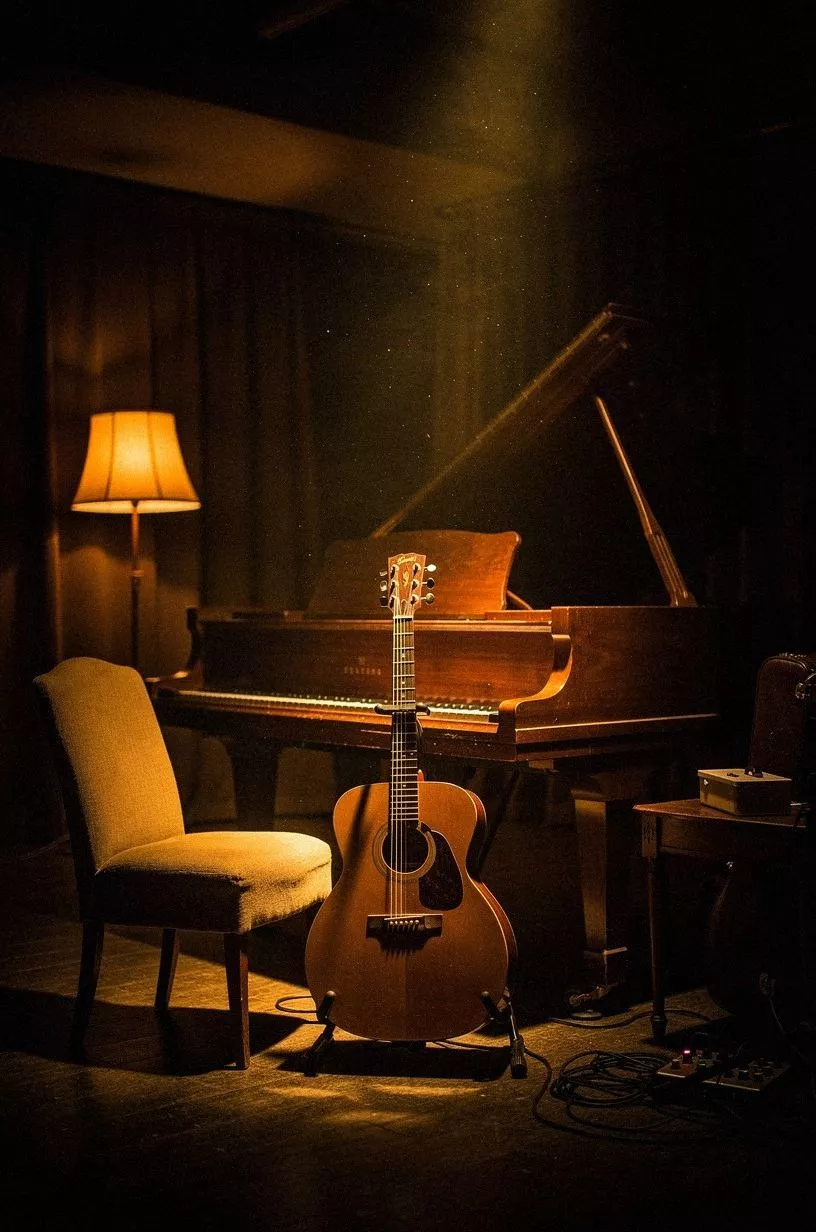
A dark atmospheric music room needs softness at the windows, especially when charcoal velvet curtains frame the listening nook. Hang the rod 4-6 in (10-15 cm) above the frame, then let the fabric reach the floor. Your eye will read the full vertical line as intentional, while the heavy folds absorb some glare around the turntable.
But don’t push the curtain color toward flat black if your room already has dark flooring. A charcoal tone works better beside terracotta, honed stone, and olive upholstery because it keeps the palette earthy and inviting. For a renter-friendly ambient room, a tension rod and pinch-pleat panels can create the same enveloping effect.
– Terracotta cushion. Olive wool throw.
A low cerused white oak stool. – Soft pleats. Matte black rod.
Floor-length hem.
Your curtain fabric shouldn’t stop at the sill. That shortcut makes the nook look unfinished and lets cold window light dominate the room.
For related texture ideas, browse these dark wet room ideas for a moody dramatic open shower for a stone-and-fabric shower balance, then borrow the same contrast here. This shift matters!
A narrow cerused white oak stool can sit beneath the curtain edge without blocking the radiator. Your best arrangement will keep the textile soft, the equipment accessible, and the walkway clear. If the room’s windows face north, a warmer ivory lining will keep the nook from feeling too gray.
2Layer smoked glass panels behind the record console (The Smoked-Glass Halo)
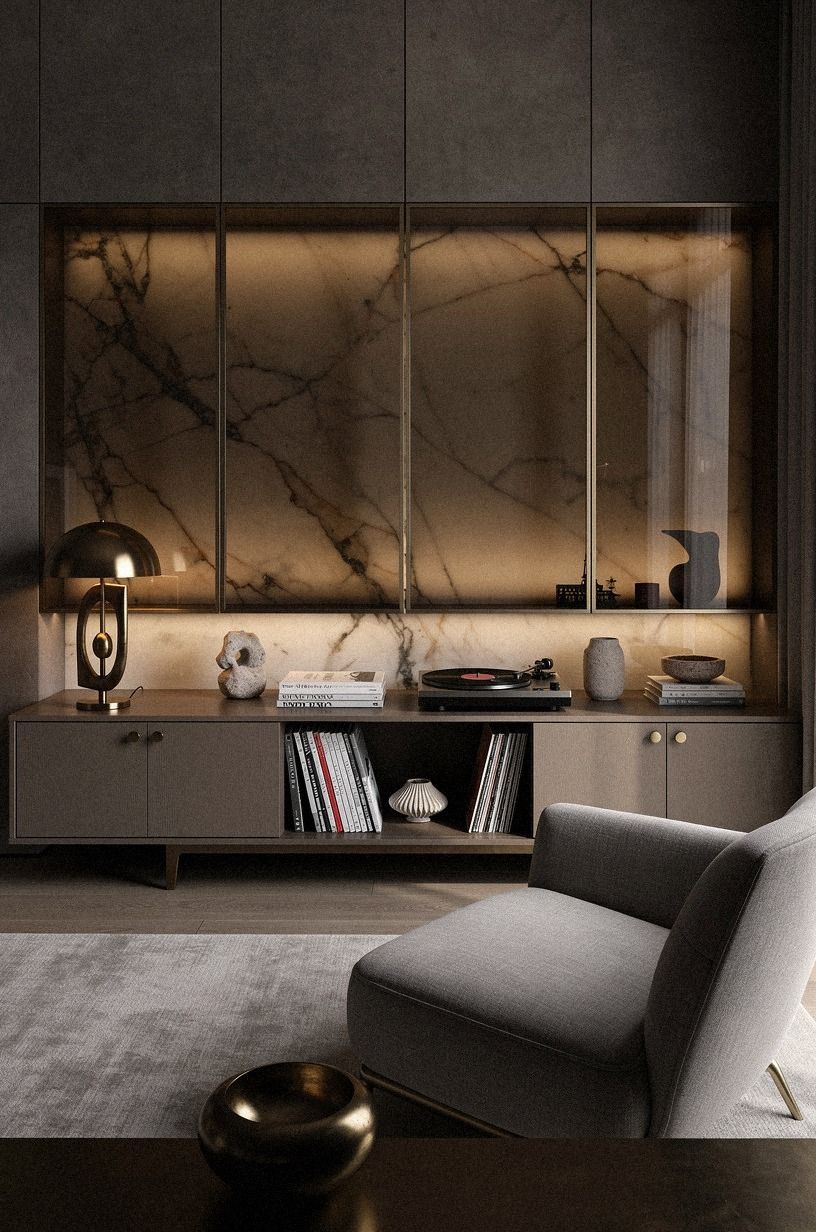
Backlit translucent onyx behind the record console gives a clay-toned room a softly luminous surface without the sharp brightness of a mirror. Its natural variation works especially well with linen, aged brass, and warm equipment finishes.
Keep the panel slightly wider than the console so the stone reads as an architectural backdrop. A slim brass picture light or concealed warm strip can bring out the veining without turning the listening zone into a bright display.
3Install picture lights above framed concert posters (The Three-Height Light Stack)
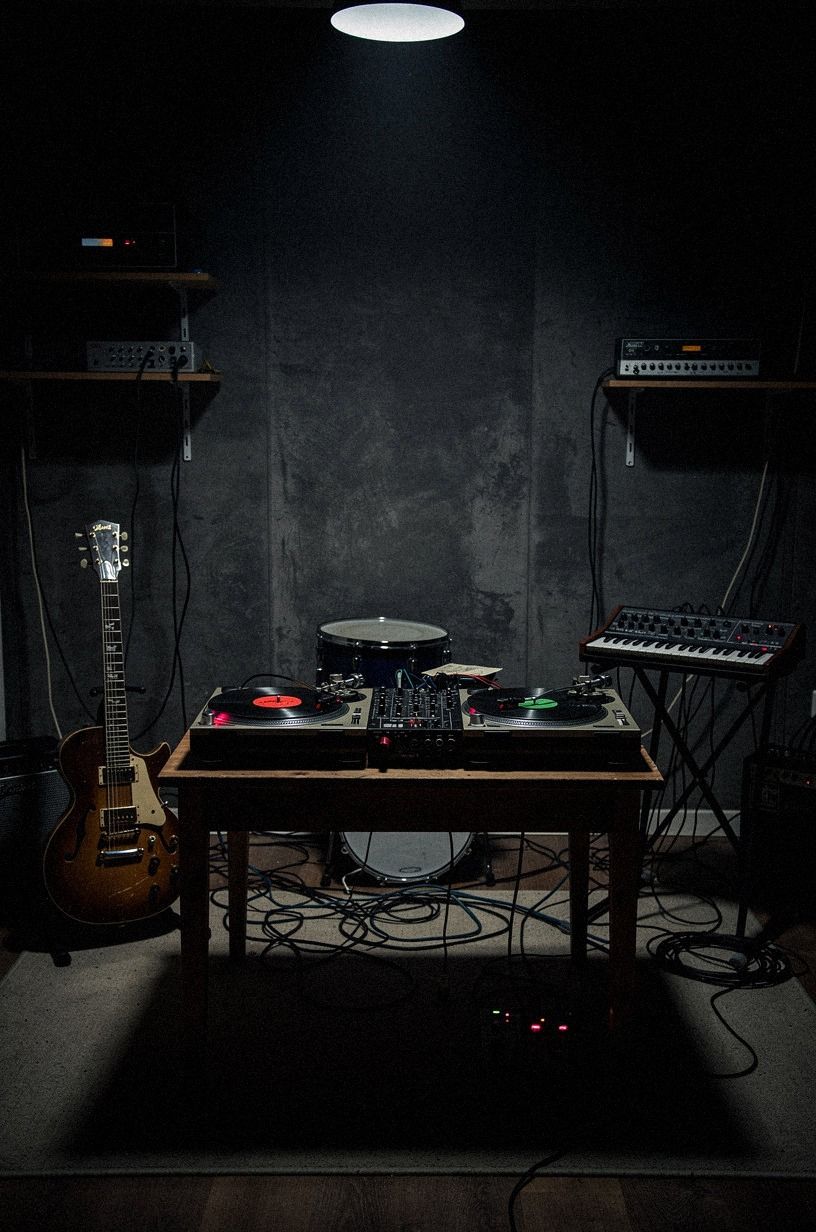
Framed concert posters need focused light, and aged brass picture lights deliver a warm pool across plum, gray, and rose-gold tones. Hang the art center about 57-60 in (145-152 cm) from the floor, then position the light so the beam reaches the frame without creating a hard reflection. Your wall will feel collected rather than crowded.
Use three heights across the wall: one light above the main poster, a smaller frame nearby, and a low book-matched walnut cabinet beneath. This creates the Three-Height Light Stack, a practical way to keep your eye moving through a book-lined room.
Don’t use cool white bulbs here. They flatten plum, gray, and rose gold finishes.
– Plum poster paper. Gray mat board.
Rose-gold frame. – Narrow beam. Dimmable switch.
Warm ivory bulb.
But avoid lining every frame at the same height. A rigid row can make a music room feel like a waiting area. Your best arrangement will leave a little visual pause between the posters and the turntable.
For more dramatic wall color inspiration, explore dark moody speakeasy decor ideas for ultimate cozy drama for a speakeasy wall color reference. A little mystery suits the music, as long as the art stays readable!
If you’re using several posters, let one frame carry the strongest color. The remaining pieces can repeat a quieter tone through matte black, muted rose, or warm paper. Your lighting will look more refined when every frame doesn’t compete for equal attention.
4Float walnut shelves around the turntable (Which shelf depth keeps the ambient room calm?)
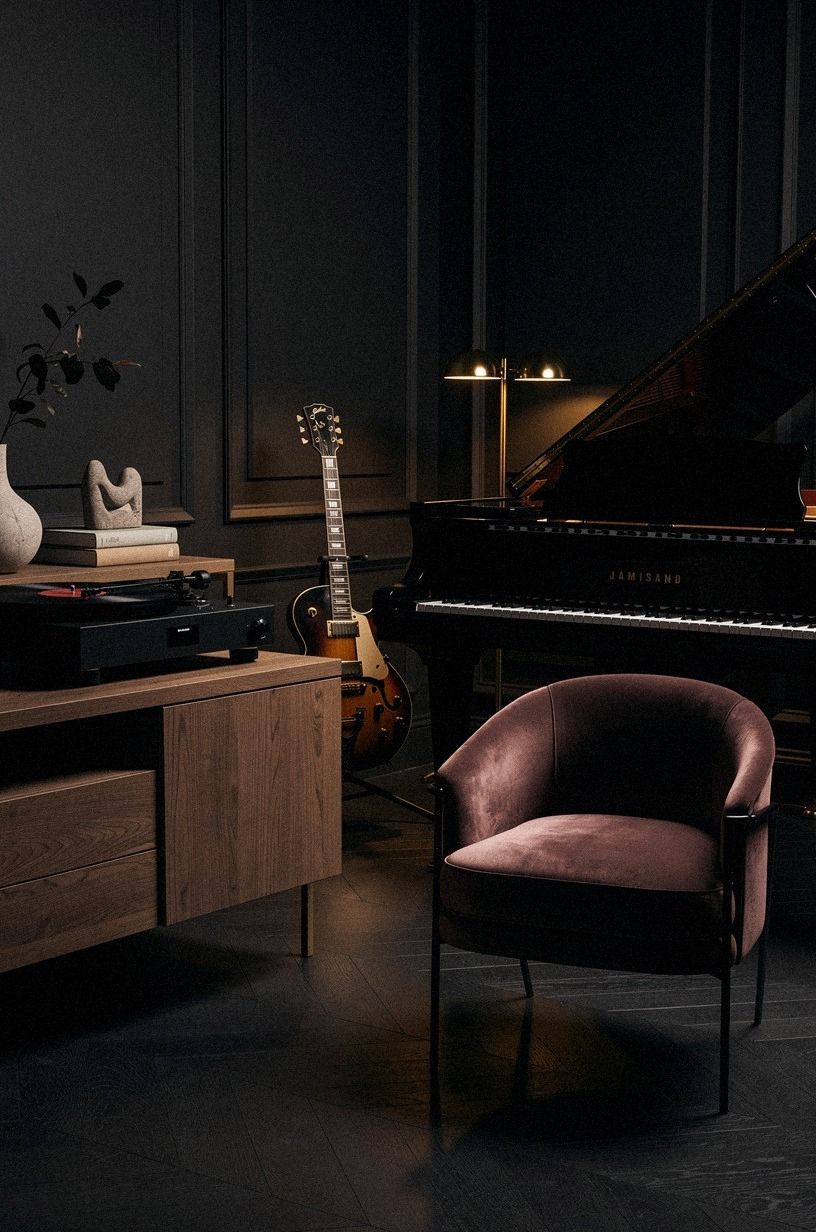
Floating walnut shelves give the turntable a warm frame without adding another bulky cabinet. Keep the shelf depth only as deep as the records and equipment require, then leave open space around the controls. Your hands need room to change a record, and your eyes need room to rest.
The Listening Ladder works best with three levels: records low, the player at hand height, and small objects above. A 3/4-inch solid walnut shelf has enough visual weight for a navy, white, and walnut palette, while warm travertine accessories add a soft mineral note. Don’t fill every shelf.
Empty space makes the arrangement feel refined.
– Walnut shelf. White ceramic bowl.
Warm travertine block. – Navy book spine. Small brass object.
One trailing plant.
Why let the shelves become another display wall when the records already bring pattern and color? Your collection should remain the star. A compact IKEA KALLAX birch-effect unit can hold overflow records below, while floating shelves keep the main composition light.
For another dark material palette, visit these dark moody mid-century modern bathroom ideas for walnut bathroom contrast.
The shelf hardware shouldn’t disappear completely if the style is industrial or vintage. Small black brackets can add structure, while concealed supports suit a cleaner room. You’ll gain a calmer effect when the shelf length follows the console rather than stretching across the entire wall.
5Carve a brass-lit niche for vinyl storage (The Brass Recess Rule)
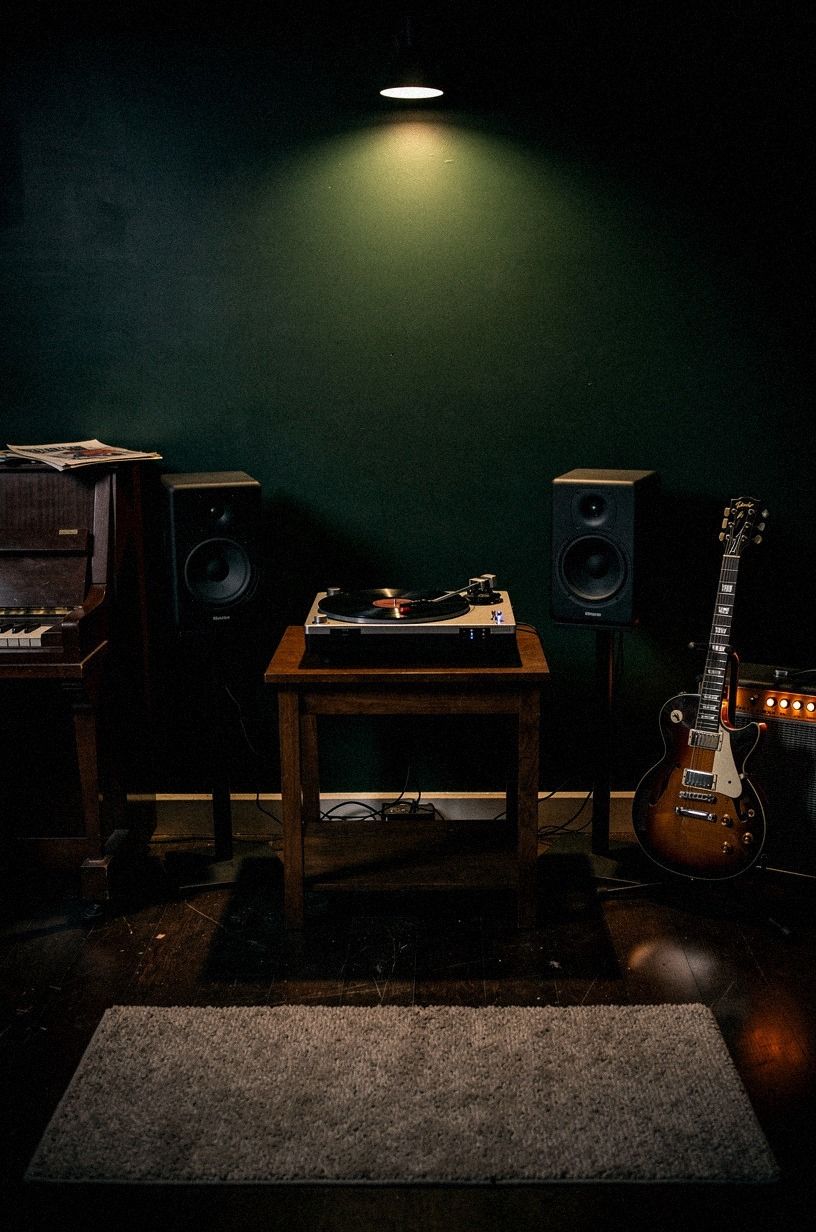
A recessed niche makes vinyl storage feel architectural, even when the project uses a shallow bookcase rather than built-in millwork. Use unlacquered brass edging or shelf supports so the metal can develop a gentle patina beside emerald, gold, and cream accents.
Keep the opening deep enough for record sleeves but narrow enough to preserve the wall’s rhythm. Warm lighting inside the niche will make the storage feel intentional without adding another freestanding cabinet.
6Anchor the room with a faded Persian rug (The Rug Overlap Test)
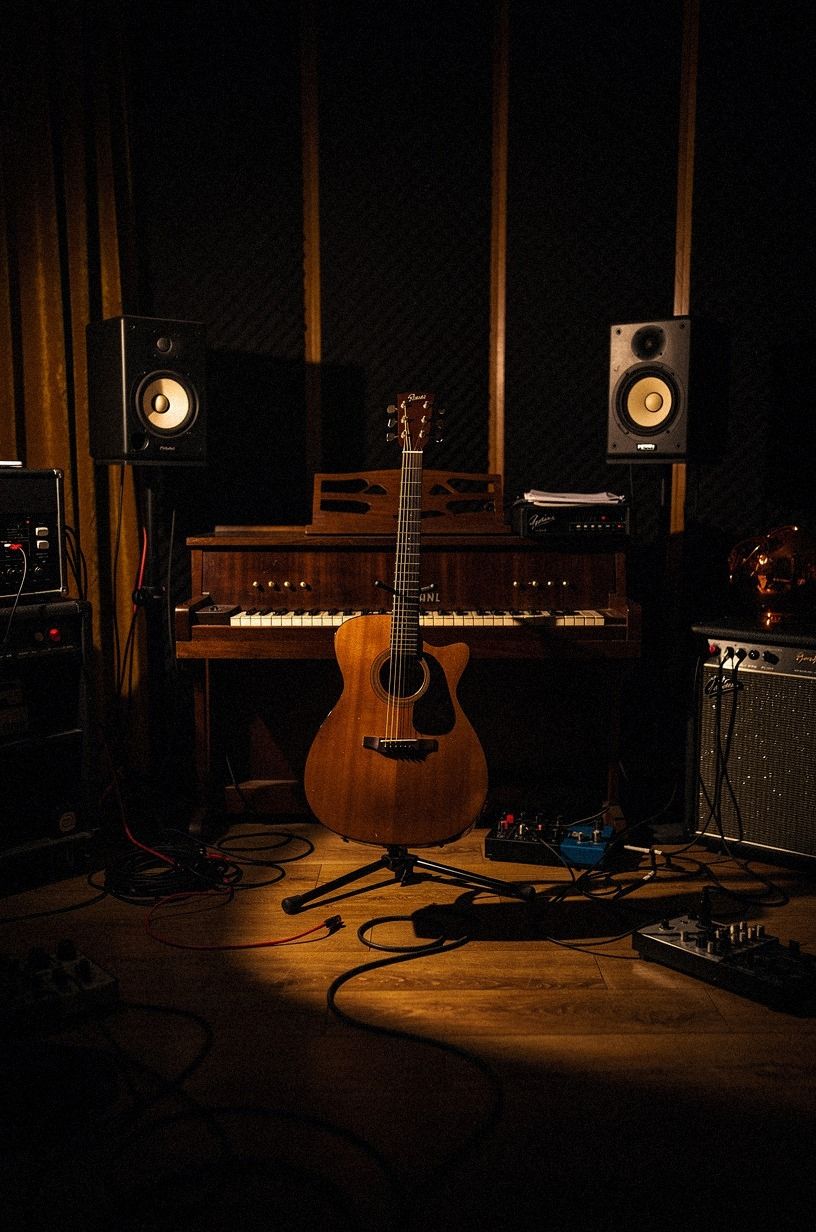
A faded Persian rug gives a moody music room its visual center and keeps furniture from floating around the speakers. Choose a pattern with forest green, rust, and natural oak tones, then make the rug large enough that the front legs of the seating overlap it. Your room will feel more settled immediately.
The Rug Overlap Test prevents the common mistake of choosing a small island of pattern. If only the coffee table sits on the rug, the chairs may look detached from the listening zone.
An oversized-chip terrazzo floor beneath the rug adds an earthy mineral layer and keeps the surrounding surface visually grounded. Avoid a very pale rug if the room already has cream walls and bright daylight.
– Rust border. Forest green field.
Natural oak furniture. – Faded medallion. Low rug pile.
Woven cotton fringe.
But don’t let the rug compete with busy concert posters. Your strongest version will repeat one or two rug colors in cushions, books, or lamp shades. A 600gsm Turkish cotton throw can bridge the red and green without adding another print.
For a richer palette study, look at dark green gold bathroom ideas for glam moody luxe for a green-and-brass palette. The principle transfers easily: one grounded pattern, several quiet echoes.
If the room is narrow, place the rug parallel to the longest wall. You’ll create a clearer path while keeping the seating and speakers visually connected. A rug pad will also prevent shifting under chair legs and reduce unwanted movement around the turntable.
7Paint the ceiling ink black for enveloping depth (The Ink-Ceiling Envelope)
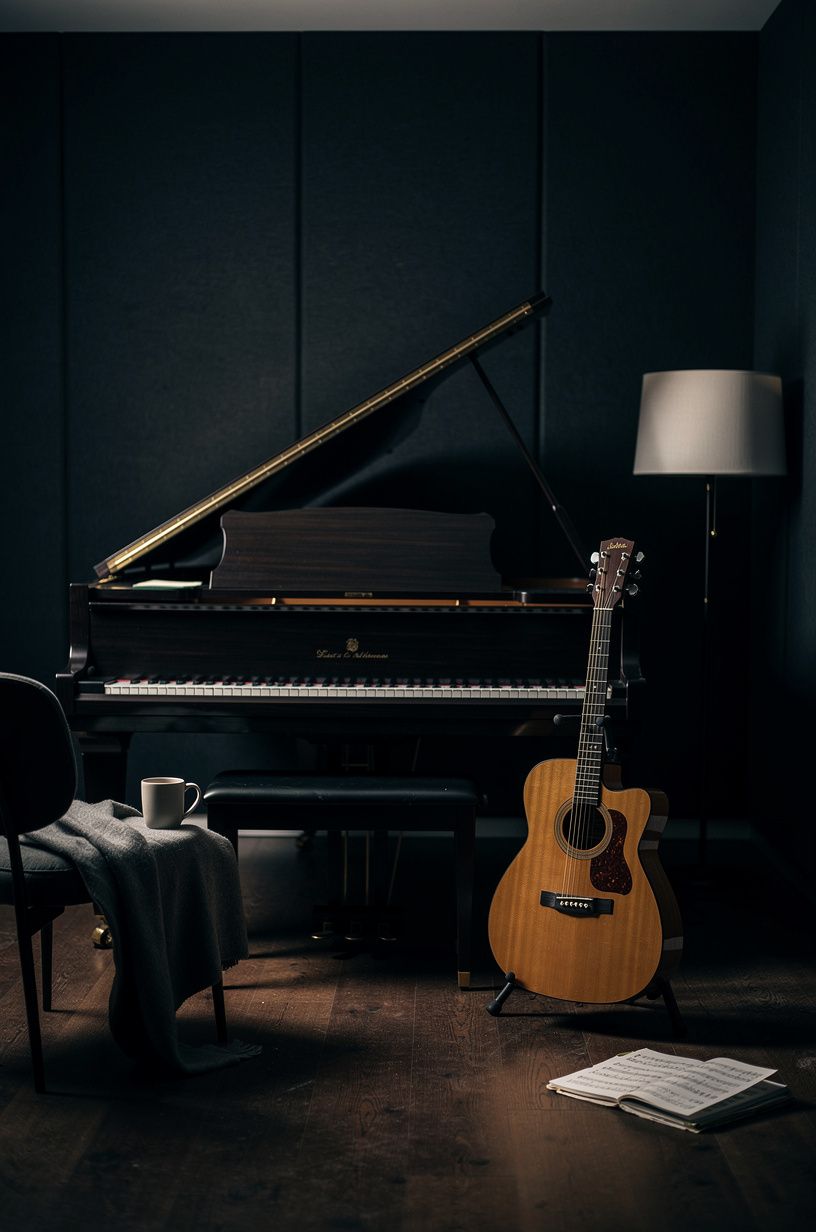
An ink-black ceiling can make a music room feel intimate, particularly when dusty rose upholstery and charcoal walls already create a deep palette. A hand-applied Venetian plaster finish adds subtle movement across the ceiling while keeping the surface matte and atmospheric.
Use warm brass lighting below the ceiling so the dark overhead plane feels intentional rather than heavy. The combination works best when the surrounding textiles remain soft and the floor carries a lighter natural tone.
8Upholster a low bench in oxblood leather (Leather over boucle for a recording room aesthetic)
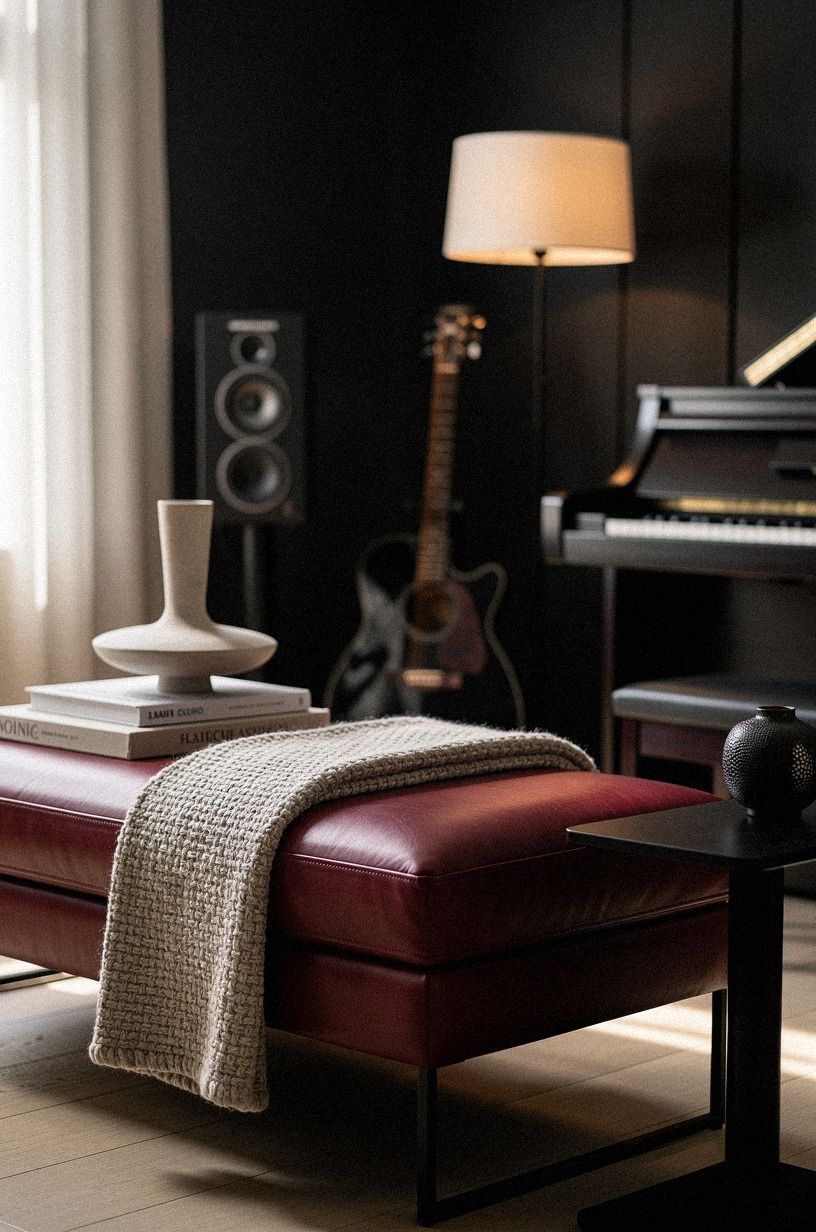
A low bench in warm camel leather brings a clear note of warmth to a room with warm white walls, camel accents, and black equipment. Add shagreen accents through a tray or cushion detail, then keep the seat low enough that it doesn’t block the speaker line. Your furniture will feel grounded without turning the space into a lounge set.
Leather over boucle works when the room already contains enough pale texture. Boucle is soft, but too much of it beside shagreen, linen, and cream walls can make the composition feel cloudy.
A camel tone gives the eye a warm color stop. Choose a matte or lightly pebbled finish so the bench looks better as it wears.
– Camel leather. Warm white wall.
Black steel legs. – Shagreen tray. Black cushion.
Low oak side table.
A West Elm Anton solid wood bench can provide a similar profile when custom upholstery isn’t practical. Your budget version could use a secondhand bench with a new seat cushion and durable leather-look fabric. For a compact dramatic scheme, browse these 23 dramatic moody powder room ideas to transform your space for a dramatic powder room palette, then borrow the contrast without copying the room.
Don’t make the bench too deep for the listening zone. You’ll want clear passage around the seating, especially when records are stored below the console. A narrow oak side table can handle drinks while preserving more floor area than a large coffee table.
9Cluster sculptural lamps beside the amplifier (The Three-Source Glow)
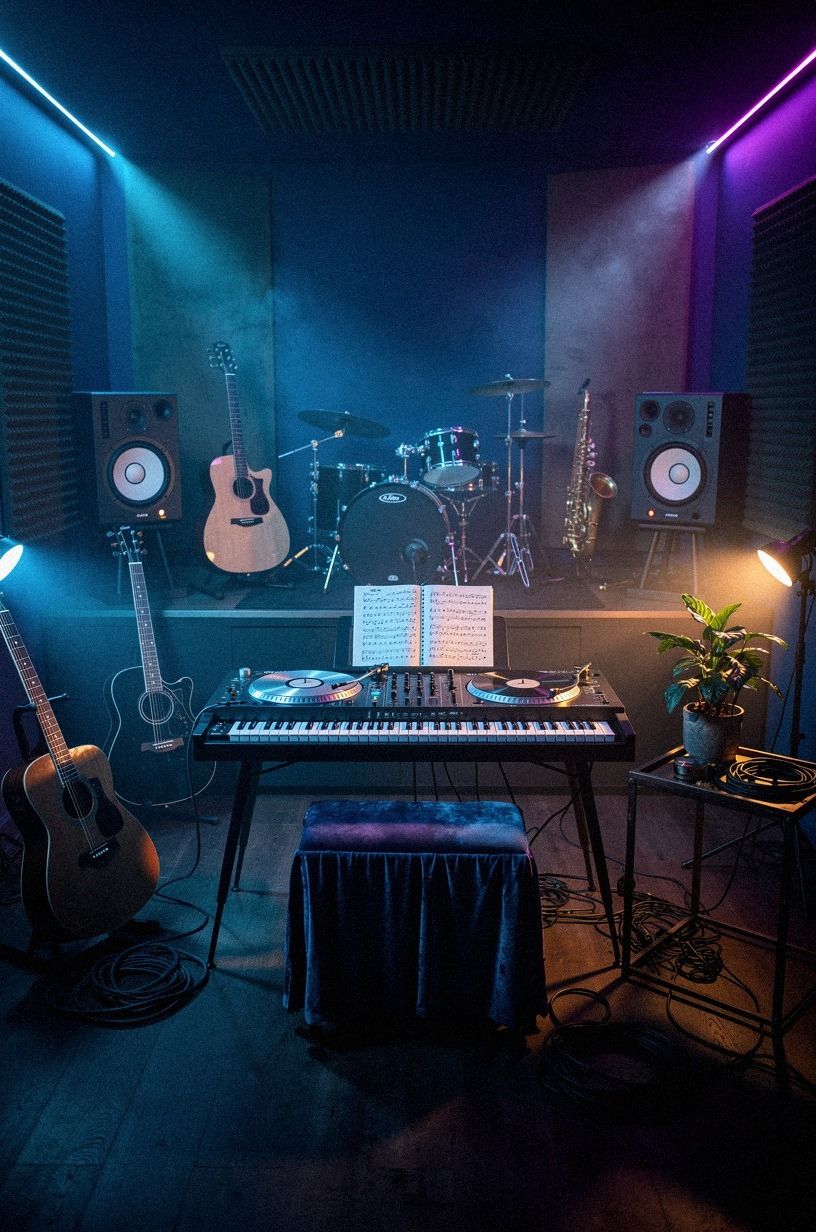
Place sculptural lamps beside the amplifier so the equipment area gets its own warm halo. Washed Belgian linen shades add a lived-in texture to a midnight blue, copper, and ivory palette without competing with the music equipment.
Use one taller lamp, one lower glow, and a small reflected light source rather than matching fixtures. Copper details can repeat through the lamp bases, while ivory shades keep the arrangement from becoming too dark.
10Line the walls with acoustic wood slats (The Slat-and-Softness Balance)
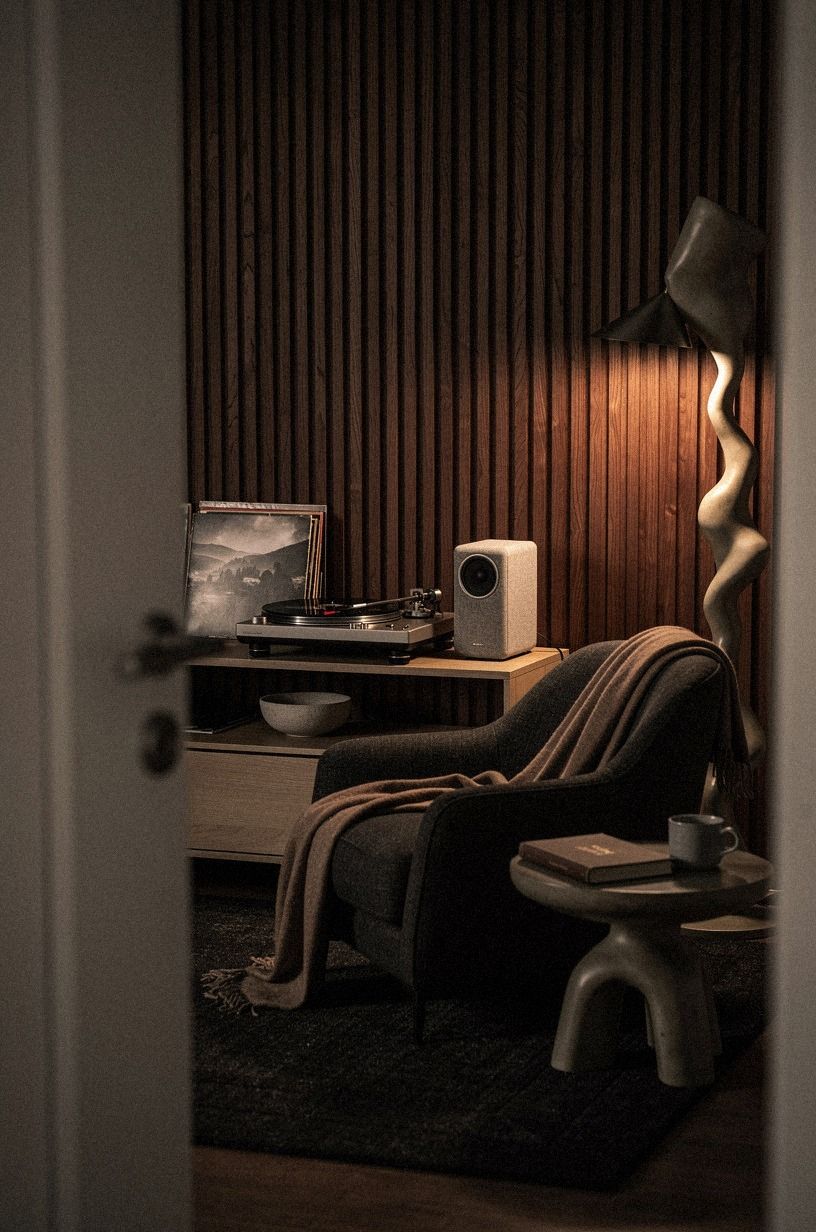
Acoustic wood slats give a cosy music studio a strong vertical rhythm, but the room still needs soft surfaces around them. Choose natural oak slats with a darker acoustic backing, then place them behind the main listening position or on the wall opposite the speakers. Your sage green, cream, and wood palette will feel organic instead of overly technical.
The Slat-and-Softness Balance depends on restraint. Covering every wall may make the room look like a recording booth, while one broad panel creates a deliberate architectural moment.
Add organic bouclé, a linen curtain, and a padded chair to counter the hard lines. If the panel is decorative rather than acoustic-rated, treat it as visual texture, not soundproofing.
– Natural oak. Black backing.
Sage green upholstery. – Warm cream curtain. Woven basket. Organic bouclé chair.
You can also use narrow battens over painted MDF for a lower-cost version. Benjamin Moore White Dove OC-17 behind the slats keeps the cream tone warm, while the wood supplies contrast. A Wayfair Hashtag Home cabinet can hold cables below without interrupting the rhythm.
For a related material mix, explore dark academia whiskey room ideas for moody scholarly vibes for a dark academia timber palette.
A slatted wall shouldn’t sit directly behind every speaker unless the acoustic design supports it. Your layout will work better when the panel handles one visual or acoustic task clearly. Leave space for a low bookcase, a chair, or a narrow plant stand so the wall doesn’t become a single uninterrupted block.
11Style a sculptural piano against saturated walls (The Saturation Anchor)
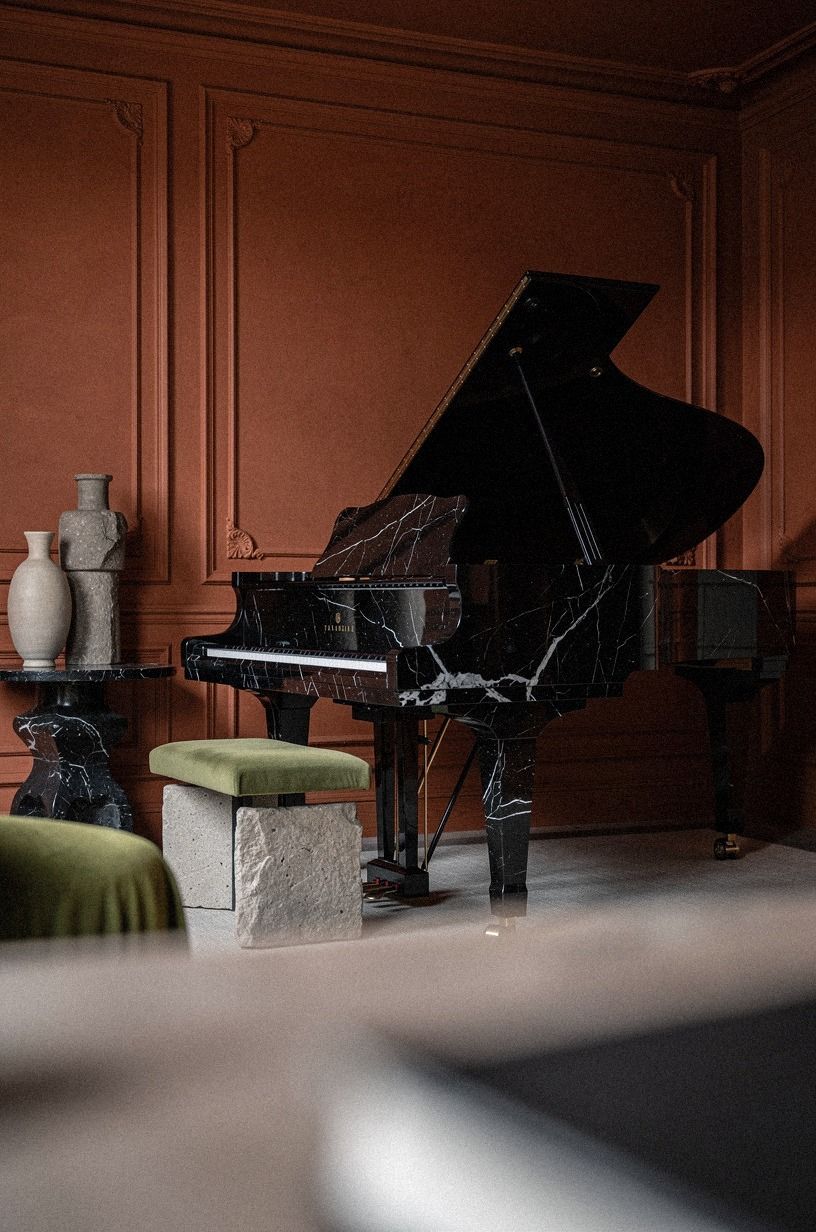
A piano becomes a stronger focal point when it sits against a saturated wall rather than a pale blank surface. Use terracotta, olive, or deep clay behind the instrument, then repeat one tone in the seating or artwork. Your piano will read as part of the architecture, while Nero Marquina black marble with white veins adds polished contrast.
The Saturation Anchor keeps the rest of the wall quiet. Avoid a gallery arrangement directly above the piano unless the artwork is large and calm.
A single stone object, a low branch, or a narrow picture light can provide enough detail. If you’re choosing paint, Farrow & Ball Pigeon No.25 offers a muted gray-green option that won’t fight natural oak.
– Nero Marquina black marble. Terracotta wall.
Olive textile. – Honed stone bowl. Natural oak frame.
Small brass light.
Don’t push every object toward the same dramatic shade. Your room still needs a pale note to keep the piano area welcoming.
Article Sven tan leather seating can introduce that lighter layer without looking bright or casual. For another saturated green reference, visit dark green powder room ideas rich moody and hard to get wron for saturated green powder room color.
If the piano is glossy, balance it with matte plaster, brushed metal, or a wool textile nearby. You’ll avoid a room full of competing reflections. The strongest arrangement leaves enough wall visible to make the instrument feel framed rather than crowded.
12Build a cocktail station beside the speaker cabinet (The Two-Station Rule)
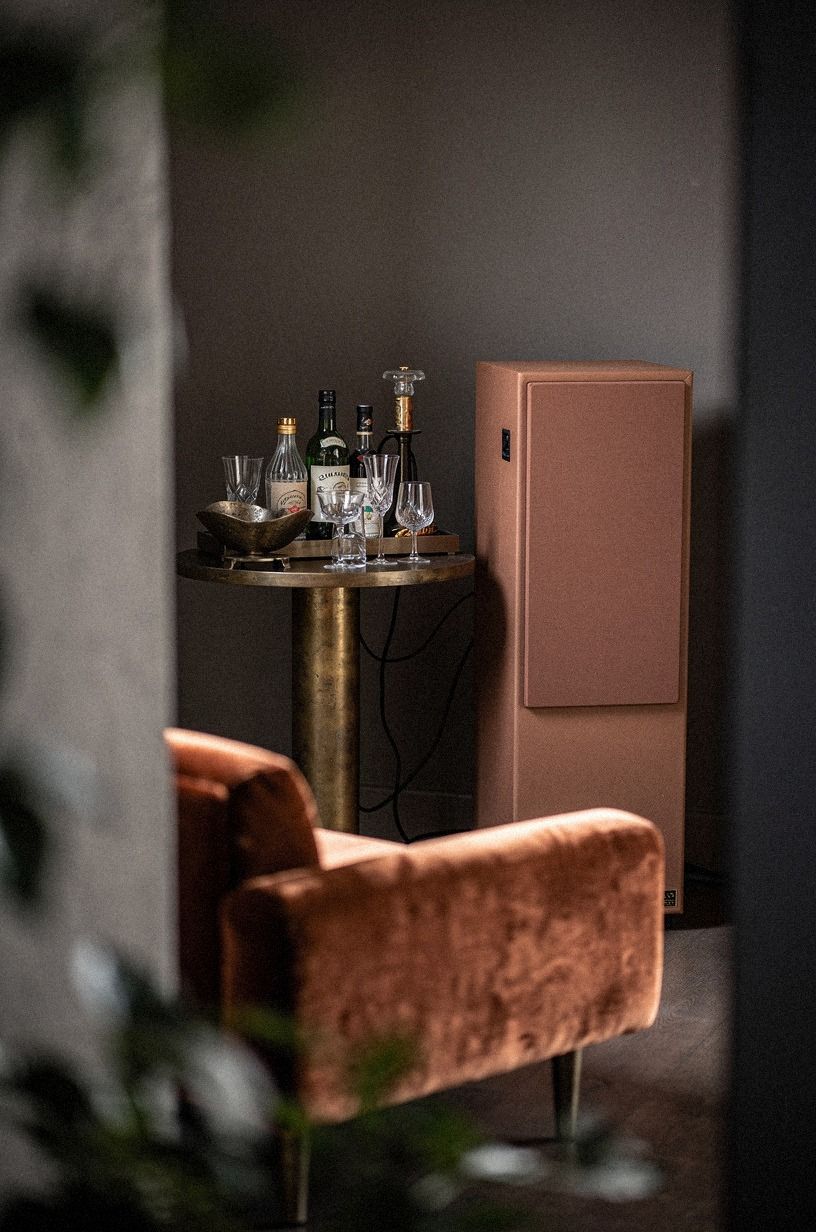
A compact cocktail station beside the speaker cabinet makes the music room feel ready for guests without turning it into a bar. Use a deep-pile mohair velvet runner on the cabinet or shelf, then add aged brass tools, linen napkins, and one cream ceramic tray. Your clay, linen, and brass palette will feel warm, tactile, and considered.
The Two-Station Rule separates sound equipment from serving items. Keep the record player and amplifier on one surface, then place drinks on a nearby cabinet with a washable tray.
This protects the equipment from spills and gives guests an obvious landing point. A small station is enough; oversized bar furniture can steal attention from the speakers.
For a small room, your station can be a narrow console with a 12-inch-deep tray and wall-mounted glass storage. Don’t place it directly beside a subwoofer if vibration could disturb bottles or glassware. A CB2 Primitivo bouclé accent stool can add seating, though a simple oak stool may leave more floor space.
If you don’t serve drinks often, the same station can hold coffee, books, or record-cleaning supplies. You’ll keep the furniture useful while maintaining a clear separation from the amplifier. A cream ceramic tray gives the surface one composed center instead of several scattered objects.
The Editorial Case for Dark Music Rooms
Dark music rooms are having a strong design moment because the room supports slower, more tactile activities. Streaming has made music easy to access, but physical records, framed posters, and visible equipment give listening a sense of occasion.
Your room doesn’t need to look like a vintage club. It needs enough texture and contrast to make the activity feel distinct from everyday screen time.
The strongest schemes aren’t built from one dark paint color. They combine a low-reflective wall, a warmer material, and a light source that lands exactly where you need it.
Charcoal beside walnut feels grounded. Terracotta beside stone feels earthy.
Olive beside aged brass feels refined. A pale linen curtain or cream lamp shade keeps the darker palette from closing in.
Budget changes the order of decisions, not the quality of the result. Start with paint, a rug, or curtains if the existing furniture is useful.
Add a statement lamp before replacing a functional console. Save custom millwork for the moment when storage, acoustics, and proportions all justify the expense.
Your first purchase shouldn’t create a new problem elsewhere.
There is also a practical reason to leave breathing room around speakers and records. Open floor area makes cleaning easier, reduces visual clutter, and lets the room serve more than one purpose. A reading chair, a low bench, and a clear path can support listening, conversation, or quiet work.
That’s the real appeal of a moody music room: it feels special without demanding constant styling.
A dark room can still feel generous when your materials vary in finish. Pair matte paint, soft wool, aged metal, and natural timber instead of repeating one surface everywhere.
You’ll create depth through touch and reflection, even when the palette stays restrained. For more shadow-rich inspiration, explore dark moody speakeasy decor ideas for ultimate cozy drama for a speakeasy wall color reference.
What People Always Want to Know
What is the best Dark & Moody Music Room Ideas for Dramatic Vibes for a small dark moody music room?
A floating console with IKEA KALLAX birch-effect storage and one low bench works best for a small room. You’ll gain record storage without blocking the floor, while a faded rug and wall-mounted lamps keep the layout open. Your strongest palette will use one dark wall, warm wood, and pale linen.
Where can a Dark & Moody Music Room Ideas for Dramatic Vibes pieces be bought on a budget?
IKEA, Wayfair, and Target offer useful consoles, lamps, and storage. Facebook Marketplace and local thrift shops can provide better wood pieces for less. Your best value usually comes from repainting a sturdy cabinet and replacing the pulls, rather than buying a fragile decorative unit.
How much does a Dark & Moody Music Room Ideas for Dramatic Vibes makeover cost?
A typical makeover can range from about $200 to $800 for paint, textiles, art, and organization. A larger update may reach $1,500 to $5,000 with accent furniture, lighting, and a rug. Your existing console, speakers, and records can remain, which keeps the first phase manageable.
Can a Dark & Moody Music Room Ideas for Dramatic Vibes look work on a budget?
Yes, and your first three moves can cost very little: rearrange the furniture, layer lamps already available, and paint one wall. Add secondhand curtains or a used rug next. A single warm bulb and a tidy cable route can change the room more than several small decorations.
Is a Dark & Moody Music Room Ideas for Dramatic Vibes scheme worth it in a small space?
Yes, because a small room can make texture and low light feel more enveloping. Use a wall-mounted console, a 5-by-7-foot rug, and one bench instead of multiple chairs. Your layout should keep the speaker path open and leave a clear walking route near the door.
Is Dark & Moody Music Room Ideas for Dramatic Vibes decor suitable for a rental?
Yes. Use removable wallpaper, a tension curtain rod, plug-in sconces, and freestanding acoustic panels.
Benjamin Moore White Dove OC-17 can remain the base color while textiles provide the darker mood. Your landlord-friendly plan should avoid permanent wiring, heavy built-ins, and adhesive products without removable backing.
For a final color reference, browse dark green powder room ideas rich moody and hard to get wron for saturated green powder room color. The same restrained contrast can work behind a piano, console, or reading chair.
Where to Start First
Start with the faded Persian rug. Its overlap connects the seating, speakers, and console before any expensive change, and the rust and green tones give every later layer somewhere to land. Pin the 23 dramatic moody powder room ideas to transform your space for a dramatic powder room palette, then build outward.