Blue cottage bathroom ideas can range from a $200 paint refresh to a $30,000 high-end renovation, depending on tile, plumbing, and vanity choices. The strongest rooms pair one blue surface with warm wood, aged metal, and useful texture. Your bathroom doesn’t need a full remodel to feel charming, calming, and lived-in.
- Paint beadboard in a misty blue below wallpaper (The Lower-Third Rule)
- Frame the mirror with painted cottage trim (The Picture-Frame Perimeter)
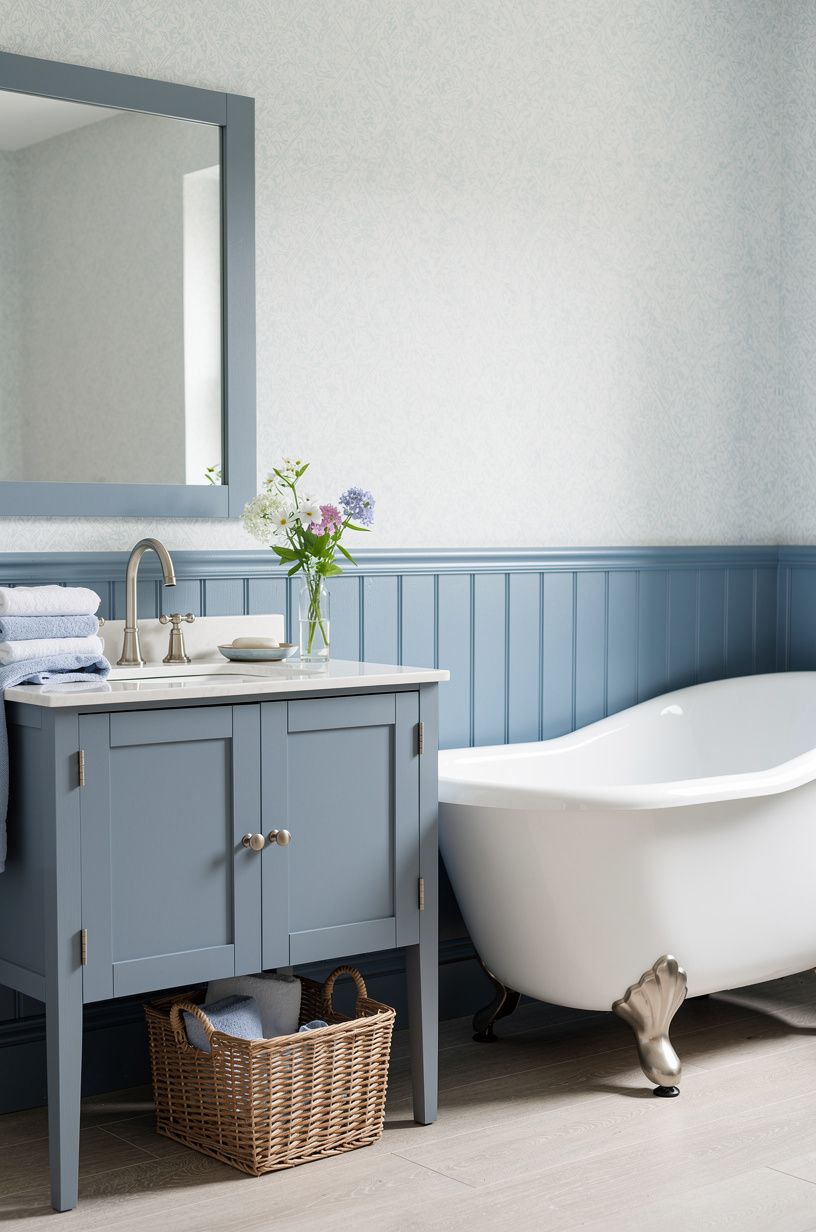
- Install a skirted vanity in faded navy (The Soft-Storage Shift)
- Pair unlacquered brass with powder-blue tile (Brass Over Chrome)
- Choose floral wallpaper above pale blue wainscoting (The Bloom-and-Blue Balance)
- Float a reclaimed wood shelf over the sink (The Two-Wood Rule)
- Hang a vintage lantern beside the mirror (The Three-Height Light Stack)
- Tile the shower niche in blue penny rounds (The Small-Surface Spark)
- Layer ticking-stripe curtains beneath a window (The Soft-Window Frame)
- Paint the ceiling a soft coastal blue (Can This Work in a Small Room?)
- Style woven baskets beneath a pedestal sink (The Open-Leg Storage Plan)
- Add scalloped edging around the vanity (The Gentle Border Effect)
- Swap chrome fixtures for aged brass (Aged Brass Over Chrome)
- Display blue transferware on open shelves (The Collected-Plate Method)
- Use checkerboard flooring in blue and cream (The Two-Tone Floor Anchor)
- Hang botanical prints inside matching blue frames (The Repeated-Frame Rhythm)
1Paint beadboard in a misty blue below wallpaper (The Lower-Third Rule)
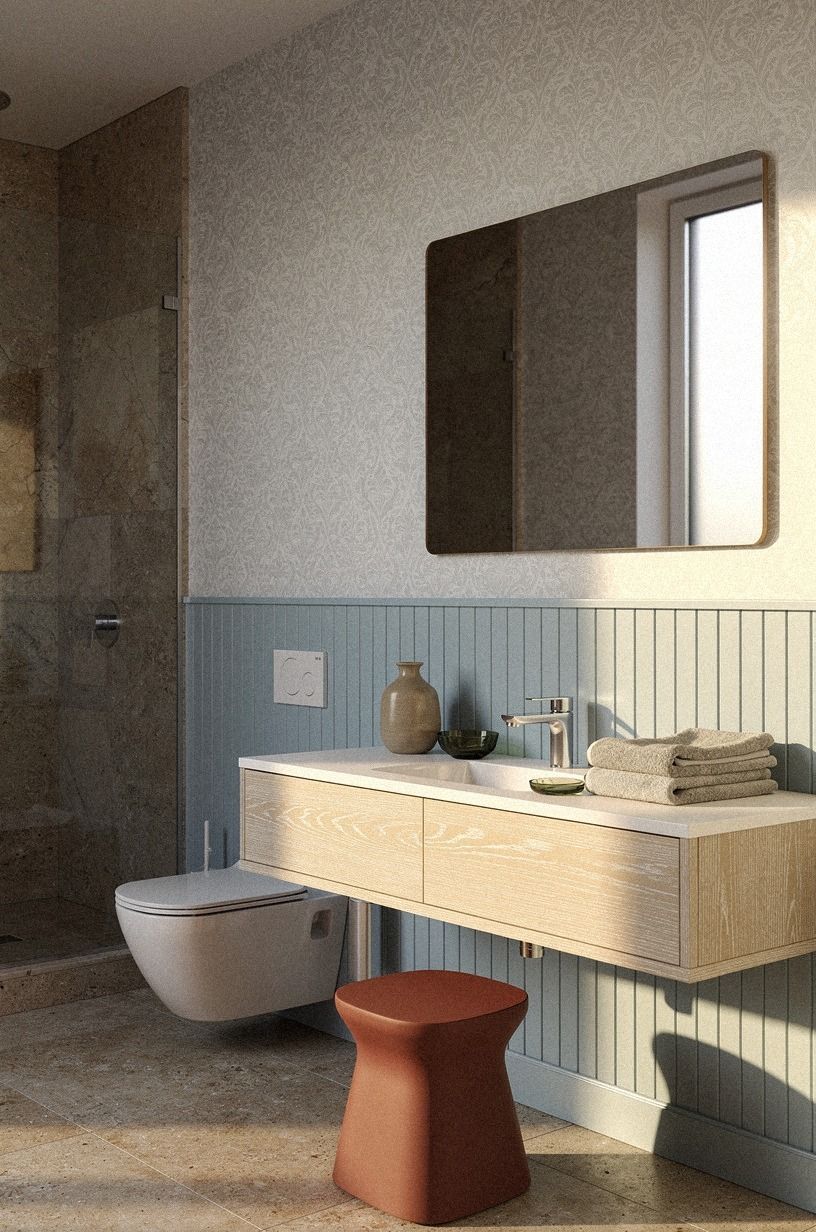
Paint the lower third of your walls in a misty blue, then carry a small-scale wallpaper above it. Benjamin Moore Sea Haze gives beadboard a soft, coastal depth without making a compact bathroom feel dark. Your eye will read the horizontal line as structure, while the wallpaper adds cottage character.
Choose 32 to 36 inches of beadboard when your room has standard vanity proportions. Cerused white oak accessories keep the palette earthy, especially beside terracotta pottery and olive-green towels. You’ll want the trim line to sit below the mirror so the wall doesn’t look chopped.
The best wallpaper pattern has a quiet background and one repeatable motif. Stone-look porcelain tile near the floor can ground the misty color, but glossy white tile may feel too sharp beside it. Your room should feel collected, not showroom-matched.
And don’t let the blue stop at the door trim. Continue it around the room, then use a narrow unlacquered brass rail for towels. For more cottage color pairings, browse these blue farmhouse bathroom palette ideas.
2Frame the mirror with painted cottage trim (The Picture-Frame Perimeter)
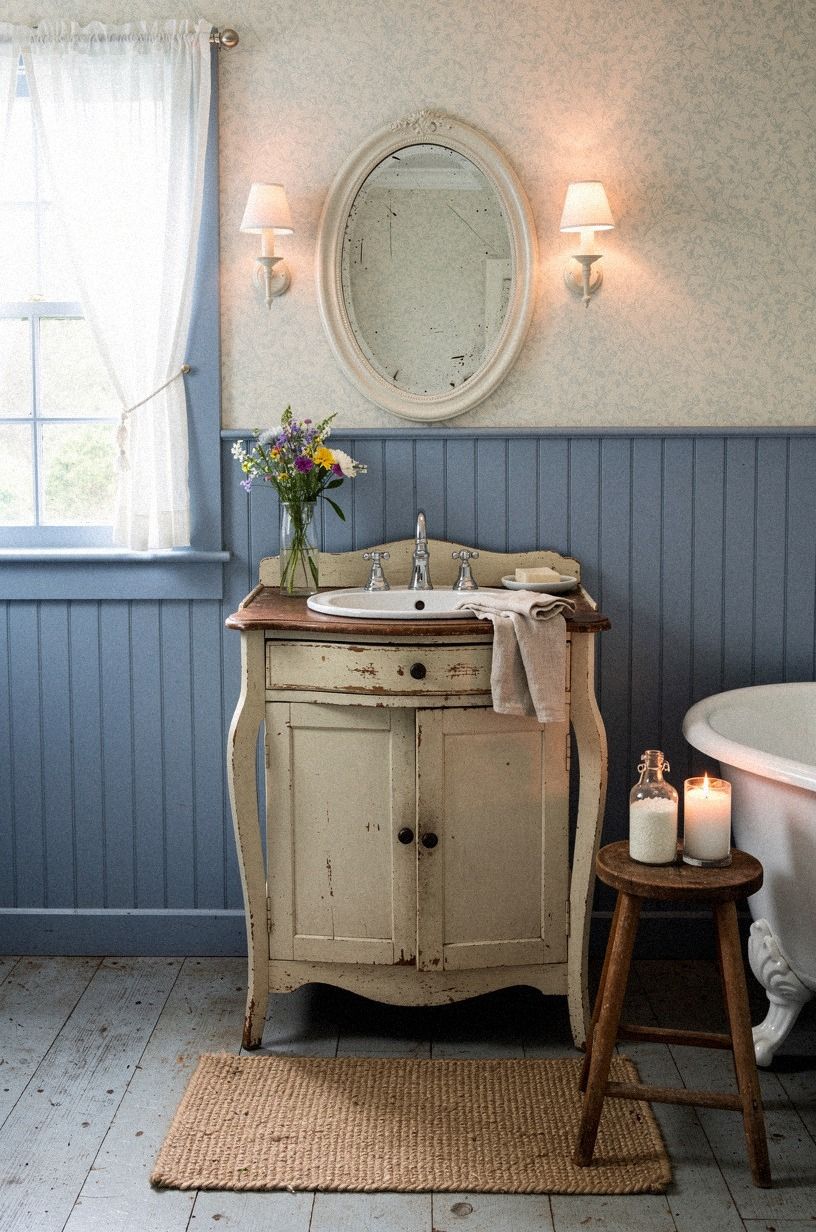
A painted trim frame can make a plain mirror look architectural for very little disruption. Benjamin Moore White Dove around the mirror works with clay accessories, linen hand towels, and aged brass hardware. Your mirror will feel built into the room instead of pasted onto the wall.
Use 3- to 4-inch casing with a slightly eased edge, then paint the frame one shade deeper than the wall. Backlit translucent onyx can add a gentle glow behind a floating shelf, but a framed mirror should remain the visual anchor. You don’t need ornate carving for a cottage effect.
Keep the trim corners crisp, especially if your vanity has a backlit translucent onyx top. The stone brings enough movement, so your frame can stay quiet. A narrow ledge below the mirror gives you room for one bud vase and a folded towel.
But avoid stacking too many small objects around the sink. Your eye needs one calm opening around the reflection. If the bathroom is narrow, use a vertical frame and warm bulbs so the room feels bright, refined, and welcoming!
3Install a skirted vanity in faded navy (The Soft-Storage Shift)
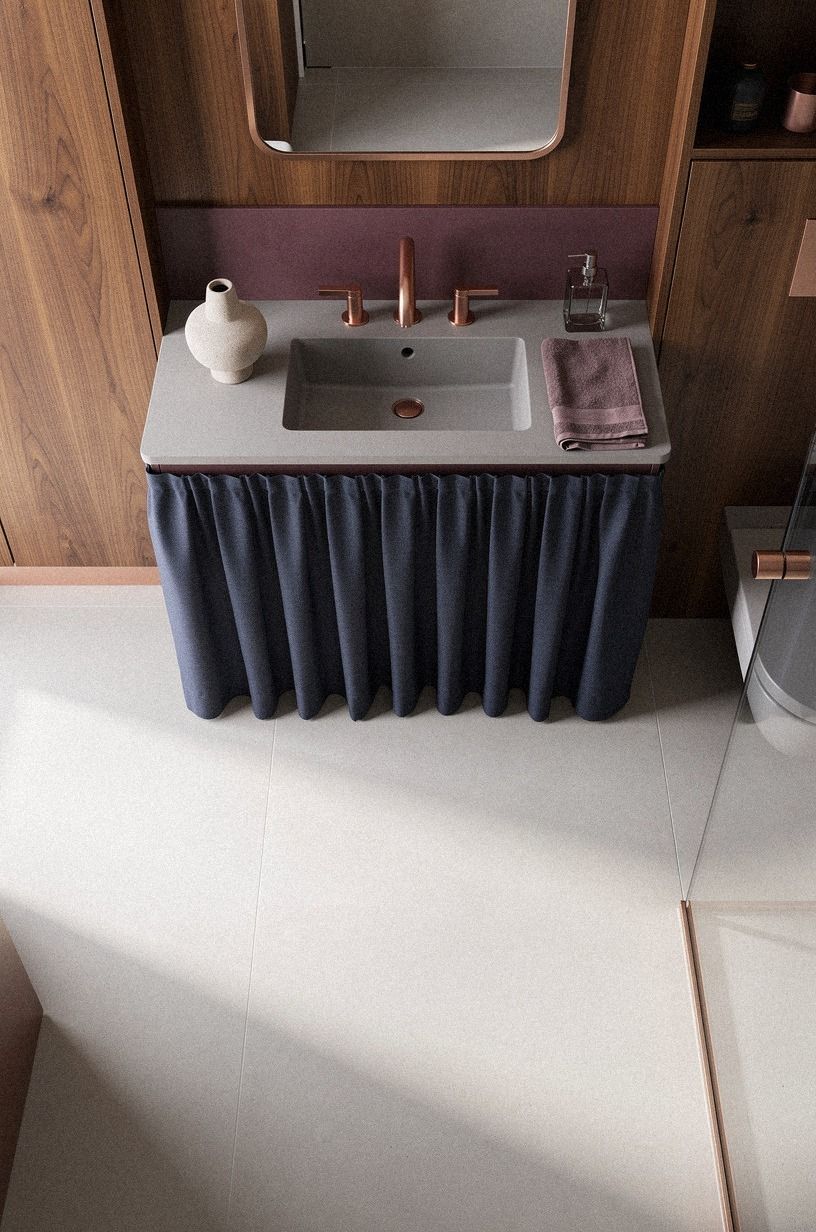
A skirted vanity gives your bathroom the relaxed look of a cottage washstand while hiding plumbing and spare supplies. Farrow & Ball Hague Blue No.30 is a strong faded-navy alternative when your room has plum, gray, or rose-gold accents. Your vanity will feel grounded without looking heavy.
Keep the counter between 32 and 36 inches high for a familiar working height. Book-matched walnut on the counter adds natural warmth, while a washable cotton skirt softens the lower edge. You’ll want the fabric to stop just above the floor so cleaning stays practical.
Typical US renovation costs vary sharply by scope:
A simple vanity refresh can stay near the budget tier if your plumbing remains in place. Aged rose-gold hardware can look polished beside navy, but overly shiny metal may make the room feel formal. Your best result comes from texture, not extra ornament.
4Pair unlacquered brass with powder-blue tile (Brass Over Chrome)
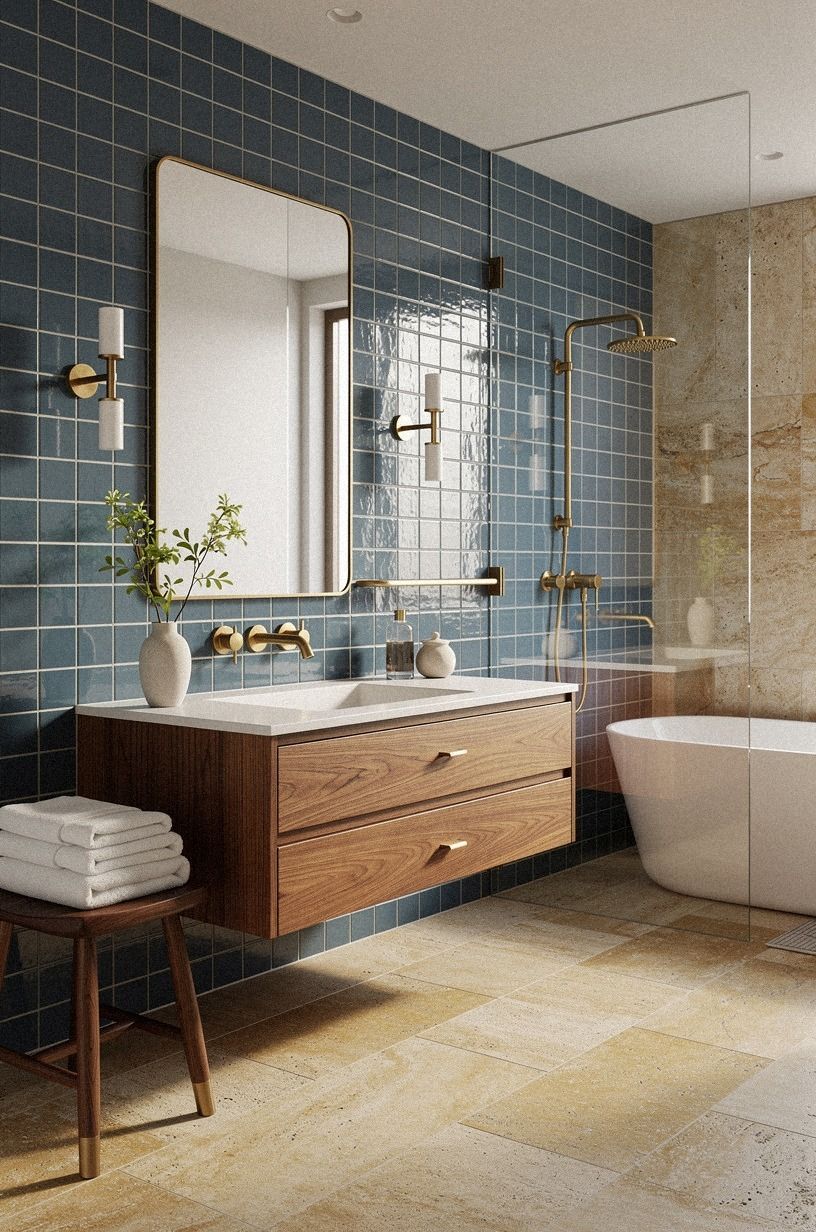
Pair powder-blue tile with unlacquered brass developing soft patina for a bathroom that grows warmer over time. Your walls can stay pale and airy while the hardware gains character through daily use. This contrast works especially well with navy towels and walnut shelving.
Choose tile with a mild variation rather than a perfectly uniform surface. Warm travertine with natural pitting keeps the floor from feeling too polished, and its sandy color balances the cool blue. You’ll want grout to sit close to the tile color so the room doesn’t become visually busy.
A bathroom with a standard 60-by-30-inch tub can carry this palette easily. Navy cotton towels echo the metal’s depth, while white ceramic vessels prevent the brass from taking over. Your accessories should repeat one color twice, then stop.
And if chrome already fills your bathroom, replace only the faucet and mirror frame first. Your room will shift without requiring a full renovation. The vintage blue bathroom color pairing offers another route toward a warm, charming finish.
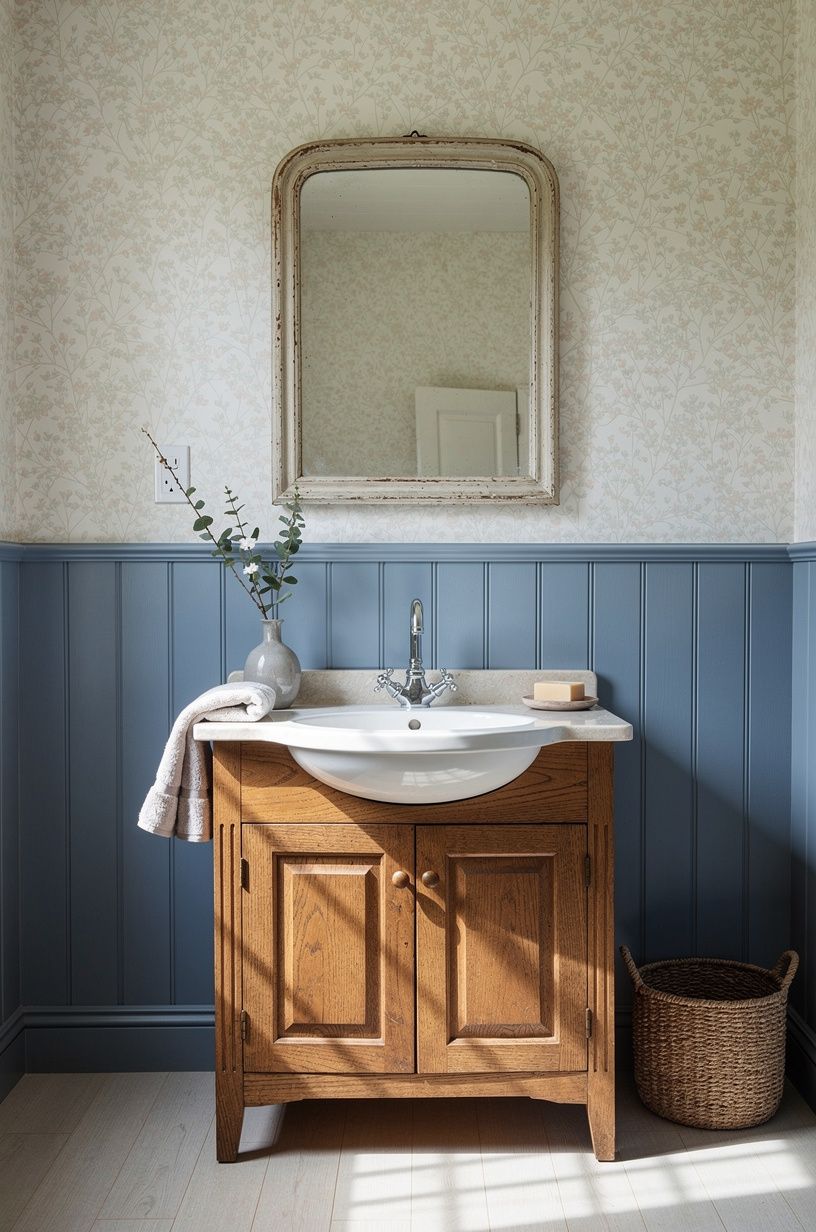
5Choose floral wallpaper above pale blue wainscoting (The Bloom-and-Blue Balance)
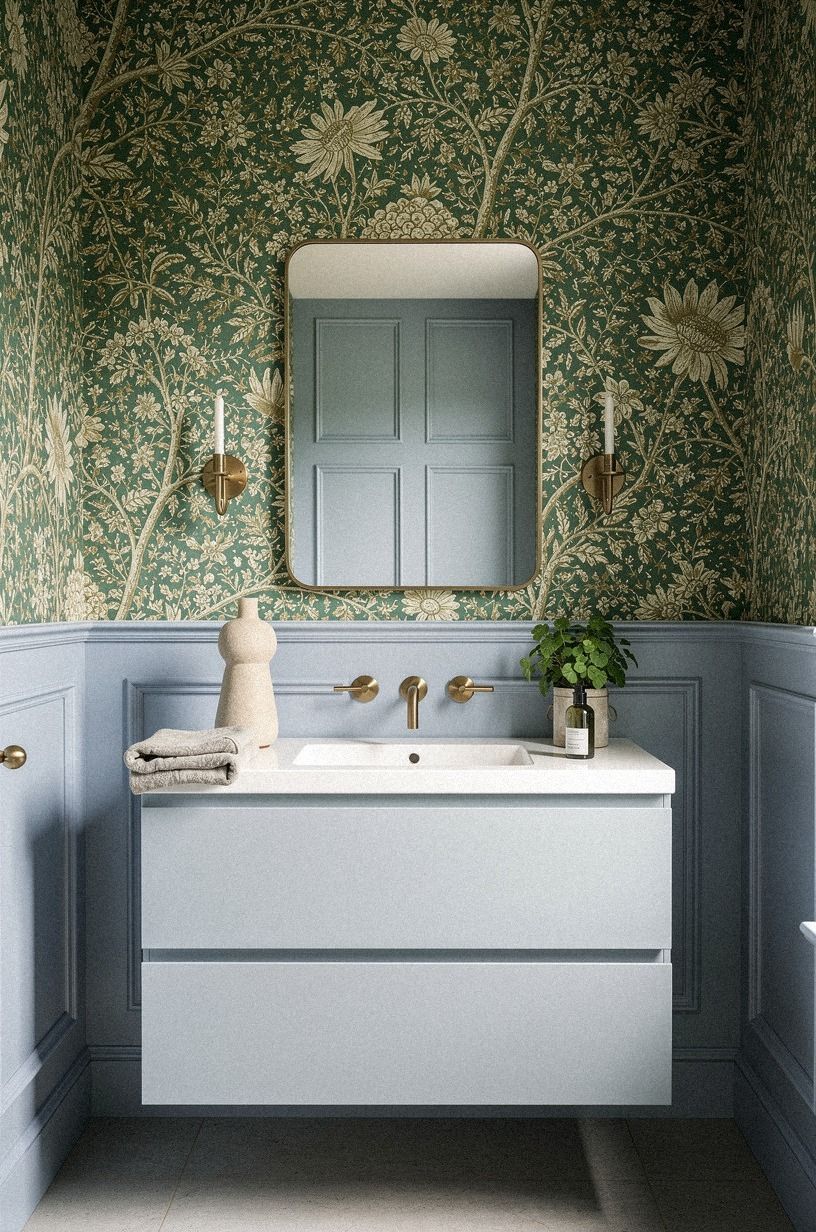
Floral wallpaper above pale blue wainscoting creates a traditional cottage feeling without making your bathroom look overly sweet. Sherwin-Williams Sea Salt SW 6204 works beneath emerald, gold, and cream patterns because its blue-green undertone stays gentle. Your walls will feel layered rather than flat.
Select a wallpaper with flowers smaller than your palm if the room is compact. Unlacquered brass developing soft patina adds a muted glint, while cream ceramic soap dishes keep the pattern from feeling crowded. You don’t need matching floral accessories.
The wainscoting should have a durable satin finish near the sink. Hand-glazed emerald zellige can repeat the green in a shower niche, but using it across every wall may compete with the wallpaper. Your strongest version keeps one surface decorative and the other restrained.
Try the pattern beside your existing lighting before committing. Cream linen curtains soften the window and make the palette feel peaceful. A botanical print can work here, but a second busy motif usually weakens the room.
6Float a reclaimed wood shelf over the sink (The Two-Wood Rule)
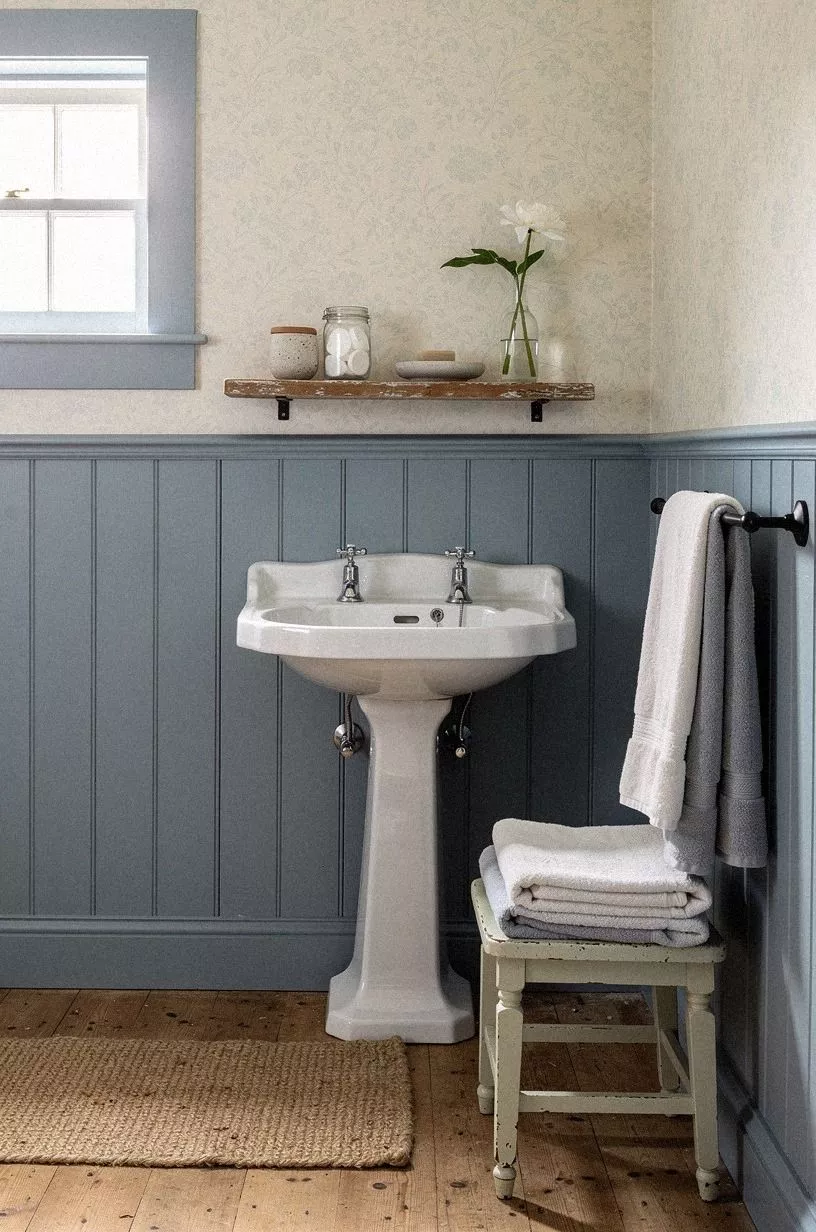
A floating shelf adds useful storage without crowding a small sink wall. Reclaimed weathered oak looks especially good with forest green paint, rust pottery, and natural oak details. Your shelf should be deep enough for soap and a small vessel, but not so deep that it interrupts the mirror.
Keep the shelf at least several inches above the faucet splash zone. Oversized-chip terrazzo nearby can echo the shelf’s irregular texture, while a smooth ceramic basin gives your eye a quiet resting place. You’ll want the brackets hidden or painted so the wood feels visually light.
Use two wood tones at most. Natural oak and reclaimed oak can sit together when one has a clearly paler finish, but adding walnut, teak, and bamboo will make your bathroom feel scattered. Your best styling move is restraint.
The shelf needs one practical item, one soft item, and one organic item. Folded cotton cloths, a stone soap tray, and a small leafy plant are enough. For more warm cottage combinations, explore these Tuscan bathroom material ideas.
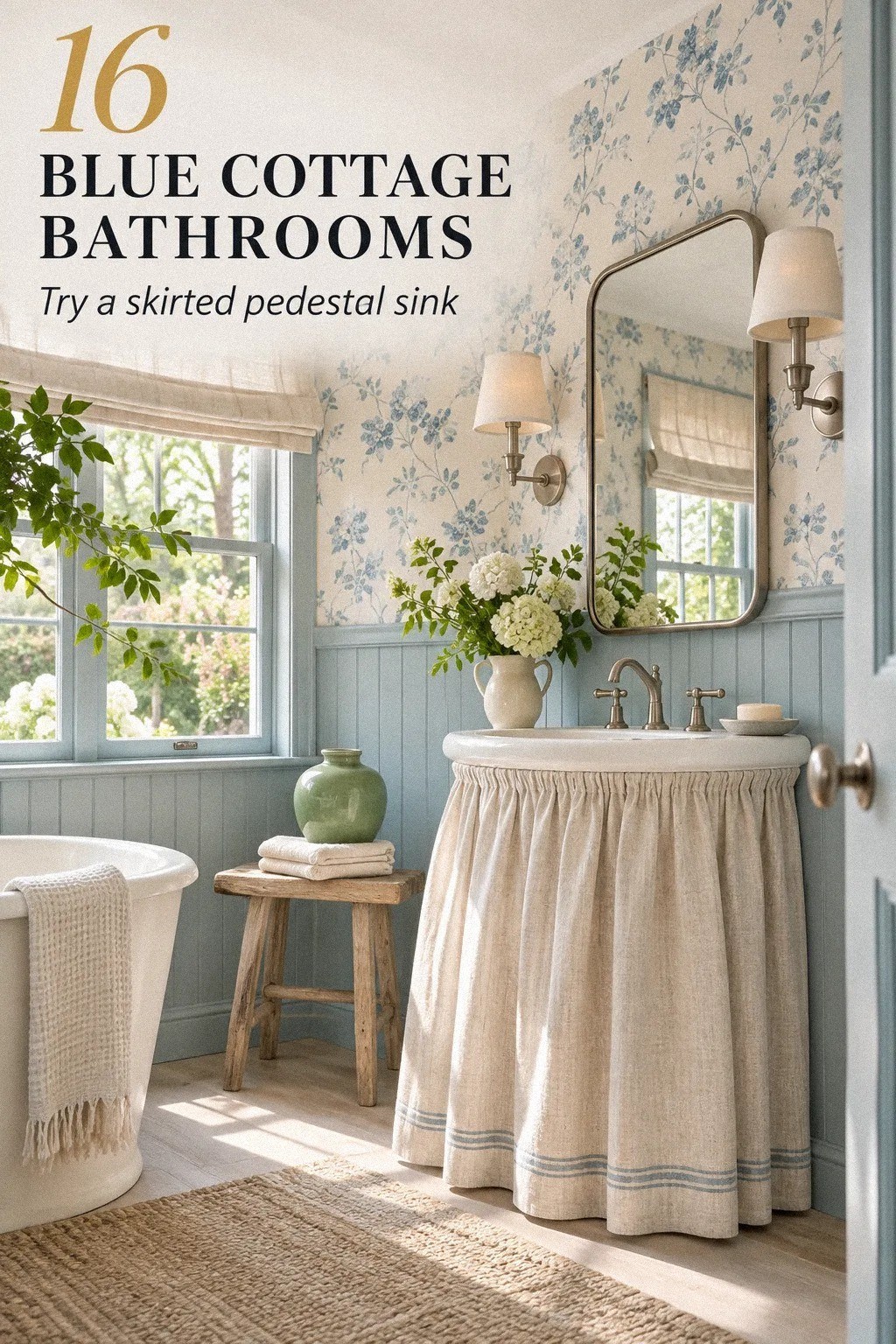
7Hang a vintage lantern beside the mirror (The Three-Height Light Stack)
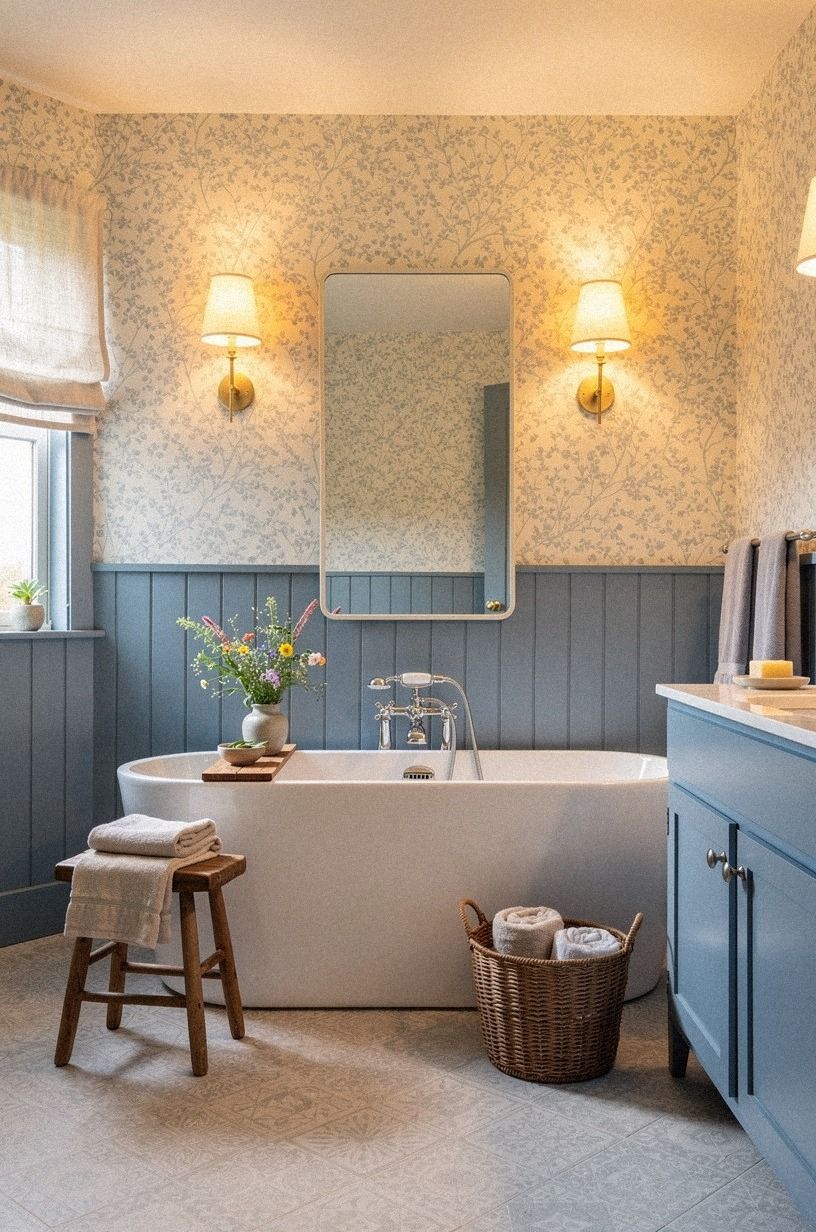
A vintage lantern beside the mirror can bring the glow of an old cottage hallway into your bathroom.
8Tile the shower niche in blue penny rounds (The Small-Surface Spark)
Blue penny rounds give a shower niche a compact field of color without covering the entire room. Blue glass penny tile reflects small points of light, making the niche feel more detailed than its size suggests. Your shower can remain warm white, camel, and black around it.
Use a contrasting grout only when the tile pattern needs definition. Shagreen-textured accessories outside the shower can repeat the tactile quality, but glossy black grout may make a small niche look busy. You’ll want the shelf surface slightly sloped for drainage.
A comfortable shower is at least 36 by 36 inches, so a niche should fit the wall without stealing useful elbow room. Warm white ceramic tile makes the surrounding shower feel bright and calm. Your blue accent can then carry the cottage mood.
Place bottles in one row rather than filling every ledge. Camel-toned cotton towels soften the black details and keep the room welcoming. For a broader wallpaper direction, see these moody powder room wallpaper ideas.
9Layer ticking-stripe curtains beneath a window (The Soft-Window Frame)
Ticking-stripe curtains make a bathroom window feel relaxed and tailored at the same time. Washed Belgian linen in ivory and midnight blue suits copper accents without becoming nautical. Your window will gain softness while still letting daylight reach the sink.
Mount the rod several inches above the window casing and let the fabric finish just above the sill. Copper curtain rings bring a small warm note, while an ivory lining keeps the pattern from looking too dark. You’ll want the fabric to dry quickly after steamy showers.
A tension rod works for renters, especially with lightweight panels. Linen-blend ticking stripe is easier to wash than heavy drapery and still gives the room a lived-in texture. Your best choice has a narrow stripe, not a broad farmhouse band.
And keep the sill mostly clear. One small ceramic cup or clipped herb is enough. Midnight blue paint on a nearby cabinet can connect the window treatment to the rest of the bathroom without repeating every detail.
10Paint the ceiling a soft coastal blue (Can This Work in a Small Room?)
Yes, a soft coastal blue ceiling can make a small bathroom feel more open when the walls remain warm and light. Sherwin-Williams Sea Salt SW 6204 works above sage green, cream, and natural wood because its undertone stays gentle. Your ceiling becomes a quiet architectural feature.
Use a flat or low-sheen bathroom paint rated for moisture. Organic bouclé on a stool or hamper adds softness below, while warm cream walls prevent the blue from feeling cold. You’ll want the ceiling color to appear once more in a towel or small ceramic object.
A ceiling shade should be lighter than the strongest wall color if the room has limited daylight. Natural oak shelving can add enough warmth to keep the palette balanced. Your bathroom will feel more layered without losing its clean proportions.
This is where a named color helps more than a vague “pale blue.” Sage green cabinetry beside a blue ceiling creates a serene cottage mix, but deep navy on both walls and ceiling may feel compressed. Keep the contrast gentle for a bright result.
11Style woven baskets beneath a pedestal sink (The Open-Leg Storage Plan)
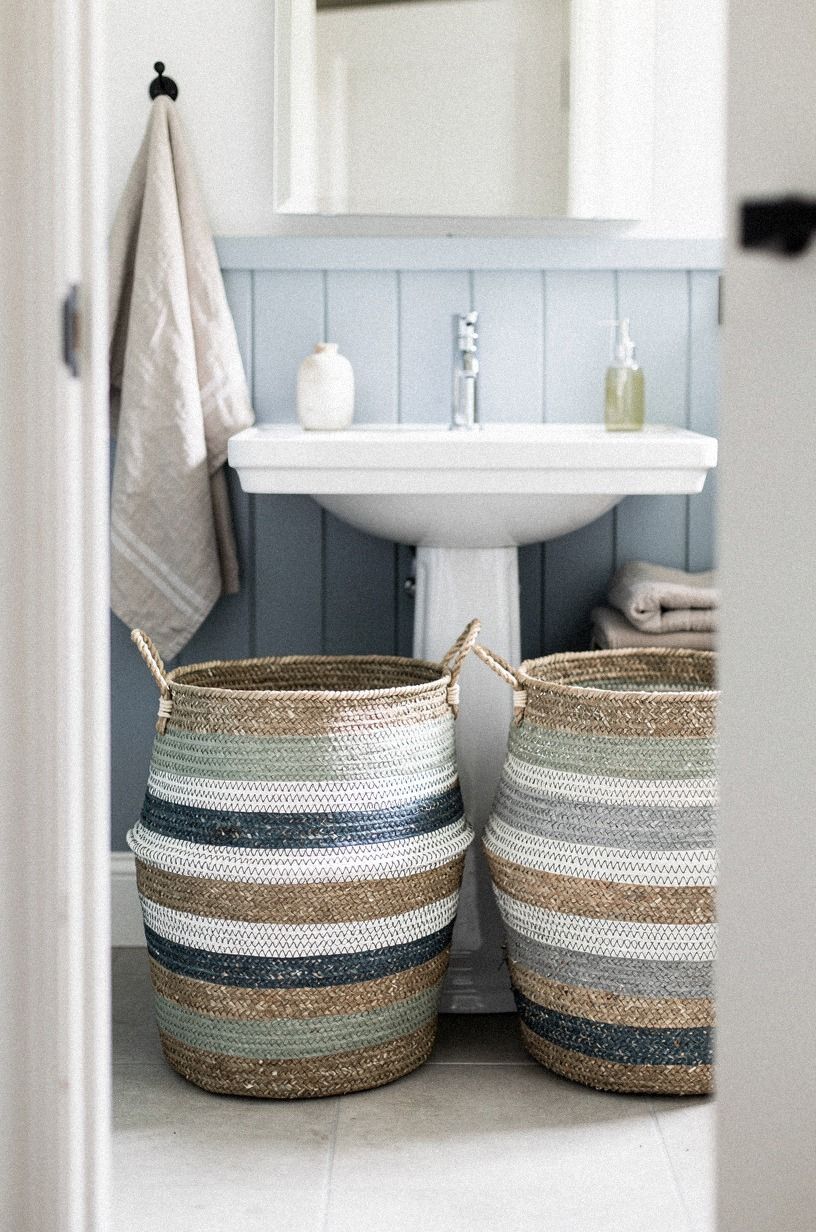
A pedestal sink leaves valuable floor space visible, so woven baskets can add storage without closing in the room.
12Add scalloped edging around the vanity (The Gentle Border Effect)
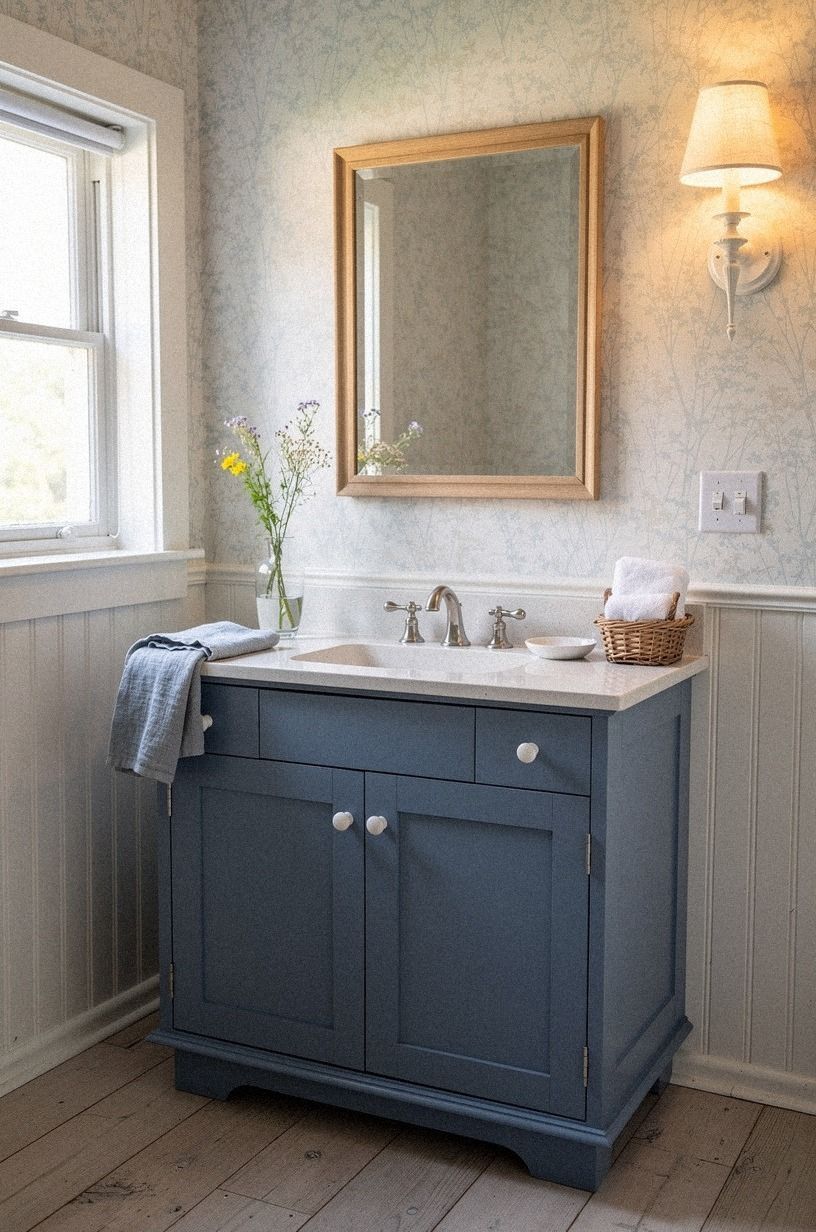
Scalloped edging gives a vanity or fabric skirt a cottage detail that feels playful without becoming childish. Deep-pile mohair velvet in muted clay can add rich texture to a linen, aged-brass, and cream palette. Your vanity will feel softer at the edges.
Keep the scallops broad enough to read from the doorway. Aged brass cup pulls support the vintage mood, while tiny repeated scallops may look fussy against a busy wallpaper. You’ll want one curved detail to lead the room, not several competing borders.
A painted wood edge can work when fabric isn’t practical. Benjamin Moore Chestertown Buff HC-9 brings warmth to the vanity base and pairs well with pale blue walls. Your color choice should echo the floor or countertop once.
But skip fringe when the room already has layered textiles. A clean scallop has more staying power than extra trim. Linen café curtains can repeat the softness near the window, provided the pattern stays quiet.
13Swap chrome fixtures for aged brass (Aged Brass Over Chrome)
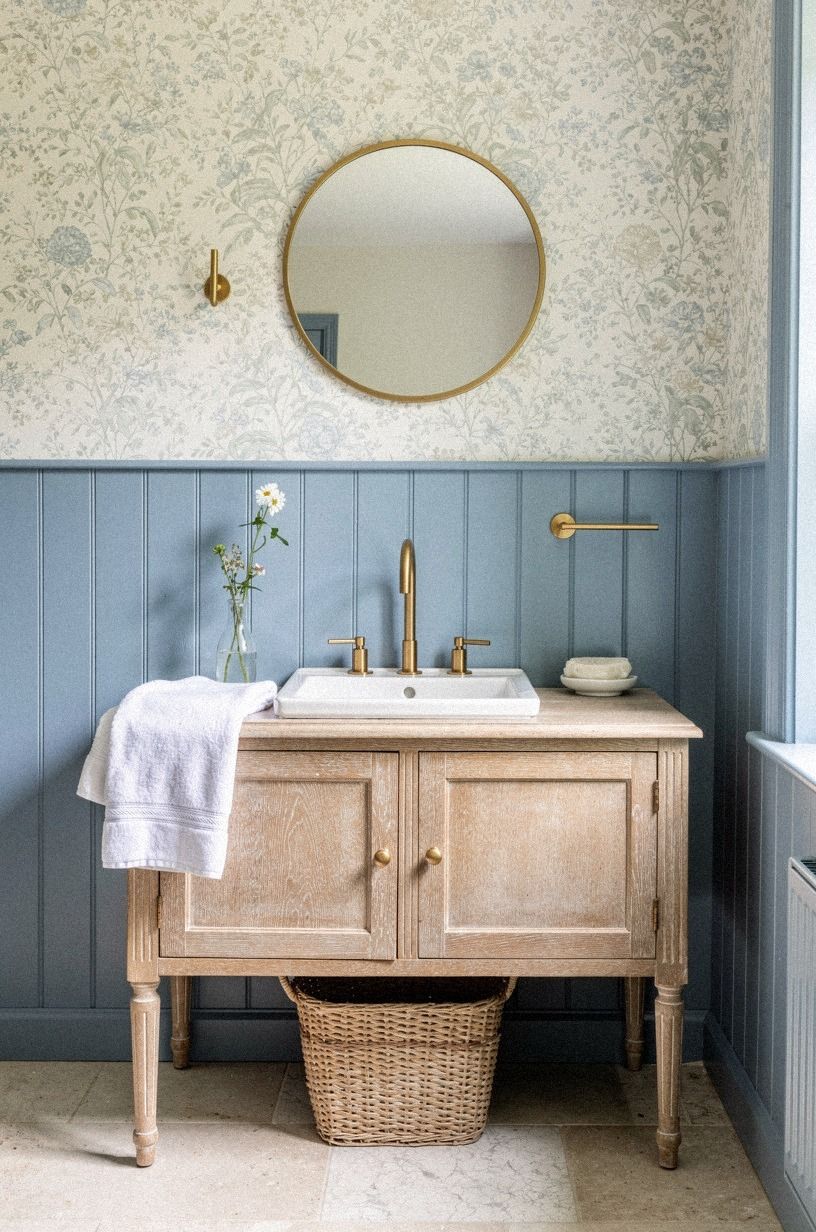
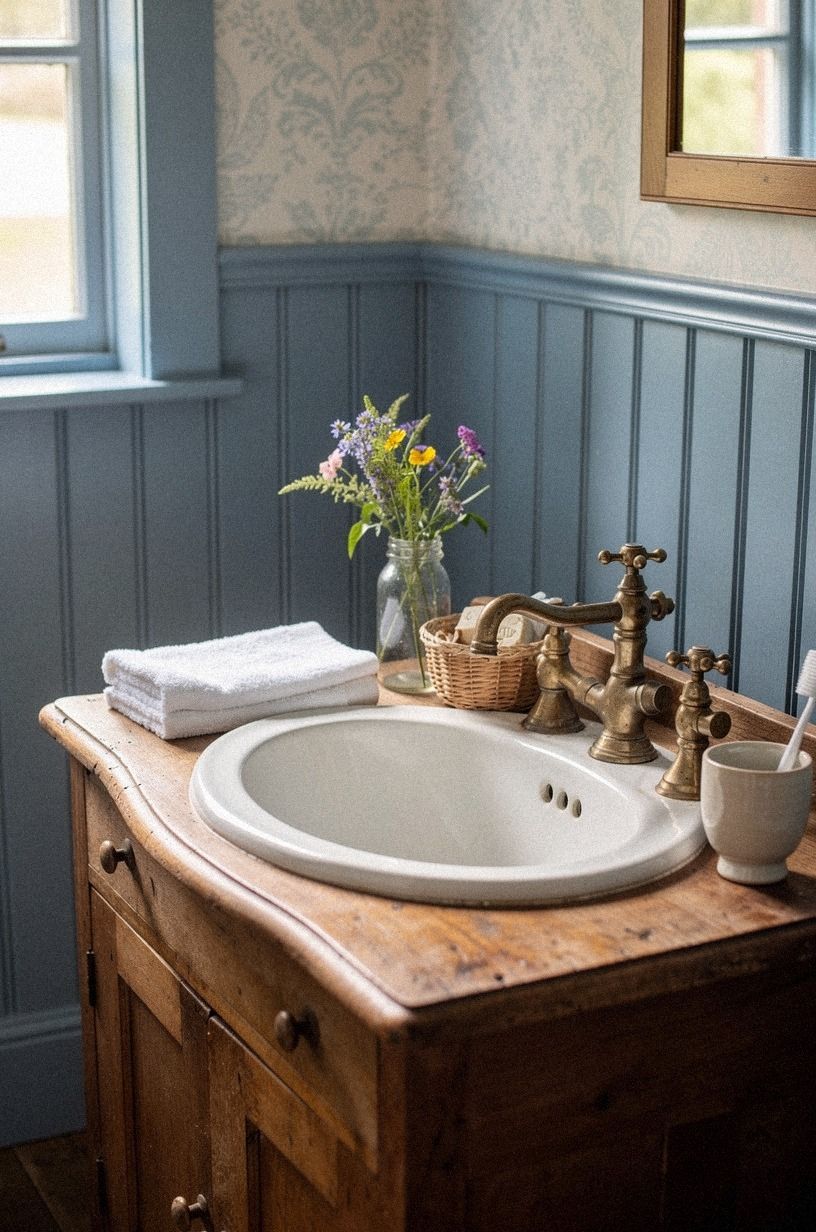
Replacing chrome with aged brass is one of the fastest ways to warm a cool bathroom. Aged brass faucet hardware pairs beautifully with plum, gray, and rose-gold accents, especially when the counter has subtle stone movement. Your sink wall will look less builder-grade.
Carrara marble with subtle gray veining gives the brass a pale, classic setting. Carrara marble can feel formal, so add a woven tray or painted wood stool to keep the room relaxed. You’ll want the metal finish to repeat on the mirror or light fixture.
Change the faucet, cabinet pulls, and towel ring as one group if possible. Matte aged brass has more depth than polished gold and won’t compete with the marble. Your room can feel refined without looking like a hotel lobby.
The lower-third beadboard proportion guide offers a useful proportion reference for the wall beneath your new hardware. Keep your strongest metal finish consistent, then let the blue carry the character.
14Display blue transferware on open shelves (The Collected-Plate Method)
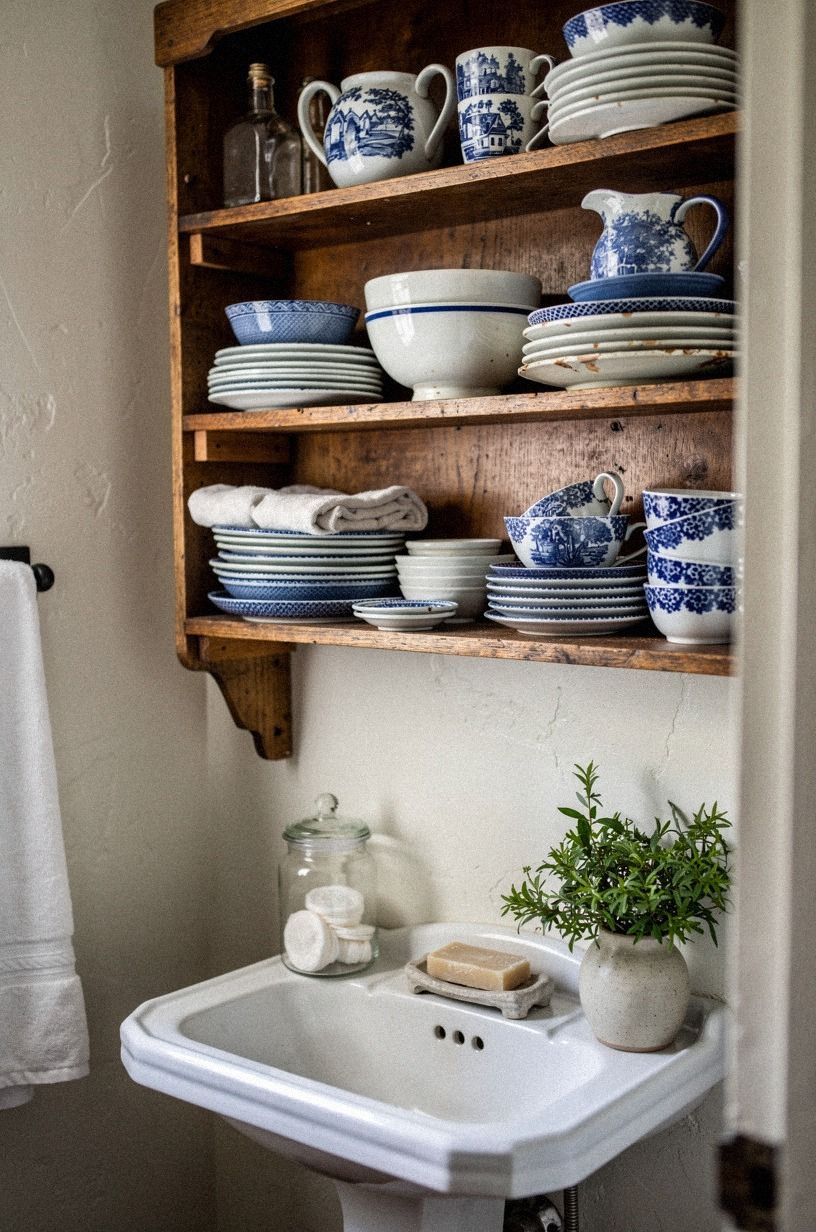
Blue transferware can turn open shelving into a small cottage display while keeping the bathroom connected to its main color. Blue transferware plates look especially rich against navy, white, and walnut. Your shelves will feel personal without requiring a crowded collection.
Use three to five pieces per shelf, with one plate standing upright and the rest stacked. Reclaimed weathered teak brings an aged surface to the display, while white towels prevent the pattern from becoming too dark. You’ll want practical items within easy reach.
Keep dishes away from direct splash zones and choose shelves with a sealed finish. Walnut shelf brackets can repeat the vanity wood without matching every grain. Your arrangement should leave open space around each plate so the room still feels airy.
A single small vase can soften the hard ceramics. White cotton hand towels add a clean break between the transferware and darker wood. For another blue-and-white direction, look through these French coastal village color cues.
15Use checkerboard flooring in blue and cream (The Two-Tone Floor Anchor)
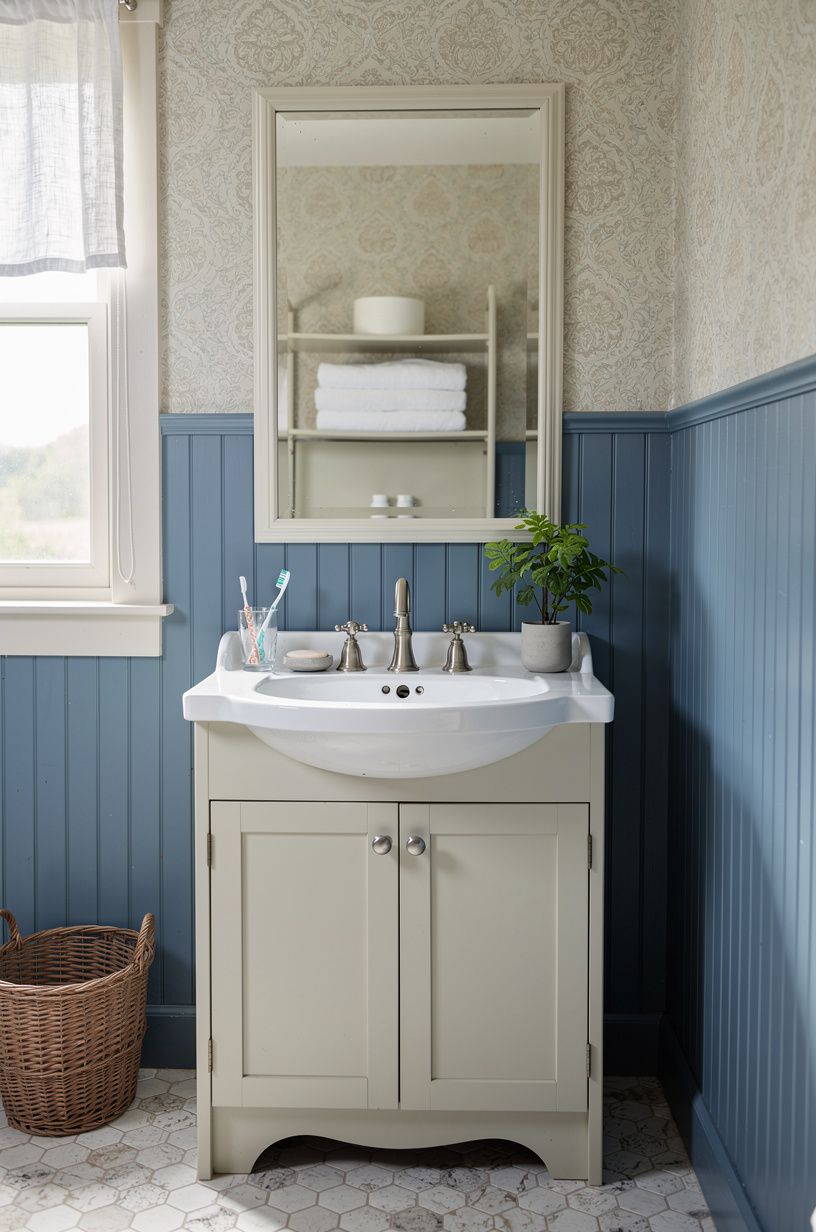
Blue-and-cream checkerboard flooring gives a cottage bathroom a confident foundation. Calacatta Gold marble with warm veining adds a refined option when the budget allows, while painted cement tile can create a more relaxed surface. Your walls can stay simple above a strong floor.
Use larger squares in a tiny bathroom so the pattern doesn’t become noisy. Cream grout keeps the floor soft, especially beside emerald, gold, and cream accessories. You’ll want the blue square to connect with a wall, towel, or cabinet color.
Checkerboard works best when the rest of the room has fewer patterns. Gold-veined marble can echo the brass fixtures, but floral wallpaper above the floor may push the room too far toward visual competition. Choose one hero pattern.
A small bath can still feel spacious when the floor runs continuously beneath the vanity. Cream-painted beadboard creates a calmer vertical counterpoint. Your eye will move across the floor, then upward toward the mirror and lighting.
16Hang botanical prints inside matching blue frames (The Repeated-Frame Rhythm)
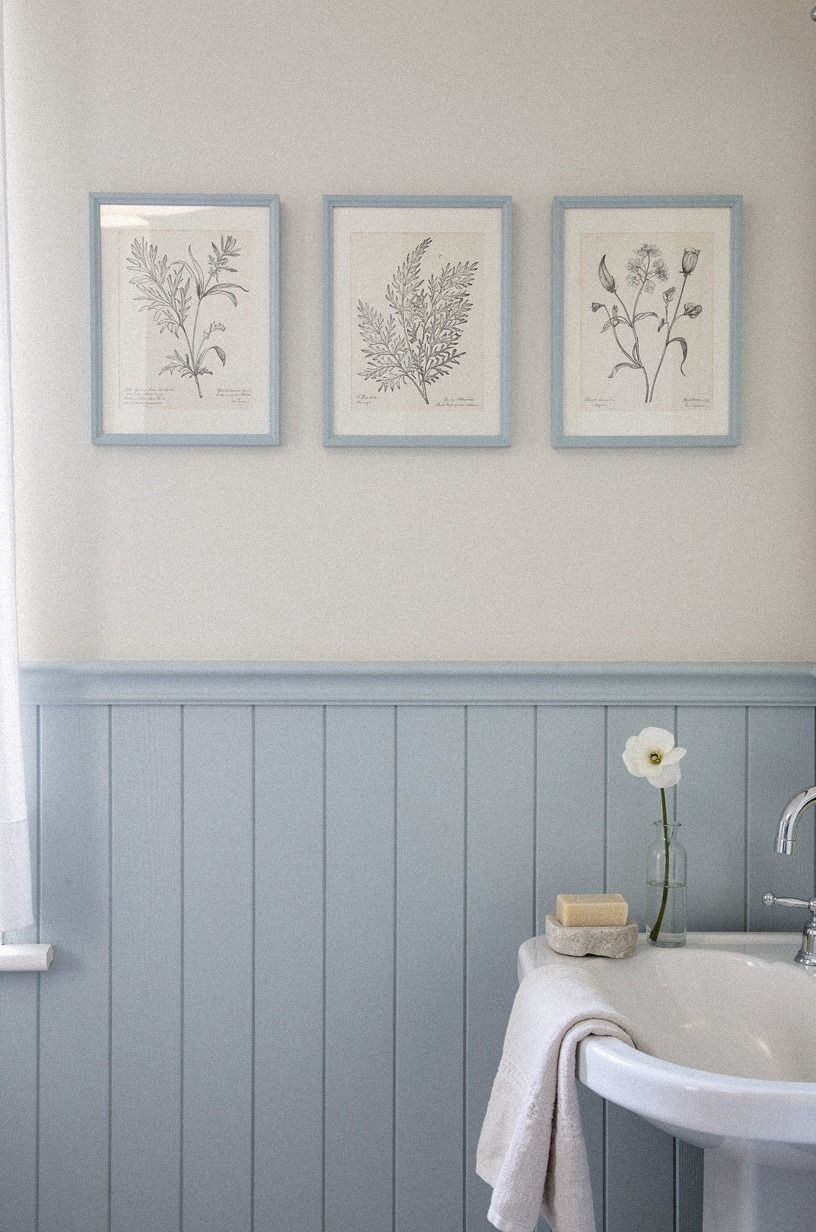
Botanical prints inside matching blue frames add cottage personality without requiring permanent wall changes.
The Blue Cottage Rule That Keeps the Room From Feeling Themed
The strongest blue cottage bathrooms don’t use blue on every surface. One blue element needs to lead, while the surrounding materials provide warmth, age, and contrast. Beadboard can carry the color below a wallpaper line, or a ceiling can hold the softest blue while the walls remain creamy.
The room feels more convincing when each choice has a job.
A common weak point is excessive matching. Blue towels, blue tile, blue art, and blue accessories can flatten the room even when every item is attractive.
Unlacquered brass, reclaimed wood, and woven fibers interrupt that repetition. Your eye needs a few quiet surfaces between the decorative moments.
The better investment usually goes toward the surface that receives daily attention. A durable faucet, washable paint, and well-sealed tile matter more than a collection of tiny accessories. Hand-glazed zellige can be worth the cost in a shower niche, while expensive decorative objects may not survive humidity or clutter.
For a rental, removable wallpaper, a tension rod, and framed prints can create the same visual language without permanent work. For a full renovation, plan clearance first, then choose color. Your bathroom will feel warm and intentional when the practical layout supports the cottage details.
What People Always Want to Know
What works best for a small blue cottage bathroom?
A pale blue ceiling, lower beadboard, and a framed mirror work well because they add detail without taking much floor space. IKEA KALLAX birch-effect storage can hold folded towels outside the wet zone. Keep the floor pattern broad and the accessory count low.
Where can you buy blue cottage bathroom pieces on a budget?
Target, IKEA, Wayfair, Facebook Marketplace, and local thrift shops offer useful starting points. Removable wallpaper, secondhand wood shelves, and washable cotton curtains can create the look for less. Check measurements and moisture resistance before bringing any piece into your bathroom.
How much does a blue cottage bathroom makeover cost?
A cosmetic refresh commonly sits within the $200-$1,200 budget tier for paint, a mirror, faucet, and textiles. Painted beadboard may cost less than replacing tile when the existing wall is sound. Mid-range work reaches $3,000-$9,000, while major tile and plumbing projects can reach $12,000-$30,000 or more.
Can you create a blue cottage bathroom on a budget?
Yes, and the best low-cost moves are paint, fabric, and rearrangement. Secondhand transferware, a thrifted frame, and a tension-rod curtain can change the mood without moving plumbing. Save larger spending for surfaces that face water, daily wear, or repeated cleaning.
Is a blue cottage bathroom worth it in a small space?
Yes, because a small room gives each color and texture more impact. Vertical beadboard can draw the eye upward, while a pale ceiling keeps the upper zone bright. Choose one strong pattern, then let warm wood and brass provide the rest of the character.
Is a blue cottage bathroom a good idea for a rental?
Yes. Peel-and-stick wallpaper, removable hooks, framed art, and tension-rod curtains can create a cottage feeling without permanent changes.
Washable linen-look panels soften a window, while blue accessories bring color. Keep original hardware stored safely for the eventual move.
Where to Start First
Start with painted beadboard in a misty blue. It gives your bathroom the biggest visual shift without moving plumbing, and the horizontal line makes wallpaper, brass, and wood feel deliberate. Pin that idea for later, then choose one warm material to support it.