
Snack boards that keep a book club talking past midnight work best when every bite gives the conversation somewhere to go. A chapter-themed layout, winding cheese path, and late-night sweets corner create an easy rhythm without constant kitchen trips. The result feels warm and intentional, but it doesn’t require complicated recipes or matching serving ware.
Short version: build clear food zones, add one literary detail per section, and keep every bite easy to reach.
- Build a chapter-by-chapter grazing board
- The Winding Bookmark Rule for Layered Cheese
- Carve Fruit into Miniature Book Spines
- Why Midnight Blue Dishes Work
- Arrange Savory Bites in Bookmark Rows
- Quote Cards for Small Conversation Prompts
- Elevate Dips on Stacked Vintage Novels
- Cluster Warm Appetizers Around a Candlelit Center
- Use Edible Color Blocks for Every Genre
- Frame the Board with Rosemary Page Markers
- A Late-Night Sweets Corner
- Divide Flavors with Tiny Ceramic Bookends
1Build a chapter-by-chapter grazing board
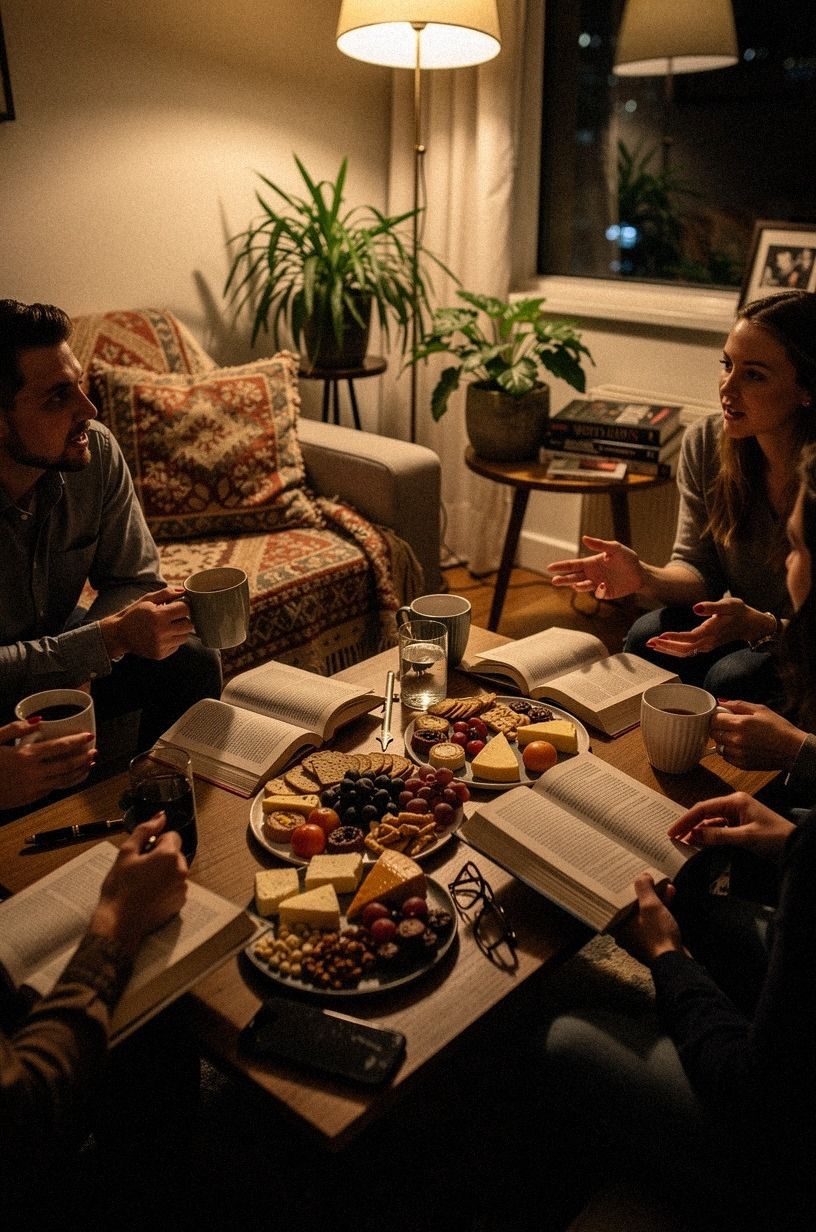
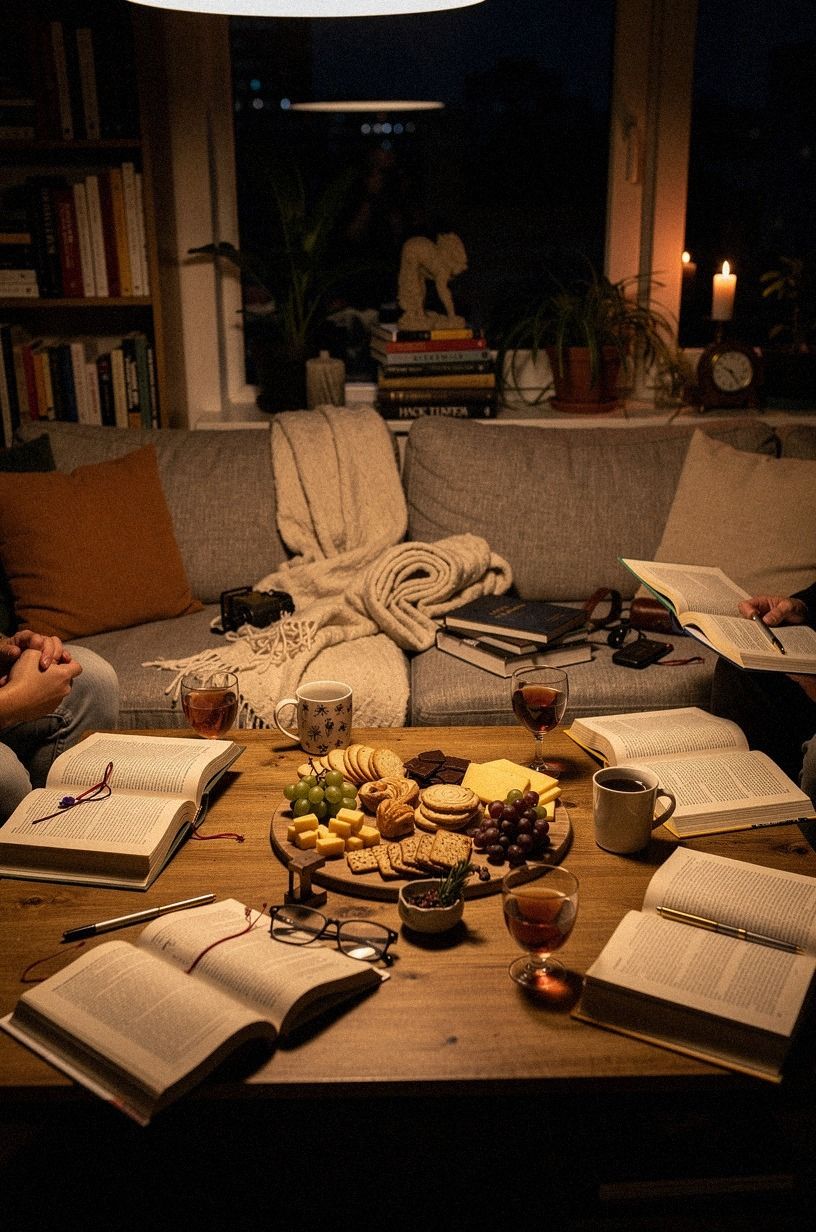
The Chapter Ladder turns one large board into a visual reading sequence. Arrange foods from light to rich, then from savory to sweet, so the board quietly follows the evening. Pale crackers and grapes can represent opening pages, while olives, aged cheese, and chocolate carry the group toward midnight.
You’ll want the book clearly visible, with terracotta, stone, olive, and cerused white oak shaping the palette.
A long board works better than a round platter because each chapter gets breathing room. Use small handwritten labels, but don’t crowd the food with props. A few figs, rosemary sprigs, and book-matched wood beneath the board add texture without making the display feel staged.
For easy book club snacks, choose foods that can sit comfortably for a while. Soft pears, toasted almonds, firm cheese, and seeded crackers won’t demand constant attention. If you’re planning ahead, these make-ahead snack planning ideas can fill the board without pulling you away from the discussion.
The most inviting version has three natural stages: crisp and fresh at the front, savory in the middle, and rich sweets near the end. You don’t need a printed menu. Guests can follow the arrangement intuitively!
2The Winding Bookmark Rule for Layered Cheese
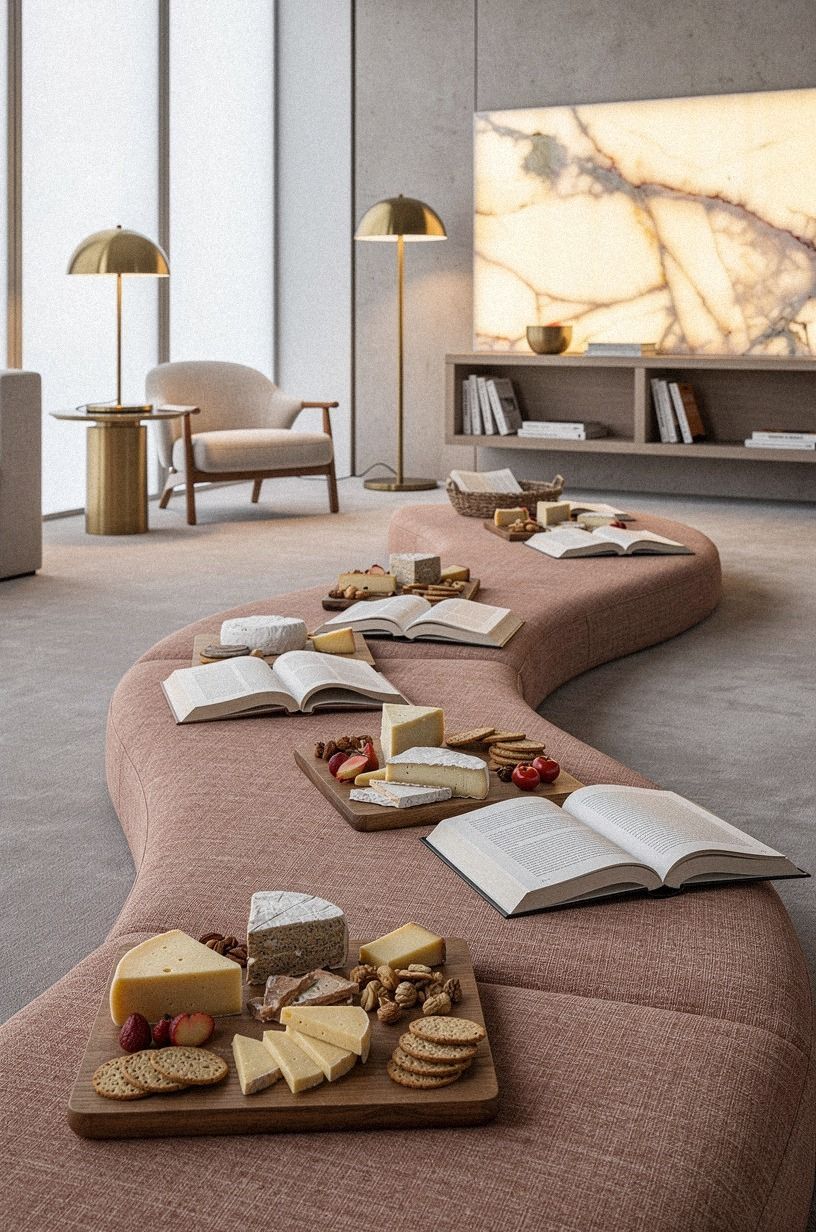
The Winding Bookmark Rule keeps cheese from becoming one heavy block in the middle of the table.
3Carve Fruit into Miniature Book Spines
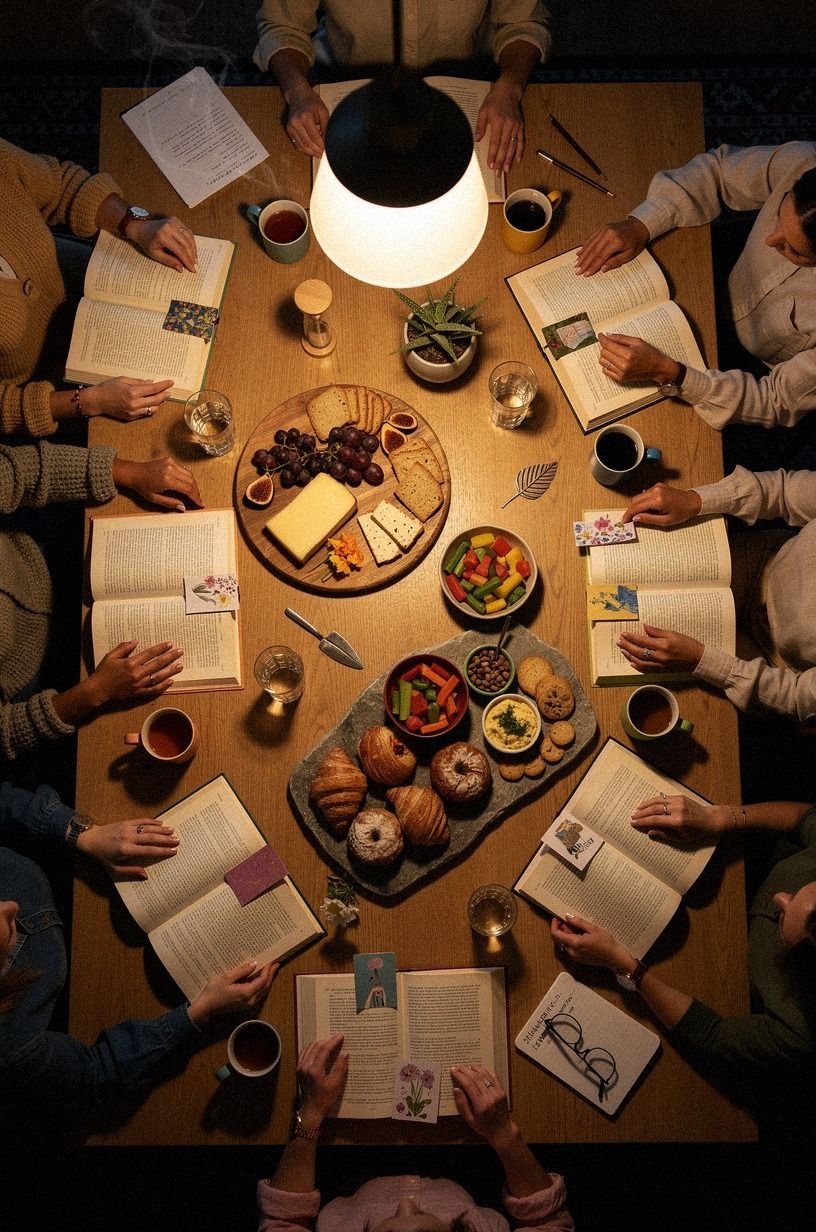
Fruit becomes more playful when each piece has a clear visual role. The Miniature Spine Method uses long slices of pear, apple, mango, or melon to resemble tiny book spines arranged across the board. Plum, grey, rose gold, and book-matched walnut make the composition feel editorial without requiring elaborate decoration.
Cut fruit into narrow rectangles, then place the pieces in small groups with the cut edges facing the same direction. You’ll get a stronger book-like effect than scattered wedges would create.
A few edible flowers can soften the arrangement, but don’t overload the board with garnish. The food should remain the main subject.
A book-matched walnut board gives plum tones more depth, while pale linen napkins keep the colors from becoming too dark. If you’re serving apples or pears, add lemon juice shortly before guests arrive so the slices stay fresh-looking. It’s a small step, but it prevents grey edges that can make a beautiful board look tired.
For book club food ideas with more structure, pair each fruit group with one cheese or nut. You’ll create clear flavor lanes, and guests won’t need to guess what belongs together.
For a cheerful contrast, place bright fruit beside a darker ingredient such as fig, blackberry, or dark chocolate. The result feels abundant without needing more food!
4Why Midnight Blue Dishes Work
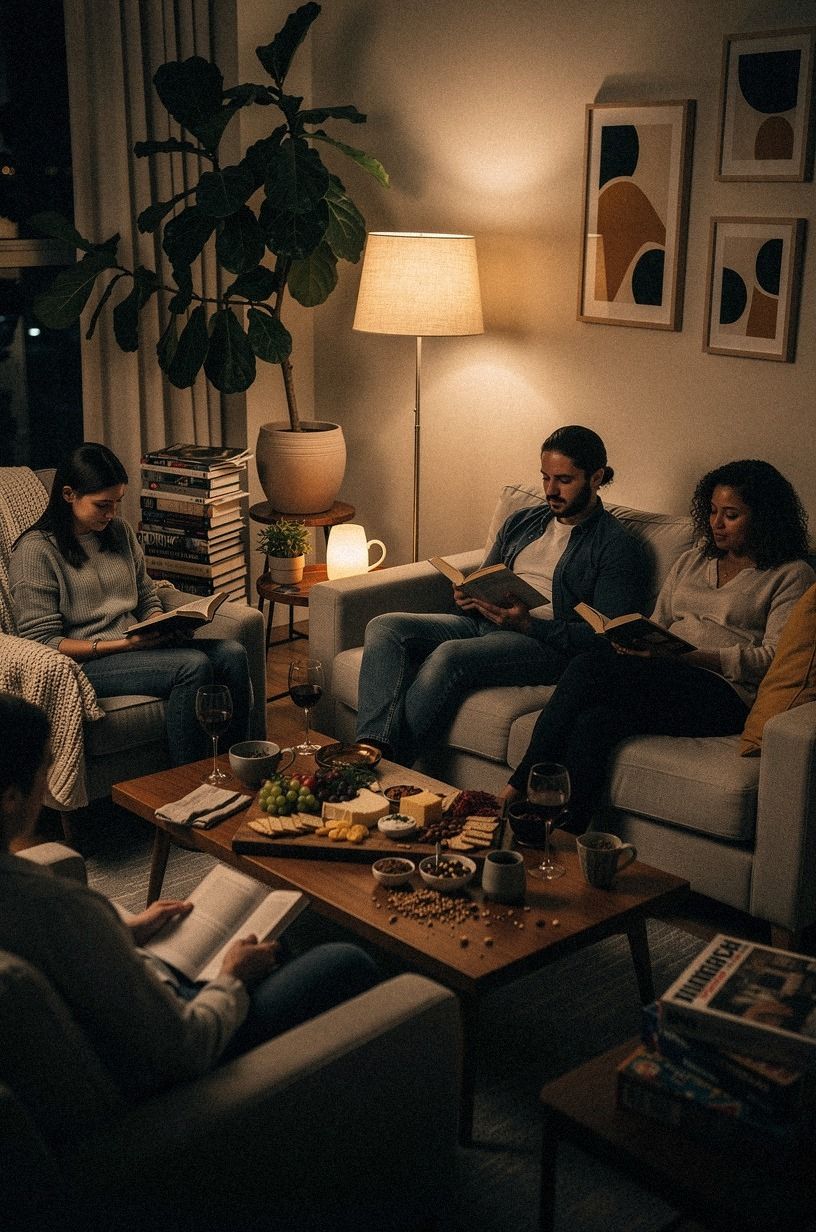
Use one deep-blue bowl for olives or dip, then repeat the shade in a small plate or water glass.
5Arrange Savory Bites in Bookmark Rows
Bookmark rows bring order to foods that might otherwise look scattered. The Three-Lane Bookmark System divides the board into narrow lines of savory bites, with each row running in the same direction. Emerald, gold, cream, and unlacquered brass create a rich palette that still feels welcoming rather than heavy.
Try rows of cucumber rounds, folded prosciutto, marinated artichokes, and seeded crackers. Each line should contain one dominant shape, so round foods don’t compete with long foods in every section. You’re giving guests visual clues, and that makes the board easier to share.
A strip of unlacquered brass developing soft patina can appear through a serving knife, small tray, or low candle holder. Keep metal away from direct food contact unless it’s designed for serving. Cream napkins and emerald glassware will carry the palette without needing disposable decorations.
Don’t make the rows too rigid. Leave small gaps so the arrangement still feels generous. You’ll want guests to lift a bite without disturbing the entire pattern, and you can’t get that ease when every piece is pressed against the next one.
The most appealing easy book club appetizers look composed but behave casually. If you’re planning a full calendar of gatherings, these year-round meeting themes can guide the color and flavor of each board.
Pairing dark olives with sharp cheese creates a moody lane for mystery novels. Fresh herbs, cucumbers, and soft cheese feel brighter for a garden story!
6Quote Cards for Small Conversation Prompts
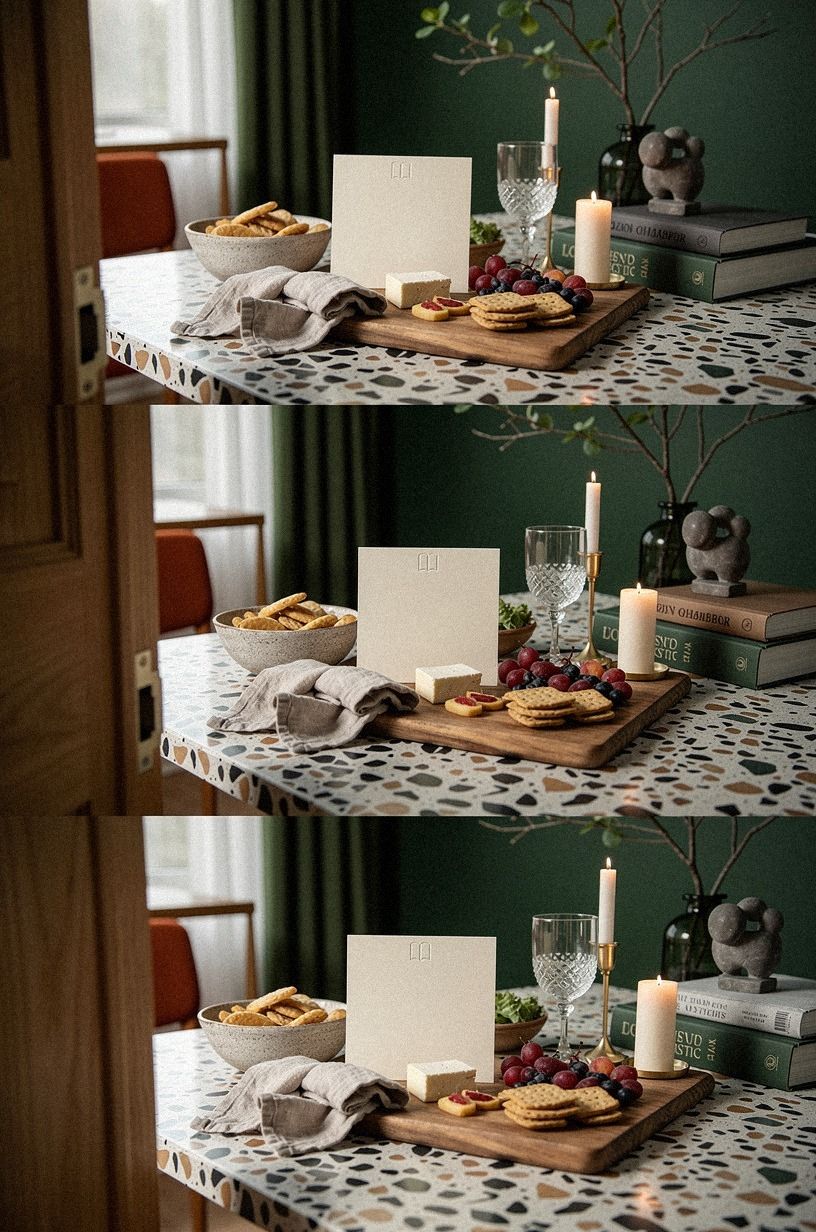
Quote cards give each section a small conversation prompt without turning the table into a worksheet.
7Elevate Dips on Stacked Vintage Novels
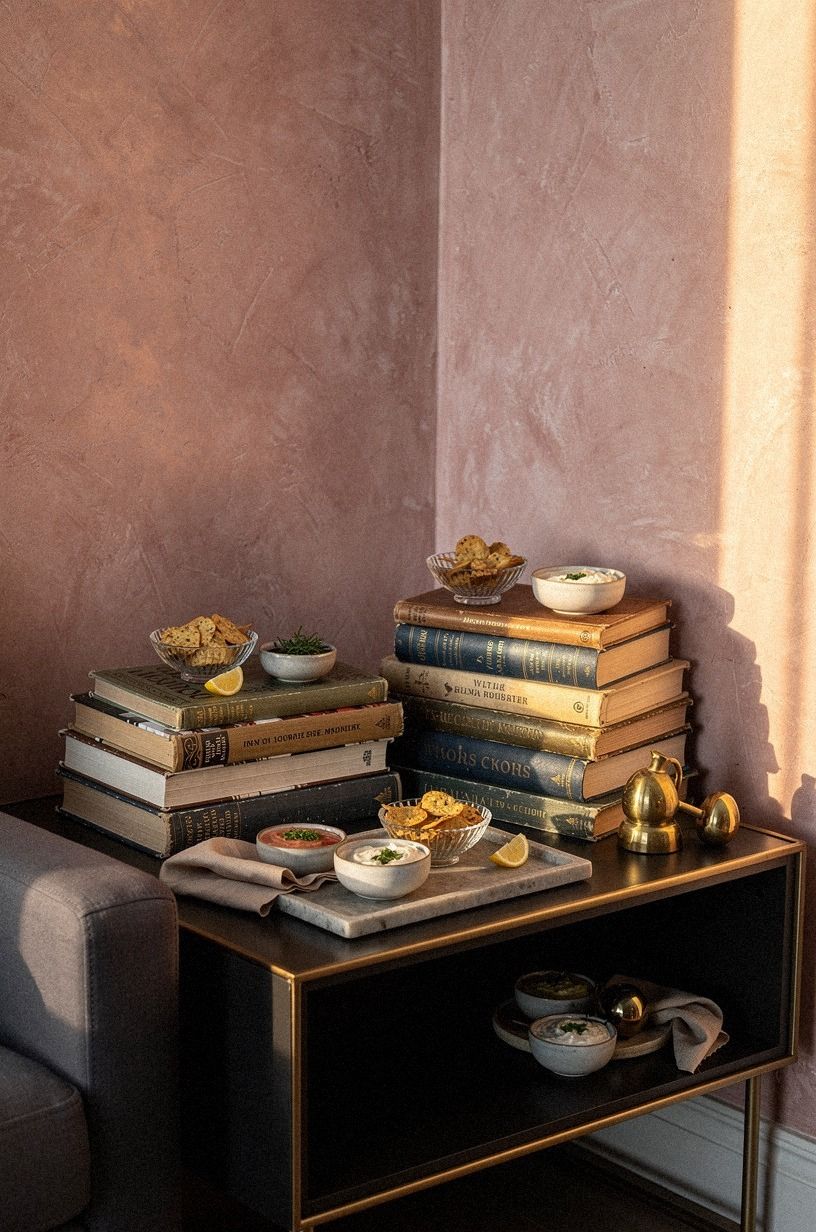
Stacked books create height, but the food still needs to stay stable and clean. The Three-Height Dip Stack uses one low bowl, one medium riser, and one tall focal piece so guests can see every option. Dusty rose, charcoal, brass, and hand-applied Venetian plaster create a dramatic backdrop for creamy dips and roasted vegetables.
Choose older books with solid covers and wrap the top book in parchment or a washable cover before placing food above it. You’re protecting the pages while keeping the literary idea visible. A hand-applied Venetian plaster tray can sit beside the stack, adding a chalky surface that contrasts with glossy olives or smooth hummus.
Don’t use a tall pile for anything unstable. A low dip bowl on the top level is safer than a glass jar filled to the rim, and you won’t want guests reaching over a precarious tower. Use wide plates for crackers at the base so the structure feels connected to the rest of the board.
A few brass teaspoons can echo the cover edges, but avoid matching every accent. The point is height and texture, not a staged bookstore display. If you’re hosting in a rental, these cozy hosting decor details can carry the same mood without permanent changes.
Keep the highest level visually simple. One bowl, one spoon, and one strong color create a cleaner, more elegant composition than a crowded tower.
8Cluster Warm Appetizers Around a Candlelit Center
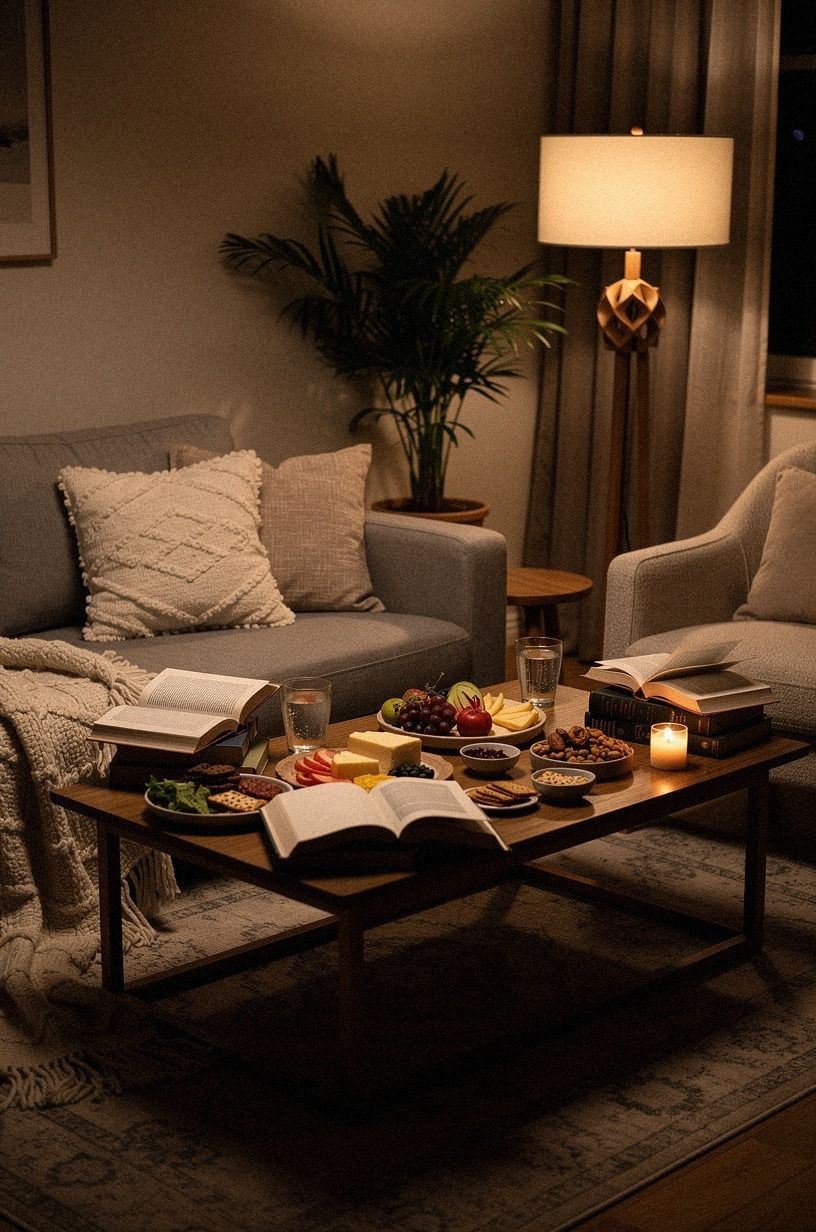
Warm appetizers create a natural gathering point, especially when the evening moves beyond the main discussion. The Glow Center Layout places small dishes around a warm-lit center, with the book visible but slightly secondary. Warm white, camel, black accents, and shagreen create a comfortable palette with enough contrast for late-night serving.
Use baked feta, stuffed mushrooms, mini quiches, or toasted flatbread in low dishes. You’ll want the foods close enough to share, but not so close that steam softens crackers or fogs glassware. A shagreen serving tray can define the center while keeping the hot dishes visually connected.
Choose a candle in a wide glass vessel, then leave clear space around it. Don’t place loose rosemary or paper cards near an open flame. A battery candle can work just as well when the table is crowded, and it’s easier to keep the light consistent.
The center should glow without becoming the tallest object on the table. You’ll get a more relaxed result when guests can see one another across the food. If the group plans to linger, keep extra napkins and small plates within reach so the host isn’t constantly leaving the room.
For a particularly cozy evening, serve one warm dish at a time. The gradual rhythm feels generous and gives the gathering a memorable sense of occasion. A small rotation works beautifully!
9Use Edible Color Blocks for Every Genre
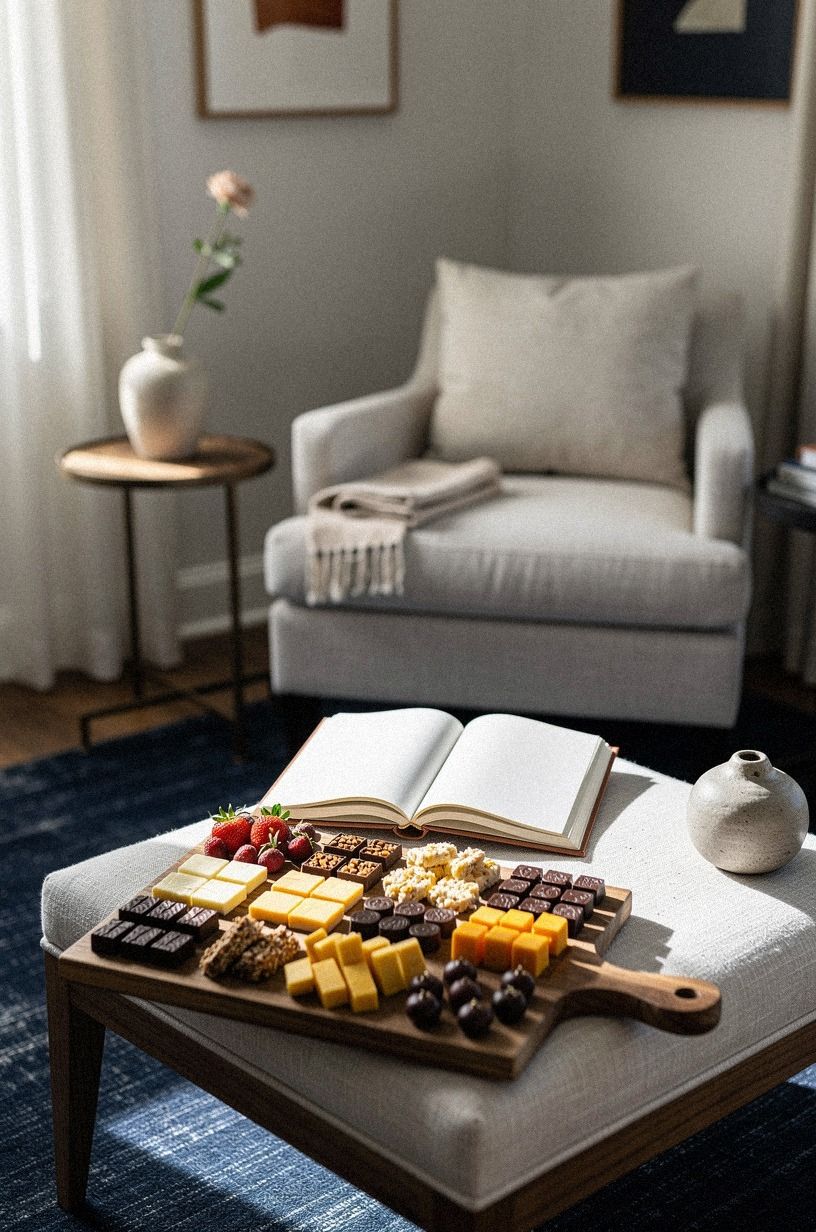
Color blocks make a board easy to customize for romance, mystery, historical fiction, or science fiction. The Genre Palette Grid groups foods by color first, then balances flavor inside each block. Midnight blue, copper, ivory, washed Belgian linen, and low light create a polished arrangement that still feels edible and abundant.
For a darker novel, use blueberries, black grapes, dark chocolate, blue cheese, and seeded crackers. For a lighter title, shift toward pears, white cheddar, pale nuts, and honey. You’re changing the visual language without buying new serving pieces, which makes this approach practical for recurring meetings.
A washed Belgian linen runner softens the edges of the blocks and prevents the colors from appearing too sharp. Keep each group slightly irregular so the board doesn’t look like a paint sample card. One folded napkin or a small herb cluster can bridge two neighboring colors.
For the surrounding hosting zone, typical US decorating costs can vary widely. The table below gives useful planning ranges when a snack board gathering expands into a larger room refresh.
You don’t need to spend within any tier to make the board work. The food arrangement carries the theme, while the room simply supports it.
The most flexible boards use repeatable ingredients in different combinations. Grapes, crackers, olives, and chocolate can shift from elegant to rustic with only a change in color balance.
If you’re planning several gatherings, these year-round meeting themes can help you vary the palette while keeping the basic serving strategy familiar.
10Frame the Board with Rosemary Page Markers
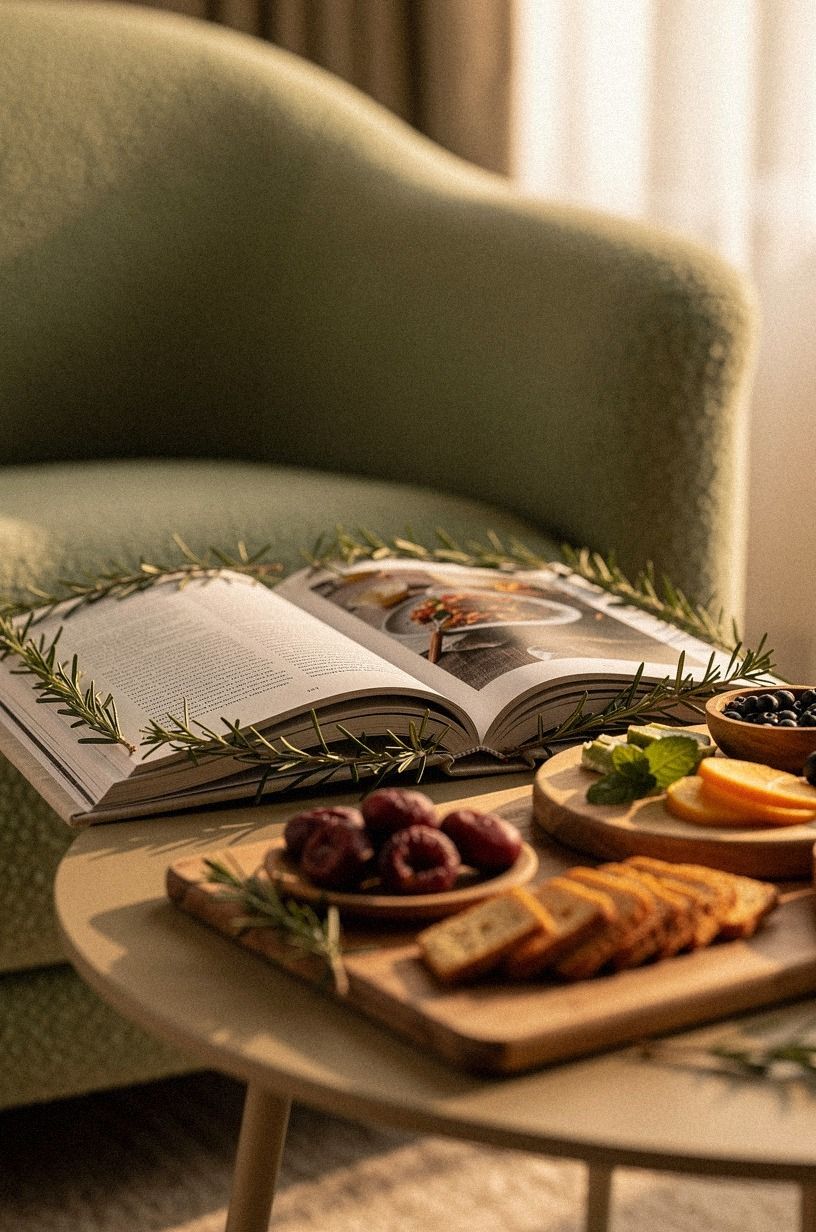
Rosemary sprigs make natural page markers because they add height, fragrance, and a muted green edge. The Herb Border Rule places the sprigs along the outside of the board rather than scattering them across every food. Sage green, warm cream, natural wood, and organic bouclé create a gentle setting for lighter snacks.
Use rosemary beside crackers, cheese, grapes, and roasted vegetables, but keep the stems separate from foods that will be eaten directly. You’ll want the herbs to read as a visual border, not as loose garnish that guests must move aside. A natural wood serving board makes the green feel grounded and keeps the palette from becoming too pale.
Don’t use rosemary as the only fresh element. Add sliced pears, green grapes, or cucumber for moisture and contrast. The board will feel more generous when the herbs frame several textures instead of standing alone.
A bouclé seat nearby can bring the same softness into the room, especially for a low coffee-table gathering. You’re creating a small reading nook around the food, and guests often settle in longer when the serving surface and seating feel connected.
For a related hands-on activity, these book club craft activities can extend the evening without adding much preparation. A simple bookmark station or handmade bookplate table fits the theme beautifully.
For another low-effort activity, these cozy craft activities can keep hands occupied after dessert.
11A Late-Night Sweets Corner
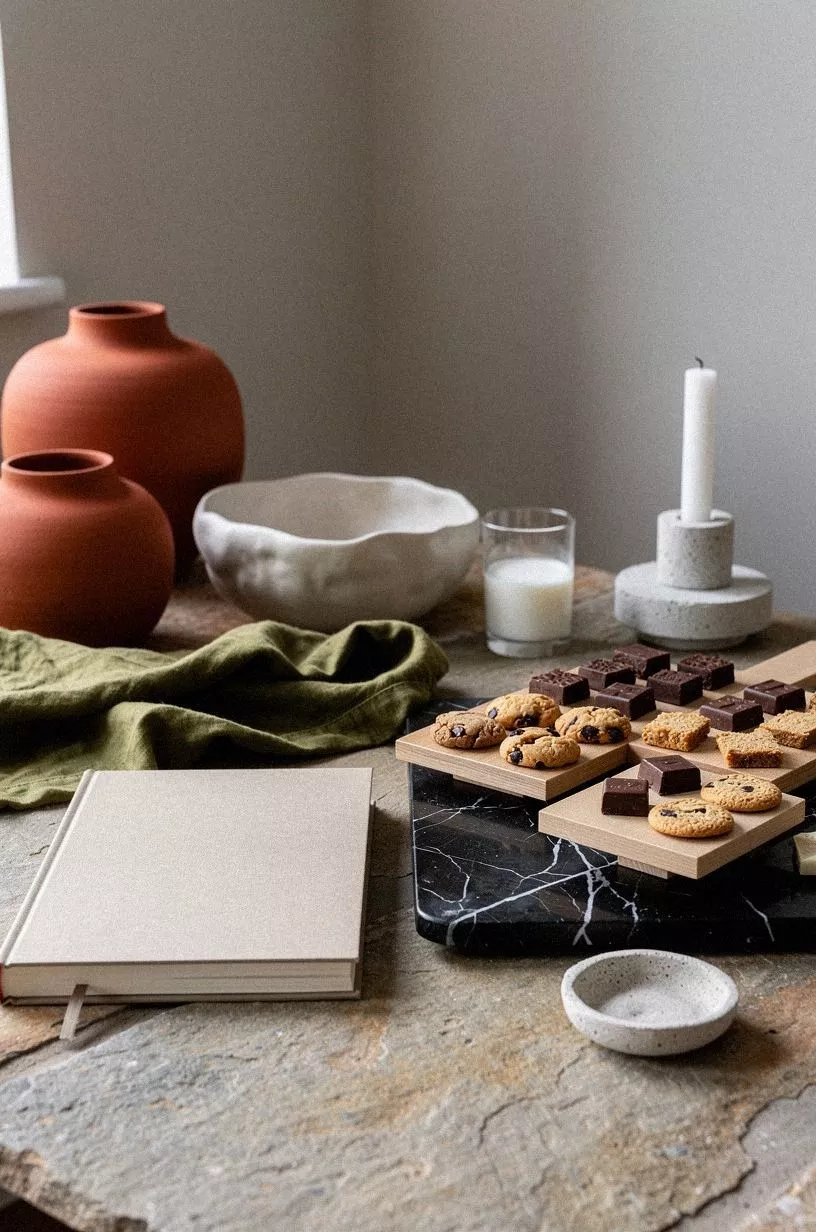
A dedicated sweets corner keeps dessert from competing with savory foods too early.
12Divide Flavors with Tiny Ceramic Bookends
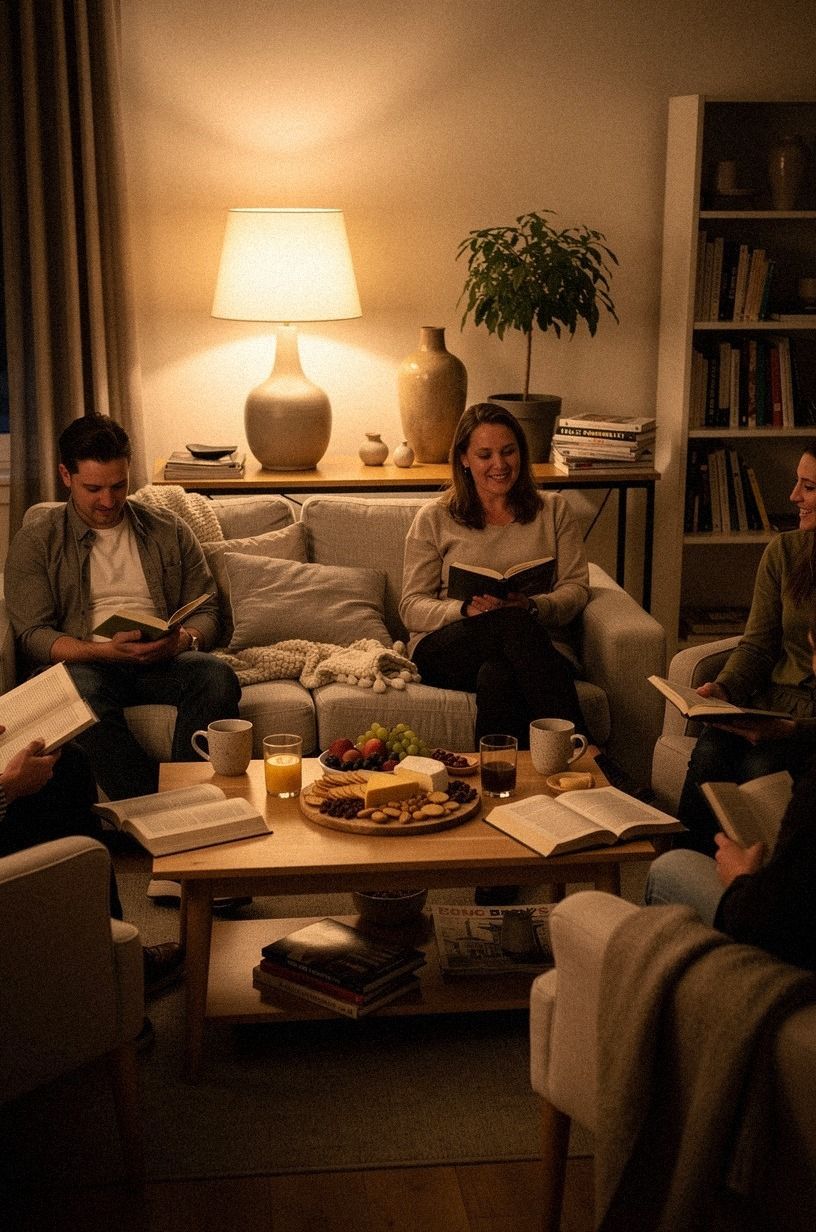
Tiny ceramic bookends can separate flavors while keeping the literary theme clear. The Ceramic Shelf Divider places low book-shaped pieces between fruit, cheese, sweets, and savory bites. Clay, linen, aged brass, and deep-pile mohair velvet create a tactile final arrangement that feels collected rather than overly coordinated.
Use one divider between strong flavors, such as blue cheese and chocolate, then add another near the crackers or pickles. You’ll want the pieces to guide movement across the board, not create barriers that make serving awkward. A velvet napkin beneath the board can introduce softness, but keep fabric away from anything hot or oily.
Choose matte ceramic in cream, charcoal, or muted terracotta. Glossy pieces can reflect overhead light, while highly detailed figurines may distract from the food and the book. The best dividers are simple enough to read as tiny shelf objects.
Don’t make every section identical. A little asymmetry keeps the board relaxed, and you can leave one open gap for a serving spoon or a fresh plate. This arrangement works especially well when the table is small because it gives each flavor family a clear boundary without requiring several large platters.
For an extra literary touch, place the smallest divider beside the dessert zone. The detail feels charming, useful, and easy to repeat at the next meeting.
Why Does the Chapter Ladder Keep People Talking?
A snack board can do more than hold food. It can shape the pace of a gathering by giving guests small choices, natural pauses, and visual prompts connected to the book.
The strongest boards don’t ask for attention every minute. They create enough structure for conversation to keep moving while hands stay occupied.
The chapter-by-chapter format works because it gives the table a beginning, middle, and late-night finish. Light fruit and crisp crackers feel easy at arrival.
Rich cheese and warm appetizers support the main discussion. Chocolate, cookies, and dates signal that the formal portion of the meeting has loosened. You’re building a gentle sequence, and it doesn’t require a printed agenda.
Material choices matter too. Cerused oak feels softer than glossy lacquer.
Belgian linen absorbs harsh reflections. Aged brass catches candlelight in small flashes, while midnight blue dishes create a visual pause between pale foods.
These details don’t need to match perfectly. In fact, a little variation makes the board feel lived-in.
The most practical opinion is simple: skip the oversized single platter when the group plans to stay late. It looks impressive for the first ten minutes, but it becomes difficult to reach and hard to refresh. Several small zones keep food accessible, help guests understand the options, and make the table feel generous without requiring a larger dining room.
For a room surrounding the board, use the basic comfort rules supplied by the space rather than chasing a themed makeover. Hang art with its center about 57-60 in from the floor.
Keep a rug large enough for furniture to overlap it. Mount curtain rods 4-6 in above the frame and run the fabric to the floor.
Three light sources, overhead, task, and ambient, will keep the table visible without flattening the evening mood.
There’s no need for every item to come from one collection. You’ll get a more convincing result from a walnut board, linen napkins, stoneware bowls, and one aged metal accent than from a perfectly matched set. That mix gives the gathering a warm, relaxed character, and it leaves room for the book to remain the visual anchor.
For a final layer of atmosphere, add one detail guests can discover during the evening: a hidden quote card, a tiny book-shaped dish, or a color that references the cover. Small surprises make the table feel thoughtful and memorable!
The Questions Worth Answering First
What is the best snack board format for a small book club?
A long rectangular board with two low bowls is usually the easiest choice because it gives guests clear access from both sides. Layered zones keep fruit, cheese, and sweets separate without needing several platters. A nearby birch-effect storage unit can hold napkins and spare plates without crowding the table.
Where can you buy snack board pieces on a budget?
Flat-pack retailers, discount stores, online marketplaces, and local thrift shops offer useful options. Second-hand wood boards and plain stoneware bowls often cost less than coordinated sets, and they can mix with linen napkins already at home. Don’t overlook small serving trays, which can divide flavors nicely.
How much does a snack board makeover cost?
A complete snack board gathering can cost about $100 to $300, depending on the food, serving pieces, and number of guests. Free styling elements include books, rosemary, jars, and folded paper labels. Existing plates and thrifted bowls can keep the total near the lower end.
Can you create a book club snack board on a budget?
Yes, and the easiest route is to build around foods already available. Budget-friendly choices include popcorn, apples, crackers, olives, chocolate, and homemade dip.
Use books as risers, cloth napkins as runners, and a cutting board as the base. You don’t need a matching collection.
Is a literary snack board worth it in a small space?
Yes, because a compact board can combine serving, decoration, and conversation prompts in one footprint. A narrow rectangular board works better than a large round platter when guests sit close together. Keep the book behind the food and reserve one edge for plates or utensils.
Is a literary snack board a good idea for a rental?
Yes. Removable styling pieces such as peel-and-stick labels, tension-rod curtains, washable runners, and freestanding lamps add atmosphere without permanent changes. You can also use a removable tray liner beneath bowls, so spills stay contained and furniture remains protected.
What can make a book club board feel more memorable?
A strong color story, one warm dish, and a small literary detail can make the arrangement feel distinctive. A hidden quote card or book-cover color reference gives guests something to notice without adding clutter. Keep the food accessible, because conversation should remain the main event.
Where to Start First
Start with the chapter-by-chapter grazing board. Its clear sequence makes a small spread feel abundant, and the food can change with every novel. Pair the layout with book-club hosting inspiration when the next meeting needs a fresh angle.
For a creative follow-up, these cozy craft activities can extend the evening after the final discussion. Keep the setup simple, choose one memorable color, and let the board carry the atmosphere.