
The best apartment music room ideas use light, storage, and movable pieces, not construction. I learned that after pinning a keyboard against a blank wall and calling it a room. Your setup can feel warm, inviting, and intentional with $200-$800, a few smart measurements, and furniture you’ll take with you. No renovation required!
- Layer the Three-Source Light Stack for Apartment Music
- Float a Desk for a Small Home Music Studio
- Anchor Apartment Music With a Wool Rug
- Store Instruments With the Open-Case Rule
- Swap Open Shelves for Closed Rattan Storage
- Hang a Gallery at the Listening Height
- Build the Two-Wood Rule Around Your Instrument
- Paint a Small Home Music Studio in a Soft Neutral
- Frame a Listening Seat With a Leather Stool
- Hide Cables With a Warm Utility Line
- Choose Curtains That Soften the Recording Corner
- Mix Recording Gear With Lived-In Objects
- Turn a Corner Into the Apartment Music Stage
- Can a Rental Music Room Feel Permanent?
- Borrow the Living Room Instead of Adding a Room
- Use the Low-Noise Zone for Apartment Music
1Layer the Three-Source Light Stack for Apartment Music
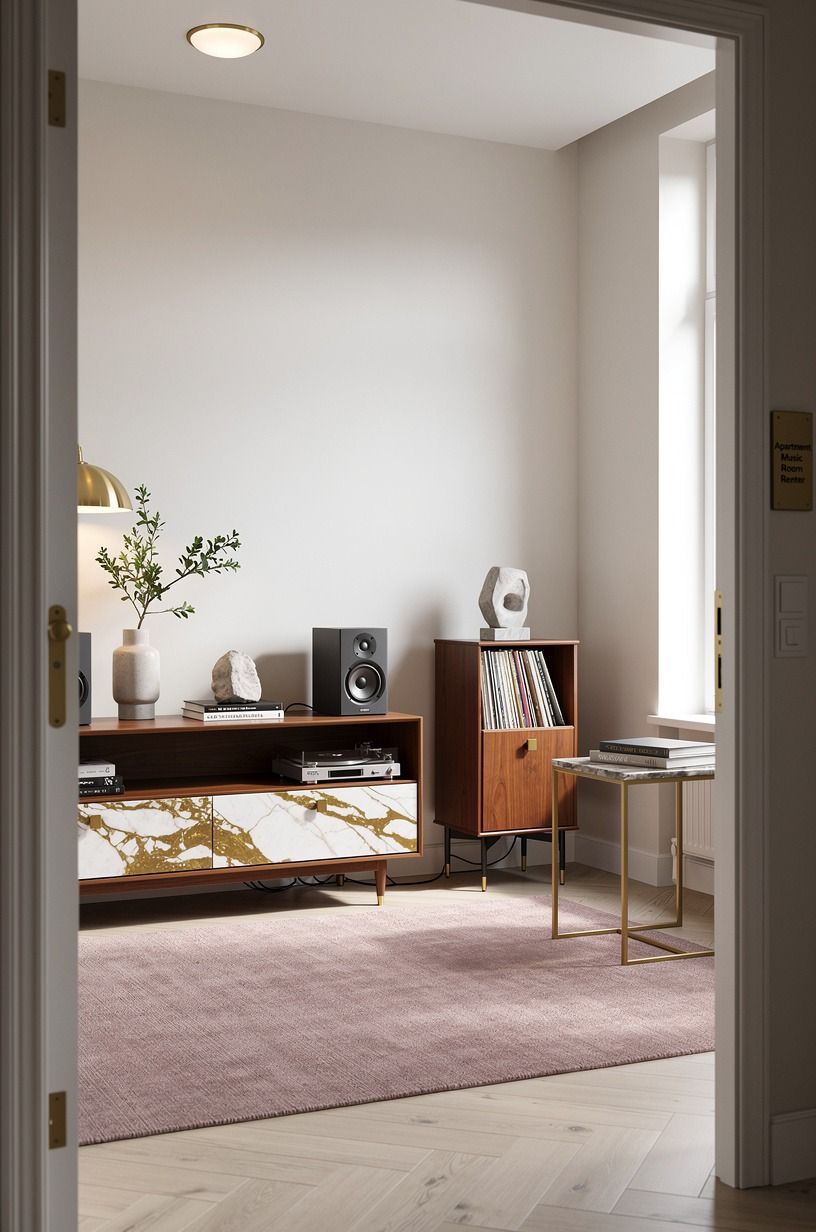
A music room needs three light sources: overhead, task, and ambient. You’ll want a warm ceiling fixture, a focused lamp beside your instrument, and a low glow near the floor or shelf. IKEA TÄRNABY gives you that soft amber pool without drilling, while a clamp lamp can sit on a desk or keyboard stand.
Your room will feel calmer once the light isn’t coming from one hard bulb.
I’ve tried relying on a single ceiling fixture, and it made every evening practice session feel like paperwork. Use a 2700K bulb if you can find one, then angle the task light toward your sheet music instead of your face. You don’t need expensive wiring, and you won’t have to sacrifice your best wall for a permanent fixture.
A small lamp with a Calacatta marble base with gold veining can soften the corner even more. I’d place it behind or beside the instrument, not directly above it, so the glow feels layered rather than clinical. If your music zone shares a living room, browse these music corner living room ideas before you buy another lamp.
Try a warm-white LED for the ambient source and a slightly brighter bulb for reading. Pair the dusty rose, charcoal, and brass accents with enough contrast to keep the corner comfortable. A thoughtful lighting plan can make a narrow apartment corner feel surprisingly generous!
2Float a Desk for a Small Home Music Studio
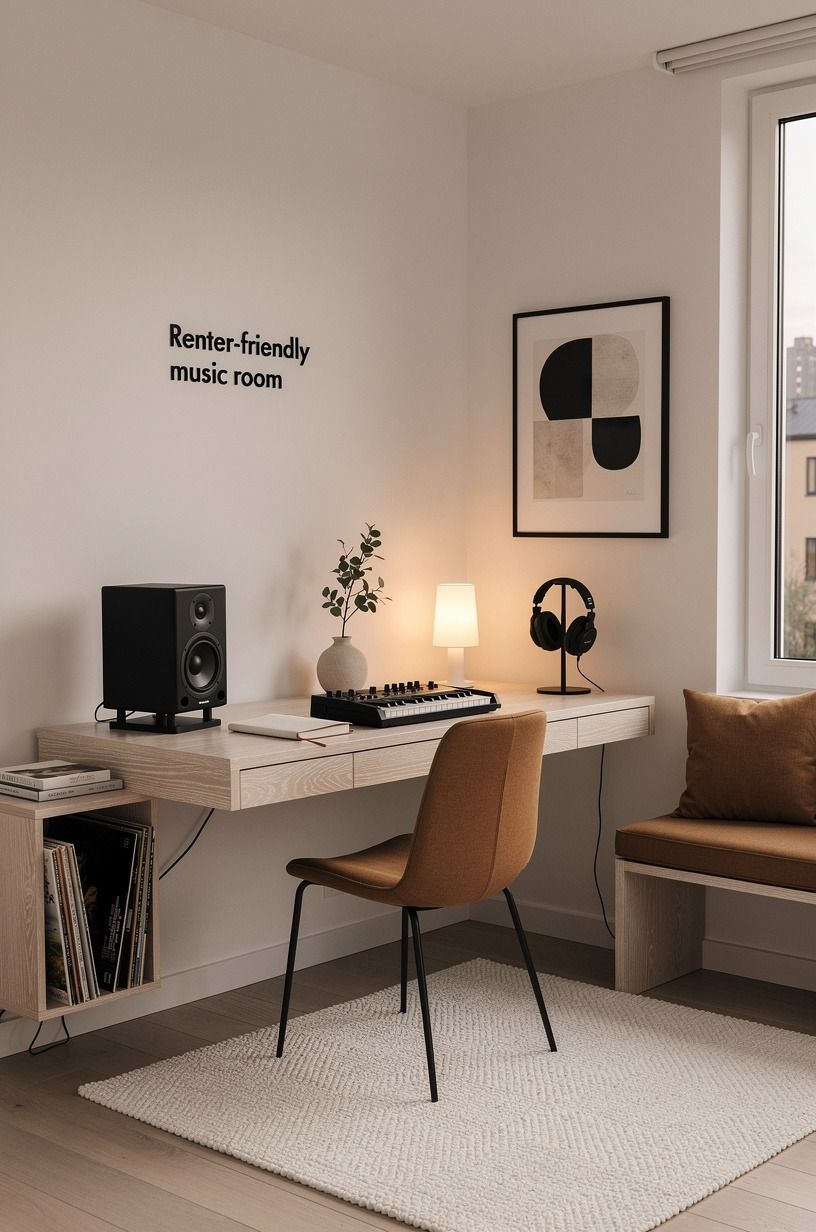
A wall-mounted desk keeps your floor open, which matters when your apartment music room shares space with a bed or sofa. Choose a 3/4-inch cerused white oak shelf with concealed brackets. You’ll gain a writing surface for lyrics, a laptop, and headphones without adding the visual weight of a full workstation.
Your desk should be deep enough for your equipment, but don’t make it so large that your chair blocks the instrument. I’d skip a bulky executive desk here. It’s dramatic in a showroom, but it steals the exact floor area you need for a guitar case or small amp.
Measure the chair clearance before drilling anything. You’ll want at least enough space to pull the seat out, turn sideways, and still walk past it. If you’re working with a shared living area, a folding wall desk can disappear when guests arrive.
A narrow cerused white oak ledge may also be enough if you mainly write, tune, or edit on a laptop.
Keep one drawer or basket for the objects you reach for constantly. Headphone hooks, a pencil cup, and a small notebook can stay visible, while chargers and adapters can live below.
This balance keeps the surface useful without making it feel like a messy office. If you’re planning a more technical layout, this music studio room design guide can help you map the room first.
3Anchor Apartment Music With a Wool Rug
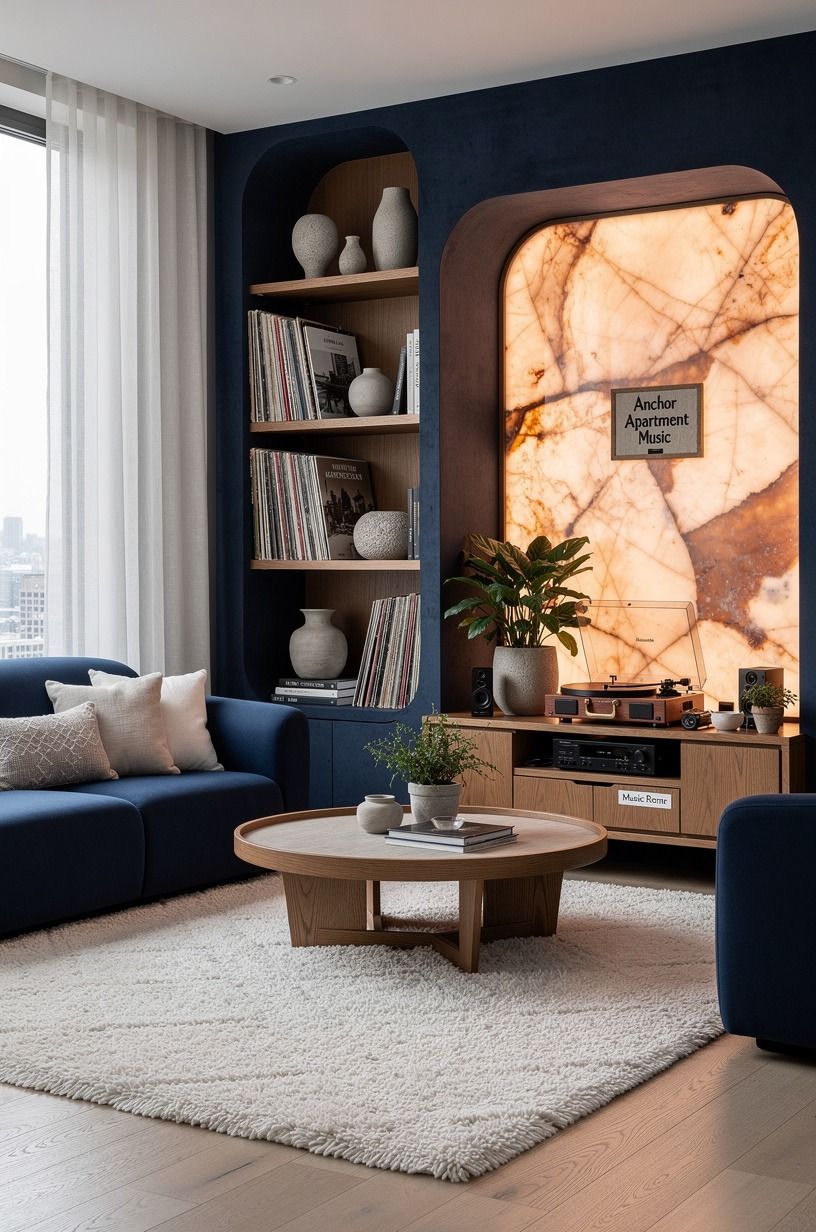
A rug gives your apartment music room a visual center and softens the sharp look of stands, cables, and hard flooring. Look for a low-pile rug with enough width for at least the front legs of your chair and instrument stand to overlap it. The room will feel warmer underfoot, and the woven surface will take some echo out of the space.
Don’t choose a tiny bath-mat-sized rug just because it’s cheap. Your furniture will look stranded around it. I’d choose midnight blue, ivory, or a restrained copper accent over a busy geometric print, because a bold pattern competes with instruments.
A flatweave rug is especially practical if you’re moving a keyboard stand or rolling chair. It won’t create as much resistance as a thick shag, and it’s easier to vacuum beneath. A small table in backlit translucent onyx can bring a soft glow to the corner without making the room feel dark.
You’ll also want to check that the rug doesn’t catch on pedal cords or instrument feet. Use a thin rug pad if the floor is slippery, but keep the edge low enough for doors and cabinet drawers to clear. You can see more compact floor-planning ideas in this guide to small music room ideas.
4Store Instruments With the Open-Case Rule
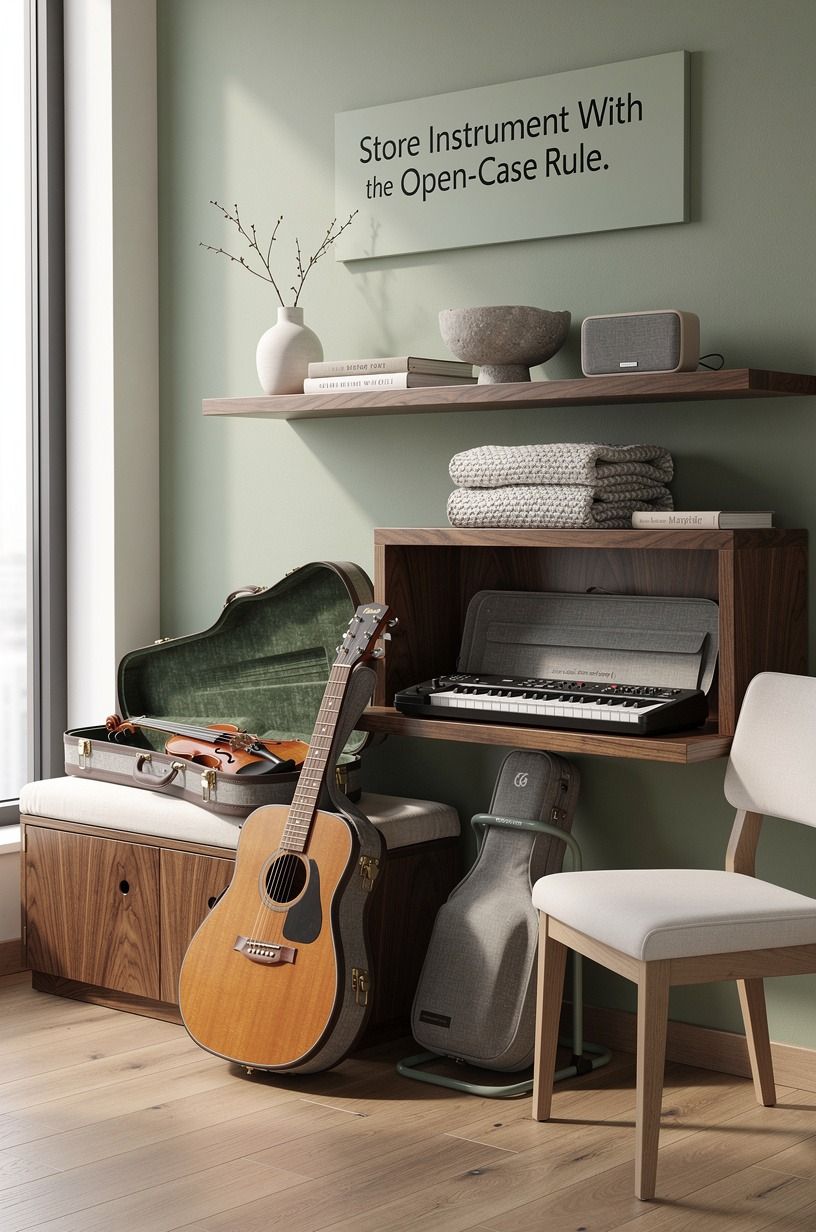
Instrument storage should make playing easy enough that you’ll do it on a tired Tuesday.
5Swap Open Shelves for Closed Rattan Storage
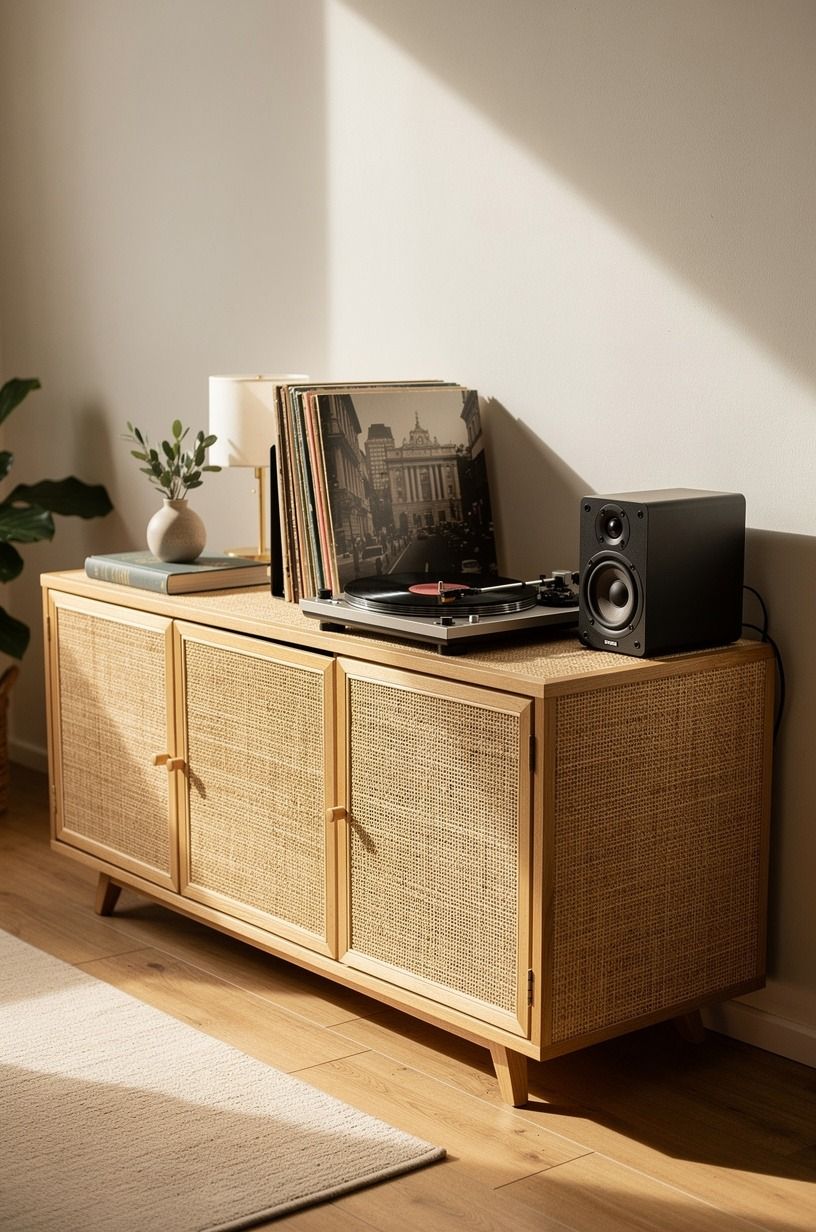
Open shelving can make a rental music room look busy very quickly. Use one warm travertine-toned unit with rattan baskets for cables, pedals, notebooks, and small recording gear. The cubbies keep your collection accessible, while woven doors or baskets hide the visual noise that makes a small apartment feel cramped.
You’ll want to label the bins by category rather than by instrument. One for cables, one for sheet music, one for adapters, and one for items you rarely touch. I’d skip clear plastic tubs in the living area.
They’re practical, but they bring a storage-room feeling into a space that should feel intimate and warm.
A closed rattan cabinet can work even better when the music area is visible from the entryway. It gives you texture, conceals clutter, and adds a relaxed, collected quality. Leave one shelf partially open for the objects you enjoy seeing, such as a metronome, a favorite record, or a small ceramic bowl in olive or terracotta.
Your best setup is the one you can reset in five minutes. If putting everything away feels exhausting, the system won’t last. Keep everyday tools between waist and eye level, and reserve the highest shelves for spare cables, seasonal textiles, or equipment you rarely use.
You’ll create a calmer room without buying a giant storage wall.
6Hang a Gallery at the Listening Height
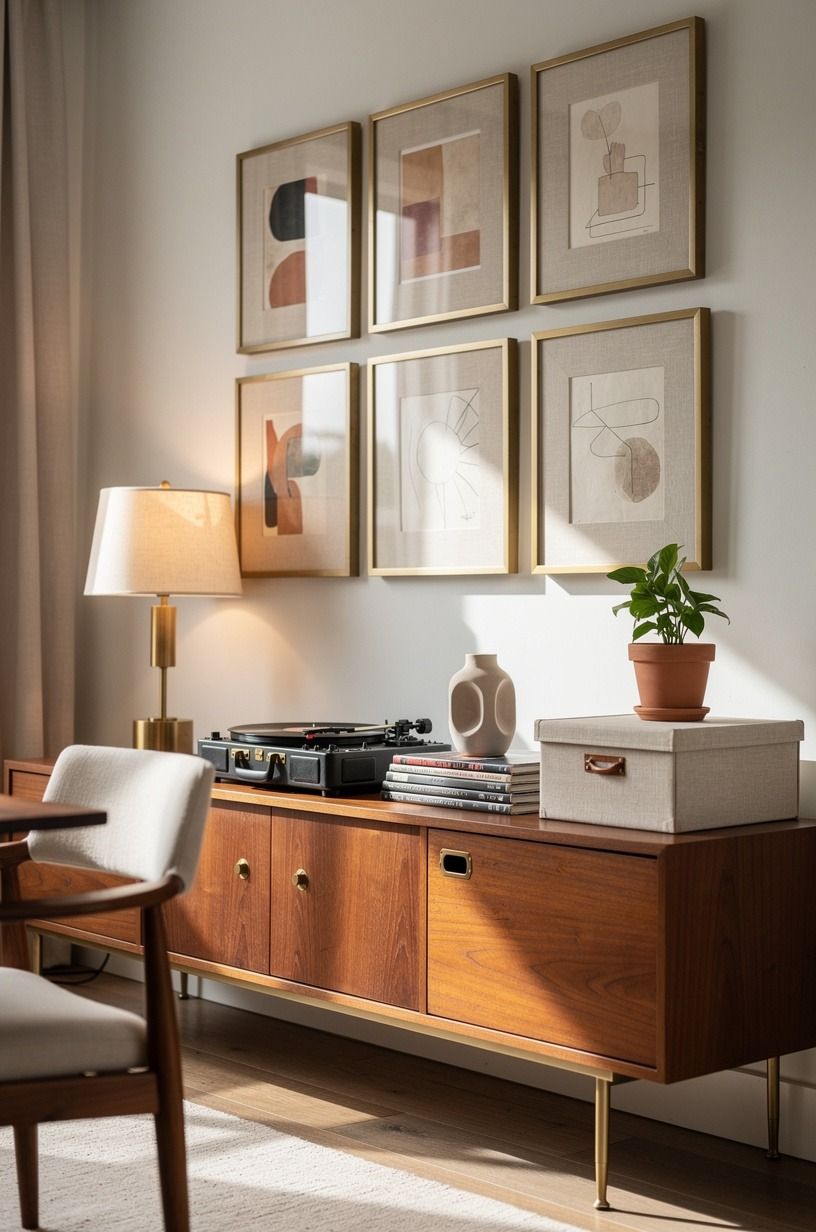
Music-related art works best when it’s hung at the same height as the furniture, not scattered randomly across every wall.
7Build the Two-Wood Rule Around Your Instrument
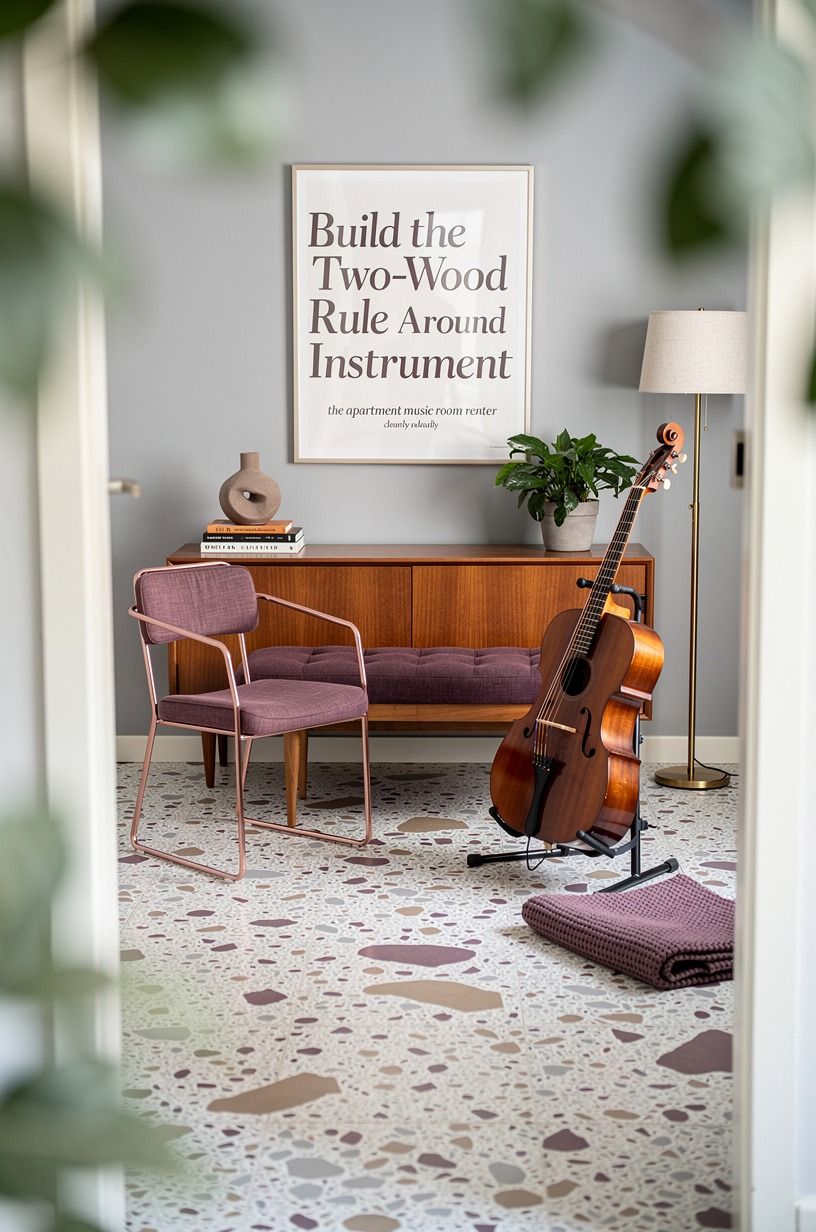
The Two-Wood Rule keeps a music room from looking like a furniture showroom. Choose one main wood for large pieces, then one supporting tone for small accents. Plum-toned wood with grey-painted wood can feel refined and earthy, while rose-gold hardware adds a warmer note without taking over.
You’ll need to repeat each wood at least twice so the combination looks deliberate. I’d avoid matching every finish exactly. A perfect wood set can feel stiff, especially in a rental where the floor already has its own tone.
Use a grey stool, a plum-toned shelf, and one tray made from oversized-chip terrazzo, then let your instrument provide the third texture. A glossy piano or polished guitar already brings visual richness, so the rest of the furniture doesn’t need to compete.
If your floors are orange-toned, choose cooler grey accents or introduce a painted piece to create relief. If the room is mostly white, plum can give it an inviting, grounded quality. You’ll get more depth by varying the grain and sheen than by adding another color.
A two-wood palette is also easy to move between apartments. Your furniture won’t depend on a particular wall color or floor plan. If the room shares a living area, these music room ideas for any space offer useful ways to blend zones.
8Paint a Small Home Music Studio in a Soft Neutral
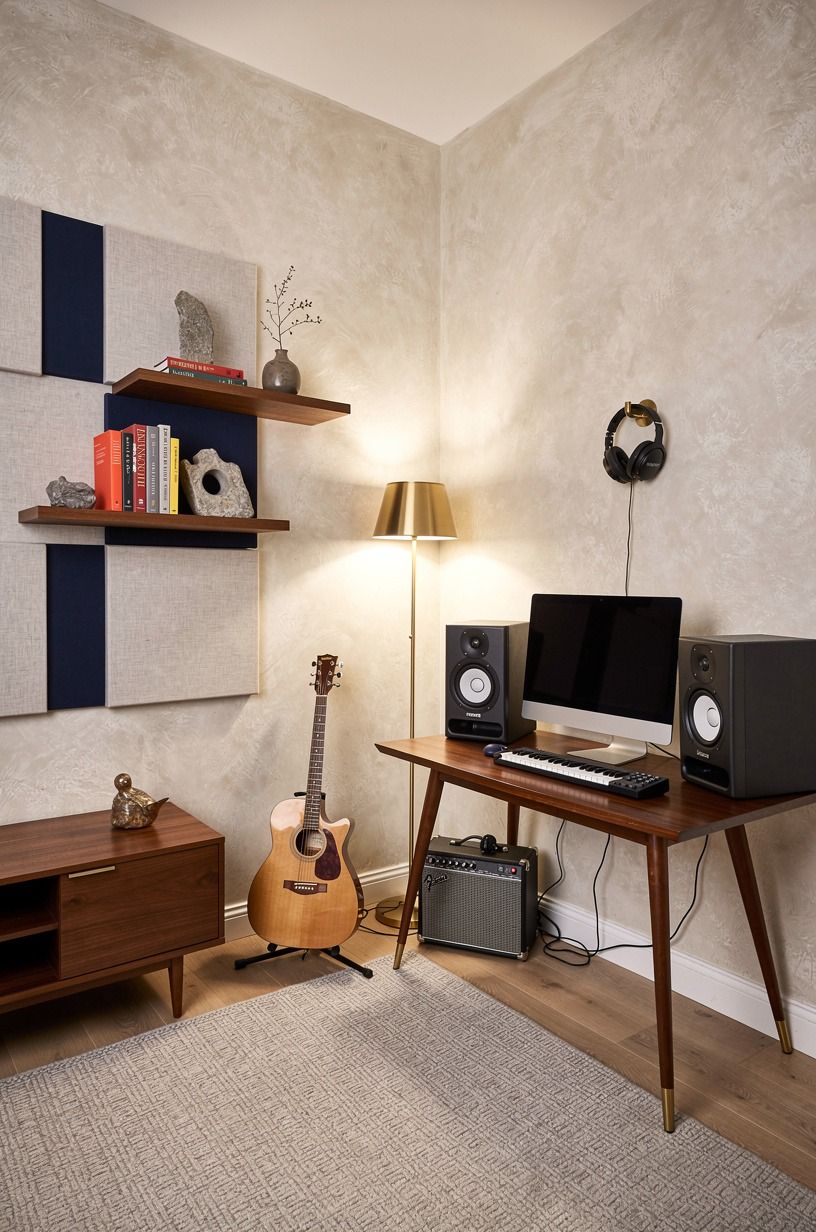
You don’t need a dark feature wall to make your music room feel moody. A navy wall in hand-applied Venetian plaster, balanced with white and walnut, can create depth without making a small apartment feel closed in.
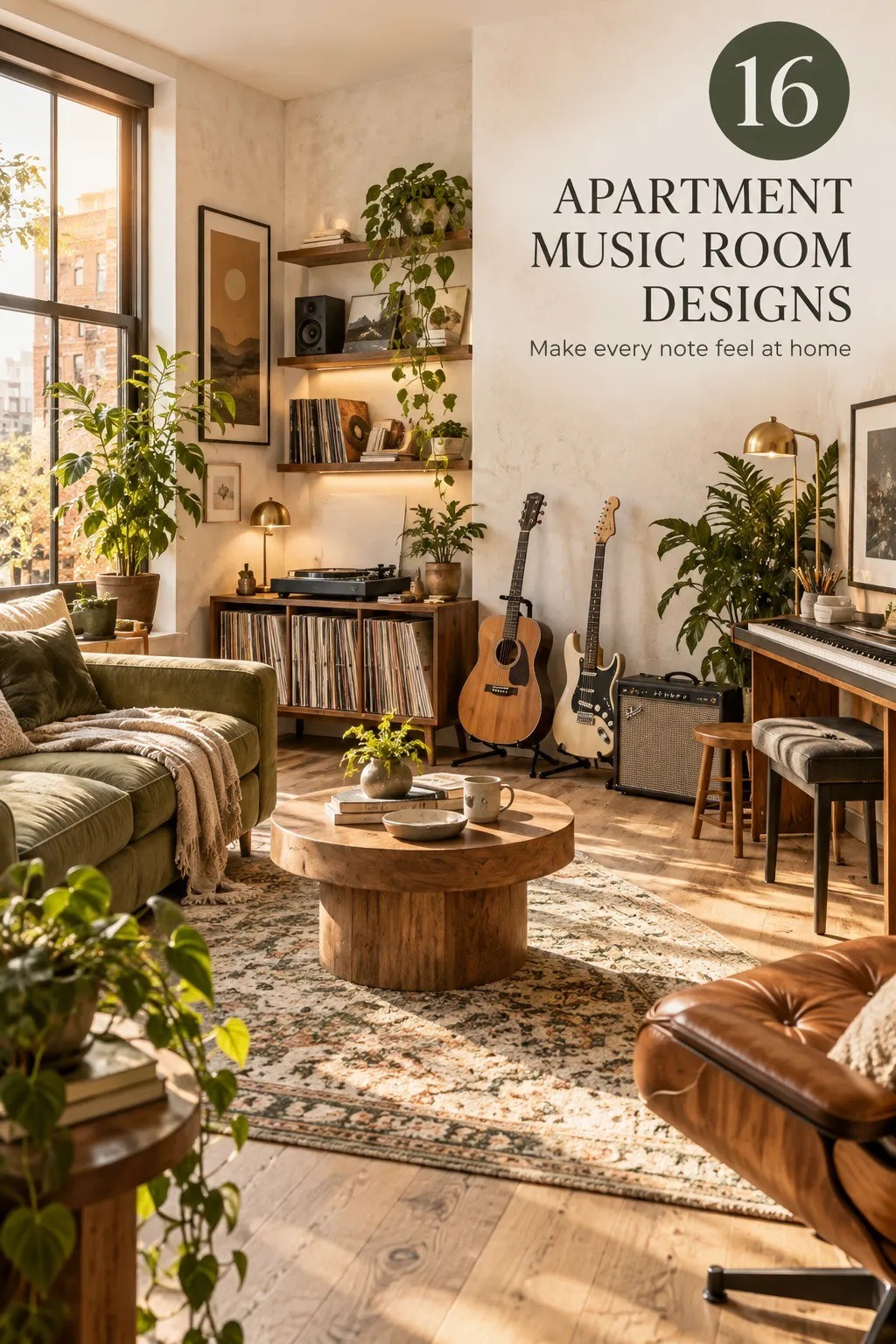
9Frame a Listening Seat With a Leather Stool
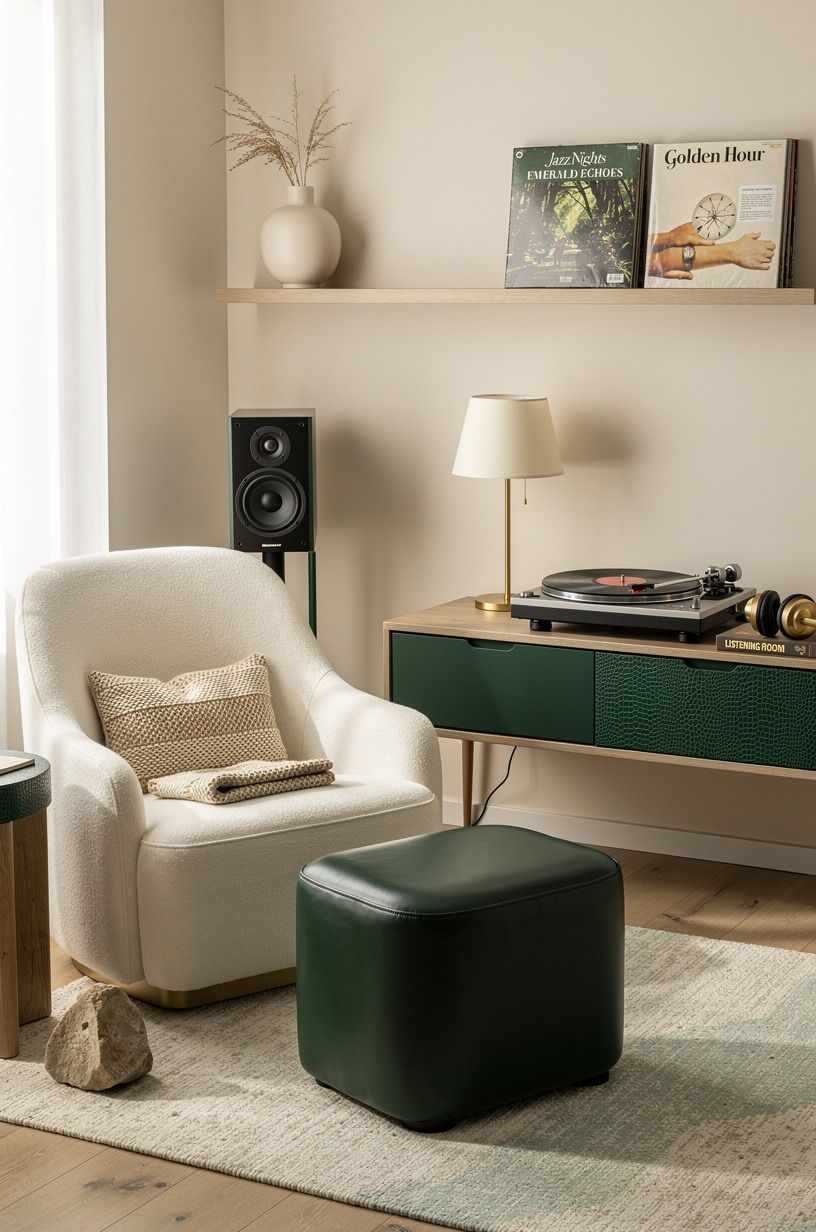
Every music room needs a place to listen, not just a place to practice. An emerald shagreen chair or a compact gold stool can create a clear listening zone without swallowing the room. Place it at an angle toward the instrument, then add a small side table for tea, headphones, or a notebook.
You’ll want the seat to feel comfortable for at least twenty minutes, but don’t overfill the corner with an oversized lounge chair. I made that mistake in a studio apartment, and the chair became the room’s only feature.
Choose a seat with a visible base so the floor still shows beneath it. Your apartment will feel larger when the furniture has some visual lift. An emerald shagreen seat can add richness, while a cream chair with a small gold detail creates a softer, quieter mood.
A listening chair should also be easy to move. You may want it turned toward the keyboard while practicing, then redirected toward the sofa during a gathering. A lightweight gold stool or small upholstered slipper chair gives you that flexibility without looking temporary.
Keep the side table modest. A slim gold table with a shagreen accent is enough for a drink and a notebook. The goal is an inviting pause, not another full workstation.
10Hide Cables With a Warm Utility Line
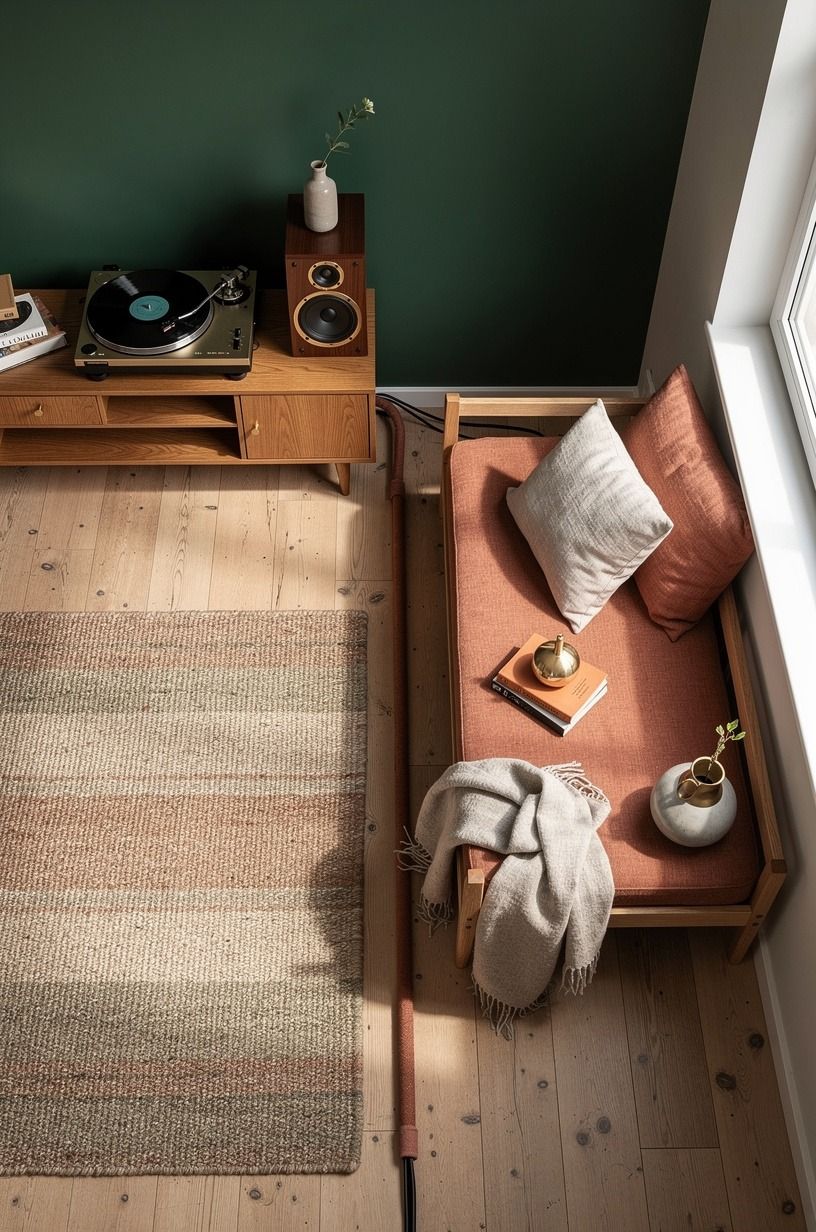
Cables are unavoidable, but they don’t have to become the personality of your apartment music setup. Run cords along one wall using removable cable clips, then gather the extra length inside a washed Belgian linen cable basket. Keep the route straight and intentional rather than letting every wire take its own path.
You’ll save time if you group cables by purpose before you attach anything. Audio together, charging cords together, and instrument cables together.
Don’t coil everything tightly if the manufacturer warns against it. I’d rather see one neatly routed black cable than six cords hidden behind a flimsy faux plant.
Use a natural oak cable box beneath the desk if you need to conceal a power strip. Leave enough ventilation around adapters and avoid trapping warm equipment inside a sealed container. Safety should remain part of the design, even when you’re trying to create a polished look.
A single leather cord wrap can make a visible cable feel considered. Choose one finish and repeat it once near the desk or storage unit. You’ll create a restrained utility line that looks intentional instead of improvised.
For a smaller floor plan, compare these studio apartment room layouts. The most successful layouts usually give the cables a clear route before adding decorative objects.
11Choose Curtains That Soften the Recording Corner
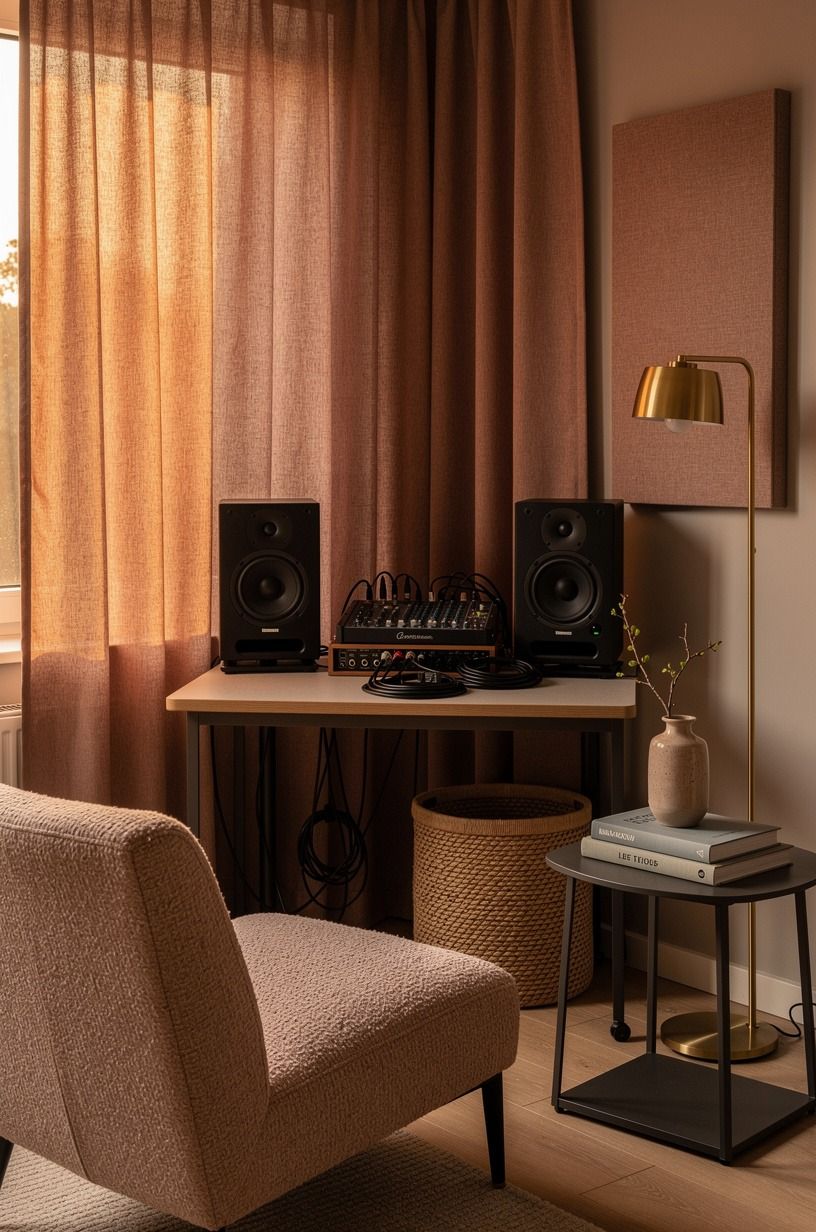
Curtains can make an apartment music room feel softer while giving you control over glare and privacy. Hang the rod 4-6 inches above the window frame and let the panels fall to the floor. Organic bouclé in dusty rose, charcoal, or a soft brass tone brings texture to the window without making your keyboard corner look harsh at noon.
You’ll get a fuller look with panels that reach beyond the sides of the window, but don’t block your only light source. I’d skip shiny polyester curtains because the surface can make the room feel cold and temporary.
A tension rod works well for renters, especially when you’re covering a shallow alcove. For a wide window, use lightweight bouclé panels that are easy to remove and wash. You can also layer a sheer curtain with a heavier charcoal drape if afternoon glare makes reading or recording uncomfortable.
Curtains won’t soundproof the room, but they can soften the visual and acoustic sharpness of bare glass. That gentle improvement is useful in a small apartment where every surface is close. Your room should feel settled, even if your lease says you’ll move again.
Choose a color that relates to the rug rather than matching it exactly. A dusty rose curtain beside a charcoal rug will feel layered; an identical shade can look flat. Small shifts in tone make the corner more expressive.
12Mix Recording Gear With Lived-In Objects
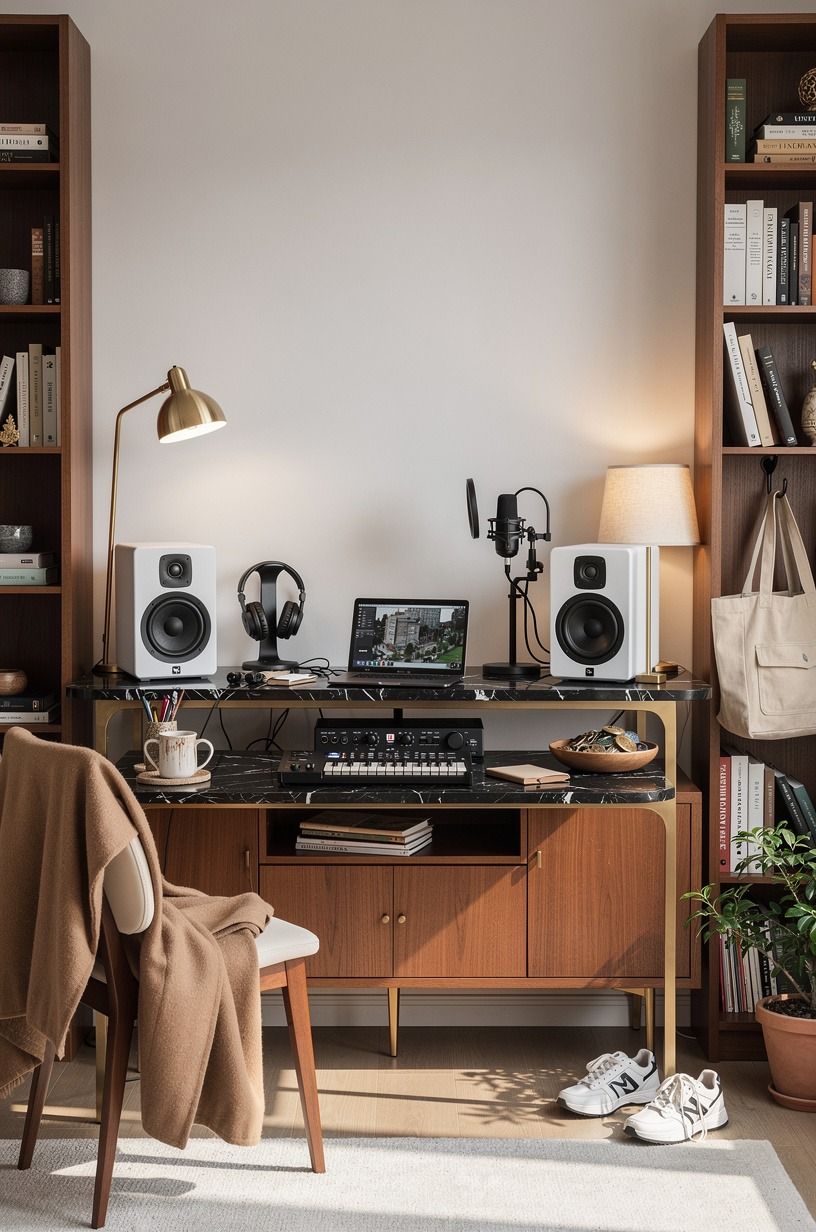
A living room recording studio shouldn’t look like a control booth unless that’s the mood you want. Combine a Focusrite Scarlett interface with books, framed art, a ceramic bowl, and one plant in a Nero Marquina black marble planter with white veining. The practical pieces will feel less severe when they share a shelf with objects that have age and texture.
You’ll need to leave clear access to the equipment, so don’t stack decor directly in front of the interface or speakers. And avoid placing a leafy plant beside electronics where watering could go wrong. I’d choose a trailing pothos over a collection of tiny succulents, because one generous shape reads more calmly.
A vintage record sleeve can add height behind a small interface, while a low bowl can hold picks, adapters, or spare batteries. Keep the palette restrained with warm white, camel, and black accents so the equipment remains easy to find. Your music corner can be technical and inviting at the same time.
If the room already has bookshelves, reserve one shelf for music equipment instead of creating a new tower. That approach saves floor space and makes the collection feel integrated. You’ll also be less likely to abandon the setup when every tool has a visible home.
A few lived-in objects make the room emotionally warmer. Add the mug you actually use, the notebook with half-finished lyrics, or the small framed print you’ve kept for years. Those details create character that a showroom arrangement can’t imitate!
13Turn a Corner Into the Apartment Music Stage
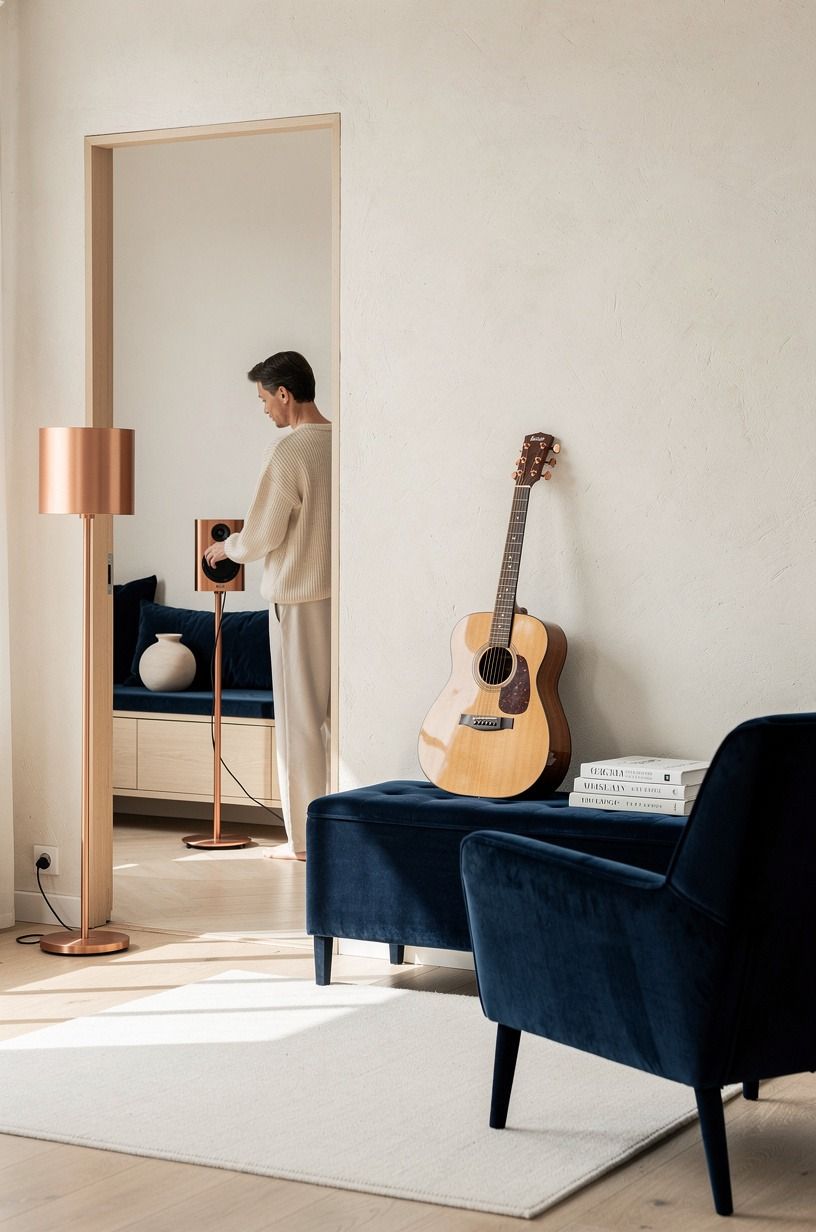
A corner becomes a small performance zone when you give it a wall treatment, a light, and one strong vertical element.
14Can a Rental Music Room Feel Permanent?
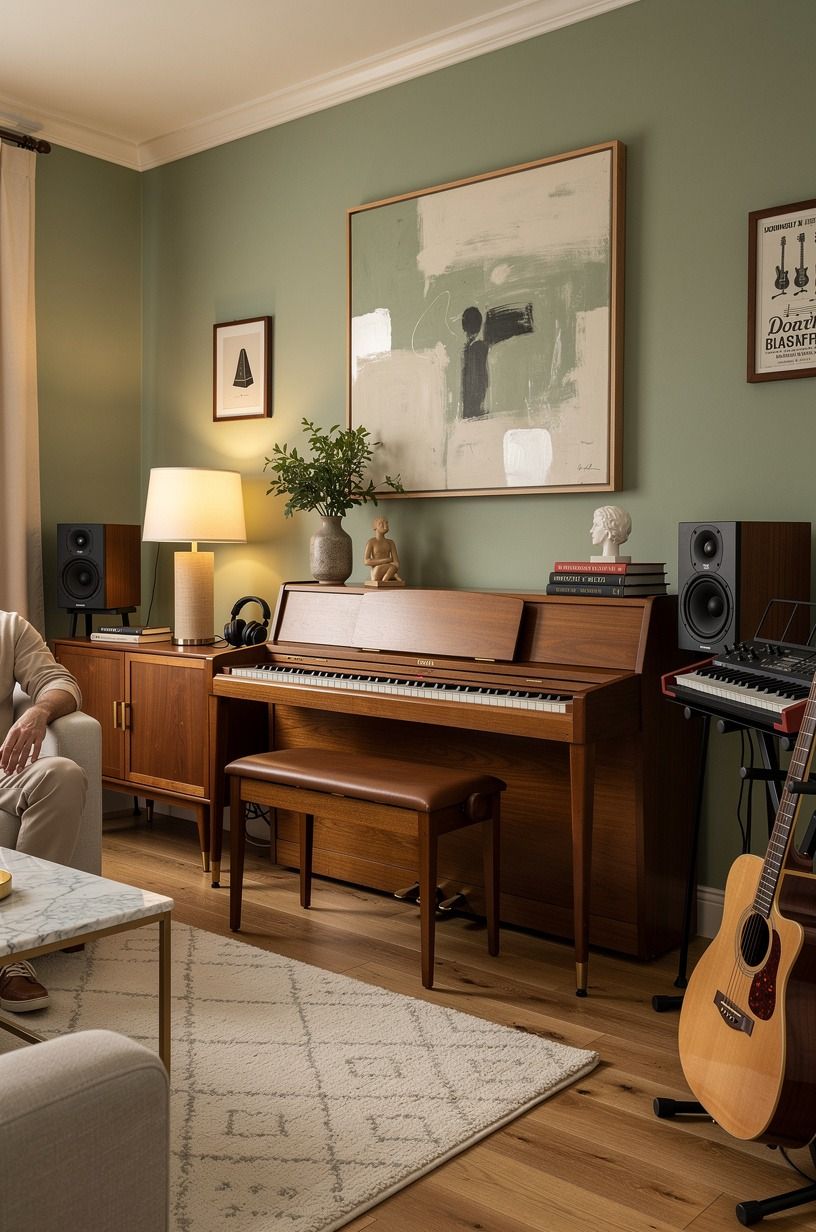
Yes, but permanence comes from repetition rather than construction. Repeat sage green in your ceramic planter, throw pillow, and framed print.
Then repeat one material, such as Carrara marble with subtle grey veining or natural wood, in two different locations. You’ll create harmony without painting trim or replacing flooring.
Use removable wallpaper only on a small, easy-to-measure surface, and order a sample before you cover anything. I’d avoid placing it behind a hot lamp or amp. Your rental should stay safe and reversible.
You can also use a freestanding natural-wood screen to define the music zone. A wood screen, open bookcase, or curtain panel can suggest a separate room without closing off the light. That boundary may be enough to make the setup feel purposeful.
Small repeated details matter more than expensive pieces. Use the same warm wood on a lamp and side table, or echo the sage green in a cushion and a piece of art. You’ll make the room feel designed instead of assembled by accident.
But you can still make a strong design decision: a calm sage-green wall, one warm wood shelf, and a low chair will feel more finished than a room full of unrelated purchases. The result can feel permanent while remaining completely movable.
15Borrow the Living Room Instead of Adding a Room
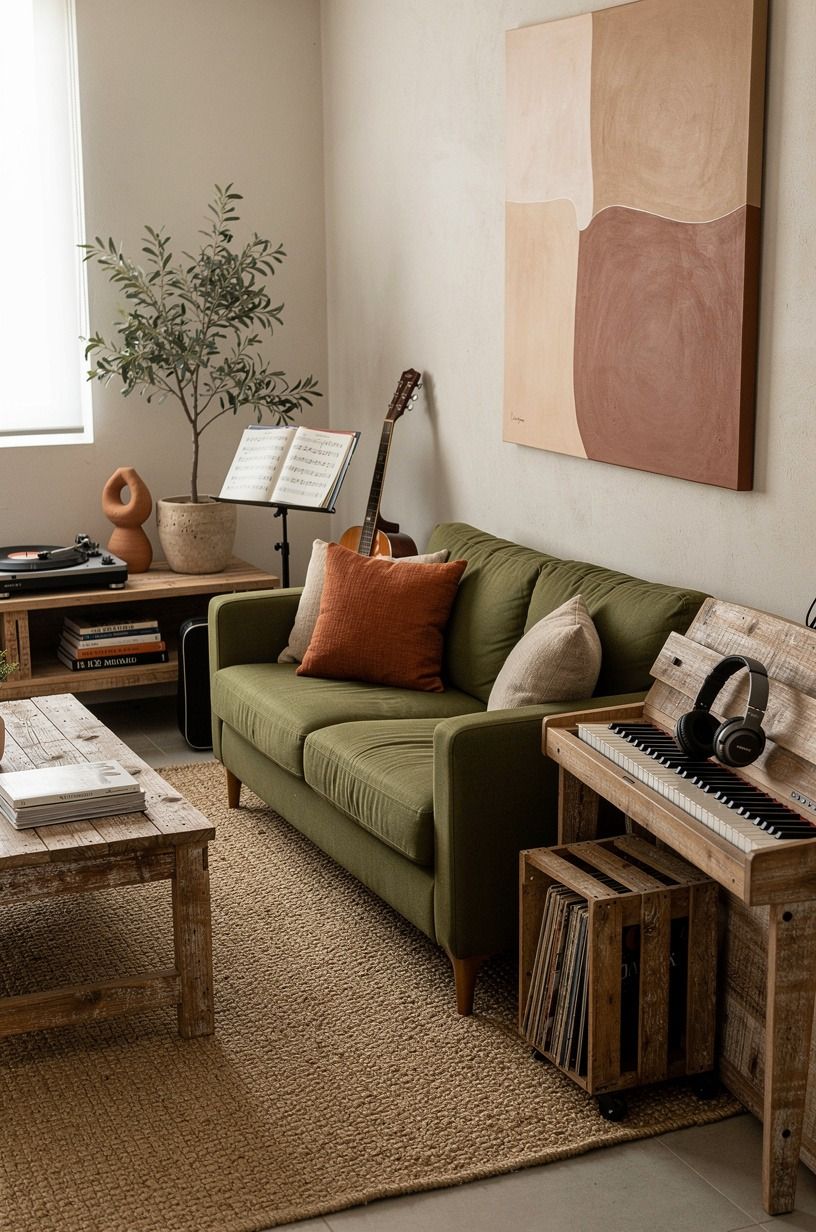
You don’t need a spare bedroom for an apartment music studio. A living room corner can hold a keyboard, guitar stand, headphones, and a narrow desk if the arrangement has a clear edge. A low-profile terracotta sofa works well near a music zone because its shape leaves space for the instrument to remain visible.
Place the chair or sofa perpendicular to the instrument instead of facing it head-on. That arrangement separates listening from working without adding another wall. If you’re working with 400 square feet, every piece needs to earn its footprint.
A reclaimed weathered teak console behind the sofa can create a visual border for the music area. Add a lamp, one basket, and a small stack of records, but keep the surface from becoming another clutter zone. The best divider is often just a shift in orientation.
You’ll also want to protect the walking path. Mark the instrument’s footprint with painter’s tape for a day before buying anything. If you keep bumping into it, the location isn’t right, even if it looks beautiful from the doorway.
A shared room can feel surprisingly elegant when the zones have different textures. Let the sofa area stay soft and social, while the music corner uses weathered teak, stone, and olive accents with a more focused light. These Korean studio apartment setups show how a small room can carry several purposes without looking scattered.
16Use the Low-Noise Zone for Apartment Music
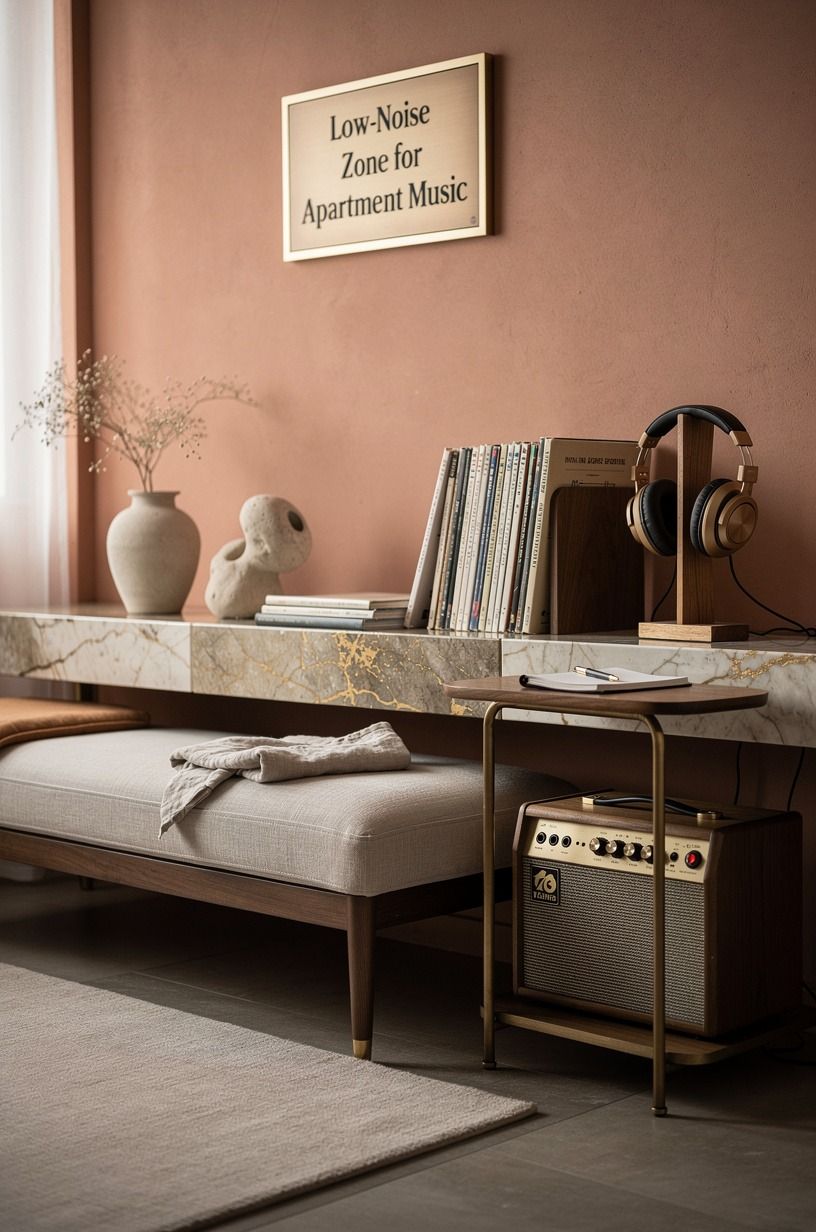
Your best practice corner may be the wall farthest from the elevator, kitchen, or shared bedroom. Start with the quieter zone, then place your clay-colored linen throw over the chair and a rug beneath the instrument. Soft furnishings won’t make a room soundproof, but they can make the area feel less sharp and exposed.
You’ll also want to avoid placing speakers directly against a bare corner. Give them a little breathing room where your layout allows, and keep the listening seat centered between the main sound sources. I’d skip expensive acoustic panels unless you’ve already solved the furniture and cable layout.
First, make the room comfortable enough that you’ll use it. Then refine the sound. A soft linen throw, full curtain, and upholstered seat can improve the atmosphere before you invest in technical treatments.
Think about your neighbors, too. Practice during reasonable hours, use headphones when possible, and add felt pads beneath stands or stools. Those small choices make the setup more considerate without making it less inspiring.
You can also create a quiet reset routine. Put the instrument away safely, return the headphones to their hook, and clear the chair before bed. A room that resets easily will feel peaceful instead of demanding.
The Apartment Music Choice I’d Make First
I’m convinced that the best renter-friendly music rooms begin with access, not decoration. If your guitar is hidden, you won’t pick it up.
If your keyboard blocks the walkway, you’ll resent it. I’ve learned to place the instrument first, then build the light, seating, and storage around the way I move through the room.
That order matters more than a fashionable palette.
The second lesson is that small rooms reward restraint. One warm wood console, one inviting chair, and one large piece of art can carry more presence than a crowded wall of music memorabilia. I went back and forth on dark paint, but most renters don’t need more drama.
They need a background that lets the instrument stand out while keeping the room comfortable during ordinary life.
Your budget can stay realistic. The typical US range for a refresh depends on how much furniture you already own, and free rearranging often does more than another purchase. Use the numbers below as planning markers, not promises.
The part I’d protect is the walking path. A room can look polished and still be irritating when you’re carrying a guitar around a coffee table. Keep the setup easy to reset, keep the cables visible enough to manage, and let your favorite instrument be the emotional center.
If you’re starting from nothing, buy in this order: a secure instrument stand, a useful light, a rug or soft textile, then storage. That sequence keeps the room functional before it becomes decorative. You’ll learn what the space actually needs instead of guessing from a shopping list.
If you already own most of the furniture, rearrange first. Move the instrument near the best light, turn the chair toward it, and remove anything that interrupts the path. Sometimes the room becomes more beautiful the moment one unnecessary piece leaves.
That’s what makes the room yours. It doesn’t need to look like a professional studio. It needs to invite you back tomorrow.
The Questions Worth Answering First
What is the best Apartment Music Room Ideas [Renter-Friendly Setups] for a small apartment music room renter?
A wall-mounted desk and a visible instrument stand are the strongest starting points. IKEA KALLAX storage keeps supplies contained, while a compact chair gives you a place to listen. You’ll gain a usable music zone without sacrificing the room’s walking path or making your apartment feel crowded.
Where can I buy Apartment Music Room Ideas [Renter-Friendly Setups] pieces on a budget?
Look at IKEA, Wayfair, and Target for lamps, baskets, stools, and narrow storage. You can also find secondhand wood furniture through Facebook Marketplace or local thrift shops. Your best value may be a used console with good proportions, since you can refresh it with paint or new hardware.
How much does a Apartment Music Room Ideas [Renter-Friendly Setups] makeover cost?
A basic refresh typically falls around $200-$800 in the US when you use existing furniture and add paint, textiles, art, and organization. Free rearranging costs nothing, and a mid-level update with accent furniture, lighting, and a rug can reach $1,500-$5,000.
Can I create a Apartment Music Room Ideas [Renter-Friendly Setups] on a budget?
Yes, and you can start without buying anything. Move the instrument into the best-lit corner, gather cables into one basket, and use books or existing art to create a backdrop. A thrifted lamp, removable hooks, and a secondhand rug can make the zone feel intentional for far less.
Is a Apartment Music Room Ideas [Renter-Friendly Setups] worth it in a small space?
Yes, because a small room forces you to choose pieces you’ll use. Keep the instrument visible, use a chair with a light frame, and place storage vertically. A defined music corner can make an apartment feel more personal without taking over the entire living room.
Is Apartment Music Room Ideas [Renter-Friendly Setups] a good idea for a rental?
Yes. Use removable picture strips, a tension curtain rod, freestanding shelves, and peel-and-stick wallpaper on a small accent surface. No-damage upgrades let you create a warmer room while keeping the original walls and fixtures intact.
Your setup can move with you when the lease ends.
Where I’d Start First
If I had to pick one, I’d start with the visible instrument stand. You can’t build a music habit around something buried in a closet, and seeing your instrument changes whether you play. Pin this renter-friendly music setup guide for later and give your favorite corner a real job.
Then add one warm light and clear the walking path. You’ll notice the room feels more inviting before you’ve bought anything dramatic. Once the setup is easy to reach, every later choice becomes simpler, more personal, and more rewarding.