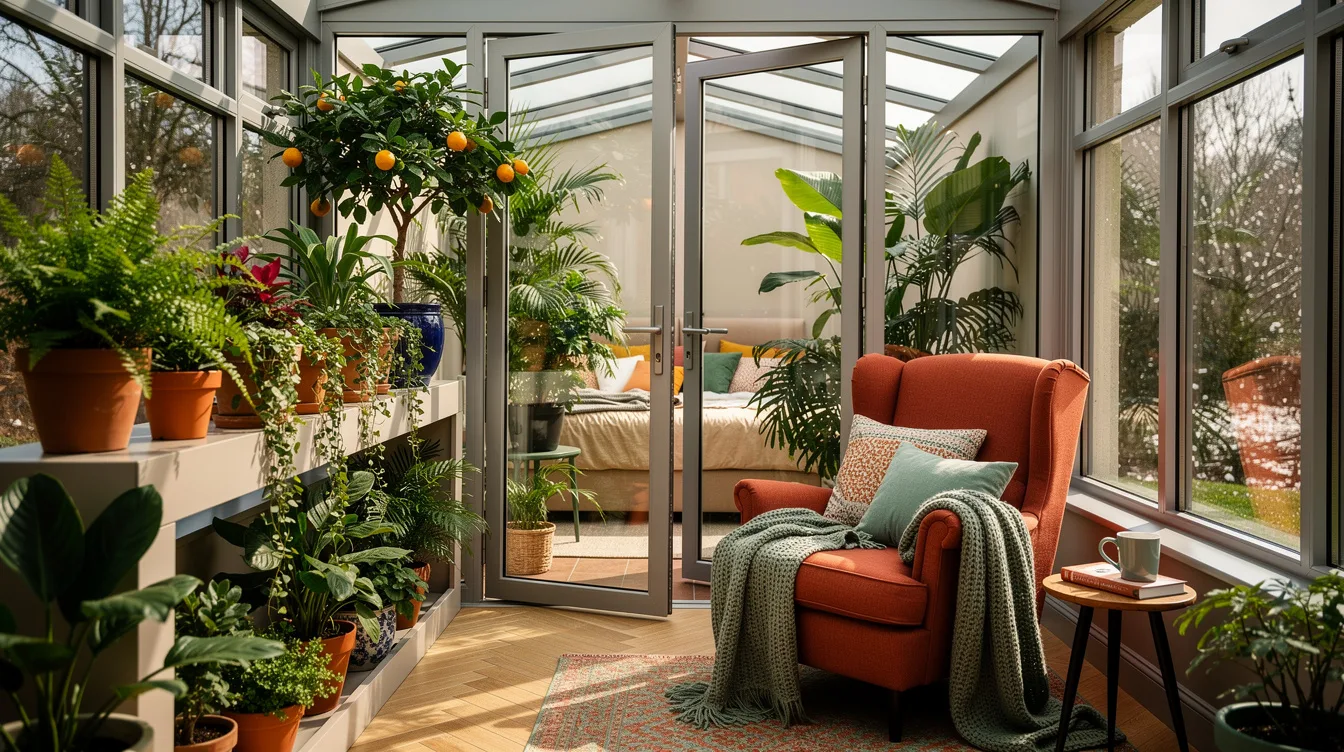
The bedroom door opens onto a narrow glazed room where damp pots, winter coats, and one abandoned chair can compete for the same strip of floor. A roughly 3 by 3 m conservatory gives enough room for a planted wall and a seat, but only when the layout is decided before the shelving arrives.
The key choice is comfort: a cool plant-overwintering room has different demands from a heated sitting room attached to a bedroom. Treating an ordinary greenhouse as an insulated extension is the mistake that makes the space cold, drafty, and expensive to correct.
Keep the plant shelving on one side, préservé a clear chair zone, and make the glazed connection to the bedroom feel like a threshold rather than a second exterior door.
Build a Narrow Lean-To Shell
A small lean-to conservatory works best beside a bedroom because its long glazed face brings in light while the back wall gives plants and storage a defined home. Keep the bedroom connection through glazed doors, then reserve the far end for one chair instead of filling every edge.
For planning, a 3 by 3 m external footprint is a useful reference, though the finished interior will be smaller after the base, walls, glazing, and shelving are accounted for. The lean-to form feels intentional beside a bedroom, while a freestanding greenhouse can look like an afterthought.
For a realistic 2026 budget benchmark, a published UK figure puts a basic shell at around £9,725, including VAT and delivery but excluding the base, floor, walls, installation, and winter-comfort upgrades. A broader advertised range of about £9,000 to £25,000 shows why shelving and insulation need their own line in the budget.
Separate the Cool Zone from the Bedroom
Decide first whether the room is a cool plant-overwintering space or a genuinely comfortable sitting room. An ordinary greenhouse is not an insulated conservatory, and an unheated greenhouse may stay only about 2°C above the outdoor minimum.
An insulated conservatory needs better roof and wall performance, sealed glazing, and a dependable connection to the home. I would spend on thermal separation before adding decorative shelving because cold drafts beside a bedroom become irritating quickly.
Use a weather-stripped door between the bedroom and conservatory, then place a small heater or radiator only after a professional checks the room’s heat loss. A digital thermometer at plant level will reveal overnight conditions more honestly than the temperature near the ceiling.
Stack Shelves on One Side
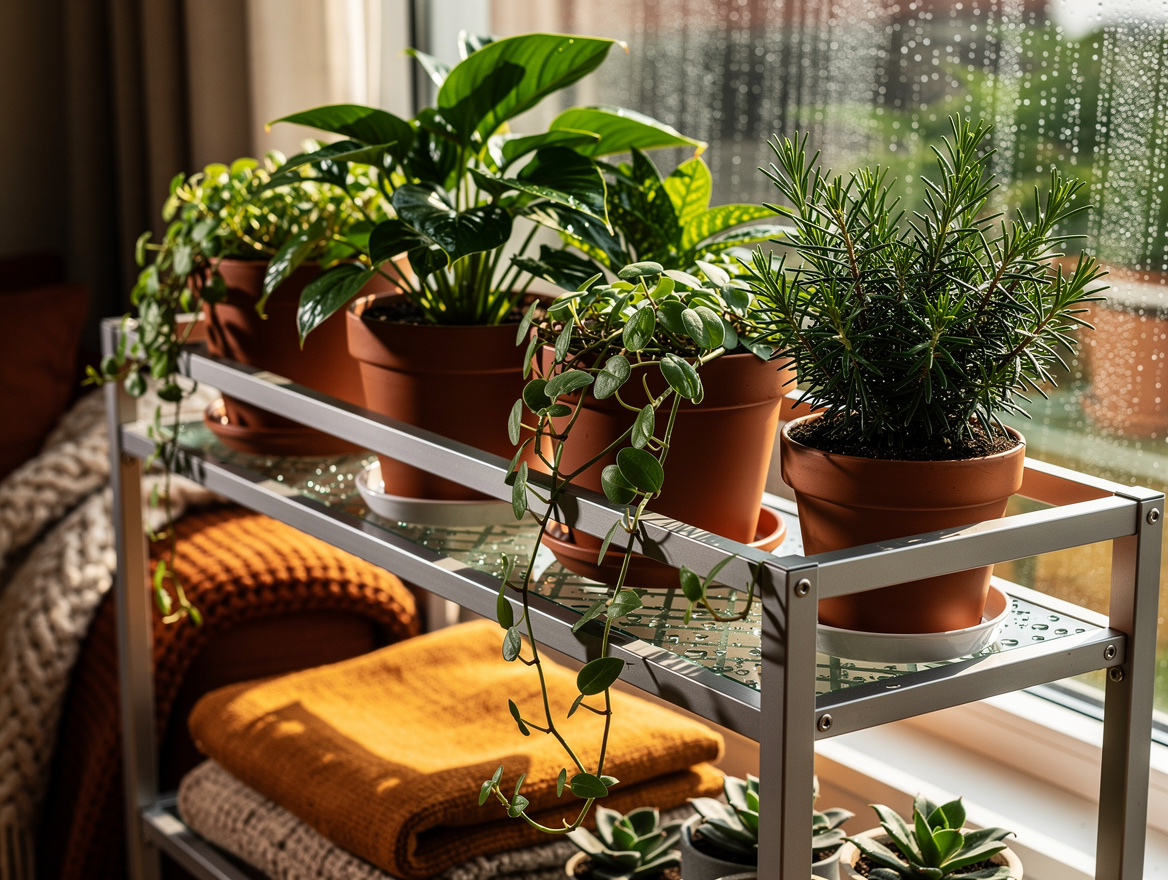
Put a lower bench about 450 to 500 mm deep along one long wall, then add an upper shelf roughly 200 to 250 mm deep. This leaves the opposite side visually quiet and gives smaller pots a second light-catching tier.
Powder-coated aluminum is my preferred material for the main shelving because it handles damp air better than unfinished wood and keeps the room visually light. Choose slatted tops for airflow around pots, or flat tops when you need a stable surface for trays.
A modular system such as IKEA IVAR can work for a dry, well-ventilated room, but it needs careful sealing and should not be treated as waterproof joinery. Set the lower bench around 750 to 850 mm high and adjust the upper shelf to the plants rather than forcing every tier to match.
Protect the Bedroom Sightline
Keep the chair opposite the deepest shelving, not wedged between the plants and the bedroom doors. A compact Wayfair lounge chair can occupy the far end while preserving a clear route through the room.
Allow roughly 1,200 mm of width for the seat and about 550 to 600 mm of depth, then keep the main circulation path near 900 mm clear wherever possible. These are planning allowances, not universal rules, so tape them on the floor before ordering anything.
A low oak seat or slim upholstered chair looks calmer than a bulky sofa in a narrow conservatory. Add a small round table, about 450 to 550 mm across, only if it does not interrupt the door swing or the path to the plants.
Choose Finishes That Tolerate Damp
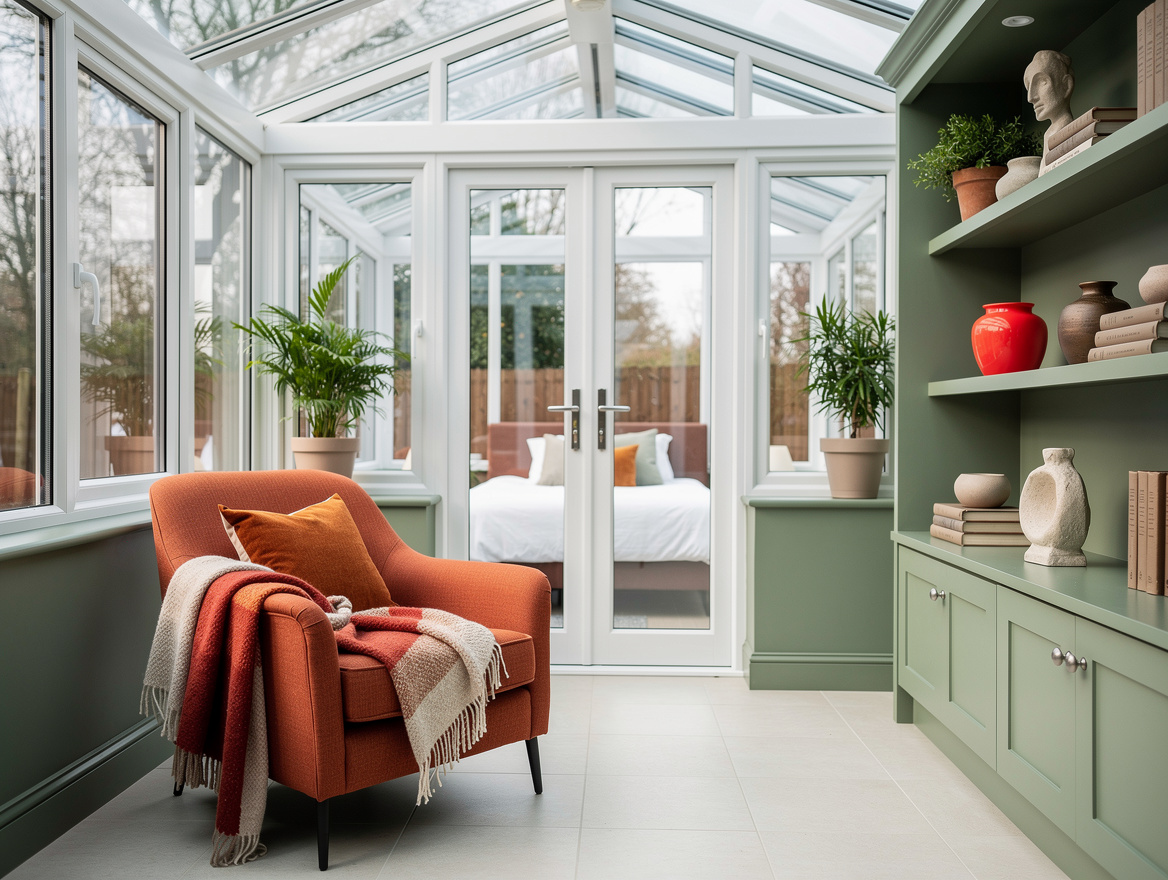
For the floor, porcelain tile is a practical choice because wet pots, muddy shoes, and winter condensation are easier to manage on a hard surface. Choose a finish with enough texture for safe footing, but avoid an overly rough surface that traps soil in every joint.
Use a shallow waterproof lip beneath the plant bench and give excess water somewhere deliberate to go. A sealed marine-grade plywood counter can look warmer than metal, but it still needs regular inspection around pot rims and watering points.
On the back wall, a washable matte wall paint in a soft clay, putty, or warm white keeps the room connected to the bedroom without competing with foliage. I would skip dark paint on every surface because winter daylight is already limited.
Light the Plants Without Glare
Mount lighting beneath each upper shelf so the lower plants receive useful illumination without turning the bedroom doors into a bright nighttime mirror. An under-cabinet system such as IKEA MITTLED can provide a tidy starting point, provided the installation suits the room’s moisture level.
For exposed areas, choose a properly listed damp-rated LED fixture and keep cables away from watering zones. Warm white light feels more residential, while a dedicated grow light may be necessary for plants that need stronger winter support.
Finish the window wall with a breathable linen shade or simple roller shade that can soften glare during low winter sun. Ventilation matters just as much as lighting: crack a roof vent or window when conditions allow, then close it before the room loses the temperature your plants need.
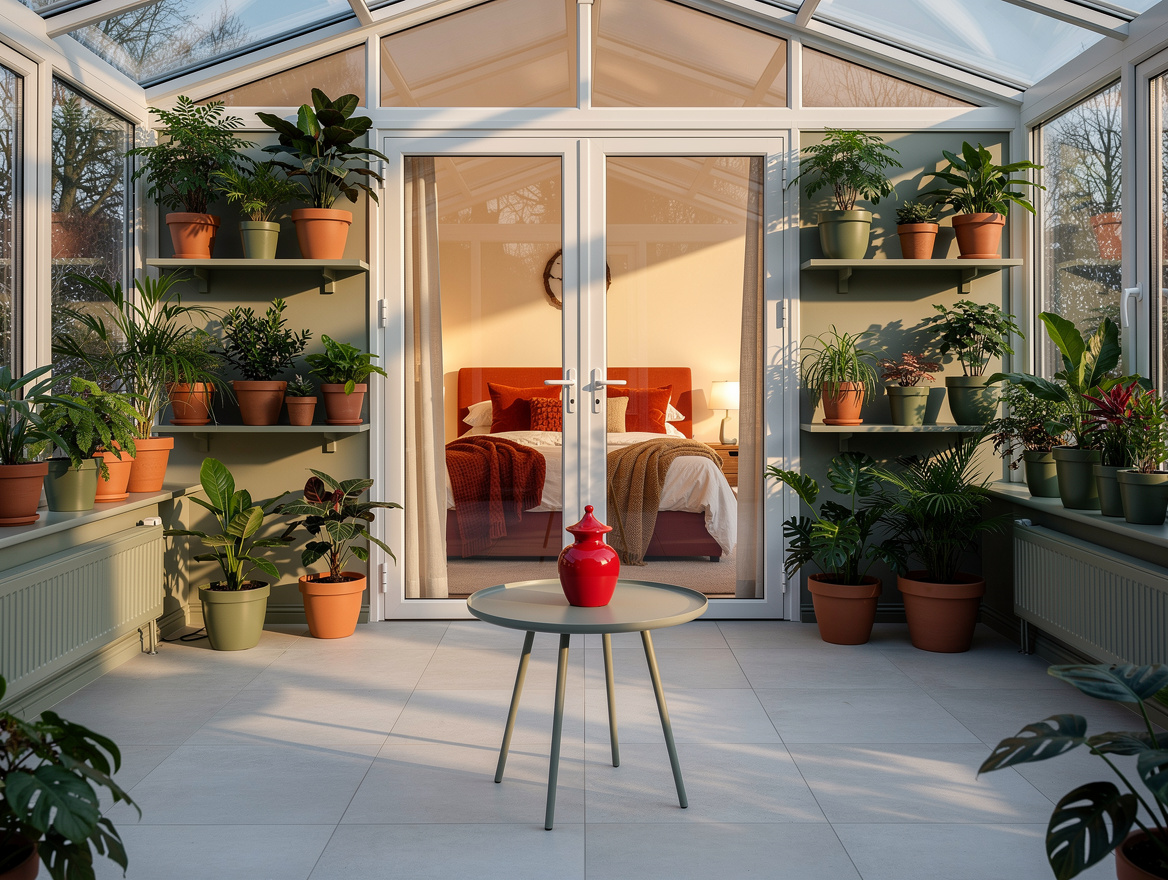
Start by taping the proposed shelving run and chair footprint onto the floor for several days. If the route feels tight, reduce the plant collection before reducing the doorway or insulation allowance.
Mia Carter writes about small-space living and budget home makeovers. She has restyled three rentals and tests most ideas in her own 45 sqm flat.