
Double slipper tub ideas for old-world, curl-up-and-soak style can work in a compact bathroom when the tub, lighting, and surrounding materials share one clear palette. A standard tub measures 60×30 in, so surrounding architecture matters more than excess floor area. These setups use plaster, aged metal, carved wood, and layered light. The result feels intentional, warm, and lived-in.
- Frame the double slipper tub with arched paneling
- Pair antique sconces with the raised tub ends
- Anchor the tub on patterned encaustic tiles
- Paint the ceiling above the tub deep green
- Layer a Persian runner beside the bathtub
- Install a brass floor filler at center
- Surround the tub with half-height beadboard
- Let the silhouette lead against plaster walls
- Add a carved wooden stool for towels
- Use marble slabs behind the double slipper tub
- Why hang a pendant directly over the basin?
- Build a recessed niche for bath essentials
- Contrast a black tub exterior with ivory walls
- Place matching palms beside both slipper ends
- Echo the tub curves in a rounded mirror
- Style the ledge with ceramic bath vessels
- Create symmetry with twin wall-mounted faucets
- Warm the European silhouette with aged bronze
1Frame the double slipper tub with arched paneling
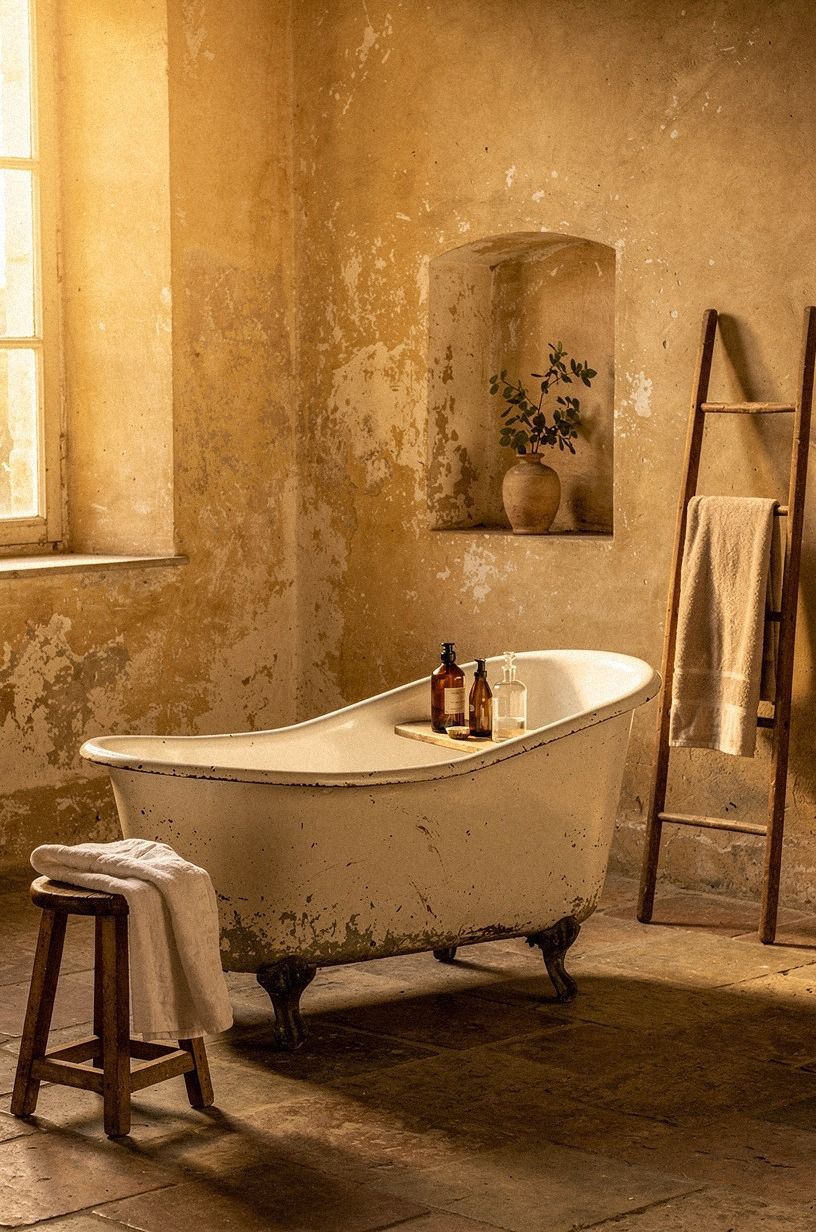
Arched paneling gives a double slipper tub the architectural weight of an old European bathing room. Use cerused white oak around the tub wall, then repeat the arch above the faucet or inside a shallow niche.
The curve should follow the raised ends without touching them, so your silhouette stays open and elegant. A classic freestanding bathtub looks especially refined against terracotta plaster and honed limestone.
Choose Sherwin-Williams Sea Salt SW 6204 for nearby cabinetry when the room needs a soft counterpoint to olive walls. You’ll want the oak grain to remain visible, and you don’t need a full built-in surround to create the effect.
A narrow arched frame can carry the whole composition, keeping the renovation budget focused on details with lasting value. For more old-world layering, browse these Spanish bathroom details and tile accents.
2Pair antique sconces with the raised tub ends
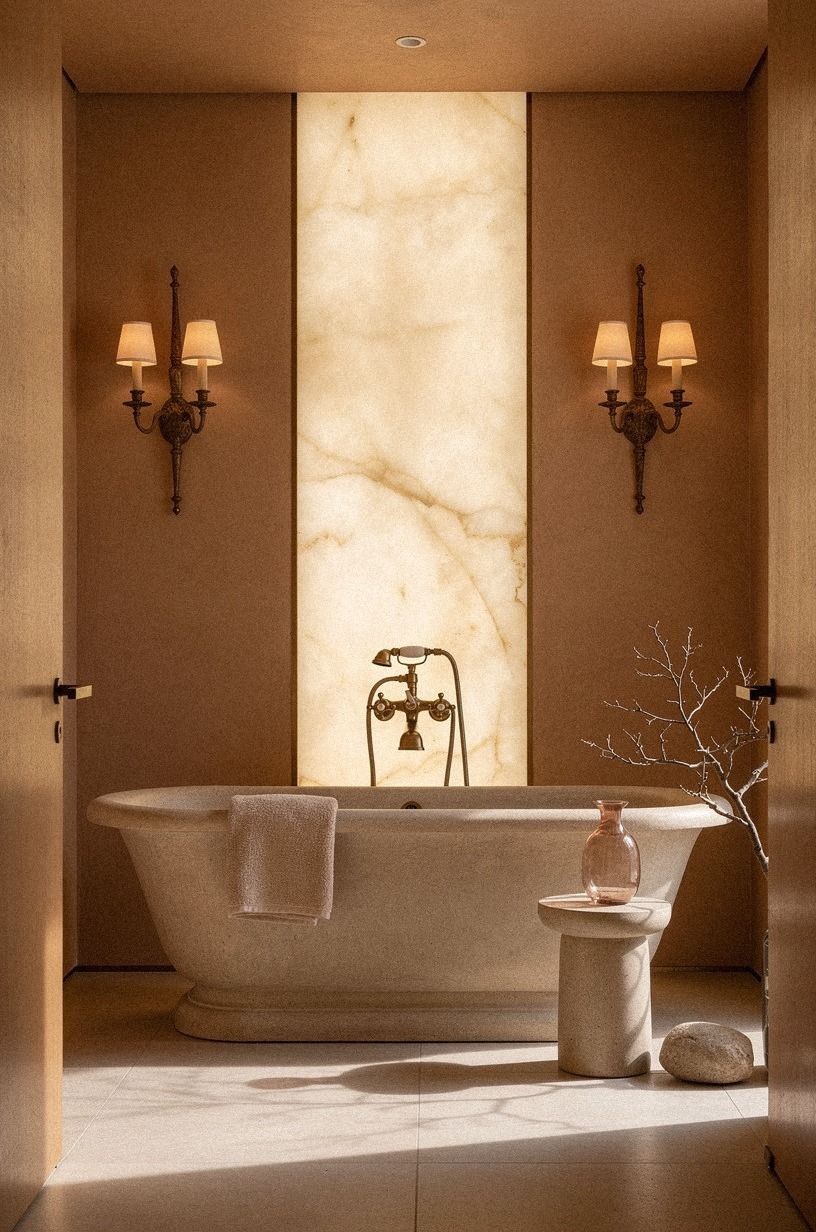
Antique sconces make the raised ends of a double slipper tub feel deliberate rather than oversized. Mount one fixture on each side of the back wall, keeping the light source near shoulder height when you’re seated. Backlit translucent onyx will soften the clay, linen, and aged brass palette, while the stone’s cloudy glow adds a calming evening layer.
Choose unlacquered brass with visible patina instead of polished gold. It’s warmer, less sharp, and better suited to a traditional freestanding bathtub.
You’ll want dimmable wiring and frosted bulbs, because bare clear bulbs can make the onyx look harsh. A West Elm sconce with an aged finish can echo the shape without making the room feel like a showroom.
The fixture should frame the tub, not compete with it.
3Anchor the tub on patterned encaustic tiles
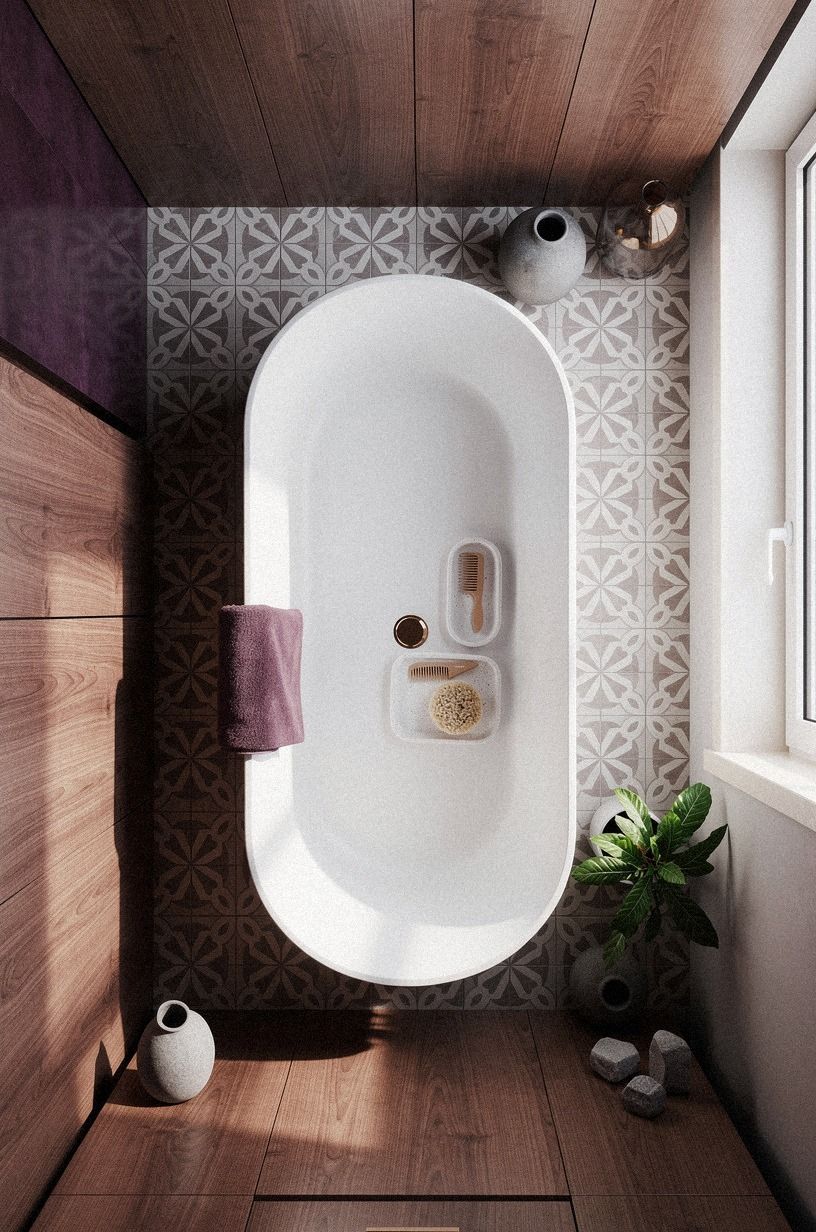
Patterned encaustic tiles turn the floor beneath a double slipper tub into a quiet piece of architecture. Plum, grey, and rose gold work best when the pattern stays low-contrast, especially beside book-matched walnut.
Your floor should feel like a foundation, not a second focal point. Choose a repeating quatrefoil or faded geometric design with enough grey to rest the eye.
A walnut vanity can repeat the tile’s symmetry while giving the room earthy warmth. It’s worth choosing a matte sealant, because glossy encaustic surfaces can feel too new beside a traditional European style bathtub.
You’ll want the tub feet or base to sit clearly over the pattern. A slim border helps keep the tile investment visually controlled.
For more character, browse these vintage speakeasy decor ideas and walnut details.
4Paint the ceiling above the tub deep green
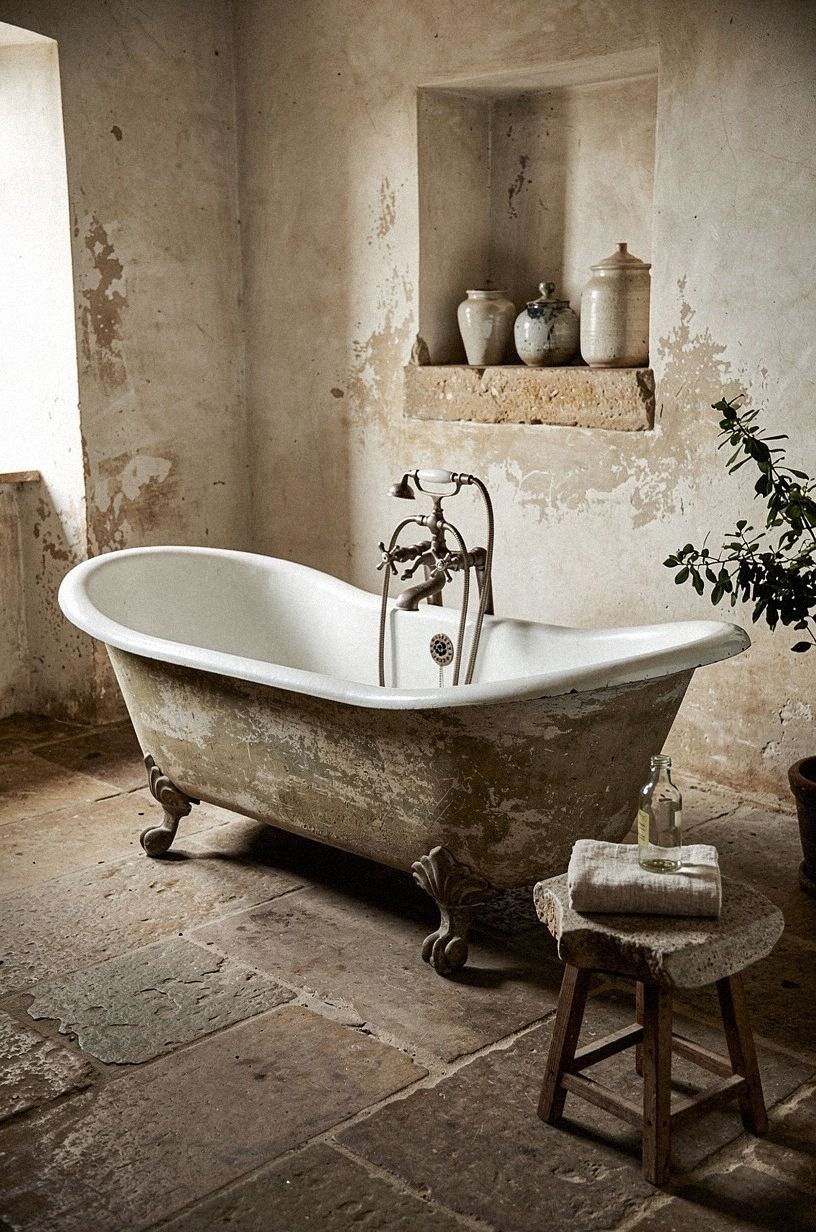
A deep green ceiling lowers the visual volume above a double slipper tub and creates a moody, intimate bathing zone. Use Farrow & Ball Hague Blue No.30 on the ceiling when the navy, white, and walnut palette needs more depth, or choose a forest green with warm undertones for a softer result. The color should continue slightly down the upper wall to avoid a hard line.
Warm travertine underfoot keeps the darker ceiling from feeling heavy. You’ll want white towels, aged nickel, and walnut to break up the navy field, while a small pendant can provide a gentle pool of light.
Don’t pair deep green with icy chrome; the contrast feels too clinical. A traditional freestanding bathtub needs warmth above and below, and this ceiling treatment supplies both without adding major cost.
5Layer a Persian runner beside the bathtub
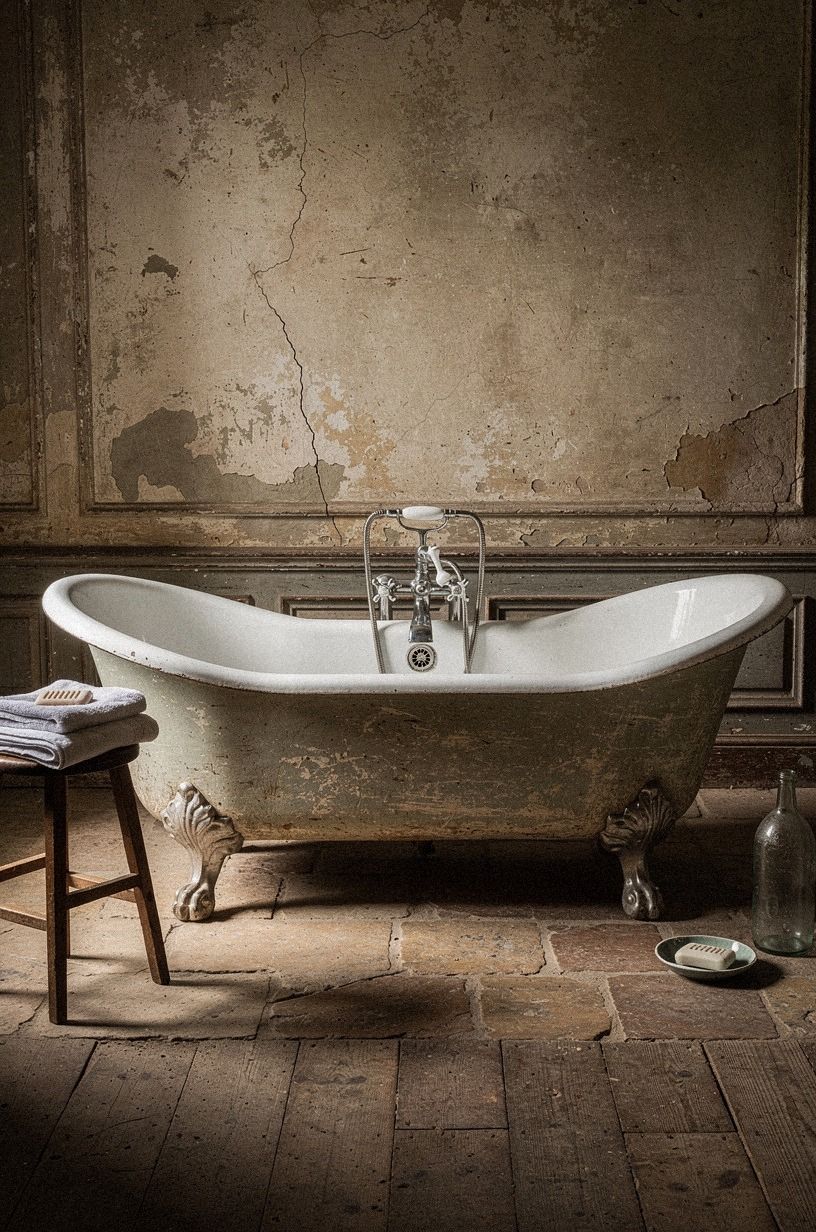
A Persian runner beside the tub brings emerald, gold, and cream into a room that might otherwise read as purely functional. Choose a low-pile Persian wool runner with softened reds and faded green, then leave enough visible floor around it for the tub to remain easy to clean. The texture should look gathered over time, not freshly matched.
Unlacquered brass developing soft patina will connect the runner to the faucet and mirror frame. You’ll want a washable cotton pad beneath the runner, because splashes happen even in a careful bathroom.
A 2×6 ft proportion usually gives a long, graceful line beside a 60×30 in tub without crowding the walkway. It’s an elegant move, and the room feels more welcoming within seconds.
For adjacent-room continuity, use the walnut accents from these vintage speakeasy decor ideas and walnut details.
6Install a brass floor filler at center
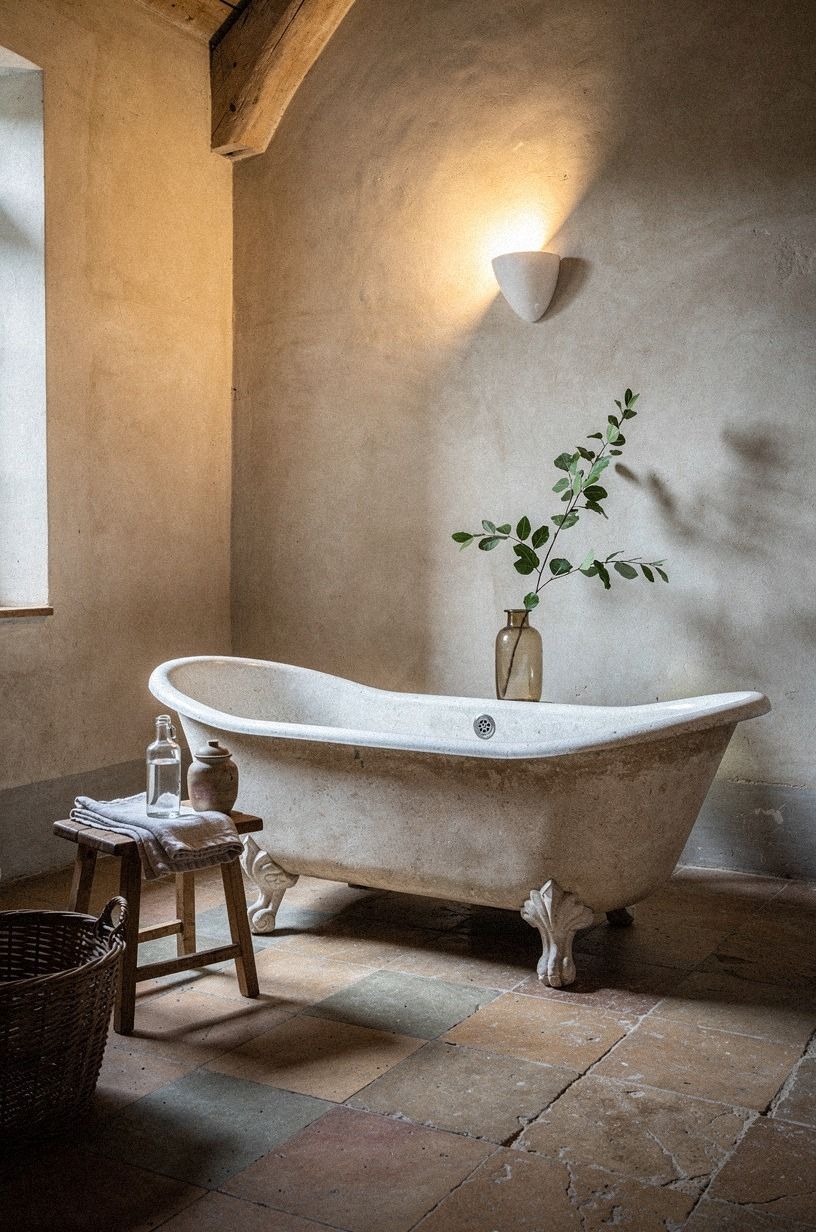
A brass floor filler gives the center of the bathroom a small architectural event. Set it beneath the open area near the tub, not directly under the drain, so the fitting reads as a deliberate accent rather than a plumbing afterthought. Forest green walls, rust textiles, natural oak, and oversized-chip terrazzo create a rustic palette with enough contrast.
Choose aged brass with a brushed surface, because fingerprints and water marks disappear more easily than they do on mirror-polished metal. You’ll want the terrazzo chips to include cream or rust, so the floor connects with towels and an oak stool.
A compact Article bench can finish the arrangement without crowding the tub. Can a small metal detail carry a whole room? Yes, when every surrounding color repeats it quietly and the budget stays focused on useful details.
7Surround the tub with half-height beadboard
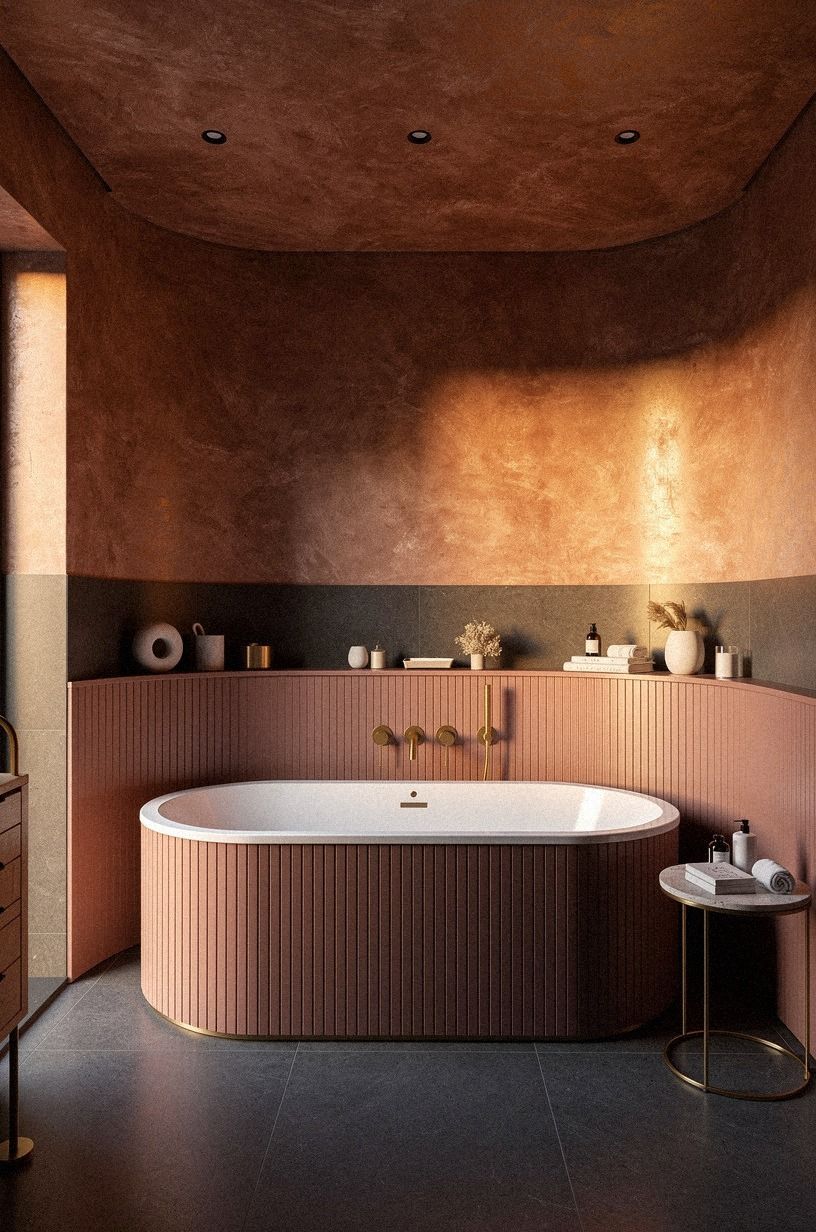
Half-height beadboard gives a double slipper tub a crisp architectural frame while leaving enough wall above for plaster color and artwork. Use dusty rose on the upper wall, charcoal grout or trim lines, and brass fixtures for a palette that feels intimate rather than sweet. The beadboard should stop around 42 to 48 in high, creating a clean ledge for folded towels.
Hand-applied Venetian plaster above the beadboard adds movement where painted drywall would look flat. You’ll want the grooves sealed carefully, because standing moisture can darken unfinished wood. Don’t use bright white beadboard with this palette; warm ivory or muted mushroom will sit better beside the brass.
A Target Threshold stool or narrow shelf can hold bath salts while keeping the tub zone practical. This approach offers strong visual value when a full tile installation would stretch the renovation cost.
8Let the silhouette lead against plaster walls
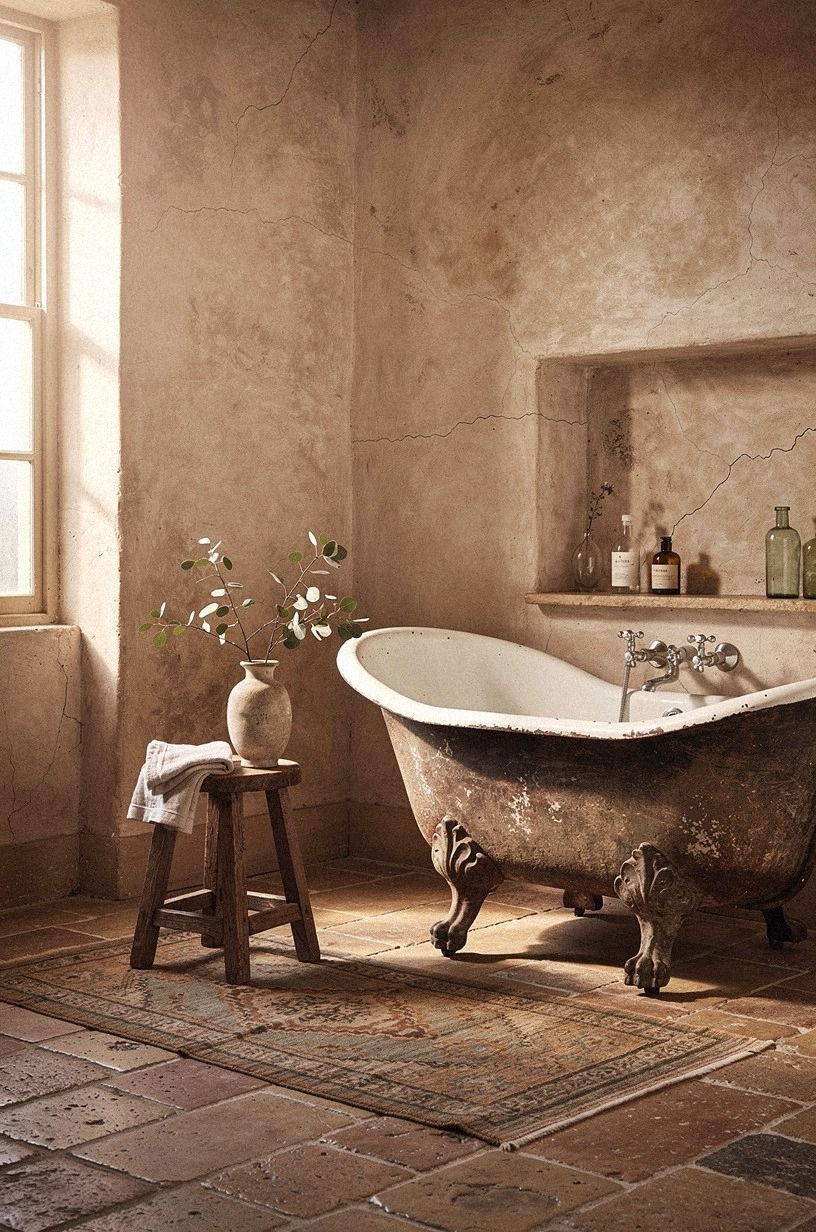
A double slipper tub deserves a background that lets its curved silhouette read clearly. Warm white plaster, camel linen, black accents, and shagreen drawer fronts create a refined setting without making the room feel staged. Keep the wall behind the tub nearly unbroken, then use one slim picture light or a quiet framed textile to reinforce the shape.
Choose shagreen only on a small vanity section, since too much texture can compete with the tub. You’ll want the plaster to show hand variation, but it shouldn’t become rough enough to catch towels.
A bright ceiling and soft floor runner will keep the bathroom airy. If you’re planning a wider old-world scheme, connect the space with these rustic luxury freestanding tub ideas and stone textures.
9Add a carved wooden stool for towels
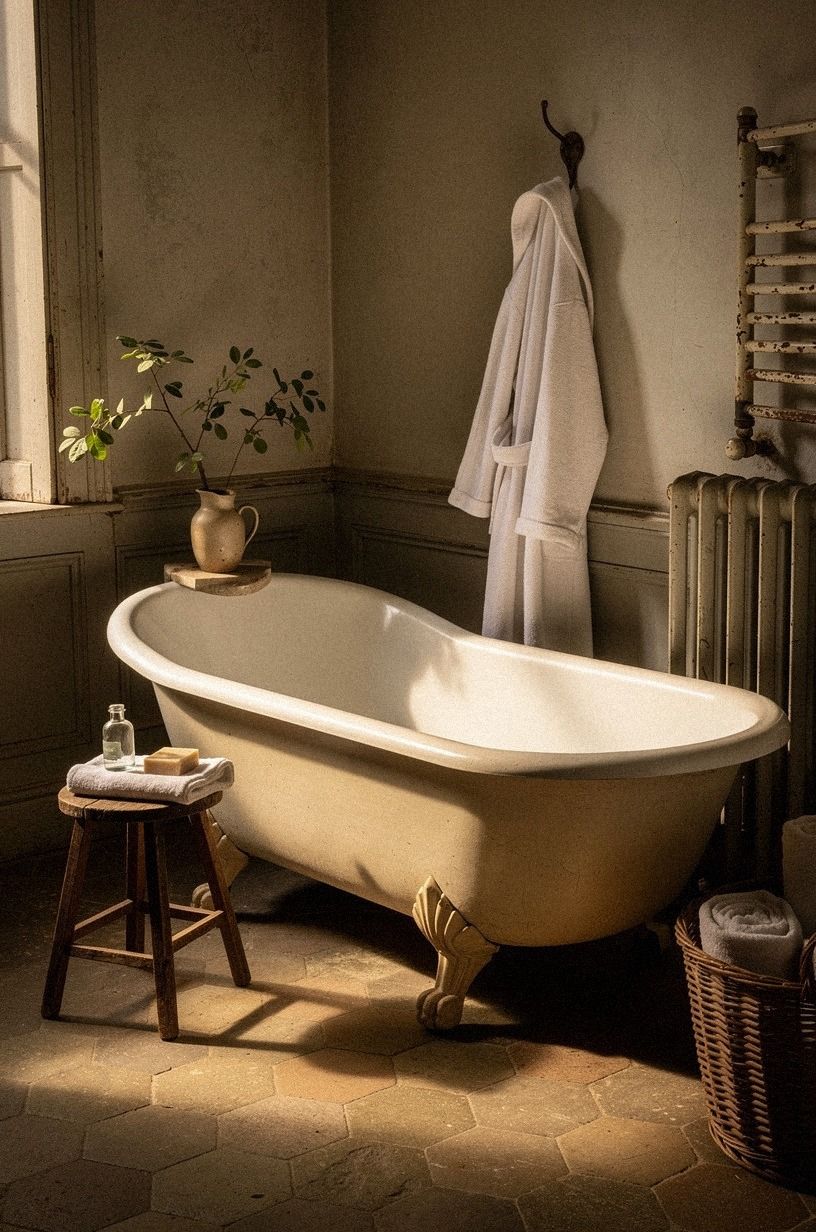
A carved wooden stool beside the slipper end makes towels feel accessible without turning the tub into a storage station. Midnight blue walls, copper accents, ivory linens, and washed Belgian linen create a lived-in composition with gentle contrast. Pick a stool with visible hand-carved legs or a scalloped apron, then keep its top mostly clear.
Fold two 600gsm Turkish cotton towels over the stool and add one small ceramic cup for bath salts. You’ll want the stool close enough to reach while seated, but not so close that wet fabric brushes the tub edge. Don’t choose a glossy lacquered finish; washed oak or walnut will feel more settled.
A small piece of furniture can make the room feel inviting without adding visual clutter or unnecessary cost.
10Use marble slabs behind the double slipper tub
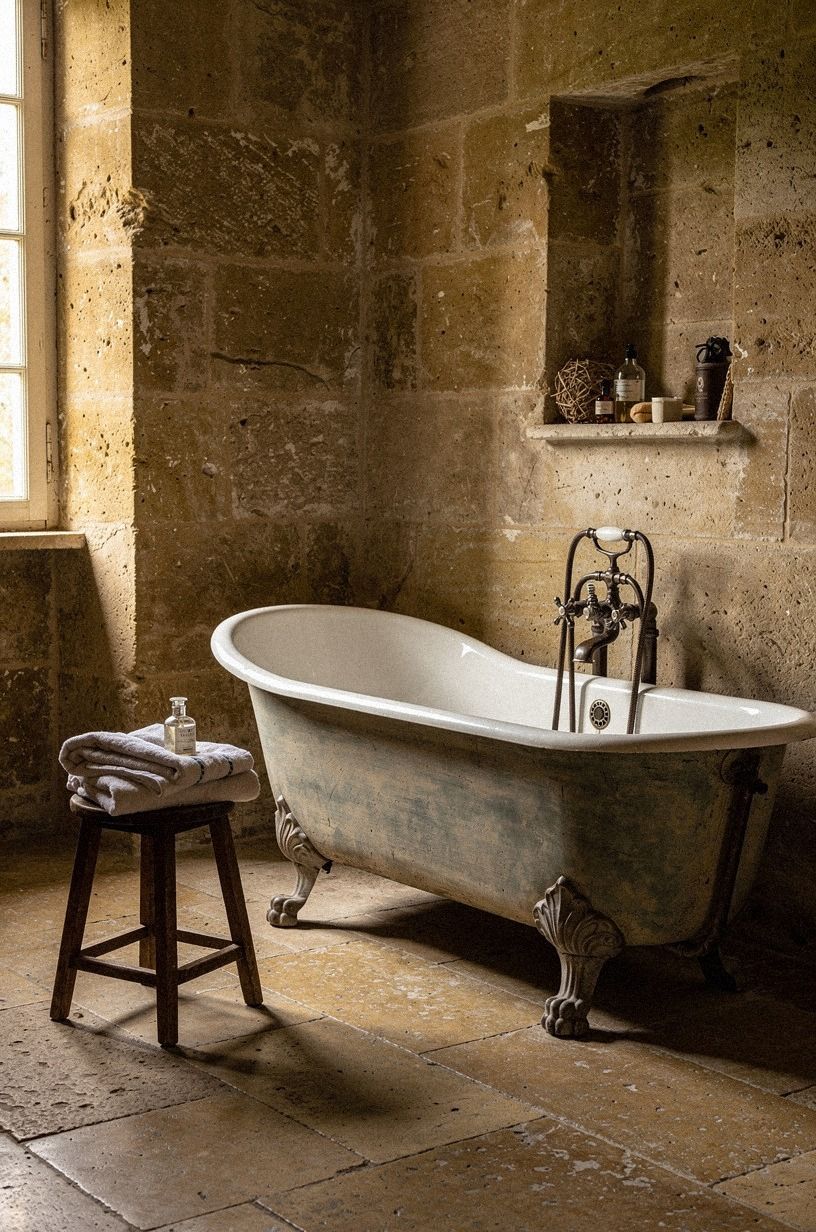
Marble slabs behind a double slipper tub create a strong backdrop, especially when the room uses sage green, warm cream, and natural wood. Choose Carrara marble with subtle grey veining when the palette needs restraint, or use honed Calacatta Gold when a warmer line is needed. Full-height slabs look expensive, but they also reduce grout lines around a splash-prone zone.
Organic bouclé on a nearby stool or bench softens the hard surface and keeps the room from feeling formal. You’ll want the marble finish honed rather than mirror polished, because soft reflection suits an old-world bathroom better.
A CB2 oak stool can provide the necessary contrast. For a connected floor plan, echo the material story with these freestanding tub and double vanity arrangements.
11Why hang a pendant directly over the basin?
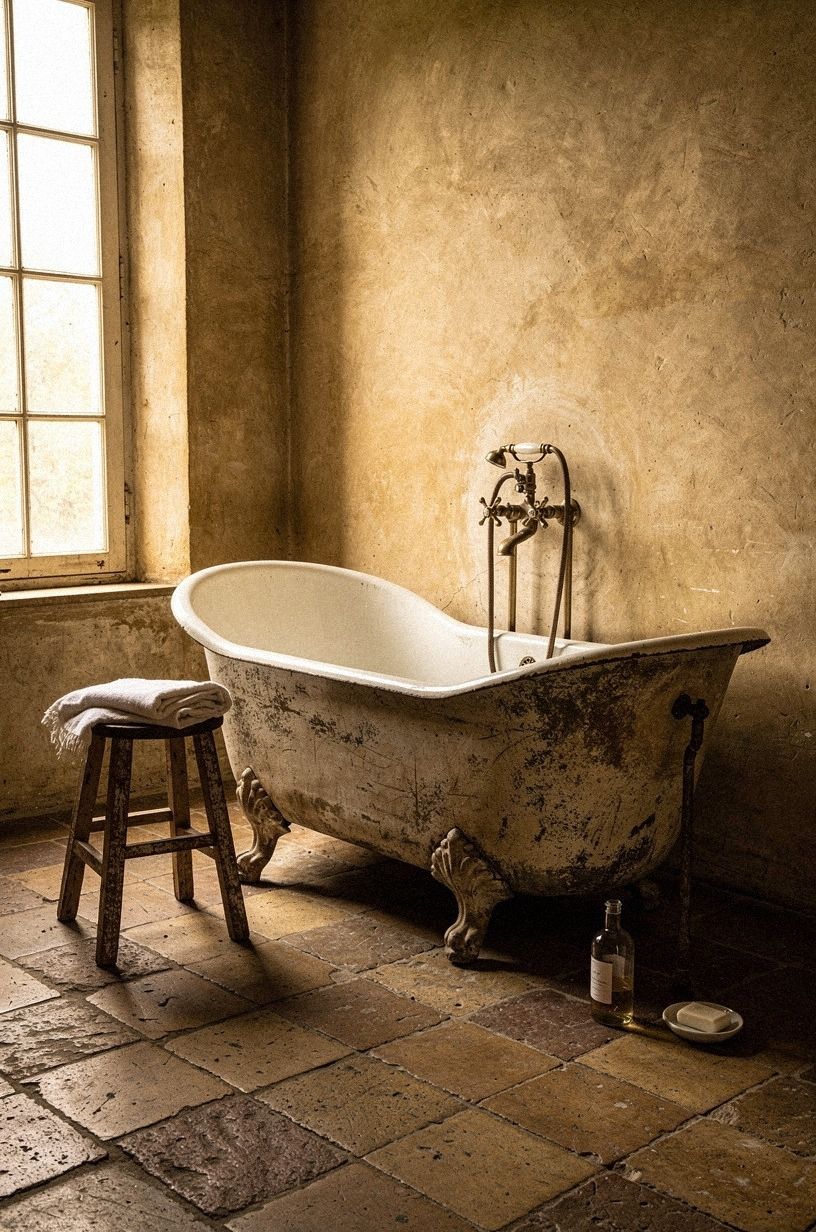
A pendant over the basin can balance the visual weight of a double slipper tub, especially when the bathroom sits slightly behind the main composition. Terracotta, stone, and olive work beautifully with Nero Marquina black marble with white vein, which gives the vanity zone a grounded, graphic edge. Keep the pendant narrow so it doesn’t block the tub’s curved profile.
You’ll want the basin light to feel decorative and useful, with a warm bulb and a shade that directs light downward. A small Pottery Barn pendant can supply the old-world note without overwhelming the room.
Don’t hang a large chandelier over a narrow walkway; it’ll make the bathroom feel crowded. Let one dark marble detail provide contrast while the tub remains the visual anchor. A modest fixture can deliver better value than an oversized statement piece.
12Build a recessed niche for bath essentials
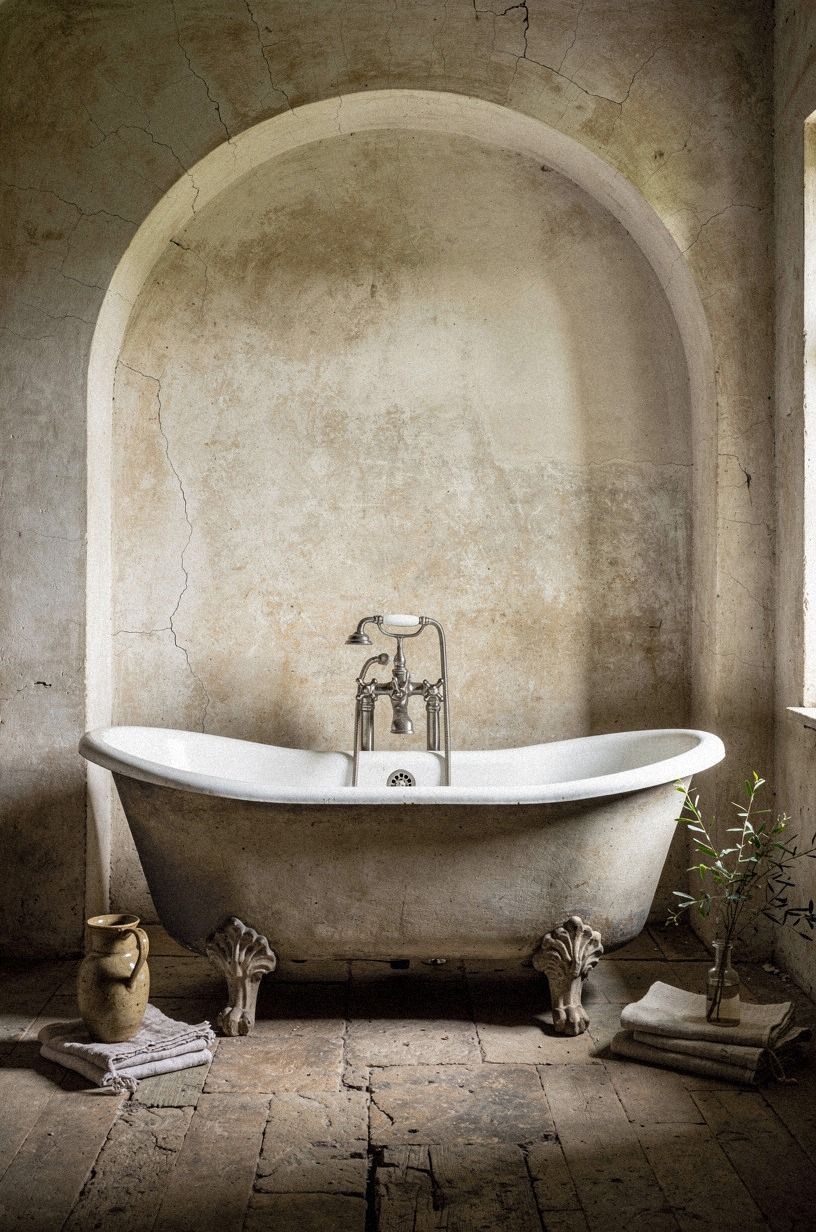
A recessed niche beside the tub keeps bath essentials within reach while protecting the room’s calm, uncluttered lines. Clay plaster, linen curtains, aged brass, and deep-pile mohair velvet create a tactile palette that feels soft and luxurious. The niche should hold only items used often, such as soap, a brush, and a small bath oil bottle.
Choose mohair velvet for a nearby stool cushion, not inside the wet zone. You’ll want the niche shelves sealed in honed stone or glazed tile, because porous plaster can stain around bottles.
A 4 to 6 in shelf depth is usually enough for practical storage without stealing wall space. For another layer of old-world material contrast, use the plaster colors from Spanish bathroom details and tile accents.
13Contrast a black tub exterior with ivory walls
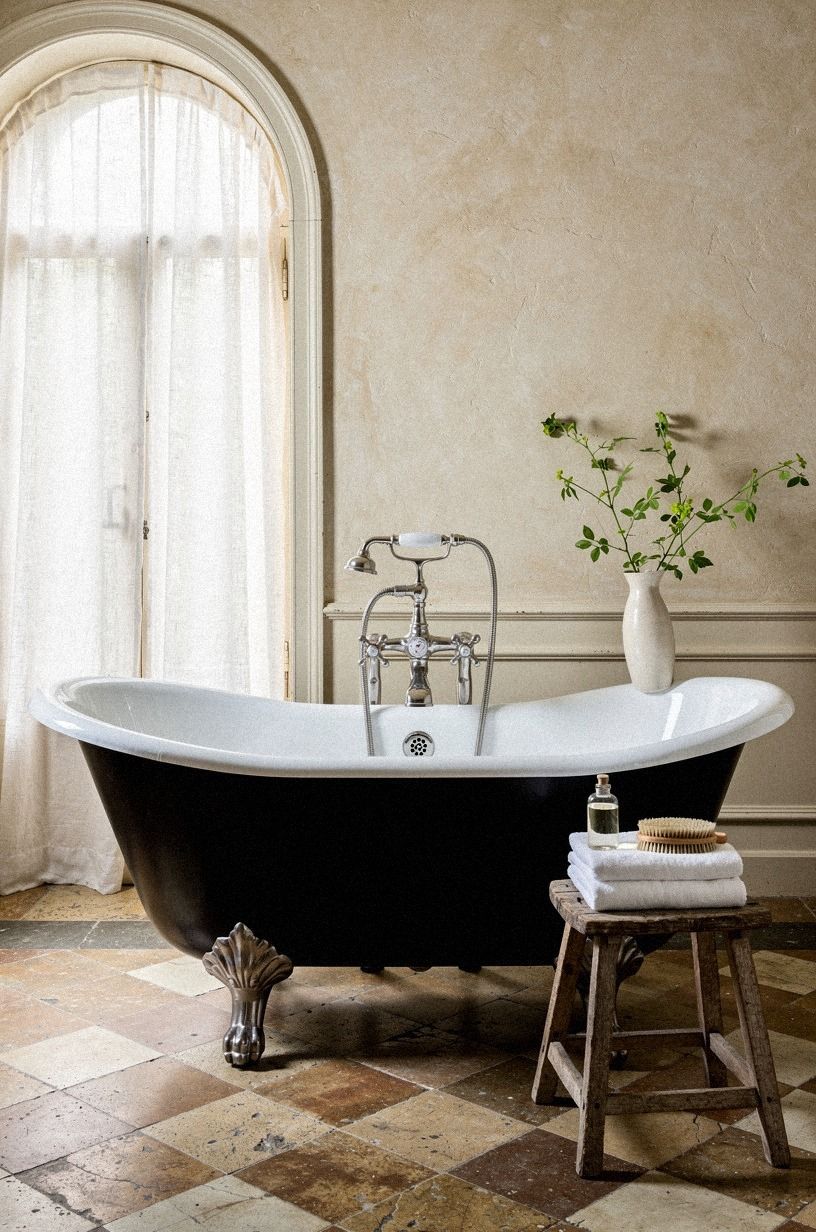
A black tub exterior against ivory walls gives a double slipper tub a confident silhouette. Plum, grey, and rose gold can soften the contrast, especially when Carrara marble runs behind the basin or along a narrow ledge. The key is to keep the ivory warm, not blue-white, so the bathroom still feels restful.
Use a matte black exterior rather than high gloss, because satin paint hides water marks and looks more architectural. You’ll want rose gold limited to one or two fixtures, while walnut or dusty rose linen can carry the warmer note. A Benjamin Moore White Dove OC-17 wall will keep the room bright without becoming stark.
Don’t add a second black vanity; one strong dark shape is enough, making the finish worth considering when a new tub would stretch the budget.
14Place matching palms beside both slipper ends
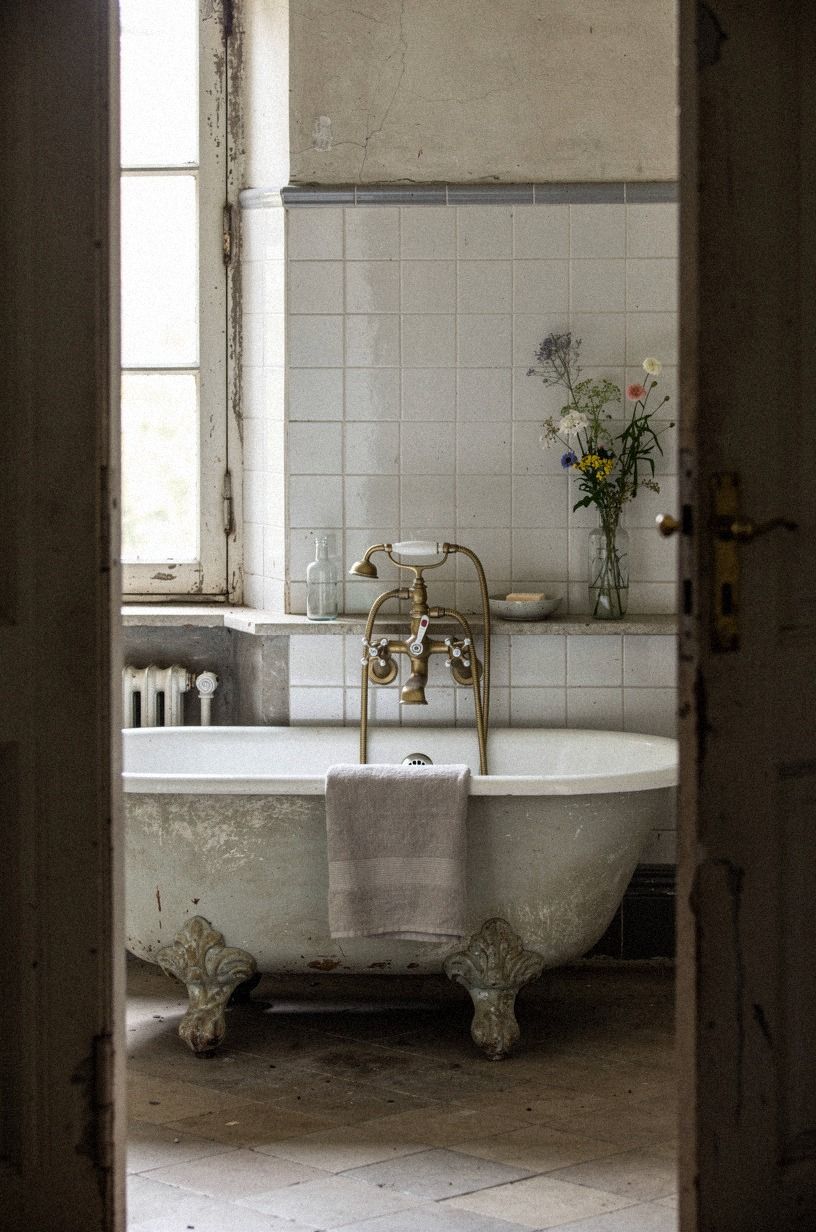
Matching palms beside both raised tub ends create symmetry while softening the hard outline of the basin.
15Echo the tub curves in a rounded mirror
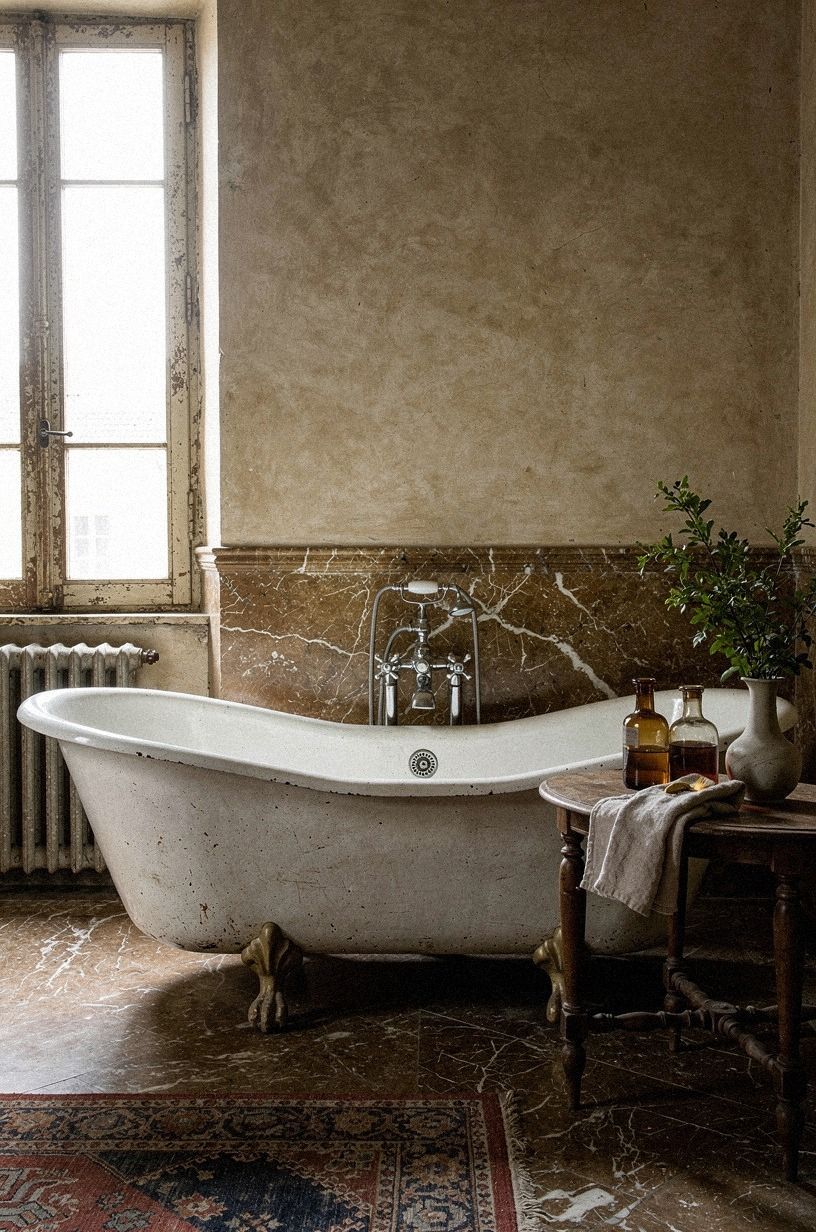
A rounded mirror above the vanity echoes the slipper tub’s raised ends and creates a repeating curve across the room. Emerald, gold, and cream pair naturally with Calacatta marble with gold veining, especially when the mirror frame uses aged brass rather than bright metal. The shape should feel generous, but it shouldn’t extend wider than the vanity.
You’ll want the lower edge of the mirror high enough to clear the faucet while keeping the reflection useful from a seated position. A thin frame works better than a heavy carved surround, because the tub already supplies a strong silhouette. Don’t mix a sharp rectangular medicine cabinet into the same sightline.
For a broader material palette, connect the mirror with these old-world lounge color combinations and brass accents.
16Style the ledge with ceramic bath vessels
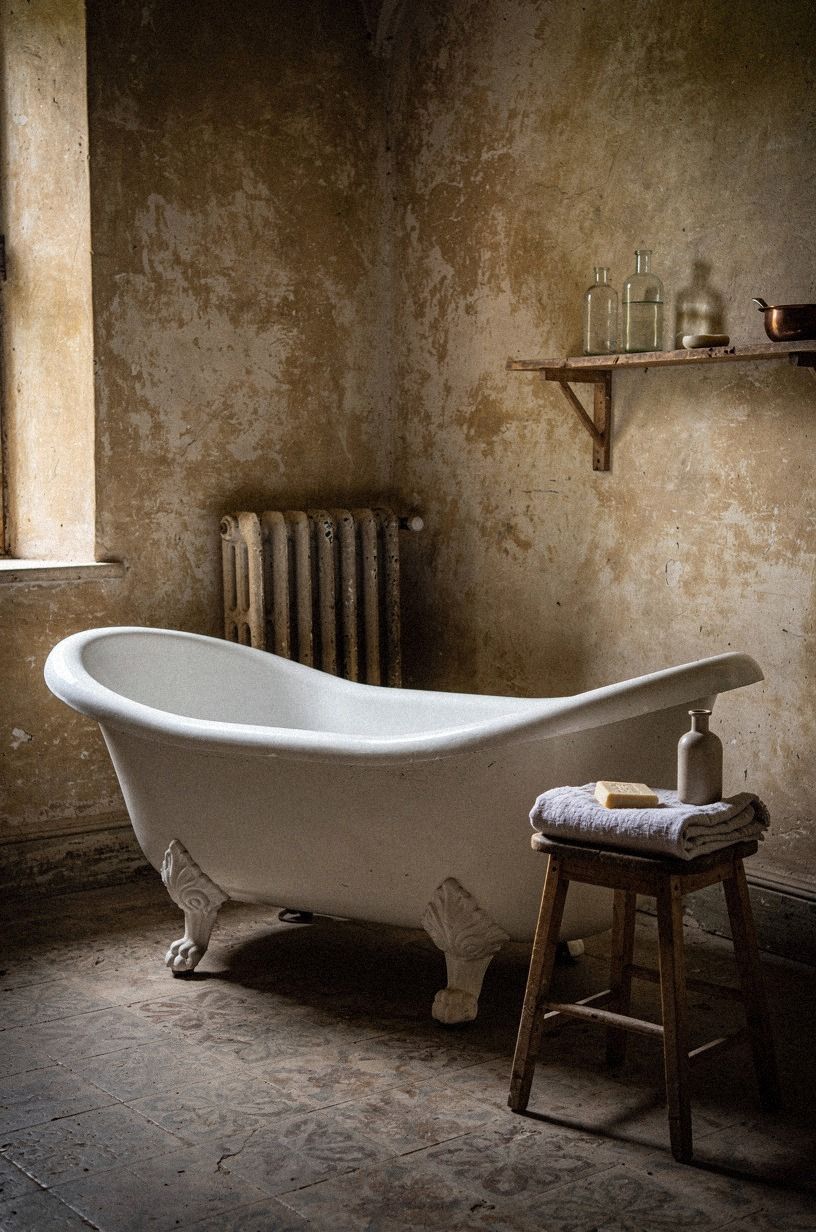
A ledge beside the tub gives ceramic bath vessels a practical home while reinforcing the forest green, rust, and natural oak palette.
17Create symmetry with twin wall-mounted faucets
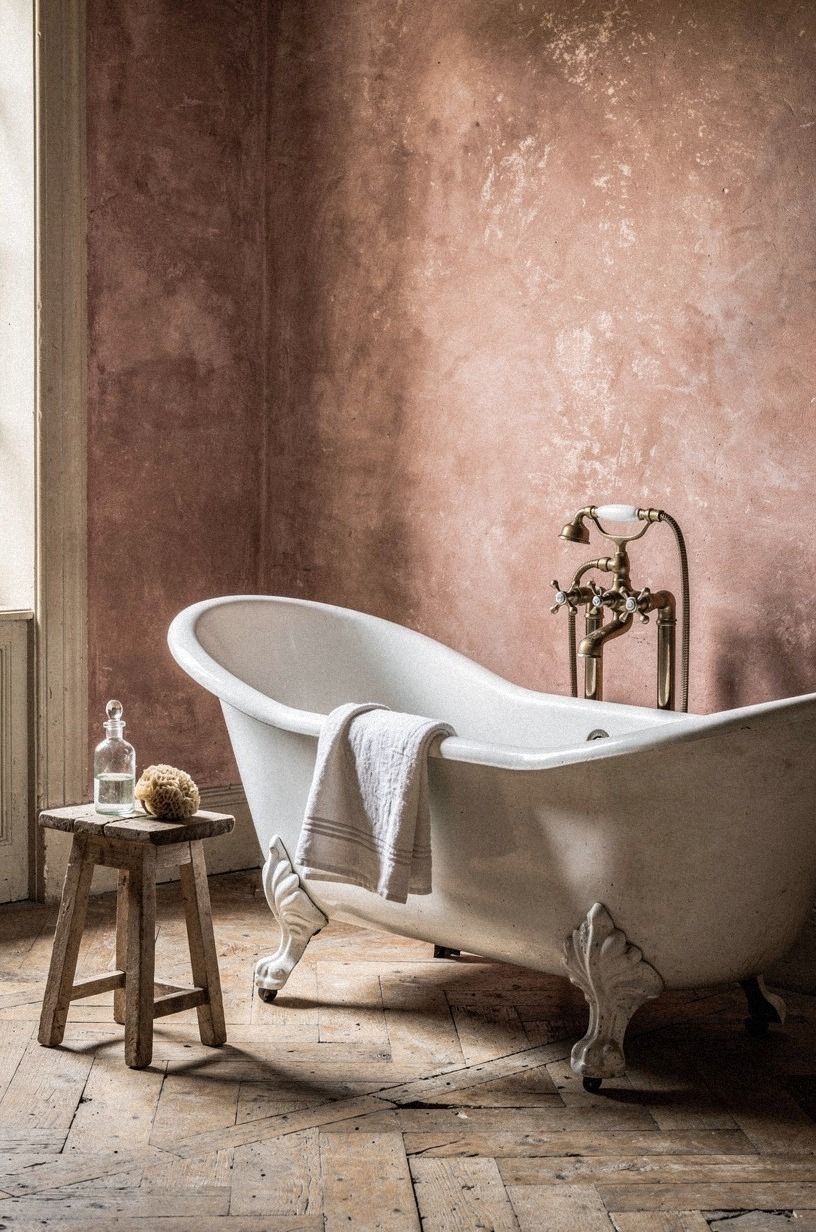
Twin wall-mounted faucets give a double slipper tub a balanced, almost architectural presence. Dusty rose, charcoal, and brass work well with backlit translucent onyx, which can sit behind the fixtures as a softly glowing panel. The faucets should align with the tub centerline, while the spout projects far enough to reach the basin without splashing the rim.
Choose aged brass wall-mounted faucets with simple cross handles or understated levers. You’ll want the plumbing placed before the onyx is installed, because corrections become costly once the slab is fixed.
A standard 60×30 in tub can handle this arrangement when the wall is clear behind it. Don’t crowd the faucet wall with open shelving; the symmetry needs breathing room.
It’s a refined choice for a bathroom that favors structure over decoration. For related material combinations, compare the brass and plaster approach with these old-world lounge color combinations and brass accents.
18Warm the European silhouette with aged bronze
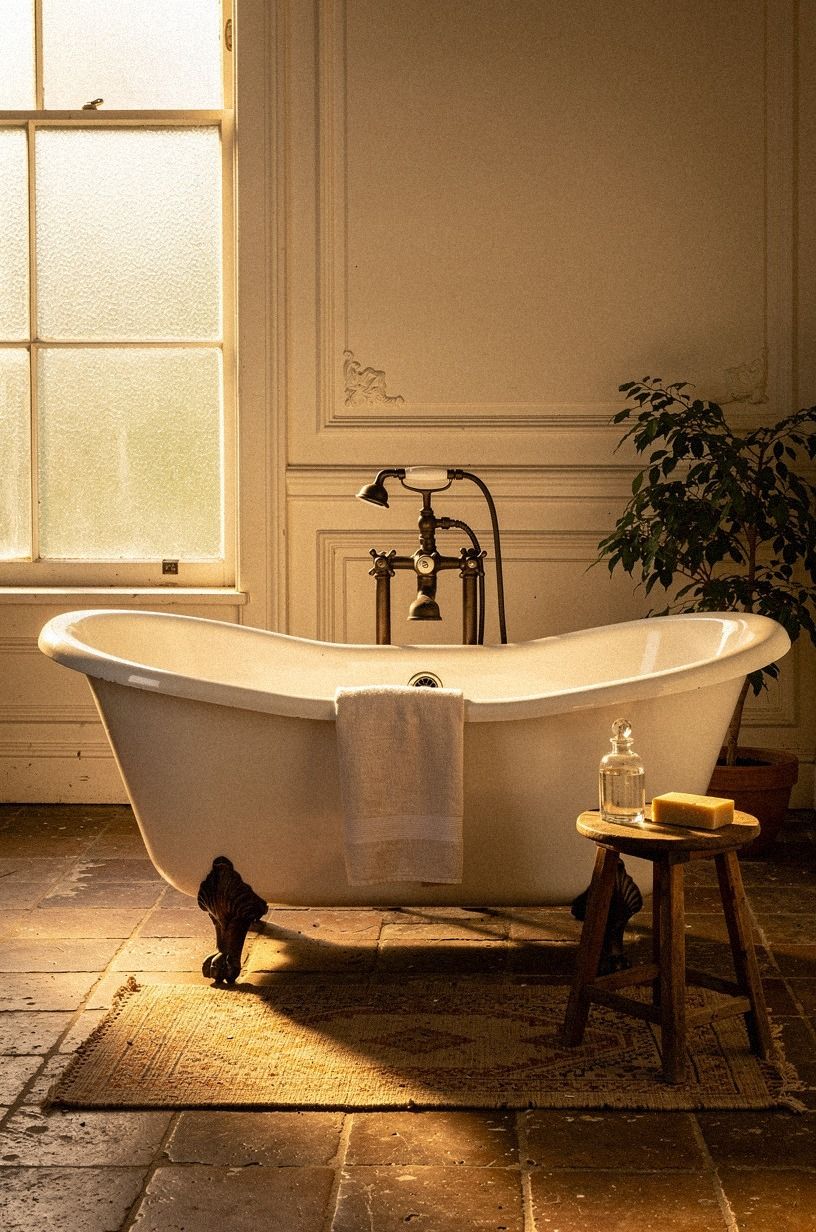
Aged bronze warms the European silhouette of a double slipper tub without making every fixture match too perfectly. Use book-matched walnut behind the vanity, warm white plaster on the walls, camel textiles, and black accents in small doses. The bronze should appear on the faucet, mirror frame, and one light fixture, then disappear into the larger palette.
You’ll want the metal to show tonal variation rather than a flat brown coating. Book-matched walnut adds a formal note, so balance it with washed linen or a small woven basket. Don’t combine aged bronze with several competing gold finishes; the room will lose its quiet old-world character.
A West Elm linen bench can soften the arrangement while keeping your path around the tub open. If the bathroom has room for only one major investment, spend it on the backdrop behind the tub.
Compare the finish with these rustic luxury freestanding tub ideas and stone textures.
The Old-World Bathing Rule
The strongest double slipper tub rooms don’t begin with decoration. They begin with a decision about visual weight. A tub with two raised ends already has a sculptural outline, so surrounding architecture should either frame that curve or calm it.
Arches, plaster, slab stone, and softly aged metal all work because they support the silhouette without competing for attention. Your room doesn’t need every old-world reference at once.
One strong material, one warm metal, and one repeated curve can carry the mood.
Scale matters more than ornament. A standard 60×30 in tub needs a clear path, especially when the raised ends visually extend beyond the basin.
Keep vanity height between 32 and 36 in, and preserve at least 21 in in front of the toilet where possible. You’ll notice that inviting rooms leave small areas quiet. A crowded ledge, oversized pendant, or thick rug can make the same bathroom feel cramped.
Color should follow the material story. Benjamin Moore Chestertown Buff HC-9 works with walnut and aged bronze, while Sherwin-Williams Sea Salt SW 6204 can soften stone and brass. Deep green or navy belongs on one large plane, such as the ceiling or vanity wall, rather than every surface.
When a choice feels uncertain, remove one layer before adding another. The old-world effect comes from patina, proportion, and useful objects, not from piling on props.
The practical test is simple: can you reach a towel, clean the floor, and move around the tub without disturbing the composition? If the answer is yes, the design has earned its elegance. If not, the room needs less furniture and better spacing.
That balance is what makes the setup feel timeless instead of themed.
The Questions Worth Answering First
What is the best double slipper tub setup for a small bathroom?
A tub with a simple plaster backdrop and a narrow carved stool usually works best. Choose a compact Article bench, a rounded mirror, and one wall-mounted faucet.
The curved tub ends can make a small room feel intentional, while open floor around the basin preserves a calming sense of space. Your best value usually comes from proportion, lighting, and clear circulation.
Where can you buy double slipper tub pieces on a budget?
Wayfair, Target, and secondhand marketplaces can cover stools, mirrors, runners, and ceramic vessels. Search local thrift shops for aged brass and solid wood.
Used pieces often provide better texture, allowing your budget to stay focused on the tub, plumbing, or wall finish. Check dimensions carefully, because a low purchase price isn’t useful when the piece blocks your walkway.
How much does a double slipper tub makeover cost?
A cosmetic refresh can fall within about $200 to $1,200 for paint, a mirror, a faucet, and textiles. A mid-range bathroom update often reaches $3,000 to $9,000, while major tile and plumbing work can reach $12,000 to $30,000 or more. The right value depends on whether the work changes layout or simply changes the finish.
Your final cost will also reflect waterproofing, labor, and fixture access.
Can a double slipper tub bathroom work on a budget?
Yes, and paint, lighting, and textiles can change the room without moving plumbing. Use Sherwin-Williams Sea Salt SW 6204, a secondhand wood stool, and a washable Persian-style runner.
Marble slabs aren’t required to create warmth; one aged metal fixture and good spacing can do plenty. If the tub is already installed, this route offers strong visual value for a controlled budget.
Is a double slipper tub worth it in a small space?
Yes, when the tub replaces visual clutter with one strong focal point. Keep the footprint close to the standard 60×30 in size, use wall-mounted plumbing, and leave the raised ends visible. Your small bathroom will feel more open when the center remains clear, making the investment worth considering.
Measure the door swing, vanity depth, and cleaning path before committing.
Is a double slipper tub a good idea for a rental?
Yes, if the tub already exists and changes remain removable. Try peel-and-stick floor accents, a tension-rod linen curtain, a freestanding stool, and battery sconces.
You’ll want to avoid permanent plumbing changes, but color, textiles, mirrors, and ceramics can still create an inviting old-world mood. A small decorative budget can deliver the greatest value when every item remains portable.
Where to Start First
Start with the arched paneling. It gives a standard 60×30 in tub architectural weight without demanding new plumbing, while terracotta and oak can repeat through towels and baskets.
Pin the setup for later, then compare wall height before buying trim. This first decision keeps the budget focused and establishes the material language for the entire room.