
A simple cortisol detox diet works best as a seven-day meal rhythm built around protein, fiber, colorful produce, and calmer evenings. The goal isn’t a medical detox or a promise of lower cortisol. It’s a practical food plan that may support steadier routines, especially when late caffeine and skipped meals keep derailing the day.
- Build a seven-day cortisol-friendly breakfast tray
- Plate protein beside slow-release morning carbohydrates
- Layer colorful vegetables into every lunch bowl
- Swap afternoon coffee for a calming herbal infusion
- Roast salmon with leafy greens for dinner
- Prep cortisol-friendly snacks in glass containers
- Add pumpkin seeds to an evening yogurt bowl
- Arrange a seven-day meal plan on the fridge
- Blend tart cherry into a bedtime drink
- Dim bedside lighting before the final meal
- Practice four-seven-eight breathing beside the bed
- Keep the phone outside the bedroom overnight
1Build a seven-day cortisol-friendly breakfast tray
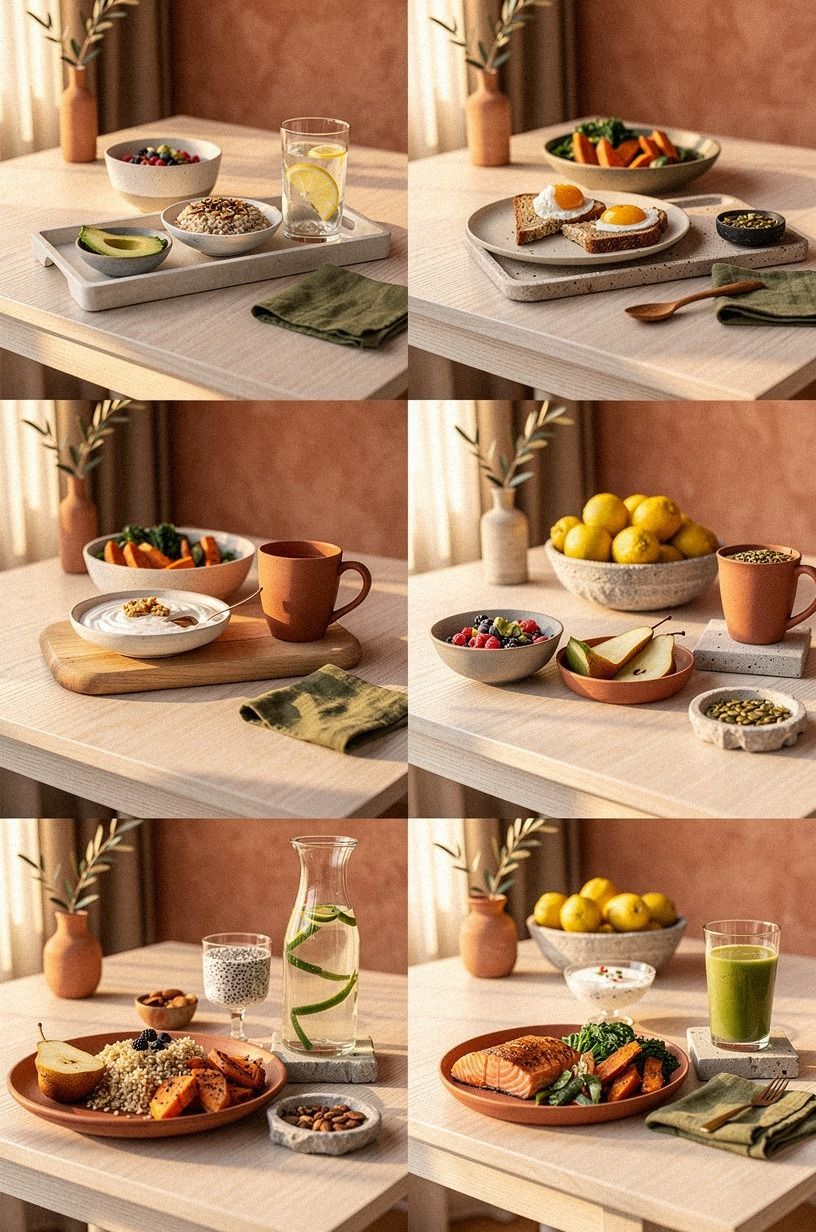
Start with a breakfast tray that makes the first meal easy to repeat. Rolled oats, plain Greek yogurt, berries, pumpkin seeds, and a small spoonful of nut butter create a useful mix of protein, fiber, and fat.
These foods may help you stay satisfied longer, which can make a rushed midmorning pastry less tempting. You’ll want one tray, one bowl, and one small glass jar so the setup feels calm rather than complicated.
For the photo-ready version, use a terracotta plate, a pale stone bowl, olive linen, and a cerused white oak tray. The palette looks earthy and warm, while the ingredients remain easy to recognize.
Don’t turn breakfast into a rigid rule. If dairy doesn’t suit your routine, a fortified soy yogurt can fill the same visual role.
A cooked vegetable meal ideas article can also help expand the savory side of the plan.
2Plate protein beside slow-release morning carbohydrates
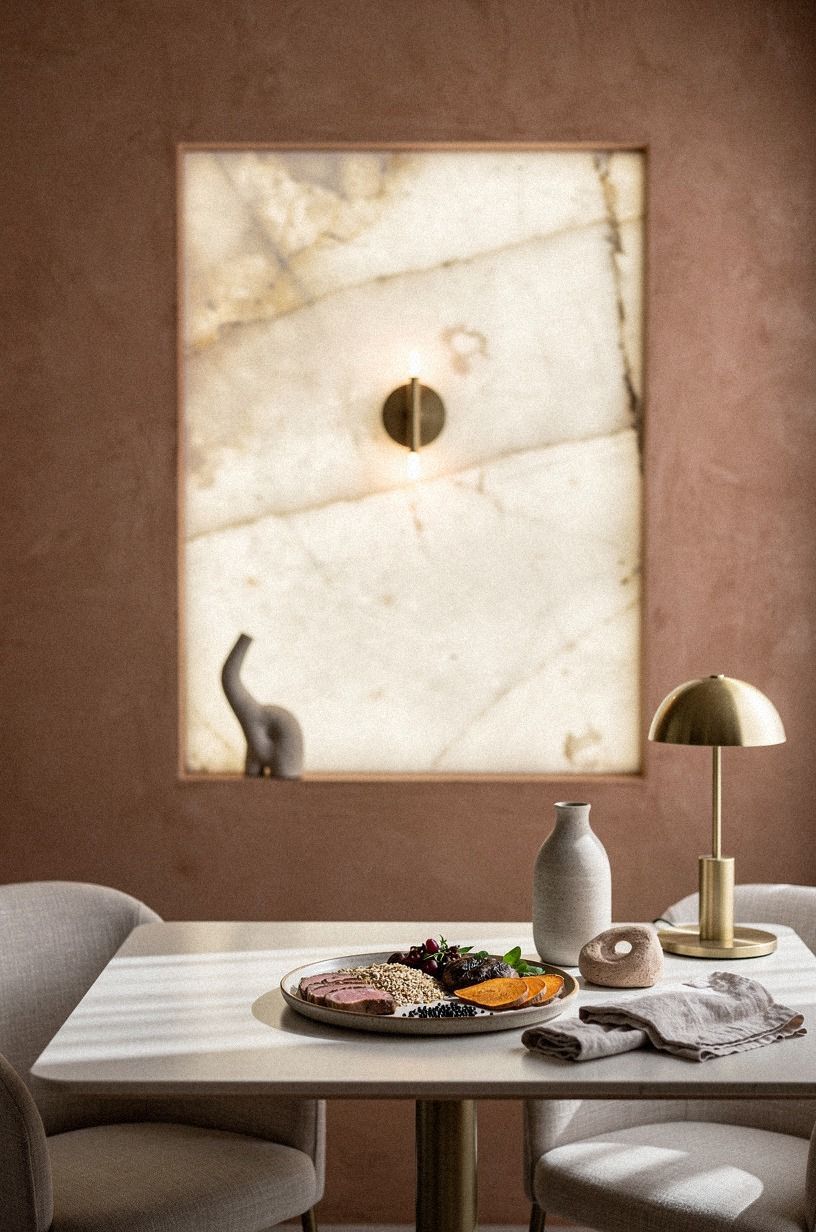
A balanced breakfast plate needs a clear protein anchor beside a carbohydrate that takes longer to digest.
3Layer colorful vegetables into every lunch bowl
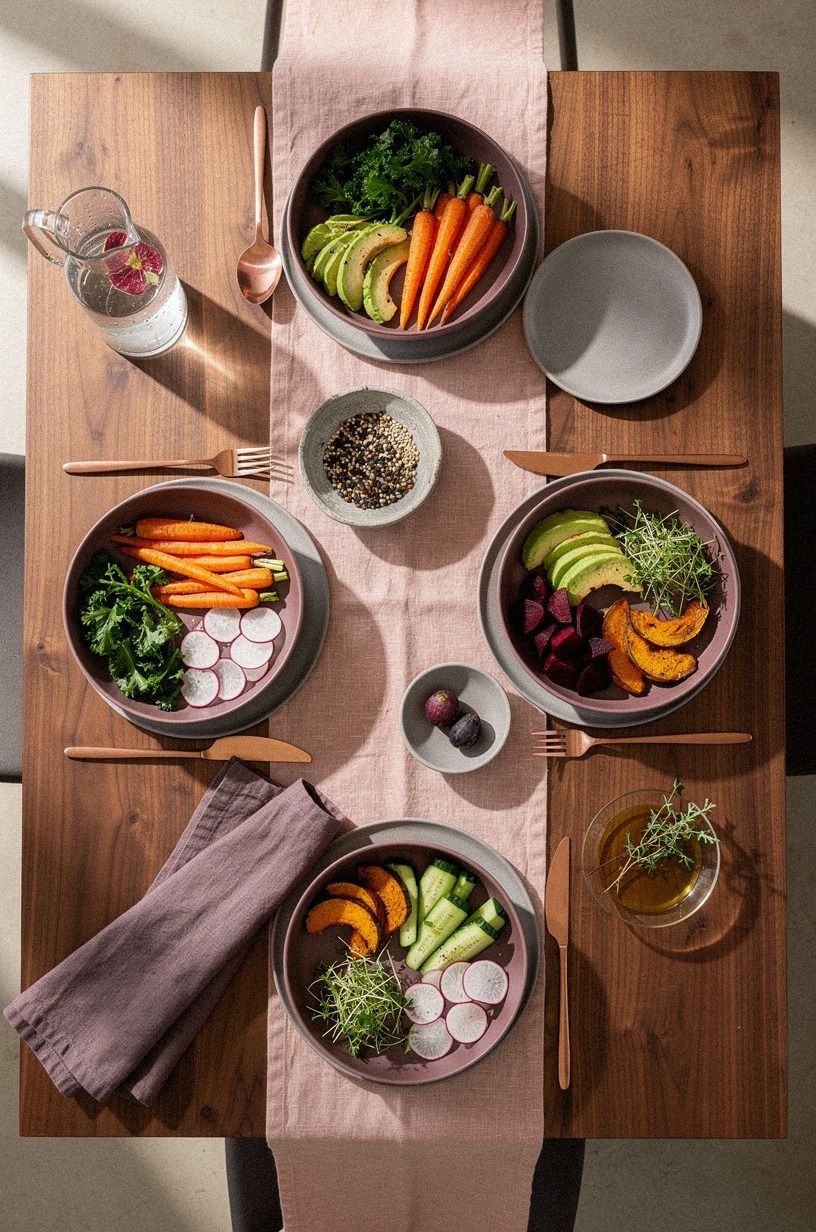
Lunch becomes easier when the bowl has distinct colors and textures instead of one soft, beige mixture. Start with leafy greens, add roasted vegetables, then layer beans, chicken, salmon, tofu, or lentils.
A spoonful of brown rice or quinoa can round out the bowl without making it feel heavy. You’ll notice the meal looks more inviting when each ingredient stays visible.
For the plum, gray, and rose-gold palette, use roasted beetroot, purple cabbage, cucumber, and a pale grain beside a book-matched walnut serving board. The contrast gives the setup energy, while the ingredients offer practical variety.
Don’t drown the bowl in dressing. A small jar of olive oil, lemon, herbs, and tahini keeps the texture fresh and lets you adjust the portion.
And if lunch usually disappears between tasks, set the bowl on a real plate before sitting down. That small pause can make the meal feel intentional. A steadier routine meal ideas collection offers more ways to keep vegetable-heavy meals from becoming repetitive.
4Swap afternoon coffee for a calming herbal infusion
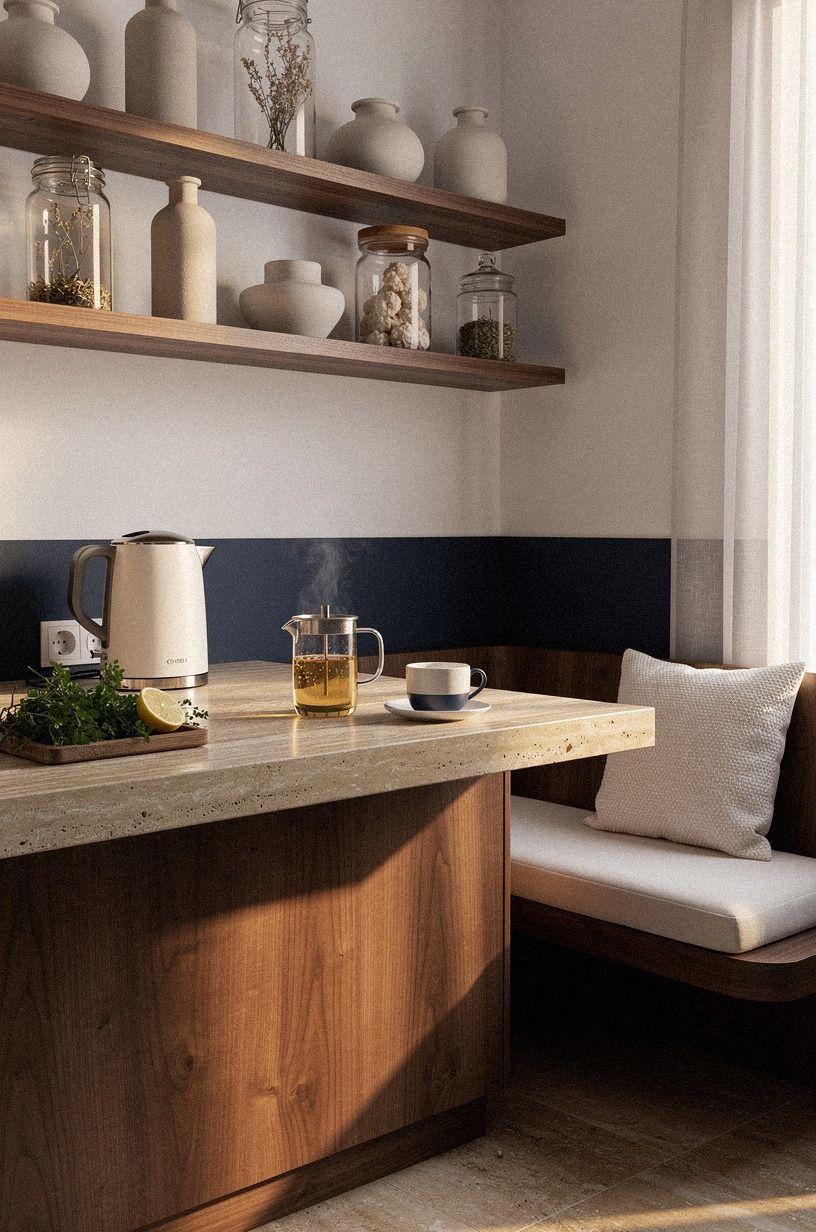
Afternoon caffeine can fit some routines, but a late cup may not suit every bedtime schedule. Try peppermint, chamomile, ginger, rooibos, or lemon balm as a warm alternative. A calming drink won’t erase stress, yet the pause may help separate work pressure from the rest of the day.
You’re changing the transition, not chasing a miracle.
Set the cup on a dark navy saucer beside a white teapot, a walnut board, and a warm travertine coaster. Keep the styling simple enough that you’ll use it daily.
A kettle, loose herbs, and one favorite mug are enough. If you’re sensitive to herbal products or take medication, check with a qualified clinician before adding concentrated blends.
But don’t force yourself to abandon coffee completely. A smaller serving earlier in the day may be a more realistic change than a dramatic overnight switch. The best routine is the one you can repeat without resentment.
5Roast salmon with leafy greens for dinner
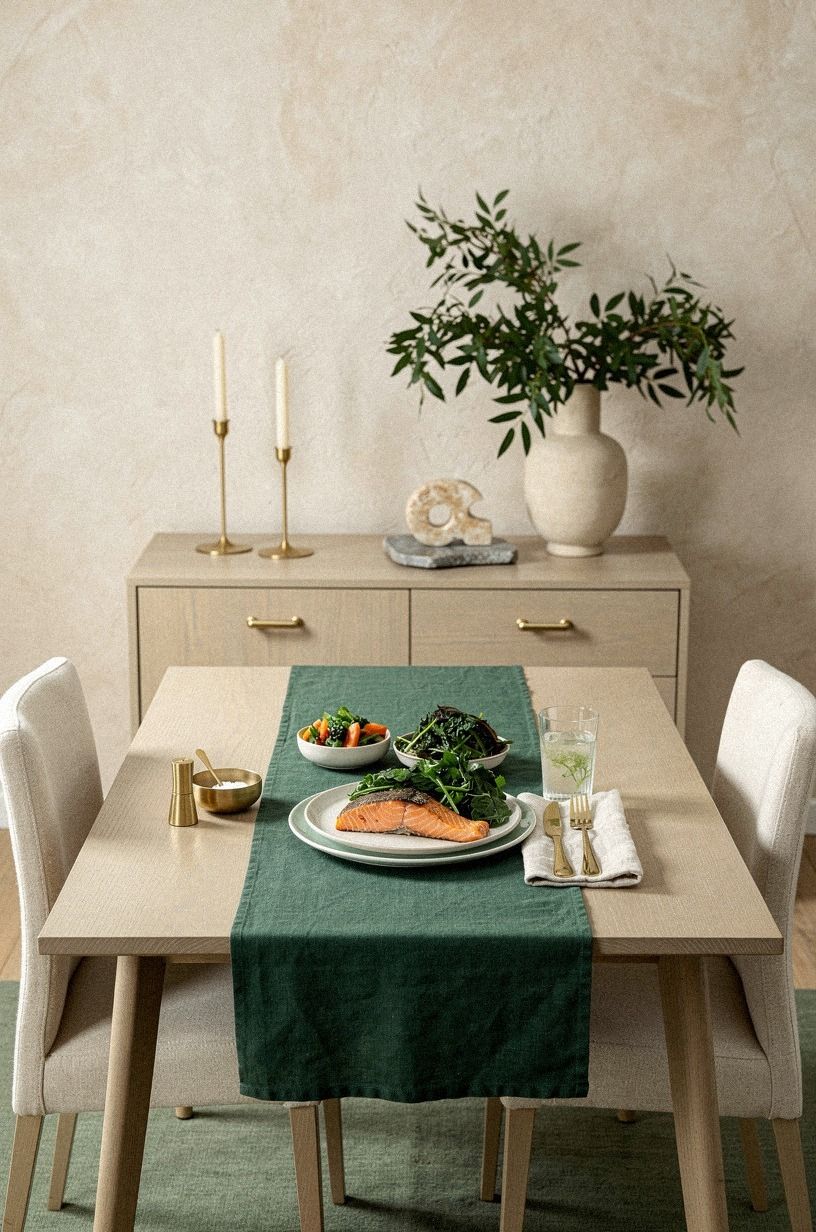
A dinner of roasted salmon, leafy greens, potatoes, and lemon brings protein, color, and a satisfying texture to the evening. Salmon is often included in balanced meal plans because it provides omega-3 fats, while greens add fiber and minerals.
That doesn’t make the plate a treatment. It simply makes the meal nutrient-dense and easy to assemble.
For the emerald, gold, and cream image, plate the fish on a cream stoneware dish with wilted kale, lemon wedges, and a few roasted potatoes. Use an unlacquered brass fork or a warm gold napkin ring for the visual detail, allowing the brass to develop a natural patina over time. The salmon should look moist, the greens should keep some structure, and the plate shouldn’t be crowded.
You’ll want dinner to feel finished before the evening gets too late. A warm meal may feel more grounding than grazing from a packet, but portion needs vary.
Don’t use a diet label to ignore hunger, allergies, or medical advice. The plan should support your life, not become another source of pressure.

6Prep cortisol-friendly snacks in glass containers
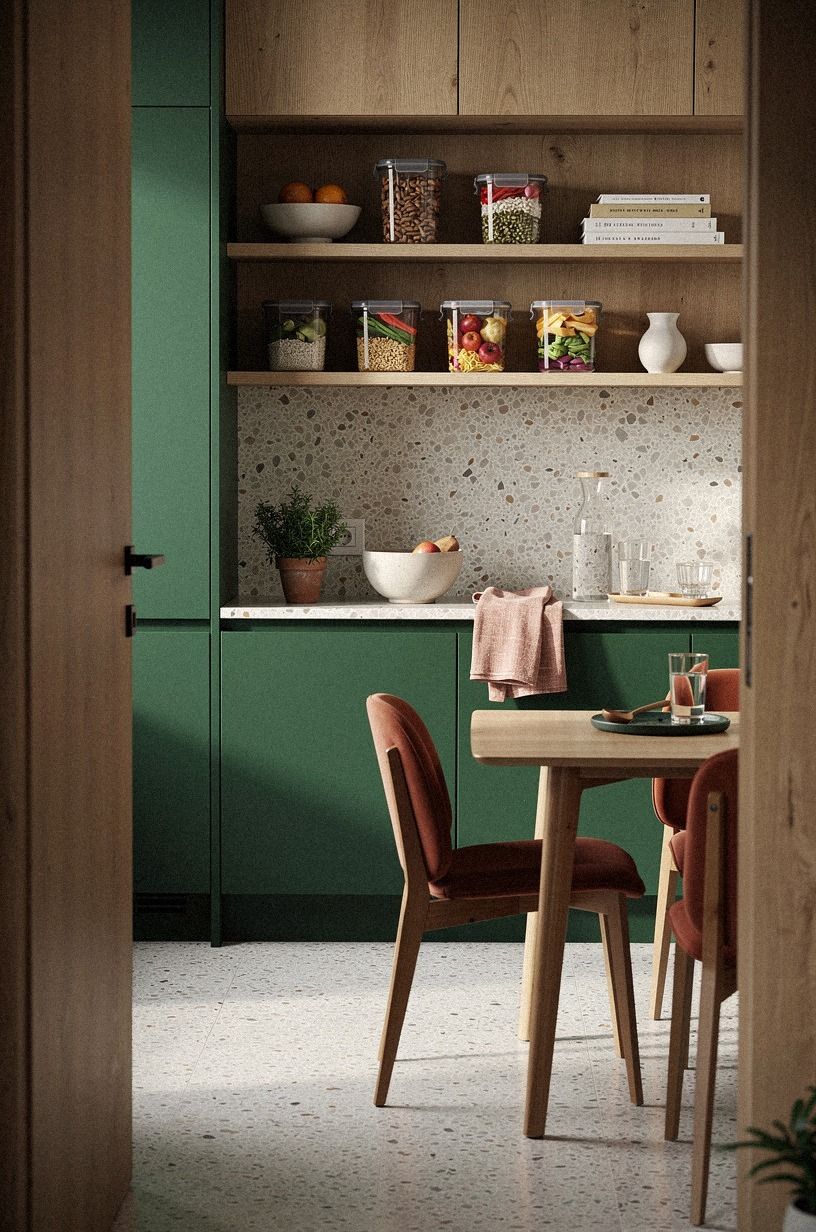
Snack preparation works best when the options are visible and portable. Fill small glass containers with apple slices and nut butter, carrots with hummus, plain yogurt with seeds, or a small handful of walnuts.
These combinations offer texture and staying power without requiring a complicated recipe. You’re creating an easier choice for the moment when concentration drops.
The photo’s forest green, rust, and natural oak palette suits amber glass containers, dried apricots, and an oversized-chip terrazzo surface. Add a linen cloth and one labeled jar, but stop before the counter becomes a storage display. A snack station should make food easier to find, not add another chore.
If you’re preparing food for several days, keep cut produce chilled and follow ordinary food-safety guidance. Don’t leave yogurt, fish, or cut fruit sitting out for long periods. A chia seed snack ideas collection can add another fiber-rich option when seeds fit your eating pattern.
7Add pumpkin seeds to an evening yogurt bowl
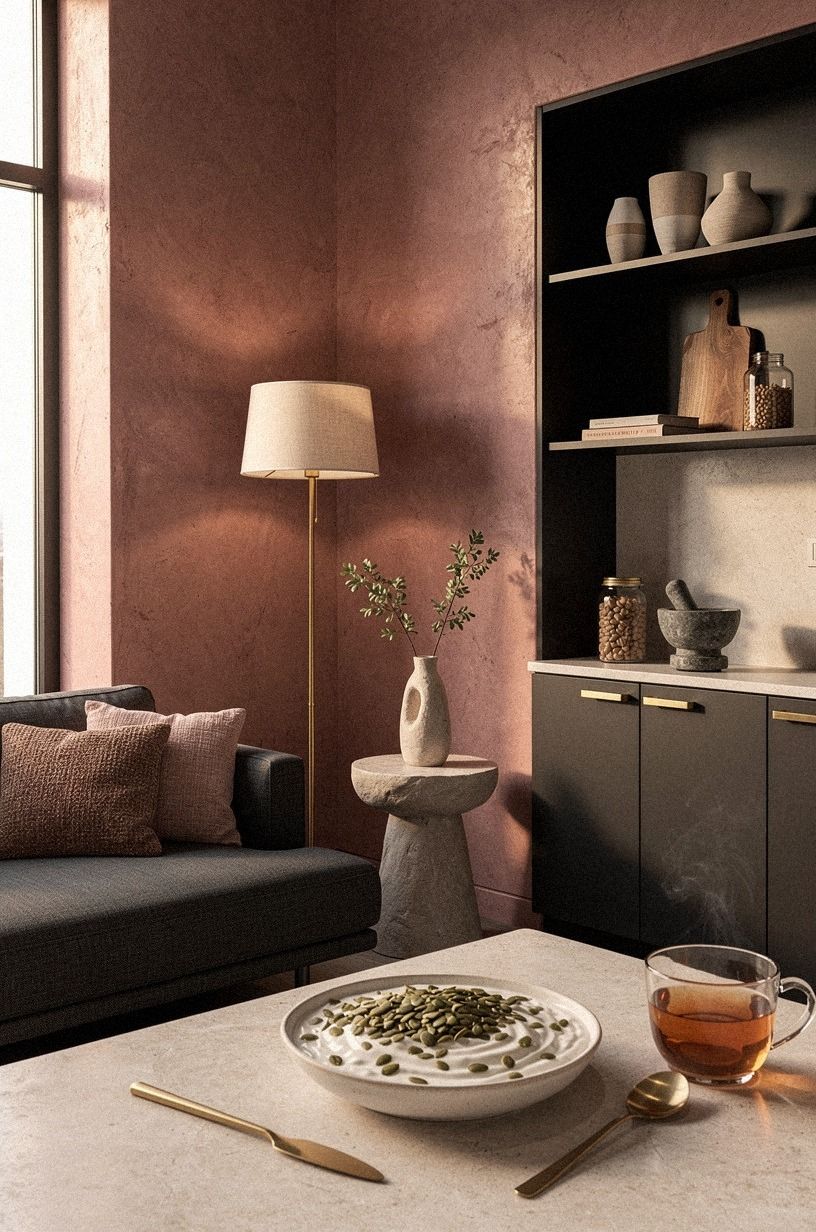
An evening yogurt bowl can replace a heavier dessert when you want something cool, creamy, and simple. Use plain Greek yogurt or a suitable alternative, then add pumpkin seeds, cherries, cinnamon, and a few crushed walnuts.
Pumpkin seeds provide magnesium and other nutrients, though no single ingredient can promise a sleep result. The benefit is the calm, repeatable structure.
For the dusty rose, charcoal, and brass image, choose a bowl set on a hand-applied Venetian plaster tray with pale yogurt, dark cherries, and green pumpkin seeds. A small brass spoon adds warmth without making the food look staged. You’ll want the bowl to remain modest, especially if a large late meal tends to feel uncomfortable.
And keep sweetness adjustable. A little fruit may be enough, while a drizzle of honey can suit another palate.
If dairy causes symptoms, try an unsweetened fortified alternative. The useful part is the evening rhythm, not a magic ingredient.
8Arrange a seven-day meal plan on the fridge
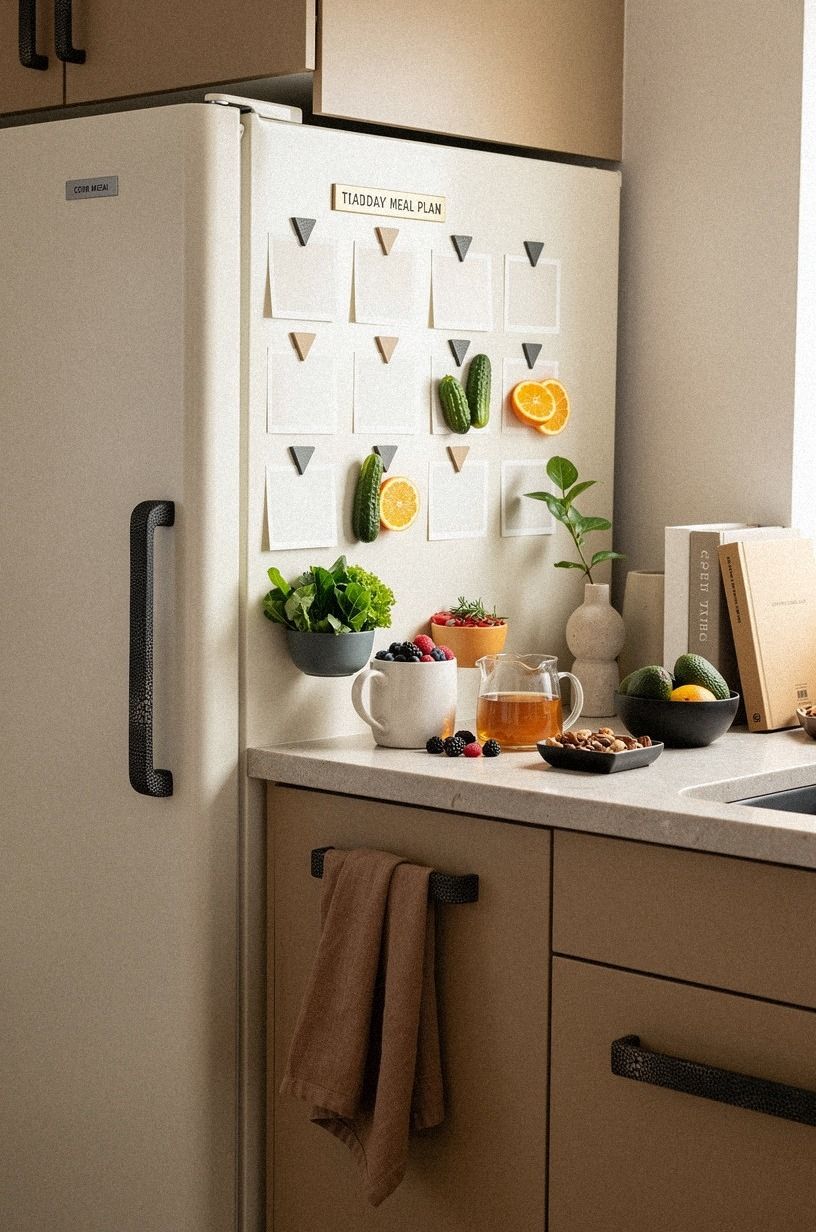
A visible meal plan can reduce decision fatigue, especially when mornings and evenings already feel crowded. Write breakfast, lunch, dinner, and snack options on a simple sheet, then leave room for substitutions.
You don’t need to follow the plan perfectly. You need enough structure that the next meal doesn’t require a fresh negotiation.
Use a warm white sheet, camel folder, black clips, and a shagreen-textured magnetic board for the photo. Keep the writing large enough to read from across the kitchen. If the board is near the fridge, place produce and prepared containers nearby so the visual reminder connects to the food itself.
For a broader home setup, these typical US cost references show how visual organization can fit into different renovation budgets. They describe surrounding furnishings and organization, not the cost of groceries or medical care.
The food plan can remain low-cost even when the surrounding room is not. A sheet of paper and a magnet are enough.
9Blend tart cherry into a bedtime drink
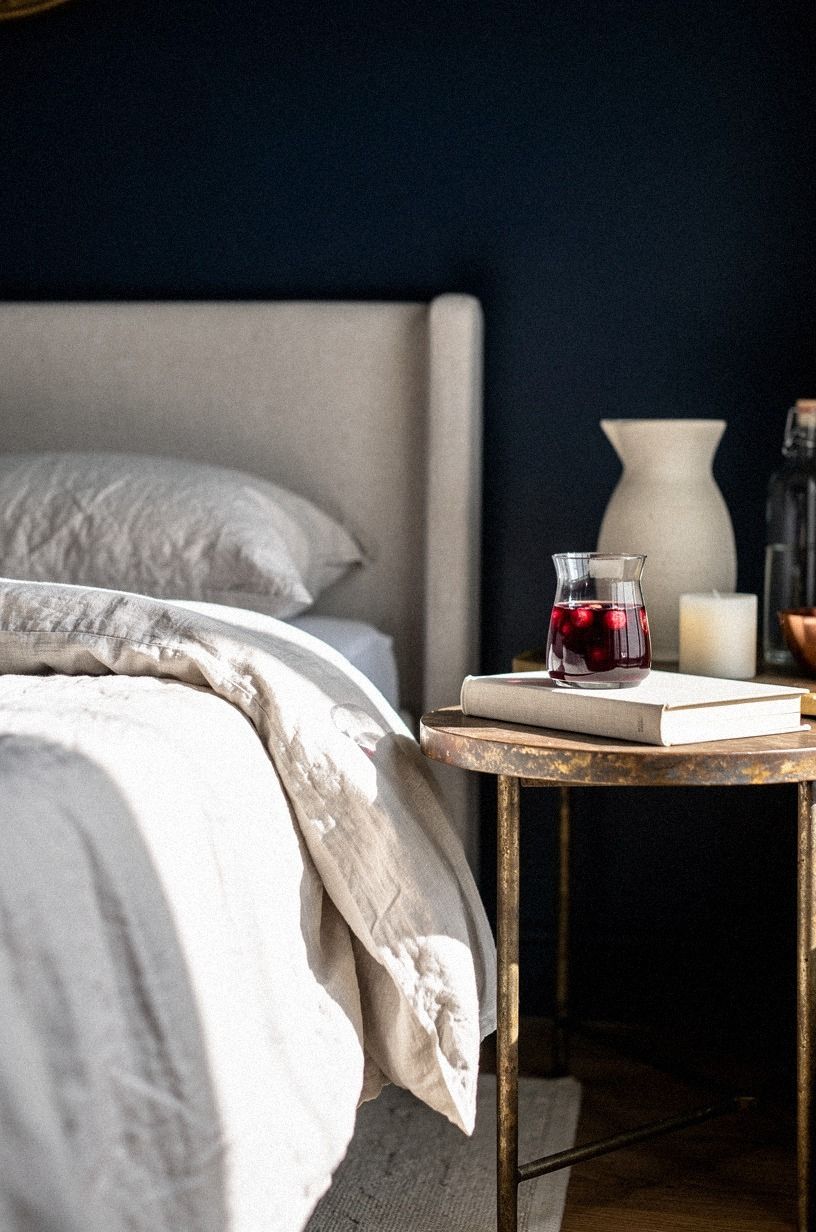
Tart cherry appears in many evening routines, but it shouldn’t be presented as a guaranteed sleep remedy. Blend a small amount into plain yogurt, water, or an unsweetened milk alternative, then keep the drink simple.
Some studies have explored tart cherry and sleep-related measures, yet individual responses vary. You’ll want to treat it as an optional food, not a prescription.
Use a washed Belgian linen napkin, an ivory glass, a copper spoon, and a midnight-blue tray. The deep red color gives the scene focus without much decoration.
If the drink tastes too sharp, dilute it rather than loading it with sugar. If you’re watching sugar intake or taking medication, ask a clinician whether the product fits your needs.
What makes the habit useful? The preparation creates a clear signal that the kitchen is closing. That signal may feel soothing even when the drink itself isn’t dramatic.
10Dim bedside lighting before the final meal
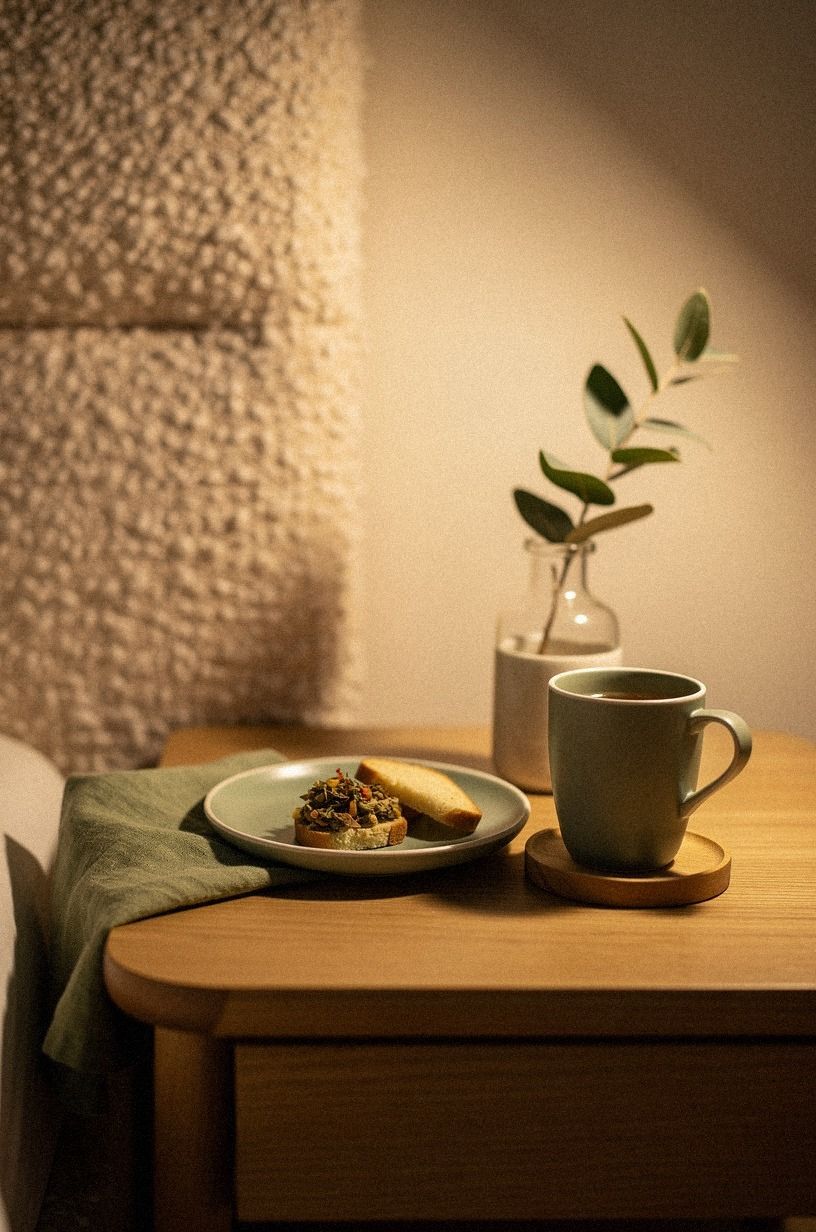
Light and meal timing belong in the same evening conversation because both shape the transition toward rest.
11Practice four-seven-eight breathing beside the bed
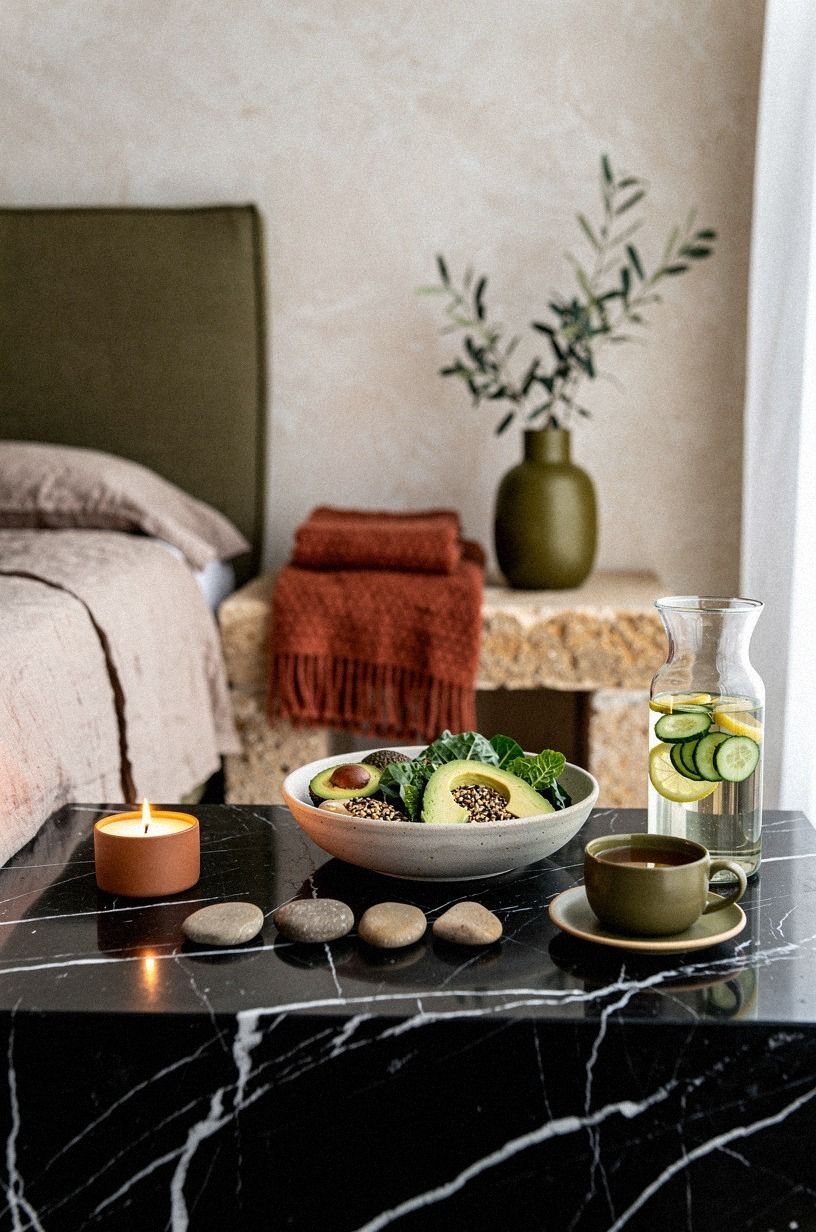
Four-seven-eight breathing is often used as a structured breathing exercise, but it may not feel comfortable for everyone. The pattern involves inhaling for four counts, holding for seven, and exhaling for eight.
Stop if dizziness, anxiety, or discomfort appears. You’re allowed to use ordinary slow breathing instead.
For the terracotta, stone, and olive palette, place a Nero Marquina coaster, a folded cotton blanket, and a small ceramic cup beside the bed. The visual clue should be obvious without turning the bedside table into a wellness display. Keep the floor clear, the lamp reachable, and the breathing cue written in plain language.
Ask yourself: what good is a bedtime routine if it creates another performance test? The exercise should feel optional and gentle. If breathing symptoms, panic, or chest discomfort appear, professional medical advice is more important than continuing the pattern.
12Keep the phone outside the bedroom overnight
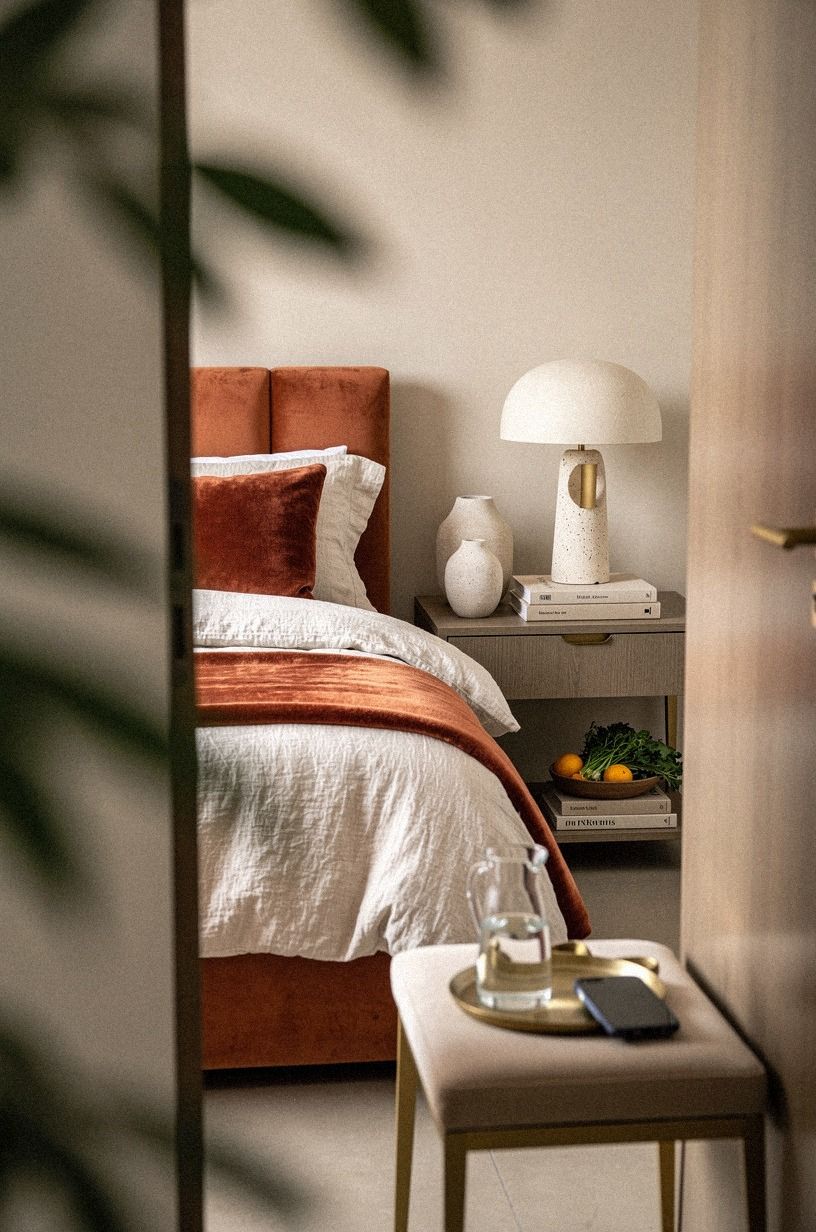
Keeping the phone outside the bedroom may help reduce late scrolling, notification checking, and bright screen exposure. It won’t solve every sleep concern, but it creates a firm boundary around the bed. Place the charger in the hallway, use an ordinary alarm clock, and keep emergency contacts available through an agreed plan when needed.
For the clay, linen, and aged brass image, choose a deep-pile mohair velvet bench or a small entry console where the phone can rest. Add a paper book, a glass of water, and one low lamp.
You’ll want the setup to look welcoming, not punitive. If you’re used to keeping the phone nearby, start with one evening and adjust gradually.
And don’t replace scrolling with stressful meal tracking. The seven-day plan should leave room for hunger, social meals, and imperfect nights. A phone boundary works best when it protects the evening rather than turning bedtime into a test.
What Deserves Priority in a Cortisol Detox Diet Plan?
The most useful part of this plan isn’t a rare ingredient or a dramatic food rule. It’s the repeated sequence: a substantial morning meal, colorful produce at lunch, a satisfying dinner, prepared snacks, and a softer evening transition. That sequence gives you fewer decisions to make when energy is low.
It also leaves space for preferences, allergies, budget, and cultural foods.
A cortisol detox diet label can sound more medical than the plan really is. Cortisol is a hormone involved in stress and daily rhythms, and food alone can’t explain every change in energy, mood, appetite, or sleep.
A balanced plate may support general nutrition, but persistent symptoms deserve qualified care. The strongest approach is flexible: keep the meals recognizable, use ingredients you tolerate, and change one routine at a time.
The visual environment matters because it affects friction. A breakfast tray, fridge plan, bedside lamp, and phone station can make the intended choice easier to see.
None of these objects needs to be expensive. Art can hang with its center around 57 to 60 inches from the floor, curtains can sit 4 to 6 inches above a window frame, and a useful meal board can be plain paper.
Those details create order without turning wellness into a shopping project.
A budget-friendly version may use a secondhand tray, recycled jars, a thrifted lamp, and grocery staples. An elevated version may use Article furniture, linen textiles, and a handmade ceramic bowl.
Both can support the same basic rhythm. You’re choosing the level of visual polish, not buying a health outcome.
A Few Things Worth Answering
What is the best cortisol detox diet plan for a small kitchen?
A simple plan with oats, yogurt, eggs, beans, leafy greens, salmon, fruit, and seeds is a practical starting point. Glass storage jars keep portions visible, while a narrow tray limits clutter. Choose foods you tolerate, and keep the plan flexible enough for substitutions.
Where can you buy cortisol-friendly meal-planning pieces on a budget?
Target, Wayfair, thrift shops, and Facebook Marketplace can offer trays, jars, bowls, and lamps at different prices. Article has more polished furniture options, while secondhand stores often provide the best value. No commission links are included, and product names are examples only.
How much does a cortisol-friendly kitchen and bedroom setup cost?
A food routine can begin with items already available at home. A broader room refresh typically falls within the supplied US ranges of $200-$800 for budget organization, $1,500-$5,000 for mid-range furnishings, or $8,000-$25,000+ for major work.
Can a cortisol-friendly meal plan work on a budget?
Yes, and it can start with oats, beans, frozen vegetables, eggs, lentils, and seasonal fruit. Canned salmon can replace fresh fish when prices rise. Batch cooking, reusable containers, and a written plan reduce waste without requiring specialty powders or expensive wellness products.
Is a cortisol-friendly routine worth it in a small space?
Yes, because a small kitchen can make food visible and decisions simpler. Use a vertical magnetic board, one tray, and stackable containers. White Dove OC-17 from Benjamin Moore can brighten a tight room, though paint is optional and doesn’t replace good ventilation or safe food storage.
Is a cortisol-friendly meal plan suitable for a rental?
Yes. Use removable hooks, a tension rod, a freestanding lamp, and a peel-and-stick board that can come down cleanly. Farrow & Ball Pigeon No.25 can inspire a muted palette, while Sherwin-Williams Agreeable Gray SW 7029 offers another neutral reference for removable styling.
Where to Start First
Start with the seven-day breakfast tray. It creates the earliest decision point, uses ordinary foods, and makes the rest of the plan easier to follow. Keep one visible tray, one dependable protein, and one fiber-rich carbohydrate ready.
Pin the meal rhythm for later, then build the evening phone boundary when the morning habit feels natural.