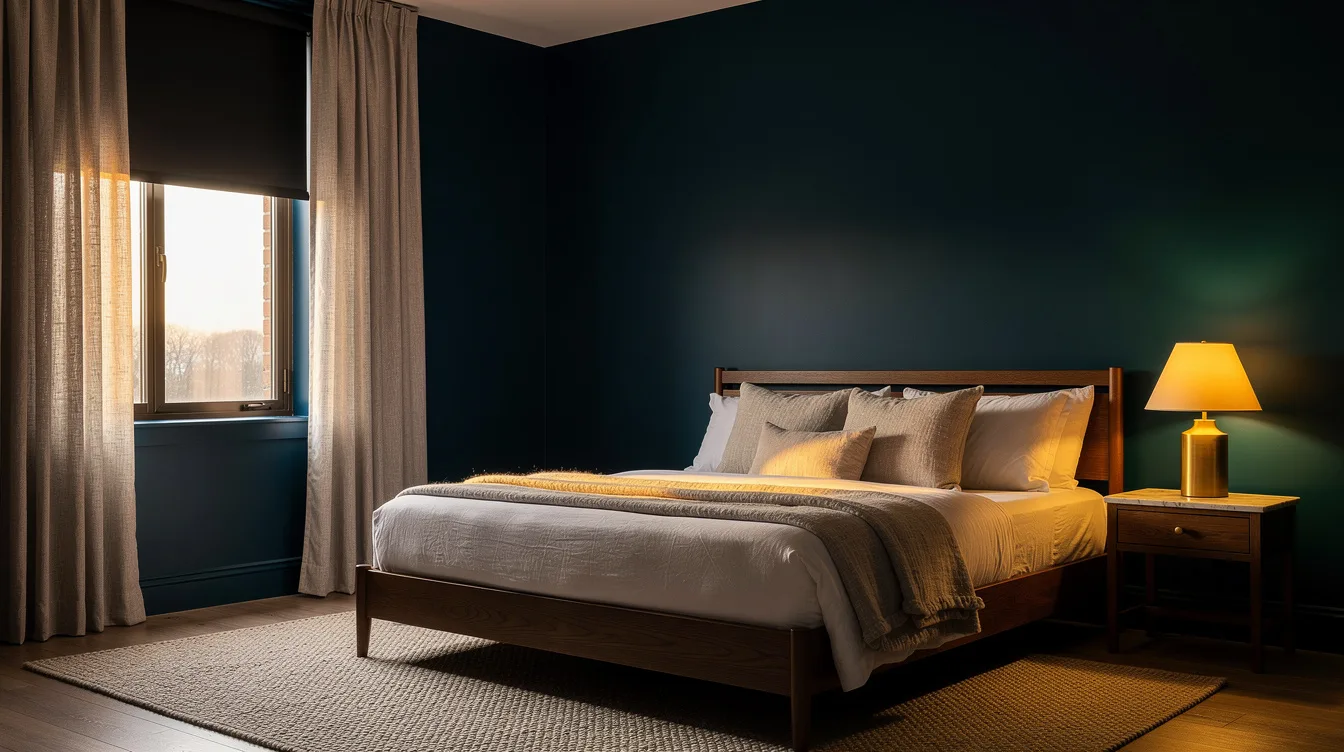
The hotel-bedroom detail worth copying is a blackout shade with concealed edges, softened by curtains that reach from ceiling height toward the floor. A nominal 38-inch roller can leave only about 36 inches of fabric exposed, which explains why some supposedly dark bedrooms still glow at dawn.
The useful design move is layered construction: the shade blocks the light, while side channels, an overlapping mount, and a covered top close the perimeter. A sheer or textured curtain then gives the window a softer daytime appearance.
Here are the rules that make the setup work, plus realistic price points for a manual, motorized, or custom bedroom window.
Seal the Perimeter Before Choosing Fabric
At dawn, even a genuinely opaque blackout shade can leave a bright outline around the window, turning a quiet bedroom into a room that feels unfinished. The hotel-style fix begins at the edges, where small openings admit more light than the fabric itself.
Blackout describes the fabric’s light-blocking performance, while darkness depends on the full installation. Designers look at the top, both sides, and the lower edge before choosing a color, texture, or operating system.
A nominal 38-inch IKEA FRIDANS roller, for example, has only about 36 inches of fabric, so an inside mount can expose a noticeable strip along each side. That gap is a construction problem, not a fabric problem.
Start with the perimeter on paper: measure the recess, identify the mounting position, and decide where the curtains will hide the hardware. This single check prevents the most common hotel-bedroom mistake, buying a shade that blocks light in the center while glowing around the frame.
Mount Outside the Recess for More Coverage
An outside-mounted roller overlaps the window opening instead of trying to fit perfectly inside it, giving the fabric more room to cover the sides. It is often the practical choice when the recess is shallow, uneven, or too narrow for a clean channel system.
The IKEA FRIDANS version listed at about $45 has an overall width of roughly 38 inches but about 36 inches of fabric, while the wider version costs about $55 and has approximately 46 inches of fabric across a roughly 48-inch overall width. Those measurements make the usable coverage more important than the number printed on the package.
Use the actual fabric width when judging overlap, because the bracket-to-bracket measurement can suggest more coverage than the cloth provides. A small extension beyond both sides gives the recycled-polyester fabric a better chance of meeting the window’s light-control needs.
My preference is clear: use an outside mount whenever the window allows it, then let the curtain conceal the brackets. An inside mount can look crisp, but it demands more careful gap control and leaves less room for error.
Hide the Cassette and Side Channels
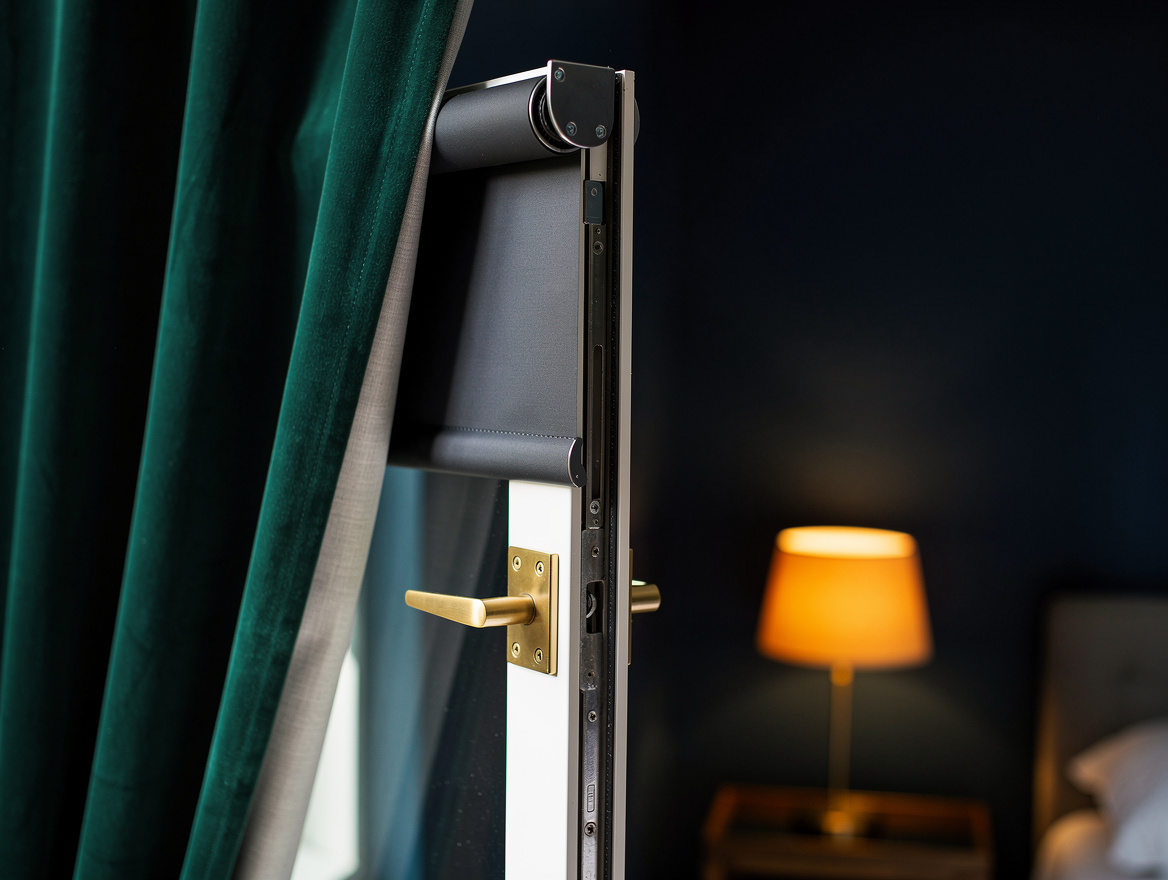
For the cleanest hotel effect, pair the shade with side channels that run vertically along the window edges. They hold the moving fabric close to the frame and block the thin lines of brightness that appear when the roller hangs free.
A covered top, sometimes built into a cassette, completes the enclosure around the roll. Without that upper cover, early light can enter above the shade even when both side edges look perfectly tight.
The most polished construction combines a cassette, two side channels, and an overlapping mount where the window geometry requires it. Each piece handles a different opening, so removing one can weaken the entire blackout effect.
Keep the hardware visually quiet by placing the system behind full-height curtains. The shade does the technical work, while the fabric outside it hides the brackets, channels, and roll from the daytime view.
Soften the Window With Full-Height Curtains
A hotel bedroom rarely leaves the window treatment as a bare roller, because the room needs a softer daytime layer after the shade rises. Full-height curtains give the opening more visual weight and make the wall feel calmer from morning through evening.
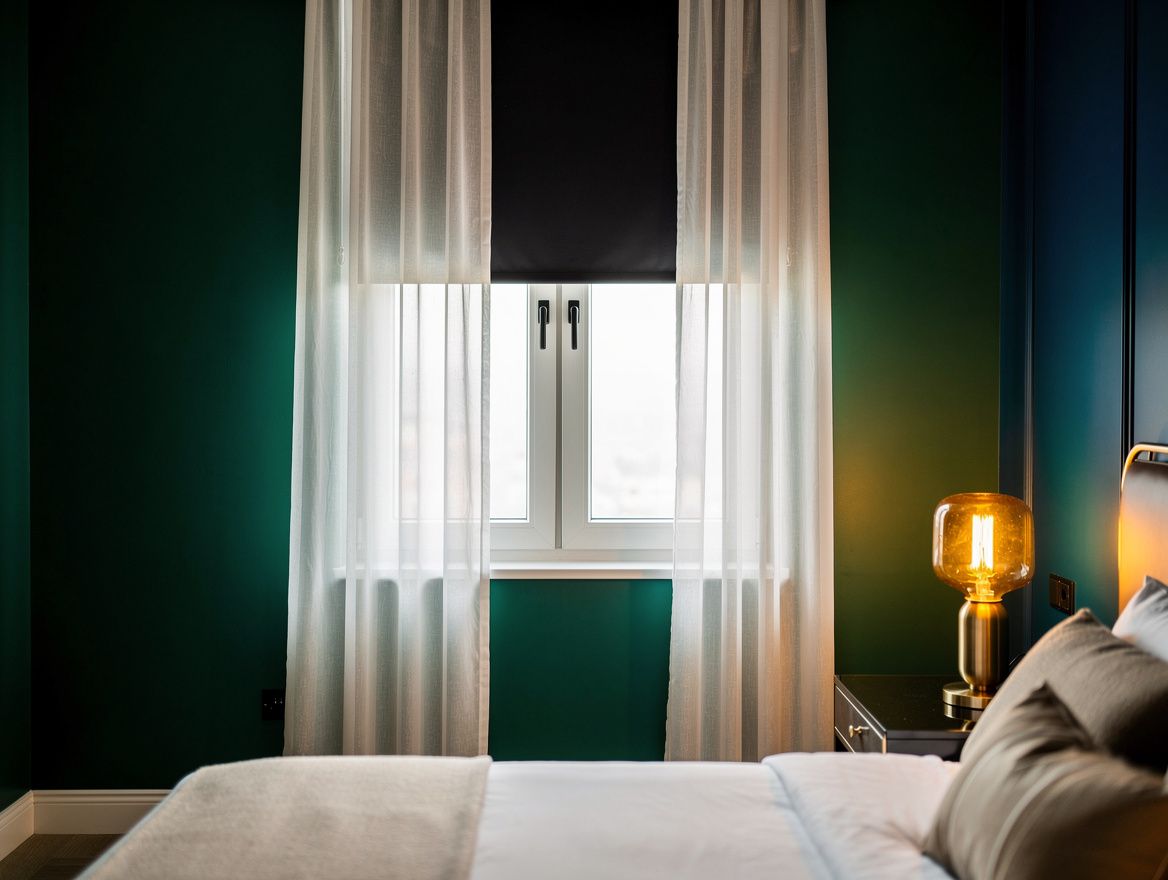
Choose a sheer or textured curtain that filters the window without competing with the blackout layer. A neutral woven surface can soften the hard geometry of the roller, while a deeper tone creates a more enclosed bedroom atmosphere.
The curtain should extend from above the window to near the floor, allowing the shade to disappear behind it when closed. This arrangement also keeps the room flexible: darkness at night, filtered daylight during the day.
Texture matters more than a busy pattern here. A quiet sheer curtain or lightly nubby panel supplies the softness the roller lacks, and the window still reads as one deliberate composition instead of two unrelated coverings.
Price the Build in Two Stages
For a 2026 budget, basic manual blackout rollers typically fall around $30 to $55 in the IKEA examples, depending on width. That range covers an affordable starting layer, but it does not automatically include channels, curtains, or installation.
An entry-level motorized roller shade is advertised from about $109 to $119, though those figures are starting prices rather than completed custom-window quotes. Width, drop, fabric deductions, controls, and mounting requirements can change the final number.
A custom bedroom blackout shade from a supplier commonly lands around $300 to $600 per shade, with motorization available as an option. That price range makes sense when the window has unusual proportions or when precise edge control matters more than a quick replacement.
Build the project in two stages: solve the shade’s top and side gaps first, then add the curtain layer. Put the budget into coverage before automation, because a quiet motor cannot compensate for a bright outline around the window.
Measure the window recess first, then solve the top and side gaps before choosing finishes or motorization. Once the perimeter is quiet, add full-height curtains and let the room wake up gradually instead of announcing sunrise through every uncovered edge.
Mia Carter writes about small-space living and budget home makeovers. She has restyled three rentals and tests most ideas in her own 45 sqm flat.