The best minimalist shower shelf ideas use one clean line, durable material, and only the bottles reached for daily. A crowded ledge won’t feel calm, even with expensive tile. These layouts keep storage close, visible, and easy to wipe down. The result is warm, practical, and refreshingly quiet.
- Recess a slim niche beneath the shower controls
- Float a stone shelf across the corner
- Frame the niche with matching shower tile
- Stack two narrow ledges for daily essentials
- Carve a vertical niche beside the rainhead
- Contrast one dark shelf against pale tiles
- Extend a shelf through the tiled alcove
- Hide bottles behind a half-height ledge
- Match shelf grout to create a seamless line
- Install a mirrored niche for brighter storage
- Anchor a teak shelf below the window
- Layer amber bottles on a recessed shelf
- Wrap a corner shelf in microcement
- Reserve a floating shelf for sculptural soap
1Recess a slim niche beneath the shower controls
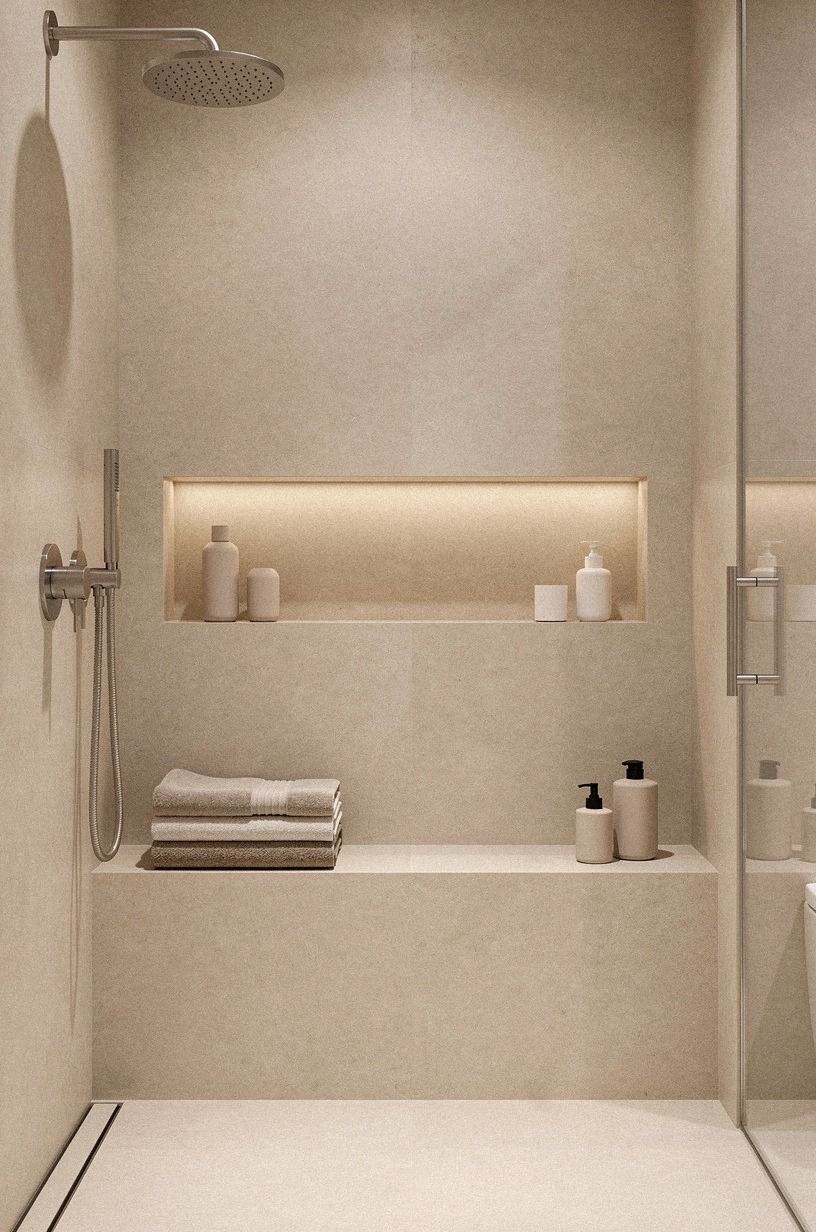
A narrow recessed niche beneath the controls keeps shampoo at hand without interrupting the terracotta, stone, and olive palette. Cerused white oak adds a dry, linear texture against smooth tile, while a low ledge gives your eye one steady horizontal line. If you’re planning a remodel, keep the niche shallow enough for daily bottles, not a collection of backup containers.
Your shelf should sit where you can reach it without twisting. A comfortable shower measures at least 36 by 36 inches, so use that footprint to judge the niche position before tile goes in. You don’t need a wide opening; a slim rectangle often looks more intentional.
Add one amber bottle, one olive-green bar, and a pale stone dish. That’s enough!
For a related direction, browse these Scandinavian mid-century bathroom details. The warm timber and restrained storage will help you keep the palette airy rather than rustic. Avoid glossy plastic shelving here.
It fights the calm, earthy finish.
A recessed niche can be worth the added construction cost when a remodel already includes waterproofing. The value comes from reclaiming wall depth while keeping the floor clear.
2Float a stone shelf across the corner
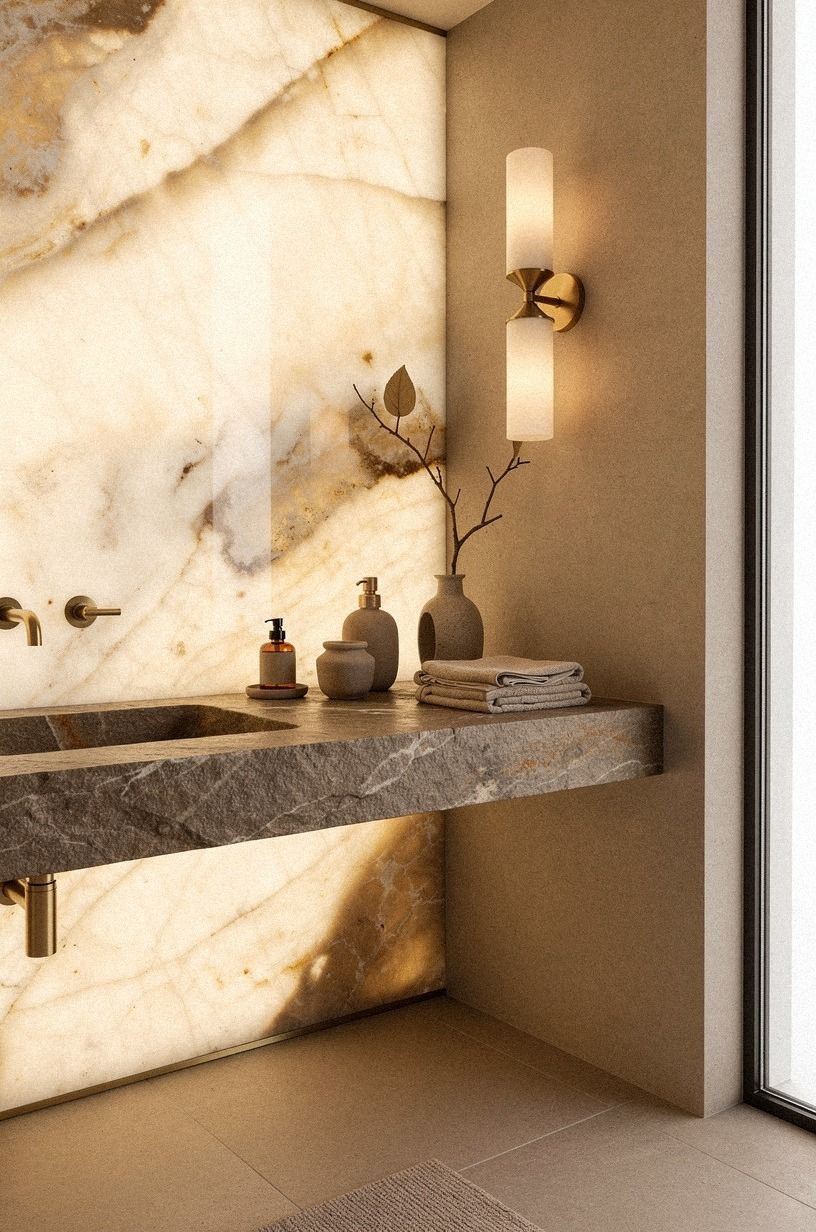
A floating shelf that crosses the corner creates a crisp visual bridge between two tiled walls. In this clay, linen, and aged brass bathroom, backlit translucent onyx gives the shelf a soft glow without needing a loud decorative object. If you’re working with a corner shower, let the stone extend just far enough to hold two bottles and a folded washcloth.
You can make the shelf feel lighter by choosing a slim slab with a honed face. Polished stone reflects every water mark, and you’ll spend more time wiping it than enjoying the room. A subtle edge catches the light beautifully, especially beside aged brass fixtures.
Keep your bottles in warm cream, clear glass, or muted clay so the storage reads as part of the architecture.
The strongest version uses one shelf, not three. A second ledge would compete with the onyx and make the corner feel busy. For more open layouts, see these Japandi shower layouts.
You’ll notice how low contrast and natural surfaces keep even a compact bathroom inviting.
Before approving a custom slab, compare the stone price with a porcelain or solid-surface alternative. The more expensive option is worth it when the shelf becomes a visible architectural feature, not when it only holds two bottles.
3Frame the niche with matching shower tile
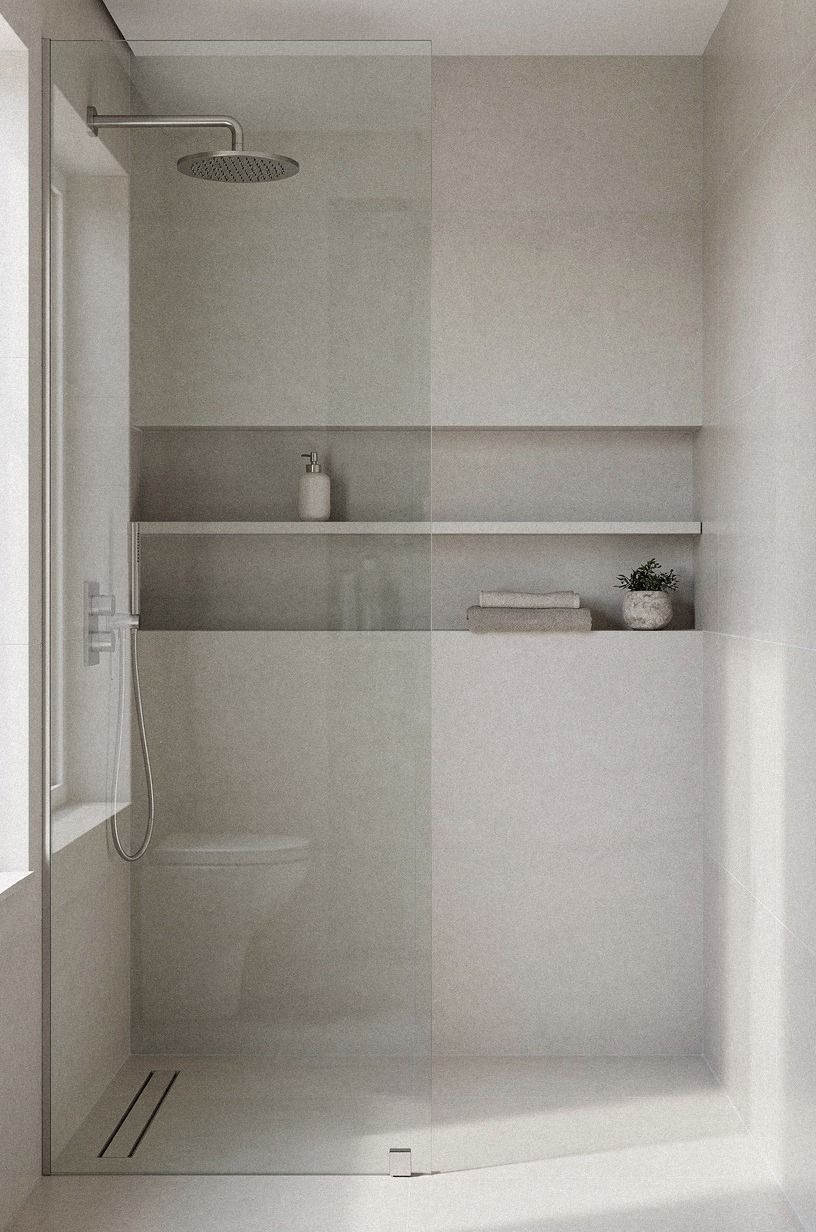
Matching the niche interior to the surrounding shower tile makes storage feel built into the wall. The plum, grey, and rose-gold palette gains depth from book-matched walnut, which brings warm grain into an otherwise cool composition. If your tile has movement, let the niche follow the same direction instead of introducing a competing mosaic.
Your eye should read one continuous surface before noticing the shelf. That effect works especially well with a modern shower with niche, where a narrow border creates a finished frame.
Choose a grout color close to the tile, and don’t use a bright white line around a dark plum niche. The contrast would turn a quiet detail into a hard outline.
A walnut trim can look rich, but it needs the right finish. Use a water-resistant seal and keep the wood away from constant spray.
The best location is beside the showerhead, not directly beneath it. For more ideas using a single strong plane, explore these floating shower shelf ideas. Your niche will look more polished when every edge has a job.
Matching tile often delivers stronger visual value than adding another decorative material. If the tile order is already part of the project, the extra labor may be worth it for a custom appearance.
4Stack two narrow ledges for daily essentials
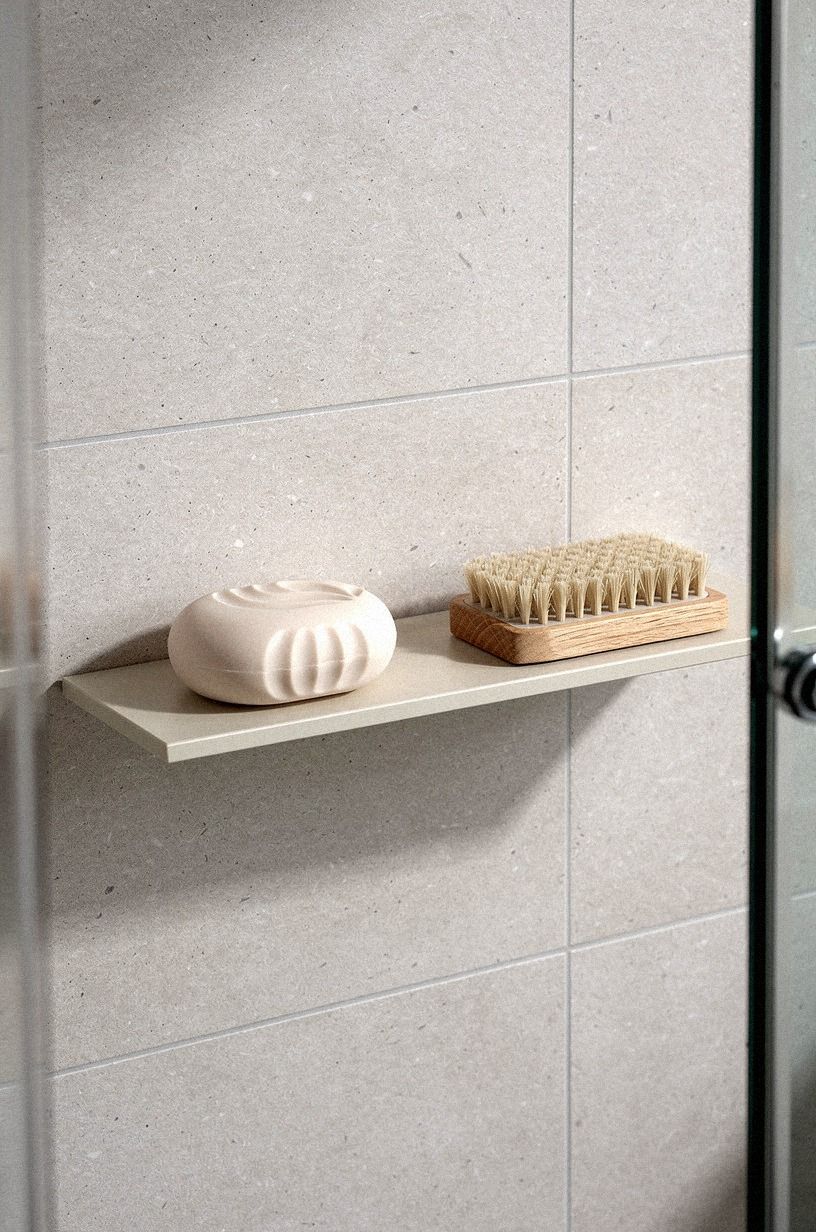
Two narrow ledges solve a common storage problem without filling the wall. In this navy, white, and walnut bathroom, warm travertine softens the contrast and gives each bottle a grounded place. Put cleanser on the lower shelf and shampoo on the upper shelf, so your daily sequence follows a simple vertical order.
You don’t need deep ledges for a calm shower. A shallow surface keeps bottles from disappearing behind one another and leaves more room for cleaning.
If your vanity height is between 32 and 36 inches, repeat that measured feeling in the shower by keeping both shelves level and evenly spaced. The exact spacing should follow the bottle heights used most.
Avoid placing a candle or fragile ceramic object on the lower ledge. Water, elbows, and slippery hands are a bad combination.
Choose navy glass bottles, a white pumice stone, and one walnut-toned brush instead. If you’re trying to solve a tight footprint, these white travertine bathroom palettes show how pale stone can keep the room bright.
Two ledges are usually worth it when separate product zones prevent daily clutter. The budget rises with extra waterproofing and tile work, but the practical value is easy to see.
5Carve a vertical niche beside the rainhead
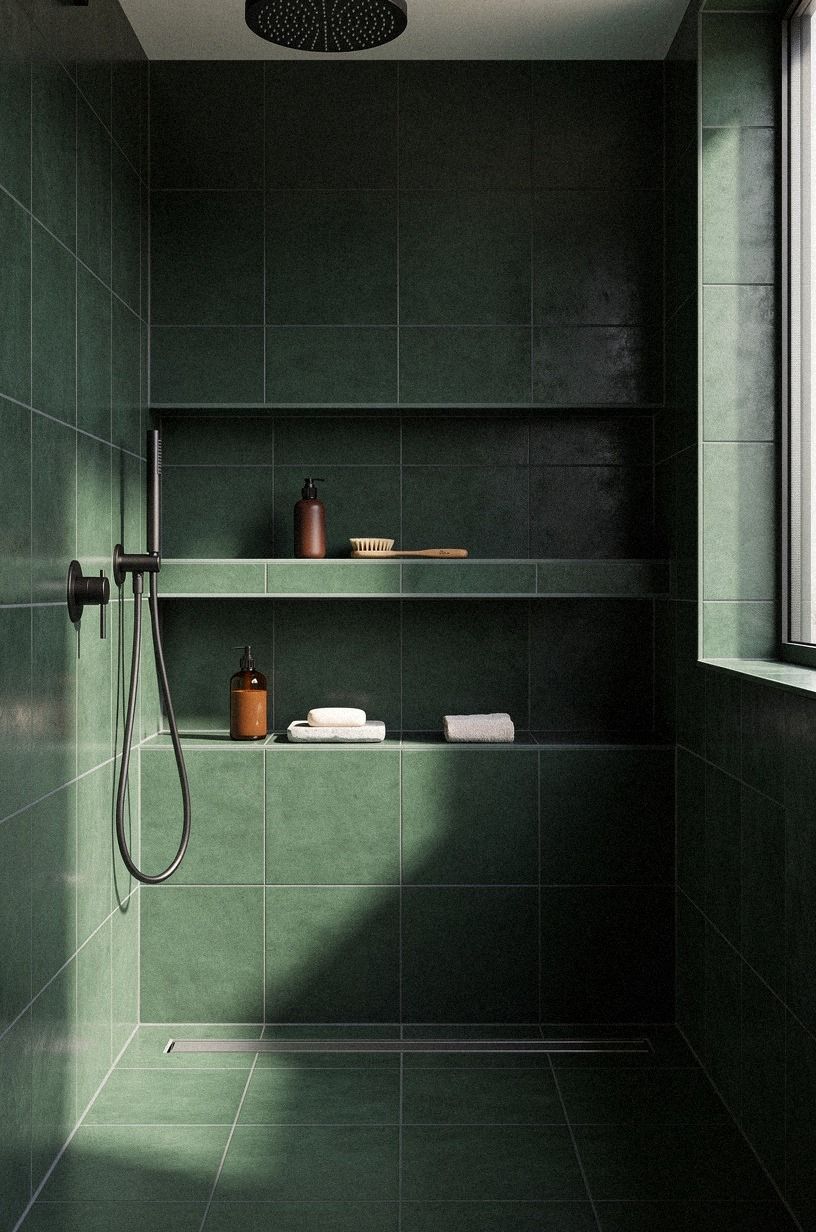
A vertical niche beside the rainhead uses height instead of width, which keeps the wall open around a large fixture. An emerald, gold, and cream palette gives the opening a richer presence, while unlacquered brass develops a warm patina over time. This layout suits a narrow shower where a horizontal shelf would compete with the controls or glass enclosure.
Use slim porcelain tile inside the niche and reserve the lower section for daily bottles. A taller upper section can hold a small soap dish or folded cloth, provided the opening remains easy to clean. You’re creating a vertical rhythm, not another cabinet.
The niche should stay outside the strongest spray path. Don’t place the highest shelf where water will pool behind containers, and don’t make the opening so tall that the upper ledge becomes difficult to reach. These small shower storage solutions show how compact walls can handle useful storage without visual heaviness.
A vertical niche is a strong choice when wall width is limited. The structure costs more than a surface caddy, but it keeps the floor and corners clear.
6Contrast one dark shelf against pale tiles
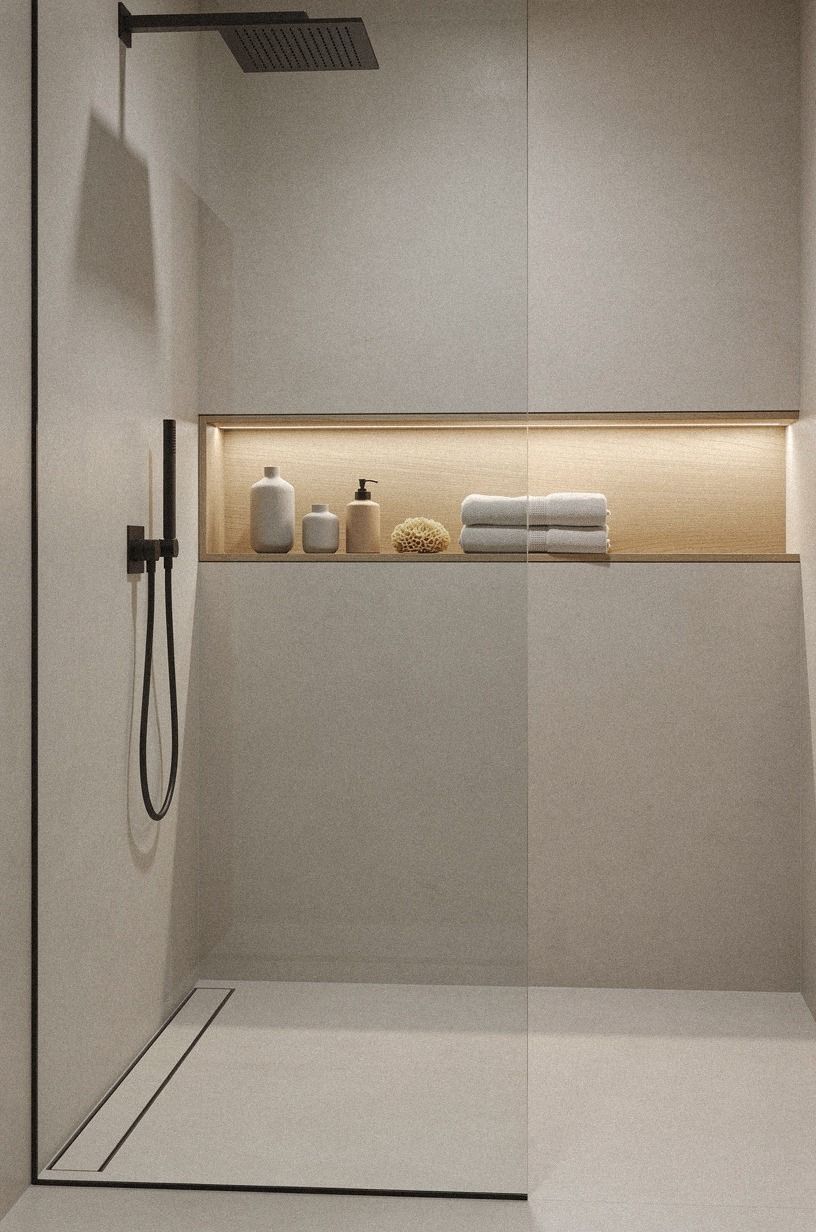
A dark oversized-chip terrazzo shelf against pale tiles gives a forest green, rust, and natural oak bathroom a clear focal point.
7Extend a shelf through the tiled alcove
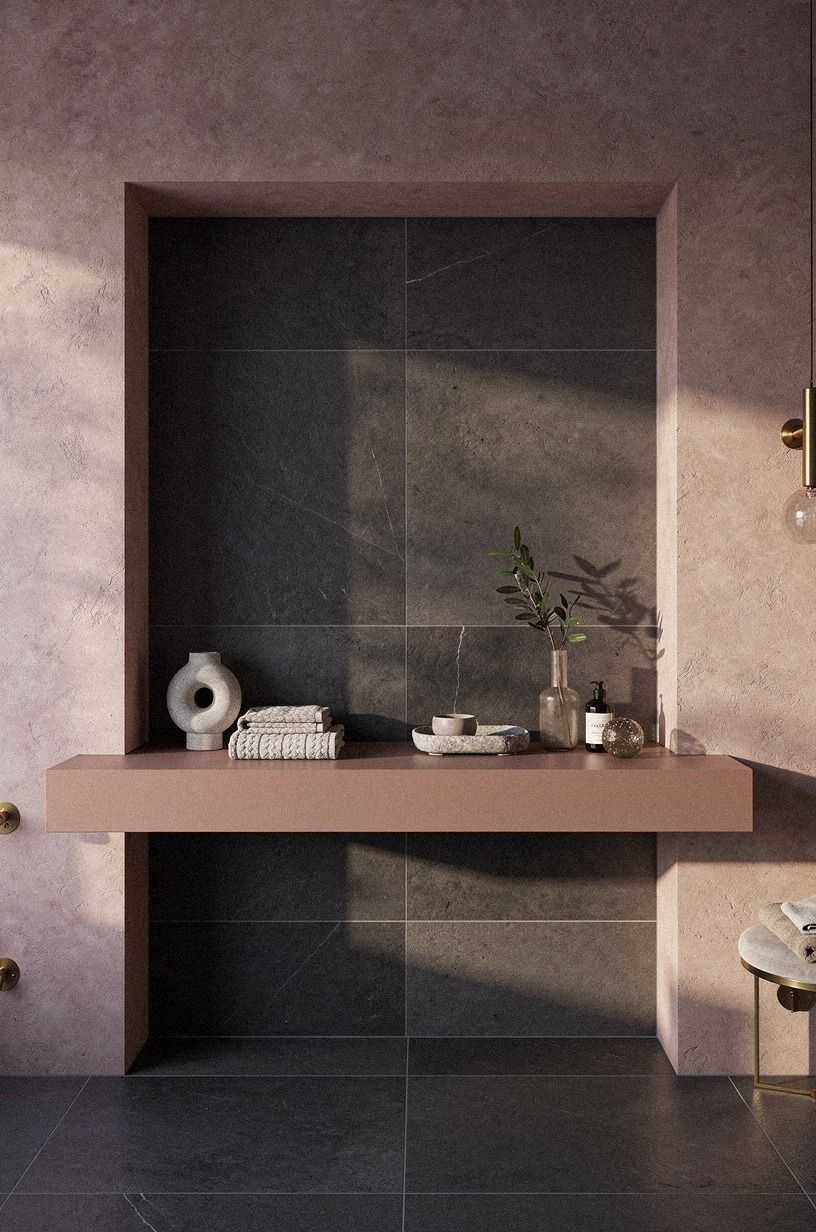
A shelf that runs through the full tiled alcove creates a strong architectural line. It can bridge two walls, connect a niche to the shower edge, and give the room a deliberate sense of proportion.
Choose a single-piece stone slab when the alcove is wide enough to make a continuous line worthwhile. A narrow ledge works best when it remains visually light; a deep shelf can make the enclosure feel cramped. You’ll get the cleanest result when the shelf aligns with a grout joint or the lower edge of the niche.
Keep the styling disciplined. One bottle group at each end is enough, and you don’t need decorative objects across the entire span. For additional material combinations, these floating shower shelf ideas offer useful proportions for open ledges.
A full-width shelf is worth considering when the alcove already has strong geometry. Accurate support and waterproofing matter more than decorative extras.
8Hide bottles behind a half-height ledge
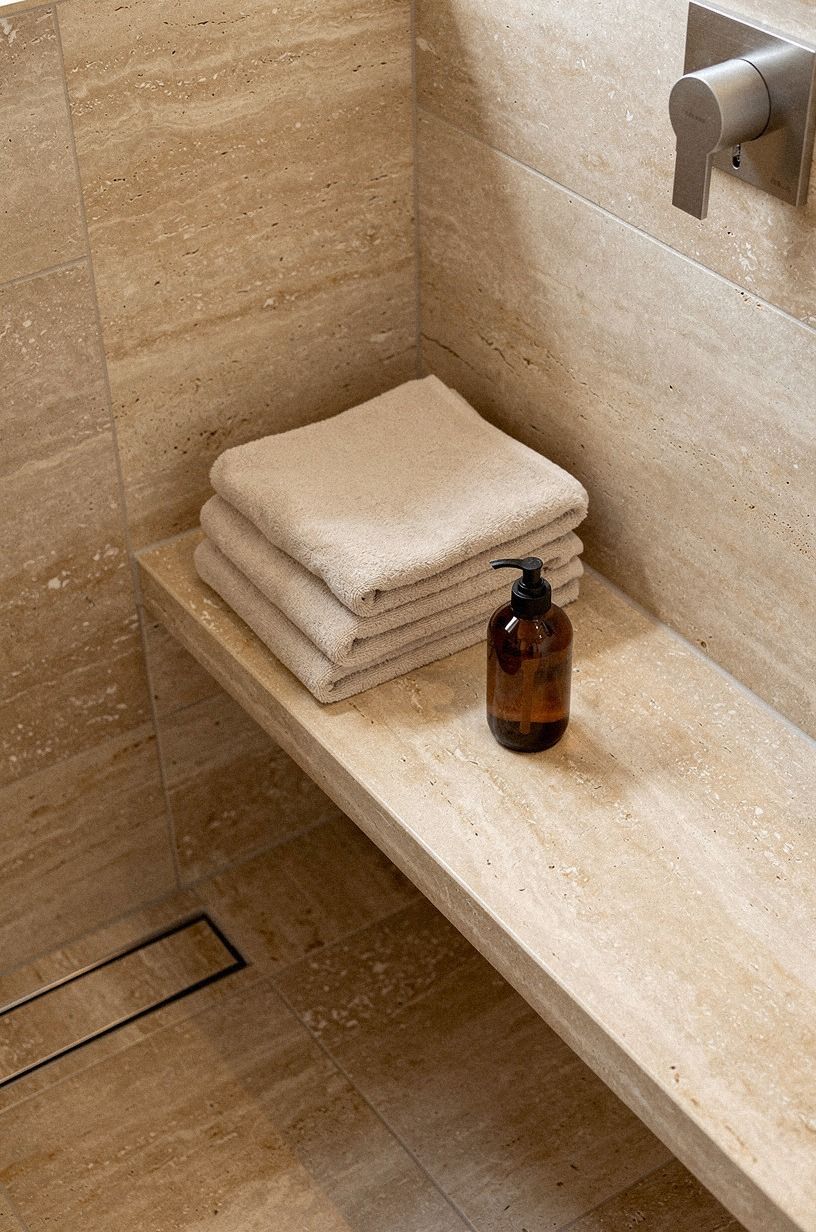
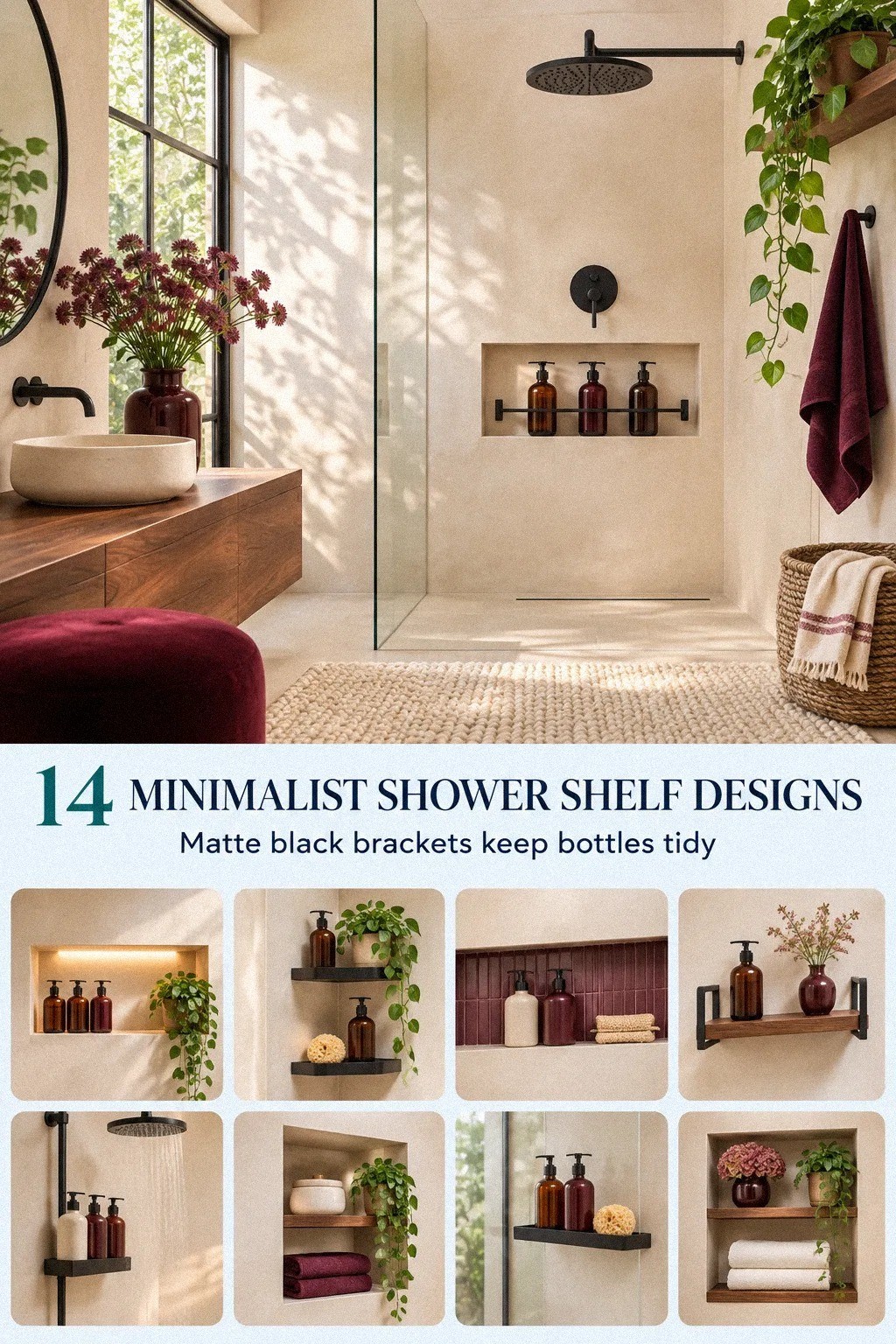
A half-height ledge hides the lower portion of bottles while keeping the shower visually open. The warm white, camel, and black palette works with shagreen accents, which add a dry, tactile note without making the room feel ornate. If you’re tired of seeing colorful labels, place the tallest containers behind the ledge and keep only one pump bottle visible.
Your ledge should be high enough to block clutter but low enough for easy reach. A comfortable shower still needs clear elbow space, so avoid extending the ledge into the main standing area. Use the corner or the wall opposite the controls.
You’ll gain hidden storage without creating a sharp obstacle.
Choose warm white containers or smoked glass bottles, and remove loud branding where possible. A camel-colored soap cloth can soften the black hardware, while one small tray keeps loose items from wandering. The table below offers broader bathroom renovation ranges, so you can judge whether a built-in ledge fits your project.
For a smaller footprint, these small shower storage solutions show how a narrow ledge can still feel generous. You don’t need the high tier to get a cleaner daily setup.
A half-height ledge is worth it when hidden bottles matter more than an uninterrupted floor plan. Compare the added masonry cost with the price of replacing freestanding storage later.
9Match shelf grout to create a seamless line
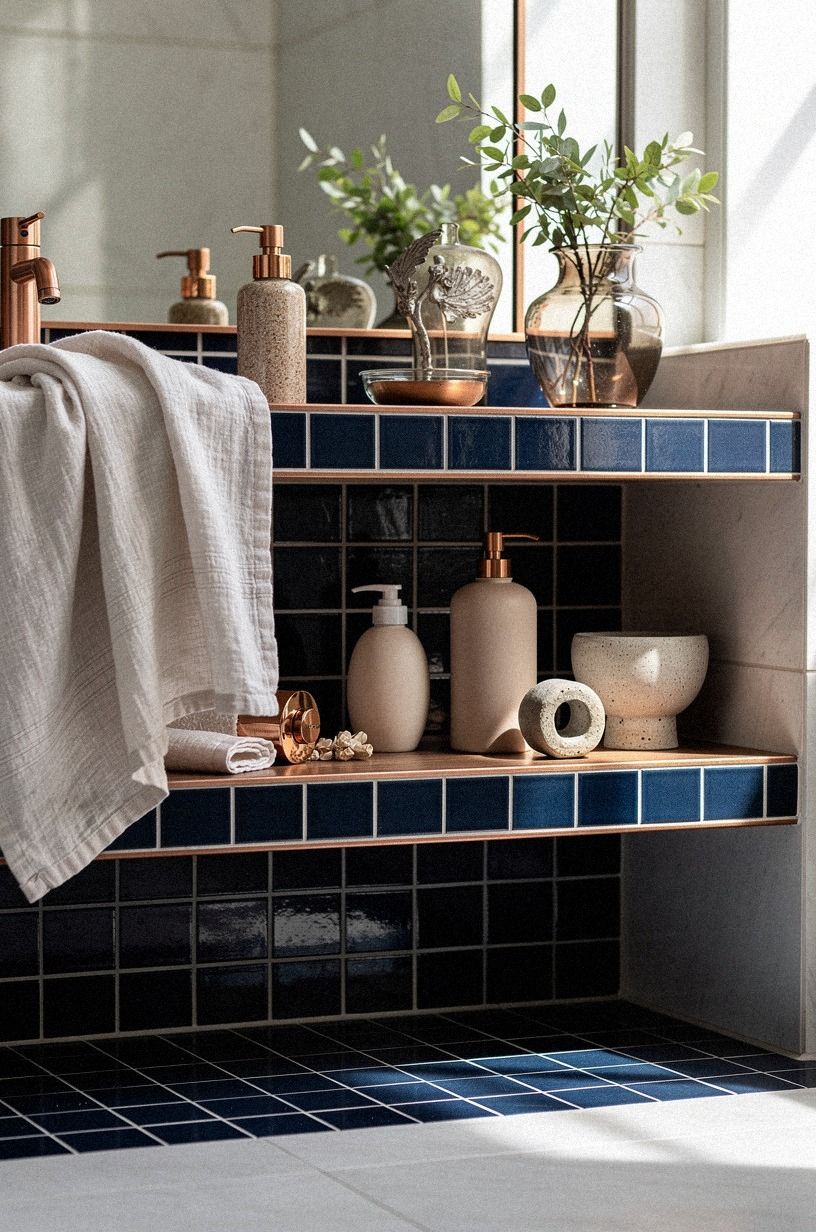
Matching the shelf grout to the surrounding tile creates a quiet horizontal band. The midnight blue, copper, and ivory palette gains softness from washed Belgian linen, especially when a folded cloth sits on the ledge. If you’re using a contrasting slab, keep the grout close to the slab color so the shelf reads as one continuous material.
Your tile layout matters more than the shelf decoration. Align the grout joints across the niche, then let the shelf interrupt that pattern at one measured point.
A random break will look accidental. A deliberate break can make the storage feel custom, even when the materials are modest.
Choose copper-toned bottles or a small ivory dish, but don’t introduce five new colors. Your shower should feel serene because the surfaces repeat.
A midnight blue wall paired with pale grout can become dramatic, so balance it with warm towels outside the shower. These Scandinavian mid-century bathroom examples offer useful examples of repeated lines and restrained accessories.
Grout-matched shelving can deliver high design value without a premium slab. The result depends on accurate installation, so skilled labor may be worth the higher quote.
10Install a mirrored niche for brighter storage
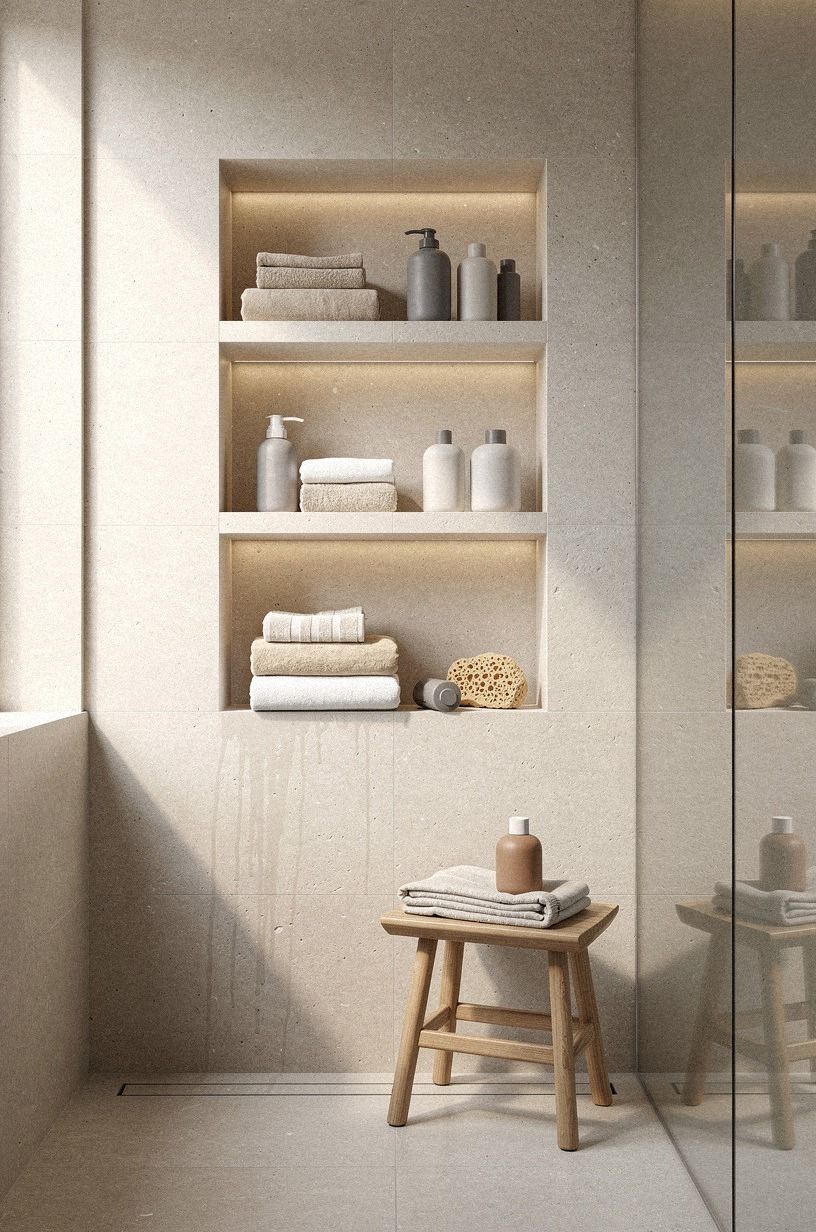
A mirrored niche reflects light into a shower without adding another fixture. In a sage green, warm cream, and natural wood palette, organic bouclé adds softness around the reflective surface without competing with the storage.
11Anchor a teak shelf below the window
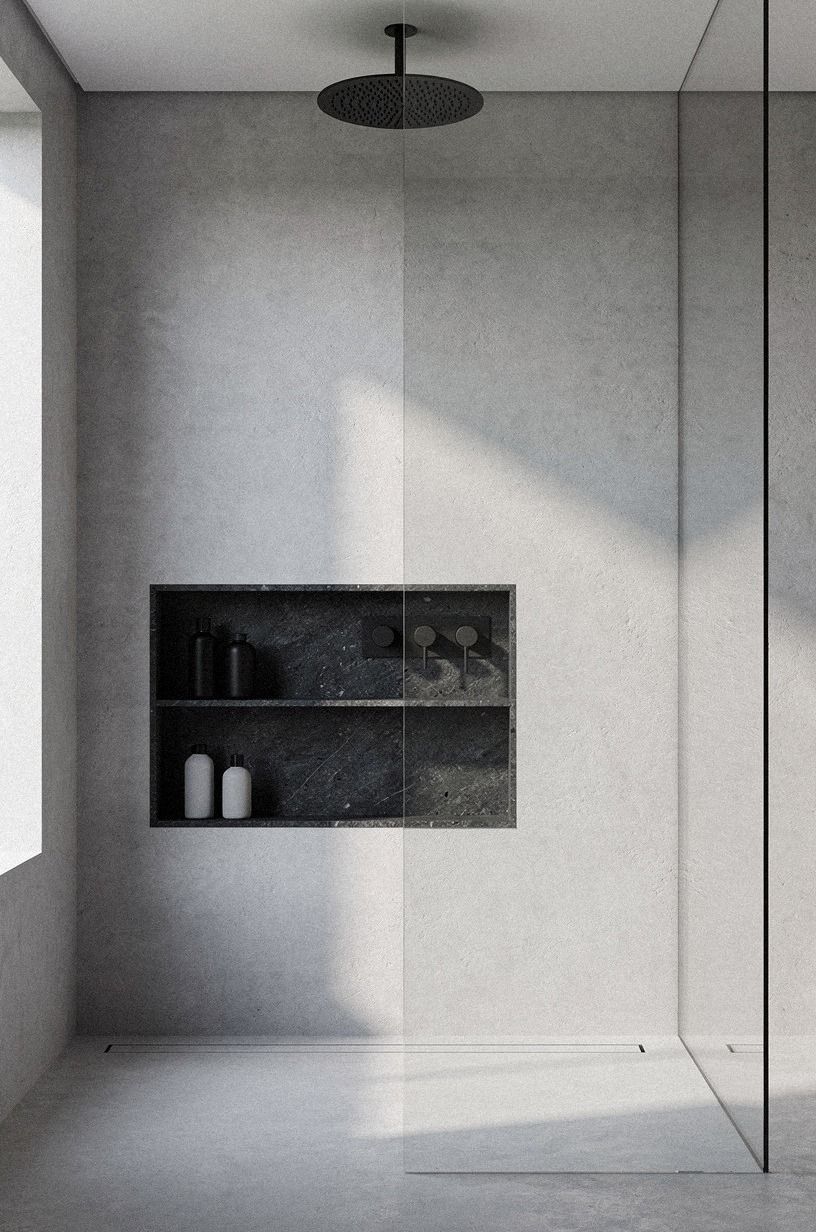
A teak shelf below the window uses the wall’s natural light and makes the most of an otherwise awkward strip. The terracotta, stone, and olive palette feels earthy beside Nero Marquina black marble with white veins. If you’re placing a shelf near glass, keep the depth modest so the ledge doesn’t block the lower portion of the window.
Your shelf needs a finish that can handle regular moisture and temperature shifts. Teak wood brings warmth, but it still needs proper sealing and ventilation. Place a pale stone dish, an olive bottle, and one folded cloth on the ledge.
The daylight will do the decorative work, so extra objects aren’t necessary.
Avoid putting soap directly against the marble. Water can leave marks, and dark stone shows pale residue more clearly than expected. A removable dish gives you an easier cleaning routine.
For more timber-led storage, browse these teak wood shower shelves. You’ll get the strongest effect when the teak echoes a vanity or stool elsewhere in the room.
Teak can be worth the material cost when a window wall needs warmth. A sealed board costs less than a full stone installation and can still deliver a polished result.
12Layer amber bottles on a recessed shelf
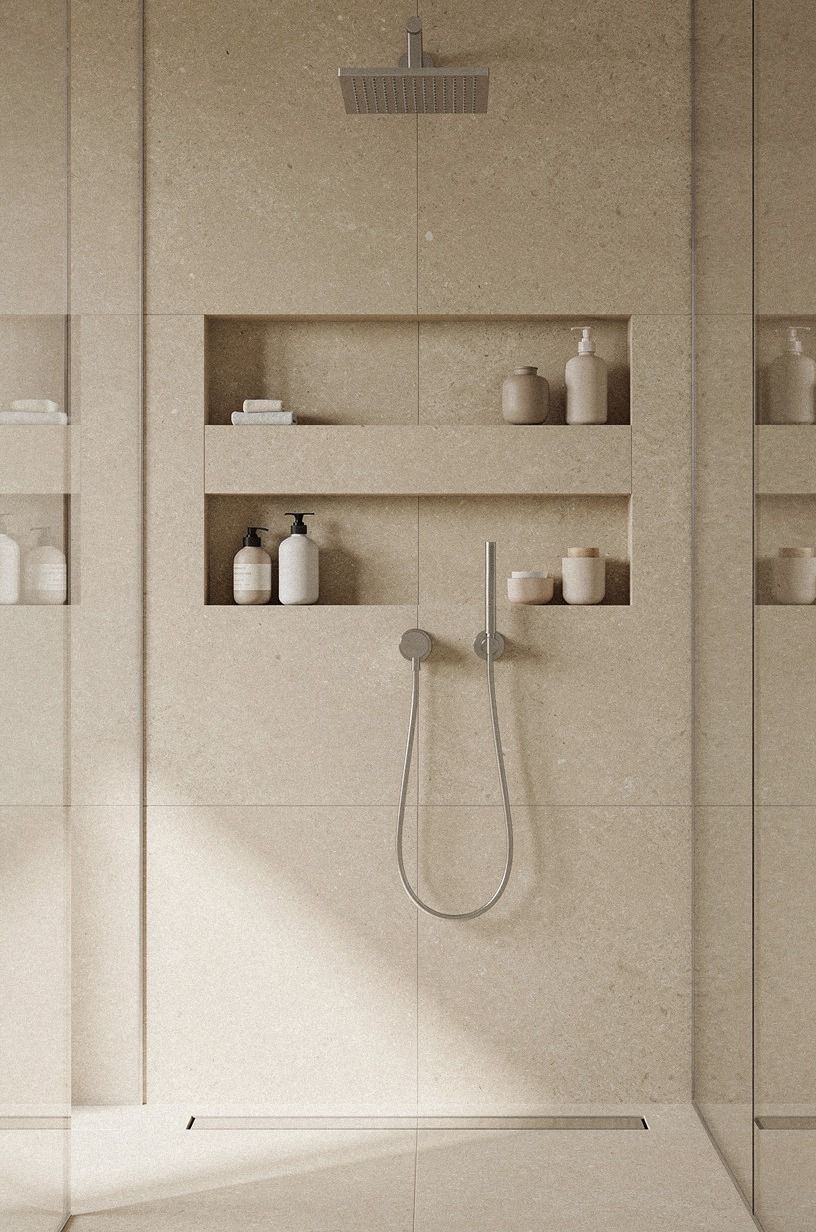
Amber bottles bring instant order to a recessed shelf because their color repeats without relying on bright labels. The arrangement works especially well with clay, linen, and aged brass around the shelf, while deep-pile mohair velvet introduces a rich tactile note outside the wet zone.
Choose bottles with similar silhouettes, then vary their heights slightly. You’re aiming for one calm cluster rather than a perfectly matched retail set. A small brushed brass pump can add warmth without turning the shelf into a display cabinet.
Keep backup products outside the wet zone. Don’t crowd the niche with extra containers simply because there’s room. These Japandi shower layouts show how limited color and natural texture can make everyday storage feel considered.
Amber bottles are an affordable way to unify a mixed product collection. The approach needs no major construction when a suitable recessed shelf already exists.
13Wrap a corner shelf in microcement
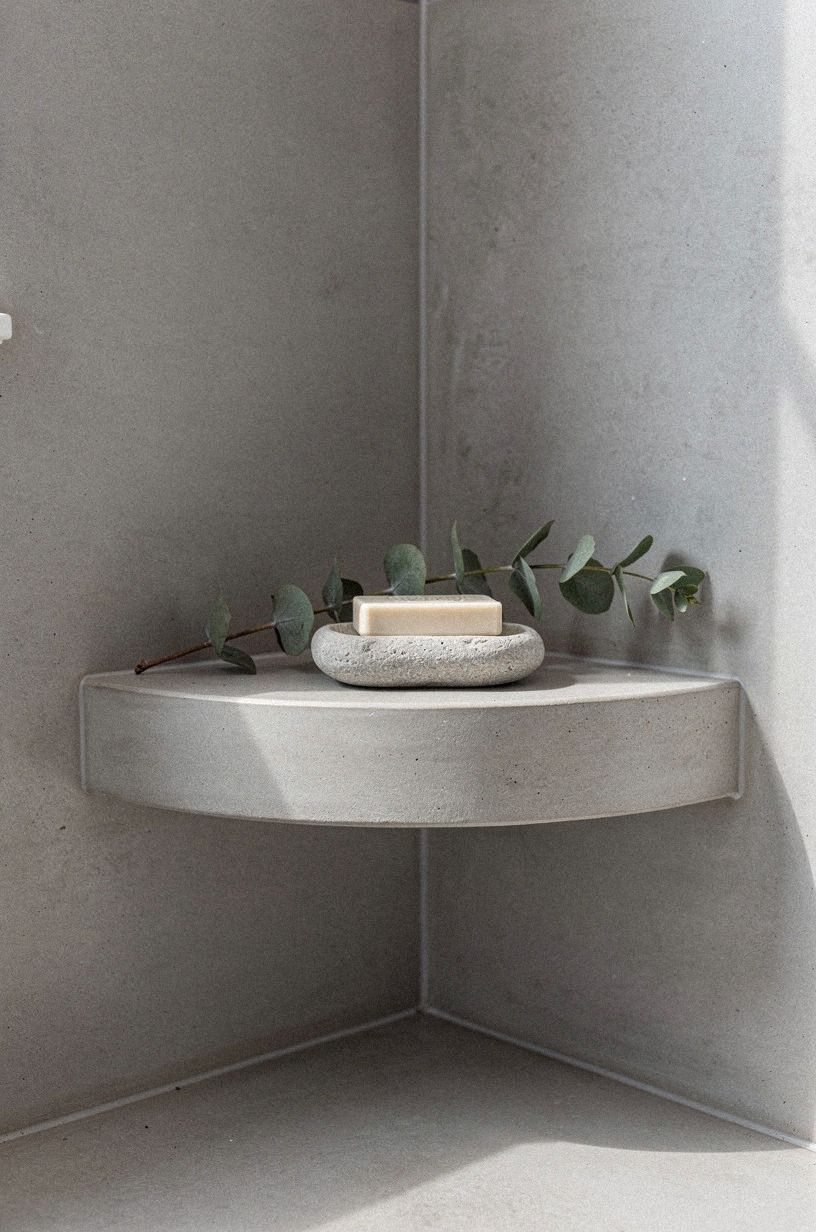
A corner shelf wrapped in Carrara marble with subtle grey veining gives a plum, grey, and rose-gold bathroom a continuous sculptural surface.
14Reserve a floating shelf for sculptural soap
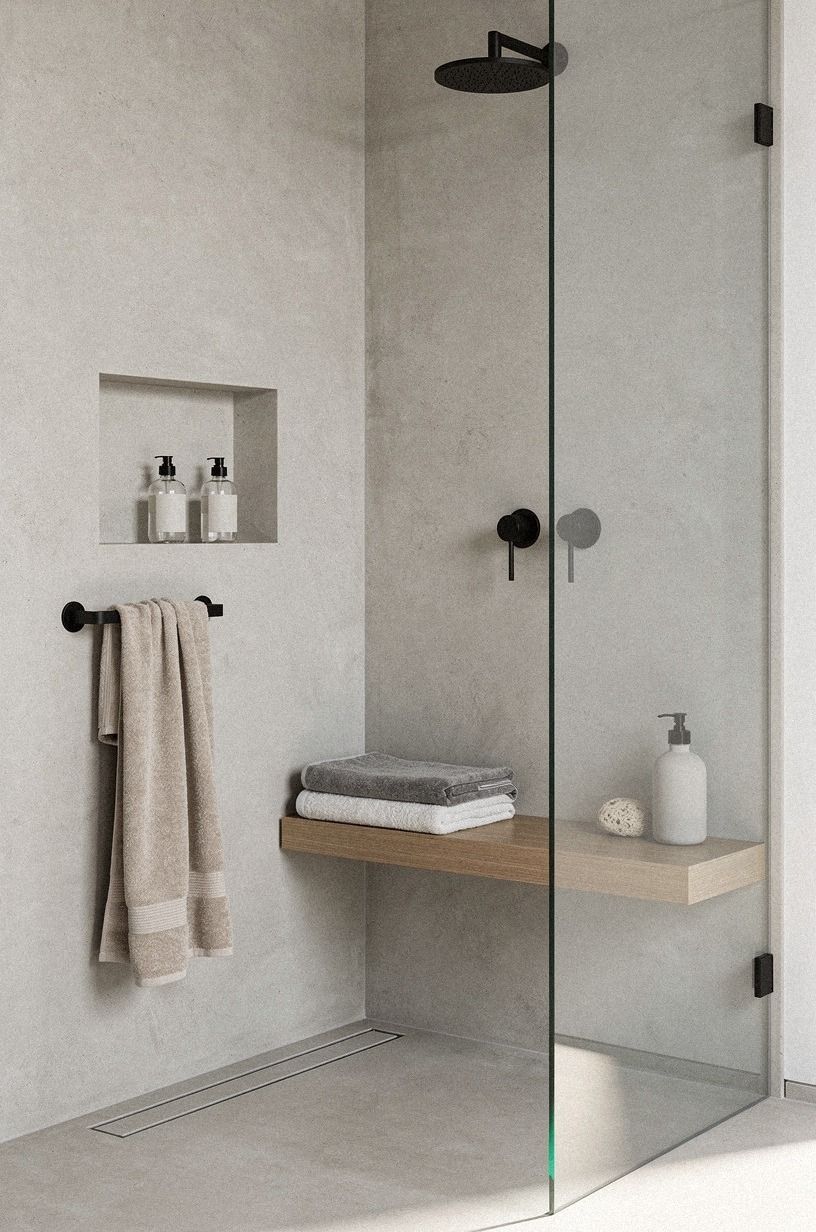
A floating shelf reserved for sculptural soap turns one useful object into the focal point. In a navy, white, and walnut palette, reclaimed weathered teak gives the shelf a relaxed, tactile finish. This approach suits a bathroom where most storage sits inside cabinetry or a recessed niche.
Select a hand-shaped ceramic soap with a matte finish and enough weight to remain stable. The shelf itself can stay almost invisible: pale oak, limestone, or a slim white composite surface will keep attention on the object. You don’t need additional decoration when the soap has a strong silhouette.
Place the shelf away from direct spray and give the soap a draining dish. A small ribbed ceramic tray adds texture while preventing standing water. For related warm-wood combinations, browse these Scandinavian mid-century bathroom details.
A sculptural soap shelf works when practical storage is already solved elsewhere. Its value comes from giving one ordinary object a deliberate place.
Why Does the One-Line Shelf Feel Calmer? The Three-Height Light Stack
Minimalist shower storage works because it limits visual decisions. One shelf line, one dominant material, and a small group of containers give your eyes somewhere to rest. The strongest rooms don’t remove every object; they give each object a clear position.
That distinction matters in a bathroom, where towels, bottles, fixtures, and tile already compete for attention.
The Three-Height Light Stack is a useful way to judge the finished space. Keep the lowest visual weight near the shelf, place a medium-height bottle beside it, and let the tallest object sit slightly behind. Your eye moves gently instead of stopping at a wall of equal-height containers.
This method also makes cleaning easier because each item remains visible.
Color repetition matters just as much. If your tile is sage green, repeat that family in one bottle or cloth, then use cream and natural wood to soften the contrast. Farrow & Ball Hague Blue No. 30 can create a deep, moody backdrop, while Benjamin Moore Chestertown Buff HC-9 keeps a small shower warm.
Sherwin-Williams Sea Salt SW 6204 is a quieter choice when you want an airy wash of color.
The best shelf isn’t the one with the most storage. It’s the one that removes the daily search for soap, keeps water-prone items off the floor, and leaves enough blank surface for the room to breathe. Your bathroom will feel more inviting when the layout supports routine instead of asking for constant styling.
For a pale, textural direction, these white travertine bathroom palettes show how stone, cream, and restrained accessories can work together.
What People Always Want to Know
What is the best minimalist shower shelf idea for a small bathroom?
A slim recessed niche beneath the controls is usually the strongest choice because it uses wall depth instead of floor area. A birch-effect storage unit belongs outside the wet zone, while a narrow stone niche keeps daily bottles contained. You’ll gain clear reach space without adding visual bulk.
Where can you buy minimalist shower shelf pieces on a budget?
Large home retailers, online marketplaces, and local resale shops are practical starting points for removable trays, bottles, and small dishes. You don’t need a matching set; repeated color and similar shapes will create a calm material group. Check dimensions and moisture ratings before buying.
How much does a minimalist shower shelf bathroom makeover cost?
A cosmetic update may fit within the $200-$1,200 budget tier when paint, containers, textiles, and a mirror do most of the work. A new vanity or partial wall tile moves into the $3,000-$9,000 mid tier. A fully re-tiled shower can reach $12,000-$30,000 or more.
Can you create a minimalist shower shelf bathroom on a budget?
Yes, and three low-cost moves can make a visible difference: reuse a sturdy dish, decant daily products into one bottle color, and move backup supplies into a closed cabinet. You can also choose a simple ceramic ledge instead of a custom slab. The organized sightline matters more than a luxury finish.
Is a minimalist shower shelf worth it in a small space?
Yes, because a small shower benefits from storage that stays within the wall line. A shallow niche or corner shelf keeps your floor clear and reduces shoulder collisions. Place the most-used bottle closest to your dominant hand, and you’ll make the room feel easier to use.
For most compact bathrooms, the storage value is worth the modest cost.
Is a minimalist shower shelf a good idea for a rental?
A removable shelf can work well in a rental when the shower wall is suitable for tension hardware or approved adhesive systems. Peel-and-stick hooks, a tension caddy, and a freestanding teak stool offer no-drill storage. Check moisture ratings first, and don’t attach heavy stone to uncertain surfaces.
For more examples of restrained materials and repeated lines, browse these Scandinavian mid-century bathroom examples.
Where to Start First: The Dry-Run Rule
Start with the slim recessed niche beneath the shower controls. It uses wall depth, keeps daily bottles within reach, and gives every later material choice a clear boundary. Mark the dimensions with painter’s tape first, then test your reach, bottle height, and spray path before ordering tile.
Your calmest result will come from that dry run.