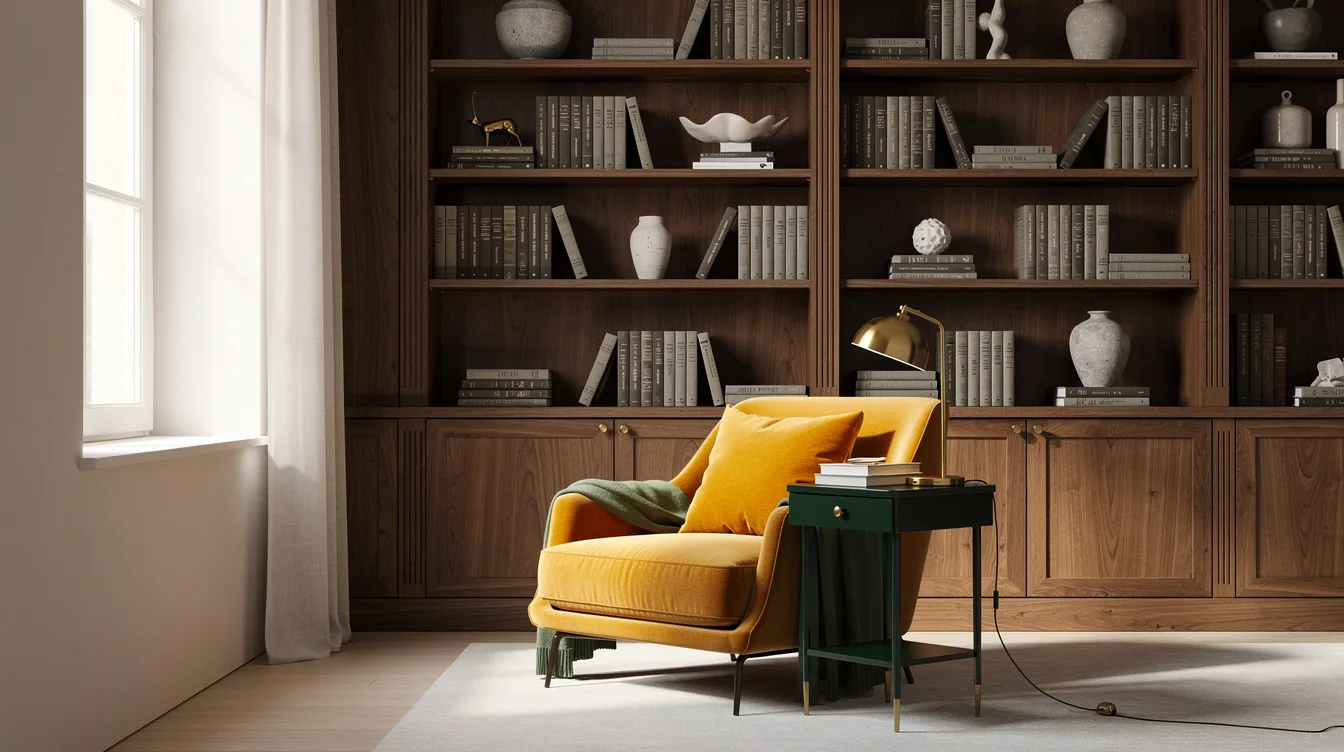
I used to treat the shelves as the whole assignment, then realized the route to the bedroom could ruin the reading experience. A roughly 10-foot built-in wall can cost about $3,000 to $8,500 before seating, lighting, electrical work, or a new partition.
The better starting point is a small reading room or widened vestibule with one continuous wall of books. The distinction matters: shelves create the library mood, but a closable room creates the quiet.
Here is how I would plan the layout, budget, seating, and finish so the space feels like a destination instead of a decorated passage.
Protect the Route Before Adding Shelves
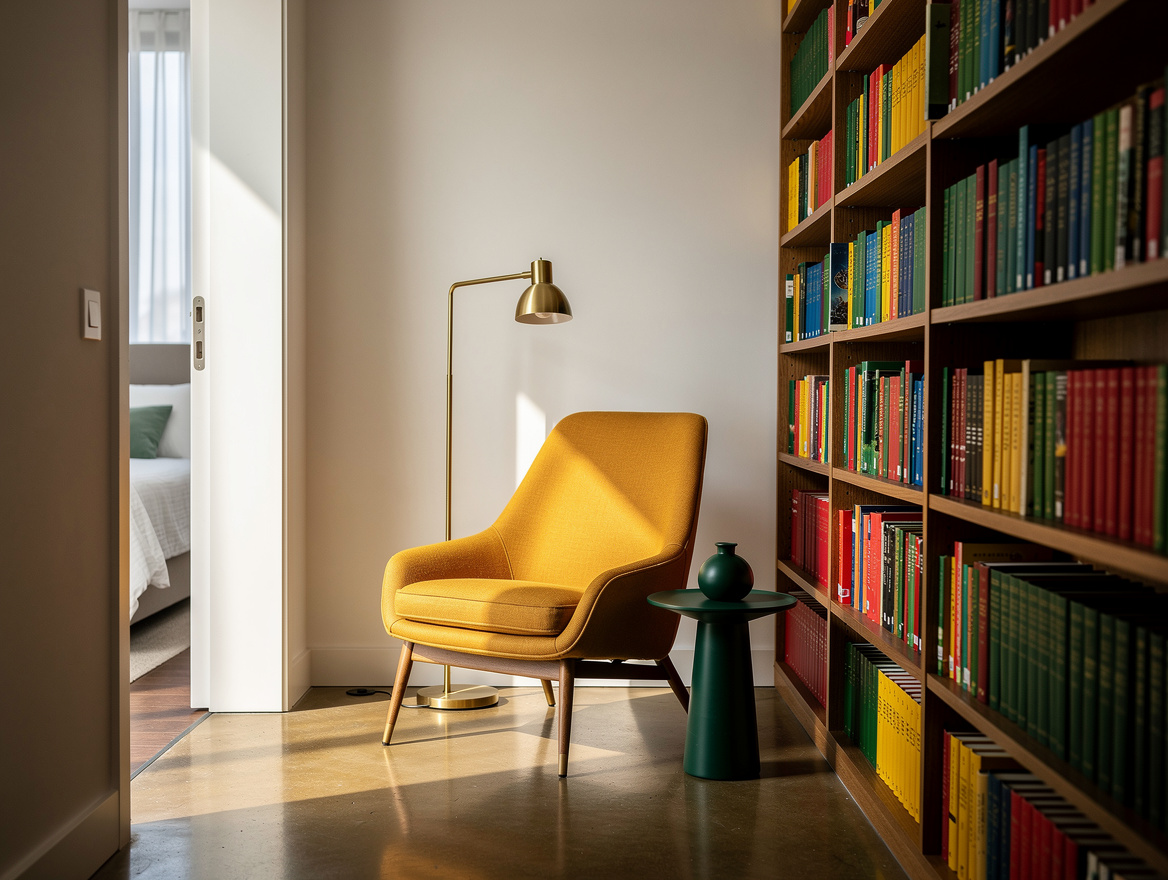
When I plan a bedroom-adjacent library, I begin with the walking path, not the book count. A small reading room or widened vestibule needs one continuous book wall and a clear route of roughly 36 to 42 inches.
For a proposed vestibule measuring about 8 by 9 feet, place the chair at the far end instead of opposite the shelves if that position narrows the passage. The room should feel like a place to pause, not a hallway decorated with books.
A separate sitting room beside the bedroom gives the strongest sense of arrival, especially when seating sits away from the doorway. That layout usually needs about 10 by 12 feet, with one wall reserved for roughly 10 to 12 feet of shelving.
Close the Door to Control Sound
Quiet is the real design brief, so I would choose a closable room before spending on elaborate cabinetry. A solid-core door is a better starting point for limiting noise transfer than an open, book-lined passage.
JELD-WEN offers solid-core molded and flush doors intended for improved sound control. That choice gives the reading room a defined boundary while keeping the adjacent bedroom from feeling exposed to every footstep and conversation.
An open vestibule can still work when the home is naturally calm, but it cannot provide the same acoustic separation. I would use it for convenience and visual continuity, not as the quietest option.
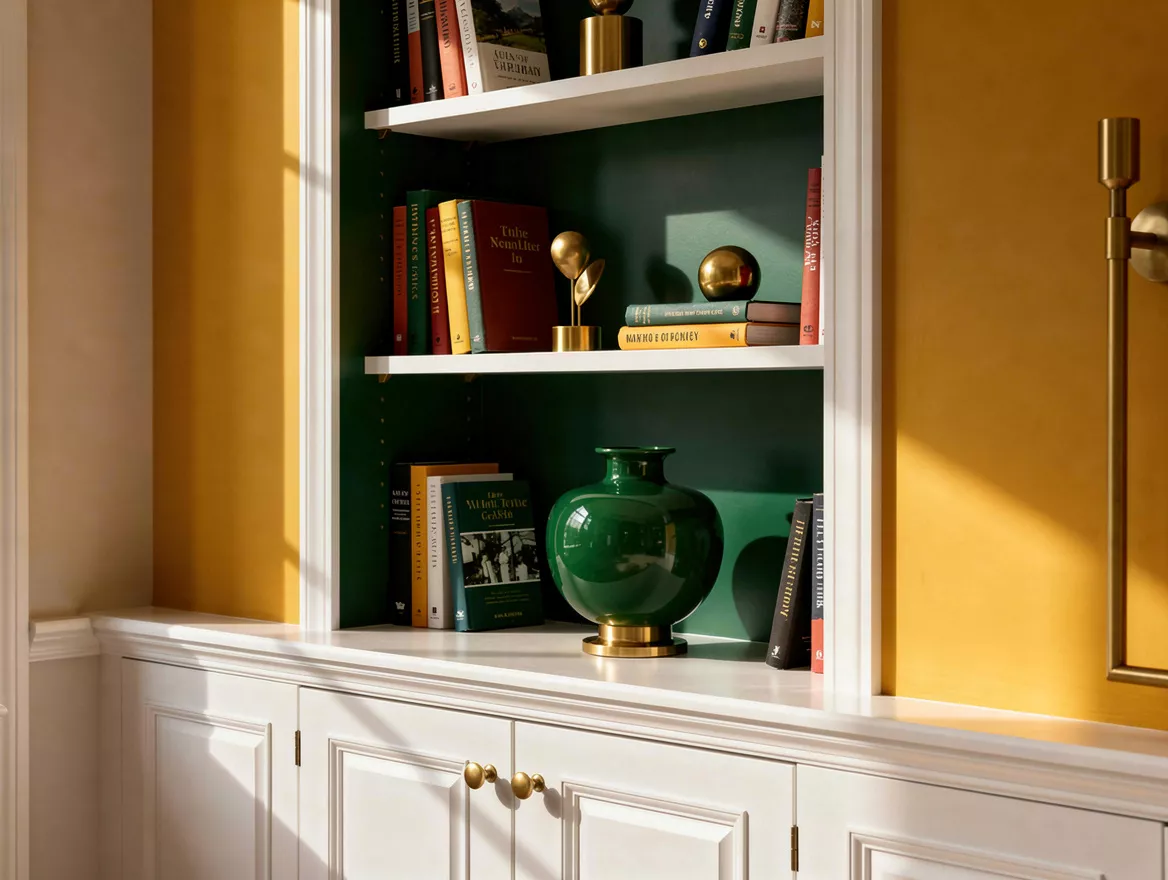
Build a Shallow Wall With BILLY
For a modest budget, IKEA BILLY is the practical starting point because its shallow depth leaves more room for circulation. The white unit is listed at $79, measuring 31 1/2 by 11 by 79 1/2 inches, with IKEA listing a 66-pound maximum load per shelf.
Four units create a 126-inch run for $316 before trim, installation, seating, and lighting. I would add painted filler strips and a continuous plinth so the wall reads as one composition instead of four separate boxes.
For dust protection, the IKEA BILLY/OXBERG glass-door version is listed at $179 and measures 31 1/2 by 11 3/4 by 79 1/2 inches. Four units bring the listed shelf cost to $716 before installation, a meaningful jump when the room needs several sections.
Keep the lowest shelves for larger art books or baskets, and leave the books you reach most often between eye and waist level. That small decision makes the library feel used rather than staged.
Aim the Chair Toward the Light
Seating should point toward the room’s best light source, with enough space to pull a book open without blocking the route. A compact reading chair at the end of an 8-by-9-foot vestibule usually works better than a chair placed directly across from the shelves.
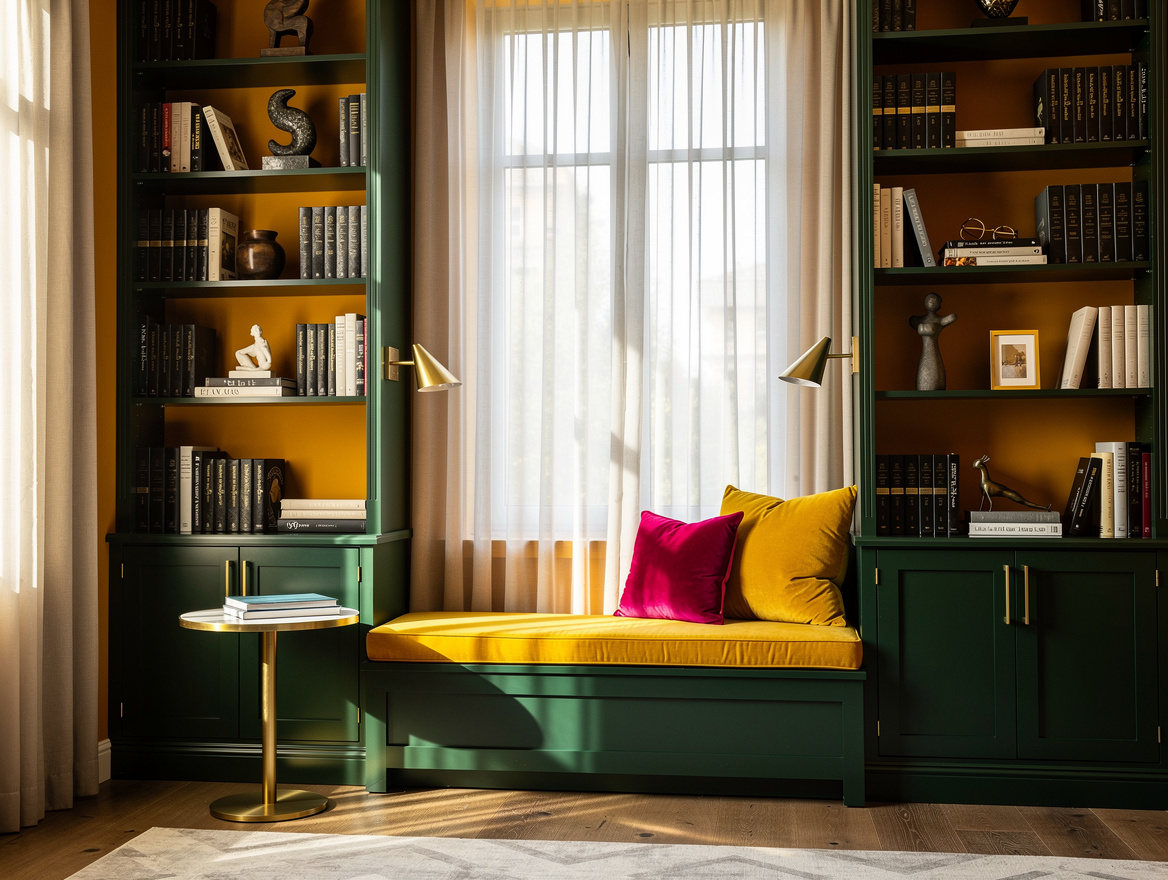
For a window-seat library, plan a proposed shelf span of about 8 to 10 feet across the window wall. A window-seat bench around 18 to 20 inches high and 20 to 24 inches deep can hold a cushion, but price the bench separately from the shelving, drawers, and upholstery.
Oak-veneered plywood brings warmth to painted built-ins without requiring every surface to be solid wood. I would use it on the bench top or selected cabinet faces, then keep the surrounding shelves quiet so the books remain the visual focus.
Choose Built-Ins When the Wall Matters
When the library is a destination room, custom cabinetry can make the wall feel properly fitted. Painted MDF cabinetry offers a clean finish, while plywood construction with wood veneer gives the room more visible grain and warmth.
For a 10-foot built-in wall, a useful U.S. Project allowance is roughly $3,000 to $8,500 at published installed rates, before seating, lighting, electrical work, or a new partition. A broader 10- to 12-foot wall can calculate to roughly $3,000 to $10,200 at about $300 to $850 per linear foot installed.
An L-shaped retreat off the bedroom could use about 8 feet on the main wall and a 5-foot return. That proposed 13-linear-foot arrangement calculates to roughly $3,900 to $11,050, with corner details and closed lower cabinets potentially increasing the quote.
I prefer closed storage below waist height when the room also holds blankets, chargers, or reading lamps. Open shelves all the way to the floor can look restless and make cleaning harder.
Finish the Wall for a Fitted Look
The finishing details decide whether retail shelving looks intentional. A continuous plinth, painted filler strips, and carefully aligned top trim can connect separate units into a calmer wall.
When the ceiling is close to 8 feet, the narrow IKEA BILLY height extension measures 15 3/4 by 11 by 93 1/4 inches in the listed configuration, though its current price should be checked before planning. It can help combine widths or carry the shelving closer to the ceiling.
Lighting and electrical work belong in the plan from the beginning, especially if the room has no convenient outlet near the chair. A soft black reading lamp beside the seat gives focused light, while a small ceiling fixture handles entry and shelving visibility.
Keep the shelf finish restrained, then let the books supply the color. The best bedroom-adjacent libraries feel quiet because the architecture is orderly, not because every object matches.
Start with the quiet envelope, then mark the walking route, place the chair, and price the shelves last. That order keeps the room comfortable before the book wall begins competing for every available inch.
Mia Carter writes about small-space living and budget home makeovers. She has restyled three rentals and tests most ideas in her own 45 sqm flat.