
When I tested this approach around a roughly 7-foot 6-inch by 9-foot 6-inch colorful rug listed near $278, the wall color mattered less than its undertone. The winning move was borrowing a muted shade from the rug and allowing the rug to hold most of the visual noise.
That principle works for warm off-white with rust and indigo, sage with faded red, or plaster pink with blue. The goal isn’t exact matching; it’s controlled contrast that makes the bedroom feel collected over time.
Borrow a Quiet Color From the Rug
I start with the rug, then look for a quieter color inside it. A faded rust, softened blue, or dusty sage usually gives the walls enough connection without forcing an exact match.
Shared undertones matter more than identical paint chips. Let the vintage rug carry the strongest pattern, while the walls provide a calm field around it.
Size the Rug Before Choosing Paint
Measure the bed and walking space before committing to color. A roughly 8-by-10-foot rug is a typical large bedroom choice, while a smaller piece can sit under the lower two-thirds of the bed.
The Loloi Loren LQ-15 Terracotta/Sky is listed at roughly 7 feet 6 inches by 9 feet 6 inches and around $278 at Home Depot, with other listings near $353.40. That scale gives a bedroom plenty of pattern, so I would keep the surrounding textiles restrained.
Let Warm Off-White Carry the Pattern
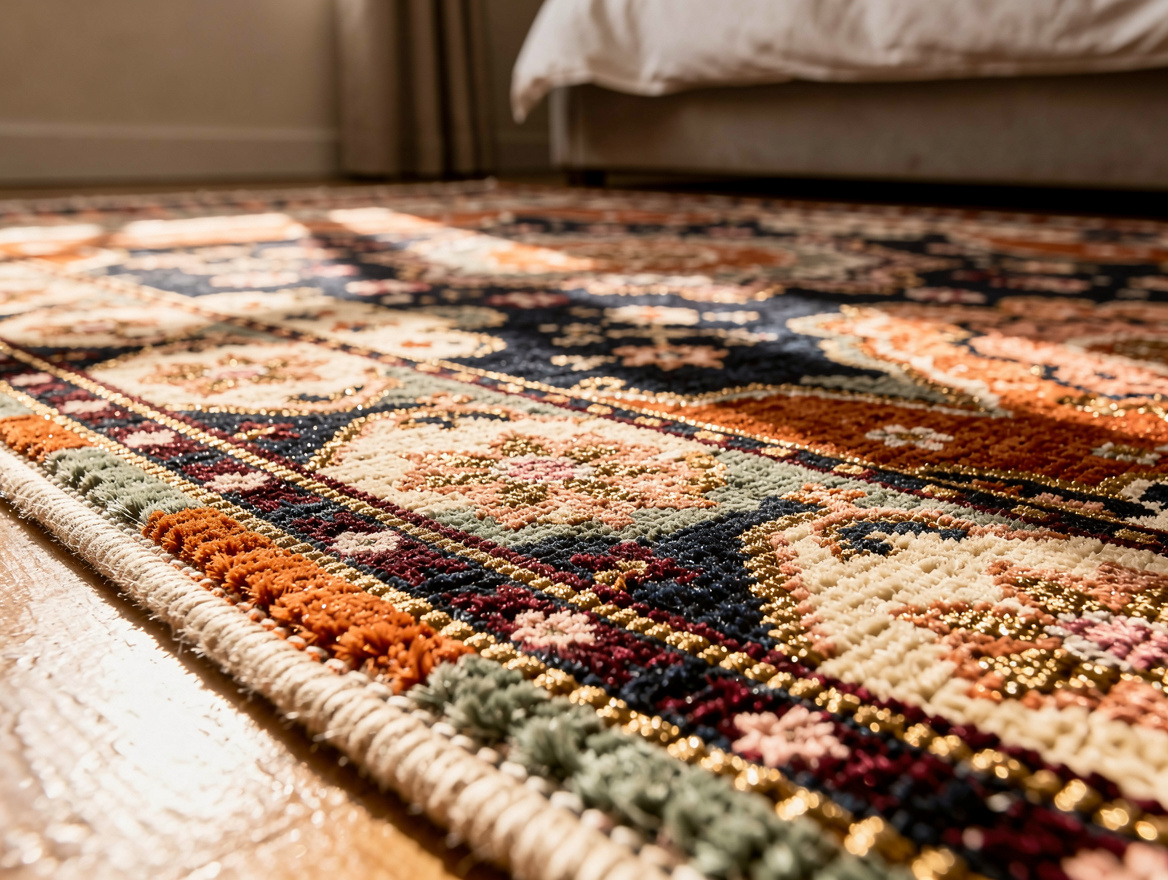
Warm off-white walls are my lowest-risk starting point for a rug with terracotta, denim blue, sky blue, and sage. The pale background gives each accent room to breathe and keeps the bedroom from feeling overdesigned.
Finish with a walnut bed, ivory bedding, one denim-blue throw, and plain cream curtains. The opinion here is firm: when the rug already has several colors, adding another patterned surface usually makes the room feel restless.
Temper Faded Red With Soft Sage
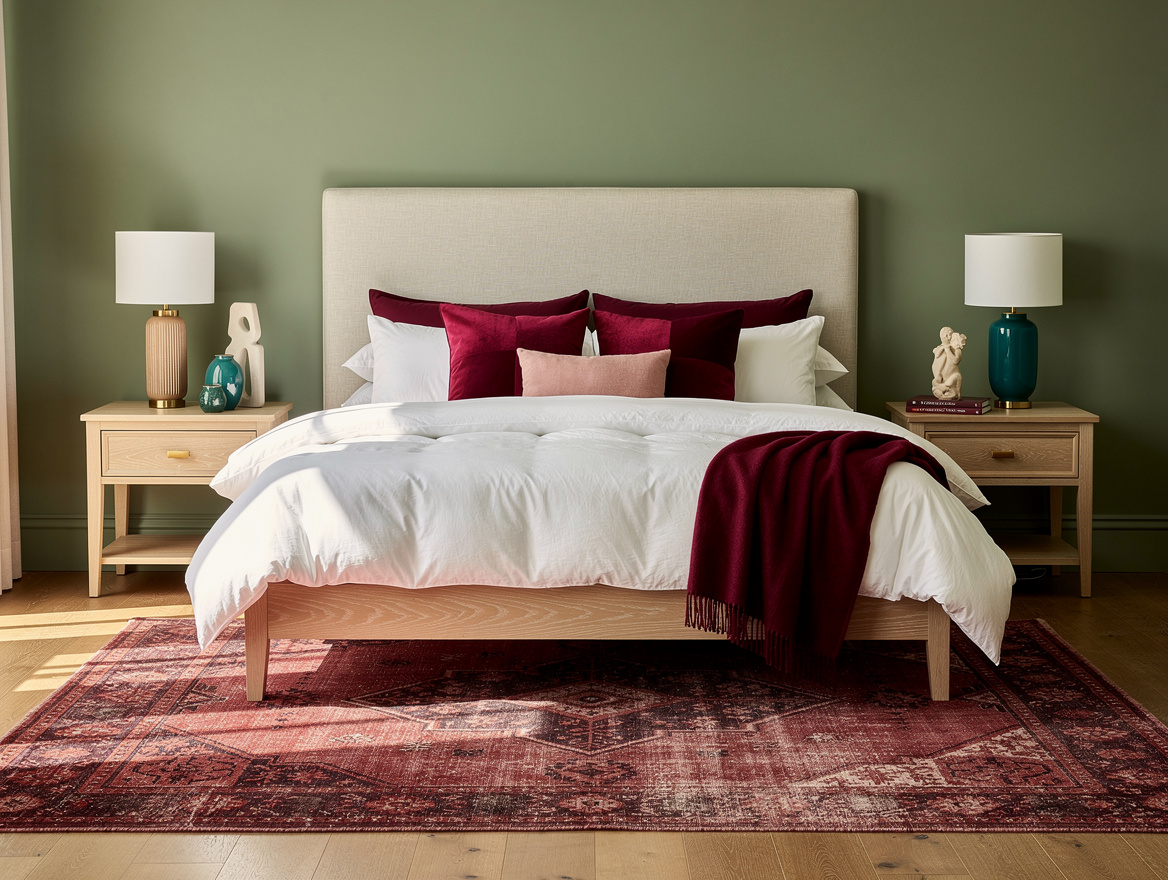
Soft sage walls give a faded red or dusty rose rug enough contrast to feel intentional. Choose a muted version of the green, such as a gentle eucalyptus tone, instead of a bright botanical shade.
Pair the scheme with pale oak furniture, an oatmeal headboard, and white bedding, then repeat the rug’s red in one cushion. One small color echo is useful; repeating red across every accessory turns a nuanced room into a theme.
Warm Plaster Pink With Blue
Plaster pink walls work especially well with faded indigo, navy, cream, and small rust details. The combination has warmth and depth, but it still feels relaxed when the blue appears in the rug rather than across every surface.
I would add blue-striped bedding, dark wood, and a cream upholstered headboard. Keep the stripes narrow and the rug’s border visible, because the room needs some quiet space between its larger patterns.
Balance Cool Walls With Warm Rugs
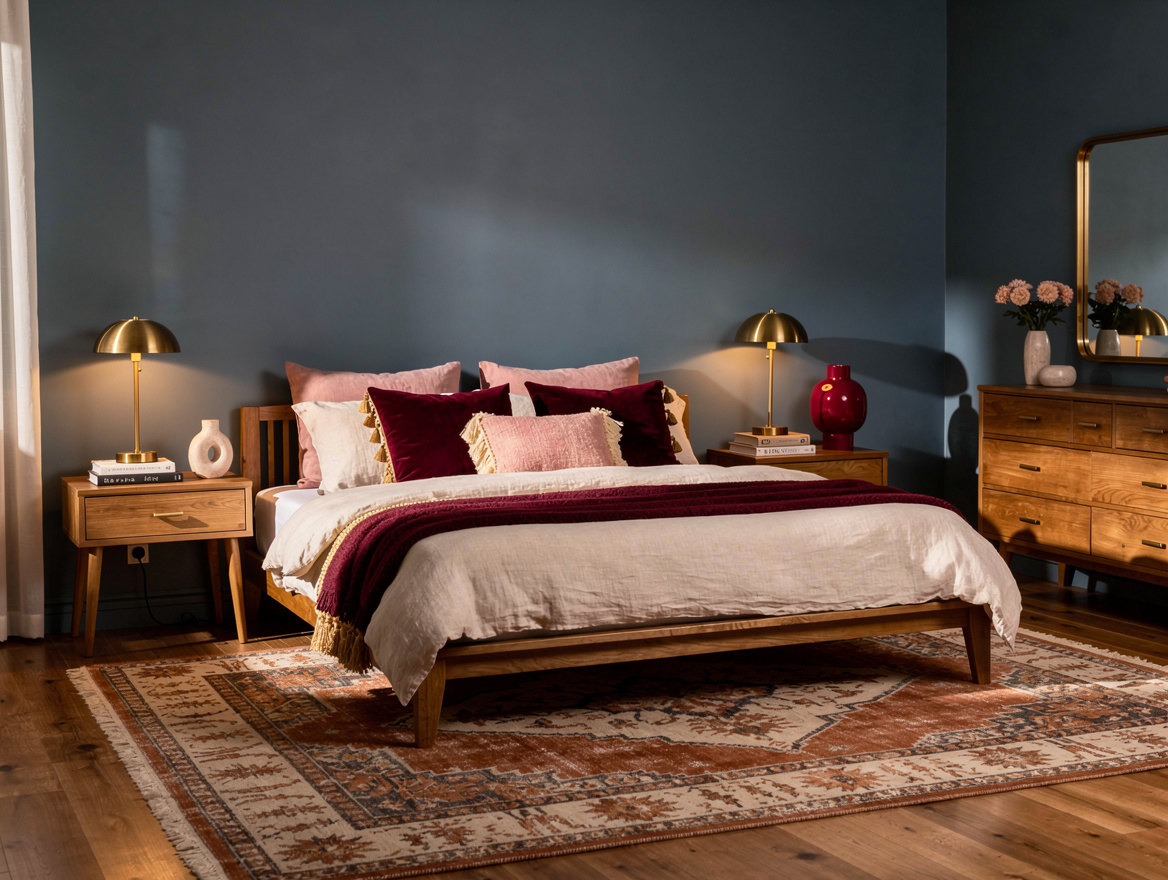
Dusty blue walls create a cool backdrop for rust, orange, warm beige, and faded cream. This is where natural materials help most, since the rug supplies visual heat while the wall color keeps the bedroom airy.
Use natural linen bedding, oak furniture, and restrained brass accents. A deep navy wall can follow the same logic when the rug has a substantial cream ground, though the larger furniture should stay visually simple.
Start by placing the rug in the room and circling its quietest useful color, then test that family on the wall in morning and evening light. If the paint still competes with the pattern, soften the wall before buying another accessory.
Mia Carter writes about small-space living and budget home makeovers. She has restyled three rentals and tests most ideas in her own 45 sqm flat.