Small Mediterranean bathroom layouts work best when you keep the footprint simple and spend on texture, light, and one old-world focal point. I once crowded a narrow bath with too many rustic pieces, and it felt like a storage closet. You don’t need more objects. You need better ones, warmer surfaces, and room for your eye to rest.
- Frame the sink with a small Spanish style bathroom arch
- Layer the Three-Height Light Stack in a small Mediterranean bathroom
- Swap a bulky cabinet for a floating organic small bathroom vanity
- Paint the walls in a warm Mediterranean color wash
- Could a small Italian bathroom design use a freestanding vanity?
- Float a checkerboard floor with quiet walls
- Build the Two-Wood Rule into a small Spanish style bathroom
- Hang a linen curtain beside the tub
- Mix zellige with a plaster-toned shower wall
- Anchor the mirror with the Old-World Ratio
- Choose real numbers before you choose expensive tile
- Frame the window with a relaxed small Italian bathroom design
- Layer the Three-Texture Sink Wall
- Swap bright chrome for aged metal
- Make the shower niche work harder than your shelves
- Balance dark paint over pale tile
1Frame the sink with a small Spanish style bathroom arch
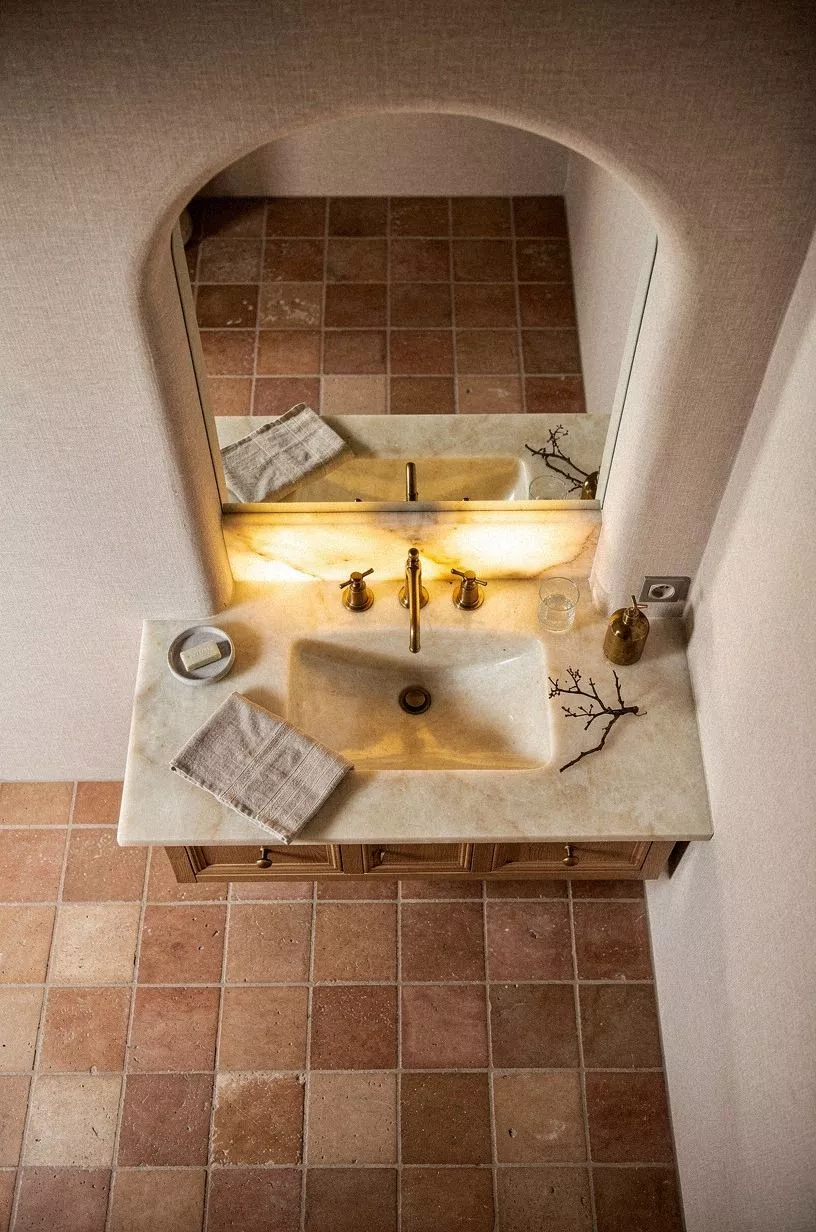
A shallow arch around the vanity gives your small Spanish style bathroom a strong focal point without taking much floor space. Use clay-toned plaster or painted drywall, then set a compact vanity with a backlit translucent onyx top inside the opening. The curved edge softens hard tile, and you’ll notice the room feels more intimate as soon as you walk in.
Keep the vanity between 32 and 36 inches high so your daily routine still feels comfortable. I’d skip a deep cabinet here because it steals elbow room and makes the arch look pinched.
A 24-inch floating unit with aged brass hardware gives you storage beneath without closing the floor visually. If you’re drawn to curved details elsewhere, borrow ideas from these Spanish bathroom details with old-world soul and compare the scale with these vintage vanity corner ideas.
2Layer the Three-Height Light Stack in a small Mediterranean bathroom
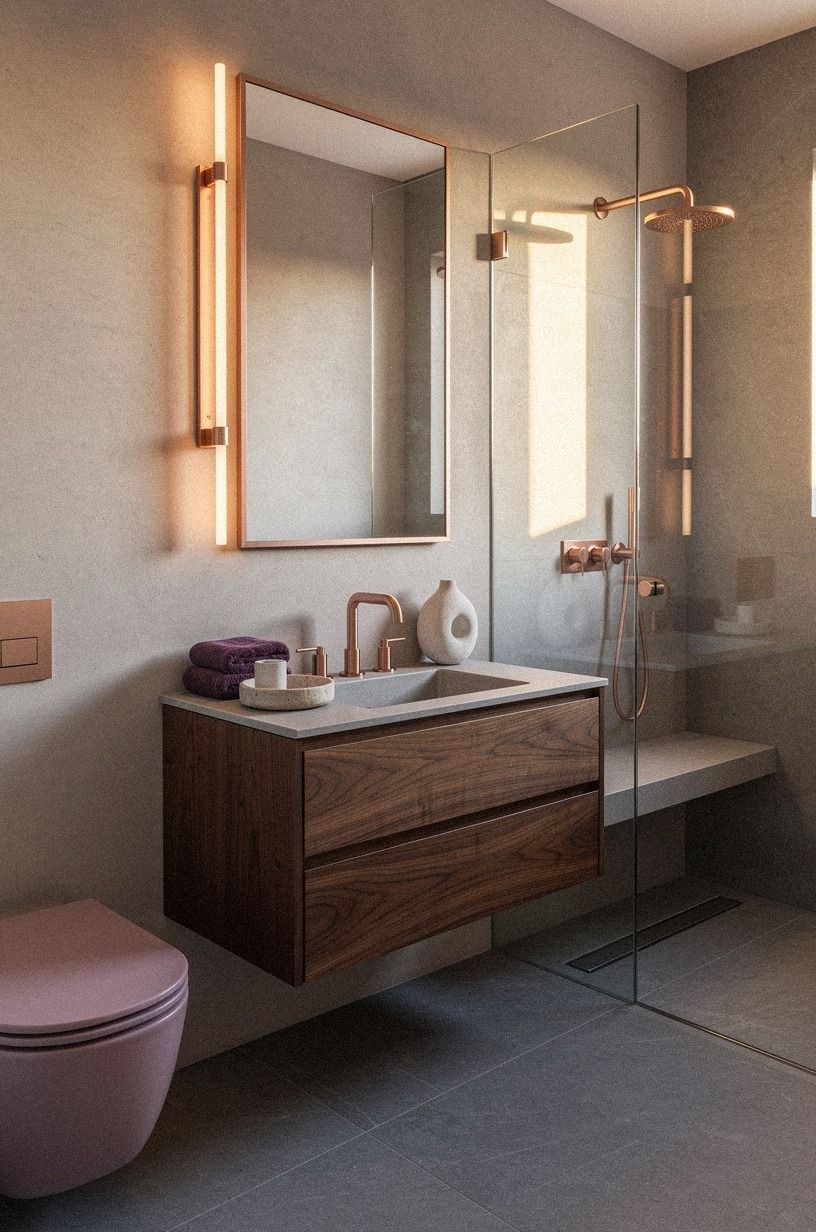
A small Mediterranean bathroom needs light at three levels: ceiling, mirror, and low ambient glow.
3Swap a bulky cabinet for a floating organic small bathroom vanity
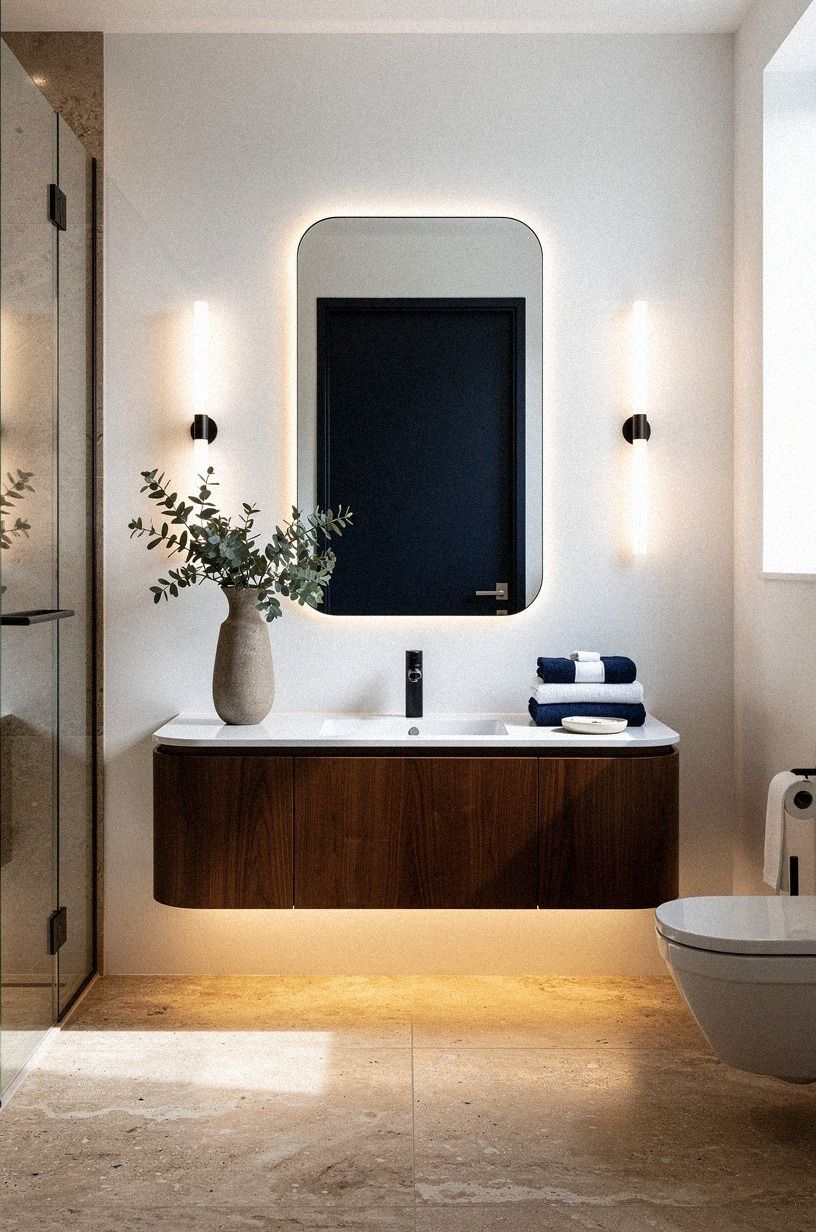
A floating vanity creates visible floor beneath the cabinet, which helps your organic small bathroom feel airier. Choose a 24- to 30-inch cabinet in walnut, and keep the wall behind it quiet with smooth plaster or warm travertine. You’ll gain a cleaner sightline from the door, and your cleaning routine gets easier too.
Don’t choose an oversized vessel sink just because it looks rustic in a showroom. It can eat into usable counter space and leave your faucet awkwardly high.
I’d pair the vanity with a slim undermount basin, a warm travertine backsplash, and one shallow ledge for soap. If you’re working with a rental, a freestanding cabinet can give you the same grounded look without drilling into a tiled wall.
Browse these vintage vanity corners for proportion cues.
4Paint the walls in a warm Mediterranean color wash
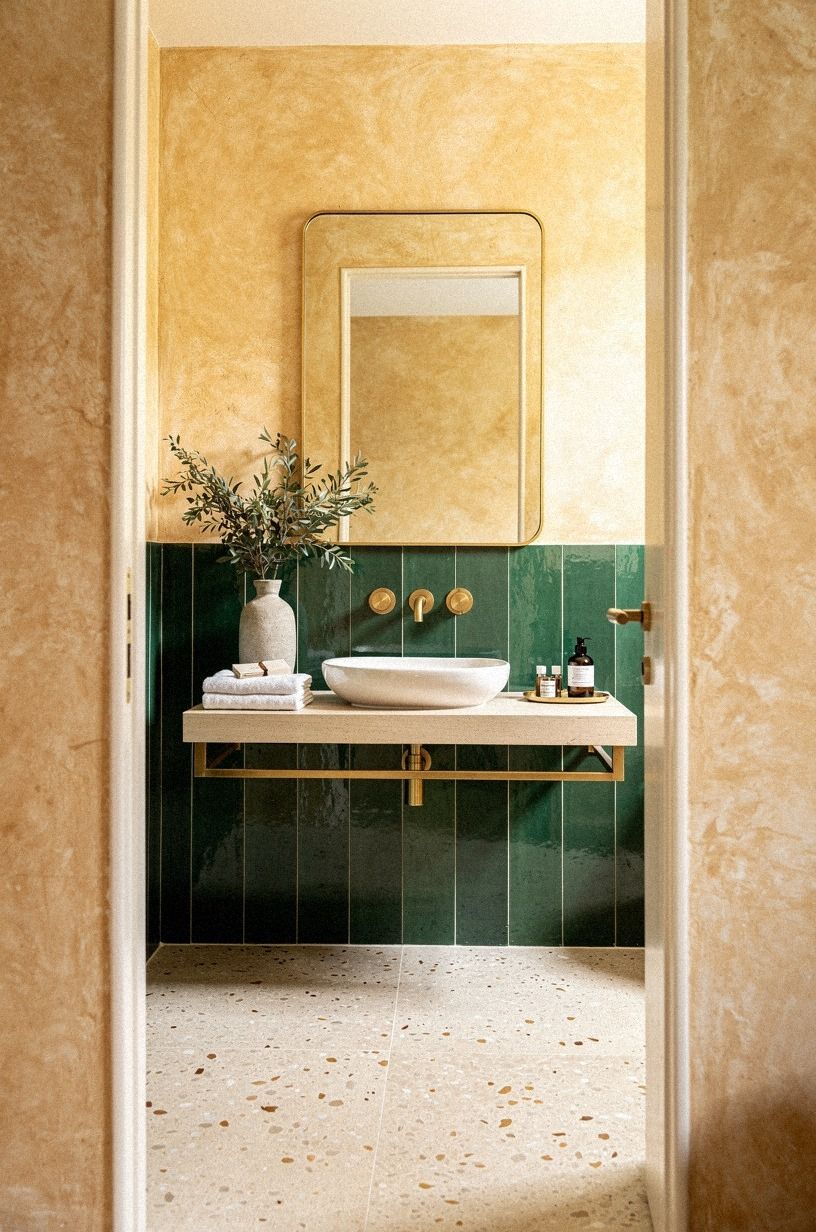
Paint is the fastest way to make a small Mediterranean bathroom feel earthy rather than clinical.
5Could a small Italian bathroom design use a freestanding vanity?
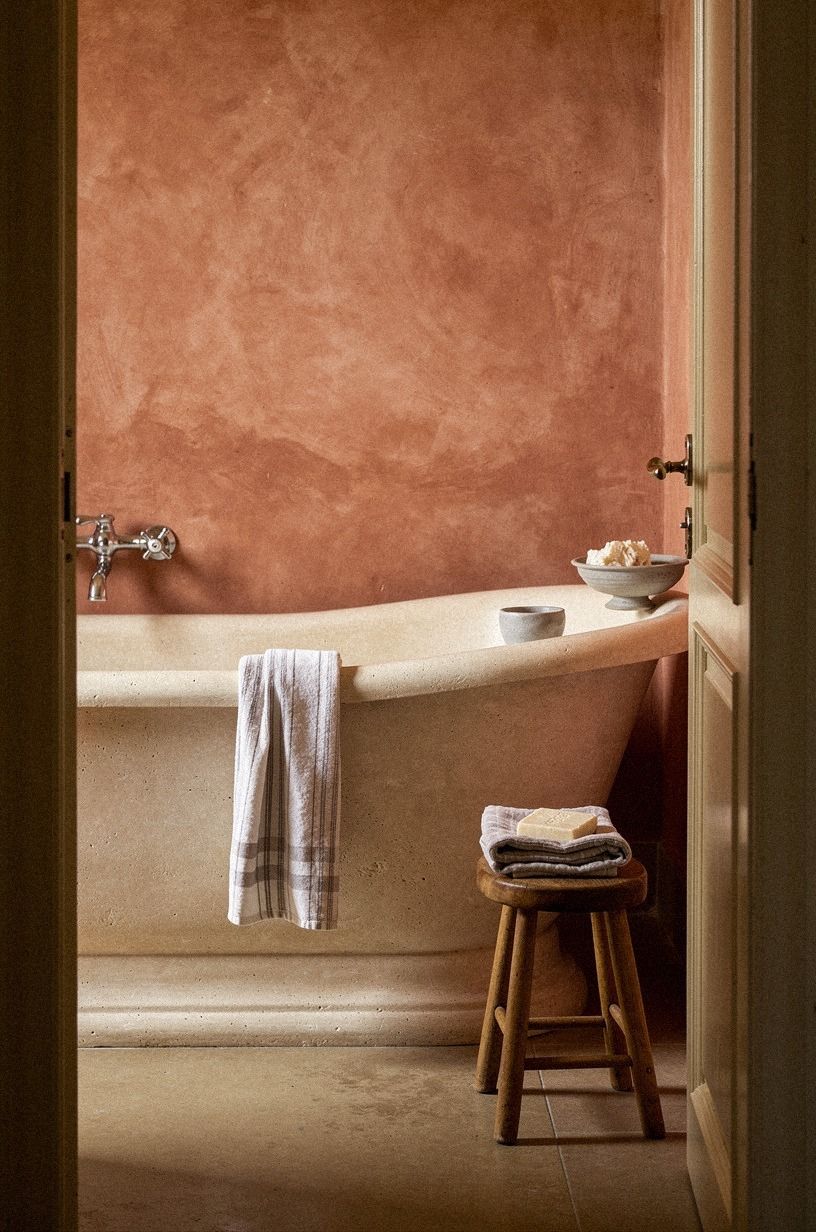
Yes, a freestanding vanity can make a small Italian bathroom design feel more collected and less built-in. Choose a narrow console with an oversized-chip terrazzo top, then let the plumbing show beneath. The open structure gives you a place for folded rust-colored Turkish towels without filling every inch with cabinetry.
Your room still needs visual discipline. Keep the countertop nearly empty, use one ceramic tumbler, and hide extra bottles in a nearby drawer or basket.
I’d skip a distressed farmhouse cabinet because its chunky legs can make the space feel heavy. A slim natural oak console has better rhythm with patterned tile and aged metal.
Why fill every corner when a little breathing room makes the materials feel richer? You can compare this approach with old-world vintage speakeasy decor.
6Float a checkerboard floor with quiet walls
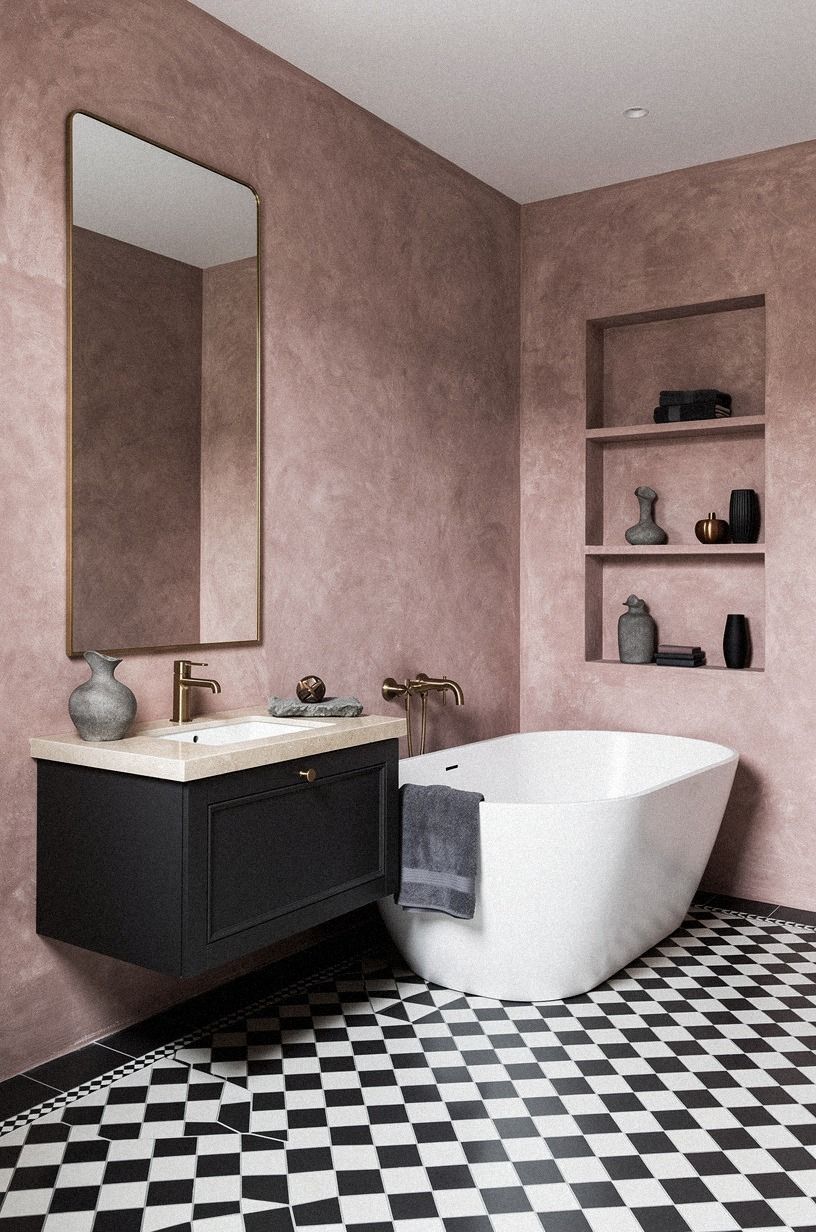
Checkerboard tile can look dramatic in a tiny room, but it needs calm walls above it. Use charcoal porcelain in a simple grid, then finish the walls with hand-applied Venetian plaster in dusty rose or muted clay. Your floor becomes the pattern, while the rest of the room stays serene and balanced.
Choose smaller squares if your bathroom has a tight visual field, but don’t scatter multiple patterns across the floor, shower, and backsplash. I’d skip a high-contrast black-and-white grid with glossy chrome because the combination can feel sharp rather than welcoming.
Matte surfaces soften the reflection, while warm grout makes the floor feel older. If you’re using a standard tub measuring 60 by 30 inches, keep the strongest pattern outside the bathing zone so your eye can travel.
These small speakeasy room ideas show how dark flooring can still feel intimate.
7Build the Two-Wood Rule into a small Spanish style bathroom
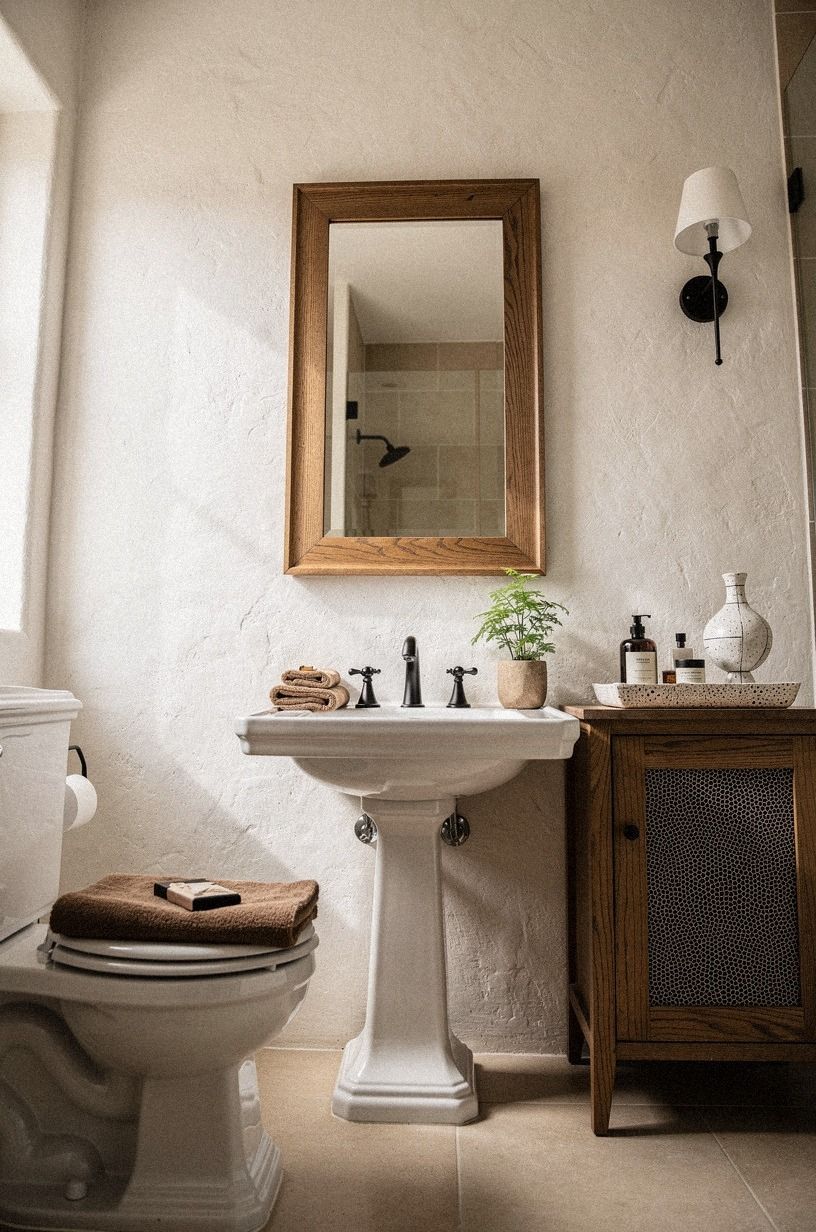
The Two-Wood Rule keeps a rustic bathroom from turning visually noisy. Choose one pale wood, such as warm white oak, and one darker wood, such as black-stained oak.
Use the pale tone for the vanity and the darker tone for a mirror frame or stool. Your materials will feel deliberate instead of randomly gathered.
Don’t add a third wood through bamboo accessories, driftwood shelves, and a woven cabinet. I made that mistake once, and the bathroom looked like three different rooms sharing one sink. Keep your metal finish consistent too, preferably black metal.
A small stool with camel shagreen upholstery beside the tub gives you texture without blocking the walkway. If you’re styling a narrow room, your best accessory may be the one you leave out.
These vintage vanity ideas can help you judge the wood balance.
8Hang a linen curtain beside the tub
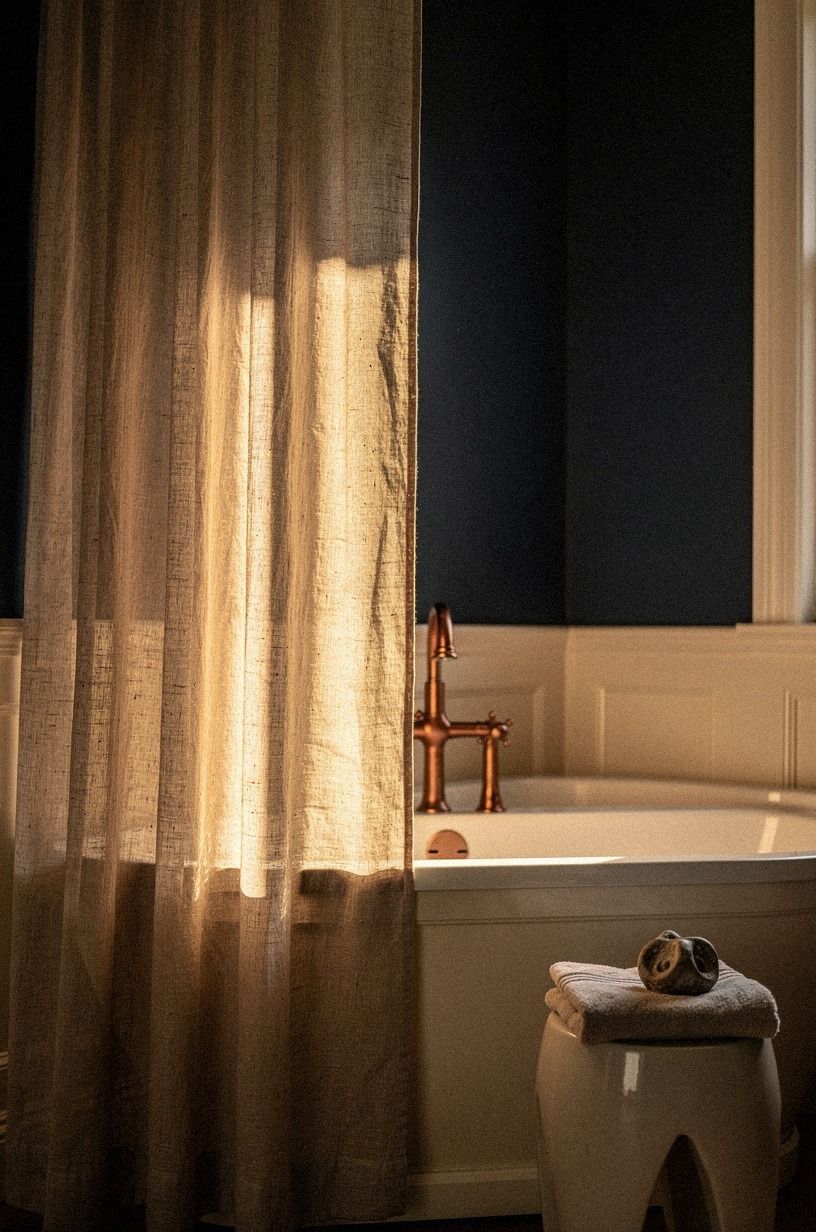
A fabric shower curtain can bring softness to a small Mediterranean bathroom faster than a glass enclosure. Choose Belgian flax linen in midnight blue or ivory, and hang it close to the ceiling so your tub wall feels taller. The fabric moves gently when you open the door, which gives the room a lived-in, comforting quality.
Your curtain should clear the floor by about an inch and stay outside the splash zone. Use a tension rod if you’re renting, or install a simple copper rod for a more finished result.
I’d skip busy printed fabric unless the tile is completely plain. A quiet midnight-blue stripe can work, but dense florals compete with the room’s old-world texture.
For a compact bathing area, the curtain is often more practical than a swinging glass door. You can borrow color ideas from these small detail room layouts.
9Mix zellige with a plaster-toned shower wall
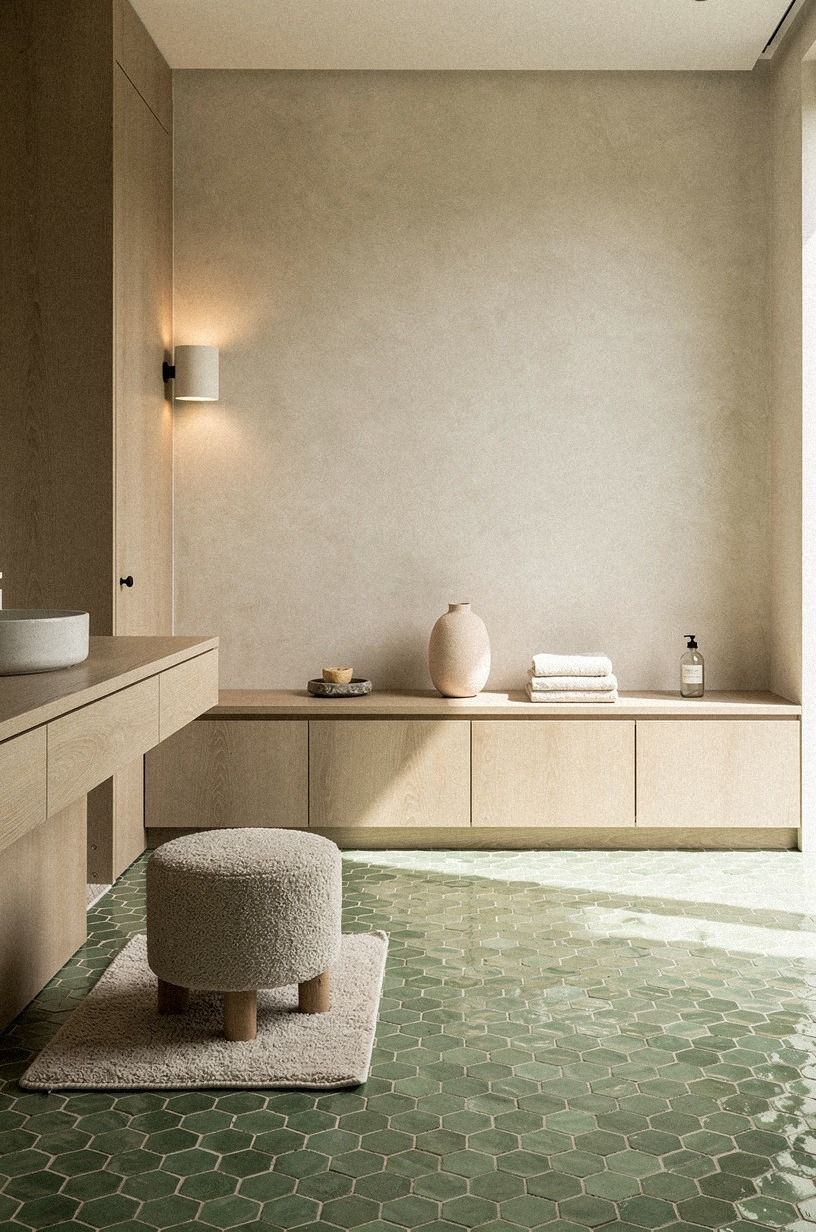
Hand-glazed tile gives a small Mediterranean bathroom its uneven, light-catching surface. Use sage-green zellige tile inside the shower, then balance it with a warm cream plaster-toned wall outside the wet area. Each tile catches light differently, so your shower won’t look like a flat green box.
Keep the zellige to one main zone because the material already has plenty of movement. You’ll want pale grout if your goal is a soft, airy room, while darker grout makes the pattern more graphic. I’d avoid pairing it with another busy mosaic on the floor.
A simple honed porcelain floor lets your eye settle. A comfortable shower needs at least 36 by 36 inches, so your layout matters more than adding another decorative surface.
Your shower can feel luxurious with one excellent tile choice. For more material direction, see these Spanish bathroom details.
10Anchor the mirror with the Old-World Ratio
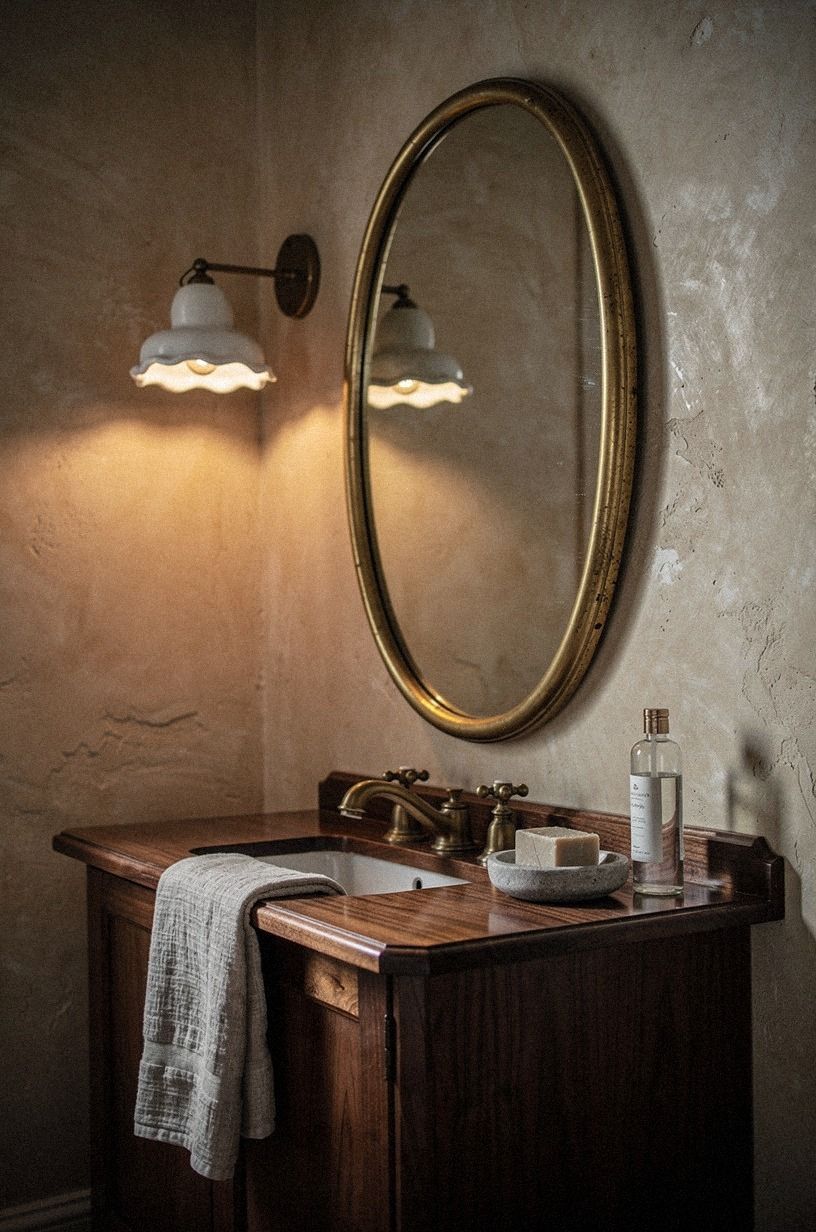
The Old-World Ratio uses one generous mirror, one strong frame, and enough wall around it to make the object feel intentional. In a narrow bathroom, choose a mirror slightly wider than the sink but not wider than the vanity itself. A rounded antique brass mirror over Nero Marquina black marble with white veins adds softness while reflecting the room’s warmer tones.
Mount it so the center sits near eye level, then place sconces beside it rather than directly above it. You’ll get better light on your face, and your mirror won’t become a dark rectangle under a ceiling fixture.
I’d skip a tiny decorative mirror because it makes a small room feel chopped into pieces. If your walls are painted terracotta, the brass frame will glow against the warmth.
Pair the mirror with 2700K bulbs and a simple fluted-glass shade. This is one of the easiest ways to make your bathroom feel refined without buying more furniture. These vintage speakeasy decor ideas offer useful guidance on reflective surfaces.
11Choose real numbers before you choose expensive tile
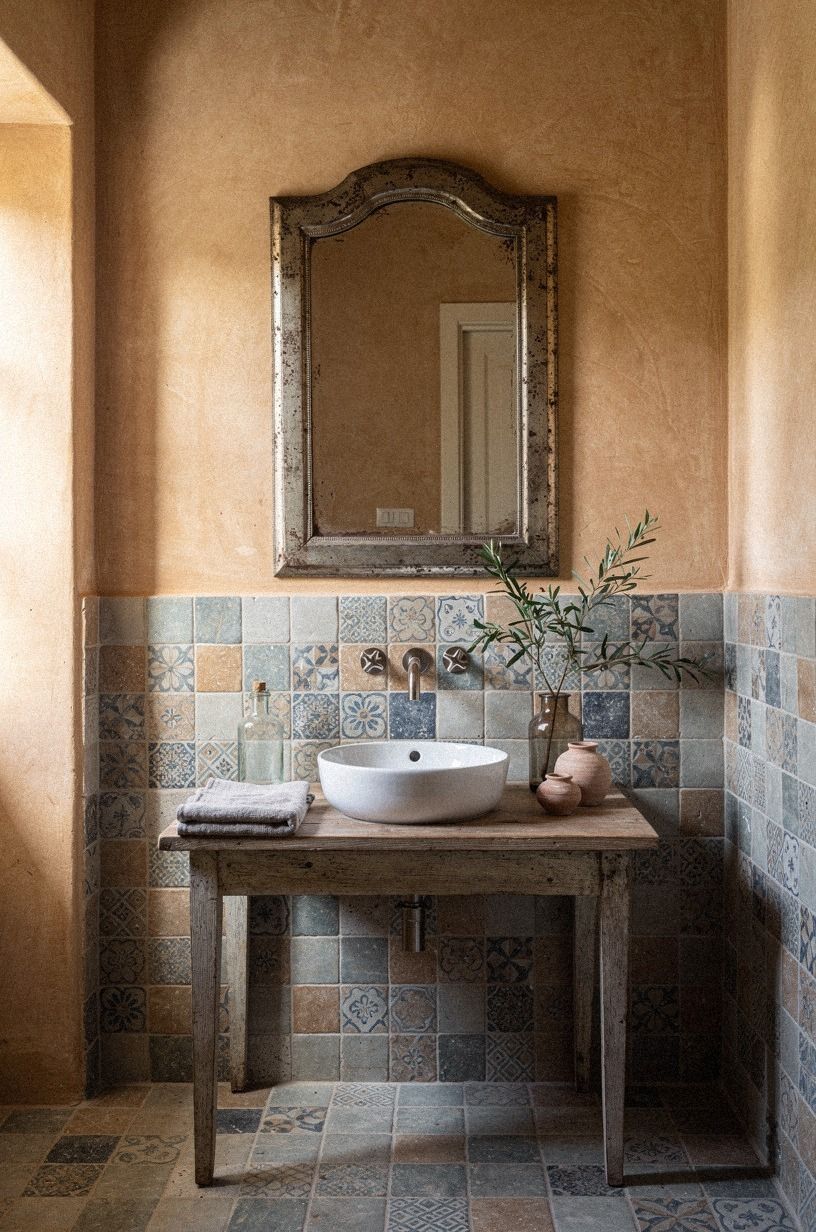
Your bathroom budget should follow the layout, not the other way around. If your plumbing stays where it is, you can spend more on the surfaces you’ll touch every day.
If you move the toilet or shower, the project can jump quickly. I’d put your first dollars into lighting, the vanity, and one durable focal tile before chasing decorative accessories.
These are typical US ranges, so you’ll want to treat them as planning markers rather than a quote. Zellige tile looks charming, but it can cost far more than basic subway tile.
An aged brass faucet also carries a wider price range than many homeowners expect. Porcelain tile can give you a similar grounded look when the budget is tight.
You don’t need the high tier to create old-world charm. For another small-space comparison, look through these small whiskey room ideas.
12Frame the window with a relaxed small Italian bathroom design
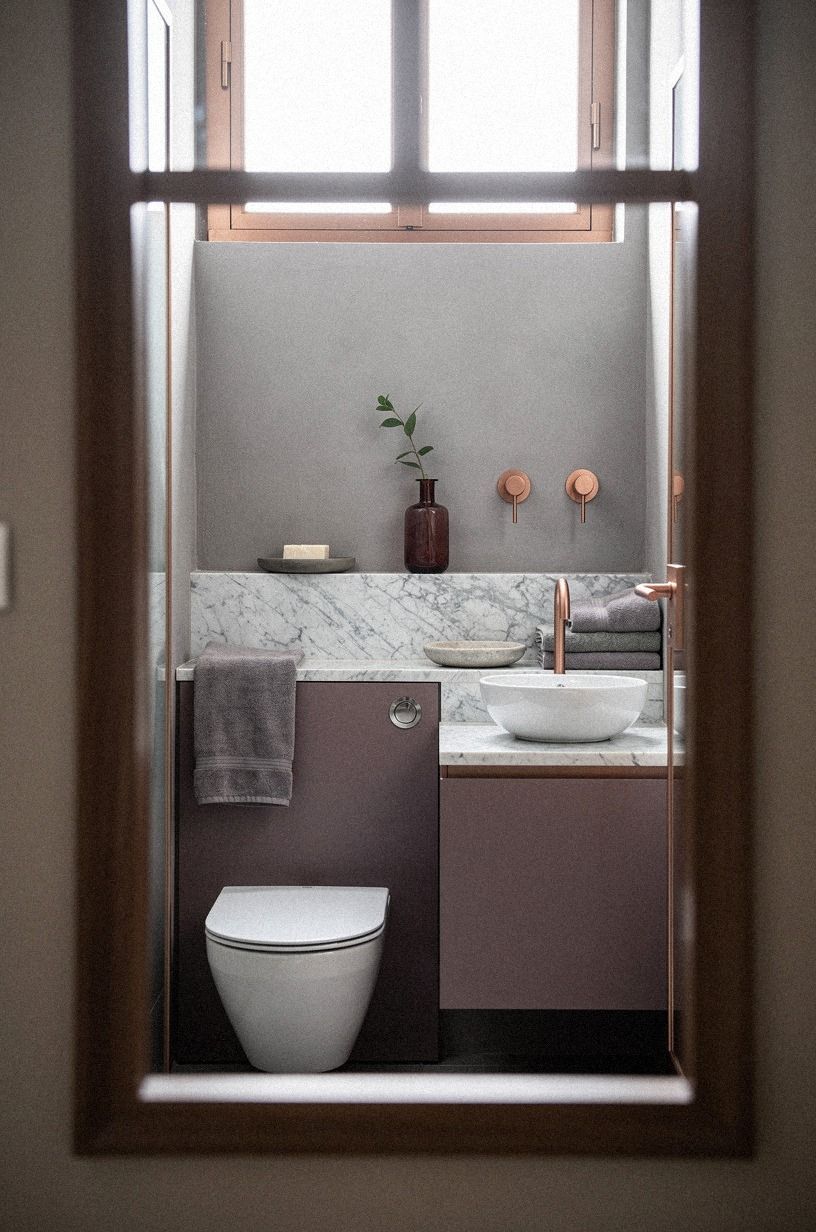
A small Italian bathroom design benefits from soft framing around the window. Hang a washable linen café curtain or use a simple woven shade in plum or grey linen, resting against Carrara marble with subtle grey veining. You’ll filter harsh daylight without losing the gentle brightness that makes pale tile feel warm.
Keep the fabric inside the window frame if the room is very narrow. Outside-mounted curtains can look elegant, but they may crowd the toilet or shower line.
I’d skip heavy velvet here because it holds moisture and makes the room feel smaller. A small ceramic vase with an olive branch can bring an organic note, but you don’t need a collection of accessories.
Your window should still open easily, and your curtain should dry quickly after a steamy shower. These small detail room layouts show how little changes can shape a tight room.
13Layer the Three-Texture Sink Wall
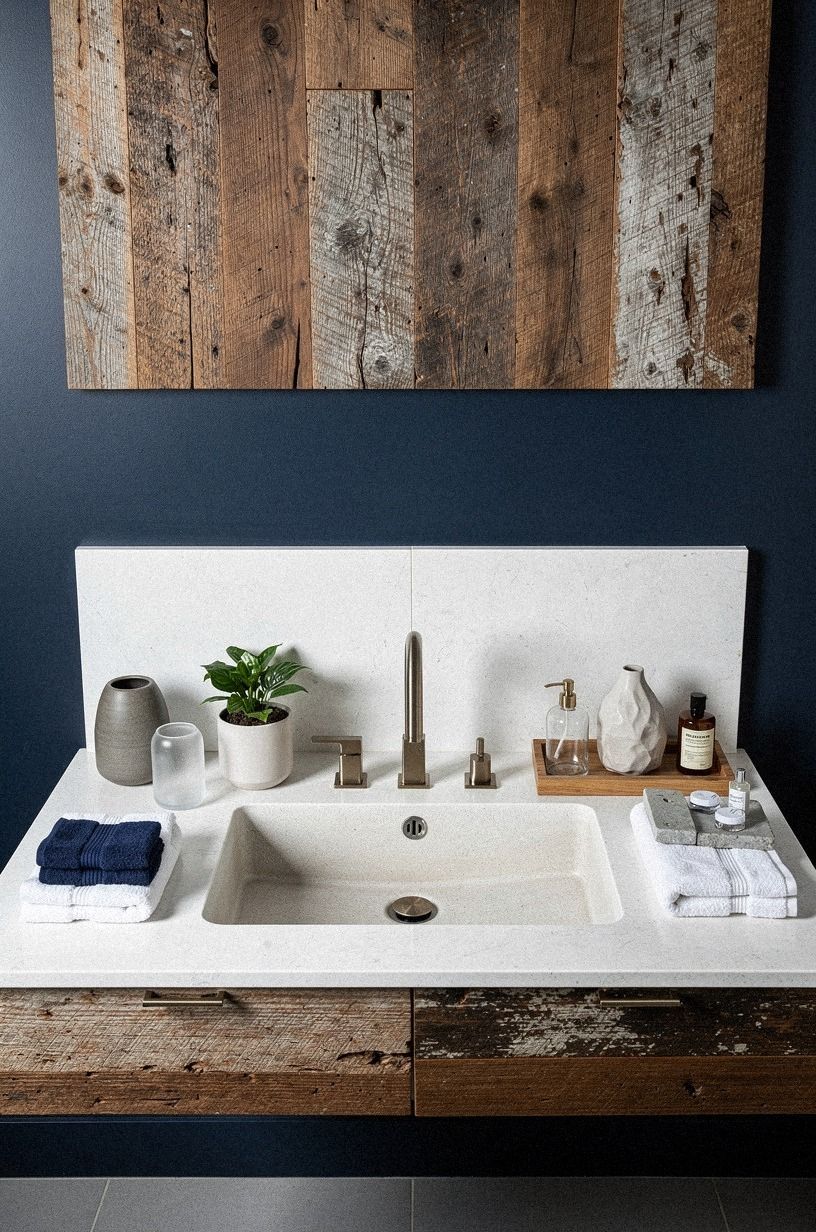
The Three-Texture Sink Wall combines one smooth surface, one rough surface, and one woven detail. Try smooth white plaster, honed stone, and a small reclaimed weathered teak ledge beneath a walnut vanity. Your eye gets contrast without a loud pattern, and the wall feels tactile when morning light crosses it.
Keep the palette close: navy, white, and walnut. You’ll want the roughest material behind the mirror or on the backsplash, where it can catch light.
I’d skip faux-brick wallpaper because the repeated print often looks flat beside real ceramic and stone. A handmade terracotta soap dish gives you the right irregular edge for very little money.
If you’re choosing between more tile and better lighting, pick the lighting. It will show every texture you paid for.
These vintage vanity corners are useful for studying layered materials.
14Swap bright chrome for aged metal
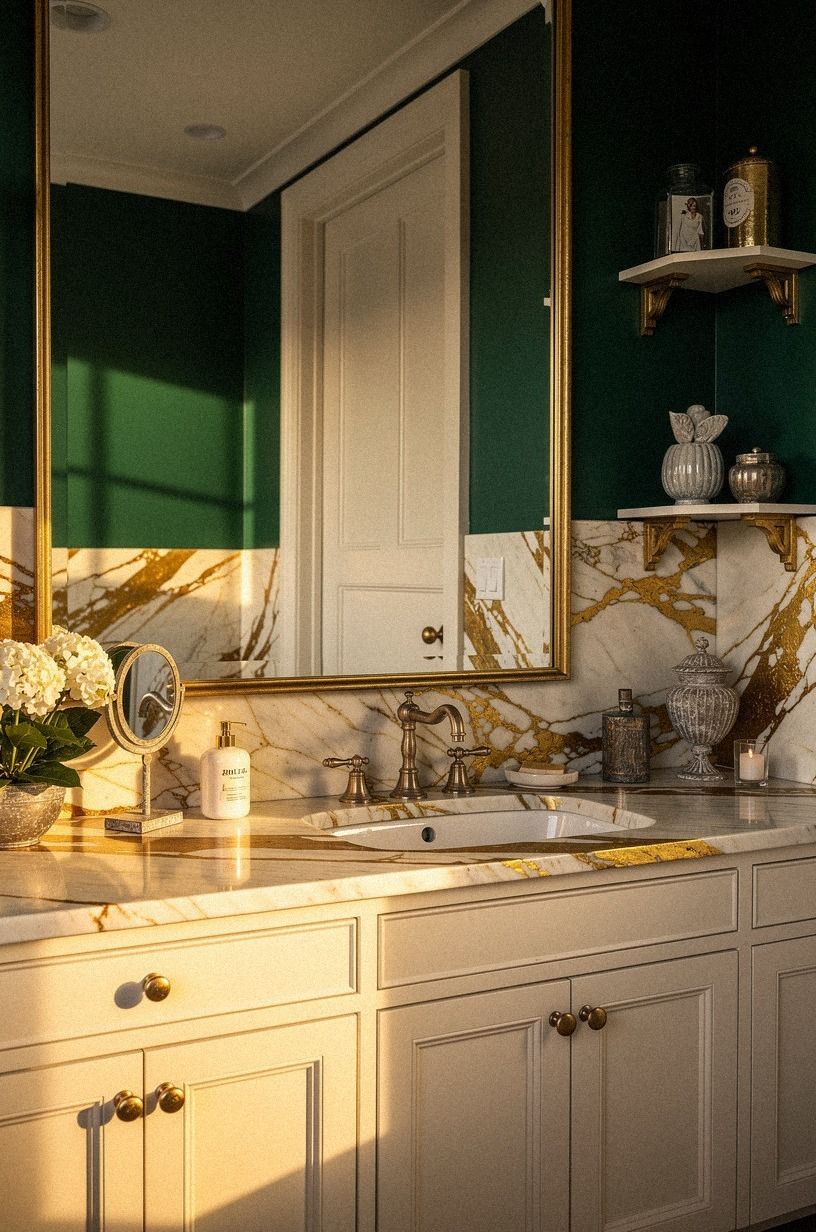
Bright chrome can make an old-world bathroom feel more modern than you intended. Swap it for unlacquered brass developing a soft patina, aged bronze, or dark iron. Your faucet, mirror frame, and towel hooks don’t need to match perfectly, but they should share a similar warmth.
Set the metal against Calacatta marble with gold veining for an emerald, gold, and cream palette. Unlacquered brass will change over time, which is part of its appeal.
You’ll see darker areas near the handles and a gentle glow on the places your hands touch. I’d skip polished gold if you’re after a grounded Mediterranean mood because it can feel too shiny beside plaster and terracotta. A small bronze wall hook may do more for the room than a new shelf.
And yes, the finish will show fingerprints, but that lived-in variation is the point. You can find more warm-metal references in these Spanish bathroom details.
15Make the shower niche work harder than your shelves
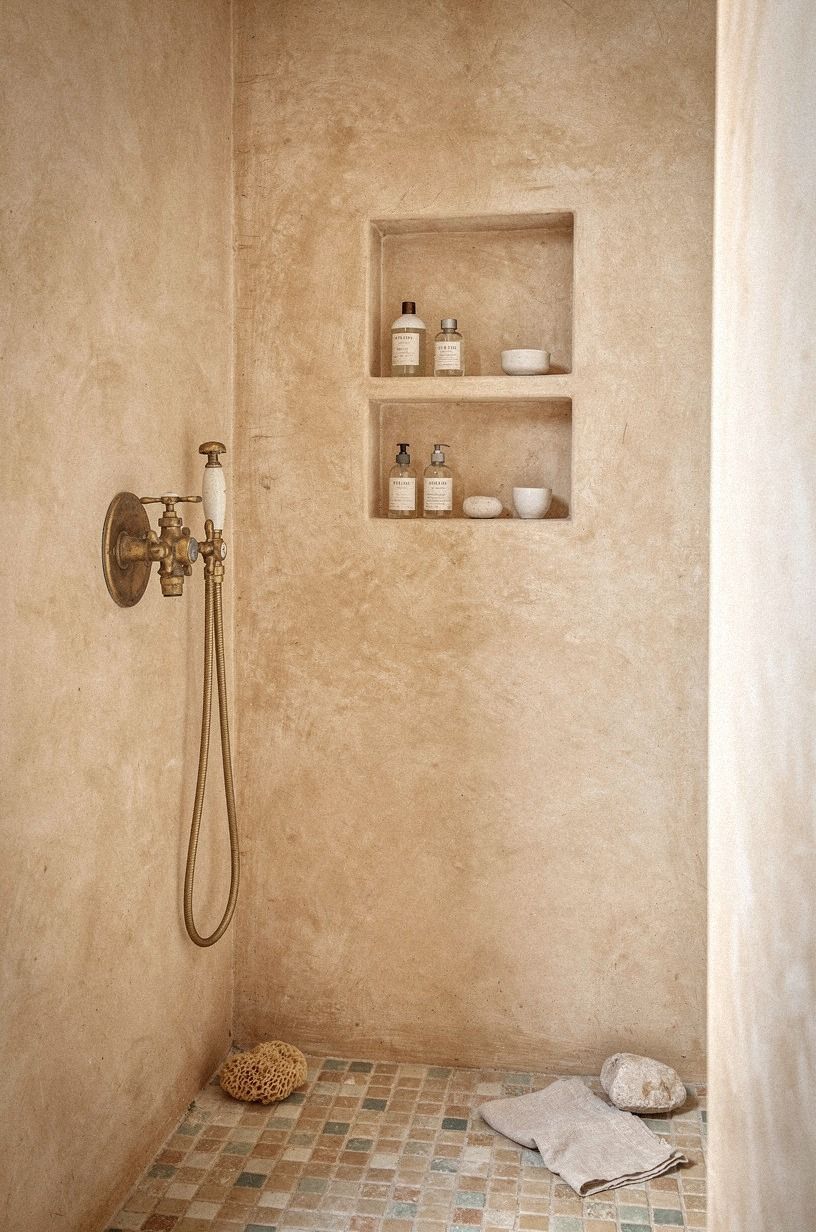
A recessed shower niche gives your small Mediterranean bathroom storage without taking walking space. Build it into the wall between studs if possible, then line it with a contrasting forest-green handmade tile and use cerused white oak for nearby storage outside the wet zone. Your shampoo bottles will look calmer when they sit inside one defined frame.
Use the niche for daily items only. You’ll want extra products stored elsewhere so the shelf doesn’t become a crowded display. I’d skip a long horizontal niche if your wall is short because it can interrupt the tile rhythm.
A compact vertical niche gives you two usable levels and keeps the shower visually tall. If you’re renovating, ask about the waterproof membrane before choosing the trim. A pretty niche that leaks isn’t charming for long.
Your storage should disappear into the architecture. These small speakeasy room ideas offer clever lessons in compact storage.
16Balance dark paint over pale tile
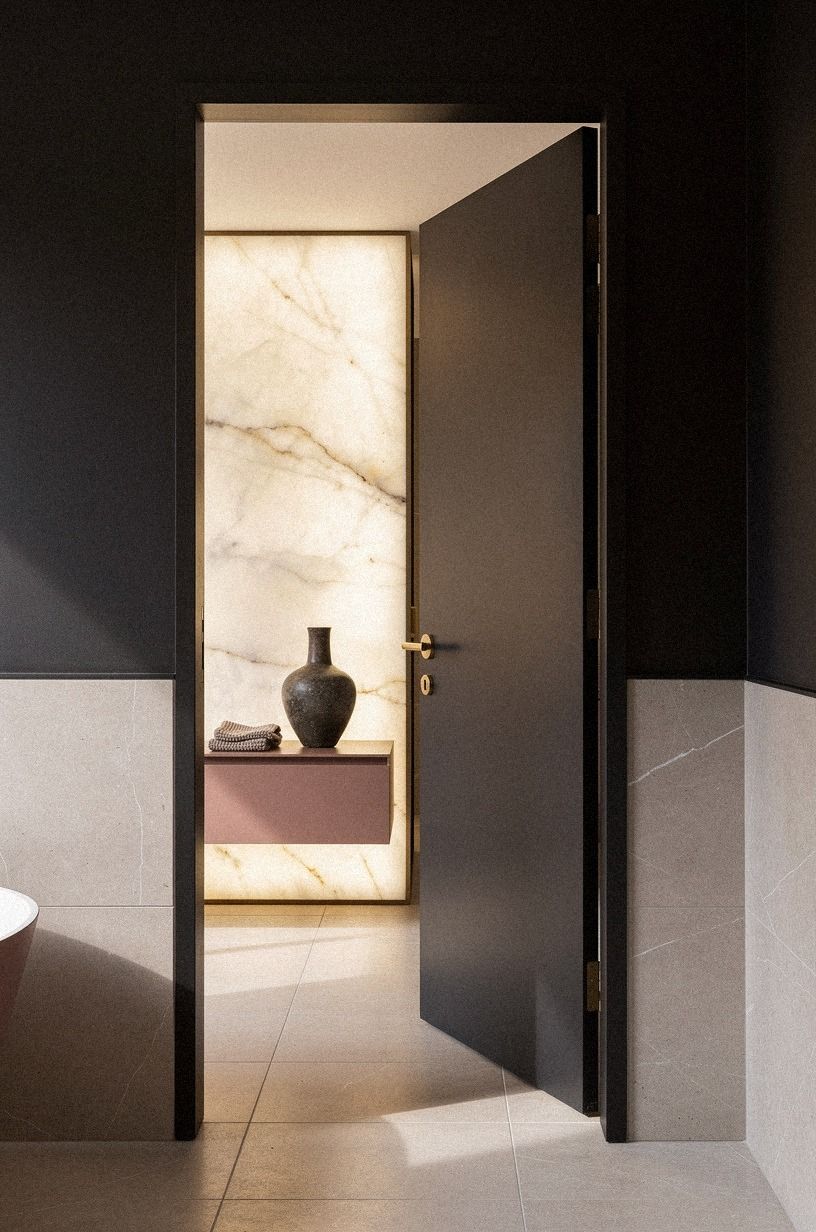
Dusty rose paint over charcoal tile creates the strongest contrast in a small Mediterranean bathroom, and it can feel surprisingly airy when the ceiling and floor stay light. Try dusty rose above charcoal tile, or use backlit translucent onyx as the focal surface. Your eye reads the darker upper wall as depth rather than a smaller footprint.
Keep the fixture count simple so the contrast feels intentional. You’ll want one aged-brass mirror, one pale textile, and a warm bulb temperature.
I’d avoid dark paint on every surface unless your room has good daylight because the corners can disappear by evening. A pale Turkish cotton towel beside the sink gives the room a soft break.
If you love high contrast, this is the place to use it, but your grout and lighting need to stay quiet. For another dramatic, intimate palette, see these old-world speakeasy decor ideas.
Why This Look Is Returning to Small Bathrooms
I think Mediterranean bathrooms are returning because people are tired of rooms that look untouched by human hands. For years, small bathrooms were treated like efficient white boxes: glossy tile, chrome fixtures, and one bright ceiling light.
That approach looks clean, but it doesn’t give you much to feel. A hand-glazed tile, a worn brass finish, or a painted ceiling carries evidence of time, even when the room is brand new.
The best version isn’t a themed room. You don’t need faux ruins, a dozen clay pots, or a dramatic mural.
I’d rather see one honest material used well than six decorative references fighting for attention. In my own projects, the pieces that lasted were the ones with a slight irregularity: a sink edge that wasn’t perfectly sharp, linen that wrinkled, and wood grain that changed under afternoon light.
That’s what makes a compact bathroom feel warm and gathered.
Your space also benefits from the slower rhythm of this style. A small room can’t hold endless visual information, so you’ll want to choose a few surfaces and let them breathe.
Benjamin Moore Chestertown Buff, a limestone-look floor, and one dark metal mirror may be enough. I’ve learned that the bathroom feels more sophisticated when I stop adding things before the room feels finished.
There’s a practical reason this style works too. Mediterranean materials often age gracefully, which means a little wear doesn’t ruin the design. Your brass can darken, your linen can soften, and your plaster can pick up gentle variation.
Those changes make the room feel more lived-in, not less valuable. If you’re still unsure about the mood, these small whiskey room ideas show how warmth and restraint can coexist.
What People Always Want to Know
What is the best Small Mediterranean Bathroom Ideas for a small bathroom?
The best choice is a floating oak vanity with a rounded aged-brass mirror because it gives you storage while keeping the floor visible. Add warm plaster paint and one textured tile zone. Your room will feel more open, and you won’t need a large furniture piece to create character.
Where can I buy Small Mediterranean Bathroom Ideas pieces on a budget?
Look at IKEA, Wayfair, and Target for simple vanities, mirrors, and textiles, then check Facebook Marketplace or a local thrift store for older wood pieces. You’ll often find better character second-hand than in a new matching set, especially for stools and mirrors. A small walnut stool is an easy place to begin.
How much does a Small Mediterranean Bathroom Ideas makeover cost?
A cosmetic refresh typically runs about $200 to $1,200 for paint, a mirror, faucet, and textiles. A new vanity and partial tile project can reach $3,000 to $9,000. Your cheapest improvements are paint, lighting changes, edited storage, and a better linen shower curtain.
Can I create a Small Mediterranean Bathroom Ideas look on a budget?
Yes, and you can start with three low-cost moves: paint the walls, replace the light fixture, and add one textured textile. Use a second-hand mirror, cotton bath towels, and removable hooks. You don’t need to retile the whole room to make it feel warmer!
Is a Small Mediterranean Bathroom Ideas style worth it in a small space?
Yes, because a small room gives texture and color more impact. One handmade-looking backsplash, a 24-inch vanity, and a rounded antique brass mirror can change the whole view from the doorway. Keep at least 21 inches of clearance in front of the toilet so your layout stays comfortable.
Is Small Mediterranean Bathroom Ideas a good idea for a rental?
Yes. Use peel-and-stick wallpaper outside wet zones, a tension shower rod, removable hooks, and a freestanding vanity.
You’ll want to avoid permanent tile changes, but you can still add linen texture, warm lamps, and a second-hand mirror without risking your deposit. A removable update can make a rental feel surprisingly personal!
Where I’d Start First
If I had to pick one, I’d start with the floating oak vanity. It clears the floor, hides clutter, and gives every warm material around it a visual anchor.
Pin this layout for later, then choose your mirror before buying accessories. That one decision will keep the room from getting crowded.