A black bathroom cabinet can add real drama without a full remodel, and mine changed the room in one afternoon. I kept the existing floor, tub, and plumbing, then worked around one charcoal cabinet, a warmer mirror, and softer lighting. The result feels bold, calming, and far less expensive than starting over.
Here’s what it looked like before:
The bathroom had the full white vanity starter-home package: white walls, bright chrome faucet, and a mirror with no frame. Nothing was broken. That was the problem.
You could stand there for ten minutes and remember none of it.
The cabinet looked especially flat beside the natural oak. I kept the before photo because you can see the exact moment the room stopped having a point of view.
If you’re planning your own update, look at your photo first. Your room will tell you whether it needs contrast, warmth, or simply better light.
- Paint the cabinet before touching the tile
- Layer warm metal into a dark bathroom
- Can black modern bathroom decor stay warm?
- Choose aged brass instead of cold white hardware
- The Three-Height Light Stack
- Float storage with the Open-Shelf Rule
- Frame the mirror with the Two-Wood Rule
- Black cabinet or all-black walls?
- Soften the cabinet with textiles and texture
- Hang art and a runner that survive splashes
- Live with the cabinet before adding more
1Paint the cabinet before touching the tile
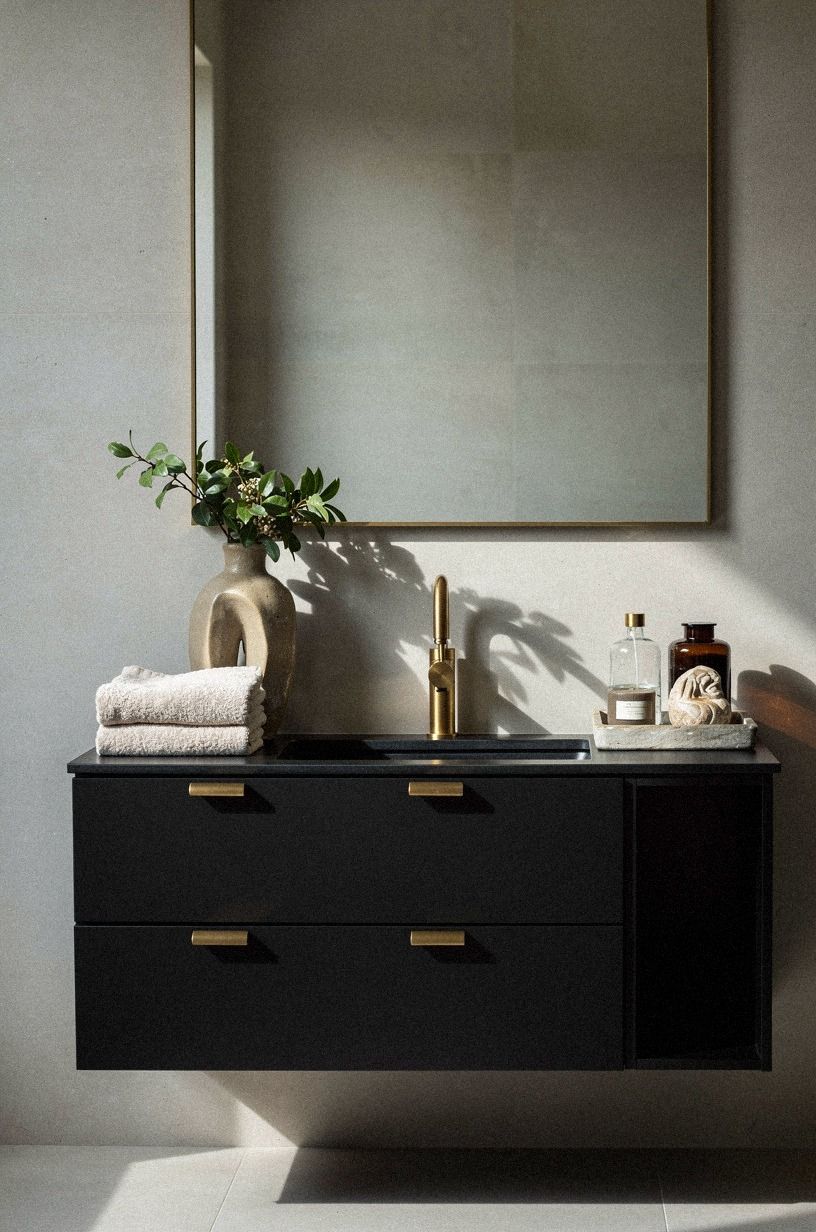
I started with the cabinet because changing the walls or floor would’ve created a much larger job. A black cabinet gave me the strongest shift for the least disruption, especially against the existing white surround. If you’re working with a bathroom design with black vanity, choose a finish that has a little softness instead of a flat, tar-like black.
My favorite reference was Farrow & Ball Studio Green No.93, which reads nearly black in shadow but keeps a forest-green undertone near the window. I didn’t use it on the cabinet, but it helped me understand the depth I wanted.
A true black can feel severe beside cool tile, while a forest green stays more inviting. You’ll notice the difference when morning light hits the door.
I also measured the cabinet height before ordering anything. Standard vanity height sits around 32 to 36 inches, so you’ll want your sink, faucet, and mirror to feel intentional together. For more contrast ideas, I kept returning to these black and white bathroom combinations and black tile bathroom ideas.
I’d skip painting every surface black first. The cabinet needs room to be the decision.
That was the first real shift!
2Layer warm metal into a dark bathroom
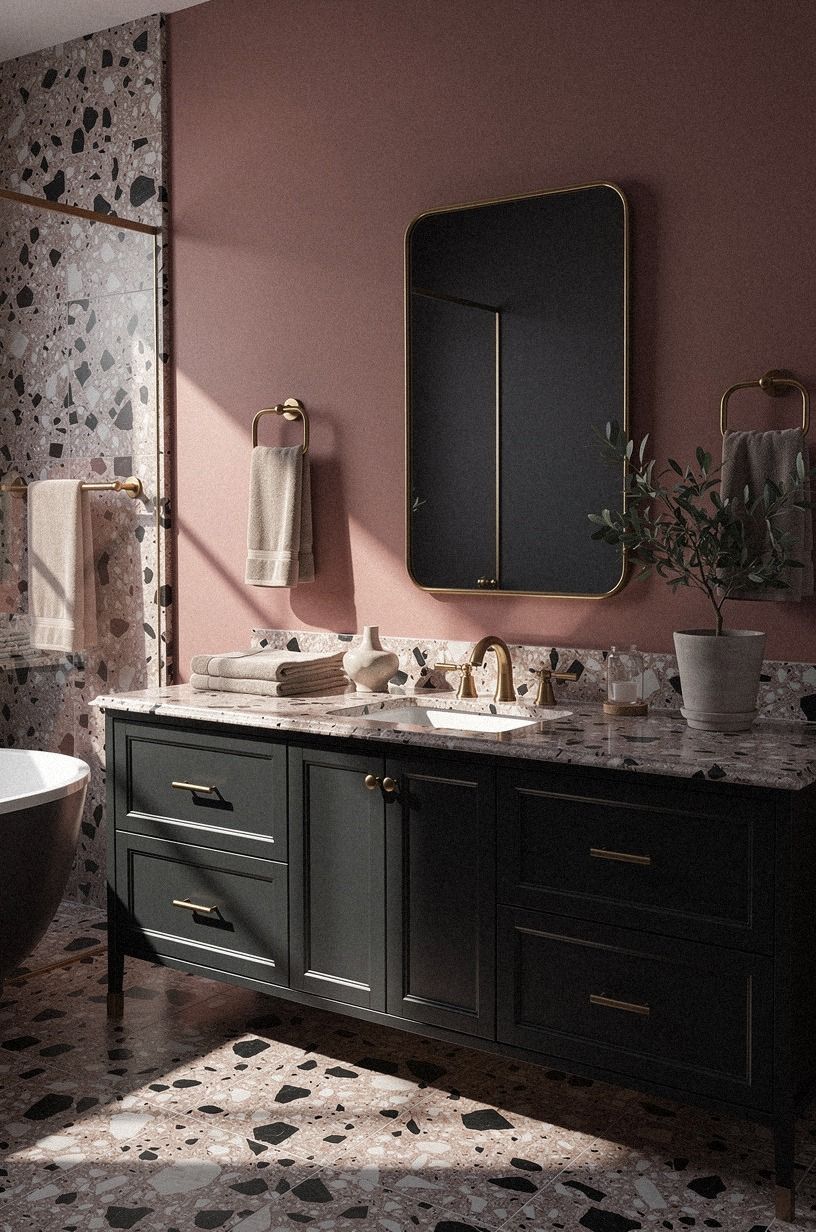
Once the cabinet was in place, the room needed warmth. Black beside chrome looked sharp but chilly, and I didn’t want the bathroom to feel like a hotel corridor.
I chose unlacquered brass for the faucet and pulls because the finish will mellow as you use it. You’ll see fingerprints at first, but they become part of the room rather than an emergency to wipe away.
The metal also gave me a useful contrast against the oversized-chip terrazzo. If you’re styling a dark decor bathroom, let one finish carry the practical pieces and let another appear in smaller accents. My rule was brass at the sink, aged bronze in the light fixture, and no third metal competing for attention.
I made the mistake of buying a shiny brass mirror first. It bounced a hard yellow line across the wall and looked more glamorous than grounded. I returned it and chose a thin frame instead.
The change was subtle, but your eye will catch it every time you walk in.
If you want a stronger color story, compare the cabinet with these dark green, black, and gold bathroom ideas. Warm metal works best when you don’t make it shout.
3Can black modern bathroom decor stay warm?
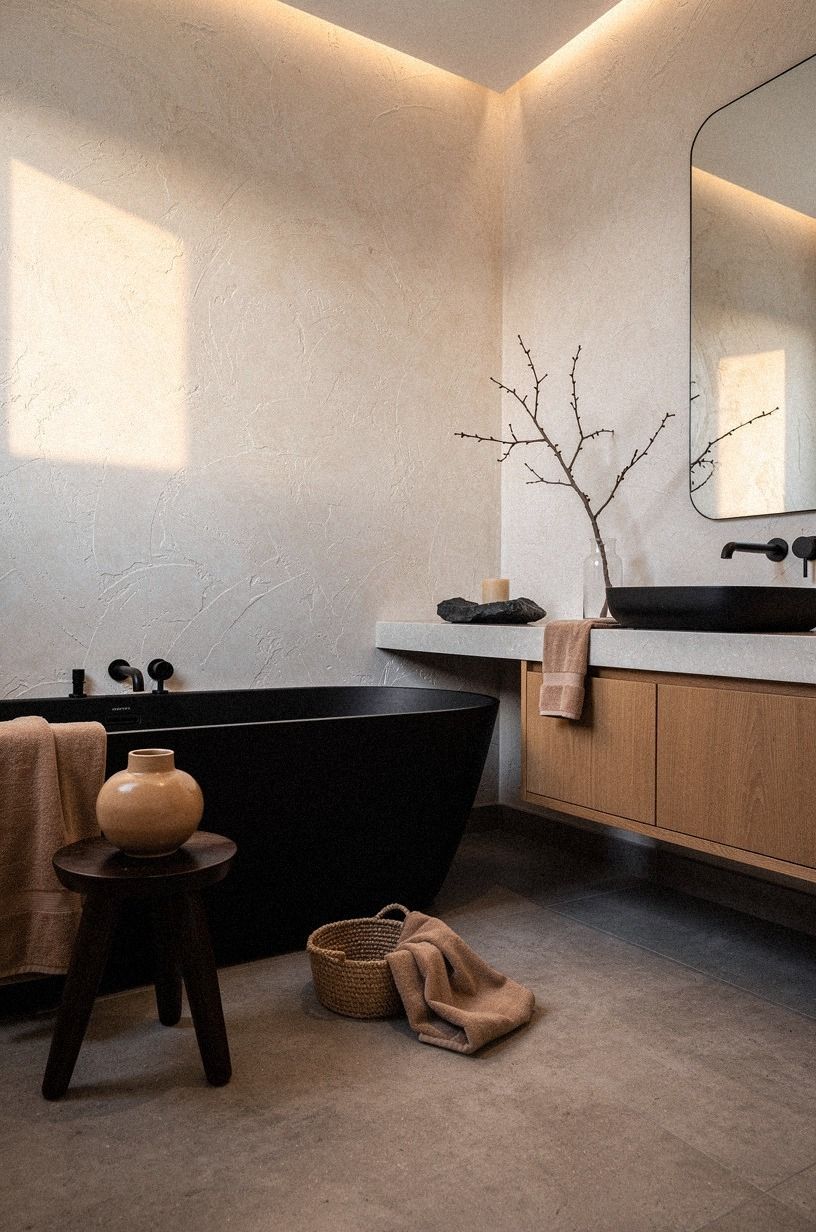
Yes, but only if you give the black something soft to sit beside. My first version had a black cabinet, black frame, and black accessories. It looked polished for about five minutes, then the room started feeling visually sealed.
You need a pale surface, a natural texture, or a warm bulb to break that weight.
I brought in hand-applied Venetian plaster on a small wall section, then repeated its warmth with a simple hand towel. The finish has a softly irregular texture that keeps the cabinet from looking too glossy.
If you’re building black modern bathroom decor, plaster does more for warmth than a pile of decorative objects ever will. You’ll feel the difference when the light moves across the surface.
The room also needed one color that wasn’t black, white, or brass. I tested Benjamin Moore Chestertown Buff HC-9 on a sample board, and its sandy camel undertone made the cabinet look less stark. I didn’t paint the walls with it, but it helped me choose towels and art.
Would I use a cool gray here? No.
It would make your black cabinet look blue and your existing floor look tired.
For a bolder focal point, see this black freestanding tub approach.
4Choose aged brass instead of cold white hardware
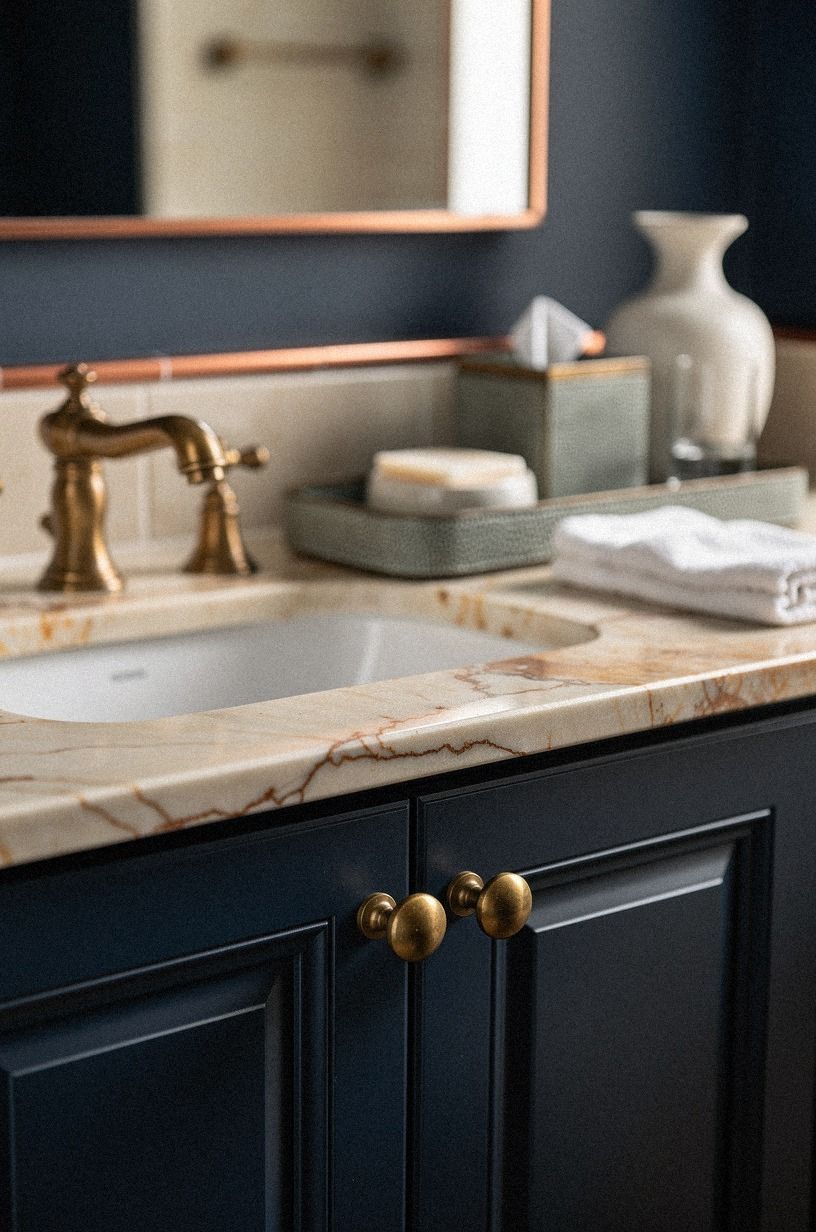
The cabinet looked better immediately, but the original copper knobs still felt too close to the builder-grade hardware.
5The Three-Height Light Stack
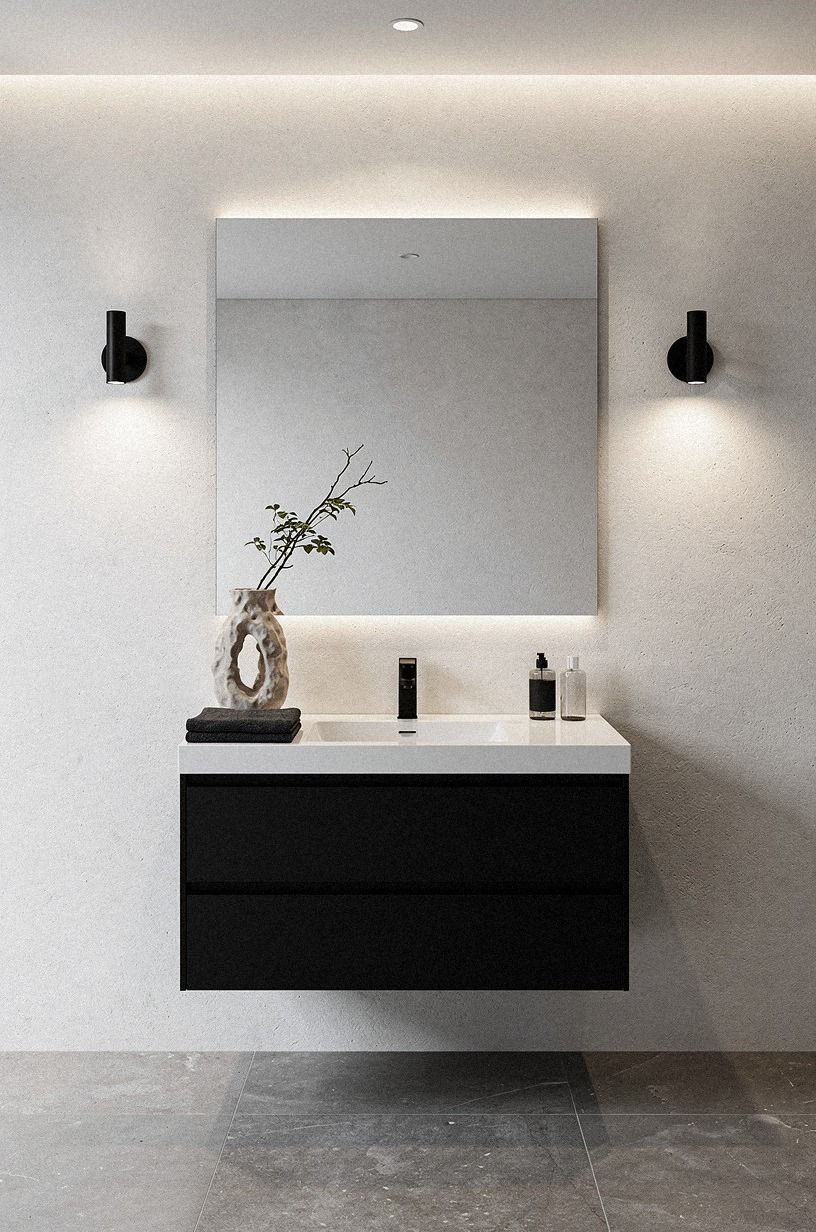
Lighting was the change I underestimated. The original ceiling fixture made the cabinet look nearly sage green at night, then washed every surface out in the morning. I created what I call the Three-Height Light Stack: ceiling light overhead, sconces beside the mirror, and a small low glow near the floor.
You don’t need three expensive fixtures to copy the idea. Your ceiling light can handle general visibility, while a pair of warm sconces gives your face and cabinet doors more dimension. I used bulbs in a warm-cream range and kept the light diffused, because a bare bulb throws every shadow onto the wall.
The low light was a small natural wood plug-in lamp on a nearby shelf, not inside the wet zone. A washed Belgian linen shade made it feel peaceful after dark, especially when the cabinet caught only a soft amber reflection.
If you’re planning black bathroom designs, don’t let the ceiling fixture do all the work. Compare your room at 8 a.m. and 8 p.m.; you’ll see two different colors. This travertine black bathroom contrast makes the same lighting point with a warmer surface.
At night, the difference is enormous!
6Float storage with the Open-Shelf Rule
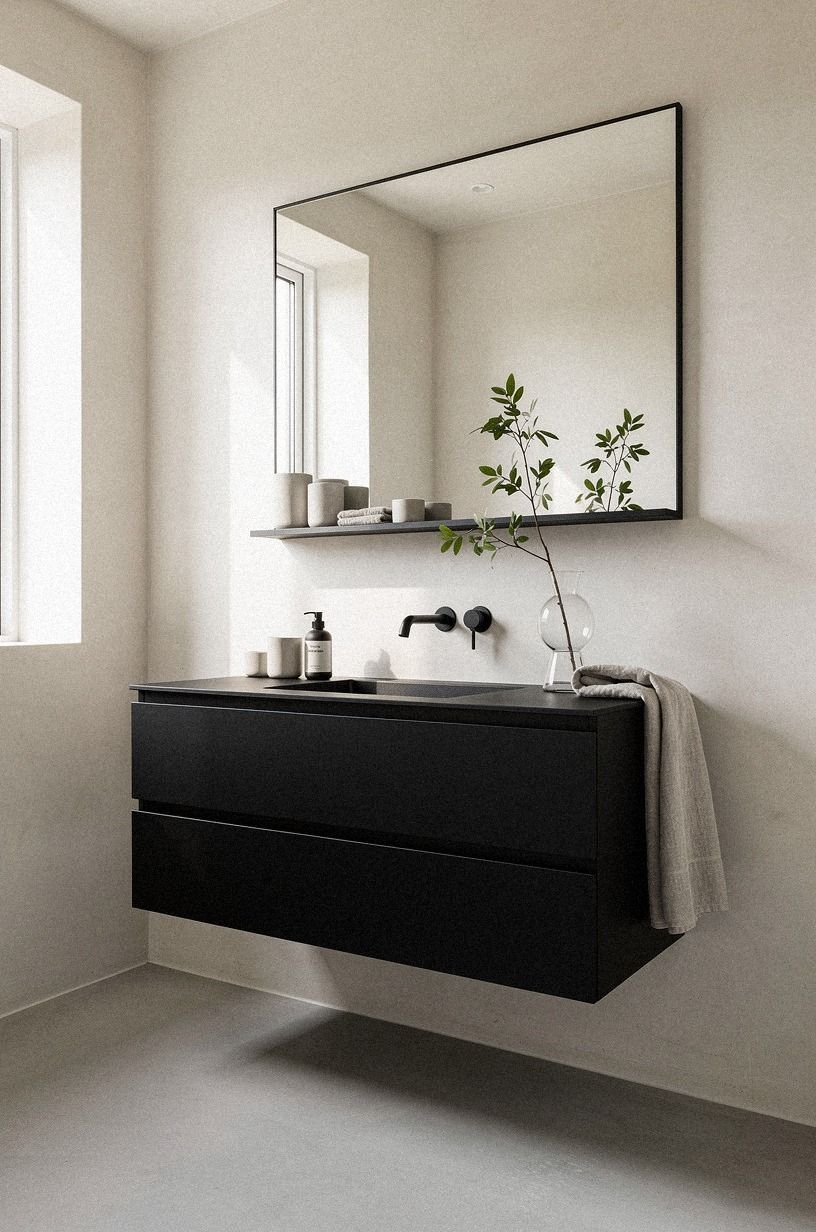
The cabinet held the daily clutter, but the counter still collected bottles, hair tools, and the one candle nobody lit. I added one narrow open shelf above the toilet and kept it visually open. That became my Open-Shelf Rule: storage should hide the ugly necessities while leaving one breathing space for useful, attractive things.
I chose a stone-toned shelf for the black cabinet’s natural partner and tucked an organic bouclé basket underneath. The texture matters more than the color. You’ll see tiny loops in the basket, and your bathroom will feel less assembled from one store.
I kept the shelf shallow so it wouldn’t interfere with the toilet clearance, which should be at least 21 inches in front. The shelf holds folded towels, a small ceramic cup, and one plant that can handle humidity.
That’s enough. If you’re tempted to fill every inch, stop before the room starts looking like a shop display.
I used the same restraint while studying this checkerboard bathroom floor idea. A dark cabinet needs a little empty space around it.
7Frame the mirror with the Two-Wood Rule
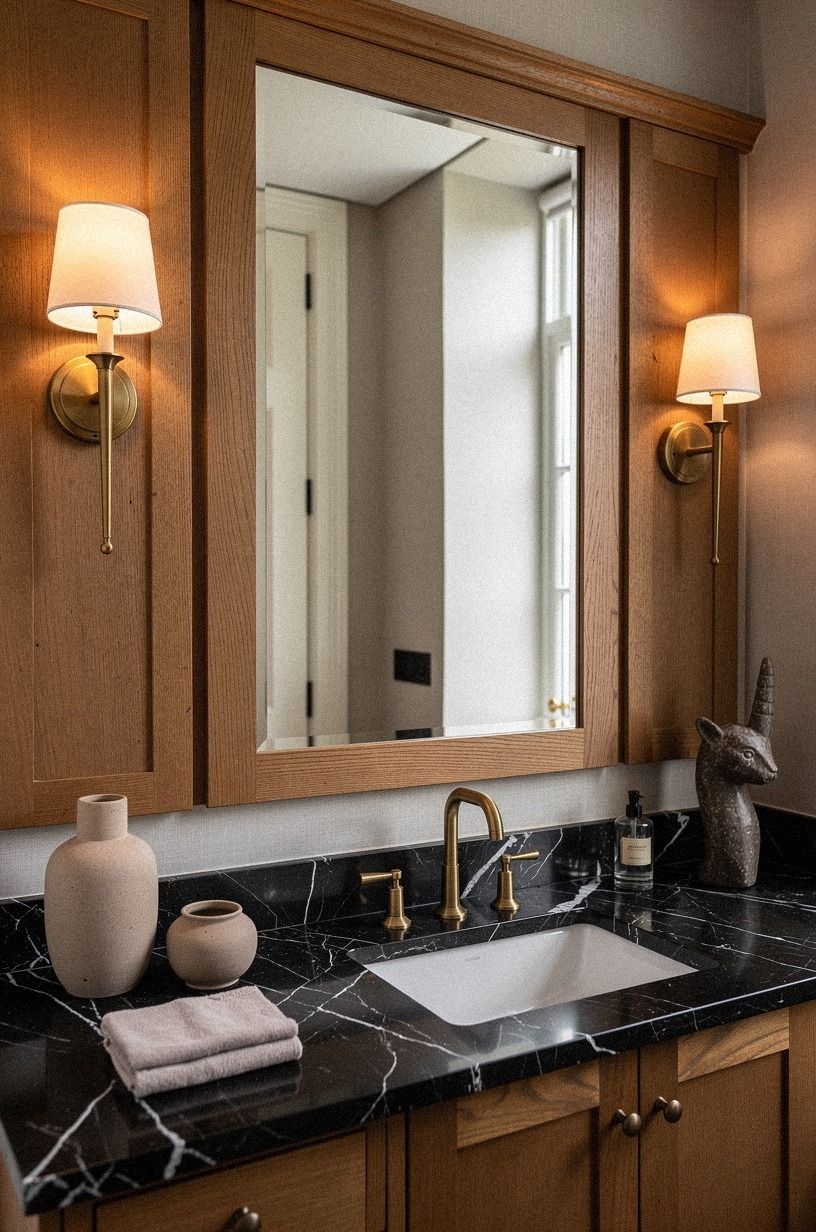
The frameless mirror was practical, but it made the cabinet feel like a separate object. I replaced it with a thin aged-brass mirror and used the Two-Wood Rule: one pale wood for lift, one deeper wood for grounding, and no random third finish.
Your mirror doesn’t need to match the cabinet. In fact, I think matching them is the weaker choice. The black cabinet already has visual weight, while the aged brass catches daylight and brings your eye upward.
I chose a modest rectangular mirror because the sink is narrow, and a round mirror would’ve made the wall feel busier. A slim Nero Marquina marble ledge beneath it added black stone with delicate white veining without overwhelming the sink area.
If your bathroom is small, measure the mirror against the vanity rather than buying the largest size that fits. A little wall showing around the edges makes the cabinet feel intentional.
For another material pairing, study this travertine remodel before-and-after approach. The lesson isn’t the stone.
It’s the breathing room.
8Black cabinet or all-black walls?
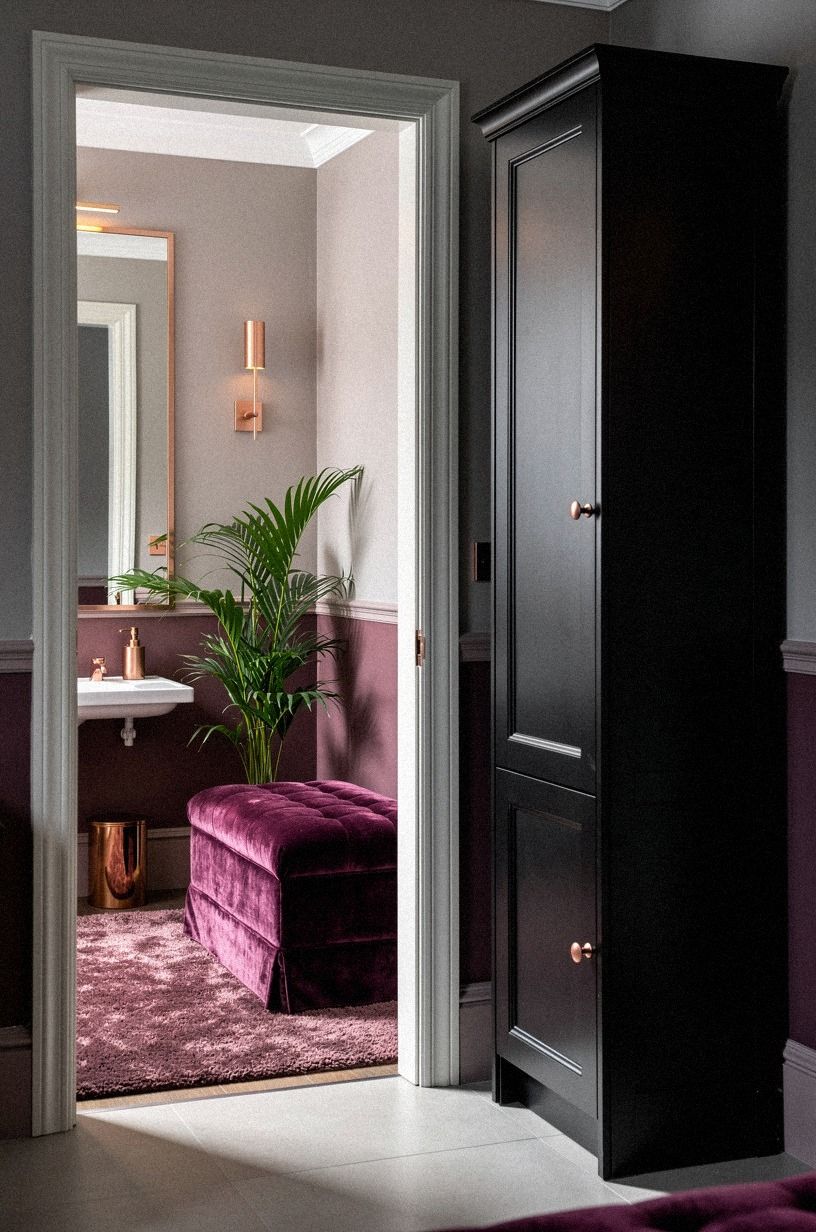
I considered painting the walls plum. The sample looked dramatic, especially beside the rose-gold faucet, but by late afternoon it swallowed the room. I chose Sherwin-Williams Repose Gray SW 7015 instead, a gentle gray that changes throughout the day and keeps the cabinet as the darkest anchor.
If you’re comparing black bathroom designs, ask what you want to feel when you enter. Full black walls can be moody and intimate, but they need strong natural light or layered fixtures. A black cabinet gives you much of that drama while protecting the walls from becoming the entire story.
I painted the wall behind the cabinet first and left the remaining walls lighter. That gave the sink zone a defined effect without adding trim.
A small deep-pile mohair velvet stool brought softness to the plum, gray, and rose-gold palette. My opinion is firm here: choose the cabinet over all-black walls when your bathroom has one small window.
You’ll have more flexibility with towels, art, and mirrors later. These black tile ideas from matte to high drama are useful if you still want more darkness later.
9Soften the cabinet with textiles and texture
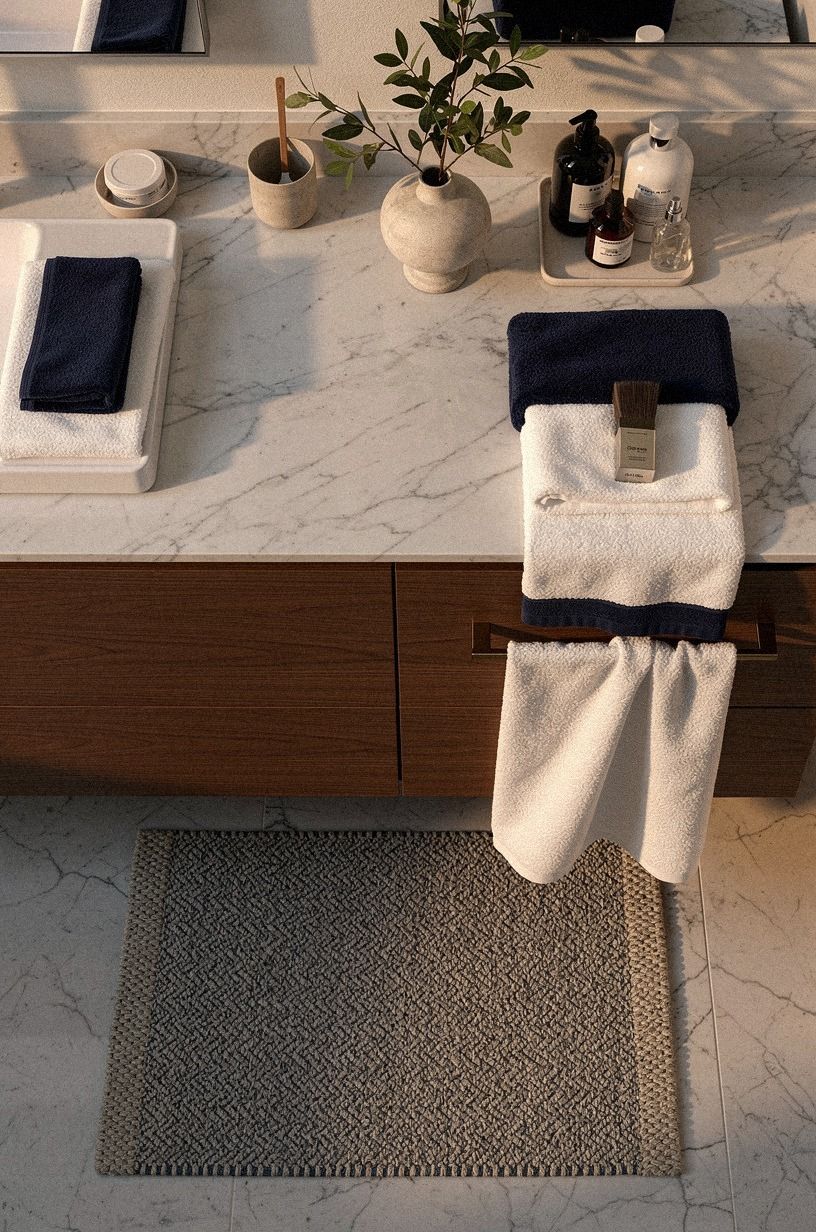
A black cabinet can look sleek, but sleek isn’t the same as comfortable.
10Hang art and a runner that survive splashes
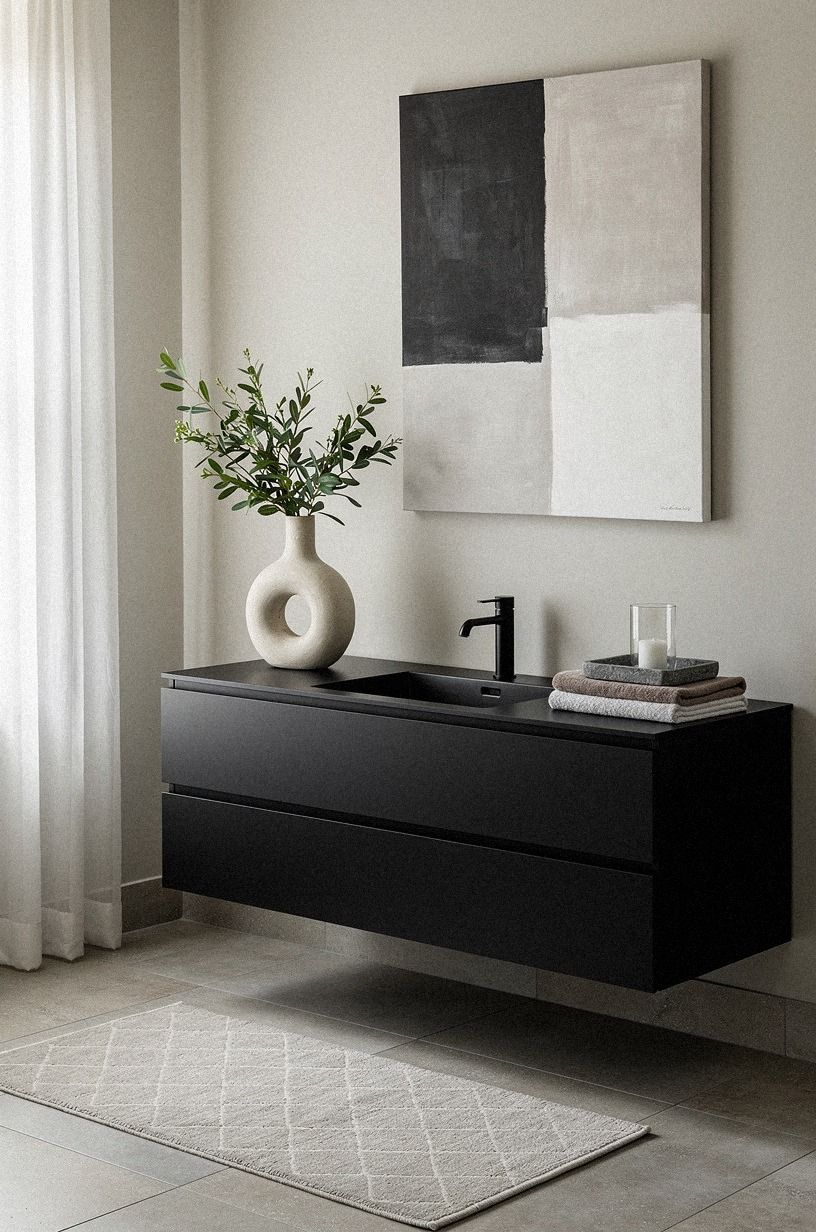
The wall beside the cabinet still felt empty, but I didn’t want framed art directly over the sink. A small piece on the adjacent wall gave the room personality without turning the vanity into a gallery ledge.
I chose a moisture-resistant print with a quiet botanical shape rather than a literal bathroom sign. The emerald lines connected with the cabinet, while the paper’s warm cream background echoed the gold accents.
The runner needed equal restraint. A washable flat-weave runner gave the floor some movement, while a small piece of reclaimed weathered teak added natural texture without bringing in another shiny finish.
Keep the art far enough from direct spray that it won’t curl at the edges. Your bathroom doesn’t need more objects.
It needs a few choices that feel deliberate. I also compared the scale with this checkerboard bathroom floor idea, even though I kept my existing floor.
11Live with the cabinet before adding more
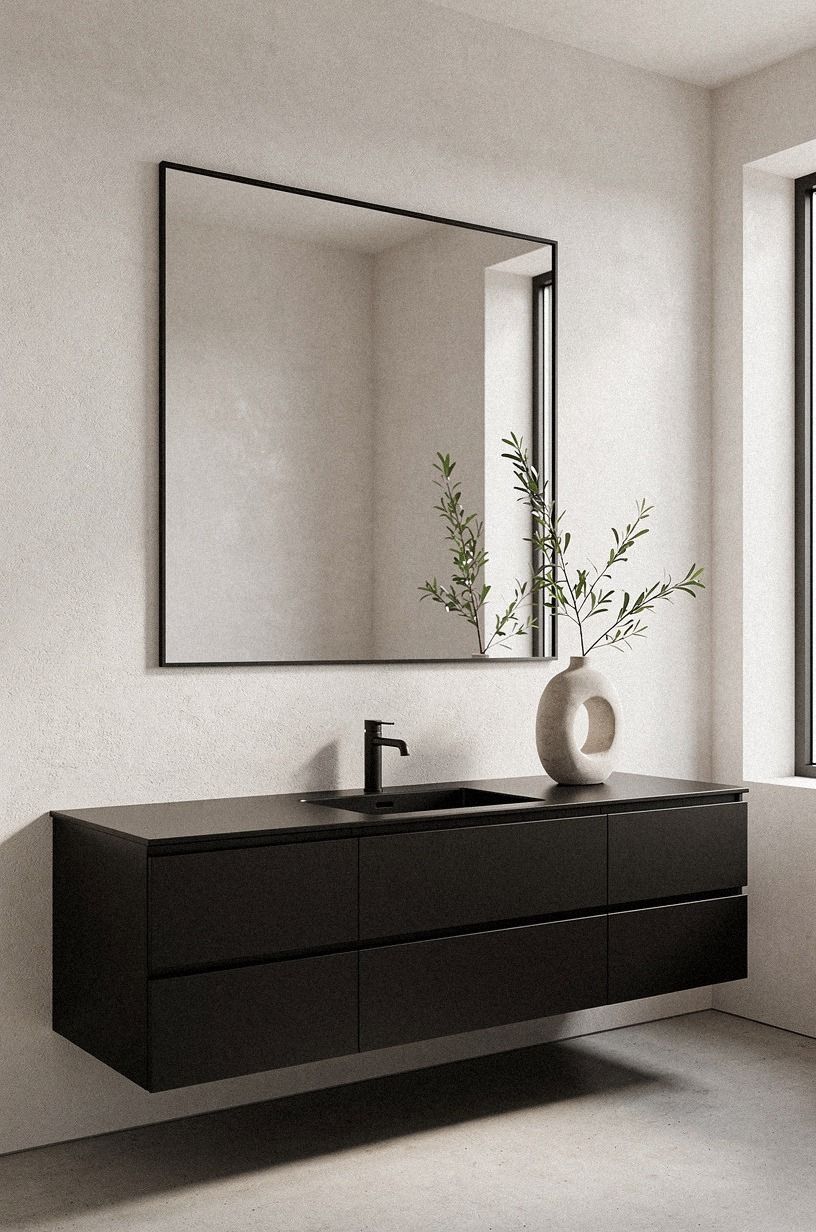
The hardest part was stopping. Once the black cabinet was installed, I wanted a new faucet, new mirror, new tile, new light, and a different floor all at once. I lived with the cabinet for a week before making the next choices, and that pause saved me from buying pieces that only looked good in a store.
You can do the same by styling your existing objects first. Move your towels, remove two accessories, and watch the room at different times of day. Your cabinet may need more warmth, or it may only need less visual noise.
I discovered that the room didn’t need a dark shower wall because the cabinet already gave the eye a clear landing place. That patience also helped me protect the budget. The cabinet became the main event, while the rest of the room stayed useful and familiar.
I’d rather spend on one solid moisture-resistant vanity finish than replace five small objects that don’t change how the room functions. If you want a related high-impact direction, look at these travertine and black bathroom ideas. Your best next move may be waiting.
Waiting was the most useful upgrade!
The parts I left untouched
I kept the plumbing, tub, floor, and wall tile because none of them caused the room’s original problem. Replacing them would’ve made the project larger without giving the cabinet more authority.
The existing white tile became useful contrast. Against the darker vanity, it stopped reading as bland and started reading as clean. That distinction saved both money and mess.
I also kept the original counter. Its Calacatta marble surface has subtle gold veining, so it supports the cabinet quietly while giving the room a practical landing place for soap and daily essentials.
A black cabinet needs a stopping point
The cabinet works because it has a clear visual boundary. Adding black shelves, black art, and black towels would blur that boundary until the room felt heavy again.
I let the warm oak and brass carry the supporting roles. They give the eye somewhere to move without competing with the vanity.
When you’re choosing the final pieces, remove one item from your cart. If the room still feels finished, you probably made the right call. The restraint in these dark green, black, and gold bathroom ideas helped me stop before the room became too coordinated.
Check the room at two times of day
A bathroom can change completely between morning and evening. The cabinet looked softer in daylight, while the artificial light emphasized every blue undertone in the dark paint.
Check samples beside the mirror, not only on the wall. The mirror reflects light and color back into the room, so a finish that looks calm on its own may feel much sharper near the sink.
I also checked the brass faucet after sunset. Its warmth was exactly what the room needed, but a shinier finish would’ve looked too yellow under the original ceiling fixture. This travertine black bathroom contrast is useful to study when you’re testing warm and cool surfaces together.
How much it cost
My version stayed inside the budget-refresh lane because I kept the existing plumbing, tub, floor, and wall tile. The cabinet was the visual investment, while paint, hardware, and textiles handled the supporting work. I didn’t pretend this was a full remodel, and you shouldn’t either.
The typical US ranges below are useful if you’re deciding whether to refresh one zone or rebuild the room. Your actual total will depend on the cabinet condition, labor, tile area, and whether plumbing moves.
For my room, the honest choice was the Budget tier, not a new vanity plus tile package. I spent time on prep and used the existing layout, which mattered more than chasing a designer finish.
If your cabinet needs professional installation, get that estimate before ordering the mirror or faucet. You’ll want the sink height, plumbing position, and mirror placement to agree.
Materials can shift the number quickly. Zellige tile typically runs $15-$35 per square foot, while subway tile sits around $2-$10 per square foot. A marble top can reach $50-$100 per square foot, and a brushed brass faucet often falls between $120 and $450.
Those figures are why I kept the counter and tile. The cabinet gave me the drama without opening three new cost lines. For a broader comparison, this travertine bathroom remodel approach shows how quickly stone and installation can change the budget.
The opinion I kept after living with it
I thought the black cabinet would be the bold part, but it became the quietest decision in the room. The real shift came from letting the cabinet have a clear edge, then surrounding it with materials that didn’t compete.
Natural oak gave it grain. Calacatta marble with gold veining gave the hard surfaces somewhere soft to land.
I’ve renovated enough small corners to know that people often begin with the decorative layer because it feels safe. I did that too. I bought the mirror before deciding on the light, then had to return it because the frame reflected the wrong color.
Your order matters more than your shopping list. Start with the heaviest visual element, test it in your real light, and let the next choice answer that one.
I’d skip the idea that black automatically means dramatic or sophisticated. A black cabinet can look flat, cheap, or overly sharp if your lighting is cold and your hardware is scattered. It works when the surrounding textures give it a reason to exist.
I kept thinking about this black bathroom cabinet contrast with travertine because the principle is simple: dark needs variation. And variation is what makes a small bathroom feel lived-in.
The Questions Worth Answering First
What black cabinet works best in a small bathroom?
A wall-mounted narrow vanity or a compact birch-effect cabinet works well because it leaves more visible floor. You’ll get visual lift from the open space below, especially if your room is tight. Keep the mirror slightly narrower than the cabinet so the wall can breathe.
Where can I find affordable black bathroom pieces?
Look at IKEA, Wayfair, and Target first, then check Facebook Marketplace or a local thrift shop for solid cabinets. Your best savings often come from keeping the existing counter and faucet holes.
For contrast inspiration, browse these vintage black and white bathroom ideas. You can also compare the finish with these black tile bathroom ideas before choosing paint.
How much does a focused cabinet makeover cost?
A focused refresh can fit the typical $200-$1,200 range when you keep the plumbing, floor, and shower. Paint, rearranged accessories, and existing mirrors can cost nothing. A mid-range project with a new vanity, partial tile, and lighting typically reaches $3,000-$9,000.
What is the cheapest way to add drama?
Start with three low-cost moves: paint the cabinet, swap the pulls, and restyle your towels. Your existing mirror can stay if its shape works. Add warm bulbs before buying new fixtures, because lighting often changes the cabinet more than another accessory will.
Is a black cabinet a good choice for a small bathroom?
Yes, because a dark cabinet gives your eye one strong anchor instead of making every wall compete. Choose a floating or narrow vanity, keep at least 21 inches clear in front of the toilet, and use a lighter wall color. You’ll get drama without losing useful floor area.
Can I create this look in a rental?
Yes. Use removable pulls only when the original holes match, add a tension rod for textiles, and choose peel-and-stick accents away from wet zones. Your safest change is styling: warm towels, a washable mat, and removable art can shift the room without risking your deposit.
Where I’d Start First
If I had to pick one, I’d start with the black cabinet. It changes the room’s balance before you buy tile, art, or new lighting, and it gives every later choice a clear reference point. Pin this makeover for later, then watch your bathroom in evening light before choosing the next piece.