
The short answer: the best Christmas wreath ideas that aren’t all greenery use one strong material, one clear shape, and a little restraint. I once covered a wreath in pine until it looked like a shrub wearing a bow. These 15 ideas use ribbon, wood, fabric, fruit, and metal instead. Your door will still feel warm, but it won’t disappear behind branches.
Editor’s note: Start with the door, then choose the wreath. The strongest combinations let the paint, hardware, and surrounding entryway participate in the design.
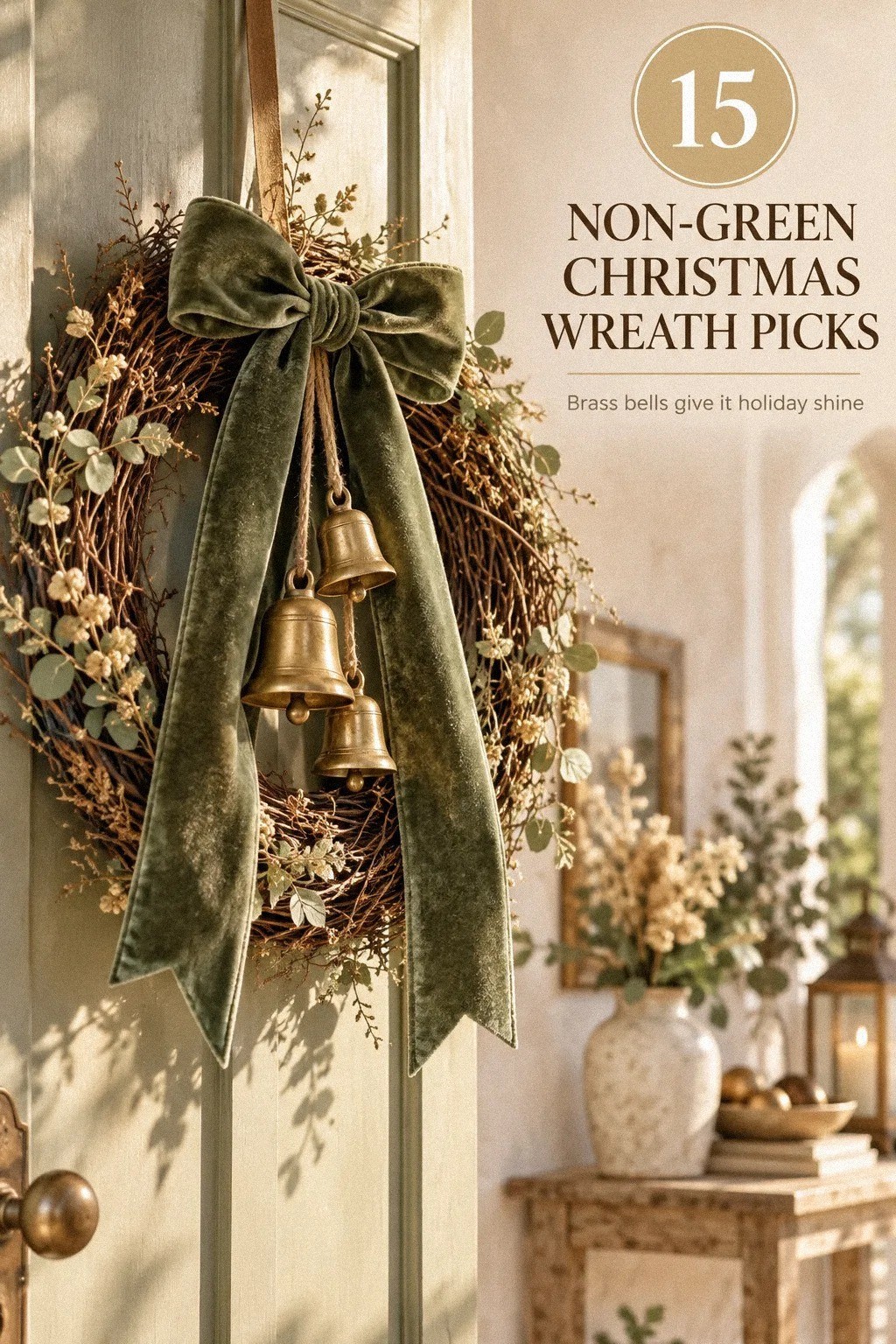
- Layer a velvet bow over a simple grapevine wreath
- Swap fir branches for dried orange slices
- Build the Three-Texture Ribbon Stack
- Hang a wooden bead wreath for Scandinavian warmth
- Frame the door with a paper star cluster
- Anchor a wool wreath with a single brass detail
- Mix dried flowers with a dark painted door
- Float a metal star inside a linen ring
- Use a woven basket as a half-wreath
- Paint a geometric wreath on a wood panel
- Tie a quilted fabric wreath instead of using branches
- Layer a ceramic tile medallion with cord
- Choose dried apples over shiny ornaments
- Float a black ribbon over pale magnolia leaves
- Build a brass hoop with one winter branch
1Layer a velvet bow over a simple grapevine wreath
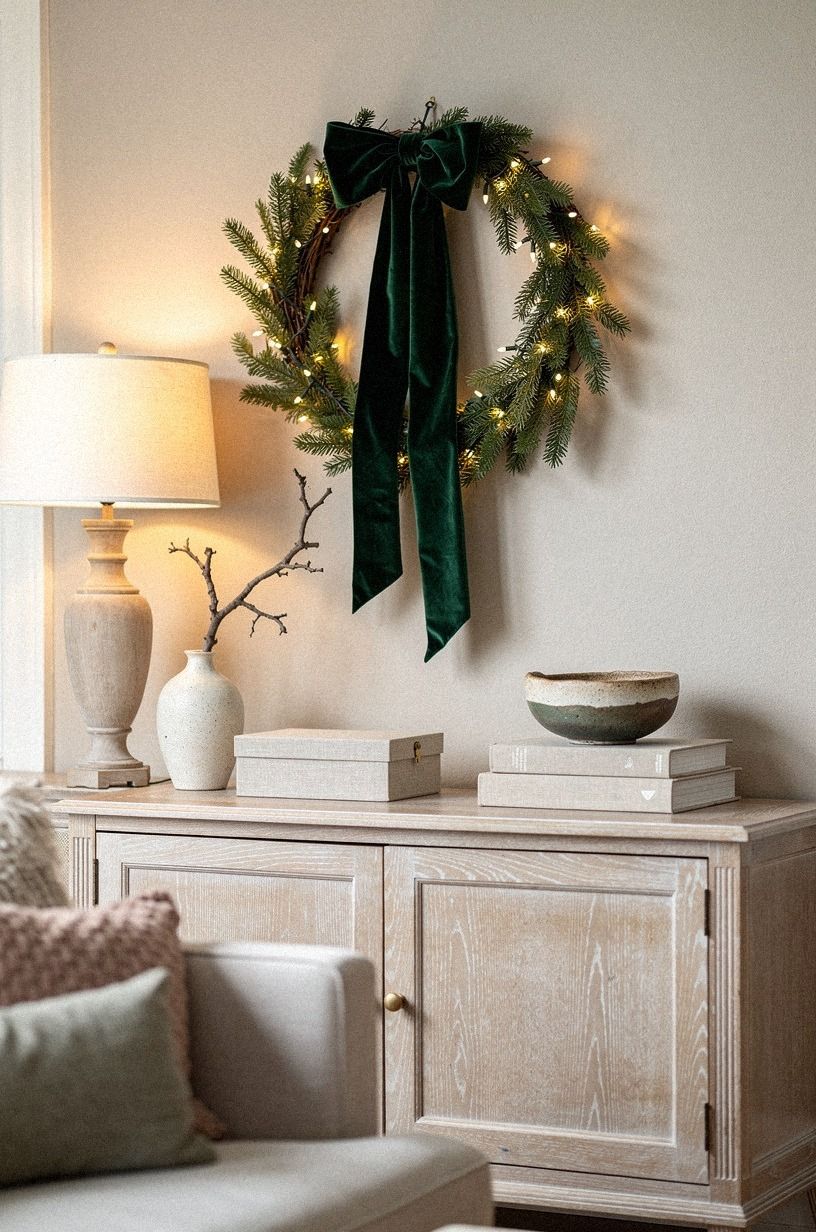
A wide rust velvet ribbon makes a plain cerused white oak base feel intentional without burying its texture. Choose a 4-inch ribbon, loop it loosely, and let the tails fall unevenly.
You don’t need a perfect bow. In fact, a relaxed knot looks more welcoming against a painted door than a stiff department-store loop.
I’d use Farrow & Ball Studio Green on the door if you want the rust to glow, while Benjamin Moore White Dove OC-17 lets the natural oak feel lighter and quieter. If your door is narrow, keep the wreath under 24 inches so the hardware stays visible. For more seasonal color direction, browse these Christmas tree themes that aren’t red and green.
The ribbon should be the star. You can tuck one small dried stem behind the knot, but stop before the bow starts looking busy. I’d also choose cotton or velvet ribbon with a matte finish because glossy polyester can make the wreath feel cheap in bright winter sun.
2Swap fir branches for dried orange slices
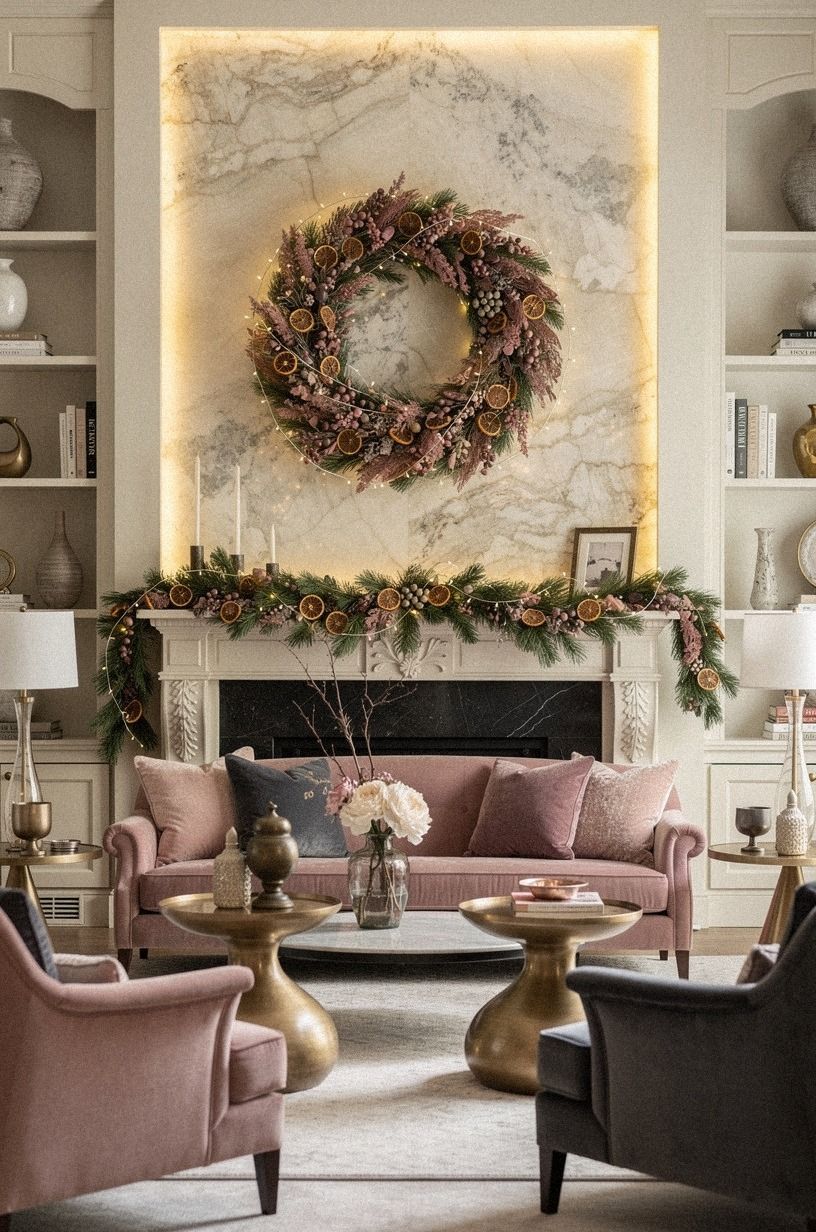
Dried citrus brings color, fragrance, and a thin slice of sunlight to a winter door.
3Build the Three-Texture Ribbon Stack
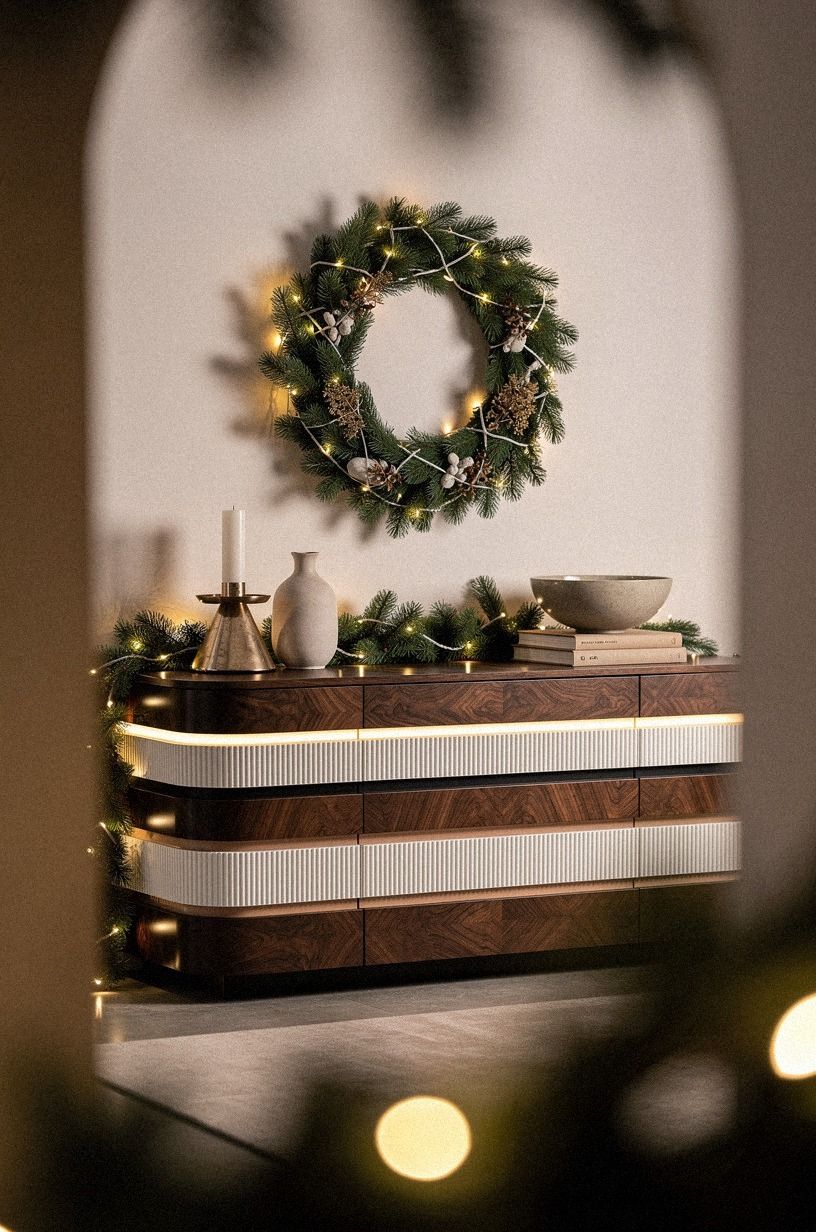
The Three-Texture Ribbon Stack works because each layer does a different job. Start with Belgian flax linen, add a narrow velvet strip, and finish with 1-inch cotton twill in a muted stripe. Tie the three pieces together at one point instead of wrapping them around the entire wreath.
You’ll get movement without spending the whole afternoon arranging loops.
My favorite combination is oatmeal linen, cranberry velvet, and faded green twill. It’s warm, soft, and a little old-fashioned, but it won’t read as formal.
Don’t use three loud patterns. One should be quiet, one should carry the color, and one should provide texture.
If you’re styling the rest of the entry, repeat the linen on a bench cushion or use a book-matched walnut console nearby. I’d keep the ribbon tails long enough to move in the breeze, but short enough that they don’t catch on your handle.
This idea is especially useful when you already own several leftover ribbons. You can test the stack on a table, then hold it against the door before tying anything permanently. Your eye will tell you whether the colors have enough contrast.
4Hang a wooden bead wreath for Scandinavian warmth
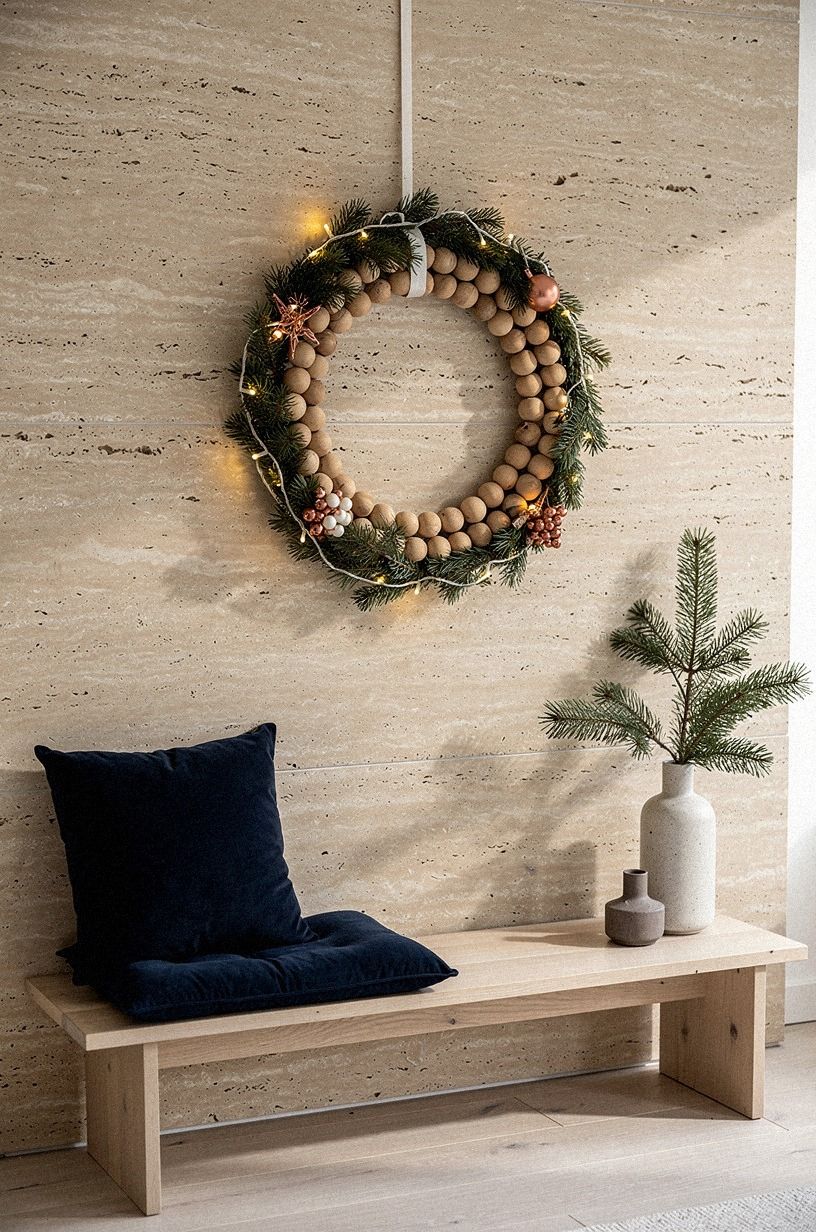
A wooden bead wreath has a simple silhouette, yet it gives a flat door something tactile to catch the afternoon light. Look for unfinished birch beads in two sizes and string them on strong cotton cord around a wire circle. Leave one small opening at the bottom for a linen tassel or narrow ribbon.
You can stain the beads warm walnut, paint them ivory, or leave them raw. I’d choose ivory-painted beads against a midnight blue door because the pale wood will keep the entry bright. A small copper hook and warm travertine nearby will make the palette feel deliberate.
Your wreath shouldn’t compete with the door knocker, so keep the palette to two wood tones at most. I’d also avoid tiny beads arranged in a dense pattern because they can look crafty from the sidewalk. Larger beads create a calmer outline and give the wreath enough presence.
If you have children helping, this is a forgiving project. The beads don’t need to line up perfectly, and the slight variations make the piece feel personal. That handmade quality is the whole point.
5Frame the door with a paper star cluster
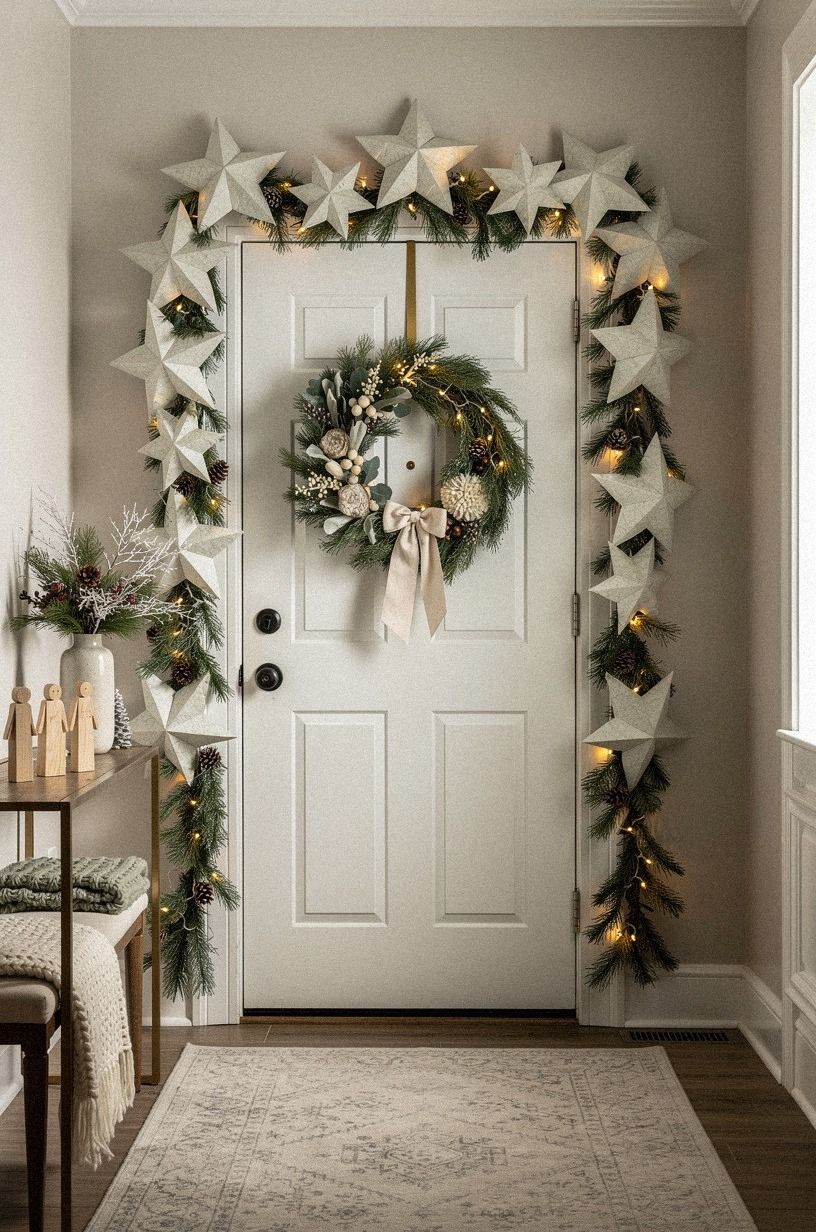
A cluster of folded paper stars turns a wreath into a small constellation. Use heavyweight cotton paper in warm cream, sage green, and natural wood tones, then attach five to seven stars to an unlacquered brass wire circle.
The empty space between them matters. It lets your door color show through and keeps the composition airy.
I made a paper version once with glossy stock, and it looked like party packaging. Matte paper is the better call because it absorbs light instead of throwing sharp reflections across the entry. If you’re hanging it outside, choose a covered porch and seal the paper lightly with a clear matte coating.
For a smaller apartment door, this is one of the few unique Christmas wreaths that won’t make the entry feel crowded. You can fold the stars yourself, buy premade shapes, or combine two sizes for a more relaxed rhythm. I’d use cream stars against a dark green door and sage stars against pale blue or warm white.
The stars also store flat, which is a major advantage if your closet is already full. Fold the brass circle gently and place the paper pieces between sheets of tissue before packing them away.
6Anchor a wool wreath with a single brass detail
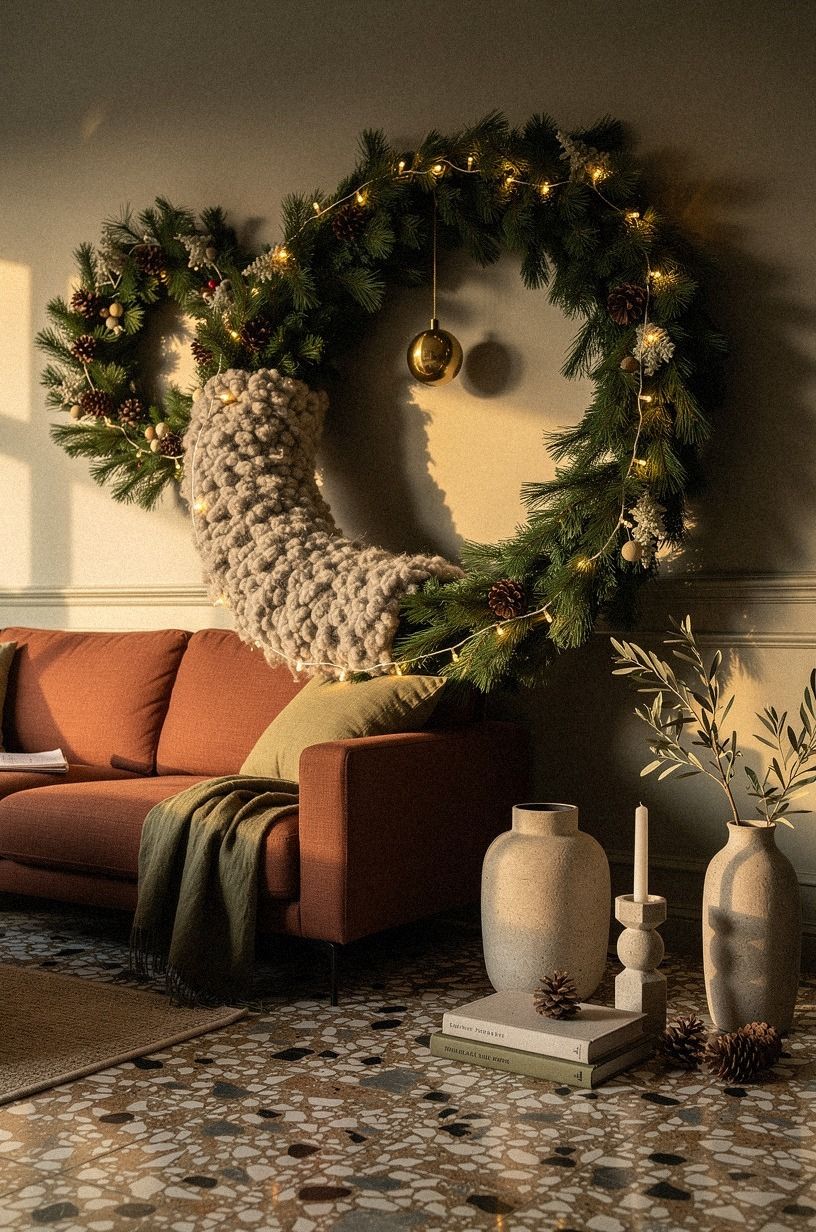
Wrap a foam or straw base in 18-ounce terracotta wool felt, overlapping the strips so the edges create a subtle ribbed pattern. Finish with one aged-brass clasp, especially if the wreath hangs near an oversized-chip terrazzo step or stone entry.
7Mix dried flowers with a dark painted door
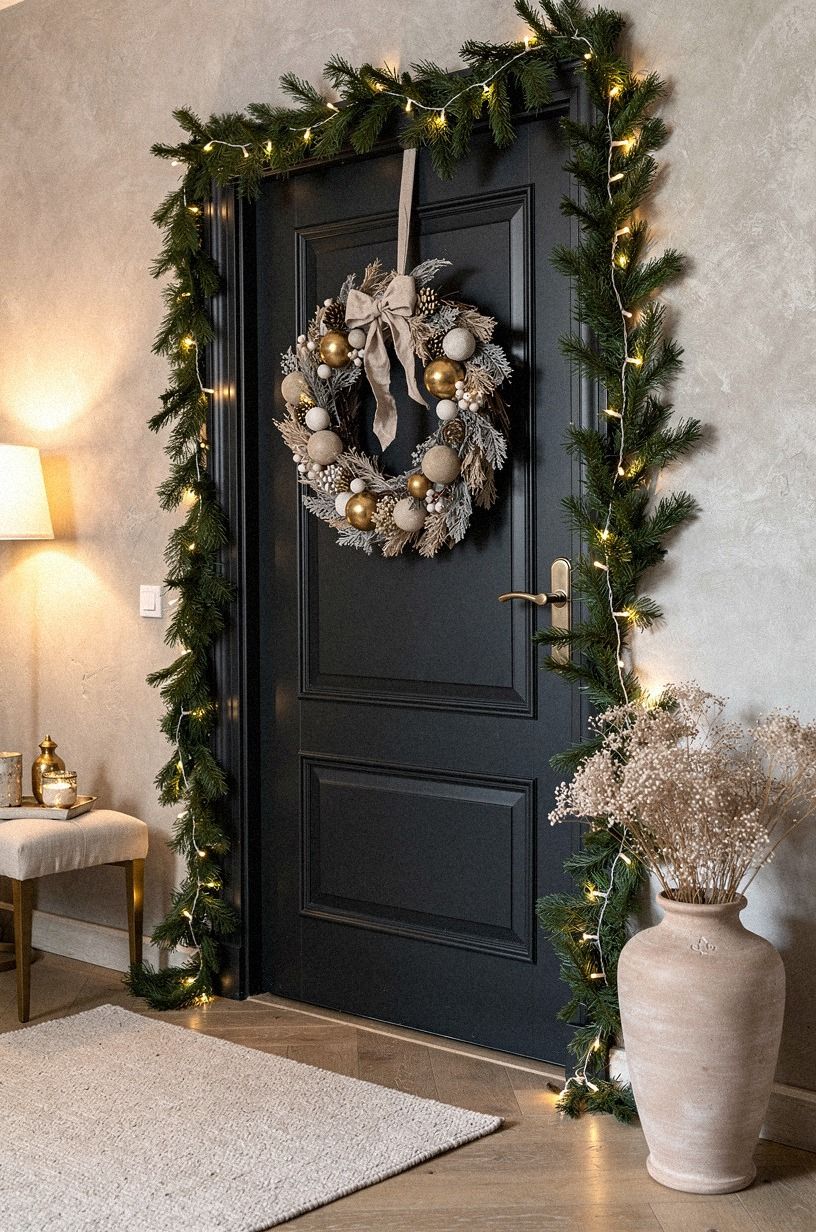
Dried flowers can look delicate, but they become dramatic against a saturated door. Try dried pampas grass, strawflower, and preserved lunaria on one side of a grapevine wreath. Leave the lower half open so the arrangement feels gathered rather than packed.
A hand-applied Venetian plaster finish in warm clay gives pale grasses a grounded backdrop, while a linen-toned door with aged-brass hardware makes them feel softer. I’d avoid bright red flowers here because they push the wreath toward a predictable holiday palette. Your better move is rust, cream, faded blush, and one small bundle of preserved eucalyptus.
If you need more color ideas, the Christmas tree palette guide has combinations that translate well to a front door wreath display. I’d choose dried flowers with different shapes, then place the roundest heads near the center and the feathery stems toward the outside.
This arrangement works best when you allow a little imperfection. You can trim one stem shorter, tilt another outward, and leave a visible section of grapevine underneath. The contrast between the rough base and the delicate flowers gives the wreath its character.
8Float a metal star inside a linen ring
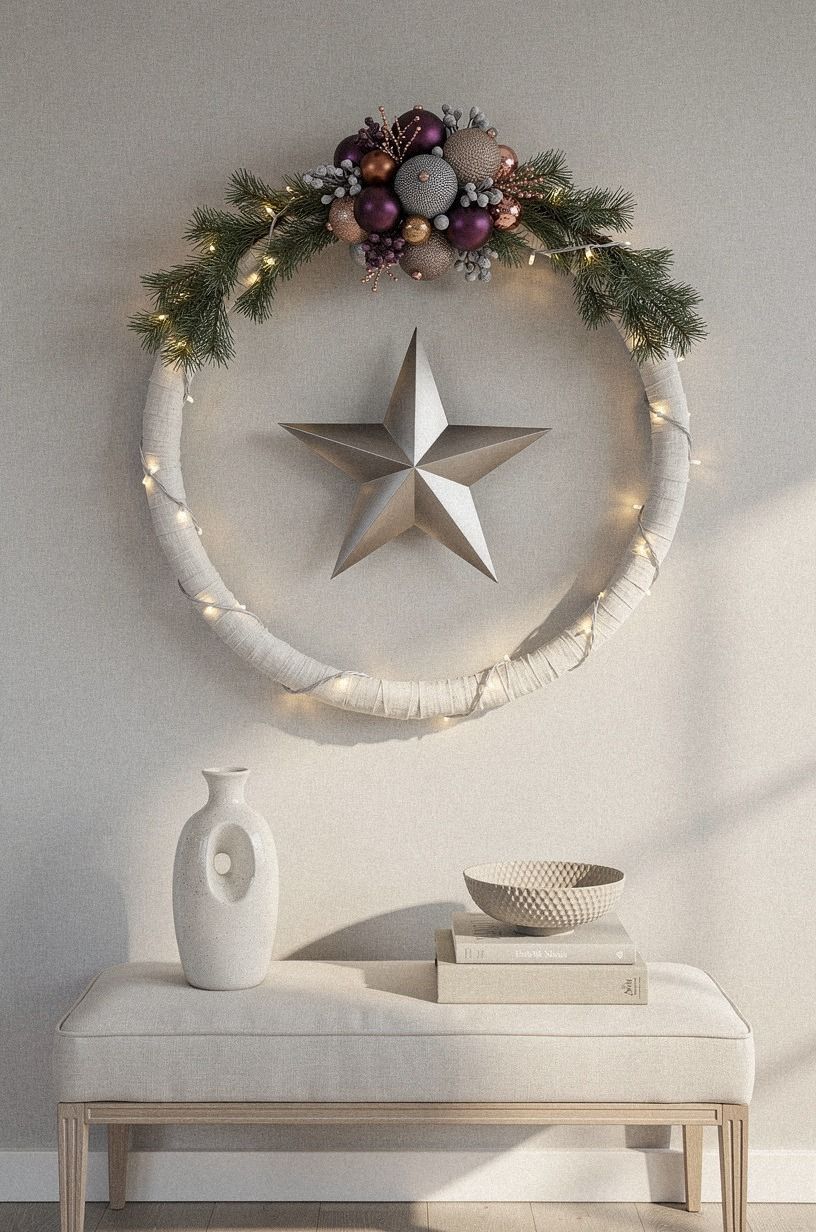
A linen ring with a metal star in the center gives you a wreath shape without a solid, leafy mass. Wrap heavy grey linen around a wire hoop, secure the ends behind the ring, and suspend a rose-gold hammered star from narrow cord. The center should stay open.
That negative space is what makes the design feel calm.
I’d choose a five-point star in rose gold if your door has warm hardware, or a plum-painted metal star if the entry needs more color. Don’t add a second ornament just because the center feels empty at first. You’ll see the balance once it’s on the door, and you can’t judge that balance flat on a table.
Your wreath should look considered from 10 feet away and tactile from 2 feet away. I’d use a slightly irregular star because machine-perfect metal can feel disconnected from the soft fabric. A small shagreen accent or a frayed linen edge can help too, as long as the loose threads are trimmed neatly.
For a rental, this is a practical choice. The ring is lightweight, the center remains open, and you can reuse the metal star in a bowl or shelf arrangement after December.
9Use a woven basket as a half-wreath
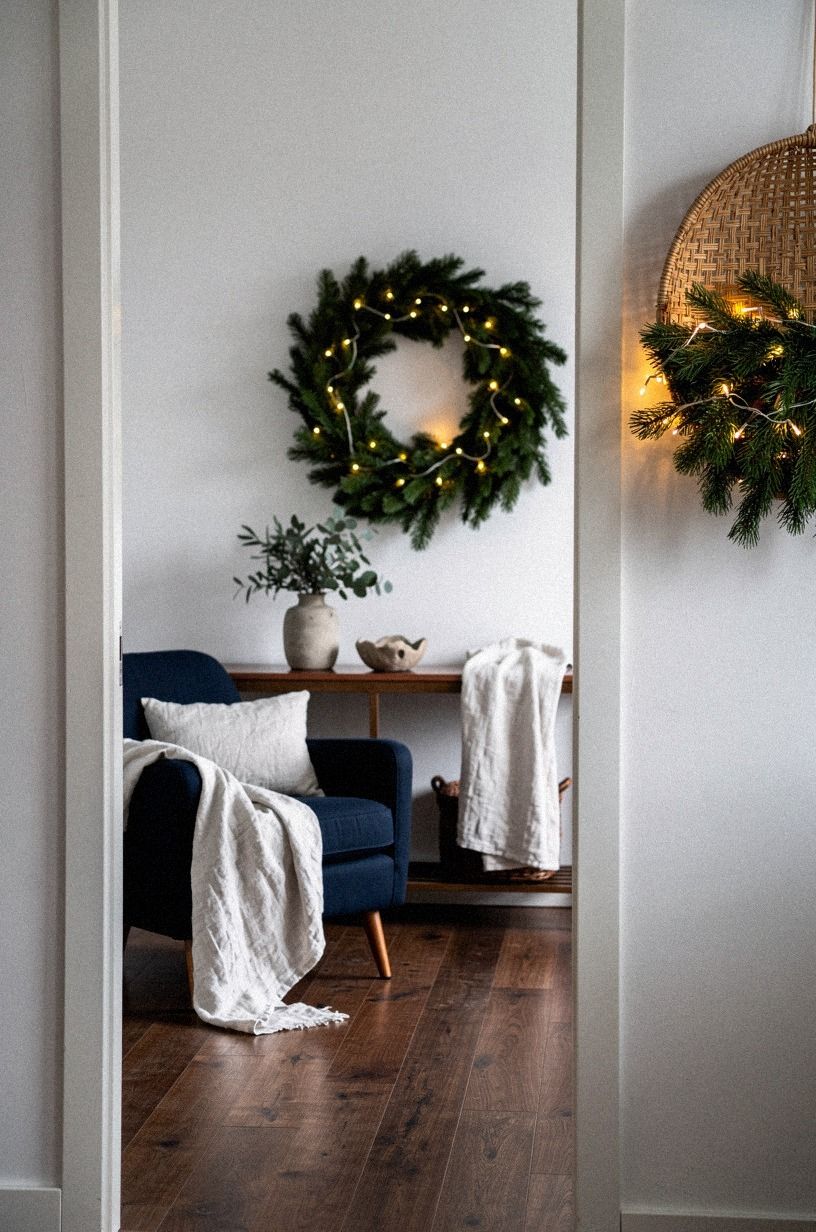
A shallow basket lined with washed Belgian linen can hold a loose arrangement of winter stems while giving you a useful silhouette. Hang the basket at eye level, then fill only the left or right side with willow, cotton stems, and a few dried berries. The open side keeps the arrangement from looking like a stuffed container.
This is a strong option for renters because the basket can move indoors after the holidays. I’d choose a basket under 12 inches wide for a small apartment entry, then repeat its woven texture in a hallway tray or a walnut console nearby.
If you’re styling a narrow landing, hang the basket slightly off-center so the door can open fully. The asymmetry feels relaxed, not unfinished. You can switch the stems when the season changes, so the basket keeps working long after the Christmas decorations are packed away.
I’d avoid filling every inch of the basket. Your eye needs a place to rest, and the empty portion makes the arrangement feel intentional. One tall willow branch, two cotton stems, and a small cluster of berries can be enough.
10Paint a geometric wreath on a wood panel
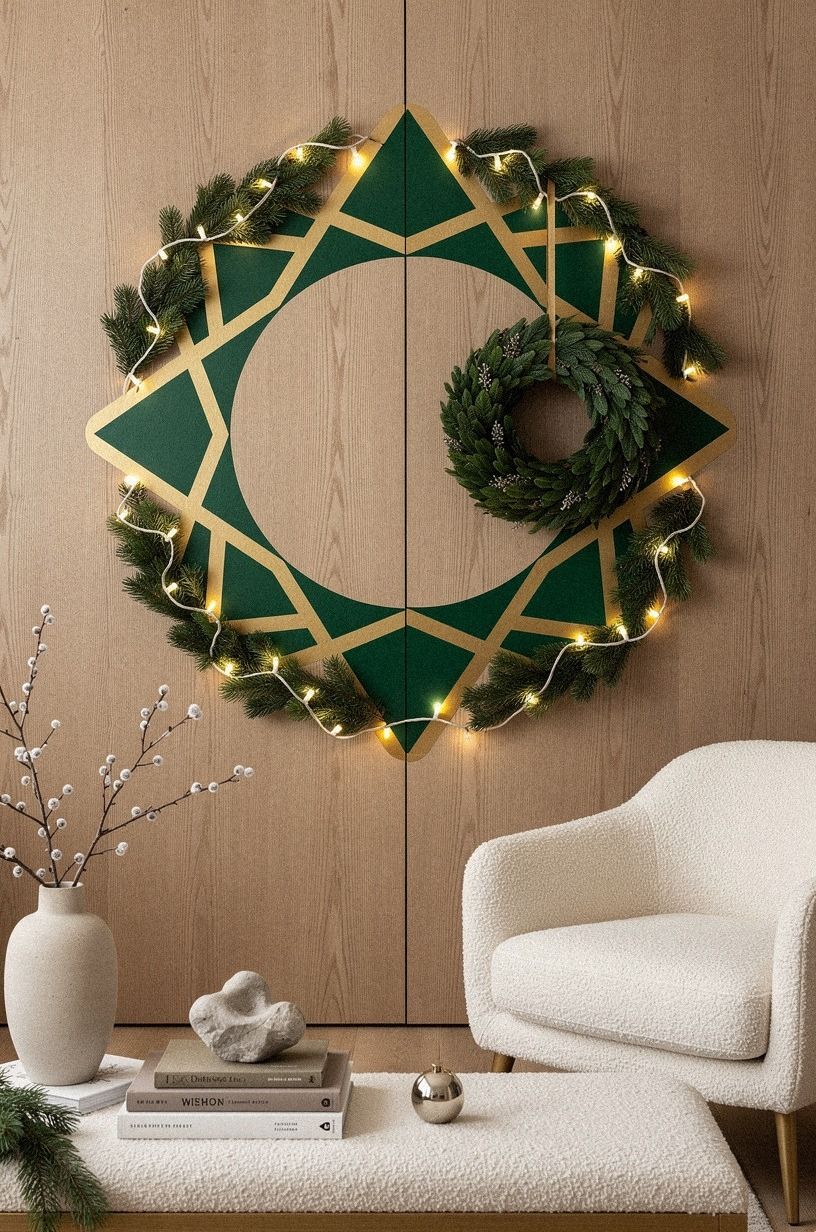
A painted wreath works when you want seasonal color without a physical object projecting from the door. Use a 3/4-inch solid white oak panel, sketch a loose circle, and paint overlapping arches in cream, gold, and emerald. Add a small leather loop at the top for hanging.
You don’t need perfect geometry. The hand-painted marks are the point, especially if the panel has visible grain and a lightly sanded edge. I’d use Benjamin Moore Chestertown Buff HC-9 for the base and a small amount of muted gold for contrast.
Your panel can stay outside under a covered porch, but it should be sealed on every side. If you’re unsure where to place seasonal art, center the visual midpoint about 57 to 60 inches from the floor. I’d test the height with painter’s tape before adding the loop.
This option gives you the most control over color. You can echo the trim, pull from your porch rug, or introduce a surprising shade like dusty lilac. The panel becomes a small piece of seasonal art instead of another circular bundle attached to the door.
If the entry has a bench, an organic bouclé cushion will soften the oak and keep the arrangement from feeling too hard.
11Tie a quilted fabric wreath instead of using branches
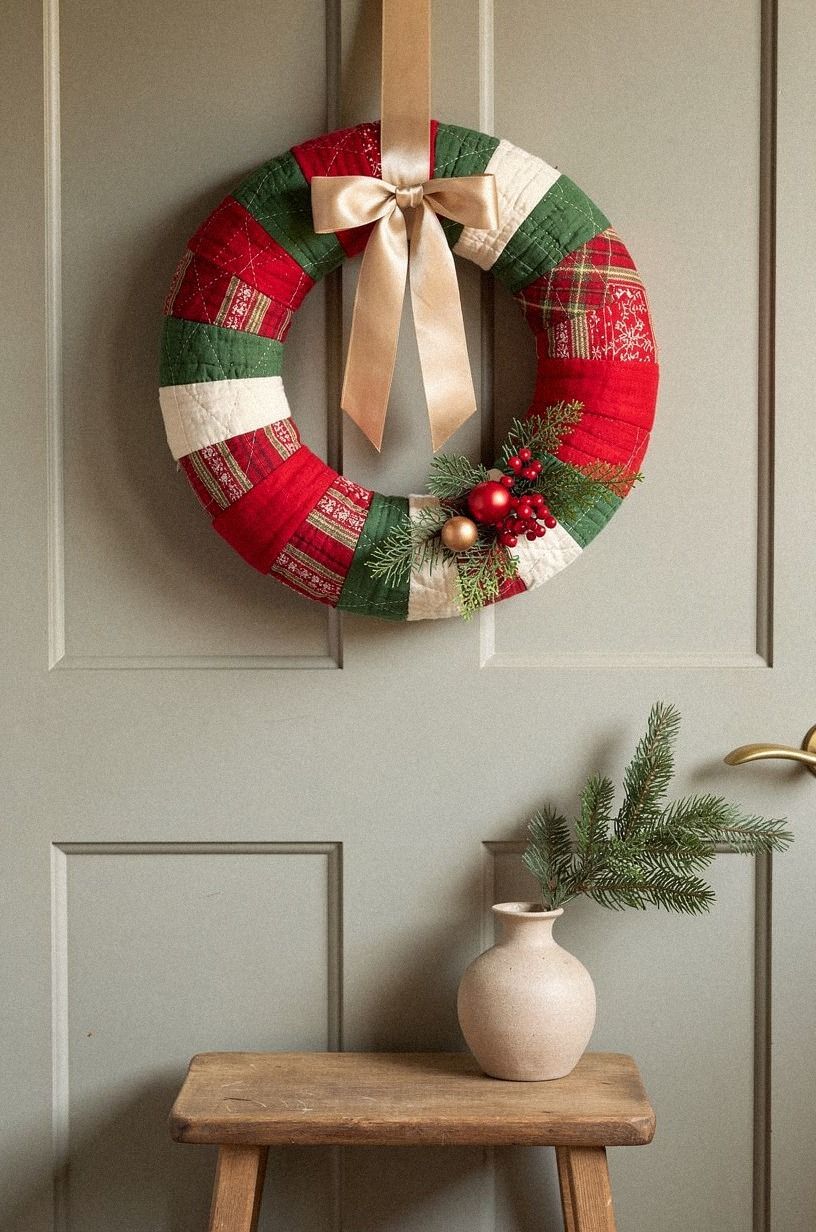
A quilted fabric wreath brings softness to a hard entry and gives you a chance to use a textile you already own. Cut cotton quilt squares into wide strips, tie them around a wire frame, and alternate cream, rust, and forest green. The knots should remain visible, so the wreath feels handmade rather than upholstered.
I’d avoid shiny satin because it makes the piece look like a costume accessory. A washed cotton or brushed flannel has more character, and you’ll notice the difference when winter light hits the surface. Add one small natural-oak loop at the bottom, then stop.
Against a Nero Marquina black marble console, the forest green and rust feel especially rich. Your fabric wreath doesn’t need bells, berries, and greenery to explain itself. It already has pattern, touch, and movement.
If you’re using scraps, place the strongest pattern at the sides and use quieter fabric near the bottom. You’ll create a loose visual frame without making the door look covered.
12Layer a ceramic tile medallion with cord
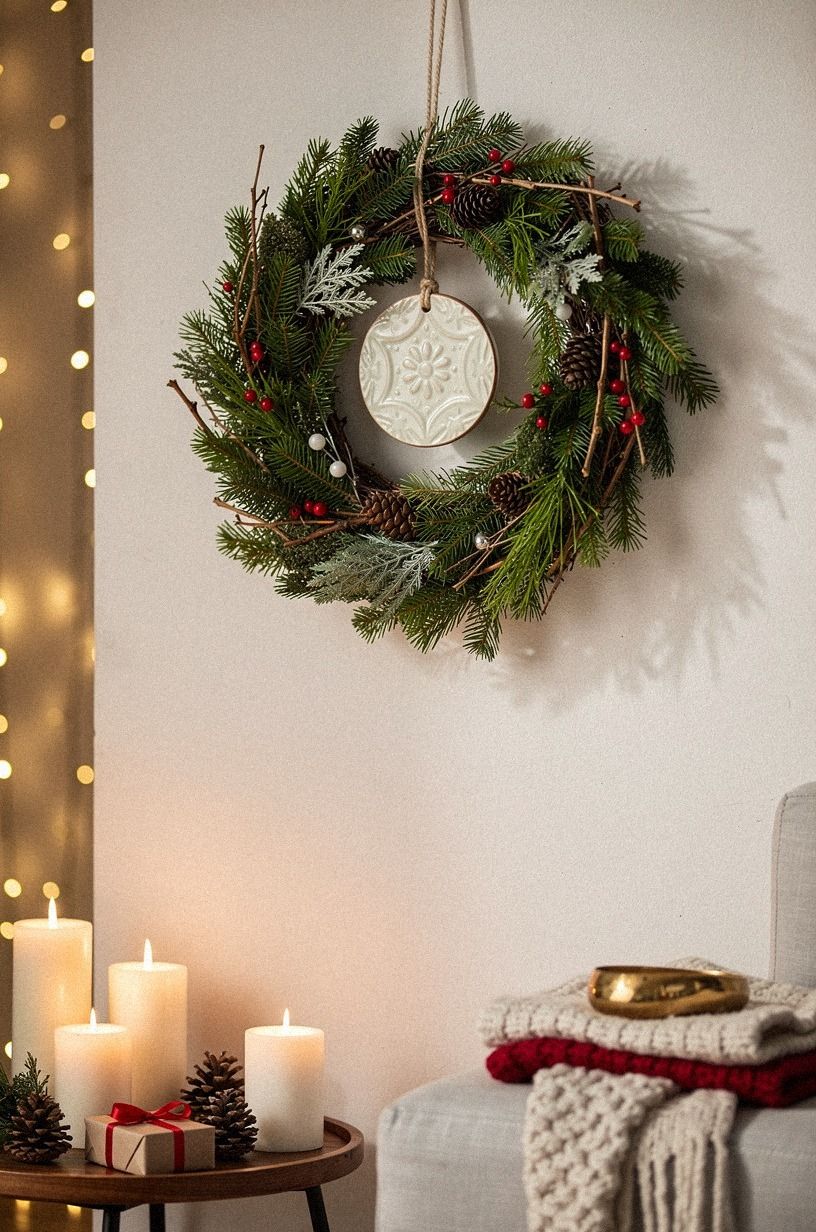
A ceramic medallion gives you a wreath-like focal point while keeping the shape graphic. Choose a hand-glazed dusty-rose tile or a charcoal clay disk, drill or purchase it with a hanging hole, and suspend it inside a brass-edged cord circle. A thick cotton cord keeps the piece from feeling delicate.
This idea looks best on a quiet door color, especially warm white or dusty gray. I’d skip a busy tile pattern because it competes with the circular outline. Your strongest version has one surface, one cord, and one small knot.
If you’re already using tile indoors, repeat the color in a kitchen backsplash or shelf vignette, but don’t force a match. A related focal-point approach for holiday decorating can help you decide where the eye should land.
I’d choose a tile with a slightly uneven edge because handmade variation makes the medallion feel more collected. Keep the cord thick enough to balance the ceramic.
A thin string can make the piece look like a craft project rather than a deliberate entry detail. A deep-pile mohair velvet cushion nearby can add the softness the tile lacks.
13Choose dried apples over shiny ornaments
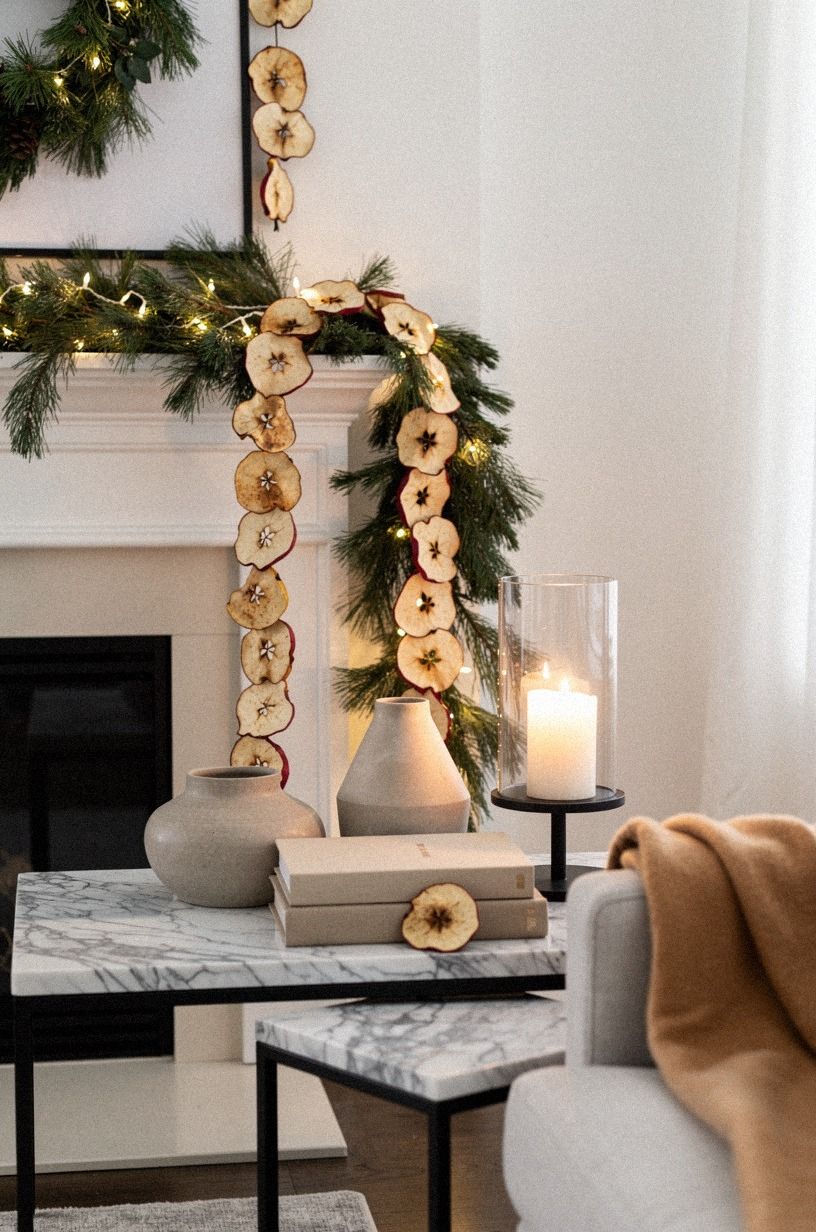
Dried apple rings bring a rustic, earthy note and look better as they age than plastic fruit.
14Float a black ribbon over pale magnolia leaves
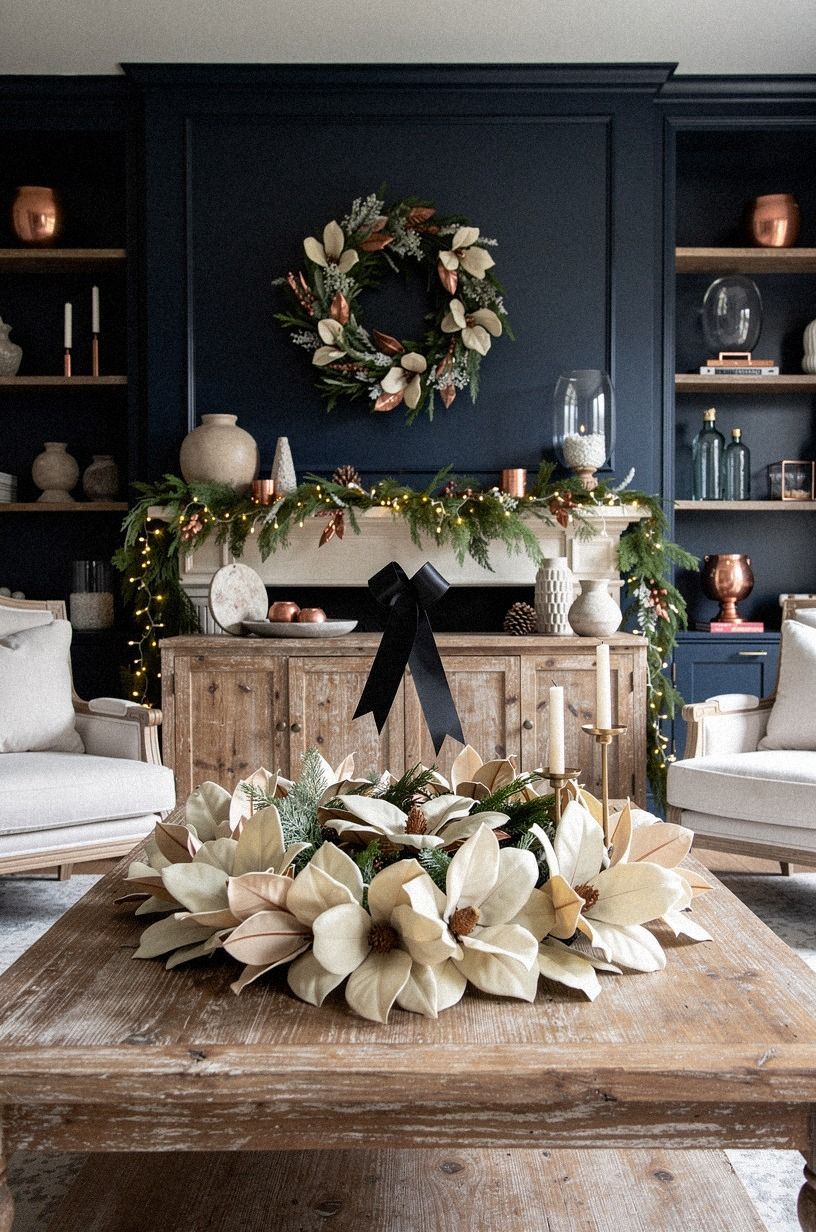
Pale magnolia leaves have a sculptural shape, and a black ribbon gives them enough contrast to feel current. Arrange dried magnolia leaves around only two-thirds of a grapevine base, then tie a long black cotton ribbon at the lowest point. Let the ribbon tails reach uneven lengths.
This is the most dramatic option in the group, but it doesn’t need a dark door. A midnight blue door makes the ivory leaves glow, while a warm ivory door makes the black ribbon feel graphic. I’d use a reclaimed weathered teak bench nearby if the entry has room, because the worn wood adds warmth without copying the leaves.
If your porch is windy, shorten the ribbon before it starts catching on the handle. You can also fold the tails once and stitch the fold by hand, which keeps them from twisting throughout the season. I’d leave the magnolia leaves matte because a strong gloss can make the arrangement look artificial.
For a broader decorating plan, the holiday focal-point guide is useful when you’re deciding whether the wreath should be the entry’s main event or one part of a larger composition.
15Build a brass hoop with one winter branch
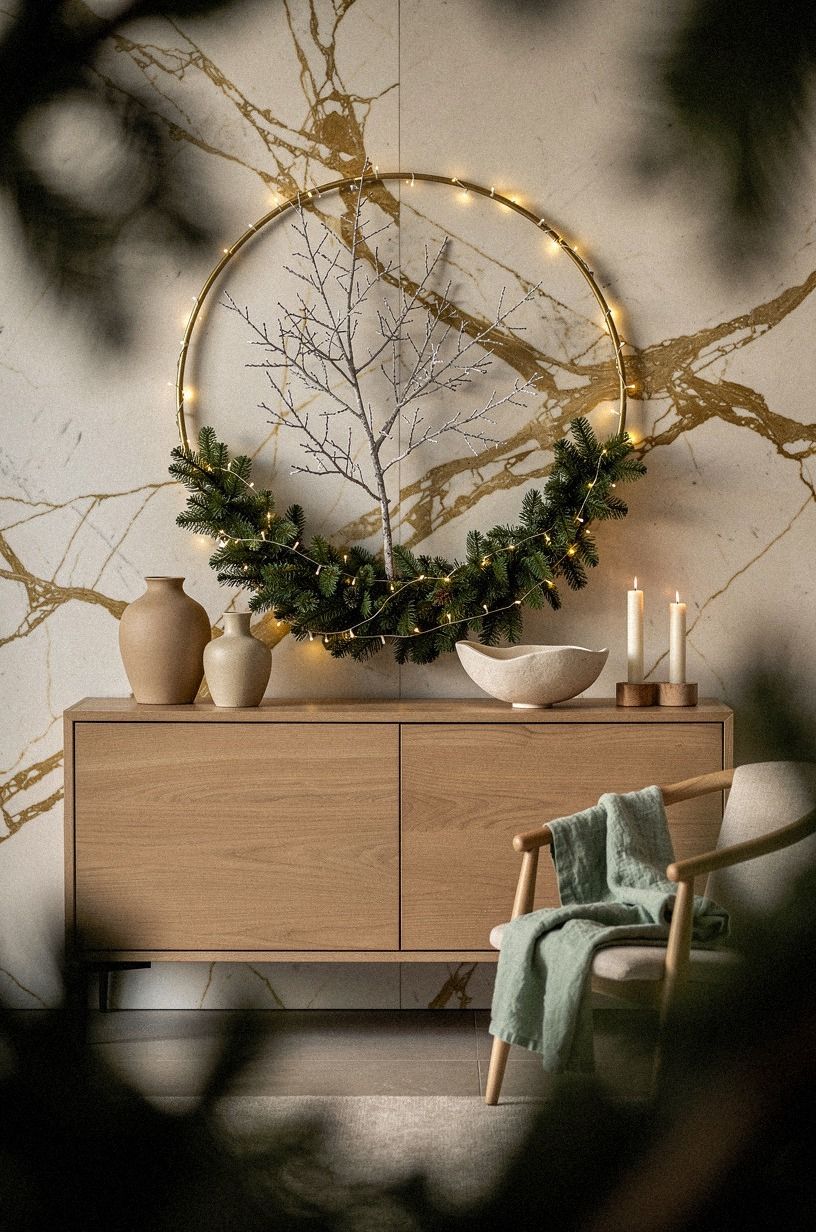
A single brass hoop with one natural wood branch is the clearest answer for anyone who wants a modern Christmas wreath. On a sage green door, pair the branch with warm cream surroundings and a small Calacatta marble accent with gold veining.
The Honest Rule Behind Non-Greenery Wreaths
I’ve learned that a wreath without greenery needs one material with enough presence to carry the whole design. That might be velvet, dried citrus, brass, wool, or paper, but it can’t be five unrelated materials competing in a circle.
When I first started making wreaths, I kept adding small details because the base looked unfinished on the table. Once it was hanging, those details made the door look busy.
The better move is to step back 10 feet before adding anything else. Your door color matters more than most people expect.
Pale materials need contrast, while dark materials need space around them. That’s why a black ribbon works with magnolia leaves, but it can swallow a dark painted door.
I’d rather see a plain branch against a strong background than a heavily decorated wreath where nothing has room to breathe. A front door is already a vertical shape, so your wreath should either soften that geometry or sharpen it on purpose.
If you’re unsure, remove one element and look again. The design often becomes clearer immediately!
Cost matters, too. The provided US room-design ranges are much larger than most single wreath projects, but they’re useful when you’re planning the whole entry.
You don’t need the mid-tier plan to make a wreath feel finished. Spend your attention on scale, texture, and the hook.
If you’re refreshing the entry as a whole, three light sources per room still gives you a useful framework: overhead, task, and ambient. Your wreath only needs one strong visual decision, and that’s why the simplest designs often stay in memory longest.
Before you hang anything, I’d check the door swing, the hook’s weight limit, and the wreath’s exposure to rain. Those practical details aren’t glamorous, but they prevent a beautiful project from becoming frustrating. A wreath should welcome you home, not make you repair the door every weekend!
A Few Things Worth Answering
What is the best Christmas wreath idea for a small door?
A brass hoop with one winter branch is the best small-door option because its open center keeps the entry visually light. A 12-inch metal hoop, narrow cotton tape, and one dried stem are enough. You’ll avoid the bulky look of a full wreath, and you can store it flat after the season.
Where can I buy non-greenery wreath pieces on a budget?
Look at IKEA, Wayfair, Target, Facebook Marketplace, and local thrift shops for baskets, ribbon, hoops, and fabric. You can also reuse a scarf or old quilt. If you’re shopping for a broader holiday palette, see these Christmas tree ideas with less predictable color.
Secondhand materials often have better texture than new seasonal décor.
How much does a non-greenery wreath makeover cost?
A small wreath refresh can run about $100 to $300, depending on the base and materials. A free grapevine branch, reused ribbon, or fabric from your closet can reduce the cost quickly. You’ll spend more on a brass hoop, dried flowers, or specialty textile, but the design can still stay focused.
Can I create a non-greenery wreath on a budget?
Yes, and you can start with three low-cost moves: reuse a basket, cut ribbon from fabric you already own, and gather dried branches from your yard where permitted. Paint a wood panel with leftover Benjamin Moore White Dove OC-17, then add one purchased detail. Your best result won’t come from more pieces!
Is a non-greenery wreath worth it in a small space?
Yes. A small space benefits from an open wreath because the door color remains visible and the entry doesn’t feel crowded.
Choose a narrow hoop, basket, or half-wreath, then hang it at a comfortable eye level. You’ll get seasonal impact without taking up floor space or blocking the handle.
Is a non-greenery wreath a good idea for a rental?
Yes. Use removable hooks, a tension rod inside a glass door, or a lightweight basket with a no-damage hanger.
Avoid drilling into the door, and keep heavy ceramic pieces indoors. A linen ring or paper star cluster is especially renter-friendly because it weighs little and can move with you.
Where I’d Start First
If I had to pick one, I’d start with the dried orange wreath. The slices add color and scent without needing a perfect bow, and the texture improves as the season goes on. Pin it for later, then pair it with a quieter tree palette when you’re ready to decorate the rest of the entry.