An antique stone sink can make a Mediterranean bathroom feel centuries old for about $200 to $1,200 when you focus on the basin, wall color, and light first. I once chose the wrong glossy faucet, and it made old limestone look staged. The fix was simpler than I expected. Your sink needs texture, shadow, and a little restraint.
- Anchor the Antique Style Sink With a Thick Stone Ledge
- Use the Two-Tone Basin Rule in a Guest Bathroom Sink
- Choose Honed Limestone Over Polished Marble
- Paint Around the Decorative Sink in Hague Blue
- Float the Vanity at 32 to 36 Inches
- Build the Three-Height Light Stack
- Frame the Mirror With Carved Wood
- Let Hand-Glazed Zellige Carry the Wall
- Swap Bright Chrome for Unlacquered Brass
- Layer Belgian Flax Linen Beside the Basin
- Apply the Two-Wood Rule
- Place the Faucet Off Center for a Collected Look
- Paint a Stone Ensuite in Sea Salt
- Follow the 48-Inch Towel Bar Rule
- Carve a Shadow-Line Niche
- Choose Patina Over Perfect Symmetry
- Let the Floor Carry the Earthy Palette
- Which Finish Works Better for Your Sink?
- Style the Sink With Three Useful Objects
1Anchor the Antique Style Sink With a Thick Stone Ledge
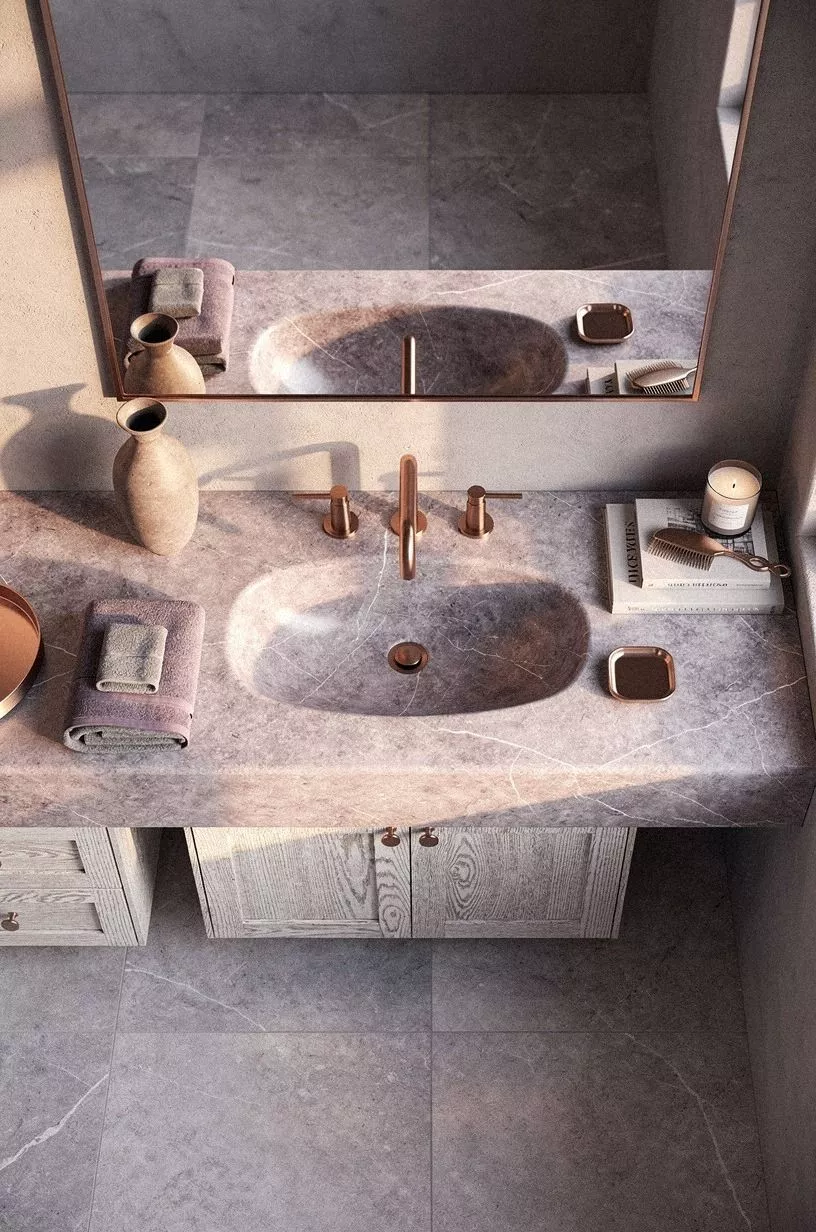
A deep ledge gives your antique style sink the visual weight of an old farmhouse washroom. Choose cerused white oak with visible grain for the ledge, or use a cast-stone basin with a softly irregular rim.
You’ll want the edge to catch a thin line of morning light, not sparkle like a showroom countertop. That quiet surface feels earthy and settled.
I’d skip a razor-thin white vanity top here. It’s clean, but it makes your basin look newly installed instead of inherited. A ledge around 4 inches deep gives you room for a small olive-oil bottle, a folded Turkish cotton cloth, and one ceramic cup.
If you’re studying proportion, these Mediterranean vanity ideas with carved wood and stone tops will help you see why mass matters.
2Use the Two-Tone Basin Rule in a Guest Bathroom Sink
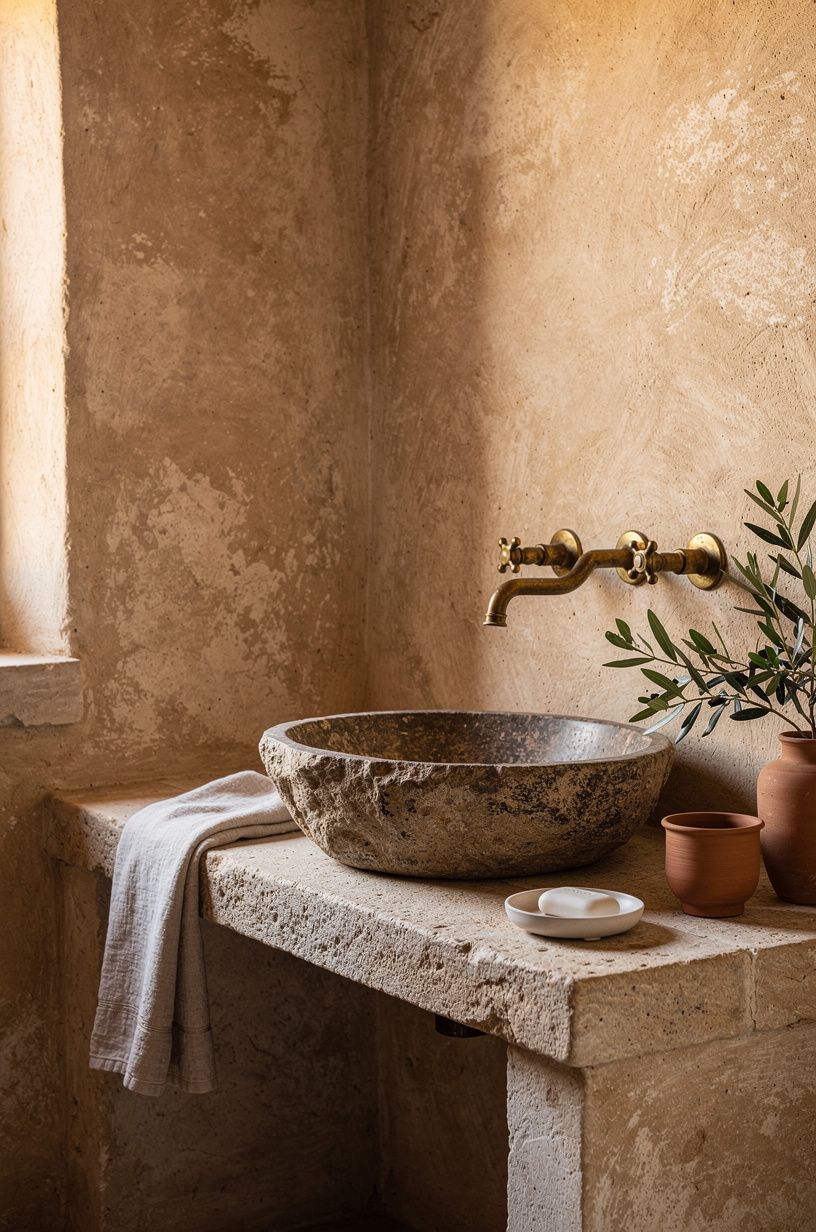
The Two-Tone Basin Rule keeps your guest bathroom sink from becoming a single pale block.
3Choose Honed Limestone Over Polished Marble
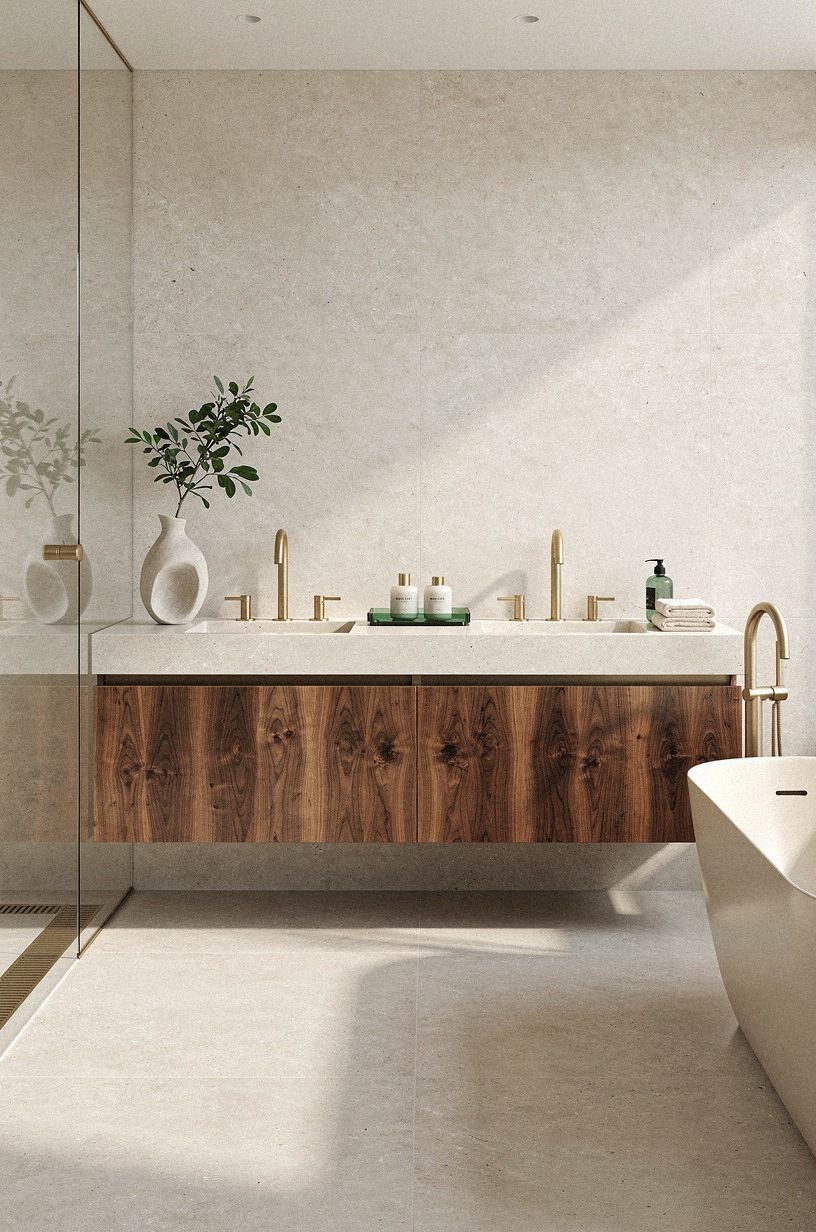
Honed limestone with natural pitting is my first choice for the basin, especially when it’s paired with book-matched walnut on the vanity. Polished marble can be elegant, but it reflects every bulb and water mark, so your room starts feeling like a hotel lobby. Limestone absorbs light in a softer way.
You’ll notice it most at night, when the wall sconce leaves a dull golden patch across the basin.
If you’re drawn to marble, choose Calacatta Gold marble with amber veining and keep the polish limited to a small top. Your eye needs one refined note, not a glossy chorus.
A zellige tile bathroom guide can show you how irregular tile and quiet stone work together. Don’t pair a highly veined top with busy floor tile, or your sink will lose its presence.
4Paint Around the Decorative Sink in Hague Blue
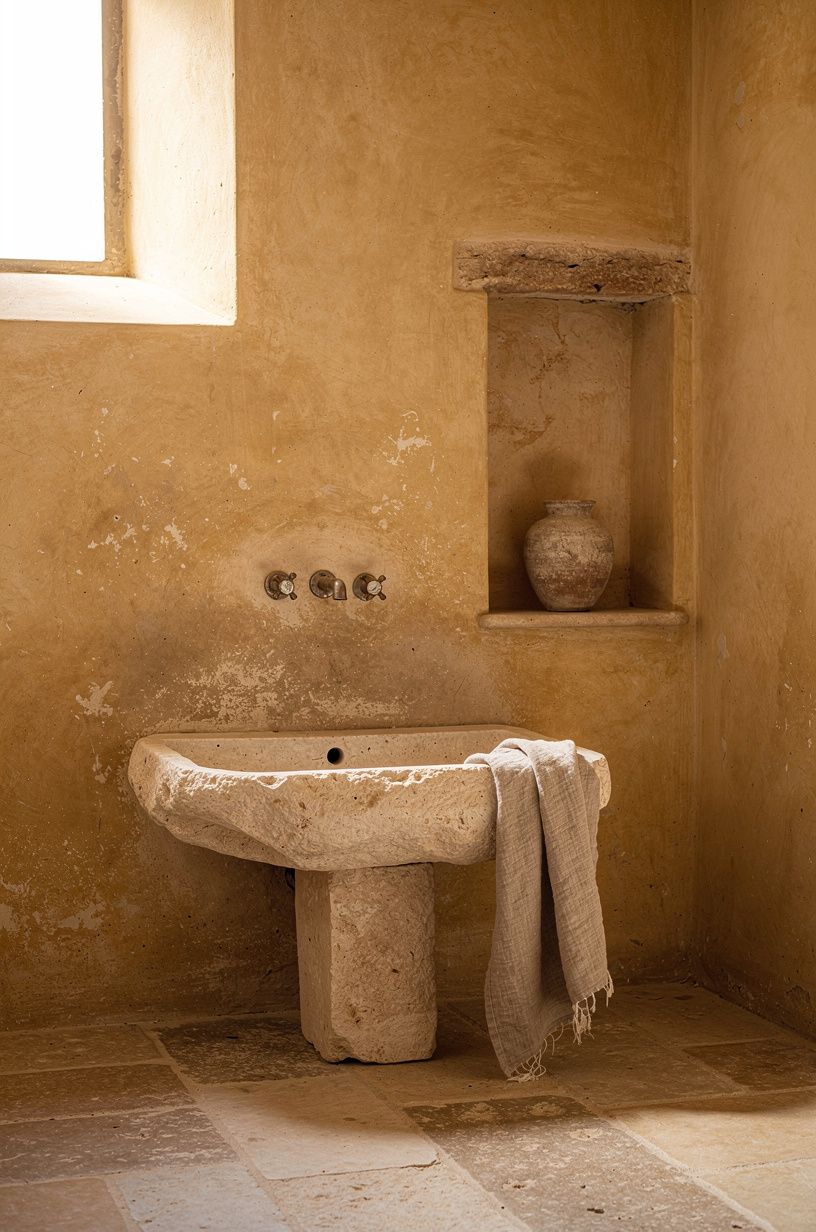
Farrow & Ball Studio Green No.93 makes pale stone look older, richer, and more dramatic.
5Float the Vanity at 32 to 36 Inches
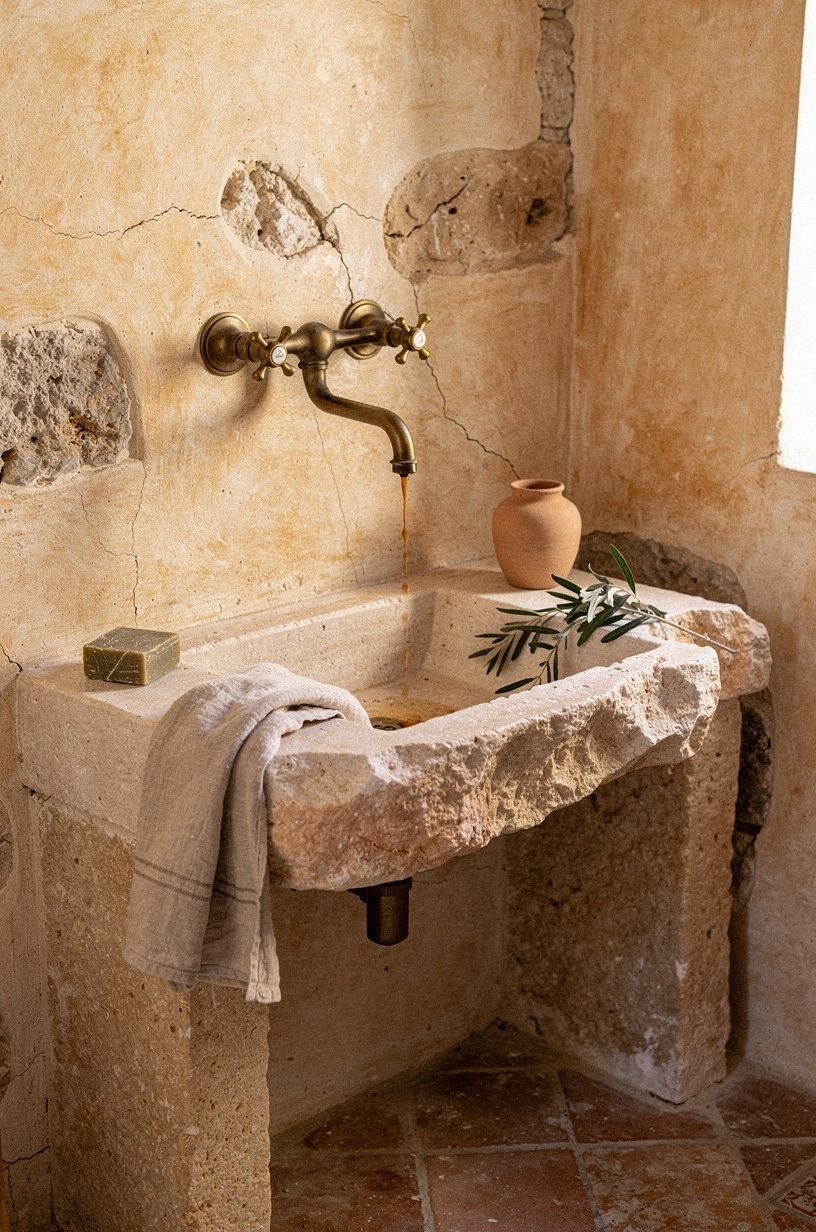
A floating vanity makes your stone sink appear lighter, even when the basin itself is substantial. Keep the finished vanity height between 32 and 36 inches, which gives most adults a comfortable washing position. You’ll also see more floor beneath it, and that open strip helps a small room feel airy instead of packed.
I’ve tried a low reclaimed cabinet, and it looked charming until my shoulders complained every morning. Your storage can still feel old-world at the correct height. Choose IKEA HEMNES as a practical base, remove the bright hardware, and add unlacquered brass pulls.
Leave the wall below open for a woven basket, but don’t fill every inch. The empty floor is doing useful visual work.
6Build the Three-Height Light Stack
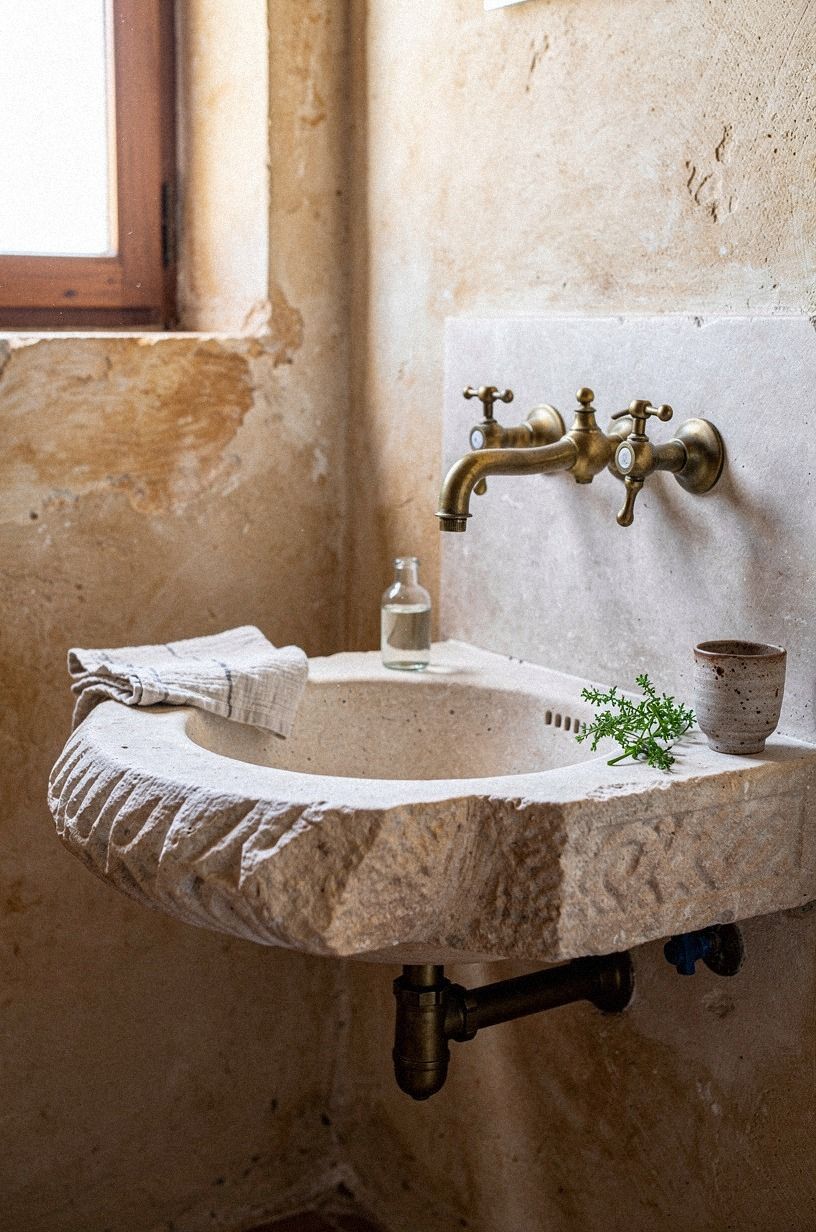
The Three-Height Light Stack uses a ceiling fixture, eye-level sconces, and a low glow near the floor. You’ll get a warmer bathroom because light won’t come from one harsh point above your head. For your antique stone sink, place sconces around 60 to 66 inches from the floor, then add a small plug-in lamp on a nearby shelf if the layout allows it.
And don’t choose matching glass globes just because they’re easy to find. Aged bronze arms, pleated linen, and one opal globe create a more collected result.
I’d skip blue-white LEDs because they make limestone look gray and every mirror mark look louder. Your room should feel peaceful before sunrise, not like a dental office.
7Frame the Mirror With Carved Wood
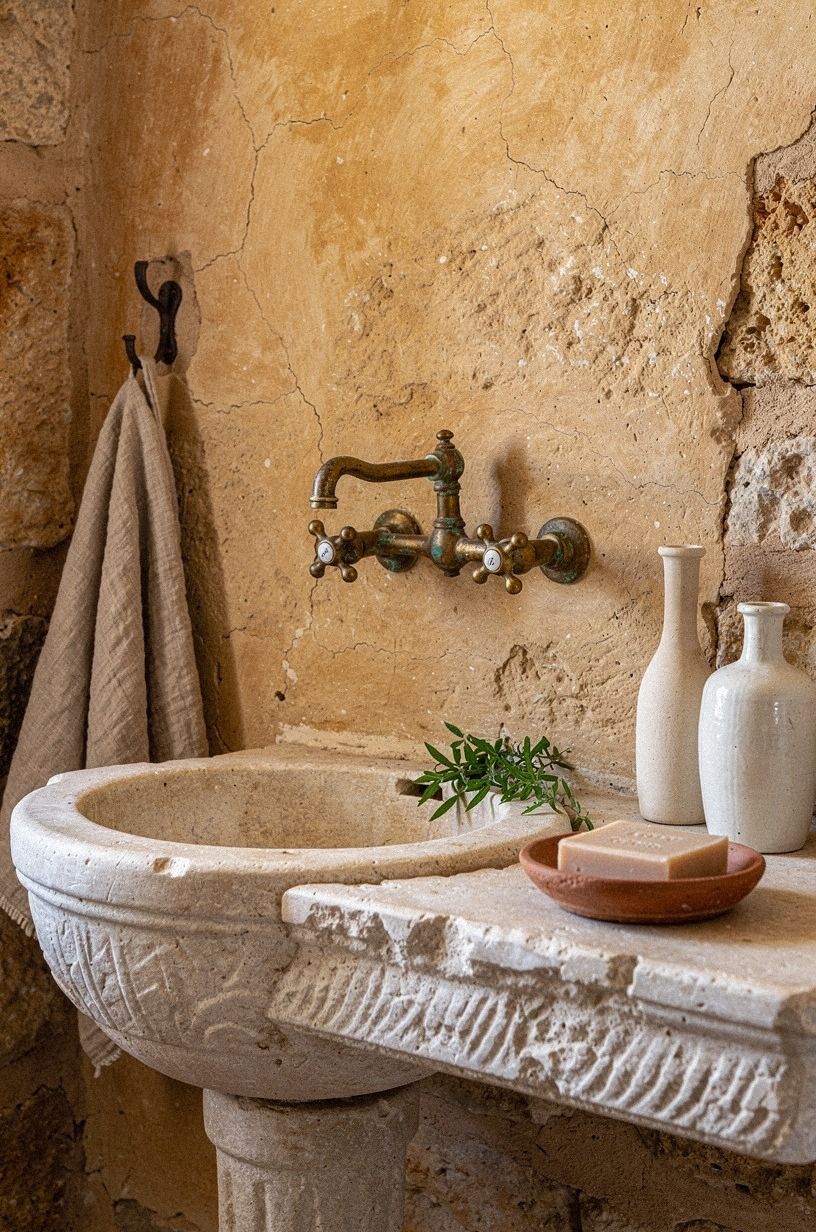
A carved wood mirror set against hand-applied Venetian plaster gives your stone ensuite a focal point with actual texture.
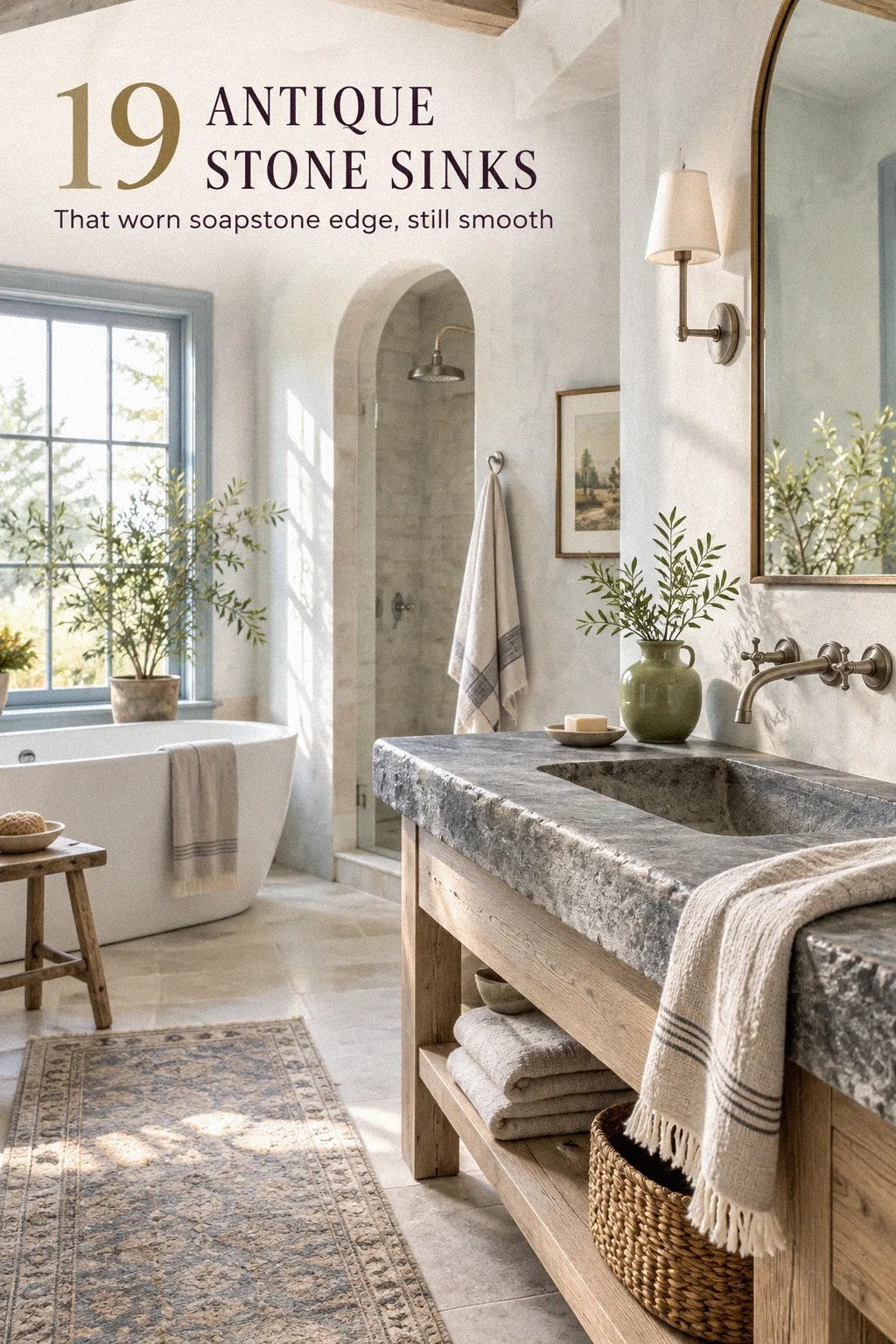
8Let Hand-Glazed Zellige Carry the Wall
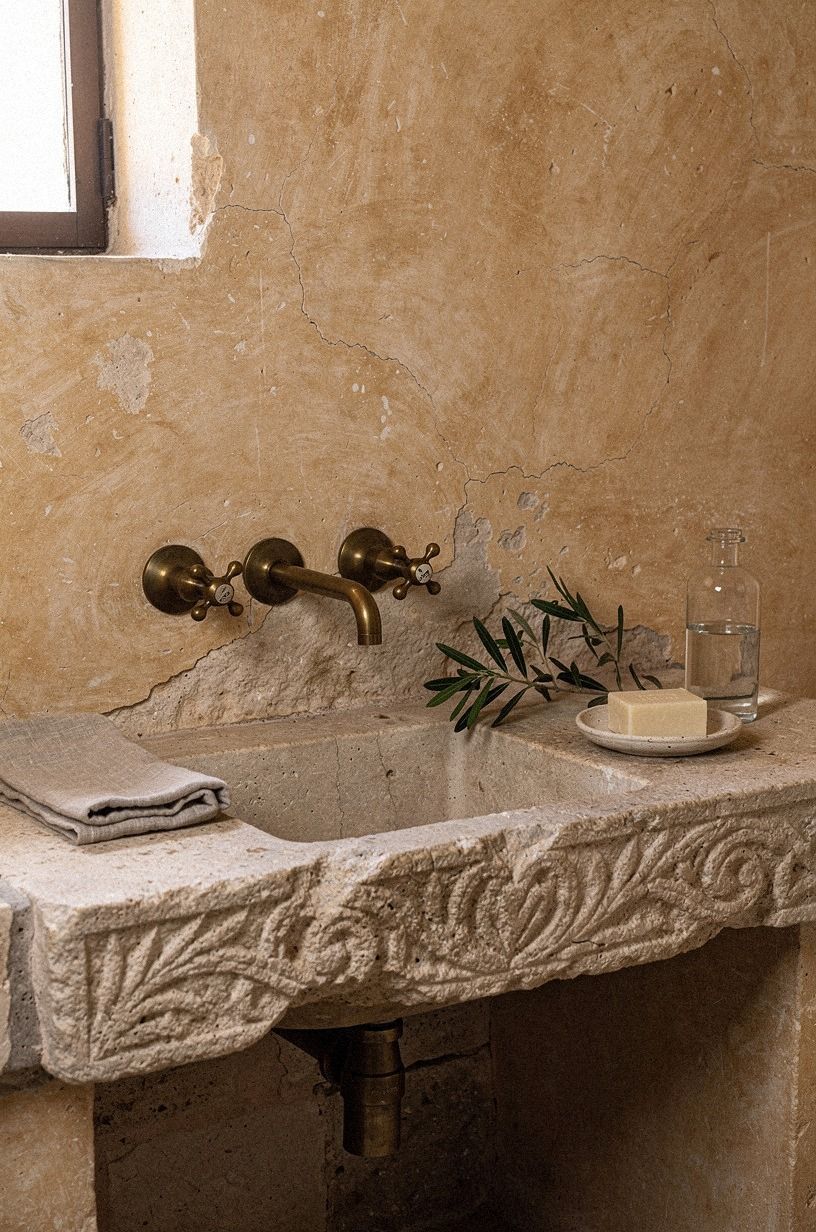
Hand-glazed sage green zellige gives your bathroom the uneven surface that manufactured tile can’t fake. Each tile catches light differently, so your antique stone sink feels connected to the wall instead of placed in front of it.
You’ll see green, warm cream, and natural wood tones shift across the surface as the day changes. That movement is the charming part.
Still, don’t tile every wall around your basin. Use zellige behind the sink to about 48 inches, then finish with limewash or painted plaster above it.
Your budget will stretch further, and the room will breathe. Subway tile costs less at about $2 to $10 per square foot, while zellige typically runs $15 to $35 per square foot. If you’re comparing surfaces, this Mediterranean bathroom tile reference gives your eye a useful starting point.
9Swap Bright Chrome for Unlacquered Brass
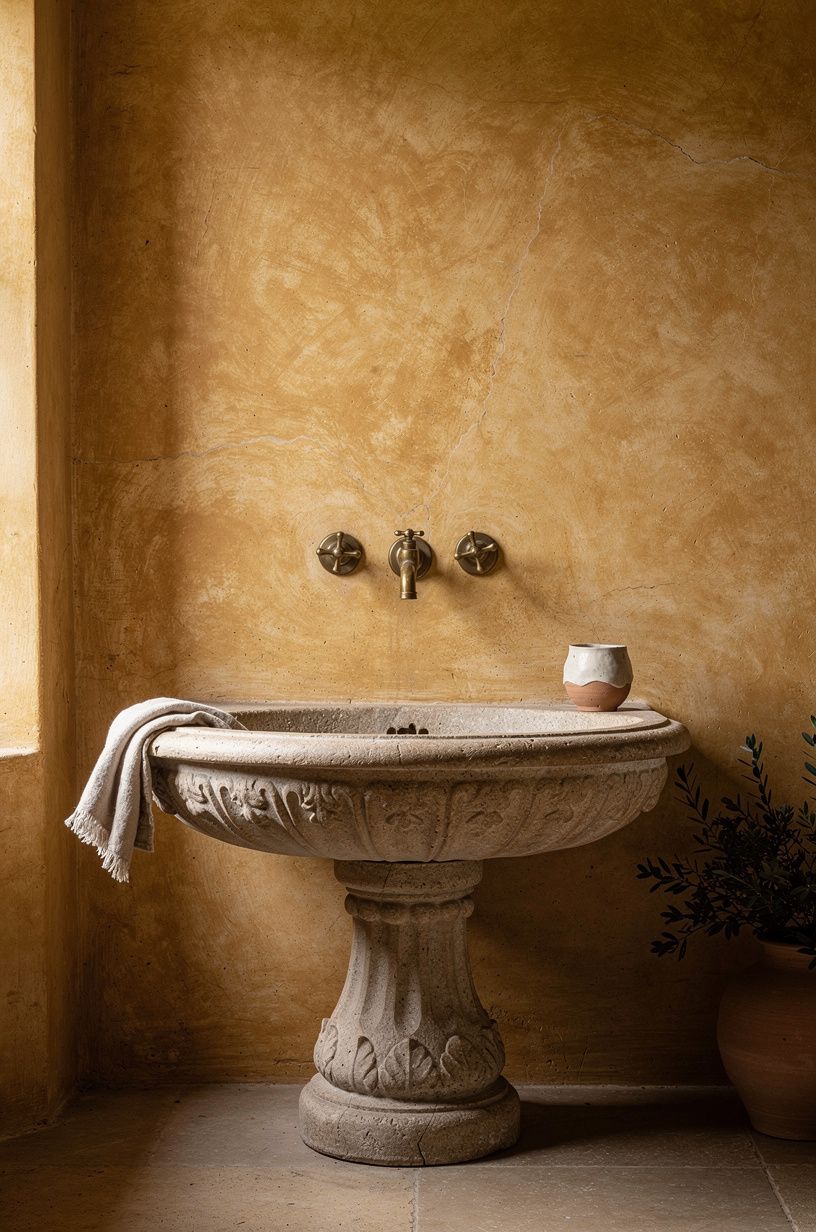
Unlacquered brass develops a soft patina that makes your faucet look better with age.
10Layer Belgian Flax Linen Beside the Basin
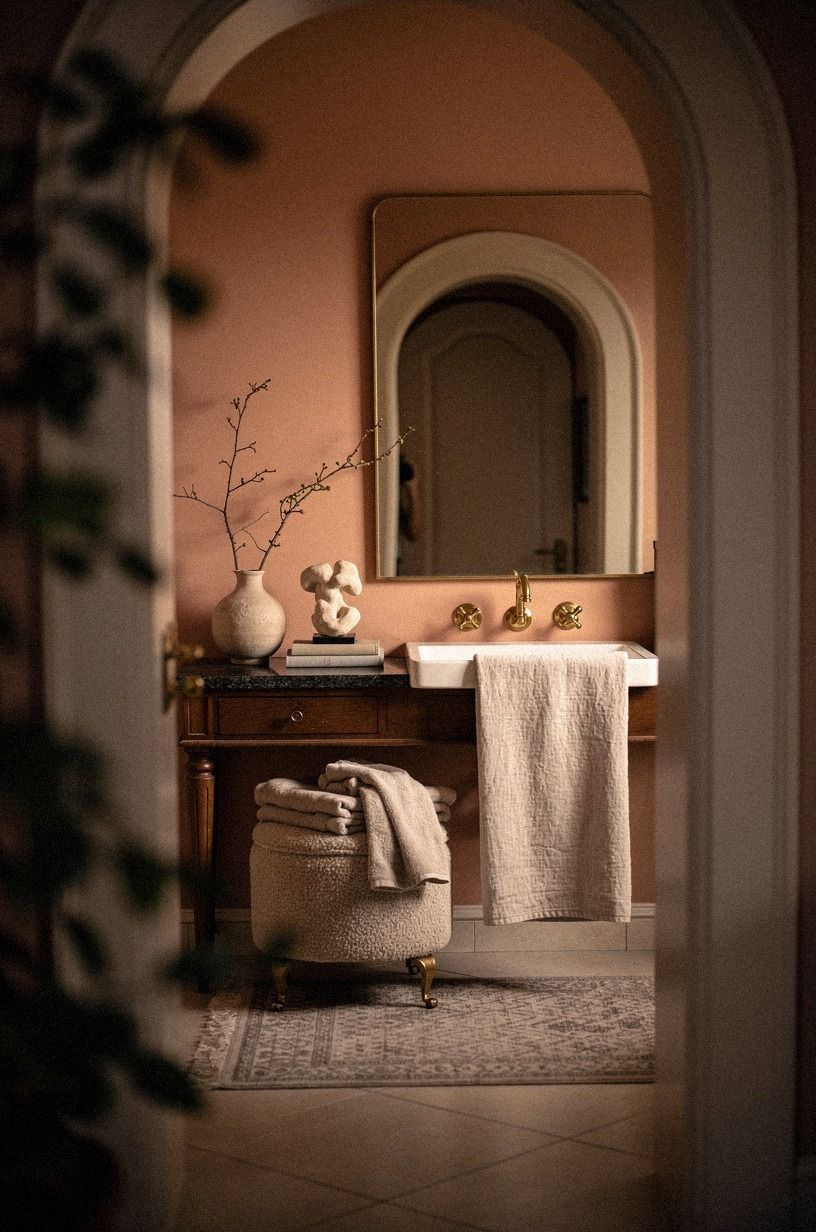
Belgian flax linen beside the basin brings a dry, tactile contrast to cool stone, while organic bouclé adds softness. Choose a warm oat or faded clay shade, then fold one towel over a rail and leave another in a low basket.
You’ll create comfort without turning your sink area into a pile of textiles. The fabric should look touchable, not pressed into a hotel rectangle.
And your towel placement matters more than the pattern. Keep the nearest towel within one step of the basin, especially if the room is narrow. A 600gsm Turkish cotton hand towel feels plush, but it can look bulky if you hang three together.
I’d use one heavy bouclé towel and one lighter linen piece. That combination feels intimate, practical, and quietly luxurious.
11Apply the Two-Wood Rule
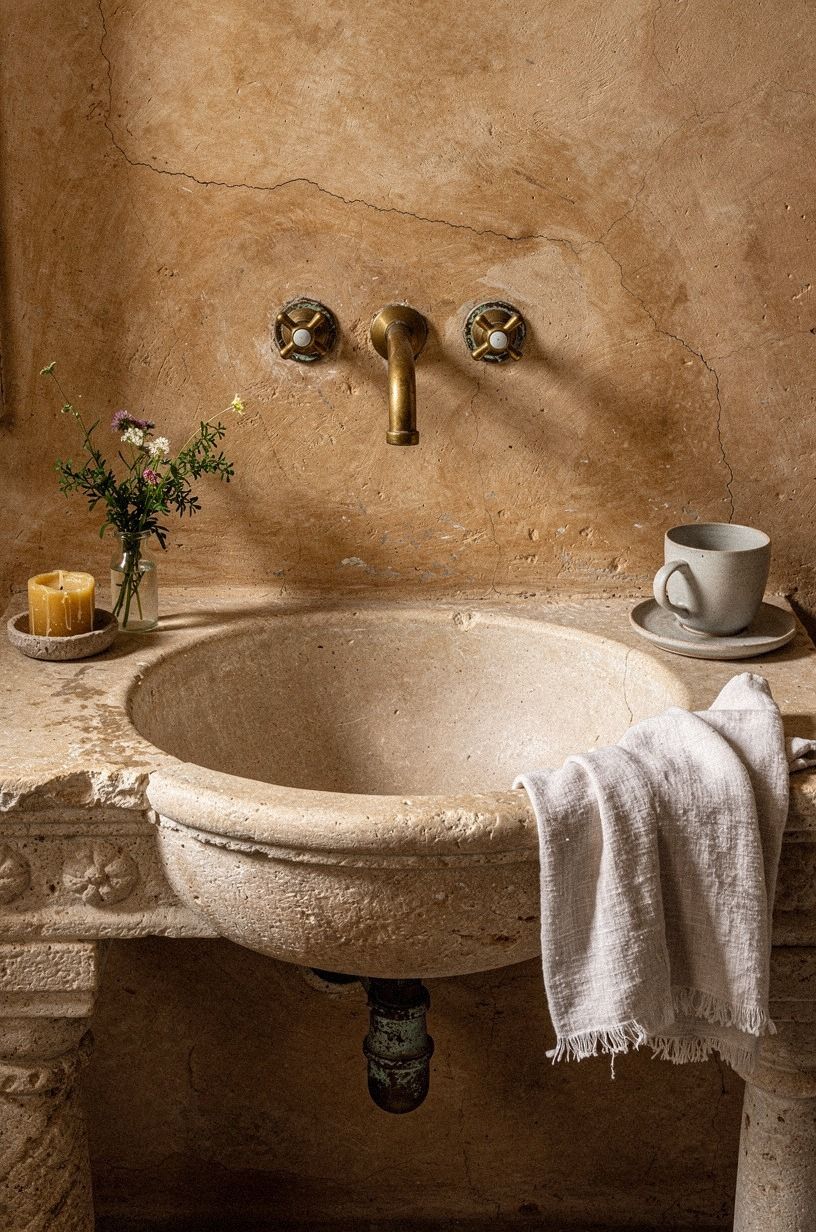
The Two-Wood Rule keeps your antique style sink from looking like a furniture showroom.
12Place the Faucet Off Center for a Collected Look
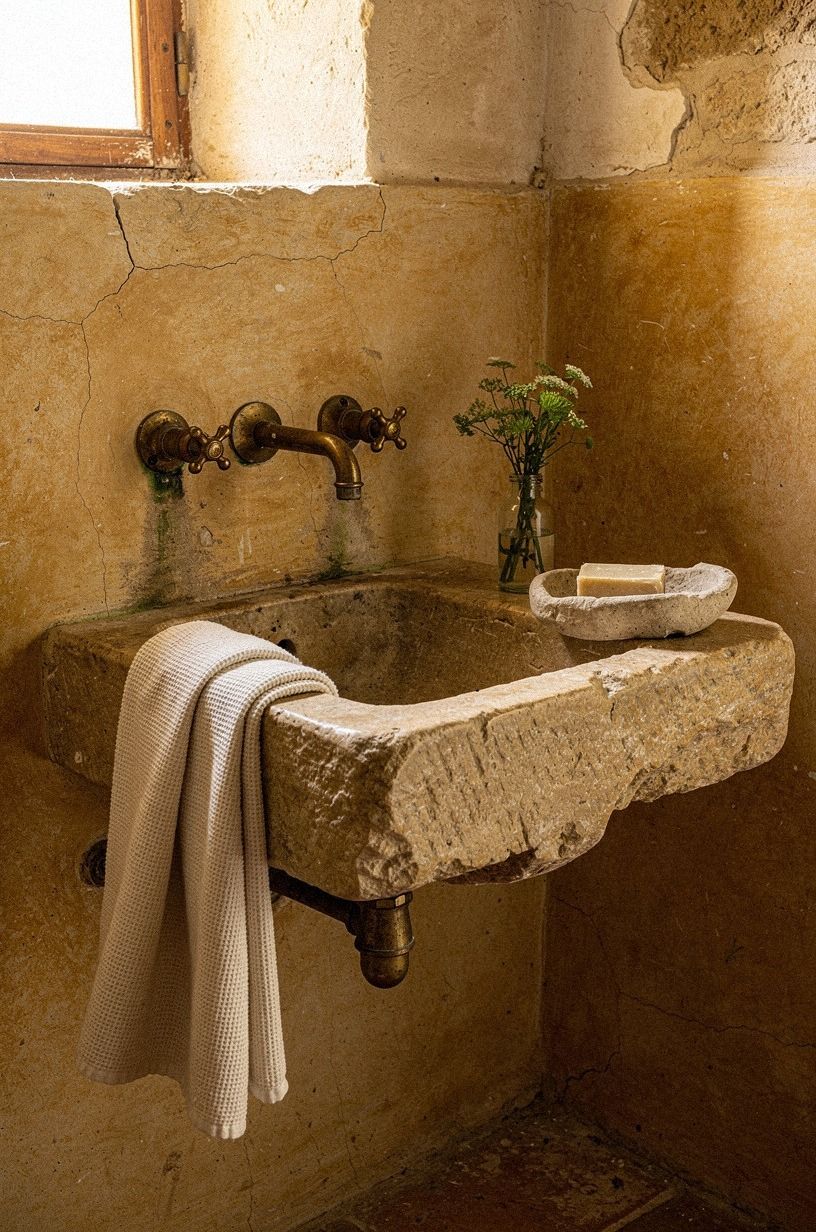
An off-center faucet makes your stone sink feel less manufactured. Shift it slightly toward the side with the most open counter space, then balance the composition with a small cup or folded cloth. You’ll create a little asymmetry that feels collected over time rather than ordered in one afternoon.
This works best when your basin is wide enough for the gesture. Keep the spout aligned with the drain so water won’t splash onto the stone edge.
I learned that after installing a beautiful faucet too far forward, and your morning shirt will remember the mistake. If you’re working with a narrow vanity, center the plumbing and create asymmetry with the mirror or light instead.
13Paint a Stone Ensuite in Sea Salt
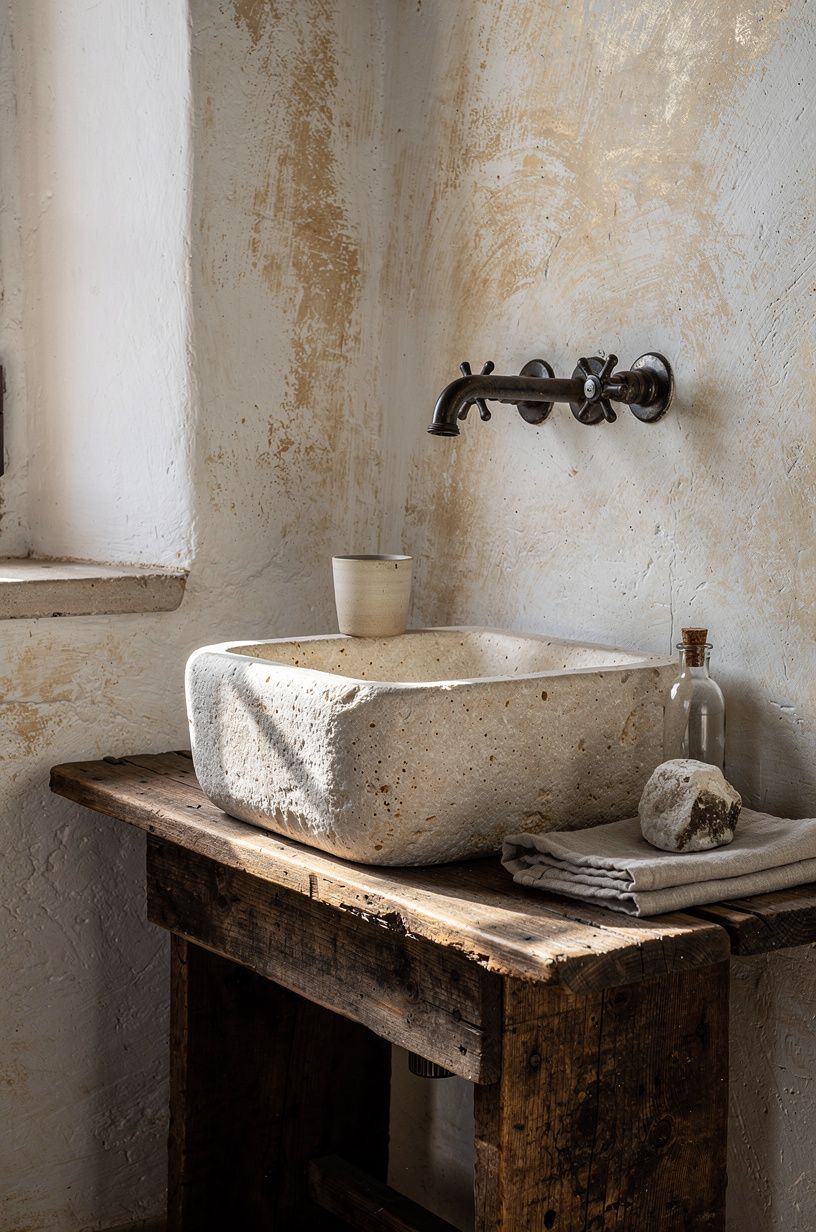
A rich emerald green gives a stone ensuite a dramatic backdrop, especially beside warm gold and cream details.
14Follow the 48-Inch Towel Bar Rule
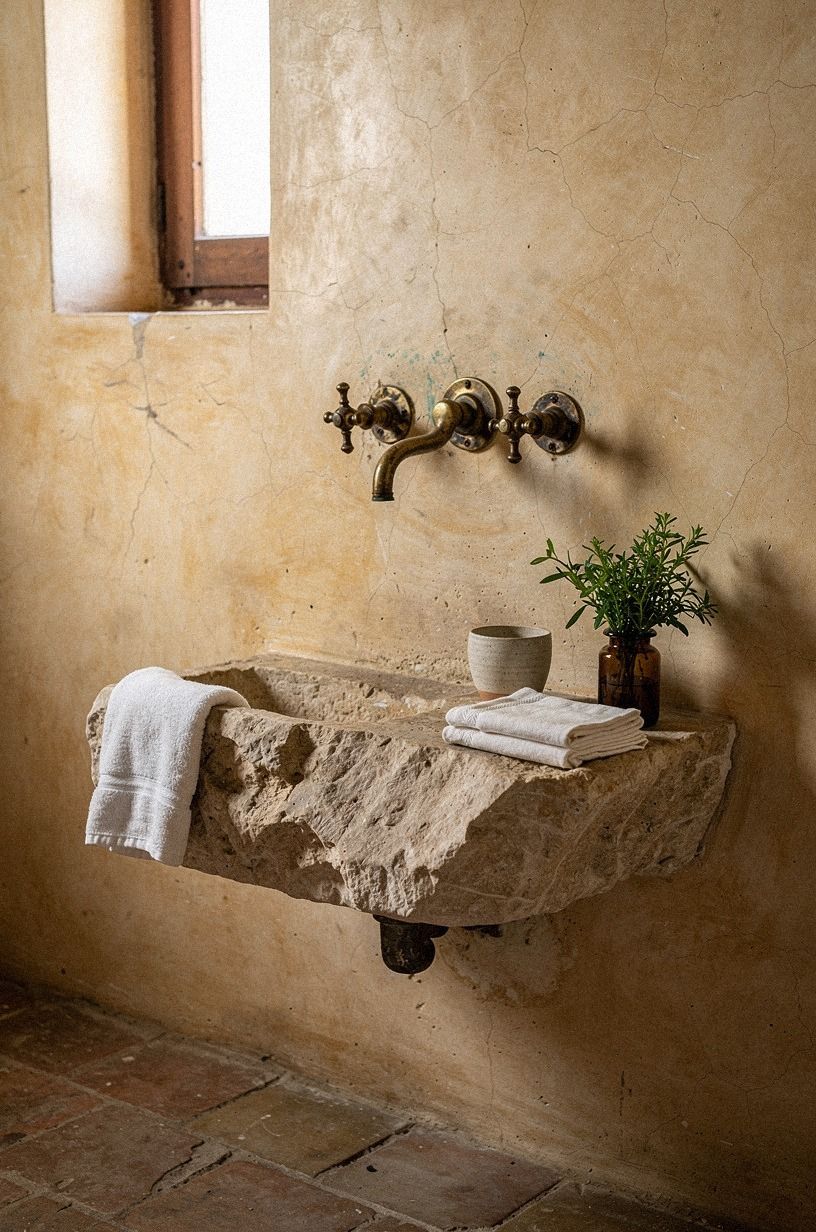
The 48-Inch Towel Bar Rule gives your sink wall a clear horizontal line. Mount the bar where you can reach it without turning away from the basin, then keep the lower edge of the mirror visible above it. You’ll avoid the awkward towel pile that makes a refined room feel temporary.
But a towel bar isn’t always the best choice for your layout. A single aged-bronze hook can work better beside a narrow basin, especially when the toilet clearance is already tight.
Keep at least 21 inches clear in front of the toilet so the room remains comfortable. Your towel should be close, not in the way.
This bathroom spacing guide is useful when you’re balancing function with an intimate footprint.
15Carve a Shadow-Line Niche
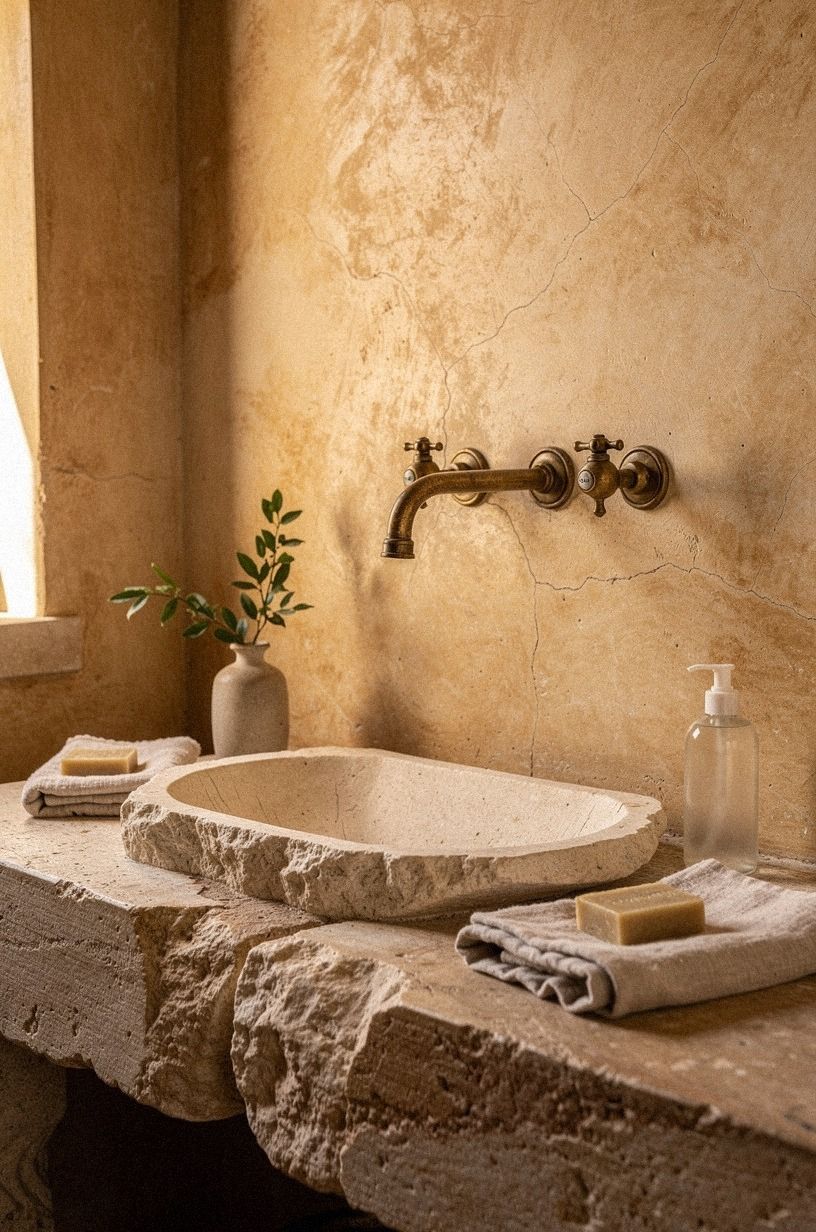
The Shadow-Line Niche is a shallow recessed shelf above your antique stone sink. It holds soap and a small bottle without adding another object to the counter. You’ll want the niche deep enough for daily items, but not so deep that it collects dust and steals attention from the basin.
Use Calacatta marble with gold veining inside the niche, then paint the surrounding wall a related tone. I’d avoid a contrasting border because it can make the feature look newly built.
A slim CB2 Primitivo bouclé stool nearby can repeat the rough-soft relationship without adding clutter. Your niche should feel like part of the wall’s history, even if the framing went in last month.
16Choose Patina Over Perfect Symmetry
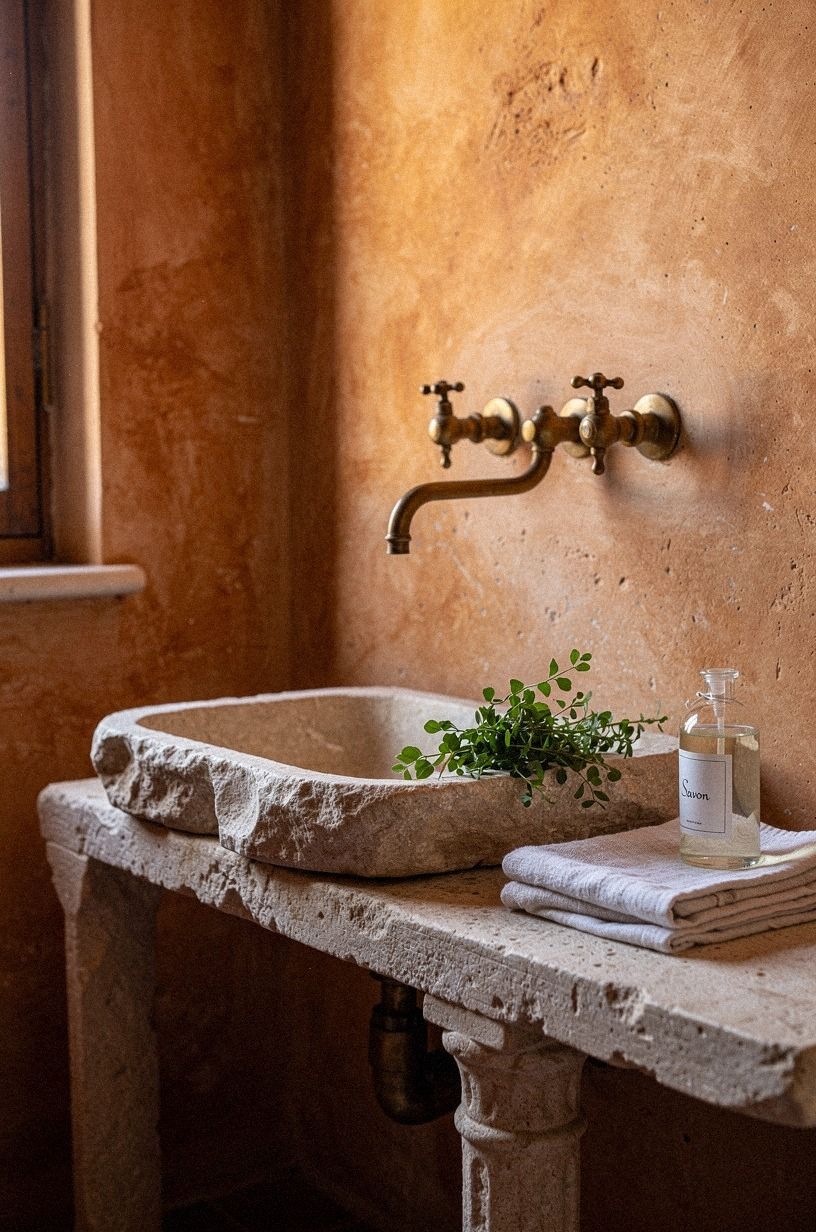
Patina gives your decorative sink a more convincing history than perfect symmetry ever will. Let one brass surface darken, let the wood show a small knot, and choose pottery with a slightly irregular rim. You’ll create a warm, lived-in feeling that doesn’t rely on fake distressing or piles of old objects.
I’d skip buying a full matching set for your bathroom. Matching soap pumps, jars, trays, and towels can look polished, but they erase the small surprises that make an old room memorable.
Your better mix might include one IKEA KALLAX birch-effect storage cube, a handmade ceramic cup, and a worn stone dish. And yes, one object can be crooked.
That’s part of the room’s charm!
17Let the Floor Carry the Earthy Palette
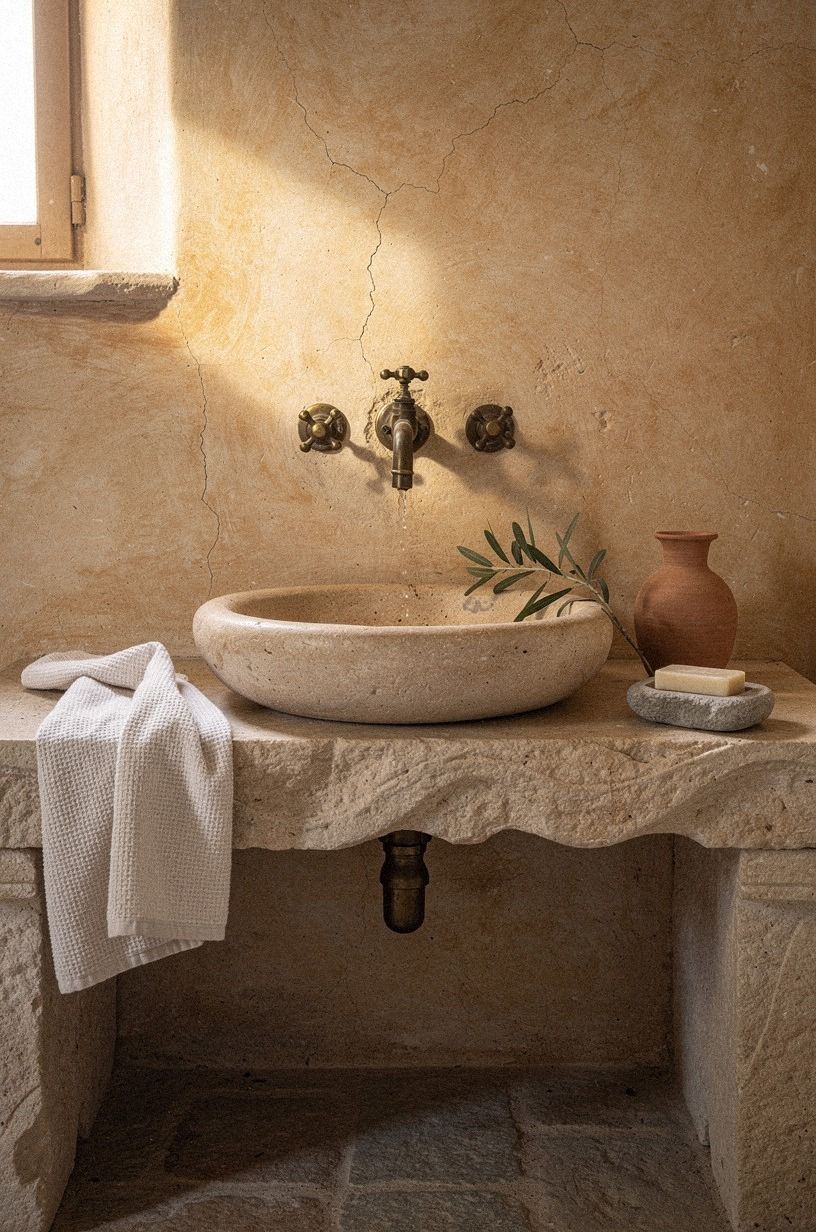
A floor inset of backlit translucent onyx can make your antique style sink feel connected to the whole room. Surround it with a matte midnight-blue surface, then bring in ivory and copper accents.
You’ll get warmth underfoot and a grounded backdrop for pale stone. The floor should support the sink, not compete with its shape.
For a small bathroom, keep the grout close to the surrounding tile color so the floor reads as one calm field. I’d avoid high-contrast black grout because it sharpens every line and makes your space feel busier.
Use the onyx once, then let its translucency do the work. If you’re borrowing ideas from Mediterranean architecture, this ancient Catalonia design reference shows how texture often matters more than decoration.
18Which Finish Works Better for Your Sink?
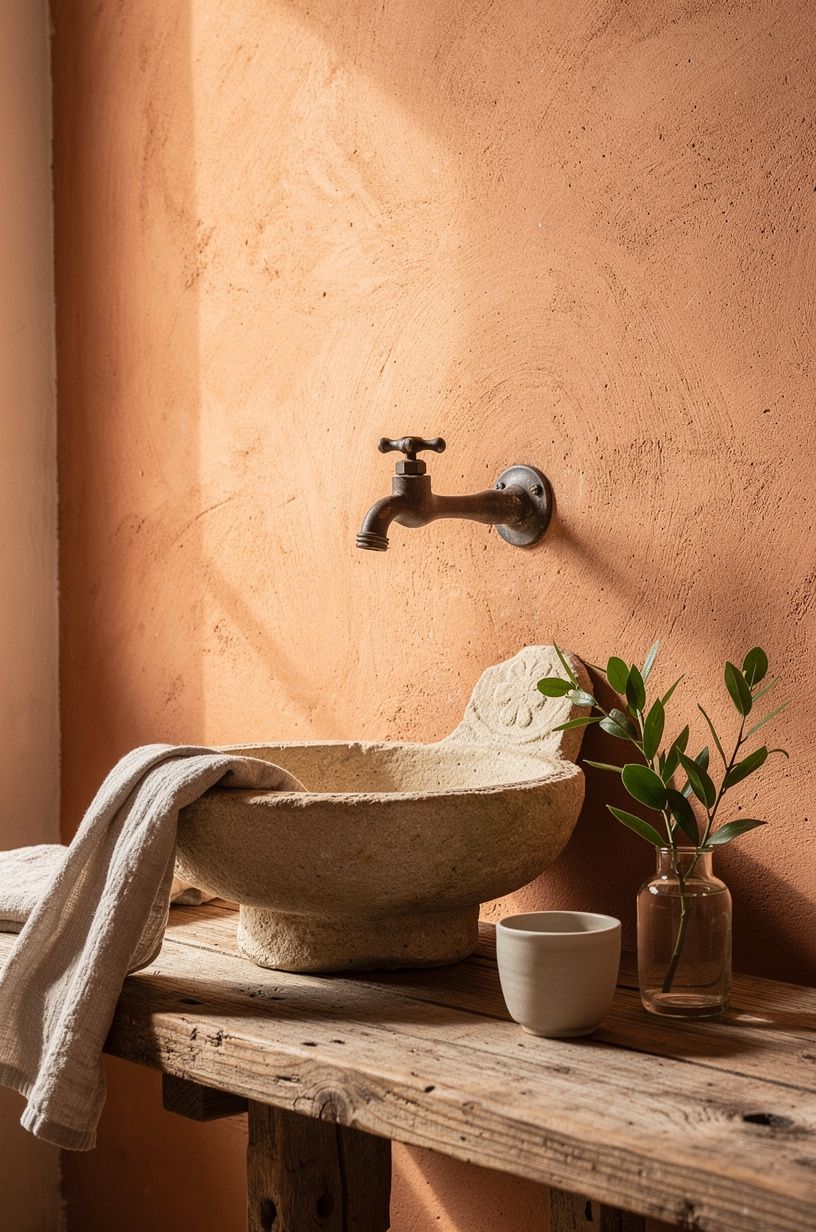
Your finish should follow the amount of light your bathroom receives.
19Style the Sink With Three Useful Objects
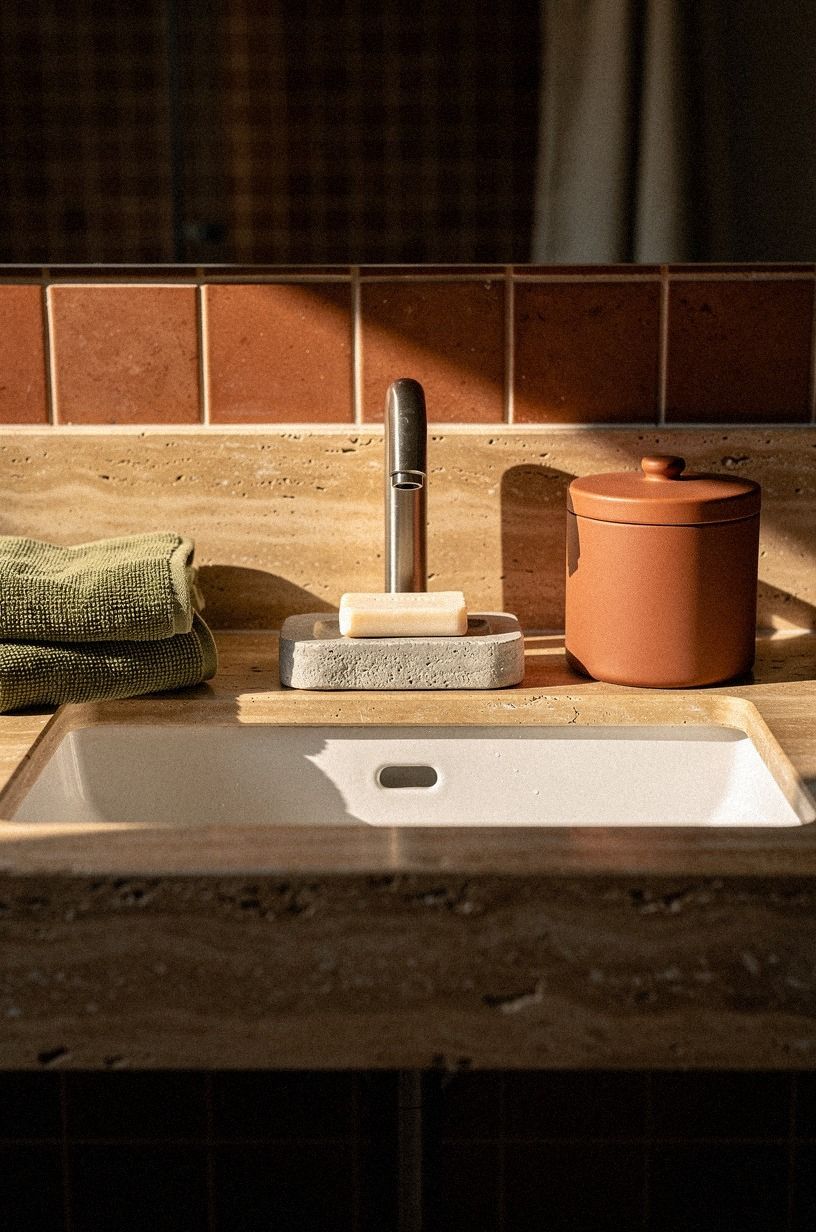
Three useful objects are enough for most antique stone sink counters: a ceramic soap dish, a folded hand towel, and a low cup for toothbrushes or makeup brushes. You’ll keep the surface practical while giving your eye three different textures. Think warm travertine, organic bouclé, and glazed clay.
The cost can stay modest if you reuse what you own. A thrifted bowl, a West Elm Sculptural Ceramic Vase, and one olive branch can look more personal than a coordinated bathroom set. I’d skip faux vines because they gather dust and make the room feel staged.
Your sink should still work at 7 a.m., even when the styling is warm, inviting, and a little picturesque.
The Honest Cost of an Old-World Bathroom
The sink itself can be the visual anchor without turning your bathroom into a full renovation. Typical US costs vary widely, so your first decision should be whether the basin is changing, the vanity is changing, or both are changing. Paint, a secondhand mirror, and reused textiles can carry much of the atmosphere for free.
I’ve spent more on a faucet than I meant to, then saved money by keeping the existing vanity. You’ll usually get more visual value from correcting the light and wall color than from replacing every cabinet. A comfortable shower needs at least 36 by 36 inches, and a standard tub is 60 by 30 inches, so measure your circulation before your shopping list grows.
What the Sink Is Really Doing
I’ve come to think of an antique stone sink as the room’s quiet piece of architecture. It isn’t just a place to wash your hands.
Its weight tells your eye where to land, and its surface determines whether the room feels warm or overly polished. When I first styled one, I treated it like a decorative object and surrounded it with too many accessories.
The basin disappeared.
The better approach is restraint with texture. Your stone can be rough, but your towel can be soft. Your wall can be dark, but your mirror can catch a little light.
I’ve learned to leave one area unfinished, because a bathroom that looks too complete often feels oddly lifeless. A small chip in a ceramic cup, a brass mark near the faucet, or a shelf with only one object gives the room breathing space.
The Mediterranean rooms I return to aren’t precious. They’re practical, sun-worn, and confident enough to let materials age.
That’s why I’d choose honed limestone over glossy marble when your budget allows it. I’d choose one excellent light over six decorative objects.
And I’d rather see a modest sink with honest texture than an expensive vanity covered in things nobody uses.
You don’t need to recreate a centuries-old house. You need to give your bathroom enough shadow, weight, and warmth that your modern plumbing stops shouting.
That can happen with paint and a secondhand mirror. It can happen in a rental, too, with removable changes and a carefully chosen faucet. Your room only needs one strong memory, and the stone sink can be it.
A Few Things Worth Answering
What is the best antique stone sink for a small bathroom?
A shallow honed limestone or cast-stone basin works best because it gives you texture without taking too much depth. IKEA HEMNES can provide a practical base, while a compact wall-mounted basin keeps your floor open. You’ll want enough counter space for soap, but not a full furniture block.
Where can I buy antique stone sink pieces on a budget?
Look at IKEA, Wayfair, Target, Facebook Marketplace, and local thrift stores. You can often find a wood mirror or ceramic bowl for less than a new matching set. This Mediterranean vanity inspiration can help you judge shape and proportion before buying.
How much does an antique stone sink makeover cost?
A small makeover typically falls within the $200 to $1,200 budget tier when you keep the vanity and change paint, lighting, textiles, and hardware. Your free upgrades include editing clutter, reusing pottery, and moving the mirror. Larger plumbing or tile work can raise the total quickly.
Can I create this look on a budget?
Yes, and you can start with three low-cost changes: paint the wall, replace the faucet, and use a secondhand wood mirror. Your existing sink may look completely different beside rich emerald green and warm linen towels.
Is an antique stone sink worth it in a small space?
Yes, because a small room gives the sink more visual authority. Choose a compact basin, float the vanity between 32 and 36 inches, and keep the wall behind it simple. You’ll get an intimate, calming focal point without filling the room with furniture.
Is this Mediterranean sink style good for a rental?
Yes, if you use removable changes. Try peel-and-stick tile behind the basin, a tension rod for linen, a freestanding mirror, and hardware you can store safely. Your landlord’s vanity can stay untouched while the lighting, textiles, and accessories create the warmer mood.
Where I’d Start First
If I had to pick one, I’d start with the wall color. Hague Blue gives pale stone enough depth to look established, while every towel and brass detail benefits from that contrast.
Paint it first, then live with the room for a week. You’ll know what the sink still needs.