
A Mediterranean vanity makeover can cost anywhere from $200 to $30,000+, depending on whether you refresh the surface or rebuild the bathroom. I once paired carved wood with the wrong glossy white top, and the room felt strangely flat. Now I look for patina, honest grain, and stone that catches morning light. You’ll see why.
- Anchor the room with a carved walnut vanity
- Float an antique-style sink over plaster walls
- The Two-Wood Rule beside creamy stone
- Swap a modern top for honed Calacatta Gold
- Build the Three-Height Light Stack
- Paint the cabinet beneath Sea Salt walls
- Frame a decorative sink with zellige
- Can a cream stone palette stay warm without looking beige?
- Hang a woven mirror above carved wood
- Carved Vanity or Glossy Console?
- Create an artisan bathroom with a plaster surround
- The Patina Ladder for a narrow vanity
- Use the Two-Tone Stone Frame
- What completes the Antique Soul Edit?
1Anchor the room with a carved walnut vanity
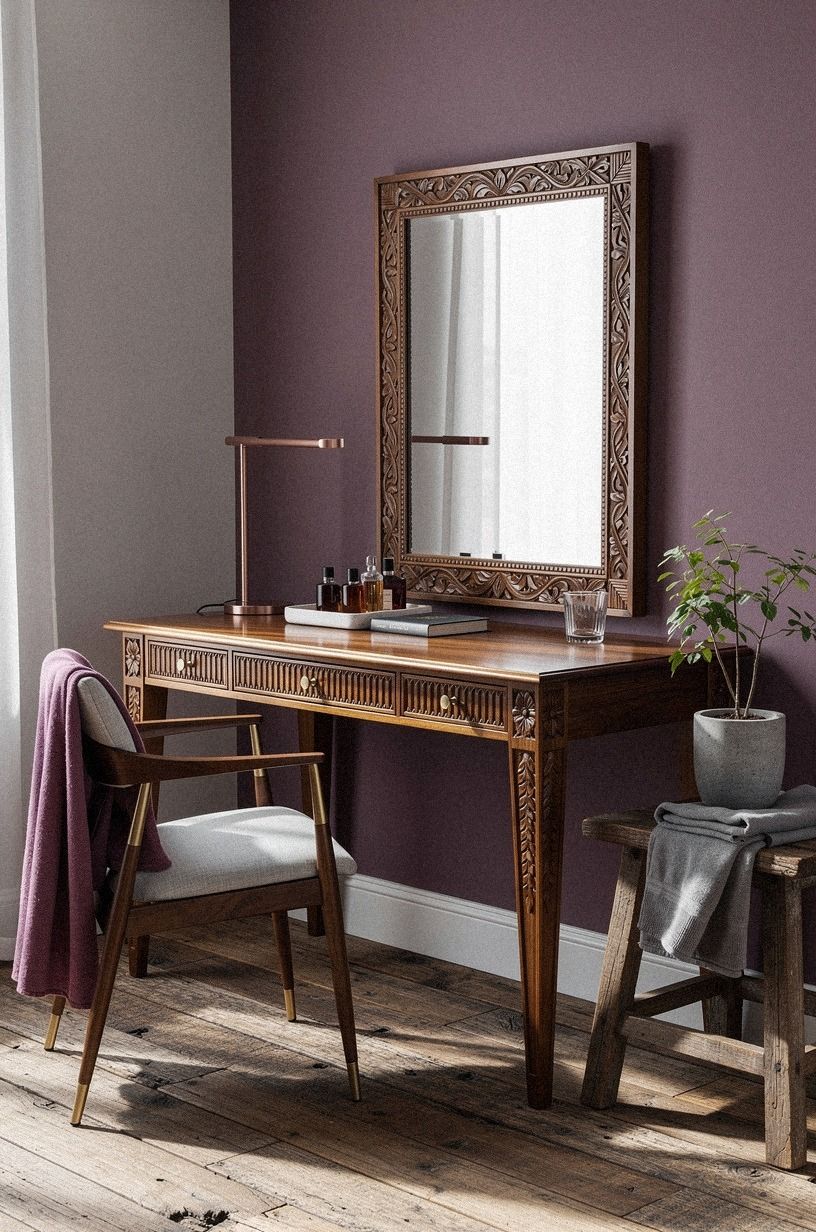
A carved vanity in reclaimed weathered teak gives your bathroom instant weight, especially when the walls are pale and the floor is simple. Choose doors with shallow botanical relief rather than deep scrollwork, because you’ll want the grain to remain visible from across the room. A 32 to 36 inch vanity height keeps the proportions comfortable, and reclaimed weathered teak looks richer beside plaster, limewash, or handmade tile.
I’d skip an overly ornate cabinet with shiny lacquer. It can look theatrical instead of lived-in, and you won’t get the quiet Mediterranean feeling you’re after.
My preference is a softly rubbed finish where your hand can still feel the wood texture. That tactile detail matters.
The best companion is a honed stone top with cloudy movement. Pair it with a simple oval mirror, rose-gold hardware, and a warm wall color such as Benjamin Moore Chestertown Buff HC-9.
If you’re planning a wider bathroom refresh, these organic modern travertine bathroom ideas will help you keep the palette grounded. Their emphasis on warm travertine is especially useful when the cabinet feels visually heavy.
2Float an antique-style sink over plaster walls
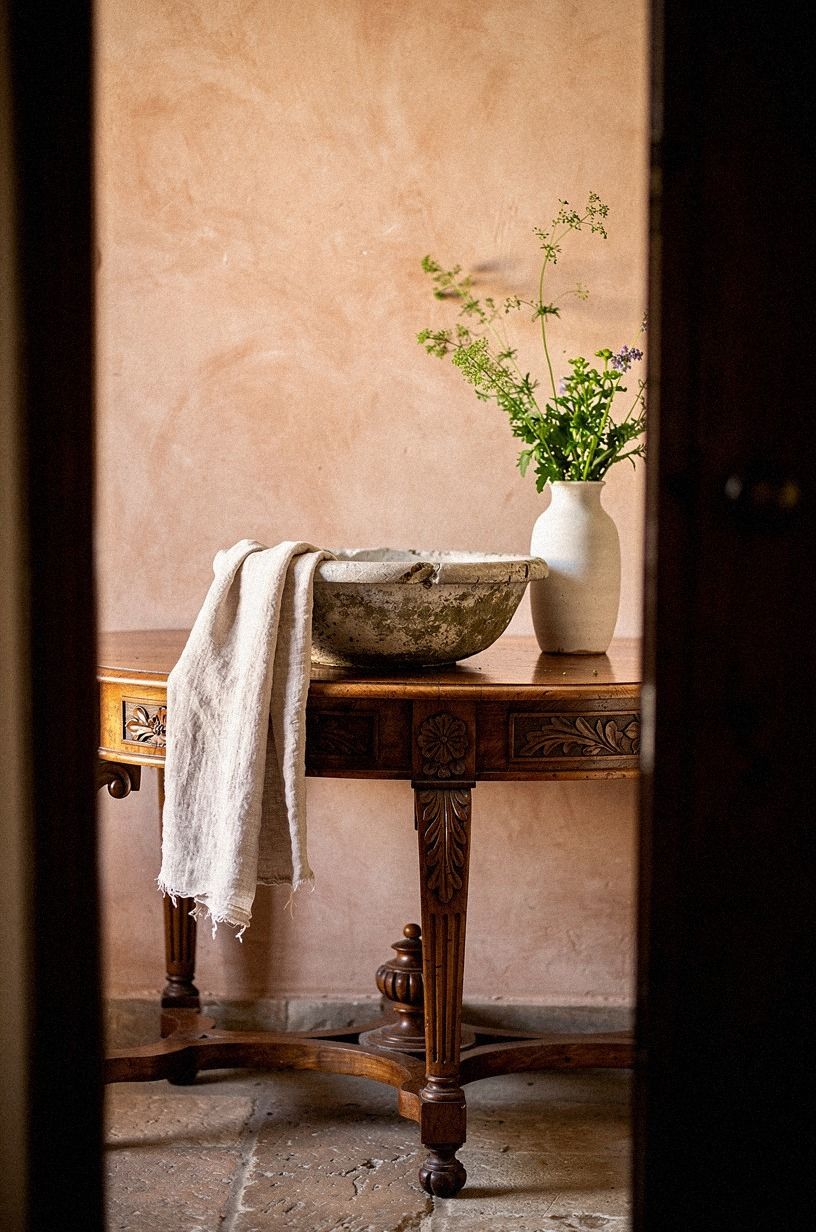
A wall-mounted vanity can make a small bathroom feel airy without stripping away character. Set an antique-style sink against mineral plaster or a softly brushed wall, then leave enough visible floor beneath it for the room to breathe. You’ll gain visual space, and the exposed wall can become part of the design instead of disappearing behind cabinetry.
The sink needs warmth around it. A thin walnut shelf, a woven Turkish cotton hand towel, and one ceramic cup will keep the arrangement practical while your eye reads it as collected. I’d avoid a pedestal sink with no storage unless you’ve got another cabinet nearby.
It’s charming, but you’ll resent it the first time your counter fills with bottles.
For a rental, choose a compact wall-mounted basin and use a freestanding piece for storage. Your floor will remain visible, and you can move the cabinet later.
Calacatta marble with gold veining is my favorite surface here because its luminous movement looks better with age, not worse. A cliff-carved Mediterranean village captures the same rugged, atmospheric quality.
3The Two-Wood Rule beside creamy stone
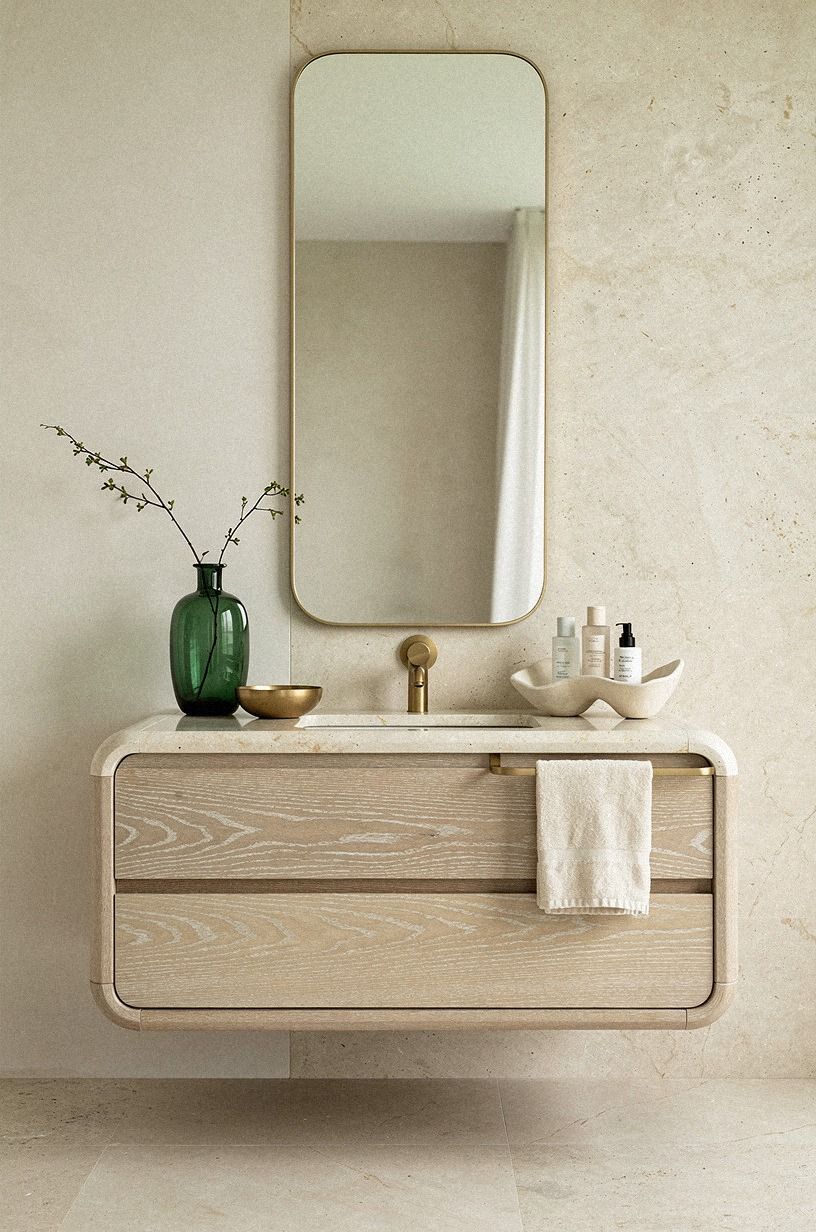
The Two-Wood Rule keeps a carved vanity from becoming visually heavy. Use one dominant wood for the cabinet and a second, lighter wood for a stool, mirror frame, or ceiling detail. Cerused white oak beside a second warm wood gives you contrast without the sharpness of black and white.
You’ll want the stone top to act as the bridge. A cream surface with quiet amber veining can connect the two woods, while a busy high-contrast slab may make your bathroom feel chopped up. I tested a similar mix in a narrow powder room, and the pale top was what kept the darker cabinet from swallowing the light.
But don’t match every wood tone exactly. Matching can look showroom-clean, while a little variation feels collected.
Add a Belgian flax linen towel, a bronze faucet, and one painted wall in Farrow & Ball Hague Blue No.30 if your room gets generous daylight. Your vanity will feel earthy and refined without turning rustic.
4Swap a modern top for honed Calacatta Gold
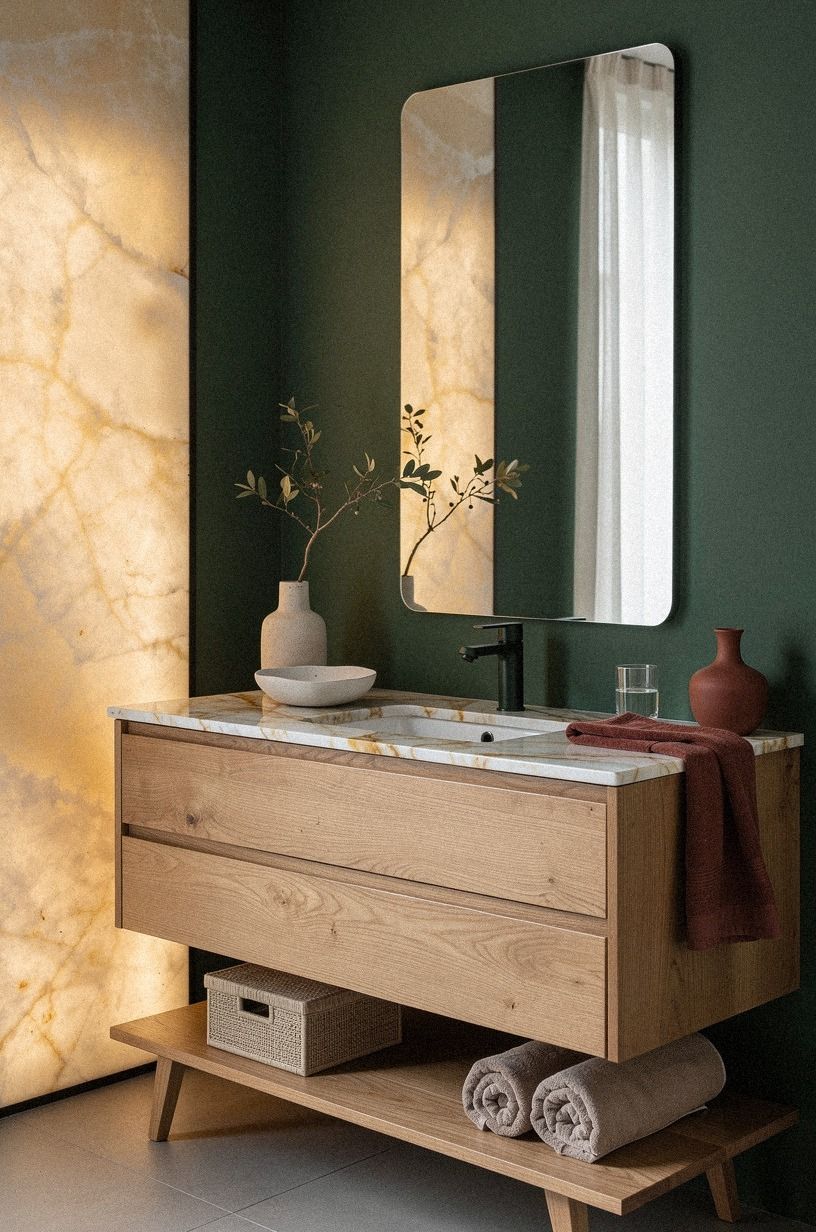
A stone top can change the entire personality of a vanity, even when the cabinet stays put. Backlit translucent onyx gives carved wood a luminous, architectural setting, and its depth works beautifully with forest green, rust, and natural oak.
You’ll need to keep the rest of the room restrained. A thick patterned backsplash, busy floor, and ornate mirror would compete with the stone, so I’d choose one focal detail and let the others soften. The surface should feel cool under your palm in the morning, then glow slightly when late light reaches its translucence.
If you’re comparing materials, use these typical US reference points:
For your own bathroom, a marble top makes more sense when the cabinet has a strong silhouette. If the base is plain, spend your attention on the doors first.
This Mediterranean bathroom upgrade with zellige tile shows how irregular surfaces can carry the room. The result feels luminous without becoming precious.
5Build the Three-Height Light Stack
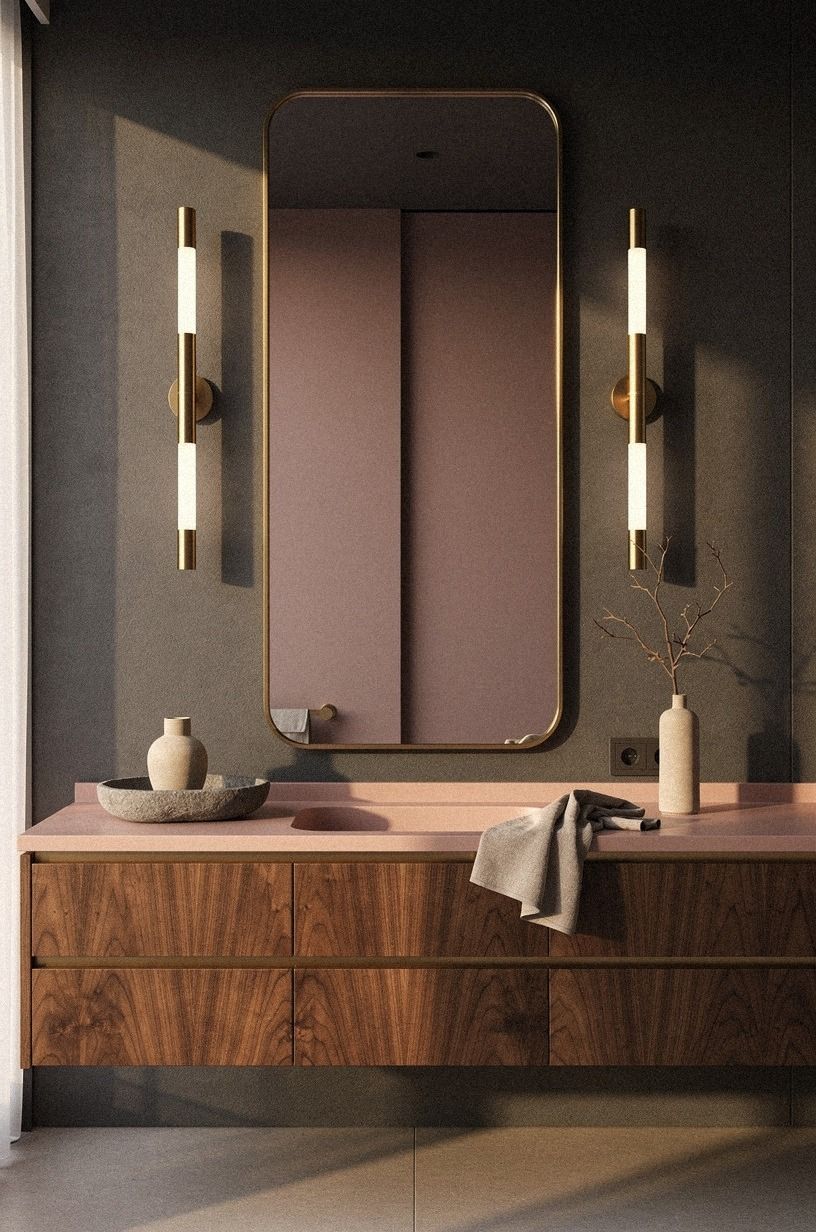
The Three-Height Light Stack uses a low candle or vessel, a middle-height faucet and mirror, and a taller wall sconce or branch. It gives your vanity a gentle rhythm, so you won’t need a crowded counter to make the wall interesting. A book-matched walnut vanity is especially good here because its grain adds movement without demanding another accessory.
Place the lowest object near one corner, not directly beside the faucet where your hands work. Your practical zone should remain clear, and the decorative pieces should frame it instead of blocking it. A small bowl of soap, a folded 600gsm Turkish cotton towel, and a narrow vase are enough.
And yes, the lighting matters more than another accessory. Use warm bulbs and side light so the mirror doesn’t cast a harsh shadow across your face. I’d skip a single overhead fixture, because it flattens the carved detail and makes your stone look gray.
A soft pool of light can make a modest vanity feel quietly luxurious!
If you’re working with handmade tile nearby, keep the glow gentle rather than theatrical. A zellige-focused bathroom scheme will already provide shimmer, so the fixture should add intimacy, not compete with it.
6Paint the cabinet beneath Sea Salt walls
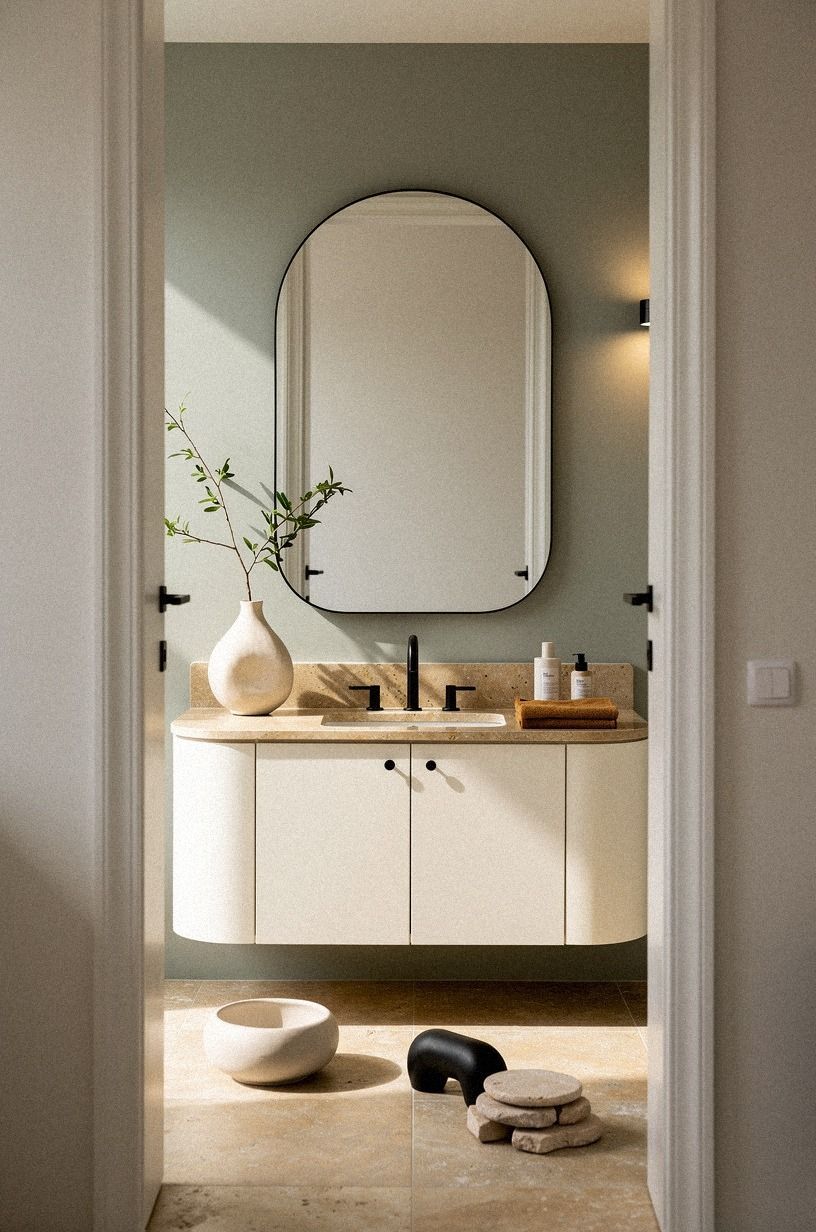
Painting the cabinet can preserve its shape while giving you a fresher starting point. Warm white walls work well with camel upholstery, black accents, and warm travertine because the room stays soft without becoming washed out.
You’ll want the cabinet color to be deeper than the wall. A muted olive, brown-black, or dusty clay will keep the vanity visible without making your bathroom feel busy.
I’d avoid pure white cabinetry here. It can be clean, but it usually erases the antique soul that makes this style worth pursuing.
Before you paint, check the surface in morning and evening light. Your room may need a warmer undertone than you expect, especially beside cool tile.
Add warm travertine on a small stool or bench, and keep the rest of the textiles simple. But don’t distress every edge. A few natural marks feel honest; artificial wear can look forced.
7Frame a decorative sink with zellige
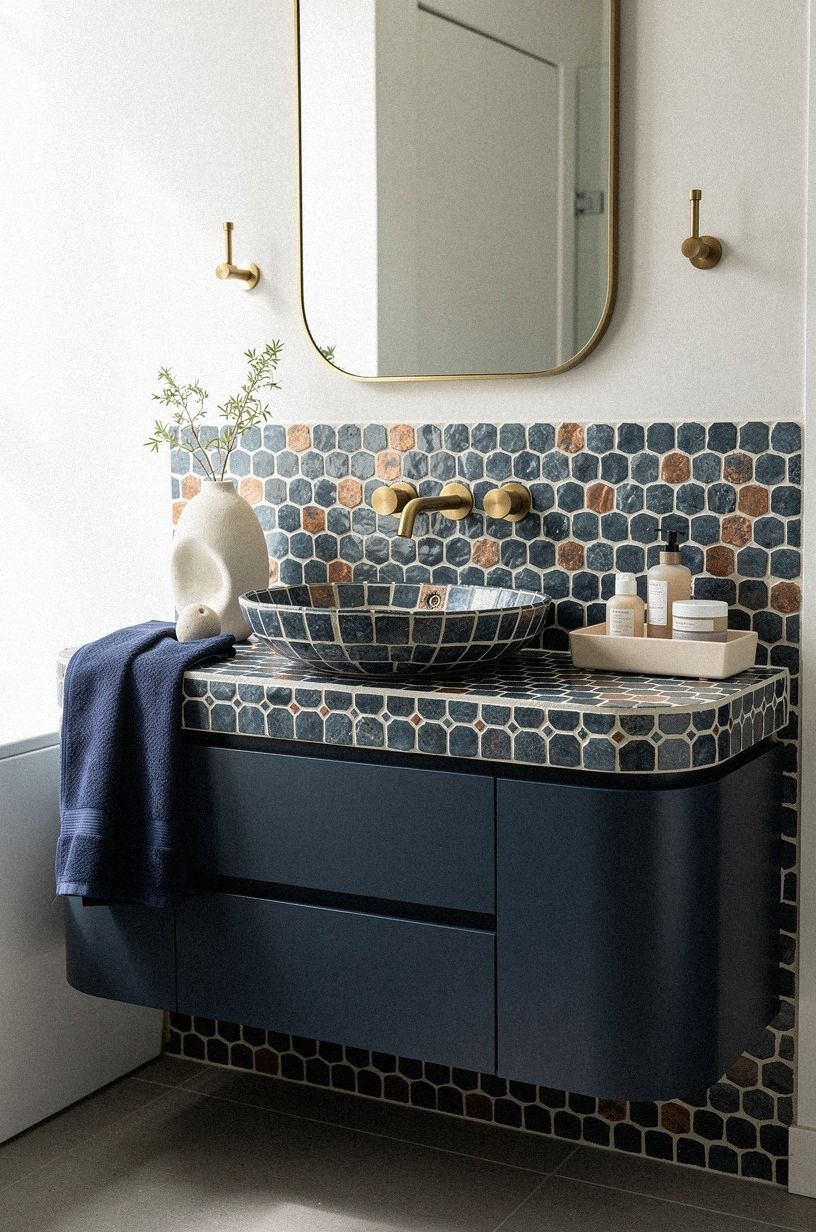
A decorative sink becomes more convincing when the wall behind it has some irregularity. Frame the basin with midnight-blue zellige, using the uneven edges and shifting color to echo old coastal homes. You’ll get sparkle in the light, but the surface won’t feel sterile.
Keep your grout line quiet and your mirror simple. A rounded mirror in dark wood can soften the geometry, while a heavily carved frame would compete with the tile. If you’re working with a small basin, let the zellige run only across the splash zone rather than covering the entire wall.
The material needs breathing room. Your faucet should have a clean shape, and I’d choose unlacquered brass over polished chrome because its coppery warmth develops a softer patina against handmade tile.
Hand-glazed zellige also rewards restraint, so use one ceramic vessel and leave a little counter visible. That imperfect shine is the whole reason to choose it.
For a broader palette, this warm zellige bathroom direction is a useful reference.
8Can a cream stone palette stay warm without looking beige?
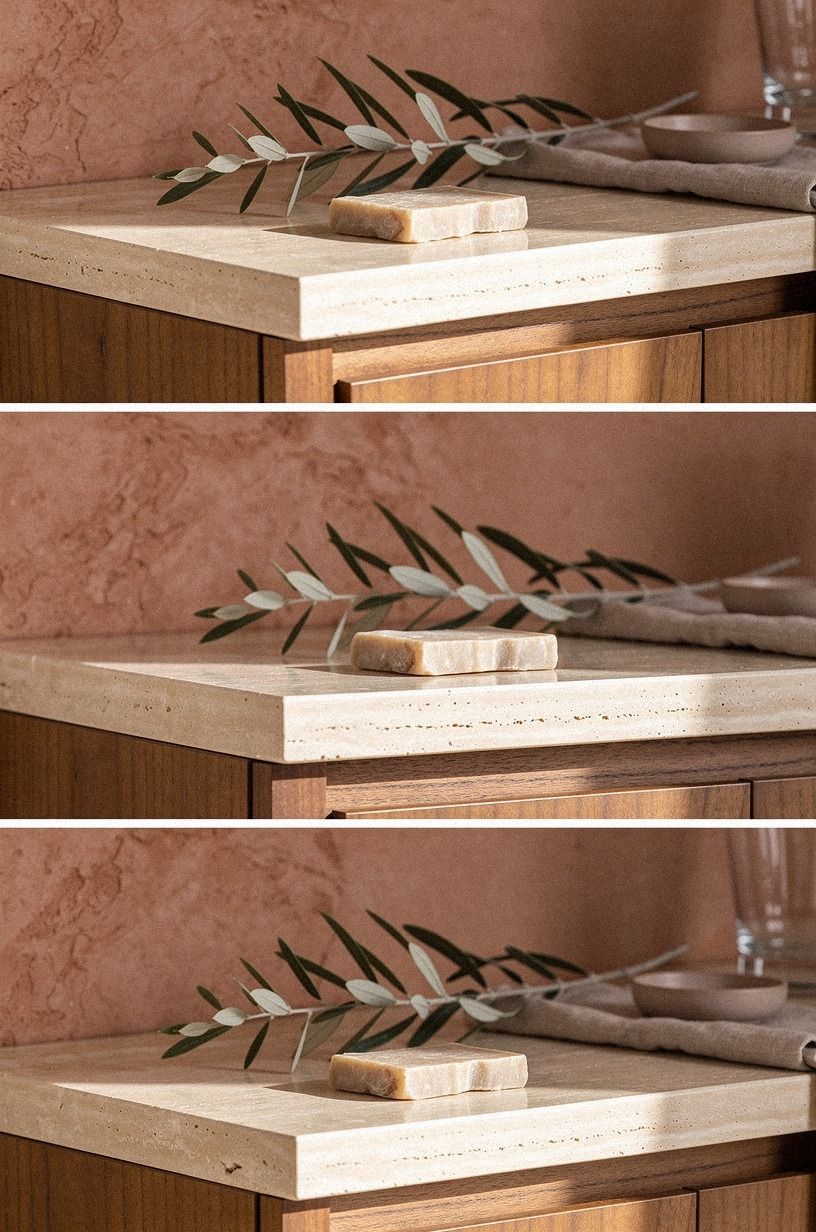
An oversized-chip terrazzo bathroom can feel warm without becoming beige when you pair it with sage green, natural wood, and softly aged metal.
9Hang a woven mirror above carved wood
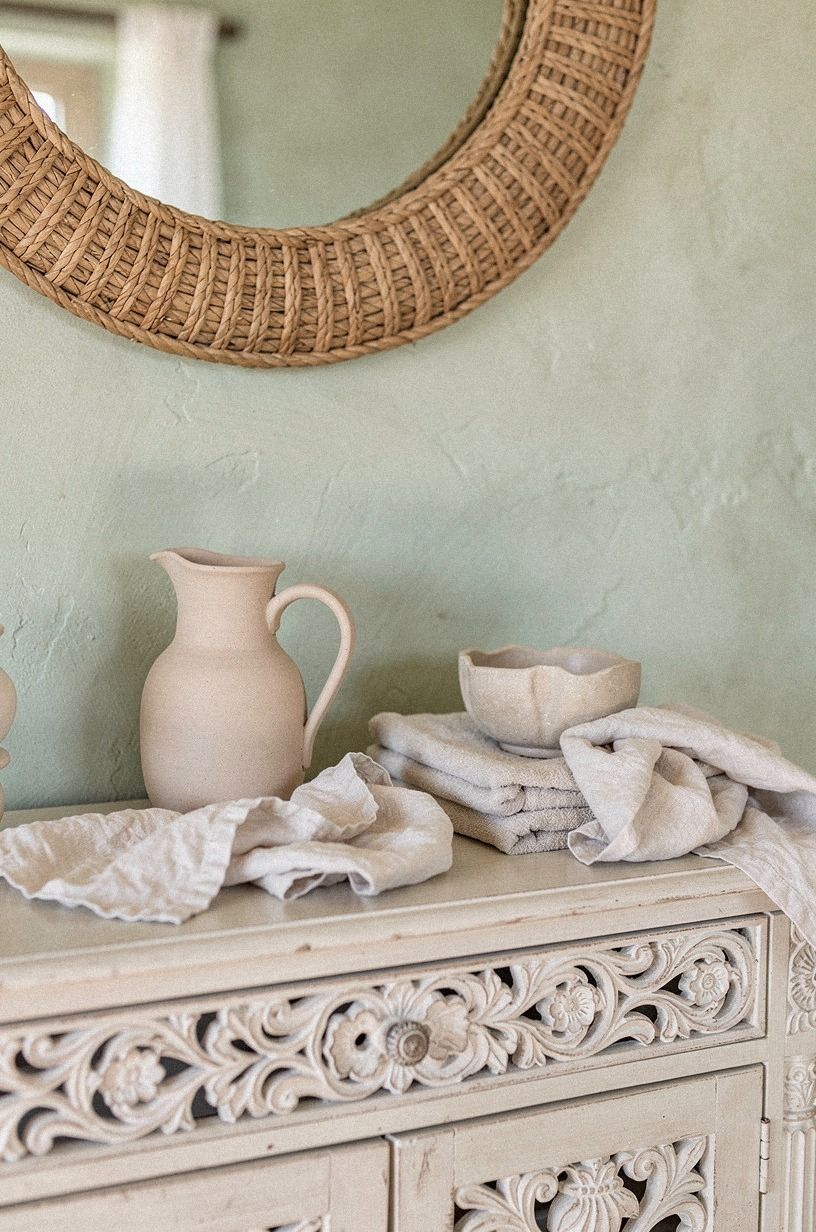
A woven mirror introduces texture at eye level, where a plain vanity wall can feel empty. Set the mirror against hand-applied Venetian plaster, terracotta accents, or an olive-toned wall for a surface that feels tactile rather than overly polished. Venetian plaster works particularly well beside carved doors because both materials hold subtle variation when the light moves.
You’ll want the mirror to be wide enough for daily use without extending far beyond the vanity. The standard vanity height range is 32 to 36 inches, so place the lower edge where your household can see comfortably. Don’t hang it so high that your countertop becomes visually disconnected from the reflection.
I’d skip a matching woven basket, stool, and mirror set. One woven element feels thoughtful; three can look purchased as a bundle. Your other accents can be stone, wood, or cotton.
For more texture ideas, look at this stone village carved from Mediterranean cliffs and notice how rough surfaces hold the light. The effect is earthy rather than themed.
10Carved Vanity or Glossy Console?
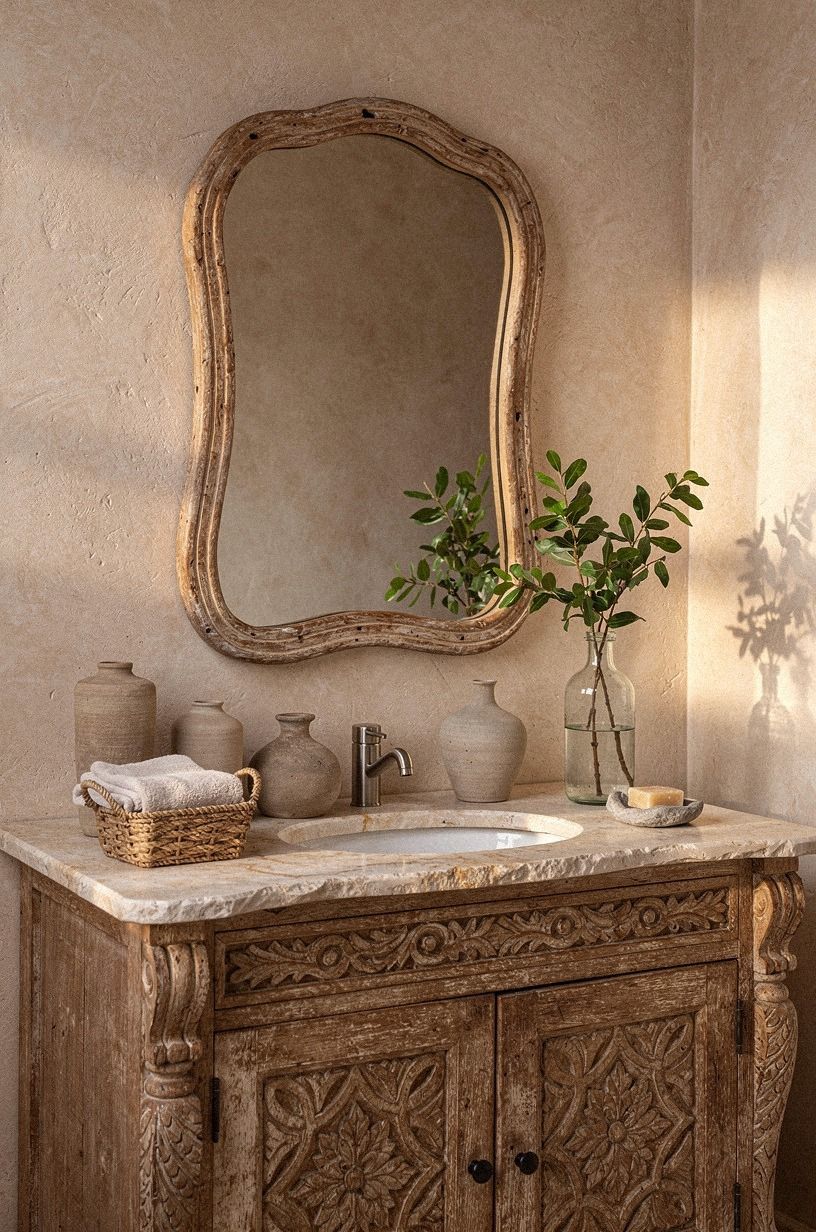
A carved vanity with shagreen accents is the better choice when you want warmth, because texture gives the eye somewhere to rest.
11Create an artisan bathroom with a plaster surround
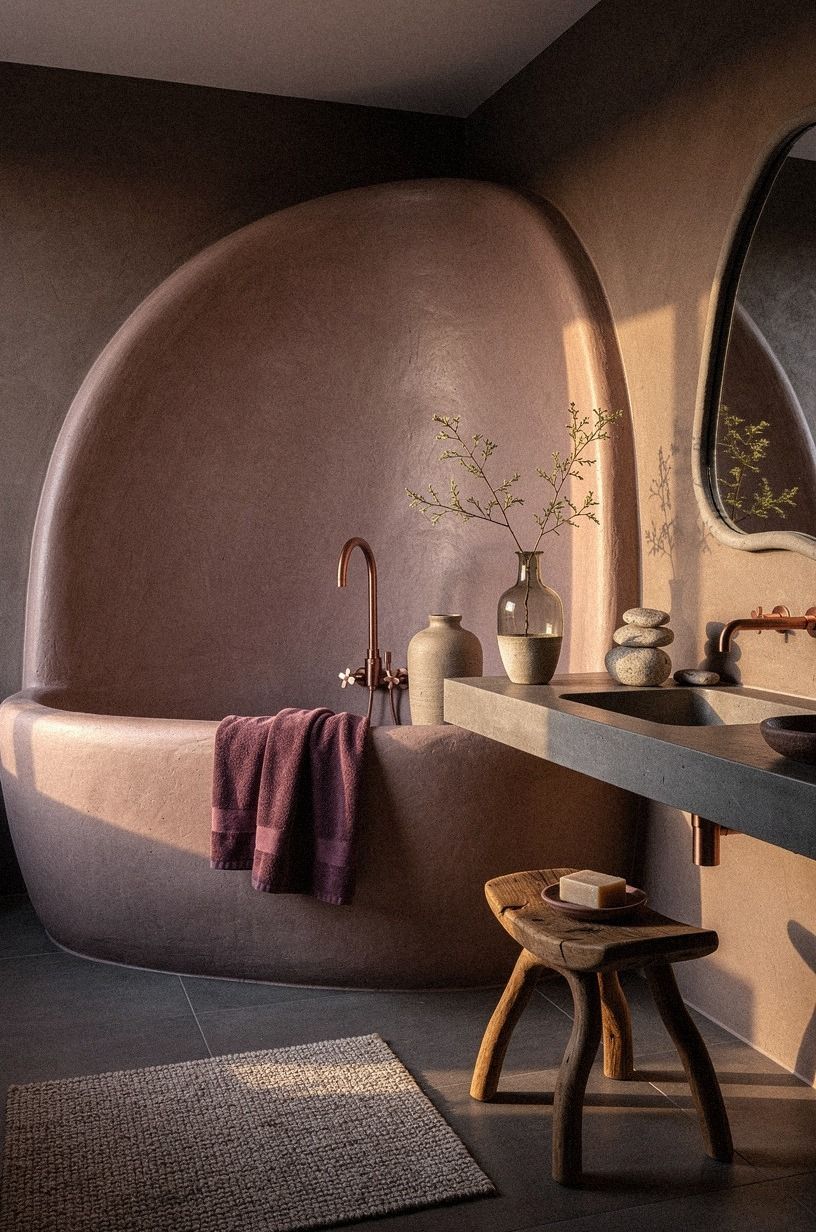
An artisan bathroom doesn’t need every surface to be handmade. One washed Belgian linen accent behind the vanity can provide the irregular color and soft texture your room needs. The natural fibers bring a gentle, lived-in quality to the plum, gray, and rose-gold palette.
You’ll want a reliable waterproof strategy around wet areas. Keep the linen away from direct spray unless the product and installer support that use. A vanity wall is safer, and it lets you enjoy the material without pretending every surface has the same job.
But don’t make the linen too crisp. A softly washed finish gives your bathroom a human quality, while a perfectly rigid textile can feel ordinary.
Pair it with an oval mirror, a honed top, and a single ceramic vessel in rose, gray, or ivory. Your room will feel peaceful because the surfaces aren’t shouting at one another.
For a more dramatic natural reference, study the stone architecture of Portugal’s coast and notice how shadow gives pale material its depth.
12The Patina Ladder for a narrow vanity
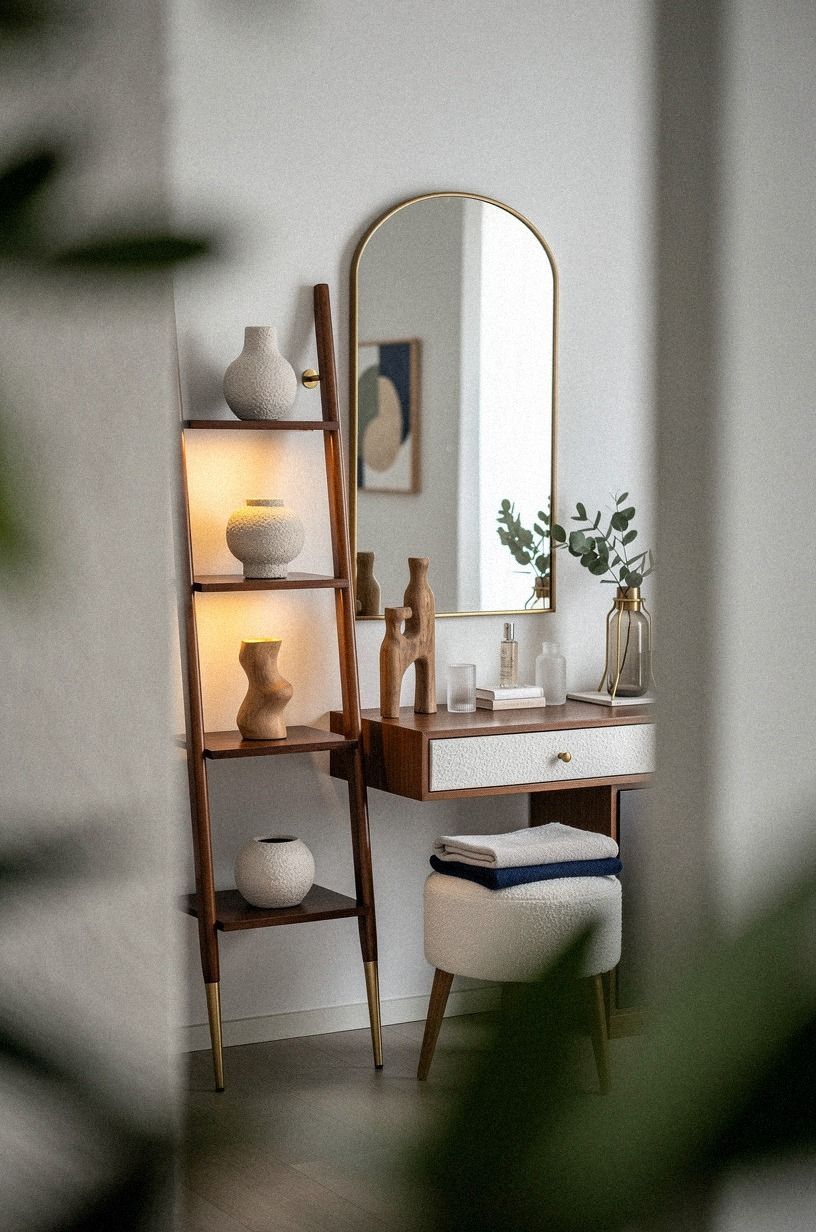
The Patina Ladder is a simple progression from new to old: one crisp element, one softened element, and one visibly aged element. An organic bouclé stool or bench can provide the softened layer beside navy, white, and walnut.
13Use the Two-Tone Stone Frame
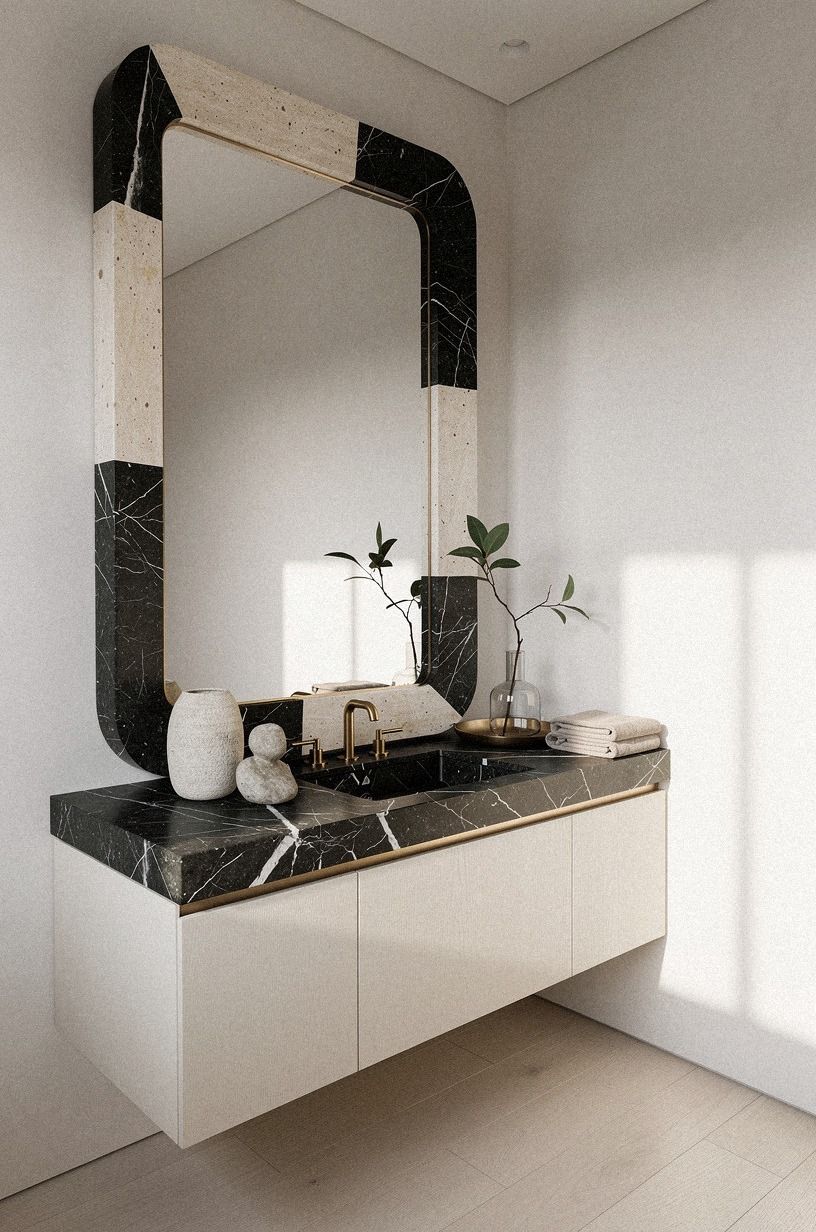
The Two-Tone Stone Frame uses a pale vanity top and a darker strip of tile or stone around the mirror. Nero Marquina black marble with white veins works beautifully as the darker surface, while a lighter stone keeps the vanity from feeling too severe.
You don’t need to wrap the entire bathroom in stone. A focused frame behind the sink can make the vanity feel built into the architecture, even when the cabinet is freestanding. I’d keep the joints simple and let the natural veining remain visible rather than filling every variation until the material looks manufactured.
Your mirror should have a quiet outline. A thin aged-bronze edge is enough, and a large ornate frame would blur the stone boundary.
If you’re choosing tile, remember that subway tile may cost $2-$10 per square foot while zellige typically runs $15-$35 per square foot. Spend more where your hand and eye will meet the material most often.
For additional inspiration, these coastal stone interiors demonstrate how a dark edge can make a pale material feel especially luminous.
14What completes the Antique Soul Edit?
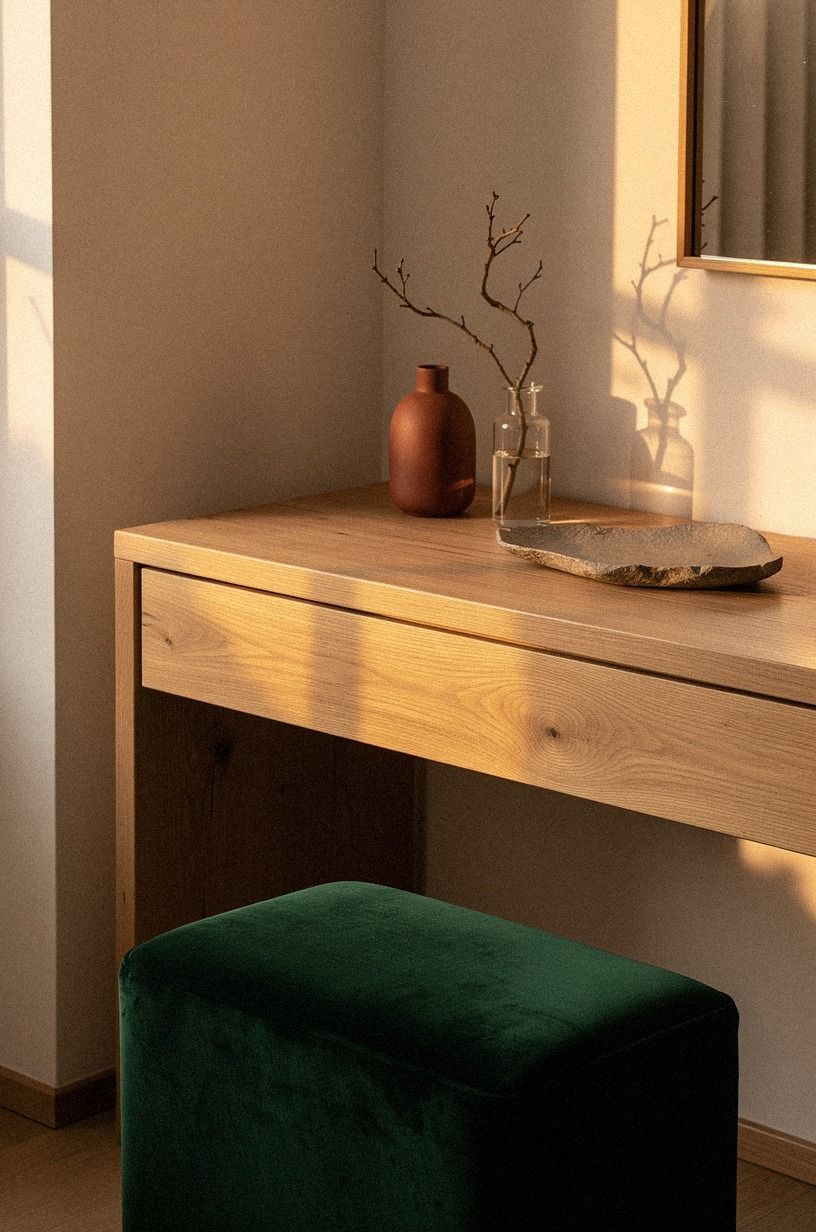
The Antique Soul Edit is the last pass that keeps your vanity from looking like a furniture catalog. Keep the carved cabinet, stone top, mirror, and faucet, then remove anything that doesn’t support those four pieces. Deep-pile mohair velvet on a stool or bench can add the final layer without stealing attention.
You’ll want three useful objects within reach and no more. A soap dish, a folded towel, and a small cup are enough for daily life. Your counter should still work when someone is rushing in the morning, because a beautiful vanity that can’t handle toothpaste isn’t a successful bathroom.
And honestly, I’d choose one imperfect object over three decorative ones. A chipped ceramic bowl, a slightly faded textile, or a salvaged wood frame gives the room a memory. Look at these stone cathedrals carved into Portugal’s coast for the same reason: the strongest beauty comes from material, shadow, and time.
That’s enough!
What These Mediterranean Vanities Cost
The honest range is wide because a paint refresh and a full bathroom rebuild are completely different jobs. A vanity-only update can stay near the lower tier, while new tile, plumbing, and a shower overhaul push your budget much higher. You’ll want to decide whether your cabinet, top, or wall surface is doing the most damage before spending.
Here are the typical US figures supplied for this kind of bathroom work:
If you’re working with $200 to $1,200, paint, a mirror, textiles, and a faucet can create a noticeable shift. A mid-range project gives your vanity more architectural support. A high-end renovation makes sense only when the plumbing, tile, or shower already needs attention.
This travertine-and-wood bathroom approach is a smart place to study where material spending has the most impact.
Why Mediterranean Vanity Design Still Feels Fresh
Mediterranean bathrooms are having a moment because they offer relief from polished, over-coordinated rooms. Farrow & Ball Hague Blue No.30, warm stone, carved wood, and aged metal create an earthy palette that can handle real life. The look feels calm because it doesn’t depend on everything being new at once.
I’ve gone back and forth on how much antique detail a bathroom can take. My answer is less than most people think.
One carved cabinet, one irregular surface, and one aged finish are usually enough. You’ll get the atmosphere without turning the room into a historical reenactment.
The best rooms borrow from old buildings but still respect modern use. Your shower can be simple, your storage can be practical, and your vanity can carry the emotion. This island with Caribbean-blue water and ancient stone monuments has the right lesson: strong material contrast does more than a pile of decorations.
The Design Decision I’d Make With My Own Bathroom
I’d start with the vanity cabinet, not the tile. That choice controls the room’s height, warmth, storage, and visual age, while tile can support the direction afterward. If your base is carved walnut, you’ll make different decisions about stone and paint than you would with a plain white cabinet.
My own mistake was treating the counter as a separate purchase. It wasn’t.
The glossy white top made the carved doors look less substantial, and the bathroom lost the quiet weight I wanted. I’d choose honed limestone, travertine, or Calacatta Gold now, even if the pattern were subtle.
You can still keep the cost sensible. Paint the walls, reuse the mirror, and change the faucet before replacing everything.
A thoughtful $200-$1,200 refresh can feel more convincing than a larger renovation with mismatched finishes. And if you’re unsure, study the way stone, shadow, and worn wood work together in this German island landscape shaped by red cliffs.
The lesson is simple: bold texture can carry an otherwise restrained room.
The Questions I Get Asked Most
What is the best Mediterranean vanity idea for a small bathroom?
A floating carved-wood vanity or a compact IKEA KALLAX birch-effect base can work well when your floor area is tight. Keep the top pale, use a rounded mirror, and choose one wall-mounted light. Visible floor space will make your bathroom feel more open than extra decoration.
Where can I buy Mediterranean vanity pieces on a budget?
Look at IKEA, Wayfair, and Target for simple cabinets, then check Facebook Marketplace or local thrift shops for older wood pieces. Your best value may be a used cabinet with a new stone remnant top. Secondhand character often looks more convincing than faux distressing.
How much does a Mediterranean vanity makeover cost?
A small makeover typically falls within the $200-$1,200 budget tier when it includes paint, a mirror, a faucet, and textiles. A new vanity and partial tile project can reach $3,000-$9,000. Free styling changes include editing the counter, moving the mirror, and reusing pieces you already own.
Can I create this look on a budget?
Yes, and you can start with paint, a secondhand wood cabinet, and one textured textile. Use Benjamin Moore Chestertown Buff HC-9, a thrifted mirror, and a simple ceramic vessel before considering new tile.
Your room will gain warmth from contrast, not from buying every matching accessory. If tile is the next step, this zellige bathroom guide can help you decide where the investment matters most.
Is a Mediterranean vanity worth it in a small space?
Yes, because a small bathroom gives strong materials more impact. A carved cabinet, pale stone top, and rounded mirror can become the room’s focal point without taking much floor area. Keep at least 21 inches of toilet clearance in front, and choose storage that won’t crowd your path.
Is this style a good idea for a rental?
Yes, if you use removable changes. Try peel-and-stick tile in a dry vanity zone, a tension rod for textiles, and a freestanding cabinet instead of altering plumbing. Removable texture can give your bathroom character while letting you take the pieces with you later.
Where I’d Start First
If I had to pick one, I’d start with the carved wood vanity. Its grain gives every other choice a direction, and a honed stone top keeps it from feeling heavy. Pin the idea for later, then change the mirror or faucet first if your budget is tight.