A bright white Mediterranean bathroom can feel warm when its surfaces have texture, its metals have age, and its lighting has more than one setting. I learned that after living with a chilly, echoing room for months.
The fix took one weekend, a secondhand mirror, and a warmer plan. It worked!
Here’s what it looked like before
The bathroom had the full starter-home package: glossy white walls, a cold gray floor, a chrome faucet, and one ceiling light that made every surface look blue. The room wasn’t dirty or damaged. It simply had no softness, and every sound bounced around like it was waiting for an audience.
I lived with it longer than I should’ve. My towels looked dull, the mirror felt too sharp, and the shower corner had no visual connection to the rest of the room.
I didn’t want a full renovation, so I documented the room before touching anything. That honest starting point helped me spend on warmth instead of replacing pieces that still worked.
- Paint the walls with the White-Warmth Ladder
- Layer the Three-Texture Rule for a white Mediterranean bathroom
- Swap cool chrome for the Two-Metal Rule
- Choose terracotta over gray porcelain
- Float a slim oak vanity with the Open-Ground Effect
- Hang an arched mirror with the Soft-Frame Effect
- Build the Three-Height Light Stack
- Frame the shower with hand-glazed zellige
- Mix soft towels with the Quiet-Linen Formula
- Use Hague Blue as a measured Mediterranean accent
- Keep the white over beige with the One-View Test
1Paint the walls with the White-Warmth Ladder
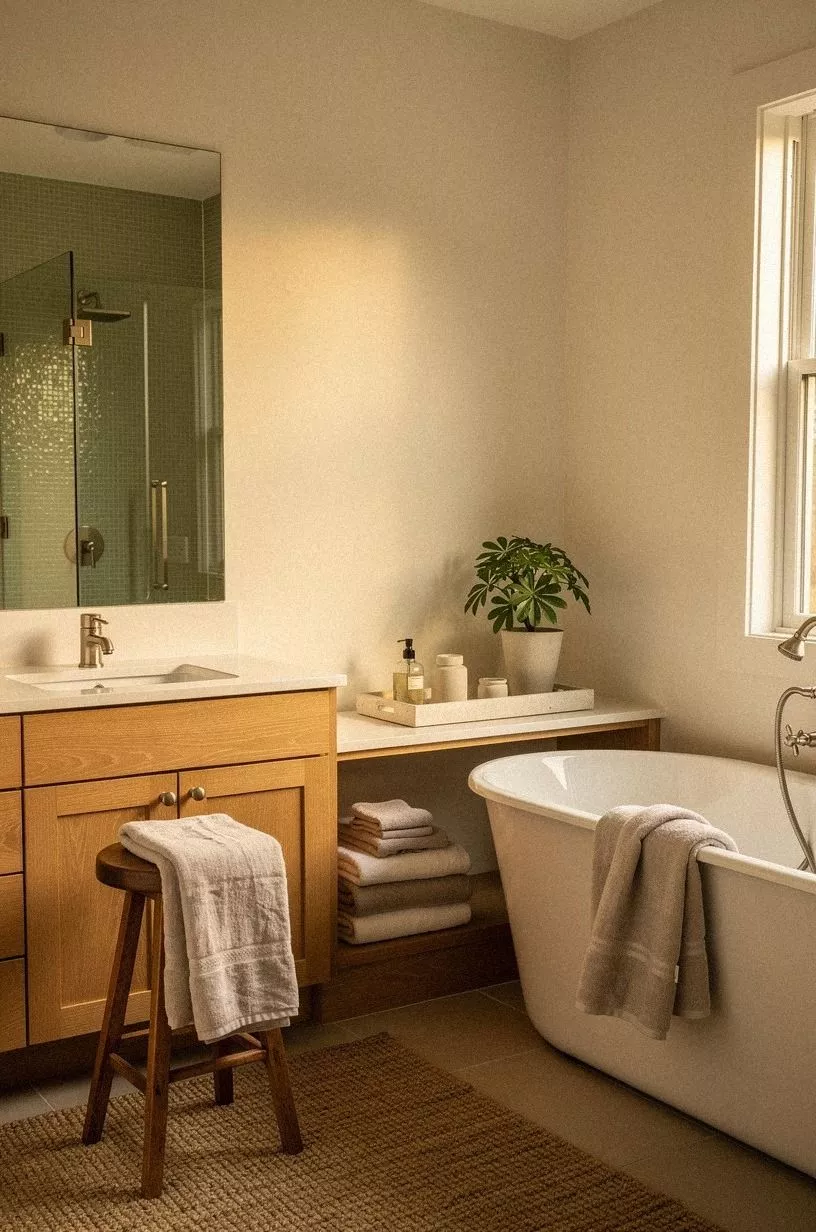
I started with Benjamin Moore Saybrook Sage HC-114 because I wanted a soft green that still felt fresh beside warm cream. I kept Benjamin Moore White Dove OC-17 for the trim, so the room stayed bright without turning icy.
You’ll want to test paint beside your tile, since green and cream change quickly under bathroom bulbs. My first sample was too cool. It made the faucet look harsher.
Two coats of Saybrook Sage gave me the gentle Mediterranean base I wanted. A small patch of White Dove on the vanity wall added warmth without making the room feel beige.
I used a small angled brush around the mirror and trim, then a short roller on the open wall. The job took one afternoon, and you can keep the existing vanity if its shape still works.
Washed Belgian linen near the vanity softened the natural wood and made the room feel less clinical before I changed anything else. For more pale, textured references, I saved these white cream travertine bathroom ideas for bright airy calm.
2Layer the Three-Texture Rule for a white Mediterranean bathroom
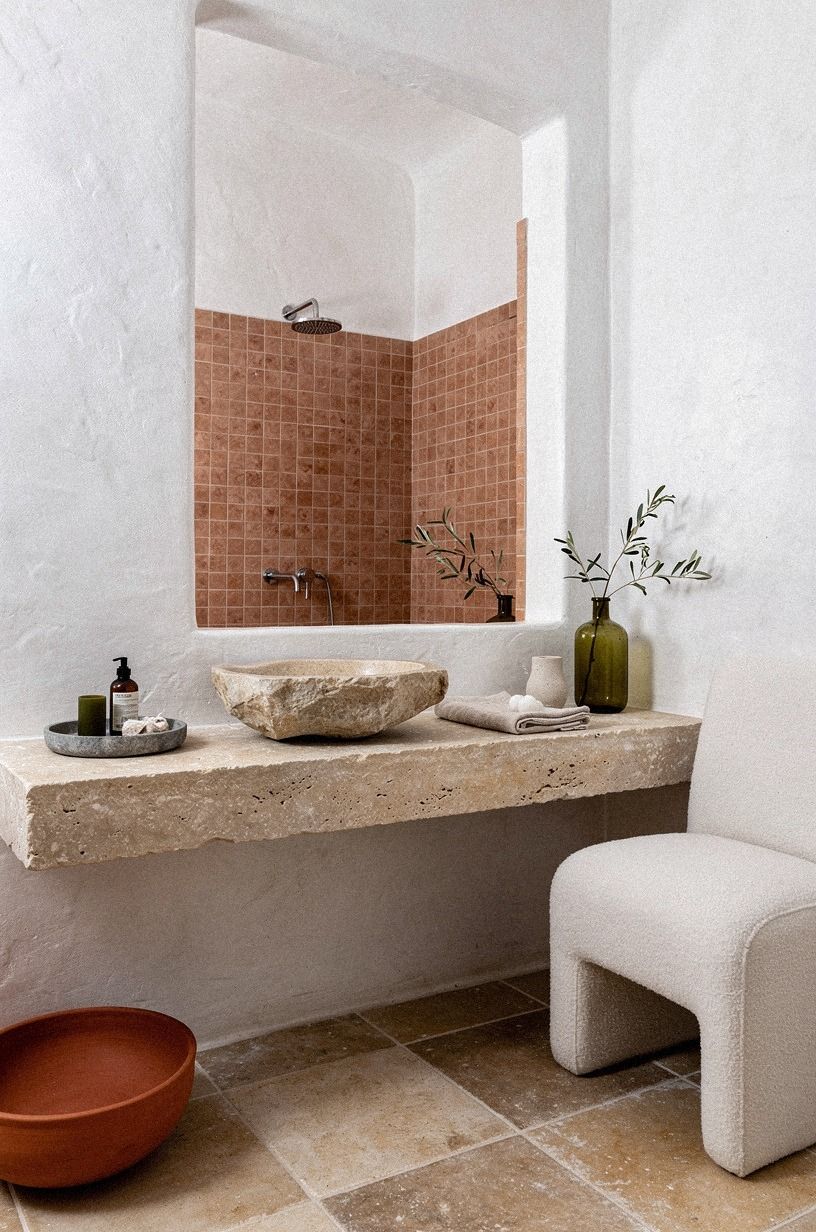
White needs texture or it starts to feel flat.
3Swap cool chrome for the Two-Metal Rule
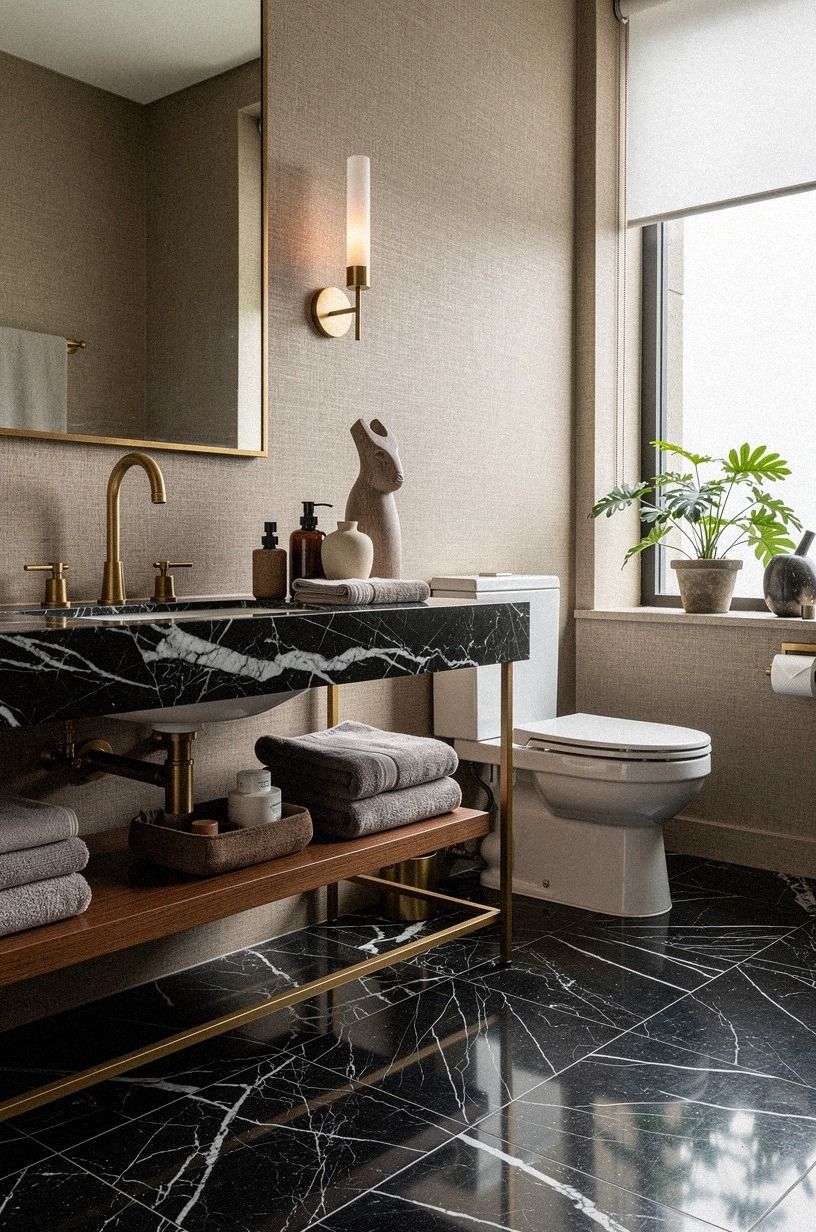
The chrome faucet was the detail that made the room feel like a rental, even after painting. I replaced it with an aged brass faucet and kept one small chrome element, the shower drain.
You don’t need to replace every metal in your bathroom. One warm finish can shift the room more than a full hardware overhaul.
The Two-Metal Rule became simple: one dominant finish, one quiet supporting finish. My faucet and mirror frame use aged brass, while the towel hook stays beside a small Nero Marquina black marble tray.
I’d skip polished gold because it looked too bright beside my soft cream walls. The aged finish catches light without throwing glare back at you.
I went back and forth because brass can look yellow under warm bulbs. The answer was a faucet with a muted finish and a square profile.
If you’re comparing black and brass details, this black and white bathroom combination shows how restrained contrast can work.
4Choose terracotta over gray porcelain
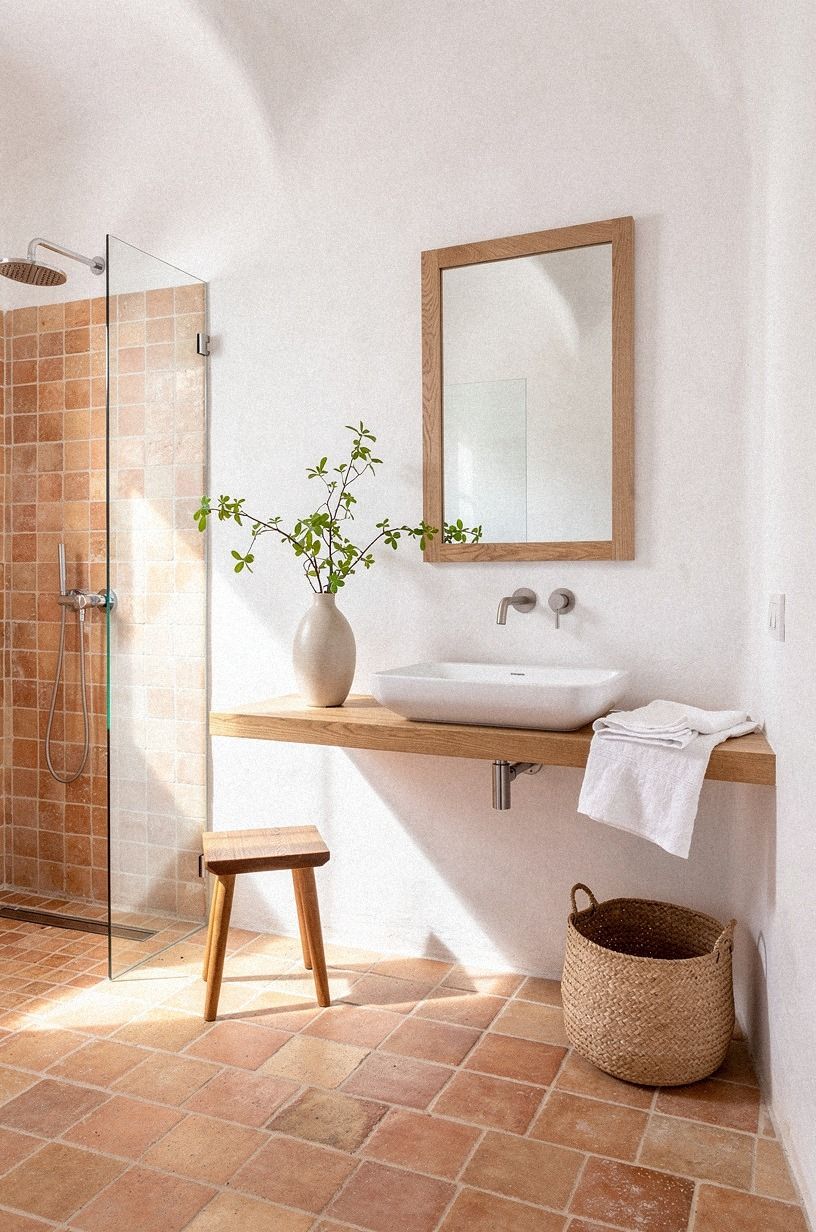
The gray floor was technically neutral, but it made every other color feel colder. I couldn’t replace the tile, so I brought in a deep-pile mohair velvet runner in muted plum and gray, with a restrained rose-gold trim.
It was the smallest change with the biggest emotional payoff. You’ll see warm color near your feet first, and that makes the whole room feel less icy.
I kept the runner short enough to clear the bathroom door and placed it in the dry zone. That way, the rich texture added comfort without creating a damp corner.
My favorite part is the uneven velvet texture, which keeps the room from looking like a showroom. Gray alone would have repeated the problem I was trying to solve.
I paired the runner with a slim stool with a rose-gold base and left the walls bright. One warm floor note was enough.
For another restrained palette, these vintage black and white bathroom ideas helped me judge how much contrast the room could handle.
5Float a slim oak vanity with the Open-Ground Effect
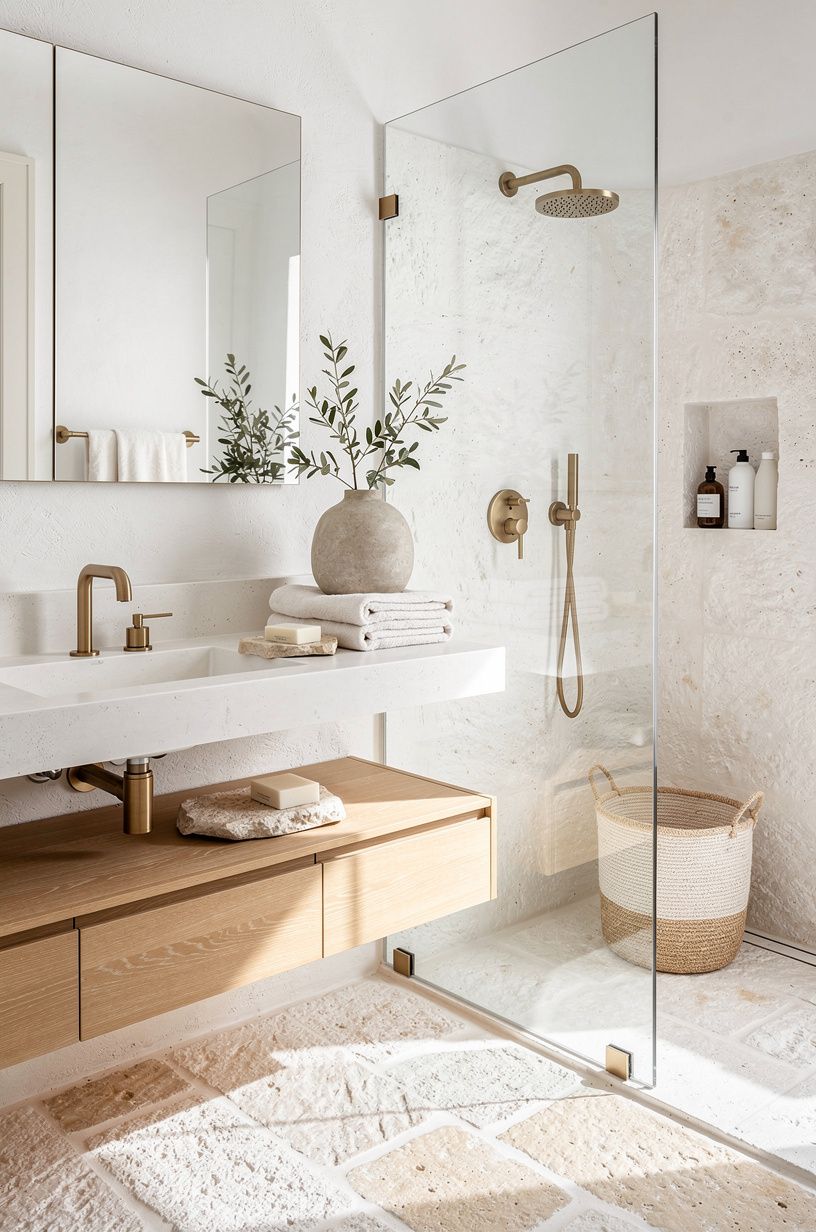
The vanity had a bulky toe-kick that made the room feel shorter.
6Hang an arched mirror with the Soft-Frame Effect
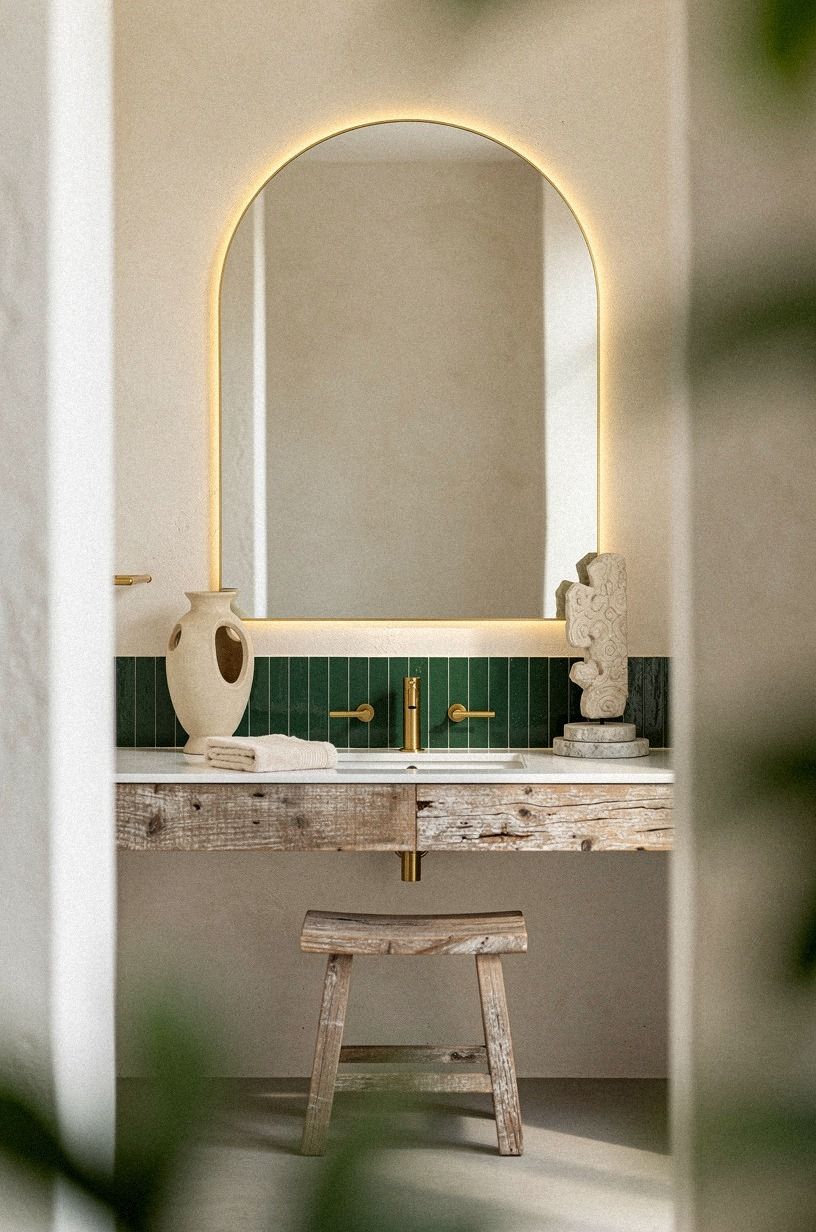
The rectangular builder mirror made the room feel wider but also more severe. I replaced it with an arched reclaimed weathered teak mirror that followed the curve of a small ceramic vessel on the vanity.
That repeated shape was enough to soften the straight tile lines. You don’t need an elaborate frame. A simple arch can change the room’s rhythm.
I mounted the mirror so its lower edge sat above the faucet without crowding it. The teak has weathered grain, and its uneven surface keeps the cream wall from looking blank.
I’d avoid a thick dark frame because it would’ve created a heavy rectangle over the sink. Your mirror should bring shape, not another block of visual weight.
For a smaller room, a rounded rectangle may give you more useful reflection than a narrow arch. I learned that after measuring the wall twice and realizing the first mirror would hide the light switch.
A few references from vintage black and white bathroom ideas helped me keep the mirror practical.
7Build the Three-Height Light Stack
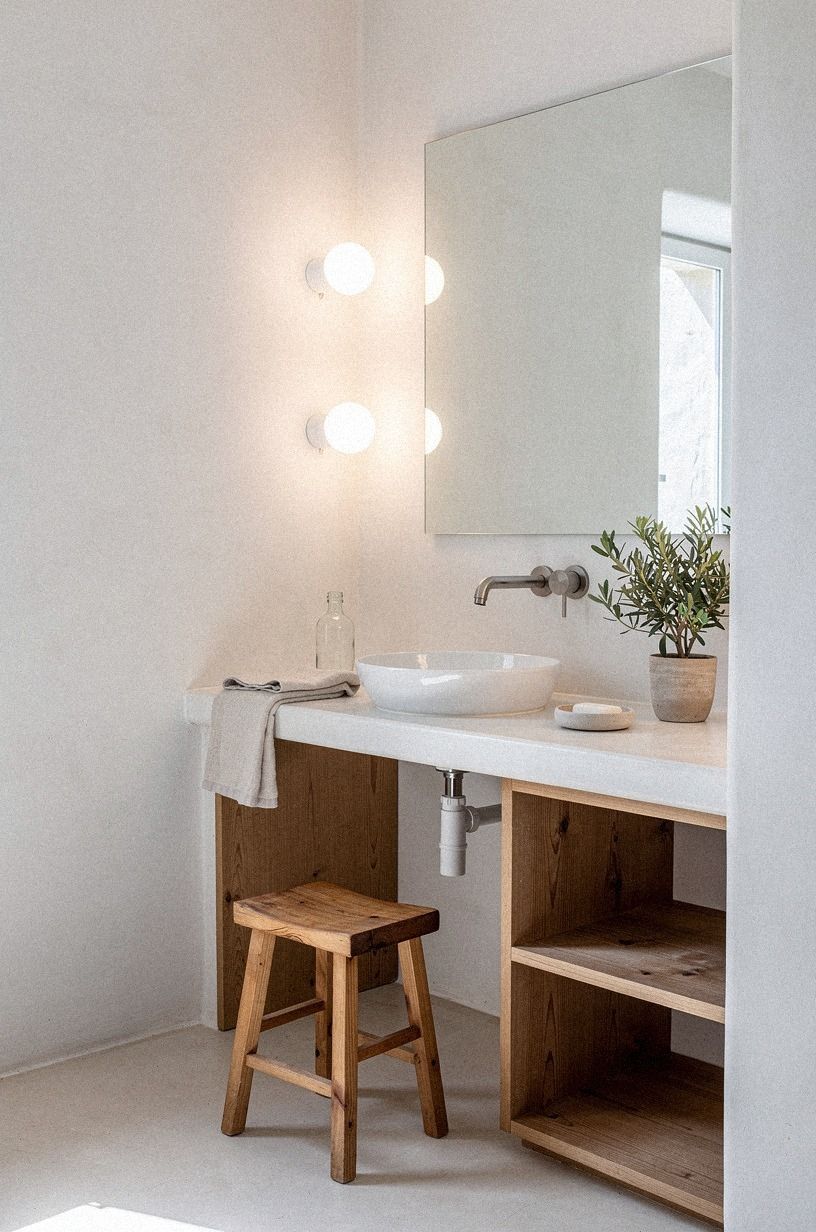
The ceiling fixture was the room’s worst offender.
8Frame the shower with hand-glazed zellige
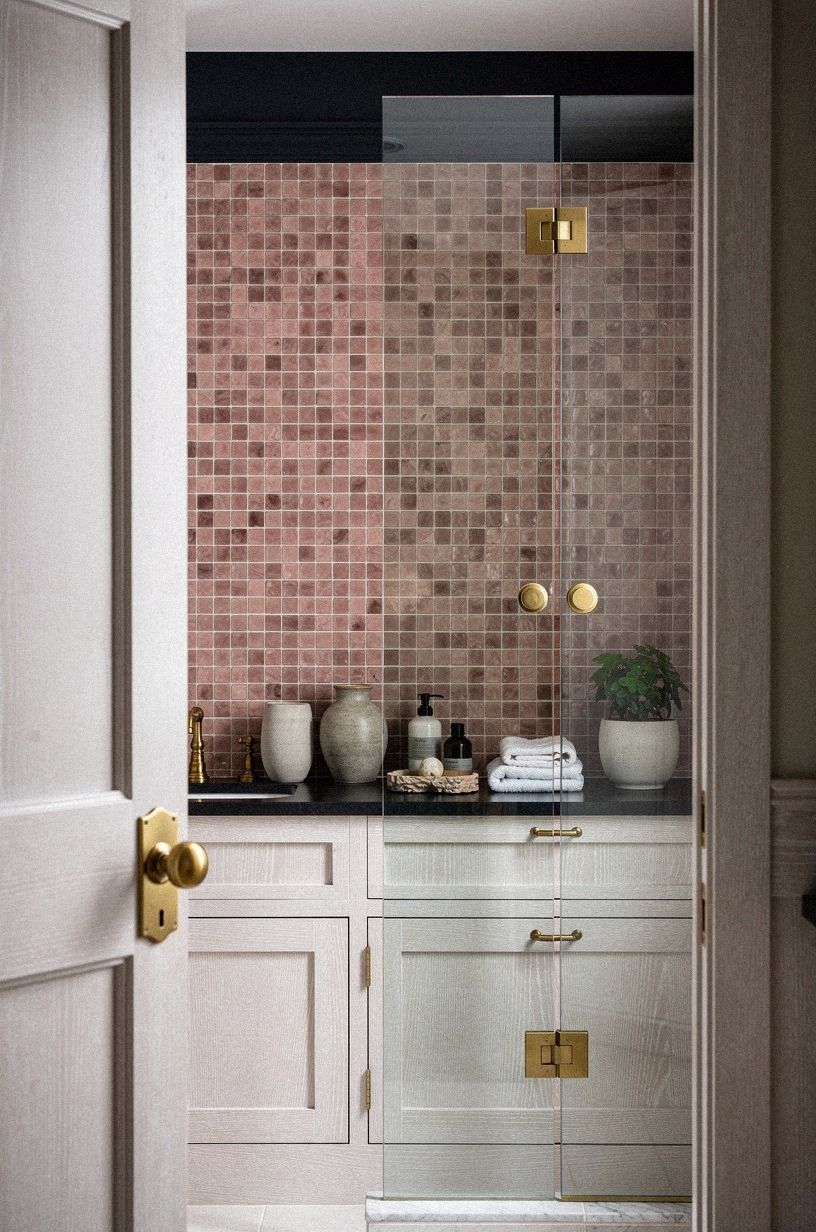
The shower surround was plain white ceramic, and I didn’t want to demolish it. Instead, I added a narrow band of cerused white oak outside the wet zone, with dusty rose and charcoal accents and a small brass soap dish.
I repeated the charcoal tone in the soap dish. The oak grain catches tiny shadows, so the wall feels warmer even though most of the tile stayed untouched.
A full wood treatment would have cost more than I wanted to spend. I’d skip it if your existing waterproofing is questionable.
You can get the Mediterranean feeling from a limited area, especially around the mirror or niche. The standard comfortable shower size is 36 by 36 inches, or 91 by 91 centimeters minimum.
I checked the wood edge against the existing white tile before committing. It wasn’t an exact match, and that was fine.
A perfectly matched edge would’ve made the new band look like a repair. For cost and finish comparisons, I kept this Mediterranean zellige tile guide open while choosing the narrowest practical area.
9Mix soft towels with the Quiet-Linen Formula
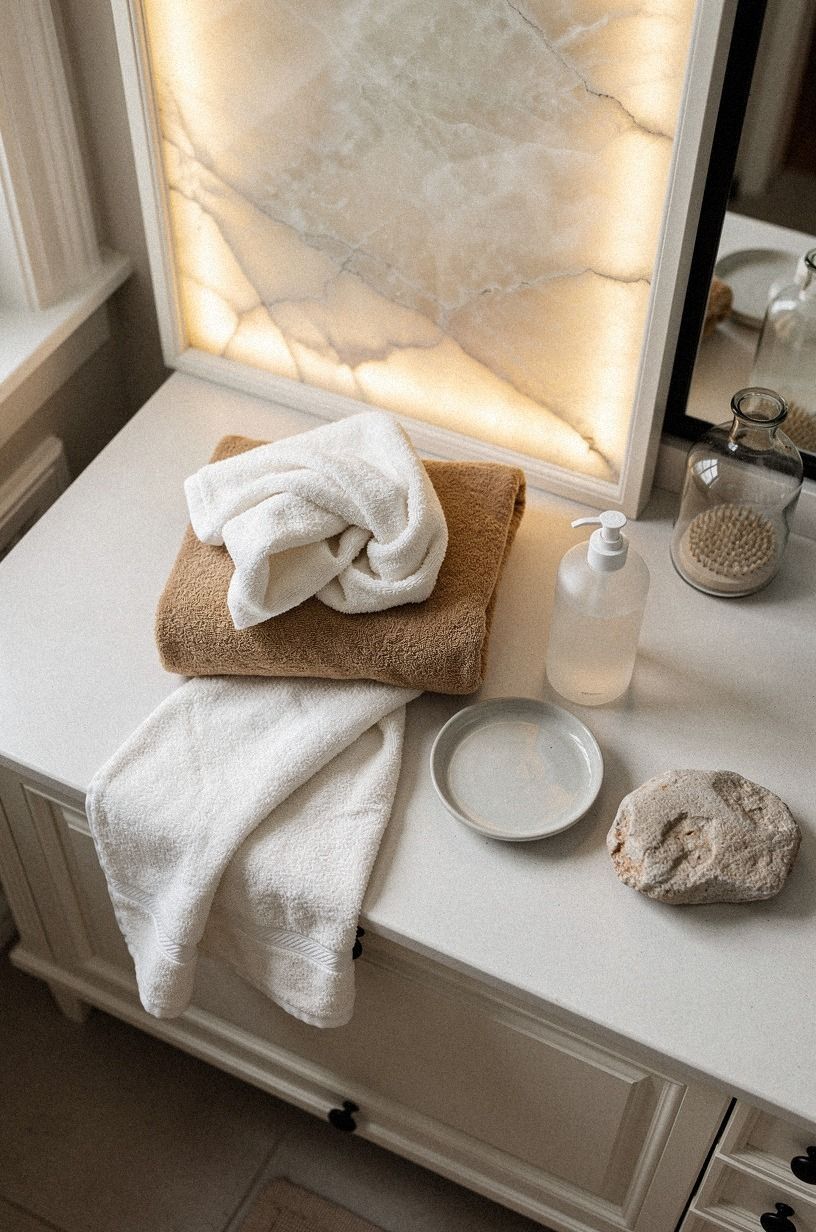
I replaced my mismatched towels with warm white and camel towels, then added one black accent against a backlit translucent onyx surface.
10Use Hague Blue as a measured Mediterranean accent
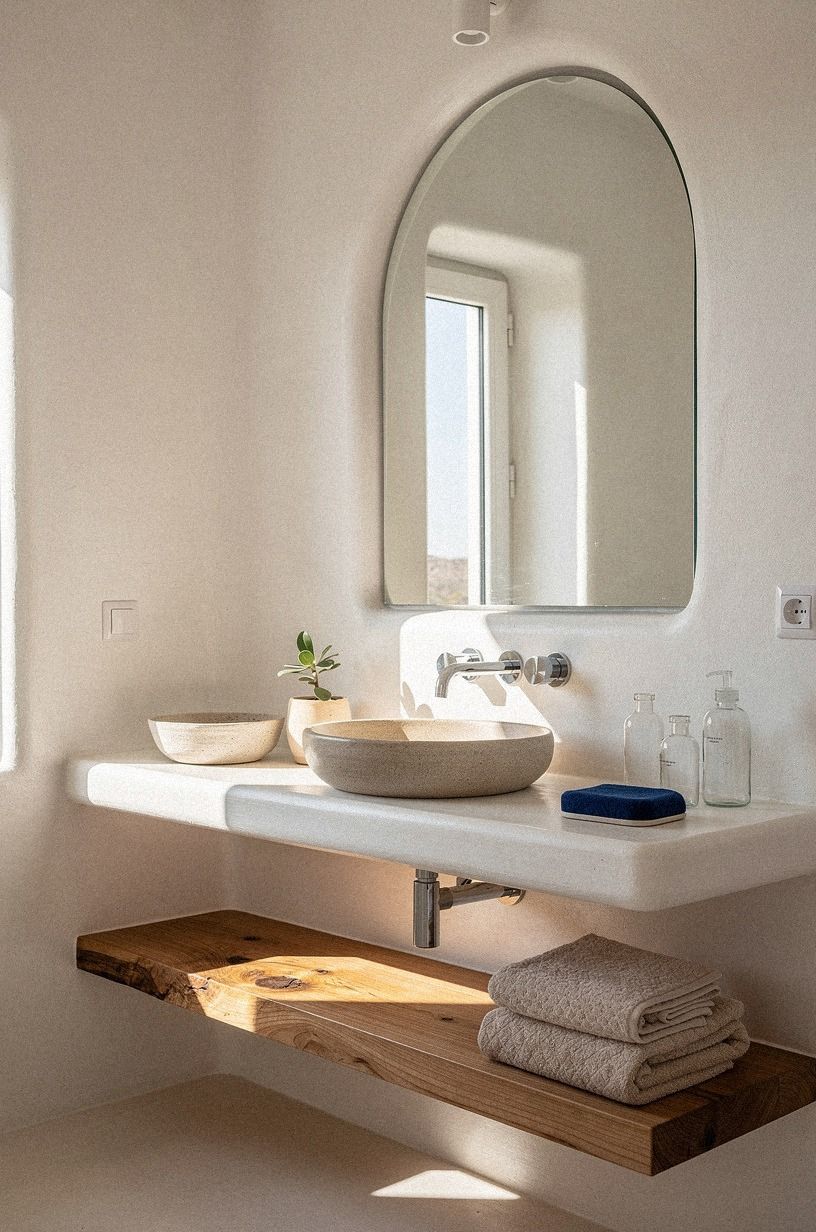
The room needed one deeper color, but I didn’t want a dark feature wall. I painted the inside of the medicine cabinet in Farrow & Ball Hague Blue No. 30.
I repeated the blue against book-matched walnut and added a small copper cup. You’ll see it only when the cabinet opens, which makes the color feel personal rather than performative.
I tested Sherwin-Williams Sea Salt SW 6204 beside Hague Blue before choosing the ivory wall. Sea Salt was peaceful but too green for the warm floor.
Hague Blue gave the room depth in small doses. I’d skip using a dark blue on every wall unless your bathroom gets strong natural light.
This was the moment I stopped trying to make the bathroom look purely white. White needed a shadow to feel white.
A small blue detail also connected the room to the coast without adding shells, signs, or obvious beach decoration. These timeless black and white bathroom ideas helped me keep the accent disciplined.
11Keep the white over beige with the One-View Test
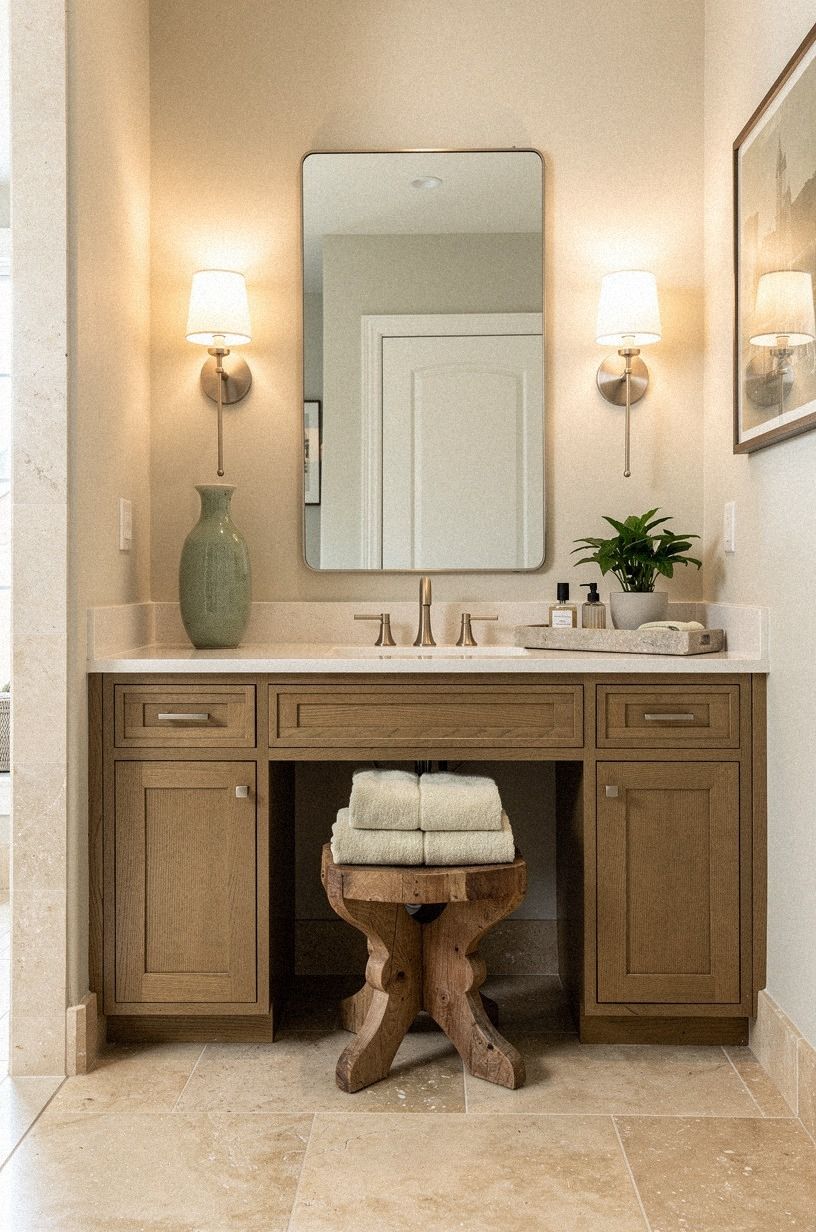
The last change was editing. I stood in the doorway and looked at the room as one composition: warm cream, sage green, natural wood, warm travertine, and soft textiles.
The One-View Test meant I removed anything that looked unrelated from the doorway. You can have lovely objects and still have too many of them.
I removed a patterned tray, one glass jar, and a bright green plant that didn’t like the humidity. The room looked calmer within ten minutes.
I kept a small olive tree branch in a warm travertine vase because its gray-green leaves connected the sage wall and natural wood without taking over. I also left one shelf almost empty.
A standard tub measures 60 by 30 inches, or 152 by 76 centimeters. The room still needs practical clearance around it.
I left at least 21 inches, or 53 centimeters, in front of the toilet because daily comfort matters more than squeezing in another basket. This warm beige house inspiration reminded me that warmth comes from materials and proportion.
Test the room in four lighting moments
I checked the bathroom at sunrise, noon, late afternoon, and after sunset. The morning light showed whether the sage and cream paint looked too cold.
At noon, I watched how the brass and teak handled direct brightness. In the evening, the sconces mattered more than the paint color.
I also turned off the overhead fixture and used only the mirror light. That test revealed which corners still looked unfinished.
A room can feel warm in one lighting condition and flat in another. If your paint sample works only at midday, keep testing before buying supplies.
Edit the surfaces before adding decor
I removed accessories from the counter and rebuilt the arrangement slowly. The ceramic soap dish stayed because it solved a real need and repeated the shower texture.
The decorative jar went into a drawer. It was attractive, but it made the vanity feel crowded.
I kept one small object near the sink, one textile near the shower, and one natural detail near the mirror. That gave each item enough space to register.
The zellige tile upgrade guide reinforced the same principle for me: one convincing material moment can carry more atmosphere than a collection of themed objects.
I also checked the sightline from the hallway. The Mediterranean tile ideas that make the whole bathroom made me more aware of how a small material change reads from outside the room.
The quiet details that finish it
The finishing layer came from small practical choices: a warm 2700K bulb, a concealed wastebasket, and towels that were easy to reach.
I changed the faucet aerator because the old water stream splashed against the shallow sink. That tiny fix made the room feel more considered every morning.
I also replaced the plastic shower liner with a washable cotton-linen blend. It hangs more softly and dries quickly when the curtain is spread open.
These details aren’t dramatic on their own. Together, they make the bathroom easier to live with, which is where the warmth actually comes from.
How much it cost
I kept this makeover in the budget tier by painting around the existing tile, reusing the plumbing, and buying the mirror secondhand. Your final cost will depend on the vanity, faucet, and whether your walls need repair.
I spent first on the faucet, paint, and lighting because those changed what I saw every day. The mirror came from Facebook Marketplace, and I reused the existing towel rail.
You don’t need to reach the mid tier to make a white bathroom feel warm. If your shower needs waterproofing or new plumbing, that changes the decision completely.
The zellige cost and finish comparison helped me decide that a narrow accent was enough. I’d rather see one properly chosen strip than a rushed full wall.
Why this warm white bathroom works now
I think the return of warm white rooms has less to do with a single paint color and more to do with fatigue. We’ve spent years seeing rooms optimized for bright photos, hard contrast, and spotless surfaces.
That look can seem polished, but you don’t live inside a photograph. You live with wet towels, morning shadows, and the sound of a cabinet closing too loudly.
My bathroom changed when I stopped asking how to make it look more Mediterranean and started asking what Mediterranean rooms give you physically. They give you chalky walls, worn wood, clay, uneven glaze, and light that moves across surfaces.
None of those elements needs to be expensive. They need to be specific. The natural wood should have grain, the clay should have variation, and the cream should respond well to changing light.
I’ve also learned that warmth isn’t the same as beige. Beige can make a white room muddy if there isn’t enough contrast.
Aged brass, pale oak, terracotta, and cream cotton each have different textures. That’s why I’d choose Benjamin Moore White Dove over a yellow cream for this project.
The part I wouldn’t repeat is buying decorative pieces before fixing the light. I did that first, and every vase looked wrong under the ceiling fixture.
Once the light softened, the room needed fewer objects. Start with what changes the shadows, then decide what deserves a place.
The zellige tile upgrade guide also clarified why the room felt richer after one small irregular surface. Variation gives white somewhere to catch the eye.
The Questions I Get Asked Most
What is the best approach for a small bright white Mediterranean bathroom?
A wall-mounted IKEA GODMORGON vanity and an arched mirror are strong choices because they preserve visible floor and soften straight lines. Keep your palette to cream, sage, natural wood, and one deep blue accent. A small room can feel more open when every material has a clear job.
Where can I buy affordable pieces for this bathroom style?
Start at IKEA, Wayfair, and Target, then check Facebook Marketplace or a local thrift shop for a mirror. Look for linen-blend textiles, pale wood, and muted brass rather than matching sets. This Scandinavian warm-room guide has useful layering references.
How much does a warm white bathroom makeover cost?
A cosmetic makeover typically falls within the $200-$1,200 budget tier for paint, a mirror, faucet, and textiles. Free changes include editing clutter, reusing storage, and moving your light sources. Larger tile, vanity, or plumbing work can move the project into the $3,000-$9,000 mid tier.
Can I create this look on a budget?
Yes, and you can begin with paint, secondhand accessories, and warmer bulbs. Choose Benjamin Moore White Dove, reuse your existing vanity, and add one plum or terracotta textile. Skip full tile replacement until you know the room’s light and proportions are working.
Is this style worth trying in a small space?
Yes, because a small bathroom benefits from a limited palette and visible floor. Keep the vanity between 32 and 36 inches high, use a rounded mirror, and avoid thick rugs. The room won’t need many objects to feel finished.
Is this a good approach for a rental?
Yes. Use removable hooks, a tension rod, a washable runner, and a mirror leaning safely against the wall or hanging from existing hardware.
A peel-and-stick tile accent can work outside wet zones, but don’t cover questionable waterproofing without your landlord’s approval. For more no-drill ideas, I also saved this remote Utah home story for its resourceful styling cues.
Where I’d Start First
If I had to pick one, I’d start with the lighting. Cold overhead glare makes every warm material look wrong, while softer layers let simple paint, towels, and wood do their work.
Pin this bathroom for later and change the shadows before you buy another accessory. The room will tell you what it needs!
The small rule I’d repeat
Choose one material with visible age, one textile with softness, and one color that appears only twice. In my bathroom, that meant aged brass, linen, and Hague Blue.
That combination gave the white walls somewhere to go. It also kept the room personal without turning it into a themed set. Worth the test!