
Cozy music room ideas for a warm, inspiring retreat usually cost $200 to $800 at the budget level, not a full renovation. I learned that after buying the wrong chair and barely using the room. Your space needs sound, comfort, and a place for instruments to land. The result should invite you in before you touch a note.
- Layer the Three-Height Light Stack for a Cozy Music Studio With Instruments
- Float a Compact Listening Chair Instead of Filling Every Wall
- Build the Two-Wood Rule for a Cozy Music Room With Guitars and Records
- Hang Art at the Listening Height You’ll Notice
- Frame the Piano With the Warm Wood Halo
- Swap Hard Surfaces for a Soft Sound Layer
- Paint the Room a Gentle Color With Enough Depth
- Anchor the Room With the Record Cabinet First
- Mix Textures Around One Instrument
- Position Speakers for the Seat You Use Most
- Choose the Budget Before You Choose the Decor
- Hang Curtains High for a Softer Acoustic Edge
- Make a Small Room Work With the Foldaway Instrument Zone
- Build a Personal Listening Ritual
1Layer the Three-Height Light Stack for a Cozy Music Studio With Instruments
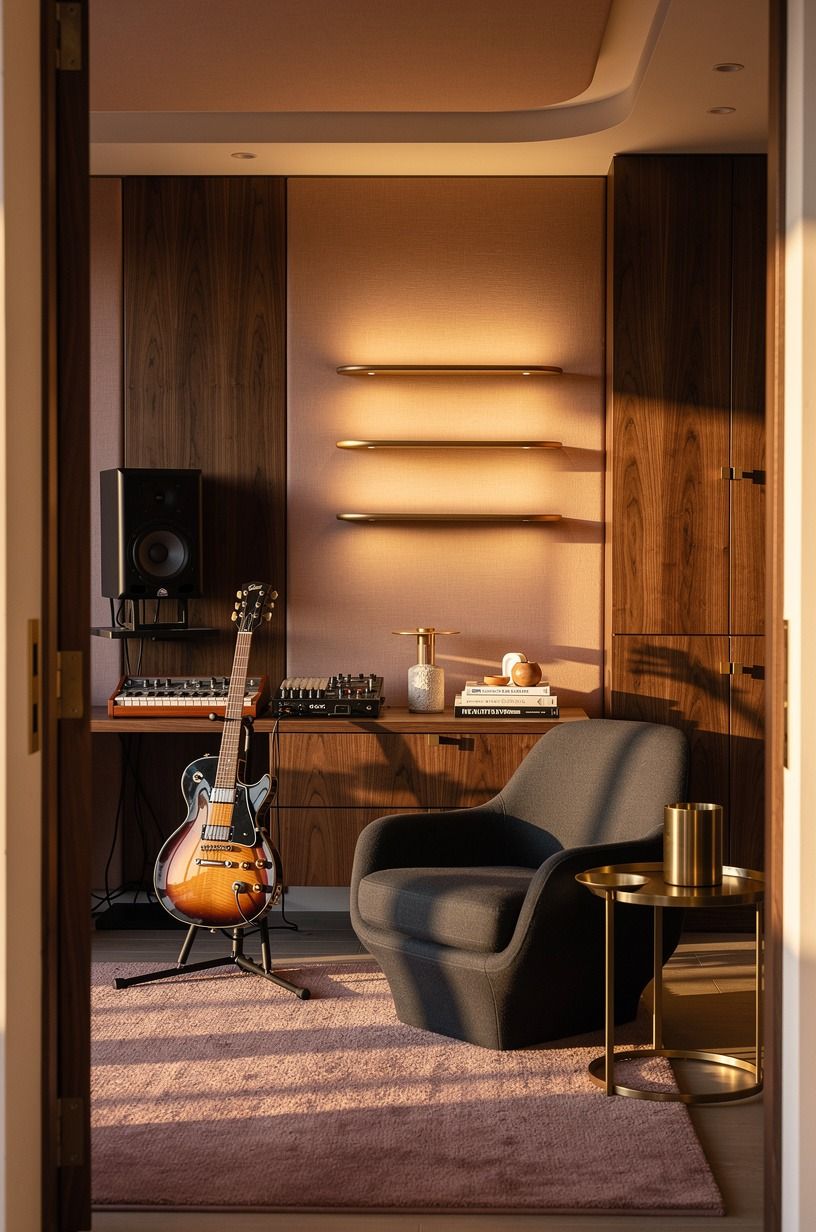
Start with three light sources at different heights: overhead, task, and ambient. That’s the setup that keeps your music room bright enough for sheet music while preserving a calm, intimate mood after sunset. You’ll want one lamp near your chair, one low glow near the floor, and one ceiling fixture that doesn’t glare on your instrument.
I’d skip a single bright flush mount. It makes your room feel like a practice space at school, not a welcoming retreat. A brass floor lamp beside your keyboard softens the corners, while a small reading lamp lets you see notes without washing the whole room in white light.
Warm bulbs work best with Farrow & Ball Sulking Room Pink because the dusty rose tone stays warm instead of looking icy. If you’re working in a rental, use plug-in sconces and hide the cord inside a slim cord cover. Your room will feel more polished, and you won’t need an electrician.
2Float a Compact Listening Chair Instead of Filling Every Wall
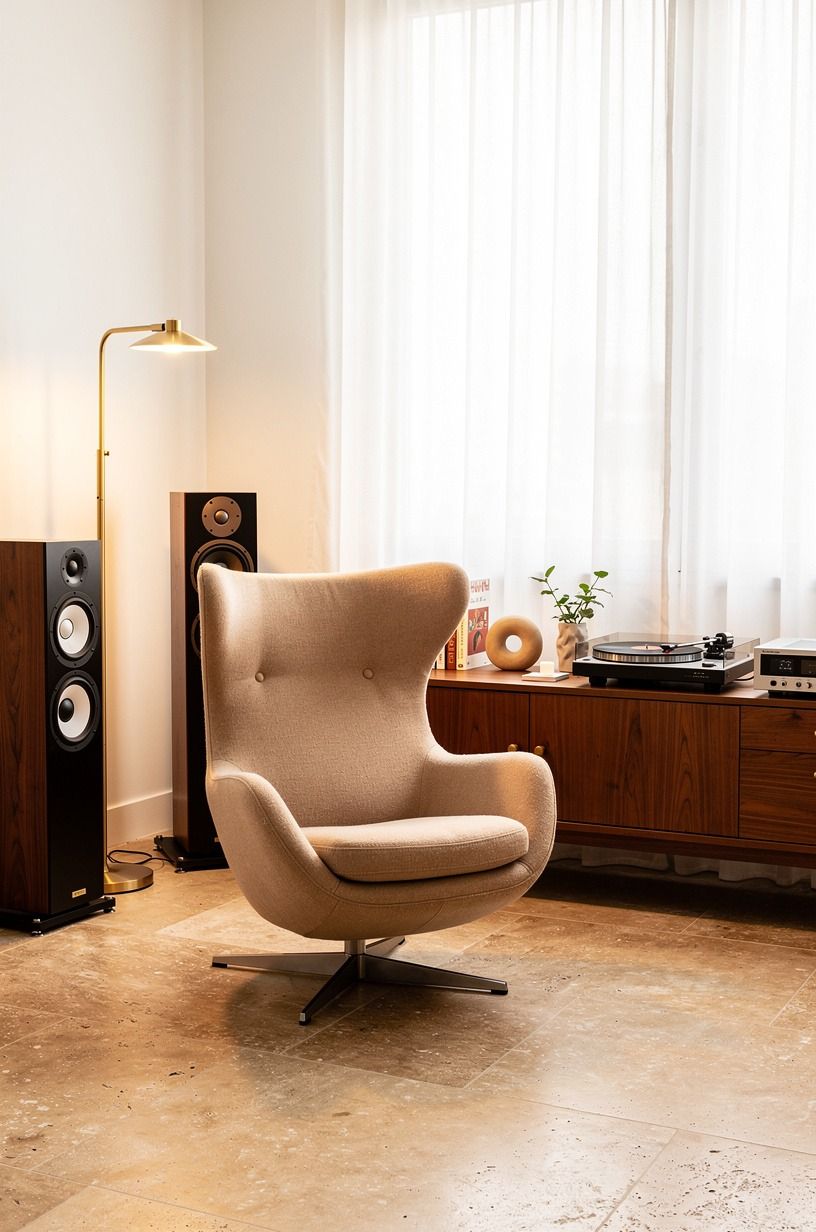
Place your main chair slightly away from the wall, even if you can spare only a few inches. That small gap gives your room a collected, airy quality and makes it easier for you to reach records, sheet music, or a guitar without squeezing between furniture.
A camel lounge chair brings warmth, but I’d choose a chair with a firm seat over a deep, sink-in design. A soft cushion feels inviting for ten minutes, then leaves your shoulders rounded during a long listening session. Your body will tell you which one works.
Pair it with a narrow warm travertine side table no wider than necessary. A mug, metronome, and phone should fit, but your table shouldn’t become a storage dump. For more ideas on arranging a tight room, browse these small music room layouts for big sound.
3Build the Two-Wood Rule for a Cozy Music Room With Guitars and Records
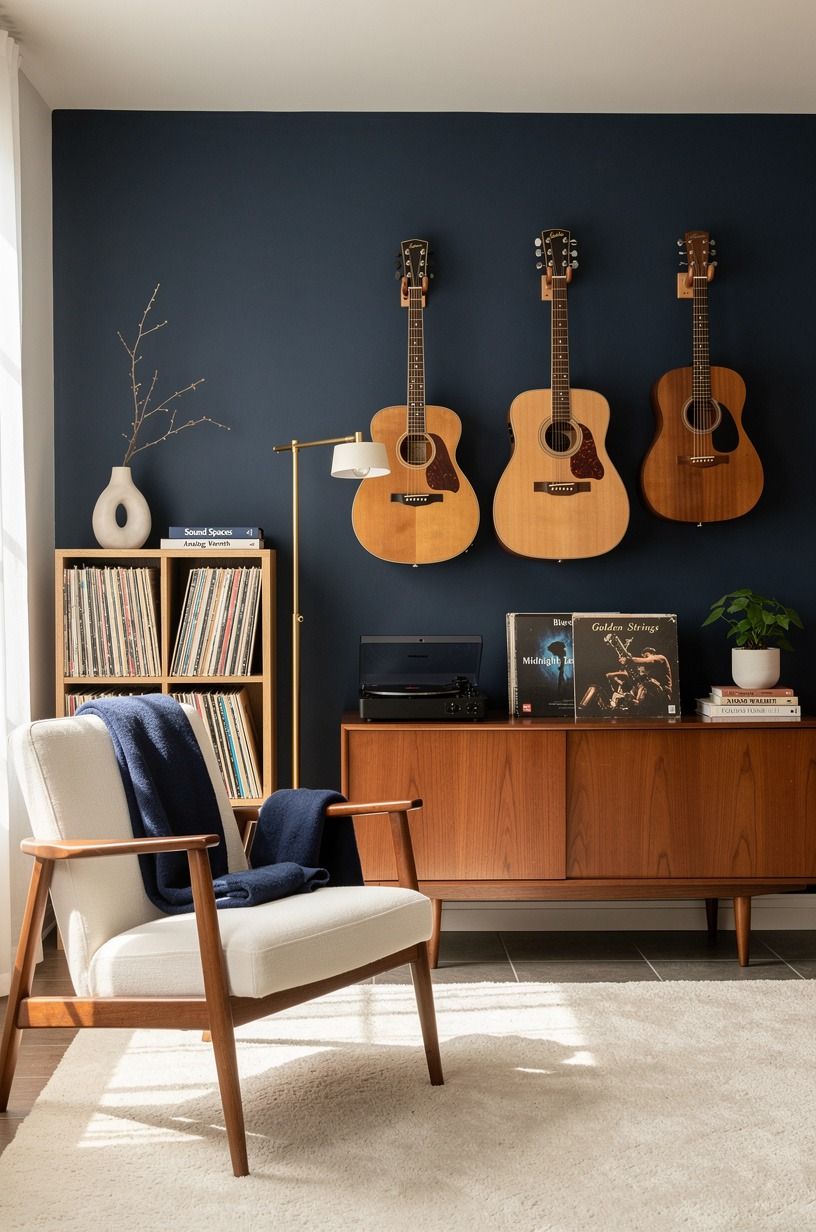
Choose two wood tones and repeat them deliberately.
4Hang Art at the Listening Height You’ll Notice
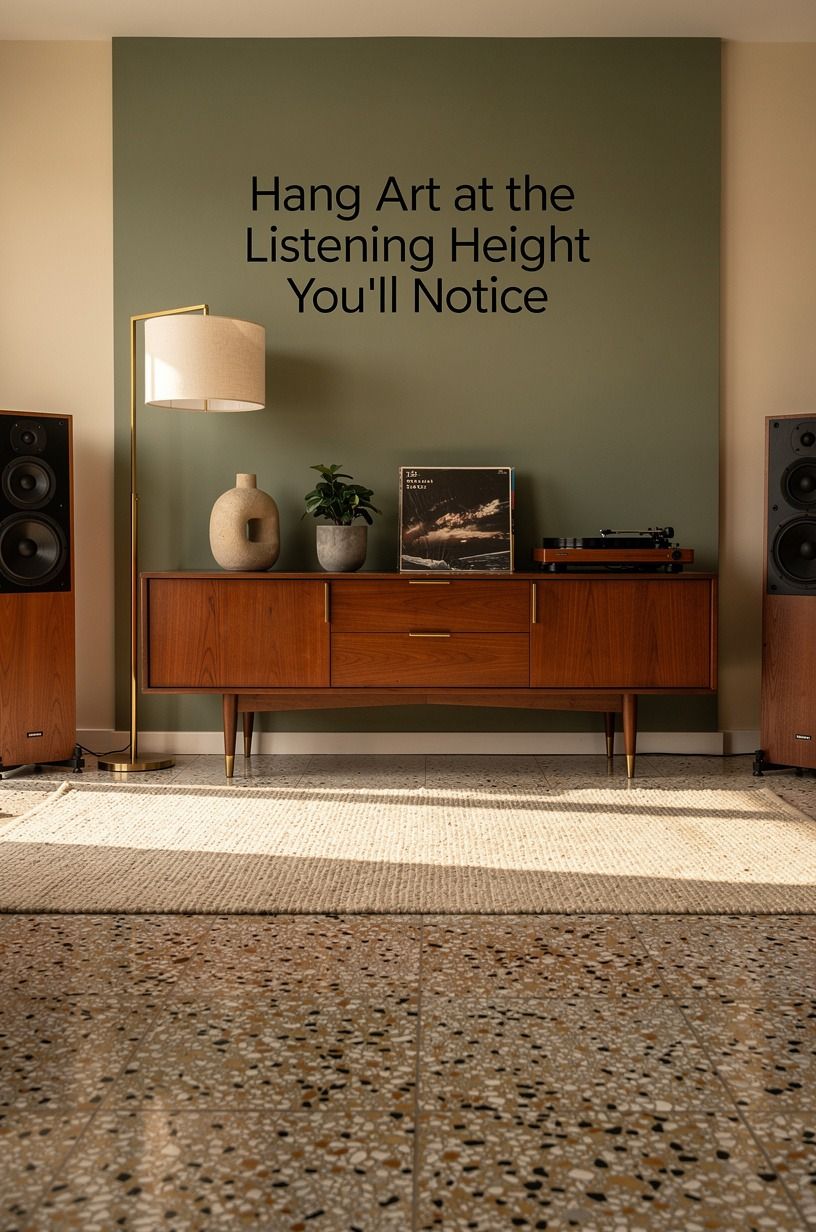
Hang musical art with its center about 57 to 60 inches from the floor. That standard keeps the artwork at eye level when you’re seated or standing, and it stops your room from feeling top-heavy. Your wall will look calmer when the art relates to where you actually spend time.
A vintage concert poster brings personality without demanding a full gallery wall. Choose one large print behind the piano or listening chair, then leave breathing room around it. I’d avoid filling every inch with album covers because visual noise can make a small room feel more active than restful.
For a softer look, place a black-and-white music photograph above an oversized-chip terrazzo console. The material adds quiet texture, and its warm cream tones look inviting beside natural wood. If you’re building a gallery wall, keep the bottom edge aligned rather than forcing every frame into a grid.
5Frame the Piano With the Warm Wood Halo
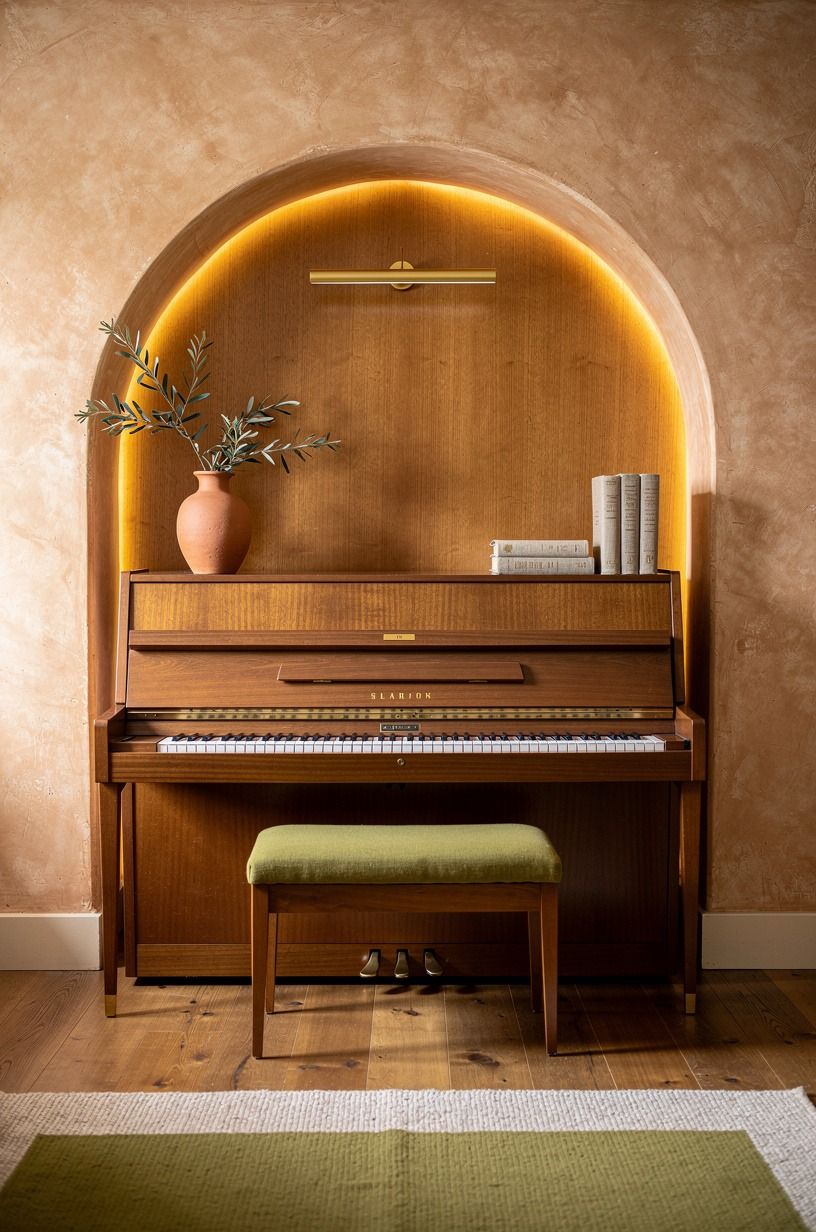
Give your piano a visual frame by placing two warm, useful elements around it.
6Swap Hard Surfaces for a Soft Sound Layer
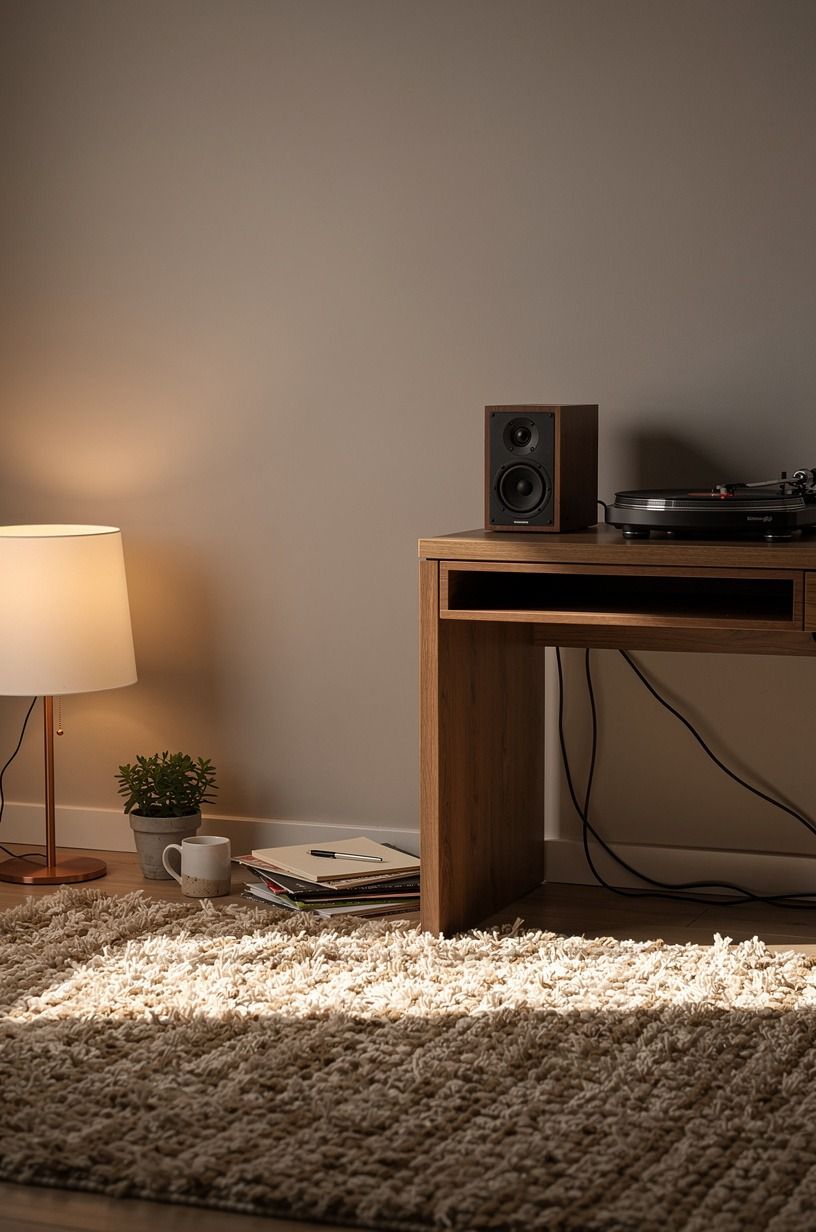
Add a rug large enough for your furniture to overlap it. The rug absorbs some echo, protects the floor beneath a chair, and gives your room a warmer physical feeling when you walk in barefoot. You’ll notice the difference before you can explain it.
A hand-knotted rug with subtle shagreen accents is my first choice because its dense fibers feel substantial underfoot and soften the sharp reflection of wood floors. I’d skip a tiny rug floating in the middle of the room. It makes your furniture look disconnected and does little for sound.
For a budget version, layer a flatwoven cotton rug beneath a smaller accent. Your room can still feel serene without spending on every surface at once. If you’re comparing sizes, prioritize coverage under the piano bench, listening chair, and front legs of nearby furniture.
7Paint the Room a Gentle Color With Enough Depth
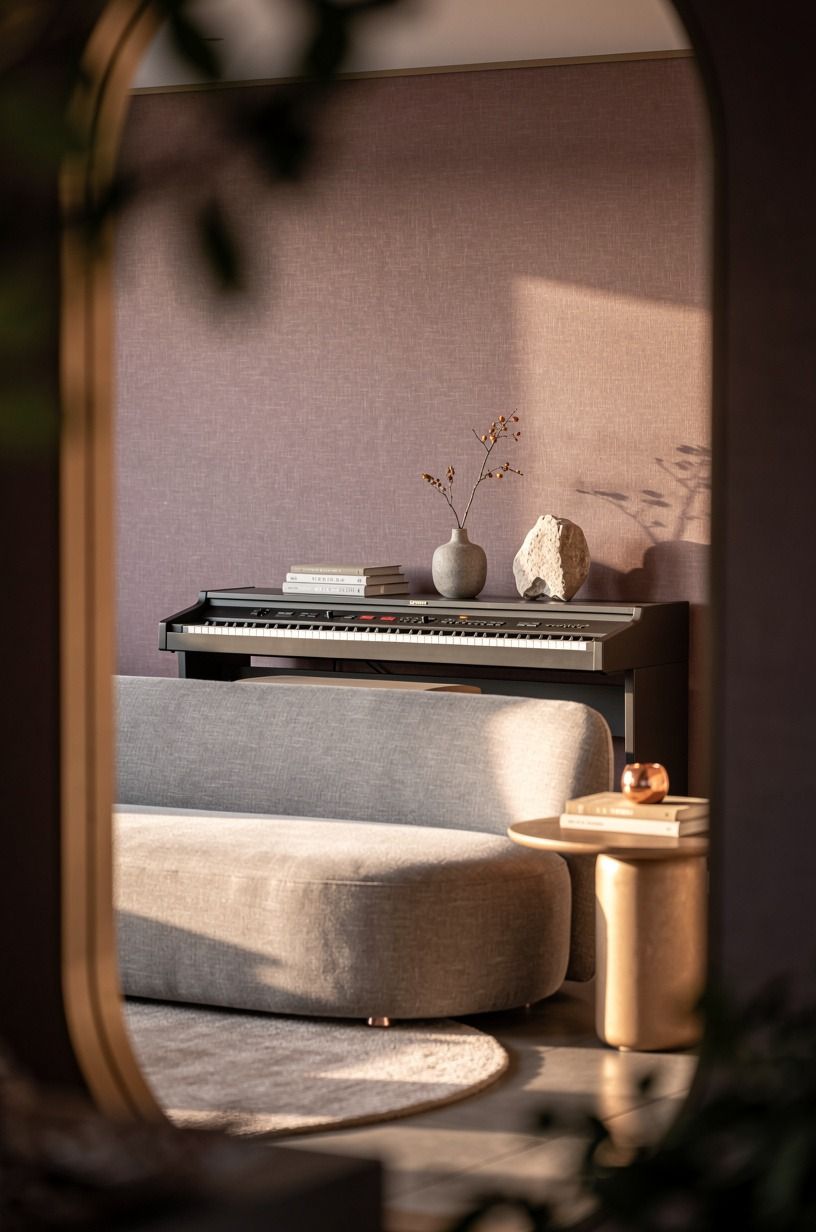
Use one paint color across the walls, trim, and sometimes the ceiling if your room is compact. That continuous color makes the boundaries recede and helps your instruments become the focus. Your space will feel more intimate without needing dark furniture everywhere.
Sherwin-Williams Agreeable Gray SW 7029 is a calm option when you want a neutral that won’t turn blue in changing light. For a warmer, more dramatic room, try Farrow & Ball Pelt, a deep plum that works beautifully with soft gray and rose-gold accents. I’d choose Agreeable Gray when you want the gray to lead and Pelt when you want the room to feel more enveloping.
Don’t rush the sample stage. Paint two large boards and move them around for a full day.
Morning light, lamp light, and evening shadow will show you more than a tiny chip ever will. You’ll save yourself from repainting a room that looked right only at noon.

8Anchor the Room With the Record Cabinet First
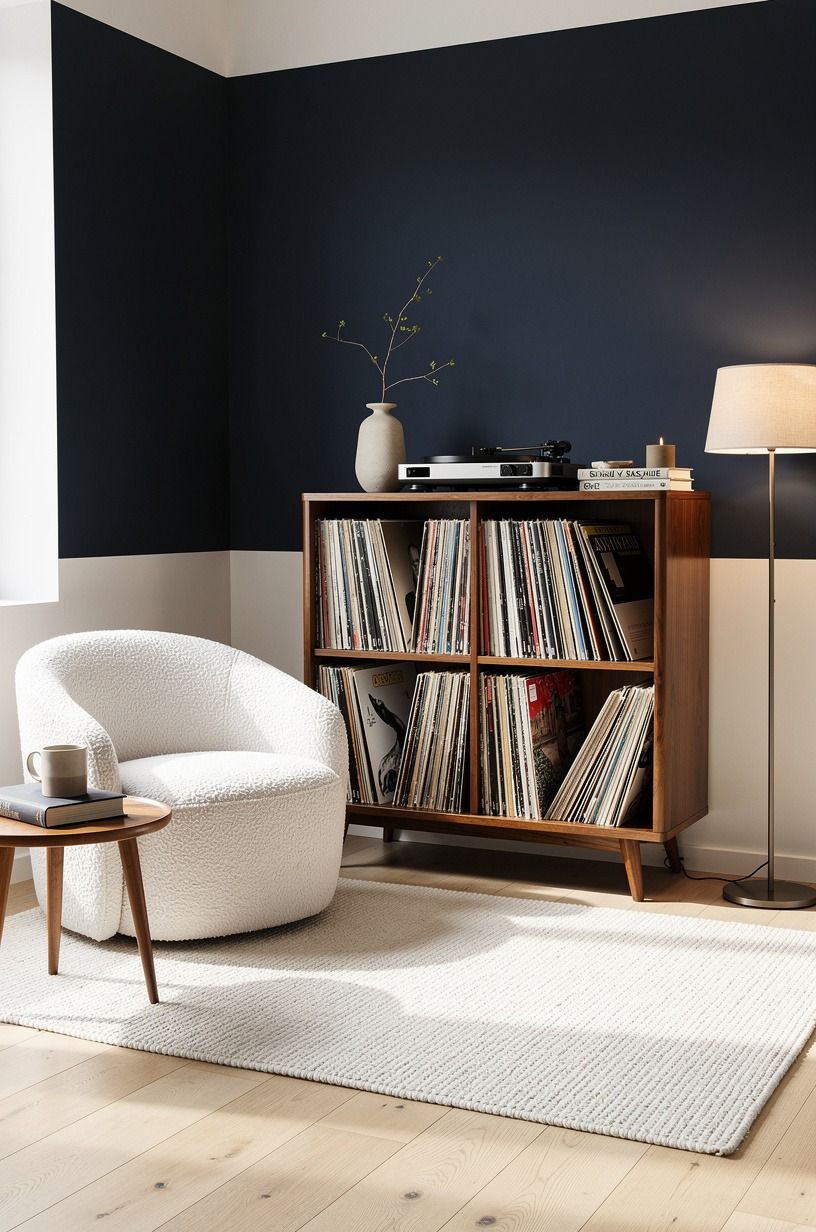
Choose storage before you buy decorative pieces. A record cabinet, instrument stand, or closed shelving unit determines where your chair, lamp, and artwork can go. Your room will feel easier to use when every object has a reachable home.
A walnut mid-century record cabinet gives you broad drawers and a clean horizontal line, but check its interior depth before ordering. Records need proper support, and your equipment needs ventilation. I’d avoid tall open shelving for every collection because dust settles quickly around turntables and speakers.
Keep the most-used records between waist and eye level. Less-used books or accessories can live above them in baskets. These music room storage and instrument organization ideas can help you plan the cabinet wall before you start drilling.
9Mix Textures Around One Instrument
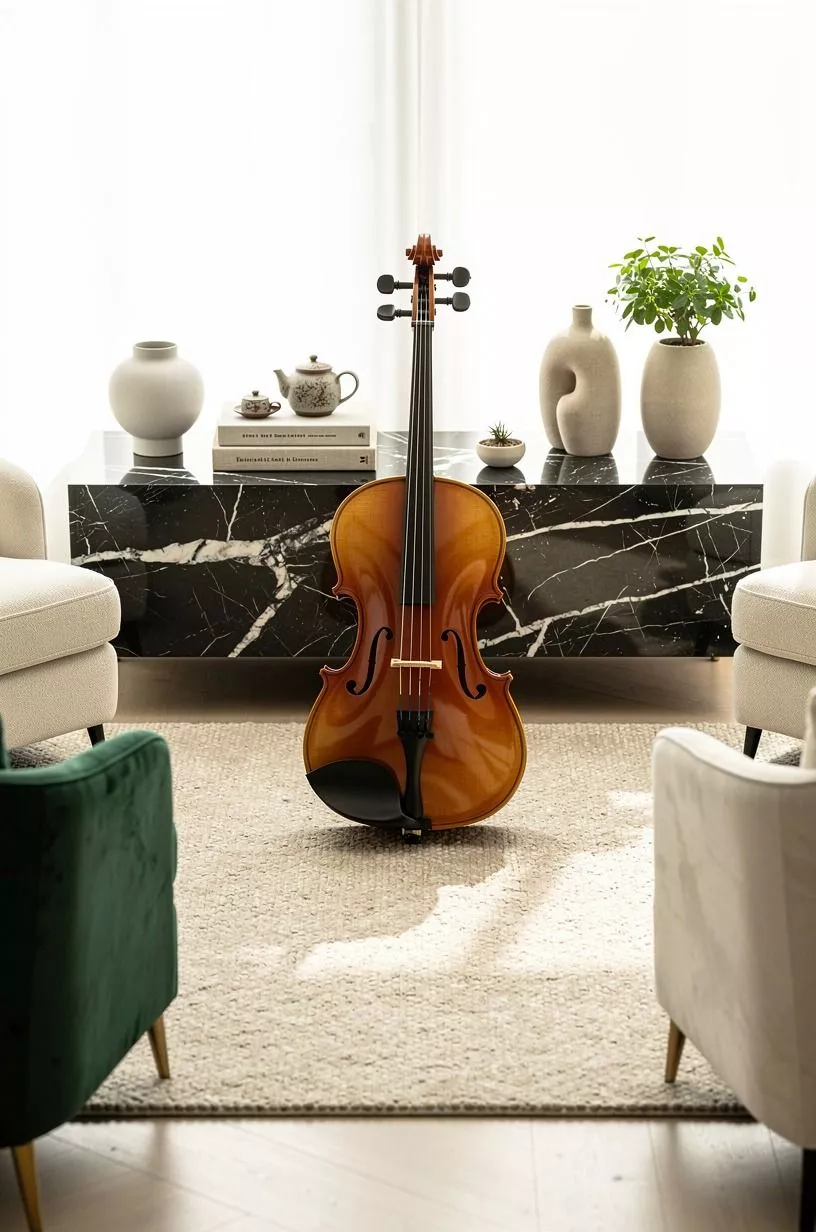
Build softness around the hardest object in the room.
10Position Speakers for the Seat You Use Most
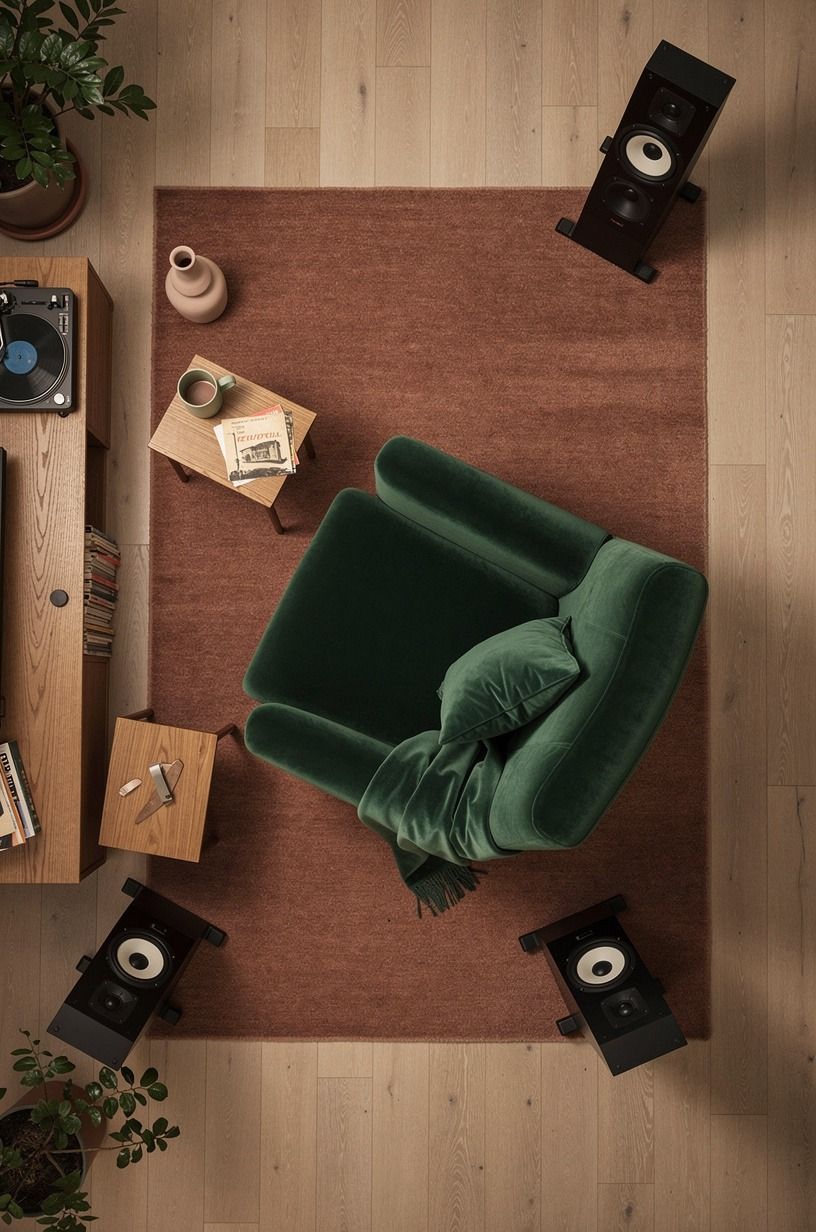
Place your speakers around the listening position rather than arranging the room around the wall. The best sound comes from the seat where you spend time, not from a symmetrical photograph. Your chair should sit between the speakers with enough space for the sound to open up.
A compact bookshelf speaker pair can work beautifully in a small room when raised on stable stands. I’d avoid putting speakers directly on a hollow cabinet because vibration can muddy the bass. Use a dense pad beneath each one and keep the equipment visually tidy.
If your room doubles as a practice space, leave a clear path from the door to the instrument. That practical gap matters more than squeezing in another shelf. You can read more about arranging a cozy music studio with instruments when your room needs to serve more than one purpose.
11Choose the Budget Before You Choose the Decor
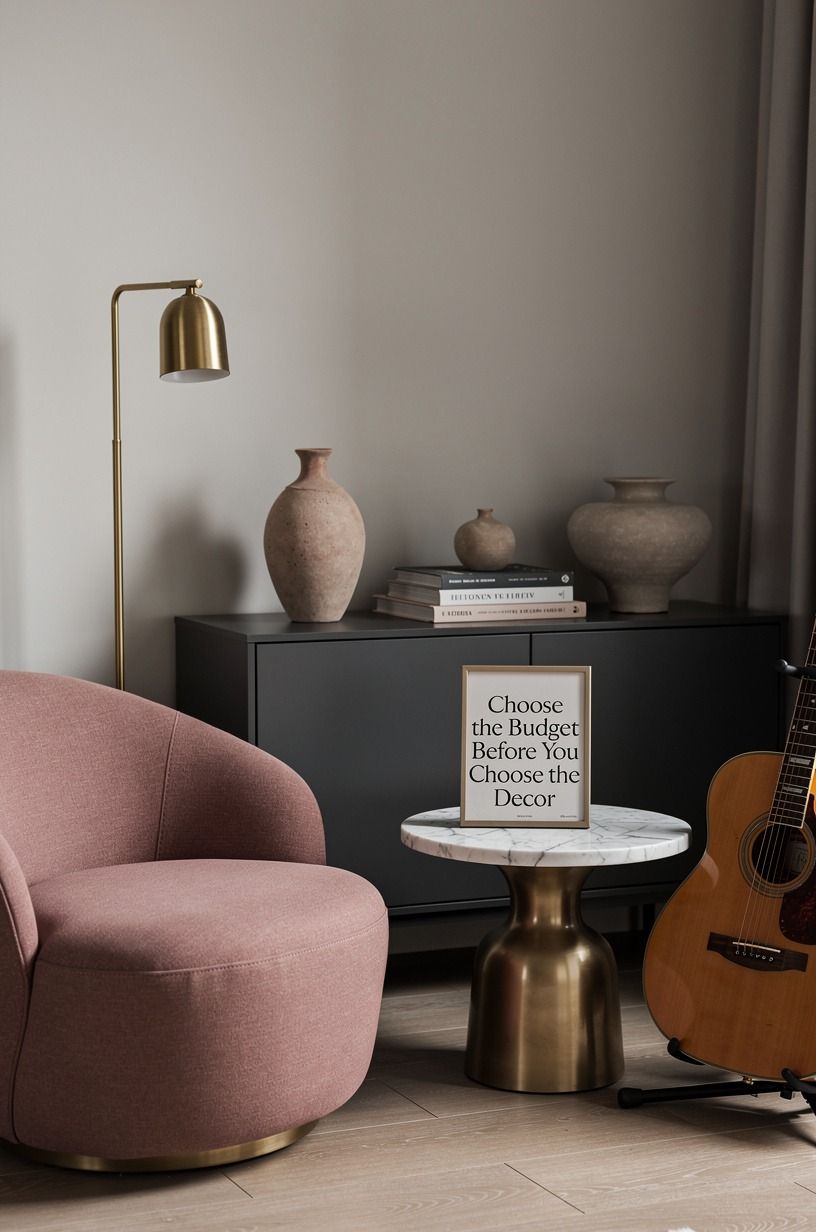
Set your spending tier before you fall for a chair, rug, or custom cabinet. A warm music room can be built slowly, and your first purchase should solve the biggest daily problem, not simply look good in a photo.
A wool rug typically runs $400-$1,500, while linen drapes for a pair often cost $120-$400. A statement light fixture can range from $150-$800, and DIY paint may cost $200-$600 for the room. Your choices should follow the tier, because mixing one high-cost item with unfinished basics can feel uneven.
I’d spend first on the rug and lighting. They change how your room sounds and feels every day. Save the decorative objects for later, when you know which surfaces your routine leaves empty.
12Hang Curtains High for a Softer Acoustic Edge
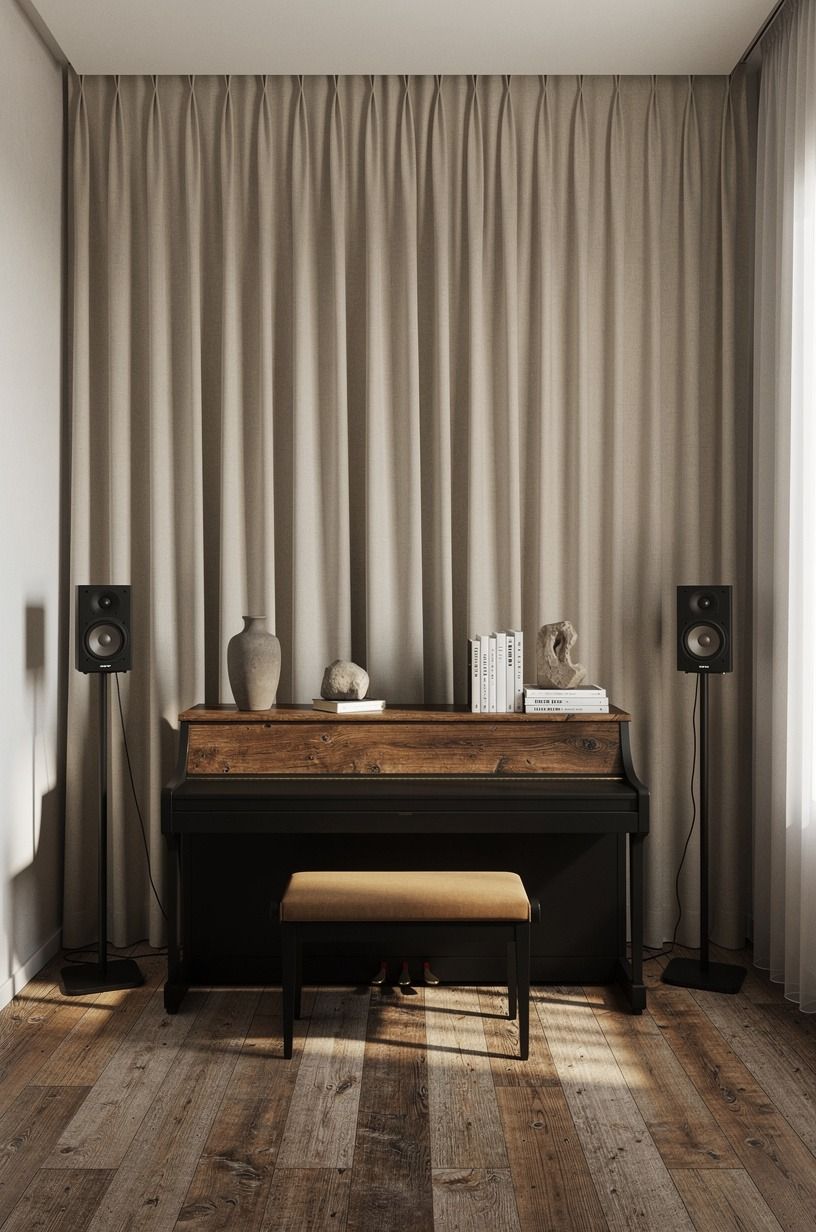
Mount the curtain rod 4 to 6 inches above the window frame and let the panels fall to the floor.
13Make a Small Room Work With the Foldaway Instrument Zone
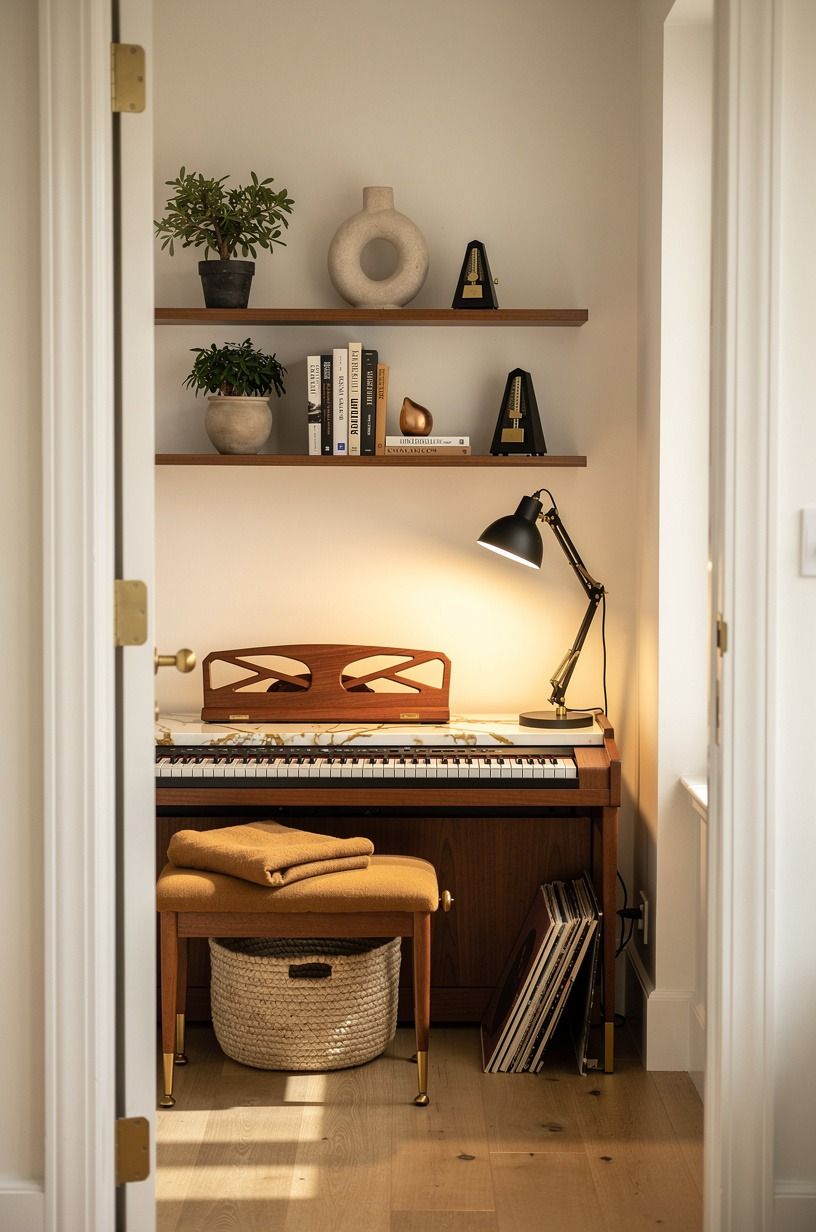
Give every large instrument a parking position that doesn’t block the room. A folding keyboard stand, wall-mounted guitar hooks, or a rolling music cart can make your space flexible without making it feel temporary.
A compact storage unit topped with Calacatta marble with gold veining can hold records, baskets, sheet music, and small accessories in one compact footprint. I’d keep instruments on the lowest level and fragile objects higher up, especially if your room is shared with children or pets. Your storage should support the habit you want to keep.
Leave enough clearance to pull a chair back comfortably. A small room can feel inviting when the path is obvious, even if the furniture is modest. For more inspiration, see these small music room ideas for a tiny space.
14Build a Personal Listening Ritual
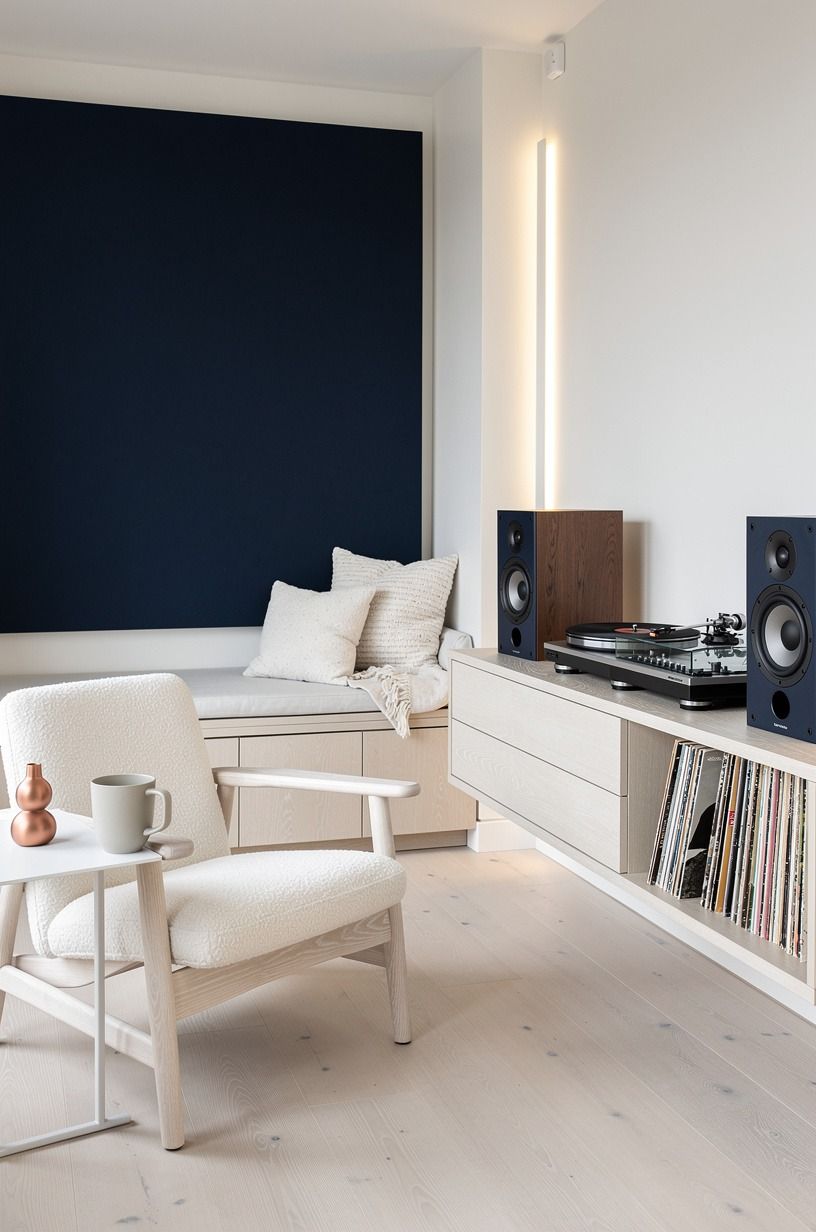
Finish the room with one repeatable ritual. It might be a record played after dinner, ten minutes at the piano before work, or a Sunday afternoon spent sorting sheet music. Your room becomes useful when the design supports a habit instead of waiting for a special occasion.
Create a small tray with cerused white oak and copper details, a notebook, and a pencil for quick notes. Keep the items visible but contained, so you won’t need to search before you begin.
I’d skip styling the room so carefully that you’re afraid to use it. Dust and fingerprints are signs that the retreat is doing its job.
Add one meaningful object, perhaps a framed ticket, inherited instrument, or photograph from a concert. That personal detail will make your room feel intimate and lived-in. And if you’re inspired by music-filled interiors, this story about Paul McCartney’s private Caribbean retreat offers a memorable sense of place.
Why a Music Room Should Feel Lived In
I used to think a music room needed to look disciplined, almost museum-like. The piano had to stay spotless, the records had to line up perfectly, and every chair needed to face the correct direction.
That room photographed well, but I didn’t spend much time there. It felt like a place I was borrowing from someone more organized.
The shift happened when I left a notebook open beside the chair. Not a styled notebook, either, just one with a crooked chord progression and a coffee mark near the spine.
I added a basket for cables, a lamp I could switch on with one hand, and a rug that felt good under bare feet. Those choices weren’t dramatic, but they removed friction.
That’s the real reason some rooms become retreats. They don’t demand a performance before you enter.
Your instrument is reachable, your seat is comfortable, and the light is soft enough that you can stay for another song. I’d rather have a scratched record cabinet that gets used than a flawless console nobody touches.
A music room also deserves a little visual silence. You don’t need to display every record, every instrument, or every award.
Keep the objects that carry a memory, then let the rest live in storage. The room will feel more personal when your eye can land on one meaningful thing instead of competing with twenty decorative statements.
And yes, a beautiful room still matters. Color, texture, and proportion change your mood before you play a note.
But function has to lead. If your chair hurts, your lamp flickers, or your guitar is buried behind a basket, the design has missed the point.
Make the room easy to enter, and inspiration will have somewhere to land.
A Few Things Worth Answering
What is the best cozy music room idea for a small cozy music room?
The best starting point is a comfortable chair beside a compact IKEA KALLAX storage unit. You’ll gain seating, record storage, and a clear listening zone without crowding the room. Choose a rug that overlaps the furniture, then keep one wall open so your space feels calm.
Where can I buy cozy music room pieces on a budget?
Look at IKEA, Wayfair, Target, Facebook Marketplace, and local thrift stores. Target Threshold often has affordable lamps and baskets, while second-hand shops can turn up solid wood tables for less. Your display-ads site uses no affiliate links or commission disclosures, so shop wherever the price and condition make sense.
How much does a cozy music room makeover cost?
A small refresh usually costs about $200 to $800 for paint, textiles, art, and organization. A mid-range room with accent furniture, lighting, and a rug often reaches $1,500 to $5,000. You can spend nothing on styling by rearranging your chair, records, and instruments first.
Can I create a cozy music room on a budget?
Yes, and you can begin with three free changes: move the chair toward the best light, group instruments by use, and remove objects that block the floor. Add a second-hand lamp, a washable rug, and Benjamin Moore White Dove paint as money allows.
Is a cozy music room worth it in a small space?
Yes, because a small room can feel more intimate and focused. Put the chair near the instrument, use vertical storage, and keep the center path open. You won’t need much furniture when every piece supports listening, playing, or storing your music.
Is a cozy music room a good idea for a rental?
Yes. Use peel-and-stick paint alternatives where permitted, tension rods for curtains, removable hooks for light art, and freestanding storage.
Farrow & Ball Pigeon can inspire a renter-friendly color palette without requiring permanent changes. Your room can feel personal while remaining easy to restore.
Where I’d Start First
If I had to pick one, I’d start with the listening chair. A comfortable seat changes whether you’ll use the room, while decor only changes how it photographs. Choose the chair, place the lamp beside it, and let the rest gather slowly.
Pin this idea for later and make room for one more song.