
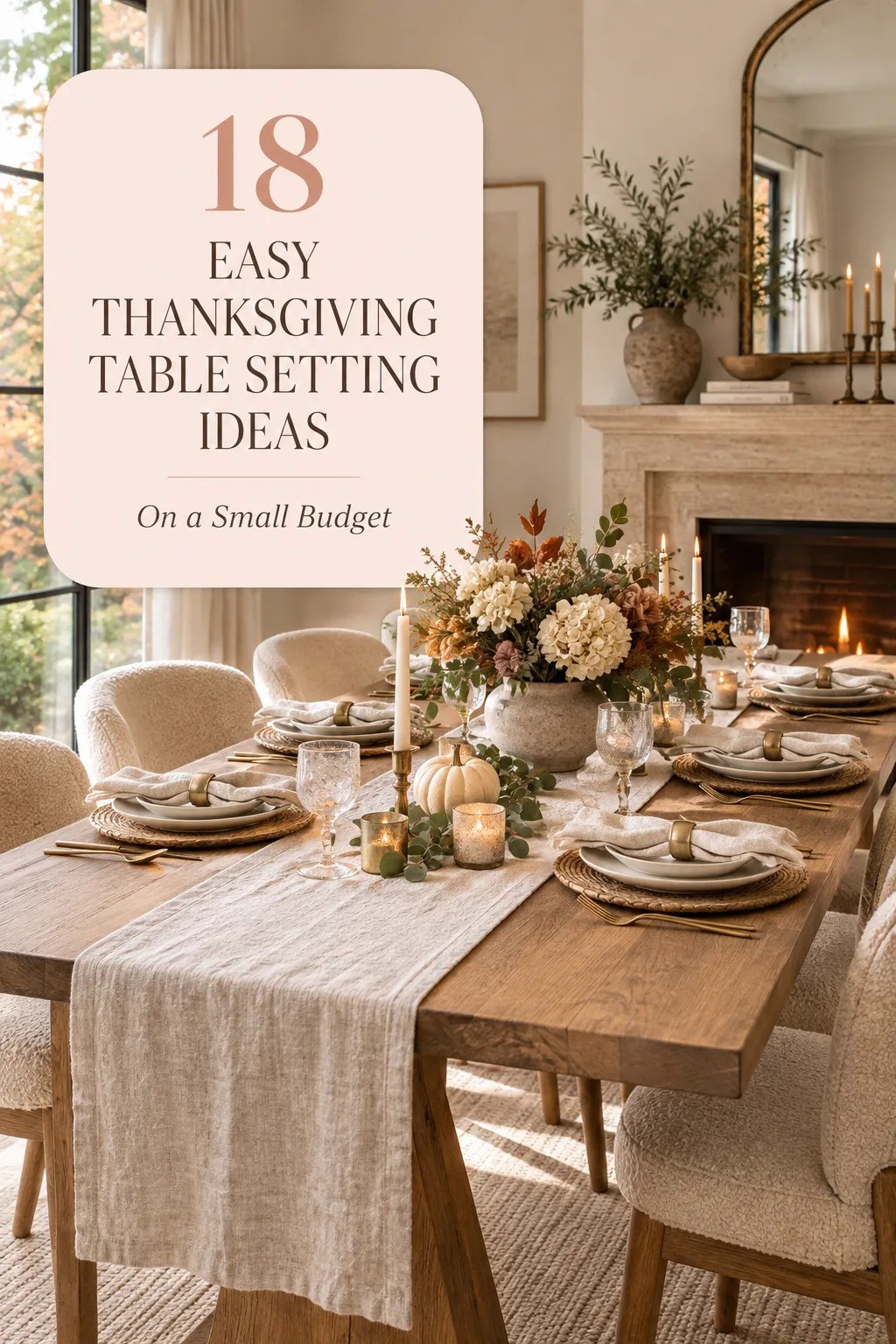
Easy Thanksgiving table settings on a small budget can look expensive when you repeat color, vary height, and use what you already own. I once bought too many tiny decorations and lost the table under them. Your best setting needs breathing room, warm texture, and one clear focal point. That’s it!
- Layer a Linen Runner Over Bare Wood
- Float Candles in Low Glasses
- Build The Three-Height Light Stack
- Swap Floral Foam for Grocery-Store Branches
- Use The One-Color Borrowing Rule
- Fold Napkins Into Simple Pockets
- Frame Each Place With A Small Plate
- Paint The Menu Cards Instead of Buying Decor
- Anchor The Center With A Wooden Board
- Mix Brass With Matte Black
- Hang A Paper Leaf Above The Table
- Create A Bread-and-Pears Still Life
- Choose Linen Over Paper For One Detail
- Set A Clear Three-Tier Budget
- Let Benjamin Moore White Dove Calm The Mix
- Ask: Can The Center Stay Low?
- Mix Everyday Dishes With One Heirloom
- Finish With The Two-Texture Rule
1Layer a Linen Runner Over Bare Wood
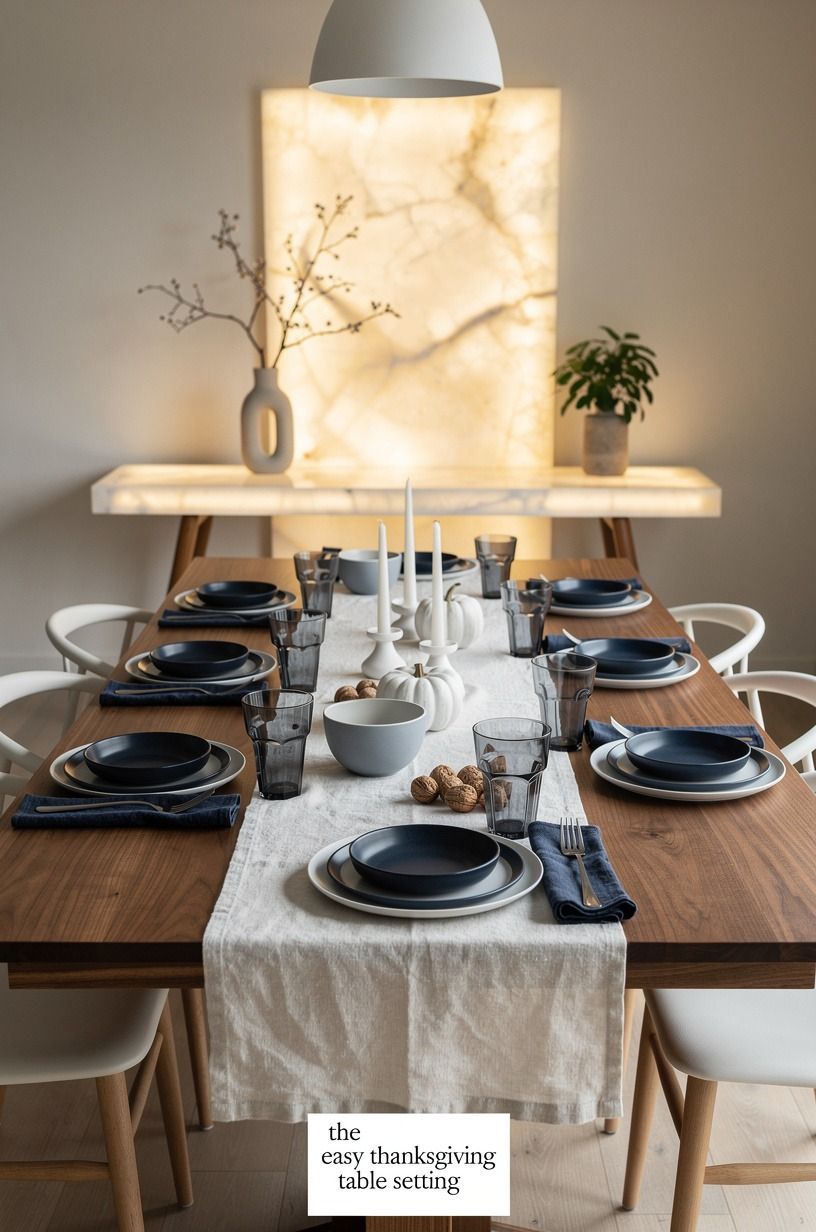
A linen runner gives your Thanksgiving table setup instant warmth without covering every inch. Let the walnut show at both ends, then place your plates directly on the fabric so your eye gets a soft, earthy path through the setting. If your table is narrow, add a slim backlit translucent onyx accent beneath the runner for a gentle glow.
I’d skip shiny polyester here. It catches room light in a harsh way, while washed linen looks inviting and relaxed.
Your runner doesn’t need to match your napkins exactly, either. Try Farrow & Ball Pigeon No. 25 as the color reference, then repeat that blue-gray in a candle or small bowl. You’ll get a refined table without buying a whole new collection.
Typical cost by tier (US averages):
2Float Candles in Low Glasses
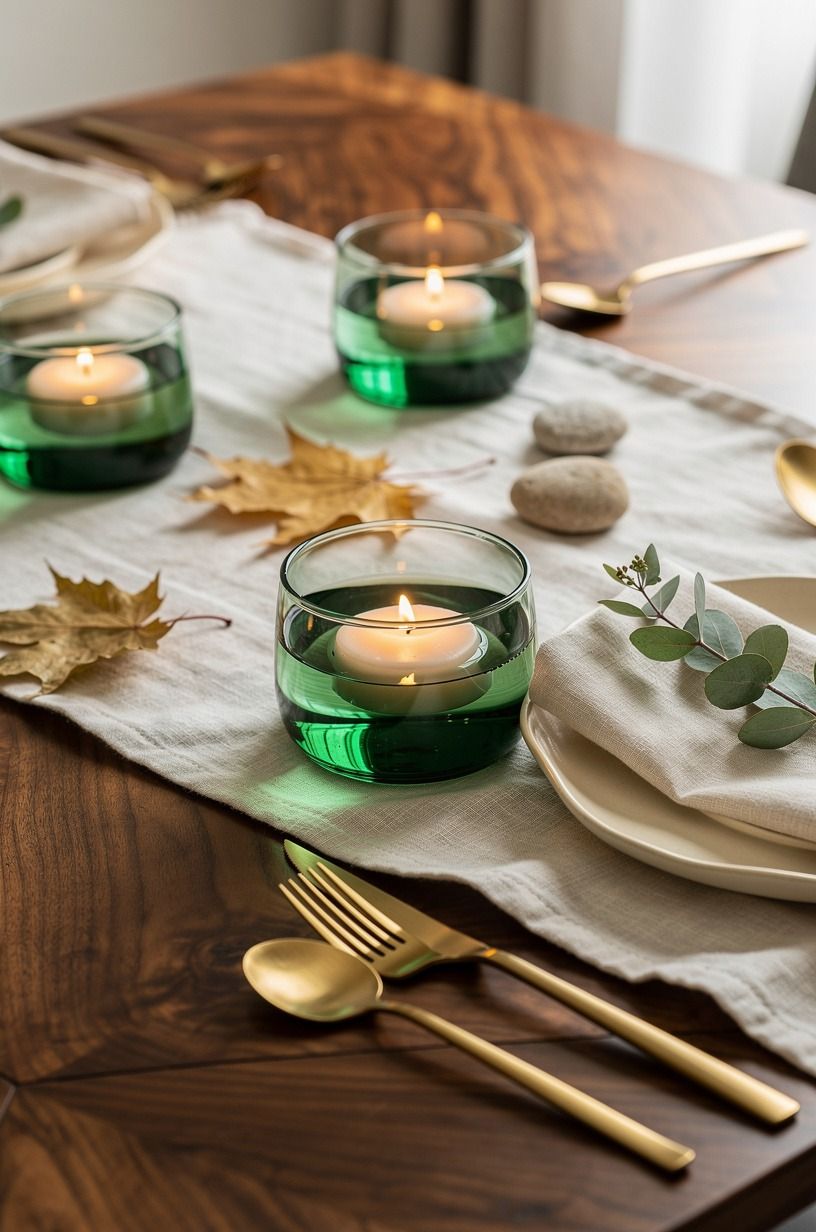
Low candlelight makes table settings for Thanksgiving feel intimate, especially when your guests need to see across the table. Use short glasses, tea lights, or small votives in a loose line. Your centerpiece should stay below eye level, and I’d keep the flame about as high as the rim so faces remain visible.
A row of clear glass votives arranged on a book-matched walnut board looks more expensive than a cluster of novelty holders because the light feels clean and gentle. Add unscented soy candles so dinner still smells like food, not cinnamon perfume.
If you’re styling a compact dining area, borrow the same calm layering used in these small living room ideas. The room will feel more harmonious when the table doesn’t fight its surroundings.
3Build The Three-Height Light Stack
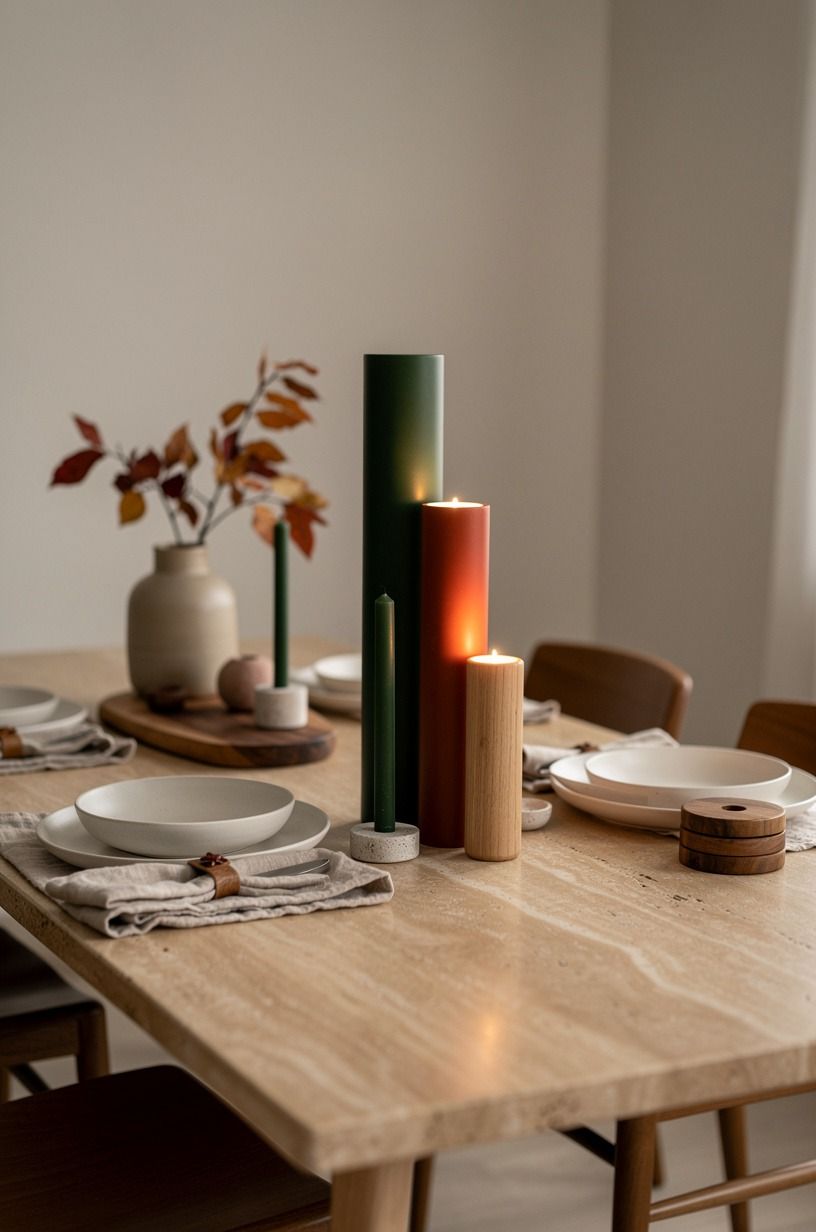
Your thanksgiving feast table needs three visible heights: low plates, medium warm travertine vessels, and one taller element near the center.
4Swap Floral Foam for Grocery-Store Branches
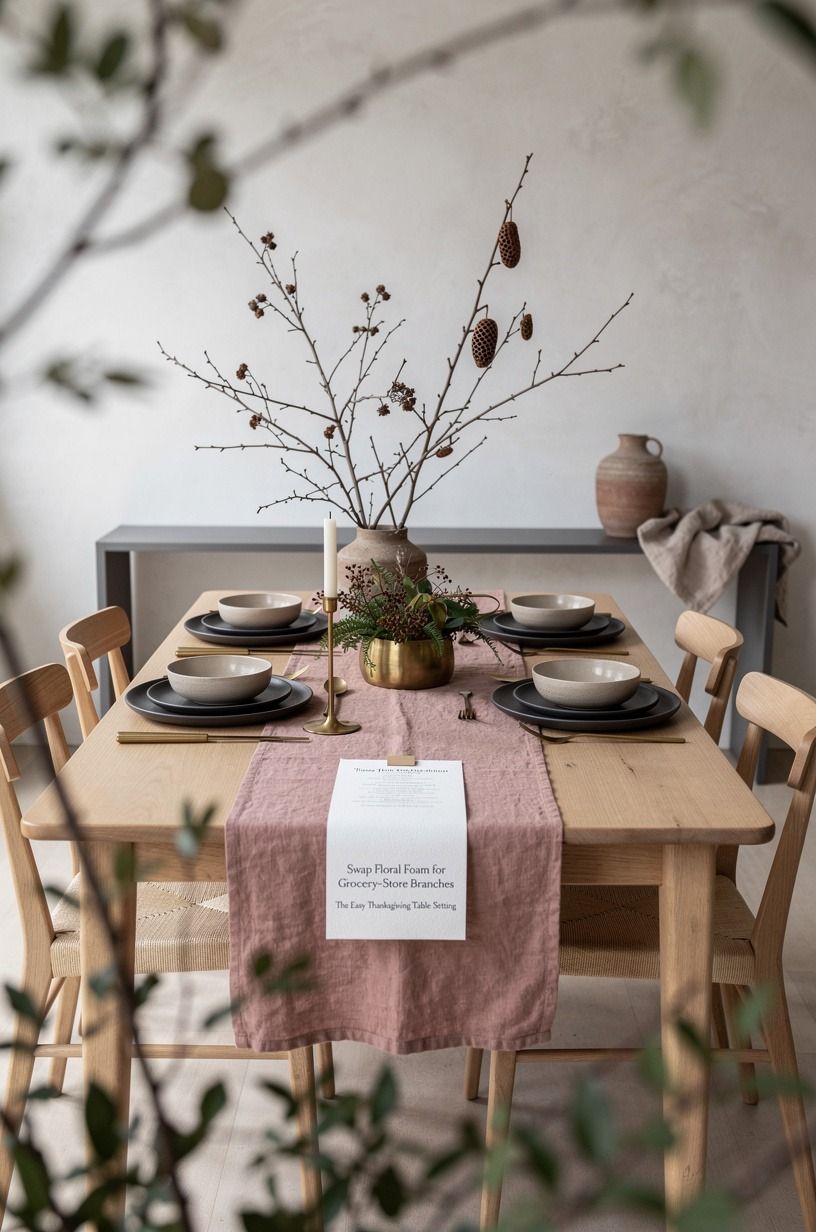
Fresh branches can make a thanksgiving table setting feel charming without the cost or stiffness of a formal arrangement. Look for eucalyptus, olive stems, bay leaves, or bare twigs at the grocery store. Your arrangement can run down the table instead of rising in the center, which keeps the conversation easy.
I prefer branches with a dusty-rose cast over a giant flower bouquet because they last longer and feel more rustic. Tuck them into a low unlacquered brass pitcher, then let a few stems bend naturally over the edge.
Perfect symmetry would make your table feel staged. A little unevenness gives it a lived-in quality, and you won’t need a florist’s training to make it work.
5Use The One-Color Borrowing Rule
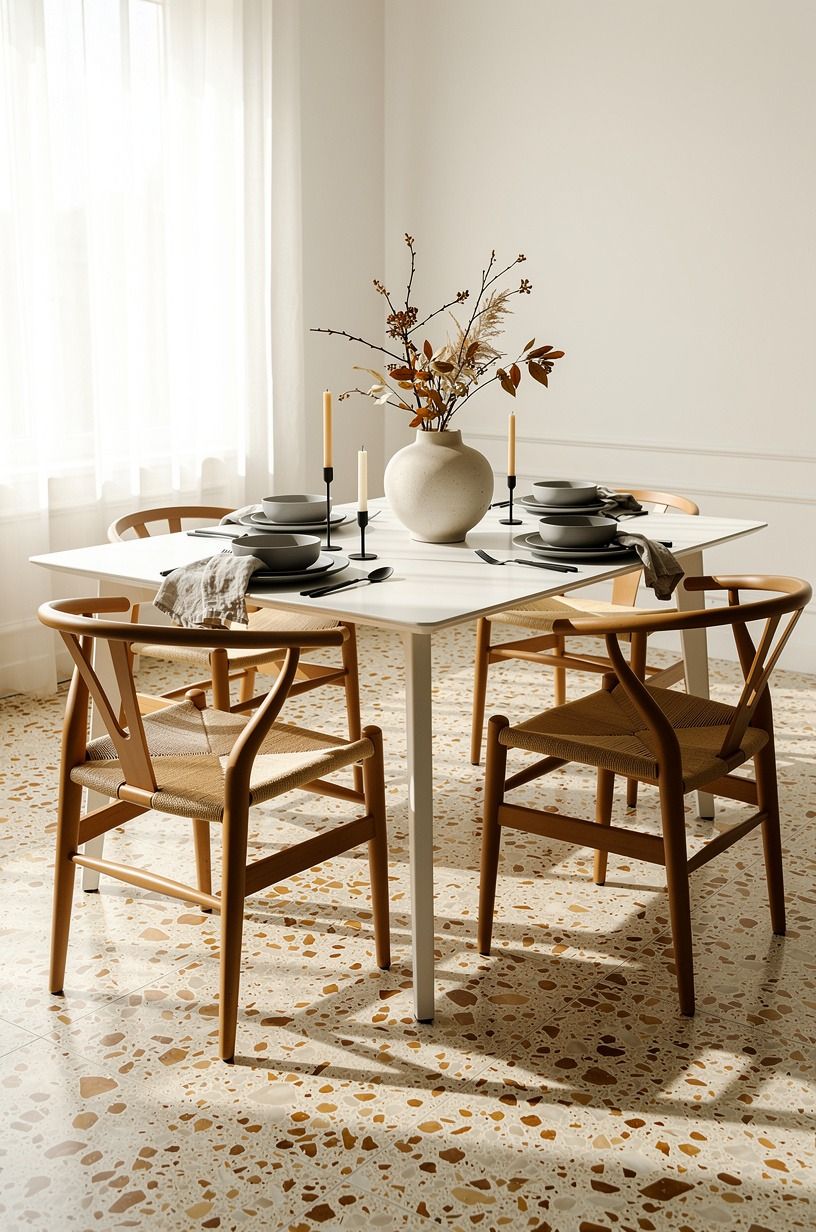
Choose one color from your room and borrow it for the table. If your walls are Benjamin Moore White Dove OC-17, warm white, camel, and black accents will sit comfortably beside them. If your room is already colorful, a neutral tablecloth can keep the whole setting peaceful.
Your napkins, candles, and serving pieces don’t need to match, but they should share one visual note. I’d rather see three different shades of camel than six unrelated colors competing for attention.
Add cotton napkins with a frayed edge and an oversized-chip terrazzo tray for texture, and your table will look considered without feeling precious. For more seasonal layering, borrow the warm, low-cost approach from these small front porch decor ideas.
6Fold Napkins Into Simple Pockets
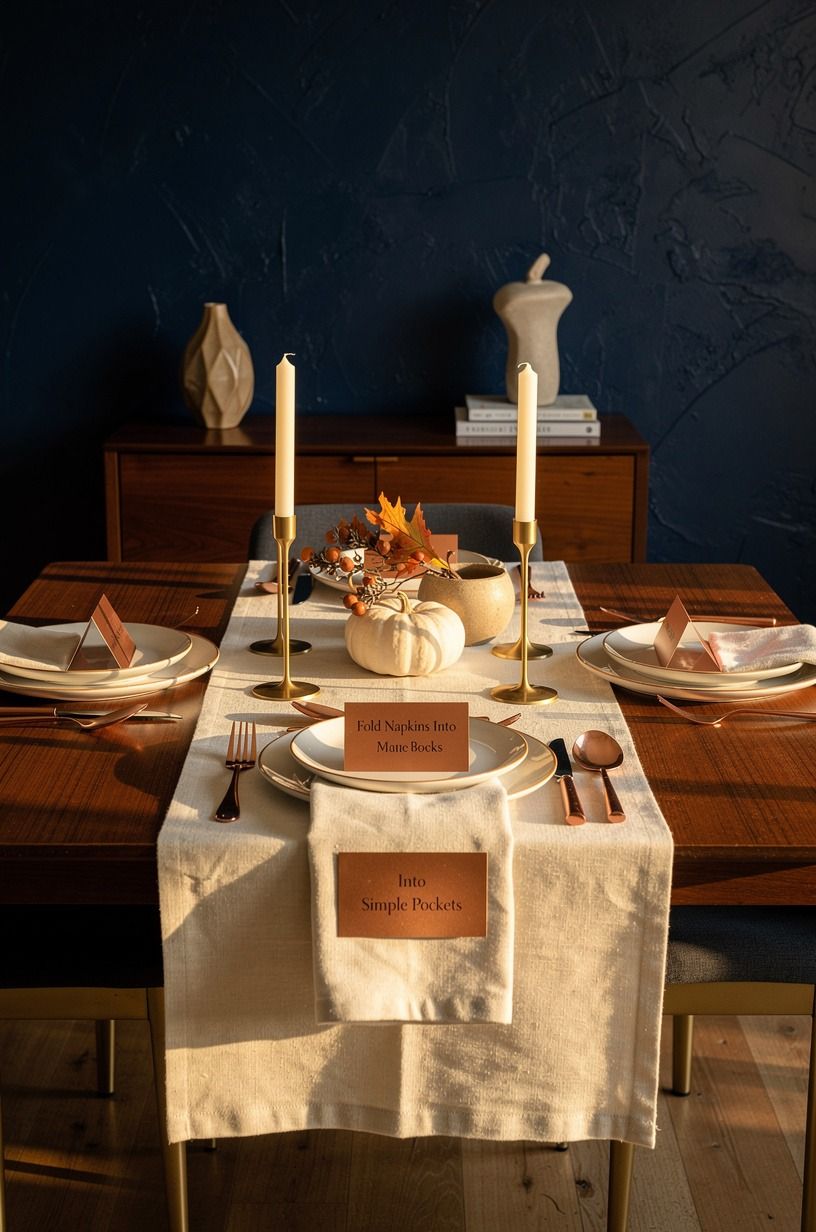
A napkin pocket holds a sprig of rosemary, a handwritten name card, or a single dried stem. Your guests get a small welcome at their place, and the table gains a repeated detail without another centerpiece. Fold the napkin into a rectangle and keep the insert narrow so it doesn’t crowd the plate.
Washed cotton napkins are more forgiving than crisp linen if you’re serving gravy, cranberry sauce, and second helpings. I’d skip elaborate folds that collapse before dinner starts.
A simple fold in midnight blue, copper, or ivory will feel soft against hand-applied Venetian plaster. If you’re saving every dollar, use fabric remnants or tea towels cut to size, then finish the edges with a loose hem.
7Frame Each Place With A Small Plate
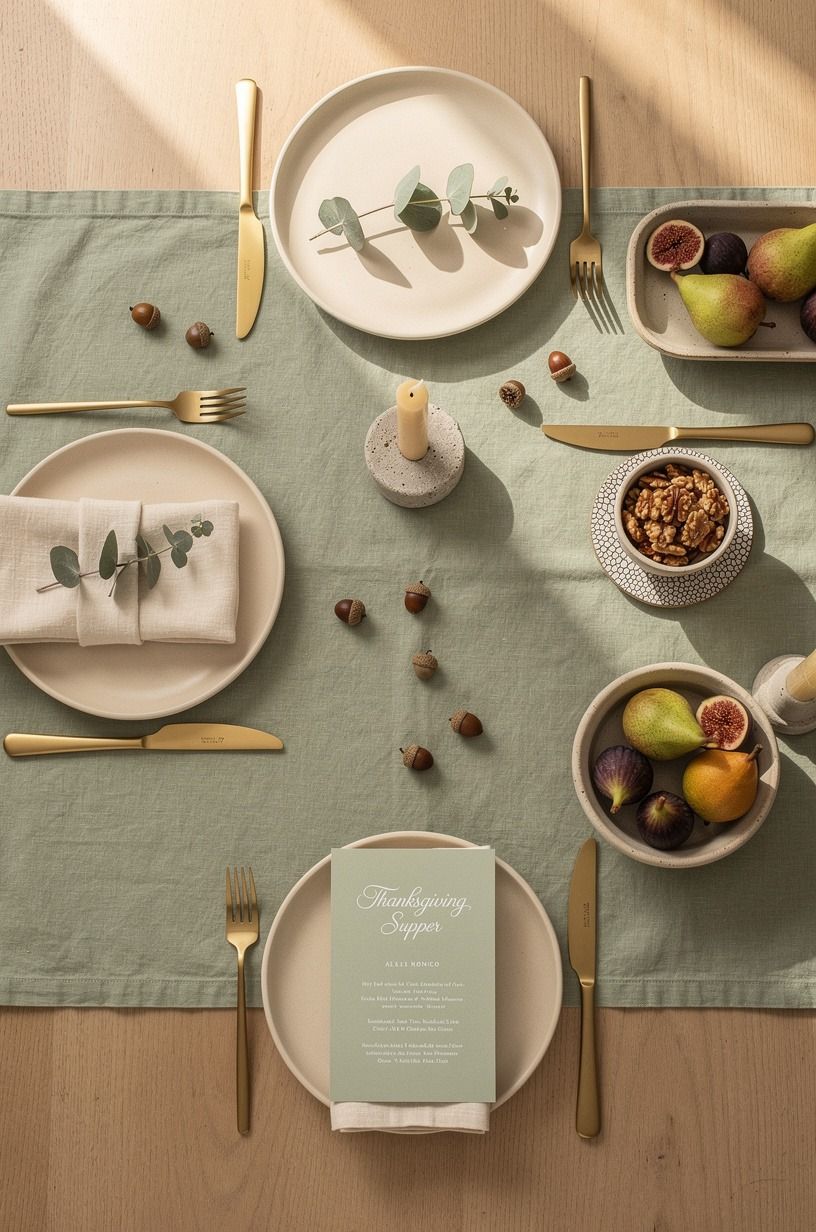
Layering plates makes your table settings for Thanksgiving feel abundant, even when the dishes are basic.
8Paint The Menu Cards Instead of Buying Decor
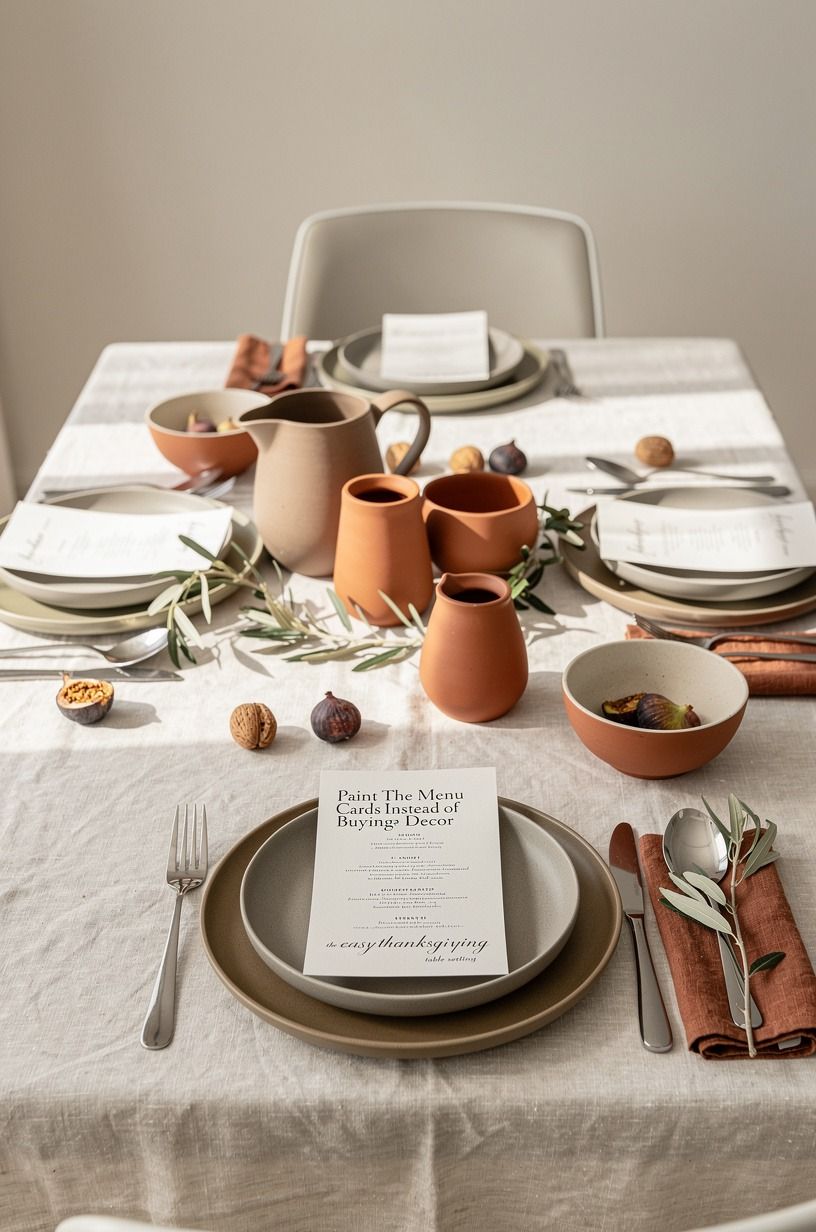
Hand-painted menu cards give your Thanksgiving feast table a personal detail for the price of paper and leftover paint. Use thick cardstock, write one dish per line, and place the card beside the plate.
Your handwriting doesn’t need to look perfect. Slight variation makes the setting feel human.
Try a terracotta, stone, or olive wash diluted with water, or place the card on a scrap of washed Belgian linen in warm white. I’d avoid printing a formal menu in a fancy script if your table is casual.
A simple card that says “roasted carrots” feels more inviting than a theatrical list nobody reads. You can also tuck the cards into the branches from section four for a gentle, connected look.
9Anchor The Center With A Wooden Board
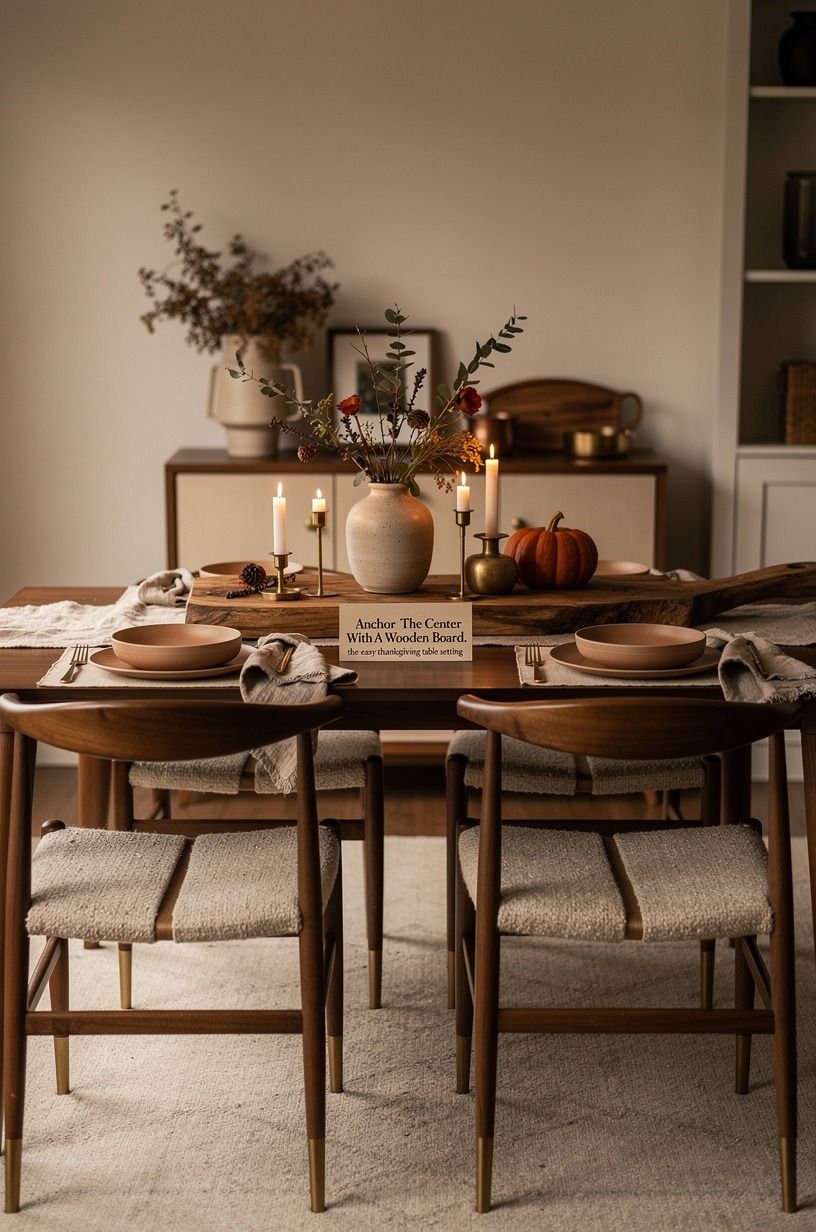
A wooden board gives your centerpiece a visual home, so candles and small bowls don’t look scattered. Your board can hold bread, pears, salt, and a few leaves, which means the decoration is useful during dinner. Set it slightly off-center if your table is rectangular and your guests need serving space.
Choose a clay-toned wood board for warmth, then pair it with a strip of linen and an aged brass holder. An organic bouclé accent nearby adds softness without competing with the food.
I’d skip a glossy board because it reflects candlelight in little bright spots. If you’re working with an awkward dining corner, look at this IKEA side table solution for an 18-inch gap for a useful lesson in giving small spaces a defined landing spot.
10Mix Brass With Matte Black
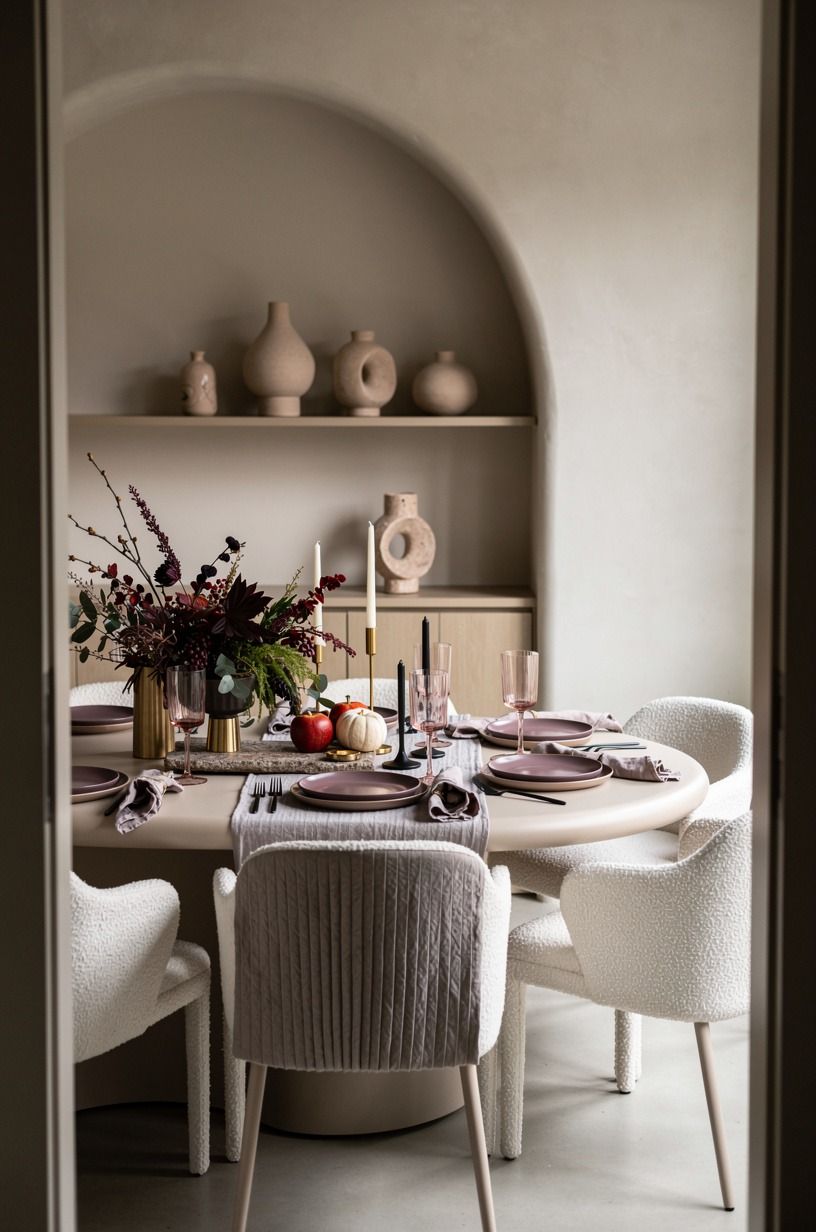
Mixed metals can make a budget table setting feel sophisticated, but only if one finish leads. Use rose gold for candleholders, then repeat matte grey in a small bowl or flatware detail. Your eye will read the combination as intentional instead of accidental.
Rose gold brings a soft glow, while grey adds a quiet edge. I’d skip mixing three or four metals because the table will start to look like a hardware aisle. Pair the metals with an organic bouclé accent, then keep the rest of the palette quiet with oatmeal linen and dried foliage.
And if your dining room feels flat after sunset, this contrast will give it more depth without another lamp.
11Hang A Paper Leaf Above The Table
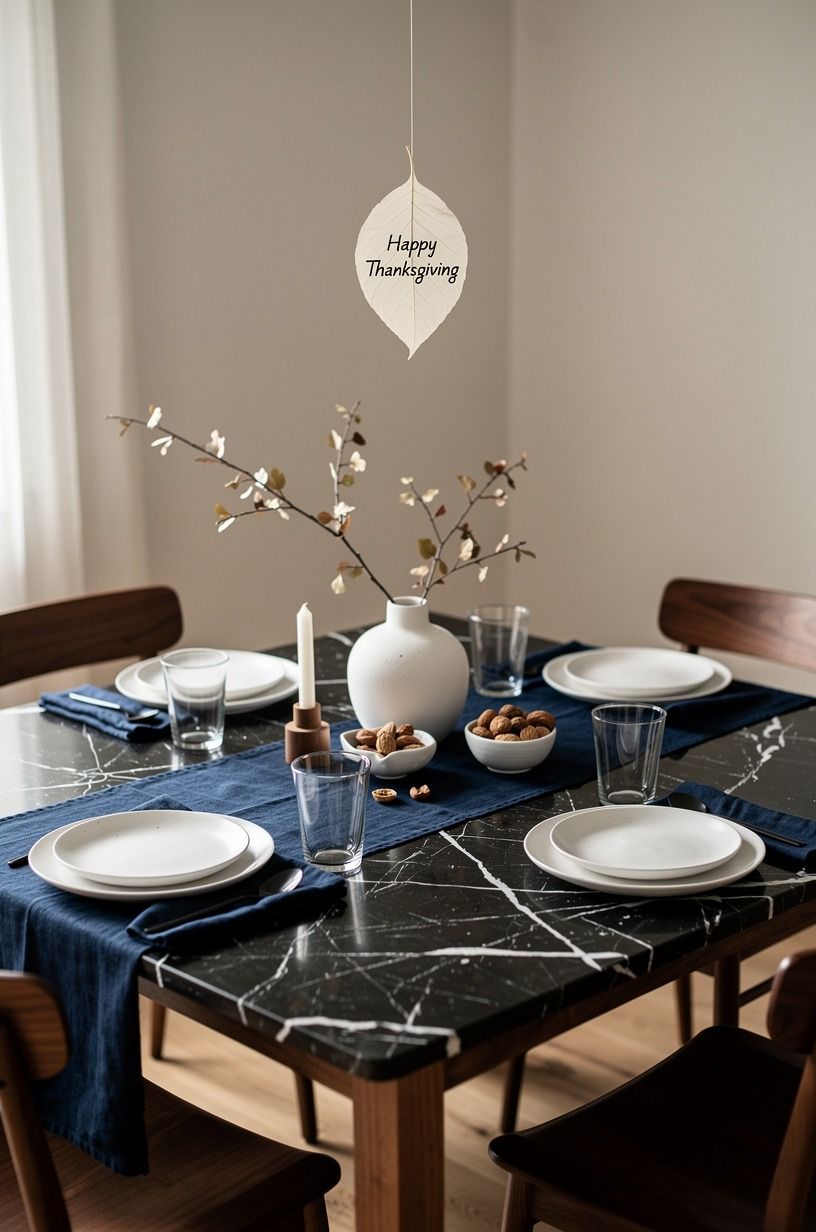
A few navy-and-white paper leaves hung from clear thread can pull the seasonal mood upward, especially when your table has little surface space. Keep the installation light and sparse. Your guests shouldn’t feel as though they’re eating beneath a craft-store canopy.
Cut the leaves in two or three shapes, then hang them from a slim branch or existing light fixture. I like the imperfect edges because they look gentle and handmade.
Don’t place anything too close to a hot bulb, and check your sightline from every chair. A small Nero Marquina black marble accent nearby can ground the arrangement, while the hanging leaves stay clearly above head level.
12Create A Bread-and-Pears Still Life
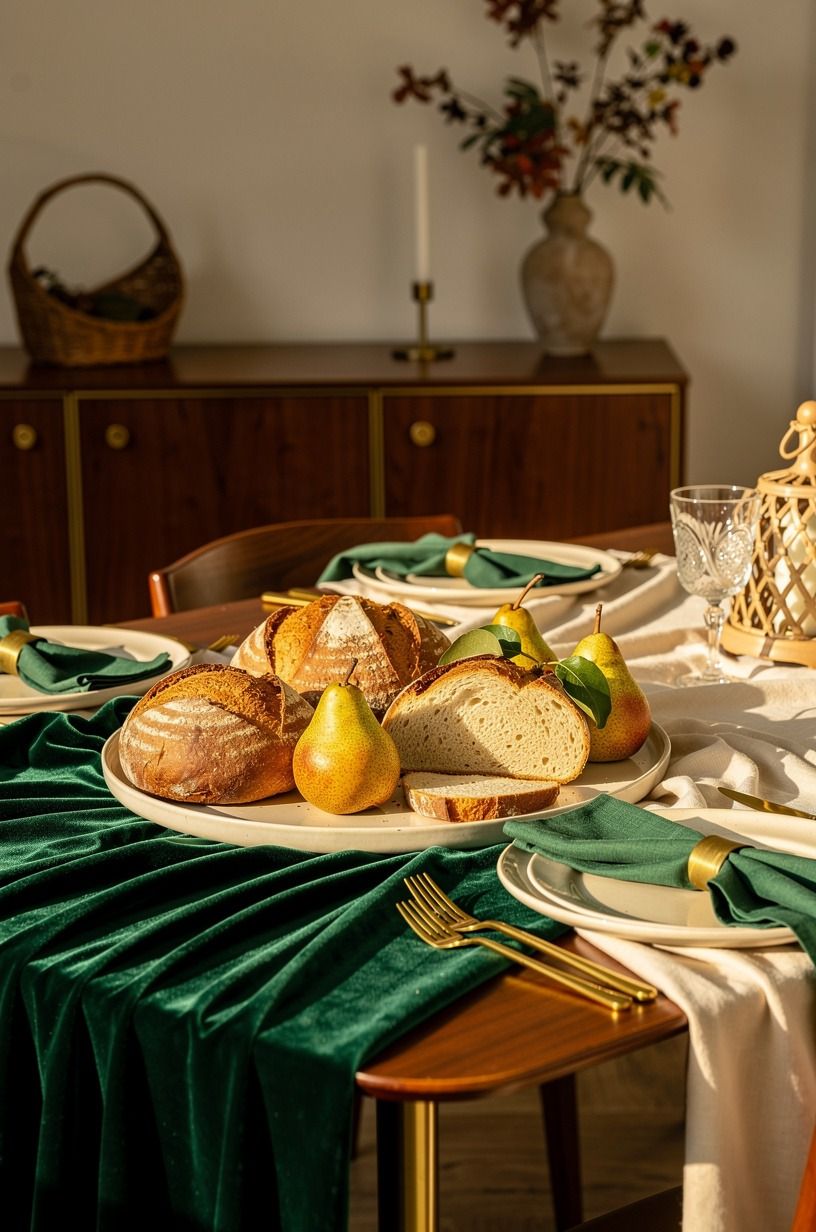
A still life of food makes your table look generous because it’s generous.
13Choose Linen Over Paper For One Detail
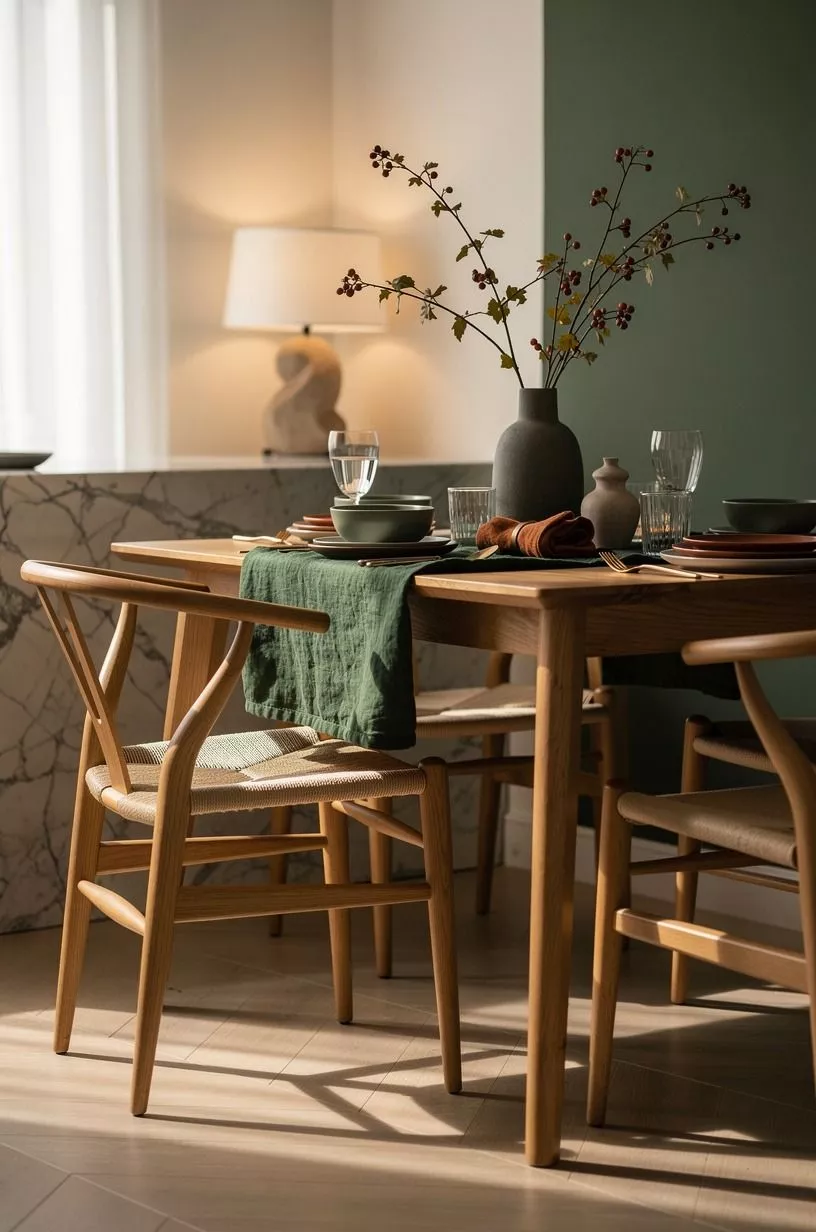
You don’t need linen everywhere. One linen element, such as a runner, napkin, or bread cloth, can make paper plates or everyday dishes feel more elevated. Your budget goes further when you choose one tactile upgrade instead of replacing the whole table.
A Carrara marble serving slab can support the bread while Belgian flax linen adds that relaxed, soft texture people notice by candlelight. I’d keep disposable items hidden until they’re needed.
Paper can look perfectly pleasant when it isn’t the first thing your eye sees. If you’re hosting in a rental, a fabric layer also protects the surface without permanent changes.
14Set A Clear Three-Tier Budget
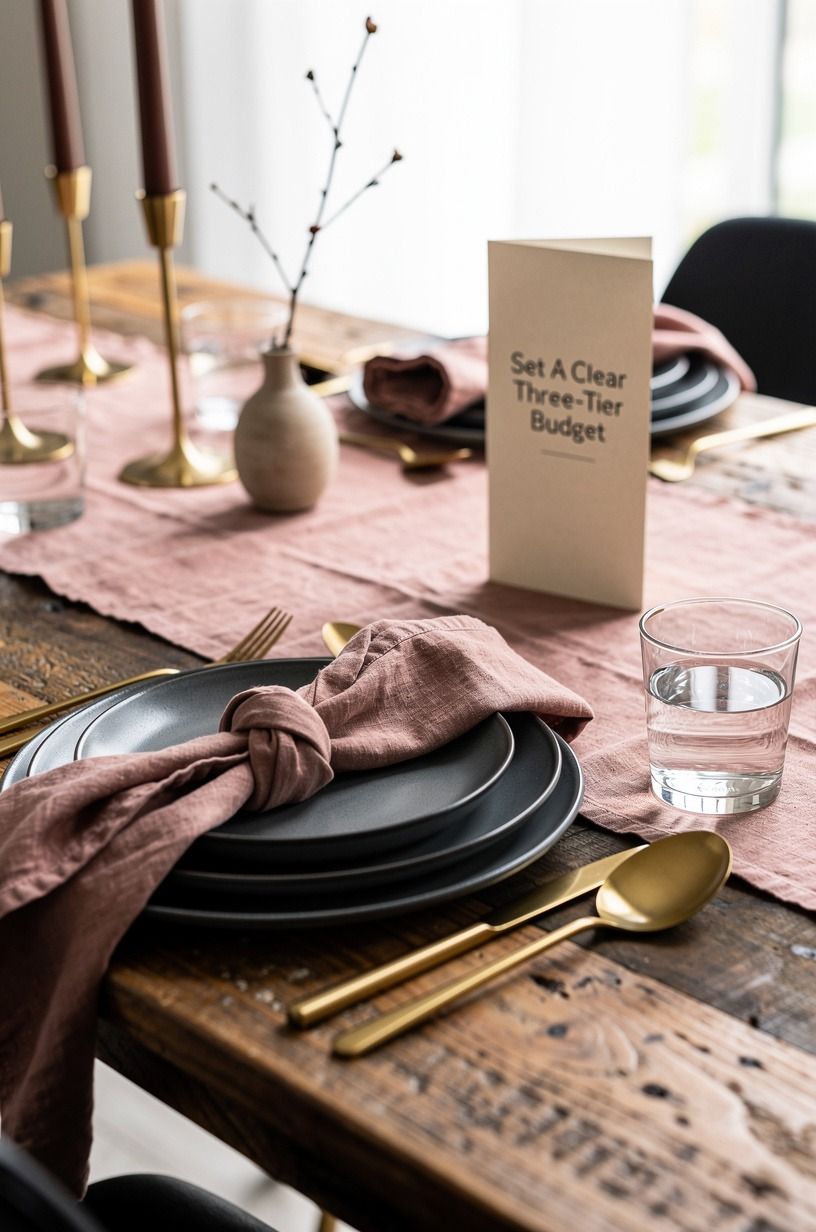
Your table doesn’t need the budget of a whole room, but broader home-decor costs can help you judge where a splurge belongs.
15Let Benjamin Moore White Dove Calm The Mix
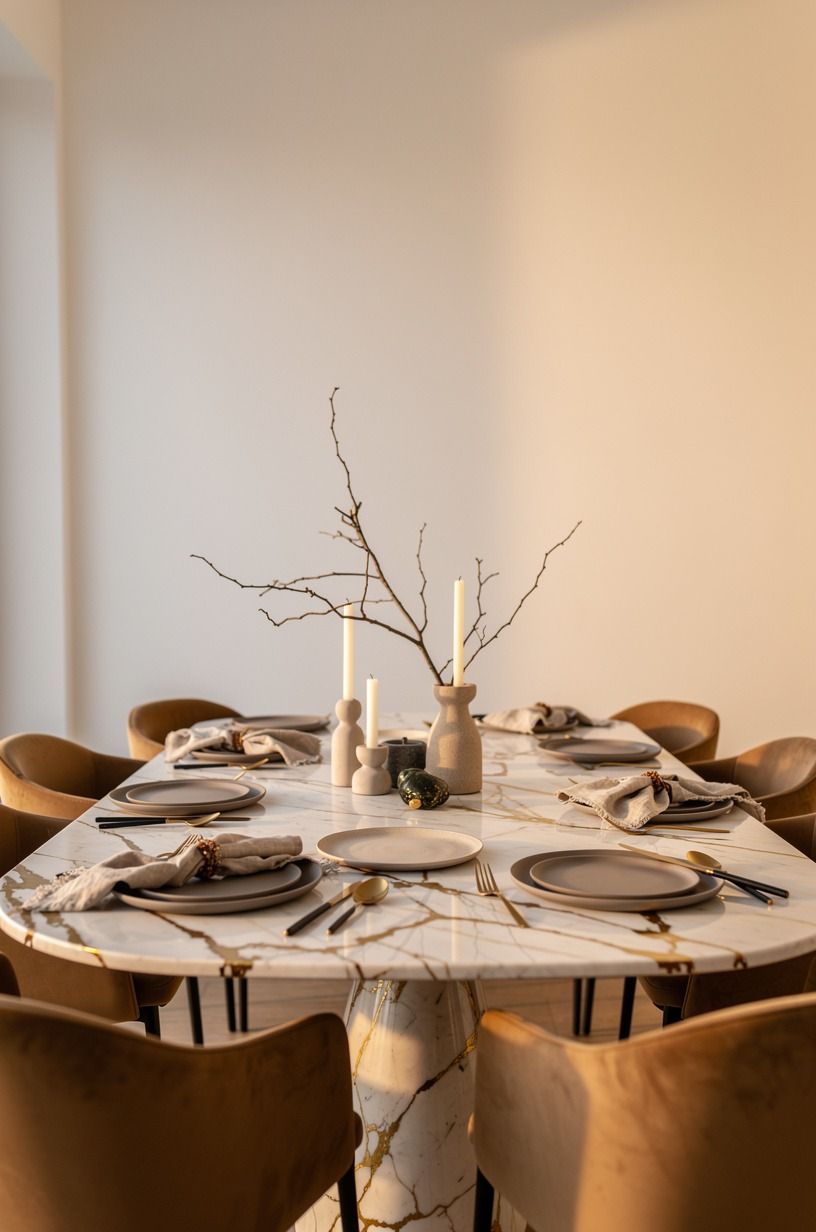
If your dishes, napkins, and flowers all have different undertones, use a calm neutral to connect them. Benjamin Moore White Dove is warm enough for camel and black accents, while still feeling clean beside Calacatta marble with gold veining. Your table will look serene instead of pale.
I’d avoid pure bright white if your dining room has warm bulbs or orange-toned flooring. It can look sharp and disconnected after sunset.
Add cream cotton napkins, then use a black plate or candle for contrast. If you’re repainting a nearby wall, sample the color in morning and evening light first.
A small paint change can make your existing tableware feel far more harmonious.
16Ask: Can The Center Stay Low?
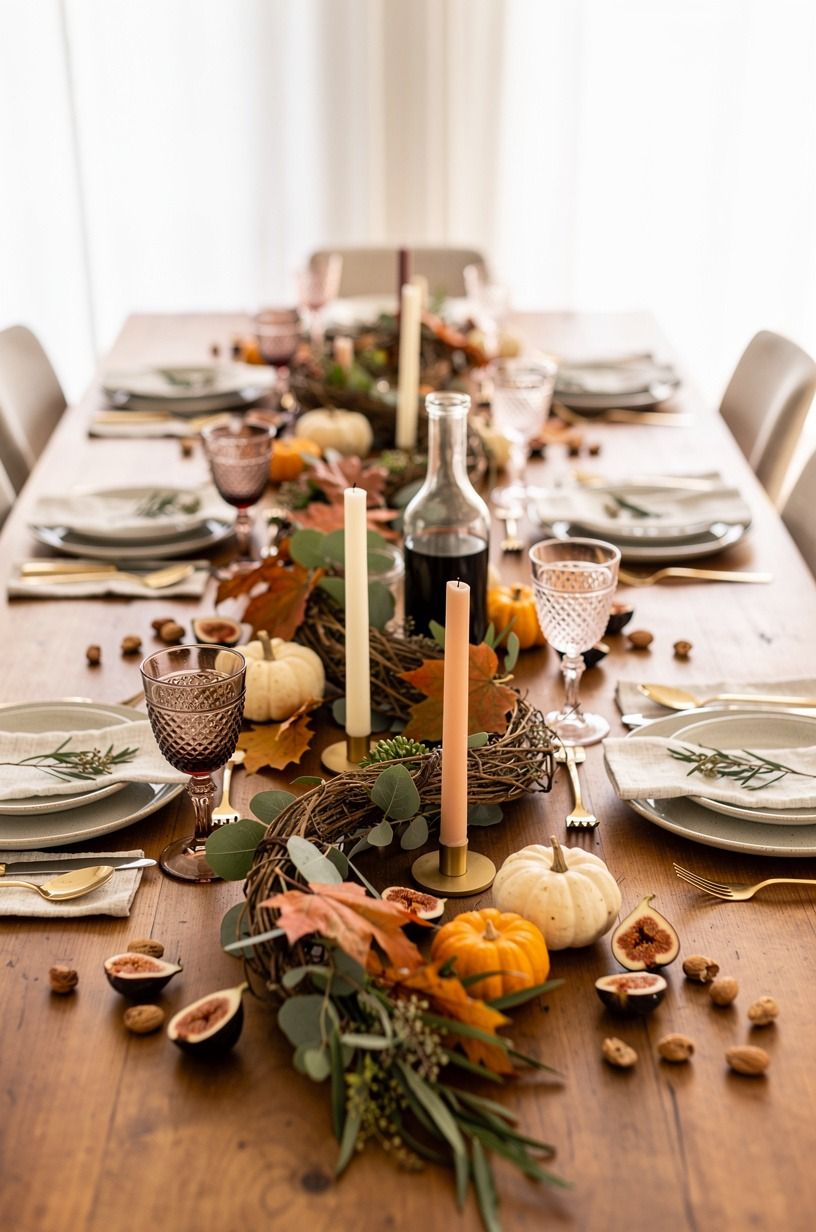
Yes, and it should if your table is narrow or your guests love long conversations. Keep the tallest object toward the ends, then let the center hold low bowls, leaves, and candlelight. Your sightline matters more than the height of the arrangement.
A low cerused white oak bowl filled with walnuts gives the table a warm, earthy anchor. Add small copper cups around it, leaving open space between each object.
I once used a tall arrangement that looked impressive in the doorway and annoying from every chair. Your centerpiece should disappear into dinner when people sit down.
That’s how you keep the table inviting.
17Mix Everyday Dishes With One Heirloom
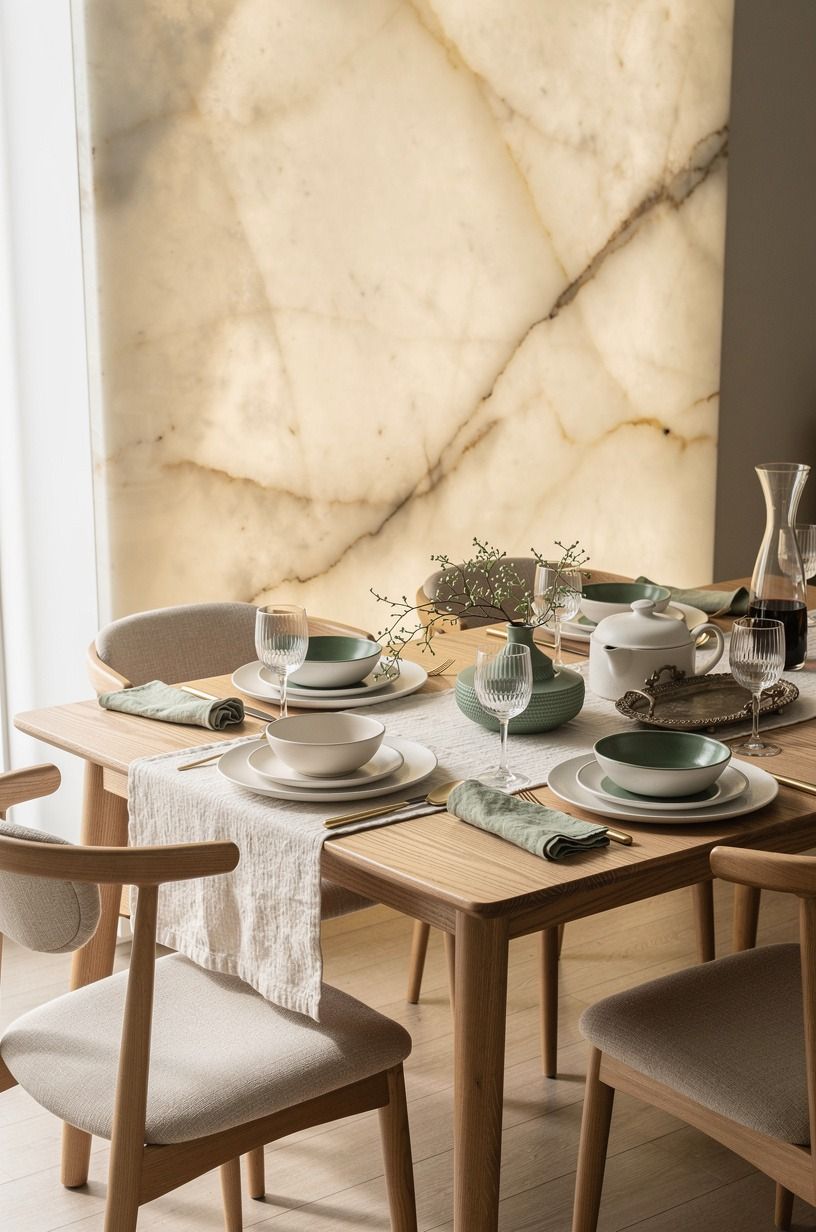
Everyday dishes feel special when one older piece leads the setting. Use your grandmother’s platter, a vintage gravy boat, or a thrifted candlestick, then keep the rest simple. Your table gains a story, and you won’t need a matching collection.
Pair IKEA FÄRGSTARK stoneware or another simple everyday set with a vintage translucent onyx platter. The contrast feels collected, not staged.
I’d skip buying an entire seasonal dinnerware pattern for one meal. One heirloom has more emotional weight than twelve new turkey plates. If you’re hunting secondhand, look for pieces with useful shapes and quiet colors rather than obvious holiday graphics.
18Finish With The Two-Texture Rule
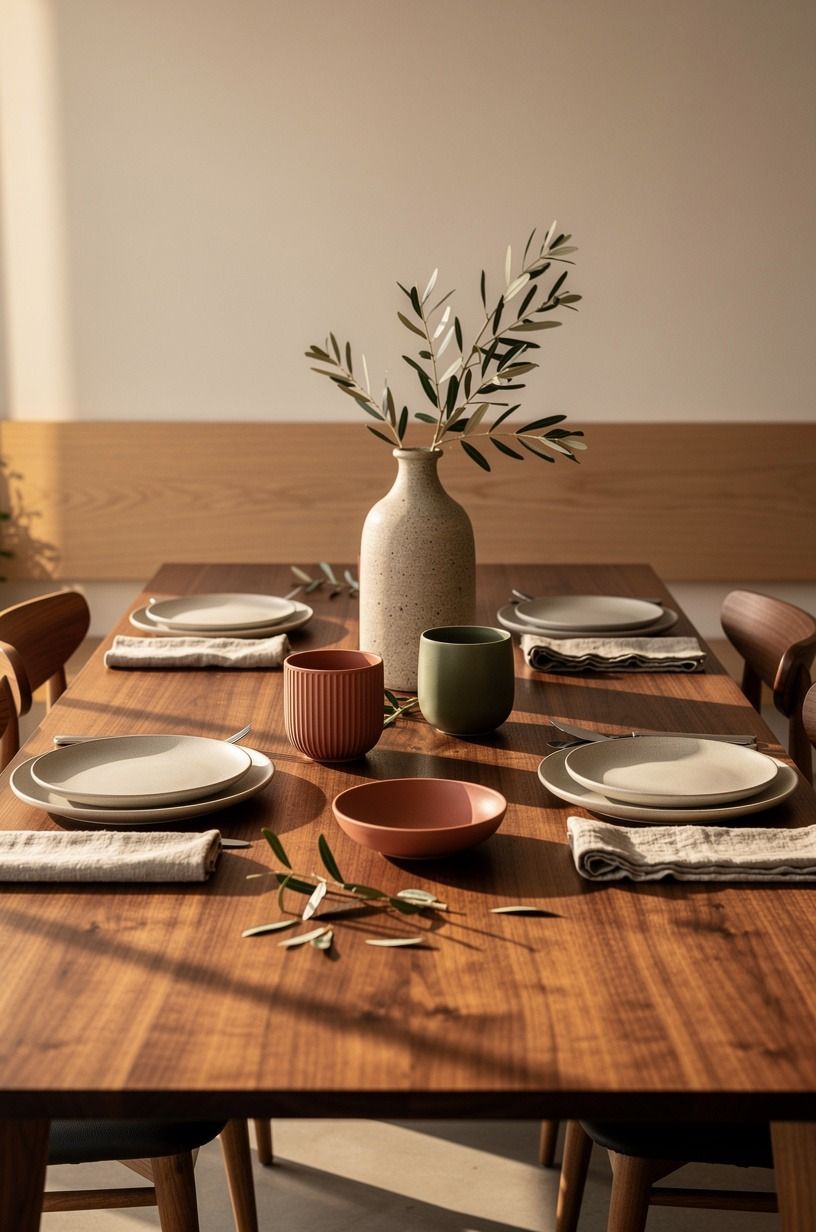
Two strong textures are enough to make a small Thanksgiving table setting feel rich. Choose one soft surface, such as linen or cotton, and one rougher element, such as wood, stoneware, or dried branches. Your setting will feel warm without becoming busy.
Try terracotta linen on one accent napkin, then balance it with book-matched walnut. I’d stop there.
Adding velvet, glass, ceramic, metal, wicker, and faux fur all at once makes the table feel restless. If you’re still unsure, take away one object and look again. The extra breathing room is often what makes a budget arrangement feel refined.
The Opinion I’d Give A Friend About Thanksgiving Tables
I’ve learned that an expensive-looking Thanksgiving table rarely comes from expensive objects. It comes from editing.
The tables I remember had one good color decision, one useful centerpiece, and enough empty space for a plate to land without somebody apologizing. Your guests don’t need a miniature forest in the middle of dinner.
They need to feel expected.
I used to chase symmetry because it looked polished. Then I hosted with a crooked branch, mismatched bowls, and napkins that weren’t folded the same way.
Everyone stayed longer. The table felt more inviting because it had room for movement and conversation.
That’s the part I’d keep.
My rule now is simple: choose one material you want people to notice, one light source you want them to feel, and one edible detail they can reach. Linen softens the setting.
Candlelight makes the room intimate. Pears, bread, or walnuts make the whole thing generous.
Your other objects need to support those three choices, not compete with them.
And if your budget is tight, don’t apologize for using everyday dishes. A Target Threshold bowl, a thrifted brass holder, and a painted card can feel more personal than a complete matching set.
You’re building a moment, not a showroom. Spend on touch, borrow height from branches, and let the meal provide the abundance. That approach is warm, practical, and much easier to live with after the guests leave.
A Few Things Worth Answering
What are the best Thanksgiving table setting ideas for a small budget?
The strongest picks are a linen runner, low candlelight, and a useful food centerpiece. A wooden serving board gives you texture and function, while IKEA stoneware keeps everyday plates looking intentional. Your table will feel richer when you repeat one color instead of adding more objects.
Where can I buy Thanksgiving table setting pieces on a budget?
Look at IKEA, Target, Wayfair, thrift stores, and Facebook Marketplace. Secondhand brass holders and serving boards often cost less than seasonal decor, and you’ll use them again. I don’t include affiliate links here, so choose the shop with the best local price and return policy for your needs.
How much does a small-budget Thanksgiving table makeover cost?
About $100 to $300 can cover a runner, napkins, candles, and one serving piece, depending on what you own. Free branches and borrowed dishes can lower the total. Your biggest savings will come from shopping your cabinets before buying anything new.
Can I create a Thanksgiving table setting on a budget?
Yes, and you can start with three actions: reuse your everyday plates, gather branches from your yard, and paint simple name cards. Low glass candles add atmosphere without much material. I’d buy only one tactile upgrade, then let color and spacing do the rest.
Is a Thanksgiving table setting worth it in a small space?
Yes, because a small table needs fewer objects to feel finished. A low centerpiece keeps sightlines open, while a runner gives the surface structure. Your compact room can feel more intimate when you repeat warm wood, soft fabric, and gentle candlelight.
Is a Thanksgiving table setting a good idea for a rental?
Yes. Use removable table styling instead of permanent changes, and keep overhead decor attached only to existing fixtures or approved hooks. Fabric runners, thrifted vessels, and tension-mounted details can give your rental a warm seasonal feeling without marks or complicated installation.
Where I’d Start First
If I had to pick one, I’d start with the low candle-and-branch centerpiece. It changes the light, leaves room for conversation, and costs less than a full place-setting makeover.
Pin the idea for later and revisit your cabinets before you shop. Your table probably has more potential than you think.