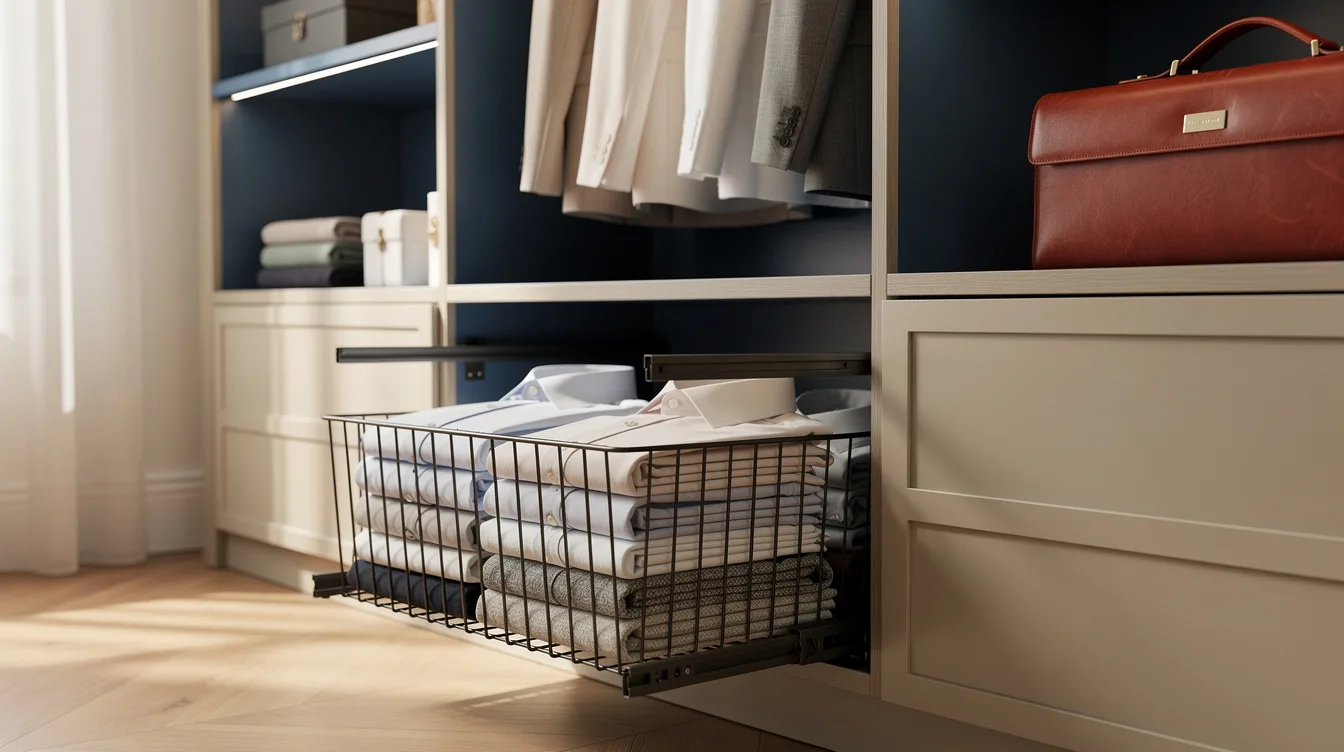
The back half of a deep closet shelf is where folded clothing quietly disappears. A pull-out basket turns that dead zone into a drawer-like layer, but only when the slide reaches far enough and the basket height suits the clothes inside.
For a typical reach-in closet, about 14 to 16 inches of usable basket depth can hold tees, leggings, or scarves without creating a leaning tower. The wrong basket makes the shelf harder to use, while the right one brings every layer into view with one pull.
Designers focus on six practical decisions: fit, slide travel, height, material, stacking, and removability. Get those details right, and the upgrade feels built into the closet even when it is a simple add-on.
Measure the Opening Before Buying the Basket
A sliding basket only works when its frame, slides, and clearance fit the closet as a single system. Measure the clear width, usable depth, mounting surface, and nearby door swing before choosing a wire pull-out basket.
For a deep reach-in shelf, a single basket is typically about 14 to 16 inches deep and needs roughly 18 to 30 inches of clear width. That range handles folded shirts, leggings, gymwear, scarves, or swimwear without forcing the basket into a cramped opening.
Designers are firm about one point: a basket that barely clears the opening is a daily annoyance. Leave room for the slide hardware and check whether the shelf is strong enough for a loaded basket, especially when storing denim or sweaters.
Choose Full-Extension Slides for the True Back
Partial-extension hardware leaves the exact problem you wanted to solve, a dark pile hidden behind the front row. Choose full-extension slides so the entire storage layer comes forward and every folded item is visible.
A cabinet-style pull-out designed for about 22 inches of mounting depth is typically suited to cabinetry that measures roughly 22 to 24 inches deep. A two-tier version listed at Lowe’s is about 20.75 inches wide, 22 inches deep, and 19 inches high, with soft-close full-extension ball-bearing slides.
That larger setup is useful for two clothing categories in one lower compartment, but it needs a sturdy mounting surface. Soft-close hardware is worth the added cost here because heavy baskets can slam when loaded with jeans or seasonal clothing.
Keep Basket Height Shallow for Folded Clothing
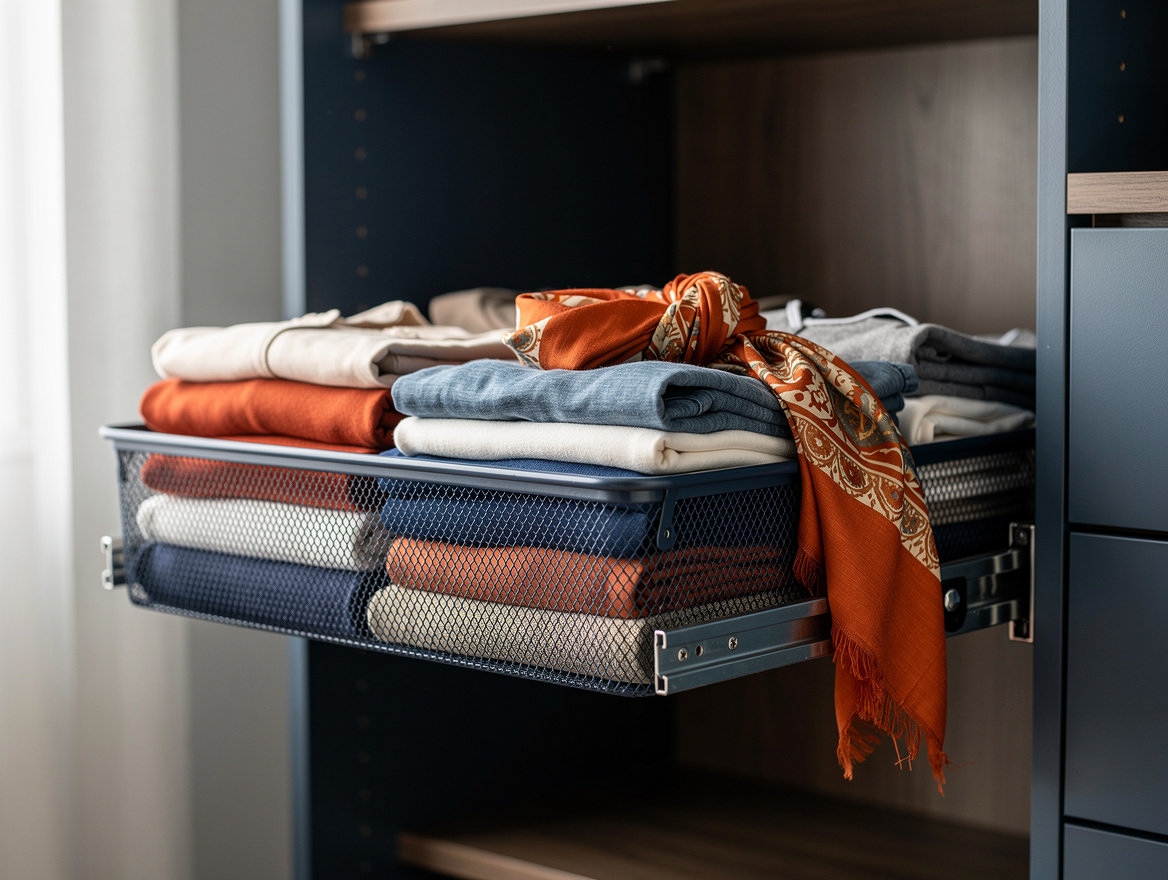
Deep bins encourage tall stacks that slump, hide smaller pieces, and become difficult to refold. For socks, underwear, belts, and accessories, a shallow mesh basket about 5 to 8 inches high is typically easier to scan and sort.
A low-profile metal basket around 18 inches wide, 14 inches deep, and 5.38 inches high can work beneath hanging clothes or inside a lower closet zone. Add dividers when small items tend to migrate, but keep the compartments wide enough for one-handed access.
For jeans, sweaters, and athletic gear, move up to a medium basket about 7 to 11 inches high and roughly 14 to 20 inches deep. Designers prefer several manageable layers over one cavernous container that turns clean laundry into a digging expedition.
Match the Basket Material to Visibility
Closet storage should help you identify clothing at a glance, so an open chrome wire bottom often beats a solid-sided box. The breathable construction keeps the front edge visually lighter and makes it easier to spot a black tee or folded scarf.
For a more polished closet, a matte-black aluminum basket with a wide mesh pattern is a strong choice. One Home Depot listing is about 16.5 inches wide, 14.21 inches deep, and 7.68 inches high, with a full-extension slide and a listed price of about $99.
Use solid bins only when the contents truly need concealment, such as backup linens or off-season pieces. Everyday clothing deserves visibility, and a basket that lets you see the top layer will be used more consistently.
Stack Two Shallow Baskets Below the Rod
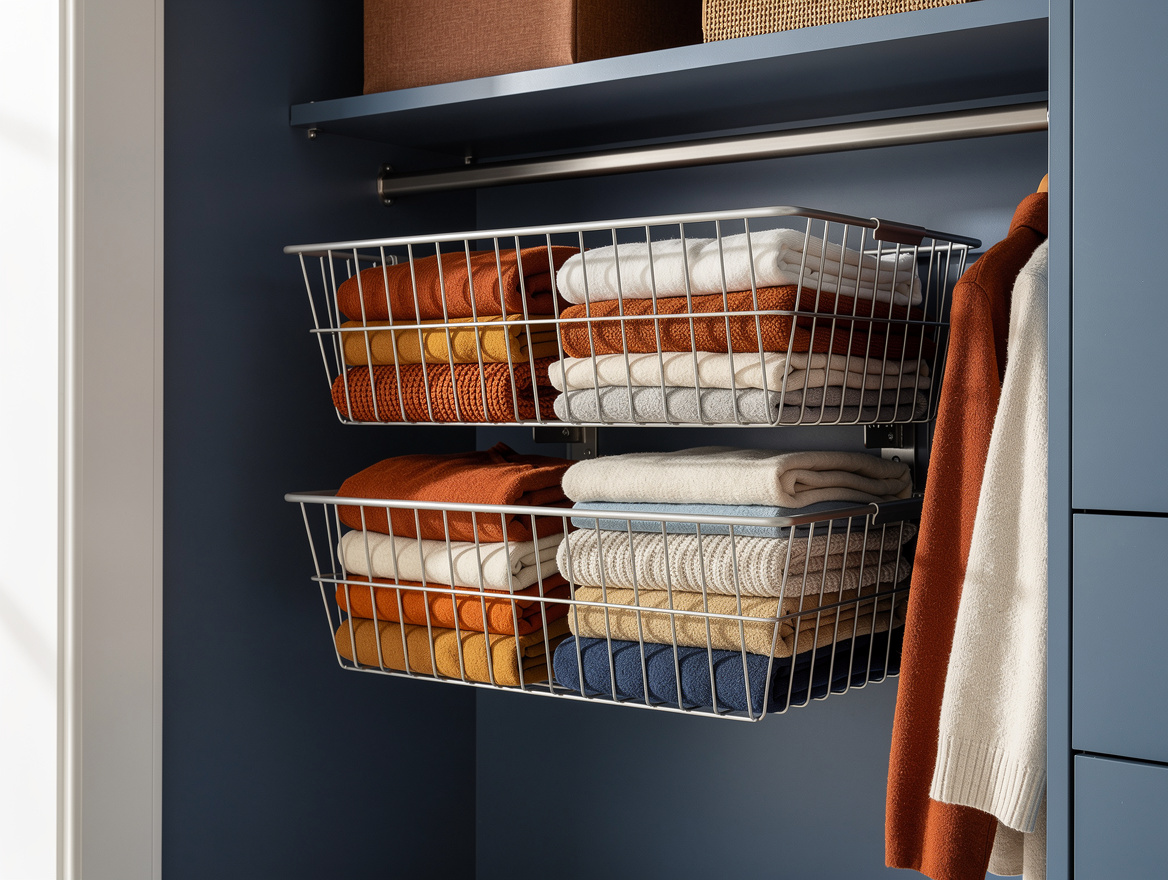
A lower closet often has unused vertical space beneath hanging rods, yet one oversized basket wastes that height. Install stacked shallow baskets to create a breathable drawer tower for folded tees, underwear, workout clothing, or accessories.
Two or three baskets typically fit within about 24 to 36 inches of vertical clearance, depending on the slide frame and the shelf above. Keep the heaviest category low, then place daily basics at the most comfortable reach height.
The classic small pull-out example, about 18 inches wide, 12 inches deep, and 7 inches high, costs about $66 for the basket and assembly shown. That size is a practical starting point for compact folded items, while a basket around 24 inches wide and 14 inches deep, often priced around $70 to $110 before installation, gives shirts and shorts more room.
Use a Removable System in a Rental Closet
Renters should avoid building a permanent drawer cabinet when the closet can solve the problem with a modular frame. An adjustable wire closet system with a gliding frame and mesh basket can be removed, rearranged, and adapted as clothing needs change.
These systems are typically about 17 to 21 inches deep, depending on the frame and accessories. They work especially well when a fixed shelf is deep enough to swallow folded clothes but the lease does not allow major carpentry.
Before loading the basket, inspect the uprights, brackets, and wall anchors, then test the slide with a light stack. A rental-friendly setup should move smoothly, come out without damage, and leave enough clearance for the closet door to close fully.
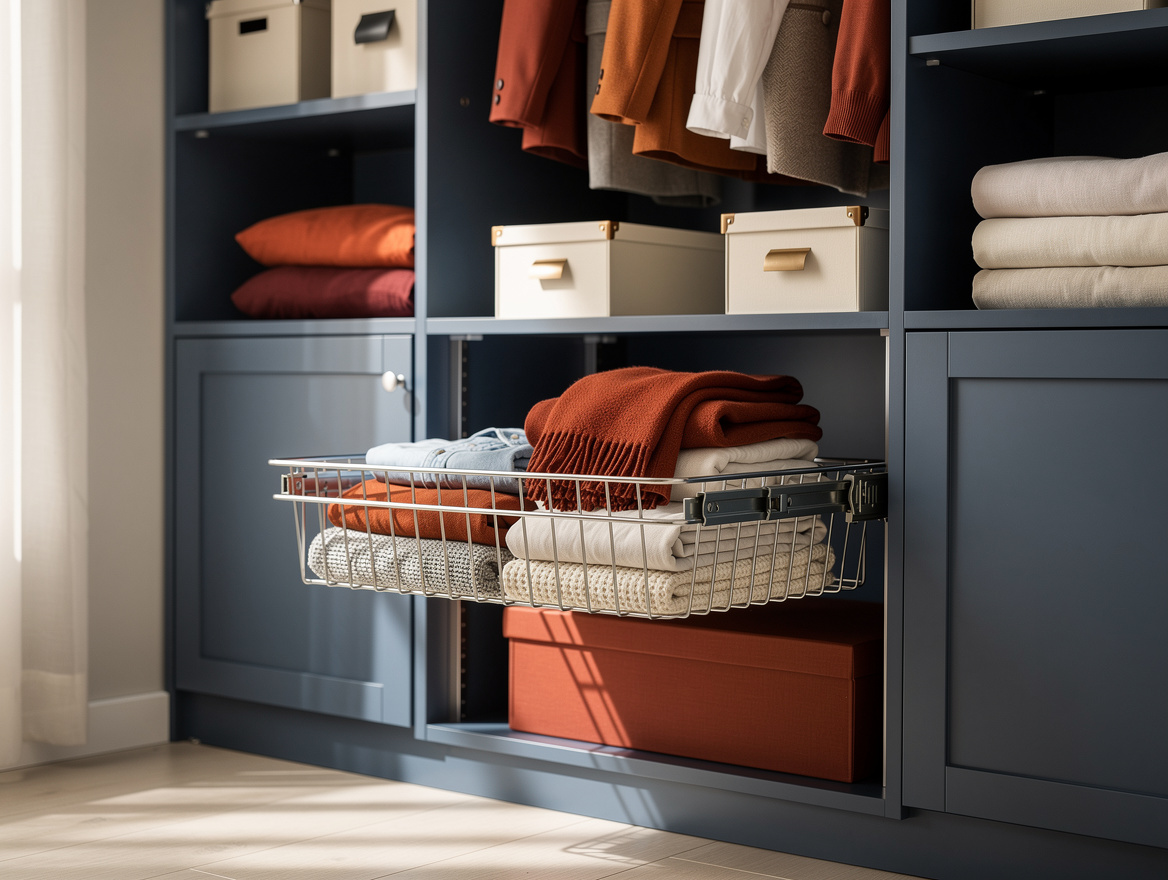
Start with the hardest-to-reach shelf, measure its clear opening, and choose the shallowest full-extension basket that fits your most-used clothing category. That single decision usually delivers more daily value than adding another large storage bin.
Mia Carter writes about small-space living and budget home makeovers. She has restyled three rentals and tests most ideas in her own 45 sqm flat.