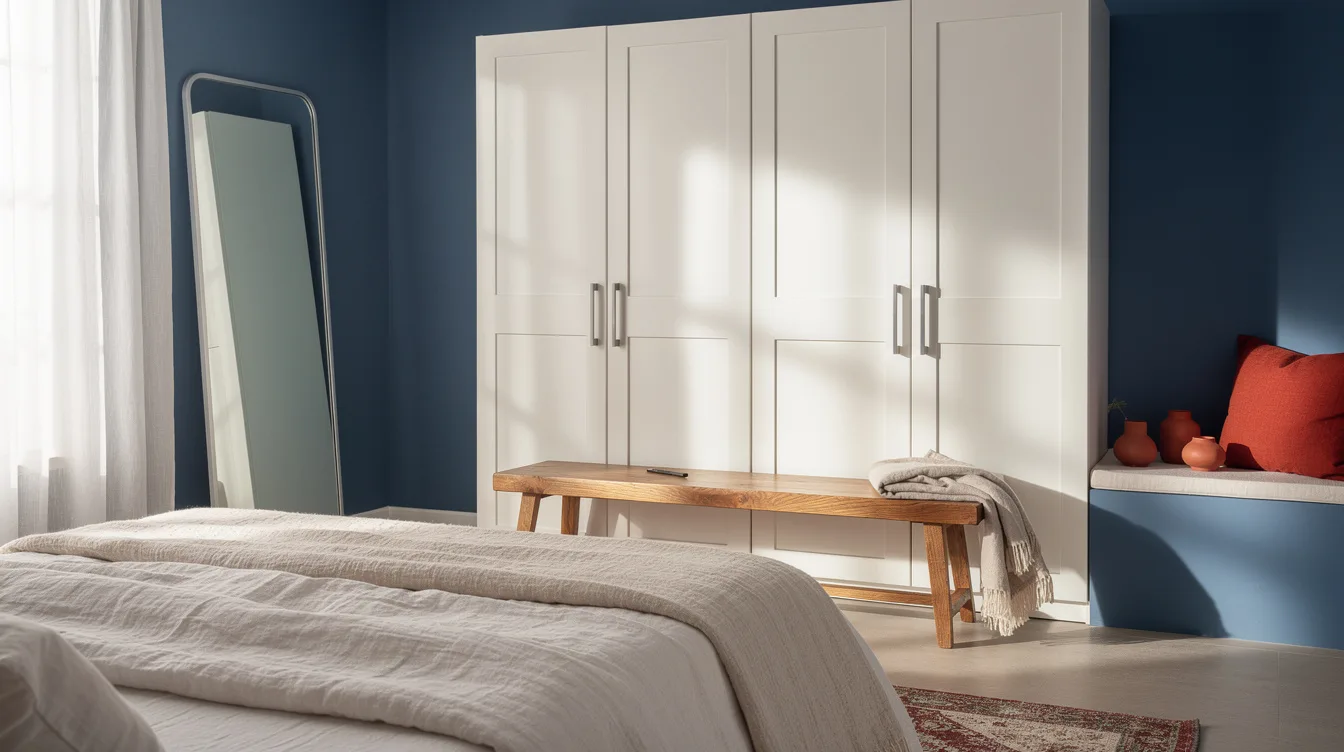
A 24-inch-deep wardrobe can take the place of a closet, but only when the space in front of it still lets you move. I’ve seen a 30-inch aisle make the difference between a calm morning routine and a drawer banging into the bed.
The answer is a deliberate dressing zone: hanging space, concealed storage, a mirror, and one small surface for the things you reach for daily.
Claim One Wall for a Full Wardrobe Run
Give an uninterrupted wall to an IKEA PAX wardrobe run when the bedroom has no closet at all. Its roughly 23-inch depth is close enough to a conventional closet for side-hung shirts, coats, and dresses.
Plan for a 36-inch clear aisle if you can, though 30 inches is the workable minimum in a smaller room. A room-wide setup typically costs roughly $635 to $1,955 before delivery, fitting, or labor, and closed doors are worth every dollar for visual calm.
Mount Storage High in a Narrow Room
A narrow bedroom needs shallower furniture, not wishful measuring. A wall-mounted IKEA BOAXEL system uses powder-coated steel rails, shelves, and mesh baskets at about 16 inches deep, leaving more breathing room beside the bed.
Keep everyday shirts on a rail and use baskets for knits, socks, and bags. A typical narrow wall setup runs roughly $125 to $440, and it looks intentional when the visible clothing palette stays tight.
Soften an Open Rack With Bamboo
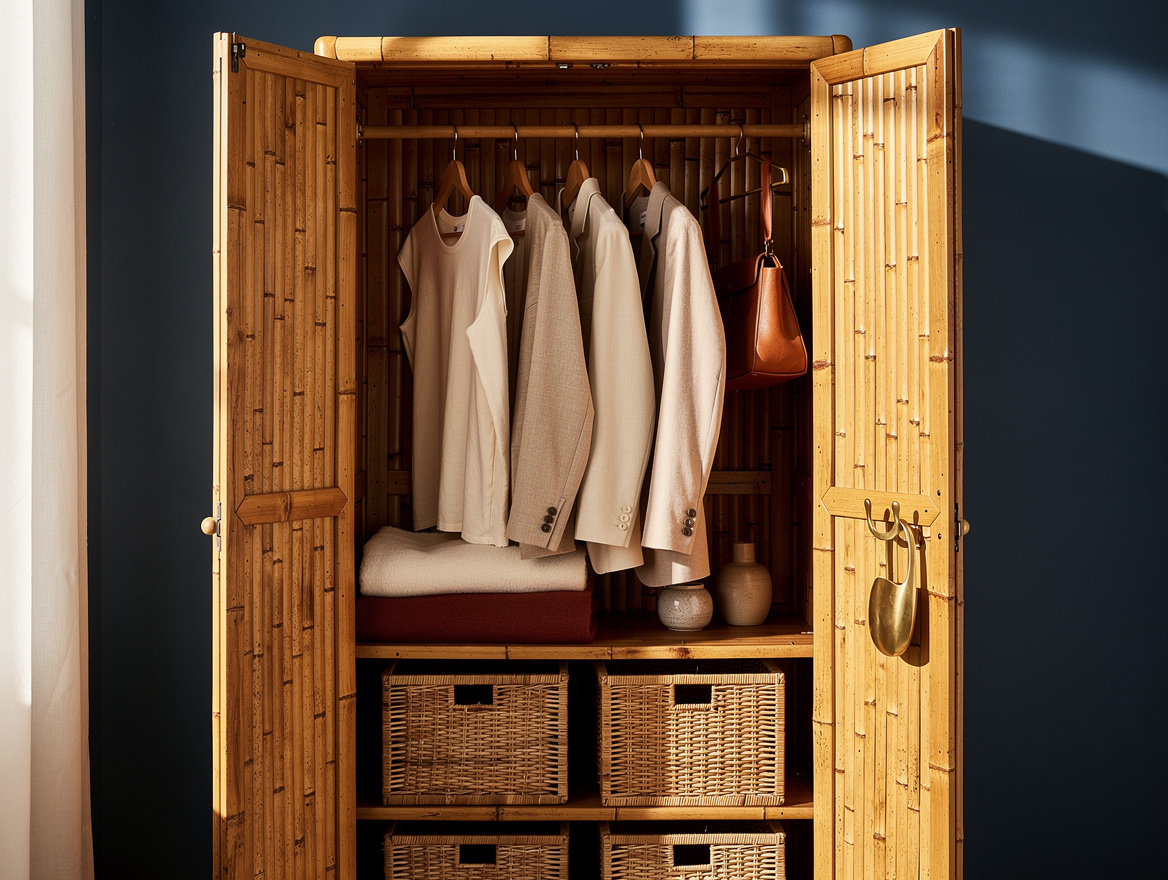
An open wardrobe can feel restful when it has a little architecture. The IKEA NORDKISA, made from bamboo, combines open shelves with a partial sliding screen that hides the most cluttered section.
Its roughly 47-inch width and 18.5-inch depth suit the end of a bed or a blank side wall. At about $400, it makes a stronger visual choice than a bare rolling rack in a bedroom meant for sleep.
Use Deep Drawers Beside a Daily Rail
When a 24-inch wardrobe would choke the room, build around 14- to 18-inch-deep drawer storage and one exposed hanging rail. Folded clothes, shoes, underwear, and accessories belong behind engineered-wood drawer fronts.
The rail should hold only the current rotation, not every piece you own. That limit is useful: a dressing area that displays an entire wardrobe starts to feel like retail stockroom shelving.
Anchor a Freestanding Armoire
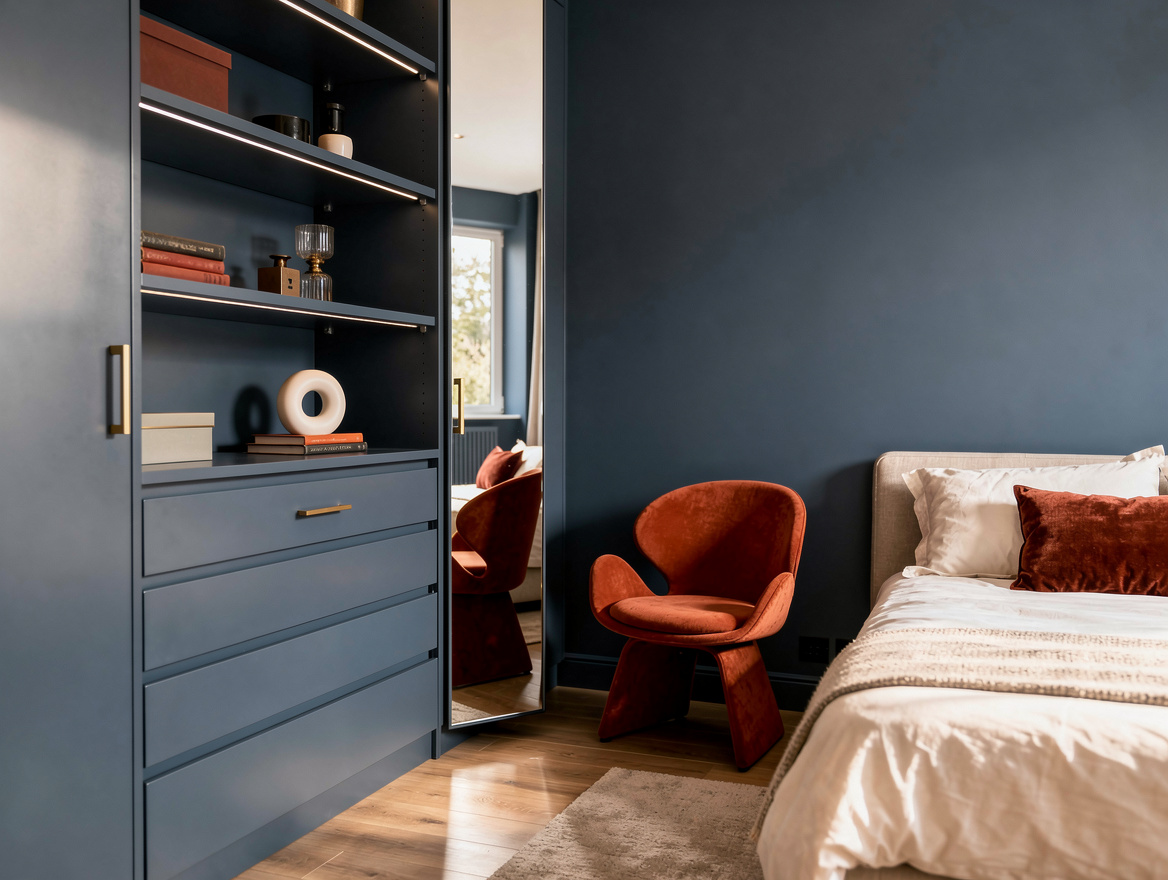
A freestanding Prepac Elite armoire works when you cannot commit an entire wall to a mounted system. Choose a model around 22 to 25 inches deep if hanging storage is the priority, then anchor it securely to the wall.
Typical armoires range roughly from $190 to more than $1,000, depending on size and finish. I prefer a tall closed cabinet over several mismatched bins because the room reads as a bedroom first.
Finish the Zone With a Wall Mirror
Mount a full-length glass mirror that is roughly 18 to 24 inches wide rather than sacrificing floor space to a bulky cheval mirror. Place it at the end of the wardrobe wall or on the back of a solid door where you can step back.
Add an 18-inch-high storage bench or stool nearby for putting on shoes. A small wood tray, one brass candle, and a laundry hamper with a lid are enough to make the area useful without turning it into another dresser top.
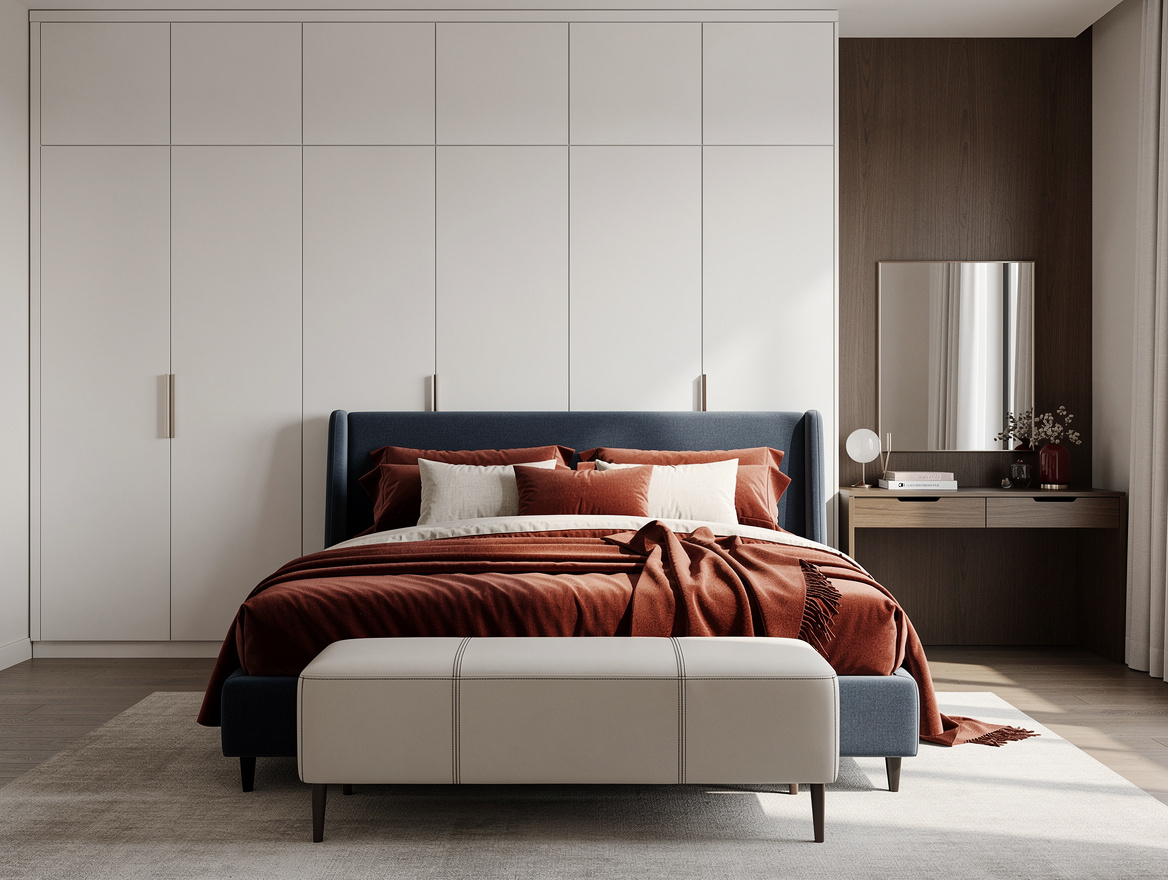
Start by measuring the aisle, then choose the storage depth around that number. A shallow wall system with disciplined drawers will outwork a deep wardrobe that makes the bed hard to reach.
Mia Carter writes about small-space living and budget home makeovers. She has restyled three rentals and tests most ideas in her own 45 sqm flat.