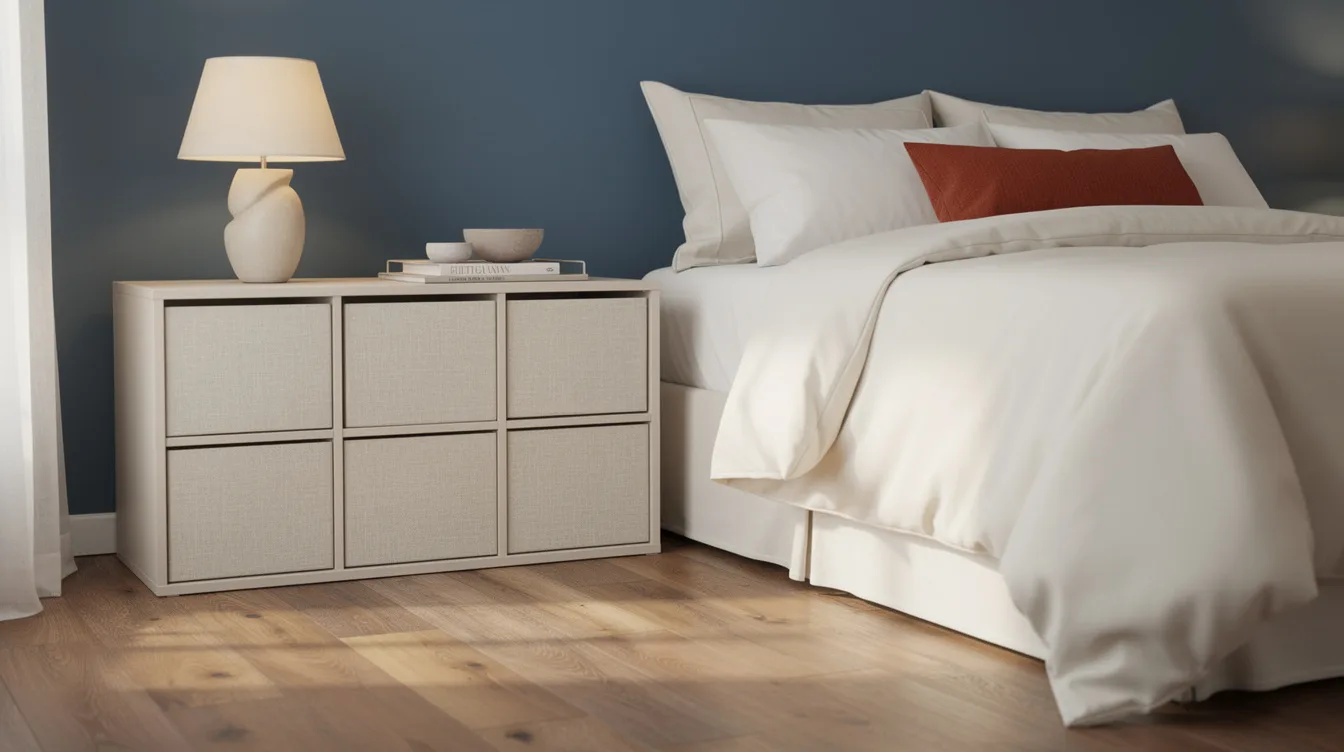
I used to think cube organizers belonged in closets until I needed folded-clothes storage beside a 54-inch bed. A low, wide layout can read like furniture when every opening has a job.
The most convincing version is a horizontal 2-by-3 unit, roughly 43 to 47 inches wide and about 30 to 31 inches high. Six matching fronts create the calm rhythm of a compact dresser.
Start With a Low 2-by-3 Footprint
Choose a horizontal 2-by-3 arrangement before shopping for bins. It gives one person enough separation for tees, underwear, socks, sleepwear, and a small linen stash without taking over the wall.
A Target Brightroom 13-inch cube organizer is a sensible starting point, with a typical price around $65 for a six-cube unit. Its dresser-height profile works best when the top stays mostly clear.
Place it against the longest uninterrupted wall, not in the room’s busiest pathway. A compact dresser needs breathing room at the sides or it starts looking like leftover shelving.
Match Every Drawer Front
Use six identical fabric drawers for the strongest dresser illusion. Mixed patterns, open baskets, and bare cubbies make the piece feel temporary, even when the frame itself is solid.
Try canvas fabric bins in charcoal, oatmeal, or warm taupe, with the pull facing forward. Soft bins are ideal for lightweight folded clothing because they forgive overstuffing better than rigid inserts.
Keep labels inside the drawers if possible. Visible labels are useful in a utility closet, but a bedroom dresser should feel quieter than a filing system.
Reserve Open Cubes for Display
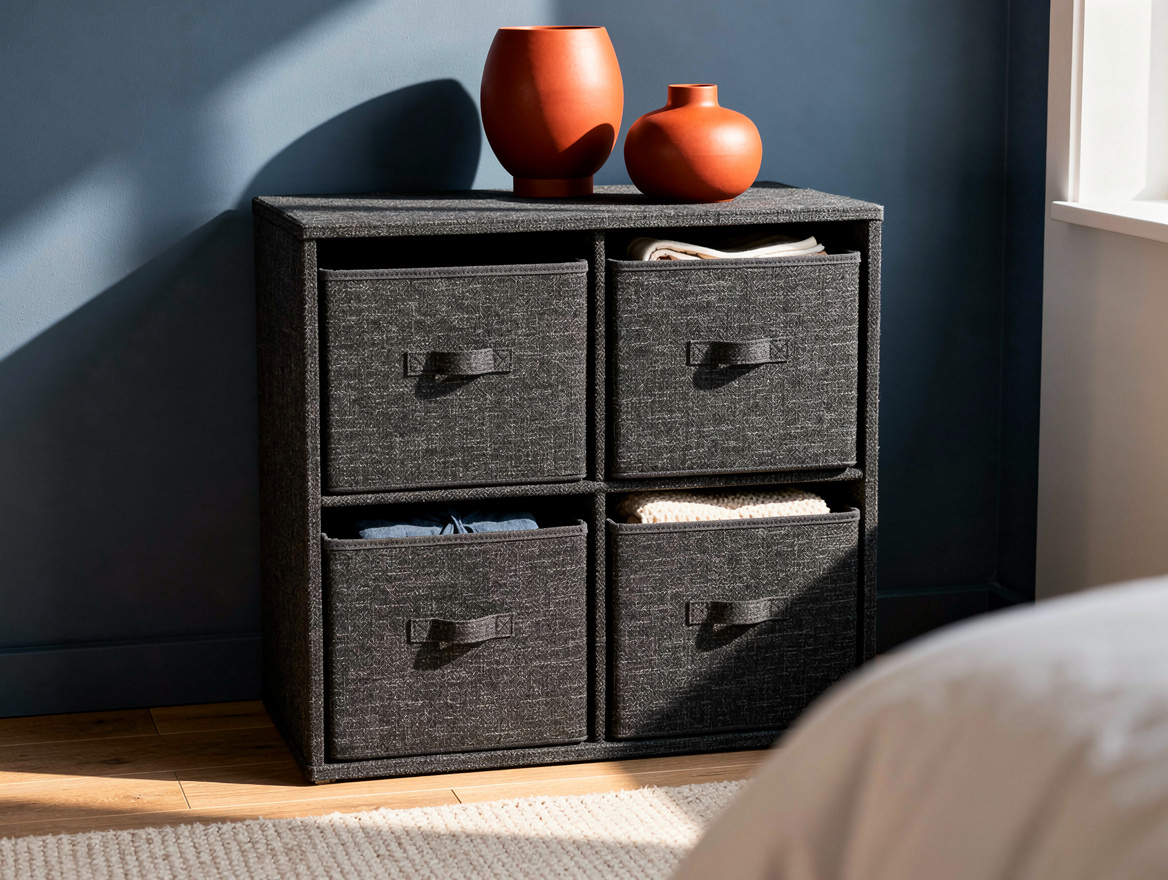
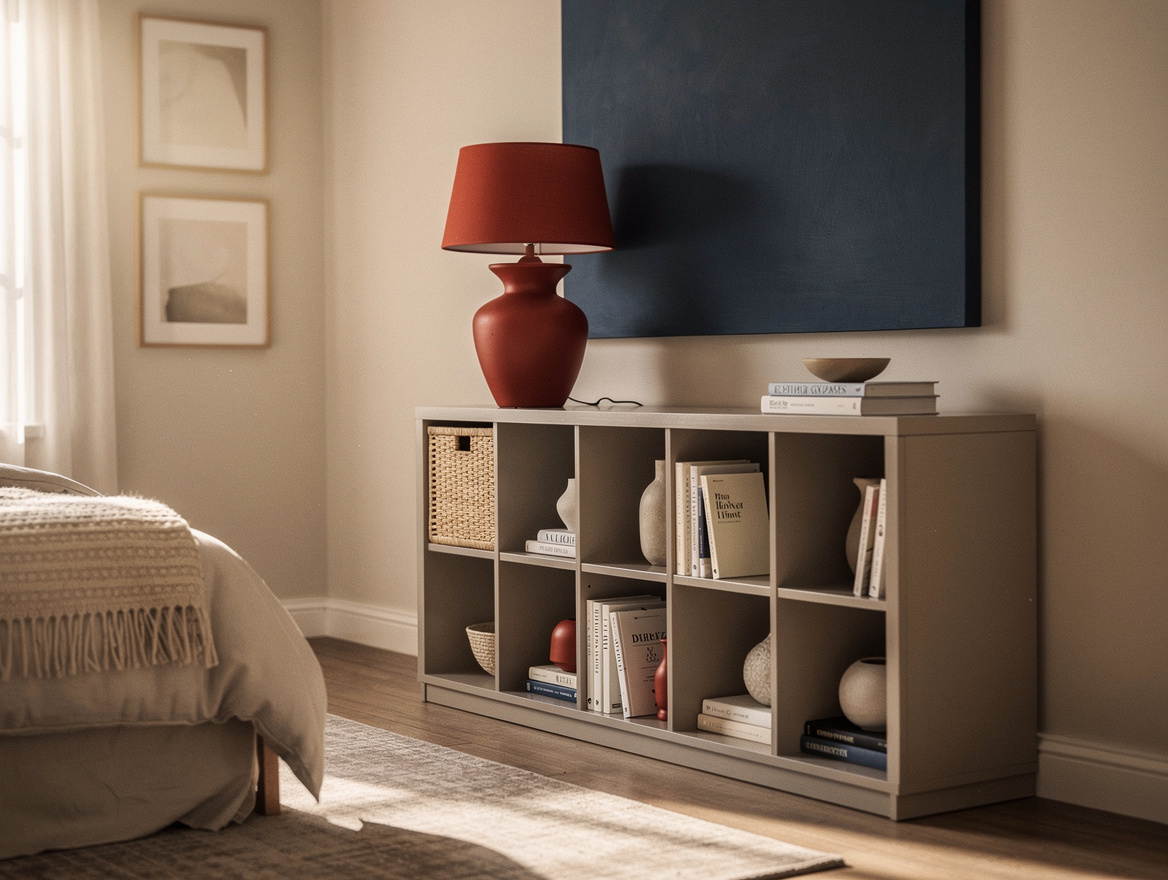
Leave only one or two cubbies uncovered, preferably at an outer edge. They can hold a stack of reading books, a woven catchall, or shoes that are genuinely attractive enough to leave visible.
A seagrass basket gives an exposed compartment more texture than another fabric cube. One open spot is deliberate; four open spots become visual homework.
Put everyday socks and undergarments behind fronts, where they belong. Cube storage is at its best for folded categories, not for pretending every possession is decor.
Add a Top That Feels Intentional
A dresser needs a usable landing surface, so style the top with restraint. A lamp, a small tray, and one personal object are plenty, especially on a unit only about 15 inches deep.
On a wider IKEA KALLAX 2-by-4 unit, typically about 57 5/8 inches wide, a wall mirror above the top makes the arrangement feel anchored. The base unit is often about $80 before inserts.
Skip a heavy stone slab or a large television sitting directly on lightweight cube furniture unless its instructions allow that load. Particleboard and fiberboard pieces have limits, and the cleanest room is never worth a safety gamble.
Use Drawer Inserts for Small Items
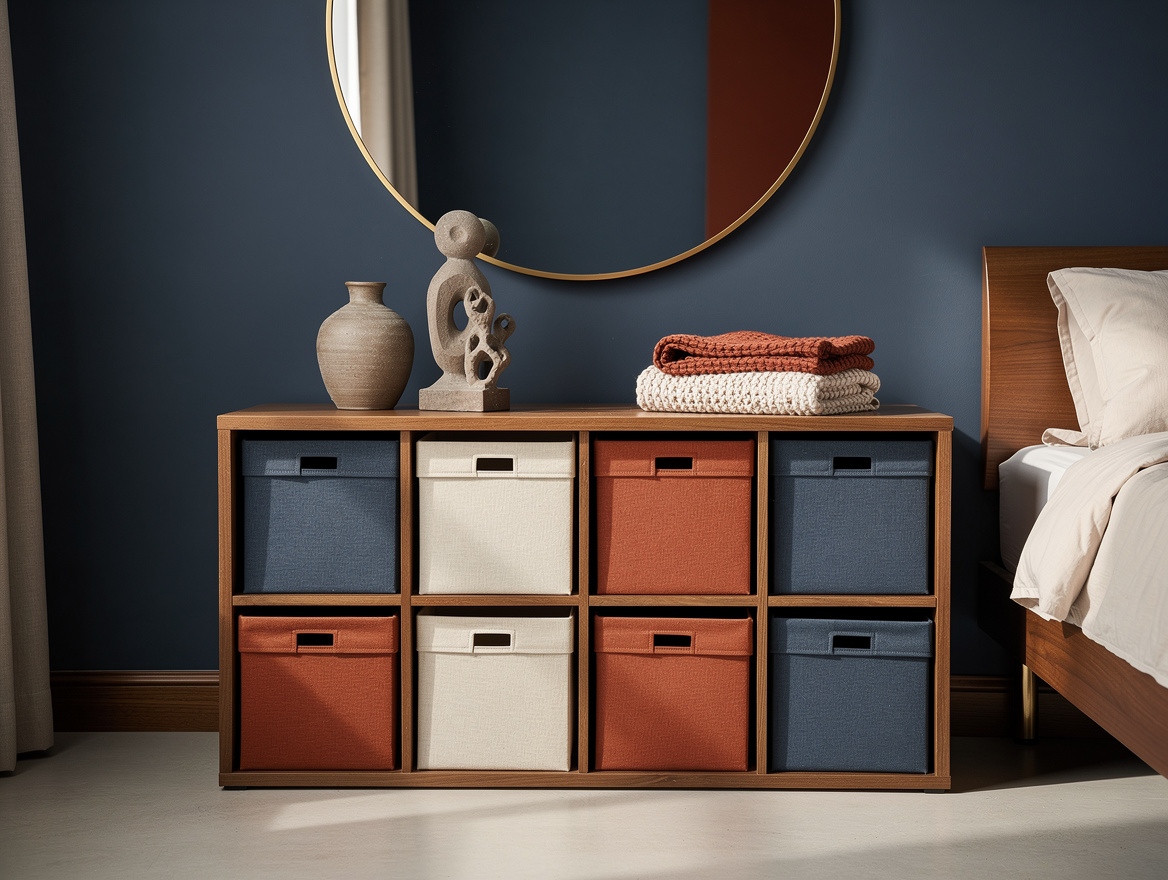
Dedicate the upper row to small, frustrating categories: underwear, charging cords, jewelry, workout accessories, and sleep masks. Fabric drawers keep these items accessible without requiring full-depth dresser drawers.
A KALLAX drawer insert can make a cube look more tailored than a loose bin, although the total rises as inserts are added. A 2-by-2 unit with four drawers is typically around $85, depending on finish and local stock.
Fold sweaters and jeans in the lower row, where their weight is easier to manage. Heavy stacks of denim are a poor match for flimsy fabric bins and can strain an underbuilt organizer.
Choose Width Before Chasing Capacity
A 2-by-4 cube organizer offers eight compartments and a classic long-dresser shape, but it can look bulky in a narrow bedroom. Use it only when the wall can handle a piece roughly 57 to 60 inches wide.
The Better Homes & Gardens eight-cube organizer is typically around $79 to $86 and measures roughly 56.77 inches wide. It works nicely below a wall-mounted mirror or TV, with matching bins softening its engineered-wood grid.
For a tighter footprint, a 3-by-3 unit stores more upward rather than outward. That square format is practical, though it reads more like a storage cabinet than a traditional low dresser.
Begin with a horizontal six-cube frame and six matching drawer fronts, then live with it for a week before adding decor. The storage should disappear into the bedroom’s routine, while the top earns its place as a real dresser surface.
Mia Carter writes about small-space living and budget home makeovers. She has restyled three rentals and tests most ideas in her own 45 sqm flat.