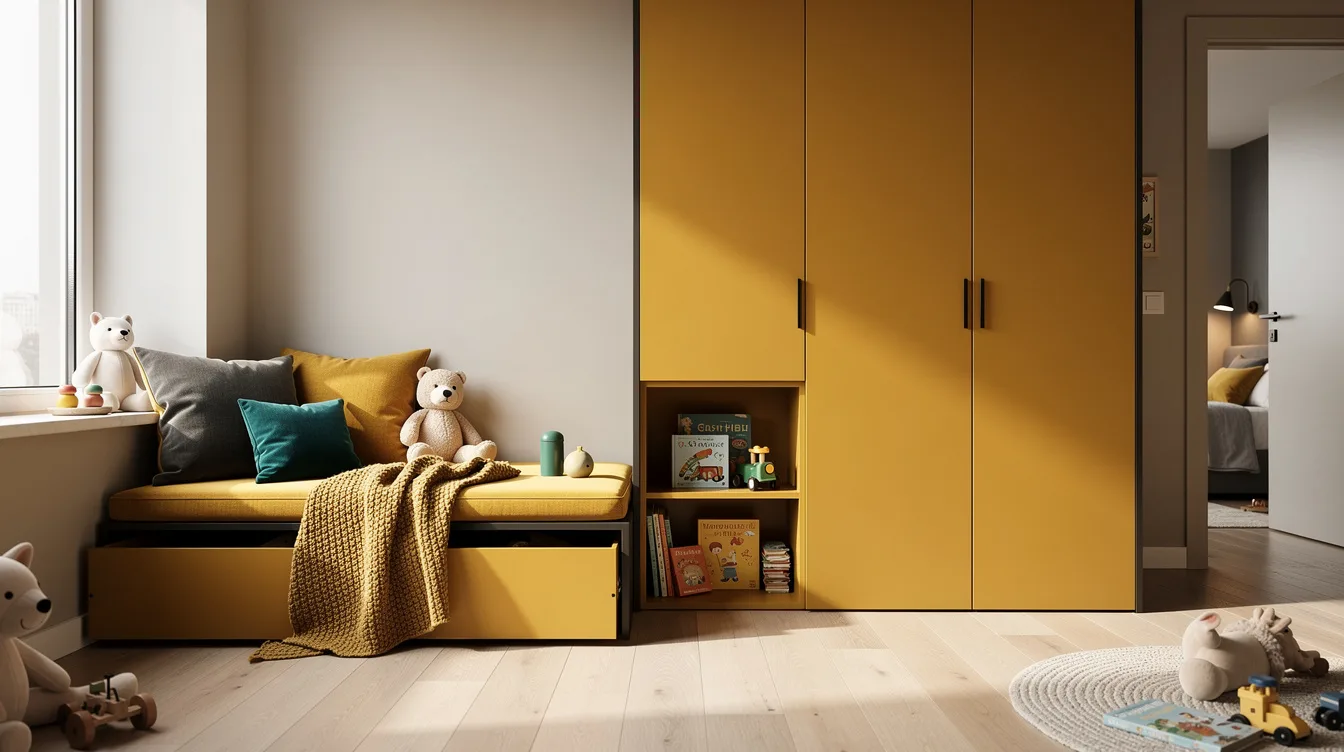
A playroom beside a bedroom has a narrow margin for visual noise: one forgotten toy can travel straight into the sleeping space. A 35⅜-inch-wide IKEA SMÅSTAD bench shows why concealed storage works here, combining a reading perch with a hidden pull-out box.
The best arrangements keep play accessible during the day and nearly invisible from the bedroom at night. Pull-out benches, shallow closed cabinets, and concealed toy-rotation compartments each solve a different kind of mess.
Keep the Visual Spill Inside the Playroom
A bedroom-adjacent playroom should feel connected, but its toy overflow needs a firm boundary. Keep storage on the playroom side of the doorway, especially when the sleeping room has a calm palette and limited floor space.
A shallow cabinet run or painted MDF trim can visually frame the transition without making the opening feel closed. My firm preference is one controlled storage wall over several colorful bins scattered between both rooms.
Leave the bedroom sightline open, then place the largest storage piece against the playroom wall that isn’t used for the door swing. That single decision makes cleanup visible and repeatable.
Turn the Window Wall Into a Pull-Out Bench
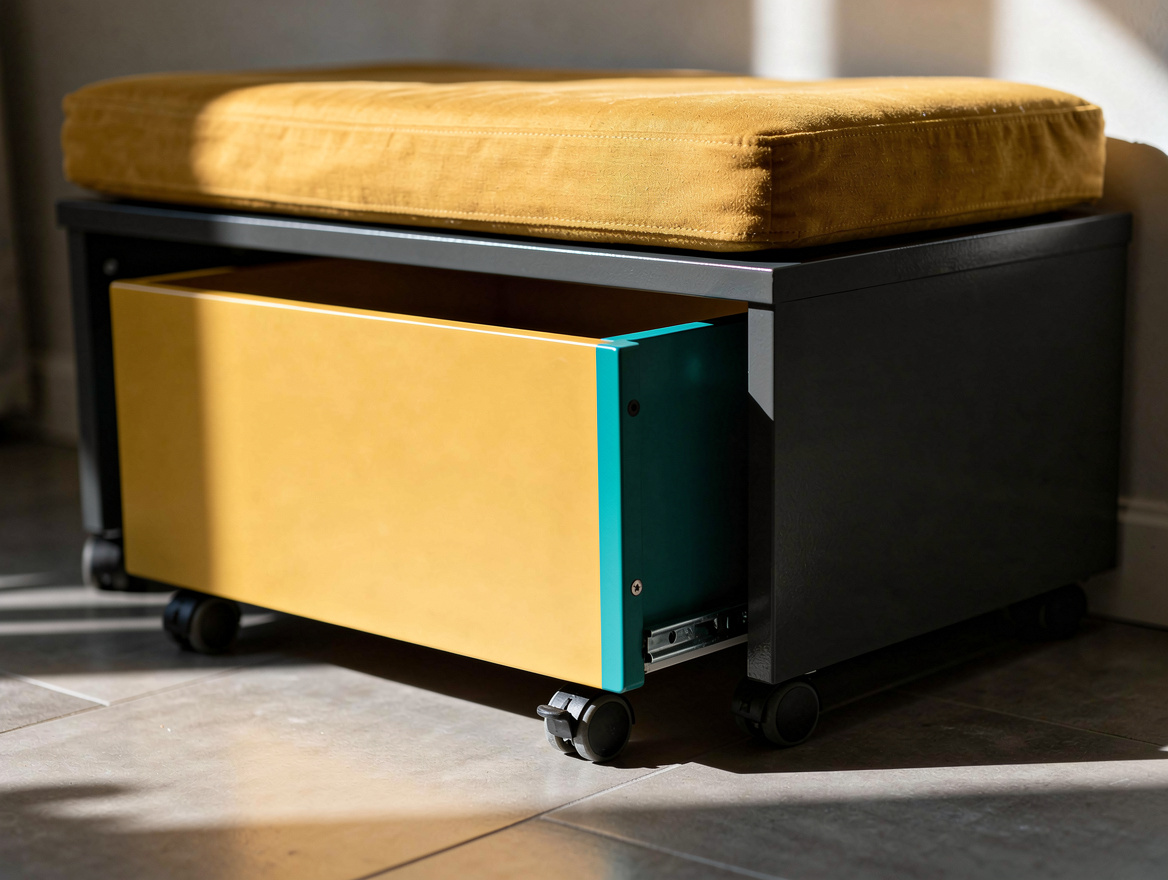
The IKEA SMÅSTAD bench with toy storage works well beneath a playroom window because it combines a reading perch with one opaque-front pull-out box. The listed white-and-white version is $99.99, while blue or light-green front versions are $104.99.
Its overall size is about 35⅜ by 20½ by 18⅞ inches, with casters included on the large storage box. Add a cushion on top, keep books within reach, and reserve the deep interior for bulky toys that are awkward to stack.
Two benches create roughly a 71-inch storage run with a furniture subtotal of about $200, before cushions and accessories. The box rolls on the floor rather than on conventional cabinet slides, so carpet or an area rug can make opening harder.
Divide the interior with removable containers instead of dropping everything into one deep pile. The optional IKEA BÄNKKAMRAT bench pad and organizing boxes are sold separately, so check the final setup before treating the bench as a regular seat.
Use Shallow Cabinets Where the Doorway Can See Them
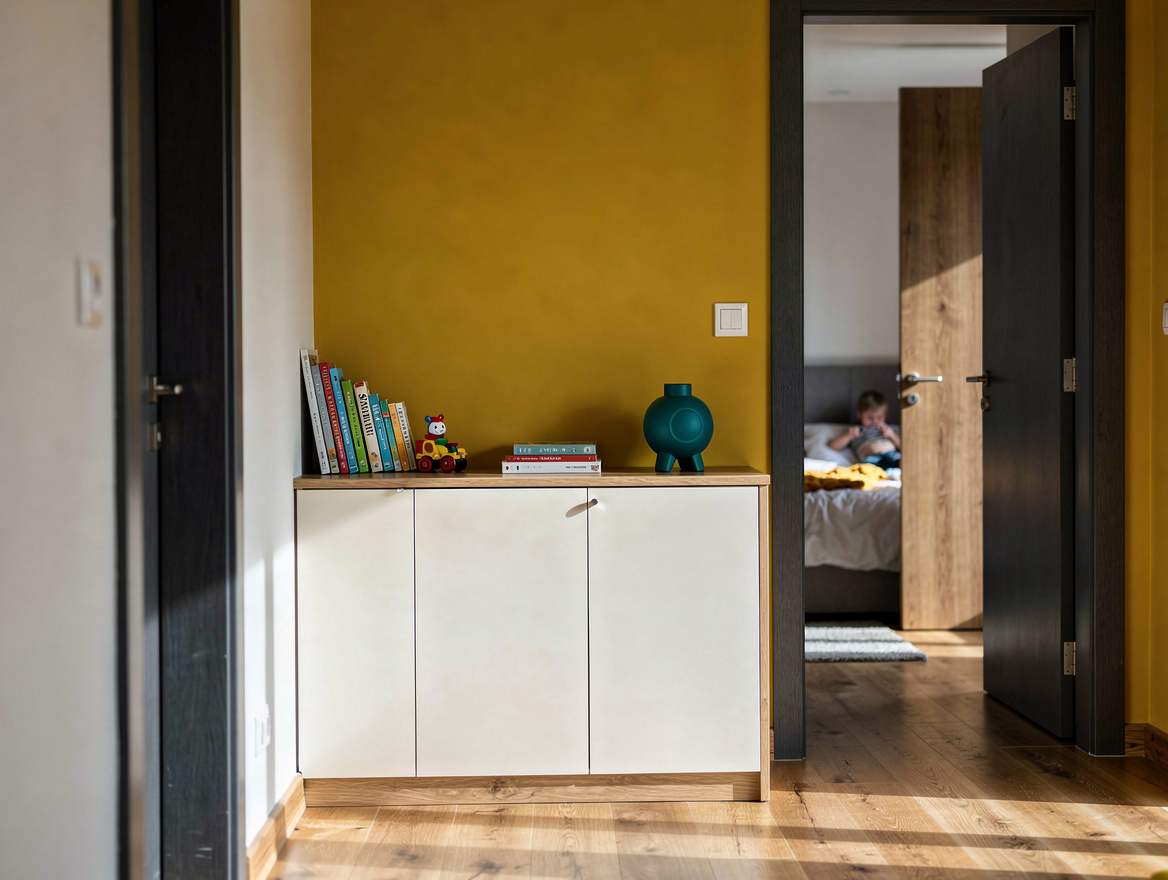
For a playroom visible from the bedroom, closed fronts create the cleanest visual pause. The IKEA BESTÅ combination with SMEVIKEN doors and KABBARP legs measures about 70⅞ by 16½ by 29⅛ inches and carries a regular-price reference of $480.
The shallow depth keeps the cabinet from crowding the room while still hiding construction toys, puzzles, and craft supplies. Its engineered-board frame uses paper-honeycomb filling, and the doors can be configured with adjustable shelves and either push-open or soft-closing operation.
Assign one section to each category before the cabinet fills up. Keep the top restrained with one small object or a few books, because a crowded display simply moves the clutter from the floor to eye level.
Handles and a continuous top panel are separate purchases, so price the complete configuration before committing. Anchor the cabinet according to the manufacturer’s instructions, particularly in a room used by young children.
Hide the Toy Rotation Behind a False Front
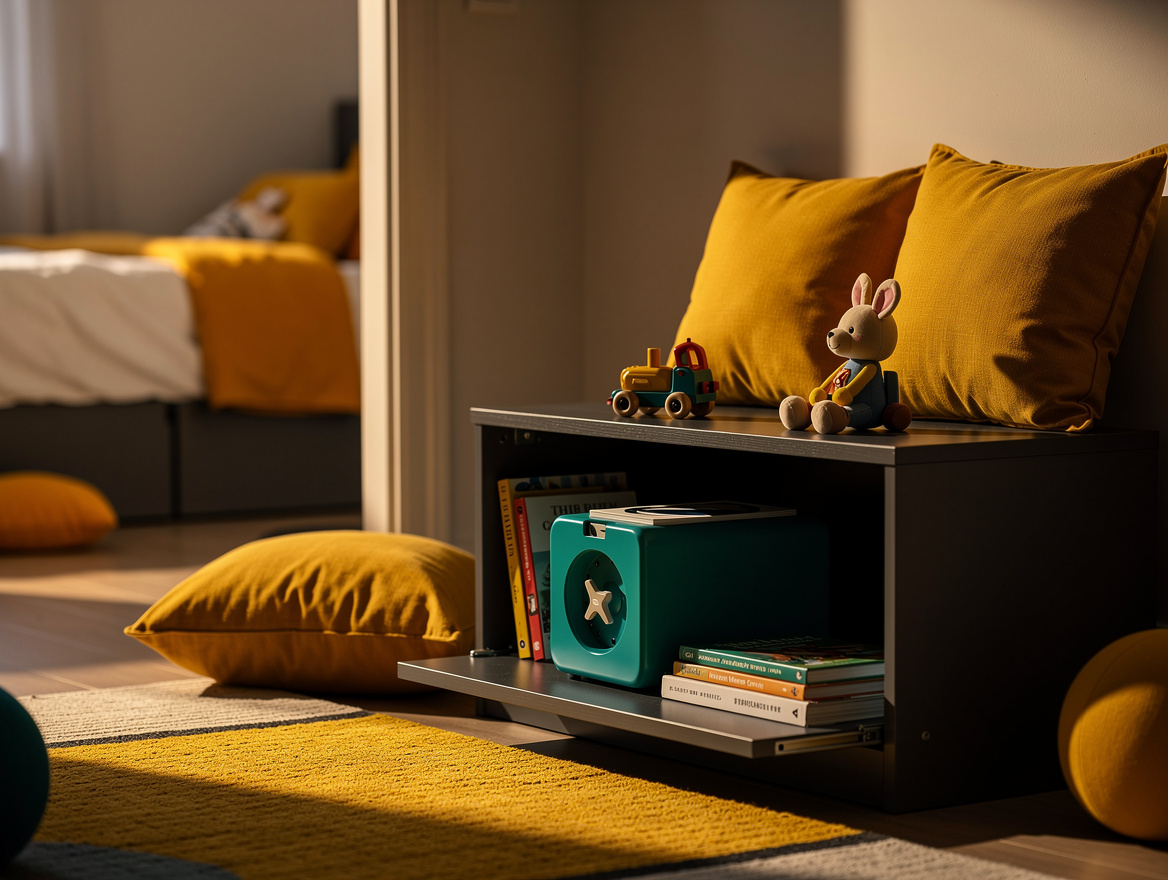
An open play shelf can hold the week’s favorites while a concealed compartment stores everything waiting its turn. Use a low shelf with a shallow cavity behind a lift-off or hinged front made from painted plywood.
Keep only the current rotation in the visible section, then move the rest into a lidded box behind the panel. That gives children an inviting choice without displaying every category at once.
A plain fabric container from Target can hold the reserve pieces when the compartment is deep enough for easy lifting. The front should open fully and stay easy for an adult to inspect, since hidden storage that becomes difficult to reach will eventually become forgotten storage.
Choose a panel color that matches the shelf or nearby wall instead of adding another accent. In a room beside a bedroom, visual quiet matters more than a playful pattern on every surface.
Control Door Swing, Carpet Drag, and Nighttime Noise
Test every door and pull-out box with the bedroom entrance fully open. A storage piece that works on an empty floor can become frustrating when its path crosses a rug, a basket, or the edge of a bed.
The rolling box in the IKEA SMÅSTAD bench deserves special attention because owners may find it harder to move across carpet or an area rug. Keep its route clear, and don’t assume the bench is rated for adult seating without checking its load instructions.
For cabinet doors, soft-closing hinges are worth choosing when available because they reduce the sharp sound of a late cleanup. Felt pads beneath smaller accessories and a washable wool-blend rug can also soften movement without adding bulky furniture.
Give Every Toy a Closed Landing Place
Concealed storage only stays useful when each category has a clear destination. Use removable boxes for small pieces, a wider container for stuffed animals, and one open spot for the toy that is currently in use.
The internal organizing boxes for IKEA SMÅSTAD are separate accessories, but a similar system can be built with labeled containers already on hand. Labels should describe the contents plainly, such as blocks, dolls, or art supplies.
Make the final reset short enough to happen before bedtime. A child can return a few visible items to the shelf while an adult closes the bench or cabinet, leaving the adjoining bedroom free of stray toys.
Begin with the storage piece that matches the room’s hardest problem: a pull-out bench for bulky toys, shallow cabinets for broad categories, or a hidden rotation compartment for too many small choices. Once that anchor is in place, the rest of the playroom has a much easier job.
Start by measuring the clear path between the storage piece and the bedroom doorway, then choose the solution that keeps that path open. In this setup, tidy is less about owning fewer toys and more about giving the visible ones a place to disappear.
Mia Carter writes about small-space living and budget home makeovers. She has restyled three rentals and tests most ideas in her own 45 sqm flat.