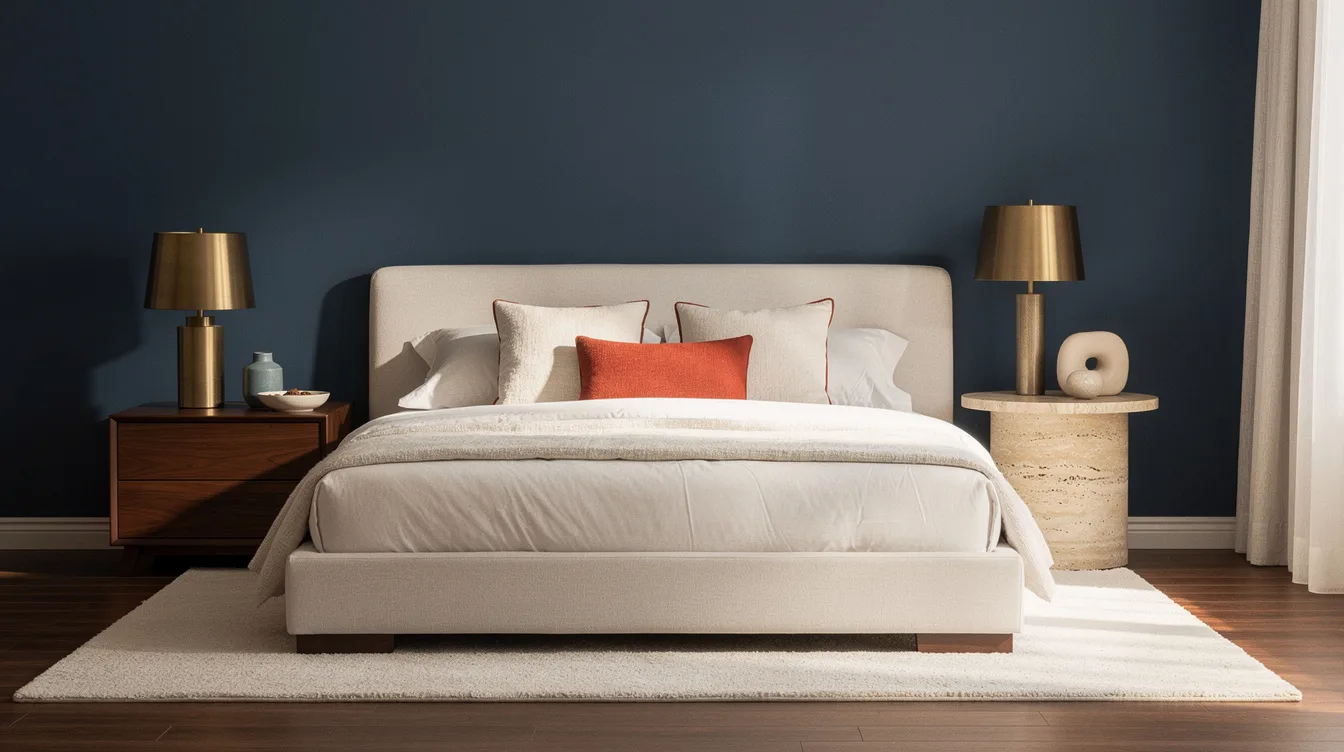
I used to assume a couple’s bedroom needed matching tables, until a 54-inch bed in a tight rental made that choice feel clumsy. One side needed drawers for chargers and books; the other sat beside a door that barely cleared a cabinet.
Asymmetry works when it looks chosen. The pair needs a visual bridge, then each side can handle a different job.
Anchor One Side With Real Storage
Give the daily-use side a substantial smoked-walnut two-drawer nightstand, roughly 26 to 30 inches wide, for medication, reading glasses, cords, and the pile of things nobody wants on display. Closed storage earns its larger footprint.
Place it beside the sleeper who actually needs it. A contemporary room feels smarter when furniture follows the nightly routine instead of obeying a symmetrical floor plan.
Keep Both Landing Surfaces Near Mattress Height
Bring the tabletop heights within about 2 to 3 inches of each other and close to the mattress height. Most contemporary nightstands are roughly 22 to 26 inches high, which is a useful range for reaching a water glass without sitting upright.
A taller oak bedside cabinet can still work, but only when its top remains easy to use from bed. A dramatic height mismatch reads accidental faster than almost any color mismatch.
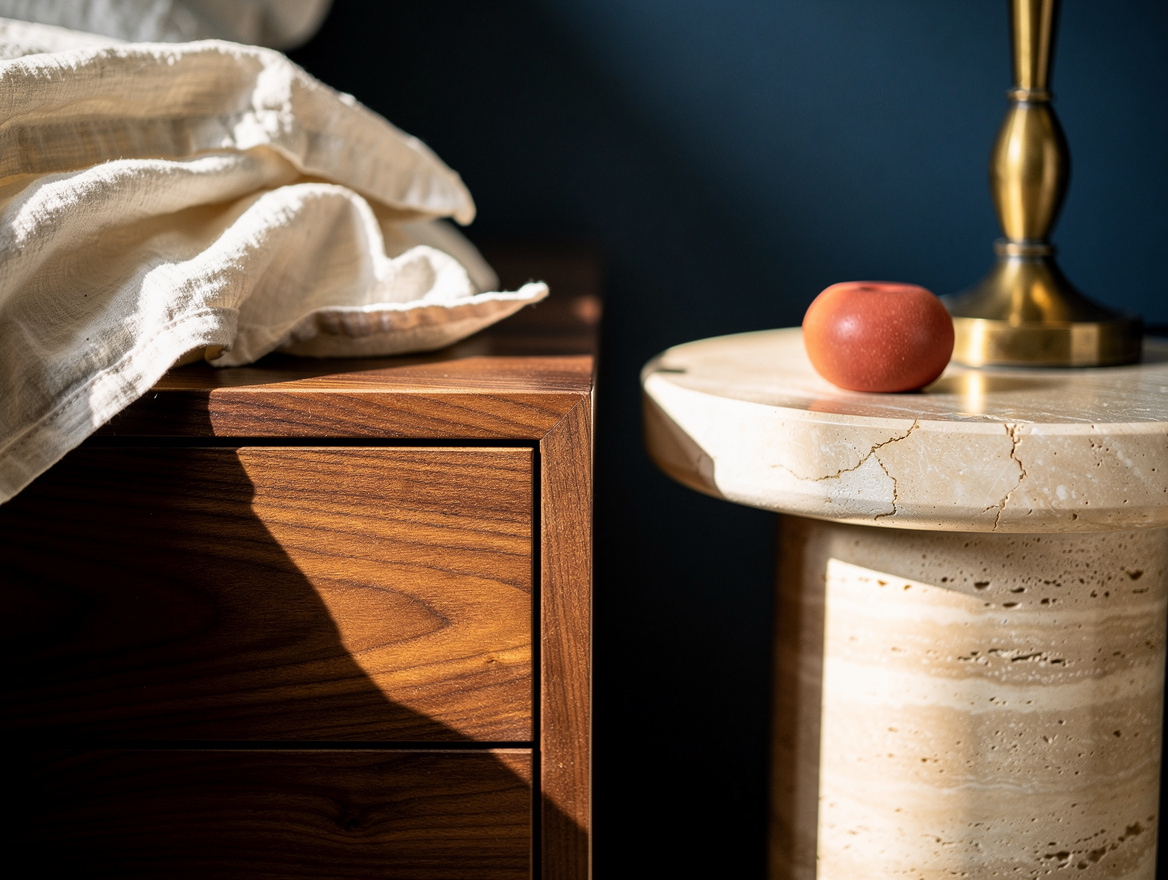
Lighten the Tight Side With a Pedestal
Trade the second cabinet for a 16- to 20-inch round travertine pedestal or a small table with an open base. It gives the room breathing room and keeps an ensuite route, radiator, or door swing from becoming an obstacle course.
The smaller piece does not need to carry every bedtime item. A book, phone, and one glass are enough, especially when a nearby drawer unit handles the less photogenic supplies.
Repeat One Finish Beyond the Bed
Repeat the larger table’s dark walnut in a picture frame, bench, or bed frame, then let the smaller table depart in shape. That repeated finish makes a round stone piece feel related to a rectangular drawer box.
Use the same approach with matte-black metal: echo it in a sconce, curtain rod, or lamp base. Two quiet repetitions are more convincing than a room full of matching furniture.
Balance Visual Weight With Light and Art
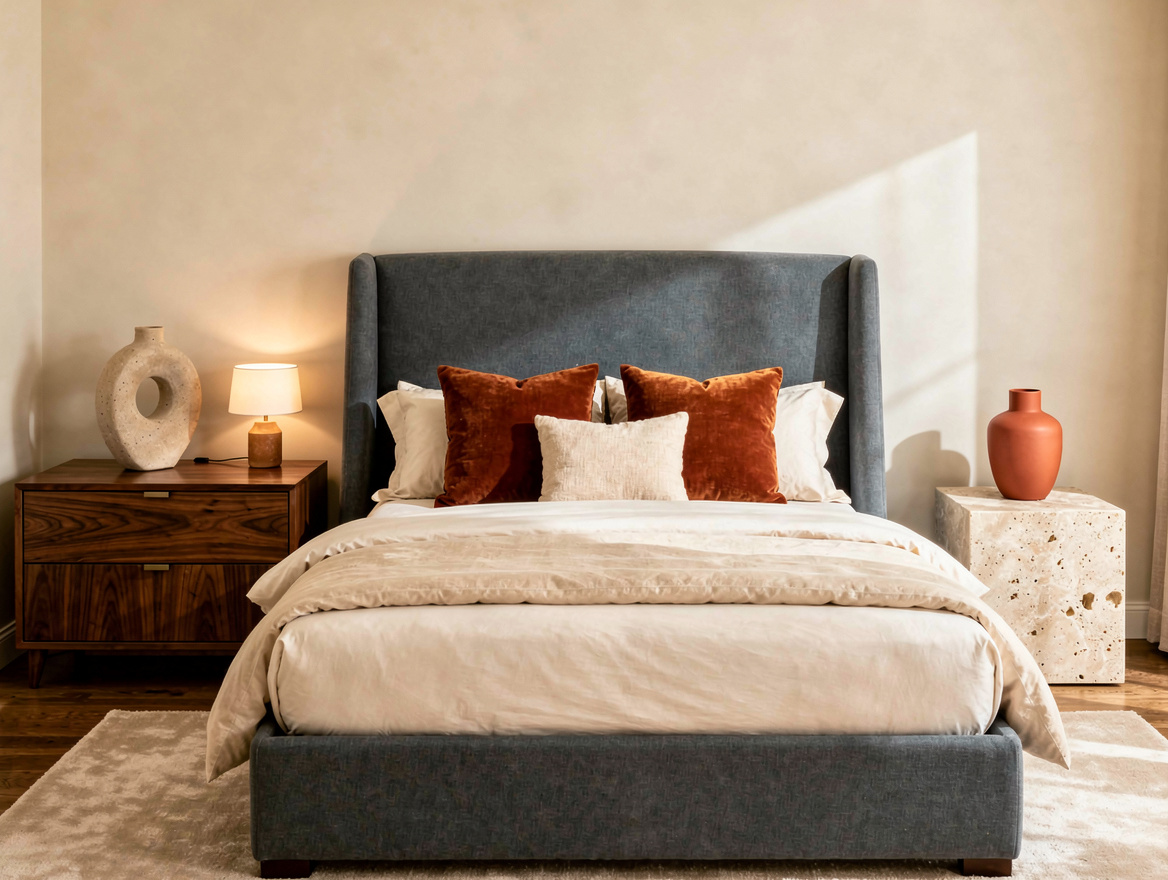
A 30-inch closed cabinet can hold its own against a much narrower open table when the lighter side gets a substantial brass table lamp, a wall sconce, or a large framed print above it. Balance comes from what the eye notices, not a tape measure.
Keep the lamps in the same finish when the tables differ sharply. Two aged-brass lamps create an immediate connection and save the arrangement from looking like a leftover furniture pairing.
Limit the Contrast to Two Big Changes
Change width and shape, then hold the palette steady: a wide wood drawer unit beside a narrow stone cylinder is plenty. Changing height, color, material, leg style, and hardware all at once creates a busy room with no focal point.
For a softer version, pair a reeded cream upholstered nightstand with a petite black stone drinks table. The contrast feels intentional because the low-profile bed and bedding stay calm.
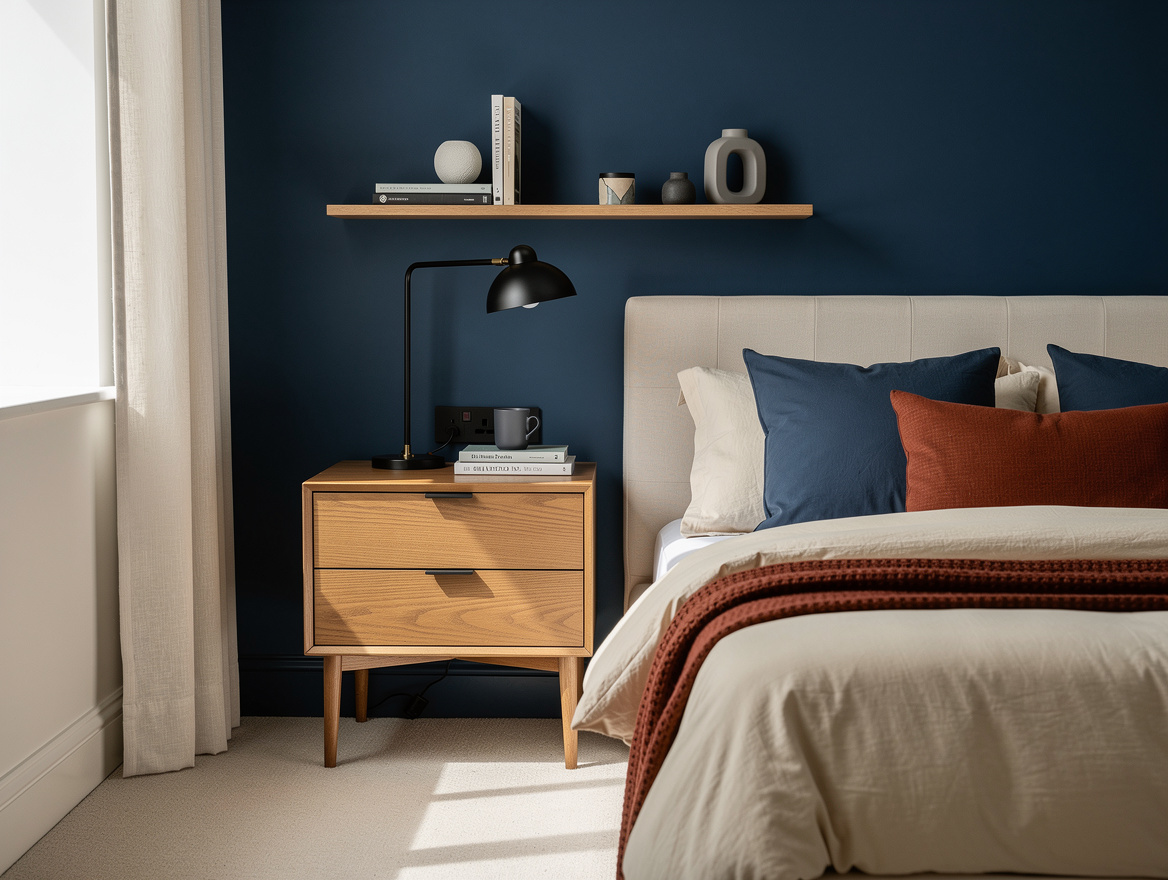
Start with the side that needs storage, then choose a lighter companion that lands at nearly the same height. That one decision keeps the bedroom practical and gives it the collected edge matching sets rarely have.
Mia Carter writes about small-space living and budget home makeovers. She has restyled three rentals and tests most ideas in her own 45 sqm flat.