
I once changed a bedroom’s bedside bulbs but left its ceiling fixture untouched, and the bed wall immediately looked like it belonged to another room. For most bedrooms, 2700K warm white gives the calm, familiar glow people expect when they switch off a typical 800-lumen lamp at night.
The confusing part is that color temperature is not a brightness setting. A room can be warmly lit and still bright enough to read in, provided each light has a clear job.
Make 2700K Your Evening Baseline
Use 2700K for every light source visible from the bed after dark: the ceiling fixture, lamps, sconces, and indirect headboard lighting. Designers favor this familiar incandescent-style warmth because mismatched pools of white light make even good furniture look accidental.
A typical small or medium bedroom needs roughly 800 to 1,600 lumens total from the main fixture, preferably on a dimmer. Add local light instead of installing one overpowering bulb and calling the room finished.
Use 3000K With a Clear Design Reason
Choose 3000K warm white when the bedroom has white walls, pale oak, crisp bedding, or a contemporary hotel mood that needs less amber. It still reads as restful, but it makes cool whites and gray-beige finishes appear cleaner.
Don’t mix 2700K lamps with a 3000K ceiling light unless the difference is deliberate and separated by function. For a simple, polished result, match the ceiling fixture and bedside bulbs at 3000K throughout.
Keep 4000K Away From the Bed
4000K neutral white is useful for seeing navy socks, checking makeup, packing, or cleaning a closet shelf. It is a task-light temperature, and its sharper white cast feels too alert for the lamp you see during late-night reading.
Put it inside a wardrobe, beside a dressing mirror, or over a focused vanity zone, ideally behind a door or on a separate switch. The sleep-facing side of the room should remain in the 2200K to 3000K range.
Layer Low, Warm Sources Around the Bed
A single overhead bulb creates the least flattering version of a bedroom: bright ceiling, dark corners, and no softness near the pillows. Pair a modest 2700K ceiling fixture with shaded bedside lamps or wall sconces in the 2200K to 2700K range.
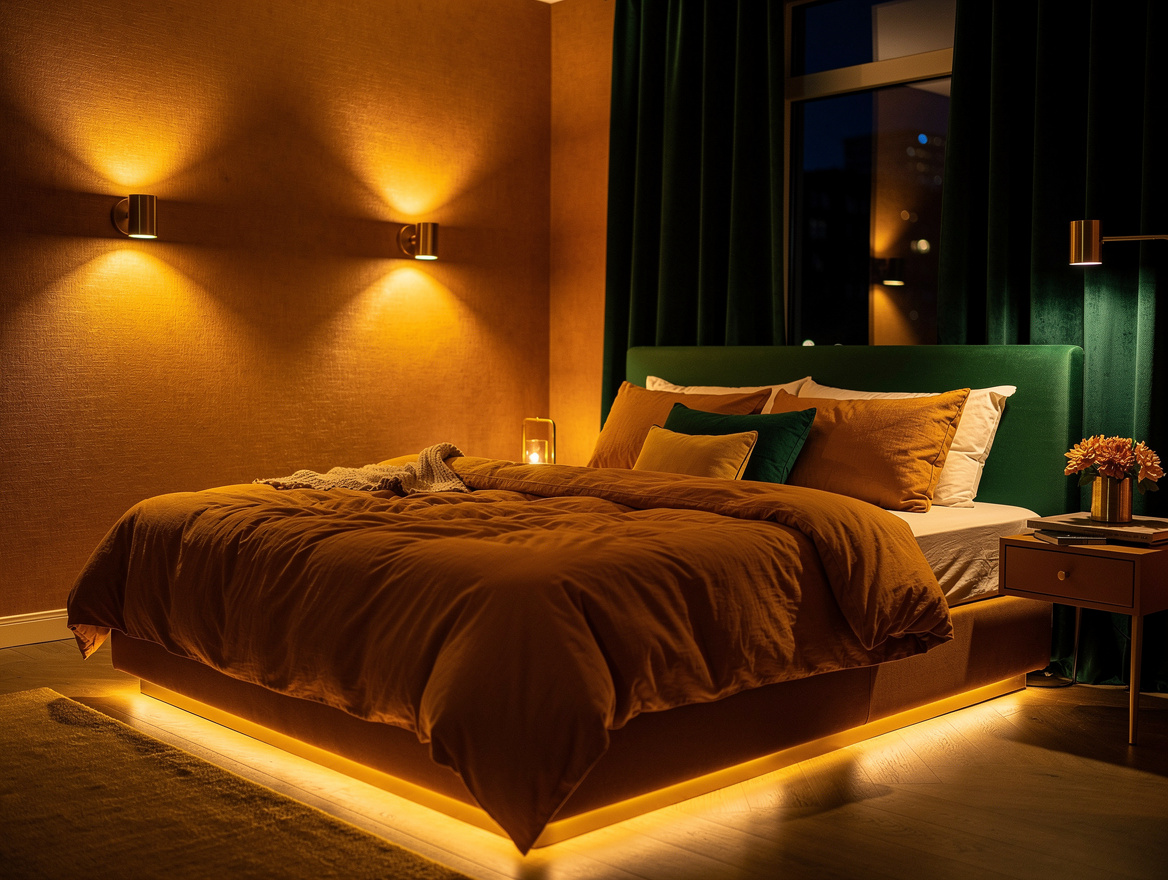
A hidden warm LED strip behind the headboard or under a floating nightstand adds depth without asking the ceiling light to do everything. Keep it dimmable, because low-level glow is what makes this layer worth installing.

Match Lumens to the Fixture’s Job
For bedside lamps, around 450 to 800 lumens each is usually enough, especially when the bulbs are dimmable. Two matching IKEA SOLHETTA E26 bulbs, listed at about $4.99 for a two-pack, offer 800 lumens at 2700K and make an easy budget starting point.
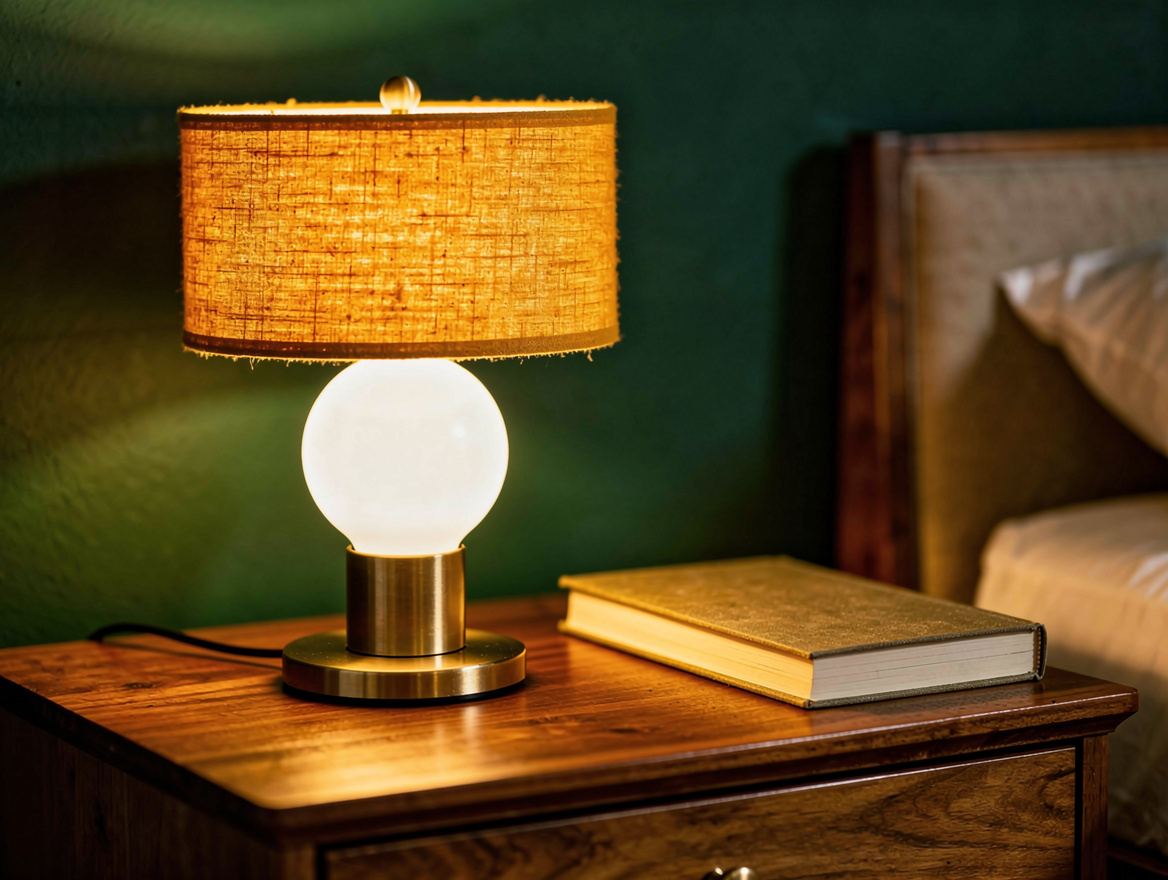
Use a shade that diffuses the bulb rather than exposing a glaring LED filament at pillow height. A linen drum shade. An opal globe.
Light aimed at the page, not directly into your eyes.
Let Tunable Bulbs Follow Your Routine
Philips Hue White Ambiance A19/E26 bulbs offer a broad adjustable range, so a bedside lamp can run clearer in the morning and warmer late at night. Set a moderate 3000K to 4000K scene for getting dressed, then schedule 2200K to 2700K at low brightness for winding down.
For a night route, use roughly 1800K to 2200K under the bed or along the bathroom path. That candle-like amber light gives enough orientation without making a midnight trip feel like a morning alarm.
Start by replacing the bulb closest to your pillow with a dimmable 2700K LED, then compare it with the ceiling light after sunset. That one test will show whether your bedroom needs a matching swap, a separate closet light, or simply less overhead brightness.
Mia Carter writes about small-space living and budget home makeovers. She has restyled three rentals and tests most ideas in her own 45 sqm flat.