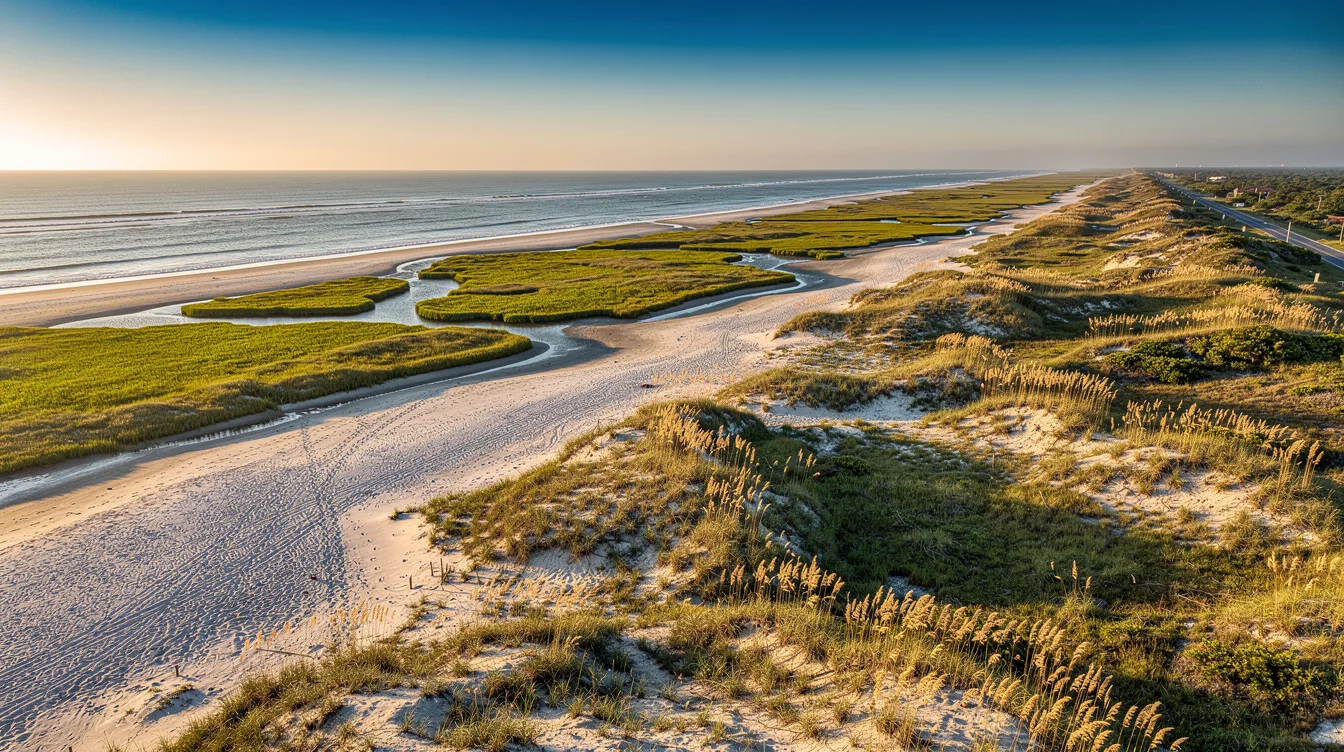
Tybee Island is a beach escape with a fact that refuses to stay buried. On February 5, 1958, a U.S. Air Force Mark 15 nuclear bomb was dropped into the sea off this Georgia barrier island after two aircraft collided.
It was never recovered.
And that strange history changes the mood of a day here. You can stand on warm sand, hear gulls working the shoreline, and know that somewhere offshore sits one of the country’s most persistent Cold War mysteries.
A missing bomb beyond the beach
The lost weapon is commonly called the Tybee Bomb, though the Air Force has said it lacked a nuclear capsule and poses no serious threat. But it has never been found, which is why this isn’t merely a beach anecdote you forget by lunch.
In 2004, a private search pointed toward Wassaw Sound near Little Tybee Island. The Air Force followed with a nine-month search and said the radiation detected there likely came from naturally radioactive monazite, not the weapon.
But uncertainty is the point. The bomb vanished after a training collision, and the water never gave it back.
You won’t find a formal bomb-viewing stop or a dramatic marker facing the sea. That restraint feels right. The story belongs offshore, while the island carries on with beach towels, seafood counters, and salt wind.
Why Tybee works after Savannah
18 miles east of Savannah, Tybee is the easiest beach detour from the city’s historic district. The drive usually takes 20 to 30 minutes, so you can trade brick squares and shaded streets for open Atlantic light without committing to a long coastal haul.
And the contrast is the appeal. Savannah asks you to look up at balconies and old facades. Tybee asks you to look outward, toward a broad horizon and water that makes the city feel suddenly far away.
The island is Georgia’s easternmost point, sitting where the Savannah River meets the Atlantic. Its sandy eastern shore faces the ocean, while tidal salt marshes occupy the western side, so you get two distinct versions of the coast in one small place.
Tybee is casual, a little retro, and not especially polished. That’s a compliment. If you want a tightly managed resort experience, look elsewhere.
If you want cottages, beach bars, and a place where flip-flops make sense all day, you’ll understand the draw.
Choose your stretch of sand
Five miles of public beaches give Tybee more range than its compact footprint suggests. North Beach is the quieter pick, near the lighthouse and the Savannah River. It suits travelers who want room to settle in without the busiest beach scene.
South Beach is the lively option. The Tybee Island Pier & Pavilion anchors that end of the island, with fishing, beach access, and nearby restaurants and shops. It’s active, but it doesn’t feel like a high-rise resort strip.
Mid Beach is more residential, with hotels and vacation rentals nearby. Back River Beach, at the southern end, faces the river and is favored for sunset. You’ll want to pick your beach before parking, because paid parking is common across the island.
And bring a car if you can. US-80 is the island’s main road from Savannah, which means weekend, holiday, and high-season traffic can turn an easy outing into a slow crawl.
The lighthouse is worth the detour
Tybee Island Light Station was founded in 1736, and the current tower rises about 145 feet. It is described as Georgia’s oldest and tallest active lighthouse, a black-and-white landmark that gives the north end a stronger sense of place than another anonymous beach access.
The lighthouse has been rebuilt more than once. Beach erosion threatened an earlier version, and part of a 1773 structure remains within the lower portion of today’s tower. You don’t need to be a lighthouse collector to appreciate that kind of endurance.
Nearby, Fort Screven adds another layer. The former coastal-defense site was used from the Spanish-American War through World War II, and the Tybee Island Museum occupies Battery Garland. It’s a useful stop when the beach weather shifts or you need a break from the sun.
Can you get beyond Tybee’s developed shore?
Yes, but you need a boat, kayak, or jet ski to reach Little Tybee Island. The uninhabited reserve is a better fit for travelers who want marshes, creeks, and a wilder shoreline than the main island provides.
But plan that outing rather than treating it as a quick walk from the beach. Its separation is exactly what keeps it feeling quieter.
Go when the island can breathe
Spring and fall are Tybee’s strongest seasons. The weather is more comfortable and crowds are generally easier to handle. Summer is hot, humid, and popular, so the beach can feel less spontaneous, especially on busy weekends.
Atlantic hurricane season runs from June through November, with added vigilance generally needed from August through October. That doesn’t make a visit impossible. It does mean you should pay attention to conditions before building a beach day around the forecast.
Give Tybee one full day from Savannah, or stay two to three nights if you want beach time, the lighthouse, and a paddle outing. By late afternoon, the pier noise fades, the light softens over Back River, and the offshore mystery remains exactly where it has been since 1958.