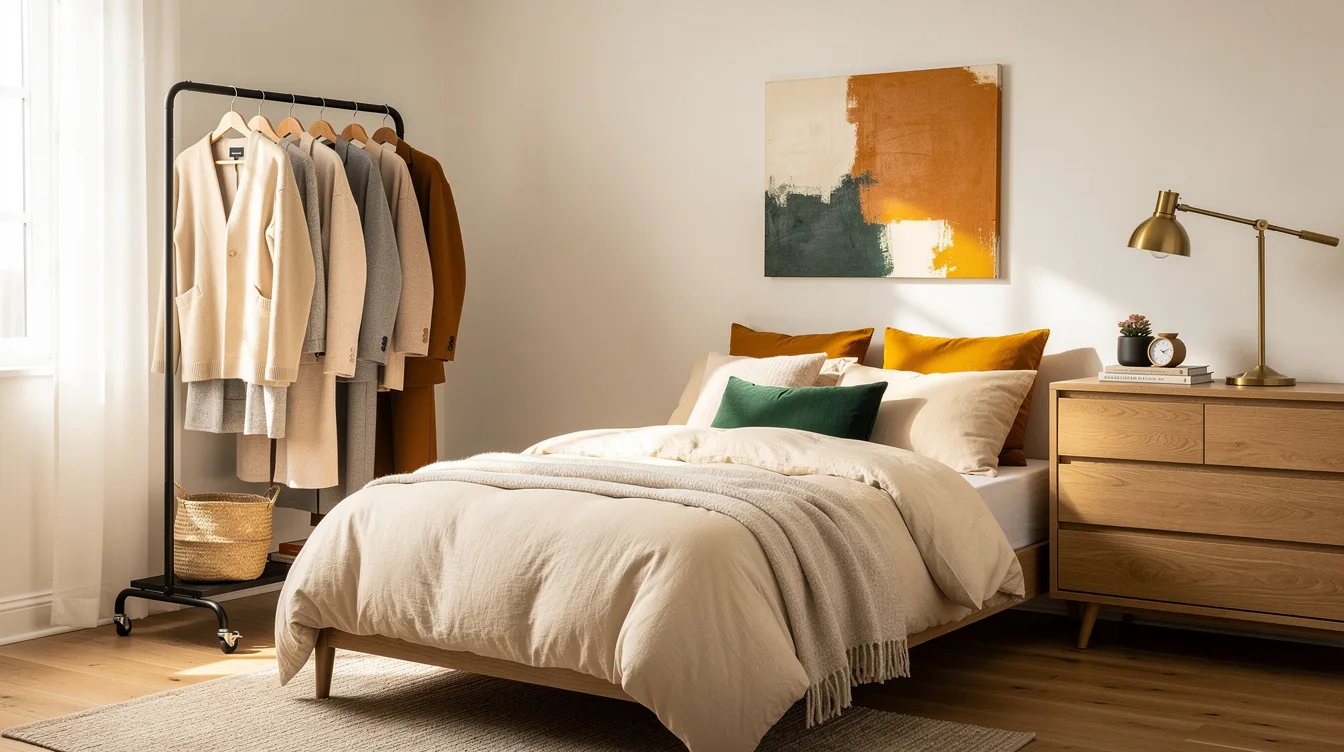
A bedroom without a built-in closet gets stressful fast when a 24.75-inch-wide corner becomes the landing spot for every shirt, coat, and laundry bag. The answer isn’t cramming in a bigger rack, it’s choosing a layout that makes exposed clothing look intentional.
Freestanding racks typically run about $38 to $180 in 2026, while a more complete open wardrobe can cost roughly $300 to $2,000 or more. Start by deciding whether you need a capsule display or daily closet-level capacity.
Edit a Slim Rail Into a Capsule Wardrobe
A narrow steel corner rack works when you own roughly 15 to 30 hanging pieces and can keep the rest folded. Put the garments you actually wear on matching wood hangers, with no spare shopping bags or bulky outerwear stealing the visual space.
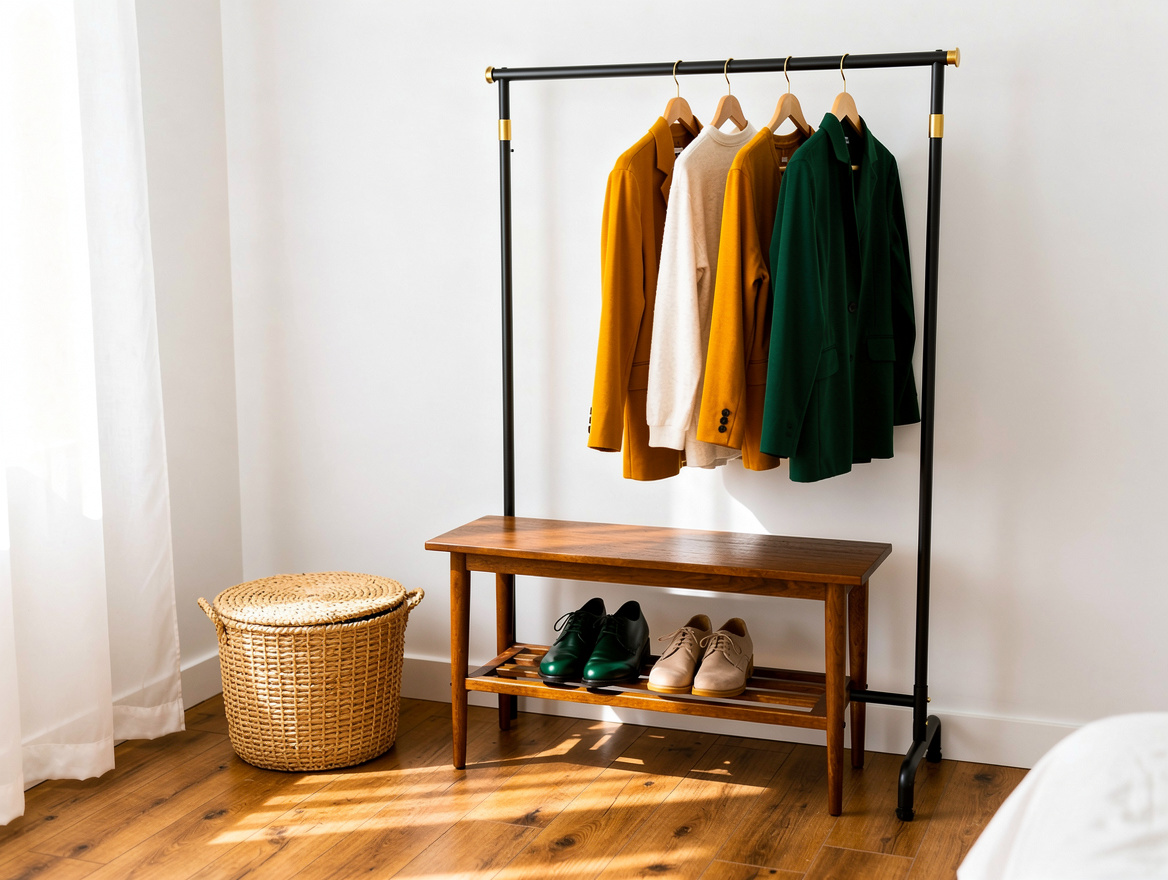
A compact rack around 24.75 inches wide and 63 inches high can fit a tight bedroom corner without swallowing the bed wall. Add one lidded canvas bin on the upper shelf and a low shoe bench below; this is the cleanest low-cost setup.
Run an L Shape Along Two Walls
An L-shaped metal rack is the smart move when a single rail would make laundry day impossible. It uses two short walls while preserving the middle of the room, which matters more than having a giant storage piece facing the bed.
Give the short arm to dresses, coats, and long shirts. Use the longer arm for double hanging, then reserve engineered-wood shelves for bags and folded denim; comparable furniture-style systems often cost about $112 to $135.
Make the Open Wardrobe Look Deliberate
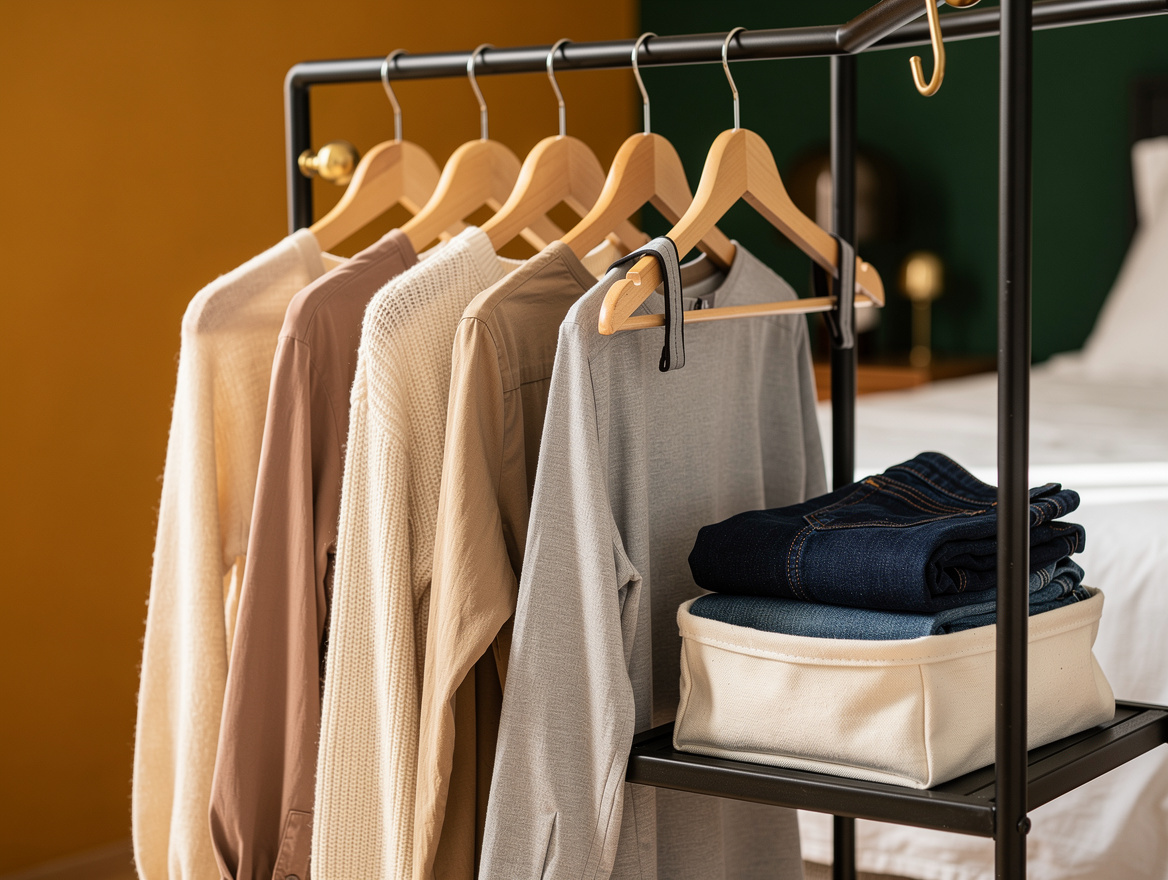
Visible clothing needs a point of view. Choose a bamboo rack or powder-coated black metal, repeat one hanger finish, and limit the palette on display to the pieces you genuinely reach for.
Keep underwear, workout gear, sleepwear, and off-season items inside a nearby drawer chest. An exposed rack feels calm when it displays a small wardrobe, not every textile you own.
Mount Rails Only Where the Wall Can Carry Them
A wall-mounted pipe rail gives a small room the most floor space because nothing needs legs. It is my favorite solution for a narrow bedroom, provided the hardware reaches studs or solid masonry rather than relying on weak drywall anchors.
Install the rail high enough for dresses to hang freely, then place a narrow oak dresser beneath it for folded clothes. This setup has a sharper, more permanent look than a temporary rack, so measure twice before drilling.
Build a Door-Free Modular Corner
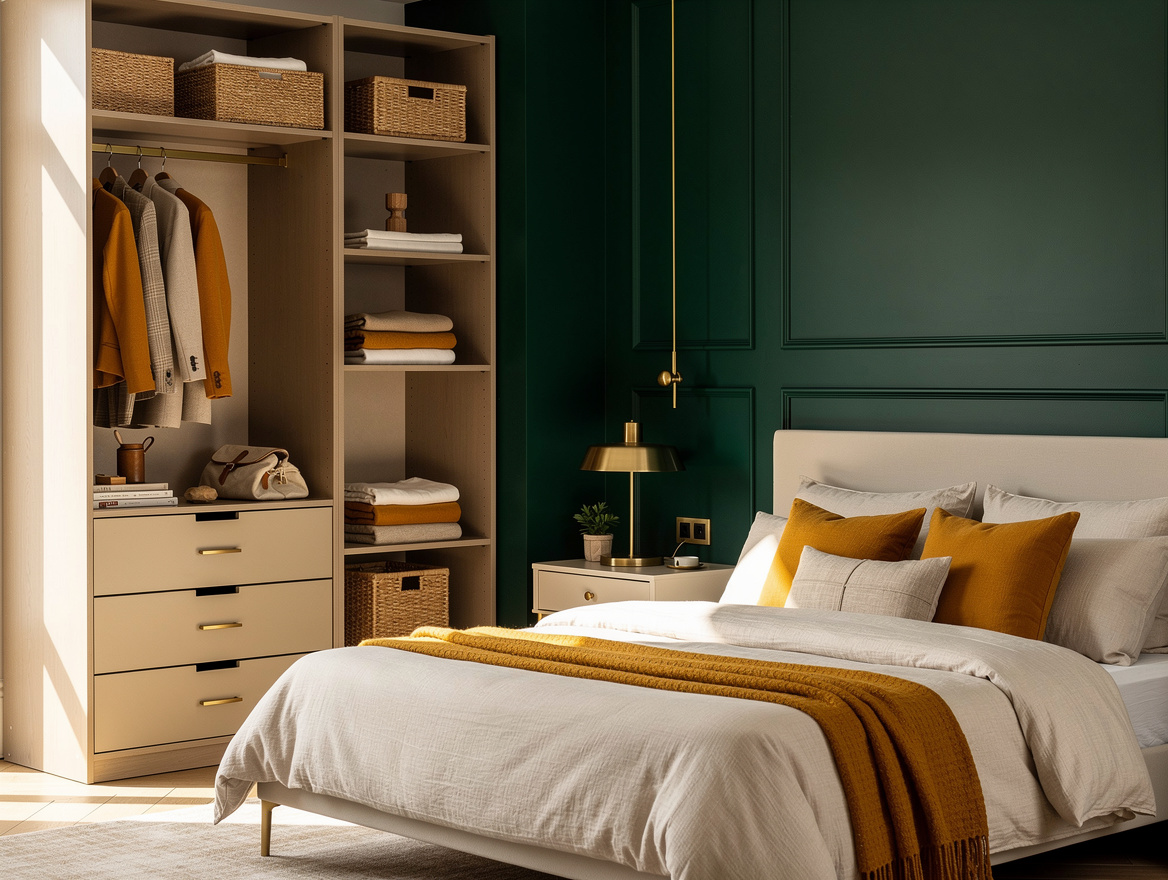
A door-free IKEA PAX corner arrangement can read almost built-in when the walls are straight and the ceiling height is workable. It costs more than a basic rack, but shelves, drawers, and hanging zones solve the daily problems a bare rail cannot.
Use closed white storage boxes at the top and drawers at hand height, then let only your best everyday pieces show. Modular and full corner systems commonly begin around $300 and can reach roughly $2,000 or more as storage grows.
Choose Heavy-Duty Storage for a Real Closet Load
A larger metal L-system suits someone replacing a closet, not styling a guest-room corner. Look for adjustable shelves, a deep hanging section, and room for a hamper before trusting any dramatic weight-capacity claim.
Heavy-duty freestanding systems often cost about $170 to $180, and they earn that budget when loaded evenly with coats, shoes, and folded clothes. Pair one with fabric drawer bins so small items don’t turn the open frame into visual noise.
Measure both walls, the bed clearance, and the longest coat before ordering anything. Then buy the smallest rack that handles your actual wardrobe, because an edited corner always looks more restful than an overfilled one.
Mia Carter writes about small-space living and budget home makeovers. She has restyled three rentals and tests most ideas in her own 45 sqm flat.