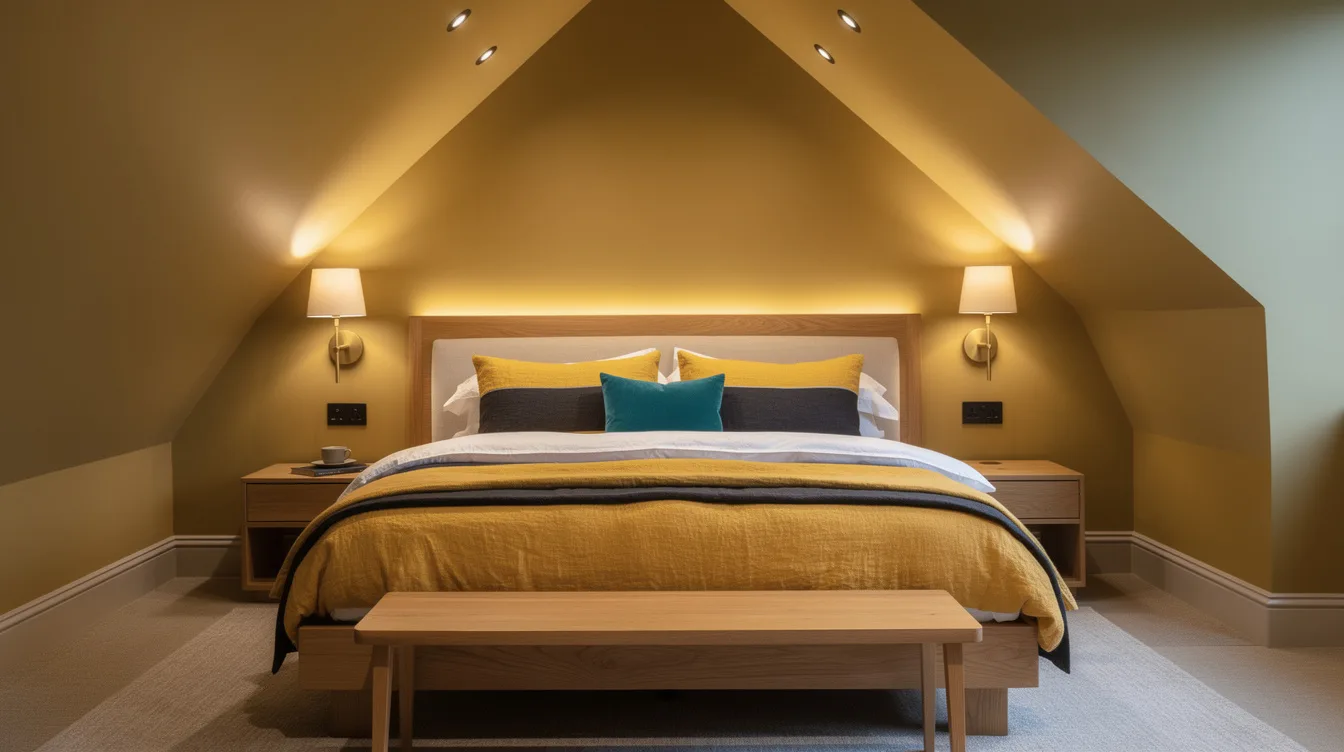
My hesitation with sloped-ceiling bedrooms is always the same: one central fixture can turn a cozy sleeping room into a bright cone with shadowy corners. In a room around 120 square feet, the ceiling angle can make even a modest pendant feel either too low or too far away.
Designers solve that tension with layered, low-glare light, using the ceiling for movement and the bed for comfort. The goal is a bedroom that works at 7 a.m. And still feels restful when only the reading light is on.
Aim Gimbals Down the Pitch
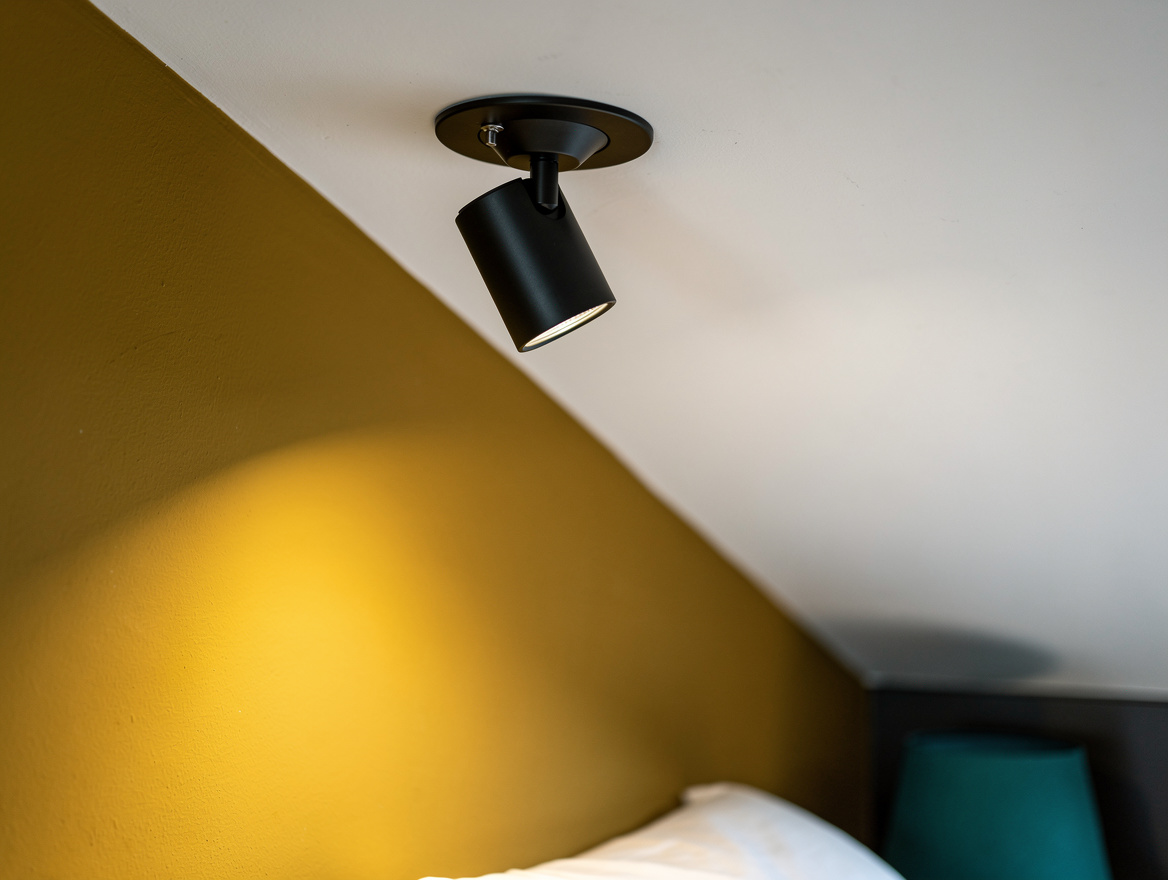
A flat recessed trim on a slope sends light sideways, which is why the room can feel oddly bright at the ceiling and dim at the dresser. Use adjustable Halo or Juno 4-inch gimbal LEDs with dedicated sloped-ceiling trims, then point each beam toward the floor, wardrobe, artwork, or headboard wall.
In a roughly 120- to 200-square-foot bedroom, four to six fixtures spaced about 5 to 6 feet apart usually create an even circulation layer. Standard installation typically runs about $125 to $300 per fixture, while difficult cathedral work can reach roughly $275 to $425, so put light where it earns its wiring cost.
Split the Ceiling Into Two Circuits
One switch for every ceiling light makes a sloped bedroom feel like a hallway. Put four general lights on one dimmer and reserve two aimed WAC Lighting fixtures for the closet, art, or a dark low-pitch corner.
That separation lets the room stay calm when you only need a little guidance after dark. An LED-compatible dimmer typically costs around $75 to $200 installed, and it matters more here than an expensive decorative fixture you cannot soften.
Hang Pendants Only From the Ridge
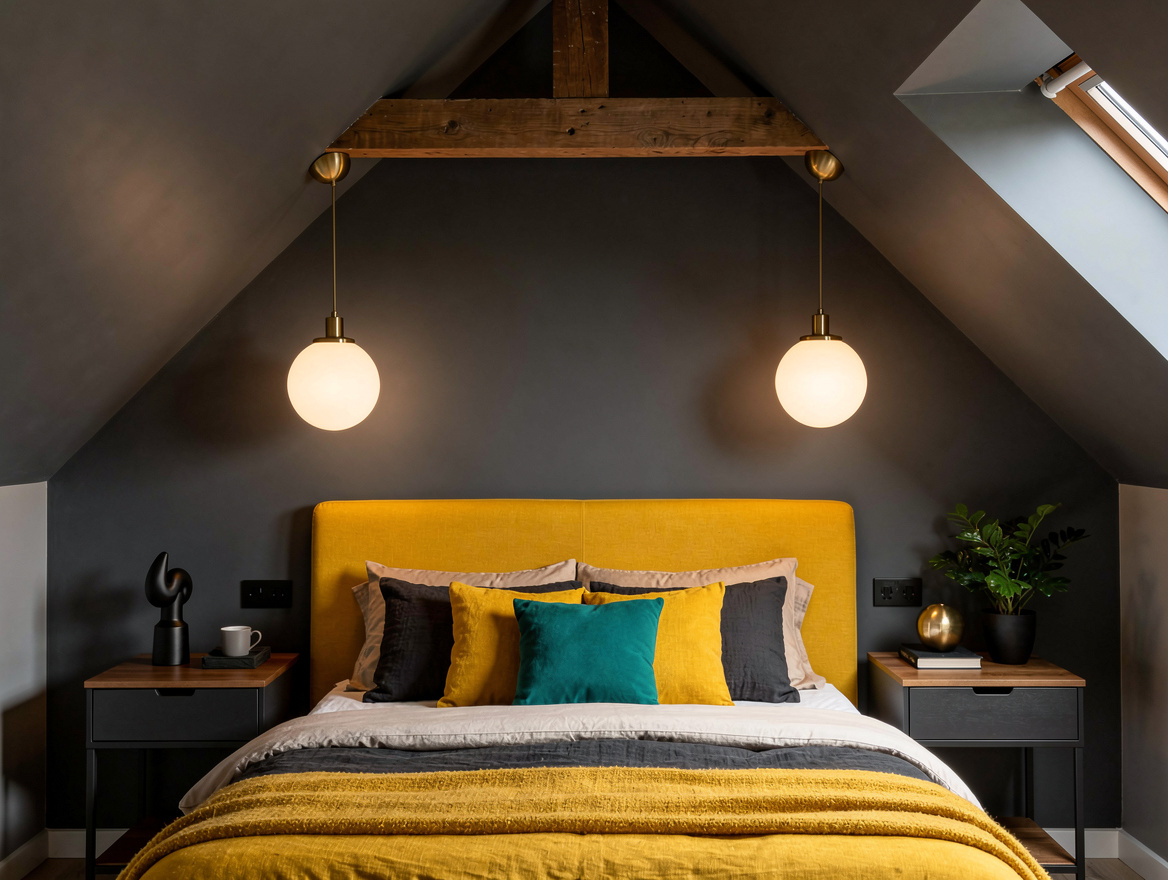
A center pendant belongs at the highest point of the ceiling, where it has air around it and no chance of clipping a shoulder. Choose a 12- to 18-inch shade or globe with a swivel, ball-joint, or stated sloped-ceiling canopy, then keep its lowest point at least 7 feet above a walking area.
A compact Rejuvenation Palo Alto 10-inch Pendant gives a brass-and-globe look without swallowing the peak. Mainstream pendants typically cost about $150 to $600, but a pendant that cannot compensate for the angle is money spent on a permanent visual tilt.
Float Bedside Light Off the Tables
Bulky table lamps make a pitched bedroom feel crowded fastest, especially when the roof drops close to the bed. Suspend two 6- to 10-inch glass pendants over the nightstands, centered on each table and hung about 20 to 30 inches above its surface.
The result feels quietly hotel-like and leaves room for a book, charging dock, and water glass. A pendant pair typically costs around $120 to $700 before electrical work, so this is a strong move during a renovation, while plug-in sconces are the sensible choice for a finished room.
Build a Soft Layer Behind the Headboard
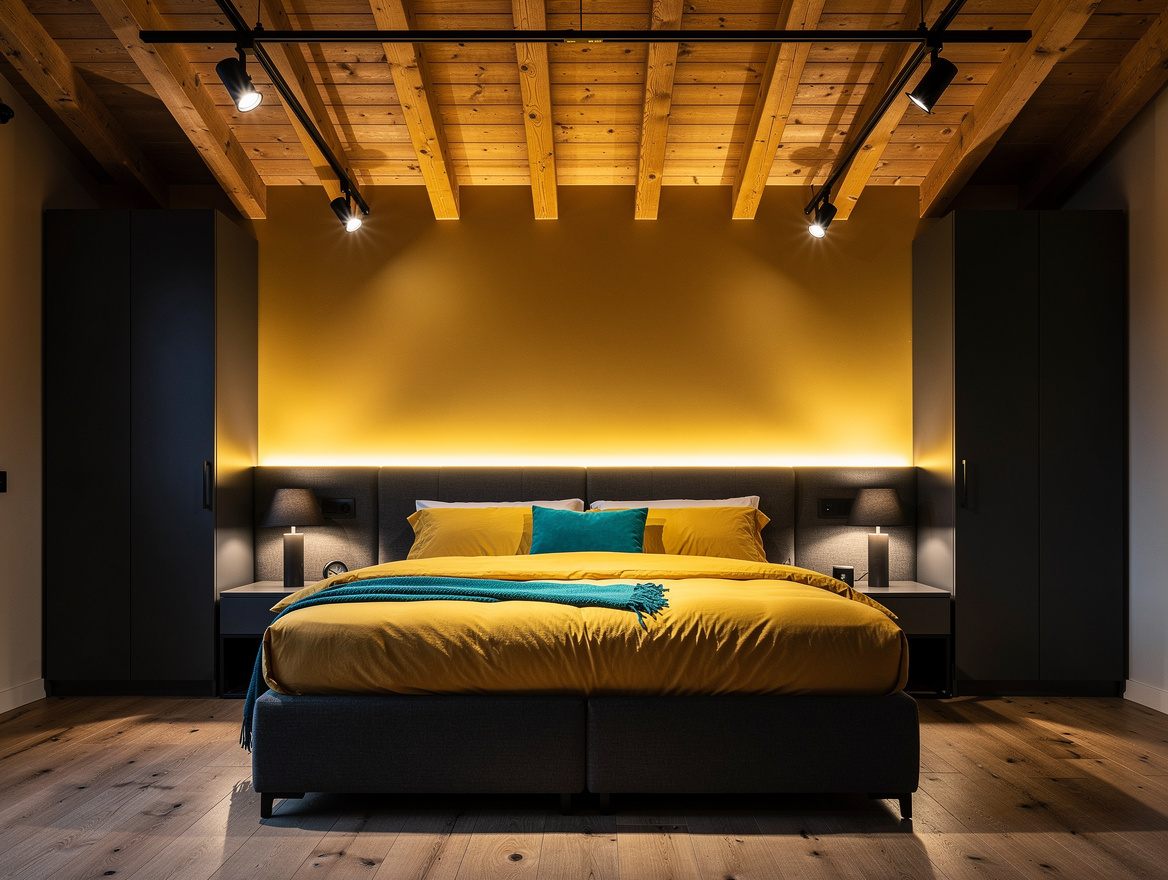
Steep rooflines often make the bed wall the visual anchor, so light that wall instead of fighting the ceiling. Run 2700K LED tape inside an aluminum channel behind the headboard, then add focused reading sconces 48 to 60 inches above the finished floor.
Choose warm, dimmable 2700K to 3000K light and 90+ CRI when bedding colors, wood, and paint need to look right at night. A typical backlight setup costs about $50 to $250, while each brass sconce or matte-black sconce can run roughly $80 to $500.
Use Track Heads Where Wiring Is Awkward
Exposed rafters and uneven angles are a reason to use track lighting, not a reason to settle for a single harsh bulb. Mount four to six adjustable heads on a 4- to 8-foot track rail, aiming them at useful surfaces rather than straight into the center of the room.
This layout is especially practical for a retrofit because the heads can be redirected as furniture changes. Fixtures typically run about $150 to $700 before premium systems, and a dark black track can look deliberate against stained timber while white recedes into painted drywall.
Start with the bed wall: install or choose the reading layer first, then aim ceiling fixtures at the tasks that remain. A dimmer and properly directed light will make a pitched room feel finished long before another decorative pendant does.
Mia Carter writes about small-space living and budget home makeovers. She has restyled three rentals and tests most ideas in her own 45 sqm flat.