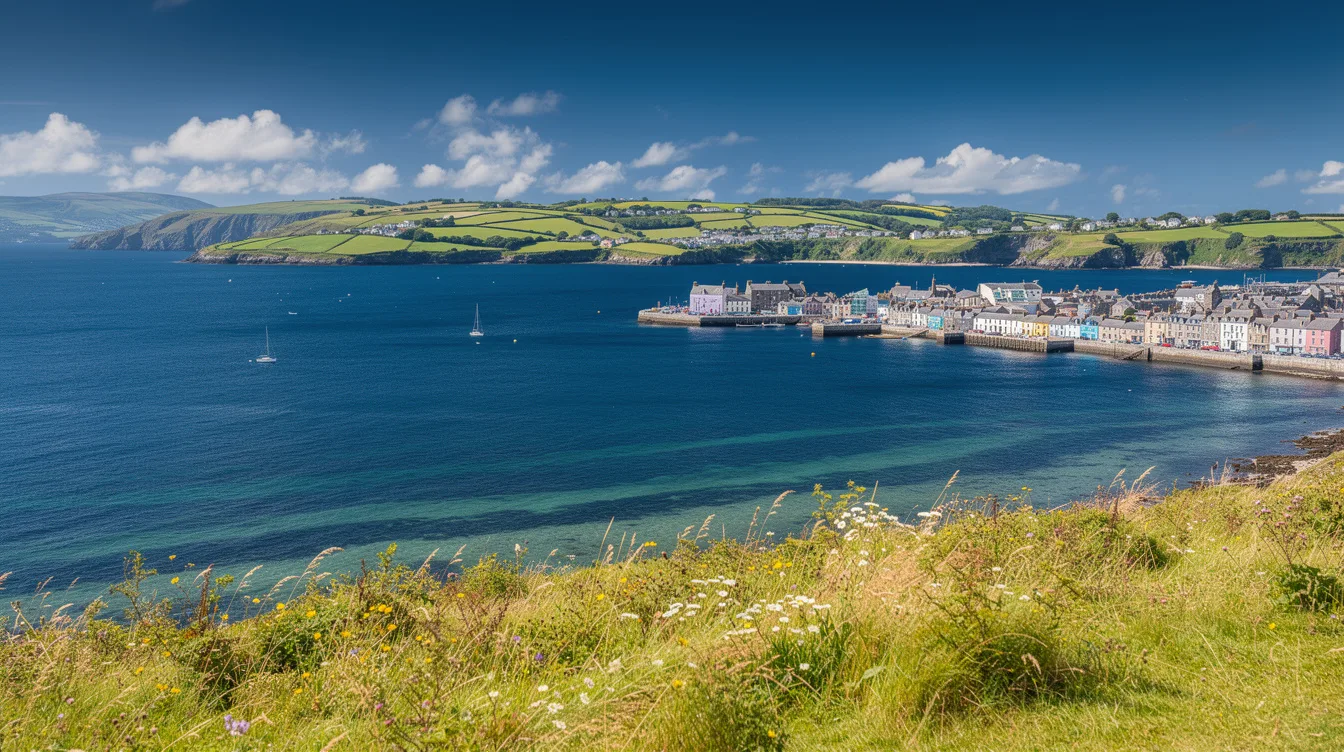
Kinsale sits just 15.5 miles south of Cork City, yet its harbor helped decide a war that reshaped Ireland. In 1601, a Spanish military expedition landed here, triggering the Battle of Kinsale at the end of Ireland’s Nine Years’ War.
You can feel why the town mattered the moment the harbor narrows around you. Water, boats, and low hills turn this into a natural arrival point, but the stakes were anything but small.
The 1601 landing changed the harbor’s story
The Spanish expedition came to join Irish rebel forces and attack England through Ireland. That landing set the Battle of Kinsale in motion, where English forces defeated the Irish rebels and their Spanish allies.
And that is the reason to come with history on your mind, not just a dinner reservation. The Battle of Kinsale happened at the end of the Nine Years’ War, so this compact port belongs in a much larger Irish story.
You won’t find a battlefield atmosphere hanging over every lane. Kinsale is busy with visitors in summer, and its compact center has independent shops, galleries, pubs, and restaurants. But the old harbor keeps pulling the past back into view.
Start around Market Street and Main Street, then drift toward the water. The town is colorful without feeling staged, and the salt air gives even a slow stroll some purpose.
Charles Fort makes the military logic clear
The clearest history lesson waits across the harbor at Charles Fort, a star fort dating from 1677 in nearby Summercove. It guards the entrance to Kinsale Harbour, built to prevent French or Spanish forces from using this same approach.
And opposite it stands James Fort on the Castlepark peninsula. During wartime, records say a chain was stretched between the forts across the harbor mouth to damage or block incoming vessels.
You don’t need much imagination here. The harbor entrance is right below, and the fort’s hard geometry makes the defensive plan obvious. It is a fine view, but it carries a colder purpose.
Can you walk there from town?
Yes. Take the Scilly Walk toward Charles Fort for harbor views and a straightforward route from central Kinsale. It is one of the town’s best short outings because you get the water, the fort, and the changing angle of the harbor in one walk.
But bring a layer if the weather turns. The route is easy to follow, though coastal conditions can make a bright morning feel sharply different by afternoon.
The town is lively, but the coast gives it room
Kinsale sits at the mouth of the River Bandon on Ireland’s south coast. It is also a starting point for the Wild Atlantic Way, which explains why some visitors treat it as a quick stop and others stay for a night or two.
Seafood is the obvious reward after the fort walk. Kinsale has long marketed itself as Ireland’s gourmet capital, and the town has seafood restaurants, modern Irish cooking, cafés, and wine bars tucked into its small streets.
And you should eat in town rather than rush back to Cork. Summer brings the peak crowds, so reservations matter, but the evening pace still feels more harbor town than city break.
If you have a car, head to the Old Head of Kinsale late in the day. Its sea cliffs give the coast a more exposed mood than the sheltered harbor, with wind, open water, and the last light catching the edge of land.
Getting there is easier than it looks
Kinsale is in County Cork, about 15.5 miles south of Cork City. From Cork City or Cork Airport, the drive is roughly 30 to 40 minutes depending on traffic, so you can arrive without turning the day into a logistics project.
And you don’t need a car for the core experience. Bus Éireann route 226 links Cork City, Cork Airport, and Kinsale, with travel guidance citing a journey of about an hour.
Give yourself a full day if you want the lanes, harbor, Scilly Walk, Charles Fort, and dinner. Stay longer if the coast is the point, because Kinsale works best when you let the harbor slow you down.
By evening, the boats settle into the dark water, and Charles Fort remains across the harbor, still watching the entrance.