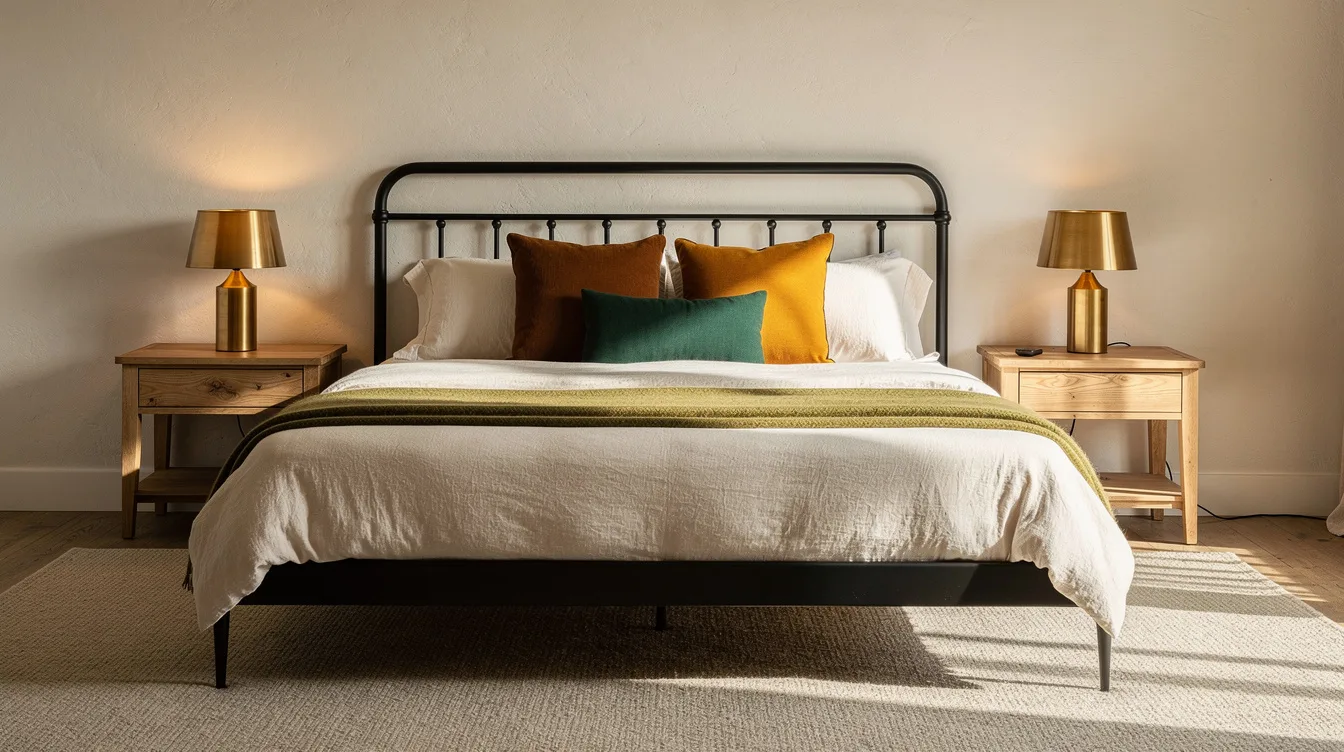
An iron bed can turn a bedroom cold fast. The issue usually appears at a 54-inch full bed or queen frame, where too much black metal starts reading like a guest-room afterthought instead of a place you want to linger.
I keep coming back to the same rule: let the bed provide the line work, then let warm materials do the comforting. A quality queen iron bed typically runs about $1,200 to $2,500, so its surrounding choices deserve as much attention as the frame itself.
Choose a Low, Clean Iron Silhouette
Start with a matte-black iron bed with straight rails, a shallow arch, or restrained spindle work. A low footboard keeps the view open and gives the room its more current farmhouse edge.
Skip Victorian scrollwork unless the house genuinely supports it. Hand-forged canopy beds can typically reach roughly $3,500 to $5,500 or more, and they need enough ceiling height to feel intentional rather than crowded.
Warm Up the Wall Behind the Bed
Paint the wall in warm off-white, putty, muted mushroom, or light greige. Those tones take the severity out of dark metal without forcing a high-contrast black-and-white theme.
A subtle vertical painted-panel treatment is plenty. Loud shiplap, gray faux barnwood, and word art pull attention away from the bed and make the room feel stuck in an older farmhouse phase.
Pair the Frame With Honest Wood
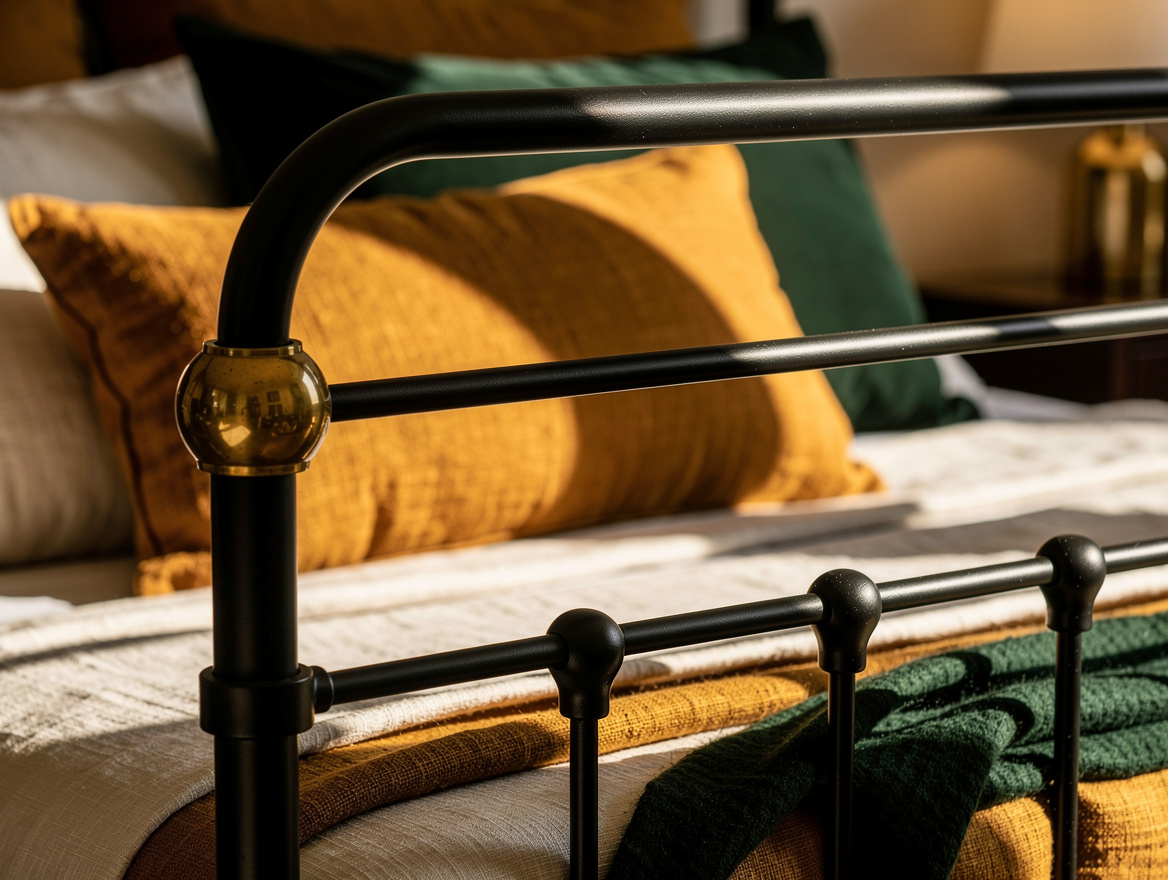
Bring in two natural-oak nightstands beside the bed, preferably with a simple drawer front and visible grain. White oak, reclaimed pine, elm, and lightly distressed walnut all give iron a softer landing place.
Keep the wood tones related, not identical. A pale oak nightstand beside a walnut bench has more life than a bedroom set bought in one finish, especially against black steel rails.
Layer Bedding With Relaxed Texture
An ivory linen duvet is the easiest first layer because it brightens the metal without looking precious. Add an oatmeal sheet edge, a tobacco linen lumbar pillow, and a muted olive wool throw.
The bedding should look touchable, not showroom-flat. I prefer flax or linen-look fabric over shiny microfiber here, because the slight texture makes a practical metal frame feel settled into the room.
Ground the Bed With a Generous Rug
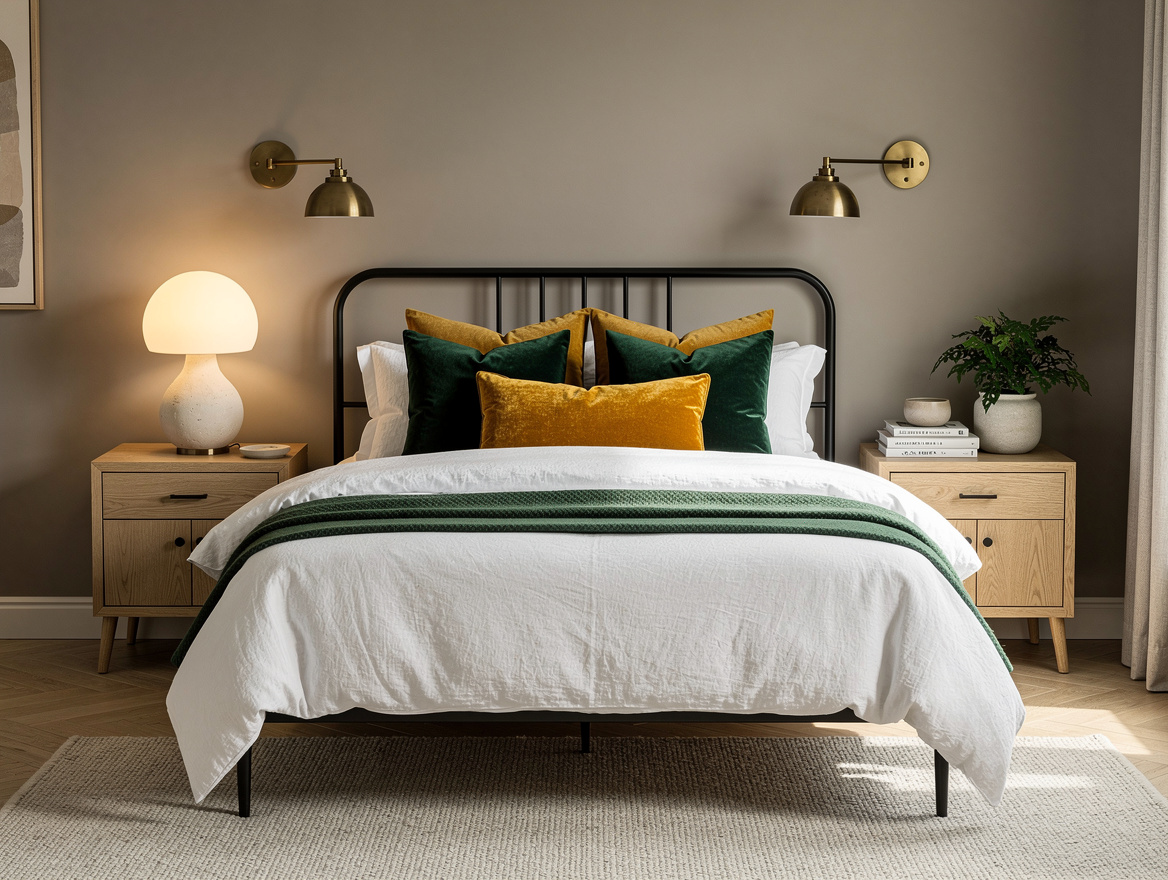
Set the bed on a neutral wool rug with a low pile and a faded vintage-style pattern. For a queen bed, an 8-by-10-foot rug is typically the right starting point if you want softness underfoot on both sides.
Let the rug extend past the nightstands or at least beyond the lower corners of the bed. A too-small rug is one of the quickest ways an expensive iron bed starts to look undersized.
Finish With Softer Bedside Light
Choose antique-brass reading lamps or ceramic lamps with warm white shades. The brass brings a quiet glow to black iron, while ceramic keeps the room from leaning too industrial.
Exposed-bulb fixtures are usually the wrong call unless the whole room has a deliberate workshop mood. A lamp around 24 to 30 inches tall typically gives a queen bed enough visual weight without blocking the headboard.
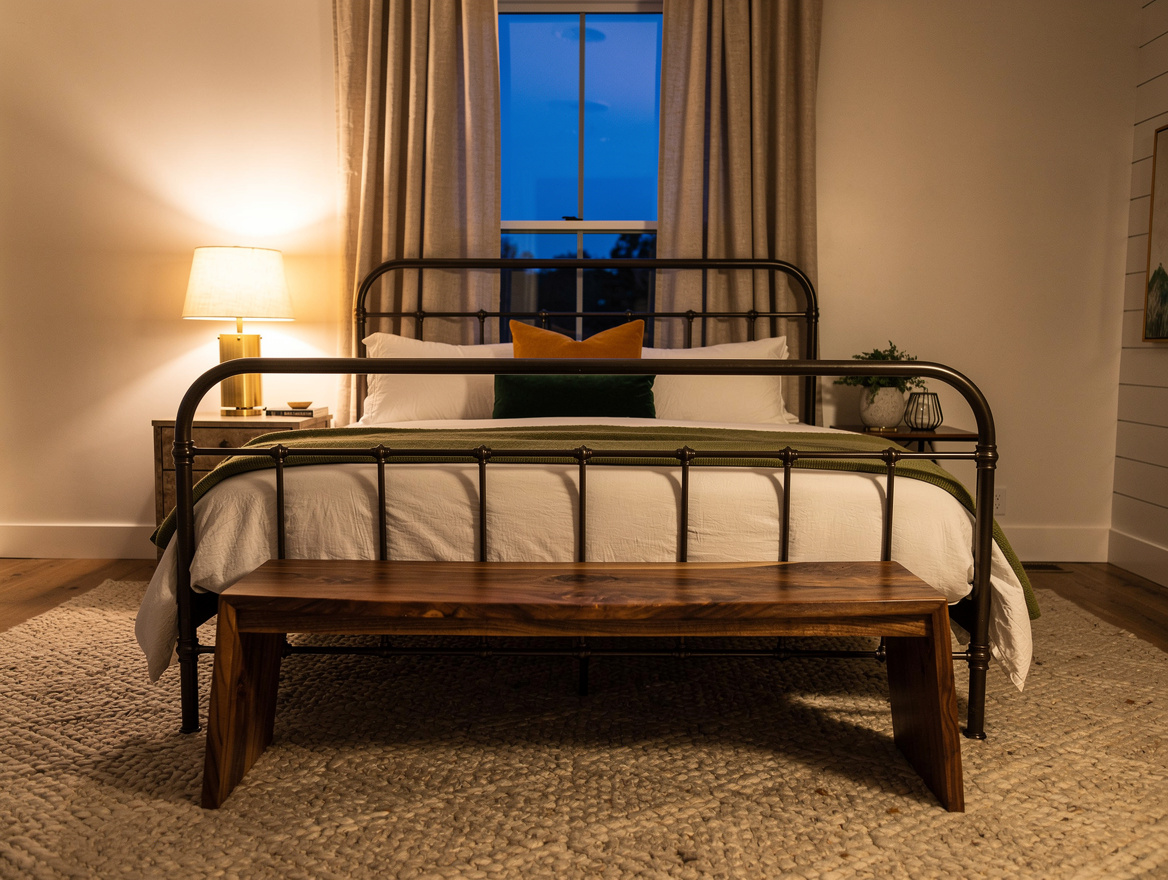
Buy the iron bed first, then bring home one warm wood piece before choosing decorative extras. That pairing sets the direction and makes it far easier to ignore every unnecessary farmhouse accessory.
Mia Carter writes about small-space living and budget home makeovers. She has restyled three rentals and tests most ideas in her own 45 sqm flat.