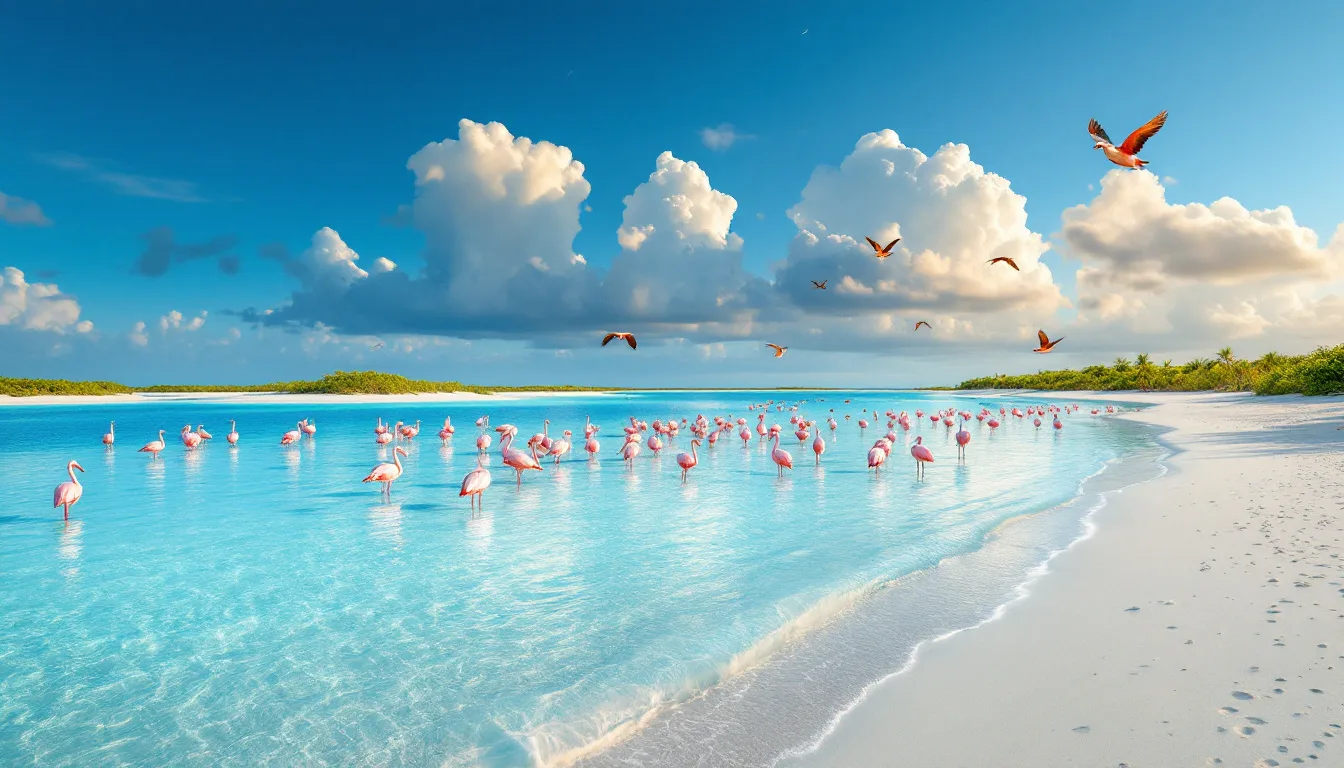
Isla Holbox is narrow, yet its defining edge is water. A 6.2-mile shallow lagoon separates this Quintana Roo island from Mexico’s mainland, and flamingos and pelicans gather there beside the northern Yucatán Peninsula.
You come by ferry from Chiquilá, then leave conventional car traffic behind. The streets are sandy, so walking, bicycles, mopeds, and golf carts set the pace instead of traffic lights.
The lagoon is the reason to slow down
Because the water between island and mainland is shallow, birdlife has room to gather, and the long crossing feels less like a commute than an arrival.
And that central promise is real: flamingos and pelicans are part of the lagoon’s birdlife. You may see pale water, low horizons, and birds lifting from the shallows, but wildlife never keeps a schedule for visitors.
The island stretches 26 miles long, which makes it feel less compact than many beach escapes. But it stays narrow, so the sea never feels far away and the breeze can change the mood of an afternoon quickly.
Holbox trades polish for breathing room
Holbox has broad pale-sand beaches, street art, and a small-town feel. It is more relaxed than a hotel-zone vacation, which is exactly why you should not arrive expecting perfectly smooth logistics.
Vehicle entry is restricted to protect the environment and keep sand from building up on streets. You’ll notice the difference underfoot, where wheels leave tracks and the town sounds softer than a typical resort strip.
But the trade-off matters. Sandy roads can be affected by weather, mosquitoes can be intense, and the island has become more touristic. Come for an unhurried stay, not a tightly timed itinerary.
Yum Balam adds a protected frame
Holbox sits within the Yum Balam Biosphere Reserve, registered in 1994. That protected setting helps explain why mangroves, empty beach stretches, and bird habitat remain central to the island’s appeal.
You can choose kayaking or mangrove outings, or simply keep the day loose. And if the lagoon is your focus, give yourself time to watch rather than treating birds as a quick stop between meals.
The island’s fishing economy still shapes what lands on local tables. Lobster and seafood appear often, so dinner can be one of Holbox’s most direct connections to the water around it.
November through May is the easier bet
For generally drier conditions, aim for November to May. That timing suits travelers who want beach weather with less rain and humidity, though no island can promise a flawless blue-water day.
From June through September, Holbox is associated with whale shark viewing. Whale shark season runs June to September, but weather and wildlife conditions vary, so confirm tour details locally before you build a trip around them.
And this is where Holbox asks for flexibility. The wetter period can bring more mosquitoes, heavier humidity, and tropical-storm risk, while hurricane winds can directly affect the island.
The ferry is part of the trip
Chiquilá is the mainland gateway, and the ferry ride is the cleanest way in. Once you arrive, resist the urge to fill every hour, because Holbox is better when you let its small frictions set a slower rhythm.
You can spend the morning near the lagoon, then return to town on foot or by golf cart. But pack patience along with beach clothes, especially if weather changes the condition of sandy streets or the sea.
Holbox is lively, but it doesn’t need to be loud. By evening, the ferry-bound mainland feels far away, and pelicans still cut across the low light above the shallow water.