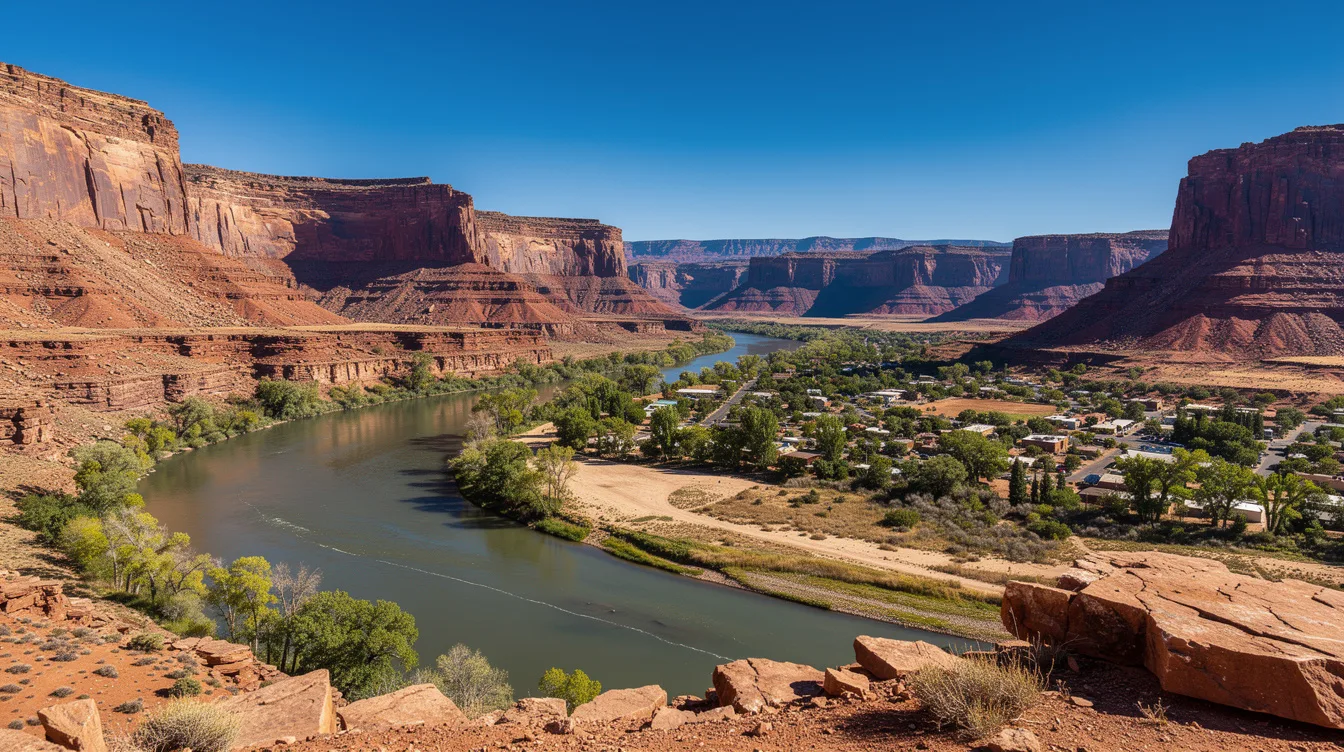
Moab sits beside the Colorado River in southeastern Utah, and it’s roughly 10 minutes from Arches National Park. That proximity changes the whole trip: you can wake in town and be at the park early.
Founded in 1878, this is a small city with an outsized pull on travelers who prefer boots, bike tires, or a river raft to a resort pool. But Moab is no quiet escape in every season. Its access is the point, and that means other people have discovered it too.
Arches is close enough for dawn plans
Arches National Park is the reason many visitors first book Moab. Go at sunrise or late afternoon, when the red rock catches low light and the air feels less punishing. Delicate Arch is the marquee stop, and you’ll understand why once the rock’s curve fills your view.
And you don’t need to treat the park as a once-and-done excursion. Because it’s about 10 minutes away, you can return after a midday rest in town. You’ll want that flexibility when the desert heat starts pressing down.
The easy access has a trade-off. Arches is popular, especially when spring and autumn bring more comfortable days, so you should expect company at its best-known sights. Still, a short drive back to Moab means you’re never far from dinner.
The Colorado keeps Moab grounded
The Colorado River runs beside town, giving Moab a moving strip of green-brown water against dry red rock. Colorado River rafting is one of the area’s defining outings, and the river makes the desert feel less static, even from an overlook.
But water doesn’t erase the desert’s risks. Check heat, flash-flood, and trail conditions before you head out, particularly in summer. You can feel perfectly prepared in town, then find a harsher day once you’re beyond the pavement.
Moab sits on the Colorado Plateau beside the La Sal Mountains at about 4,026 feet. That elevation gives the place a sharper edge than low-country desert towns. The light can look clean and hard, while tires hiss over warm pavement.
Canyonlands rewards the longer drive
Arches may be near enough for a quick morning, but Canyonlands National Park asks for more intention. The Island in the Sky district is known for immense canyon viewpoints, and that scale is Moab’s real trick: the town feels compact, while the country around it refuses to be.
Canyonlands and Dead Horse Point are roughly 30 miles, or about 35 minutes, from Moab. You should give them time. The drive is manageable, but the overlooks can derail a tight itinerary because the Colorado far below pulls your attention away from the clock.
And Dead Horse Point State Park is a strong choice. It’s dramatic, but not remote in the logistical sense. That distinction matters when you’re balancing park time with a return drive.
Choose your terrain, then accept the dust
Moab is known for hiking, mountain biking, off-roading, climbing, and rafting. You can shape a trip around one pursuit, which is better than trying to sample everything in a rushed weekend. The town rewards focus.
Slickrock Bike Trail is among Moab’s signature rides, and its name tells you what kind of place this is. The terrain can feel exposed and unforgiving. But if biking is your reason for coming, you’re unlikely to find a more fitting base.
Off-road routes and desert hikes have their own appeal, though neither is casual simply because it’s nearby. Bring the right expectations, check conditions, and leave room for weather. The dust gets into shoes, car floors, and the seams of your day.
Spring and fall make the better case
Spring and autumn are the strongest seasons for Moab because daytime temperatures commonly sit in the 70s to low 80s Fahrenheit. That makes a morning hike, an afternoon drive, and an evening in town feel possible without negotiating every hour around heat.
But summer can exceed 100°F, so the destination demands an earlier start and a more conservative plan. Winter is cooler and quieter. If you value space over warmth, that may be the better bargain.
Salt Lake City is about 4 hours by road, while Grand Junction, Colorado, is about 1.5 hours away by road. Moab isn’t effortless, but it’s reachable enough that the red rock doesn’t feel reserved for experts.
By late afternoon, the river keeps moving beside town, and the stone beyond Arches shifts from red toward shadow.