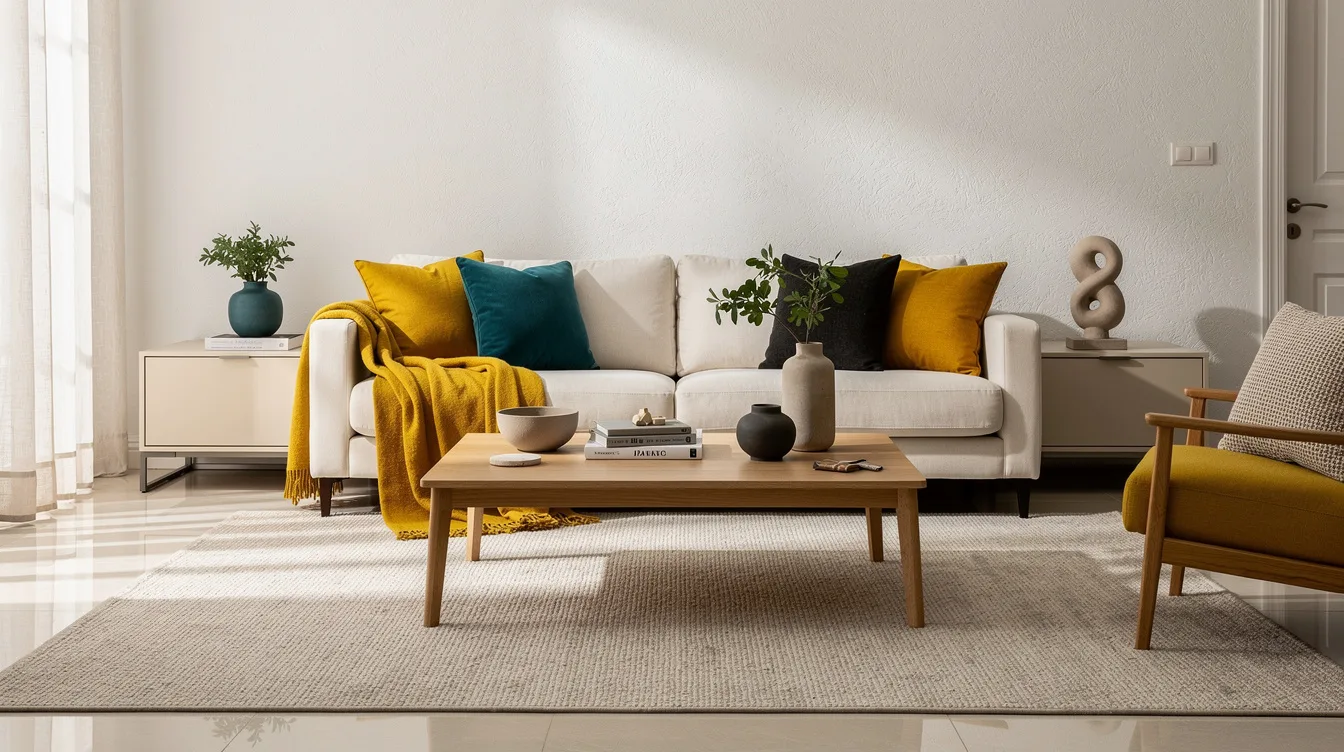
I used to think a clean white living room was only realistic in photo shoots or big homes, then I tried it in a room with roughly 8×10 feet of open seating space and found out the real issue was planning. White is less forgiving than people admit, but it works when every piece earns its place.
What surprised me most was the budget math. You can get the look for around $2,000 with smart IKEA and Wayfair sourcing, while the average spend for a polished version often lands closer to about $5,000 to $7,000, with roughly $8,500 being a common all-in mark for a really nice living room.
Start With a Warm White Wall Color
I learned fast that bright, icy white makes a living room feel tense. A slightly creamy paint from Home Depot gave me the softer backdrop I actually wanted.
In a room this light, the walls do half the decorating, so I skipped anything stark. Warm white reads cleaner for longer because dust, shadows, and everyday scuffs look less harsh against it.
I also kept the trim close in tone instead of chasing a sharp contrast. That decision made the whole room look calmer and more expensive, even before I brought in furniture.
Size the Sofa Before You Buy Anything Else
The room started working once I picked the sofa first and built around it. In a typical living room of about 16 to 20 square meters, a sofa around 87 to 102 inches long usually gives you enough presence without crushing the floor plan.
I went straight to IKEA proportions when I mocked it out because their sizing is easy to visualize in a rental or starter home. Depth matters just as much, and about 35 to 39 inches feels comfortable without turning the room into a lounge pit.
White living rooms get messy fast when the seating is undersized and you start adding extra chairs to compensate. One good sofa, full stop, keeps the layout clean.

Anchor the Room With a Rug That Is Actually Big Enough
This was the fix that changed the room most. A rug around 8×10 wool-look size, or roughly 200 by 300 centimeters, usually makes a standard seating area feel intentional instead of temporary.
I tried a smaller rug first because it seemed safer for the budget, and it made everything float. The front legs of the sofa need to sit on the rug, otherwise the whole white palette looks thin and underfurnished.
For a lower spend, I found the best options on Wayfair and Amazon-style marketplaces, usually around a few hundred dollars for a neutral synthetic or wool-blend look. I would rather save on decor than undersize the rug again.
Keep the Coffee Table Low and the Wood Tone Consistent
A white room needs one grounded surface so it does not blur into itself. I had the best result with a low oak coffee table in a light or medium finish, roughly 43 to 51 inches long for a standard sofa setup.
I kept the table a little lower than the sofa seat and left about 16 to 18 inches of walking space around it. Those typical measurements sound boring, but they are what make the room feel easy instead of cramped.
I also stopped mixing three wood tones in one small space. One oak or ash direction, repeated on the table, frame, or console, looks calmer and far more polished.
Hide the Visual Noise Before You Add Decor
A white living room is brutally honest about clutter. Remote controls, charging cables, dog leashes, unopened mail, every random thing suddenly looks louder against a pale backdrop.
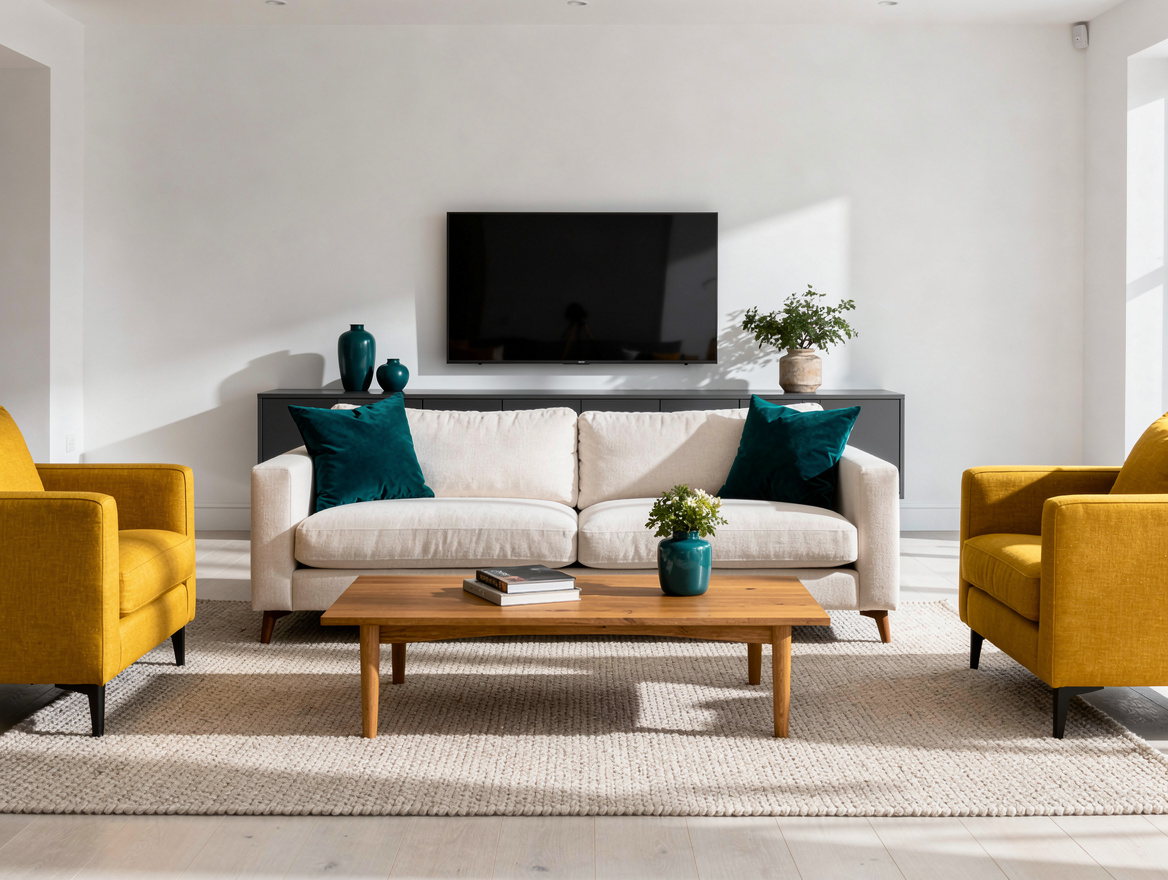
That is why I added a low media console with closed storage instead of open shelves full of filler objects. Around 71 to 87 inches wide usually works under a 55- to 65-inch TV, and that span gives you real hiding space.
I found that this is where Target and IKEA help most on a tighter budget, because closed storage is what protects the look. Decorative baskets are fine, but doors and drawers do the real work.
Layer Texture So the White Palette Feels Lived In
The room stopped feeling flat when I added touchable fabrics instead of more color. A boucle accent pillow, a nubby throw, and cream curtains did more for depth than any trendy statement piece could.
I kept the palette close, white, ivory, oatmeal, soft beige, because contrast from texture feels richer in a clean room. Linen, wool, cotton, and a little matte metal are enough.
My best budget mix came from Amazon, Target, and IKEA because textiles are where you can fake luxury pretty well. You do not need ten accessories when two or three pieces have real texture.
Use Lighting to Warm Up the Corners
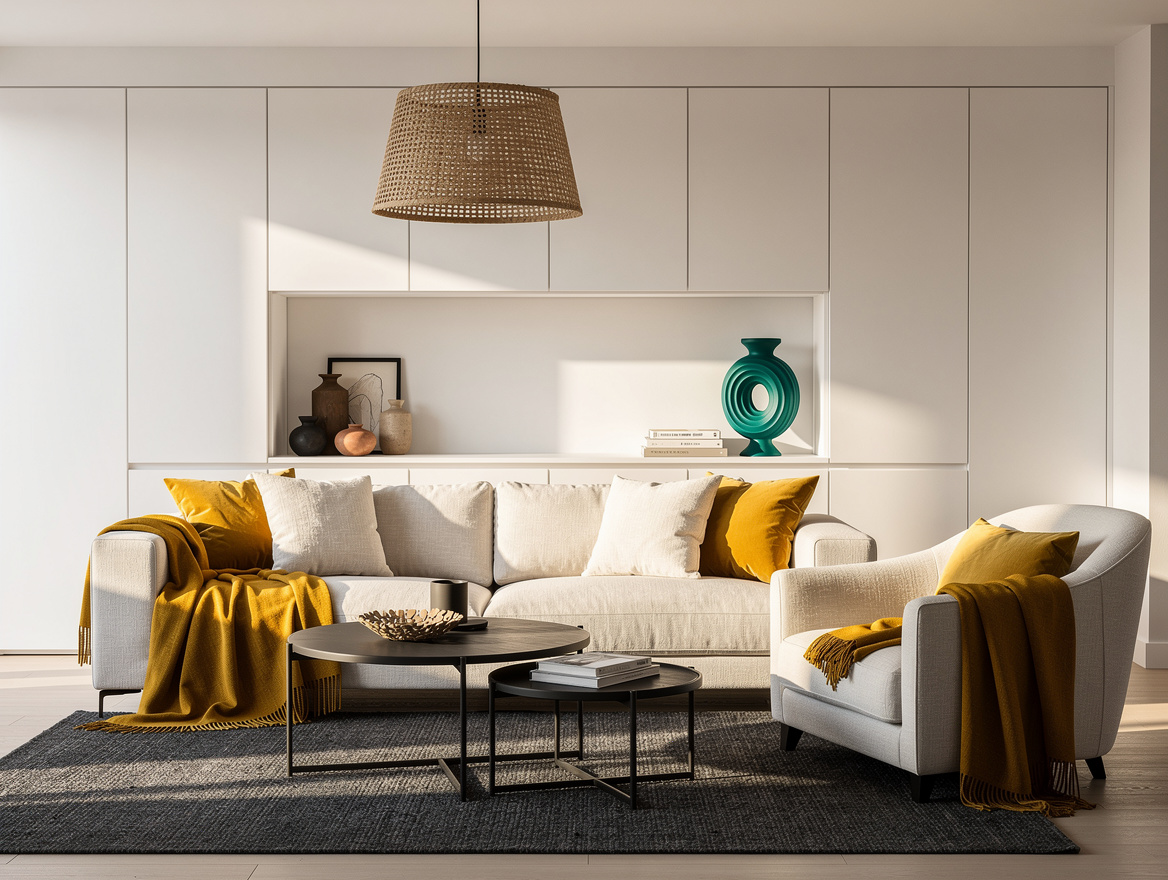
Overhead light alone made my white walls look cold at night. A floor lamp, one table lamp, and softer bulbs turned the room from flat to inviting in a single evening.
I like a woven or paper shade from Target or IKEA because it diffuses light and adds texture during the day. Warm bulbs are nonnegotiable here, especially if your walls, sofa, and rug all sit in the same pale family.
This is also where budget tiers become obvious. Around $2,000 can still get you a clean white room if you rely on IKEA, Wayfair, and Target, while about $6,000 to $8,500 usually buys a more comfortable version with better upholstery, a fuller rug, and lighting that does not feel like an afterthought.
At the premium end, roughly $15,000 and up gives you larger custom pieces and better natural materials, but the formula stays the same. Good scale, warm whites, hidden storage, and texture beat expensive clutter every time.
Begin with the rug and sofa, then choose your wall white after those two are set. That order keeps the room warm, practical, and far cleaner than chasing decor first.
Mia Carter writes about small-space living and budget home makeovers. She has restyled three rentals and tests most ideas in her own 45 sqm flat.