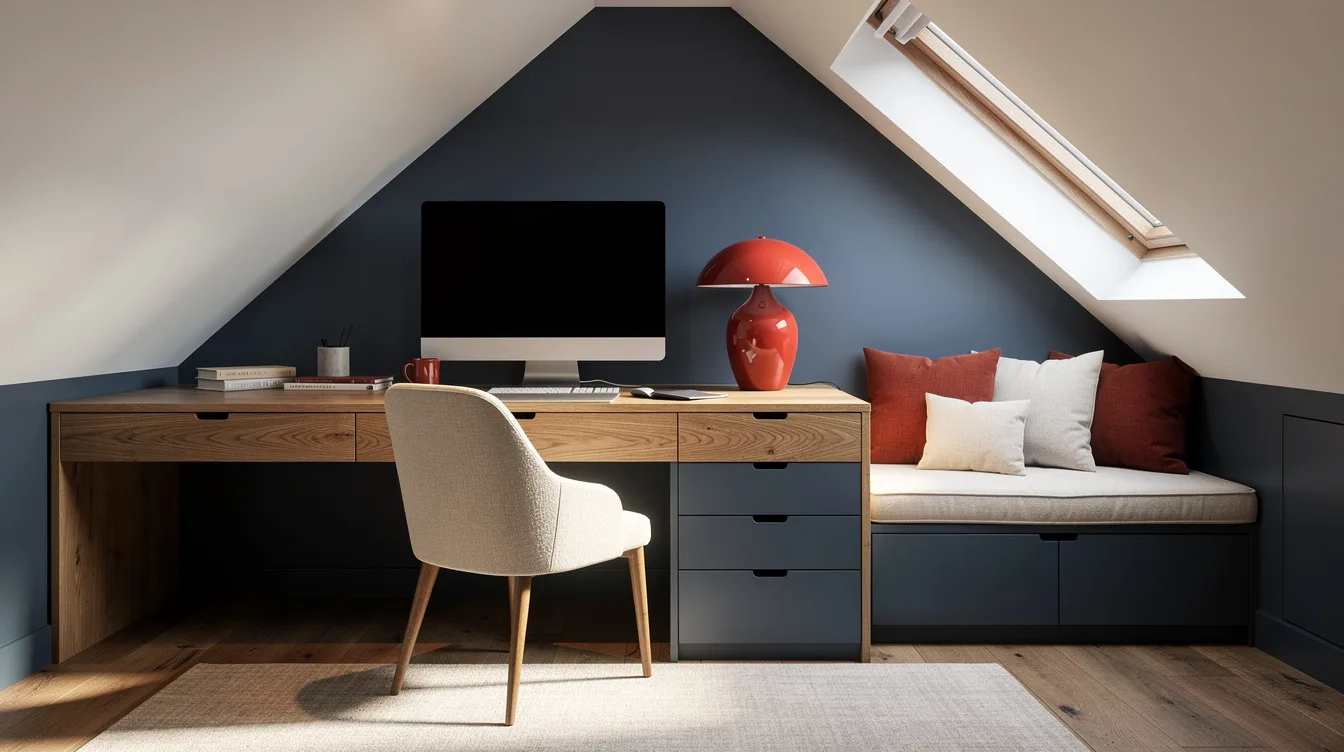
An attic office gets frustrating fast when a chair lands beneath a slope and every sit-down ends with a bumped head. Start with the highest-ceiling wall, then let the lower roofline earn its keep with low-profile storage.
A 60 cm desk depth is the practical minimum for a laptop and external display, while 70 to 80 cm feels far better with a large monitor, keyboard, and actual writing room. The goal is a work zone that feels intentional instead of wedged into leftover space.
Run One Long Desk Along the Knee Wall
A continuous desk roughly 240 to 300 cm long makes the most of a long knee wall, especially when the monitors sit at the point with the best headroom. Use the shallow space beneath the slope for drawer units, a printer, or a network cabinet.
The IKEA KARLBY worktop, in oak veneer, measures 246 x 63.5 x 3.8 cm and is listed at about €189 in the supplied benchmark. It has enough visual weight to read as built-in furniture when paired with two drawer bases and a discreet center support.
Keep the finished desk around 72 to 75 cm high, then place your chair where you can stand up without thinking about the roof. A long uninterrupted surface is my favorite attic-office move because it gives a small room a calm, architectural line.
Claim the Gable Wall for Serious Work
A full-height gable wall is the best place for a conventional workstation because it gives your screen, chair, and shoulders breathing room. A desk roughly 140 to 160 cm wide is the sweet spot for focused daily work.
An IKEA MITTZON desk in oak veneer and metal frame comes in widths from 120 to 160 cm, with supplied price benchmarks of about €245 to €375. Choose the 140 x 80 cm or 160 x 80 cm format if you use a 27- to 32-inch monitor and still want room for notes.
Paint or panel the wall behind it in a grounded shade, then resist filling every inch with shelves. The gable wall should feel like the office’s anchor, not another storage problem.
Fit a Desk Into a Wide Dormer
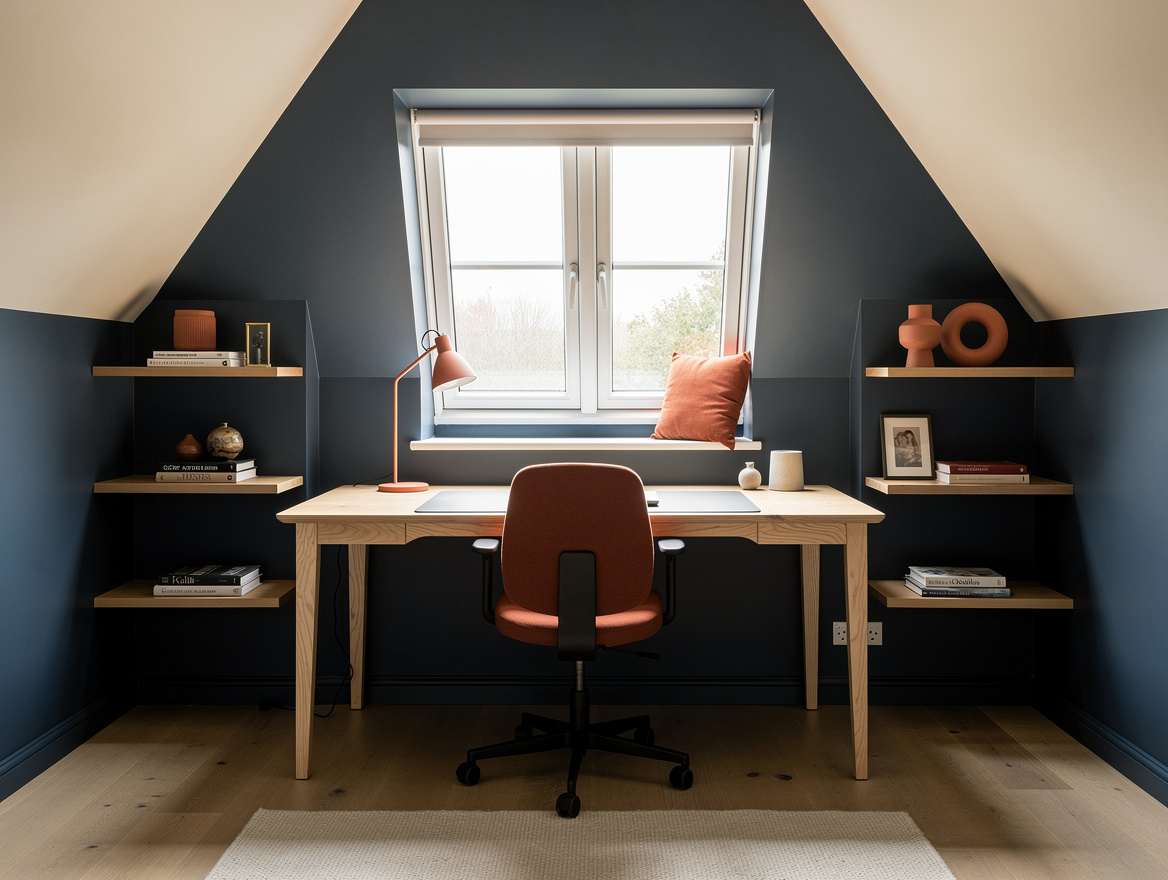
A wide dormer recess can hold a desk roughly 100 to 160 cm wide without stealing the room’s walkway. Daylight is useful, but position the monitor perpendicular to the glass when possible so glare does not run the workday.
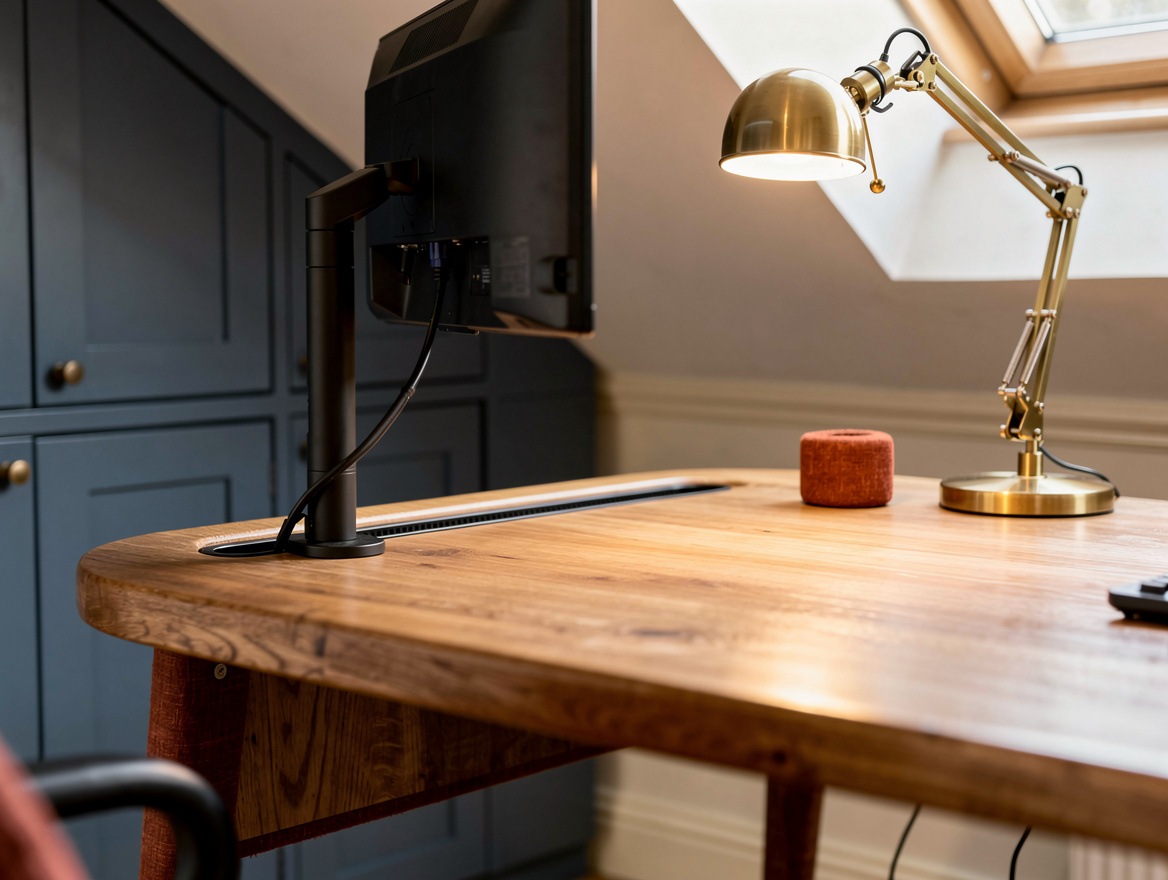
A cut-to-fit birch plywood top gives this layout a tailored look without requiring a full custom installation. Supplied benchmarks put a dormer desk in birch ply, oak, laminate, or solid oak at roughly €180 to €900, depending on material and finish.
Use the window ledge for one plant or a small task lamp, not a pile of notebooks. The dormer already supplies the drama, and clutter turns that advantage into visual noise.
Float a Corner Desk Where Floor Space Is Tight
Two solid walls can support a floating corner desk with runs roughly 120 to 160 cm long and 60 cm deep. This layout keeps the center of the attic open, which matters more than squeezing in a bulky freestanding desk.
Choose concealed steel brackets under birch plywood or compact laminate for a clean, almost built-in result. The supplied typical budget is about €200 to €600, and the sturdier material is worth it if you lean on your desk while working.
Skip thick decorative legs that interrupt the corner and catch cables. A floating desk looks best when the underside stays clear except for one neat cable channel.
Use a Sit-Stand Desk Only Under Full Height
A sit-stand desk belongs only in the tallest zone of the attic because the work surface rises dramatically. Check standing clearance before buying, since a spot that feels fine while seated can become unusable once the desk lifts.
The IKEA MITTZON adjustable desk in the supplied range is 120 x 60 cm, adjusts from 65 to 85 cm, and is listed at about €249. For more movement, the supplied benchmark for an electric MITTZON version runs roughly €485 to €575, depending on size.
A laminated desktop is the sensible choice if attic temperatures or humidity swing through the year. Save solid oak for a stable, furniture-like installation where you are ready to oil or varnish every cut edge.
Measure headroom at the exact chair position before ordering anything, then mark a 60 cm-deep desk footprint on the floor with tape. Put storage under the slope first, and the tallest wall will tell you where the desk belongs.
Mia Carter writes about small-space living and budget home makeovers. She has restyled three rentals and tests most ideas in her own 45 sqm flat.