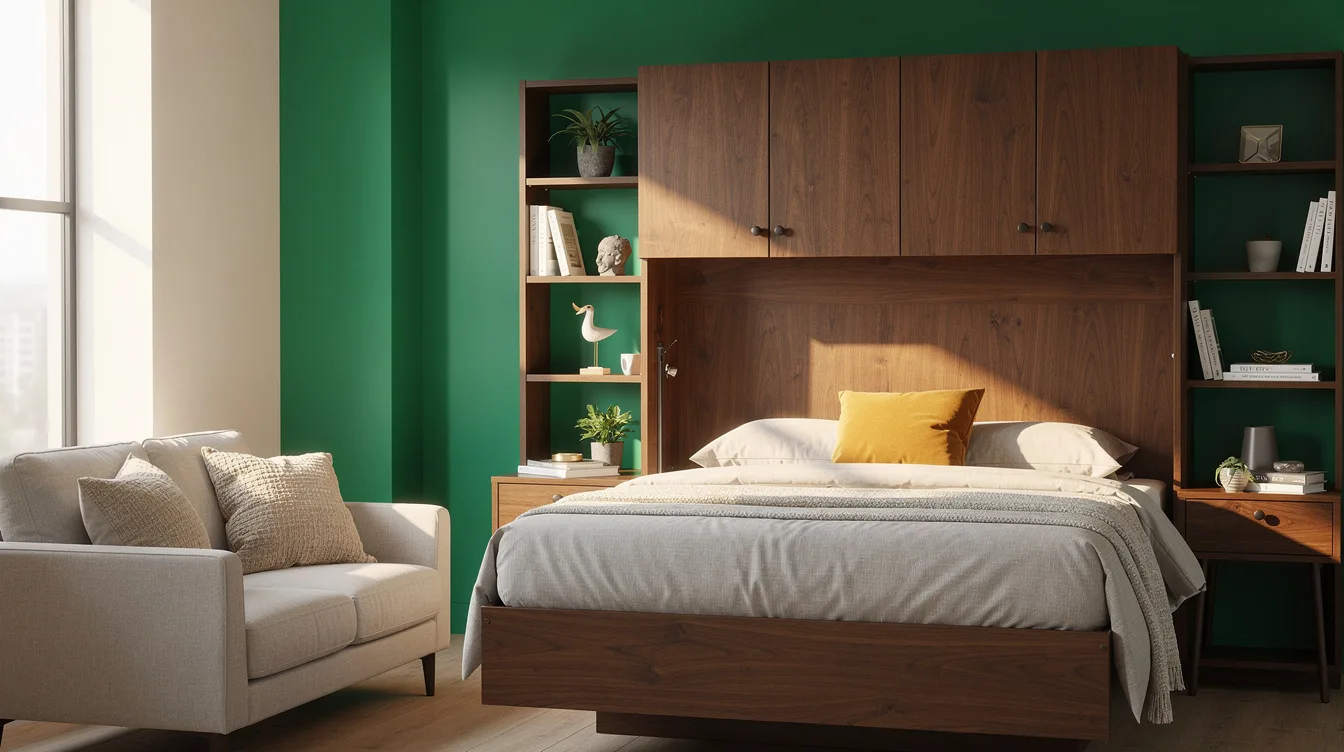
I resisted a wall bed until my 54-inch-wide sleeping area kept swallowing the only spot where a small sofa could fit. In a studio, a queen Murphy bed typically costs about $1,000 to $2,500 before the mattress, so I treated the purchase like a room plan, not an impulse buy.
The payoff is real when the bed gives the apartment a second life after breakfast. But the wrong unit can turn a small room into a cabinet showroom with nowhere comfortable to sit.
Measure the Open Bed Before Shopping
I started with painter’s tape, marking the full open footprint of a queen mattress on the floor. A vertical unit needs a long clear run, while a horizontal model can make more sense under a window or beneath a low ceiling.
Leave room to walk around the open bed, plus space for doors, drawers, and a nightstand substitute. A typical 2-seater sofa may need to slide or sit opposite the bed, so I would never buy a wall bed from cabinet dimensions alone.
A low coffee table on casters earns its place here. It moves in seconds, which matters more than having a larger table that blocks bedtime.
Choose One Job for the Bed Wall
My favorite studio layout puts a vertical bed on the longest wall and lets it act as the room’s anchor. Add one engineered wood wardrobe tower and one closed-storage tower, rather than filling every inch with open shelving.
The wall should solve a real problem: clothing storage, a desk, or a sofa setup. Trying to add all of them usually creates bulky cabinetry and makes the studio feel narrower.
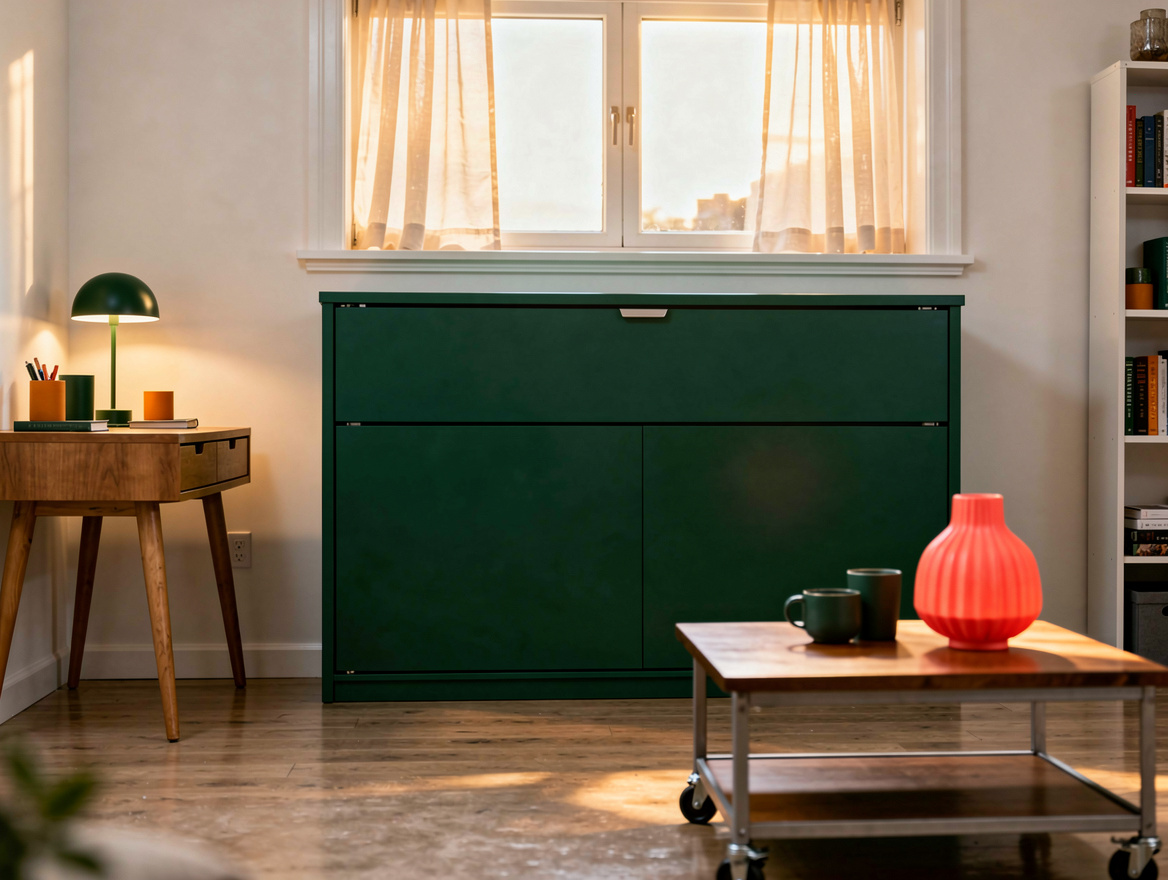
For renters, a cabinet-style bed is worth a look. A movable Murphy chest bed reads more like a sideboard and avoids committing your entire room to a wall-mounted installation.
Keep the Sofa Setup Honest
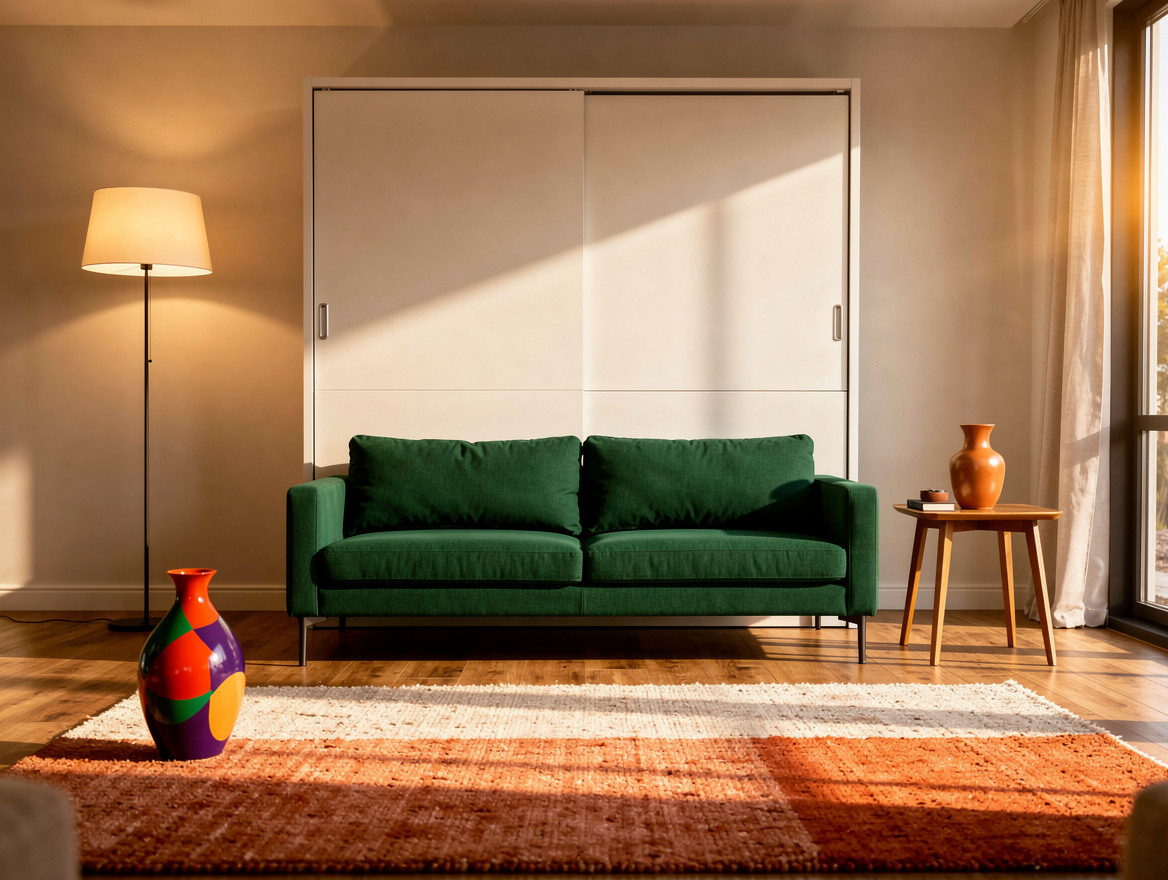
A sofa-and-Murphy combination sounds effortless until the bed has to land over the seating zone. I’d choose a compact, low-back Target loveseat or a similar two-seat sofa with legs that makes moving it less annoying at night.
Skip the oversized sectional. In a studio, it consumes the circulation lane you need when the bed is open and makes the daytime room feel permanently crowded.
A washable rug, one floor lamp, and a small movable table are enough to establish a living area. The bed wall already provides plenty of visual weight.
Make a Desk Combo Earn Its Bulk
If you work from home, a Murphy bed desk combo can be the most sensible version because the desk stays level as the bed lowers. That means a laptop, notebook, and lamp can remain in place instead of migrating to the kitchen counter every evening.
I’d reserve this choice for people who genuinely use a desk most days. A desk front adds depth and cost, often pushing a basic setup beyond the budget range of around $400 to $900.
Choose a chair that tucks fully beneath the work surface. An IKEA task chair with a slim profile is more useful than a plush office chair that becomes another obstacle after dark.
Spend More on Hardware Than Finish
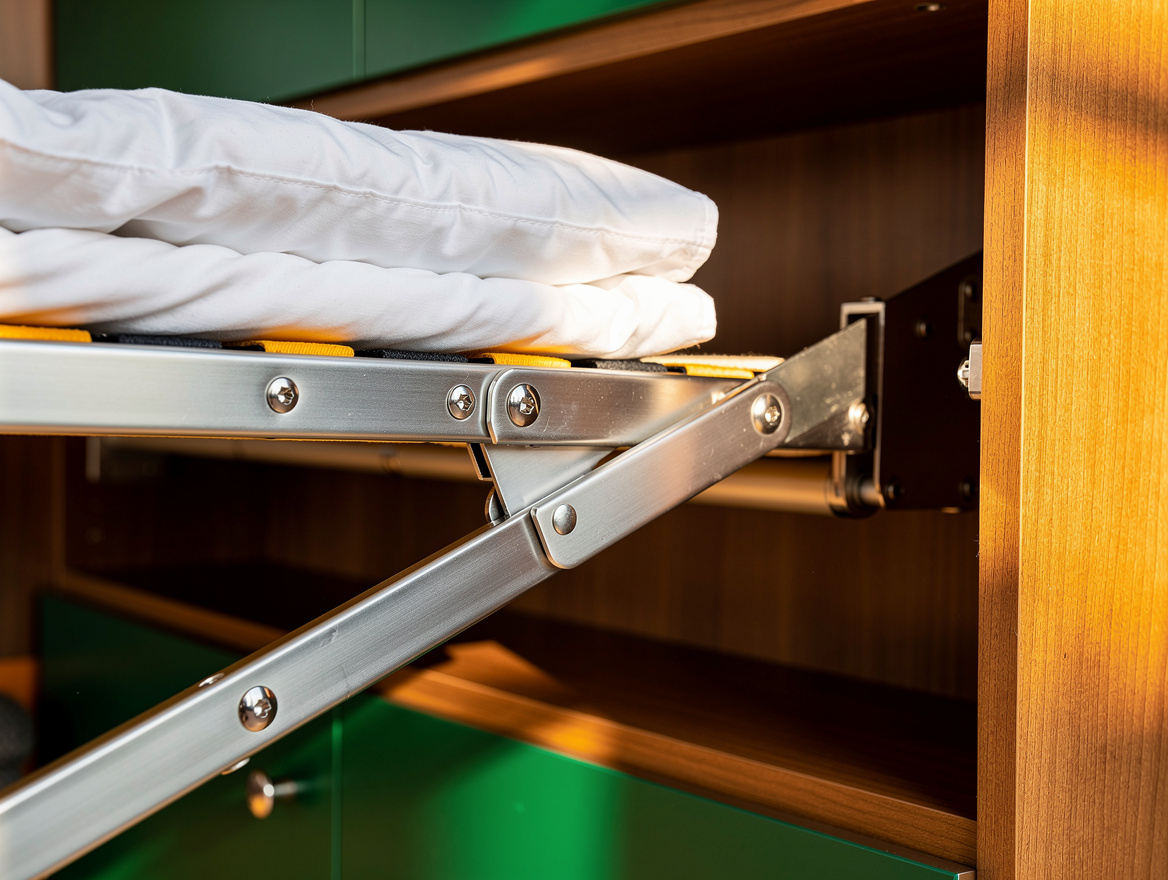
The cabinet front gets attention online, but the lifting system decides whether you’ll use the bed without dread. Most studio-friendly units pair metal hardware with manufactured cabinetry, and that combination is perfectly practical when the mechanism feels controlled and secure.
Budget twin and full options at Walmart or Amazon can run roughly $300 to $900, while simple queen cabinets often start closer to around $800. Read the installation requirements as closely as the finish description.
A high-end custom wall can reach roughly $4,000 to $6,000 or more, especially with wardrobes, lighting, and a desk. I’d rather buy a plain finish with reliable hardware than a dramatic veneer attached to a fussy mechanism.
Plan for Installation and the Night Routine
Professional installation typically adds about $200 to $600, and I consider that part of the bed price rather than an optional extra. A wall bed has to be anchored correctly, especially in a rental with unknown wall conditions.
Keep bedding edited: a cotton duvet, two sleeping pillows, and one lumbar pillow are enough. Too many decorative layers turn every fold-down into a chore, and chores are what make a convertible room stop converting.
I also keep one lidded basket near the sofa for the blanket and daytime pillow. The room resets quickly, which is the whole point of giving a studio two identities.
Start by taping out the open-bed footprint tonight, then decide whether your wall needs storage, a desk, or a sofa partner. That single decision will tell you which Murphy bed belongs in the room.
Mia Carter writes about small-space living and budget home makeovers. She has restyled three rentals and tests most ideas in her own 45 sqm flat.