Les Baux-de-Provence gave the aluminum ore bauxite its name after its discovery here in 1821. That fact is more than a curiosity. It explains why this small Provençal village feels tied to the rock beneath your feet.
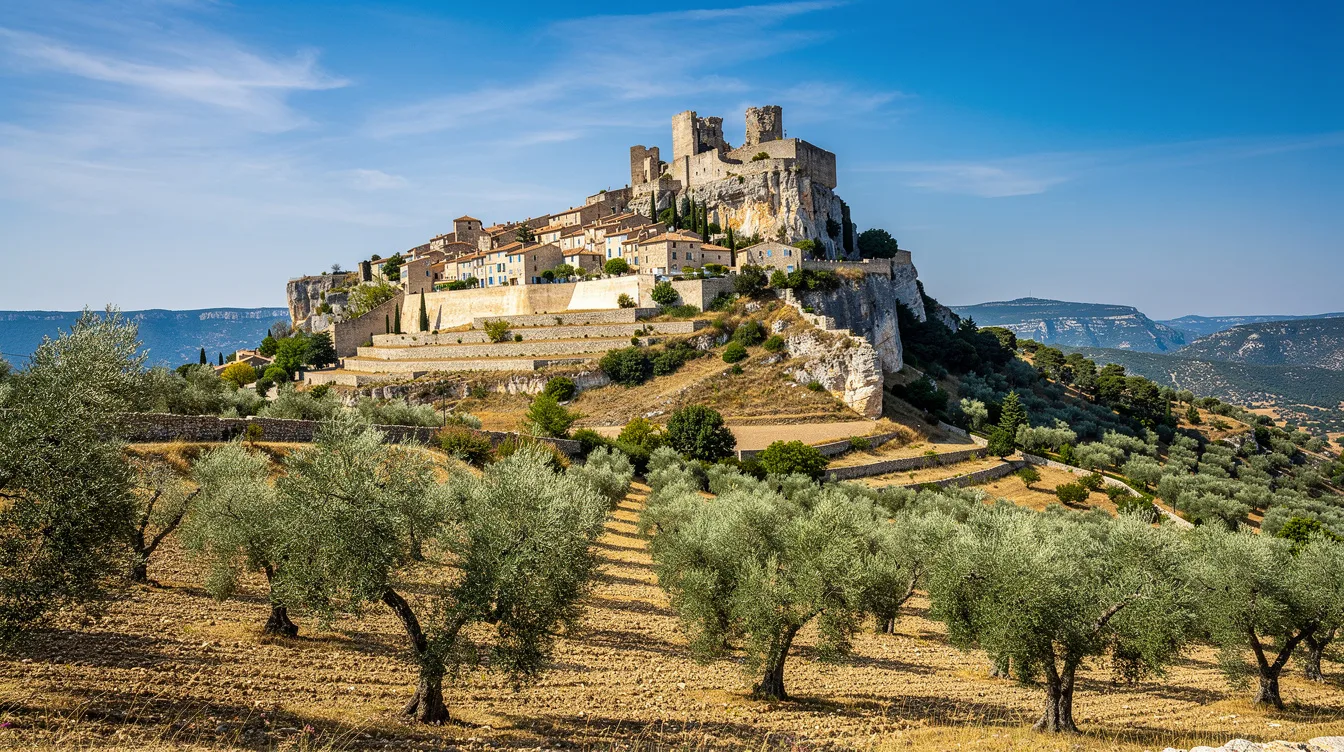
Set in the Alpilles, 9.3 miles northeast of Arles, Les Baux rises on a rocky spur. You come for the view, of course, but the village’s real hook is stranger: a place of cliffs and old walls entered the vocabulary of industry.
1821 changed a village name into bauxite
A geologist identified the ore here in 1821, and “bauxite” was coined from Les Baux. The word traveled far beyond Provence, while the village remained fixed above the plain, with pale stone underfoot and a hard edge to the surrounding hills.
And that makes the name feel less like trivia once you’re there. The rock isn’t background decoration. It is the reason the village occupies this perch, and the reason its geological story carries more weight than the usual souvenir-shop history lesson.
Les Baux sits at about 722 feet above sea level. From the rocky outcrop, the view reaches across Provence toward Arles and the Camargue. It is expansive, but the lanes themselves feel tight and deliberate.
But don’t arrive expecting a quiet scientific outpost. More than 1.5 million visitors a year come through a commune with only 264 residents recorded in 2023. The contrast is the entire experience: enormous attention focused on a very small place.
A village of 264 people, visited by millions
Only 22 residents live inside the upper village’s historic enclosure. You notice the imbalance quickly, because the pedestrian streets carry a steady current of day-trippers while actual daily life sits mostly in the surrounding hamlets.
And still, Les Baux does not feel like a theme park. It is busy, sometimes intensely so, but the stone façades and narrow passages refuse to become merely decorative. You have to slow down because the village is visited on foot only.
The village belongs to Les Plus Beaux Villages de France, a designation that draws its own expectations. It earns them through position rather than polish: the rise of the spur, the open plain below, and the ruined Château des Baux overhead.
But the crowds are a real trade-off. If you dislike following other visitors through confined lanes, this won’t be your most relaxed Provence stop. If you can accept that pressure, the high setting keeps giving you reasons to look up.
The Château des Baux still sets the mood
The ruins of Château des Baux dominate the village and recall the regional power once held here by the Lords of Baux. The fortress has a long military past, which makes sense the moment you stand above the plains.
And this is the part worth lingering over. The view is not gentle. Wind can move through the Alpilles, the stone catches the light sharply, and the land below looks broad enough to make every old defensive decision seem obvious.
You don’t need a long itinerary to understand the place. Walk the village, then let the outcrop do its work. The castle ruins provide drama, but the more lasting impression is how exposed the settlement feels against the southern horizon.
But it is not isolated. Les Baux lies within the Alpilles Regional Natural Park, and its location northeast of Arles makes it part of a larger Provençal circuit. That proximity helps explain the visitor numbers, even when the streets feel overwhelmed.
Come for the name, stay for the rock
There is also an appellation called les-baux-de-provence, produced across seven communes in the Alpilles. The wine connection broadens the village’s identity, though the sharper story remains the one underfoot: this is where bauxite got its name.
And that is why Les Baux holds attention after the first panorama. It is famous, certainly, yet its fame has two different sources: the spectacle of its position and an 1821 discovery that attached this village to aluminum ore forever.
You may find the lanes crowded and the stop shorter than planned. Still, by the time you look back from the rocky spur, the pale ridge and the wide plain make the village name feel unusually physical.