
Dark green and wood works in a bathroom for one simple reason: green gives you depth, wood gives you warmth, and together they stop the room from feeling like a clinic. I’ve painted more bathrooms than I can count, and the biggest mistake I ever made was going all-white because a magazine told me to. It felt cold for three years. These 13 ideas are what I’d do instead, and most of them cost less than you’d think.
- Paint the Walls Studio Green and Let the Wood Do the Talking
- Anchor the Room With a Floating White Oak Vanity
- Follow The Two-Wood Rule Instead of Matching Everything
- Line the Shower With Hand-Glazed Green Zellige
- Swap Chrome for The Living Finish Bet
- Bring Walnut In Through the Mirror and One Shelf
- Warm the Floor With Teak Instead of Cold White Tile
- Hang Real Eucalyptus From the Showerhead
- Layer Textiles in The 60-30-10 Green Split
- Frame the Room With a Reclaimed Wood Medicine Cabinet
- Can You Really Do Dark Green in a Tiny, Windowless Bathroom?
- Choose Green Tile Over Green Paint If You’re Tiling Anyway
- Kill the Overhead Light and Spread the Glow
1Paint the Walls Studio Green and Let the Wood Do the Talking
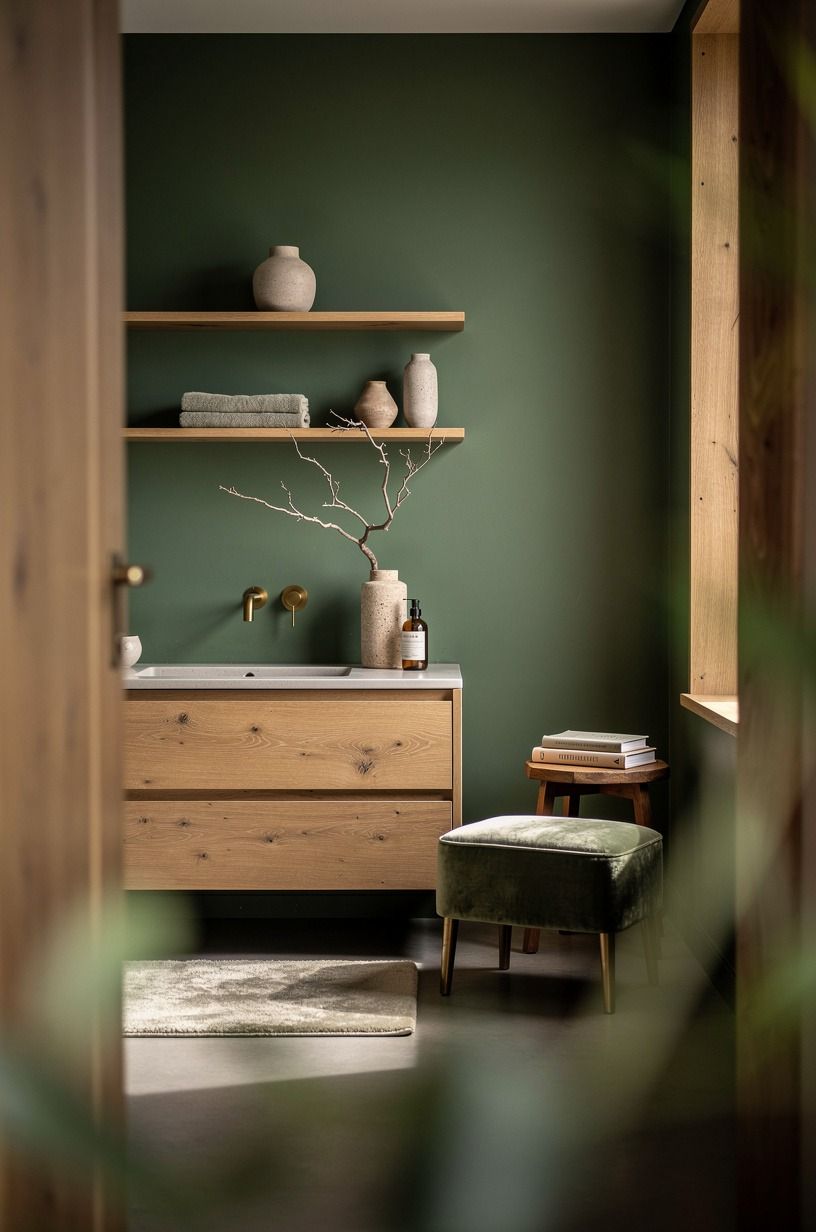
Start with the walls, because they’re the biggest surface you own. Farrow & Ball Studio Green is my pick for a windowless bath since it reads almost black at night and deep forest by day. If your room gets northern light, Benjamin Moore Black Forest Green keeps its warmth instead of going flat.
Pair it with white oak, not pine. Pine skews orange against dark green, and orange is the one thing you can’t unsee once you’ve noticed it. I’ve made that mistake so you don’t have to.
Worried about it going too dark? Keep the ceiling white and you’re fine. The contrast actually makes the green look richer, and if you want proof, look at why dark green powder rooms always look more expensive than their white twins.
2Anchor the Room With a Floating White Oak Vanity
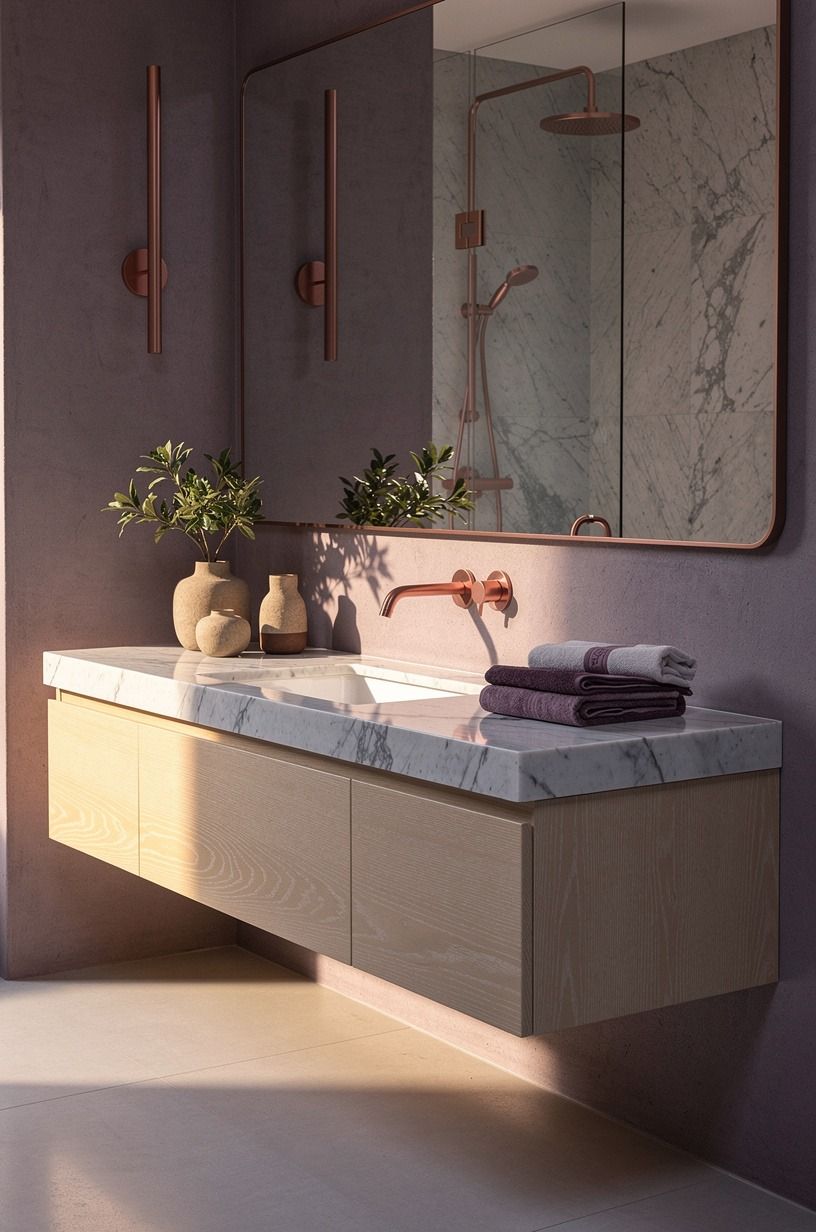
This is the move that does the most work. A floating vanity in cerused white oak shows you floor all the way to the wall, and visible floor is what makes a small bathroom read bigger. Standard vanity height runs 32 to 36 inches, so mount yours at 34 if your household is mixed height.
The grain matters more than the stain. Rift-sawn oak gives you straight, quiet lines. Cathedral grain fights the green walls and loses.
I’d skip the vessel sink on top, honestly. It eats 5 to 6 inches of usable counter and splashes every single time you wash your hands. An undermount in matte white keeps the eye on the wood, which is the whole point.
3Follow The Two-Wood Rule Instead of Matching Everything
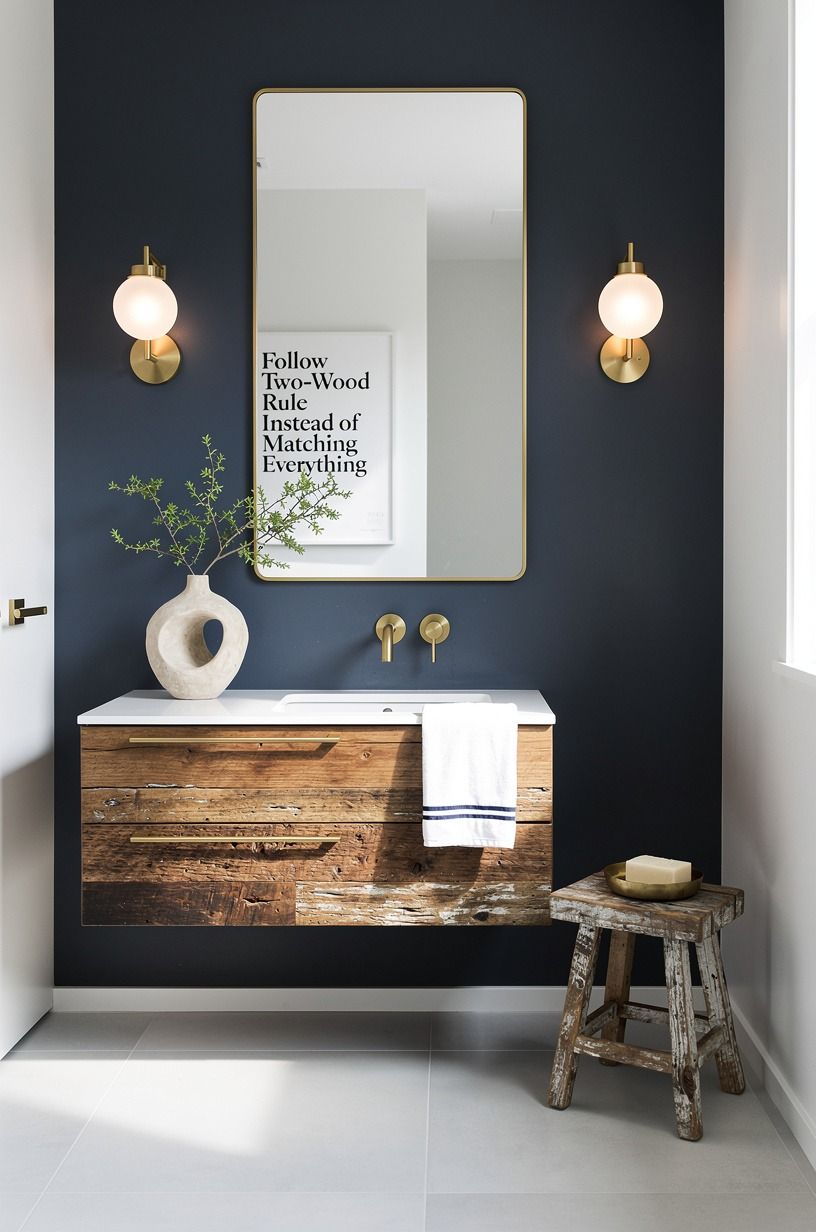
Here’s the rule nobody respects: exactly two wood tones per bathroom, never one, never three. One tone reads flat and showroom-ish.
Three reads like a flooring store. Two is where the room starts to feel collected over time.
My favorite pairing for dark green walls is white oak on the vanity plus walnut on one accent, a mirror frame or a single shelf. The oak stays light and quiet, the walnut brings the mood.
And keep the undertones honest. Both warm, or both cool.
Mixing a red-toned cherry with an ashy oak is the fastest way to make expensive pieces look cheap. Hold samples next to each other in your actual bathroom light before you commit, because showroom lighting lies to you every time.
4Line the Shower With Hand-Glazed Green Zellige
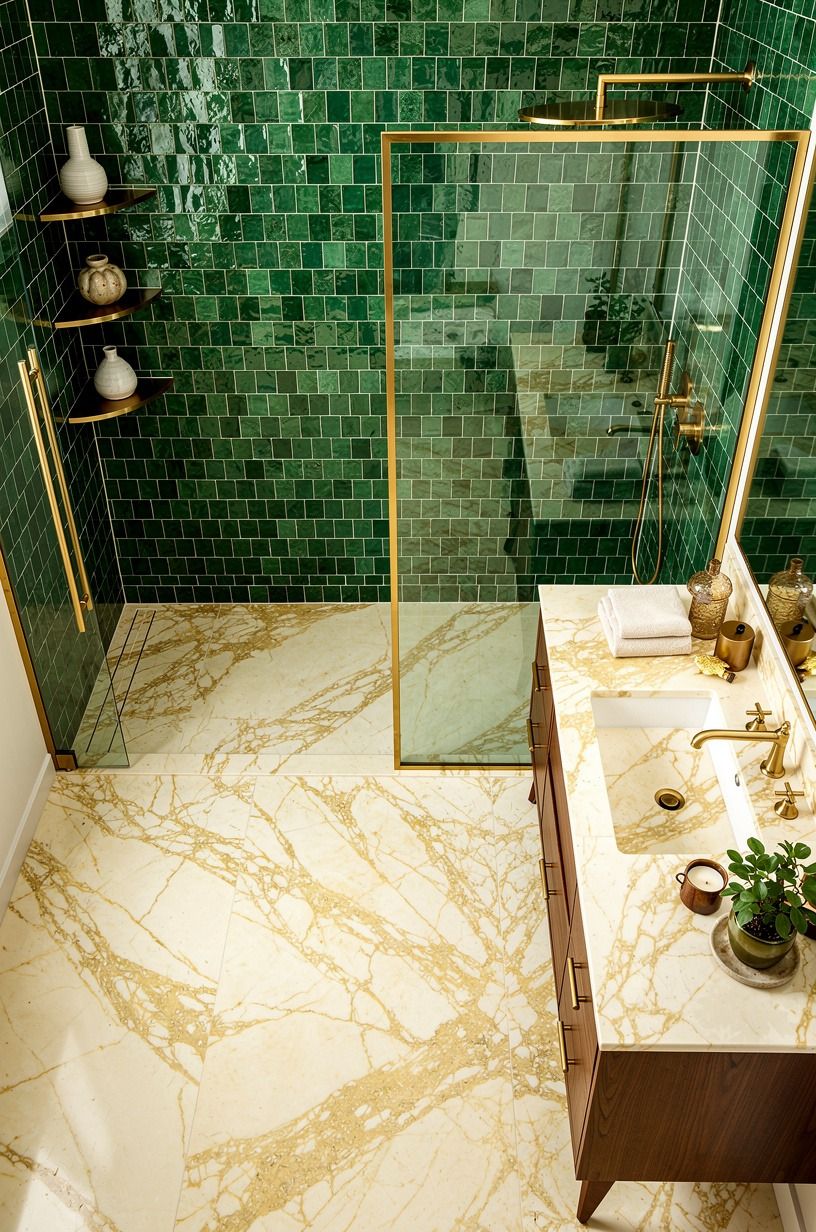
If you’re tiling anything, tile the shower and make it hand-glazed emerald zellige. Each tile catches light slightly differently, so the wall shimmers instead of sitting there flat. It’s the single most commented-on thing in every bathroom I’ve seen that uses it.
The budget reality: zellige runs $15 to $35 per square foot, while subway tile sits at $2 to $10. So don’t tile the whole room.
Do the shower walls, stop at the edge, and paint everything above in the same green family. A comfortable shower starts at 36 by 36 inches, which means you’re tiling maybe 90 square feet, not 300.
Keep grout lines thin and warm white. Dark grout against zellige chops up the surface, and the variation is what you’re paying for.
5Swap Chrome for The Living Finish Bet
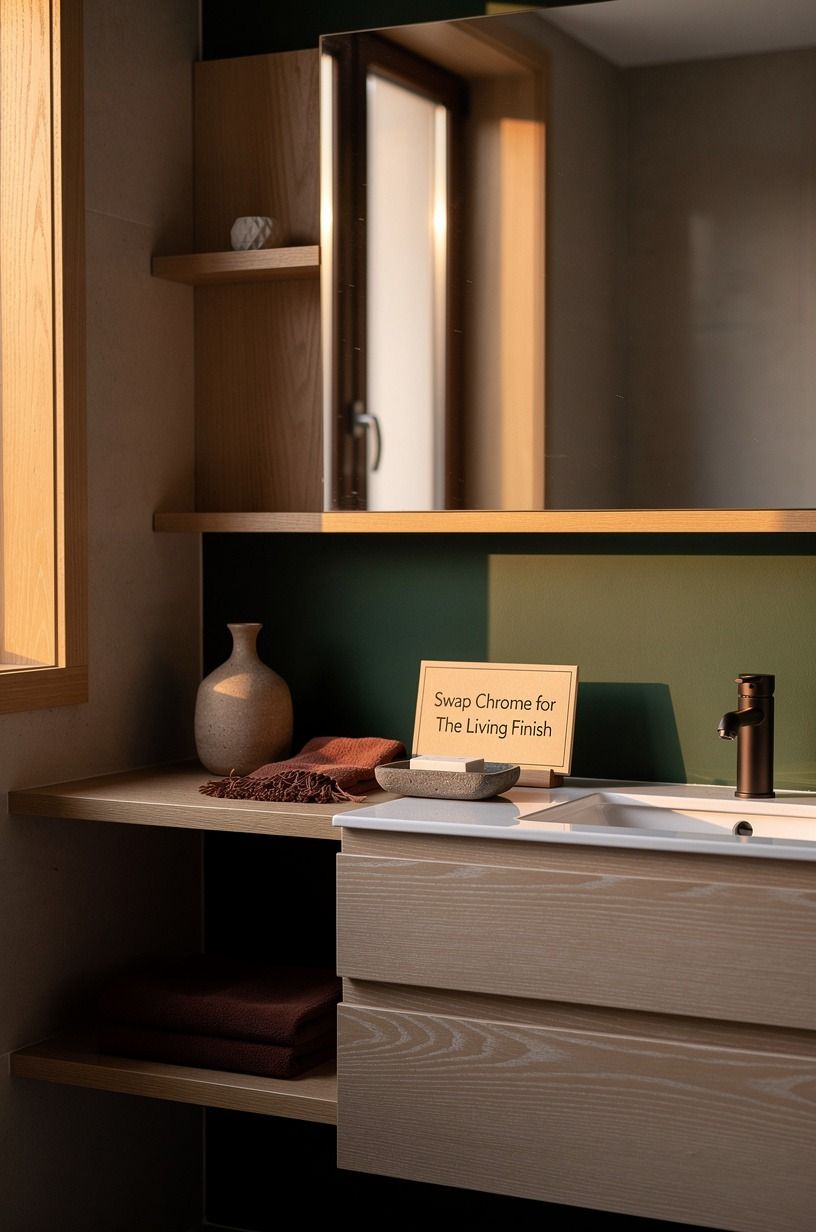
Chrome is fine. It’s also forgettable. Unlacquered brass is the better call here because it develops a soft patina over time, and that aging looks intentional against dark green instead of neglected.
A brushed brass faucet runs $120 to $450 depending on the brand, which makes it one of the cheaper swaps on this list with one of the biggest visual returns. Match your towel bar and cabinet pulls to it and the room suddenly looks designed, not assembled.
If brass against green feels too glam for your taste, my dark green and gold bathroom ideas show where that line sits. Prefer something quieter? Aged bronze works.
Just don’t mix brass and chrome in the same sightline. Pick one metal and let it win.
6Bring Walnut In Through the Mirror and One Shelf
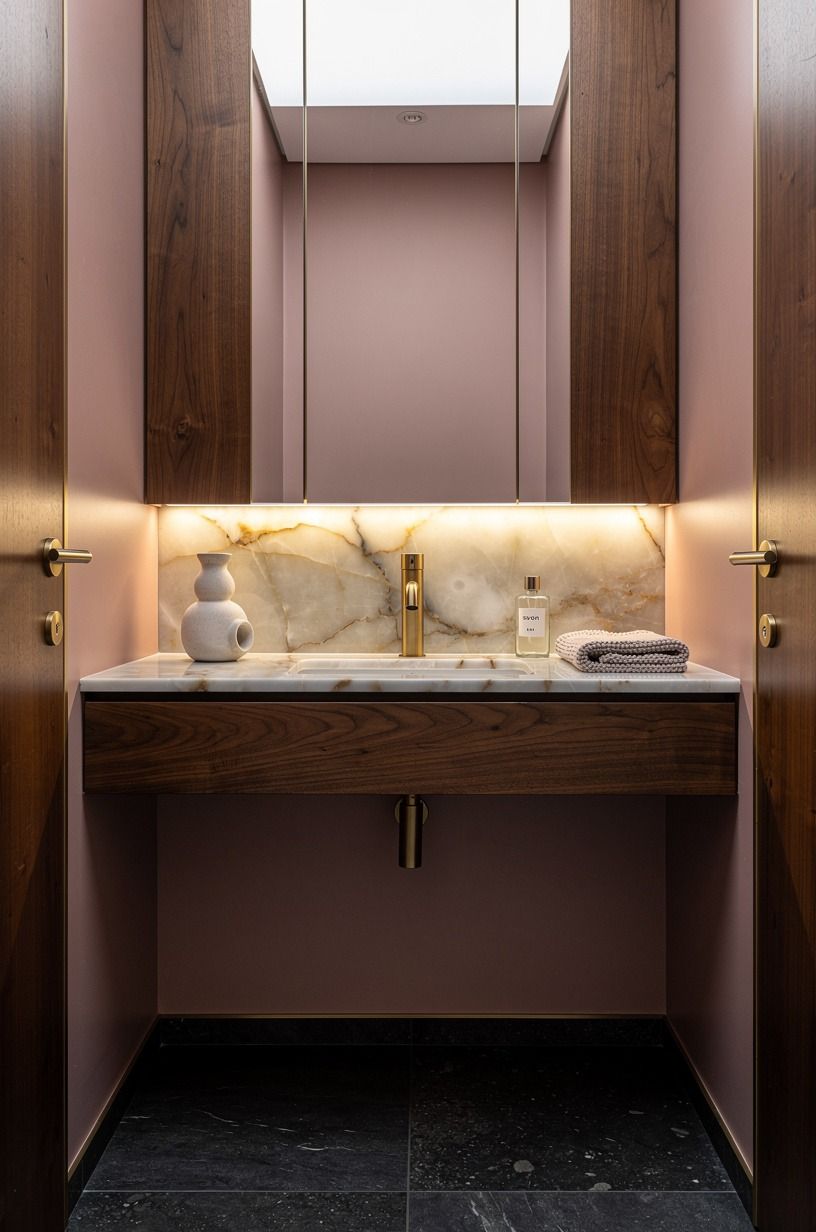
You don’t need wood everywhere. You need it where your eye lands. A walnut-framed mirror above the vanity is the highest-impact spot, because it’s at eye level and it sits right against your green wall where the contrast does its job.
Round mirrors soften a boxy bathroom. Rectangular with rounded corners if your vanity is wide. Either way, let the frame be 2 to 3 inches thick so the wood reads as a material, not a border.
Then add one floating shelf in the same walnut, about 10 inches deep, above the toilet. That’s your styling surface: a small plant, a ceramic cup, one amber glass bottle.
Stop there. The moment a shelf holds seven things, it holds clutter.
7Warm the Floor With Teak Instead of Cold White Tile
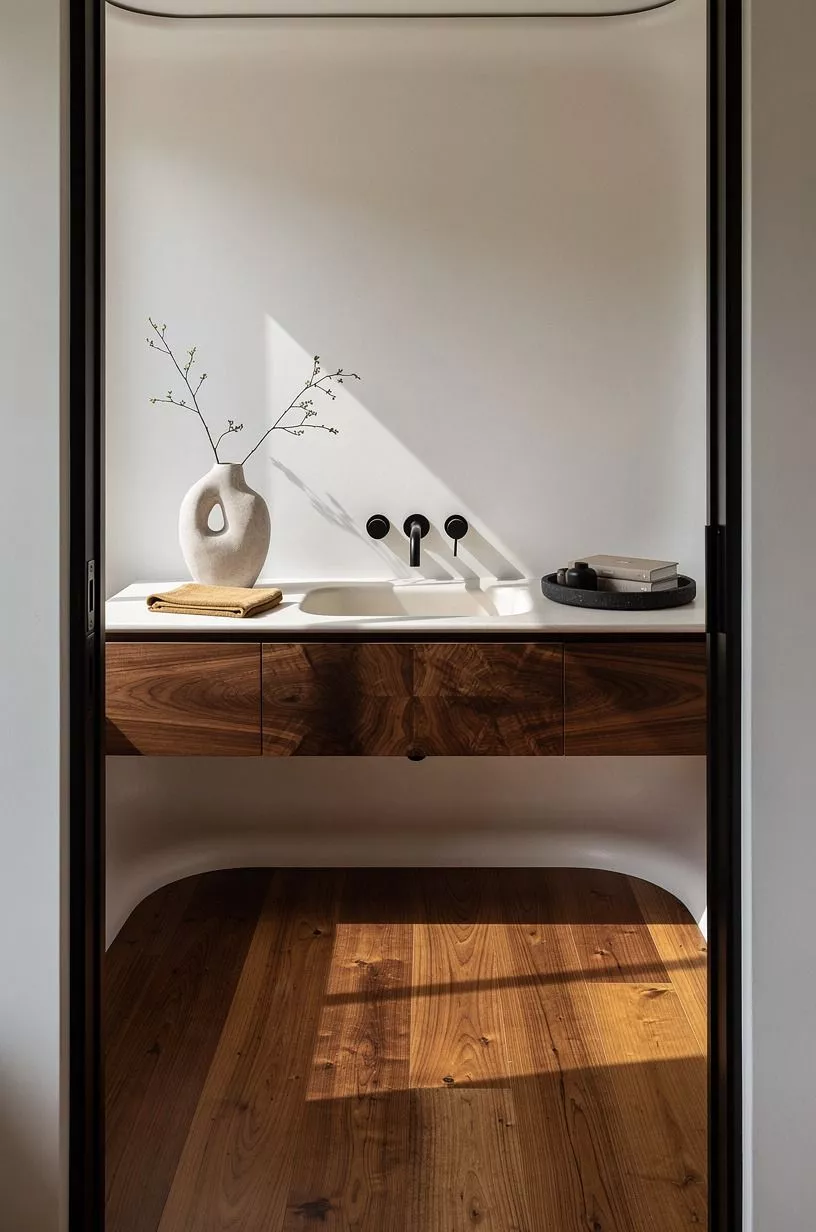
Cold white porcelain underfoot is half the reason white bathrooms feel sterile.
8Hang Real Eucalyptus From the Showerhead
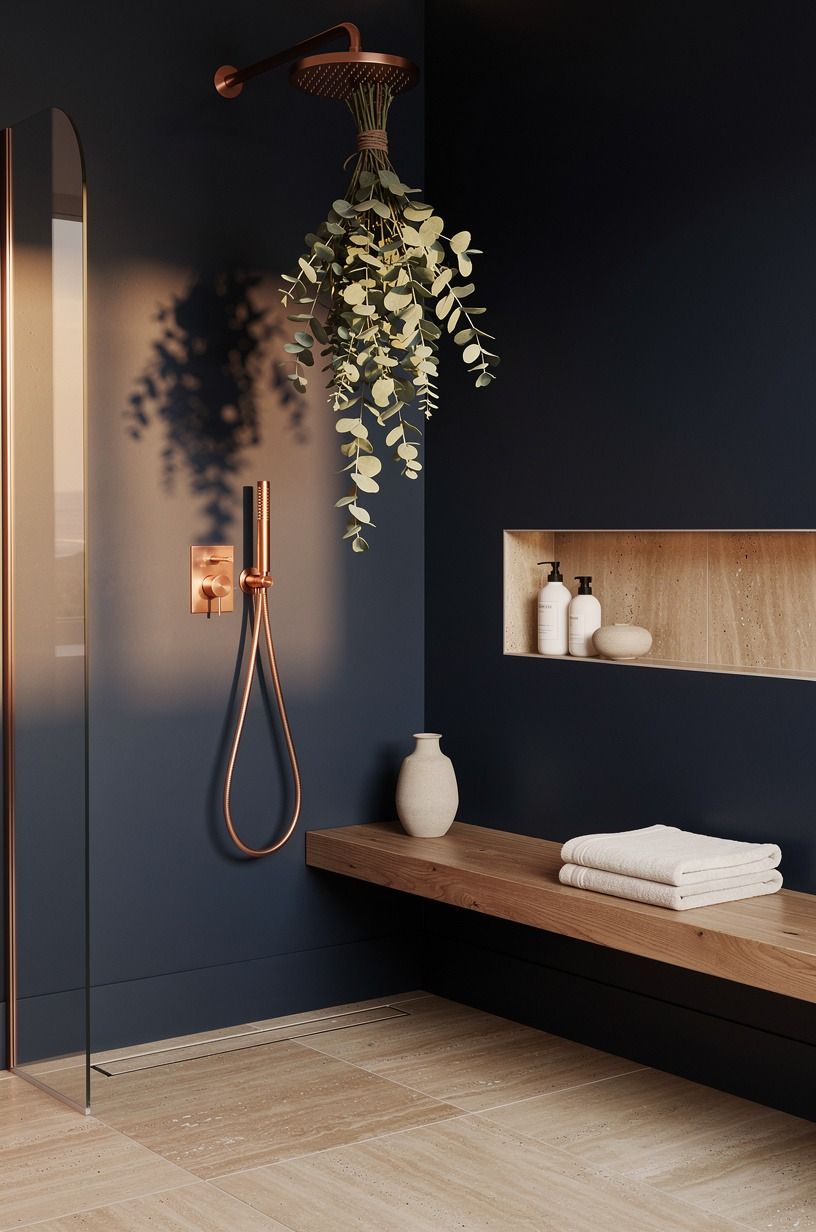
This one’s almost free and it’s the most copied idea on my board. A fresh bunch of eucalyptus tied to the showerhead releases its oils in the steam, and your bathroom smells like a spa every morning for about two weeks per bunch.
The green-on-green works visually too. Silvery eucalyptus leaves against a deep green wall add a lighter, cooler green note that keeps the dark paint from feeling heavy.
Swap the bunch when the leaves turn brittle. And if your bathroom has zero natural light for real plants, a vase of dried eucalyptus on that walnut shelf does the visual job without the steam move.
Want to see how far moody green can go with plants layered in? The 17 moody dark green bathroom ideas roundup has about a dozen variations worth stealing.
9Layer Textiles in The 60-30-10 Green Split
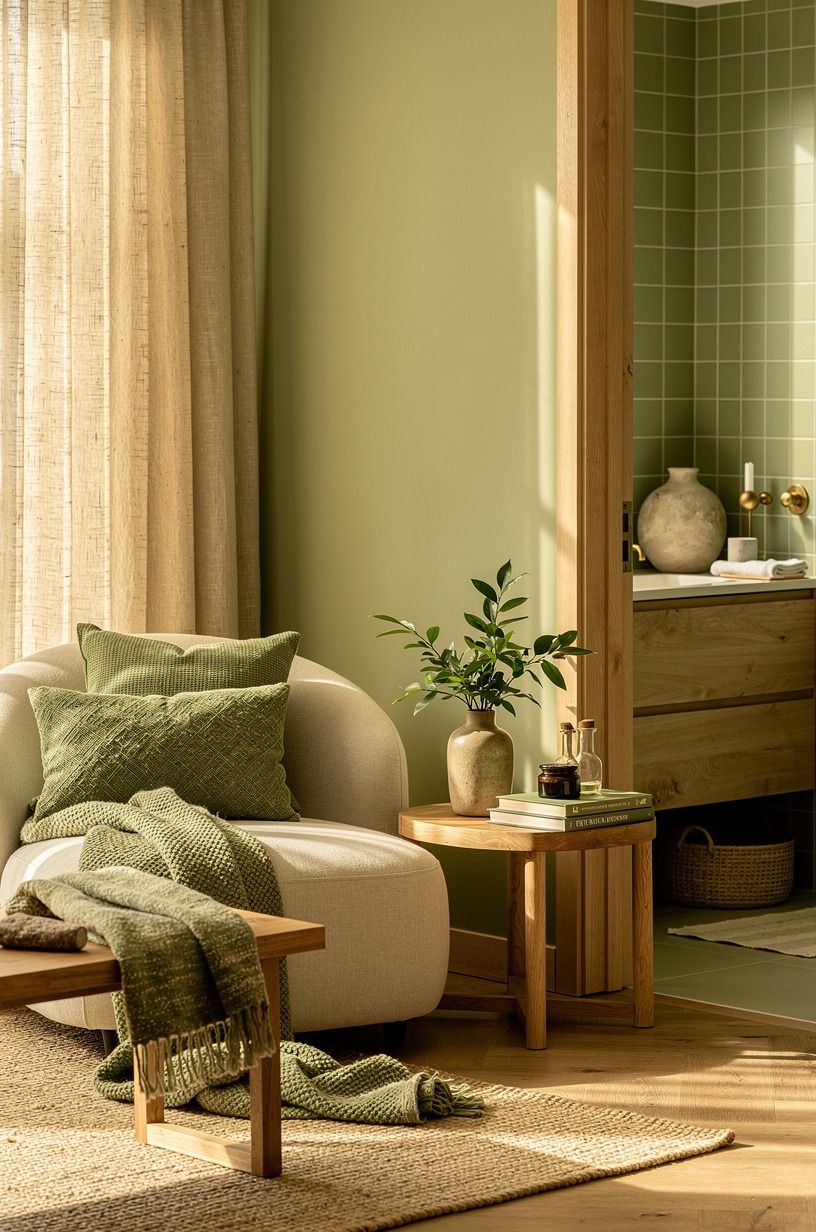
Towels and textiles are where people either finish the room or fumble it. My ratio: 60 percent of your textiles in a mid forest green, 30 percent in warm cream, 10 percent in one accent like rust or ochre.
For towels, 600gsm Turkish cotton in a deep moss is the sweet spot, thick enough to feel like a hotel, not so thick it never dries. Cream waffle-weave hand towels break up the green so the bathroom doesn’t feel like the inside of a leaf.
Then one accent. A rust bath mat or an ochre striped towel on the shelf. That’s your 10 percent, and it’s what keeps the palette earthy instead of monotone.
If green textiles feel like too much commitment, 24 sage green bathroom spaces shows how the lighter end of the family handles fabric.
10Frame the Room With a Reclaimed Wood Medicine Cabinet
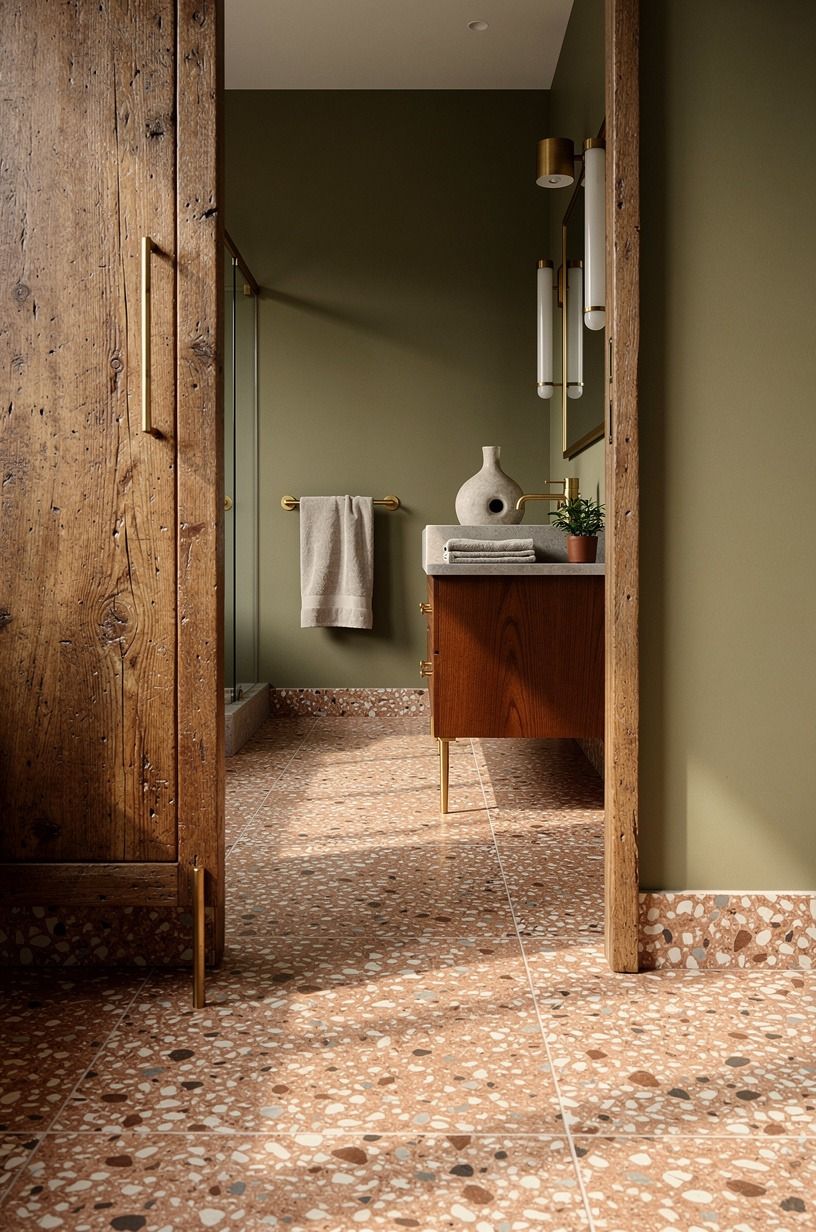
Storage is where bathroom ideas with wood cabinets usually die, because people buy a glossy MDF box and hang it on a beautiful green wall. Don’t. A reclaimed wood medicine cabinet or a simple oak-framed recessed cabinet adds storage and another honest wood surface at the same time.
Recessed is better if you’re opening the wall anyway. Surface-mount works if you’re not. Either way, the wood frame should relate to your vanity tone under the Two-Wood Rule, not introduce a third species.
Inside, keep it boring and functional. Outside, the frame does the decorating. This is also the piece to hunt secondhand: old oak medicine cabinets show up on Facebook Marketplace constantly for $30 to $80, and twenty minutes with mineral oil makes them look intentional!
11Can You Really Do Dark Green in a Tiny, Windowless Bathroom?
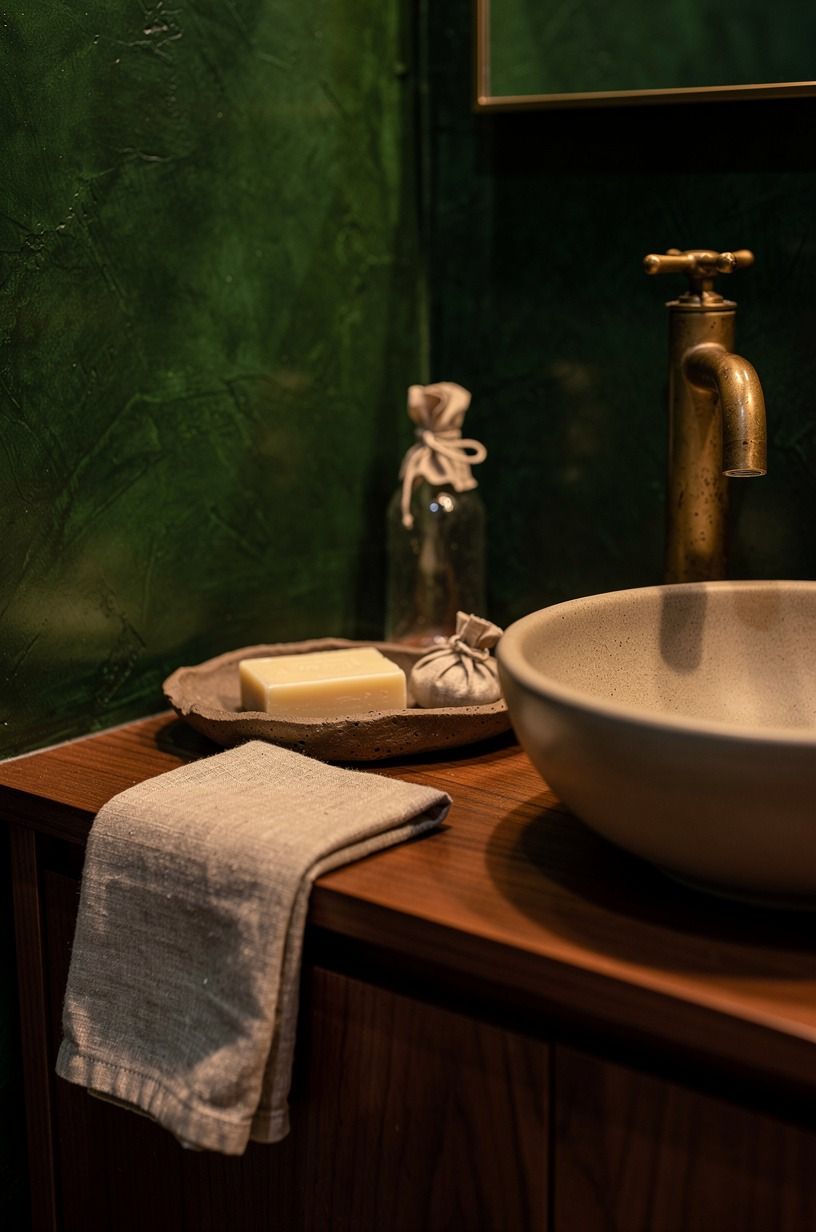
Yes, and the small room actually helps you. Dark colors blur corners, and blurred corners make walls feel farther apart than they are. A 40-square-foot bath in Farrow & Ball Studio Green reads cozy and deliberate, while the same room in white reads like a rental you gave up on.
The non-negotiables: a large mirror to bounce what light you have, warm 2700K bulbs, and one light wood tone to lift the palette. If full commitment scares you, paint to chair-rail height and go cream above.
Powder rooms are the perfect test case, no shower steam, no regret window. The dark green and white bathroom ideas piece covers the half-painted version if you want training wheels first.
12Choose Green Tile Over Green Paint If You’re Tiling Anyway
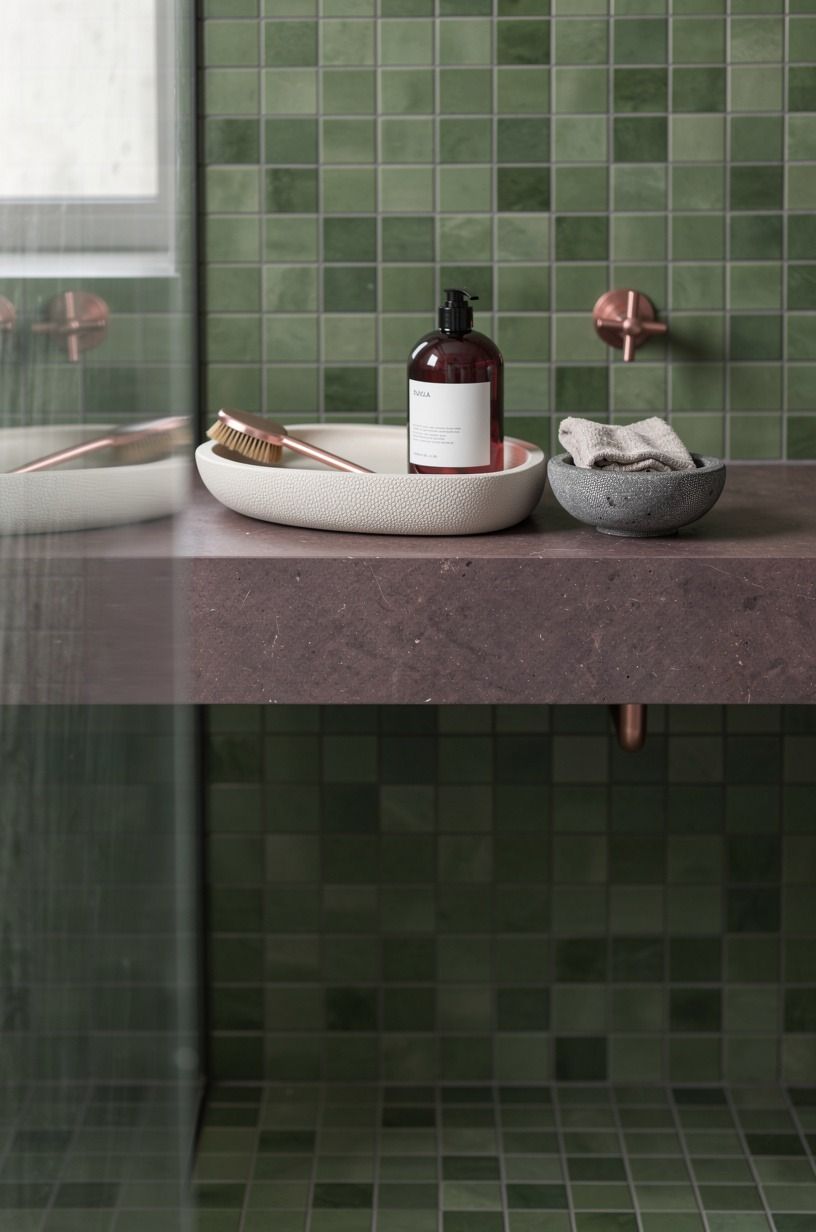
This is the contrast call most people get backwards. If you’re already paying a tiler, green tile on one wall beats green paint on four, because the tile gives you depth, texture, and permanence in a single surface.
A stacked vertical layout in a deep green subway or kit-kat tile draws the eye up and makes an 8-foot ceiling feel taller. Vertical, not horizontal. Horizontal stacking widens, and most bathrooms don’t need wider.
Paint stays for the walls that don’t get wet. And here’s the honest trade: tile costs more now and never needs redoing, paint costs less now and wants refreshing in five years. In a room this small, I’d take the tile every time.
If you want the moodier cousin of this palette, dark green and black bathroom ideas shows what happens when you push the contrast harder.
13Kill the Overhead Light and Spread the Glow
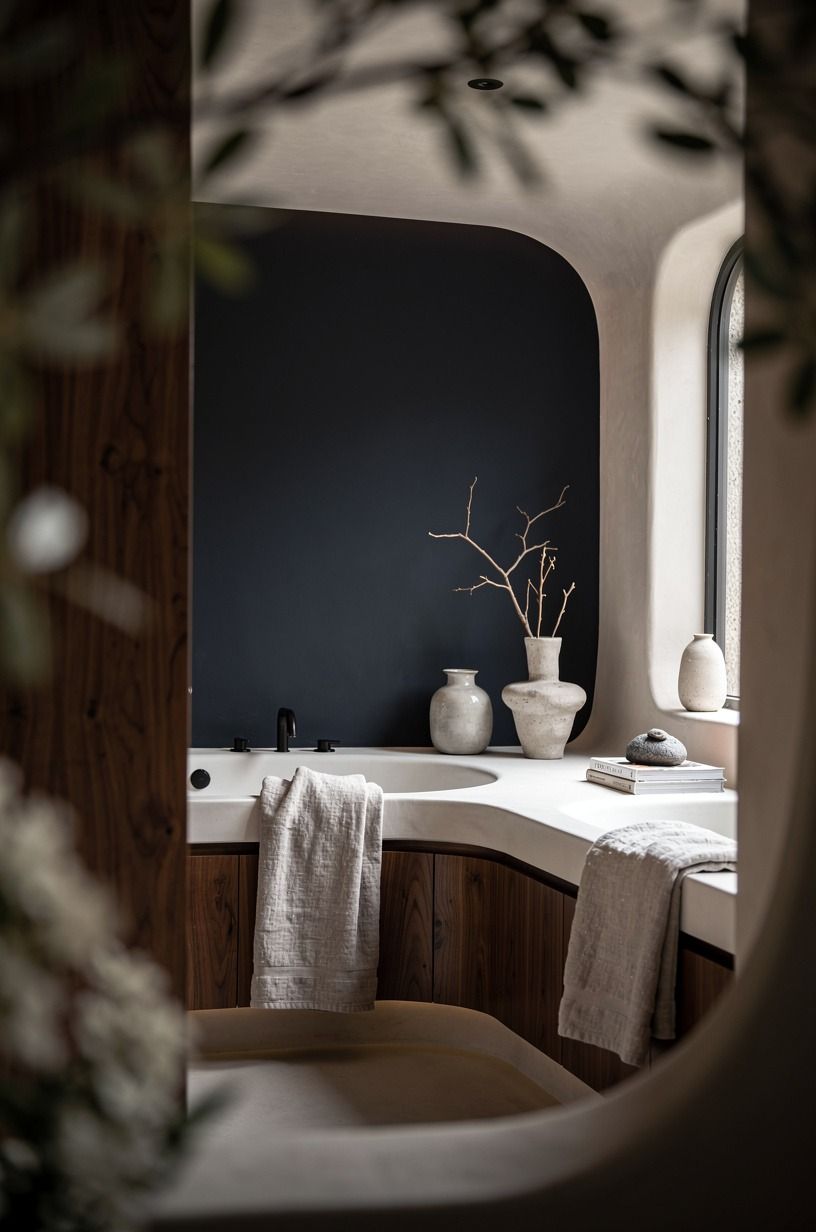
Overhead-only lighting is why most dark bathrooms feel like caves instead of retreats. You want three sources: a pair of sconces at the mirror, the vanity’s ambient bounce, and one low accent light if you have the shelf from idea 6.
Bulb temperature is everything here. 2700K, always. Anything cooler turns dark green walls grey and makes your skin look tired. Anything warmer than 2200K goes orange against the wood tones.
Aged bronze sconces with opal glass flanking the mirror are my default, since the bronze sits quietly between the brass and the wood. If wiring isn’t an option, battery-operated sconces have gotten genuinely good.
The soft side-glow at mirror height is what makes the room feel like an evening, not an office. For the full transformation proof, this once dim bathroom is now a moody deep green dream and lighting was half of it.
What a Dark Green and Wood Bathroom Actually Costs
The short answer: a cosmetic refresh (paint, faucet, textiles, mirror, teak mat) runs about $200 to $1,200. A new vanity and partial tile lands in the mid tier. Here’s how the ranges break down for a typical US bathroom:
And the material line items that matter most for this exact palette:
Why This Pairing Is Having a Moment
Bathrooms spent a decade being white boxes with chrome. People got tired of brushing their teeth in a laboratory, and dark green with warm wood is the correction: it borrows from modern cabin bathroom decor without asking you to own a cabin.
The timing also helps. The dark blue bathroom ideas that feel rich not heavy trend walked so this one could run, and green just happens to be the version that plays nicer with oak, walnut, and brass.
The Mistake I Made So You Don’t Have To
I want to be straight with you about my first dark green bathroom, because I got it wrong in a specific, instructive way. I painted the walls a deep green, kept my orange-toned pine vanity, left the chrome faucet, and swapped nothing else.
The result looked like a forest-themed restroom at a highway rest stop. Green paint alone doesn’t make this look work.
Green paint plus the wrong wood makes it actively worse.
The fix took me two weekends and about $340. I sanded and re-stained the vanity darker, swapped the chrome faucet for brushed brass, added a walnut mirror, and changed every bulb to 2700K. Same paint on the walls.
Completely different room. That’s when I learned the rule that sits under this whole article: dark green is the backdrop, and wood is the actor. The paint’s job is to make the wood look warm.
The wood’s job is to make the green look rich. Neither one works alone, and honestly, that’s the part most inspiration posts skip because a wall of paint photographs better than a faucet swap.
The other lesson was about restraint. My instinct after the refresh worked was to keep adding: more plants, more brass, another shelf.
I got as far as buying a third wood element (a teak stool, red-toned, wrong species entirely) before a friend walked in and said the room felt busy. She was right.
I took three things out and the room got better immediately. If you remember one thing, make it this: two wood tones, one metal, three light sources, and then stop.
The stopping is the skill.
The Questions Worth Answering First
What is the best dark green and wood combination for a small bathroom?
A floating white oak vanity against Studio Green walls is the safest strong choice. The visible floor makes the room read bigger, and one light wood tone keeps the green from closing in. Add a round mirror and you’re done.
Where can I buy dark green and wood bathroom pieces on a budget?
IKEA for oak-look vanities and shelving, Target Threshold for green textiles, Wayfair for brass faucets under $150. For real wood, check Facebook Marketplace first. Old oak mirrors and cabinets show up for $30 to $80 constantly.
How much does a dark green and wood bathroom makeover cost?
A cosmetic refresh runs about $200 to $1,200 covering paint, a faucet, textiles, and a mirror. Mid-range with a new vanity and partial tile lands at $3,000 to $9,000. Free moves: rearranging what you own and decluttering the counter.
Can I create this look on a tight budget?
Yes, and the paint does 70 percent of the work for about $60. Then a teak bath mat, one bunch of eucalyptus, and warm 2700K bulbs. Four changes, under $150 total, and the room already feels intentional.
Is dark green and wood worth it in a small space?
Worth it, and small spaces actually flatter the palette. Dark walls blur corners, wood adds the warmth white tile can’t, and you need fewer pieces to finish the room. Keep your vanity wall the lightest zone so the sink area stays bright.
Is a dark green and wood bathroom a good idea for a rental?
Yes, with no-damage swaps. Peel-and-stick green wallpaper, a tension rod for textiles, a teak mat instead of floor work, and battery sconces instead of wired ones. Everything reverses on move-out day, and your deposit stays intact.
Where I’d Start First
If I had to pick one, I’d start with the paint. Nothing else on this list changes the room for $60 and one weekend, and every wood piece you add later gets judged against that wall color.
Get the green right first. Pin this for later and test a sample pot this week.